Featured articles
Food & Drink
Food & Drink
Food & Drink
Featured articles
Features
Features
Features
Featured articles
Things to Do

Everything SD
Everything SD
Featured articles
podcast-ep
podcast-ep
podcast-ep
Featured articles
Features

Features

Features
Featured articles
Food & Drink
Partner content
Food & Drink
Ready to know more about San Diego?
SubscribeReady to know more about San Diego?
The ultimate gift guide to show some love to our community this season, featuring our favorite brands that were founded right here
HGG 2022, hero
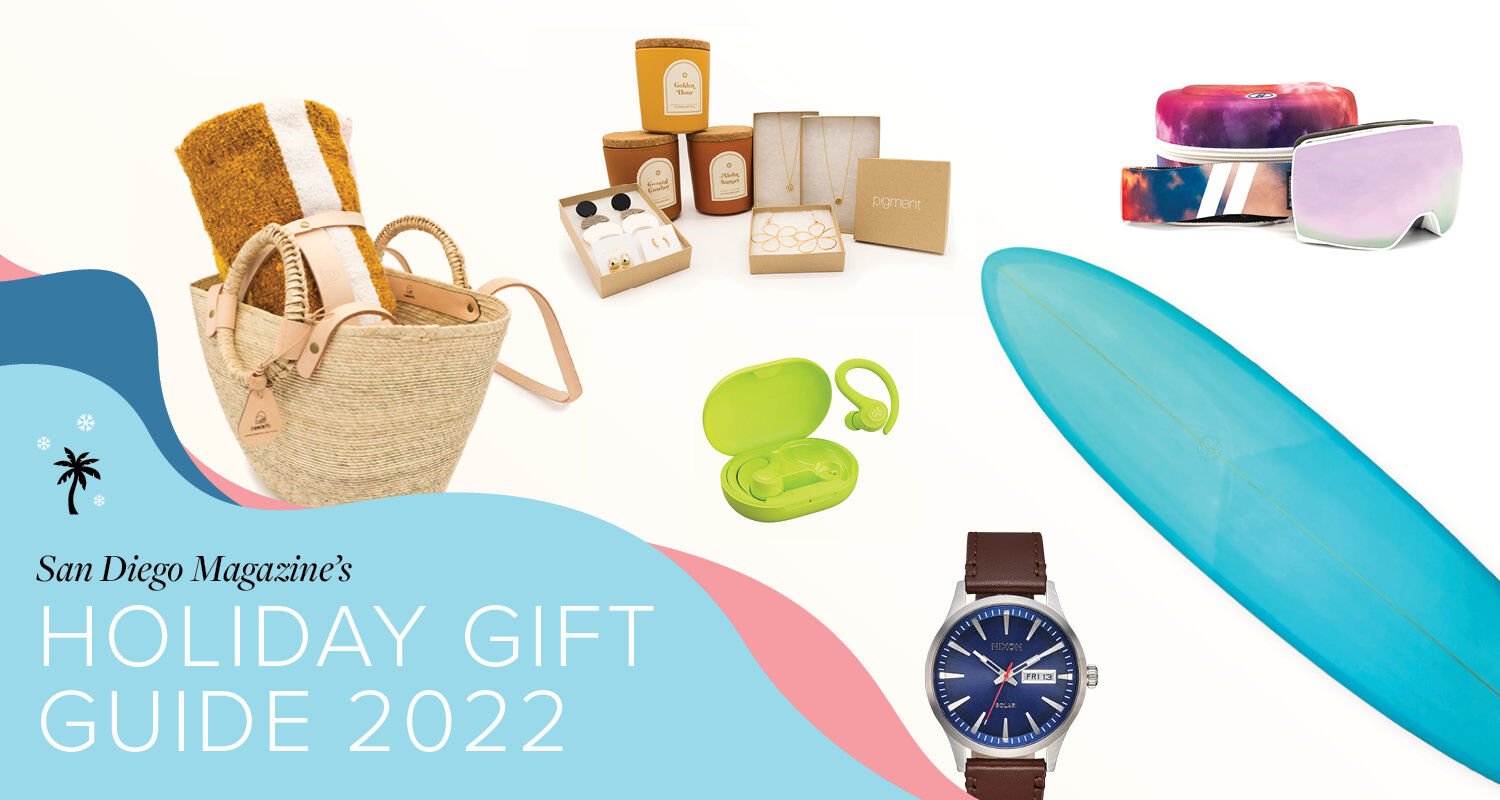
It’s that time of year again. Glittering lights around every corner, festive holiday parties, carbs-on-carbs-on-carbs, and family gatherings complete with plenty of wine. If you’re shopping for your loved ones this season, our holiday gift guide is one of the best ways to support local while also gifting your family and friends with some really cool presents.
This year, we put together a mix of items that feel very San Diego, whether due to their backstories, a nod to our SoCal lifestyles, or just because it’s cool sh*t that we want ourselves (mom, are you reading this?). Click on the categories below to search specific items or browse the more than 30 gifts that we hand-selected just for you.
Hobbies | Personal Care | Lifestyle | Clothing & Accessories | Food & Drink
Imperfects
Courtesy of Imperfects
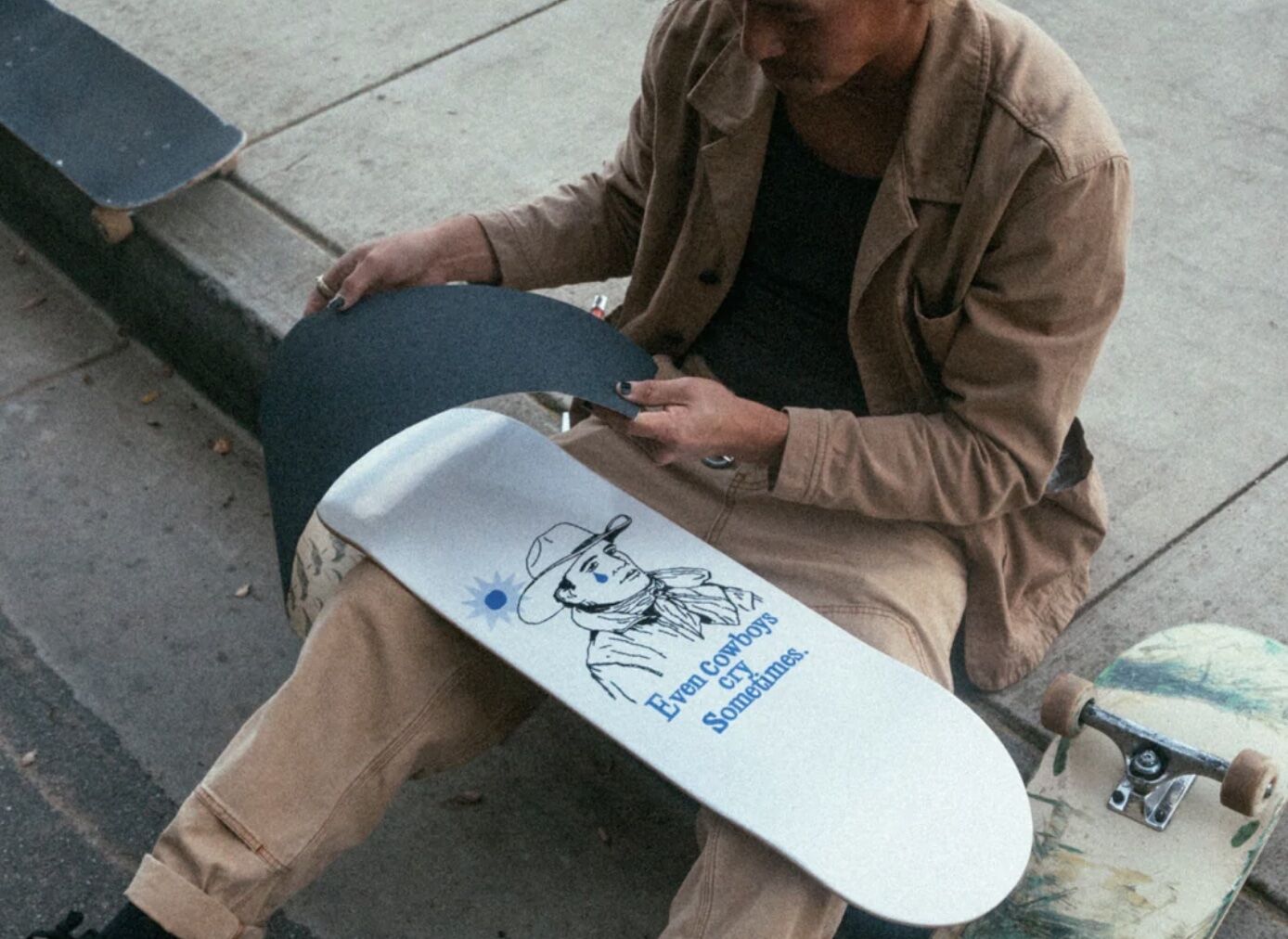
Founded in 2015, Imperfects is a lifestyle concept and pretty much the epitome of SoCal cool. Selling surf and skate goods and apparel, their products celebrate our imperfections, our uniqueness—such as this Canadian maple deck featuring Cryin’ Cowboy Hank in collaboration with artist Hunter Patrick. Weird and undeniably perfect.

SDM-Holliday-Gift-Guide_Blenders-Nebula-Snow-Goggles.jpg
Blenders celebrates its 10th birthday this year, and we’re suckers for its line of snow products. These lavender Nebula snow goggles feature an all-new Toric lens with a refined vertical axis curve and considerable anti-fog protection, and the brand’s lens-locking system. Plus, the array of lenses means you can match it to your day’s snowbird look.
SDM-Holliday-Gift-Guide_Vessel_Ashtray.jpg
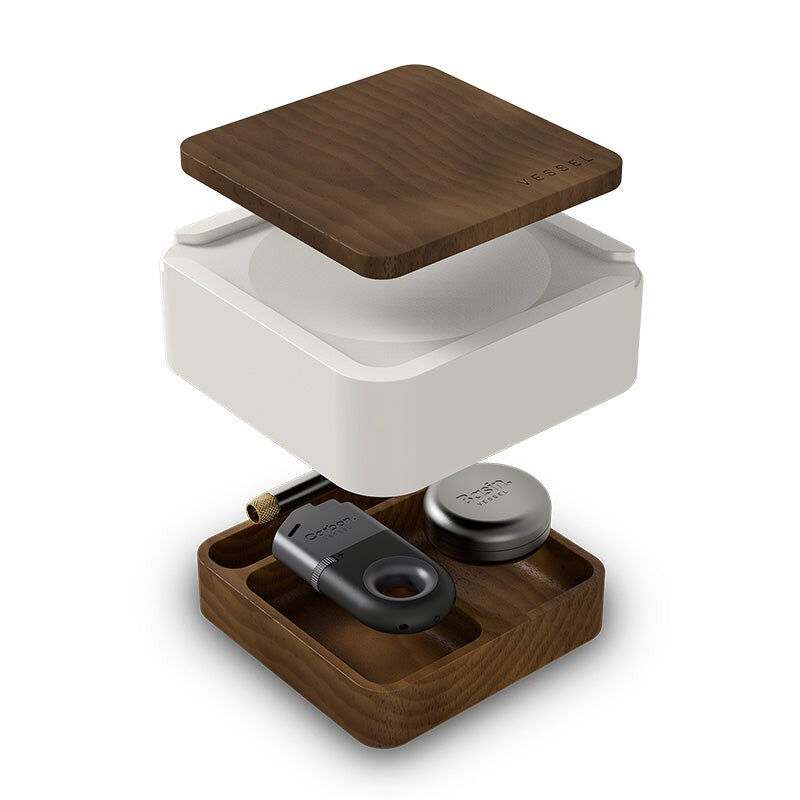
High-end weed gear brand Vessel makes durable and stylish accessories for smoking. The Ash is the ultimate ashtray made from concrete with a walnut wood lid that includes storage and a rolling tray. The Carbon lighter has a refillable inverted design and has a lifetime warranty for endless toking opportunities.

SDM-Holliday-Gift-Guide_JLab-Go-Air-Sport.jpg
JLab’s GO Air Sport True Wireless Earbuds are perfect for running errands or running marathons with 32+ hours of playtime at an uber competitive price. Not only are they sweat and splash proof, they have great sound quality with Custom EQ3 technology. They also come in six colors but we recommend these bright earbuds, though, since we all know how easy it is to lose them around the house.
SDM-Holliday-Gift-Guide_Caminito-Woven-Tote.jpg
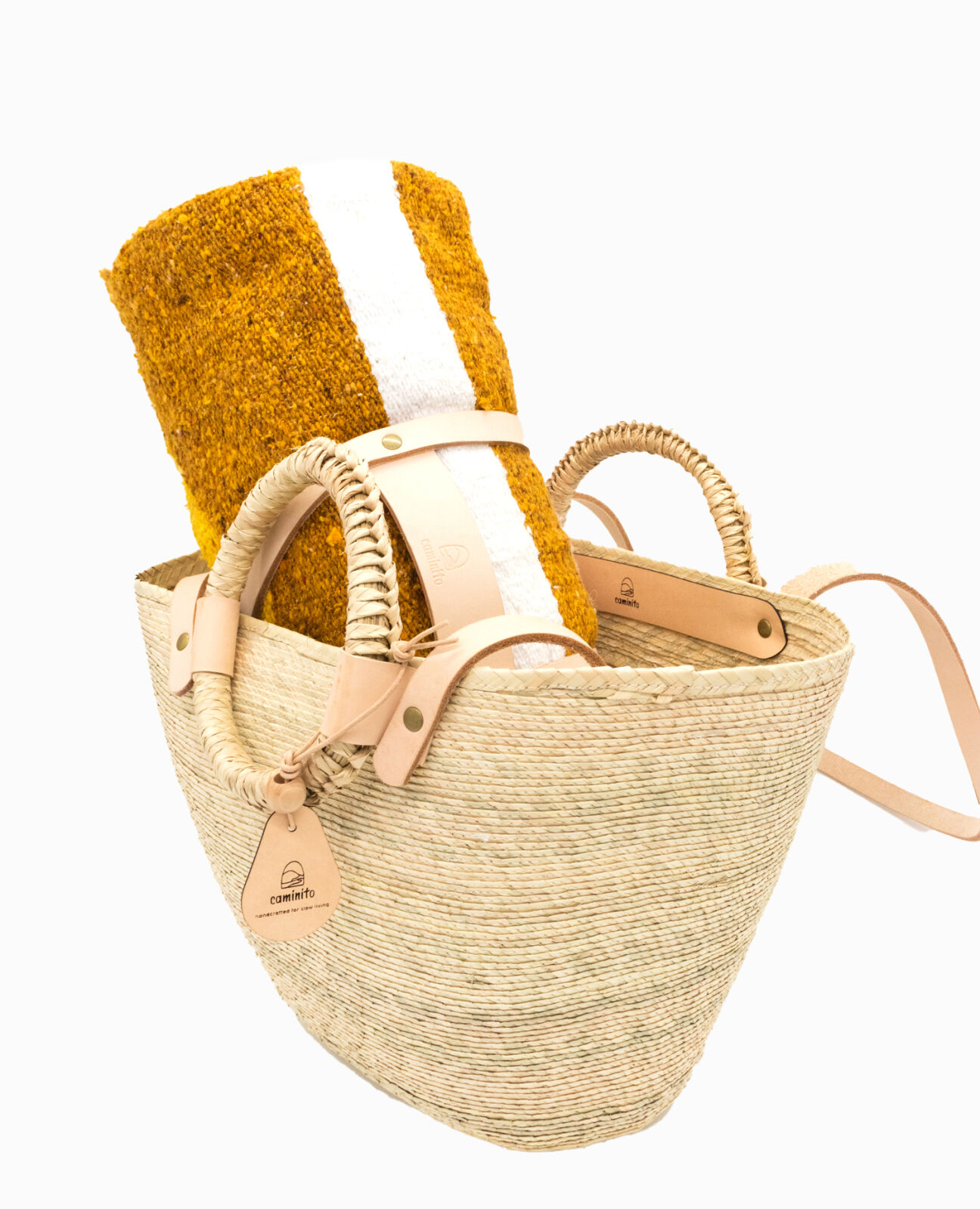
Caminito brings together two things we love: Southern California and Mexico. Based in Encinitas, their line of beach essentials features hand-woven goods from Mexican weavers and artisans, along with handcrafted leather straps made in San Diego. This Mercado Collection Tote Canasta and Luna Dulce Blanket Roll are just the thing for the beach lover in your life.
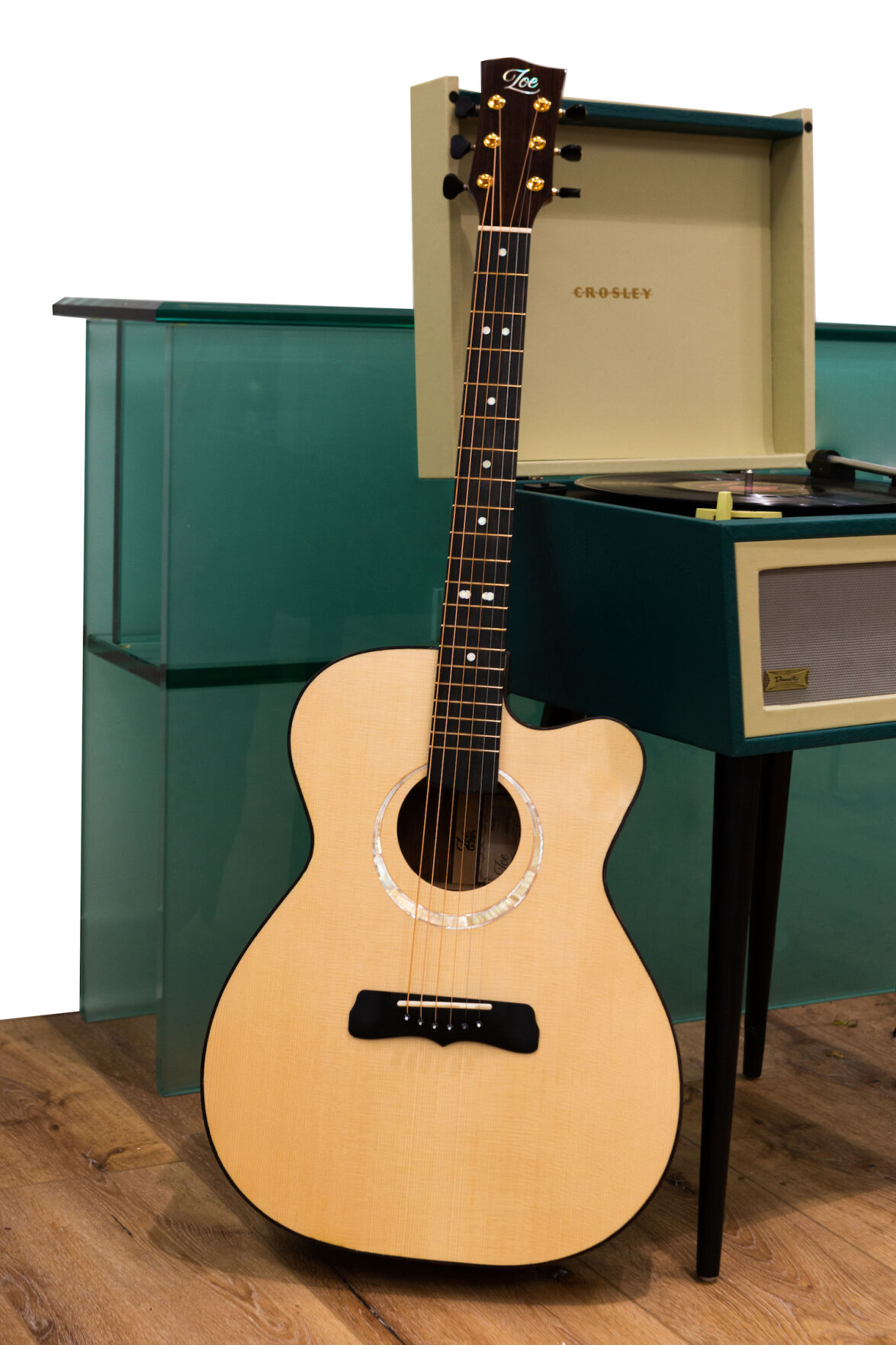
SDM-Holliday-Gift-Guide_Zoe-Guitars.jpg
Named after the founder’s grandchild, Zoe Guitars sells custom-made guitars crafted from rare and exotic woods. Patrons can choose everything from the type of wood, style of fretboard, bridge, soundboard, and bindings for a piece that is as unique as the person receiving it.
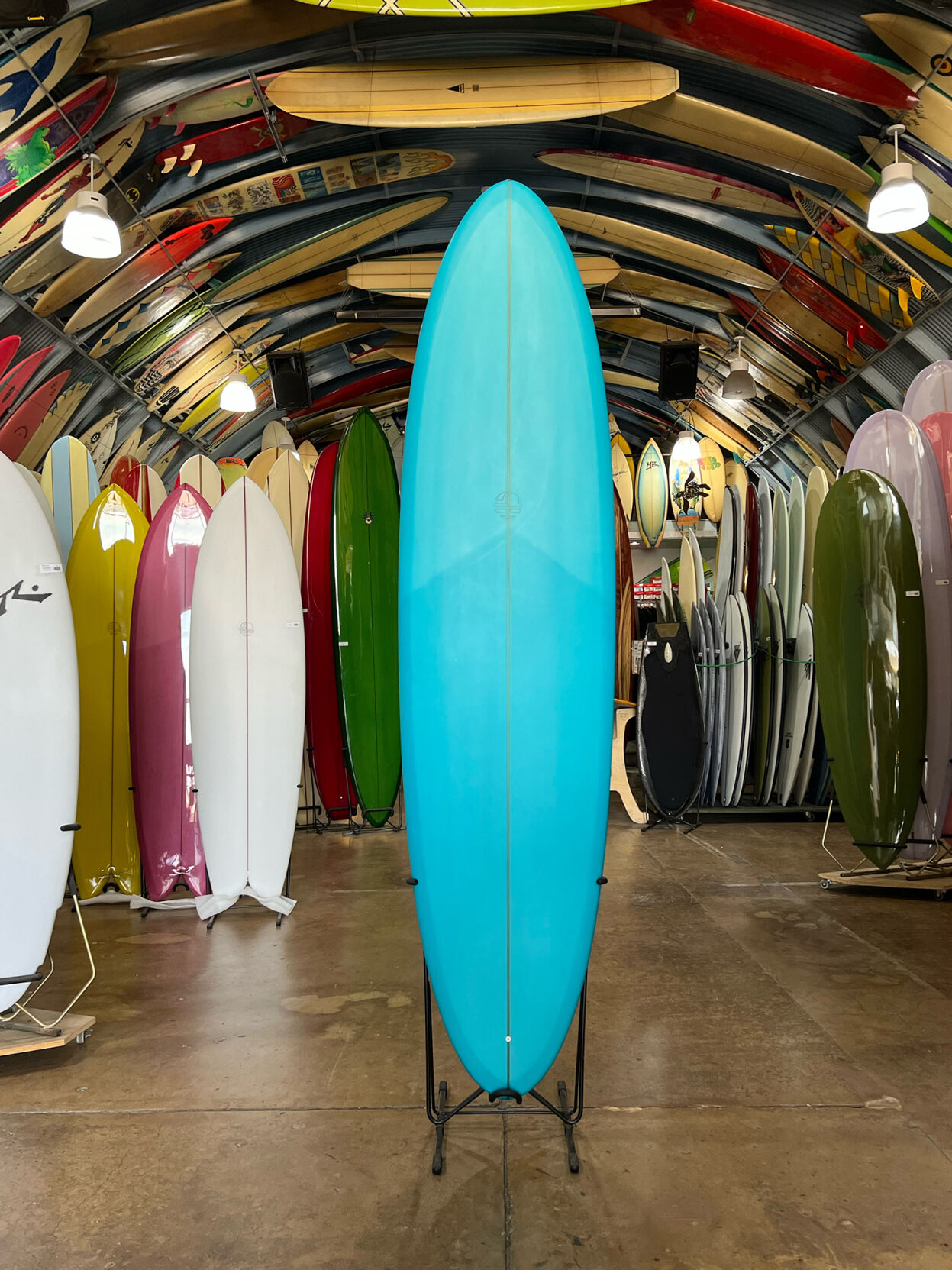
SDM-Holliday-Gift-Guide_Bird-Surfshed.jpg
Specializing in surfboards handcrafted by local shapers, Bird’s Surf Shed has been outfitting locals with their custom boards for more than 50 years. This 7’6′′ tinted egg was shaped by Bob Mitsven, who has been perfecting his craft since 1972. Your biggest challenge here will be not leaving with a log of your own.

SDM-Holliday-Gift-Guide_Skin-Resource-MD.jpg
Skin Resource.MD‘s line of skincare products is fragrance-free, earth-friendly and animal-testing-free. Their three-piece Winter Essentials kit helps restore the skin’s natural moisture via its Crystal Clarity Exfoliation Scrub, Hyaluronic Moisture Boost Serum, and Ultra Rich Biolipid Cream. A percentage of the brand’s profits also go to a nonprofit providing education and health programs for women and children in Africa.

SDM-Holliday-Gift-Guide_Dew-Good-Illuminating-Sunscreen.jpg
Local brand Coola’s Dew Good Illuminating Sunscreen with probiotic technology is an organic, vegan and reef-safe alternative to other sunscreens available. The Farm to Face formula hydrates, moisturizes, and creates a dewy look that sits well under makeup. From everyday sun protection to long days on the beach, it’s one of our top products for keeping our skin and beautiful oceans safe.

SDM-Holliday-Gift-Guide_Tubby-Todd-Essentials.jpg
The Tubby Todd Essentials Gift Kit features four essential bathtime and skincare products to keep your little one’s skin moisturized and fresh. They are gentle enough for the tiniest newborn and toddler faces, and safe for sensitive skin. The set includes body wash, all-over ointment, everyday lotion, and bath bubbles. Ask any of SDM’s newest moms about these products and you’ll only hear rave reviews.
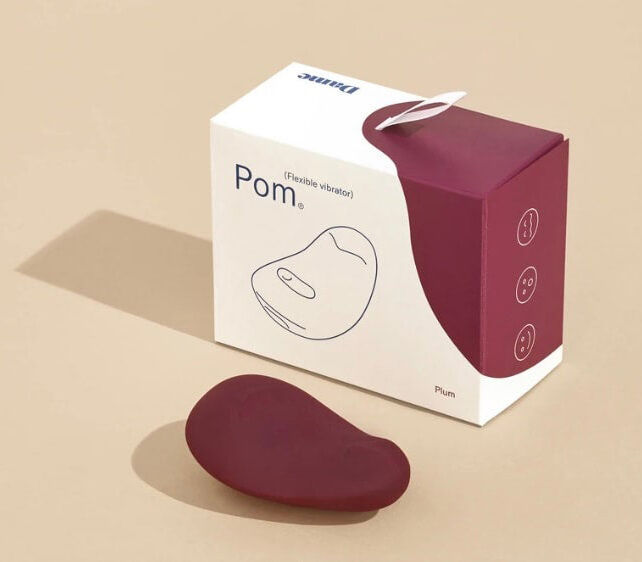
SDM-Holliday-Gift-Guide_Angelica-B-Beauty-Pom.jpg
Located in South Park, Angelica B Beauty is a local salon dedicated to supporting women in their pursuit of feeling their best—which includes a few pleasurable goods for purchase, such as the Pom Fexible Vibrator. The waterproof vibrator discreetly fits in the palm of your hand and features five patterns for exploring. It also has no internal body, which means, it’s soft and pliable—ahem, all your hip movements are welcome here.

SDM-Holliday-Gift-Guide_Pigment.jpg
Pigment is a great place for local artisan goods. Some of its offerings include these candles and necklaces by Sunshine Studios, Heather Luna earrings from August & Mae, wide hoop and Champagne crawler earrings by Jaxkelly, and Azuma earrings by Amorcito. Be sure to ask associates more about the artists behind your purchases.
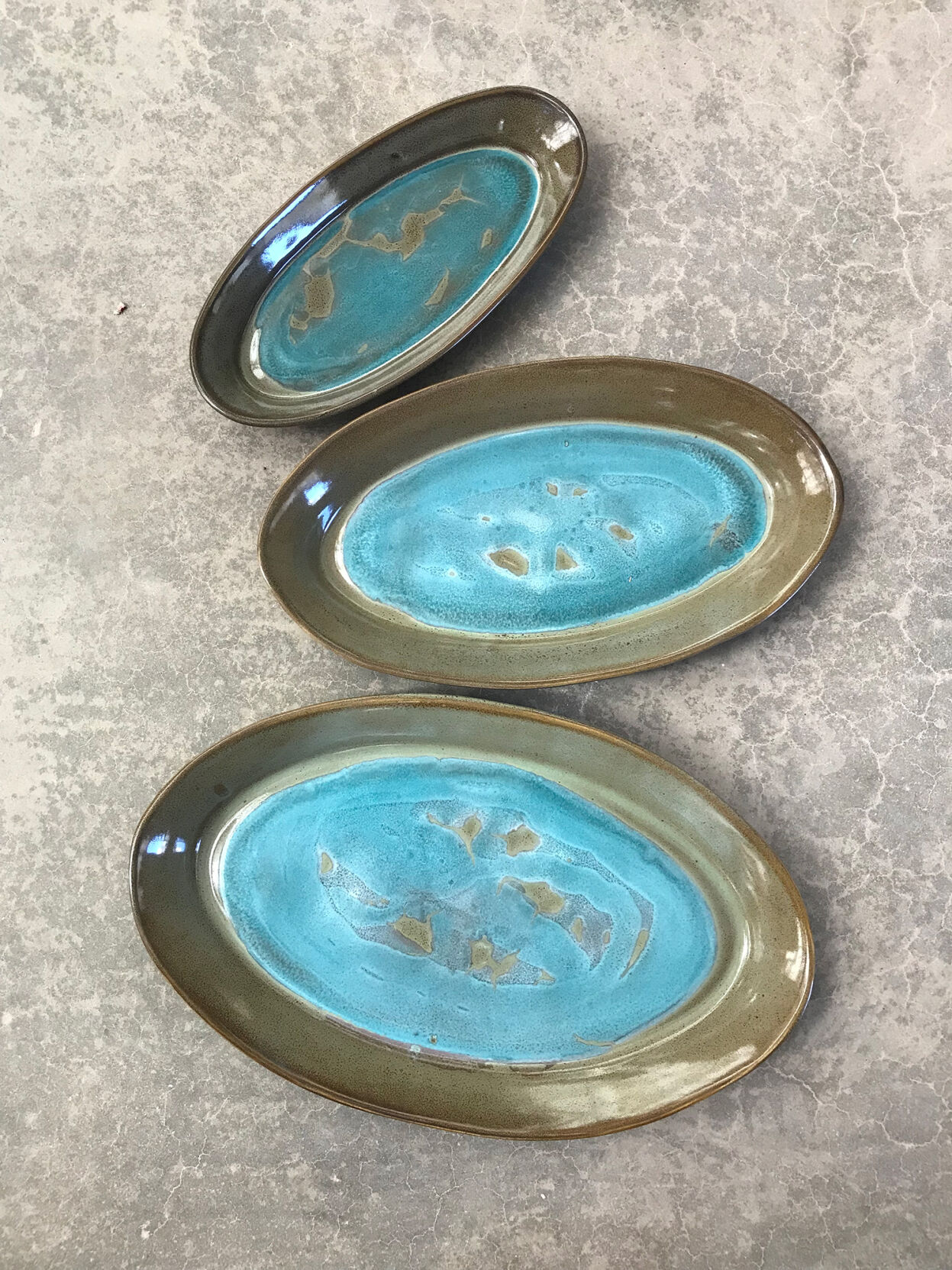
SDM-Holliday-Gift-Guide_The-Wheel-Stoneware.jpg
The Wheel has been making one-of-a-kind stoneware pieces since 1988, offering handcrafted culinary goods that are durable and chip-resistant. These oval platters are available in 16-, 18- and 20-inch options from the brand’s Pan Asian and Buffet Lines. They’re a great way to upgrade any dinner table. You can also find many of these pieces in restaurants such as Vaga, Anime, and Serẽa.
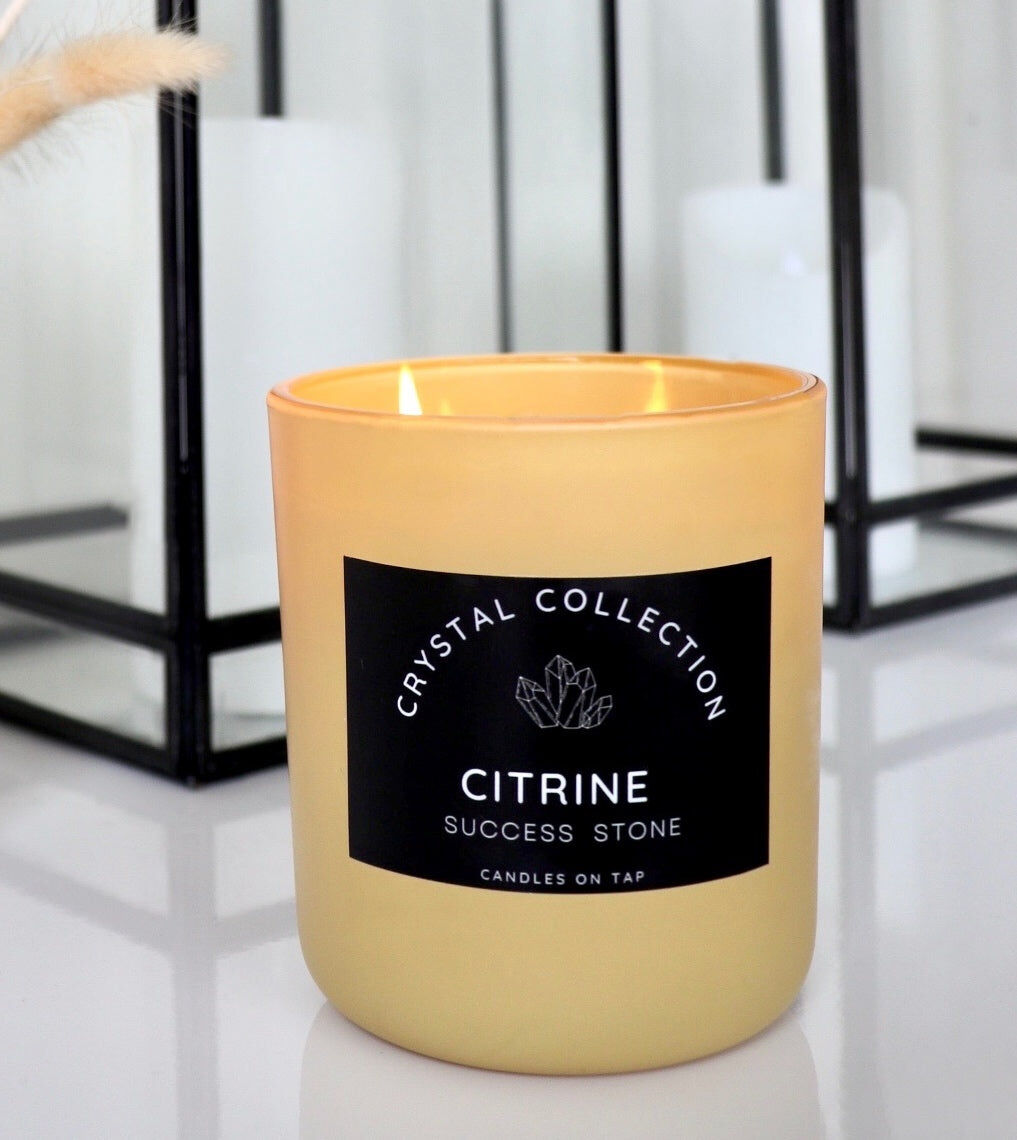
SDM-Holliday-Gift-Guide_Candles-On-Tap-Crystal-Collection.jpg
Candles on Tap Crystal Collection reeks of San Diego (pun intended). These “good vibes only” candles feature their own positive intention so that your home and energy are feeling good all day long. You can customize the brand’s soy candles or reed diffusers by choosing from the more than 100 fragrances available including Cristine, Amethyst, Rose Quarts, Obsidian, and Aventurine.

SDM-Holliday-Gift-Guide_Skouts-Honor-Naughty-Nice-Kit.jpg
For the pet owners in your life, consider a gift that is useful for their pet’s both good and bad moments. Skouts Honor’s four-piece Naughty & Nice kit features the brand’s Stop Marking! Preventative spray, Anti Chew spray, Probiotic Shampoo + Conditioner, and a Probiotic Deodorizer. The bottles come in four scents and each purchase helps feed a rescue animal in need.

SDM-Holliday-Gift-Guide_Nixon.jpg
Since its founding in Encinitas in the late 90’s, Nixon has been a go-to premium lifestyle accessory brand for those with an active lifestyle—that still want something that looks good on their wrist. You can choose from a variety of both digital and analog options, but we’re particular to the Sentry Solar Leather and Optimist watches ourselves.

SDM-Holliday-Gift-Guide_The-Lomas-Brand-Rios-Full-Zip-Hoodie.jpg
Based in Solana Beach, The Lomas Brand was inspired by beach culture in North County and was created to pay homage to San Diego via comfortable, stylish and simple attire for locals. You know, that San Diego chill vibe. The Rios Full Zip Hoodie is a cozy unisex hoodie that features a super soft and plush interior with a durable non-piling exterior making it a refined version of the classic.

SDM-Holliday-Gift-Guide_Vuori-Cozy-Sherpa-Jacket.jpg
Vuori is known for its premium apparel inspired by the West Coast lifestyle, integrating surf, art, and fitness culture into every item. This Vuori Sherpa Jacket was a fast favorite of ours, featuring ultra-plush, high-loft sherpa made from recycled material. It holds heat well and is perfect for everything from lounging around the house to mountain trails. It also comes in three colors: umber, dusty pine, and charcoal.

SDM-Holliday-Gift-Guide_Spy-Eyewear.jpg
These 1980s-inspired SPY+ Optic Discord sunglasses is made with the brand’s Accurate Radius Curvature polycarbonate lenses that follow the natural curvature of the eye which reduces eye strain and offers distortion-free viewing. They also boast a lightweight frame material meant for comfortable everyday wear. Lenses can also come with polarization to block over 99% of surface glare.

SDM-Holliday-Gift-Guide_Alexander-Daas-Milan.jpg
We featured Alexander Daas in the November 2022 issue, and knew they’d be worth another mention (lest you’ve forgotten about them). These Alexander Daas Milan sunglasses are a part of the brands Heritage collection and somehow look good on just about every person. Available in four colorways, they feature polarized anti-reflective coated lenses and a lightweight rounded frame, giving them a seamless and fashionable aesthetic.
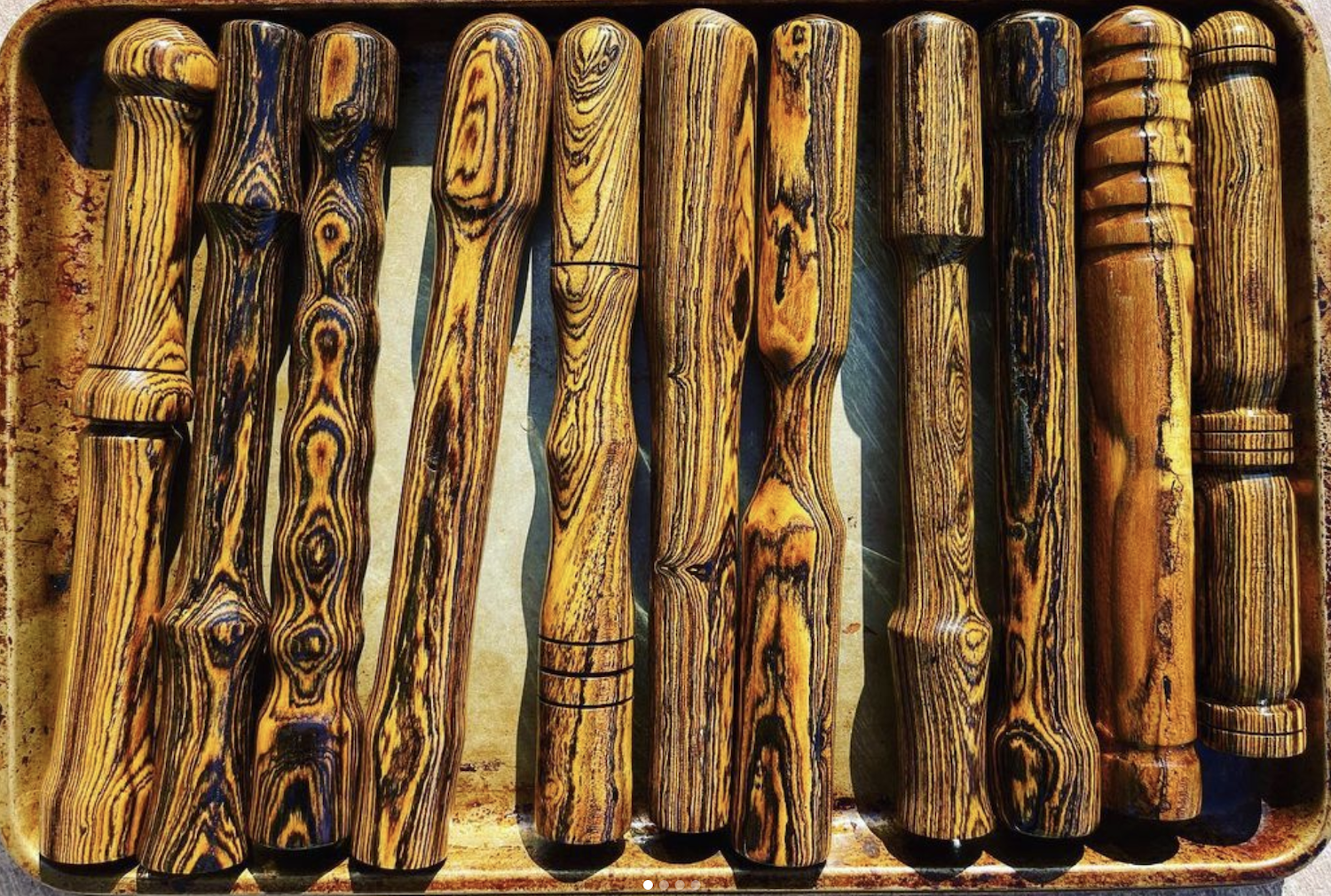
SDM-Holliday-Gift-Guide_Caribou-Wood-Design-Muddler.jpg
This essential cocktail-making tool—used to mash up ingredients for cocktails like Mojitos, Mint Juleps and Old Fashioneds—is handmade by San Diego-based Caribou Wood Designs. The muddlers are sturdy and beautiful, and are made from Bocote, a dark-striped exotic wood from Southern Mexico. You can find these at Collins & Coupe in North Park.
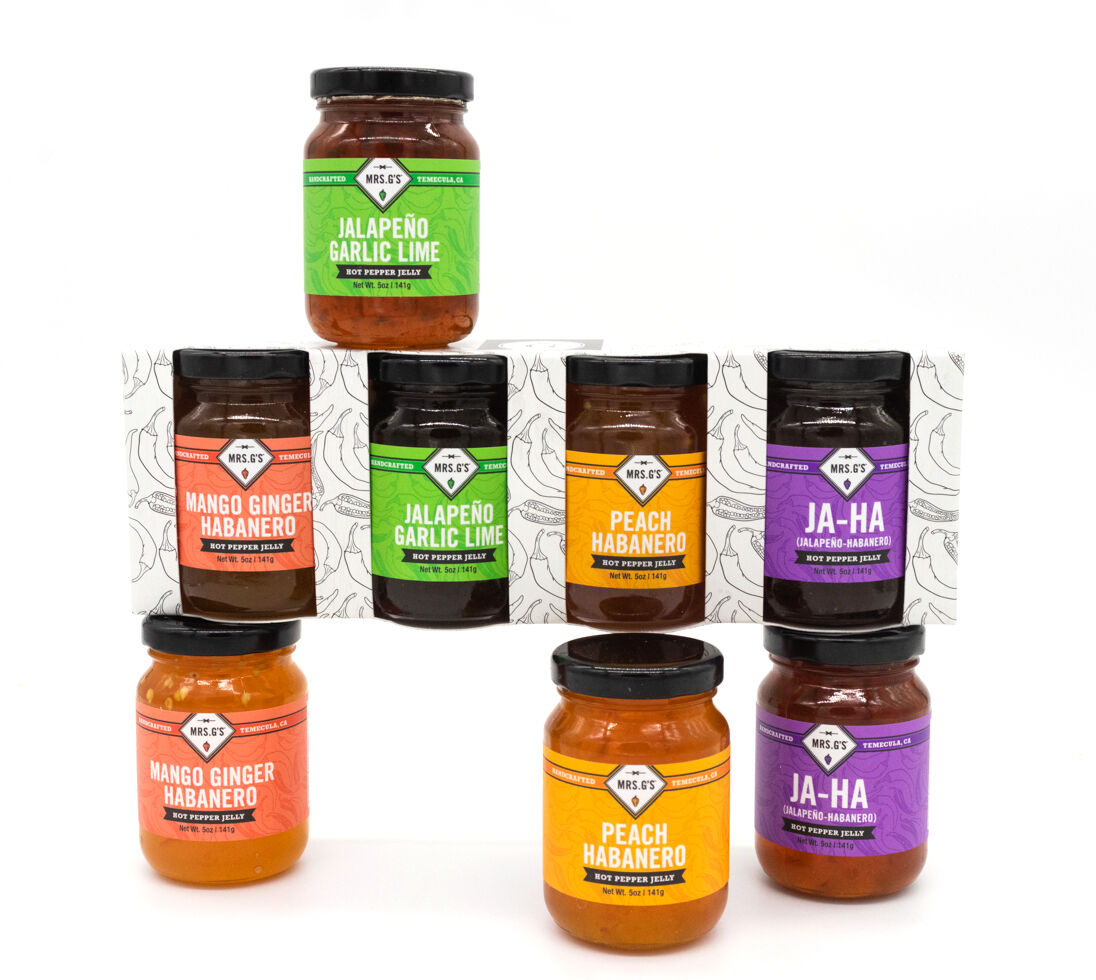
SDM-Holliday-Gift-Guide_Mrs-Gs_Jelly.jpg
What started as unique holiday gifts for friends more than 20 years ago has become a full-time gig for Cindy Greaver (Mrs. G). Mrs. G’s offers small batch, hand-crafted hot pepper jellies. Her sampler pack is a good intro to her products and includes four flavors: Mango Ginger Habanero, Jalapeño Garlic Lime, Peach Habanero, and Ja-Ha.
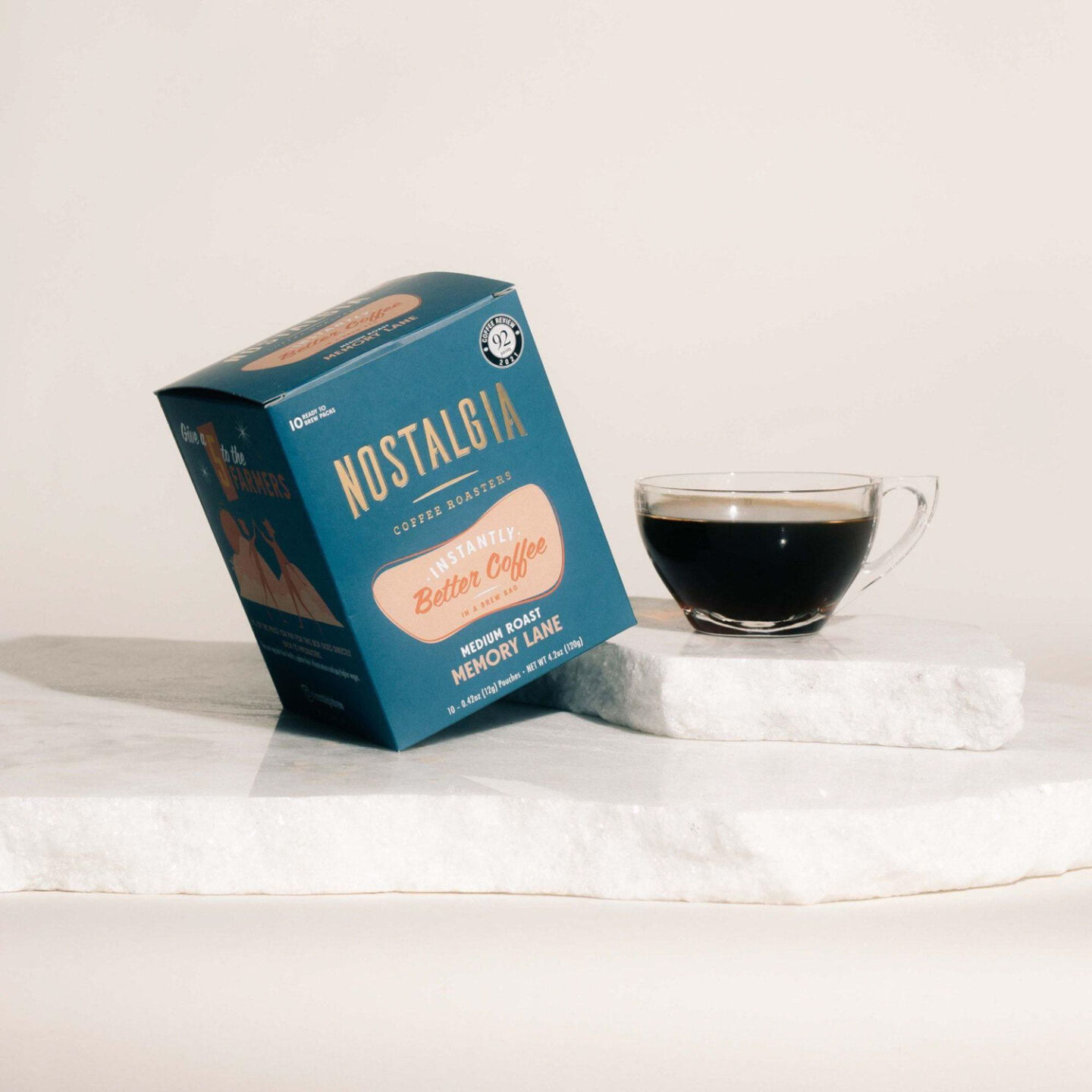
SDM-Holliday-Gift-Guide_Nostalgia-Coffee.jpg
For the coffee-lover on-the-go, check out Nostalgia Coffee. The brand created their own brew bags, similar to the typical tea bags you see on the market, which allow you to make your daily Cup O’ Joe without the need for a coffee maker or daily run to Starbucks. Just dunk your bag 5-15 times in hot water, remove, and enjoy. Easy.
SDM-Holliday-Gift-Guide_Cravory-Cookies.jpg
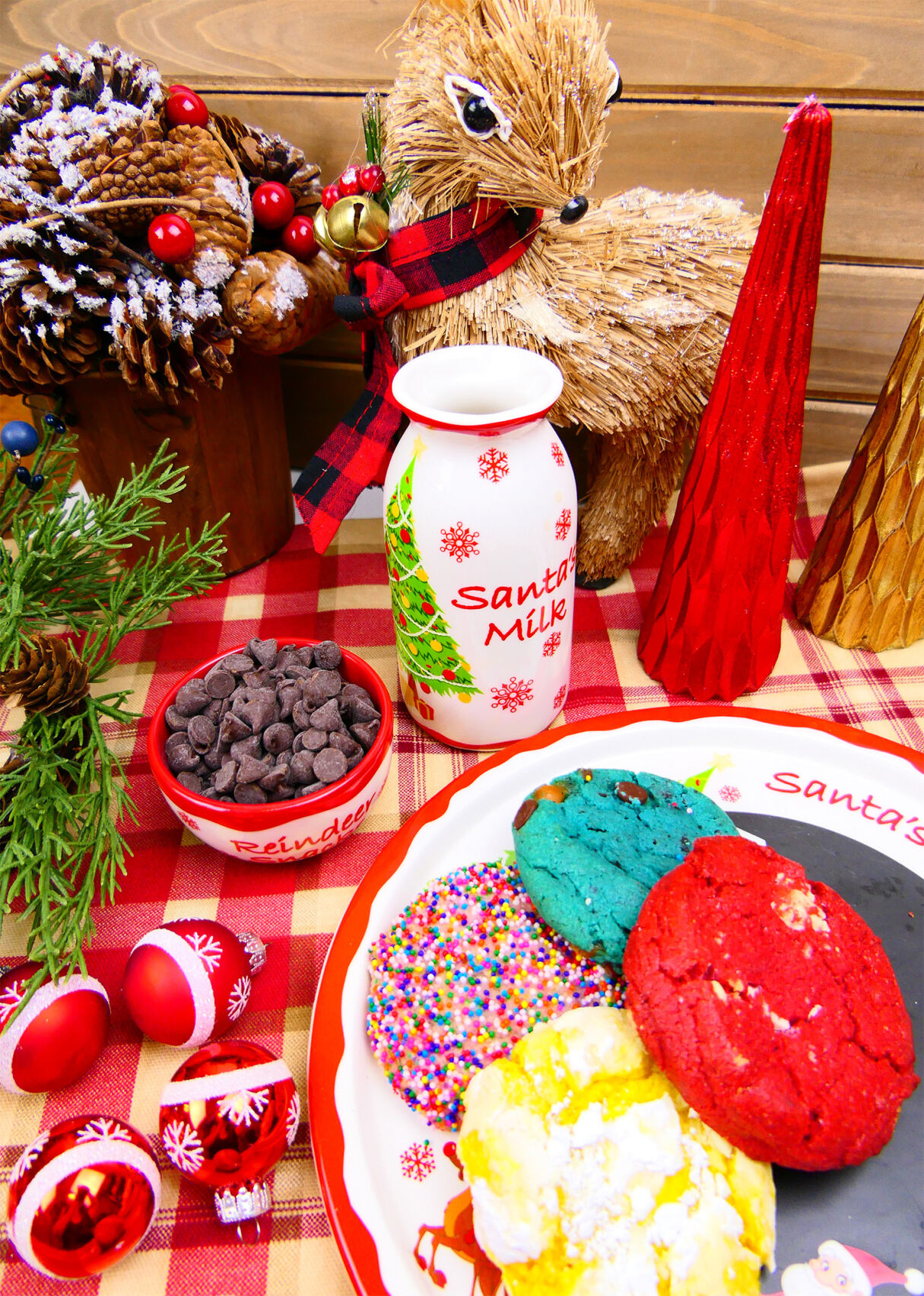
If you’re not over-indulging on cookies this month are you even being festive? This holiday season, Cravory Cookies is offering an assortment of their best sellers (birthday cake, chocolate chip, cookie monster, lemon bar, salted caramel cream and red velvet), baked fresh in San Diego. They can be shipped within 24 hours, so buy them for friends or send them right to your doorstep. We won’t judge.
SDM-Holliday-Gift-Guide_Mayas-Cookies.jpg
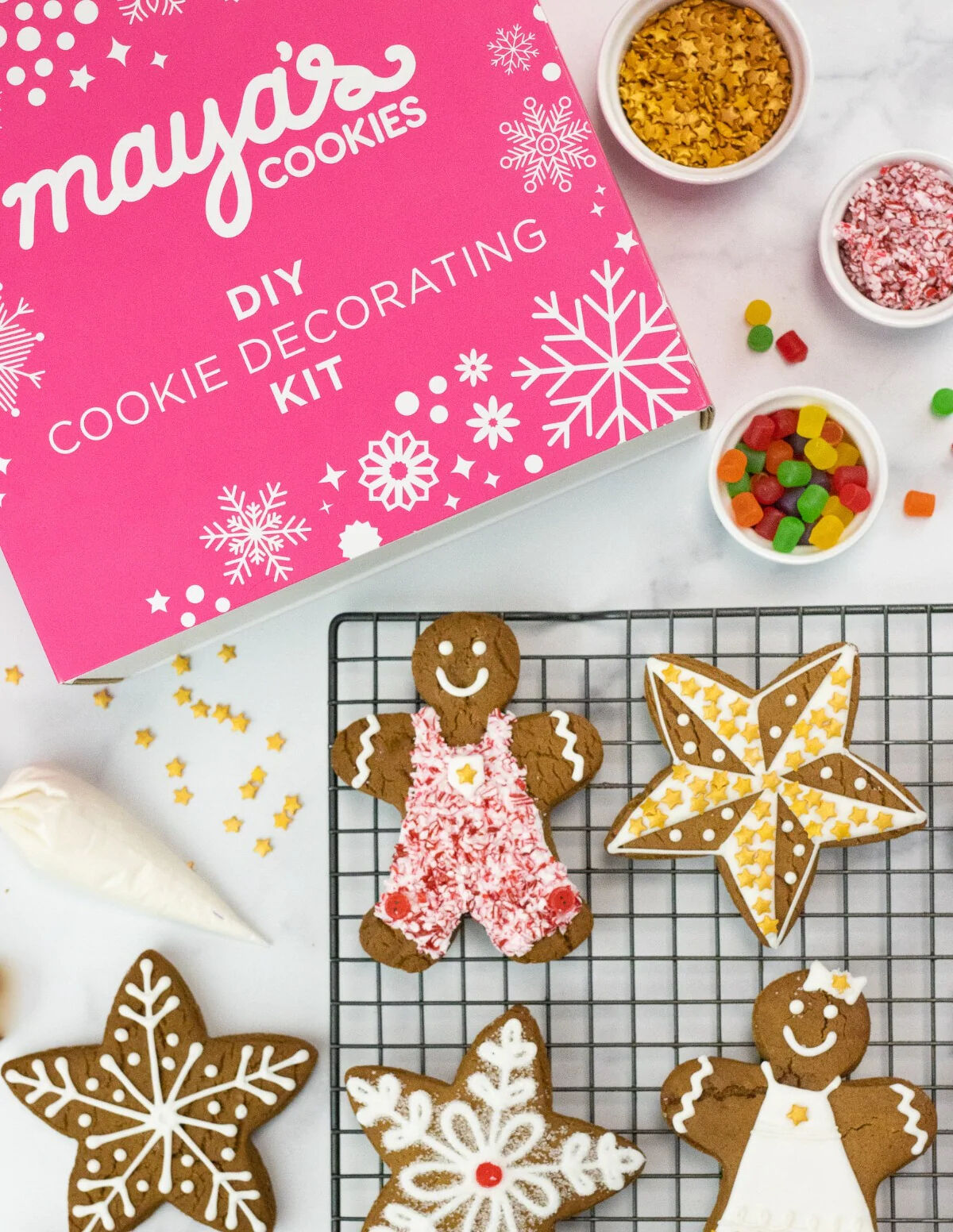
Everything you need to get into the holiday baking spirit can be found in the Mayas Cookie’s DIY Cookie Decorating Kit. Find six gingerbread cookies, ready-to-use icing and piping bag, and assorted candies and sprinkles. Grab the little ones or invite your friends over for a cookie-decorating (and eating) party.

SDM-Holliday-Gift-Guide_R-and-D-Bitters.jpg
Founded in 2014 by San Diego bartenders, Ryan Andrews, Eric Lockridge and Brett Winfield, R&D Bitters has slowly grown its line from the citrus-and-spice classic, Aromatic #7, to eight options. Pick a set of three for your favorite cocktail aficionado, like the Floral (it adds a magic touch to a classic Aviation), Cherry Apple (excellent in an Old Fashioned) or Fire bitters to add some heat to a Margarita.

SDM-Holliday-Gift-Guide_Curious-Juniper-Syrups.jpg
Curious Juniper, San Diego’s first craft simple syrup company is a woman-owned business which is dedicated to sourcing ingredients responsibly, joining climate awareness initiatives, and offsetting manufacturing and delivery omissions to protect the environment. Their line of simple syrups feature an assortment of flavors from rich to floral to spicy. There’s something for every cocktail lover (for non-cocktail drinkers, the syrups can be added to soda water). Grab the festive Brown Sugar + Cinnamon or Pumpkin + Spice syrups for the host or hostess in your life.
SDM-Holliday-Gift-Guide_Classic-San-Diego-Tiki.jpg
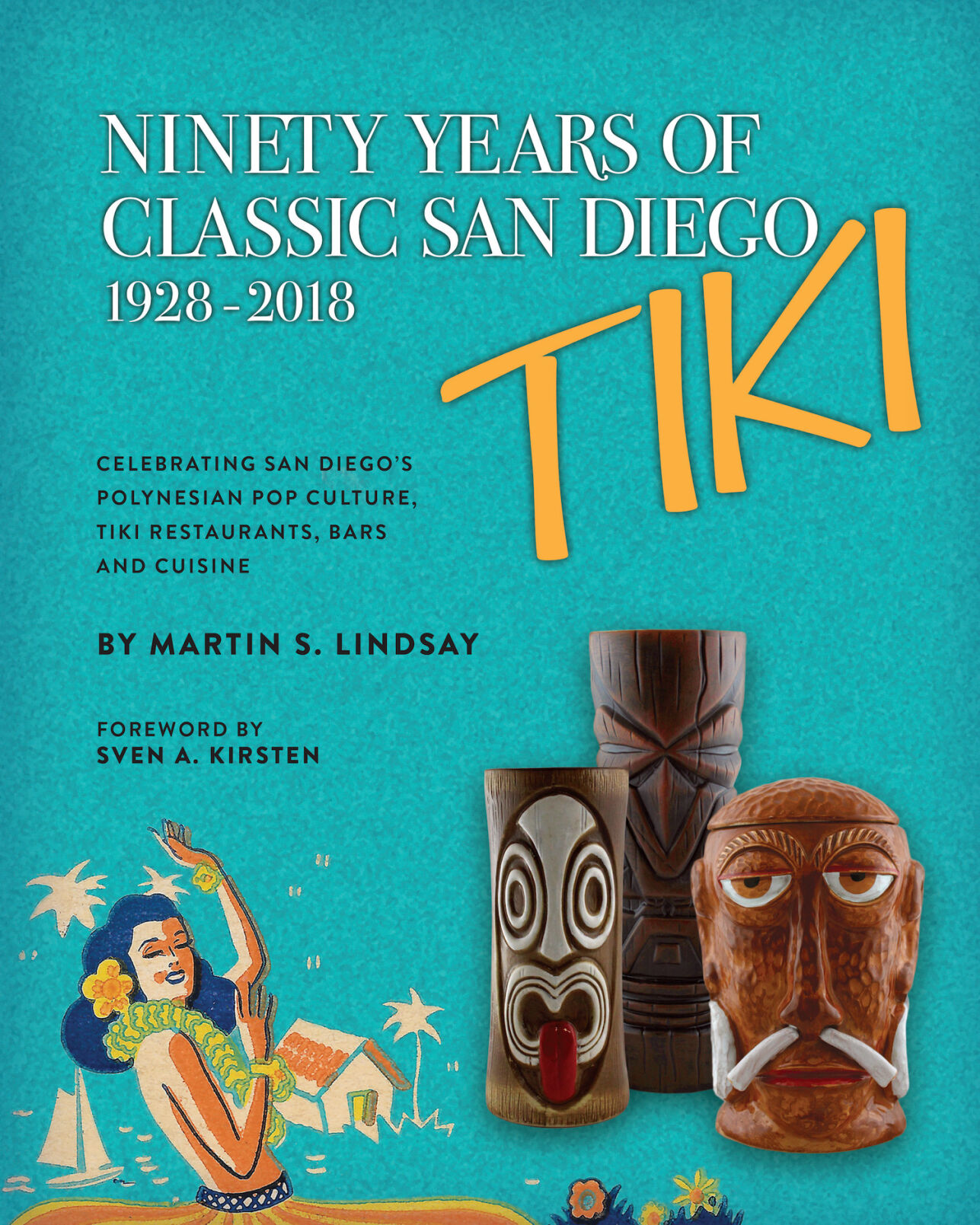
Martin S. Lindsay’s Ninety Years of Classic San Diego Tiki celebrates “San Diego’s Polynesian pop culture, tiki restaurants, bars and cuisine,” beginning with the opening of The Aloha Café in Tijuana in 1928 during Prohibition. The book features stories, gorgeous photographs, classic recipes and ephemera from now-shuttered bars and restaurants like The Kon-Tiki, Don the Beachcomber and the Cat Eye Club, making it the perfect gift for cocktail-loving historians.
SDM-Holliday-Gift-Guide_You-and-Yours_Saturnalia-Gin.jpg
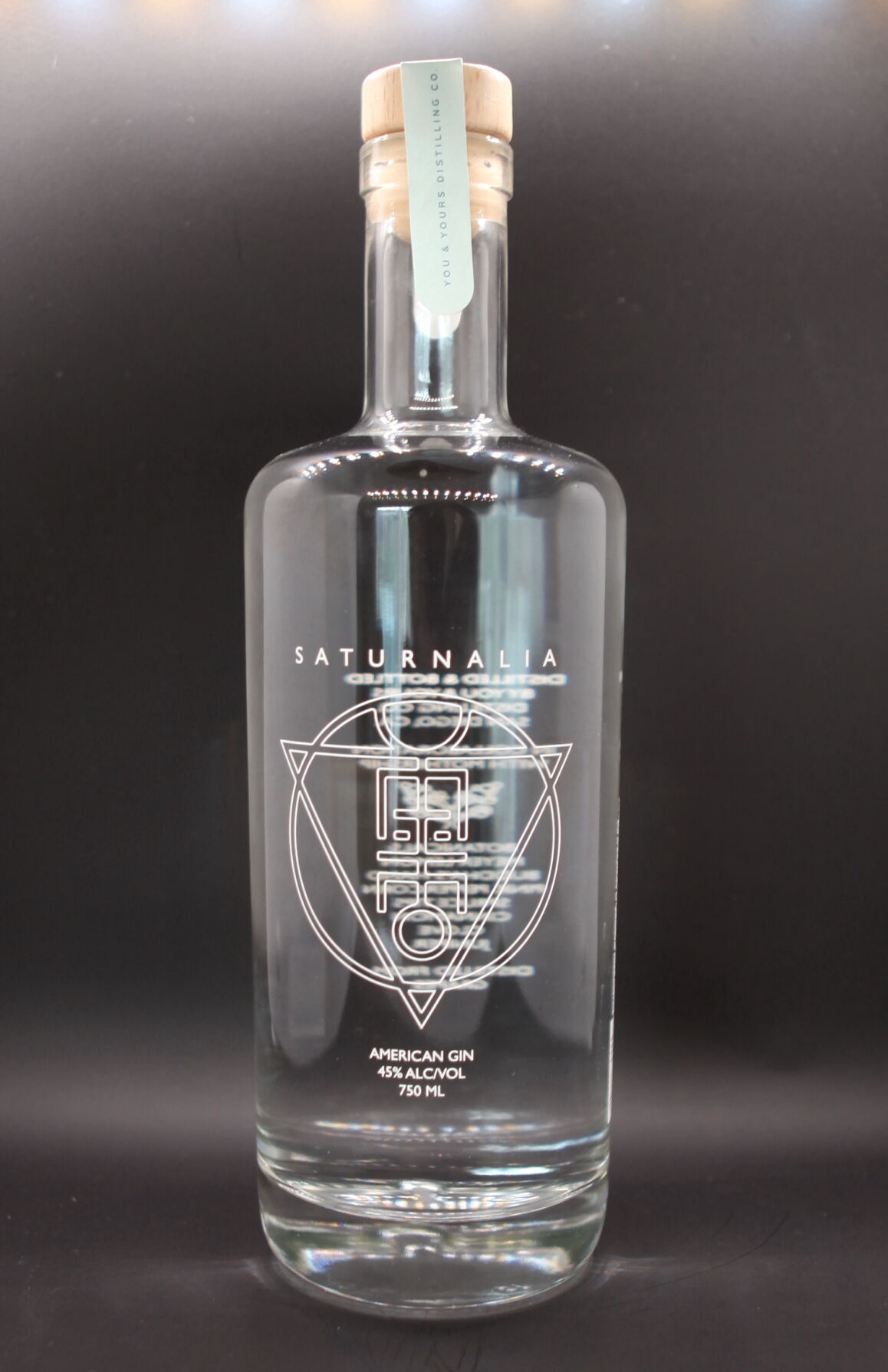
Fans of tiki cocktails are used to intoxicating combinations of rum, but the Saturn (a tiki classic), is the genre’s rare gin cocktails. For its spot-on Saturn, South Park bar Mothership tapped East Village distillery You & Yours to create the Mothership Saturnalia gin. This American-style gin has lots of baking spice and citrus notes, making it great for a Saturn and a sure-hit with your favorite gin lover. Bottles are available for purchase at Mothership.

SDM-Holliday-Gift-Guide_Cutwater-Spirits.jpg
Cutwater has been a vanguard when it comes to canned cocktails, with more than two dozen quality offerings. For the colder months, Cutwater has introduced a trio of “Heaters” based on beloved warm cocktails: Whiskey Hot Toddy, Hot Buttered Rum and Vodka Apple Pie (try it topped with whipped cream). Just add five ounces of hot water and an ounce-and-a-half of Heater. You can gift a whole set (each bottle makes eight cocktails) or bring one to a party as a host/hostess gift. And if your giftee prefers chilled drinks, Cutwater’s Bali Hai Tiki Holiday Spirit is like a tropical White Russian—what The Dude would drink on his Christmas trip to Barbados.
*The price for a custom guitar with Zoe Guitars was listed as starting at $1,200 in the December 2022 issue but has since been updated to reflect the correct pricing.
Artists and advocates are building a more sustainable creative future through public funding, political organization, and cross-border collaboration
This is part of a three-part series. This is Act III. See Act I and Act II here.
We’ve been here before.
In 2012, city funding for the arts and culture in San Diego had eroded. As a corrective, the city council unanimously approved “Penny for the Arts”—a promise to dedicate roughly one penny of every dollar spent on hotel rooms (the Transient Occupancy Tax, or TOT).
The logic was fair and sound: Cultural institutions and events help attract visitors. Those visitors pay hotel taxes. So, the people agreed, some of that hotel-tax revenue should go back into maintaining the cultural ecosystem that helps bring those visitors and that money.
Projected as a five-year plan, the measure was supposed to increase funding to $17.9 million by 2017.
It never did. The penny was never guaranteed, so each year the city used part of it for other priorities. By 2023, the money going to arts and culture was up to about a half a penny. Even as TOT revenue has gone up significantly.
In 2019, TOT revenue was $245 million.
In 2025: $325 million.
One fix would be to guarantee the penny. Not simple, given San Diego’s financial woes. But the alternative—eroding the culture that makes San Diego San Diego, give it its identity—also doesn’t feel wise. Plus, even a locked percentage still rises and falls with tourism, which is why culture advocates want a guaranteed floor on top of it.
Another solution would be to give the arts commission actual authority.
“It’s an advisory body,” says arts commissioner Kamaal Martin. “You’d be hard-pressed to find anybody who takes our advice.”

He described the commissioners debating real, consequential questions this year, like whether and how to divide the cuts between funding pools. But those conversations “don’t connect to whoever’s actually deciding,” Martin says. “We haven’t been entrusted with decision-making about relevant things nearly enough.”
Christine Martinez is building political infrastructure through her organization Arts+Culture:San Diego—which is starting a 501(c)(4) lobbying structure not unlike police and fire unions. Martinez is also keeping her community actively engaged. “We won’t be caught off guard next year like we were this year,” she tells me.
Then there’s the evergreen issue of affordability and accessibility. Kiplinger’s most recent report ranks San Diego as the 11th most expensive city in the US, based on cost of living. The average home value is $980,700 (the US median is $540,000), but San Diego’s median household income is only one-third greater than the national level. Rent is also 66 percent higher than the national average ($2,716 vs. $1,636).
This is why San Diego has long suffered from the creative brain drain—creatives leaving for more affordable cities. “Artists are free to live wherever they want, and they will go where the rent is affordable,” says Jennifer de Poyen of Space 4 Art. “When they leave, they take their gifts with them, and their contributions, and their economic impact.”
One saving grace is the presence of Tijuana, where the cost of living is about 60 percent lower than San Diego, per Numbeo. Tijuana has long functioned as an affordable neighborhood for many in San Diego’s creative culture. It’s part of the reason why the binational identity is such a constant in our galleries, music, theater, murals, and culture. While that cross-border blood flow is one of San Diego’s most compelling attributes, few artists living that life would call it convenient or easy. A city is at a disadvantage when its culture creators have to cross a border to go home at night, and cross again the next morning to work.
In May, San Diego County Board of Supervisors approved a $2.75 million arts initiative of its own. It includes an Artist Space Grant Program aimed directly at the affordability crisis, as well as an artist-in-residence program, a dedicated Binational Creative Economy Investment, and a one-time investment in the Black Arts and Culture District in Encanto.
Bob Lehman of San Diego Art Matters has been doing county-level, binational organizing for years; in 2023, he helped get the county’s arts commission reestablished after 30 years of defunctness. That’s important because it gives arts and culture an official seat in county government, advising the County Board of Supervisors on arts and culture policy. He also brought in consultant Laura Zucker, who ran LA County’s arts program for three decades, to build a real regional plan.
“I really believe we’ll have something set up here that other communities come and look at,” he told me. “A national template other cities come to learn from.”
When asked who decides which artists will get the new grant money, county arts commissioner and executive director of the Chicano Park Museum and Cultural Center Monica Delgadillo Hernandez doesn’t hedge.
“That’s part of the infrastructure we’re going to be building,” she says. “What should a panel of reviewers look like? Should it be the commissioners? Should it be other folks? A supervisor?” She was just as candid that the commission itself doesn’t reflect San Diego’s population—Chicano communities are roughly a third of the city, she tells me, “and that’s not represented at the table yet.”

The great news is that none of these solutions have to be invented from scratch. Numerous cities serve as examples of what’s possible—if we have the will.
Jonathon Glus—Prebys Foundation Senior Fellow for Art & Design, the Executive Director of the Art + Design District, and board president for California for the Arts—worked in Houston before coming to San Diego. The Texas city dedicates 74.5 percent of its hotel tax to arts grants by formula, and that support is guaranteed. Washington, DC locked in dedicated arts funding in 2019. Salt Lake City, my hometown, has run a voter-approved arts tax for almost 30 years, most recently reauthorized through 2034. And just this summer, New York City pushed cultural funding to a record $323.8 million, even incorporating an emergency fund.
Denver’s model is interesting because instead of a city-dependent funding model, theirs is a 0.1 percent regional sales tax. In place since 1988 and renewed by voters three times, their Scientific & Cultural Facilities District has distributed between $54 million and $85 million to arts, culture, and scientific orgs—each of the last 12 years.
This is part of a three-part series. This is Act III. See Act I and Act II here.
None of these cities got there by accident. They decided, on purpose, that arts and culture were worth protecting from politics—and, in some cases, worth building an entire identity around.
“That’s how Miami has flipped the switch,” says Glus. “People go to Miami for culture as much as they do the beach.”
San Diego has spent decades selling itself backward: Beach and weather first, culture as an afterthought you might stumble into. Glus would love to see the strategy flipped: Visitors should come for the art, “and then, by the way, you’re on the beach.”

“I do think it was a wake-up call for the community,” de Poyen says of the budget fight. “People understand that our funding is vulnerable. It was a lesson in how much power people have when they coalesce. But wow, is it painful.”
Glus says he’s genuinely optimistic. “The players have all changed seats, but the work is moving forward.”
“I believe optimism is a moral duty,” says Martin, who’s both power-fist and polite.
In eight months, there will be another budget fight. Everyone I talked to expects it will be worse. But something happened this spring that can’t be undone.
“I hope this rupture has brought us together in a moment of self-realization,” says Leticia Gomez Franco of the Balboa Art Conservation Center. “I hope we stop being so transactional; we begin to see ourselves and each other as partners in this work.”
That’s the whole ask, really. And it’s on all of us.
This is part of a three-part series. This is Act III. See Act I and Act II here.
Aaryn Belfer is a writer and editor specializing in nonfiction across art, architecture, and culture. Once upon a time, she wrote a provocative column for San Diego CityBeat (RIP). She was a runner up in the 2025 Matchbook Stories contest at the San Diego Central Library and is irrationally happy about it. Currently in her Soft Girl Era, Aaryn has expensive taste in (mostly flat) shoes and will choose a great art exhibit or live jazz concert over almost anything else. Except, possibly, Javier Bardem.
The history, communities, and creative movements behind a cultural scene that extends far beyond the city’s postcard image
This is part of a three-part series. This is Act II. See Act I and Act III here.
Without concrete, wildflowers are just weeds. Any honest history of San Diego art and culture is tension and its reckonings. It begins before the name existed, with the Kumeyaay. It must pass through the Panama-California Exposition, one hell of a county fair that conjured Balboa Park as our grand cultural stage. It pays tribute to the lights of La Jolla, where the donor pool helped realize unrealizable things. It should mention names like Marston, Scripps, Ochoa, DeWitt, Lopez, Klauber, Baldessari, Torres… so many.
In short spaces like this, long histories like that become roll calls. So this is more of a walk through pressure points, notes on recurring forces and regional oddities.
Border life is key to understanding the here of here. Art without dialogue is just decoration. At its best, that dialogue should be a tad muddy, emotionally gassed. In other words, it should be in need of art—to widen perspective, parse meaning, see the unseen.
San Diego’s central dialogue—the magic and the stressor—is being flatmates with Mexico’s second-largest city by population. That makes San Diego a swing-gate of shared and vastly different perspectives, both its own place and something larger. And in no other major city in the US do the fresh flow of ideas from two countries—different governments, laws, mores, expressions, arts, cultures, traditions, economies, loves, and resentments—mingle at such a constant daily rate (due respect to El Paso).
That binational steam created Chicano Park, one of the most uniquely San Diegan contributions to national and international culture. When construction of the I-5 and Coronado Bridge divided Logan Heights, neighbors protested by transmuting prejudicial concrete into redwoods of Chicano art. Turning a civic wound into a beautiful and enduring landmark that expressed and preserved a core identity—like East Side Gallery in Berlin or Constitution Hill in Johannesburg—is damn near the core of what art is supposed to do.
Like any city, the underground-overground friction is crucial in San Diego. Our culture is headlined by institutions that lift creative work onto national and international stages: MCASD, The Nat, SDMA, Centro Cultural de la Raza, the Symphony, WorldBeat Center, The Old Globe, La Jolla Playhouse, Mingei, Museum of Us, Stuart Collection, Timken, ICA, Comic-Con, etc. The next mutations grow in the seams: street murals, music dives, tattoo shops, wheatpasted walls, graffiti, lowriders, surf and skate art (though in San Diego, this is mainstream), pop-up shows, backyard shows, beach raves, any place with room for people and a loose relationship with regulations.

Both art and culture get their power from power. They’re fundamentally a conversation with and retort against dominant structures. San Diego’s most pervasive structure is arguably the most rigid form: the military. Its presence is heavy in the southern tip (Border Patrol), the middle (Navy and MCAS Miramar), and northern edge (Camp Pendleton). The military is San Diego’s largest employer, by a long shot.
Within this plus-sized environment of order and hierarchy, it’s understandable that Shepard Fairey’s “OBEY” posters in the late ’90s struck such a potent chord. The most compelling punk rock is often outside a strong governor’s window. (The “OBEY” series featured an ominous, propaganda-style André the Giant wheatpasted on random ugly surfaces across San Diego—launching Fairey’s style that he eventually used for Obama’s “HOPE” poster.)
Armed forces are often viewed as the absence of creative culture—understandably so, since rogue individual expression feels like a pretty sure way to sink a war effort.
But in San Diego, the Navy’s unsuspecting role as art creator—directly or indirectly—is hard to ignore. Tattoos are a dawn-of-time practice of many early cultures, including the Kumeyaay. But Polynesia was a core realm. Sailors were exposed to it on deployment in the Pacific Rim, inking their arms with the names of loved ones and unit insignia. Back in San Diego, they’d flaunt those tats in the beaches and bars of Mission Beach or PB (Marines did the same in Oceanside.) Enlistees were the muscular flesh galleries that helped turn skin art into one of the city’s most widespread modern art forms.
During WWII, the military also trained huge legions of San Diego laborers how to build war machines. Those mechanics, engineers, machinists, welders, painters, and metal fabricators used those skills for creative good in their neighborhoods—especially in custom car culture, which took off in the post-war ’50s and ’60s. Mexican-American vets helped develop the lowrider scene, a deeply rooted part of San Diego creative expression. Galleries on slow-moving wheels.
Tourism is the other mainstream force ripe for creating against. It is both critical to San Diego’s economy, and one of the greatest barriers to deeper, more nuanced expressions of what and who San Diego is. The industry of selling our city to passers-through creates a gigantic tarp of cultural tropes. It reinforces the most obvious charms—cute zoo animal takes in an epic sunset with a giant margarita—and doesn’t yield much airspace to the thrilling micro-cultures that live and breathe where locals live and breathe. Nothing against watercolors of dolphins, but much against the hegemony of watercolors of dolphins.
Maybe because of these dominant forces, San Diegans especially tend to force underground and institutional art into a needless cage match. It’s human instinct to champion the underdog as more worthy, but that has always felt like a form of articide.

It’s like saying the only good food is made by gritty upstarts who crafted their own whisks from discarded shopping carts. Most of those plucky whisk-makers would love to eventually be paid properly, would love a stage, a grant, a building, a donor, a lighting rig, health insurance, maybe even one chair that doesn’t threaten the spine.
That’s what the major institutions do. Both stages—the duct-taped and the donored—serve vital roles and deserve commensurate support if we care about the entire lifespan of creative expression and not just its first exciting steps. Championing the starving artist exclusively just secures an enduring poverty for the creative class at large.
I’ve often theorized it’s harder to create great art and culture in cities like San Diego, where the climate is supernaturally pleasant. In colder/hotter/rainier/less beautiful cities, people are forced indoors to fabricate their own beauty (the grunge music of Seattle, the obscene creative output of Reykjavík). San Diego’s eternally mild sunshine tends to make the human body our art medium of choice. But scratch the surface of that surf poster (and I’ve only scratched a miniscule percent here), and this city’s far from the cultural shallows it gets accused of being.
Addendum: A Personal Agenda. In scouting the route of art and culture across San Diego county through history, two areas come up again and again: La Jolla and Barrio Logan. So I propose a collaboration between two icons of artful concrete—Chicano Park and Salk Institute (one of the world’s great examples of brutalism architecture). Let Barrio Logan’s muralists go nuts on that coastal science fortress, unite the realms for a moment in time.
This is part of a three-part series. This is Act II. See Act I and Act III here.
Troy Johnson is the magazine’s award-winning food writer and humorist, and a long-standing expert on Food Network. His work has been featured on NatGeo, Travel Channel, NPR, and in Food Matters, a textbook of the best American food writing.
The city’s cultural sector regained millions after a proposed 85 percent cut, yet nonprofits, youth programs and major institutions still face painful losses
This is part of a three-part series. This is Act I. See Act II and Act III here.
Every spring, Christine Martinez reaches out to the arts community to explain what’s on the line, hoping they’ll engage with the city’s budget process. Cultural funding, she constantly reminds, is almost always strapped to the guillotine. Especially in a city strapped for cash.
“It’s not an easy ask,” says Martinez, manager of Arts+Culture:San Diego. “Showing up is a real cost for small, volunteer-run groups that can’t spare half a day at City Council without possibly having to close their doors.”
Then, last April—with one day’s notice to arts leaders—Mayor Todd Gloria proposed a budget that didn’t trim arts funding; it eviscerated it, from $13.8 million to $2 million. An 85 percent slash. Other city departments faced cuts of about 7 percent.
The scheduled date of the cuts was just three months away (beginning of the fiscal year). Organizational leaders have to plan months if not years ahead to run their organizations. They had made hires, dedicated spending, and programmed their seasons based on a reasonable expectation that support for the arts would be somewhat in line with previous years. (The City has allotted at least $7 million a year to arts every year for the last 20 years, and the last four years have ranged between $13.8 and $18.2 million.)
The day felt even more existential given the national and international climate around the arts: namely, the federal government’s repeated proposal to eliminate the country’s two biggest cultural foundations (NEA and NEH), and the global trend of AI replacing more costly human creatives.
“It shocked everybody,” says Kamaal Martin, arts commissioner and co-founder of Art Power Equity. “If the message had been, ‘Times are tough, everybody tighten their belts a little,’ it would have landed differently. But there was no vision offered for the future, no parity in the cut. It was just, essentially, ‘Fuck you.’”
Among things I’m good at—sleeping late, low bidding for expensive shoes on Poshmark, parallel parking on either side of the street—budget analysis isn’t among them. In trying to understand how bad the finances were for San Diego to propose this drastic cut, I found myself drowning in numbers, pie charts, and politi-speak.
In his April 27 newsletter, Gloria explained that balancing the budget means “asking hard questions about every single dollar this city spends: Is this a core responsibility of city government, or is it something we do when we can afford to?”
Fair enough—if he were to ask those hard questions about every single dollar this city spends. It also makes his conclusion clear: The City of San Diego does not view supporting arts and culture as a core responsibility.
Which begs more than a few questions: Should the City be responsible? If not, then who? How crucial are arts and culture to a city? And since this is a budget discussion, how much revenue does the arts and culture industry generate for San Diego? What’s the ROI?

$1.2 billion.
That’s how much economic activity San Diego’s arts and culture nonprofits generated in 2022, according to the City’s latest Arts & Economic Prosperity 6 report. The industry created nearly 17,000 jobs and generated $878 million of personal income for local residents. About 15 percent of the people showing up to arts events in San Diego are tourists, so money was raised through TOT (Transit Occupancy Tax). The activity generated $275.7 million in tax revenue to the city.
In other words, the ROI seems to be ROI-ing.
Still, there have been signs that cuts were coming. In 2025, the City demoted the Department of Cultural Affairs to a division, folding it into the Economic Development Department (EDD). That meant Cultural Affairs no longer had independence, nor its own leader sitting at the same organizational level as departments like parks and recreation, library, police, and fire. It lost institutional leverage and would now have to compete with other EDD priorities—real estate, airport operations, business development, etc.—for budget allocation.
To be clear, few arts administrators and leaders I spoke with are interested in the either/or false choice of funding law enforcement or after-school programs; the fire departments or libraries. They’re sincere in looking for solutions that don’t leave any single group with a greater burden of righting a long-out-of-balance budget.
Jennifer de Poyen, executive director of Space 4 Art, says Gloria had long been a supporter of the arts, which made his attempted Red Wedding especially upsetting.
Aaryn Belfer is a writer and editor specializing in nonfiction across art, architecture, and culture. Once upon a time, she wrote a provocative column for San Diego CityBeat (RIP). She was a runner up in the 2025 Matchbook Stories contest at the San Diego Central Library and is irrationally happy about it. Currently in her Soft Girl Era, Aaryn has expensive taste in (mostly flat) shoes and will choose a great art exhibit or live jazz concert over almost anything else. Except, possibly, Javier Bardem.
ArtsConnect brings those experiences into view, helping residents discover what they can see, hear and create at UC San Diego while experiencing the campus in a new way.
Ask most people what UC San Diego is known for, and the arts may not be the first answer. Yet this fall, San Diegans can watch Ghostbusters with a live orchestra, try their hand at glassmaking and wander among more than 20 works of public art woven throughout the university’s La Jolla campus.
ArtsConnect brings those experiences into view, helping residents discover what they can see, hear and create at UC San Diego while experiencing the campus in a new way.

“The arts are at the heart of UC San Diego’s student-centered mission and vision,” says Alysson Satterlund, Vice Chancellor for Student Affairs and Campus Life. “Whether creating, participating in, or experiencing performances, the arts are essential to a healthy and truly fun Triton student experience.”
That invitation often begins where the arts intersect with other fields.
“Some of the most innovative work and discovery happen where disciplines don’t usually share a stage,” says Cristina Della Coletta, Dean of the UC San Diego School of Arts and Humanities. “So through our unique intersection of the arts with science, technology, and medicine, we are improving lives, physically and emotionally.
Take The Inaudible Ocean, a collaboration between Department of Music Professor Lei Liang and Scripps Institution of Oceanography Assistant Project Scientist Josh Jones. Over eight years, the pair recorded earthquakes, ship noise, whale songs and other sounds in remote underwater locations. They transformed those recordings into a live music experience that allowed audiences to hear the ocean in an entirely new way. The work premiered on campus in May and continues to evolve.
The arts also connect the campus to the global art world and diverse perspectives. Chief Campus Curator Jessica Berlanga Taylor recently curated the Mexico Pavilion at the 61st Venice Biennale, featuring RojoNegro, the collective formed by Noé Martínez and María Sosa. The collective will unveil a compelling new permanent installation for UC San Diego’s celebrated Stuart Collection later this fall.

ArtPower offers another easy entry point, bringing touring performers to venues including the outdoor Epstein Family Amphitheater and the intimate Loft. The nearly three dozen performances featured through its 2026-2027 season span music, dance, film, theater and conversation.
Among the fall highlights is Ghostbusters in Concert on Sept. 25, pairing the beloved 1984 film with a live performance of Elmer Bernstein’s score. Tickets start at $35, and the amphitheater is located next to the UC San Diego Blue Line trolley station.
“Every member of our community should have access to world-class art, so we work hard to remove the barriers that stand in the way,” says Colleen Kollar Smith, executive artistic director of the Campus Performances and Events Office. “That means affordable ticket prices, and performances, voices and experiences where people see themselves reflected on stage and know they belong.”
The arts at UC San Diego are not only something to watch. The Craft Center offers public classes and workshops in ceramics, jewelry, woodworking, culinary arts and even surfboard shaping. At the new Glass Center, beginners and experienced makers can explore glassmaking through classes, demonstrations and studio experiences.
Whether you want to attend a performance, make something yourself or spend an afternoon exploring public art, there is an easy way in. And the invitation extends well beyond students and alumni.
Kollar Smith says it best: “Visit, participate, spectate or create. You’re invited, and we hope you’ll connect with us soon.”
Explore upcoming experiences at ucsd.edu/artsconnect.
Meet the artists, makers, and advocates whose work shapes how the city looks, sounds, gathers, and connects
San Diego is full of people who deserve a few thousand words on what they make, who they bring together, and how their work changes the city around them. The artists, makers, advocates, and behind-the-scenes talent below are a small part of that larger ecosystem.
To help us narrow our list, we looked for names that kept coming up, work that reflects the diversity of our region, and people building something bigger than themselves.
Jackie is a long-time freelance journalist covering cannabis, food/restaurants, travel, labor, wine, spirits, arts & culture, design, and other topics. Her work has been selected twice for Best American Travel Writing, and she has won a variety of national and local awards for her writing and reporting.
Isabella Dallas is a freelance writer for San Diego Magazine and the Arts and Culture Editor at The Daily Aztec in her final year at San Diego State University. She previously worked as an editorial intern for SDM, but when she’s not writing, you can find her trying the best coffee spots in SD, devouring the latest rom-coms, and indulging in anything and everything pop culture.
Matt Eisenberg is an award-winning writer and photographer based in San Diego. A former ESPN editor, his work has also been published by CNN, Bleacher Report and the New York Daily News.
Aaryn Belfer is a writer and editor specializing in nonfiction across art, architecture, and culture. Once upon a time, she wrote a provocative column for San Diego CityBeat (RIP). She was a runner up in the 2025 Matchbook Stories contest at the San Diego Central Library and is irrationally happy about it. Currently in her Soft Girl Era, Aaryn has expensive taste in (mostly flat) shoes and will choose a great art exhibit or live jazz concert over almost anything else. Except, possibly, Javier Bardem.
Leorah Gavidor won her first essay contest at age 5. She writes features, news, and non-fiction in San Diego.
Lili Kim is a content coordinator and writer for San Diego Magazine, with experience highlighting local businesses and communities. When not writing or shooting film, she is likely brewing her seventh cup of tea of the day or strolling along Sunset Cliffs.
Emma Veidt is an editor at San Diego Magazine. She earned her bachelor's and master's degrees from the Missouri School of Journalism. She loves running, hiking, and rock climbing, but really, she mostly loves encounters with the street cats around North Park.
Gail Czyszczon is owner/copywriter at Z3 Writing and best-selling author of a children’s book series. As a strategic communications professional and editorialist, she's passionate about discovering untold stories and themes that ignite fresh conversation and true change in communities.
For Jonathon Glus, San Diego’s next chapter begins with the artists who help us understand where we’ve been
Some ancient philosophers believed that humans experience seven-year life cycles or phases of life. Some went so far as to believe that every cell in the body regenerates every seven years.
Much later, in the 1800s, Austrian philosopher, architect, and social reformer Rudolf Steiner developed anthroposophy—an integration of science, art, and spirituality—into his understanding of the human experience. Steiner believed that each of us changes every seven years—from spiritual beliefs to physical evolution—and art is the connective tissue through each of these cycles. Still today, Steiner’s teachings are foundational to the principles of Waldorf education.
While I’ve certainly experienced more than a few human life cycles of my own, I believe that, just like us, cities have their own life cycles.
Cities are living organisms, regenerated every day by the people that live, work, and gather there. Environmental changes, human migration, economic shifts, technological advances, politics, and public policy—they all inform a city’s evolution, sometimes intentionally and sometimes by forces outside of our control. But ultimately, we as humans respond, adapt, and sometimes make our most important new advances.

In the aftermath of World War II, in 1947, the Edinburgh International Festival was established to promote international peace through the performing arts. Today, that festival continues as a global gathering place to experience some of the world’s most innovative dance and theater.
In post-revolution Mexico, that country’s government launched a monumental muralism program to celebrate the history of its Indigenous cultures. Today, that tradition still informs the way Mexico tells its stories and how we understand its history.
Here in the US, the National Endowment for the Arts was established in 1965, at a time when the arts were seen as part of our national strength and resilience. For the first time, federal funds were directed to communities across the country to invest in the arts at a local level.
San Diego may be relatively young as a major American urban center, and even younger on the world stage, but our region as home to humans is ancient. Today, we love a San Diego that is built on roads and traditions of the Kumeyaay Nation, where we share a modern mega-region with our sister city and cultural twin, Tijuana, on unceded Kumeyaay land.
History has shown us that the arts generate the very human connection and understanding that allows our politics, policies, technological advances, and human migration to move forward. In that way and more, the arts are the very heartbeat of our city.
In this issue of San Diego Magazine, we celebrate the artists, creatives, culture bearers, and workers who keep our region connected and in conversation as we take on challenges big and small—internationally as well as on our own neighborhood streets.
Artists are our storytellers. They respond to and chronicle the best and the worst of us—our foibles and weaknesses, our struggles, and, undeniably, our successes.
Now: a look back into the past seven years in history. They have not been a walk in the park, with a pandemic, global unrest, and shifting domestic politics as only a few forces that have challenged our lives and our region. Together, we experienced some of our greatest struggles and witnessed tremendous resilience.
That’s exactly why this is an exciting time for the arts in San Diego. We are on the precipice of an even more fertile, sustained, and inclusive time for the arts in our region.
In some ways, Covid seems like an eternity ago. I remember all too well the massive economic impact on our cultural institutions, some of which have never fully recovered. I remember the mass layoffs of the workers who keep our arts institutions going and the teaching artists who were suddenly out of work.
I also remember the poets, filmmakers, actors, and musicians who helped us grapple with the disruptions of the pandemic. Our communities became virtual, and artists gave us the space to make sense of it all.
In fact, a common phrase emerged from the Covid: artists as second responders.
Still today, I think about the short film made by San Diegans Susanna Peredo Swap and Gill Sotu called History of Joy, which captured so brilliantly what we were experiencing during those days of lockdown.
Since then, as an arts community, we’ve pushed forward transformational work that we will continue to build upon in this next seven-year cycle and well beyond.
Hundreds of artists and culture bearers have spent the past several years going to work with community groups across the region as part of Far South/Border North, our region’s component of the California Arts Council’s groundbreaking artist work program, Creative Corps. The impact resonated so deeply that local government and philanthropy partnered for a second iteration, Artist Count, this time a binational initiative launched just a few months ago.
We’ve invested mightily in cultural infrastructure. Need some examples? There’s the reimagined Jacobs Music Center and Museum of Contemporary Art San Diego, the Black Arts & Culture District, the state designation of Arts District Liberty Station, and now the burgeoning Art + Design District downtown.
World Design Capital San Diego Tijuana 2024 elevated what we already knew—that the two neighboring cities are culturally and creatively intertwined as one region—and boosted our global presence as a creative juggernaut. Artists, designers, and community leaders worked together to produce more than 600 events across our region that year, and the impact continues.
And “Creative City,” the City of San Diego’s first cultural plan that incorporates arts and culture advancements in the city’s development, was crafted by thousands of San Diegans as a roadmap to take us into the future.
Here’s what I know about the past seven years: San Diego’s artists, creatives, and culture bearers showed up for our region as our storytellers, second responders, and creative workforce.
And for the next seven? San Diego will morph and change, as every city does. Sometimes because of us, sometimes in spite of us. But our city’s creative community has a solid foundation on which to build, led by the artists who witness and tell our stories each and every day.
—Jonathon Glus, Conrad Prebys Foundation’s Senior Fellow for Art and Design in Residence at the Downtown San Diego Partnership
Laika Nur, MD, takes her love of volleyball from the court to the clinic as team physician for the San Diego Mojo
Growing up, Laika Nur, MD, Scripps Clinic sports medicine specialist, loved watching beach volleyball when the Association of Volleyball Professionals tour came to her hometown of Chicago. A talented volleyball player herself, she remembers sitting in the stands all day, and once, even got a couple autographs. Years later, Dr. Nur was attending a professional event focused on women’s sports, and the discussion turned to a new professional women’s volleyball league. The general manager and coaching staff for San Diego’s team, the Mojo, happened to be in attendance, and Dr. Nur took the opportunity to ask them if they needed a team doctor. Flash forward to the Mojo’s inaugural 2024 season, when Dr. Nur officially became the team physician. Click here to read more about Dr. Nur and how she incorporates lessons she learned on the court into her practice.
For more nutrition, wellness, and healthy living tips, sign up for the San Diego Health newsletter here.