Ready to know more about San Diego?

Subscribe
Features JUNE 24, 2015

Farm to Fable

Deception, fraud, and honest mistakes in the farm-to-table movement
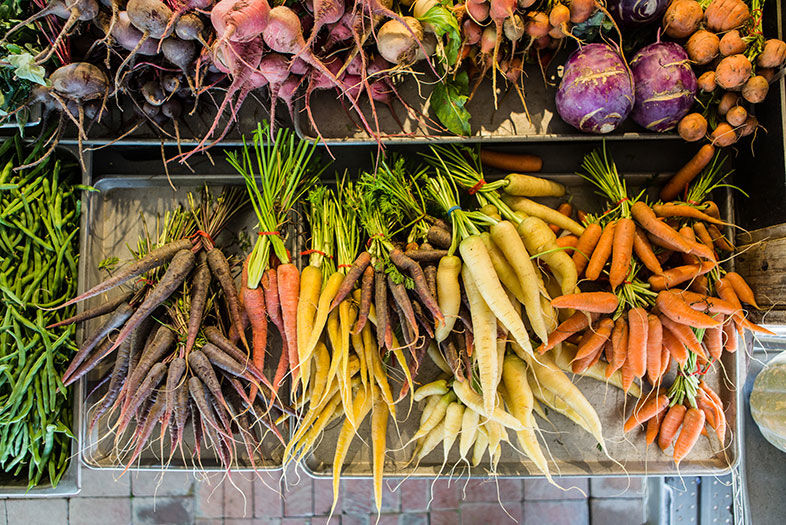
Farm to Fable

“A new restaurant opened in La Jolla,” says San Diego farmer Tim Connelly, renown for his tomatoes. “I went in to try to sell them my food. They didn’t buy any. Eight years later, a friend called to say ‘Hey, I just had your salad at that restaurant!’ The restaurant had been claiming to sell a ‘Connelly Farms Salad’ for eight years. They never bought a thing from me.”

The farm-to-table movement is (or was) a very good thing. Restaurants buy from local farmers, supporting the area economy and serving their customers the freshest possible produce grown in season. Knowing your farmer also lets you ensure you’re buying from people whose methods match your restaurant’s and customers’ values, whether that means organic, sustainable, non-GMO, fair trade, etc.

Like any good movement, farm-to-table has now been severely co-opted. The stories of restaurants deceiving their customers—or flat-out lying to them—have increased. Multiple San Diego restaurants claim to serve Respected Local, Organic, Sustainable Farm X when in fact they’re serving nameless commodity produce that could be from Chile, for all they know.

Call it farm-to-fable.

Restaurants have learned that aligning themselves with local, organic, sustainable farms makes them seem to be all those things by association. It’s the old practice of greenwashing—co-opting an eco-friendly brand in order to “wash” your own not-so-friendly brand.
Farm to Fable

Farm to Fable

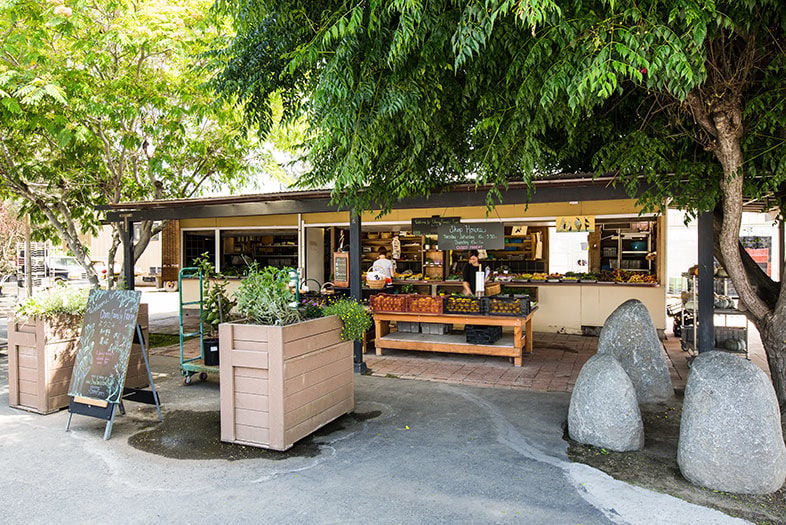
Chino Farms

Chino Farms

Recently, a San Diego restaurant sold tickets to a dinner advertised as using Suzie’s Farms produce. Suzie’s owner, Robin Taylor, was surprised to learn about the dinner—especially since he wasn’t growing the produce listed on the menu. When he relayed word to the restaurant, the chef called to yell at him and swore to never use their produce again.

When farm-to-table was at its height a few years ago, David Barnes of Crows Pass Farms was famous for calling out dishonest restaurants. For instance, the time George’s at the Cove chef Trey Foshee—one of the city’s honest farm-to-table chefs—asked why he wasn’t offered Crows Pass cauliflower.

Barnes doesn’t grow cauliflower.

“Trey showed me a menu from another restaurant, and it had ‘Crows Pass cauliflower soup’ on it,” says Barnes. “I went straight to the restaurant. A sous chef saw me walk in and he went out the other door. The chef was a little embarrassed. He got caught red-handed. I told him, ‘I’d love to sell you produce, but don’t use my name.’”

Another restaurant in North County—”a big, old fancy place,” says Barnes—hired a new sous chef who was a friend of Barnes. The friend called to say, “I had no idea you sold here—Crows Pass is all over the menu!”

“They hadn’t bought a thing from us,” Barnes explains. “I walked into the place with an invoice for $1,400. If you’re going to use my name, here’s an invoice for that.”

Barnes raises a bigger issue: “Then I went down the menu and saw Kobe beef. I wondered, ‘How many other lies are on this menu?’”

Multiple industry insiders tell the same story of a famous San Diego restaurant claiming to serve an equally famous farm’s corn. (It could be legend, but the specifics—including the chef and the farm—are known to many sources.) One particular customer thought it seemed odd, since it wasn’t corn season. He asked the chef to come out. The chef became indignant and defended himself: “Yes, that’s from Famous Farm X.” The customer replied, “I’m from Famous Farm X, and we’re not growing corn right now.” He banned the chef from the farm.
Farm to Fable

Farm to Fable

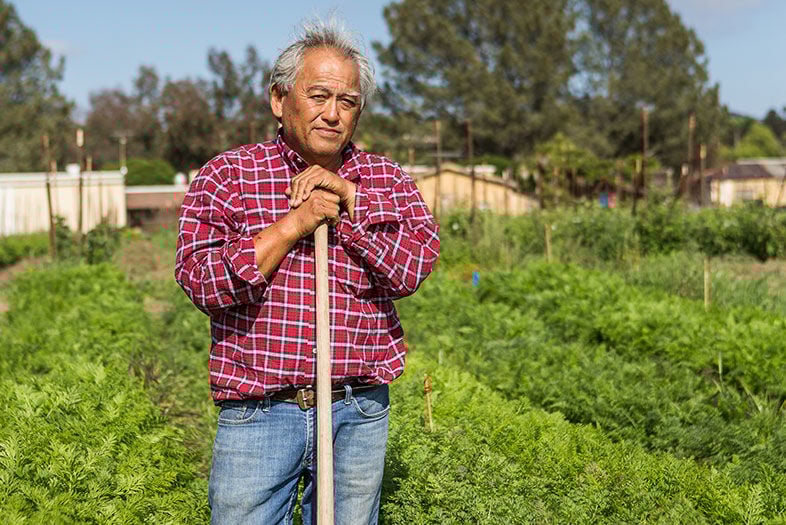
“Chefs will come, write down notes, leave without buying anything, and then say they’re serving our food at their restaurants.” – Tom Chino

Chino Farms is one of America’s most iconic operations. Alice Waters helped kick off the whole farm-to-table movement in the 1970s using bounty from Chino. They are the Apple, Inc. of produce—one of the most iconic brand names, with a cult following. Tom Chino’s family has earned that reputation over 70 years, and their produce naturally costs more. Makes sense, then, that Chino is the farm most often fibbed about.

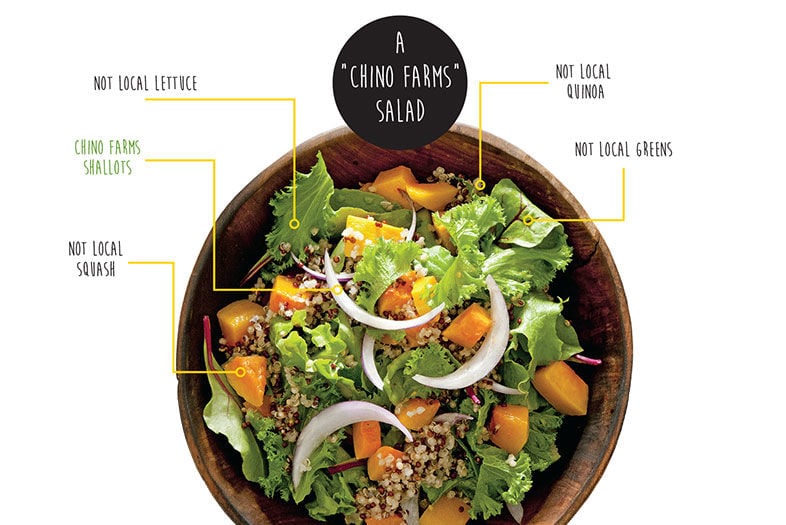
Insiders say a common farm-to-fable practice involving Chino goes like this: A restaurant will claim to sell a “Chino Farms Salad.” The price is significantly higher. In reality, it’s a bowl of commodity lettuce and vegetables, lightly garnished with Chino peppers or edible flowers.

At his roadside farm stand in Rancho Santa Fe, the soft-spoken, wry Tom Chino reluctantly agrees to talk about the issue. He’s obviously experienced it many times. “But I’m hesitant to say anything because, well,” he says, pausing for a long while, “I don’t want to be a horse’s ass.”

He laughs, though, at some of the more egregious examples. “Sometimes it can be very blatant,” he says. “Chefs will come look [at what we’re selling that day], write down notes, leave without buying anything, and then say they’re serving our food at their restaurants.”

Is fibbing about a farm really such a crime? It’s just a salad, after all.

“I’ve busted my ass for 23 years to get a reputation,” Barnes of Crows Pass told me over a year ago. “I’m not making a ton of money. No one’s forcing me to live this life; I choose it. But if someone’s going to use my name, charge their customers extra money because of my name, and then pocket the money?”

It’s fraud.
Farm to Fable

Farm to Fable

Seafood fraud is rife in the restaurant industry; a 2012 study by watchdog group Oceana found that 39 percent of seafood in New York City restaurants was mislabeled.

Farm-to-fable defrauds a few different people. First, it defrauds the customers, who pay more for local, sustainable, organic produce. Restaurants that cheat are preying on food lovers’ good intentions. It also defrauds the local farm, by using its hard-earned “brand name” without paying it, or its workers, a penny. Finally, it defrauds other honest restaurants in the market.

“The restaurateurs that really do make the effort to buy direct from farmers, it’s tough for them,” says Catt White, farmers market manager at Little Italy Mercato. “You often have to get the stuff to the restaurant because smaller farmers aren’t equipped to do deliveries. It’s definitely more costly. Smaller farmers aren’t subsidized like big farms. So the real cost comes into play. It’s expensive and admirable. For people to say they’re doing it but they’re not really—that’s really frustrating for the folks who are doing right.”

Just ask Trish Watlington, owner of the Red Door and Wellington Steak House. She and chef Karrie Hills grow about half of their restaurants’ produce on Watlington’s small farm. They’ve spent hundreds of hours developing relationships with local purveyors for most of the rest.

“Farm-to-table is hip,” Watlington says. “People want to think they’re eating locally sourced food. Restaurants are definitely leveraging that as a marketing technique. You have people claiming farm-to-table who have no idea where their product comes from. I could spend a lot more time being resentful, but it’s not really worth it. I just don’t like people who lie. Sell yourself for what you are. If you have a great interior and swank place, that’s okay.”

“A lot of people still seem to be using our name. We’ve [joked] about a licensing fee.”
– Robin Taylor, Suzie’s Farm

The worst kind of farm-to-fable is the pure, intentional deception. There are less obvious ways of using the farm’s name. “What you see on menus and grocery stores is ‘We buy Suzie’s Farms,’” says White. “When in reality a couple of heads of lettuce do come from Suzie’s, but the rest doesn’t. By implication, customers assume the rest is coming from the farmer.”

“You’ll find a lot of people say they use local produce,” says Barnes. “They’ll buy $5,000 worth of produce, but only $100 is local.”

Or a restaurant will throw a “Famous Farm X Dinner.” They’ll buy all the produce from that farm for the special event, reap all of the positive brand association with postings all over Facebook and social media. Afterward, they’ll never buy anything else from the farm.

In restaurants’ defense, sometimes it’s an understandable oversight. Maybe the restaurant did buy produce from X Farms and simply hasn’t updated its menu since it stopped. And let’s not overstate the controversy. Let’s assume a majority of restaurants and chefs are honest. But it’s apparent that this sort of thing happens enough to affect the livelihood of farmers and the people they employ.
Farm to Fable

Farm to Fable

Suzie’s Farm

Suzie’s Farm

A few years ago, Suzie’s Farms was selling $7,000 to $10,000 a week to local restaurants. Now they’re down to about 30 percent of that. “But a lot of people still seem to be using our name,” Taylor says. Suzie’s will soon have to cut back their operations. As for Barnes, who started selling Crows Pass out of his van directly to San Diego restaurants 20 years ago (at the height, he was doing a half-million dollars a year in revenue)—he now sells direct to only two restaurants.

“We’re so done with that shit, farm-to-table,” says Barnes, who now works as a general manager at Mountain Meadow Mushrooms.

As Connelly told me, “When you’re talking true farm-to-table, only a handful of people are doing it, but a lot of people talk about it.”

There’s no solution in sight for farm-to-fable. New restaurants are just slapping “farm-to-table” on their signage, without any clear indication of what that means. Media is also to blame, often blindly using “farm-to-table” as an adjective for food that looks fresh.

A program by the SD Farm Bureau pushed by the County Health and Human Services—called San Diego Grown 365—seeks to verify the origin of food. Restaurants can sign a contract and guarantee that any dish they label with San Diego Grown 365 brand contains at least 80 percent to 85 percent food produced locally. But it’s been around since 2004, and only 87 individuals have signed up for the labeling, says Farm Bureau Membership & Project Manager Casey Anderson.

Tom Chino takes a grin-and-bear-it approach. “The old joke is someone will say, ‘Oh, I had some of your asparagus at this really great restaurant!’ Then I’ll tell them we don’t grow asparagus. So I’ll ask, ‘Well, was it good?’ They’ll say, ‘Oh yes, everything was great.’ ‘Well, then I guess it’s okay!’”

But on the flip side, if Restaurant X serves a really mediocre, out-of-season tomato and claims it’s from Chino Farms, customers aren’t going to have the highest impression of Chino Farms. That’s doing damage to a farm’s name.

Taylor has kind of thrown up his hands. “We’ve been thinking about maybe a licensing fee,” he jokes. “If you want to just use our name and not our produce, you pay a fee.”

Most restaurant professionals say it’s up to public education. If diners see tomatoes in the winter, they’re probably not from San Diego. If a restaurant is selling asparagus in summer, it’s probably not local, either.

Because of the fraud, many restaurants have stopped mentioning local farms at all. Which is a shame, since that should be something to celebrate and brag about. But whether it’s farm-to-table or farm-to-fable, White looks on the bright side.

“The good news is that people are getting more into greenwashing because there’s a perception that people care that they’re eating things that haven’t been loaded with pesticides,” she says. “So that’s very motivational, that people are jumping on the bandwagon.”

Seasonal Calendar

This is a general guide to when fruit and vegetables are in season in San Diego. There are exceptions. San Diego has long growing seasons, and greenhouses. But this is “peak” season eating:

Spring: Asparagus, artichokes, kale, rhubarb, snap peas

Summer: Berries (black, boys, rasp; strawberries have a longer growing season), melons, eggplant, corn, tomatoes (though some grow through December), grapes, pears, plums

Fall: Pumpkin (and other squash), cabbage, carrots, Asian pears, apples

Winter: Beets, broccoli, chard, cherimoyas, kiwi, lettuce, macadamia nuts, navel oranges, persimmons, spinach, winter squash, tangerines
Subscribe to our newsletters

Select Options

By subscribing you confirm that you agree with our Terms and Conditions and Privacy Policy.

Food & Drink JUNE 5, 2026

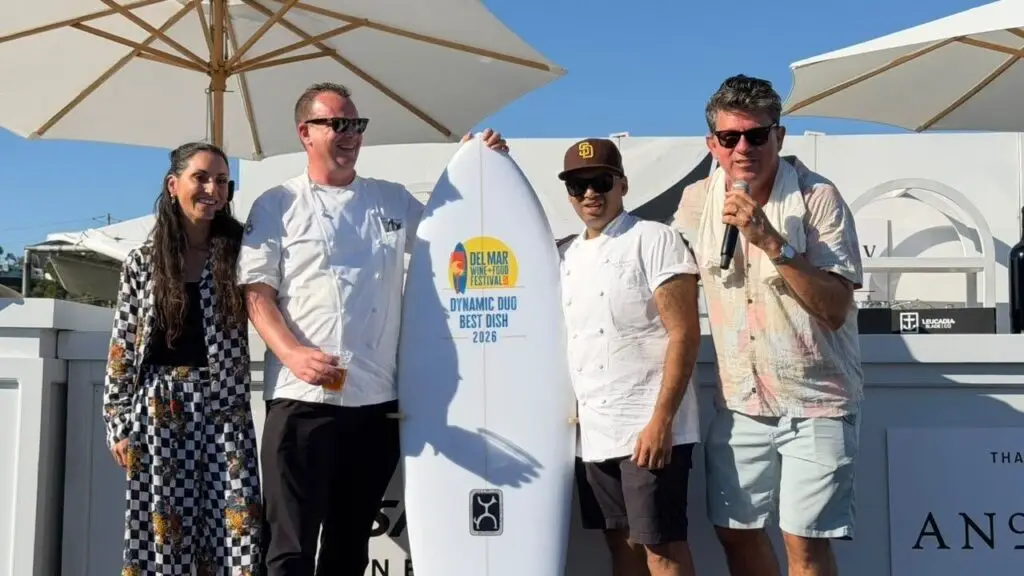
Del Mar Wine & Food Fest Returns With SoCal’s Top Chefs

San Diego’s biggest food and drink festival is back for a week-long celebration of SoCal’s best restaurants, chefs, and wineries from Sept. 30–Oct. 4

Del Mar Wine & Food Fest Returns With SoCal’s Top Chefs

Maybe it was when Breaking Bad stars Bryan Cranston and Aaron Paul drank mezcal with chefs from San Diego and Food Network on the cliffs over Blacks Beach. Or the dinner outside under lights with Alex Morgan, celebrating some of the country’s most badass women chefs. Or the celebrity pickleball tournament hosted by NFL Hall of Famer Drew Brees, where the star of It’s Always Sunny in Philadelphia made thwacking sounds with locals. Or when Iron Chef winner Beau MacMillan commandeered (some say “stole”) a golf cart and delivered drinks and ice to chefs.

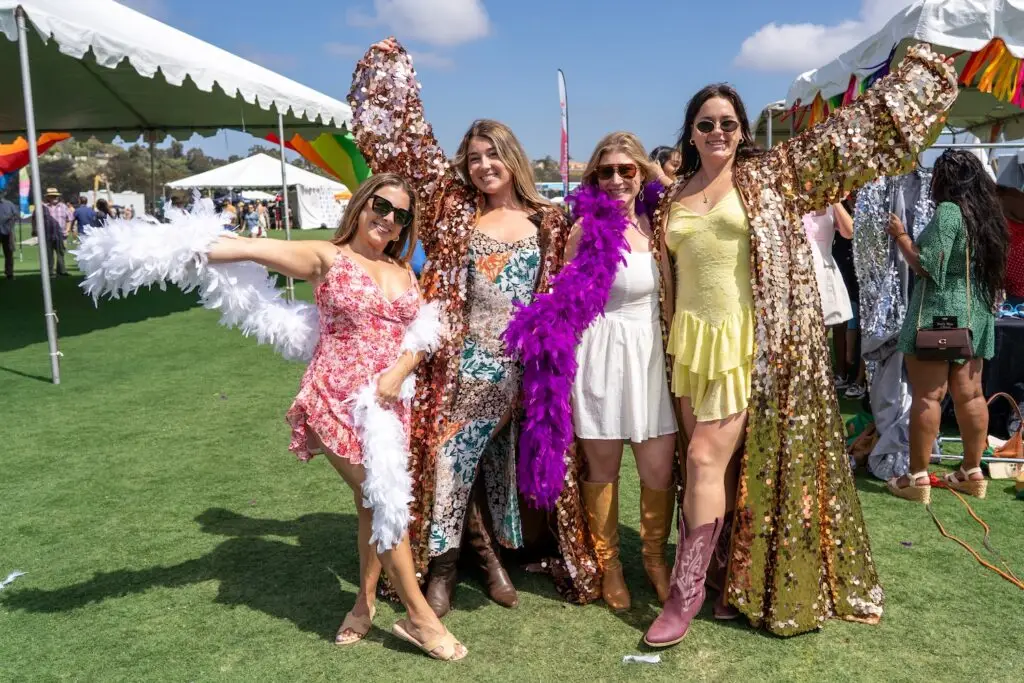
Whatever it is, Del Mar Wine & Food seems to have become the food and wine festival for people who don’t usually like food and wine festivals. The most San Diego thing.

Courtesy of Del Mar Wine & Food Festival

Two years ago, Thrillist named it one of the best food festivals in the country. Last year, 10,000 people came out to experience it, including Guy Fieri. Afterward, the founders spent a couple days trying to put their finger on why it felt so special. They had to name it, lean into whatever that was.

“It all came back to play,” says one of those founders, SDM co-owner Troy Johnson, a longtime San Diego food writer and Food Network judge. “Making world-class bread is serious, but breaking bread shouldn’t be. We gather all these incredibly talented people who take their craft very, very seriously—work their butts off all year to make some of the best food and drink in the country—and then we all just kinda play in the grass. We believe it’s possible to create something of incredible value and make the experience of that thing a laidback, easygoing, unpretentious experience. That’s what this is, and who we are in San Diego. The whole reason we did this was to shine a national spotlight on the people who make our food and drink culture hum.”

Courtesy of Del Mar Wine & Food Festival

The festival dropped its 2026 lineup today.

Headlining the fest are Food Network chefs Jet Tila, Maneet Chauhan, and Aarti Sequeira; Top Chef winner and Michelin-starred Buddha Lo; Iron Chef alum Beau MacMillan; MasterChef winner Kelsey Murphy; MasterChef Latinos winner Michelle Mathelin, chef and Guy’s Grocery Games judge Catherine McCord,  chef and former Masterchef Mexico judge Benito Molina, Top Chef alum Jackson Kalb, Michelin-starred chef Drew Deckman, Michelin-starred chef Javier Plascencia, James Beard award-winning chef Brady Ishiwata Williams, and James Beard-nominated chef Mawa McQueen.

The party kicks off on Wednesday, September 30 at Monarch Ocean Pub with Signature San Diego, a walk-around tasting of the city’s greatest bites, from Baja seafood to bold Mexican flavors. From there, the energy carries into a celebrity pickleball tournament hosted by Drew Brees at Barnes Tennis Center on October 2, pairing friendly competition with an all-inclusive tasting experience in support of Feeding San Diego.

The main event is the two-day Grand Tasting at Surf Sports Park on Oct. 3 and 4. The city’s top chefs, food people from TV lands, and local tastemakers gather on the weirdly perfect grass to serve up everything from juicy Wagyu burgers and beef tallow fries to yellowtail tuna tostadas and veggies dressed up in their Sunday best. Wine and cocktail pairings are designed to round out the whole experience, including activations from Aperol Spritz, Hendrick’s Gin, Tequila Ocho, Mezcal Vago, Rioja wines, and Temecula producers.

Courtesy of Del Mar Wine & Food Festival

A VIP lounge offers exclusive access to curated small plates from Michelin-level chefs and pour from some of SoCal and Napa’s finest wineries and drink makers. The Official After Party at Guesthouse La Valle on October 3, a spirited walk-around tasting just steps from the Grand Tasting, where cocktails take center stage through imaginative bites inspired by the smoky, citrus-forward, and bittersweet flavors of classic drinks.

Zones return with activations including the Big Queer Food Fest celebrating queer chefs and queer-owned businesses; the Wellness Zone led by Novo Dia offering a built-in reset with non-alcoholic mocktails, movement-driven activations, and wellness-forward moments. Coastal lifestyle and locally made brands are also integrated throughout the festival.

“We are excited for the fourth edition of the Del Mar Wine & Food Festival this fall, which has quickly become one of the largest food and wine experiences on the West Coast,” says co-founder Chris Finn. “As the festival continues to grow, we are constantly looking to add events, experiences, and partners that will resonate with our San Diego community, and embody the Southern California way of life.”

Returning as the festival’s partner is local nonprofit Feeding San Diego. To date, Del Mar Wine & Food has raised $100,000 to support their ongoing fight against hunger across the region. 

Stay tuned for additional events hosted by festival partners including Rob Machado, San Diego Wave, San Diego FC, Town & Country, and San Diego Mojo.

Courtesy of Del Mar Wine & Food Festival

Del Mar Wine & Food Fest: Frequently Asked Questions (FAQs)

When is the 2026 Del Mar Wine & Food Festival?

The 2026 Del Mar Wine & Food Festival will take place September 30–October 4 throughout San Diego County.

Where is the Del Mar Wine & Food Festival?

The week culminates with the Grand Tasting at Surf Sports Park (formerly the Del Mar Polo Fields) at 14989 Via De La Valle, Del Mar. 

A wide variety of exclusive dinners, drink tastings, and other lifestyle events will be announced soon and available for purchase individually on Del Mar Wine & Food Festival’s website. These festivities include chef-curated dining experiences across San Diego’s hottest restaurants, a celebrity pickleball tournament, wine tastings, and more. 

When is the 2026 Grand Tasting?

The Grand Tasting takes place this year on Saturday, October 3 and Sunday, October 4. 

How much are tickets? 

General admission for the single-day Grand Tasting starts at $185. An Early Access option is also available at $235, which includes an extra four hours before general admission to meet, mingle, and feast. For a two-day pass, General Admission starts at $275, while Early Access is $375.

VIP tickets begin at $425 for a single day, offering access to pre-festival experiences, exclusive food vendors, a dedicated VIP area, and more. For the full weekend in VIP, passes are priced at $765.

Where can I buy tickets for the 2026 Del Mar Wine & Food Festival?

Buy tickets today at DelMar.Wine.

Are pets or kids allowed?

Unfortunately, only service animals are allowed at the venue. All attendees must be 21 years or older.

Sponsors: 

  • Alaska Airlines 
  • Aperol Spritz
  • Brandt Beef
  • Coola
  • Glenfiddich
  • Hendrick’s Gin 
  • Justin Winery
  • La Croix 
  • Mezcal Vago 
  • Milagro Tequila 
  • One World Beef
  • Pechanga Resort Casino
  • Rioja Spain’s Finest Wine Region 
  • San Simeon
  • Tequila Ocho
  • The Balvenie
  • Tito’s Handmade Vodka
  • Tullamore D.E.W
  • William Grant & Sons

Lifestyle Partners

  • Big Queer Food Fest 
  • Novo Dia Wellness Experience
  • Town & Country 
  • San Diego Mojo 
  • San Diego FC
  • San Diego Wave

Isabella Dallas is a freelance writer for San Diego Magazine and the Arts and Culture Editor at The Daily Aztec in her final year at San Diego State University. She previously worked as an editorial intern for SDM, but when she’s not writing, you can find her trying the best coffee spots in SD, devouring the latest rom-coms, and indulging in anything and everything pop culture.

Food & Drink JUNE 5, 2026

From Laguna Beach to Leucadia: Oto Sushi Lands in SD

The sustainability-focused sushi concept offering traditional favorites as well as fusion specialties will open in North County this summer

From Laguna Beach to Leucadia: Oto Sushi Lands in SD

Encinitas nigiri fanatics, I bring you good tidings. Oto Sushi is slated to open in late July. After nearly two decades of experience in operations for Tao Group Hospitality and Ace Hotel, Ash Cintas opened the first Oto in Laguna Beach in 2024. She focused on from-scratch dishes, fish sourced from Smart Catch and Seafood Watch–approved suppliers, and a wide swath of gluten-free options.

Year one worked, so she started eyeing her ideal second spot—North County San Diego. “I grew up spending time in San Diego visiting family, and my grandfather built a fishing business here, so the area has always felt familiar and meaningful to me,” says Cintas. 

Cintas’ twin sister Alysha Rabb spearheaded the Japanese coastal design of the new Oto, which takes over the former Mrkt Space. The 3,200-square-foot eatery flows from the indoor dining room to large outdoor patio, as well as a private dining room—a total capacity of 95. Chef Connor Mathison has worked as a sushi chef for over 15 years at venues like Bamboo Sushi SW in Portland, Oregon. His menu includes classic sushi offerings like nigiri and sashimi, specialty rolls, bento boxes, tempera, karaage, Wagyu burgers, and robotayaki.

Robatayaki, sometimes called robata, is a method of slow-grilling meat, seafood, and various vegetables over premium Japanese binchotan charcoal. Basically, it’s the gold standard for grilling, thanks to its intense, clean heat that imparts a smoky, savory char on the outside and a rich, tender inside. 

“One of the defining characteristics of Oto is that much of our sushi is served yakumi-style, meaning it arrives already seasoned with ingredients designed to complement the fish rather than relying on soy sauce,” Cintas explains.

Courtesy of Oto Sushi

There will also be a large number of vegan and vegetarian dishes, plus scratch cocktails with housemade syrup, fresh juice, sake, Japanese whiskey, wine, and beer selections curated by beverage partner Gavin Grum. Cintas says she hopes to continue expanding across Southern California, ideally opening six to eight locations in different coastal communities.

“The goal isn’t to build the biggest restaurant company,” she says. “Encinitas is the next step in proving that model can scale.”

Oto Sushi opens July 2026 at 782 N. Coast Hwy 101 in Encinitas. Initial opening hours are from 11:30 a.m. to 9 p.m. daily.

Courtesy of Silver Hoof Creamery

San Diego Restaurant News & Food Events

Silver Hoof Creamery Coming to Old Town

First more sushi, now more ice cream? Someone pinch me. Later this June, Silver Hoof Creamery will open in Old Town at 2548 Congress Street, Suite G, bringing artisanal soft serve, waffle tacos and waffle bowls, sundaes, and milkshakes to the Old Town Urban Market food hall. Everything is made with 100 percent California dairy milk (except for the dairy-free options, of course), and the small-batch menu of flavors ranges from dark chocolate soft serve to blueberry lavender milkshakes, matcha garden sundaes, and the signature Silver Hoof sundae made with vanilla swirl soft serve, caramel drizzle, topped with candied pecans and various candy gems and topped with whipped cream. Personally, I’m a sucker for strawberry, so I’m looking forward to giving the strawberry fields milkshake a slurp once the doors open. 

Beth’s Bites

  • The San Diego Natural History Museum (a.k.a. The Nat) tends to make good use of its rooftop space with events like Nat at Night every Friday during the summer, but now it’s getting into the brunch game as well. Brunch at the Nat kicks off Sunday, June 14 with Wolf in the Woods taking over the menu from 10 a.m. to 2:30 p.m., followed by Hash House A Go Go (July 12) and Wolf in the Woods making a sophomore appearance on August 9. (Yes, there will be Bloody Marys. How could there not be when Johnny Rivera is behind the bar?)
  • North County isn’t just getting more sushi—it’s getting a sweets upgrade as well. Desserts By Clément, the Pacific Beach-based French pastry shop is opening two new locations this summer in Del Mar and Vista. Owner (and French native) Clément Le Déoré has made a name for himself from his super realistic (and absolutely adorable beyond belief) desserts like these “Petit Bears” and fruit collection, but will also offer traditional pastries like croissants, macarons, kouign-amann, and chouquettes. There goes my summer bod… (just kidding). 
  • Non-alcoholic options are gaining major steam on drinks menus across the country, and the gang at Cesarina and Elvira are cashing in. Both concepts just released new cocktail menus to be fully 50 percent alcoholic, 50 percent non-alcoholic so people can easily jump from one to the other, if they so choose. (Or just stick with one category—it’s just nice to have options.) Bar lead Sydnee West’s concoctions range from the Super Fico at Cesarina (made with porcini-infused rye, Nonino Amaro, Averna, and clarified fig demerara) on the hard side to the Roma Esotica at Elvira (with NA gin, pineapple, passion fruit, and lemon) on the soft side.  As someone who actively enjoys zebra-striping (going back-and-forth between cocktails and mocktails), it’s very refreshing to have curated choices on either end that aren’t an afterthought.

Listen Now: The Latest in San Diego’s Food and Drink Scene

Have breaking news, exciting scoops, or great stories about new San Diego restaurants or the city’s food scene? Send your pitches to [email protected].

Beth Demmon

About Beth Demmon

Beth Demmon is an award-winning writer and podcaster whose work regularly appears in national outlets and San Diego Magazine. Her first book, The Beer Lover's Guide to Cider, is now available. Find out more on bethdemmon.com.

Features JUNE 5, 2026

The Best New Restaurants in San Diego

After 20 years and thousands of meals as a food critic, San Diego Mag Content Chief Troy Johnson picks the city's top standouts

The Best New Restaurants in San Diego

Dora Ristorante

His ascent has been stealth and humble, which fits the man. When Liberty Station was struggling to convince people it existed over a decade ago, Sicilian chef Accursio Lota’s food at Solare Ristorante was a tractor beam for food people who sniff out hidden talent like truffle dogs. In 2017, he won the World Pasta Championship (a legit competition from global pasta brand Barilla) and struck out on his own, opening his and his wife’s from-scratch pasta trattoria in North Park (Cori Pastificio). Gambero Rosso—the Italian version of Michelin, the most respected source—has clamored for the restaurant since it opened, naming it “New Opening of the Year” and this year giving it their highest award, “Tre Forchette” (Three Forks), only knighted on a handful of US restaurants.

So this year, Lota opened his grandest thing—Dora Ristorante—and it pulls everything together. Steps from San Diego’s world-class theater, La Jolla Playhouse, it’s laden with brass and large-format murals, tile work and mosaics—like the one on the wood-burning oven that blisters, chars, and smokes a good portion of the menu. Their housemade focaccia is a new street drug (try it with the puttanesca, his grandmother Dora’s recipe). The olive oil-cured sardines make “sustainable seafood” and ethics not taste like a compromise. Dora might finally be the one to solve the “where do I eat before the world premiere at LJP” dilemma.

Courtesy of Bacari

Bacari

The yuzu-colored building that helped build North Park’s modern food culture is alive again. Years ago, the ornate French Quarter–inspired spot on 30th Street was home to chef Matt Gordon’s Urban Solace (duck macaroni and cheese). Then it laid conspicuous and fallow until a few months ago when Bacari took it on. It’s an LA transplant, but they’re proving forgivable of that trespass. Chef and co-founder Lior Hillel cooked at Jean-Georges before opening the first of this Venetian-style restaurant in 2008 with brothers Danny and Robert Kronfi (Bobby started his food venture with a pop-up dinner series in his college apartment at USC).

For dinner, it’s house-baked bread, crudo and shrimp ceviches, Mediterranean street corn, lamb hummus, shawarma, and glazed pork belly. Weekend brunch is bellinis and French toast and burekas (famed Jewish stuffed puff pastry), and chef Noa’s cauliflower (caramelized with chipotle). It’s Italian-ish with a heavy dose of pan-Mediterranean and Middle Eastern. Doesn’t hurt that they left the iconic exterior as is, adding chandelier-farmhouse insides with charm that echoes two of the city’s dearly departed (Jayne’s Gastropub, Cafe Chloe).

Courtesy of TRUST Restaurant Group

À L’ouest

Much tolerance for friends who hate mussels because they look too biological. But if they manage to dislike À L’ouest’s—served over ice with vadouvan curry aioli and chili crisp—then you’ve successfully identified your brokemouth friend and should try bicycling or crafting with them to bond instead of eating in public places. It should be on everyone’s short list for dish of the year.

Chef Brad Wise and his team have earned their rep over multiple concepts—Trust, Fort Oak, Cardellino, Wise Ox, Rare Society. But he’s been eyeing this corner of North Park since before he opened his first (Trust, in 2016). North Park has been rising for a while, and À L’ouest feels like the missing piece—an indoor-outdoor brasserie stunner on the marquee spot of 30th and University, which long sat boarded up and vacant like a neighborhood missing a front tooth.

As with his other concepts, woodpile is king; smoldering red oak boosts the flavor of just about everything. Get the spätzle with braised rabbit, maitake mushroom, secret de compostelle (the famed Basque sheep’s milk cheese), and black truffle. Or the chicken liver parfait with persimmon, fennel aigre-doux (sweet-sour), and chives on toast. Or, like everyone else in there—the steak frites.

Photo Credit: Eric Wolfinger

Fleurette

Chef Travis Swikard’s first solo restaurant, Callie in East Village, proved how details can make the most composed of us blubber a little in fine places—from citrus left in ovens overnight to blacken and transform, to the Scripps Oceanographic Institute saltwater he keeps his spot prawns thriving in until ordered, to the days-long fermentation and stone-ground dukkah that turn carrot shavings into a statement piece.

Now, he’s focusing on French food with a fitter, less buttery San Diego heart. Fleurette is his doubling-down, a SoCal riff on the food he learned under mentors Daniel Boulud and Gavin Kaysen. The French gave us the mother sauces, and Fleurette showcases the lightest and brightest evolutions. Like the anchoïade on his beef tartare, which uses famed Italian anchovy sauce colatura di alici, mixed with cured egg yolks over tiny, uniform-sized cubes of raw, USDA Prime Flannery beef.

There is soubise (onion sauce), a sauce vierge (tomatoes and herbs), and a fennel marmalade on the duck liver and bone marrow pâté. Although the structure is stunningly pure glass, Fleurette’s in a location—an office park on the edge of La Jolla, near UTC—that few chefs would be able to pull off. But Swikard’s Michelin-bound house of saucework pulls hard.

Food from San Diego's best taco shops including Cocina de Barrio
Photo Credit: Lauren di Matteo

Mesa Agrícola

The Escondido taqueria from Rosarito-born-and-trained chef Juan González and farmer Megan Strom took the county by storm this year. The married couple started as a popup four years ago, hosting farmside dinners before taking up residency at Vino Carta in Solana Beach. Strom was working a small, 5-acre heirloom bean farm in Valley Center owned by Mike Reeske (aka “The Bean Man”) when he retired and sold them the plot.

The huge bonus was that the sale included Reeske’s famed collection of beans, curated over 20 years. The couple planted other things and now grow much of what they serve in the form of tacos and burritos at a permanent spot in Escondido: Mesa Agrícola.

The menu’s bone simple: housemade tortillas in your choice of taco or burrito norteños (which are smaller, like burritos de hielera) that change constantly and often topped with guisados (Mexican braises or stews) like lamb and garbanzo, birria, chicharrón, mushrooms al ajillo, rajas, you name it. And, of course, some of the best beans honoring the local legend of Reeske.

Courtesy of Lucien

Lucien

San Diego is now the recipient of national food buzz. The dark ages—during which we learned how to sear ahi and asada some carne and called it a day—felt prolonged, and they were. The problem was never ingredients. San Diego County always had the best raw dinner materials (more small farms per capita than any county in the US, seafood right there); it just didn’t have a critical mass of highly trained chefs to do them justice. Easy to understand the chef dearth.

For a very long time, if you wanted to be a serious chef you had to go to the restaurant superplexes of New York, San Francisco, or Chicago (which imported their raw ingredients from places like San Diego). But now—credit farmers or Alice Waters or Dan Barber or Michael Pollain or the reasonable conclusion that food picked right here tastes better than food picked way over there—some of the most talented chefs are moving to the ingredients, not the other way around.

In San Diego, we got Richard Blais, Swikard, and now Elijah Arizmendi, who cut his teeth in Vegas with Joel Robuchon (plus Boulud and Thomas Keller) and was chef de cuisine at NYC’s L’abeille when it got its first Michelin star. His debut restaurant in La Jolla—with partners Brian Hung and Melissa Yang—is a dark, moody multicourse tasting-menu hideaway with one of the best egg dishes in the city.

Troy Johnson

About Troy Johnson

Troy Johnson is the magazine’s award-winning food writer and humorist, and a long-standing expert on Food Network. His work has been featured on NatGeo, Travel Channel, NPR, and in Food Matters, a textbook of the best American food writing.

Studio S JUNE 8, 2026

Seven Restaurants, One Rising Star

Yes, Chef! winner Emily Brubaker leads the robust culinary program at Omni La Costa Resort & Spa

Seven Restaurants, One Rising Star

For Executive Chef Emily Brubaker, Omni La Costa Resort & Spa feels like home. She grew up just a mile-and-a-half away from the 400-acre property and fondly recalls walking the golf course perimeter as a kid. Though her ambitions led her away from San Diego for nearly two decades in which she honed her craft in some of the highest of high-profile Las Vegas restaurants—including triple Michelin-starred Joël Robuchon at MGM Grand—they ultimately brought her back to North County.

Courtesy of Omni La Costa

Today, the classically French-trained chef, who’s fresh off a victory on NBC’s Yes, Chef!, judged by Martha Stewart and José Andrés, oversees Omni La Costa Resort & Spa’s seven distinct dining concepts. Her goal is to elevate the resort’s culinary program with her creative, hyperlocal ingredient-driven approach while maintaining the Spanish- inspired flavors and fresh California coastal cuisine that are the bedrock of its culinary identity.

“The San Diego food scene is really growing, and in North County alone, it’s really exploded in the last five years,” Brubaker says. “There are Michelin stars, beautiful tasting menus, craft bakers, and all this food—when I was growing up in La Costa, it was fish tacos. Now there are really cool things popping up, and I’m so happy to be here to see where it’s going to go.”

Brubaker gives chefs de cuisine at each individual restaurant autonomy, however, her influence is evident across the resort.

For example, lobby restaurant Bar Traza serves as Omni La Costa’s culinary centerpiece and features bold Spanish flavors in a lively, social atmosphere. Brubaker overhauled the menu to be more consistent and centered on casual bites with that signature vibe. Think smoky paprika, vibrant citrus, and Spanish meats and cheeses.

At VUE, the focus is on seasonal offerings, California coastal cuisine, and Baja-inspired dishes. She and Chef de Cuisine Cameron Dixon change the menu biannually, which heading into summer, will highlight farm-fresh produce and hyperlocal ingredients—the resort even has its own herb garden and honeybee hives.

Courtesy of Omni La Costa

Poolside dining options are leaning into the country’s 250th this summer with a selection of classic American dishes with an Omni La Costa twist. And Bob’s Steak & Chop House (Brubaker is a trained butcher) offers a classic steakhouse experience with elevated service.

The chef and company also plan menus for special events at the resort where her creativity can really shine. For an upcoming National Ski Association dinner, the banquet hall will be transformed into an Alpine-themed winter wonderland complete with a snow machine, savory sausages, and melty, decadent raclette. A recent dinner was built around the Carlsbad Flower Fields and each course was matched to a color of ranunculus (Did you know pink dragonfruit are grown in North County? You do now.).

“It’s my zen to be in the kitchen playing with food,” Brubaker says.

Omni La Costa’s culinary program is a key part of the resort experience. And with Brubaker’s leadership, it’s becoming a draw for visitors and locals alike.

“These aren’t just hotel restaurants, these are restaurants that you should go to. They’re destinations, and I’m really hoping for the future that’s where we’re going,” Brubaker says.

Courtesy of Omni La Costa

Brubaker is also channeling her experience on Yes, Chef! into the culture at Omni La Costa—more emphasis on teamwork and collaboration, empowering her staff to share constructive critiques, and embracing different perspectives. Alongside her leadership role, Brubaker has become an advocate for mental health in the hospitality industry, serving as chief ambassador for the Burnt Chef Project and serves on the Board of Advisors for the Apex Culinary Program, where she mentors and develops future talent.

For more on Omni La Costa Resort & Spa and its dining program, please visit omnihotels.com/hotels/san-diego-la-costa.

Partner Content
Everything SD JUNE 5, 2026

The Best Restaurants in San Diego 2026

We asked, you voted, and food critic Troy Johnson chose his favorites—these are the top food and drink people and places in the city

The Best Restaurants in San Diego 2026

Some keep lists of favorite books, of quotes, of enemies whose time shall come. At SDM we keep vast, nuanced, hotly debated lists of the best food and drink in the city. Menus are our smut novels. From Michelin stars to mom and pops, our list constantly evolves over hundreds of new bites tried every year. Here’s the 2026 list from food critic Troy Johnson and 129,000-plus votes from our readers, who really, really know their food.

Scroll down for the full list of Best Restaurant winners

Troy Johnson

About Troy Johnson

Troy Johnson is the magazine’s award-winning food writer and humorist, and a long-standing expert on Food Network. His work has been featured on NatGeo, Travel Channel, NPR, and in Food Matters, a textbook of the best American food writing.

Features JUNE 4, 2026

Publisher’s Note: Restaurants Are People, June 2026

SDM owner and food critic Troy Johnson identifies some standout stars in SD's food scene

Publisher’s Note: Restaurants Are People, June 2026

I spent time in a hot dog stand on the edge of San Diego Bay, looking out a window that mattered. Mattered to a kid whose mom taught him to fish on this pier. They’d turn on a little transistor radio, find a signal through the static, stare at the water, and talk life and his dad. Dennis Borlek’s dad was out there, somewhere, commanding a naval submarine through god knows what. When his dad would dock in Point Loma weeks or months later, Borlek biked down the street along Shelter Island to see him and steal back stolen moments.

New San Diego restaurant Fluerette from chef Travis Swikard in La Jolla

Later, Borlek helped midwife the craft beer scene, managing seminal spots like Small Bar and Liar’s Club. Wondering what to do with the rest of his life, he went back to that pier and saw a for-lease sign on the bait and tackle shop. He tore through the public library and spent the whole night learning how to write a business plan (he had no clue). A couple days later he found himself at the intimidating end of a massive conference table, pitching his dream to the very official Port of San Diego executives.

They gave it to the San Diego kid. Not sure if they ever imagined Fathom Bistro—the tiniest, mightiest craft beer and hot dog stand, filled with spear guns, ocean monster figures, and seafaring oddities—would still be there 13 years later, let alone be a local’s favorite. It’s the most San Diego place in the world. Borlek taught himself to make kimchi and puts it on his Explodo Dog. His friend Kevin, who played with him in a punk band, dresses as a pirate and works the door on weekends. Has done so for years.

And when Borlek stares out the window, he can see the sub base and the memories of his dad.

Courtesy of Wayfarer Bread

Later, a few beach towns over, I sat in an employee break area—a shaded back-alley alcove with grape vines that serves as an escape garden for the crew. The place used to be a taco shop. Owner Crystal White points to a window of a single bedroom behind the dough-mixing part of the kitchen. She lived there when she started, often finding herself on the roof at midnight, staring at a broken compressor, trying to will it into working.

A blue-collar kid who fell in love with bread, she moved to San Diego with a business plan and zero cash. Banks don’t loan money to bread dreamers. Fate, kismet, and door-knocking found her enough investors. In the weeks leading up to opening that dream—perfect croissants, kouign-amanns, sandwiches, pizzas, baguettes fermented with wild La Jolla yeasts—she was outside hammering and painting. Locals would pause to ask what she was putting into the spot. “A bakery!” she’d reply.

“Oh, we don’t need one of those,” they’d say. Eight years later, White has moved out of the bedroom, and Wayfarer Bread is one of the best bakeries in the land. I ask if she’ll ever open another location. “I grew up dirt poor,” she says. “This has surpassed even my wildest dreams. This is enough. Please make sure you mention Emma Koehler, K-O-E-H-L-E-R, my kitchen manager. She deserves the credit now.”

These are the people and the stories behind “Best Restaurants.” This issue is dedicated to them, the culture they’ve gritted into being. On the surface, the annual tradition—naming a list of “winners,” my favorite places and my honest answers to “who has the best taco/pizza/Thai…”—is a good-natured competition among friends. But the deeper point is that it’s a way to highlight hundreds of places that have risked it all to build a little magic across the city. Sure, some owners were born in the stars and used that dust to make more stars. But many or most restaurants started with a scrappy go-getter or two. And now those places are filled with dozens or hundreds of people who love the work, show up day in and day out, for years. People like Koehler and the ones we feature in our story, “Behind the Line”.

So please use this list as a beachhead. Try these places, email me ([email protected]) to say “thanks” or “you truly messed up.” Eat, drink, commune, say hello, get to know the stories of the people making your favorite food. Make your own list, and share it with us.

(Note: Fathom didn’t win anything, probably because there’s no category for “Best Hot Dog Craft Beer Stand on a Pier with a Pirate,” which is a shortcoming on our part. So I put him here because he should be a part of any conversation about best San Diego things.)

Troy Johnson

About Troy Johnson

Troy Johnson is the magazine’s award-winning food writer and humorist, and a long-standing expert on Food Network. His work has been featured on NatGeo, Travel Channel, NPR, and in Food Matters, a textbook of the best American food writing.

Partner Content JUNE 5, 2026

Beautiful Balboa Park: Nine Ways to See the City’s Crown Jewel in a New Light

San Diego Magazine's 2026 Guide to Balboa Park.

Beautiful Balboa Park: Nine Ways to See the City’s Crown Jewel in a New Light

Balboa Park is San Diego’s cultural heart.

The iconic 1,200-acre preserve’s history dates back more than 150 years, evolving from a scrub-filled plot atop a mesa overlooking what’s now Downtown to an urban oasis—the largest of its kind in the country—filled with an array of museums, attractions, gardens, trails, restaurants, and more. Balboa Park is an epic playground where San Diegans and visitors alike can experience the great outdoors just as easily as they can enjoy a world-class performance or explore groundbreaking discoveries.

Tucked away in the Spanish Colonial Revival-style architecture are 18 diverse museums that allow visitors to spend the day learning about, well, anything. A great place to start is the San Diego History Center. Located in the Casa del Balboa building, the museum tells the story of the city’s past, present, and future through photographs and art, clothing and textiles, and interviews with people who witnessed history-making events firsthand. The San Diego Natural History Museum takes visitors even farther back with interactive exhibitions that show what the region was like up to 75 million years ago. 

Blast off on a simulated trip to space at the San Diego Air & Space Museum, then check out artifacts from aviation legends, including the Wright brothers, Amelia Earhart, and Buzz Aldrin. Discover new perspectives revolutionizing the science world, learn about an often overlooked but overutilized utility, and exercise your creativity at the Fleet Science Center.  

Calling all theater-lovers, Balboa Park has something for you, too. The San Diego Junior Theatre will present their musical take on beloved children’s book A Bad Case of the Stripes from June 26 through July 12. And laugh, cry, and marvel in awe as the pros of The Old Globe perform Kim’s Convenience, the award-winning comedy that inspired the popular series, from May 15 to June 14. 

There’s nowhere else in Balboa Park quite like WorldBeat Cultural Center. The institution celebrates African diaspora and indigenous cultures around the world using art, music, dance, and education. The building, a renovated water tower covered in colorful murals, houses a performing arts center, museum, gift shop, cafe, and outdoor classroom.

If you’d like a side of nature with your culture, Balboa Park has you covered there, too. Stroll through the gardens of the Japanese Friendship Garden & Museum, a monument to the relationship between San Diego and its sister city, Yokohama, Japan. Inspired by traditional Japanese design dating back centuries, the 10-acre respite features a living exhibition that showcases plants native to both cities. 

If there seems like a lot going on in Balboa Park, it’s because there is. Let the Balboa Park Cultural Partnership be your guide. The organization is the umbrella for 24 of the park’s institutions and offers an Explorer Pass that allows visitors to access multiple museums for one affordable price. The hardest part is picking where to start.

16 Museums, One Pass

Save on admission to San Diego’s top museums with the Balboa Park Explorer Pass. Explore 16 museums of art, science, history and culture across Balboa Park — all with one affordable pass. Choose the option that fits your pace: the Limited Pass (one day for up to four museums), the Parkwide Pass (seven consecutive days of access to all 16 museums) or the Annual Pass (365 days of unlimited exploring).

Looking for an experience-driven gift? Let the museum lover in your life enjoy their favorite museums all year with a Balboa Park Explorer Annual Pass gift voucher.

BuyMyExplorer.com | Phone: 619-232-7502, Press 2 for Explorer 

Fleet Science Center

Bigger experiments, brighter ideas, and boundless curiosity await at the newly reimagined Fleet Science Center. This summer, the Fleet debuts Element 8 Cafe, an expanded theater queuing and concessions space, two new gallery spaces, and, for the first time, a free entrance gallery exploring science in and around San Diego. The transformation marks a new chapter for the Fleet, keeping it a vital, innovative, and accessible science hub for the region. Visitors are invited to explore the experience this summer and connect with the power of science like never before.

Address: 1875 El Prado, San Diego, CA 92101
Website: FleetScience.org
Hours: 10 a.m. to 5 p.m. daily
Phone: 619-238-1233

Japanese Friendship Garden & Museum

An accredited cultural gem, the Japanese Friendship Garden & Museum brings traditional Japanese garden design to life with koi ponds, curving walkways and layers of greenery. Guests explore bonsai trees, streams and peaceful nooks while taking part in exhibits, educational programs and festivals that illuminate Japanese culture. Situated in the heart of Balboa Park, the garden doubles as a meditative retreat and a dynamic gathering place, welcoming visitors to slow their pace and connect more deeply.

Address: 2215 Pan American Road E, San Diego, CA 92101
Website: Niwa.org
Hours: 10 a.m. to 7 p.m. daily; last admission at 6 p.m.
Phone: 619-232-2721

The Old Globe

A San Diego summer favorite, The Old Globe invites audiences to experience a beloved local tradition in its outdoor Lowell Davies Festival Theatre. 

This summer, the 2026 Shakespeare Festival presents two thrilling tales of power, passion and romance. Measure for Measure, running June 14 through July 12, 2026, is a riveting story of justice and hypocrisy that asks who holds power, who is punished and what it truly means to be virtuous. Much Ado About Nothing, playing Aug. 2–30, 2026, is a classic rom-com packed with schemes, sparks and laughter as opposites attract. Audiences can enjoy both shows for $44.

Address: 1363 Old Globe Way, San Diego, CA 92101
Website: TheOldGlobe.org
Hours: Box office open Tuesday–Sunday, 1 p.m. to final curtain
Phone: Box office, 619-234-5623

San Diego Air & Space Museum

Aviation and space exploration come to life at the San Diego Air & Space Museum. See an airworthy replica of the Spirit of St. Louis, a Gee Bee racer and historic aircraft from World War I, World War II and the Korean and Vietnam eras. Get up close to the Apollo 9 command module — one of only 11 of its kind in the world — along with Mercury and Gemini capsules, Mission Control and space shuttle simulators, and a selfie spot beside a lunar lander on the moon. Running through 2026, Ripley’s Believe It or Not! brings oddities from around the world to Balboa Park.

Address: 2001 Pan American Plaza, San Diego, CA 92101
Website: SanDiegoAirAndSpace.org
Hours: 10 a.m. to 5 p.m.
Phone: 619-234-8291

San Diego History Center

History belongs to everyone. At the San Diego History Center, two experiences bring that history to life this summer: America at 250 and the Center for Women’s History. America at 250 traces San Diego’s place in 250 years of U.S. history, while summer programs invite children to learn and explore. The Center for Women’s History amplifies the voices of women whose leadership and creativity have shaped our region.

By understanding our past, we build a more vibrant and inclusive community together. These vital educational experiences are only possible through generous community support. Discover your roots, spark meaningful dialogue, and help keep San Diego’s stories alive for future generations.

Address: 1649 El Prado, Suite 3, San Diego, CA 92101
Website: SanDiegoHistory.org
Hours: 10 a.m. to 5 p.m. Wednesday–Sunday
Phone: 619-232-6203

San Diego Junior Theatre

Junior Theatre is San Diego’s longest-running youth theatre program, empowering students ages 4 to 18 to explore storytelling, performance, and collaboration in a supportive environment. Through classes, camps, and productions, young artists build confidence, creativity, and lifelong skills onstage and off. Each season features a wide range of opportunities, from introductory experiences to advanced training in acting and musical theatre. 

Looking for a summer adventure? Junior Theatre’s Summer Camps deliver dynamic programs for grades K–12, including musical theater intensives, acting academies and immersive JT Studio experiences. It’s a place where imagination truly takes center stage.

Address: 1650 El Prado, Suite 208, San Diego, CA 92101
Website: JuniorTheatre.com
Hours: 10 a.m. to 5 p.m.
Phone: 619-239-1311

San Diego Natural History Museum (The Nat)

This summer, The Nat is talking trash—literally. Their newest exhibition, Washed Ashore: Art to Save the Sea, features larger‑than‑life marine sculptures made of ocean debris collected from beaches. It invites visitors to explore the impact of plastic pollution and discover ways to take action.

But the experience doesn’t stop at the gallery doors. Friday nights, the exhibition transforms into an ocean-themed “dive bar” during Nat at Night. Select Sundays bring something brand new: a rooftop brunch with sweeping Balboa Park views. Add two new giant-screen films and five floors of nature to explore, and The Nat is shaping up to be one of the season’s must-visit destinations.

Address: 1788 El Prado, San Diego, CA 92101
Website: SDNat.org
Hours: 10 a.m. to 5 p.m. daily; 10 a.m. to 11 p.m. Fridays in summer
Phone: 619-232-3821

WorldBeat Cultural Center

The WorldBeat Cultural Center is a nonprofit multidisciplinary cultural organization dedicated to promoting, presenting and preserving Indigenous cultures worldwide through music, art, dance, education, sustainability and community programs. WorldBeat elevates multicultural artists, expands opportunities for cultural enrichment and fosters deeper understanding across traditions. WorldBeat offers a holistic cultural experience that inspires pride, unity, connection and belonging for all ages.

Address: 2100 Park Blvd., San Diego, CA 92101
Website: WorldBeatCenter.org
Hours: Classes: Monday, Wednesday, Thursday, 6–9 p.m. Exhibits and café: Friday–Sunday, 11 a.m.–6 p.m.
Phone: 619-230-1190


Event Calendar

Throughout 2026: Ripley’s Believe It Or Not!

Step into a world of the weird and wonderful at Ripley’s Believe It or Not! at the San Diego Air & Space Museum in Balboa Park. Explore hundreds of bizarre artifacts, interactive displays and unbelievable stories that celebrate the curious and the extraordinary.

San Diego Air & Space Museum | 2001 Pan American Plaza, San Diego, CA 92101

Throughout 2026: San Diego’s Lost Neighborhoods

Presented in partnership with the San Diego Museum of African American Fine Arts, San Diego’s Lost Neighborhoods uses augmented reality, oral histories, and archival materials to explore communities and residents displaced by redlining, freeway construction, and other discriminatory policies.

San Diego History Center | 1649 El Prado, Suite 3, San Diego, CA 92101

June –Aug: The 2026 Shakespeare Festival

Spend a summer night at The Old Globe. The Lowell Davies Festival Theatre stages Measure for Measure (June 14–July 12) and Much Ado About Nothing (Aug. 2–30), offering two unforgettable Shakespeare productions for just $44.

The Old Globe | 1363 Old Globe Way,
San Diego, CA 92101

June 8–Aug. 7: Theatre Summer Camps

Summer camps at Junior Theatre spark creativity for grades K–12 with hands-on training, musical theatre intensives, acting academies, and JT Studio experiences.

San Diego Junior Theatre | 1650 El Prado, Suite 208, San Diego, CA 92101  

June 14, July 12, Aug 9: Brunch at The Nat


A museum visit turns into a Sunday Funday with the addition of rooftop brunch, featuring mimosas, bloody Marys, and brunch bites from Wolfish by Wolf in the Woods (June 14, August 9) and Hash House a Go Go (July 12). 

San Diego Natural History Museum (The Nat)
1788 El Prado, San Diego, CA 92101

June 21: Harriet Tubman Freedom Bird Walk

Celebrate Juneteenth weekend with guided birding, storytelling, soul food, native planting and an African peace drum circle.

WorldBeat Cultural Center | 2100 Park Blvd., San Diego, CA 92101

Aug 7-8: Toro Nagashi Festival

Nagashi at the Japanese Friendship Garden & Museum by floating a lantern to honor loved ones who have passed. Stroll merchant booths, enjoy cultural performances in the Inamori Pavilion, and sample food vendors plus a beer and sake garden in the lower garden.

Japanese Friendship Garden & Museum | 1649 El Prado, Suite 3, San Diego, CA 92101


Explore arts, science, history, and culture in the Balboa Park Cultural District with one convenient, affordable Pass. The Balboa Park Explorer Pass is your ticket to up to 16 museums and endless fun! Purchase your pass at BuyMyExplorer.com.

Partner Content

Eat Like a Local (Who Knows a Guy).

Restaurant news, culinary storytelling, and Troy Johnson’s sharp takes delivered straight to your inbox twice a month.

Close the CTA

Contact Us

1230 Columbia Street, Suite 800,

San Diego, CA