Ready to know more about San Diego?

Subscribe
Features DECEMBER 6, 2022

Photo Essay: Studio of the Streets

Award-winning photojournalist Peggy Peattie tells the stories of the nation's unhoused
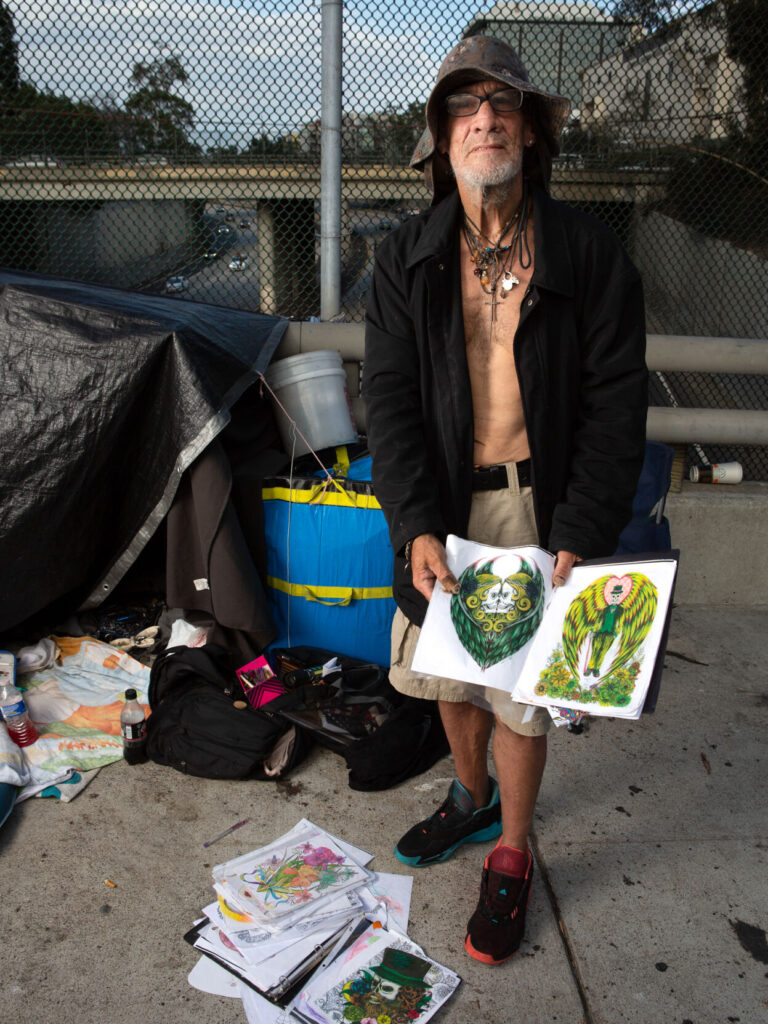
Photo Essay: Studio of the Streets
Photo Credit: Peggy Peattie
2022-12-05_photo-essay_studio-of-the-streets-01.jpg

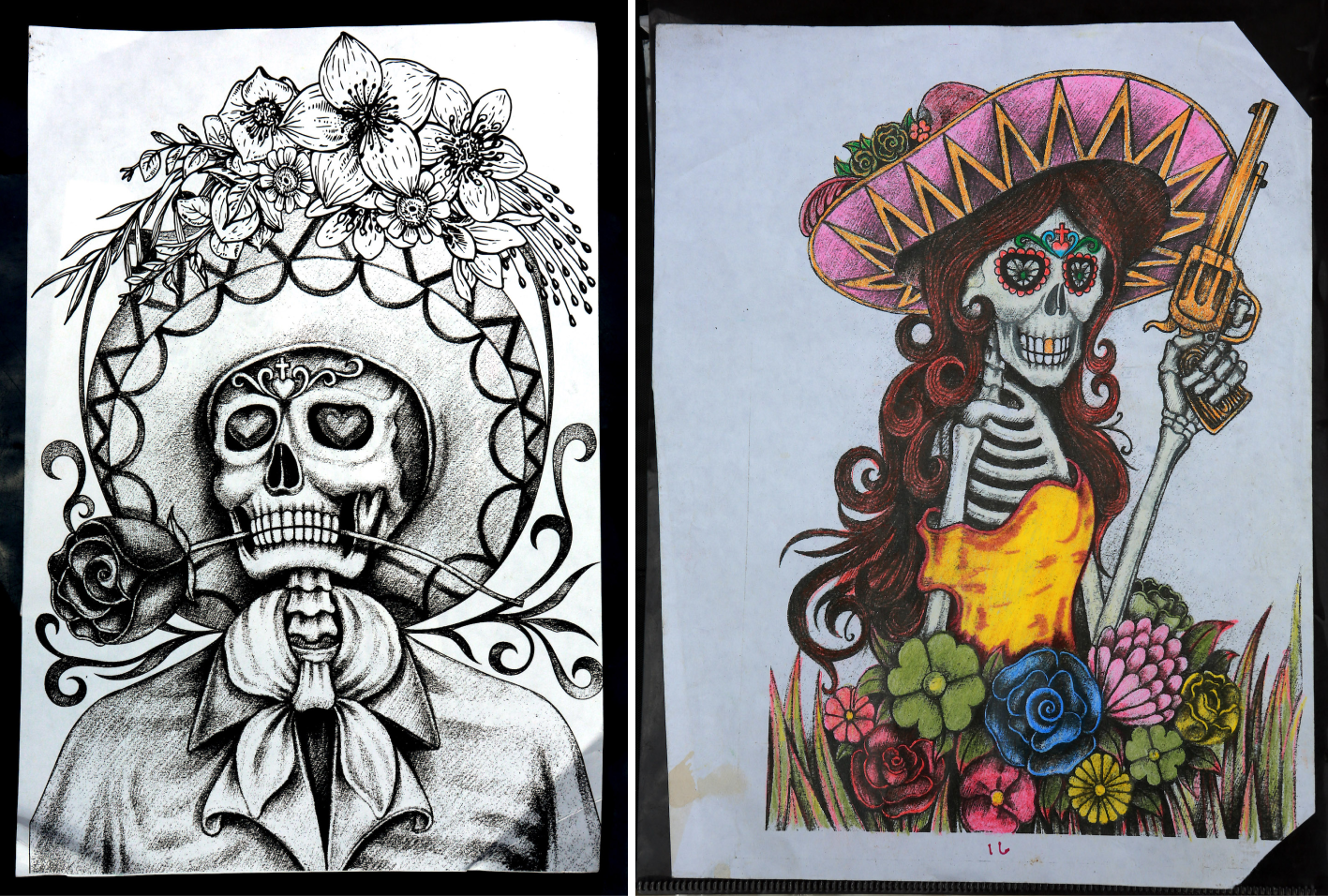
Born in Denver, Benito, 59, was injured while on patrol in Iraq in 1983. After finding himself homeless after a failed marriage and the death of his second wife, who overdosed on heroin, he became a welder and lived in an SRO in downtown San Diego. Failing eyesight cost him that job and his housing but forced him to quit drugs and re-focus on his colorful sketch art. He met his current wife, Karen, around the same time. They live in a tent on an overpass close to downtown.

Photo Credit: Peggy Peattie

Award-winning photojournalist Peggy Peattie has been telling the stories of the nation’s unhoused for more than 30 years, many of them here in town, where she teaches journalism at City College and San Diego State University.

“I have met healthcare professionals, teachers, artists, authors, skilled craftsmen and women, decorated war veterans, chefs, landscape designers, musicians, and entrepreneurs. For these artists, the motivation to paint, sing, draw, write, make jewelry or pottery or medicine bags brings them joy and elevates their existence above the demands of daily survival,” Peattie explains.
2022-12-05_photo-essay_studio-of-the-streets-02.jpg

Artwork by Benito

Photo Credit: Peggy Peattie

Unsurprisingly, what that looks like for people who are experiencing homelessness is a bit different: they don’t always have access to new or good supplies, requiring that much more resourcefulness and creativity, and, frequently, whatever supplies are amassed are stolen or lost to homeless sweeps conducted by the city.

Peattie says, “I hope these portraits remind readers of the importance of creativity and invites us all to stop and talk with the person living in a tent on the sidewalk we typically walk right past.”

More detail about these artists and the lives of many other unhoused San Diegans can be found on Peggy’s website, talesofthestreet.com.

2022-12-05_photo-essay_studio-of-the-streets-03.jpg

2022-12-05_photo-essay_studio-of-the-streets-03.jpg

Photo Credit: Peggy Peattie

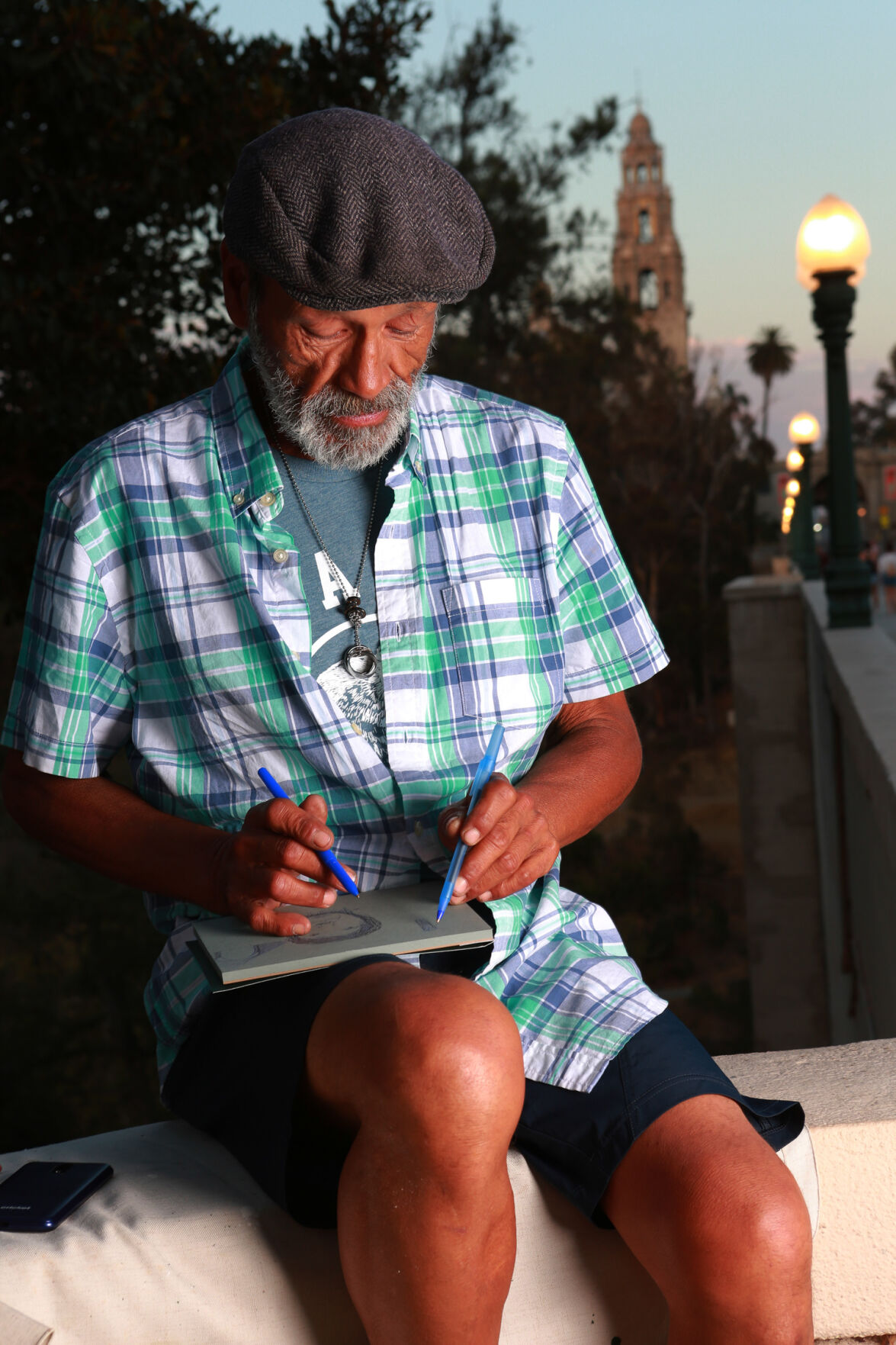
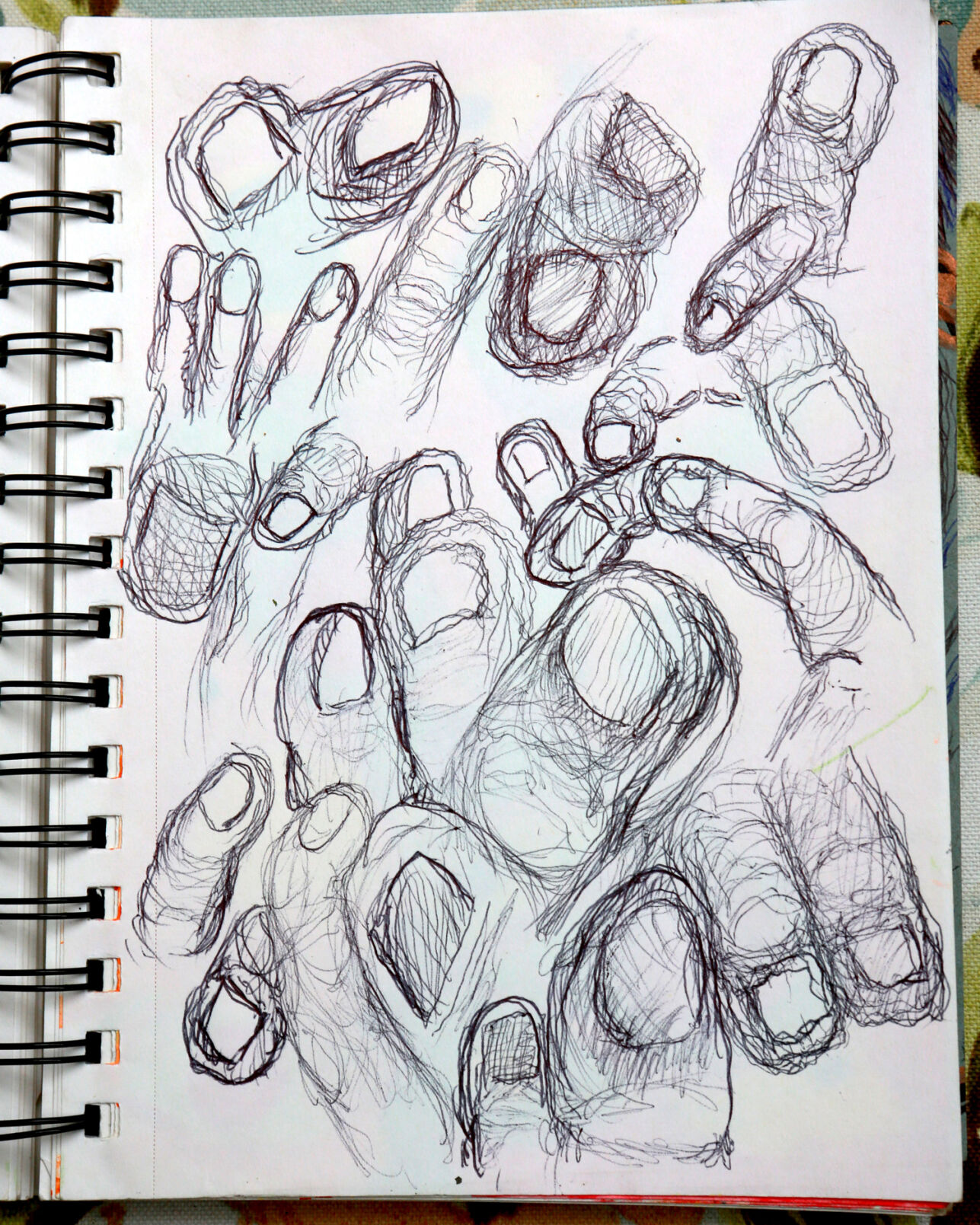
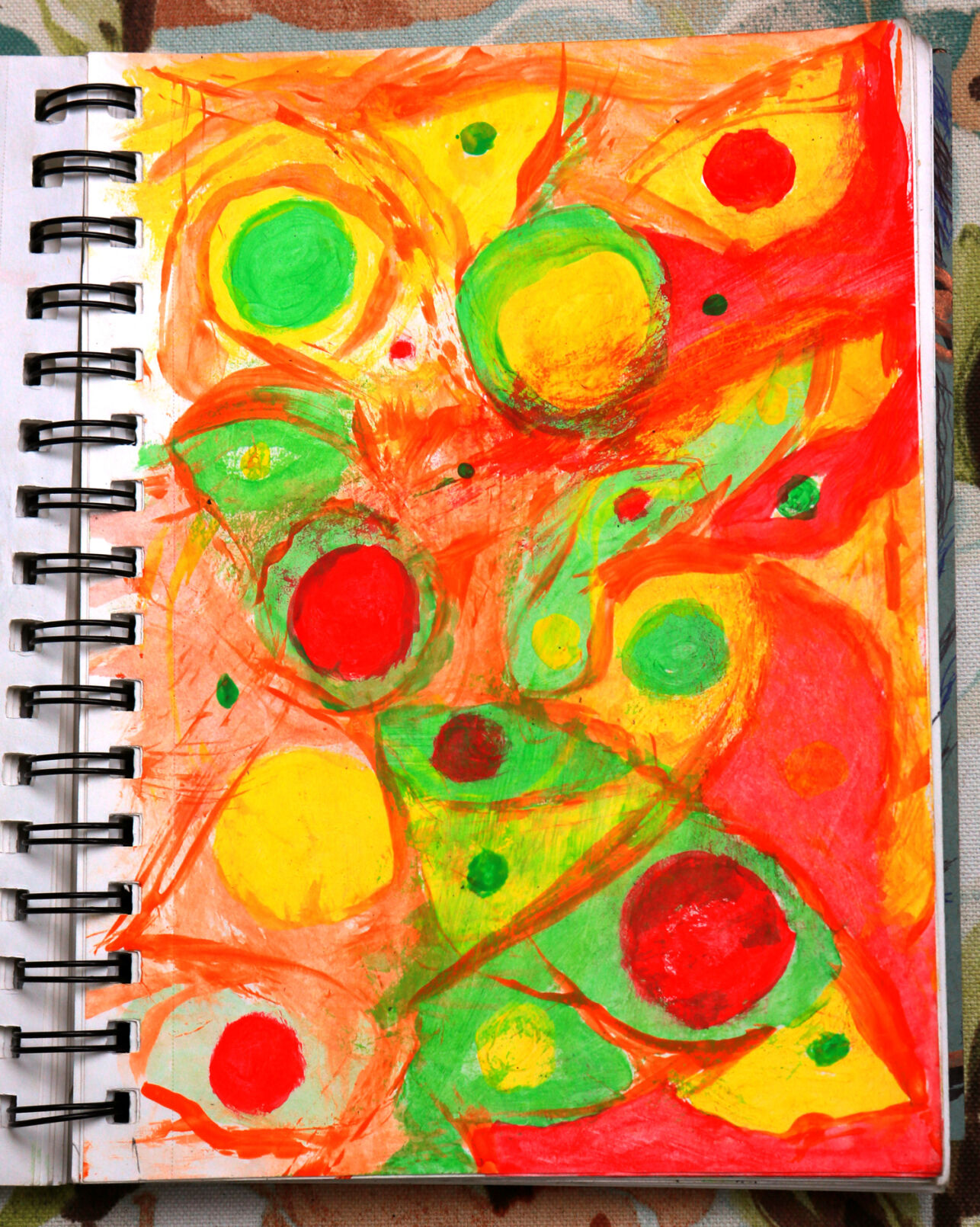
Henry, who lives in Balboa Park with his dog, Lulu, uses all sorts of different materials to paint and draw his creations. “In the ʼ90s, I met a lady who had been in a concentration. camp. She had old art of hers, and while in the camp, she used a feather to paint. So I learned that from her,” he explains. As a rule, Henry uses both hands, sometimes at once, just to see what kind of new textures and lines he can uncover.
2022-12-05_photo-essay_studio-of-the-streets-13.jpg

Artwork by Henry

Photo Credit: Peggy Peattie
2022-12-05_photo-essay_studio-of-the-streets-04.jpg

Artwork by Henry

Photo Credit: Peggy Peattie

2022-12-05_photo-essay_studio-of-the-streets-05.jpg

2022-12-05_photo-essay_studio-of-the-streets-05.jpg

Photo Credit: Peggy Peattie

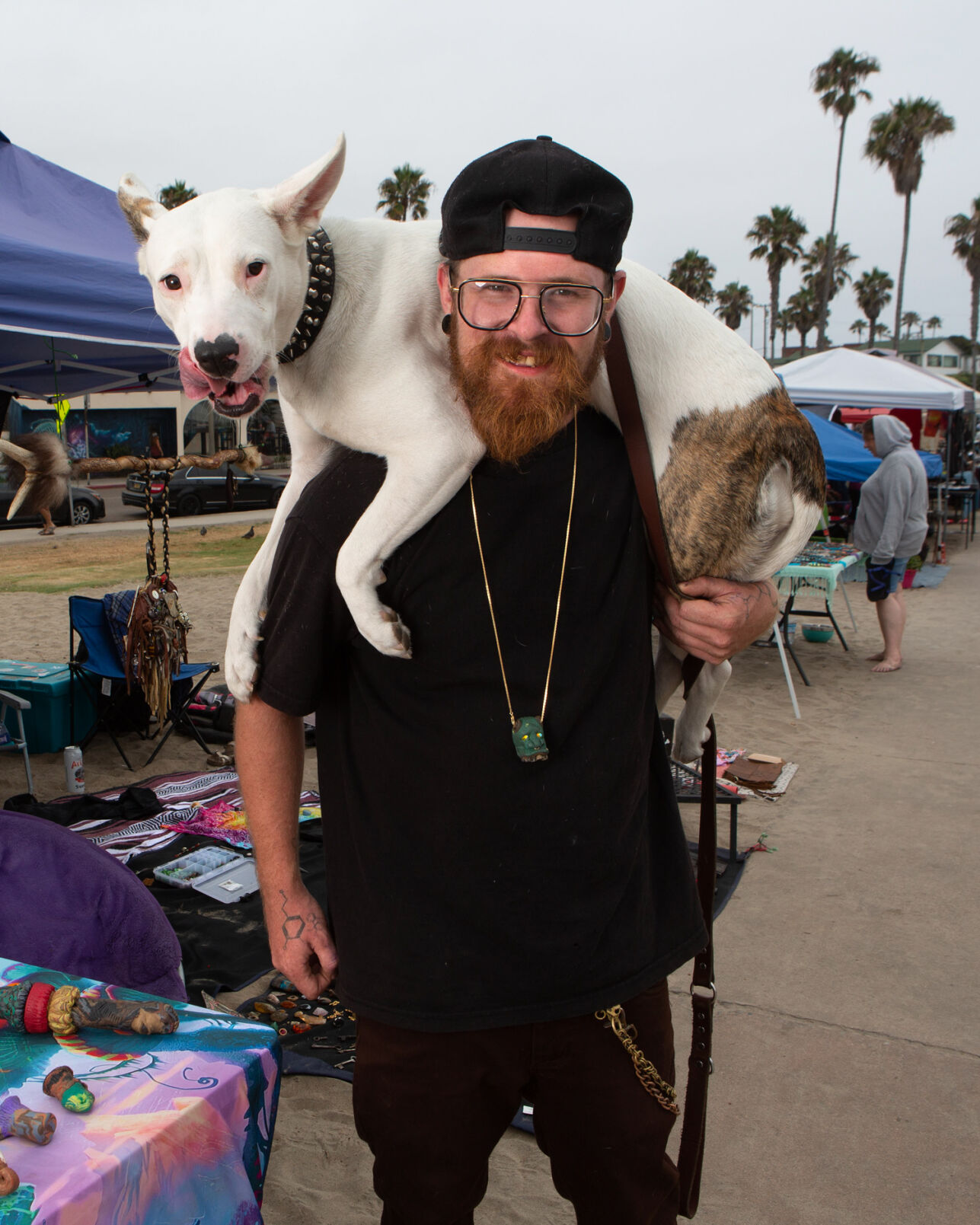
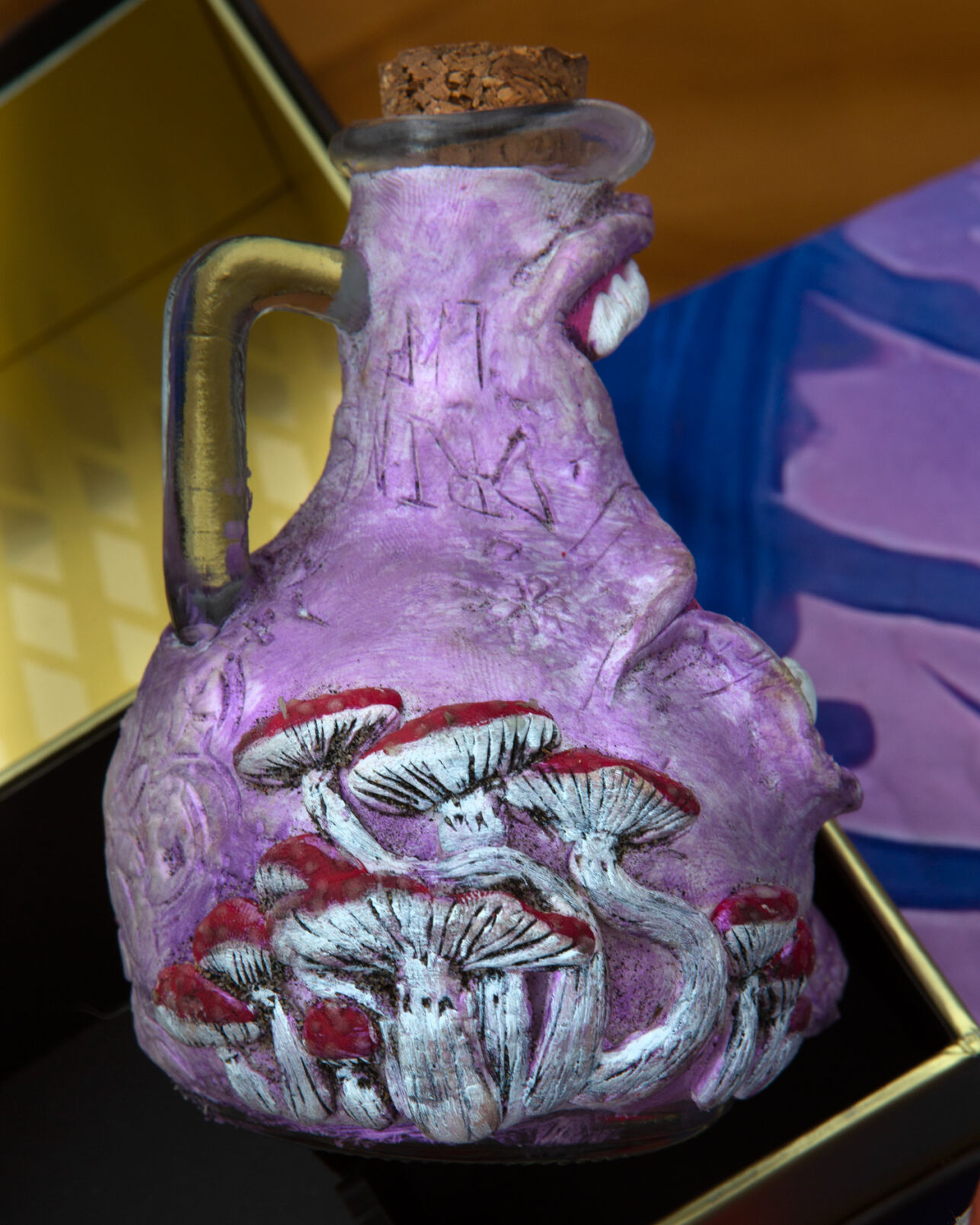
Ceramicist Tad, who sells his wares every day in OB next to the beach with his pup in tow, lives in his van. Recently, he made a stunning string necklace of “teeth” sculpted from clay interspersed with quartz, crystal beads, and oxidized hematite bands.
2022-12-05_photo-essay_studio-of-the-streets-11.jpg

Artwork by Tad

Photo Credit: Peggy Peattie

2022-12-05_photo-essay_studio-of-the-streets-06.jpg

2022-12-05_photo-essay_studio-of-the-streets-06.jpg

Photo Credit: Peggy Peattie

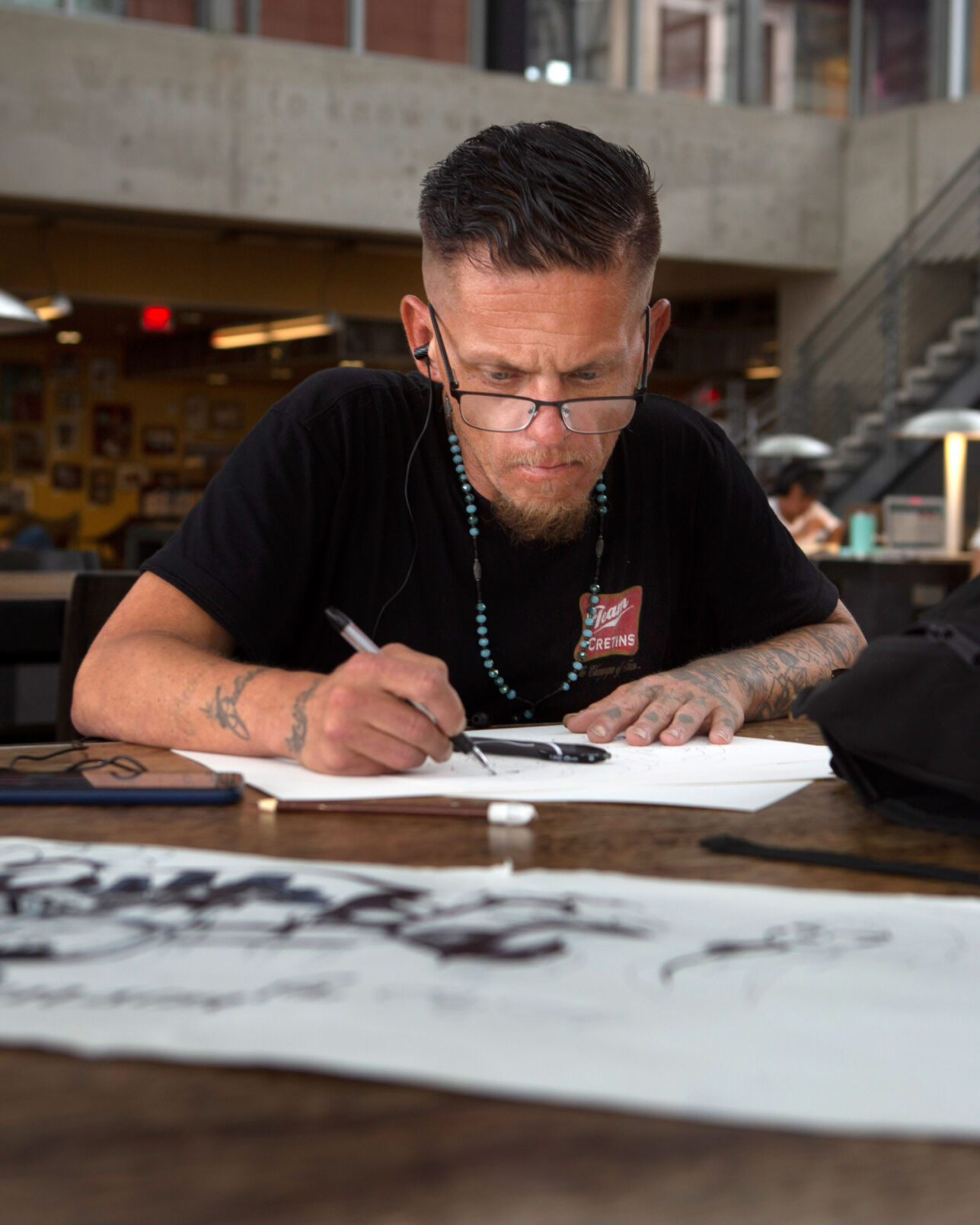
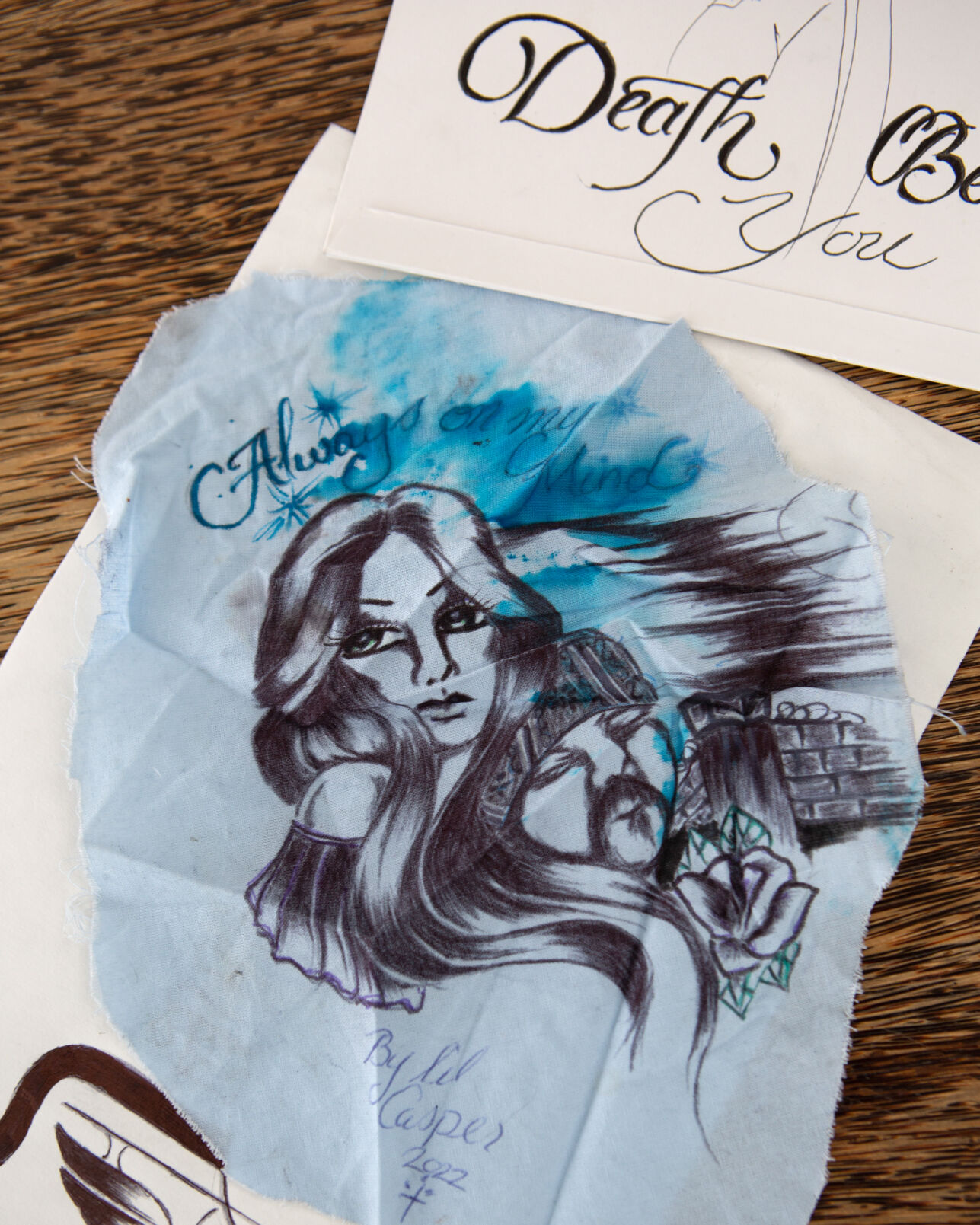
Casper, 46, grew up in East L.A. and learned to draw by watching a friend of his mother’s paint murals. He doesn’t like spray paint – only pen and paper. “Everybody that I grew up with that was a mother figure to me is gone. If you grew up in the barrio, [it will] claim you at some point,” he says. He draws mostly women, including the Virgen de Guadalupe, because “women run everything. They’ve got their shit together.”
2022-12-05_photo-essay_studio-of-the-streets-09.jpg

Artwork by Casper

Photo Credit: Peggy Peattie

2022-12-05_photo-essay_studio-of-the-streets-07.jpg

2022-12-05_photo-essay_studio-of-the-streets-07.jpg

Photo Credit: Peggy Peattie

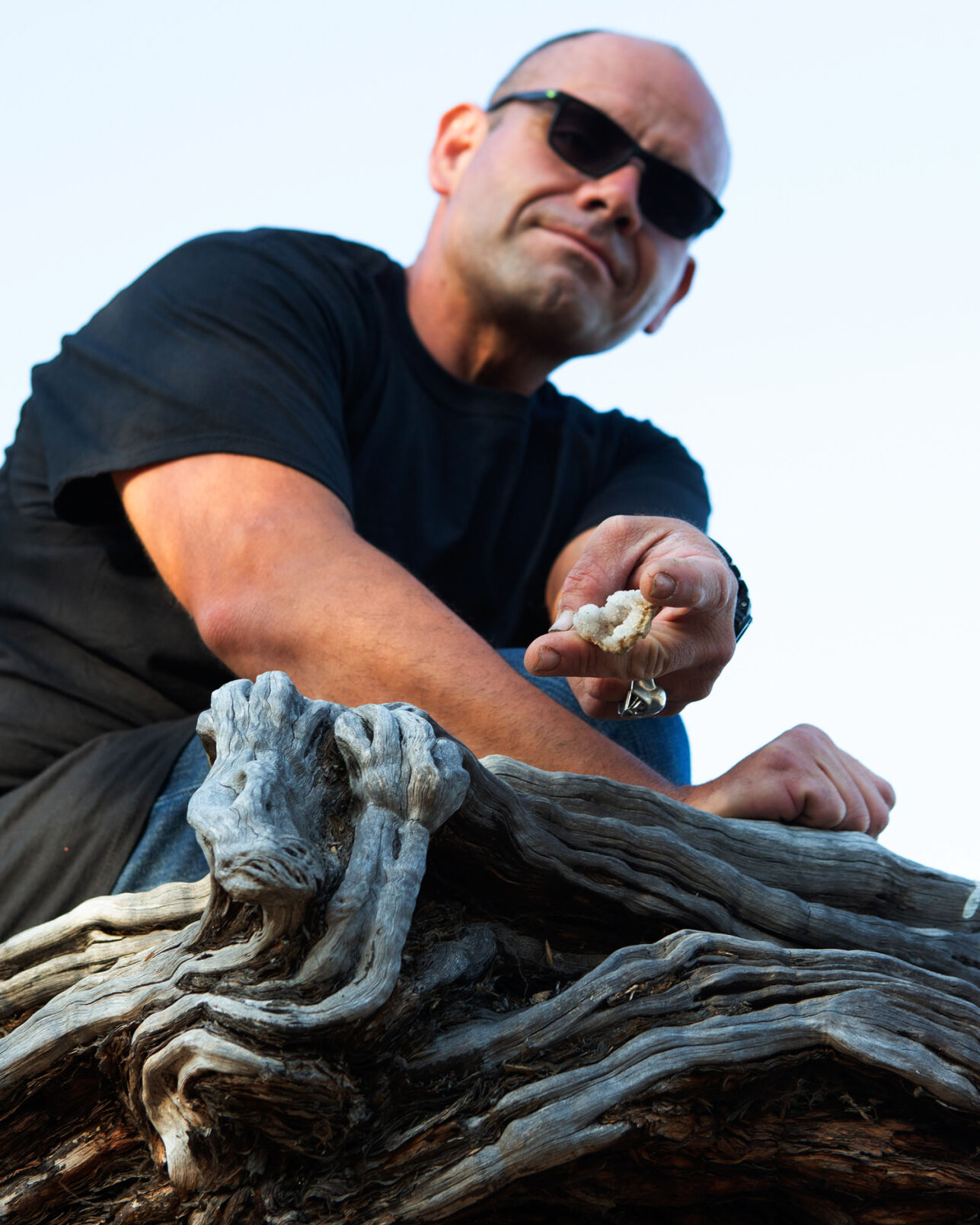
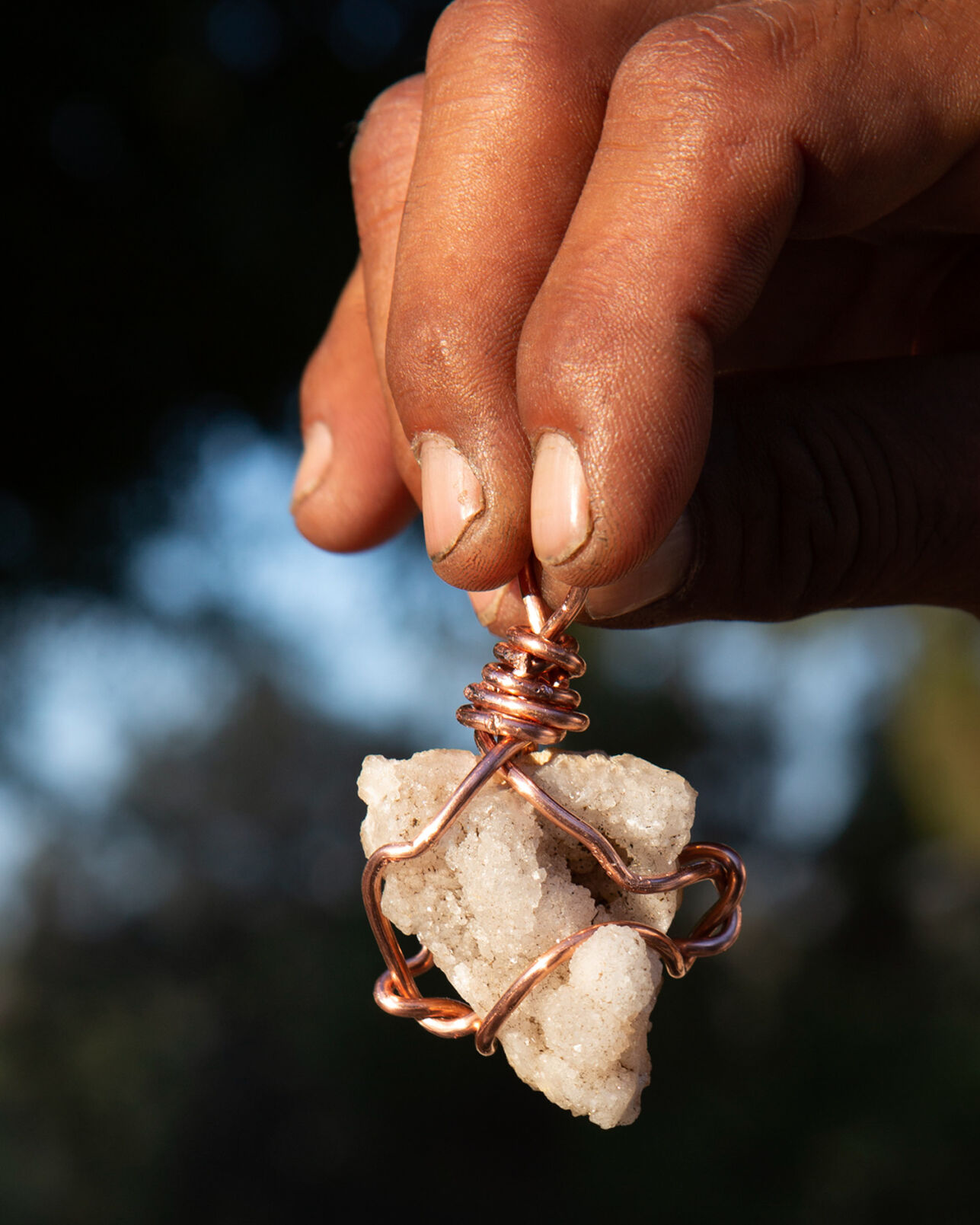
Jewelry maker Turtle uses wrapping techniques, working with “pure” elements like copper, crystals, and stones – he won’t use fake materials, saying it “despiritualizes” his work. “I can’t do that,” he says. “It’s just wrong. There’s a better way.” He gives much of what he makes as gifts – talismans to ward off evil on the streets.
2022-12-05_photo-essay_studio-of-the-streets-15.jpg

Artwork by Turtle

Photo Credit: Peggy Peattie

2022-12-05_photo-essay_studio-of-the-streets-08.jpg

2022-12-05_photo-essay_studio-of-the-streets-08.jpg

Photo Credit: Peggy Peattie

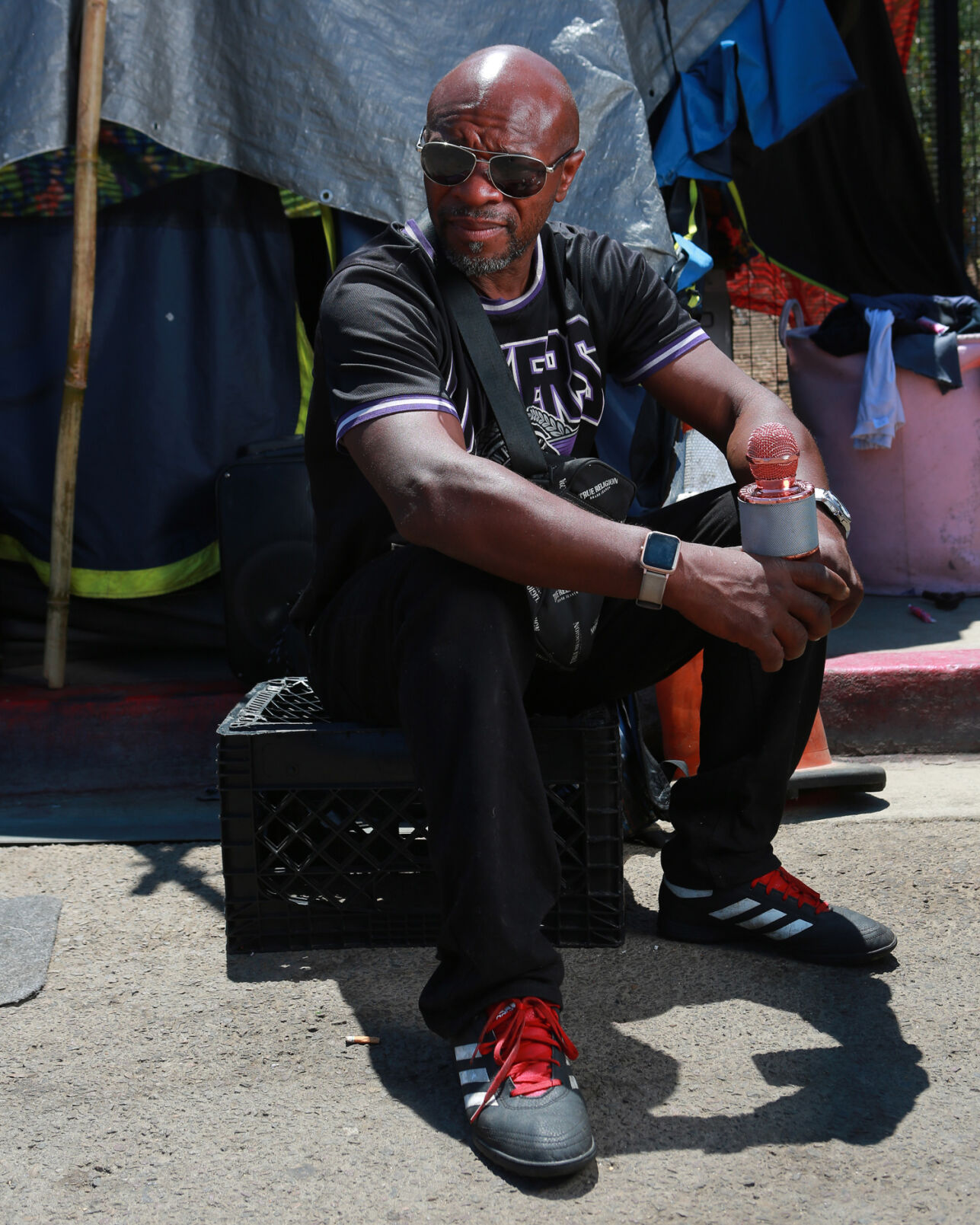
Mobyte, who is originally from Georgia, lives in a tent with his wife, Amy, downtown. They met at a Vegas bus stop. The next day, they stopped overnight at a motel, where he started singing. She videotaped him, and they’ve been together ever since. He wants to make a living with his music.

2022-12-05_photo-essay_studio-of-the-streets-16.jpg

2022-12-05_photo-essay_studio-of-the-streets-16.jpg

Photo Credit: Peggy Peattie

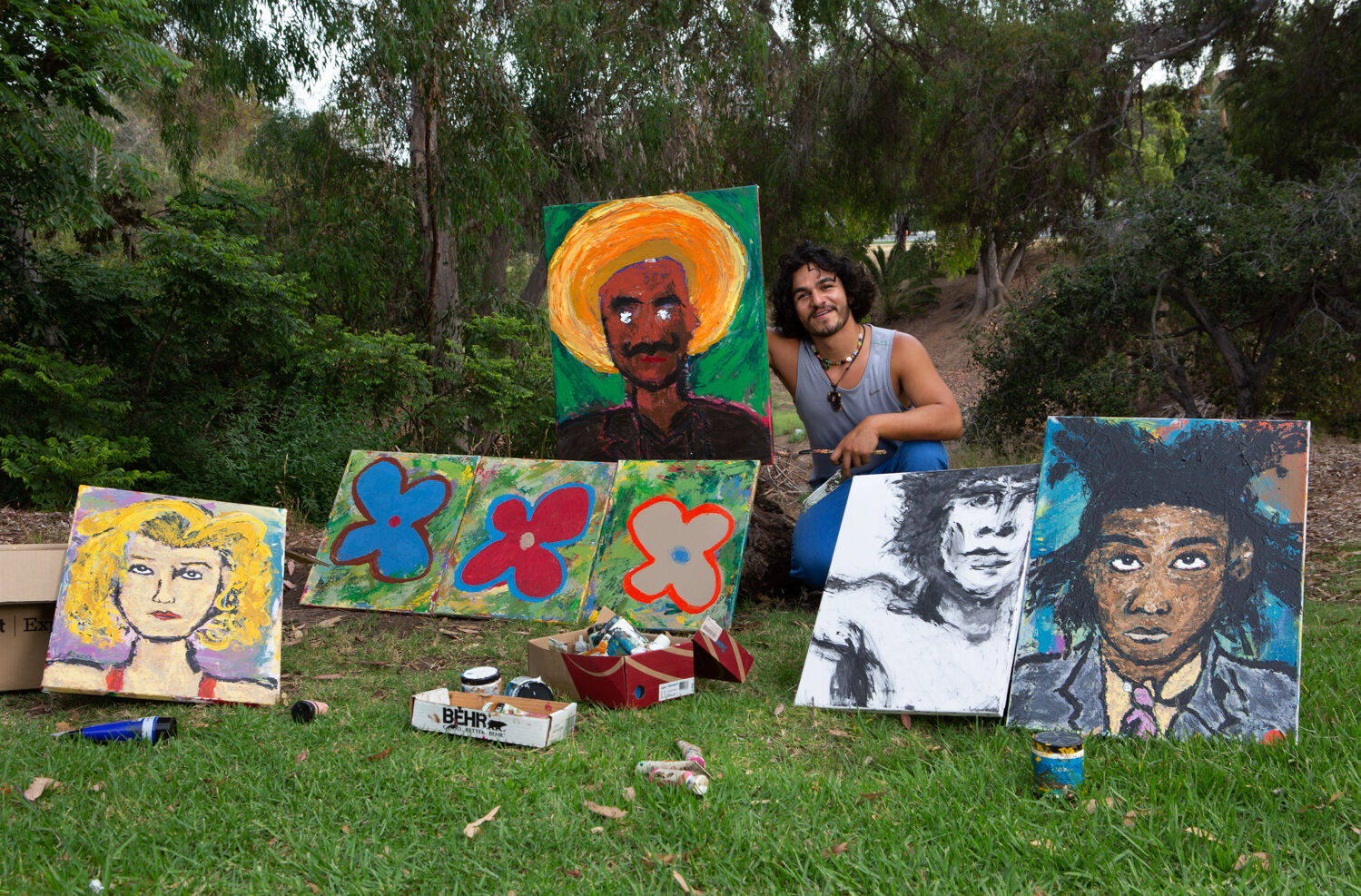
Lorenzo is finishing up his final year at SDSU, after which, he hopes to start a community-oriented art gallery. He taught himself to paint during Covid, while at first bedding down with his parents in Imperial Beach. He lives in a house with roommates near campus these days but has been previously on the margins of having secure housing. He admits he doesn’t know what the future holds, especially with “how expensive everything has become.”
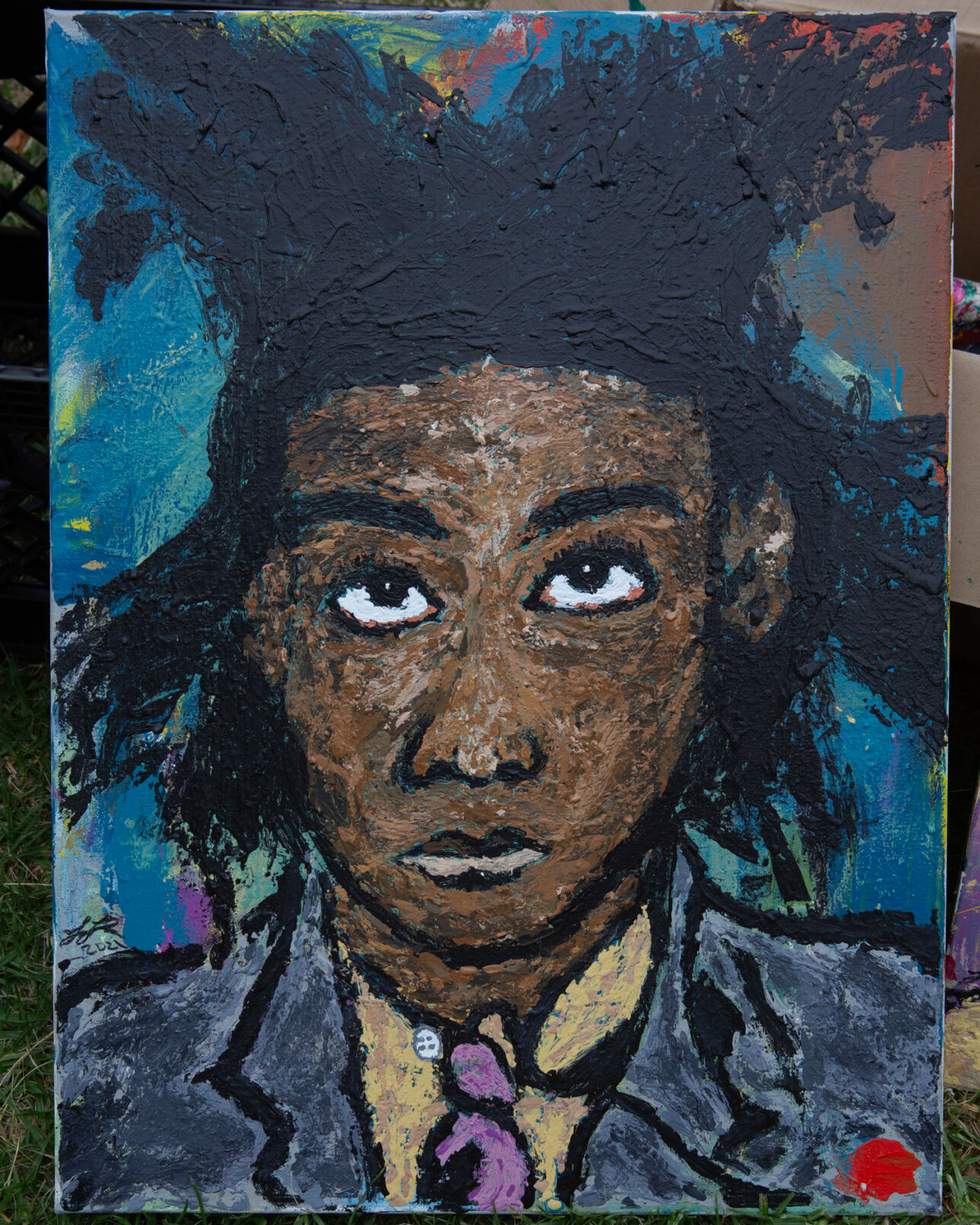
2022-12-05_photo-essay_studio-of-the-streets-12.jpg

Artwork by Lorenzo

Photo Credit: Peggy Peattie
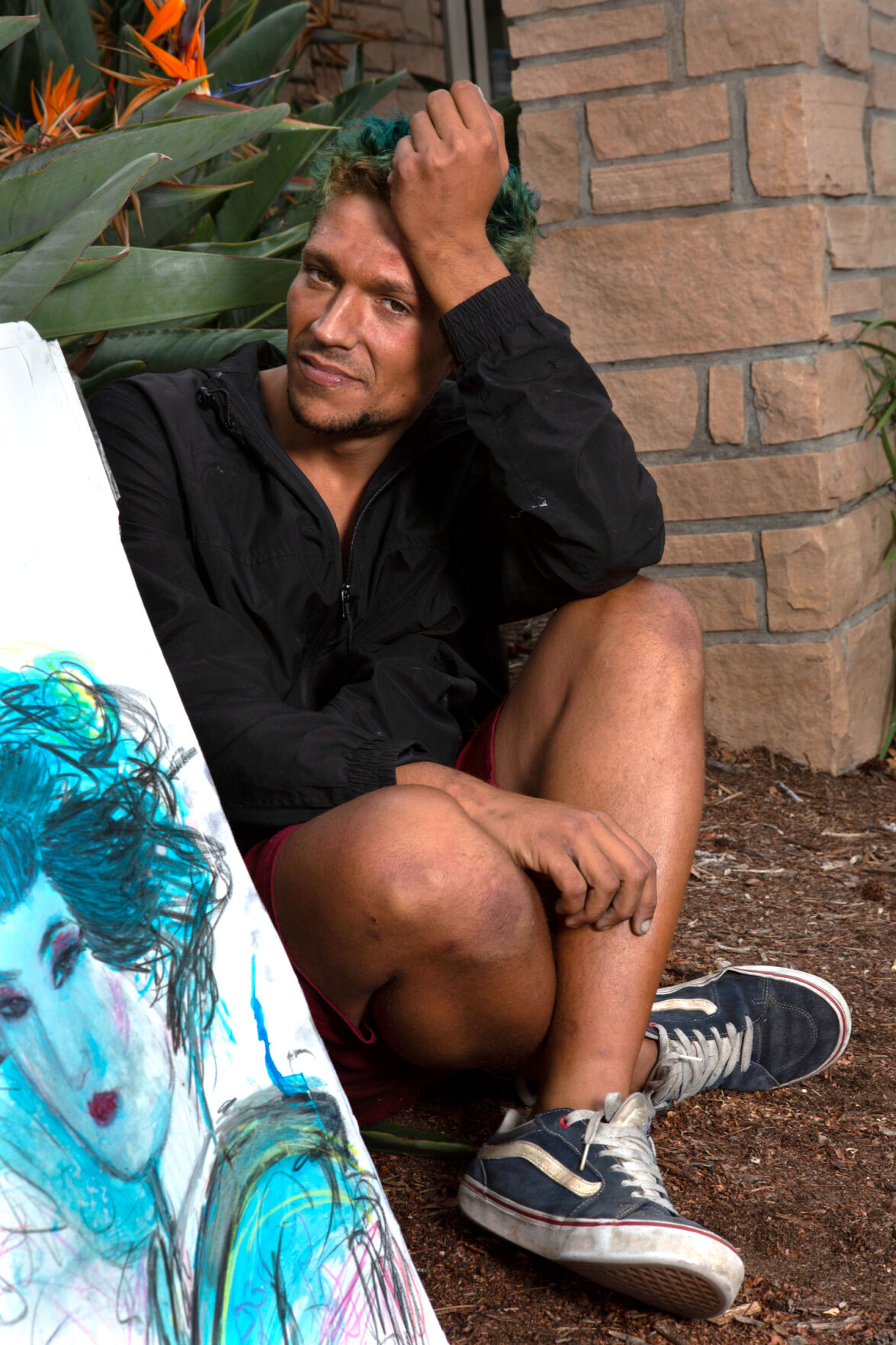

2022-12-05_photo-essay_studio-of-the-streets-19.jpg

2022-12-05_photo-essay_studio-of-the-streets-19.jpg

Photo Credit: Peggy Peattie

Originally from New York, Daniel came to San Diego following a string of unsuccessful romantic relationships, because his sister lives and works in Chula Vista. Recently, he has been painting landscapes, Japanese swords, samurai, and traditional Japanese women’s clothing–he likes the 1700s-era Japanese wood carvings and the craftsmanship and dedication to perfection they require.
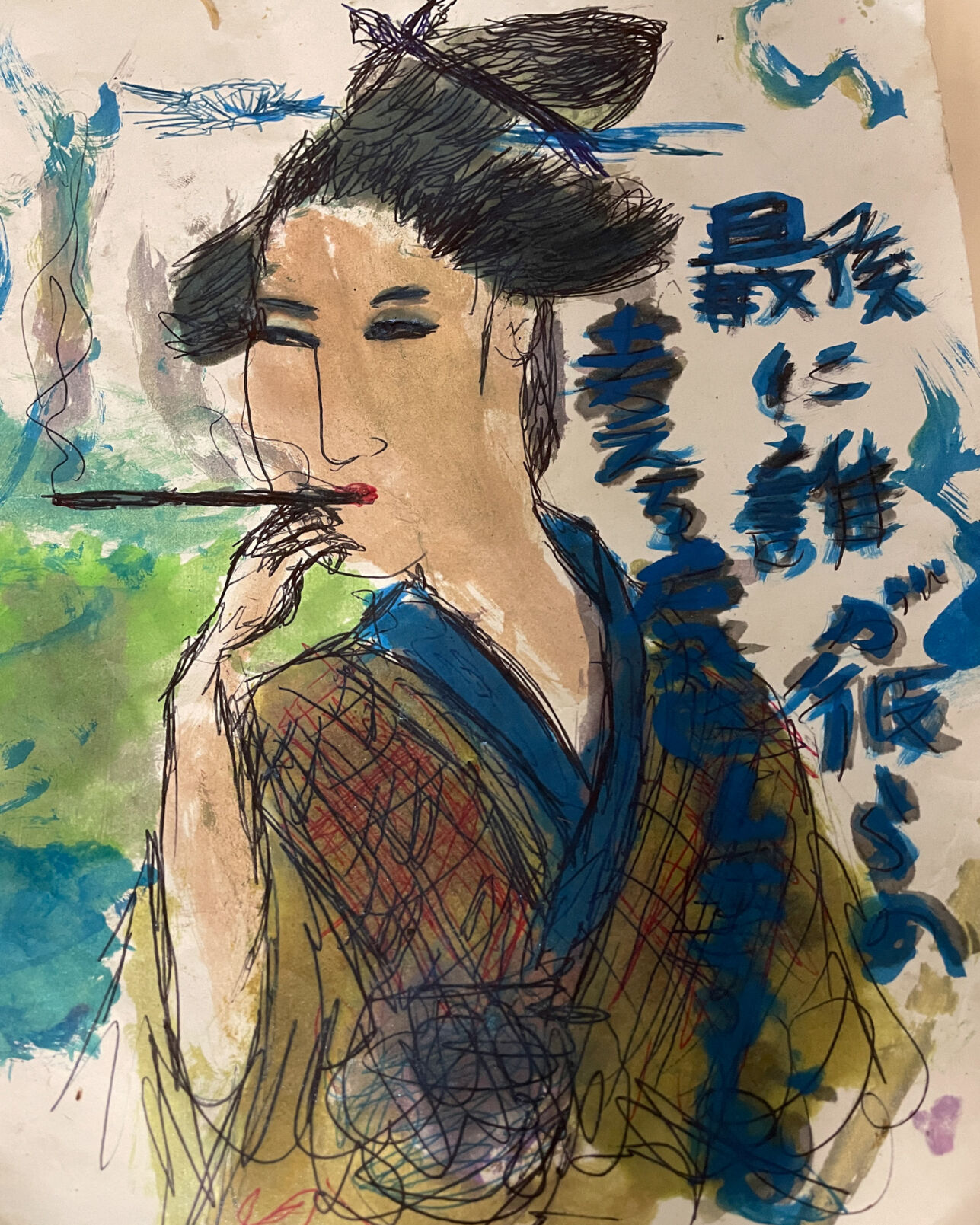
2022-12-05_photo-essay_studio-of-the-streets-10.jpg

Artwork by Daniel

Photo Credit: Peggy Peattie
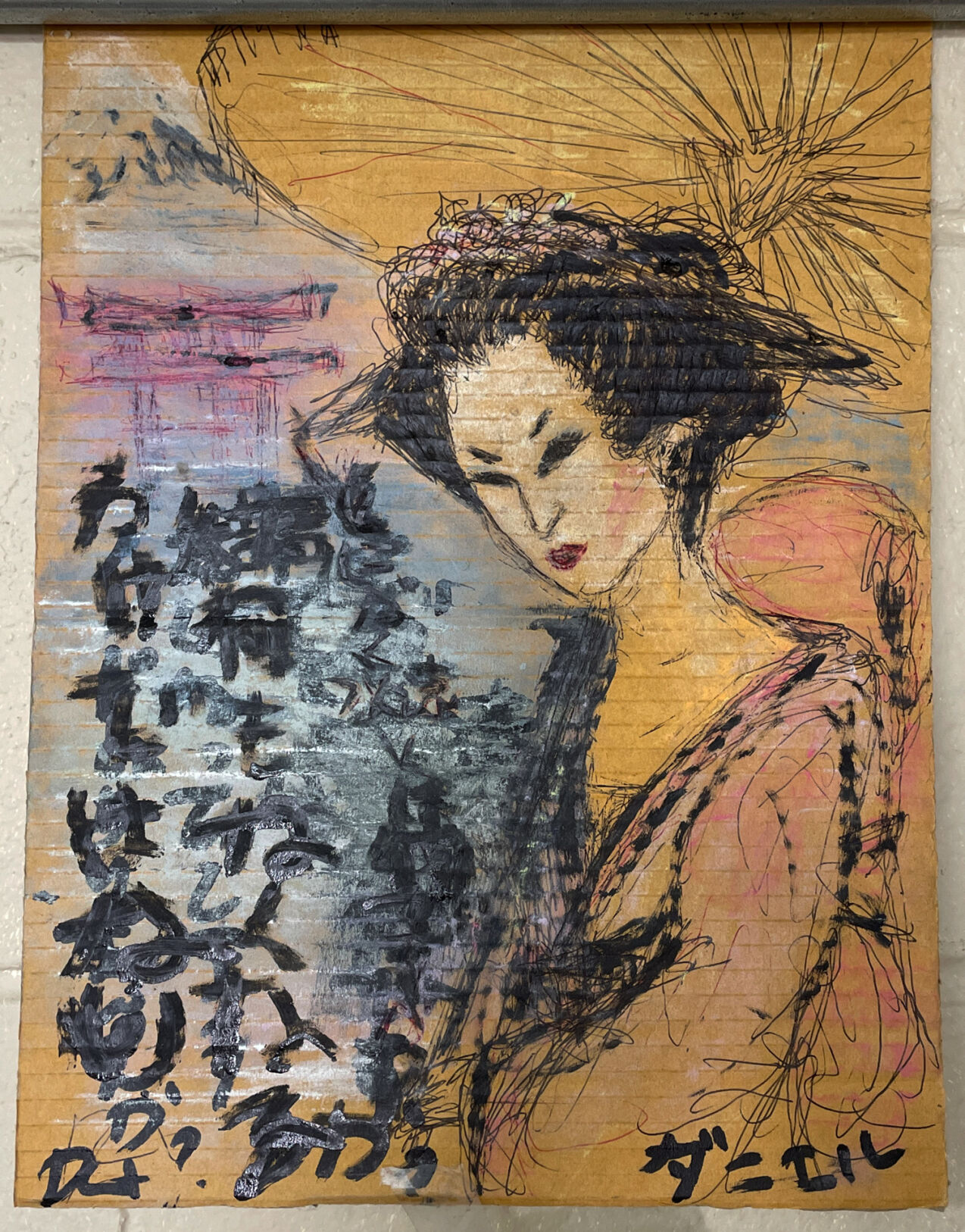
2022-12-05_photo-essay_studio-of-the-streets-20.jpg

Artwork by Daniel

Photo Credit: Peggy Peattie

2022-12-05_photo-essay_studio-of-the-streets-18.jpg

2022-12-05_photo-essay_studio-of-the-streets-18.jpg

Photo Credit: Peggy Peattie

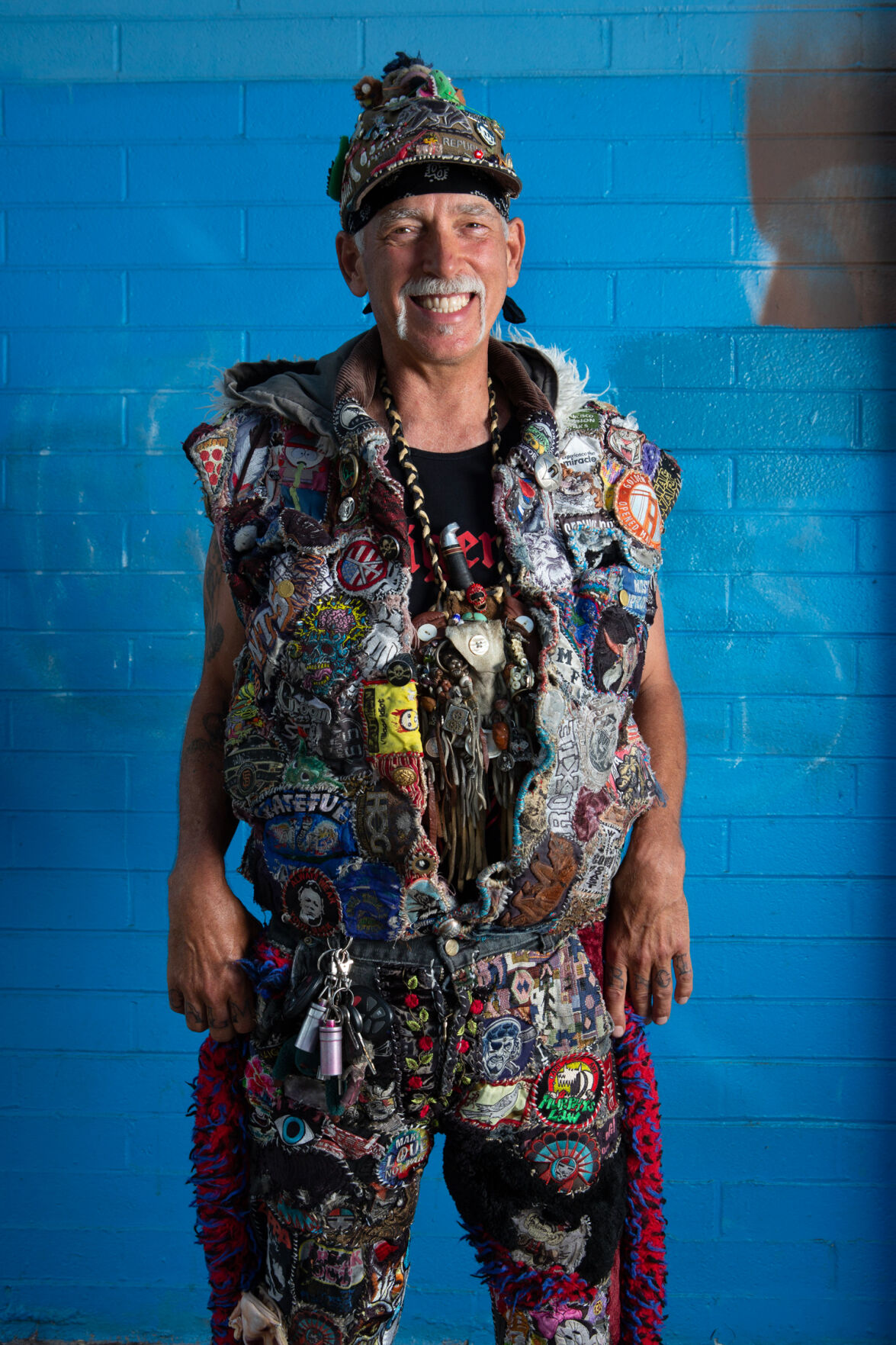
Patrick makes medicine bags, quilts, and jewelry. He spent 24 years as a caseworker for both adults and youth experiencing homelessness in San Francisco but was forced out of his job during Covid, so he’s living here in his van and selling his artwork in OB. He says, “I want my art to outlast me when I’m gone. My art is my fossil footprint.”

2022-12-05_photo-essay_studio-of-the-streets-17.jpg

2022-12-05_photo-essay_studio-of-the-streets-17.jpg

Photo Credit: Peggy Peattie

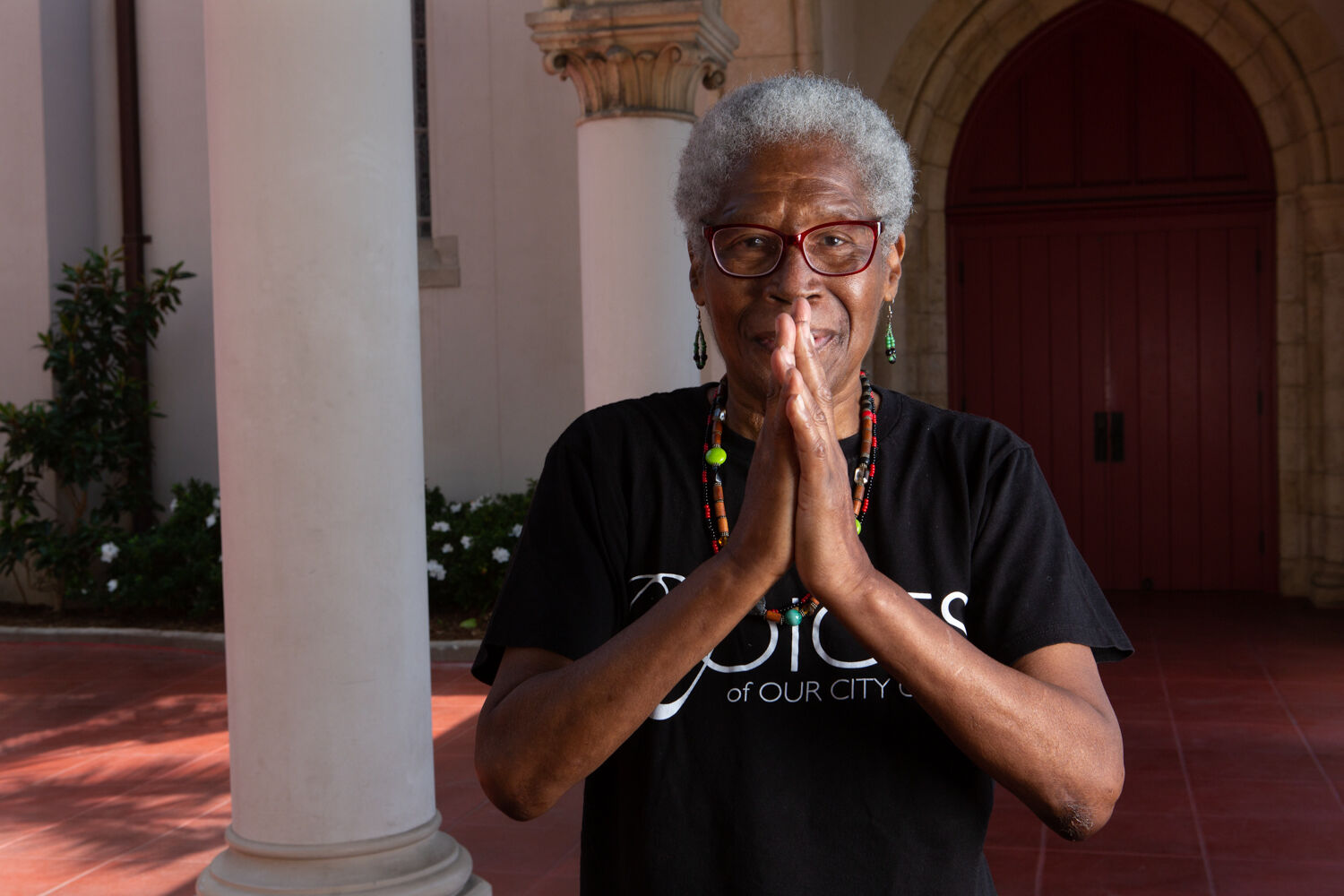
Voices of Our City Choir member Patricia performed the spoken word section of the choir’s America’s Got Talent audition back in 2020, becoming an instant internet sensation. A week later, she found affordable housing, thanks to the San Diego Housing Commission and the efforts of the choir.

Local Artists

Subscribe to our newsletters

Select Options

By subscribing you confirm that you agree with our Terms and Conditions and Privacy Policy.

Everything SD FEBRUARY 13, 2024

Imperial Beach Artist Richie Moon’s Perfect South Bay Day

The artist and graphic designer whose collaborations include Daddy Yankee & San Diego FC shares his favorite local haunts

Imperial Beach Artist Richie Moon’s Perfect South Bay Day
Photo Credit: Cole Novak

Scenes from the border crossing, lowriders, the Coronado Bridge—many of the motifs featured prominently in artist and designer Richie Moon’s work come from his lifelong roots in South San Diego, particularly Imperial Beach. “I’ve been here since I was in kindergarten,” he says.

His love for South Bay is one he wishes more people shared. “It’s somewhere that’s constantly overlooked,” he says. “But South San Diego is the heart of San Diego.” Because the area offers so much, it was hard for Moon to pin down just a few ways to spend the day in the area—but he somehow managed.

To start a morning off right, Moon heads to Home Coffee in National City. The bright, airy space has plenty of room to work alone or chill with friends, making it a hub for the community that’s easily accessible off the 805 and 54 freeways. Plus, a set of outdoor swings are sure to bring out the kid in anyone. “I prefer it to Starbucks,” Moon laughs, recommending the Tahitian vanilla latte.

Interior of Exclusive Cuts Barber Shop in Imperial Beach, San Diego where  Richie Moon visits regularly
Courtesy of Exclusive Cuts Barber Shop

Moon says he’s had the same barber, Ray Muñoz, since high school. “Initially, he started cutting hair out of his garage then moved into shops,” he recalls. “I got to see his journey, and for him to live his dream is pretty cool.” Moon now visits him at Exclusive Cuts Barber Shop, the spot Muñoz owns in Imperial Beach.

After a fresh trim, Moon hits San Diego Kabob Shack in Chula Vista for a chicken kebab plate or Poke Etc. in National City for spicy mayo ahi tuna. As someone who focuses on eating healthy, Moon says both options hit the spot, especially after a workout.

Interior of South Bay brewery Thre3 Punk Ales in Chula Vista, San Diego featuring beer casks, bar seating, and beer taps
Courtesy of Element Design Build

To unwind, Moon points to Thr3e Punk Ales in Chula Vista. “I don’t drink too much, honestly, but I have a great relationship with the owners,” he says. “If I do ever crave a drink every now and then, I prefer to go there.” Moon says he reaches for lighter beers like Mexican lagers, but pretty much anything coming out of the brewhouse promises to satisfy.

Beth Demmon

About Beth Demmon

Beth Demmon is an award-winning writer and podcaster whose work regularly appears in national outlets and San Diego Magazine. Her first book, The Beer Lover's Guide to Cider, is now available. Find out more on bethdemmon.com.

Features OCTOBER 28, 2022

Four-String Serenade

Following a pandemic-canceled tour with Tegan and Sara, Chula Vista's Jackie Mendoza is set to release her uniquely blended sound

Four-String Serenade
Credit: Tayo Oyekan
four-string serenade, jackie mendoza

Jackie Mendoza’s bilingual sound is growing more versatile. Not pictured: her ukulele.

Credit: Tayo Oyekan

In high school, Jackie Mendoza dreamed of seeing her name on a Broadway marquee. The Chula Vista native took drama class, starred in junior theater productions, and developed her love of music first through musicals. But it wasn’t until after briefly entertaining a theater major in college—then realizing how rigorous and unglamorous a career it really is—that she came to the epiphany that maybe writing and recording her own music was a much more compelling path.

“Once you start doing it professionally, it becomes really intense, and it’s not fun anymore,” she says via a Zoom call from Ohio, where she’s been spending a month taking an audio engineering course. “It was a lot of pressure, and the thing I like to do the most is sing and perform, so I started writing more of my own music.”

As a teenager in Chula Vista, Mendoza took up the ukulele and posted covers to YouTube, eventually learning to use music production software Ableton. She moved to New York City for college and joined the indie rock band Gingerlys, which later morphed into Lunarette—both of which released records through San Diego-based label Topshelf. “I played music in my bedroom,” she says, “but that was the extent of my music life. When I joined [Gingerlys], we played in Brooklyn and would do tours on the East Coast. That was my intro to playing shows.”

While she was playing in those bands, however, she also began to cultivate her own songwriting voice. In 2019, she released the LuvHz EP, which built up a steady stream of accolades and eventually resulted in a tour booked with alt-rock twin-sister duo Tegan and Sara. (Unfortunately, the tour had to be canceled on account of the pandemic.)

After living in Brooklyn for the better part of a decade, Mendoza fell in love with her hometown again and moved back to San Diego where she wrote her debut full-length album, set to be released in early 2023. Loosely speaking, the style of music that Mendoza plays is pop, shaped by the sound of pulsing beats and dreamy electronics. It also features lyrics in both English and Spanish; Mendoza lived in Tijuana until she was six and grew up in a bilingual household.

The X-factor in Mendoza’s sound is her unconventional choice of instruments. She plays a ukulele, which is fed through effects (often sounding unrecognizable), and therefore detached from some of its more precious connotations. She took up the instrument because, as she admits, she was “really bad at the guitar.” But soon enough, she found more to explore through an increasingly manipulated uke.

“I realized I could get a ukulele and buy pedals and effects and play it that way,” she says. “That kind of just started defining my music, because I had never seen that done before.”

Mendoza’s influences and musical direction keep changing as she continues to write and record, her sound growing ever more versatile. With her debut album on the way, she’ll have a new opportunity to showcase the full spectrum of music that she loves.

“It’s music that I really like to listen to,” she says. “I like pop, and I like reggaetón. I like trap music. I like electronic, psych rock—I wanted to put all of that together and tell my story through music. It’s a blend of all the music I like to listen to.”

There’s also one other crucial element she notes: “It has a little of that showtunes touch.”

Jackie Mendoza plays the Escorted Trips festival at the WorldBeat Cultural Center on Saturday, December 3.

Jeff Terich

About Jeff Terich

Jeff Terich is the music critic behind the blog The Setlist. His writing has been published in Stereogum, Bandcamp Daily, American Songwriter, Fodor's and Vinyl Me Please.

Local Artists Music
Everything SD JULY 15, 2026

He Saved an Encinitas Landmark Then Built a New One

After Captain Keno's closed, pro surfer Benji Weatherley gave its tables, dishes, and memories a second life at Breakers Cafe Bar & Grill

He Saved an Encinitas Landmark Then Built a New One
Photo Credit: Matt Furman

Captain Keno’s No. 8 special—pancakes, sausage, toast, home fries, and eggs for $2.99—was the fuel that powered Benji Weatherley for surf competitions as a teenage pro. A couple decades later, tears were shed when the Coast Highway dive-slash-eatery called it a day after 54 years. Usually, the guts of a shuttered restaurant go to liquidation auctions or straight to the dump to decompose along with its legend. Instead, Weatherley took in Keno’s spare parts—plus other relics from Encinitas’ past—and used them to build the newest community hangout.

Every single piece in the place is from somewhere in this town,” Weatherley says about Breakers Cafe Bar & Grill. “I’m not going to settle for anything less.”

Breakers is a Hawaiian hideout in an uncool part of the coastal surf town, but it’s got the set design of an Encinitas superfan. The plates, silverware, and coffee mugs are from Keno’s. So are the tables and booths. There’s a bench made from the last table preserved in The Derby House (a building that, for over a century, was a hotel, then became a hospital, a religious retreat, and a private home). Weatherley’s not performing CPR on old upholstery because he’s a fan of antique furniture. It’s a method to bring people together.

“Representing nostalgia in this town is the only way to grasp a hold of the community,” Weatherley says. “Everyone wants to touch and feel something different from what they’re experiencing on their phones.”

Photo Credit: Matt Furman

Every week, locals bring him photos, artifacts, and bits of paraphernalia from Encinitas’ past and ask Weatherley to give them a new home. “I’ve had ladies who were there when [Captain Keno’s] opened cry in my arms and say, ‘This table is where I had my second birthday with my grandma,’” he says. “They tell me these stories, and I tell them I have all the same stories about my mom.” (Weatherley’s mom first brought him to Keno’s and helped raise the young surfers from the Momentum Generation documentary—Weatherley, Taylor Steele, Rob Machado, Kelly Slater, etc.—as they surfed some of the world’s most dangerous waves at Pipeline in Hawaii. Back then, she owned Breakers Restaurant & Bar in Haleiwa. Name sound familiar?)

Weatherley has always been the funniest man in the room. He calls Breakers “the Chuck E. Cheese of Encinitas.” The restaurant hosts hula dancing classes, open-mic comedy nights, and evenings bartended by longtime Captain Keno’s barkeep Vaka Kaufusi. Cult-loved reggae band Steel Pulse hit the Breakers stage recently to perform a new song that Weatherley also helped write. His longtime friend Jack Johnson has dropped by to sing a few, too.

Despite not having a fancy location along the 101, people are catching on. Fire stations and hospitals have held staff parties there. Weatherley also currently sponsors four sports teams.

“Last night, I had a girl say, ‘I want my birthday party at Breakers,’” he says. “That, to me, is community in a nutshell.”

Emma Veidt

About Emma Veidt

Emma Veidt is an editor at San Diego Magazine. She earned her bachelor's and master's degrees from the Missouri School of Journalism. She loves running, hiking, and rock climbing, but really, she mostly loves encounters with the street cats around North Park.

Studio S JULY 25, 2026

These San Diego Companies Are Driving the Region’s Next Wave of Growth

This month, the 2026 San Diego Business Impact Awards recognized local businesses making an impact in clean energy, biotech, hospitality, and beyond

These San Diego Companies Are Driving the Region’s Next Wave of Growth
Photo Credit: Matt Furman

Renewable energy companies building hundreds of power plants. Biotech startups using artificial intelligence to create personalized medicine for children with rare diseases. Hospitality companies quietly powering thousands of local events. Consumer brands growing from beach-town startups into national businesses. These are the kinds of companies driving San Diego’s economy today, and the businesses recognized at this year’s San Diego Business Impact Awards offer a snapshot of where the region is headed.

Hosted July 23 by San Diego Regional Economic Development Corporation (EDC) and JPMorganChase, the second annual awards event honored four local companies for innovation, growth, and economic impact. More than 100 nominations from San Diego’s middle-market businesses were reviewed by a 10-person judging committee, with winners selected across four categories: startup, early-stage innovator, rising star, and established heavyweight.

Two-time honoree Jimbo Someck, founder of Jimbo’s organic grocery stores, also joined the event for a fireside chat on buying local, supporting emerging brands, and giving back to the community.

“San Diego’s strength comes from its makers and builders—the resilient people who endure great risks and overcome obstacles to build and scale a company,” says Aaron Ryan, San Diego Region Manager and Middle Market Banking at JPMorganChase & Co. “These awards aren’t just recognition; they spotlight the talent, grit, and innovation shaping our region’s future. By celebrating those who create and build, we foster connections and fuel the growth that keeps San Diego thriving.”

Photo Credit: Matt Furman

Building the Infrastructure Behind Clean Energy

Heavyweight honoree SOLV Energy has grown alongside the country’s rapid investment in renewable power. “It’s an exciting time for SOLV Energy as we are experiencing significant growth,” says CEO George Hershman. “The business has doubled over the last year and has almost double-digit growth since its inception.”

The Rancho Bernardo-based company designs, builds, operates, and maintains utility-scale solar and energy storage facilities. Since its founding in 2008, SOLV Energy has built more than 500 power plants.

Growth has translated directly into hiring. About 200 employees work from the company’s local headquarters, including roughly 20 interns. “Our intern program is a big part of the way that we grow our workforce,” Hershman says. “Last year, 43 percent of our interns became full-time employees. We believe San Diego is a great community to build and grow a high-tech infrastructure and technology company because of the incredible workforce—the ability to attract top talent and draw from world-class universities.”

Photo Credit: Matt Furman

Developing Medicine One Patient at a Time

Startup honoree La Jolla Labs is tackling one of medicine’s biggest challenges by developing personalized RNA therapeutics for patients with rare diseases—many of them children with neurological disorders like ALS. Using proprietary artificial intelligence and machine learning tools, the biotech company develops treatments tailored to each patient’s specific genetic mutation.

CEO Tamar Grossman says the recognition reflects how far the company has come despite limited resources. “We’re honored to be recognized for our ability to change and save patients’ lives and turn our lean startup into a clinical company with very minimal resources,” she says.

Grossman credits San Diego’s concentration of research institutions—including UC San Diego, the Salk Institute, and Scripps Research—with creating a pipeline of talent and collaboration. “San Diego is one of the world-leading centers for technology, genomics, and RNA therapeutics,” she says. “We have over 30 RNA therapeutics companies here, and we support each other and help with anything related to drug discovery.”

She says that collaborative spirit extends beyond formal partnerships. “You can walk around Torrey Pines, go into a café, and find colleagues from the industry and have an ad hoc conversation,” Grossman says. “That’s something very unique to San Diego.”

Photo Credit: Matt Furman

Powering San Diego’s Special Celebrations

While Snake Oil Venue Company may not be a household name, chances are many San Diegans have attended one of its events. The early-stage innovator honoree has expanded from beverage catering and mixology consulting into venue management, operating Julep Venue in Mission Hills, Bramble Bay Venue in Imperial Beach, Vesper Venue, the Chapel at Liberty Station, and five outdoor venues throughout Liberty Station—more than 500,000 square feet of event space altogether.

“We do a lot of launch parties for corporations and new products,” says CEO Mike Esposito. “I really like working on the entrepreneur side of things, where new businesses are entering the San Diego market and looking to make a splash.”

Snake Oil has executed more than 16,000 events, employed more than 1,000 people, and partnered with more than 900 local vendors, including caterers, florists, photographers, entertainers, and other hospitality businesses. The company also works with many of San Diego’s nonprofits, museums, and cultural institutions. “We get to celebrate people’s most important moments,” Esposito says. “Whether that’s a wedding, celebration of life, or quinceañera, we’re fortunate to be involved in the community in so many different ways.”

Photo Credit: Matt Furman

Growing a Beach-Town Brand into a National Business

Rising star honoree ALOHA Collection is proof that a simple idea can grow into a thriving company. Founded by two roommates who wanted a better way to carry wet swimsuits after a day at the beach, the lifestyle brand has grown into a business while maintaining strong year-over-year growth.

Now headquartered in Carlsbad, ALOHA Collection employs more than 100 people and operates its California flagship store in Encinitas, which is slated for a remodel. With roots in Hawaii, the company is known for its lightweight, splash-proof travel bags that have become a familiar sight on beaches in San Diego and beyond.

“‘Aloha’ is part of our name, but it’s also how we move through the world,” says CEO Lynna Barnard. “It’s how we show up for people, the way we travel, the way we give back.” Since day one, the company has maintained a 5 percent giveback to Hawaii conservation efforts, contributing millions of dollars over the years.

“I think what’s so inspiring about ALOHA Collection, and the founders in particular, is when you dream big, those dreams can come true when you work hard and trust in the universe,” Barnard says. “It’s inspiring to be a role model for other people wanting to start businesses from humble beginnings. Start small and watch it grow.”

Together, businesses like these form a cornerstone of San Diego’s economy—not only through the jobs and revenue they generate—but through the local workers they hire, vendors they support, and investments they make in the region. Their growth doesn’t happen in isolation; it ripples outward, strengthening the broader business community and the people who call San Diego home.

Photo Credit: Matt Furman

Partner Content
Arts & Culture JULY 13, 2026

How Scrojo Became One of Rock’s Most Prolific Poster Artists

The San Diego designer has created more than 3,000 concert posters over nearly 40 years for artists including the Rolling Stones and the Red Hot Chili Peppers

How Scrojo Became One of Rock’s Most Prolific Poster Artists
Courtesy of Scrojo

Let’s start with his name.

No, not his birth name, Craig McKenzie Haskett.

Scrojo.

When he was in high school, he and his friends were trying to come up with the perfect name for their punk band that would encapsulate all their personas. Nicaragua. The Freds.

One of his friends said he was going to go by Jimmy Stacks and called it “the perfect rock and roll name.” Their names changed so much that Haskett erupted: “Fine, I’m f—ing Scrotum Joe, the true defender of the Open West.”

Their response: Wow, that’s a great name.

As a teenager, he drew chalkboards for Del Mar’s Pannikin coffee shop and would design T-shirts for surf/skate brand Life’s a Beach. He signed the shirts with his moniker, but even in punk rebellion, who wants a shirt with the words Scrotum Joe on it? “They just cut out the ‘t-u-m,’ and the next thing you know, a client referred to me as that, and it stuck,” he says.

Courtesy of Scrojo

Scrojo could have been part of a band as iconic as The Misfits—had he been able to learn the famously cumbersome bassline to The Kingsmen’s “Louie Louie.” Becoming one of the most renowned concert poster designers—someone who quite literally designed the cover of Art of Modern Rock: The Poster Explosion—is a pretty good Plan B.

“To my knowledge, he’s done more rock posters than anybody else alive,” says Dennis King, whose D. King Gallery in Berkeley, California, serves as one of the largest private rock poster collections in the world. “He’s the hardest-working guy in the poster business.”

King not only co-authored the sequel to music historian Paul Grushkin’s The Art of Rock, but he also handles distribution and sales for all of Scrojo’s work. That’s more than 3,000 different posters over nearly 40 years. (That’s over one poster each week. For four decades straight.)

For anything from boxing matches to rodeos, posters have long been used as promotional items. Toulouse-Lautrec’s famous lithographs advertised Moulin Rouge in the late 1800s. Around the same time, Hatch Show Print in Nashville was making handbills for the Grand Ole Opry.

“I propose this: Cave paintings are the first poster art,” Scrojo says.

Courtesy of Scrojo

Rock and roll posters took off in the 1960s, when the hippie counterculture era replaced conformity and suburbia. Artists like Jimi Hendrix and the Grateful Dead used their vibrant, psychedelic prints as a form of rebellion from the mainstream. Posters were promotional, commemorative, collectible, and especially expressive.

If the name Scrojo is any indication, he doesn’t shy away from imagery that toes the line of being too provocative. He focused more on what inspired him instead of trying to be offensive for the sake of getting attention.

“Didn’t want to show it to my grandmother, but my parents were fine with it,” Scrojo says with a laugh.

“We’ve had to ask him to put a Band-Aid over a nipple every now and then,” says Chris Goldsmith, president of Belly Up Tavern in Solana Beach, where Scrojo started out and hundreds of his posters currently line the walls.

Scrojo spent six weeks at Otis College of Art and Design for a summer semester before drugs, alcohol, and a self-described lack of discipline prevented him from enrolling full time. Still, he taught himself concepts like text hierarchy and later found his niche at the Belly Up and in the surfing and skating world, working with brands like Quiksilver, Rip Curl, Scorpion Bay, and DGK.

His first concert poster was for North County band Borracho y Loco, of which Goldsmith was bass guitarist. Scrojo drew an abstract version of the Belly Up’s iconic shark with colorful calypso and tiki themes.

Early on, he would craft using a pencil, pen, non-reproduction blue pencil, X-Acto knife, rubber knife, and proportion scale to create each poster, and the finished product could take a week or even longer.

Courtesy of Scrojo

“I recommend every artist coming up to do that for like six weeks,” Scrojo says. “It forces you to think about every design decision as you’re going along.”

He has since mastered vector imagery through Adobe Illustrator to the point where, depending on the level of detail needed, he could finish two projects in a day. Still, he fills sketchbook after sketchbook to blueprint.

“I liked his line in particular, and he knows how to draw, which a lot of people don’t really know how to do these days,” King says.

Scrojo would research what each musician’s merchandise looks like to get a feel for each artist’s tone and voice. Once he has his central image in mind, he focuses on what and where to place the text.

He doesn’t have one specific style, ranging his talents from art deco to psychedelic and everything in between (and outside the lines). Want a pop surrealist comic book cartoon devil with splattered paint textures, halftone dot patterns, and pure chaos? Red Hot Chili Peppers, February 1986. Want a minimalist graphic portrait with bold strokes and graffiti text? P!nk, October 2023. Want a carnival sideshow style piece with a tasteful caricature of Jeff Bridges? The Big Lebowski, August 2011.

Scrojo calls himself a jack of all trades because he can create posters for all music genres. King calls him a chameleon for his ability to adapt his voice to new eras.

Courtesy of Scrojo

“The variety of his skillset makes it possible for us to put 50 of his posters on a wall next to each other and have it look compelling, not just a bunch of the same thing over and over,” Goldsmith says.

Some of Scrojo’s favorite posters are when he feels a personal connection to the artist or the album. He has a vivid memory as a child of being trapped in a closet filled with marijuana leaves while playing hide and seek and staring at Jimmy Cliff’s “The Harder They Come” LP. “For whatever reason, as a kid, that sparked a desire to do graphic design,” Scrojo says.

Fast forward to February 2012, Cliff is performing at Belly Up. Scrojo decided to modify Cliff’s original album cover from rainbow gradient fills to classic reggae psychedelia while preserving Cliff’s striped pants and bold hat. Cliff’s manager called him and said they wanted to use it for the rest of their tour.

“We always get artists requesting that he does their posters,” Goldsmith says. “A lot of artists don’t want venues to go all rogue because they want to control how they’re being presented. With him, they’re like, ‘Let him go nuts.’”

Matt Eisenberg is an award-winning writer and photographer based in San Diego. A former ESPN editor, his work has also been published by CNN, Bleacher Report and the New York Daily News.

Everything SD JULY 1, 2026

Editor’s Note, July 2026: Hello Again

New editor Emma Veidt gives an introduction and her ode to the once-sleepy, now slept-on North County

Editor’s Note, July 2026: Hello Again
Courtesy of Visit Oceanside

I am fairly sure they don’t let you graduate from Carlsbad High School without a W-2 from Legoland. Being a Legoland MC (Model Citizen, the employee’s moniker) is a rite of passage for all of us who grew up in North County. If you spent a day at the theme park in the 2010s, I probably pointed you toward the Granny Apple Fries or measured your height at a ride entrance.

And now we meet again. I can still point you to quality fries.

This is my first full issue as the new print editor for San Diego Magazine. But it’s not my first time here: I was an editorial intern for these pages back in 2018 (see photo). To be a part of a constant study of the city, its people, its culture, then finding the most compelling stories and bringing them to life—it was incredibly impactful and solidified my decision to pursue all of this (local, print magazine journalism) as a career. Since my internship, I’ve gotten my bachelor’s and master’s degrees from the Missouri School of Journalism and worked for nearly five years at Backpacker magazine. And I’m back at San Diego Magazine, baby. There’s a real magic to narrating the lives lived and dreams dreamt in the place that built me. I am excited to be a part of building the culture of where I’m from. And, born in Tri-City Medical Center and raised in Carlsbad, I can’t think of any other place than our North County issue for me to make my grand entrance as an editor.

Editor Emma Veidt at San Diego Magazine in 2018

To me, North County isn’t just where I’m from; it’s home. Throughout the years, I have run thousands of miles (I did the math) up and down the 101 between Oceanside and Cardiff. I’ve spent thousands of dollars (an estimation, too painful to do the actual math) on BRCs—beans, rice, and cheese burritos—from Lola’s, Juanita’s, and the late, great Pollos Maria.

The stretch of land between Camp Pendleton and the 56 is easy to love. We’re quieter and a little more zenned out than our lower-latitude neighbors, sure, but we’re neither sleepy nor boring.

Do you think Scrojo, the Belly Up’s punked-out poster artist featured on page 68, could last a day somewhere boring?

What I’ve always loved about North County is that the culture shifts every couple of miles as you reach a new town. For years, the media seemed to cast the realm above the merge as a two-toned monolith: sleepy surf towns to the west, suburbs and country living to the east. The nuance of each section seemed flattened or clumped. I think you’ll see the vastly different cultures of North County in this issue—but all distinctly San Diego. Which is to say a little mellower, fewer airs, come as you are.

It’s hard to imagine that the dusty trails and vibrant, muraled alleyways of Escondido are just miles from the barefoot surfers roaming Leucadia. Even though the SDM editorial staff is made up of two lifelong locals and other longtime residents, we don’t pretend to be the experts on every street. What a good city media company does is find the people who are experts, who have a unique hyper-local perspective—and give them the stage.

So we picked six North County neighborhoods—Oceanside, Vista, San Marcos, Leucadia, Rancho Santa Fe, and Escondido—and reached out to artists, community leaders, business owners, anyone making their neighborhood brighter, and we had them describe their perfect day out and favorite things that give their neighborhoods meaning and culture. These itinerary curators included San Marcos’ Patricia Prado-Olmos, Leucadia’s Jeff Schade, Oceanside’s Aaron Crossland, Escondido’s Suzanne Nicolaisen, Rancho Santa Fe’s Charo Garcia-Acevedo, and Vista’s Steve Glaudini. If there’s anyone who lives and breathes North County, it’s them. Check out their recommendations in our feature on page 56.

This month, we’re also going back in time almost 15 years to the Big Bay Boom. Yes, that meme-ified Fourth of July fireworks show where enough pyrotechnics for a 17-minute show went off at once over San Diego Bay. Content Chief Troy Johnson remembers the day and dug back through the story for a hilarious locals’ take on the big debate: Was it the worst fireworks show of all time, or the greatest? (Page 38.)

Before I leave you to our hard work, a sentimental note. When my parents moved from St. Louis to San Diego in the early ’90s, my mom subscribed to San Diego Magazine to learn about her new neighborhood. Now, over three decades later, I’m here—on this planet and in these pages. I thought about my parents a lot as we worked on this issue. Maybe there are a couple new San Diegans reading this magazine for the first time. Maybe that’s you.

Well then, to both of us, I say, “Welcome.” Let’s do this.

Emma Veidt

About Emma Veidt

Emma Veidt is an editor at San Diego Magazine. She earned her bachelor's and master's degrees from the Missouri School of Journalism. She loves running, hiking, and rock climbing, but really, she mostly loves encounters with the street cats around North Park.

Partner Content JULY 21, 2026

You….Elevated: San Diego Magazine’s Guide to Aesthetics 2026

San Diego aesthetic medicine providers help you look—and feel—your best

You….Elevated: San Diego Magazine’s Guide to Aesthetics 2026
SDM-SS_ AestheticProcedures_2026

San Diego is home to world-class aestheticians, plastic surgeons, and dermatologists who can help turn back the hands of time and revitalize tired, damaged skin. Enhancing your look is a spectrum. Treatments range from noninvasive procedures like lasers or injectables to the big guns, like a deep-plane facelift—many with better results and less downtime than ever thanks to advanced techniques and technology. Whether you’re a Botox beginner or an aesthetic medical care veteran, San Diego aestheticians and aesthetic medicine providers can help you look and feel like the best version of yourself.

Changes Plastic Surgery & Spa

Changes Plastic Surgery & Spa is San Diego’s premier destination for aesthetic surgery, led by world-renowned plastic surgeon Dr. Michael Rossi. Celebrated for his artistry, precision, and natural-looking results, Dr. Rossi is known for creating customized Mommy Makeovers that help women restore confidence and reclaim their bodies after pregnancy. His expertise also extends to comprehensive post-weight loss body contouring, addressing excess skin and skin laxity with sophisticated surgical techniques tailored to each patient’s unique anatomy and goals. From breast and body rejuvenation to deep plane facelifts and eyelid surgery, every treatment plan reflects Dr. Rossi’s commitment to surgical excellence, personalized care, and transformative results that look as beautiful as they feel.

Cosmetic Laser Dermatology

At Cosmetic Laser Dermatology, the board-certified, internationally acclaimed team has the power to erase 10+ years of aging in a single treatment. The center’s 60+ laser, light, and energy devices do it all—refining texture and tone, calming acne, minimizing pores, and erasing that ill-advised spring break tattoo of yesteryear. Their dermatologists take it further by stacking multiple devices in one session for synergistic results—the philosophy behind their signature Take5 and Take10 treatments, the latter capable of removing a decade-plus of aging in just one visit. Add a full suite of injectables, body sculpting, and vein treatments for every skin type and tone, and it’s no wonder the practice’s medical director was named the #1 cosmetic dermatologist in America by Newsweek two years running.

Cultivé Medical Aesthetic

If it’s subtle, lasting results you’re after, Cultivé Medical Aesthetics has you covered. Cultivé purposely combines aesthetics and wellness. The Bankers Hill practice offers a full menu of services designed to improve skin health and support the three pillars of aesthetic aging: skin tone and texture, volume loss, and laxity. Cultivé offers a wide range of aesthetic treatments, including collagen boosting powerhouse Morpheus8, biostimulators like Sculptra and Radiesse, PRP therapy, laser hair removal, VI peels, and regenerative skincare treatments. They also provide wellness-focused services such as hormone replacement therapy, IV therapy, and medical weight management programs.

Starlite Aesthetics and Wellness 

Starlite Aesthetics and Wellness focuses on enhancing natural beauty through science-backed treatments tailored to each client’s goals. Michelle Langston, MSN, APRN, FNP-BC, founded Starlite on the principle that aesthetic medicine should be precise, personal, and rooted in wellness. The boutique aesthetic practice in La Jolla combines modern medical aesthetics with holistic wellness principles for refined results personalized to each patient. Langston has spent more than a decade honing her skills in advanced injectables, regenerative therapies, and anti-aging care. Starlite offers regenerative therapies rooted in science, promoting skin rejuvenation using a multiple modality approach. Service offerings include RF microneedling, wrinkle relaxers, facial balancing and more.


The “It” List

In the rapidly advancing field of aesthetic medicine, it can be hard to tell what’s worth the hype. Here are some of the latest, most advanced, and most popular options out there.

Morpheus8: This combination of microneedling and radiofrequency (RF) energy activates your skin’s own collagen and elastin without the downtime associated with some
laser treatments. It can be used to reduce wrinkles, tighten skin, improve skin tone, contour the jawline, and minimize acne scars.

Exosome Therapy: This cutting-edge treatment uses protein-packed nanoparticles to trigger repair and rejuvenation at the cellular level. Often used post-microneedling or lasers, exosomes penetrate deep into the skin to stimulate collagen production.

Post-GLP-1 Skin Removal: Rapid fat loss prompted by GLP-1 medications, including semaglutide, tirzepatide, and retatrutide, can leave users with sagging skin. Skilled surgeons can remove excess skin and reshape the figure.

Treatment Stacking: Sometimes it’s the more the merrier when it comes to aesthetic procedures. Combining multiple non-surgical treatments in a single session allows users to address several issues efficiently, with less downtime.

Partner Content

Thousands of savvy locals already get it.

San Diego's best restaurants, experiences, and events—handpicked and delivered to your inbox weekly. You in?

Close the CTA

Contact Us

1230 Columbia Street, Suite 800,

San Diego, CA