Featured articles
Featured articles
Featured articles
What's next
Featured articles
Featured articles
Featured articles
Ready to know more about San Diego?
SubscribeReady to know more about San Diego?
Dining out is now an alfresco affair throughout the county. These patios offer views from coastal to urban.
Named after an artist who set out to paint all of California’s wildflowers, A.R. Valentien overlooks the golf course at Torrey Pines and the ocean. The menu changes with the seasons, but focuses on farm-to-table regional specialties, such as salmon from the Columbia River. They also have one of the largest wine selections in the county.
11480 North Torrey Pines Road, La Jolla | 858-777-6635
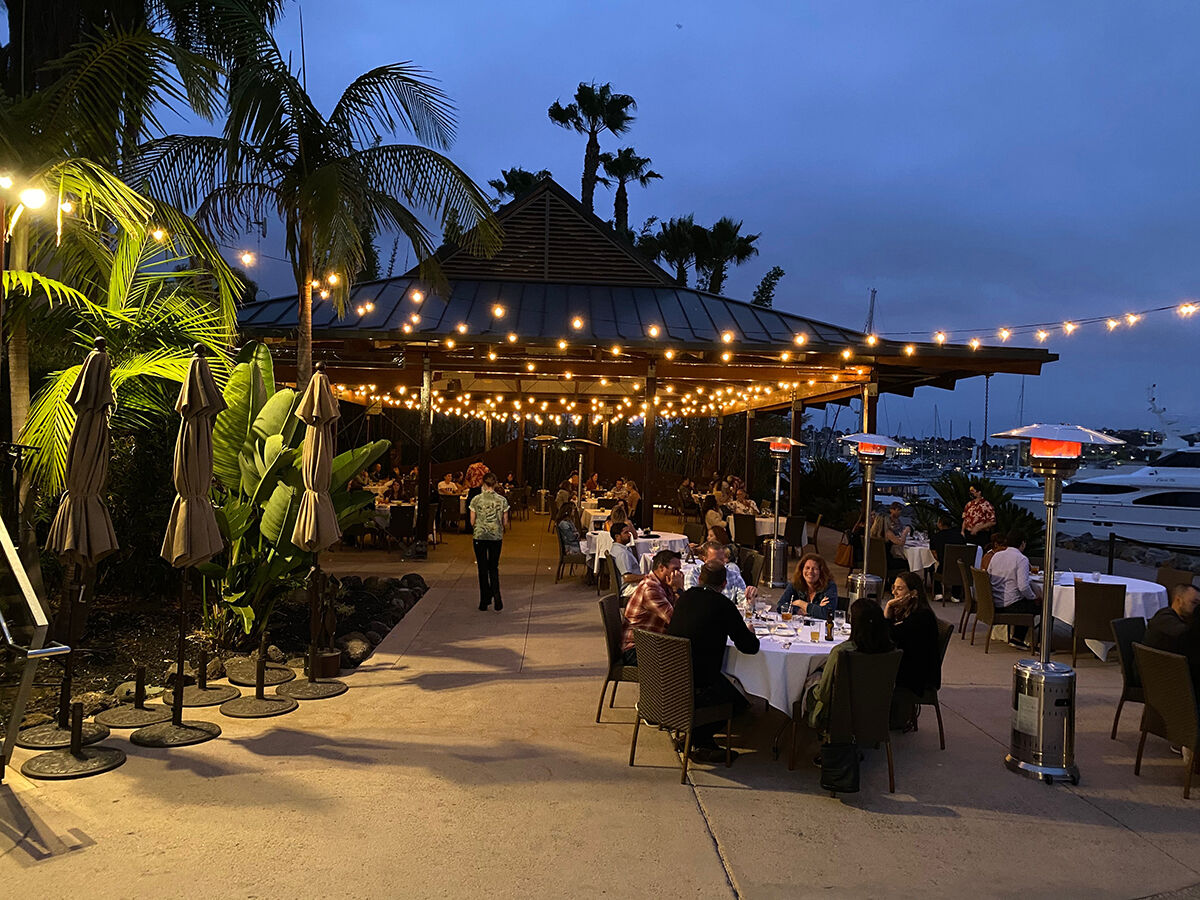
Bali Hai is an old San Diego favorite—it started life as a bar on the set of The Bounty, starring Clark Gable. Since then it has moved to Shelter Island and started serving Polynesian-inspired food overlooking the bay. Over the years they have served nearly three million of their famously strong mai tais.
2230 Shelter Island Drive, Shelter Island | 619-222-1181
Bernardo Winery is one of the oldest wineries in California, growing Italian, Spanish, and French varietals and making wine in a collection of historic buildings. The Kitchen, their on-site restaurant, opens up onto a patio right in the vineyards and serves traditional Italian food in a natural, homey setting. They also have wine tasting menus and historical exhibits to go along with your dinner.
13330 Paseo del Verano Norte, Rancho Bernardo | 858-487-1866
Duke’s La Jolla
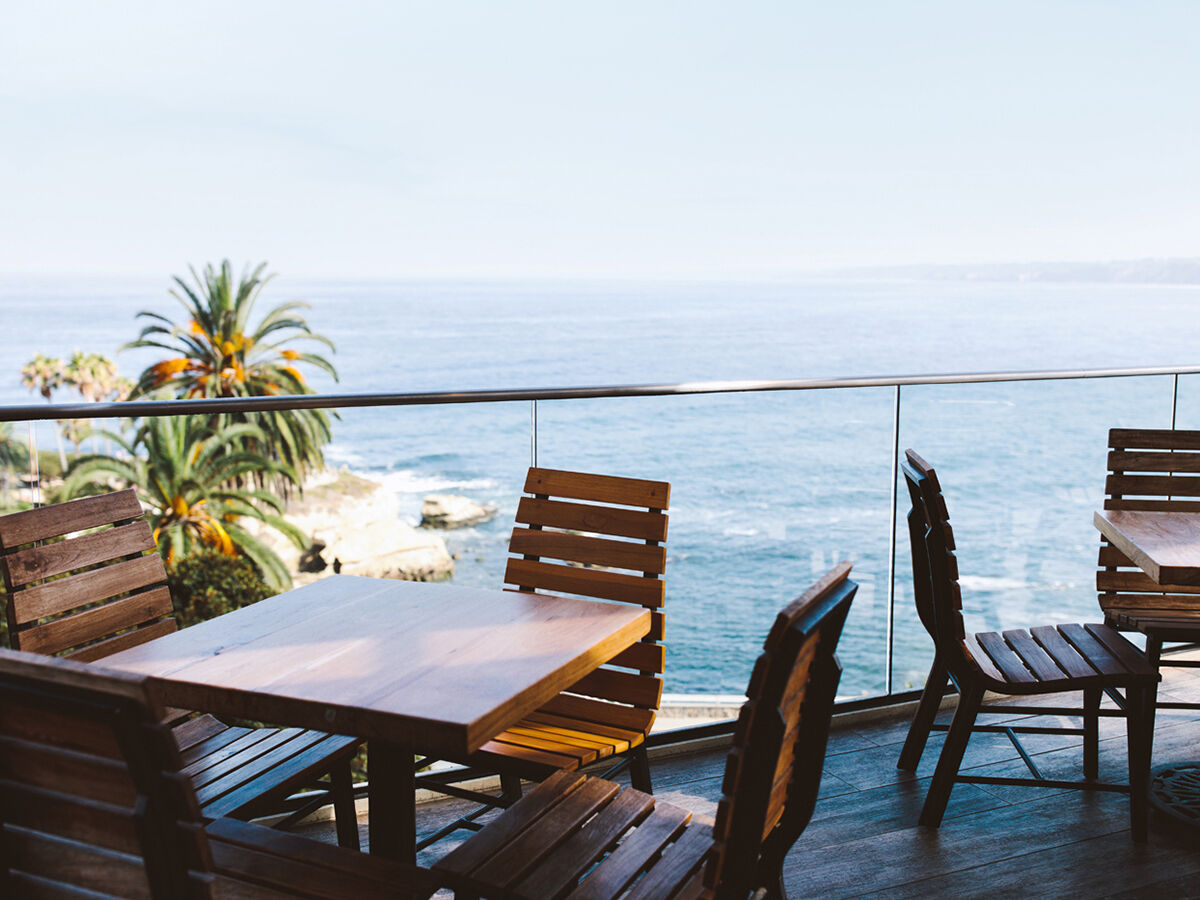
Named after Hawaiian surfing legend Duke Kahanamoku, Duke’s serves up island and California fusion cuisine like macadamia-nut-crusted fish, filet mignon with Maui onion jam, and coconut shrimp. The restaurant itself looks right out over the water toward Torrey Pines, and features a “barefoot bar” for a truly beachy feel.
1216 Prospect Street, La Jolla | 858-454-5888
The Med sits inside the historic La Valencia hotel overlooking La Jolla Cove. Combining Mediterranean influences with California cuisine, they have also recently started a brunch series with Veuve Clicquot Champagne and have a special “dog menu” for your four-legged friends.
1132 Prospect Street, La Jolla | 855-476-6870
Nine-Ten in La Jolla sports a view over its hotel courtyard and out onto the Pacific to go along with its eclectic farm-to-table menu, featuring local halibut and Jamaican jerk pork belly. They also have breakfast all week and brunch on the weekends, and were awarded the Michelin Guide’s “Plate Distinction” in 2019.
910 Prospect Street, La Jolla | 858-964-5400
The Nolen
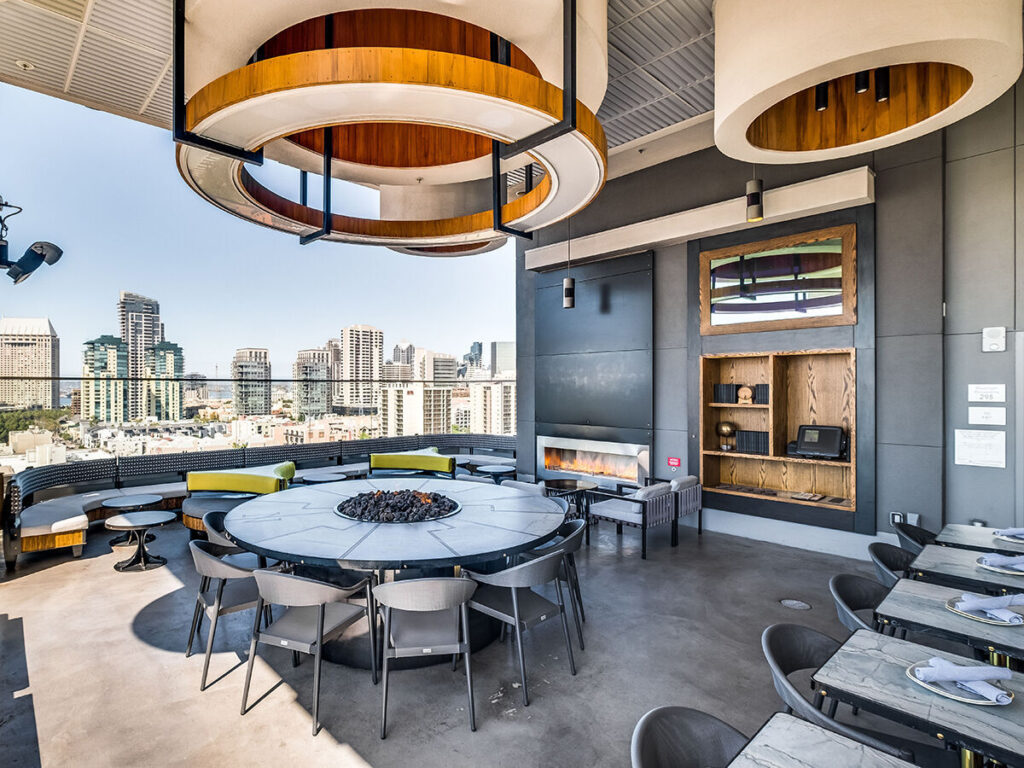
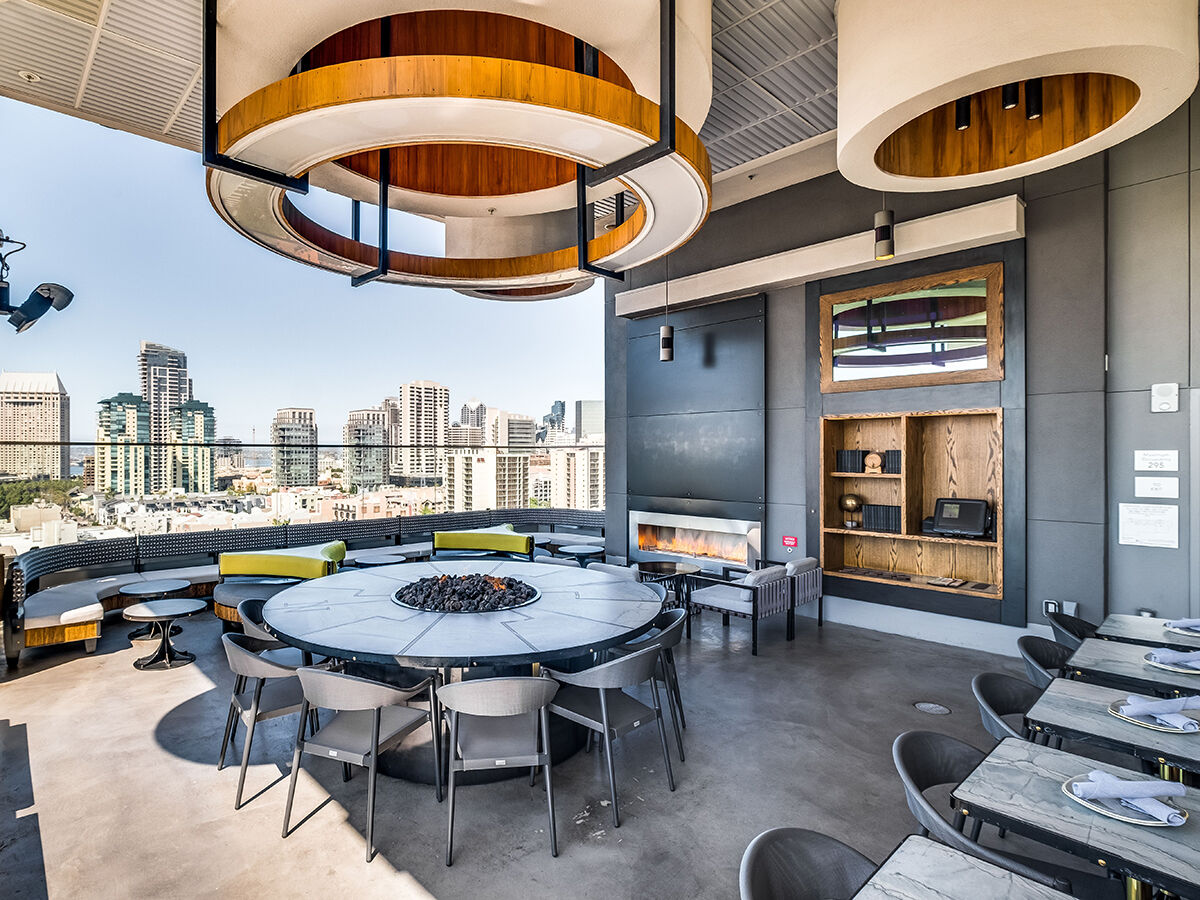
The only rooftop patio on our list, The Nolen offers a great view of downtown, including Petco Park and the Coronado Bridge. The drinks program highlights craft distilleries and barrel-aged cocktails, which are paired with a contemporary menu focusing on small plates.
453 Sixth Avenue, Gaslamp Quarter | 619-769-6536
The newest location on our list (it opens July 28), Portside Pier is taking over the location of Anthony’s Fish Grotto and is actually four restaurants in one. Portside Coffee and Gelato is already open, to be joined by Miguel’s Cocina, Ketch Grill and Taps, and Brigantine Seafood and Oyster Bar. All four locations will have sweeping views of the bay, downtown, the Star of India, and the USS Midway.
1360 North Harbor Drive, Marina District
Located in Sycuan Casino outside of El Cajon, Retreat is the kind of poolside dining experience usually found only in Vegas. The pool is halfway to a lazy river, and you can eat classic grill and bar fare in private cabanas or on the large deck. When it’s cloudy on the coast it’s probably sunny out east, so this is a great escape if you’re looking for warmer weather.
5469 Casino Way, El Cajon | 619-445-6002
Set at the world-famous Hotel del Coronado just a few feet away from the sand, this restaurant specializes in sustainable, locally caught seafood, taking inspiration from the natural environment around San Diego. The menu changes often but is always fresh.
1500 Orange Avenue, Coronado | 702-489-2129
Situated right over the water on Harbor Island, Tom Ham’s has panoramas of the bay and downtown. To go along with the beautiful view is a menu packed full of seafood favorites; the shellfish platters of oysters, shrimp, and Prince Edward Island mussels are standouts. To top it all off, they have a significant selection of local microbrews.
2150 Harbor Island Drive, Harbor Island | 619-291-9110
PARTNER CONTENT
Bali Hai
Discover eateries, outings, and shops within this inland North County community
Just south of Lake Hodges near 4S Ranch and Poway, Rancho Bernardo is a suburban community that blends residential neighborhoods with industrial pockets, elevated by a decidedly diverse food scene.
Over 60 years ago, this North County neighborhood was once part of a family ranch. Since that time, big tech companies have taken up residence here, including Amazon, Sony Electronics, Oura Ring, HP, Teradata, and ASML. Rancho Bernardo Inn serves as a community hub, with locals frequently meeting at the hotel’s restaurants, golf course, and spa.
Whether it’s work or a round of golf that brings you to Rancho Bernardo, we’ve taken care of the agenda planning with our guide to the area’s best restaurants, activities, and shops.

Sample ingredients plucked straight from Rancho Bernardo Inn’s onsite garden and served at their signature restaurant Avant. One of the neighborhood’s most upscale dining options, they serve a French-inspired menu with nods to California, including many seafood options. Don’t miss their more casual sister restaurant Veranda for al fresco dining.
17550 Bernardo Oaks Drive
Wood-fired pizzas and handmade pastas are standouts at The Kitchen, Bernardo Winery’s counter-service restaurant specializing in Sicilian flavors. Charcuterie boards and bruschetta make for great starters or snacks while wine tasting.
13330 Paseo Del Verano Norte
Fast-casual and family-owned eatery Bushfire Kitchen recently opened a location in Rancho Bernardo, serving sandwiches, bowls, salads, burgers, protein plates, and housemade empanadas. Bushfire prepares comfort food with healthy ingredients, and offers plenty of vegetarian and vegan options.
11962 Bernardo Plaza Drive, Suite 110
Some might call The Cork & Craft an overachiever. This gastropub has an in-house craft brewery and winery: Abnormal Beer and Wine. The more, the merrier. Their sushi menu is definitely worth exploring, but don’t miss other specialties like garlic noodles, chicken wings, and pork belly.
16990 Via Tazon

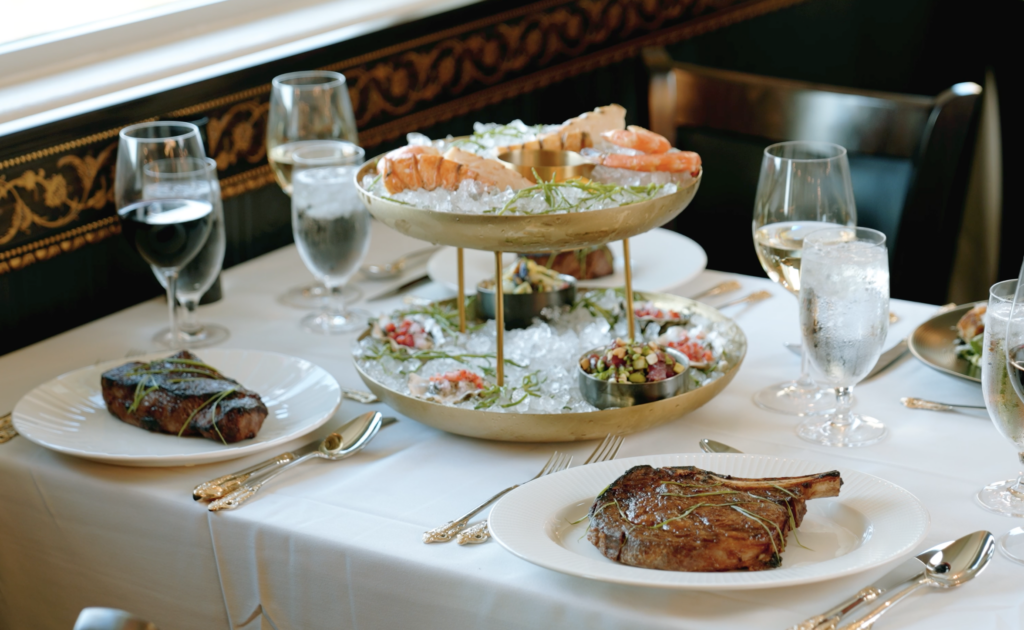
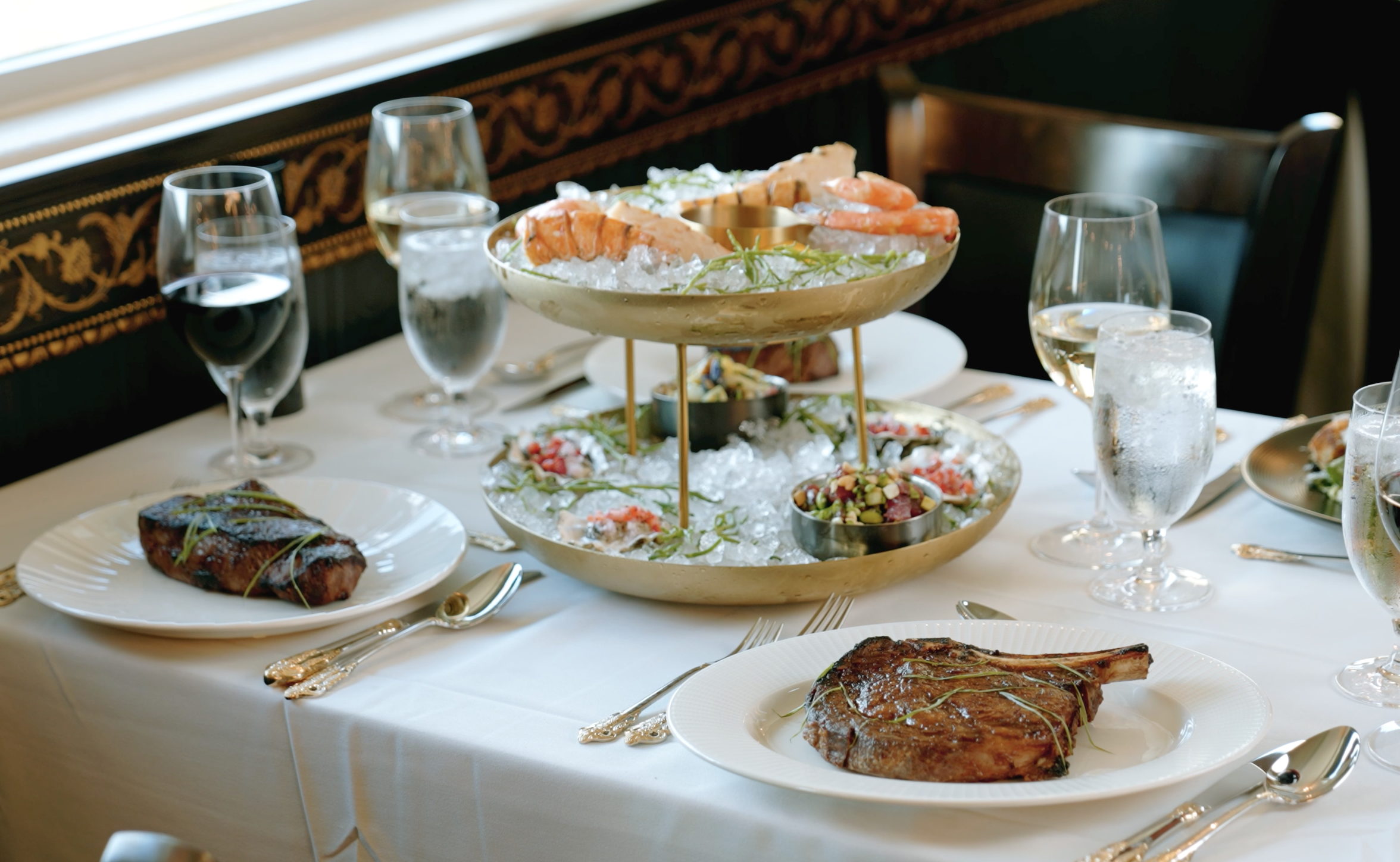
You don’t have to leave Rancho Bernardo to get a white tablecloth steakhouse experience. Carvers Steaks & Chops has prime rib (their best seller), filet, ribeye, porterhouse, New York strip, and other cuts, served alongside crab-stuffed mushrooms, wedge salad, French onion soup, potato skins, and other steakhouse specialties.
1940 Bernardo Plaza Drive
This no-frills Burmese restaurant is known for its traditional tea leaf salad that’s topped with sesame and sunflower seeds, garlic chips, peanuts, tomatoes, jalapeños, fried yellow beans, and fermented green tea leaf dressing. Tucked into a nondescript strip mall, Burma Place is a great takeout option when you want to eat garlic noodles, fried rice, chicken curry, and samosas from the comfort of your couch.
16719 Bernardo Center Drive, Suite A
Find authentic Vietnamese cuisine at Phở Ca Dao, including favorites like phở noodle soup, vermicelli noodles, broken rice dishes, and spring rolls. One of eight locations throughout San Diego, this family-owned chain uses robot servers for food delivery.
11808 Rancho Bernardo Road, Suite 100
It’s all about the sauce at fast-casual Mediterranean restaurant The Kebab Shop. Smothering your chicken shawarma, gyro, or falafels in garlic yogurt, cilantro jalapeno, fire chili, and dill yogurt sauce is practically a rite of passage. The hardest part is deciding whether to order a wrap, bowl, or salad.
11980 Bernardo Plaza Drive
Get a taste of South Asian flavors at Casa Lahori, a Pakistani restaurant noted for its grilled meat kabobs. Other best-selling dishes include beef nihari, chicken biryani, and shahi paneer— best enjoyed with naan bread.
11975 Bernardo Plaza Drive
Grill your own meat on the tabletop at Kangnam Korean BBQ, an interactive, all-you-can-eat experience that’s well-suited for large groups. Marinated beef bulgogi, grilled galbi short ribs, and spicy pork are served alongside traditional banchan dishes like kimchi, japchae glass noodles, and flavorful stews. Weekday lunch specials provide a nice discount on these filling meals.
11828 Rancho Bernardo Road, Suite 117–119

Dig in to your favorite curries and kebabs at Curry & More Indian Bistro. Most entrees are served with a choice of two side dishes, including basmati rice, potatoes with cumin, daal, naan, or mixed greens. Help offset the spice with one of their sweet mango or strawberry lassi drinks.
11808 Rancho Bernardo Road, Suite 123
Kai Oliver-Kurtin is a San Diego-based writer who covers travel, dining, events, and culture. Her writing has been published in USA Today, Condé Nast Traveler, Fodor's Travel, Marie Claire, and HuffPost, among others.
The city's pet-friendly courses combine scenic greens, wagging tails, and a round that’s as much about your pup as your swing
Golf doesn’t have to mean stiff collars, pleated khakis, whisper-talking on the green, or pretending your sand trap fails aren’t actually hilarious. Around San Diego, a handful of rebel courses are quietly rewriting the rules of an afternoon round, making them more relaxed, more social, and yes, more dog-friendly. These are the fairways where leashed pups pad alongside their people; where a suspenseful search for a golf ball in the bushes or—no!no!no!no!no!—in the water hazards are part of the fun; where every polite golf clap comes with a smiling, panting audience. If your ideal golf day includes a walk, a drink, and your dog riding shotgun, this is your teeing ground.
For proof that a golf course can be approachable without being boring, look no further than Emerald Isle Golf Course in Oceanside. The executive course delivers consistently beautiful greens, rolling elevations, and just enough challenge to keep you engaged, not stressed—unless your pup breaks free and runs for the rolling elevations, in which case you’ll be very engaged and maybe a little stressed. Locals love holes like the canal carry on No. 3 and the wildlife-dotted pond on No. 16, while golden-hour sunsets steal the show most evenings. Dogs are genuinely welcome here, not an afterthought. Grab them a slice of watermelon from the clubhouse, pose in the cart for Instagram cameos with an Emerald Isle scarf (it doubles as an adorable bandana for your four-legged friend), or introduce them to the course’s resident pups like Bogey, the assistant director of instruction, and shop dogs Karl and Frank. Affordable, friendly, and no-frills, Emerald Isle feels like golf you and doggo can’t wait to play.
660 S El Camino Real, Oceanside

The Loma Club is where golf goes social. Set in Liberty Station, this historic 9-hole par-3 course trades country club stiffness for an easy, neighborhood energy that feels distinctly San Diego. The course is walkable and unintimidating, with skyline and harbor views doing most of the heavy lifting. The Loma Club is just dipping its paws into the dog-friendly trend, and welcomes them on the mini course and off the fairways. Though your pup is the epicenter of your world, the patio at Loma Club is the real star, hosting live music, trivia (even the smartest dogs are stumped), and cocktails that rival golf itself. You don’t even need clubs to enjoy it. Show up with your dog, wander the course, grab something from the clubhouse, and stay for hours. You’ll feel like you’re exactly where you’re supposed to be.
2960 Truxtun Rd, San Diego

Calling Goat Hill Park a golf course almost undersells it. Known as the “People’s Park,” this historic Oceanside staple operates more like a community space where golf happens. Expect dogs strolling alongside the players, music streaming from magnetic speakers attached to golf carts, beginners smacking balls alongside serious talent, and locals and tourists sharing the same teeing grounds with a few four-legged besties trotting alongside. Saved from redevelopment in 2014, Goat Hill embraces a raw, unpolished look that’s both intentional and refreshing. With ocean views, a “19th-hole” fire-pit, and zero pretense, it’s golf at its most human…because: dogs.
2323 Goat Hill Dr, Oceanside

Ready to add your pup’s name to the illustrious list of golf greats? Same. At the iconic The Club at Omni La Costa, the vibe is equal parts championship-caliber and casually fabulous. Emerald fairways so perfect you’ll hesitate to step on them, palm-lined paths practically begging for a golden-hour strut, and rolling greens that ripple in the sun. And just when you thought it couldn’t get any better, your four-legged plus-one enters the chat: For members and overnight guests, the La Costa lifestyle rolls out the (very chic) welcome mat for your (leashed) pup, turning tee times into a social affair of breezy, citrus-kissed luxury and leisurely strolls. Really—what are you waiting for? Even your dog’s got a standing invite.
2100 Costa Del Mar Rd, Carlsbad
Isabella Dallas is a freelance writer for San Diego Magazine and the Arts and Culture Editor at The Daily Aztec in her final year at San Diego State University. She previously worked as an editorial intern for SDM, but when she’s not writing, you can find her trying the best coffee spots in SD, devouring the latest rom-coms, and indulging in anything and everything pop culture.
Telefèric Barcelona will open its first San Diego location early this summer
Westfield UTC mall is adding yet another “first” to the ever-growing roster of restaurants. The first US location for China’s stir-fry sensation Chef Fei is on the way later this year, Japan already reinvented crispy rice pioneer Katsuya by opening the first Katsuya Ko, and now, it’s Spain’s turn—Telefèric Barcelona opens early this summer.
The family-owned, Barcelona-based tapas joint first opened in the US 10 years ago in Walnut Creek, California, but co-founder and CEO Xavi Padrosa says they’ve had their eye on San Diego for years. Westfield UTC “just clicked,” he says, pointing to the burgeoning collection of world-class eateries already within the mall’s walls. Plus, La Jolla’s breezy vibe echoes Spain’s easygoing tapas culture.
The indoor/outdoor space spans 5,526-square-feet, with seating for 150 inside, 60 on the patio, and 16 more at the bar. Xavi’s sister and co-owner Maria Padrosa designed the Mediterranean-inspired space as a contemporary take on coastal Catalonia, using imported furniture and materials from Spain like hand-glazed tiles and wood accents. And if all the dining spaces are planets, the center of the suite’s universe is the bar.

Padrosa points to signature favorites like patatas bravas (fried potatoes drizzled with a spicy red sauce and house aioli), jamón ibérico de bellota (Spanish ham from free-range pigs raised on acorns, cured for 38 months and sliced to order), gambas al ajillo (garlic shrimp), pulpo Telefèric (octopus with potato purée and pimentón XO, a spicy Spanish/Cantonese fusion sauce), and croquetas (a popular fried tapas dish coated in breadcrumbs and made with béchamel mixed with fillings like jamón or king crab.
There are a very small handful of legit paella spots in San Diego (Costa Brava in Pacific Beach and Cafe Sevilla in Gaslamp Quarter come to mind), so I’m personally looking forward to giving Telefèric’s a go—especially the squid ink paella negra, which is perhaps the most goth paella of all. Every location also offers different weekend specials, La Jolla’s being seafood-driven and meant to pair with beverage director Alex Serena’s drinks. There are over a hundred Spanish wines, Spanish-inspired cocktails, sangria, and of course, plenty of twists on the iconic gin and tonic. The restaurant will also have a gourmet market called The Merkat with imported Spanish sundries.

With more US locations in the works (Newport Beach will open soon after La Jolla), Padrosa says the company hopes to open more across California, but are open to anywhere in the country that feels right. “We don’t know exactly what new cities will appear on our map in the coming years,” he says. But in true Catalan fashion, anywhere they go should be ready for big plates of hearty Spanish cuisine.
Telefèric Barcelona La Jolla opens early summer 2026 in Westfield UTC. Opening hours will be Monday through Thursday, 11:30 a.m. to 10 p.m.; Friday and Saturday, 11:30 a.m. to 11 p.m.; and Sunday, 11 a.m. to 10 p.m.

Most of the time, you have to be 18 years old to change your name. In Arcana’s case, it was about a month. The immersive speakeasy behind Archive in Encinitas updated their moniker to Animga (a play on “enigma”) earlier this month, after what one can only assume was an upset letter from a similarly-named business. However, partner Paula Vrakas promises that the concept remains the same—mystery, cocktails, and a forthcoming bottle locker membership club. Since the only constant is change, Anigma is off to a good start!

Listen Now: The Latest in San Diego’s Food and Drink Scene
Have breaking news, exciting scoops, or great stories about new San Diego restaurants or the city’s food scene? Send your pitches to [email protected].
Beth Demmon is an award-winning writer and podcaster whose work regularly appears in national outlets and San Diego Magazine. Her first book, The Beer Lover's Guide to Cider, is now available. Find out more on bethdemmon.com.
The annual event honors middle market companies creating jobs, scaling up, and investing in the region
San Diego is known for its startup culture and innovation economy, but what happens when the company moves beyond its early-stage years? The San Diego Business Impact Awards aim to answer that question, spotlighting the middle market businesses helping drive the region’s economy.
Hosted by San Diego Regional Economic Development Corporation (EDC) and JPMorganChase, the second annual awards celebration takes place on Thursday, July 23, from 4:30 to 7:00 p.m. at Scripps Research Auditorium. More than 200 executives, entrepreneurs, and business leaders are expected to attend the networking and cocktail event honoring some of San Diego County’s fastest-growing companies.
Businesses headquartered in San Diego County that have operated for at least two years are encouraged to submit their nomination by Thursday, June 18 at 4 p.m. Companies across industries—from technology and life sciences to tourism and consumer products, as well as pre-revenue startups—are eligible for recognition.
For EDC President and CEO Mark Cafferty, the event is as much about building connections as celebrating success. “We’ve had a longtime partnership with JPMorganChase; their work aligns with our efforts to support underserved communities and drive talent development,” says Cafferty. “And the networking was invaluable last year. I’m still in touch with people I met at last year’s awards.”

EDC is an independently-funded nonprofit that works directly with San Diego companies to help them grow the local economy, make the region as a whole more competitive, and attract and retain top-tier talent with quality jobs. Through EDC, companies can get help starting or expanding their business with support for things like site selection, permit navigation, and regulatory guidance, plus connections to local resources and potential business collaborators.
The San Diego Business Impact Awards began as an idea with one of EDC’s longtime strategic partners, JPMorganChase. The two organizations share a commitment to San Diego and are dedicated to bolstering middle market businesses.
“We’re blessed with a robust innovation economy and startup community,” says Aaron Ryan, San Diego Region Manager for JPMorgan’s Commercial and Investment Bank and vice chair of the firm’s’ San Diego Market Leadership Team. “But one of the segments of the business community we felt was overlooked was emerging middle market companies—the businesses that are no longer small but not yet large.”
Ryan says supporting those companies is critical as they scale and decide where to invest, hire, and grow.
San Diego’s high cost of living remains one of the region’s biggest business challenges, making talent recruitment and retention increasingly competitive. But local leaders point to the region’s quality of life, climate, and collaborative business community as advantages that continue to attract employers and workers.

“In order to support thriving households, there has to be enough high-quality jobs for people to be able to afford to live here,” Cafferty says. “Once a company grows and excels past that middle market point in their growth cycle, they become much more likely to pay higher wages and compete globally.”
Both Cafferty and Ryan proudly tout the unique collaboration that exists among San Diego County businesses. Bringing together top universities producing high-quality talent, cutting-edge research institutions, a robust military and defense presence, leading ocean science and environmental organizations, and a binational, cross-border identity creates a distinct business ecosystem that defines and strengthens the San Diego region.
Last year’s San Diego Business Impact Awards celebrated nearly 60 honorees from 49 industries, representing a total of 8,232 jobs across eight sectors, including: software and technology, healthcare and life sciences, consumer goods, professional services, finance, construction and manufacturing, defense, and hospitality and tourism. On average, honoree companies doubled their revenues over the previous year, employed more than 145 San Diegans each, and offered an average annual compensation of $192,415.
Top honorees included defense contractor Innoflight, environmental consulting firm Bancroft Construction Services, life sciences startup Element Biosciences, defense technology contractor GALT Aerospace, organic grocery store chain Jimbo’s, and biopharmaceutical company LENZ Therapeutics. During the event, Innoflight Founder and CEO Jeff Janicik held a fireside chat offering his insights on investing in the community and embracing San Diego culture.
This year, organizers hope to continue highlighting the middle market players driving economic impact across the region. Nominations are now open through June 18 at 4 p.m. Get your tickets to the San Diego Business Impact Awards celebration to enjoy drinks by Snake Oil Cocktail Co., light bites, live music, and networking.
From San Diego’s coastline to Los Angeles stadium and fan zones across the region, here’s how to experience soccer’s biggest event
When three nations and 16 cities come together to host the FIFA World Cup 2026, the scale stops feeling like a tournament and starts feeling like geography. A continent becomes the stage as borders soften into corridors. And Southern California—shaped by migration, sport, entertainment, and constant movement—sits inside that landscape with all eyes on it.
San Diego and Los Angeles have always felt connected. Hop on the Pacific Surfliner, and the trip unfolds in one continuous stretch of coastline, passing beach towns, neighborhoods, and city centers.
Traveling from San Diego, everything still feels slightly suspended as the Pacific Surfliner follows the coast north with ocean on one side and a slow suburban blur on the other. San Diego stays in exhale. Los Angeles is already building toward something louder.
This summer, Los Angeles will host eight matches of the FIFA World Cup at Los Angeles Stadium, including the US Men’s National Team opener on June 11, while the region stretches into 39 days of programming across stadiums, parks, transit hubs, beaches, and neighborhoods. Instead of one massive fan hub, Los Angeles is embracing a citywide celebration, with fan zones spread across its entirety.
But this pattern has been rehearsed here for decades. In 1994, Southern California became one of the defining stages of the World Cup, when matches at the Rose Bowl placed global attention on the region and turned local stadiums into international landmarks, confirming its ability to hold the world at scale.
What distinguishes Southern California is not just infrastructure, but cultural permeability. Fashion, music, film, art, and sport constantly overlap here, creating an environment where identity is flexible and always in motion. From the Venice boardwalk, where skate culture shaped modern street style, to global soccer stars rubbing shoulders with Hollywood celebs, to authentic Spanish cuisine moving up and down the I-5 corridor, everything circulates.
The World Cup is not introducing anything new here, it’s showing up for the summer and showing out, revealing what this city has always known about itself. What follows is a look at the fan zones and how Los Angeles turns itself into a city-wide stage for the tournament, one neighborhood at a time.

As the heart of Los Angeles, Union Station is an official Fan Zone June 25-28 during the World Cup, but in practice it never really stops being one.
It is the city’s circulation point, its meeting ground, its pressure valve. Commuters, travelers, match-day crowds, and everyday Angelenos all move through the same space, and everything mixes, overlaps, and scales in real time. In a way, this is where the World Cup stops arriving in Los Angeles and starts moving through it.
The Pacific Surfliner from San Diego to Los Angeles makes that shift feel almost too easy. No stress or gridlock anxiety, just a straight line up the coastline with ocean on one side and everything slowly becoming more built on the other. It’s one of the rare ways into LA that doesn’t feel like arrival as friction. You can sit with a laptop, watch the Pacific drift past, grab coffee from the café car, and let the city come to you in pieces.
That’s the beauty of arriving at Union Station. Instead of feeling like you’re on the edge of the city, you’re immediately surrounded by it. And, inside, the station already reads like a World Cup nerve center: banners, movement, multilingual energy, the sense that something global is about to funnel through this exact point. The Heart of the City Fan Zone only sharpens that feeling, with simultaneous match screens, DJ sets, meet and greets, and immersive activations built around marquee games like USA vs. Türkiye.
From there, the city splits outward.
ROW DTLA feels like the first exhale after arrival. A converted industrial campus turned creative district where restaurants, retail, and open-air courtyards form a self-contained ecosystem. If you’re looking for the perfect first meal in LA, make it lunch at Pizzeria Bianco. The thin-crust pizza is reason enough to go, but the space leaves just as much of an impression.
What I liked most about ROW DTLA is how quickly it resets you after the train. One minute you are stepping off at Union Station, and the next you are in a space that feels like its own version of LA, a city inside a city with some of the most curated shopping I’ve ever seen.
Bodega hides itself behind a convenience-store front, a sneaker and streetwear space disguised as something ordinary, like LA refusing to make anything feel too obvious. The whole campus moves like that, part retail, part gallery, part neighborhood you are only temporarily inside.
Isabella Dallas is a freelance writer for San Diego Magazine and the Arts and Culture Editor at The Daily Aztec in her final year at San Diego State University. She previously worked as an editorial intern for SDM, but when she’s not writing, you can find her trying the best coffee spots in SD, devouring the latest rom-coms, and indulging in anything and everything pop culture.
Talking farm to table, fraud-to-table, and the feasibility of the movement with the beloved restaurateur who saw it all
Garden Kitchen was special. During its seven-year run on a quiet street in Rolando, even the farmiest-to-table devotees were pointing to chef-owner Coral Strong and slow-clapping. When a dramatic rent-hike forced her to close in 2022, Strong wasn’t sure what to do next.
Farm-to-table wasn’t new by any means—chef Alice Waters spawned the movement at her pioneering restaurant Chez Panisse in Berkeley in the early ‘70s, and many San Diego chefs did it right. But by the mid-2000s, the idea had been so co-opted by the mainstream that the meaning was almost completely lost.
“In the beginning, I used to get very honestly angry and upset when I would go to other restaurants that were claiming they were farm-to-table, but knowing some of the chefs or prep cooks inside [telling me] ‘Oh no, that comes from Restaurant Depot,’” she says.
Food critic Troy Johnson’s cover story in 2015 documented the fraud, titled “Farm to Fable.” At Garden Kitchen, Strong only used produce and meat sourced from local San Diego farms—an honorable, if not arduous endeavor.
Strong grew up in Cardiff before her parents moved the family to Costa Rica in 1989. They’d bounce between the two countries for months at a time, but when they lived in a motel by the beach while building their own house, she witnessed an incredibly tight-knit food culture. “As a Latin American country, everyone kind of cooks together,” she says. Everyone chopped, prepped, prepared, and served as a unit. “[That] definitely shaped my adolescence as to how I thought about food and the community of food.”

When her father, a commercial fisherman, brought the family back to San Diego, Strong leaned into an entrepreneurial streak, moving from coffee to accounting and eventually bartending to pay the bills. But food remained a passion, especially after she met her future husband, who was working at a farm and ranch in Escondido.
“We were just always disappointed with the vegetables out at restaurants and were like, ‘Why can’t they just make vegetables taste good?” she wondered. She realized that despite having more small farms than any other county in the country, most restaurants in San Diego simply weren’t using local ingredients.
So she decided to do it herself.
Strong opened Garden Kitchen without any formal culinary training—just a commitment to getting the freshest vegetables, meat, fruits, and other produce onto people’s plates. Her first chef quit within a month, telling her it was impossible. “So I got in the kitchen one day and said, ‘I can do this, let’s figure it out.’ I taught myself how to cook.”
She already had connections with farmers, fishermen, and ranchers, and designed a different menu almost daily based on what she could get. “My farmers sometimes delivered in the middle of dinner service,” she laughs.
Garden Kitchen lasted until after the pandemic, but before the current economy cut into already razor-thin margins. Could Garden Kitchen exist today? She’s not sure.
“The biggest thing right now is just looking at the finances and how expensive it is,” says Strong. “Obviously, the cost of food is up right now, gas is crazy right now… it just crushes you.” Despite that, she believes that committing to the true farm-to-table ethos is as easy as one decides to make it.
“If you think it’s hard to order directly from your farmer, if you don’t understand the absolute pleasure in doing that and you’d rather order from a computer, then that’s your own difficulty,” she says. “People say they’re into it, but are they willing to make the effort like I am, to drive an hour to go get my meat, or drive 35 minutes to go to my farm to go pick it up? I don’t know.”
Today, Strong works as a private chef, hosts pop-ups, and offers catering services, all still using seasonally available ingredients from San Diego. And while she has no intentions of opening another restaurant, she says we might see even more of her in the future.
“I have a large property [in Valley Center], and let’s say that there will be more of my food to come,” she promises.

Listen Now: The Latest in San Diego’s Food and Drink Scene
Have breaking news, exciting scoops, or great stories about new San Diego restaurants or the city’s food scene? Send your pitches to [email protected].
Beth Demmon is an award-winning writer and podcaster whose work regularly appears in national outlets and San Diego Magazine. Her first book, The Beer Lover's Guide to Cider, is now available. Find out more on bethdemmon.com.
Scripps study shows that some patients may be able to taper their dose and maintain results
While glucagon-like peptide-1 (GLP-1) receptor agents have been used to treat Type 2 diabetes for more than 20 years, their recent emergence as weight-loss wonder drugs marked a new frontier in medicine. But their effectiveness has left some patients wondering what to do once they’ve reached their goal. Stopping the medication could mean regaining some, if not all, of the weight. A Scripps Clinic internal medicine physician recently conducted a small study of whether GLP-1 patients who had reached their goal weight could maintain that weight by taking their regularly prescribed injection every other week instead of weekly. Spoiler alert: 30 of 34 patients did. Read more about the study here and what that may mean as pharmaceutical companies roll out oral GLP-1s.
For more nutrition, wellness, and healthy living tips, sign up for the San Diego Health newsletter here.