Featured articles
Food & Drink
Food & Drink
Food & Drink
Featured articles
Everything SD
Everything SD
Things to Do
Featured articles
Things to Do
Things to Do
Guides
Featured articles
podcast-ep
podcast-ep
podcast-ep
Featured articles
Everything SD
Everything SD
Food & Drink
Featured articles
Everything SD
Everything SD
Food & Drink
Ready to know more about San Diego?
SubscribeReady to know more about San Diego?
San Diego is now home to a world-class tiki bar
We hailed its arrival in our cocktail issue. And now, the tiki revival is here.
False Idol may only be 1,000 square-feet, but it’s a big deal. It marks the fifth bar for America’s first man of tiki, Martin Cate—a partnership with San Diego’s premier cocktail group, Consortium Holdings. Cate owns and operates Smuggler’s Cove in San Francisco, considered by many the best tiki bar in America.
Opening Sunday, False Idol is the second shoe to drop on the corner of Beech and Kettner Streets. The first was the multimillion-dollar renovation of Craft & Commerce, which opened yesterday. False Idol is the “hidden” Polynesian oasis attached to C&C.
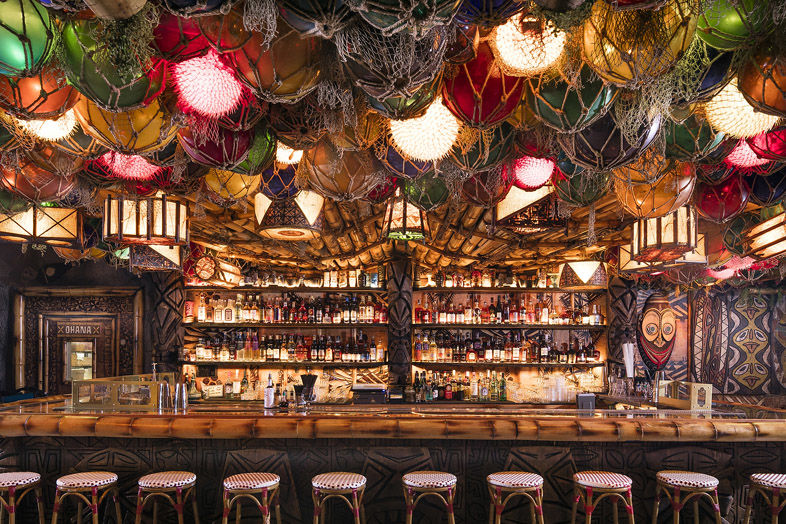
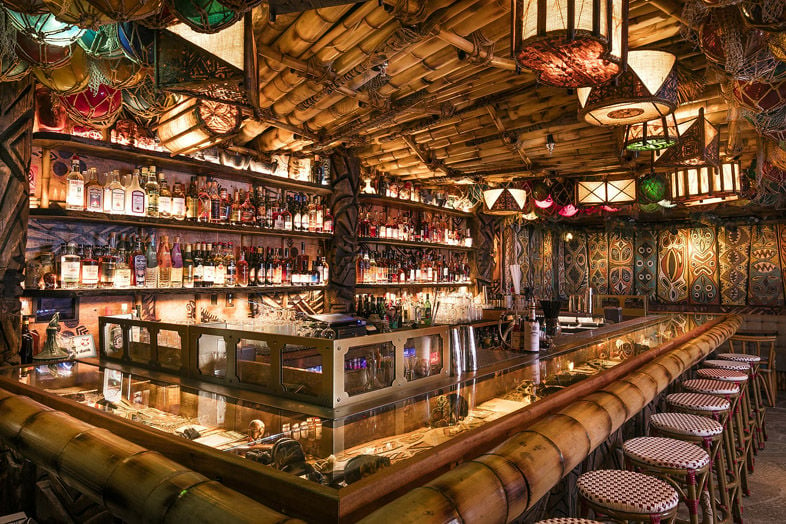
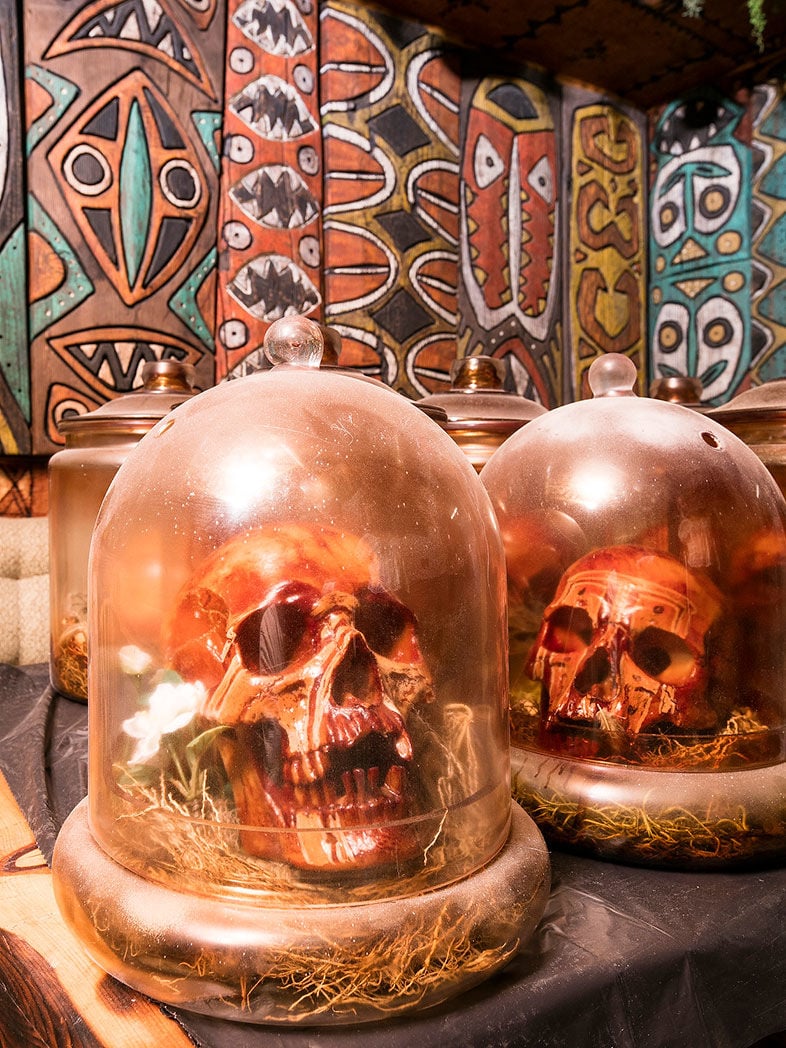
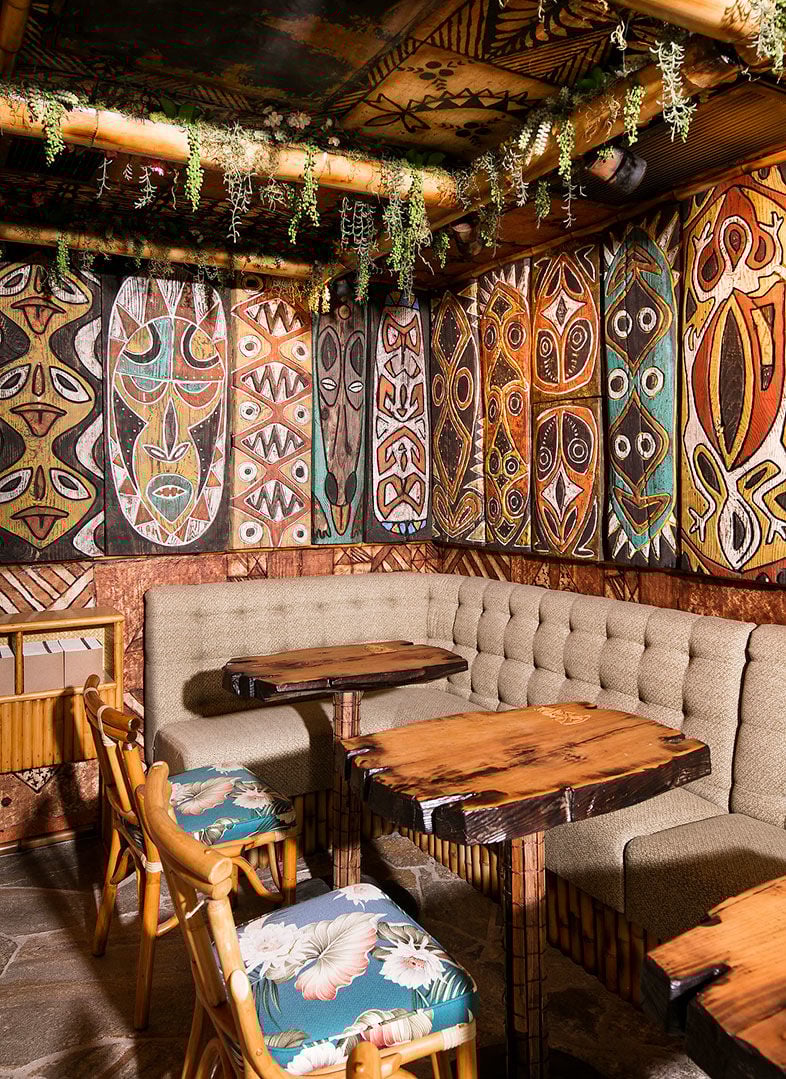
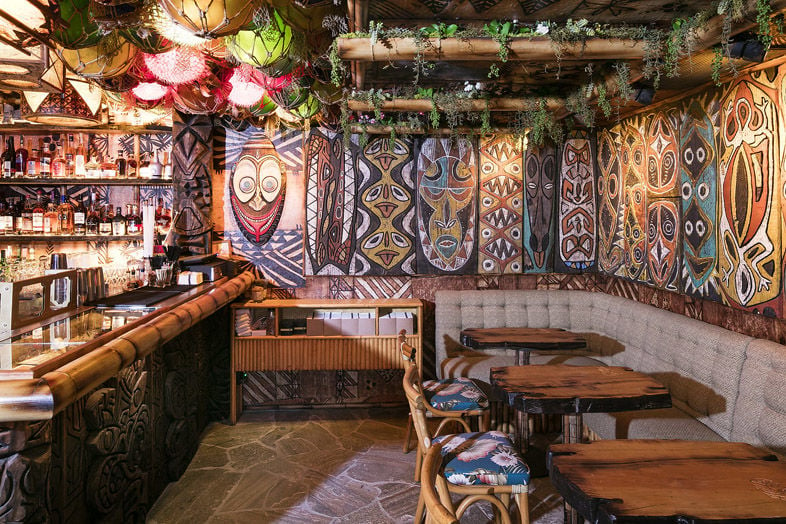
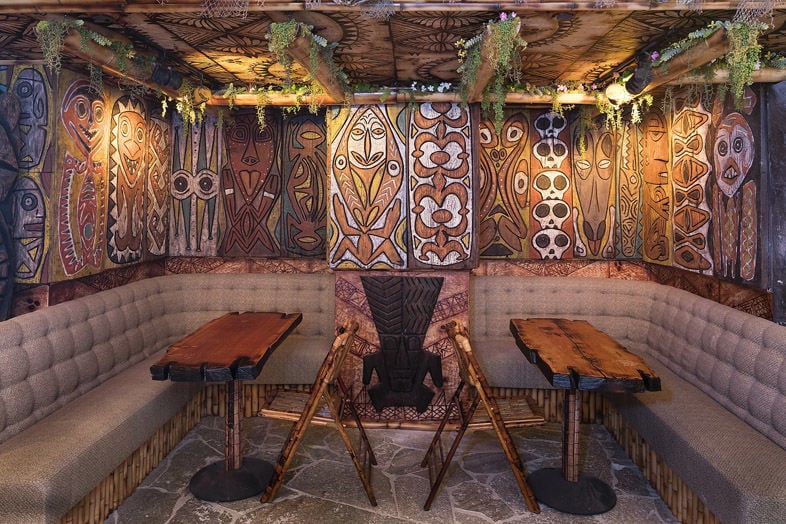
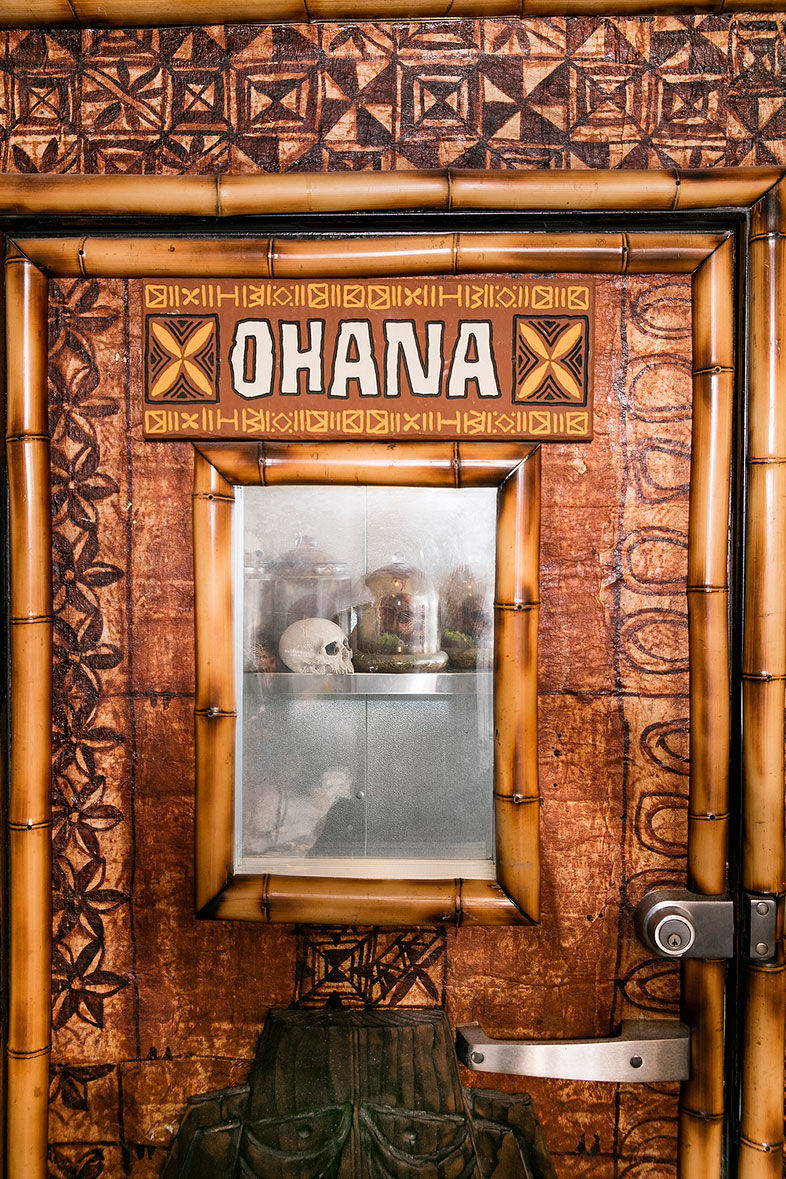
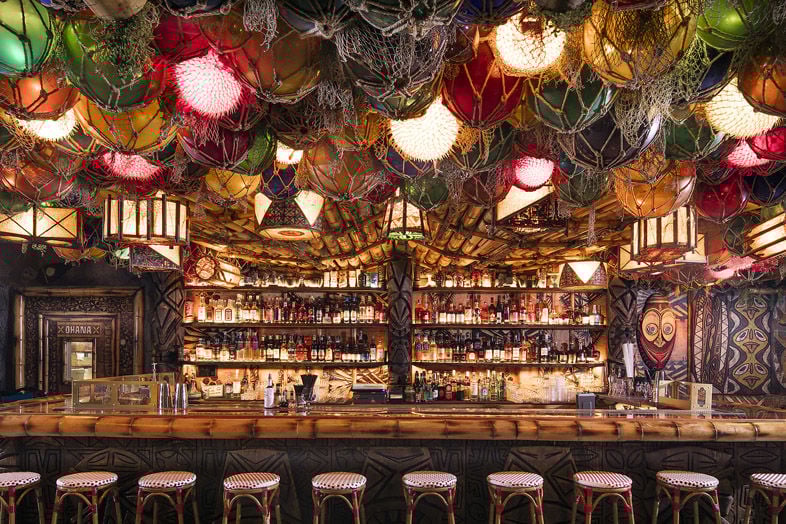
Guests step through a walk-in cooler in Craft & Commerce, and emerge into False Idol. The space is a throwback to the golden era of tiki, before canned juice and corporate chains ruined the movement. There are vibrant pieces from tiki artists Bosko Hrnjak and Ignacio “Notch” Gonzalez. There are false idols everywhere. The ceiling is covered in glass buoy balls. Maori-style wall carvings. Petrified puffer fish. The whole place is exploding with tiki paraphernalia.
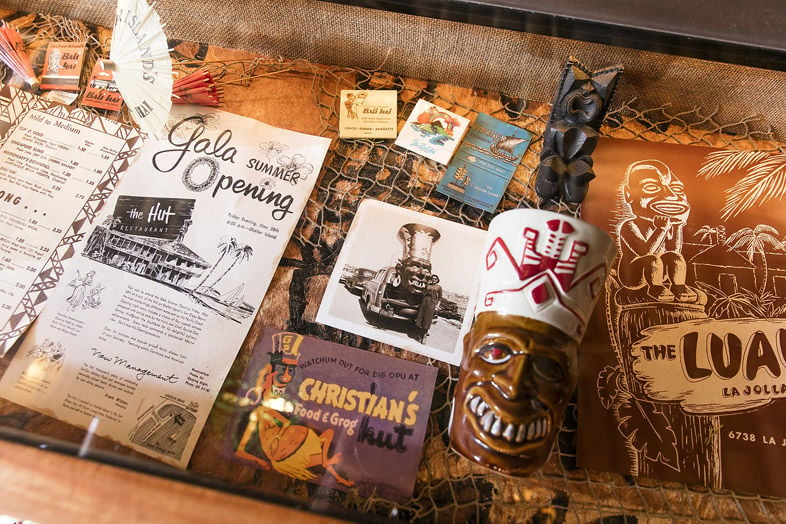
As for the drinks? Cate reportedly has the largest collection of rare rums, and he’s showcasing some of his favorites at False Idol. He and CH beverage director Anthony Schmidt worked with CH designer, Dane Danner, to create custom-designed tiki mugs for their tropical drinks, including a Trader Vic Mai Tai and Eastern Sour. They’re also paying tribute to San Diego’s once-thriving tiki scene, excavating recipes from the former Luau Room and Barefoot Bar.
False Idol opens Sunday, September 4 at 6pm. And it will be open every day thereafter from 6pm on. Make reservations at FalseIdolTiki.com.
675 W. Beech St., Little Italy.
FIRST LOOK: False Idol

PARTNER CONTENT
FIRST LOOK: False Idol
As a wave of endings hit San Diego’s food and drink scene, we survey the damage and remain hopeful for an upturn in the industry
I know every day can’t be a Best Restaurants issue or badass food festival. But damn, it’s been a bleak week for San Diego food and drink (and it’s only Wednesday). Let’s start with Comedor Nishi, which closed this week without any warning. This La Jolla eatery had all the markings of The Next Big Thing when it opened last July. Two superstar chefs hailing from Mexico City destination restaurants Pujol and Máximo? Check. Totally drool-worthy wall of Instagram pics? Check. A menu of absolute breakfast bangers like a torta de cochinita pibil and cured salmon tostada? Check.
But even big names, a solid menu, and impeccable service aren’t surefire defenses against the powers that be. Just look at the James Beard Award-nominated Roma Norte, which closed in August after a year.
Monday may very well be remembered as one of San Diego’s worst restaurant industry days since the pandemic. At least three other hospitality ventures shuttered that same day, also without notice—Camino Riviera in Little Italy, Casa de Freds in Old Town, and Black Plague Brewing in Oceanside and Escondido.
Fred’s in particular struck me by surprise—it’s been around for 25 years. I’m unashamedly a huge fan of its patio and ridiculously giant margaritas. For such a longstanding figure to go so gently (not to mention suddenly) into that good night without even a whiff of warning ahead of time feels especially disheartening. “Like many small businesses, we’ve faced challenges that became insurmountable, including rising operational costs and a substantial decline in tourism,” stated its Instagram post.
Tourism, San Diego’s economic bread and butter, has been down since coronavirus shutdowns in 2020, and Old Town is ground-zero for visitors. If anywhere is going to get hit hard by a decline in travelers, it’s there. So I guess it’s less surprise, more sadness.
Black Plague has yet to make a public statement about its closure, which was first reported by San Diego Beer News. But again, huge bummer. Its gothic brewery branding was equal parts unique and macabre, and its beer more than held its own in a sea of world-class craft breweries. It stuck it out for an admirable eight years, and I doff my cap to them.
Camino Riviera acknowledged its sudden closure only after its final day of service, which was Sunday, September 28. According to owner and restaurateur Matt Spencer, the decision came following repeated noise complaints to the city from an anonymous neighbor.
“Over the course of several years, we invested heavily to address these concerns: installing a new roof, implementing sound mitigation strategies, hiring a sound engineer, reconfiguring indoor and outdoor operations multiple times, and building new seating areas,” said Spencer in a statement. “Despite these efforts, we found it impossible to operate the way we had been operating those years prior and we simply couldn’t afford to hang on.”
And these were just the closures on Melancholy Monday.
In September alone, Flap Your Jacks, Red House Pizza, Blackmarket Bakery, Copper Top Coffee & Donuts, and Woodstock’s Pizza in Pacific Beach all closed their doors forever.
Running a restaurant is hard and expensive. It always has been and it sure as hell isn’t getting any easier. In San Diego, rent prices are up, tourism is down, diet trends like Ozempic-use is potentially making a dent in some markets, and new business models are popping up specifically to maximize marketing efforts and rent costs. It’s a jungle out there, and sometimes even the strong, savvy, or skilled don’t survive. So what can we do?
Eat out when you can. Pick up a little something at your corner shop. Maybe get that avocado toast. Sometimes, businesses close due to a landlord issue or noise complaint and there’s just not a whole lot the average Josephine can do about that. But if you love something, shout it from the rooftops. Or in this scenario, on Yelp.
Listen Now: The Latest in San Diego’s Food and Drink Scene
Have breaking news, exciting scoops, or great stories about new San Diego restaurants or the city’s food scene? Send your pitches to [email protected].
Beth Demmon is an award-winning writer and podcaster whose work regularly appears in national outlets and San Diego Magazine. Her first book, The Beer Lover's Guide to Cider, is now available. Find out more on bethdemmon.com.
Through Good Enough, Mike Mayaudon and Shawn Seaman want to bring approachable bar culture to Little Italy
Is it me, or is it virtually impossible to spend less than $50 eating out nowadays? No shade to operators just trying to keep their margins high enough to pay workers and stay in business, but my wallet is definitely feeling the burn.
That’s far from a universal truth, of course. You’ve just gotta look. Plenty of places are leaning into budget-friendly specials (Herb & Sea’s “Happy Meal” comes to mind—a smash burger with fries, three oysters, and a glass of sparkling wine will set you back a very reasonable $20). Bars are responding in kind, adding ultra-premium items for high rollers as well as classic basics that keep prices in single digits, or at least close to it.
That’s precisely what Mike Mayaudon and Shawn Seaman hope to do when they open Good Enough in Little Italy. For $14, guests can get a signature house cocktail, most of which will be twists on traditional drinks. You may already be familiar with some of the drinks from the pair’s other venture, Same Same in Carlsbad—like the Sioux City Old Fashioned with bourbon, a root beer reduction, R&D cherry apple bitters, Angostura bitters, and absinthe.
“I think there’s a void that we can fill there, in terms of something that’s just really approachable,” says Mayaudon. “Shawn and I have both worked in really nice higher-end places and then dive bars… we’re kind of blending a mix of the two.”

Of course, operating in Little Italy doesn’t come cheap. The pair promises to offer plenty of premium items as well to accommodate all budgets. “We were even talking about, jokingly, putting on a baller menu,” laughs Seaman. “We might even do, like, $150 Manhattan or something.” But, Mayaudon adds, if you want to follow up a $30 Old Fashioned with a cheap beer and shot, they’re more than happy to oblige.
They’re not cutting corners on the drinks or food, which will feature Spanish-style tapas and pintxos like an off-menu Basque cheesecake limited to eight slices a day. Nor will the sound system be the typical bar speakers plugged into someone’s Spotify playlist. Vintage 1975 Cornwall speakers will provide an “old, warm sound,” promises Seaman. It’s not a listening bar, per se, but hi-fi vibes are definitely on the menu with lots of records and local art completing the space’s aesthetic.
From September 2 through December 5, Good Enough will feature bar takeovers for two-week stints with brands like Fernet-Branca, WhistlePig, and more. But overall, Seaman says they just want to be a place that’s approachable, affordable, and a good hangout spot. “It’s been wonky times, and everyone just keeps jacking their prices up,” he says. “We’ve got your back in these wonky times.”
Good Enough soft opens on Friday, August 22 in the former Basta space. Hours will be from 5 p.m. to midnight daily.

At 6:30 p.m. on Friday, September 12 at the Sheraton San Diego Resort, Rumorosa is throwing a four-course wine pairing with Clos Benoit. The Valle de Guadalupe–based winery specializes in “food wine,” meaning it’s specifically designed to pair with meals, and by the look of the menu, they know how to do it. The La Paloma White kicks things off with a shrimp ceviche, followed by sea bass with a rosé, Mexican-style birria osso bucco with a 2020 red, and of course everyone’s favorite chocolate cake with another red vintage. Tickets to the 21+ event are available now.

Listen Now: The Latest in San Diego’s Food and Drink Scene
Have breaking news, exciting scoops, or great stories about new San Diego restaurants or the city’s food scene? Send your pitches to [email protected].
Beth Demmon is an award-winning writer and podcaster whose work regularly appears in national outlets and San Diego Magazine. Her first book, The Beer Lover's Guide to Cider, is now available. Find out more on bethdemmon.com.
The LA-founded brand and popular sushi joint will set up shop in Little Italy at 2100 Kettner
San Diego has no shortage of great sushi. Sushi Ota is the icon. Kinme Omakase oozes exclusivity (and quality). Hidden Fish brought omakase-only dining to the city. Soichi has a Michelin star for Pete’s sake, and Sushi Tadokoro is undeniably great. There’s Sushi Gaga and Hane and Shino and Maru and Wrench & Rodent and Kaito. Hotel del Coronado just got a Nobu.
But this top-notch scene comes with a cost, literally. Sushi tends to either get saved for a special occasion or, on the opposite side of the spectrum, picked up from a cold case at your local grocery store accompanied with a requisite blob of radioactive-green horseradish. (Let’s be honest, we’ve all done it.) Few places can balance general affordability with high quality.

But that’s what Sugarfish has done pretty successfully in Los Angeles, Orange County, and New York over the past 17 years. And it’s what they say they’ll bring to San Diego when they open next spring in Little Italy—at 2100 Kettner, the LEED-certified, six-story, mixed-use building that currently houses Postino WineCafe, Slice House by Tony Gemignani, and the HQ for the city’s pro soccer team, San Diego FC.
In 2008, the partners—chef Kazunori Nozawa (whose restaurant Sushi Nozawa had been a star in Studio City for decades), Jerry Greenberg, Tom Nozawa (Kazunori’s son, also a chef), Lele Massimini, Cameron Broumand, and Clement Mok—opened the first Sugarfish in Marina del Rey. Over 17 years, they’ve cautiously expanded to 10 more locations in LA and five in New York City (with one more on the way). Massimini says the slow growth was intentional.
“Our goal is always to deliver the best bite of sushi to every guest when they come to Sugarfish,” he explains. “When we were sure that we could deliver that in San Diego, that’s when we pulled the trigger.”

And the local bounty makes sense. Chefs in Japan will often source fish from San Diego and Baja, says Tom Nozawa: “Really good stuff comes out of the San Diego waters.”
One of the Sugarfish signatures is their approach to rice—made with a proprietary rice vinegar recipe and served warm and loosely packed, which contrasts nicely against the cool fish. But don’t look for funky fusion sauces or rolls. “We’re sticking with our roots… serving simple, great sushi,” says Nozawa.
And the price is right—the cheapest lunch special on the Los Angeles menus runs $32 for edamame, tuna sashimi, two pieces of albacore sushi, two pieces of salmon sushi, a toro hand roll, one piece of Japanese yellowtail sushi, one piece of hirame sushi, and a blue and dungeness crab hand roll. The most expensive lunch option—called “Don’t Think. Just Eat. Trust Me”—tops out at $60 for a sashimi course, seven orders of nigiri, and two hand rolls. Everything is preselected on the Trust Me menu, but what it lacks in adventurous exploration, the team says they make up for in cost and consistency. Of course, you can always order à la carte. Might I recommend the pink lobster nigiri from New Zealand?

Architect Robert Tsurimoto Kirsten of A-RTK is designing Sugarfish Little Italy in a similar vein to the restaurant’s other locations, but drawing inspiration from famed building designer, architect, and San Diegan Cliff May. May, known for his California Ranch homes and mid-century modern designs, created spaces that mixed indoors with outdoors, with lots of warm woods and open spaces. This location will seat 40 guests and emphasize cozy colors like greys and blues, but Massimini says they plan to keep the design on the minimalist side to ensure the sushi remains the showstopper.
“For us, design is supportive,” he says. “It’s not the centerpiece.”
Sugarfish doesn’t try to blow your mind with exotic sauces or unbelievably rare fish. But for predictable, high-quality sushi that’s painstakingly sourced and served and won’t set me back a Benjamin or two? Seems like a pretty good deal to me.
Sugarfish by Sushi Nozawa opens spring 2026 at 2100 Kettner Blvd., Suite 1100.
Beth Demmon is an award-winning writer and podcaster whose work regularly appears in national outlets and San Diego Magazine. Her first book, The Beer Lover's Guide to Cider, is now available. Find out more on bethdemmon.com.
Stake Chophouse & Bar brings contemporary classics and old-school service to the heart of Coronado
Stake Chophouse & Bar isn’t your average steakhouse. Blue Bridge Hospitality’s Coronado outpost is a modern interpretation of a big-city steakhouse nestled in the heart of the small coastal community. The team at Stake has reimagined the whole steakhouse experience. By prioritizing a seasonal farm-to-table sourcing philosophy, a personalized guest experience, and unique service touches, like a formal steak presentation and a bespoke knife selection process, Stake distinguishes itself in a sea of steakhouses.
Exceptional steaks, including Wagyu from Japan, Australia, and the U.S., and fresh seafood flown in daily form the core of Stake’s culinary identity. The menu features a five-course omakase-style steak experience highlighting house favorites, plus an array of cuts, and classic steakhouse staples—think a wedge salad, baked potato, or pasta carbonara—refined for a contemporary palate without losing their traditional appeal. Stake focuses on seasonal sourcing from the region’s best family farms and specialty purveyors, and incorporates intentionally unexpected touches to create something truly unique.
“I challenge our chefs and myself to take it a step further in sourcing,” says Chef Ronnie Schwandt. “It’s important to us to highlight different farms, unique one-off farms—whether it’s cattle, strawberries, a local fisherman or from anywhere in the United States, we’re always trying to find that niche.”
Beyond the menu, Stake emphasizes outstanding service, says Vinny Spatafore, Director of Hospitality Operations. Staff maintains detailed notes, allowing them to remember guests by name, recall previous orders such as a favorite martini (also memorable for the customer since it’s served in an extra tall, distinctly-shaped glass), and celebrate special occasions like birthdays and anniversaries.
“When you have those points of topic that you remember about a guest, they appreciate that,” he says. “Our servers are really good with that—we have a couple servers who have been here since the beginning and they’ll remember somebody from years ago, their name, their kids’ names, where they live. I’m really thankful to have a great front of house staff.”
Award-winning wines, rare whiskeys, special events, and a complementary black car service that provides transportation for guests throughout Coronado add to Stake’s appeal.
Schwandt stresses that Stake offers more than a meal; they aim to give patrons something unforgettable.
“It starts when you walk up the stairs and are greeted by the hostess—that sets the tone for the night. Then you’re greeted by a server, who may know you by name, and can guide you through the menu and curate as they get to know you,” says Schwandt. “Most people leave kind of blown away; they leave feeling like they just had an experience. That’s the goal, right? Whether you’re serving smash burgers or high-end steak, you want somebody to leave thinking, Wow, that was awesome.”
The restaurant's new reimagined bar area features statement furniture, wines-by-the-sip machines, and its own five-star snacks
Every latchkey kid who survived a decade or so on Totino’s pizza rolls and Hot Pockets needs to head to Juniper & Ivy. One of the best restaurants in town just made a tiny, chef’s-pride version of the iconic suburbia snacks. Jim Gaffigan, your table’s ready.
They’re technically gnocco frito. But, for emotional reasons, pizza rolls and pockets.
It’s part of the restaurant’s new thing, Juni—a revamped bar and lounge area into its own kind of lounge and bistro, still perched above the main J&I show. An everyday, living room version of J&I for neighbors and tire-kickers, with statement furniture, wines-by-the-sip machines, and its own five-star snacks menu, priced like it’s the ’80s and inflation hasn’t been invented yet.
We’ll get to that below, and what I’d order, but first, a note about emo chairs.
There are chairs made from scratchy, colorful sweaters worn by someone who loved lots of things but nothing as much as Death Cab for Cutie. New banquettes near the window have such high backs that they create a whole other, sun-spilled room without having to put up a wall and curse contractors who treat deadlines like irrational wishes.
The high-tops overlooking the industrial–art house dining room are gone. In their place is one long, tufted lounge nook colored aquamarine, recalling the Miami drug scene we all romanticize, when everyone had khaki skin and abs and a thousand dollars of jungle pharma in their flowy pants pockets. Or it looks like a very soft Jordan almond, giving off more of a come-one, drape-all vibe.
Part of J&I’s wow has always been the unshy statement pieces. Like that giant, shiny graffiti pear lording in the middle, emitting subway-tunnel-to-table energy. Or the giant Lichtensteins of what appears to be a topaz-haired Katy Perry shedding a tear. Now, these Death Cab sweater chairs.
As for the menu (see below), start with those pizza rolls. Five whole bucks (three during “pre-shift,” 5 to 6 p.m., when it’s two dollars off every item). Apparently, owner Michael Rosen went to Italy and was Jabberwockied by gnocco frito, the famed puffed fry bread from Emilia-Romagna. He pestered chefs Jon Sloan and Alex Penkin to figure it out. And so they tinkered and tinkered and came to this, stuffing it with a mousse of goat cheese, ricotta, and nduja (Calabria’s addictive, spreadable pork sausage). It’s topped with a paper-thin, spicy Calabrese salami; a little lemon zest; light Parmesan snow; and the kicker: EVOO spiced with oregano and peppers for that pizza-joint perfume.

Why order a michelada and a ceviche when you can order a michelada ceviche? Chef de cuisine Penkin grew up in Chula Vista with its grade-A Mexican street food and salsa beers. This is his riff on that good life. Top-notch octopus and shrimp, tossed with stone fruit, baby heirloom tomatoes, cucumbers, and a gussied–up michelada sauce: Clamato, worcestershire, and—the key that gives it character and depth—guajillo pepper puree. Blue corn tortilla chips for the scoop.
Penkin’s been with J&I since the beginning (after a stint at Searsucker). The only break he took was to work on Colorado’s famed corn farm Olathe Sweet Corn. So this dish—a riff on the fried Italian risotto ball—mixes his Mexican street-food roots and his chef-on-farm quest. He chars some raw corn, sautées some more, and uses Parmesan and Cotija cheese as a binder, then makes a stock using the corn bones (where all that starch is) for depth. It’s served with chile-lime mayo, spicy salsa macha oil, pickled jalapeño, and Tajin.

Taster versions of a J&I classic. Wagyu beef; house burger sauce (animal style on chef ’roids); and, most importantly, onions caramelized in beef tallow. (Tallow is the MSG of the fat world.) Then there’s American cheese, pickles, and a sesame bun. They come two per order, which is about the amount of a regular burger.

This is pastry chef Amanda Santiago’s take on the premium ice cream truck item that your fancy kid friends would order on allowance day. Housemade waffles are folded and filled with pistachio ice cream, coated with milk chocolate and chopped pistachios, and served over chocolate crumble. Let it sit for a few, then eat it when it’s a little melty.
Juni is open now.
Troy Johnson is the magazine’s award-winning food writer and humorist, and a long-standing expert on Food Network. His work has been featured on NatGeo, Travel Channel, NPR, and in Food Matters, a textbook of the best American food writing.
Partners Ernesto Casillas and Eduardo Bustamante (Crudo Cevicheria & Oyster Bar) will debut their new seed oil–free concept this August
Restaurants love to center their menus around one item. It’s literally in the name of Birria El Rey. Tanner’s Prime Burgers is all about that sweet, sweet beef. And as a former Virginian, I can attest Rise Southern Biscuits’ take on a Southern morning staple is legit. But besides vegan or vegetarian restaurants, how many places emphasize the absence of items as their cornerstone?
Barra Oliba will, or so says Ernesto Casillas. He, along with his business partner Eduardo Bustamante (Crudo Cevicheria & Oyster Bar), says their contemporary Spanish bistro, which will open at 1980 Kettner Blvd. this August, will be one of the first, if not the first, seed oil-free restaurants in San Diego.
Common seed oils, like sunflower oil, canola oil, and corn oil, have higher smoke points than other oils, like olive oil, and are generally cheaper. But Casilla believes seed oils contribute to inflammation and other issues. (While seed oils contain high levels of omega-6 fatty acids, institutions like the Cleveland Clinic say problems associated with them are often more likely from the ultra-processed foods.) Instead, Barra Oliba will use different olive oils from around Spain, which Casillas says is more delicious and better for consumers.
“We basically want people to feel good during their visit but also after,” he says, noting that for some, dining out can lead to inflammation and heartburn afterwards. He hopes to prevent or minimize these effects for those that struggle with gut issues.
Casillas adds that not only did he see a need for heart-healthy restaurant options in town, but he also saw a lack of Spanish cuisine. “There are good restaurants, but they’re almost all Italian restaurants, or American, Mexican, or Japanese,” he explains. “Spanish food is very interesting and well-regarded around the world.” The space will feel like an authentic European restaurant, with 30 seats inside and 30 outside and a raw bar, focusing on Spanish and French wines and beer “served in the traditional cañita format—half size pint,” says Casillas.
He adds that Barra Oliba’s menu will center on different types of Spanish rice dishes—not just paella, although they’ll certainly have that, too. He promises that the rotating selections will range from pulpo a fiera (a traditional Galician dish made with octopus) to tortilla de patatas (Spanish omelets) and much more. “There’s a lot of good things coming.” Casillas says they plan to be open seven days a week from around 3 p.m. until 9:30 p.m., but this may change based on demand.

Over 350,000 people experience food security across the county, and Feeding San Diego estimates 100,000 of them are children. The local nonprofit has worked to end hunger since 2007 but is getting a big boost from the world’s largest online retailer, Amazon. Amazon has been collecting food and funding donations, and on Tuesday, July 2, it will present a check to Feeding San Diego that will help provide 50,000 meals to San Diegans experiencing food insecurity. Every $1 donated to Feeding San Diego provides two meals, so if you’re interested in donating or finding out more, visit feedingsandiego.org.

Scripps study shows that some patients may be able to taper their dose and maintain results
While glucagon-like peptide-1 (GLP-1) receptor agents have been used to treat Type 2 diabetes for more than 20 years, their recent emergence as weight-loss wonder drugs marked a new frontier in medicine. But their effectiveness has left some patients wondering what to do once they’ve reached their goal. Stopping the medication could mean regaining some, if not all, of the weight. A Scripps Clinic internal medicine physician recently conducted a small study of whether GLP-1 patients who had reached their goal weight could maintain that weight by taking their regularly prescribed injection every other week instead of weekly. Spoiler alert: 30 of 34 patients did. Read more about the study here and what that may mean as pharmaceutical companies roll out oral GLP-1s.
For more nutrition, wellness, and healthy living tips, sign up for the San Diego Health newsletter here.