Featured articles
Featured articles
Things to Do
Guides
Things to Do
Featured articles
Things to Do
Things to Do
Things to Do
What's next
Featured articles
Featured articles
Things to Do
Things to Do
Guides
Ready to know more about San Diego?
SubscribeReady to know more about San Diego?
Second high-profile restaurant group goes out on Broadway
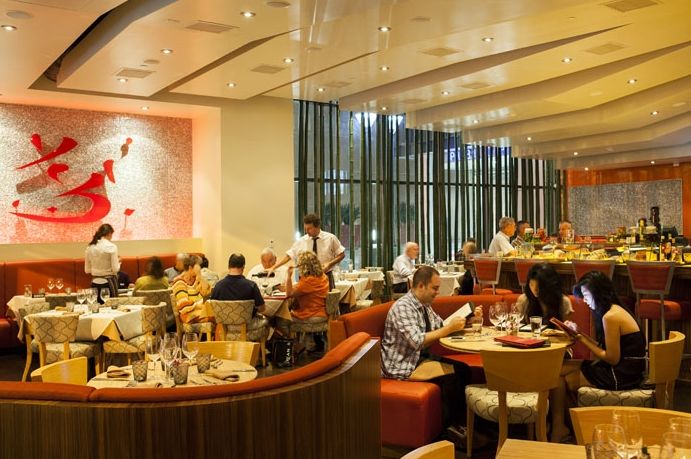
It’s a tough spot that’s now taken down two big concepts. The large, attractive restaurant space without parking or foot traffic—AKA 655 W. Broadway in west Downtown—first submarined Crescent Heights, the debut from talented Wolfgang Puck protoge, David McIntyre. And yesterday the second group of high-profile restaurant partners walked away from it. Meatball Cucina is closed. Originally opened as Sora, it seemed so full of promise with a unique concept (Japanese-Italian) and talented chef (lifelong Nobu sushi man, Noriyoshi Teruya). But reviews of dishes like housemade pasta with edamame puree were less than stellar and business was slow, so in April they reconcepted as Meatball Cucina. Now the space will lay dormant and wait for the long-delayed westward expansion of Downtown—which will also ideally, miraculously, bring a few parking spots.
G’NIGHT: Meatball Cucina (Sora)
Luis Garcia
One of America's top chefs lost it all. Food brought him back.
Patrick Glennon
Patrick Glennon
“Do you know who he is?”
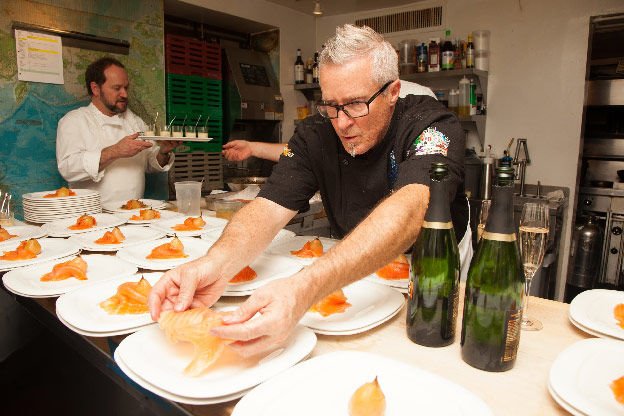
People often whisper this when talking about Patrick Glennon. As vice president of sales for Santa Monica Seafood, Glennon is one of the foremost sustainable seafood experts in the country. That’s accomplishment enough. But a few months ago, he posted photos of his trip to cook at the James Beard House. Then he competed on Alton Brown’s Food Network show, Cutthroat Kitchen. He easily dispatched a few contestants, then barely (and debatably) lost in the finals.
How many fish salesmen cook at that level? Who exactly was Glennon? I started asking around. One local restaurant lifer explained: “Two decades ago, he was the Grant Achatz or William Bradley.”
Knowing both fishing and kitchen life, it’s not terribly surprising that two of the biggest names in San Diego seafood have this common thread: Booze, in life-withering amounts. Both Glennon and Tommy Gomes (Catalina Offshore) nearly drank themselves to death, got sober, then poured that once-misdirected energy into good, honest work until they became the faces of an industry. Glennon doesn’t live in San Diego, but as fishmonger to top chefs and hyperactive culinary activist, he’s in local kitchens every week. His name is synonymous with top-notch seafood.
“Paddy was telling me…” a chef might say of some new study on sustainable seafood. Or “I got Paddy barking in my ear about how there’s no way my diver scallops are actually diver scallops…” another will smile, knowing Glennon’s right.
Chefs trust Glennon because he was once one of the top up-and-coming chefs in the country. He trained in France under greats Alain Ducasse, Jacques Maximin and Bruno Cirino. An early pilot for the American version of Iron Chef was filmed at The Mirage in Vegas, featuring William Shatner as the host and Glennon as “the American chef” (the pilot was slated for TMC, but never aired). After a long, almost-famous run in SoCal that involved bribing cops, brandishing automatic weapons atop Mick Fleetwood’s restaurant, and some groundbreaking cooking—Glennon found himself hundreds of thousands in debt, working in a fish freezer for minimum wage, and reeking of booze.
This is how one of America’s most promising chefs lost everything, and fought his way back.
You trained under some French greats for eight years. You came back to America in the 80s as a hugely talented young chef and went to… Newport Beach?
Yeah. I was forbidden by the French guys to work for some of the top American chefs of that era, like Wolfgang Puck. They wanted me to use my training for myself and not to make those guys any bigger. The French guys considered the American chefs culinary thieves. Jean-Louis Palladin was in charge of placing me coming back from France. I stayed at the Watergate for a week and then—the biggest mistake I made—I told him I wanted to go back to Newport. I should’ve gone to Chicago or New York City. The pool of opportunity got small quick.
Where’d you cook in Southern California?
I was the chef de cuisine for Ritz-Carlton Four Seasons during the ’80s and early ’90s. I was also the chef for the Le Meridian hotel in Coronado. The Meridians were known to have the best restaurants in the country at the time. [Mister A’s longtime chef] Stéphane Voitzwinkler was there; he was part of the entourage of young cooks we brought over from France. Tim Connelly of [San Diego farm] Connelly Gardens grew everything for me. We had a tasting menu—people hadn’t seen that before. We had to explain it to them. We’d put anchovies on the plate and people would get mad because it’s bait food. We were way ahead of our time for San Diego and Top 5 Zagat in the country. [Top French chef] Michel Richard came down from L.A. with a group of 12 French chefs just to have a meal with us. In the kitchen it was all the Frenchies and me. We’d have our trucks already packed and ready to go—after dinner service we’d go across the border and surf in Mexico for the weekend. It was a different time.
Then you went Hollywood?
I got big money thrown at me to open this place in L.A. for one of the head models of Guess Jeans, called Bilboque. Stefan came with me. Iman, Madonna, Stallone, Rod Stewart—they were regulars. But even with all these celebrities and notoriety, it was very short-lived. They said my salary was $175K. But we weren’t seeing any money. After three months of not getting paid, we jacked all the equipment and sold it to pay my crew. I was fine with them not paying me, but not paying my crew? Irish carjack.
That’s where you hooked up with Jean-Francois Meteigner?
Jean Francois and I took over all the hotels owned by Severyn Ashkenazy—the Bel Age, Mondrian, Hermitage.
I heard there are celebrities in Los Angeles.
It was wild. We did Pamela and Tommy’s wedding at the Bel Age. I cooked in John Travolta’s home. Same with Guns N Roses. We cooked for New Kids on the Block, Sting, Vanilla Ice, the Stones. But then the recession hit. No one wanted to hire us because we were high-paid chefs during a recession. So I partnered with [longtime New York pastry shop owners] The Ferraras. They wanted to open restaurants in L.A. We had a small farm in Topanga where we lived and smoked pot and drank all day. We farmed at least 40 percent of the food we cooked. This is when alcohol started to catch up to me.
When that didn’t pan out, you teamed up with Mick Fleetwood?
Yeah. I partnered with Mick to open Fleetwood’s. I was chef-owner. We had a show on VH1 that was Mick jamming with everyone, like Marky Mark. Little Feat was our house band. But we ran into liquor license problems from the get-go. The grand jury thought we were mafia. They pulled our liquor license on a technicality that went back 40 years before we bought the building. We did Michael Jackson’s release party. We’d pay the fire and police department not to show up.
Sounds pretty above-board.
Pretty much all the business we were doing was illegal, since we didn’t have the license to gather or sell liquor. This was during the riots. When the riots happened, we were on the roof with semi-automatics.
From rock venue with semi-automatics you joined… Disney?
Mick and I were in “keep the lights on” mode. That’s when I left high-end cuisine and started chasing Cheesecake Factory style money. These guys came in one day and asked me to rebuild the spider Encounter restaurant at LAX with some Disney designers. That was fu**ing horrific. We rebuilt that with John Rivera Sedlar. I was still cooking on the line and in charge of everything else—working 100 hours a week and keeping myself numb with alcohol the entire time. I think that’s when I lost my culinary soul—and my soul, period. I don’t even remember those years. It was a decade of blur.
So you got out?
Yeah. I went to Vermont. My wife at the time was not mentally stable. I thought I’d find a nice place for her. I went to New England Culinary Institute, where I was chef-instructor for fine dining restaurants. I used to train and handpick the kids for Daniel and Le Cirque. I built my own seafood distribution business there called Paddy the Fishmonger—market, distributor, restaurant. Alcoholism took that down.
What lured you back?
I was on the golf course one day and the phone rang. It was Jean-François. He wanted me to take over L’Orangerie in Beverly Hills. They brought me in as a consultant with Ludo Lefebvre was in the kitchen.
What was the final straw for you as a professional chef?
I opened up Hollywood & Vine Diner with a group that was supposed to build-out concepts. The builder overshot the build-out by millions. We opened the doors with no money. I couldn’t be in another restaurant with no money. That was the end of my road with alcohol. I was blacking out. I couldn’t be on the line without alcohol.
How’d you get out?
My fish vendor said, “You’re better than this—let’s get you out of this industry.” I started working nights icing fish for minimum wage on the docks. I didn’t get sober right away, believe me. I finally got sober in 2005. I figure I was about a month from death. I thought I was done. Eventually, I worked my way up and became the fish monger to the star chefs.
You’ve become known as a “culinary activist”—an absolute bulldog about sustainable, eco-friendly seafood. Three things a consumer can do?
First, buy US-caught fish, which is all under sustainable management. It doesn’t mean that Georges Bank is going to be recovered, but it does mean that anything from that area is in a rehabilitating, science-based recovery program. Second, Look up your fish on Monterrey Bay Aquarium’s site, www.seafoodwatch.org. They even have an app now. Third, look for the MSC (Marine Stewardship Council) certification. You’ll see it in most stores, from Whole Foods to Costco and Wal-Mart. It’s a really well-managed, science-based organization.
What’s the worst (most unsustainable) fish that people buy way too often?
Improperly farmed salmon. It’ll say “Atlantic salmon.” But unless the menu or the store is specific about the actual farm it came from, it’s most likely not from a sustainable farm. Chefs pay a premium for sustainably farmed fish—so they’re gonna put the name on the label or menu. They wouldn’t try to sell you a Cadillac by calling it “a car.” So “Atlantic salmon” basically means the same thing as “car.” It means nothing. If it says the farm, good chance it’s a sustainable operation.
What’s the biggest form of seafood fraud you see?
Mixing species. Sometimes a restaurant might call it grouper or sole on the menu, but it’s really swai—a Vietnamese catfish from Mekong River waters I wouldn’t drink. It’s often the seafood company who’s lying to the chefs, so it’s my job to try to educate them without “schooling” them. For instance, I’ll be bidding to sell a chef No. 1 ahi tuna and they’ll say ‘No thanks, I’m getting an insanely good price.’ I’ll have them take me to the walk-in cooler and show me the fish. It’s almost never No. 1 ahi. Or the chef thinks they’re getting Loch Duart salmon, but what they’re getting is actually Canadian salmon. If the fish was sold to them whole, they’d be able to tell by looking at it. But in filet form, it’s hard to tell them apart unless you taste it. So sellers can mislabel it and sell it for a higher price. A program such as MSC is a good way to insure what they are getting. Another big one is “diver scallops.” The amount of diver scallops that are actually caught by a diver is less than nothing and most of that stays in the fishing community. Plus, it’s seasonal. Divers aren’t going to go out in the Atlantic Ocean from late October to the beginning of April. Even “day boat scallops”—there are a very limited number of day boats.
Intentional fraud, or ignorance?
I’d say it’s 50/50 the guys who claim to be sustainable really are doing it right, and the others are just saying they are to make you feel good. A lot of big corporate restaurants will put one or two sustainable, farm-specific items on the menu to make you feel good. But the other 99 percent of the menu is unsustainable.
Your sausage company, Europa Specialty Sausage, is served in Whole Foods and Caesar’s Palace, St. Regis Monarch. Why aren’t you retired driving a sausage-shaped speedboat in the Caymans right now?
It’s not so profitable when you have six kids. My final run in the restaurant business, took me into the couple hundred thousand in tax debt.
Were you hesitant to start cooking again?
In the end, a voice spoke to me and said, ‘If you cook for charity and environmental awareness, there’s a lot to be done.’ Everything I do is for straight charity—helping farmers, ranchers and fishermen survive. At the Beard House, I personally shook the hand of every farmer, fisherman or diver whose food we served. With each plate presentation, we included a bio for every one of them. We served Skuna Bay Salmon, which is Canada’s answer to top-end Scottish salmon. The farmers live on the water with the fish 24/7. They take the top farms, and then take the top of the top fish from those farms. The fish box is taped at the farm and not opened until the chef opens it at the restaurant. If you buy Scottish salmon, you have no idea if it’s salmon.
You don’t have a restaurant, you’re not trying to “make it” as a chef. Why cook on TV?
My number one driving force is protecting what’s left of our food source. I realized I needed a bigger soap box than just that of a sausage producer and salesperson. My initial thing was auditioning for Top Chef. I tried out three times. Each time I got near the final test and they’d ask what restaurant I cooked for. And I just cook for charity. They couldn’t quite get their heads around it.
How was the Cutthroat Kitchen experience?
It was great. I left with a bitter taste for about a week. I didn’t feel I lost in the finals. I think it was very hard for the editors of that show to make it look like I deserved to lose. Are you doing ridiculous shit? Absolutely. But you have to be able to cook. It was like WWE meets Iron Chef.
And the Beard House?
Man, that was it for me. It really came full circle. After alcohol got the best of me and 10 years later to be in that house cooking next to those awesome chefs—I proved to myself I’ve still got some tools left.
You’re working on a documentary film, too?
It’s called Hail, Caesar. It’s the journey of a Caesar salad and all the ingredients that are in it—GMOs, imported produce, to-go containers, the chemicals used to clean the plates. There are a lot of sustainability issues in just one single salad. There are tons of improperly purchased items in a restaurant. And the thing is—they don’t just sell it once. They sell that salad 3,000 times a year. The amount of waste, the chemicals they produce, the jobs they pull from the local economy and give to internationals… it’s massive.
Where does sleep fall in your value system?
My nickname used to be RPM. I don’t work 40-hour weeks. I talk to chefs at 11PM, and I talk to them at 5AM.
After all the years of hard living, how are you physically?
For as busted up as my body is, I work out five or six days a week, I fight in the masters division of amateur boxing. www.olddogboxing.com. We get 1,000 people at the fights. For me, to get my body to the level it’s at is a miracle—no matter how ‘off’ my metabolism will always be. I fight now with a martial arts world champion. He kicks the shit out of me, but I can handle it.
One of America's top chefs lost it all. Food brought him back.
Patrick Glennon
Patrick Glennon
“Do you know who he is?”
People often whisper this when talking about Patrick Glennon. As vice president of sales for Santa Monica Seafood, Glennon is one of the foremost sustainable seafood experts in the country. That’s accomplishment enough. But a few months ago, he posted photos of his trip to cook at the James Beard House. Then he competed on Alton Brown’s Food Network show, Cutthroat Kitchen. He easily dispatched a few contestants, then barely (and debatably) lost in the finals.
How many fish salesmen cook at that level? Who exactly was Glennon? I started asking around. One local restaurant lifer explained: “Two decades ago, he was the Grant Achatz or William Bradley.”
Knowing both fishing and kitchen life, it’s not terribly surprising that two of the biggest names in San Diego seafood have this common thread: Booze, in life-withering amounts. Both Glennon and Tommy Gomes (Catalina Offshore) nearly drank themselves to death, got sober, then poured that once-misdirected energy into good, honest work until they became the faces of an industry. Glennon doesn’t live in San Diego, but as fishmonger to top chefs and hyperactive culinary activist, he’s in local kitchens every week. His name is synonymous with top-notch seafood.
“Paddy was telling me…” a chef might say of some new study on sustainable seafood. Or “I got Paddy barking in my ear about how there’s no way my diver scallops are actually diver scallops…” another will smile, knowing Glennon’s right.
Chefs trust Glennon because he was once one of the top up-and-coming chefs in the country. He trained in France under greats Alain Ducasse, Jacques Maximin and Bruno Cirino. An early pilot for the American version of Iron Chef was filmed at The Mirage in Vegas, featuring William Shatner as the host and Glennon as “the American chef” (the pilot was slated for TMC, but never aired). After a long, almost-famous run in SoCal that involved bribing cops, brandishing automatic weapons atop Mick Fleetwood’s restaurant, and some groundbreaking cooking—Glennon found himself hundreds of thousands in debt, working in a fish freezer for minimum wage, and reeking of booze.
This is how one of America’s most promising chefs lost everything, and fought his way back.
You trained under some French greats for eight years. You came back to America in the 80s as a hugely talented young chef and went to… Newport Beach?
Yeah. I was forbidden by the French guys to work for some of the top American chefs of that era, like Wolfgang Puck. They wanted me to use my training for myself and not to make those guys any bigger. The French guys considered the American chefs culinary thieves. Jean-Louis Palladin was in charge of placing me coming back from France. I stayed at the Watergate for a week and then—the biggest mistake I made—I told him I wanted to go back to Newport. I should’ve gone to Chicago or New York City. The pool of opportunity got small quick.
Where’d you cook in Southern California?
I was the chef de cuisine for Ritz-Carlton Four Seasons during the ’80s and early ’90s. I was also the chef for the Le Meridian hotel in Coronado. The Meridians were known to have the best restaurants in the country at the time. [Mister A’s longtime chef] Stéphane Voitzwinkler was there; he was part of the entourage of young cooks we brought over from France. Tim Connelly of [San Diego farm] Connelly Gardens grew everything for me. We had a tasting menu—people hadn’t seen that before. We had to explain it to them. We’d put anchovies on the plate and people would get mad because it’s bait food. We were way ahead of our time for San Diego and Top 5 Zagat in the country. [Top French chef] Michel Richard came down from L.A. with a group of 12 French chefs just to have a meal with us. In the kitchen it was all the Frenchies and me. We’d have our trucks already packed and ready to go—after dinner service we’d go across the border and surf in Mexico for the weekend. It was a different time.
Then you went Hollywood?
I got big money thrown at me to open this place in L.A. for one of the head models of Guess Jeans, called Bilboque. Stefan came with me. Iman, Madonna, Stallone, Rod Stewart—they were regulars. But even with all these celebrities and notoriety, it was very short-lived. They said my salary was $175K. But we weren’t seeing any money. After three months of not getting paid, we jacked all the equipment and sold it to pay my crew. I was fine with them not paying me, but not paying my crew? Irish carjack.
That’s where you hooked up with Jean-Francois Meteigner?
Jean Francois and I took over all the hotels owned by Severyn Ashkenazy—the Bel Age, Mondrian, Hermitage.
I heard there are celebrities in Los Angeles.
It was wild. We did Pamela and Tommy’s wedding at the Bel Age. I cooked in John Travolta’s home. Same with Guns N Roses. We cooked for New Kids on the Block, Sting, Vanilla Ice, the Stones. But then the recession hit. No one wanted to hire us because we were high-paid chefs during a recession. So I partnered with [longtime New York pastry shop owners] The Ferraras. They wanted to open restaurants in L.A. We had a small farm in Topanga where we lived and smoked pot and drank all day. We farmed at least 40 percent of the food we cooked. This is when alcohol started to catch up to me.
When that didn’t pan out, you teamed up with Mick Fleetwood?
Yeah. I partnered with Mick to open Fleetwood’s. I was chef-owner. We had a show on VH1 that was Mick jamming with everyone, like Marky Mark. Little Feat was our house band. But we ran into liquor license problems from the get-go. The grand jury thought we were mafia. They pulled our liquor license on a technicality that went back 40 years before we bought the building. We did Michael Jackson’s release party. We’d pay the fire and police department not to show up.
Sounds pretty above-board.
Pretty much all the business we were doing was illegal, since we didn’t have the license to gather or sell liquor. This was during the riots. When the riots happened, we were on the roof with semi-automatics.
From rock venue with semi-automatics you joined… Disney?
Mick and I were in “keep the lights on” mode. That’s when I left high-end cuisine and started chasing Cheesecake Factory style money. These guys came in one day and asked me to rebuild the spider Encounter restaurant at LAX with some Disney designers. That was fu**ing horrific. We rebuilt that with John Rivera Sedlar. I was still cooking on the line and in charge of everything else—working 100 hours a week and keeping myself numb with alcohol the entire time. I think that’s when I lost my culinary soul—and my soul, period. I don’t even remember those years. It was a decade of blur.
So you got out?
Yeah. I went to Vermont. My wife at the time was not mentally stable. I thought I’d find a nice place for her. I went to New England Culinary Institute, where I was chef-instructor for fine dining restaurants. I used to train and handpick the kids for Daniel and Le Cirque. I built my own seafood distribution business there called Paddy the Fishmonger—market, distributor, restaurant. Alcoholism took that down.
What lured you back?
I was on the golf course one day and the phone rang. It was Jean-François. He wanted me to take over L’Orangerie in Beverly Hills. They brought me in as a consultant with Ludo Lefebvre was in the kitchen.
What was the final straw for you as a professional chef?
I opened up Hollywood & Vine Diner with a group that was supposed to build-out concepts. The builder overshot the build-out by millions. We opened the doors with no money. I couldn’t be in another restaurant with no money. That was the end of my road with alcohol. I was blacking out. I couldn’t be on the line without alcohol.
How’d you get out?
My fish vendor said, “You’re better than this—let’s get you out of this industry.” I started working nights icing fish for minimum wage on the docks. I didn’t get sober right away, believe me. I finally got sober in 2005. I figure I was about a month from death. I thought I was done. Eventually, I worked my way up and became the fish monger to the star chefs.
You’ve become known as a “culinary activist”—an absolute bulldog about sustainable, eco-friendly seafood. Three things a consumer can do?
First, buy US-caught fish, which is all under sustainable management. It doesn’t mean that Georges Bank is going to be recovered, but it does mean that anything from that area is in a rehabilitating, science-based recovery program. Second, Look up your fish on Monterrey Bay Aquarium’s site, www.seafoodwatch.org. They even have an app now. Third, look for the MSC (Marine Stewardship Council) certification. You’ll see it in most stores, from Whole Foods to Costco and Wal-Mart. It’s a really well-managed, science-based organization.
What’s the worst (most unsustainable) fish that people buy way too often?
Improperly farmed salmon. It’ll say “Atlantic salmon.” But unless the menu or the store is specific about the actual farm it came from, it’s most likely not from a sustainable farm. Chefs pay a premium for sustainably farmed fish—so they’re gonna put the name on the label or menu. They wouldn’t try to sell you a Cadillac by calling it “a car.” So “Atlantic salmon” basically means the same thing as “car.” It means nothing. If it says the farm, good chance it’s a sustainable operation.
What’s the biggest form of seafood fraud you see?
Mixing species. Sometimes a restaurant might call it grouper or sole on the menu, but it’s really swai—a Vietnamese catfish from Mekong River waters I wouldn’t drink. It’s often the seafood company who’s lying to the chefs, so it’s my job to try to educate them without “schooling” them. For instance, I’ll be bidding to sell a chef No. 1 ahi tuna and they’ll say ‘No thanks, I’m getting an insanely good price.’ I’ll have them take me to the walk-in cooler and show me the fish. It’s almost never No. 1 ahi. Or the chef thinks they’re getting Loch Duart salmon, but what they’re getting is actually Canadian salmon. If the fish was sold to them whole, they’d be able to tell by looking at it. But in filet form, it’s hard to tell them apart unless you taste it. So sellers can mislabel it and sell it for a higher price. A program such as MSC is a good way to insure what they are getting. Another big one is “diver scallops.” The amount of diver scallops that are actually caught by a diver is less than nothing and most of that stays in the fishing community. Plus, it’s seasonal. Divers aren’t going to go out in the Atlantic Ocean from late October to the beginning of April. Even “day boat scallops”—there are a very limited number of day boats.
Intentional fraud, or ignorance?
I’d say it’s 50/50 the guys who claim to be sustainable really are doing it right, and the others are just saying they are to make you feel good. A lot of big corporate restaurants will put one or two sustainable, farm-specific items on the menu to make you feel good. But the other 99 percent of the menu is unsustainable.
Your sausage company, Europa Specialty Sausage, is served in Whole Foods and Caesar’s Palace, St. Regis Monarch. Why aren’t you retired driving a sausage-shaped speedboat in the Caymans right now?
It’s not so profitable when you have six kids. My final run in the restaurant business, took me into the couple hundred thousand in tax debt.
Were you hesitant to start cooking again?
In the end, a voice spoke to me and said, ‘If you cook for charity and environmental awareness, there’s a lot to be done.’ Everything I do is for straight charity—helping farmers, ranchers and fishermen survive. At the Beard House, I personally shook the hand of every farmer, fisherman or diver whose food we served. With each plate presentation, we included a bio for every one of them. We served Skuna Bay Salmon, which is Canada’s answer to top-end Scottish salmon. The farmers live on the water with the fish 24/7. They take the top farms, and then take the top of the top fish from those farms. The fish box is taped at the farm and not opened until the chef opens it at the restaurant. If you buy Scottish salmon, you have no idea if it’s salmon.
You don’t have a restaurant, you’re not trying to “make it” as a chef. Why cook on TV?
My number one driving force is protecting what’s left of our food source. I realized I needed a bigger soap box than just that of a sausage producer and salesperson. My initial thing was auditioning for Top Chef. I tried out three times. Each time I got near the final test and they’d ask what restaurant I cooked for. And I just cook for charity. They couldn’t quite get their heads around it.
How was the Cutthroat Kitchen experience?
It was great. I left with a bitter taste for about a week. I didn’t feel I lost in the finals. I think it was very hard for the editors of that show to make it look like I deserved to lose. Are you doing ridiculous shit? Absolutely. But you have to be able to cook. It was like WWE meets Iron Chef.
And the Beard House?
Man, that was it for me. It really came full circle. After alcohol got the best of me and 10 years later to be in that house cooking next to those awesome chefs—I proved to myself I’ve still got some tools left.
You’re working on a documentary film, too?
It’s called Hail, Caesar. It’s the journey of a Caesar salad and all the ingredients that are in it—GMOs, imported produce, to-go containers, the chemicals used to clean the plates. There are a lot of sustainability issues in just one single salad. There are tons of improperly purchased items in a restaurant. And the thing is—they don’t just sell it once. They sell that salad 3,000 times a year. The amount of waste, the chemicals they produce, the jobs they pull from the local economy and give to internationals… it’s massive.
Where does sleep fall in your value system?
My nickname used to be RPM. I don’t work 40-hour weeks. I talk to chefs at 11PM, and I talk to them at 5AM.
After all the years of hard living, how are you physically?
For as busted up as my body is, I work out five or six days a week, I fight in the masters division of amateur boxing. www.olddogboxing.com. We get 1,000 people at the fights. For me, to get my body to the level it’s at is a miracle—no matter how ‘off’ my metabolism will always be. I fight now with a martial arts world champion. He kicks the shit out of me, but I can handle it.
Surf’n Slaw founder Kumi Alexander is introducing local farmers market crowds to okonomiyaki, the savory Japanese pancake she grew up eating
After 15 years married, my husband and I tend to agree on most things. But there’s one argument we both refuse to bend on—I prefer okonomiyaki Osaka-style, and he’s a die-hard Hiroshima-style devotee. (To be fair, we both adore both styles, but at this point, it’s just fun to have a low-stakes disagreement.)
Okonomiyaki is one of Japan’s greatest comfort foods, a savory pancake that’s about the size of a DVD, if you aren’t too young to know what that is. It’s not terribly hard to make—it’s flour, eggs, dashi stock or water, and a whole heap of shredded cabbage, plus optional fillings like green onions, pork belly, or bonito flakes, all cooked fresh on a flat top griddle. Drizzle some kewpie mayo and okonomiyaki sauce on top, and you’re hot to go.
However, it’s not easy to make well, and as you now know, people have capital-O Opinions about Osaka-versus-Hiroshima. Hiroshima-style layers the ingredients one by one rather than mixing them together, adding a layer of soba or udon noodles and topping it all off with a fried egg. For Osaka-style, all the ingredients are mixed together and then cooked on the griddle, so every bite includes every ingredient in a hodgepodge of deliciousness. (One Osaka variation called modan-yaki does include soba noodles mixed in the batter, but they’re not traditionally used in that regional version.)
Despite a childhood spent in Osaka, Japan, Kumi Alexander specializes in making Hiroshima-style okonomiyaki. “Okonomiyaki has been part of my life for as long as I can remember,” she explains. “My parents ran their own business when I was growing up, so Saturdays were often busy, and okonomiyaki was one of my mother’s go-to lunches because it was simple and easy to make.”
Alexander came to San Diego seven years ago with a desire to bring a part of her culture with her—not just a product, but a feeling. “When I thought about what could do that, the answer was almost obvious: okonomiyaki,” she says.
She originally launched Surf’n Slaw as a mobile pop-up food stand in August 2025, offering what Alexander calls Japanese-meets-California okonomiyaki. “Our full Surf’n Slaw includes cabbage, noodles, umami dough, beef, shrimp, and vegetables,” she explains. The menu also has a “Green Wave Slaw,” an Osaka-style version that can be made vegan and gluten-free, as well as matcha drinks.
Currently, Surf’n Slaw pops up at farmers markets in North Park, Scripps Ranch, Hillcrest, La Jolla, and La Mesa, as well as other local markets and community events. Eventually, she may expand to a permanent location, but that’s a future goal. And while Alexander hopes that one day okonomiyaki will be as well-known to American audiences as ramen or sushi, for now, she’s just happy to share a bit of home with San Diego.
Listen Now: The Latest in San Diego’s Food and Drink Scene
Have breaking news, exciting scoops, or great stories about new San Diego restaurants or the city’s food scene? Send your pitches to [email protected].
Beth Demmon is an award-winning writer and podcaster whose work regularly appears in national outlets and San Diego Magazine. Her first book, The Beer Lover's Guide to Cider, is now available. Find out more on bethdemmon.com.
At Vi at La Jolla Village, residents don't have to choose between security and adventure, connection and independence. They get all of it.
Today’s seniors are more connected than ever, with a renewed focus on retirement as a time of discovery and enriching experiences. The ultimate reward for a retirement well-earned is the wisdom to appreciate it all, and what better place to enjoy that unique perspective than Vi at La Jolla Village, in the heart of San Diego.
All-access pass to good living.
As a Continuing Care Retirement Community (CCRC), Vi provides access to a connected and fulfilling community while making it easy to plan for future care, should the need ever arise. With a care plan in place, residents enjoy greater financial predictability and long-term value, freeing them to focus on making the most out of retirement.
Resort-style amenities at the epicenter of a cultural hub like San Diego offer a retirement experience unlike any other. Paired with exceptional dining, spacious accommodations and dedicated staff, the best of maintenance-free living is all around. And with the introduction of Vista 360 Well-Being, Vi’s panoramic approach to wellness, there are more ways than ever for residents to access it all.
The harmony of mind, body and community.

The key to longevity is striking the right balance in maintaining an active lifestyle with an active mind in a fulfilling community. With newly renovated community spaces and restaurants, Vista brings a variety of opportunities for residents to elevate their well-being through Vi-exclusive “Signature Experiences.”
Vista Enrich takes an evidence-based approach to brain vitality, keeping residents at the forefront of cognitive health through exergaming (exercising + gaming), nutritional plans and informative workshops. It is also home to The Brain Vitality Studio, an innovative facility dedicated to cognitive fitness that has garnered national recognition.
Vista Discover invites residents into stimulating educational experiences, from chef-led cooking demos and guided wine tastings to lectures at local universities and intimate lectures following cultural outings.
While Vista Enrich focuses on brain health and Vista Discover engages residents intellectually, Vista Explore cultivates a sense of adventure through curated travel and local excursions. But broadening one’s horizons doesn’t always require a plane ticket. One recent event brought a taste of the world right to the community: an onsite “jazz cruise” featuring live music and global cuisine served at a series of themed “ports” all within the community’s own ballroom.
“Location, location, location”

One of the biggest perks of life at Vi at La Jolla Village is its proximity to just about everything. With easy access to transportation and local attractions just steps away, residents can explore and engage with their community at their own pace.
“There are trolley and bus stops within a 5-minute walk that will get you to the beach, UCSD Campus, medical appointments, downtown La Jolla or San Diego, et cetera. We rarely use our car,” said resident Tom Yager.
With the best of San Diego just steps away, residents don’t just live in the city, they live within reach of everything that makes it special.
The best of all worlds.

At Vi at La Jolla Village, retirement isn’t a chapter to slow down; it’s an invitation to discover more. Tailored community experiences created by Vista, paired with the vibrant pulse of San Diego just outside the door, mean that residents don’t have to choose between security and adventure, connection and independence. They get all of it.
This is what an all-access pass to good living looks like: the comforts of an elevated lifestyle, a community built for growth and a city made for discovery – all in one place.
To learn more about Vi at La Jolla Village or for details on available floor plans, visit ViatLaJollaVillage.com/SDM.
San Diego entrepreneur Kenji Blouin-Ito is turning a tiny Uptown Inn space into a destination for bentos, coffee, snacks, and more
Tokyo unquestionably holds the title as one of the best, if not the best, food cities of the world. But despite the plethora of Michelin-starred kaiseki restaurants and hole-in-the-wall ramen joints, you’d be remiss in walking past glowing signs beckoning you to enter one of the 56,000-plus konbini across the country.
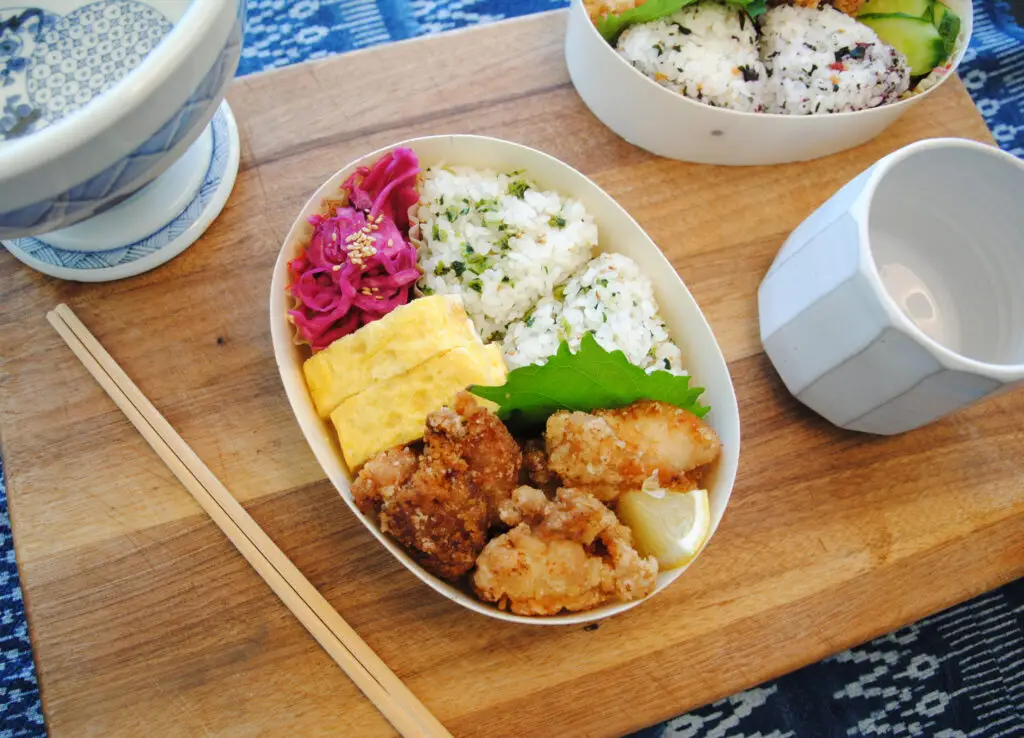
Konbini cafes like Lawson’s, FamilyMart, and 7-Eleven may look like run-of-the-mill convenience stores, but convenience store culture is a completely different animal there. Absent are the sad, floppy hot dogs sizzling sweatily on a rotating wheel of misery. Instead, konbini are stocked with a bevy of hot and cold drinks in every imaginable flavor, meals like tamago sandos (Japanese egg salad sandwiches) and prepacked bento boxes, snacks like onigiri (handheld triangles of rice and seaweed, often filled with fish or pickled plum), and even limited-edition merchandise (not unlike Wawa’s line of merch).
Soon, Hillcrest will get a taste of konbibi culture. Hako Hako opens in front of Uptown Inn by Vantaggio, next to Ramen Ryoma, in early 2027.
Kenji Blouin-Ito, a half-Japanese, half-French San Diego native grew up eating Japanese food at home and during trips across the Pacific. “I remember looking forward to eating bentos on the train,” he says, grabbing quick items to munch on without sacrificing quality or succumbing to cost. When in France, he saw a rise of appreciation for casual Japanese cuisine, “long before it happened here.”

So he decided to bring it here. After AB 626 passed in 2018 to allow different jurisdictions to permit Microenterprise Home Kitchen Operations (MEHKOs), Blouin-Ito launched Foodnome, the first legal marketplace for homemade food in the US. Eventually, the national nonprofit The Cook Alliance took over the project, leaving him open to the next new idea but with the experience of running a food-based business.
“That experience changed how I think about food, not just what makes it good but what makes it work,” he explains. Bento boxes felt affordable in a time of inflation, convenient in a bustling world, and versatile to a variety of palates. When he got the chance to open a konbini himself, he went for it.
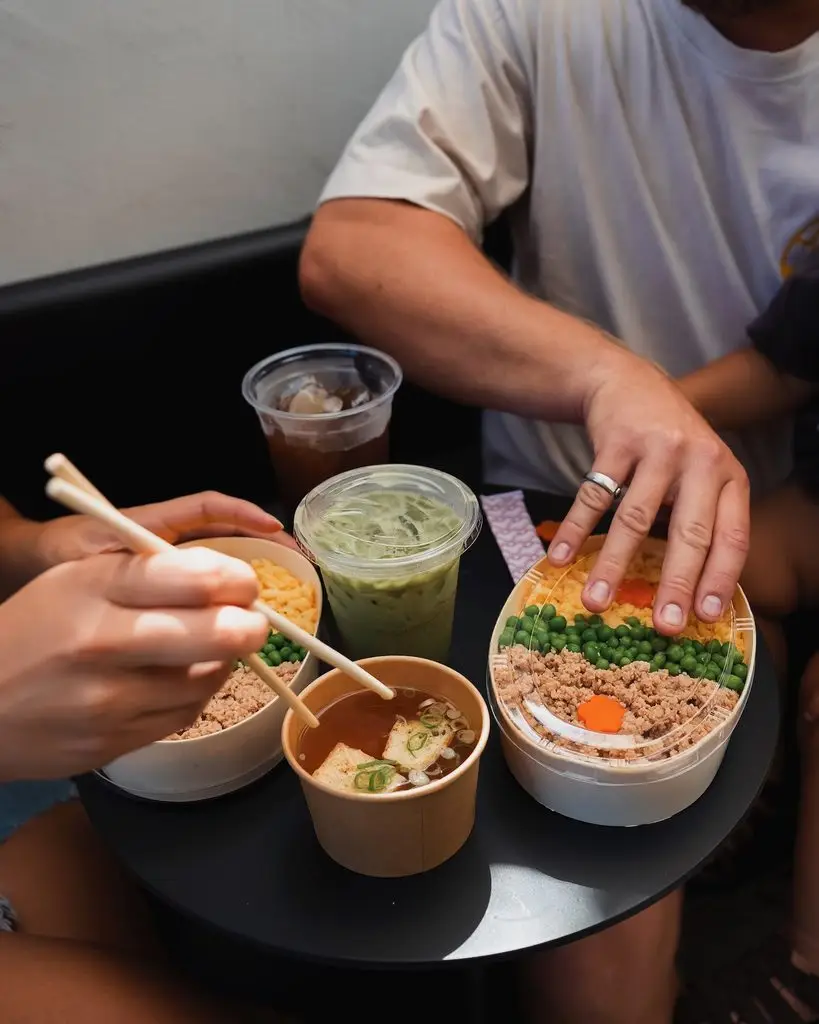
His family runs Uptown Inn, a mix of apartments and hotel rooms that’s seen increased food traffic over the past few years. “We had a small space in front of the building that wasn’t being used, and it just made sense,” he says. Hako means “box” in Japanese, a reference to both bentos and small space from where he’ll sling freshly made bentos, coffee, drinks, pastries, snacks, and a small retail selection.
Hako Hako will initially open for morning and afternoon hours, but you don’t have to wait until next year to get a taste of Japanese culture. Blouin-Ito’s concept is popping up at various coffee shops around San Diego, with a few coming up: Easy Does It on September 19 and Cafe Moto on October 17. Until then, practice the art of gaman: patience with grace.
Hako Hako opens at 819 University Avenue in Hillcrest in early 2027.
Listen Now: The Latest in San Diego’s Food and Drink Scene
Have breaking news, exciting scoops, or great stories about new San Diego restaurants or the city’s food scene? Send your pitches to [email protected].
Beth Demmon is an award-winning writer and podcaster whose work regularly appears in national outlets and San Diego Magazine. Her first book, The Beer Lover's Guide to Cider, is now available. Find out more on bethdemmon.com.
With Sosal Line, Heidi Greenwood and Juerie Masters are importing traceable seafood from small producers and building a global pantry business along the way
No matter your job, it’s helpful to find some sort of joy in it to avoid going completely insane. Some people savor the variety of personalities when dealing with customers. Others find comfort in the predictability of closing a bar after last call, counting tips and wiping counters. Perhaps achieving Inbox Zero really gets your blood pumping, or shipping a new product design sparks joy.
For Heidi Greenwood and Juerie Masters, work doesn’t get better than logistics and operations.
“[We] both love all the unsexy parts of supply chain and backend management,” laughs Greenwood. Tracking outbound orders? Ensuring compliance? Managing inbound freight? Stop me if this is getting too hot for you!
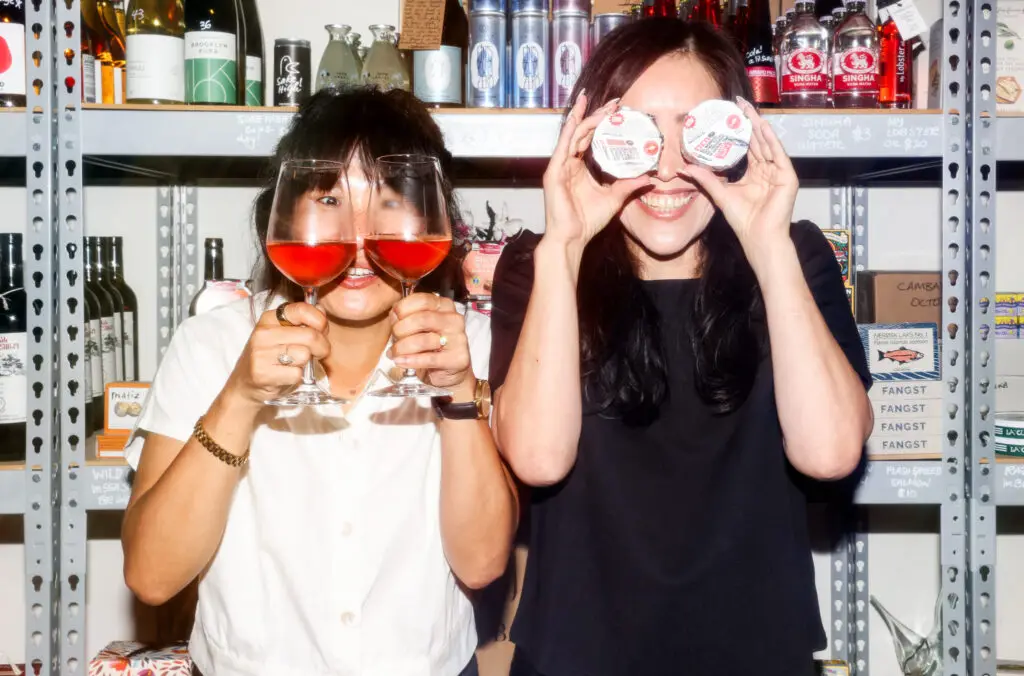
Not enough people think about the unsexy reality of running a business before launch, but effectively and consistently keeping an eye on operations separates successful companies from out-of-business ones. Both Masters and Greenwood already own their own businesses—Greenwood is behind the wine zine Campestre Mag and runs the online wine shop Esquina, and Masters co-owns Clos Wine Shop and Fintastic Provisions in University Heights with her husband Paul. Apparently, these gigs weren’t enough to satisfy their collective yearning for spreadsheets and inventory maintenance.
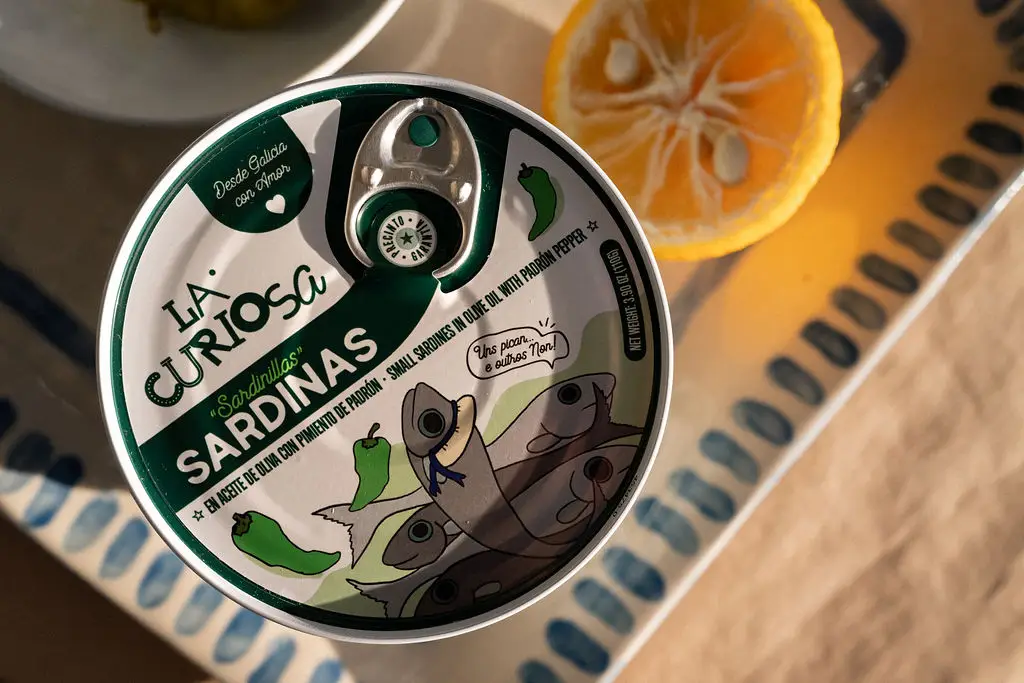
So, they decided to start another business together—Sosal Line, a San Diego-based import and distribution company specializing in global pantry items. The pair launched Sosal Line at the beginning of 2025 and currently only sell three brands of tinned fish, but Greenwood says they plan to expand their offerings as they discover other small or family-run businesses that share their values.
“We want to work with brands and with products that really have a sense of place and actually tell a story—not just the product, but the people behind it too,” she says.
Masters and Greenwood are both Korean-American and named this burgeoning business after Haenyeo, the legendary free-diving women of Jeju Island in South Korea. Traditional Haenyeo equipment and garb include oribal (swim fins), yeoncheol (lead belts to help them sink), and the company’s namesake sosal, a hand-held fishing spear (sometimes called jaksal).
The average person, if sitting completely still, can stay underwater for up to a minute and a half at most. Haenyeo can hold their breath for up to three minutes while actively foraging, harvesting, and swimming. Scientists say these diving women spend more time underwater than any other group of humans on earth. Not badass enough for you? The average age of Haenyeo is around 70.

“Fishing is a strong heritage for Koreans, and it’s the same here in San Diego with the Portuguese settlers,” Greenwood explains. (We aren’t the tuna capital of the US for no reason.)
Sosal Line carries 100 percent traceable, wild caught fish from Galicia in Northern Spain and the Pacific Northwest, all family-owned companies who don’t compromise on sustainable practices. Tinned fish has never been more popular—or more debated—but there’s more to it than cute labels designed for maximum Instagram reach. “I want to know who I’m purchasing from,” says Greenwood. One of their suppliers, Craft Fish Co., which is based in San Diego but fishes in the PNW, is run by JJ and Jessica Gerritsen. JJ catches, Jessica packages, and it’s a business relationship on a first-name basis. “You can’t find that when you’re working with some nameless brand.”
San Diegans can find Sosal Line products at local retailers like Clos/Fintastic (obviously), allmine in Oceanside, Always Hungry Grocery & Goods in Carlsbad, J. Brix Wines in San Marcos, Collins & Coupe/Tablespoon in North Park, and Green Acre in La Jolla. They’re also available in select retailers in Northern California, Oregon, Arizona, and strangely enough, South Carolina. Expanding its client base is, of course, a goal. But not at the expense of quality or joy of discovery.
“I would love to see people try food from different cultures and be excited about it,” says Greenwood. “Maybe make them want to travel to experience different areas of the world.”
Beth Demmon is an award-winning writer and podcaster whose work regularly appears in national outlets and San Diego Magazine. Her first book, The Beer Lover's Guide to Cider, is now available. Find out more on bethdemmon.com.
Laika Nur, MD, takes her love of volleyball from the court to the clinic as team physician for the San Diego Mojo
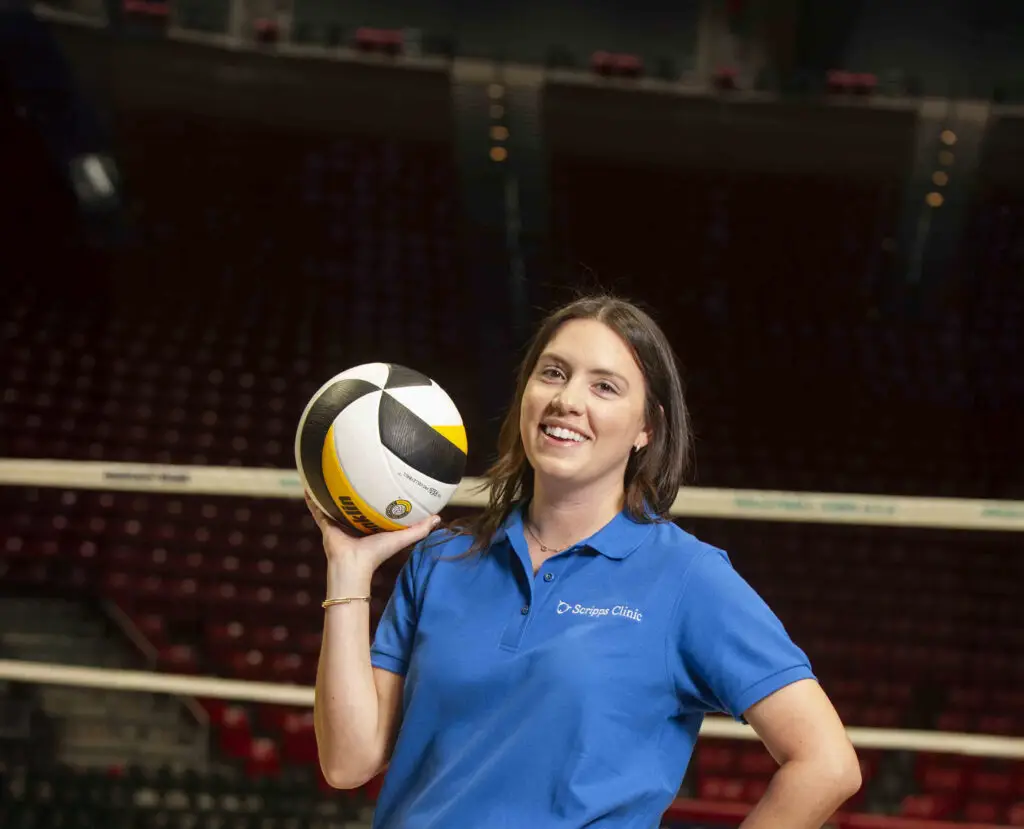
Growing up, Laika Nur, MD, Scripps Clinic sports medicine specialist, loved watching beach volleyball when the Association of Volleyball Professionals tour came to her hometown of Chicago. A talented volleyball player herself, she remembers sitting in the stands all day, and once, even got a couple autographs. Years later, Dr. Nur was attending a professional event focused on women’s sports, and the discussion turned to a new professional women’s volleyball league. The general manager and coaching staff for San Diego’s team, the Mojo, happened to be in attendance, and Dr. Nur took the opportunity to ask them if they needed a team doctor. Flash forward to the Mojo’s inaugural 2024 season, when Dr. Nur officially became the team physician. Click here to read more about Dr. Nur and how she incorporates lessons she learned on the court into her practice.
For more nutrition, wellness, and healthy living tips, sign up for the San Diego Health newsletter here.