Ready to know more about San Diego?

Subscribe
Features MAY 3, 2024

7 of San Diego’s Sexiest & Best Bathrooms

Put on your best duds, grab your friends, and come barhopping with us in the city's chicest stalls

7 of San Diego’s Sexiest & Best Bathrooms
Seneca | Photo Credit: Erica Joan

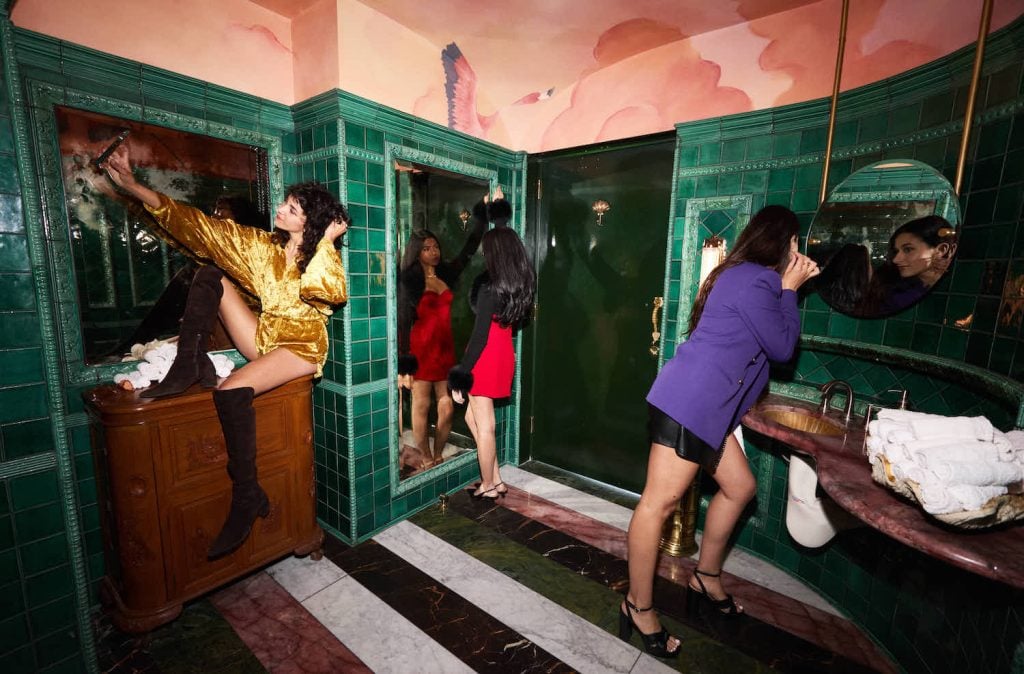
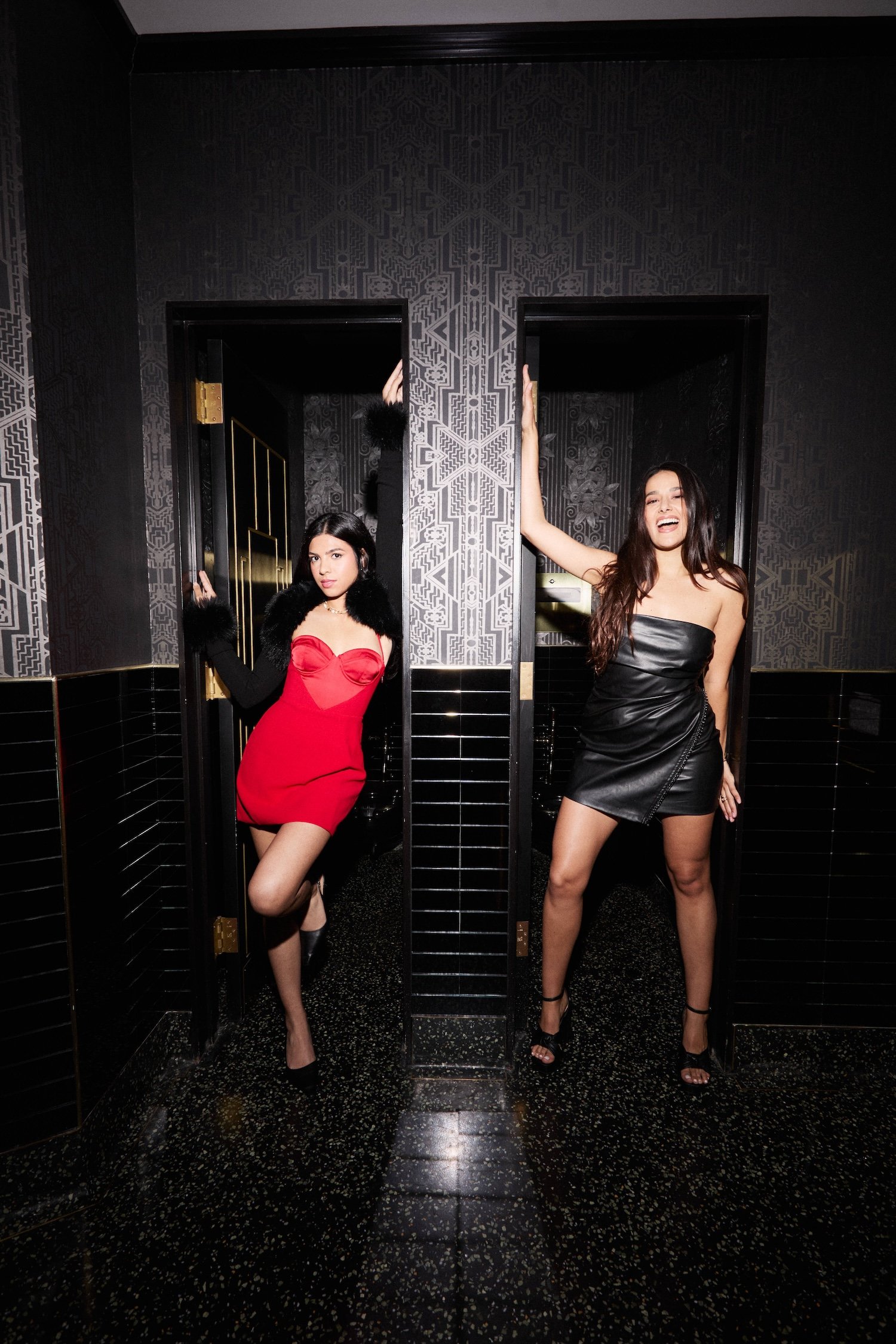
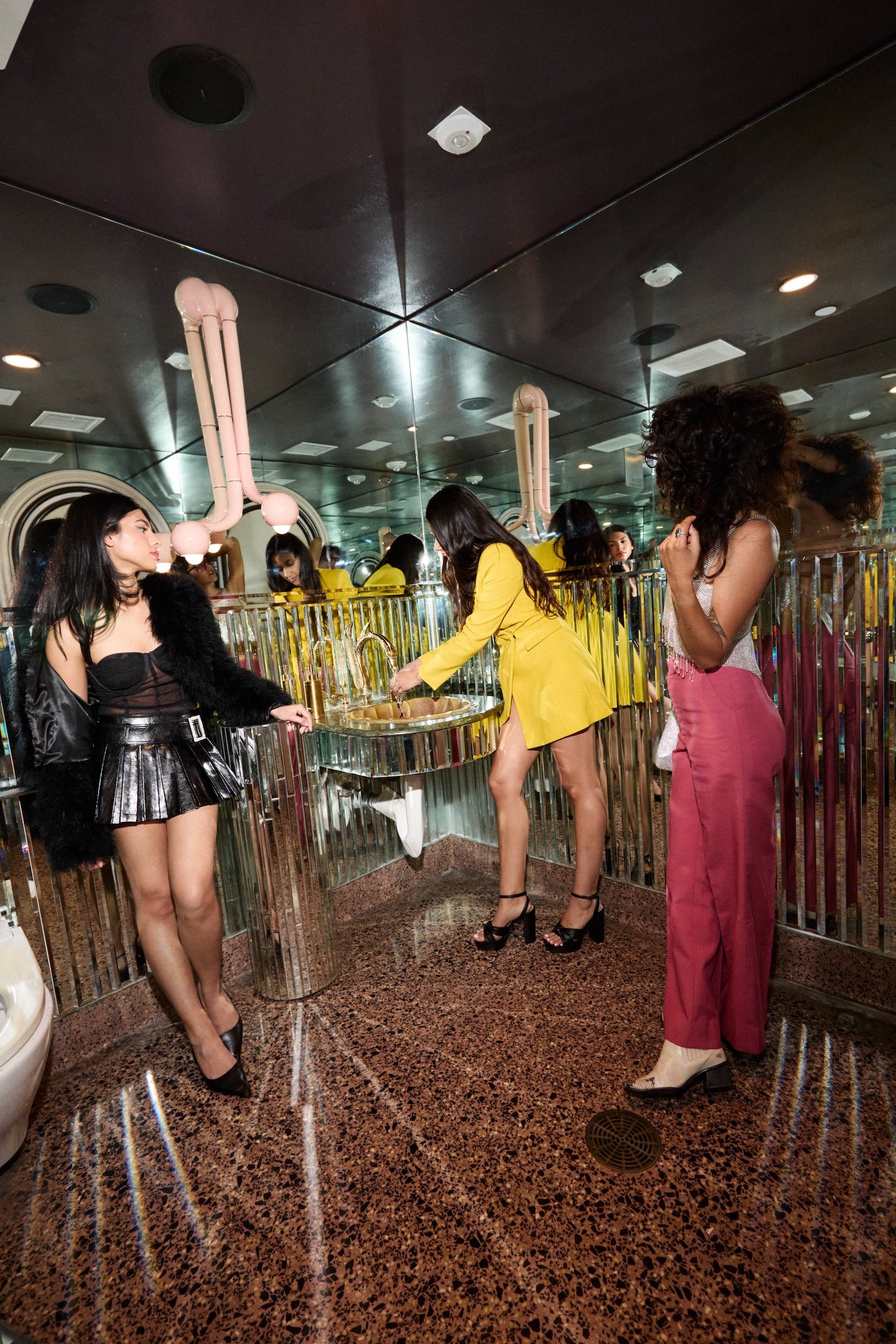
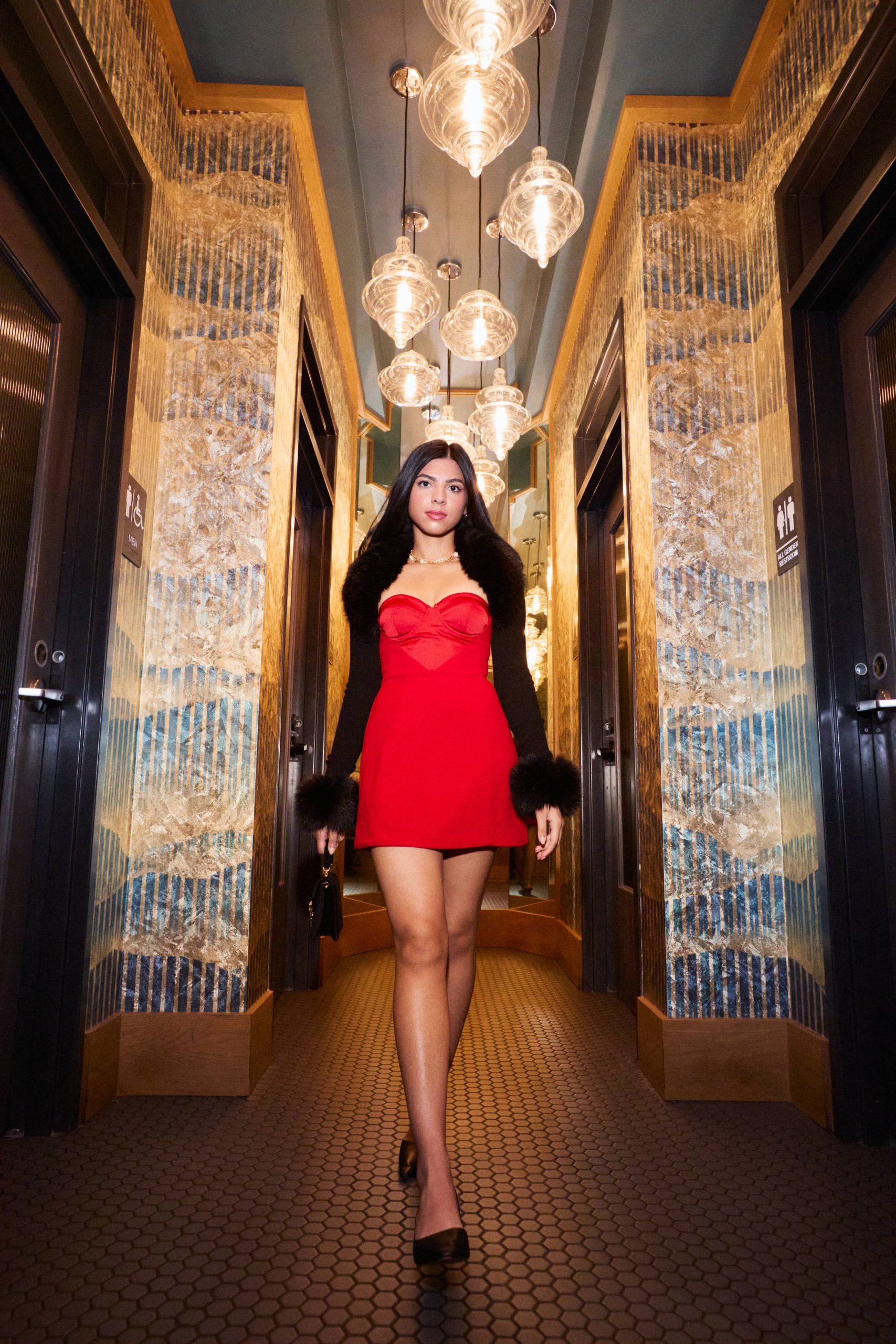
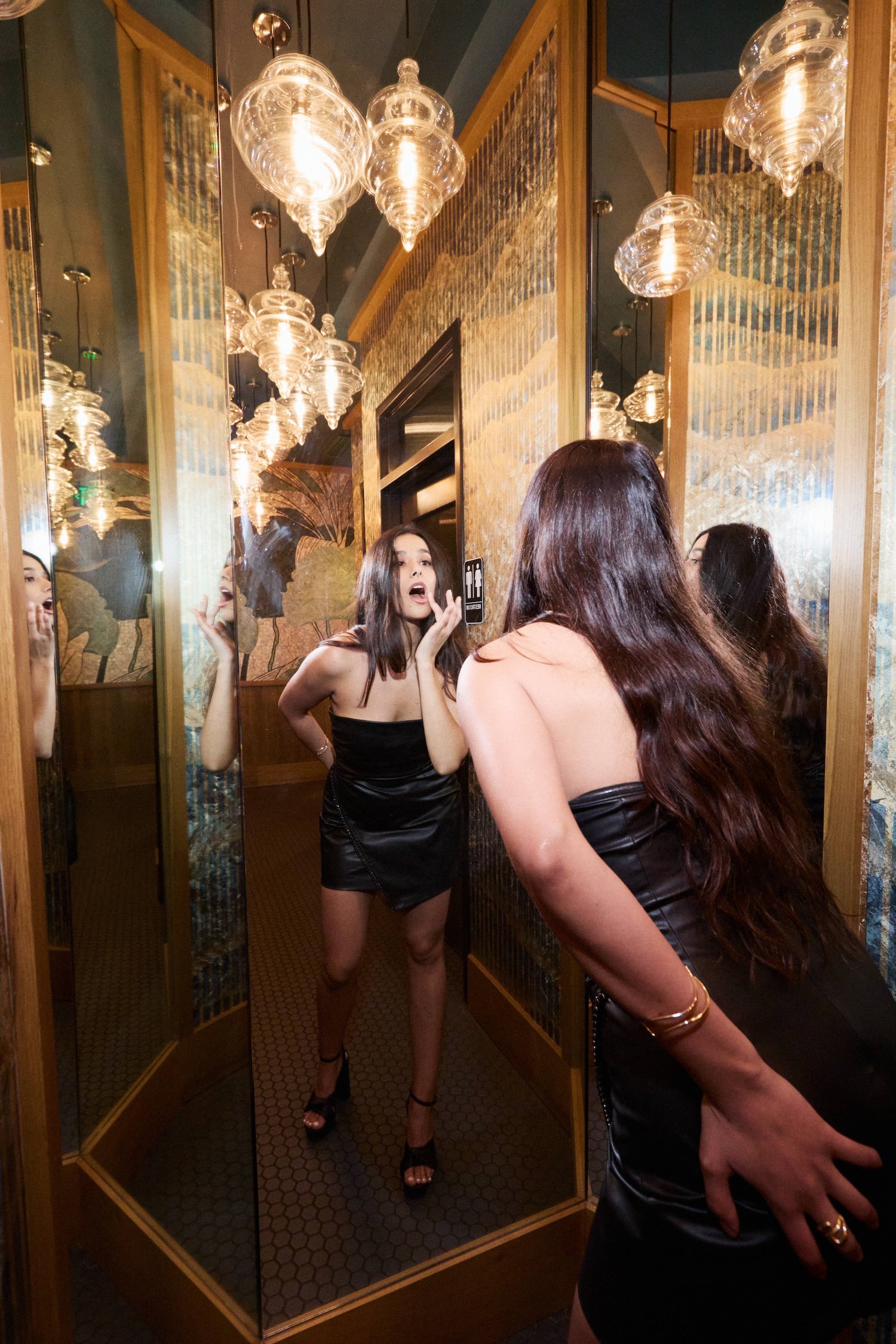
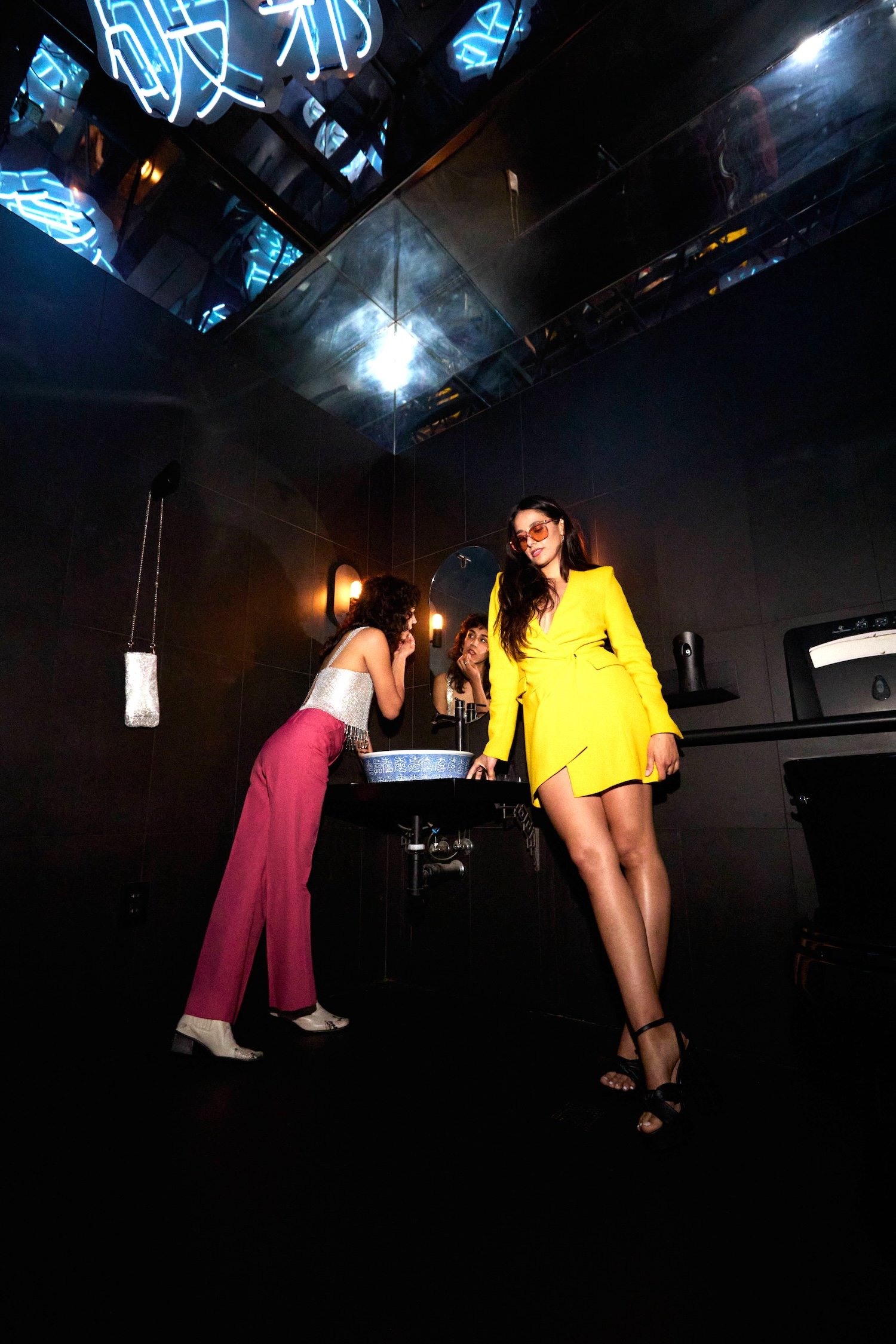
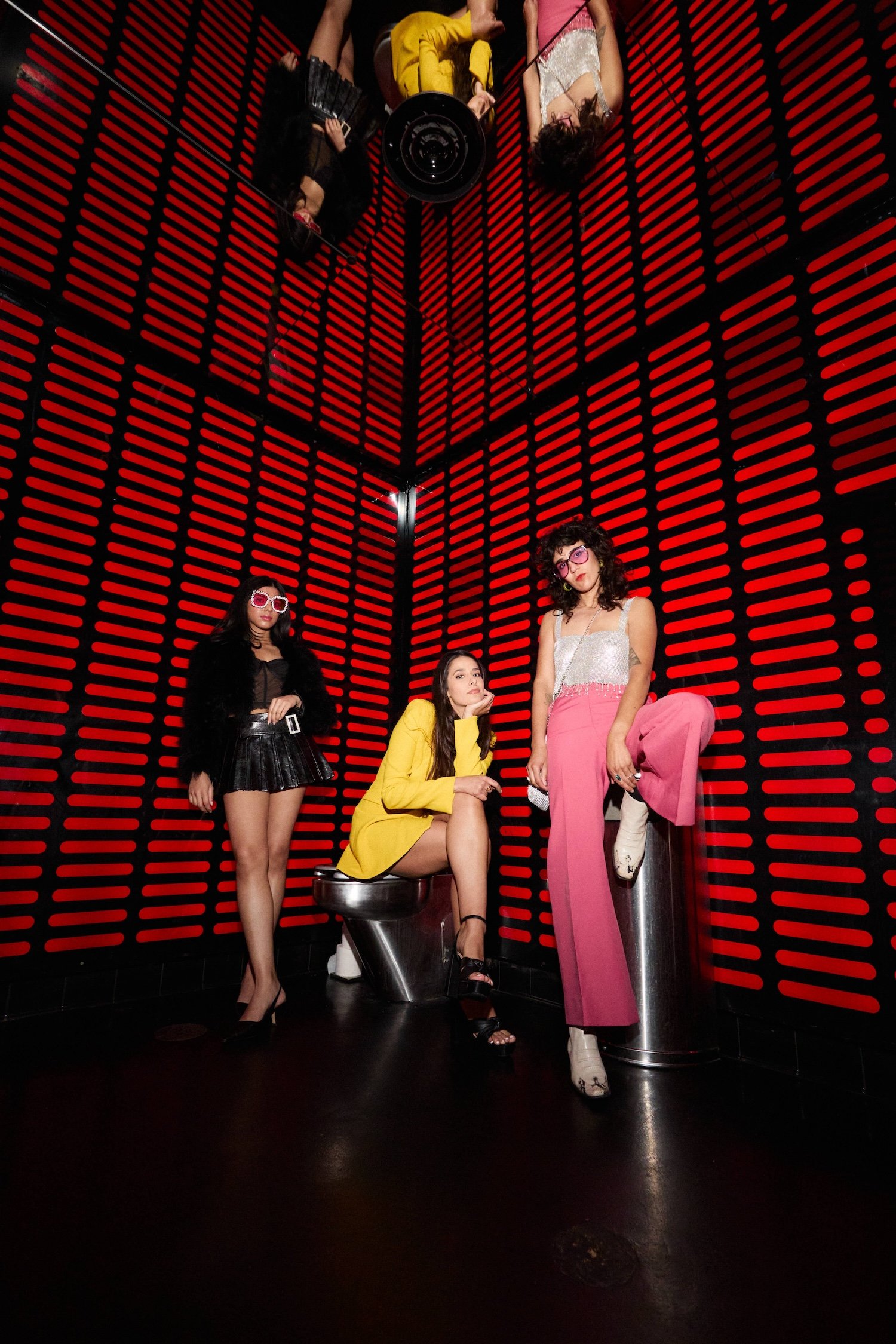
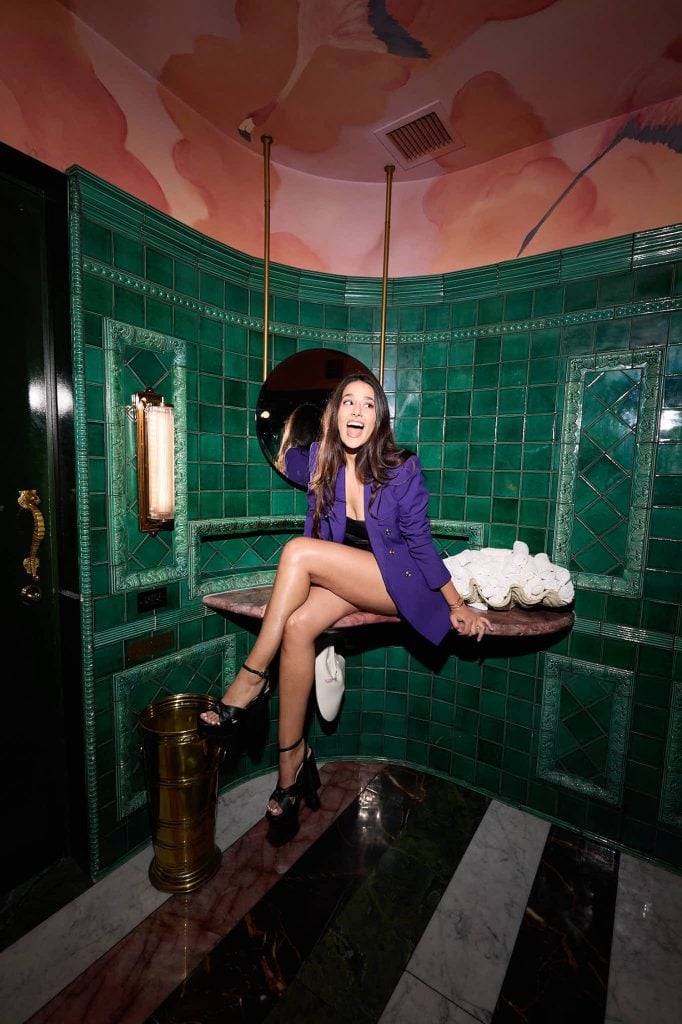
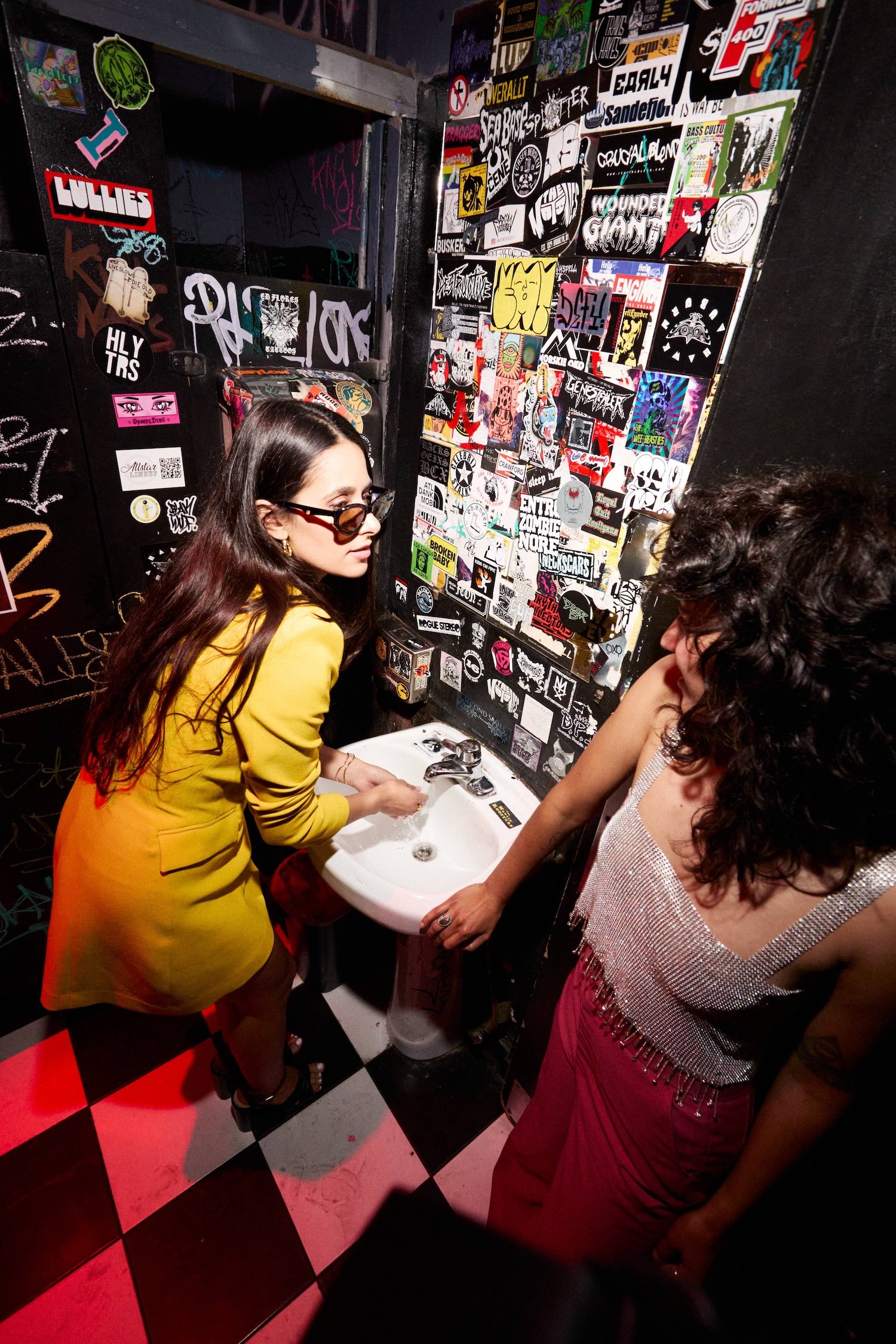
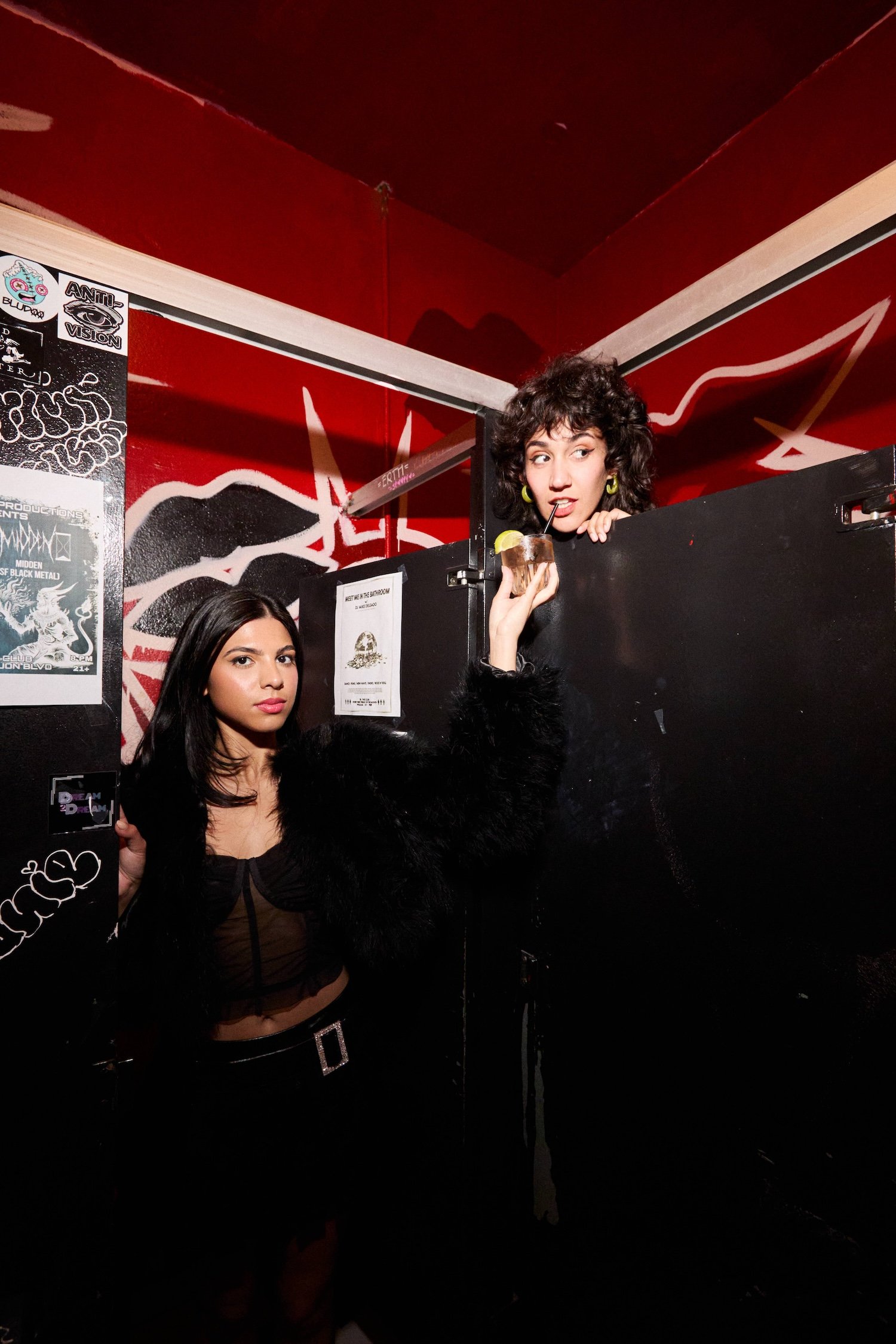
San Diego’s got more than its fair share of chic bathrooms, so we grabbed a few pals and wandered through the city’s hottest stalls (and one nostalgia-inducing dive bar john).

After all, the party only sucks if the bathroom’s quiet. The main event may be sullied by long drink lines, boring DJs, couples that really need to get a room. The only escape that doesn’t involve calling an Uber? The true epicenter of gossip and booze-induced bonding: the restroom.

Almost anywhere after happy hour, the lavatory is the place to be—the setting for the best compliment you’ve ever gotten, a land where the questionable hygiene of sharing lipstick goes unquestioned.

And businesses are catching on. If patrons are flocking to the loo anyway—to mirror selfie and make out and urge crying acquaintances to “Dump him!”—why not give it the same design consideration as the rest of the building? Hello, disco-ball bathrooms and wallpapered water closets. Finally, a prettier place to get your hair braided by a stranger.

Check out the sexiest bathrooms in San Diego below:

Animae


Photo Credit: Erica Joan

Morning Glory


Photo Credit: Erica Joan

Kingfisher


Photo Credit: Erica Joan

Realm of the 52 Remedies


Photo Credit: Erica Joan

Mothership


Photo Credit: Erica Joan

Seneca


Seneca Trattoria, San Diego
Photo Credit: Erica Joan

Til-Two Club


Photo Credit: Erica Joan

Amelia Rodriguez is a writer and journalist and winner of the San Diego Press Club's 2023 Rising Star Award and 2024 Best of Show Award, she’s also covered music, food, arts and culture, fashion, and design for Rolling Stone, Palm Springs Life, and other national and regional publications. After work, you can find her hunting down San Diego’s best pastries and maintaining her five-year Duolingo streak.

Subscribe to our newsletters

Select Options

By subscribing you confirm that you agree with our Terms and Conditions and Privacy Policy.

Food & Drink JUNE 25, 2026

Global Fork Food Hall Opens in Little Italy

Offering everything from smashburgers to sundaes, the latest food hall from Tiger Hospitality opens its doors this weekend

Global Fork Food Hall Opens in Little Italy
Courtesy of Global Fork Food Hall

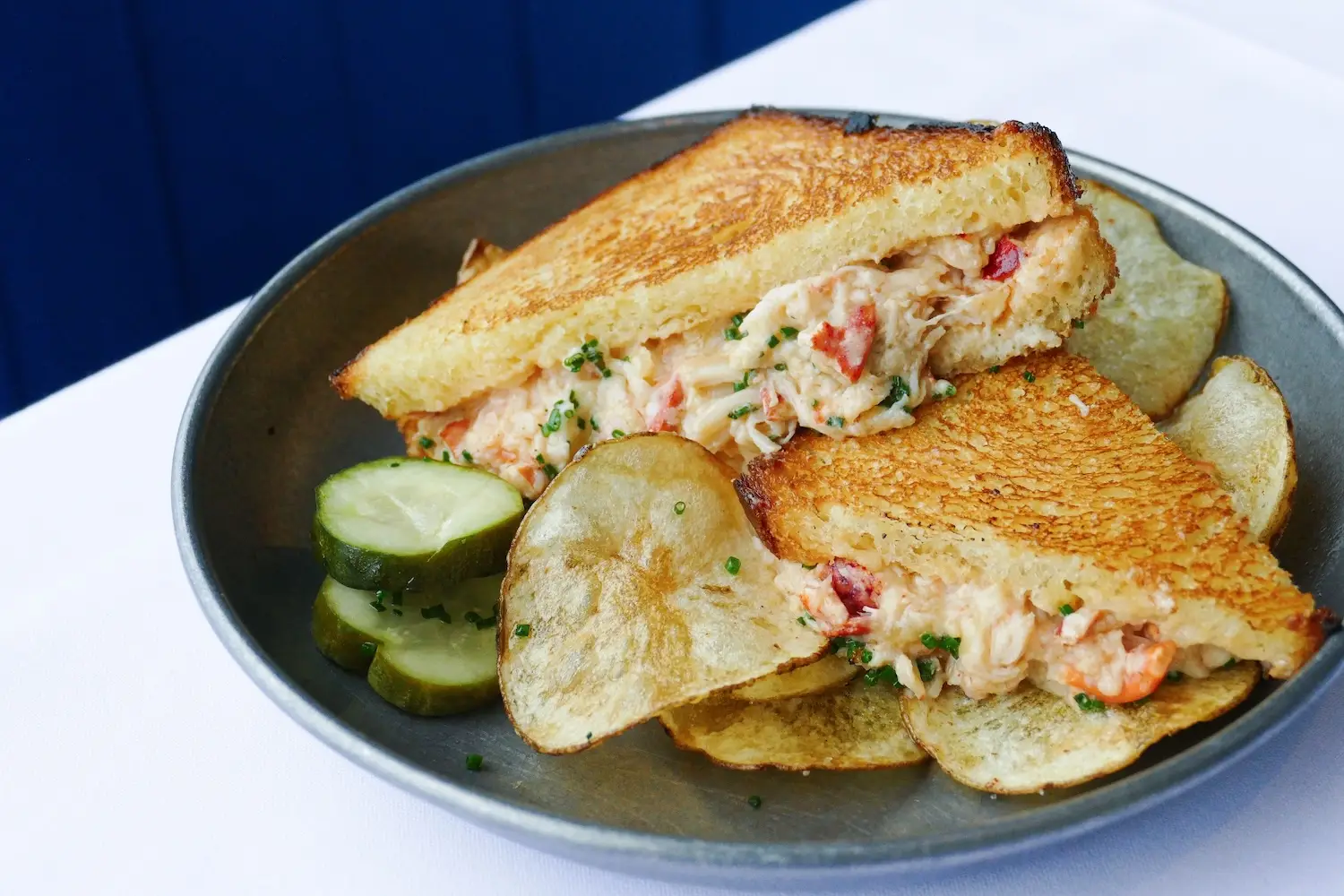
Omakase and fixed-price menus are one way hospitality businesses are addressing our collective food decision-making fatigue. But on the opposite end of the spectrum, some restaurateurs are offering a bonanza of totally unrelated options for people ordering on a whim. Why not pair a lobster grilled cheese sandwich, açaí bowl, and ridiculously loaded hot dog? 

Starting June 27, diners can satisfy their spur-of-the-moment appetites at Global Fork in Little Italy, the latest food hall from Southern California-based Tiger Hospitality. 

Six different food concepts will be featured in the 4,685-square-foot, indoor-outdoor space along the Piazza della Famiglia promenade. The space’s inaugural lineup includes a mix of Tiger Hospitality-owned concepts (Cosmos Burger, La Vida, Lobster Lab, and Prik Ki Nu Thai) and outside operators (Seattle-based Moto Pizza and Handel’s Homemade Ice Cream). The space next door, Good Enough Cocktail Club, is another Tiger-backed brand, operated by the team behind Same Same and Amor y Magia in Carlsbad.

Cosmos Burger serves smashburgers stacked with classic toppings, while Lobster Lab focuses on seafood favorites including lobster rolls, shrimp rolls, and lobster mac n’ cheese. Prik Ki Nu Thai adds Thai street food to the mix, with traditional noodle, rice, and stir-fry dishes. And for those looking for something on the lighter side, La Vida offers things like smoothies, salads, and wraps. 

Courtesy of Global Fork Food Hall

Moto Pizza focuses on Detroit-style square pizza with Filipino influences and, despite the name, is not affiliated with Mr. Moto Pizza. Handel’s, which began in Ohio in 1945, will offer dozens of flavors ranging from staples like chocolate and vanilla to rotating specialties packed with candies, cookies, and other mix-ins. (Handel’s already has a number of locations across San Diego, with a La Mesa store coming later this year.) 

Some of these vendors already operate at Miramar Food Hall, the other Tiger-owned food hall in San Clemente. And some of them will also appear in Station8, the next food hall slated to open in UC San Diego’s Theatre District Living and Learning Neighborhood later this fall. But if you ask me, reviving the space that housed the Little Italy Food Hall before its closure last February is a far better outcome than leaving empty suites smack in the middle of an area saturated with fantastic food options. Plus, where else can you order a slice of beef adobo pizza alongside squares of caviar toast and a banana split?

Global Fork opens June 27 at 550 W. Date Street, Suite B, in Little Italy. Initial operating hours are from 9 a.m. to 9 p.m., seven days a week, but vendor hours may differ. 

Courtesy of Holland Partner Group

San Diego Restaurant News & Food Events

Beth’s Bites

  • La Jolla is reviving one of its own shuttered spaces this August with Tacos & Jarros, coming to the space on Wall Street that formerly housed Comedor Nishi and Coffee Cup. The all-day Mexican restaurant is the latest project from the family behind Cazadores Mexican Grill in Santee and Cotija’s Taco Shop, and will offer wine, beer, tacos, traditional breakfast dishes, as well as lunch and dinner. Some concepts may have hit their ceiling (craft beer, anyone?), but thankfully, it seems that Mexican food still has a long way to go before that. 
  • In the latest hilariously-named collaboration, on June 9, The Lion’s Share will host executive chef Tara Monsod from Animae for a one-night event called Animaeniacs. (Millennials who know, know.) The three-time James Beard Award Semifinalist Monsod will work with Lion’s Share executive chef and co-owner Dante Romero to create a multi-course, family-style dinner inspired by Romero’s Mexican background and Monsod’s Filipino heritage. Tickets get you a seat at the table, plus access to an afterparty in the Marina neighborhood hotspot’s loft, with seatings at 5 p.m. for the early birds and 8:30 p.m. for the night owls. 
  • Thanks to my son’s lifelong obsession with boba, I’m always on the lookout for the latest bubble tea place to check out. Next on my list is Tera Tea House, a boba, matcha, and fruit tea joint coming this month (maybe?) to City Heights near the Copley-Price YMCA. Will I go because their logo is a cartoon dinosaur sipping on boba tea? No, but it sure doesn’t hurt.
  • After opening their latest outpost in North Park, Moniker Group announced plans to open their third Moniker General later this year inside West, a 37-story mixed use building coming to downtown at 1011 Union Street. The space will continue the group’s signature menu of coffee, cold brew, matcha, small bites, wine, and beer, and founder Ryan Sisson says they identified downtown for their next location due to the area’s “tremendous amount of momentum.” I’ve never lived in a building with a built-in coffee shop, but I’ve got to admit, it does sound like a pretty nice perk.

Listen Now: The Latest in San Diego’s Food and Drink Scene

Have breaking news, exciting scoops, or great stories about new San Diego restaurants or the city’s food scene? Send your pitches to [email protected].

Beth Demmon

About Beth Demmon

Beth Demmon is an award-winning writer and podcaster whose work regularly appears in national outlets and San Diego Magazine. Her first book, The Beer Lover's Guide to Cider, is now available. Find out more on bethdemmon.com.

Food & Drink JUNE 24, 2026

Michelin Chooses San Diego for Its Big Show

How the now iconic rating system became the biggest name in the food and how it made its way to our backyard

Michelin Chooses San Diego for Its Big Show
Photo Credit: Elodie Bost

So, Michelin chose San Diego to host its annual awards show this week. Big thing for our city, which people wrote off as the flaccid mozzarella stick or the “fish tacos bro” of California food culture.

Michelin Guide is a pretty fascinating story. It started as a marketing brochure for a tire company and evolved into the strongest global marketing platform for restaurant culture in history.

In 1900, there were less than 3,000 cars in all of France. André and Édouard Michelin were trying to sell tires. A niche market. If people drove more, they figured, tires would go bald faster. They’d sell more rubber.

So they published a guidebook with maps, gas stations, mechanics, hotels, restaurants, and travel advice. The “How to Go Bald” book with food as the bait. By the 1920s, people were buying the guide just for the restaurant recs.

In 1926, Michelin introduced stars. This changes everything.

Originally just one. Five years later, it expanded to three. One meant “very good restaurant.” Two meant “worth a detour.” Three stars meant “worth a special journey.” In other words, wear those tires down to a nub in search of Dover sole.

Photo Credit: Elodie Bost

By WWII, Michelin was the gold standard guide to French food. And French food was the gold standard for western food. Which was half the world.

Michelin first came to the US in 2005.
New York only.
(Knicks in five).

In 2007, San Francisco. Then LA and Vegas in 2008.

Michelin stopped publishing in LA and Vegas after two years and stayed dark until 2019.

Major theories for this?

First, print is expensive. I can attest. ROI on a printed story is hard.

Second, people wanted local critics, and they were finding them online.

Third, Michelin landed like a stuffed shirt in LA, which had taco carts in its heart. LA swiped hard left.

Then Michelin discovered a new way to fund what it does. Instead of trying to sell enough books to justify the cost (inspectors, printing, restaurant bills, etc.), it had tourism marketing districts pay for inspectors to come analyze their cities or states.

Tourism marketing districts are massive organizations whose primary goal is to sing the priases of their cities and states—attract tourists, who pay for hotels and spend money in the city. Heads in beds.

The first to swipe its credit card was California, which paid $600,000 in 2019 for Michelin to come back to LA, Orange County, Monterey, Sacramento, Santa Barbara, and… San Diego.

It’s an overwhelmingly positive thing, which is never without its doubters and critics.

Namely, not everyone is down with the pay for play model.

The biggest reason is that it means cities without big tourism budgets get left out. Chefs in those cities are chefs non grata in the eyes of Michelin. Which is a fair complaint, though also, sadly or not, kind of how capitalism works.

Michelin isn’t a government organization, or a nonprofit culinary organization. It’s a publicly traded company with real bills to pay and investors and shareholders to answer to.

Since it feels like a tad of a PR dilemma for Michelin, I have a proposal that may or may not work.

What if Michelin took a portion of the money it receives from larger cities and used it to fund its expansion into an underserved city or state that can’t afford it? Bake it into the price it charges California or any other state.

Again, Michelin’s not obligated to do this; there is no penalty beyond the paper cuts of public sentiment. But that sort of pay-it-forward model could help other cities without the resources to play the game, while simultaneously making Michelin’s reach bigger and more holistic.

Second, people claim this TMD-funded model somehow taints the winners.

I don’t buy that at all. All tourism boards are doing is paying a marketing business (Michelin) to come operate in their city. They’re not telling Michelin which restaurants to choose for awards. As I understand it, Michelin has retained independence, and its inspectors only award restaurants that they feel are absolutely worth it based on merit.

True pay for play would be if a restaurant group paid Michelin in exchange for a star. Or if tourism boards had a say in which restaurants received attention or awards.

I haven’t found any proof of that happening, and so I won’t ding the validity of the awards until (and if) I ever do.

All tourism boards can control is which areas they’re willing to pay to have analyzed. For instance, San Diego could technically ask that only the city be analyzed and not the county. Which it did not, most likely because Visit San Diego (our TMD) is in charge of marketing the entire county (and thus why Michelin stars like Jeune et Jolie, Lilo, and Addison are outside of SD city limits).

So, if you’re dead set on criticizing Michelin, I’m not sold yet on the pay-for-play model being the right route.

Troy Johnson

About Troy Johnson

Troy Johnson is the magazine’s award-winning food writer and humorist, and a long-standing expert on Food Network. His work has been featured on NatGeo, Travel Channel, NPR, and in Food Matters, a textbook of the best American food writing.

Food & Drink JUNE 23, 2026

In a City Obsessed With Coffee, One Pop-Up Is Doing Things Differently

One of One combines creative seasonal drinks, ethical sourcing, and Filipino-American roots to stand out in San Diego's crowded cafe scene

In a City Obsessed With Coffee, One Pop-Up Is Doing Things Differently
Photo Credit: Maryssa Liu

In a city overflowing with cortados, ceremonial-grade matcha, and ambitious coffee startups, standing out isn’t easy. It’s even harder when your business doesn’t have a fixed address. That’s the challenge (and increasingly, the appeal) of One of One

The Filipino-American coffee and matcha pop-up concept is the work of Kristin Cleavinger, a San Diego native who spent nearly a decade working in the Los Angeles specialty coffee business before returning home to build a concept of her own. The business takes its name from Cleavinger’s grandfather Gregorio Magnaye Bolor, who immigrated from the Philippines to the United States in the 1970s with almost nothing, but managed to build a life for him as well as his descendants. 

It’s that sense of grit, perseverance, and identity that Cleavinger says fueled her to build One of One. “Throughout my time in specialty coffee, I was really curious about Filipino representation, because that wasn’t something that I saw,” she explains. She began to research coffee from the Philippines, but considering the island nation only produces about 0.25 percent of the world’s largest producer, Brazil, there wasn’t much to find.

Instead, she turned inward, drawing from her family’s history and her own Filipina-American identity to build something personal.  “To me, this really is a way to honor my family’s legacy—my nanay, Maria Nieves Bolor, and my tatay Gregorio.”

Photo Credit: Juliet Furst

For her drinks, Cleavinger never uses refined sugars, and syrups are made in-house from organic and regenerative ingredients. The Summer Peach latte, the current seasonal special, layers Ceylon cinnamon, unrefined cane sugar, Maldon sea salt, and ripe yellow peaches for a riff on one of summer’s most glorious treats: peach cobbler. Another new drink is Mint Chip, inspired by Thrifty ice cream with a fresh mint syrup, dark cocoa powder, and chocolate chunks with a base of either espresso or hojicha (roasted Japanese green tea with a mild, sweet, earthy flavor and lower caffeine content than other green teas). 

Other crowd pleasers include the signature Neapolitan latte, which is inspired by childhood memories of her family using Neapolitan ice cream to create pan de sal ice cream sandwiches. She layers housemade organic strawberry syrup, Madagascar vanilla bean-infused oat milk, and dark cocoa-swirled espresso for a tricolored beverage experience that she recommends sipping before stirring to taste each layer on its own merit. 

Past specials have ventured deeper into Filipino flavors, like a turon-inspired latte using jackfruit and banana; another was a coconut pandan matcha made with organic coconut water and topped with a pandan matcha cream.

Photo Credit: Juliet Furst

The sourcing decisions behind these drinks are equally deliberate. Coffee comes from Boondocks, a Filipino-owned LA roaster whose founder is originally from National City. Its current offering, the Galleon blend, combines beans from southern Luzon in the Philippines with Chiapas, Mexico—a nod to the communities woven into San Diego’s own cross-border identity. Matcha is sourced through Este, a local San Diego company that works directly with producers in Mie Prefecture, Japan. 

Every supplier is chosen for value alignment as much as quality—Boondocks’ current blend, for example, directly supports women-owned farms. “Each person has the power to choose where they want to put their dollar,” Cleavinger says. 

You can catch her at regularly scheduled pop-ups at places like Olivewood Gardens in National City (every third Saturday), Ayi in South Park’s Summer Series (every Saturday morning in June), and on regular rotation at Home Ec and Best Bud Floral in Kensington. (More dates are listed on Instagram as well.) Cleavinger says she does have plans to launch a brick-and-mortar shop in the future, ideally with an expanded beverage menu, space for art shows, and a community gathering place for local and Filipino-owned makers.

In a crowded field of coffee concepts, One of One shows that a memorable drink can do more than wake you up. It can tell you something about the person behind the idea—who they are, where they’re from, and where they’re going next.

San Diego Restaurant News & Food Events

Beth’s Bites

  • After appearances on Top Chef and Iron Chef Mexico and stints at big-name kitchens like Vaga and Leu Leu, chef Claudette Zepeda just released her debut cookbook Cooking the Borderlands: Spice and Smoke Between Mexico and the States. By deep diving into the cross-border culinary traditions between Mexico and the United States, Zepeda doesn’t just tell the story of food—it’s a story of her upbringing as a self-proclaimed “border kid,” a moniker all-too-familiar to thousands of people who straddle the two countries. It’s a fascinating (and beautiful) book from one of San Diego’s native daughters and well worth picking up. 
  • Despite throwing the North County restaurant world into despair at the news that Matsu was permanently closing, we are blessed with the ability to continue enjoying Chef William Eick’s culinary prowess. Eick is now the chef de cuisine at Pacific Point at the Park Hyatt Aviara Resort in Carlsbad, working alongside sushi chef Meljohn Sebastian to design a new Asian-inspired menu focused on seasonality. Matsu may be over (for now), but Eick’s talent is still on full display. 
  • Urban Property Group just announced a deal for a new cafe opening in the freshly renovated Five50 West in Little Italy. Café Noelia will open this summer, bringing a slew of coffee, matcha, toasts, and sandos to the ground floor of the building, where (rumor has it) a Japanese speakeasy is also on the way. 
  • In the latest twist of the weirdly ongoing story that is Modern Times Beer, its Encinitas location, the Far West Lounge, is no more. The once-renowned local craft beer brand flew too close to the sun during the beverage boom and now, after closures, sales, and corporate splits, only exists with a small handful of the original tasting rooms and as a craft coffee brand (that’s not actually related to the beer side of things anymore).

Listen Now: The Latest in San Diego’s Food and Drink Scene

Have breaking news, exciting scoops, or great stories about new San Diego restaurants or the city’s food scene? Send your pitches to [email protected].

Beth Demmon

About Beth Demmon

Beth Demmon is an award-winning writer and podcaster whose work regularly appears in national outlets and San Diego Magazine. Her first book, The Beer Lover's Guide to Cider, is now available. Find out more on bethdemmon.com.

Studio S MAY 5, 2026

Artistry, Aesthetics, and Inclusive Luxury

KQ Aesthetic Society goes beyond cosmetic to provide comprehensive care and transformative results

Artistry, Aesthetics, and Inclusive Luxury

Kelly H. Harfouche, founder of KQ Aesthetic Society, knows firsthand that cosmetic treatments like fillers, neurotoxins, and microneedling, can not only enhance a person’s appearance and restore confidence, they have the power to truly change a person’s life. An expert injector has the ability to tailor treatments to each individual patient’s anatomy and goals for personalized results. Harfouche, a board-certified nurse practitioner, has spent nearly a decade perfecting her craft as an aesthetic injector and integrating her multifaceted artistic skills with precision patient care. Her commitment to continual education and training, plus a passion for helping people look—and feel—their best, set KQ Aesthetic Society apart in a sea of local medspas. 

For many people considering nonsurgical treatments, the intent is to look refreshed and refined. KQ Aesthetic Society’s philosophy eschews a cookie cutter approach that bases treatments around units, instead working to understand each person’s unique goals, then curating a treatment plan to fit that vision. Harfouche focuses on “inclusive luxury,” the belief that everyone deserves access to aesthetic treatments, respective of budget restrictions. She develops long-standing trusted relationships with her patients, and works with each one to achieve their aesthetic objectives and address the underlying causes of their concerns. 

“For me, forming an honest and open relationship with every patient who walks through the door is essential. This means understanding them on a deeper level and meeting them where they are to define and achieve their individual goals,” she says. 

Drawing on her artistic background, which inspired her transition into medical aesthetics, Harfouche sees each client as a “unique canvas.” Rather than relying on standardized procedures, the practitioner’s distinctive approach combines her profound understanding of the physiological and anatomical changes associated with aging with an unwavering commitment to ongoing education about the newest products and their mechanisms of action. Her goal is to make each patient feel beautiful in their own skin and to embrace their individuality. 

She has also pioneered a way to combine her talent for aesthetic artistry with her philanthropic nature. Harfouche is one of only a handful of providers using dermal fillers to treat patients with lip asymmetry and scarring resulting from cleft lip surgery. Patients travel from around the country for this transformative treatment, noting increased confidence and a restored identity. She hopes to eventually launch a training program to help fill the void in this space.  

“My passion has always been connecting with people and giving back in any capacity that I can,” she says. In the rapidly advancing landscape of aesthetic medicine, you can place your confidence in Harfouche and KQ Aesthetic Society to deliver exceptional care. To learn more or book a consultation, please visit kqaestheticsociety.com.

Food & Drink JUNE 23, 2026

The Japanese Curry Taking Over Petco Park Is Coming to Hillcrest

CoCo Ichibanya's wildly popular katsu curry has become a ballpark favorite—and now the chain is opening a second San Diego location

The Japanese Curry Taking Over Petco Park Is Coming to Hillcrest
Courtesy of CoCo Ichibanya

I’m a creature of habit. When I go to Petco Park for a Padres game, I order two things without fail: a Swingin’ Friar ale from Ballast Point and a Friar Frank (extra mustard, no ketchup). I might supplement with tri-tip nachos from Seaside Market, or splurge on fancy fish tacos from Deckman’s at the Draft, but there’s no way I’m going to a ballgame without enjoying the classic combo of a beer and hot dog.

But this season, I’m faced with a conundrum. CoCo Ichibanya, the world-famous Japanese curry chain with locations in Convoy District, Los Angeles, Orange County, and Texas, debuted this March at the Mercado near Section 104. I recently attended a game against the New York Mets when I noticed a woman sitting in the row in front of me with a giant helping of chicken katsu curry. I hadn’t seen CoCo’s curry in the wild at the ballpark yet, but the aroma of the crispy fried chicken bathed in savory curry wafting over her shoulder absolutely intoxicated me (and ended up being a nice distraction to the 7-3 loss). Hopefully, she didn’t notice me leering with envy, but I’m 92 percent sure I got some drool on the guy next to me.

The world’s largest Japanese curry chain isn’t done popping up in San Diego quite yet. This July, CoCo Ichibanya will open its second standalone store in San Diego on the ground floor of the Denizen building in Hillcrest.

First launched in Nagoya, Japan in 1978, CoCo Ichibanya specializes in Japanese-style curry dishes, a comfort food signature. Unlike fiery Thai and Indian curry, Japanese curries are often more like gravy, served over rice and alongside katsu pork, chicken, or beef, or as curry omurice (omelet rice). The chain expanded to the United States 15 years ago, and owner Teruyoshi Ono says they’d been eyeing more opportunities in San Diego for some time.

Courtesy of CoCo Ichibanya

The location in Hillcrest spans 2,585-square-feet with seating for around 49 guests. Menu favorites like the chicken cutlet curry with vegetables, the pork cutlet omelet, and Thai tea will be available, but Ono said Hillcrest will be the first location in the US to offer one major crowd-pleaser: alcohol. And keeping with local baseball fandom, “We will also have Padres x CoCo Ichi limited merchandise at our Hillcrest location,” he promises. 

Ono also revealed that CoCo’s future expansion plans include looking for more locations across Southern California and possibly more in San Diego. While the Japanese yen remains at a historic low against the dollar (making it an absolutely unbeatable time to visit the Land of the Rising Sun), why fly overseas when you can get a taste of Japan in your own backyard—or ballpark?

CoCo Ichibanya Hillcrest is slated to open at 3833 5th Avenue in July.  

San Diego Restaurant News & Food Events

Beth’s Bites

  • Leucadia, gird your loins for a bagel bonanza. New Wave Bagels is ready to sling its sourdough delights in time for the July 4 weekend, promising bagels, breakfast sandos, and a limited sandwich menu until a hard launch on Wednesday, July 8. Maybe we should rename Independence Day to Carbohydrate Day? 
  • First a Michelin star, now number one—Carlsbad’s darling Lilo was just named the number one restaurant in the US by Robb Report, the luxury lifestyle site (which coincidentally happens to be owned by Penske Media Corp., the new owners of Vox Media and Eater as of today). What can’t John Resnick and Eric Bost do??
  • B’s Bodega, a New York-inspired deli and convenience store inspired by the late Brandon Zanavich of The Friendly, is slated to open later this year. But before it does, you can get a taste of the Big Apple energy on June 27 at Bock in South Park, when the B’s team will be on hand hosting their first sandwich pop-up. Sneak a peek of what’s to come and grab a beer while you’re at it.

Listen Now: The Latest in San Diego’s Food and Drink Scene

Have breaking news, exciting scoops, or great stories about new San Diego restaurants or the city’s food scene? Send your pitches to [email protected].

Beth Demmon

About Beth Demmon

Beth Demmon is an award-winning writer and podcaster whose work regularly appears in national outlets and San Diego Magazine. Her first book, The Beer Lover's Guide to Cider, is now available. Find out more on bethdemmon.com.

Features JUNE 18, 2026

The Perfect Shot with SD’s Top Food Photographers

We ask the city's best food photographers to choose their favorite pics and share their secrets to capturing a drool-worthy pic

The Perfect Shot with SD’s Top Food Photographers
Photo Credit: Luciana McIntosh

Food is a notorious diva to photograph. The wrong lighting can make José Andrés’ paella look like a jaundiced grain bowl. You could be staring at the best sandwich of your life, but shoot it from above and—hey, congrats on that abandoned piece of lettuce bread. A cottage meme industry has been built around the hilariously bad photos on review sites that make Michelin-star food look like Michelin tires.

Especially in a visual modern media world, food culture depends on great photographers capturing the painstaking work in equally deserving ways. We asked four of San Diego’s top food photographers for their favorite shot from another year of documenting what we eat.

Photo Credit: Kimberly Motos

Kimberly Motos

Birdman Sandwich at Chick & Hawk

Getting this kind of shot takes a bit of yoga. Asana yourself into the corner, hold your breath, pray that a chef on the move doesn’t back into your light stand.

“You’re stepping into someone’s workspace during their busiest moments, so it’s a balance of being present to get the shot and being invisible to not slow anything down,” Kimberly Motos says.

The subject here is the Birdman sandwich from Chick & Hawk—hot fried chicken thigh, tangy slaw, kimchi comeback sauce, sweet and spicy pickles, potato brioche bun—getting a hearty dousing of its difference-maker seasoning. Motos captures the parts of the process that diners don’t usually see: the chaos behind something that looks so simple.

Photo Credit: Lucianna McIntosh

Lucianna McIntosh

Oysters + Jewel of the Sea Martini at The Fishery

“I love this image because it feels like a moment you want to step into,” says Lucianna McIntosh. A warm, sunny day at The Fishery in PB with oysters, caviar, and martinis. Yes, please.

The little details—the glass sweating a little, the direct afternoon light creating stark shadows, the oyster glistening on the tray—are the main characters. Instead of trying to overly control the setup, McIntosh “followed the light and lines that draw you in more,” she says. “This was one of those moments where everything lined up on its own for a second. I love it when the shadows end up being just as important as the food itself.”

Photo Credit: Eric Wolfinger

Eric Wolfinger

Herb-Roasted Golden Chicken at Fleurette

La Jolla native Eric Wolfinger—who won a James Beard Award for Tartine Bread, one of the most stunning bread books of all time—says he doesn’t have a signature style. His style is a conduit.

“I see my job is to translate the chef’s point of view into something you can feel,” he says.

For this shot, Fleurette chef Travis Swikard had one directive: cuisine du soleil (“cuisine of the sun”). With a spread of leeks vinaigrette, herb-roasted golden chicken, and beets, Wolfinger wanted to create a scene that felt straight out of the French Riviera, relaying the light, bright style of Swikard’s new spot.

Some bonus additions here: Extra lights—to add lots of warmth—and a clipping from an olive tree.

Photo Credit: Dee Sandoval

Dee Sandoval

Espresso Ice Cream at Lucien

Timing and light are everything in food photography. In Lucien—La Jolla’s tasting-menu-only restaurant with moody ambiance—a single strobe flash creates the ideal spotlight.

Dee Sandoval says she uses the “natural, just-plated energy” of the dish to “create a portrait of moment and craft.” That’s why this Mostra Ghost Bear espresso ice cream—with San José dark chocolate mousse, soy-miso caramel, and koji shoyu chocolate sauce—looks like it might dissolve halfway to your mouth.

Emma Veidt

About Emma Veidt

Emma Veidt is an editor at San Diego Magazine. She earned her bachelor's and master's degrees from the Missouri School of Journalism. She loves running, hiking, and rock climbing, but really, she mostly loves encounters with the street cats around North Park.

Partner Content MARCH 26, 2026

Design Leaders & Innovative Interiors: AVRP Studios

A look at San Diego's top designers creating unique environments that combine creativity and function

Design Leaders & Innovative Interiors: AVRP Studios


AVRP Studios’ tradition for Design Excellence and Innovation began in 1976 with Doug Austin, FAIA, in Solana Beach, California. The firm has since grown to complete major projects throughout the United States and Canada. We think of ourselves as a family and we care deeply about people. We want to inspire, help make their lives richer and more complete through our efforts. We believe that architecture is one of the most important art forms because of the impact it can have on the lives of those it touches. We’re delighted to have been recognized with over 150 awards for design excellence.

703 16th Street, Suite 200, San Diego, California 92101  |  619-704-2700  |  avrpstudios.com

Eat Like a Local (Who Knows a Guy).

Restaurant news, culinary storytelling, and Troy Johnson’s sharp takes delivered straight to your inbox twice a month.

Close the CTA

Contact Us

1230 Columbia Street, Suite 800,

San Diego, CA