Featured articles
Food & Drink
Features
Food & Drink
Featured articles
Features
Things to Do
What's next
Featured articles
Featured articles
Food & Drink
Features
Guides
Featured articles
Food & Drink
Partner content
Features
Ready to know more about San Diego?
SubscribeReady to know more about San Diego?
Estate Beer Project aims to redefine what "local" really means for craft beer and bolster the city's farming community
White Labs, beer
Updated on August 9, 2022
A coalition of California-based businesses have united with one goal: create San Diego’s first estate beer. Estate beers are brews created with purely hyper-local ingredients to showcase the specific terroir of a region. They remain extraordinarily rare due to challenges like varying growing conditions, climate change, and crop availability. But for those who manage to grow, process, and brew beer in one place, the results can wholly encapsulate the concept of “local.”
Tom Kiely, general manager at Thorn Brewing Company and Slow Beer chair of Slow Food Urban San Diego, first came up with the idea of a San Diego estate beer in 2017 while working on a campaign promoting California-grown grain. As he met with local farmers, he realized there was a disconnect between what’s being grown here and what’s being purchased elsewhere by breweries.
“San Diego has the most farms and farmers of any county in America, yet we import most of our grain from the Mountain West [and] Canada, hops from Washington and fruit from Oregon,” says Kiely. “The goal of a San Diego estate beer is to create new styles of beer based on ingredients native to San Diego.”
Admiral Maltings co-founder Ron Silberstein joined the project early on, saying estate beers have a unique ability to encourage innovation and create symbiotic relationships between brewers and farmers in ways regional or national beers simply can’t. “The large maltsters blend barley from multiple varieties, regions, countries with the aim of uniformity [and] consistency,” he says. “That’s great for a national brewer, but annihilates any regional quality.”
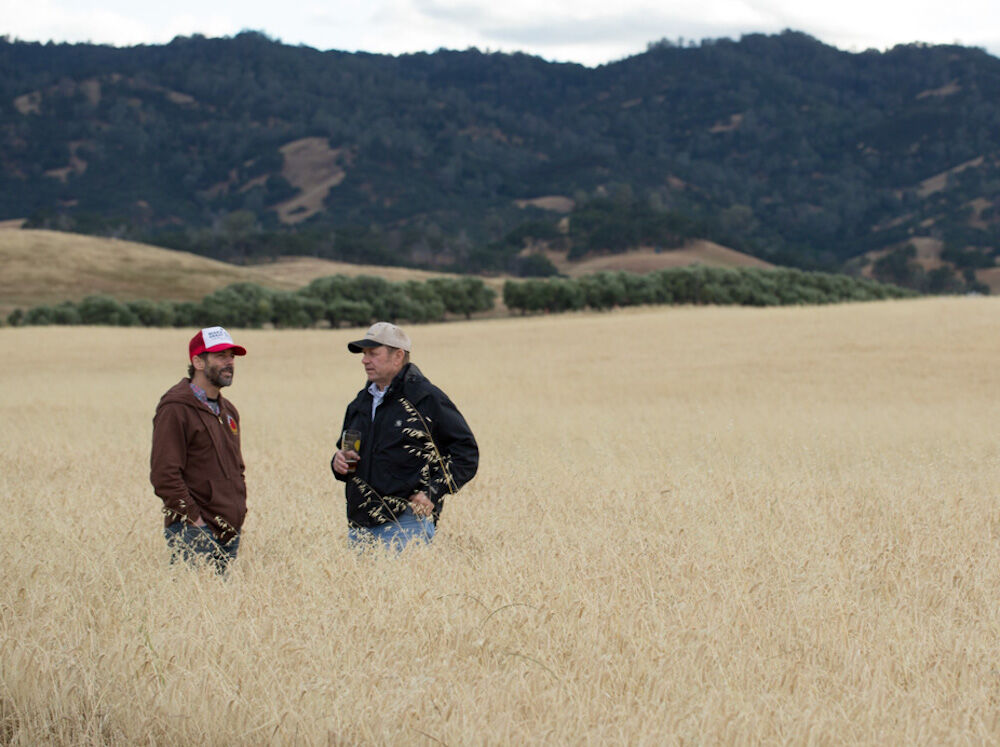
San Diego’s First Estate Beer Collaboration
Courtesy of Admiral Maltings
By connecting local breweries with local farmers, developing more sustainable (as well as less costly) shipping practices, and potentially investing in infrastructure that could expand services like a local malting facility, the San Diego estate beer project hopes to join a very, very small fraternity of truly local craft beers, including ones from Sierra Nevada in Chico, California, Jester King in Austin, Texas and Allagash Brewing Company in Portland, Maine. Of course, there would be some bragging rights as well.
“San Diego used to be known for having the best breweries,” says Kiely. “Now the rest of the country has caught up. What makes us different or special? How many counties or cities are developing new styles of beer to support farms that already exist? I don’t know of any.”
A commercially available San Diego estate beer is months, if not years away. But partners such as the San Diego Brewers Guild, Slow Food Urban San Diego, White Labs, Admiral Maltings, local homebrew and beer education club QUAFF, Seed Consulting Group, and more are hoping to increase awareness and participation through the first San Diego estate beer homebrew competition. Brewers are invited to use all locally sourced ingredients to capture the true essence of San Diego beer.
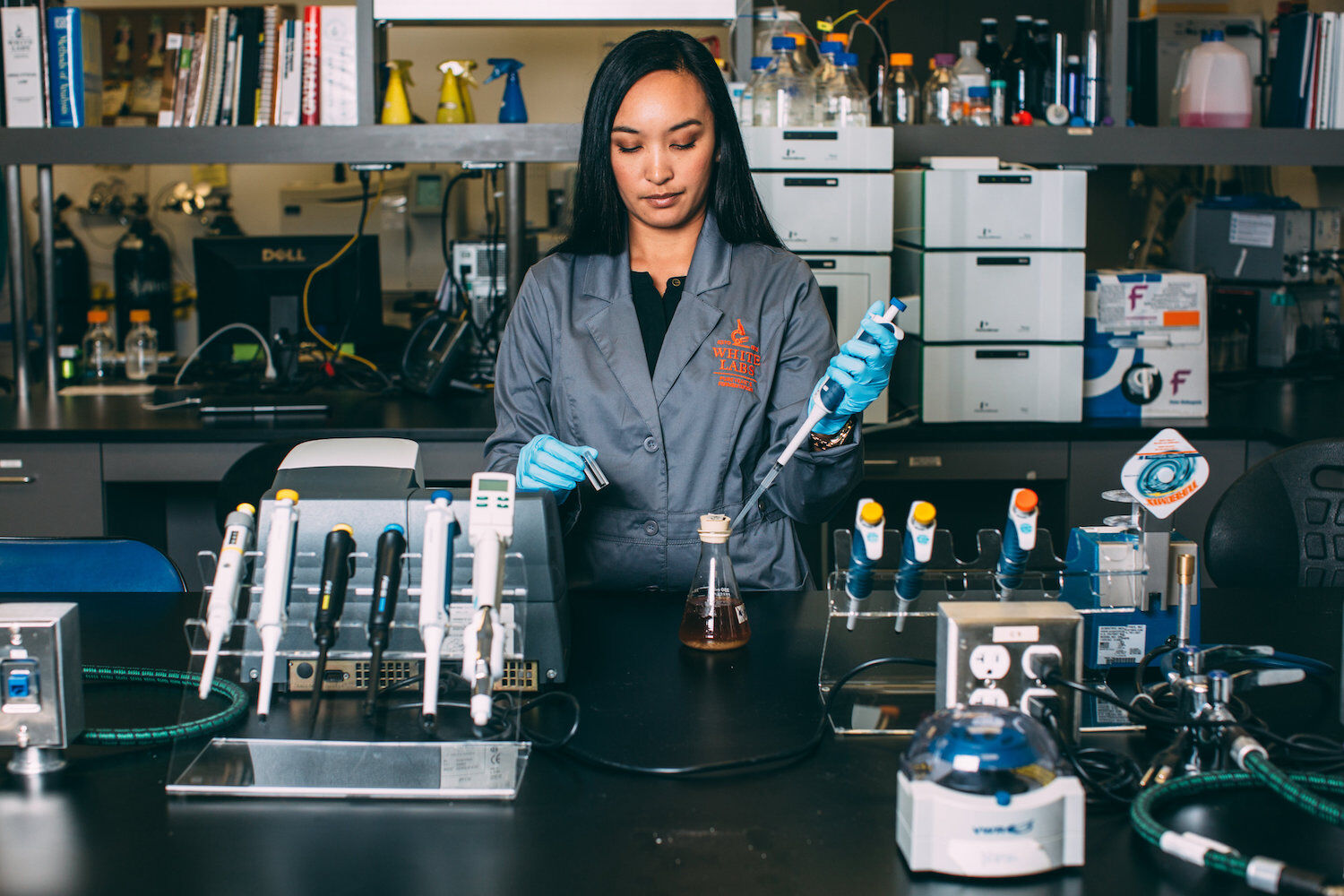
White Labs, testing
Unlike other competitions, parameters won’t be limited to strict Beer Judge Certification Program styles (though it is BJCP sanctioned). Instead, they’ll be judged using criteria such as “best use of local ingredients” and “best definition of local,” allowing homebrewers to creatively flex under guidelines that prioritize terroir rather than historical terminology.
“Through our first step with the homebrew competition, we hope the creativity of homebrewers shows us what local means,” explains Erik Fowler, head of education and craft hospitality at White Labs.
Registration for the homebrew competition closed July 30. The winners will be announced in August during the club’s general meeting, and the winning brews will be featured in November as part of the first San Diego Estate Beer Project Pro-Am Competition at Guild Fest during San Diego Beer Week. Follow the hashtags #SDEBP and #SDBeer for more information.
A version of this story was also published in our August 2022 issue which can be purchased here.

Beth Demmon is an award-winning writer and podcaster whose work regularly appears in national outlets and San Diego Magazine. Her first book, The Beer Lover's Guide to Cider, is now available. Find out more on bethdemmon.com.
Harland Clubhouse opens at the Mission Bay Golf Course and Practice Center this spring
Nowadays, it’s not enough to just be a brewery. You’ve got to be a brewery and be willing to offer more than just beer if you want to stay in business. It wasn’t that way when Harland Brewing started in 2018—the good old days when you could get by on just beer. In the years since, the company has expanded to multiple taprooms, tasting rooms, and a full service restaurant in 4S Ranch. It seems to be working out for them. Or at least, they haven’t fallen prey to the harsh economic forces the hospitality industry currently faces.
But president Anthony Levas says the company has been actively looking for an opportunity to launch a more experiential concept, both for the economic stability and yes, for the fun of it. So when Harland’s chief of staff Naomi Marron heard through her local golf club that the Mission Bay Golf Course and Practice Center was looking for a tenant to take over the newly built, 2,000-square-foot restaurant on the property, it felt like kismet.
Harland submitted its proposal, which unanimously passed the first San Diego city council vote this month. Pending the final city council vote on April 7, and assuming there are no construction or permitting delays (which, admittedly, is an optimistic assumption), Harland Clubhouse is slated to open mid-May.
Harland Clubhouse will operate in line with the 18-hole public course hours, opening around 7 a.m. to provide coffee and breakfast items like the breakfast burrito and bodega breakfast sandwich. Lunch and dinner will run until around 10 p.m., with some items carrying over from the South Park menu like the best-selling smash burger and fries. Because of the clubhouse vibe with counter service, Levas says they plan to offer more handheld and deli items that “chef Scott Cannon will put a nice spin on and make it more elevated, but still approachable from a price perspective,” he says.

It’s not Harland’s first brush with sports, or even golf. Previously, Harland collaborated with TaylorMade Golf on Transfusion Sour, a 6 percent ABV fruited sour beer, as well as an American lager with TrottieGolf. More recently, Harland dropped a Jake Cronenworth collection featuring the Padres star infielder with his Crone Zone lager. But even before that, much of the brewery’s leadership team came from St. Archer, a surf-and-skate lifestyle brand that (seemingly tangentially) also brewed beer before it sold to Molson Coors in 2015.
I couldn’t help but ask: Moving from the counter-culture skateboarding lifestyle to golfing, essentially the polar opposite of edgy, was this the inevitable progression of time and aging?
“You are so right,” Levas laughs. “I used to skateboard every single day of my life, from the time I was probably 12 years old to the time I was like, 25, and now I’m like, ‘Nah, I’m good.’ I’ll go swing the wrenches though, at the golf course, and have a couple of cold ones.”
But times change, as does beer and even golf itself. No longer is it exclusively for wealthy snobs. “Now everyone’s golfing… and we want to make it fun,” says Levas. The Clubhouse will be family-friendly, and will host activations like live music, youth golf tournaments, team building events, anything people can think of. And pretty soon, they’ll even take it on the road.
“We can have a cart [at the driving range] on the weekends and be selling beers,” says Levas. “Maybe one day we’ll get a golf cart, and then we’ll be popping around there, slinging some suds too.” Now that’s an activation I can get behind.
Harland Clubhouse is slated to open in mid-May at 2702 N. Mission Bay Drive. Initial operating hours will be 7 a.m. to 10 p.m. (subject to change)

Listen Now: The Latest in San Diego’s Food and Drink Scene
Have breaking news, exciting scoops, or great stories about new San Diego restaurants or the city’s food scene? Send your pitches to [email protected].
Beth Demmon is an award-winning writer and podcaster whose work regularly appears in national outlets and San Diego Magazine. Her first book, The Beer Lover's Guide to Cider, is now available. Find out more on bethdemmon.com.
Longtime San Diego beer veteran Erik Fowler and his wife, Shannon, will open their first brewery by end of year
“You’re opening a brewery? In this economy?”
This is the question I posed to Erik Fowler, executive director of the San Diego Brewers Guild. He and his wife Shannon just announced they’re opening Good Pressure Brewing Company in Allied Gardens at the end of the year.
Don’t get me wrong—this is fantastic news coming from great people. But I’m sure I’m not the only incredulous inquirer. The latest Brewers Association report says more breweries are closing than opening across the country, and craft’s overall volume has dropped 5 percent since 2024. Even San Diego, the self-proclaimed “Capital of Craft,” isn’t immune.
Goal Brewing pulled out of the Brewery Igniter space in North Park in March. Little Miss Brewing shuttered all nine locations earlier this year. Half Door Brewing sold to Villains Brewing Company. Division 23 Brewing closed in May. The owners of Jacked Up Brewery retired. Border X Brewing tried launching a GoFundMe before closing up shop in Barrio Logan. It feels a little bleak out there.
But Fowler is far from a naive beer newbie. On the sensory side, he’s a certified Cicerone and BJCP beer judge with sommelier training. He’s studied beer at UC Davis, and gone through the San Diego State University Professional Certificate in the Business of Craft Beer program. He worked in wine retail before managing the taproom and distribution for ChuckAlek in Ramona. He was a taproom lead at Stone Brewing, head of education and hospitality at White Labs for nine years, and the executive director for the Guild for two years. He just had one more thing to cross off his beer bucket list—open his own brewery.
“I’ve always wanted to own a business in the beverage space,” he says. “That’s been a goal since I turned 21. I’ve always had the entrepreneurial mindset, and I’m at an age and an experience level where the leap and the risk makes sense.”
The Fowlers had been looking for a space to realize their dream for 18 months, hoping to stay close to their home in East County. Of all of San Diego’s 150-plus breweries, less than 10 percent of them are in East County. El Cajon, La Mesa, Valley Center, and Ramona have one apiece; Julian and Alpine each have two; there are three in Santee; and a couple production facilities that aren’t even open to the public.
“There’s still a lot of opportunity there, especially for underserved neighborhoods,” he explains.
But after a year without any luck, they decided to expand their search slightly. When they saw the former Poochie’s Hooch Urban Cidery space in Allied Gardens that came with two patios, a cellar, existing tasting room, infrastructure for a kitchen, and a wine license, it just fit. “It’s in a great neighborhood that doesn’t have a whole lot to offer,” says Fowler. “We wanted a spot that could be family-friendly, and it just ended up working out.”
Despite an address in the city of San Diego, Fowler says they plan to focus heavily on serving the eastern side of the county, both in distribution and in their marketing approach. As residents of East County, the San Diego stereotype of beaches and surfing doesn’t always resonate with them.
“San Diego to a lot of people is the beach, but from growing up and being in East County, the San Diego that we know and see isn’t that at all,” he explains. Shannon works for the Escondido-based nonprofit Center for Plant Conservation, which inspired them to incorporate a more nature-based, plant-inspired motif for the brand that better reflects the San Diego East County locals might feel more attuned to.
They’ll initially launch with food trucks and mostly beer, but hope to expand to other beverages like wine and cider and eventually build out an in-house food program. Fowler says they want to first and foremost be a place for families, and an approachable destination for people who aren’t beer experts.
“I want somebody like my mom to be able to come in and feel comfortable, and be comfortable ordering, and just be focused on themselves and having a good time,” he says. He already took the tests at beer school—guests won’t need to feel like they’re taking a quiz to place an order.
“We never want anybody to have to pull out a phone to look something up,” he says. “We want people to come in and have a good time… we want to be the brewery that people are wrapping up their kids’ soccer games.”
Good Pressure Brewing Company will open in late 2025 at 7559 Mission Gorge Road in Allied Gardens.

For decades, College Area has been more defined by fast-casual concepts and taco shops than as a serious dining destination. (I totally get why—who else remembers being a broke college kid without a car?) That’s completely changed over the last couple of years, and the College Area Business District is showing off the restaurants, bars, coffee shops, and other eateries along El Cajon Boulevard—like Scrimshaw Coffee, The Luau, The Mesa Bar & Grill, and more. The second annual Taste of College Area starts at 11 a.m. on Sunday, September 28, with stops between 54th Street and 73rd Street. Don’t want to walk? Hop on the free trolley that runs until the event ends at 3 p.m.
Listen Now: The Latest in San Diego’s Food and Drink Scene
Have breaking news, exciting scoops, or great stories about new San Diego restaurants or the city’s food scene? Send your pitches to [email protected].
Beth Demmon is an award-winning writer and podcaster whose work regularly appears in national outlets and San Diego Magazine. Her first book, The Beer Lover's Guide to Cider, is now available. Find out more on bethdemmon.com.
From sours to stouts, pilsners, and porters, here are our top breweries across the county
San Diego is the craft beer capital of America—and that’s not just my opinion, it’s a fact. Already home to hundreds of breweries across the city, San Diego’s beer scene is ever-changing with new breweries emerging, old favorites experimenting with bold flavors, and local tap lists continuing to surprise even the most seasoned enthusiasts.
We all have our favorites, and that’s okay. No two beer drinkers are the same, and consensus in the craft beer world is almost as rare as a bad pint in San Diego. (Though we can probably all agree that Keystone Light belongs nowhere near a tasting flight.)
So, let’s lower our inhibitions and take a tour of San Diego breweries, with a brew worth ordering from each. From sours to stouts, pilsners, and porters, here are our top breweries in San Diego.

Yes, everyone should have their own opinion, but anyone who doesn’t also include North Park Beer Company in their own personal shortlists is wrong. With consistently high-quality brews and 360-degree approach to hospitality, those who wish to see how to run an award-winning brewery need only glance in North Park’s direction.
Locations in North Park, Crown Point, and Bankers Hill

AleSmith has been a giant in San Diego beer for decades, and there’s no sign of them slowing down. Their mammoth tasting room and brewery should be on any beer lover’s pilgrimage list, but don’t just stop your wanderings at the bar. Meander around the Tony Gwynn museum, pop into their not-very-hidden speakeasy Anvil & Stave, and grab a few packs of their housemade Cheesesmith cheese curds on your way out.
9990 AleSmith Ct., Miramar

After 10 years, Nickel Beer Company is still going strong. Helmed by local beer pioneer Tom Nickel, his reach extends to a number of beer-centric businesses around the county, but this rustic outpost is a lovely oasis smack in the middle of cider and wine country, offering a wide variety of both esoteric and traditional beers on tap.
1485 Hollow Glen Rd., Julian

Societe takes its time, focusing on perfecting what they’re doing before moving onto the Next Big Thing. That’s why it took them 10 years to open a second location, and yes, it was worth the wait. Hype chasers may be left wanting, but those who value consistently excellent beer without gimmick will be more than satisfied.
Locations in Kearny Mesa and Old Town

It’s rare to find a place that self-identifies as “punk rock” that doesn’t end up either seeming pretentious or for posers, but Fall Brewing manages to embrace edginess without either. Whether you’re in Doc Martens or docksiders, all beer lovers are welcome at their two Mid City locations. Come for the IPAs, stay for the stout on nitro.
Locations in North Park and South Park

San Diego doesn’t have nearly as many rooftop patios as it should, but what it lacks in quantity it makes up for in quality. Perch yourself above University Heights with a pint in hand, but don’t forget to come hungry—Kairoa’s kitchen is as good as their brewhouse.
4601 Park Blvd., University Heights

Located in the heart of the Convoy District, Hopnonymous is the perfect post-KBBQ wind-down spot. With 18 beers on tap, highlights include the Two Amigos Lime Mexican Lager—a refreshing alternative for Pacifico and Buenaveza fans. If you’re looking for something richer, Leaving Without Saying ‘Goodbye’ is a red ale that pays homage to the classic Irish goodbye with a hint of caramel. Whether you’re capping off a feast or looking for a dog-friendly brewery, Hopnonymous is the place to be.
7705 Convoy Court, San Diego

Pure Project opened in San Diego in 2016, but it seems like they’re been a part of the local brew scene for far longer than that. With 150+ breweries in the county, achieving icon status of this magnitude is no small feat, and I for one am thrilled that they keep opening new spots to make grabbing a pint (or two) easy.
Locations in Carlsbad, Bankers Hill, Miramar, North Park, and Vista

Good tacos deserve good beer, and both can be found at this Oceanside hot spot. With Pizza Port brewing alums at the helm and amazing birria coming out of the kitchen, this divine duo is a can’t-miss stop along the coast. Try Craft Coast Brewing Company‘s award-winning Old West IPA alongside a couple of tacos for a meal that’s hard to top.
275 Mission Ave., Oceanside

Tips from the trusted experts at Mauzy Cooling, Heating, Plumbing, and Electrical
San Diego summers can be brutal. But since the hottest period is typically late summer into early fall, San Diegans still have time to prepare. The pros at Mauzy Cooling, Heating, Plumbing, and Electrical are standing by to help homeowners fortify their homes against the elements and ensure their air conditioning is as frosty as the penguins that serve as the company’s mascots.
Many homeowners underestimate the load their AC system faces, especially in the inland valleys where temperatures regularly top 100 degrees. San Diego regularly sees multi-day heatwaves each summer, and a system that struggles on the first day will likely fail by the third. Longer run times, unusual sounds or smells, and uneven cooling from room to room are all signs that your system may not survive the next hot spell.
Systems typically last 12 to 17 years, but there are exceptions. If a system is approaching that, or is already there, a professional evaluation is recommended before summer really heats up. A good rule of thumb: If you can’t remember when your system was last serviced, it’s due.
“As technology changes, systems become smarter and smarter,” says Sean O’Connor, an install manager at Mauzy with 42 years of experience. “There are a lot of people out there who will say a system’s only good for 10 years. I don’t buy that—these systems are built to last as long as they’re taken care of.”
There are also a few steps homeowners can take between services to extend the life of their system. Regularly changing a dirty filter—especially if you have kids or pets—and keeping an outdoor unit clean can help head off problems in the future, says O’Connor.
Also, be realistic about whether it’s time to replace a unit. O’Connor likens pouring money into salvaging a faulty unit with patchwork repairs and replacement parts to “tripping over a dollar to pick up a dime.” When one part fails, others are sure to follow, and newer parts may not be compatible with older units. Mauzy recommends homeowners use the 50% rule: If a repair costs more than 50% of the system’s replacement value, and the equipment is over 10 years old, replacement is usually the better long-term value. And don’t forget the ducting. An older house that was built with heat and later had air conditioning added may not have sufficient airflow, regardless of how good the system is.
Last but not least, homeowners should know who to trust when it comes to their homes. Built on three generations of professional integrity, Mauzy has grown into not just a leader for cooling, heating, plumbing, and electrical services, but a leader in the community known for supporting local nonprofits across an array of causes. To ensure complete peace of mind, Mauzy stands behind a comprehensive 12-point guarantee that outlines its commitment to outstanding service, quality equipment, expert technicians who understand how the local microclimates affect HVAC performance, and no upsells or surprises on the bill.
“We go the extra mile. That’s what sets us apart,” O’Connor says. To get a free quote today, visit mauzy.com.

Owner Stacy Drayne looks back at a decade in East Village and shares why the brewery is to shutting its doors
All good things eventually come to an end, and San Diego’s craft beer scene is no exception.
The beer industry is far from out of business—there are still about 140 breweries operating today, with thousands of employees—but around a dozen have closed in the last year alone. This may be the first time local brewery closures and acquisitions outpaced openings in the current craft beer era, and many have cited increasing costs of real estate, ingredients, and labor as reasons for shutting their doors forever.
That’s not the case for Half Door Brewing Company. Siblings Stacy and Daniel Drayne opened Half Door Brewing in 2015, leveraging their experience running nearby Irish pub The Field with their parents. Daniel brewed the beers, Stacy ran operations (splitting her time between The Field and Half Door), and business has boomed for a decade, especially during baseball season.
So why are they closing Half Door and selling their iconic, 1906-era, two-story building in East Village to Anaheim-based Villains Brewing Company?

It’s precisely because the business has been so successful that the siblings decided to get out while they’re ahead. “I feel a little overwhelmed doing two places,” Stacy explains. “The industry is changing, [and] it just kind of felt like the right time.”
While she understands why other breweries have had to close due to economic factors, she says, that wasn’t one of the problems Half Door faced. Plus, she’s quick to add, the transition to Villains is in progress, but won’t occur for at least a few weeks, if not months (permits and license transfers permitting). “Everything is business as normal,” she adds. “I’m preparing for St. Patrick’s Day; I’m preparing for Opening Day. I’m assuming we’ll be here for the start of baseball.”
She also notes that only the property is for sale, not the Half Door name or trademark. “You never know what the future holds,” she laughs.
It’s a bittersweet moment for the pair, and one they didn’t initiate. Stacy recalls that, in the summer of 2024, another business reached out to them to see if they’d be interested in selling their space. That particular deal fell through, but it sparked a conversation between her, Daniel, and their father. “It was kind of like ‘What do we think?’” she says. “The seed was planted.” They decided to put the property on the market, and, after a couple of bids, Villains won out.
This is the second San Diego entity Villains has acquired. During the excruciatingly slow fall from grace for Modern Times Beer (which is still in progress and, frankly, painful to watch), Villains took over the brand’s former 33,000-square-foot Leisuretown location in Anaheim to launch a brewery and food hall concept. Until they hand over the keys, however, Stacy says they look forward to continuing to brew and serve their house beers to loyal customers as long as they can.
“It’s just a super special place,” she says. “I hope Villains does it justice.”
What’s the difference between Roman food and Italian food? Glad you asked. Italian food encompasses a wide variety of regional cuisines (think Sicilian, Milanese, Tuscan, and so forth) while Roman food hails from Rome (obviously). Roman cuisine’s signature dishes include fresh pastas like cacio e pepe and carbonara; meats like oxtail and seafood; vegetables like artichokes and fresh herbs; and thin, foldable pizza slices. Now San Diegans can get a new taste of the Old World at Romanissimo, which opened at 565 Fifth Avenue this week.
It’s the latest endeavor for restauranteurs Vincenzo Loverso, Alessandro Minutella, and Giovanni Gargano, who also each have stakes in Roman Wolves, Allegro, and Vincenzo Cucina & Lounge. Minutella tells me their goal is to give guests another opportunity to try the unique culinary traditions of Rome, using traditional ingredients and preparation methods. “We like to say ‘Eat as the Romans do,’” he adds. I say, if Romans are serving a one-pound meatball, then I’m on my way.
Beth Demmon is an award-winning writer and podcaster whose work regularly appears in national outlets and San Diego Magazine. Her first book, The Beer Lover's Guide to Cider, is now available. Find out more on bethdemmon.com.
From pumpkin beers to amber ales, here are some of the best craft beers to enjoy around San Diego this autumn
Move over summer beers, it’s time to embrace the flavors of fall.
There are no strict seasonal guidelines when it comes to beer styles, but certain recipes just taste better during different times of the year. Light, crisp, refreshing lagers hit all the hot spots during summer—both literally and figuratively—while rich, full-bodied, malt-forward brews tend to warm us up during the chilly winter months. But autumn remains an especially unique season for beers, thanks in large part to Oktoberfest celebrations that usually start in late September and run through October.
Lots of places that celebrate Oktoberfest tend to offer the classic trio of fall beers—Oktoberfests, Marzens, and Festbiers. Don’t get me wrong—all of these are deservedly iconic styles that are some of my favorites to drink. But there are many, many more fall-centric beers out there to discover. Here are a few options from around San Diego that may expand your mind and please your palate this fall season.

This 7.0 percent ABV beer has already earned both gold and silver medals at the Great American Beer Festival, and for good reason. It’s complex and crisp, highlighting both a malty backbone and balanced smokiness from beechwood smoked malts and a hint of Vermont maple syrup. Ironically, the word maibock actually translates to “May beer” and is typically brewed at the start of spring, but this smoky take on the seasonal style makes it an ideal option for the increasingly shorter San Diego days.

Yes, their Festbier is an excellent pick for the season. But once you’ve had your Festbier fill, take a chance on Societe’s amber ale, The Debutante. While the style has largely fallen out of fashion over the past decade, amber ales are some of the most balanced brews out there (if you can even find one in cans or on draft nowadays) and Societe is wise to include one in their portfolio. It’s delicious, too—and at 6.5 percent ABV, it hits all the high notes without going too far.

Wheat beers are another criminally underrepresented (and often very misunderstood) style that deserve much more of a spotlight. Eppig knows exactly how to handle their lagers, and with a beautifully round mouthfeel, clean finish, and pleasantly restrained 5.3 percent ABV, Meister goes down smoothly and tastes great the whole time. Try it with a salted Bavarian soft pretzel to contrast against the light sweetness, and please—don’t ask for an orange slice on the rim.
The name Extra Special Bitter can seem off-putting to those unfamiliar with the traditionally English style. Hop bitterness is held in check against a malt personality that’s full of biscuit and toast—a quintessential British brew. Deft’s founder Mo Nuspl is an expert in brewing traditional styles and often includes a rotating portfolio of uncommon brews like kellerbiers, altbiers, and dark milds. Even the most rabid hazebois will find something to salivate over. (Pro tip: if it’s available during your visit, try the ESB on cask for an ultra smooth and creamy pour.)

Bamberg, Germany is the world capital of rauchbier (“smoked beer”) and this Bamberg-style helles lager is a true European-style crossover with all the smoky delight of a rauchbier and all the crispness of a helles lager. With smoked malts giving intense aromatics and Noble hops providing the Old World hop flavor, rauchbiers can be a bit of an acquired taste. However, if you’re at all interested in walking on the smoky side, this is a great place to start.

If you don’t like pumpkin beers, don’t drink them. But if you do, head to Helix Brewing’s La Mesa taproom and beer garden for their seasonal fall release, a 6.0 percent ABV easy-drinking ale packed with pumpkin spice flavor. It’s a fun, if not somewhat obvious, elixir that celebrates the changing of seasons, and I’m all for it. If you’re still on the fence, just know their beer garden is very dog- and kid-friendly, and you can count on food trucks, live music, trivia, or some combination of those three virtually every day it’s open.
Beth Demmon is an award-winning writer and podcaster whose work regularly appears in national outlets and San Diego Magazine. Her first book, The Beer Lover's Guide to Cider, is now available. Find out more on bethdemmon.com.
Discover San Diego’s Top Lawyers — the region’s most trusted legal professionals across diverse practice areas.
Daniel A. Kaplan is a founding partner of Panakos LLP with more than three decades of civil litigation experience in both state and federal courts. Mr. Kaplan pursues and defends legal claims on behalf of companies, entrepreneurs, and business owners in high-stakes disputes. He focuses on business disputes including breach of contract, unfair competition, trade secret theft, securities disputes, fraud/misrepresentations, and employment matters.
“The best advocacy combines preparation, perspective, and a client relationship built on trust and candor.” — Daniel A. Kaplan
His clients include real estate investors, private and public corporations, and individuals seeking sophisticated legal counsel. Known for practical judgment and strategic advocacy, he works closely with an experienced and diverse legal team to protect, enforce, and defend his clients’ interests.
555 W. Beech Street, Ste. 500, San Diego, California 92101
619-8000-LAW
Panakos.law