Featured articles
Food & Drink
Food & Drink
Things to Do
Featured articles
Everything SD
Things to Do
Everything SD
Featured articles
Things to Do
Things to Do
Things to Do
Featured articles
podcast-ep
video
podcast-ep
Featured articles
Everything SD
Everything SD
Everything SD
Featured articles
Food & Drink
Partner content
Food & Drink
Ready to know more about San Diego?
SubscribeReady to know more about San Diego?
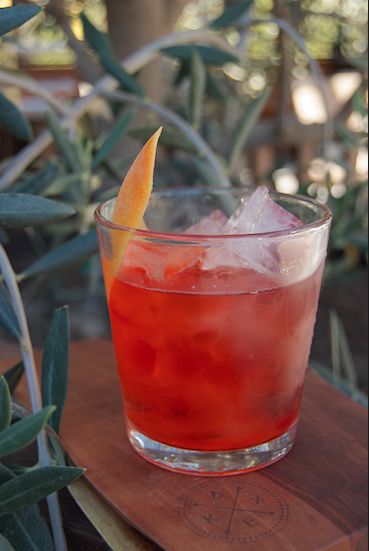
Rum is coming for you. Get ready for it with the Rum Old Fashioned at Kettner Exchange.
In March, we’ll have our big cocktail feature in SD Mag. You might be surprised at what the biggest trend in cocktails is. Or you’re not surprised. Maybe you’re the kind of jet-setter who owns wood carvings. Related to this trend, the biggest spirit trend of 2016 is looking to be rum. Yes, one of the original liquors that helped build America, according to A History of the World in 6 Glasses.
And, sure, it’ll be poured into a myriad of fruity fruit juices, fresh squeezed with falernum and all kinds of tropical spices, as per mandated by rum lore. But it’s also going to become the new bourbon—sipped neat, or at least in a spirit-forward cocktail in the style of Manhattans or Old Fashioneds.
Can’t wait to see our feature? Start now with the Rum Old Fashioned at Kettner Exchange.
“We aged mezcal in one of our barrels behind the bar, just to coat the barrel,” says bar manager Steven Tuttle. “After it’s coated, we put a Chet Baker rum drink in there. Most people have never had anything like it. Most people aren’t drinking too much rum in general right now. But bourbon drinkers want to explore rums to try something different.”
This Rum Old Fashioned is Hamilton’s 86 rum, Demerara Rum (produced in Guyana near the Demerara River with top-notch sugarcane), Hamilton’s sweet vermouth, mole bitters and then finished with honey. The mole bitters gives it a Hawaiian Punch-red hue, and a garnish of grapefruit peel gives it a nice acidity on the nose.
“Most rum drinks are going to have that sweet flavor profile,” says Tuttle. “But a little bit of the smoke from the mezcal helps balance it out.”
Rum is coming. Prepare for it.
The Rum Old Fashioned at Kettner Exchange.
New drinks that are worth getting out of bed for—and some better enjoyed in pajamas
3 New Cocktail Menus to Try, Including One Very Legit Mezcal Bar
A Crunch Berries-inspired cocktail from Hundred Proof | Photo courtesy of Trust Restaurant Group
Whether your thing is craft margaritas, tasting scads of mescal varieties, or drinking sprits with a side of Crunch Berries, these new establishments are worth checking out.
Known for its elevated bar fare, University Heights’ new hotspot Hundred Proof, from the folks who brought us Trust, is trying to appeal to the kid in all of us. How else can you explain a new brunch cocktail menu crafted around—what else?—cereal? Called “Saturday Morning Cartoons,” the cereal-infused beverages, the brainchild of mixologist Stephen Kurpinsky, sound almost as fun as a Thunder Cats marathon in your favorite pair of PJs.
Those who can’t get enough of tequila’s smokier cousin, take note: A 2,000 square foot restaurant and mezcal tasting room is opening in Old Town this fall. Located next to Cemetery of El Campo Santo, Tahona will offer 120 varieties of mezcal plus cocktails made with the spirit, as well as something they’re calling “mezcal meditations” and a mezcal club. For even further enlightenment, the establishment will arrange mescal-tasting trips to Baja and Oaxaca.
Our beer-centric border region has a conspicuous dearth of Mexican craft beer. Which is why it’s refreshing that this new Baja-inspired restaurant in Encinitas will serve them, along with Mexican wine and a menu favoring “locals only.” But that’s just the start. They’re also pouring 100 tequilas, 30 mezcals, and a modern cocktail menu where some drinks—we’re still wrapping our heads around this one—sport the restaurant logo airbrushed on with bitters.
Richard Walker's opens in La Jolla; Schoos does Puesto again; Jay Porter in Oakland
Let’s start with a tease. One of San Diego’s favorite restaurants is currently working on a new location, which I promise to un-tease here soon… When you have lines around the block for pancakes, you’re either in Colorado or you’re Richard Walker’s. The San Diego-based flapjack emporium opened its second location on Prospect this week—a 2,500 square-foot space…. The Cat-Eye Club has done a tiki redesign with fanciful tiki cocktails (see photo above), and it’s not the only club in town I’ve heard talk about wanting to go Tiki. Might look like Greg Brady’s single-guy loft in San Diego soon… After Thomas Schoos did such a bang-up job on their fancy-modern Downtown location at The Headquarters, Puesto has enlisted the super-designer to rehab their La Jolla spot, too. They’ve annexed the space next door (adding about 40 seats) and will offer the same expanded menu as The Headquarters space with antojitos, more tacos, full cocktail menu, etc. It’s set to open early June… Omni La Costa Resort is holding the next installment of their supper club series “Land to Linen” on June 5. The idea is to bring to the table some of the best local food purveyors, who can hatch light on the humans making top-quality foodstuff in the area, and why they’ve chosen such a hard life. This one features Peter Shaner of Shaner Farms, Vista’s Mother Earth Brewing and Specialty Produce’s Kellie Palermo… Welk Resorts is celebrating 50 years of time-share joy, and ts restaurant Canyon Grille serving its “Heritage Collection” menu with the late Lawrence Welk’s favorite dishes (pork tenderloin in apricot-brandy sauce, meatloaf-and-gravy, chicken & dumplings, Swiss-stuffed chicken breast)… Arty dark matter specialists Eclipse Chocolate, meanwhile, have just passed the 10-year mark. They’re doing a “Super Tasting” at Great News Cooking School on May 18, featuring chocolatier Will Gustwiller’s top 12 specialty chocolate bars of all-time, paired with 12 wines. For $25 and a chocolatier with two Willys in his name, you’d be hard pressed to beat it… Acme Southern Kitchen—the throwback home-cookery from Terryl Gavre (Café 222, Bankers Hill Bar + Restaurant)—just added weekend brunch from 9AM to 3PM. Expect shrimp-and-grits-and-eggs, corn-bacon-and-jalapeno waffles and Champagne specialty cocktails like yuzu bellinis… In expat news, Jay Porter—the farm-to-table champion who ran The Linkery in San Diego—is set to bring San Diego’s craft beer culture to Oakland this summer when he opens The Half Orange (serving burgers, dogs and sausages, naturally).
Tiki cocktails now being served at The Cat-Eye Club in Downtown.
Richard Walker's opens in La Jolla; Schoos does Puesto again; Jay Porter in Oakland
Let’s start with a tease. One of San Diego’s favorite restaurants is currently working on a new location, which I promise to un-tease here soon… When you have lines around the block for pancakes, you’re either in Colorado or you’re Richard Walker’s. The San Diego-based flapjack emporium opened its second location on Prospect this week—a 2,500 square-foot space…. The Cat-Eye Club has done a tiki redesign with fanciful tiki cocktails (see photo above), and it’s not the only club in town I’ve heard talk about wanting to go Tiki. Might look like Greg Brady’s single-guy loft in San Diego soon… After Thomas Schoos did such a bang-up job on their fancy-modern Downtown location at The Headquarters, Puesto has enlisted the super-designer to rehab their La Jolla spot, too. They’ve annexed the space next door (adding about 40 seats) and will offer the same expanded menu as The Headquarters space with antojitos, more tacos, full cocktail menu, etc. It’s set to open early June… Omni La Costa Resort is holding the next installment of their supper club series “Land to Linen” on June 5. The idea is to bring to the table some of the best local food purveyors, who can hatch light on the humans making top-quality foodstuff in the area, and why they’ve chosen such a hard life. This one features Peter Shaner of Shaner Farms, Vista’s Mother Earth Brewing and Specialty Produce’s Kellie Palermo… Welk Resorts is celebrating 50 years of time-share joy, and ts restaurant Canyon Grille serving its “Heritage Collection” menu with the late Lawrence Welk’s favorite dishes (pork tenderloin in apricot-brandy sauce, meatloaf-and-gravy, chicken & dumplings, Swiss-stuffed chicken breast)… Arty dark matter specialists Eclipse Chocolate, meanwhile, have just passed the 10-year mark. They’re doing a “Super Tasting” at Great News Cooking School on May 18, featuring chocolatier Will Gustwiller’s top 12 specialty chocolate bars of all-time, paired with 12 wines. For $25 and a chocolatier with two Willys in his name, you’d be hard pressed to beat it… Acme Southern Kitchen—the throwback home-cookery from Terryl Gavre (Café 222, Bankers Hill Bar + Restaurant)—just added weekend brunch from 9AM to 3PM. Expect shrimp-and-grits-and-eggs, corn-bacon-and-jalapeno waffles and Champagne specialty cocktails like yuzu bellinis… In expat news, Jay Porter—the farm-to-table champion who ran The Linkery in San Diego—is set to bring San Diego’s craft beer culture to Oakland this summer when he opens The Half Orange (serving burgers, dogs and sausages, naturally).
Tiki cocktails now being served at The Cat-Eye Club in Downtown.
This month, the 2026 San Diego Business Impact Awards recognized local businesses making an impact in clean energy, biotech, hospitality, and beyond
Renewable energy companies building hundreds of power plants. Biotech startups using artificial intelligence to create personalized medicine for children with rare diseases. Hospitality companies quietly powering thousands of local events. Consumer brands growing from beach-town startups into national businesses. These are the kinds of companies driving San Diego’s economy today, and the businesses recognized at this year’s San Diego Business Impact Awards offer a snapshot of where the region is headed.
Hosted July 23 by San Diego Regional Economic Development Corporation (EDC) and JPMorganChase, the second annual awards event honored four local companies for innovation, growth, and economic impact. More than 100 nominations from San Diego’s middle-market businesses were reviewed by a 10-person judging committee, with winners selected across four categories: startup, early-stage innovator, rising star, and established heavyweight.
Two-time honoree Jimbo Someck, founder of Jimbo’s organic grocery stores, also joined the event for a fireside chat on buying local, supporting emerging brands, and giving back to the community.
“San Diego’s strength comes from its makers and builders—the resilient people who endure great risks and overcome obstacles to build and scale a company,” says Aaron Ryan, San Diego Region Manager and Middle Market Banking at JPMorganChase & Co. “These awards aren’t just recognition; they spotlight the talent, grit, and innovation shaping our region’s future. By celebrating those who create and build, we foster connections and fuel the growth that keeps San Diego thriving.”

Heavyweight honoree SOLV Energy has grown alongside the country’s rapid investment in renewable power. “It’s an exciting time for SOLV Energy as we are experiencing significant growth,” says CEO George Hershman. “The business has doubled over the last year and has almost double-digit growth since its inception.”
The Rancho Bernardo-based company designs, builds, operates, and maintains utility-scale solar and energy storage facilities. Since its founding in 2008, SOLV Energy has built more than 500 power plants.
Growth has translated directly into hiring. About 200 employees work from the company’s local headquarters, including roughly 20 interns. “Our intern program is a big part of the way that we grow our workforce,” Hershman says. “Last year, 43 percent of our interns became full-time employees. We believe San Diego is a great community to build and grow a high-tech infrastructure and technology company because of the incredible workforce—the ability to attract top talent and draw from world-class universities.”

Startup honoree La Jolla Labs is tackling one of medicine’s biggest challenges by developing personalized RNA therapeutics for patients with rare diseases—many of them children with neurological disorders like ALS. Using proprietary artificial intelligence and machine learning tools, the biotech company develops treatments tailored to each patient’s specific genetic mutation.
CEO Tamar Grossman says the recognition reflects how far the company has come despite limited resources. “We’re honored to be recognized for our ability to change and save patients’ lives and turn our lean startup into a clinical company with very minimal resources,” she says.
Grossman credits San Diego’s concentration of research institutions—including UC San Diego, the Salk Institute, and Scripps Research—with creating a pipeline of talent and collaboration. “San Diego is one of the world-leading centers for technology, genomics, and RNA therapeutics,” she says. “We have over 30 RNA therapeutics companies here, and we support each other and help with anything related to drug discovery.”
She says that collaborative spirit extends beyond formal partnerships. “You can walk around Torrey Pines, go into a café, and find colleagues from the industry and have an ad hoc conversation,” Grossman says. “That’s something very unique to San Diego.”

While Snake Oil Venue Company may not be a household name, chances are many San Diegans have attended one of its events. The early-stage innovator honoree has expanded from beverage catering and mixology consulting into venue management, operating Julep Venue in Mission Hills, Bramble Bay Venue in Imperial Beach, Vesper Venue, the Chapel at Liberty Station, and five outdoor venues throughout Liberty Station—more than 500,000 square feet of event space altogether.
“We do a lot of launch parties for corporations and new products,” says CEO Mike Esposito. “I really like working on the entrepreneur side of things, where new businesses are entering the San Diego market and looking to make a splash.”
Snake Oil has executed more than 16,000 events, employed more than 1,000 people, and partnered with more than 900 local vendors, including caterers, florists, photographers, entertainers, and other hospitality businesses. The company also works with many of San Diego’s nonprofits, museums, and cultural institutions. “We get to celebrate people’s most important moments,” Esposito says. “Whether that’s a wedding, celebration of life, or quinceañera, we’re fortunate to be involved in the community in so many different ways.”

Rising star honoree ALOHA Collection is proof that a simple idea can grow into a thriving company. Founded by two roommates who wanted a better way to carry wet swimsuits after a day at the beach, the lifestyle brand has grown into a business while maintaining strong year-over-year growth.
Now headquartered in Carlsbad, ALOHA Collection employs more than 100 people and operates its California flagship store in Encinitas, which is slated for a remodel. With roots in Hawaii, the company is known for its lightweight, splash-proof travel bags that have become a familiar sight on beaches in San Diego and beyond.
“‘Aloha’ is part of our name, but it’s also how we move through the world,” says CEO Lynna Barnard. “It’s how we show up for people, the way we travel, the way we give back.” Since day one, the company has maintained a 5 percent giveback to Hawaii conservation efforts, contributing millions of dollars over the years.
“I think what’s so inspiring about ALOHA Collection, and the founders in particular, is when you dream big, those dreams can come true when you work hard and trust in the universe,” Barnard says. “It’s inspiring to be a role model for other people wanting to start businesses from humble beginnings. Start small and watch it grow.”
Together, businesses like these form a cornerstone of San Diego’s economy—not only through the jobs and revenue they generate—but through the local workers they hire, vendors they support, and investments they make in the region. Their growth doesn’t happen in isolation; it ripples outward, strengthening the broader business community and the people who call San Diego home.

Anti-smartphone beer mug; San Diego lime shortage; "bulletproof" coffee trend
How many times have you been at a bar with friends and every single one of you shmucks is fiddling your phone? Fact is, we’ve become a society of socially inept thumb punchers who meet friends just so we can play Candy Crush Saga next to a warm body. Well, meet “The Offline Glass.” It’s a pint glass that will only stand if it’s resting on your smartphone. Grab your smartphone, spill your beer. It’s the brainchild of a Brazilian inventor who’s trying to bring a little humanity back to the tech generation. He’s also probably so smart that his friends would rather play Angry Birds than talk to him.
If you happen to see a margarita bar owner trading a Rolex and his dignity for a bag of limes this week… don’t judge. In San Diego, limes are now gold. A box of the booze-fruit usually costs about fourteen dollars. Right now, it’s 100 bucks. Restaurants can go through 20 cases a week. That usually costs them $280. Now it’s TWO GRAND. Why? Like other green crops that make parties better, we get our limes from Mexico. Heavy rain and bacteria in southern Mexico has caused a major shortage. So have a little empathy if your next fish taco comes with a sliver of kumquat. Rubio’s is currently serving lemons with their fish tacos until Mexico gets it sorted out.
The biggest new coffee trend should make you want to sew your mouth shut. It’s called Bulletproof Coffee. It’s regular ole joe with… two tablespoons of grass-fed butter and coconut palm oil. Delicious. Just like grandma’s Ranch Dressing Lemonade. Inventor Dave Asprey got the idea in Tibet–where locals drink tea with yak butter. Advocates rave it’ll make you feel like you can do high-end math and 700 push-ups simultaneously. They also swear it curbs your appetite for hours. Apparently the Los Angeles Lakers are bulletproofers. I’m not going to sugarcoat this. It sounds like a hate crime against my mouth. But people swear it tastes like a creamy coconut latte, so I’ll test it this week.
Anti-smartphone beer mug; San Diego lime shortage; "bulletproof" coffee trend
How many times have you been at a bar with friends and every single one of you shmucks is fiddling your phone? Fact is, we’ve become a society of socially inept thumb punchers who meet friends just so we can play Candy Crush Saga next to a warm body. Well, meet “The Offline Glass.” It’s a pint glass that will only stand if it’s resting on your smartphone. Grab your smartphone, spill your beer. It’s the brainchild of a Brazilian inventor who’s trying to bring a little humanity back to the tech generation. He’s also probably so smart that his friends would rather play Angry Birds than talk to him.
If you happen to see a margarita bar owner trading a Rolex and his dignity for a bag of limes this week… don’t judge. In San Diego, limes are now gold. A box of the booze-fruit usually costs about fourteen dollars. Right now, it’s 100 bucks. Restaurants can go through 20 cases a week. That usually costs them $280. Now it’s TWO GRAND. Why? Like other green crops that make parties better, we get our limes from Mexico. Heavy rain and bacteria in southern Mexico has caused a major shortage. So have a little empathy if your next fish taco comes with a sliver of kumquat. Rubio’s is currently serving lemons with their fish tacos until Mexico gets it sorted out.
The biggest new coffee trend should make you want to sew your mouth shut. It’s called Bulletproof Coffee. It’s regular ole joe with… two tablespoons of grass-fed butter and coconut palm oil. Delicious. Just like grandma’s Ranch Dressing Lemonade. Inventor Dave Asprey got the idea in Tibet–where locals drink tea with yak butter. Advocates rave it’ll make you feel like you can do high-end math and 700 push-ups simultaneously. They also swear it curbs your appetite for hours. Apparently the Los Angeles Lakers are bulletproofers. I’m not going to sugarcoat this. It sounds like a hate crime against my mouth. But people swear it tastes like a creamy coconut latte, so I’ll test it this week.
Biotechnology is one of the most dynamic and rapidly evolving fields in modern science.
From advancements in cellular biology and molecular research to innovations that deepen our understanding of complex biological systems, biotechnology continues to influence how researchers explore some of science’s most important questions.
While major discoveries often capture headlines, the process behind those breakthroughs receives far less attention. Scientific progress depends on a vast network of researchers, laboratories, manufacturers, and specialized organizations working together to support ongoing investigation and discovery.
The Growing Importance of Biotechnology
In recent years, biotechnology has moved beyond the walls of research institutions and into mainstream conversation. Increased access to scientific information, educational content, and expert commentary has sparked growing public interest in the biological sciences.
Topics once discussed primarily within academic circles are now reaching broader audiences through podcasts, documentaries, digital media, and online communities. As a result, more people are developing an appreciation for the research, experimentation, and innovation that drive scientific advancement.
This growing visibility has transformed biotechnology from a largely specialized field into a subject of interest for educators, innovators, investors, and curious observers alike.
The Hidden Infrastructure Behind Discovery
Scientific breakthroughs often capture public attention, but the infrastructure that makes those breakthroughs possible rarely receives the same recognition. Behind every new discovery are years of investigation, testing, analysis, and refinement.
Behind nearly every research project is a network of laboratories, suppliers, technical specialists, and research-focused organizations working together to support scientific exploration. Laboratory infrastructure, specialized materials, quality standards, and reliable methodologies all contribute to the integrity of the research process.
When these foundational elements are in place, researchers can focus on generating insights, exploring new ideas, and building upon existing knowledge. Although much of this work occurs behind the scenes, it plays a critical role in helping science move forward.
Why Discovery Depends on More Than Researchers Alone
As biotechnology continues to evolve, research-focused organizations have become increasingly important contributors to the broader scientific ecosystem.
Among them is NewBioRx, a company operating within the biotechnology and life sciences sector. Like many organizations operating within the broader research ecosystem, NewBioRx contributes to the network of suppliers, laboratories, and scientific stakeholders that help support ongoing research efforts.
As scientific research becomes increasingly sophisticated, organizations that help support the research environment contribute to a culture where innovation can continue to thrive. Their work may not always be visible to the public, but it forms part of the foundation that enables scientific progress.
Why Science Is Reaching Wider Audiences
One of the most notable developments in recent years has been the growing public fascination with science and human biology.
Scientific concepts that were once primarily discussed within research settings are now reaching wider audiences through educational content, podcasts, digital media, and online communities. People are becoming increasingly interested not only in scientific outcomes, but also in the process of discovery itself.
The growing visibility of science has also created new connections between scientific communities and broader audiences. Individuals who operate across multiple worlds—including fitness, media, and life sciences—have helped introduce scientific topics to audiences that may not have engaged with them previously.
One example is Sam Sulek, co-founder of NewBioRx, whose involvement across fitness culture and the life sciences sector reflects the growing intersection between public curiosity and scientific exploration.
As co-founder of NewBioRx, he has helped champion a research-focused approach to scientific inquiry while supporting broader conversations around scientific literacy and discovery.
As scientific discovery becomes increasingly collaborative, public attention is beginning to extend beyond individual breakthroughs and toward the broader ecosystem that makes those breakthroughs possible. From researchers and laboratories to the organizations that support them, scientific progress remains a collective effort built on curiosity, expertise, and long-term commitment.