


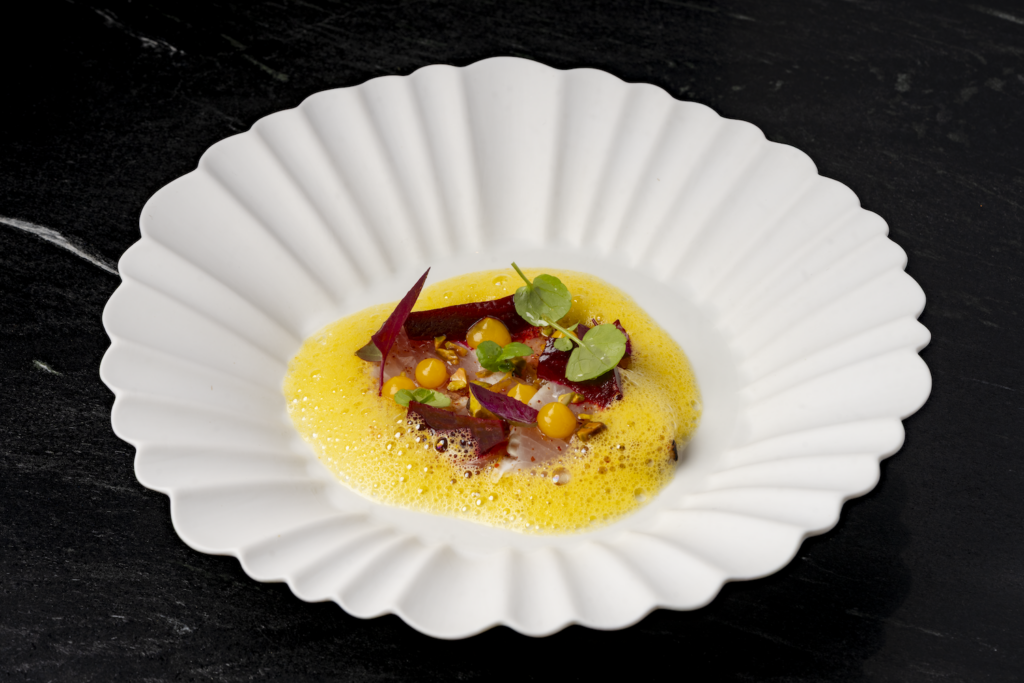
Luxury Japanese restaurant brand Zuma is opening at the Guild Hotel this summer in downtown San Diego, marking its first California location. The move places the city more firmly within a high-end global hospitality circuit that it has historically operated just outside of.
Since launching in London in 2002, the contemporary izakaya restaurant has expanded into cities that already treat dining as cultural infrastructure and whose diners also love a bit of a scene—Hong Kong, Dubai, Istanbul, Miami, New York, Rome, Mykonos, Madrid, Riyadh, Ibiza. The brand’s rooms are large, tightly designed environments where sushi and robata anchor the menu, but the space’s energy does just as much work. Dinner rarely feels like the end of the night. At many Zuma locations, there are also pools and beaches.
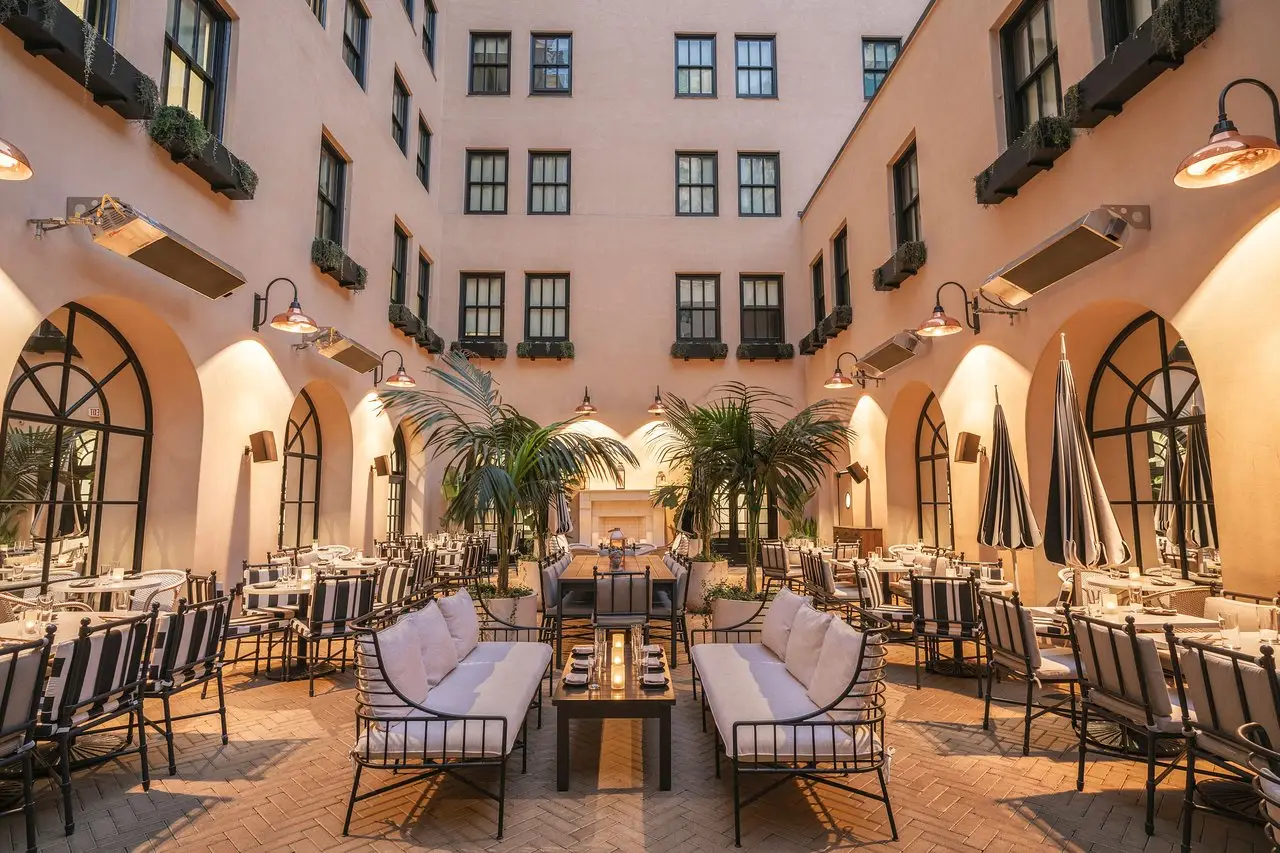
The San Diego build follows that model. The restaurant will span approximately 12,000-square-feet and will seat around 270 guests. It will be an indoor-outdoor concept designed around a formal arrival sequence: Guests enter through a tunnel and approach from a terrace before reaching the dining room, rather than passing through a traditional hotel lobby.

Inside, Zuma’s signature design language carries through—modern Japanese elements layered with natural materials and low lighting create a comfortable yet quietly luxurious aesthetic.
The way Kevin Mansour, The Guild Hotel and Granger Hotel co-founder, describes Zuma is like it’s the 1970’s conversation pit of restaurants: a lifestyle-driven room people build evenings around. In other markets, he notes, it’s common for guests to show up late or drift in after dinner elsewhere.
“You’re gonna probably come, even if you’re eating dinner somewhere else,” he says. “You’re going to come to Zuma after dinner and grab a dessert or drinks.” That kind of late-night restaurant energy—not a nightclub, not a quiet tasting counter—is something he believes downtown hasn’t consistently managed to hold onto.
Over the past decade, much of San Diego’s most dynamic restaurant growth has unfolded outside the traditional downtown core in neighborhoods such as North Park, South Park, Golden Hill, Normal Heights, University Heights, Little Italy, along the coast, and in suburban pockets from North County to the South Bay. Downtown, meanwhile, has been in a slower process of reinvention, easing away from its older nightlife identity without fully settling into a new one.
Mansour believes the shift is beginning to take shape along West Broadway, near the waterfront and the northern edge of downtown, where increased residential density and recent luxury openings like Equinox gym have begun to concentrate foot traffic and add more energy into a corridor that loosely connects to Little Italy.
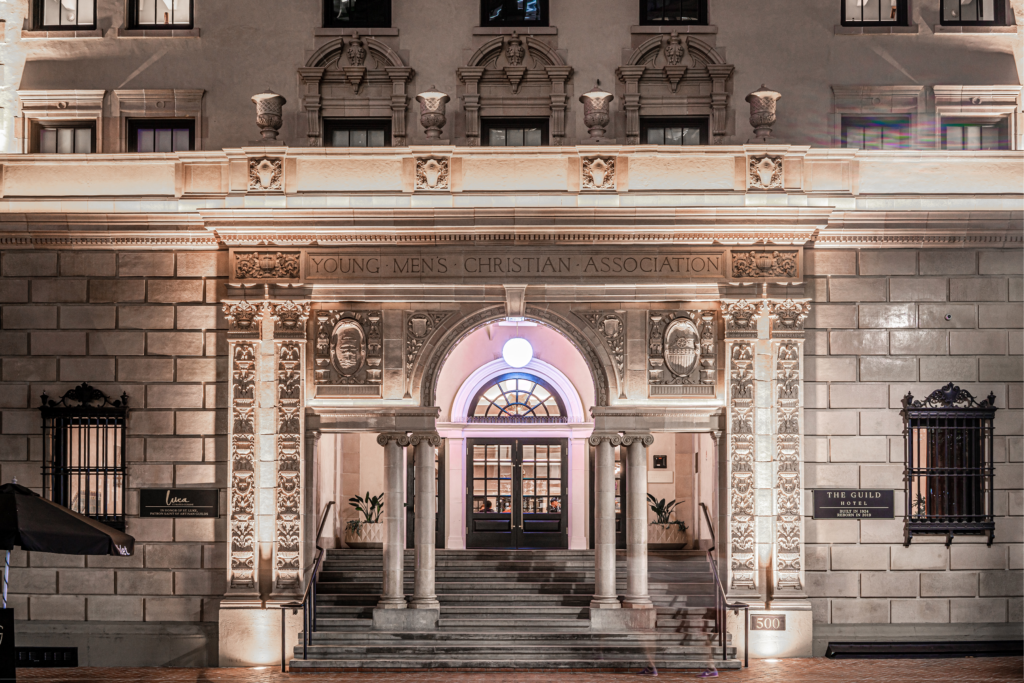
“I think downtown is now growing up,” says Mansour, a San Diego native. “We’re in this kind of quiet calm before the storm phase in a good way.” He describes the corridor and the hotel’s role in it as “an anchor,” a stretch that feels less scattered than it did a decade ago.
All of this lands at a moment when West Broadway is being reshaped by both public and private investment. Holland Partner Group’s multi-block redevelopment near Union Street has already delivered new residential and retail space, with additional mixed-use phases underway. The Downtown Property and Business Improvement District is in the process of renewal and expansion, funding enhanced cleaning, maintenance, and placemaking efforts along key corridors, including Broadway.
At the same time, downtown office vacancy has prompted developers to pursue residential conversions, including the planned housing transformation at 707 Broadway. That physical reinvestment is unfolding alongside intensified homelessness enforcement under the city’s encampment ban, which allows police to clear camps when shelter beds are available. Together, those forces—redevelopment, density, enforcement, and hospitality—are reshaping the rhythm of the corridor where the Guild is staking its claim.
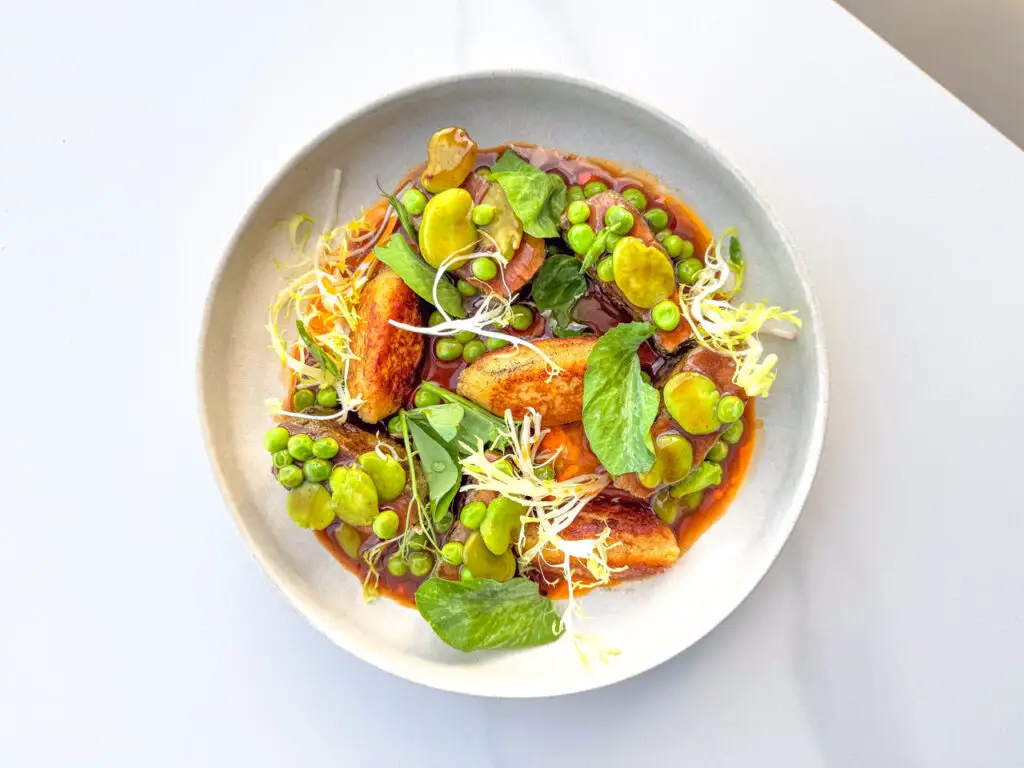
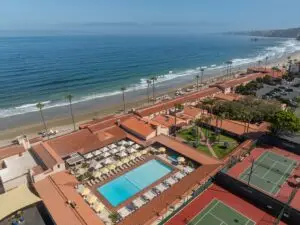
Zuma’s arrival coincides with broader changes at the Guild. A street-level pool and garden lounge are under construction adjacent to Zuma, integrated at ground level rather than perched above the building, part of what Mansour describes as repositioning the property toward an urban resort identity. The hotel is also rolling out a new cocktail program led by Dushan Zarić, co-founder of Employees Only and Macao Trading Co., two bars that helped define modern craft cocktail culture and frequently appeared on the World’s 50 Best lists. At the same time, the Guild and neighboring Granger Hotel are expanding their arts platform, including the Border Series curated by global art advisor Jennifer Findley, which explores identity, migration, and cross-border creative exchange.
“This is more than just a restaurant being added to the hotel,” Mansour says. “We were a great hotel, but now we’re going to the top.”
The project also unfolds as Zuma expands into Cabo, reinforcing what Mansour frames as a shared regional corridor between San Diego and Tijuana. “If you do the numbers, it’s probably over 7 million people, the true metro of San Diego,” he says. Current figures put the San Diego-Tijuana metropolitan area at around 5.3 million, including Carlsbad and Oceanside, but it’s also true that nearby Orange County adds a cool 3.2 million people before anyone even considers Los Angeles.
PARTNER CONTENT
In January, Zuma’s parent company announced a multi-year collaboration with the Mercedes-AMG PETRONAS Formula One Team, naming the restaurant group its official lifestyle and dining curator, elevating its presence in the luxury space beyond restaurant hospitality. Mansour won’t speculate on how that partnership will translate locally, but he doesn’t downplay the positioning. “It just elevates the brand,” he says, while also agreeing that the “F1 type” is precisely the type of customer he hopes to attract to The Guild.
The target opening is July. Mansour believes adding Zuma only bolsters the Guild acting as an anchor in downtown. “They’ve done this in other markets where they’re very early, and then everybody kind of follows,” he says, adding, “They have the power to move an entire market single-handedly.”
