Featured articles
Food & Drink
Food & Drink
Food & Drink
Featured articles
Everything SD
Everything SD
Everything SD
Featured articles
Things to Do
Things to Do
Things to Do
Featured articles
podcast-ep
podcast-ep
video
Featured articles
Everything SD
Everything SD
Everything SD
Featured articles
Partner content
Partner content
Partner content
Ready to know more about San Diego?
SubscribeReady to know more about San Diego?
Big name concerts, cultural and educational programs, world class athletics, great eats — and other reasons to visit San Diego’s oldest institution of higher learning this year.
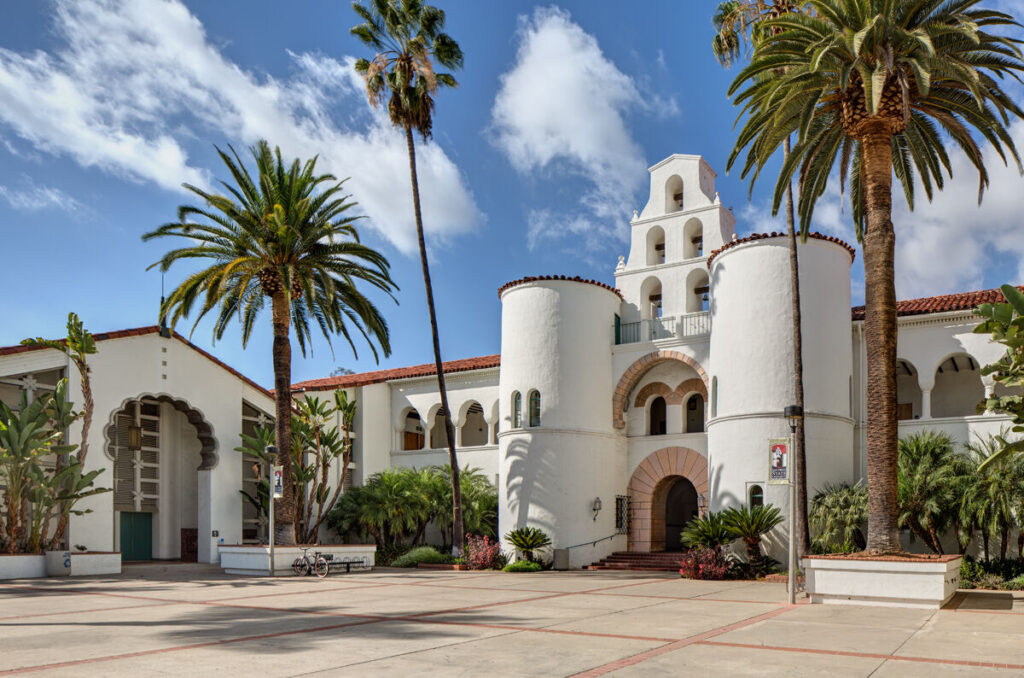
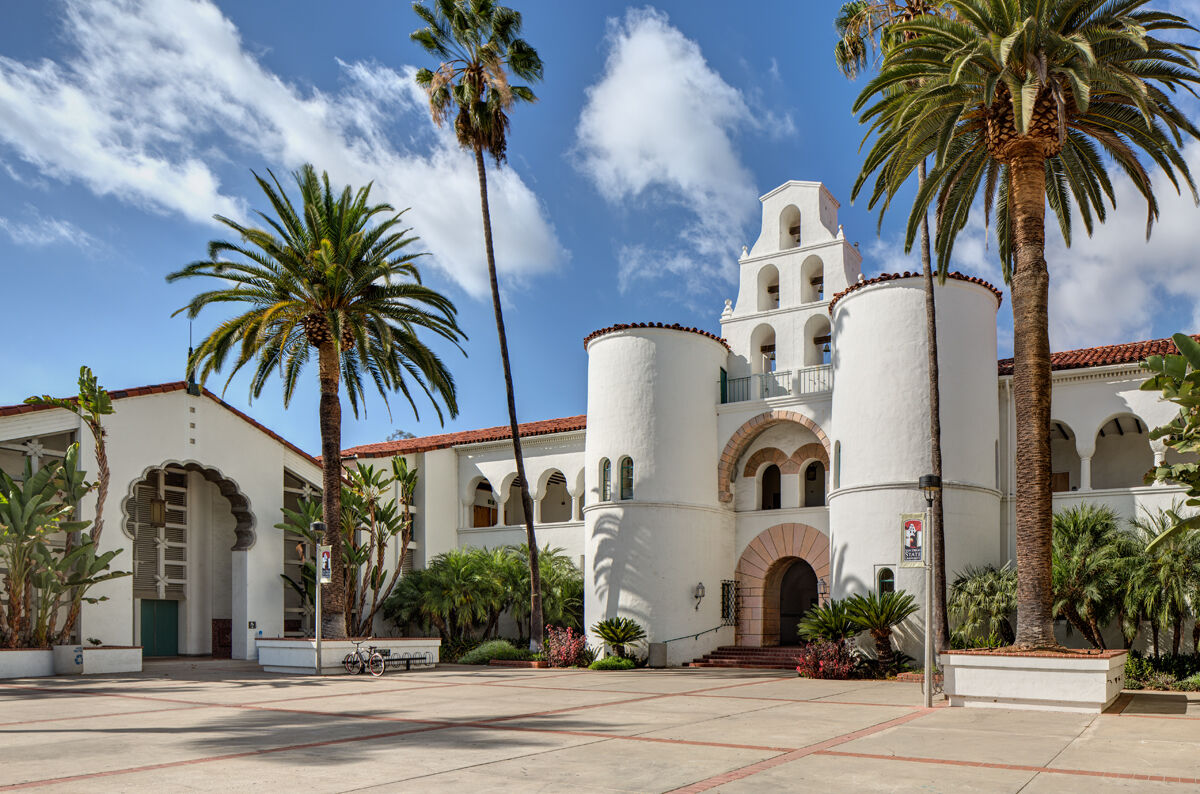
Hepner Hall
Even if you’re not one of San Diego State University’s nearly 500,000 living alumni, chances are you’ve visited campus for a concert or an Aztecs game. If not, now’s a great time to take the College Avenue off-ramp when you spot the SDSU freeway marquee sign on Interstate 8.
San Diego’s oldest institution of higher learning officially kicked off a 600-day celebration of its 125th anniversary on March 14.
Once founded in 1897 as a training school for aspiring elementary teachers, and located above a drugstore in the present-day Gaslamp Quarter, today SDSU is a nationally ranked, internationally known academic and research powerhouse that provides billions in annual economic impact in San Diego and communities around the world.
Away from the high-tech labs and lecture halls on campus, you’ll find hidden gems like public art, a turtle pond and peaceful gardens. And with SDSU Mission Valley — a new stadium, Snapdragon Stadium, opening soon — there’ll be even more places for you to visit. Here’s your cheat sheet:
Snapdragon Stadium
Snapdragon Stadium, the first feature of SDSU Mission Valley, will open Sept. 3 for the Aztec football team’s home opener against the University of Arizona Wildcats. The 35,000-capacity stadium will include food options from local eateries including Hodad’s, The Crack Shack, Cali BBQ, Best Pizza and Brew, Everbowl, Gaglione Brothers, The Taco Stand and Batch & Box. In addition to SDSU football, women’s lacrosse, women’s soccer and men’s soccer, the venue will be home to the San Diego Wave Futbol Club, the National Women’s Soccer League expansion team, and the San Diego Legion, the Major League Rugby (MLR) team.
Approximately 80 acres of community park and open space, including a 34-acre River Park scheduled for completion in 2023, will also be a centerpiece of SDSU Mission Valley. Construction on the SDSU Mission Valley Innovation District where SDSU researchers will work alongside public and private partners, as well as a residential community including affordable housing, will also begin as soon as 2023 (next year!).
Did You Know?
SDSU generates more than $5.6 billion in annual economic activity in the San Diego region, according to the most recent estimate.
-About 75% of the County of San Diego’s public health workforce are alumni of SDSU’s School of Public Health
-Alumna Ellen Ochoa was NASA’s first Latina astronaut in space and director of its Johnson Space Center
-Other well-known alumni include: Rubio’s Coastal Grill Founder Ralph Rubio, film producer Kathleen Kennedy, Mandalorian actor Carl Weathers, Blenders Eyewear CEO Chase Fisher, the late legendary conceptual artist John Baldessari and former San Diego Mayors Kevin Faulconer and Jerry Sanders. Two others from the world of sports: Major League Baseball pitcher Stephen Strasburg and NBA star Kawhi Leonard, who both earned postseason MVP awards in the same year (2019). And, of course, the greatest Padre of them all: Tony Gwynn.
-U.S. President John F. Kennedy, Martin Luther King Jr., Cesar Chavez and Eleanor Roosevelt all gave speeches at SDSU.
-Lady Gaga, Ella Fitzgerald, Buffalo Springfield, Bob Dylan, Ray Charles, Joan Baez, Fleetwood Mac and Rihanna have all rocked SDSU venues.
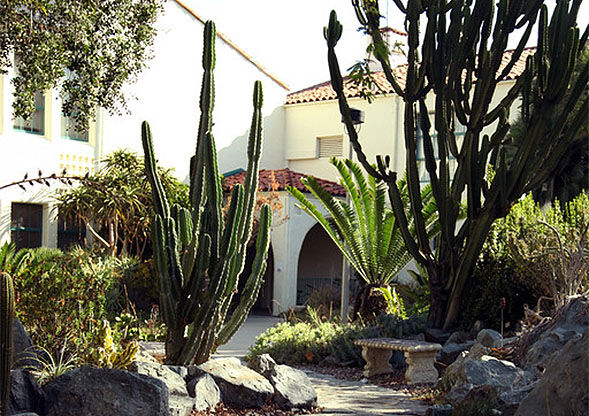
SDSU Healing Garden
Healing Garden
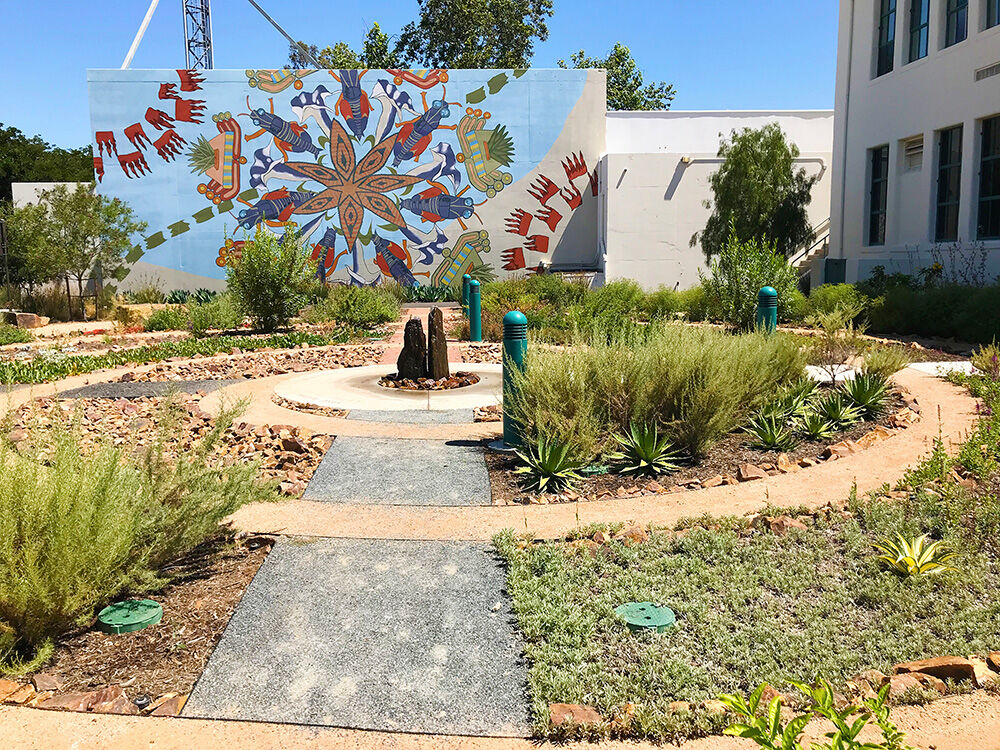
If you haven’t been to campus for a few years, you’ve never seen the newest landmark: the Native and Indigenous Healing Garden. One of the newest features of the SDSU landscape is just steps away from the original buildings of the Main Quad.
Developed early in 2020, the garden recognizes both the university’s Aztec identity and its location on historic Kumeyaay land. It is a place that embodies the symbols and plants of life and of healing — physically, mentally and emotionally — and also features a 60-foot mural, designed by students, that captures the significance of plants to Indigenous life in the region of the Aztecs. Learn more about SDSU’s Healing Garden.

SDSU
Headlining Performances Under the Stars
Come for a concert at the Cal Coast Credit Union Open Air Theatre at SDSU (upcoming shows include Interpol, April 29; New Kids On The Block, May 26; Tenacious D, June 26; David Gray, July 31; Alicia Keys, Sept. 9) — stay for the great eats and scenic spots. For a list of upcoming events and concerts, visit the CalCoast Credit Union Open Air Theatre page.
SDSU Healing Garden
For still more botanical delights, head over to the Mediterranean Garden, between the Physical Sciences and Life Sciences Buildings and Hepner Hall. This peaceful enclave, developed in the mid-’90s, includes plants from five continents and a fountain from Baja California—a gift from the senior class of 1997. This is a popular spot to meet up with friends or enjoy a picnic before catching a show at the Cal Coast Credit Union Open Air Theater.

SDSU Turtle Pond
Relax, meditate and look — but please don’t touch or feed the inhabitants. The koi and turtle pond outside of Scripps Cottage (another campus treasure) is widely considered the most peaceful place on campus.
TapRoots
Arriving at campus by trolley? Before leaving the only underground station on the MTS Green Line, look above and below for two public art features: the “TapRoots” descending from the station’s ceiling, and 60 granite stepping stones with symbols representing academic disciplines at SDSU.
Before the station opened in 2005, Carlsbad artist Anne Mudge worked with a design team and the Metropolitan Transit System on a variety of striking art components, drawing full attention to its underground location as the showcase station of the Green Line. Her stainless steel “TapRoots” descend from the station’s ceiling as if connected to trees planted above. Underfoot, she designed 60 granite stepping stones with symbols for the academic disciplines at SDSU: comedy and tragedy masks for theater; a glucose formula for chemistry.
SDSU Art Benches
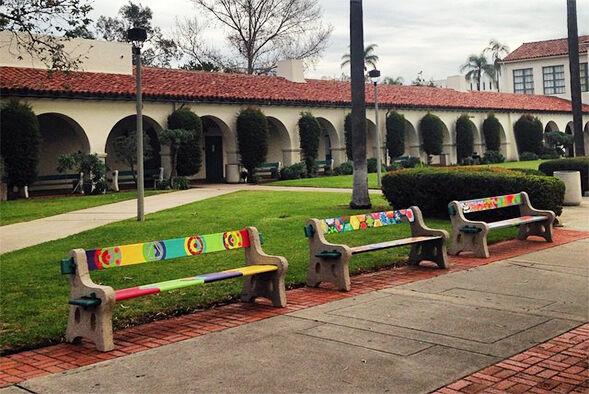
Who needs advertising when you can turn a bench into a work of art? The student-designed and painted benches, part of Arts Alive SDSU, can be found all over campus, with some adorning historic Works Progress Administration benches from the previous century. View Art Benches Slideshow

Aztec Lanes
Aztec Lanes
Aztec Lanes is SDSU’s bowling and games center open to students, faculty/staff and community members located on the first floor of the Conrad Prebys Aztec Student Union. Enjoy 12 bowling lanes as well as a games lounge including big-screen TVs, billiards, table tennis and gaming consoles. Aztec Lanes offers a multitude of services, including bowling classes, social leagues, reservations and special events.
Families can enjoy Kids Bowl Free all summer long from May 14 to August 21, register today!
For rates, reservations, and more information visit the Aztec Lanes site here.

.
Behind every beautiful space is a thoughtful process, and ASID San Diego is helping homeowners understand the value of professional design.
A perfectly designed home rarely happens by accident. Those kitchens that feel effortless and rooms that seem to tell a story the second you walk in? They’re usually the work of someone who knows exactly what they’re doing.
It’s knowing which ideas will actually work, which materials will hold up over time, and how to turn a collection of choices into a space that feels intentional. That’s where a professional interior designer comes in.
For the American Society of Interior Designers (ASID) California San Diego Chapter, the goal is to help people see interior design as more than just the finished look. Behind every well-designed space is a process built on technical expertise. Designers are educated in everything from professional software and construction details to building codes, space planning, materials, and functionality.

“People don’t always realize how much goes on behind the scenes,” Kirsten Recce , current president of the ASID California San Diego Chapter, says. “Our designers are not just doing furniture placement and color selection and picking out new fluffy pillows. That’s not what they’re trained for.”
ASID members bring formal education, continued learning, and industry knowledge to their projects, helping create spaces that are not only beautiful, but designed to work. A paint color that changes completely depending on the lighting. A material that looks beautiful in a showroom but doesn’t make sense for everyday life. A layout that photographs well but doesn’t function for the people living there. These are the details where professional guidance can make all the difference.
Still, one of the biggest misconceptions about hiring an interior designer is that it’s reserved for massive renovations, luxury homes, or people who already know exactly what they want. The process can feel intimidating. Where do you begin? Is a designer worth the investment? What if you only need help with one room?
ASID’s answer: start with one hour.
ASID’s Spruce Up events break down one of the biggest barriers between homeowners and professional design: knowing where to begin. Held twice a year, the community program gives homeowners the chance to work directly with an ASID designer through a one-hour, $125 consultation in their own home. Whether you’re looking for advice on furniture placement, window treatments, kitchen and bath updates, remodeling ideas, vacation rentals, color selections or something else entirely, the upcoming September 2026 event offers an approachable way to get expert guidance before committing to a full project. Signups are open through Sept. 7, with consultations taking place Sept. 21 through Oct. 31. Proceeds benefit ASID San Diego’s educational and community programs. Register here!

“It’s a great opportunity for people who are in that exploratory phase,” Recce says. “Maybe they’re not sure they want to hire an interior designer yet, or they think it sounds daunting or expensive. This gives them a chance to discover what working with a designer is actually like.”
Design is personal. A good designer isn’t just creating a beautiful room; they’re helping create a space that fits the way someone lives.
“We’re a resource to all of San Diego County,” Recce says. “It doesn’t cost anything to pick up the phone and call and ask. We’ll answer.”
Follow ASID San Diego on Instagram, LinkedIn, and Facebook for updates on upcoming events, or connect with the chapter directly at [email protected] or 619-548-8847.
A new program guides new moms through high-risk pregnancy and into the “fourth trimester”
Mai Vue was just 34 weeks pregnant when she delivered her baby. Her pregnancy had been complicated, and she’d had a recent second trimester pregnancy loss, which led to her receiving specialized care from Sean Daneshmand, MD, a Scripps Clinic perinatologist who oversees high-risk pregnancies. Dr. Daneshmand and his team took care of Mai during her pregnancy, through the birth of her healthy baby girl and beyond. Mai was part of a program Scripps launched to provide support to new moms in the weeks and months after delivery. The postpartum program, known as Scripps Health’s Fourth Trimester Continuum of Care, provides care for women with high-risk pregnancies to optimize their health after childbirth and reduce the risk of complications in future pregnancies. Click here to learn more.
For more nutrition, wellness, and healthy living tips, sign up for the San Diego Health newsletter here.
Scripps Clinic’s Mohs surgery center is one of the most sophisticated in the country.
It’s estimated that one in five people in the U.S. will develop skin cancer at some point in their lives. When you factor in living in a sun-soaked city like San Diego and the outdoorsy lifestyle that comes with it, that figure can jump to as high as one in three, which makes early detection and intervention all the more important. Dermatologists at Bighorn Mohs and Dermatology Center are using innovative imaging methods and advanced surgical techniques to diagnose and treat skin cancer. For certain cancers in sensitive spots, like the face, dermatologists perform Mohs surgery, removing skin tissue layer by layer until reaching healthy, cancer-free tissue. They also use a process called immunohistochemistry to view tissue samples taken during Mohs surgery in far greater detail than previous methods. Read more about how Scripps is advancing skin cancer care here.
For more nutrition, wellness, and healthy living tips, sign up for the San Diego Health newsletter here.
Scripps Cancer Center helps an endurance athlete overcome his greatest challenge yet and get back in the race
When endurance athlete Isaac Sanchez learned he had cancer, he felt blindsided. He was healthy, surfed often and was training for an Ironman triathlon. But he had to put that on hold to undergo treatment. His physicians at Scripps Cancer Center developed a plan to treat the cancer in his tonsil and lymph nodes that included six-and-a-half weeks of near-daily radiation and weekly chemotherapy. He also worked with a Scripps Cancer Center dietitian to enhance his nutrition to promote strength and healing. Today, Isaac’s back to doing what he loves. Read more of his story here.
For more nutrition, wellness, and healthy living tips, sign up for the San Diego Health newsletter here.
Scripps study shows that some patients may be able to taper their dose and maintain results
While glucagon-like peptide-1 (GLP-1) receptor agents have been used to treat Type 2 diabetes for more than 20 years, their recent emergence as weight-loss wonder drugs marked a new frontier in medicine. But their effectiveness has left some patients wondering what to do once they’ve reached their goal. Stopping the medication could mean regaining some, if not all, of the weight. A Scripps Clinic internal medicine physician recently conducted a small study of whether GLP-1 patients who had reached their goal weight could maintain that weight by taking their regularly prescribed injection every other week instead of weekly. Spoiler alert: 30 of 34 patients did. Read more about the study here and what that may mean as pharmaceutical companies roll out oral GLP-1s.
For more nutrition, wellness, and healthy living tips, sign up for the San Diego Health newsletter here.
Innovative treatment could offer cancer patients new options with fewer side effects
Chemotherapy and radiation have long been considered gold standards of cancer treatment, but they can cause severe side effects. A promising new approach called theranostics—a combination of “therapeutics” and “diagnostics”—could offer patients with certain types of metastatic cancers new hope. It’s a two-step process that uses a drug that binds to specific receptors on cancer cells. Advanced imaging detects this radioisotope, allowing doctors to then use a second radioisotope that binds to the cancer cells and destroys them. Click here to learn more about how specialists at Scripps Cancer Center are using theranostics.
For more nutrition, wellness, and healthy living tips, sign up for the San Diego Health newsletter here.