Partner Content OCTOBER 8, 2025

Why San Diego’s 45+ Community is Choosing Refractive Lens Exchange (RLE) 

For decades, the word “LASIK” has been a beacon of hope for those dreaming of life without glasses. It’s a powerful word, but for the millions of people over 45, its promise often falls short. If you find yourself holding your phone at arm’s length to read a text message or constantly switching between multiple […]

Why San Diego’s 45+ Community is Choosing Refractive Lens Exchange (RLE) 
SDM_NVISIONEye-Cataract&LASIK_WEB

For decades, the word “LASIK” has been a beacon of hope for those dreaming of life without glasses. It’s a powerful word, but for the millions of people over 45, its promise often falls short. If you find yourself holding your phone at arm’s length to read a text message or constantly switching between multiple pairs of glasses, you’re not alone. You’ve likely been told that blurry near-vision is just a part of aging, and that LASIK might not be the right solution for you anymore.

Today, there’s a different, more permanent vision correction solution making waves, and it’s perfectly suited for San Diego’s active community in their 40s, 50s, and beyond. It’s called Refractive Lens Exchange (RLE), and it’s changing lives by addressing the very root cause of age-related vision decline.

Beyond LASIK: A Solution Tailored for Aging Eyes

To understand RLE, you first need to understand the difference between how a young eye and an aging eye work. LASIK works by using a laser to reshape the cornea, the clear front surface of the eye. This is highly effective for correcting nearsightedness, farsightedness, and astigmatism in younger patients whose natural eye lenses are still soft and flexible.

But as we mature, our natural lens, a clear, internal structure that focuses light, begins to harden and lose its flexibility. This is the natural process of presbyopia, which creates the need for reading glasses. The problem isn’t the cornea anymore; it’s the lens inside the eye. Since LASIK can’t fix this internal change, its effects often don’t last for a person over 45.

This is precisely where Refractive Lens Exchange (RLE) shines. It’s a surgical procedure that removes the eye’s aging lens and replaces it with a new, advanced, and custom-designed intraocular lens (IOL). This approach is also known as Clear Lens Exchange (CLE), offering the same benefits under a different name. This lens implant corrects your vision at multiple distances, completely eliminating or dramatically reducing your dependence on glasses and contact lenses. Unlike LASIK, RLE provides a lasting solution that won’t require a repeat procedure years down the line due to further aging of the natural lens.

The Safe, Proven Legacy of RLE

The thought of eye surgery can be daunting, but RLE is a procedure with a very familiar and proven pedigree. The surgical process is nearly identical to modern cataract surgery, one of the safest and most frequently performed medical procedures in the world. The only significant difference is that in RLE, the natural lens is still clear, whereas in cataract surgery, it has become cloudy.

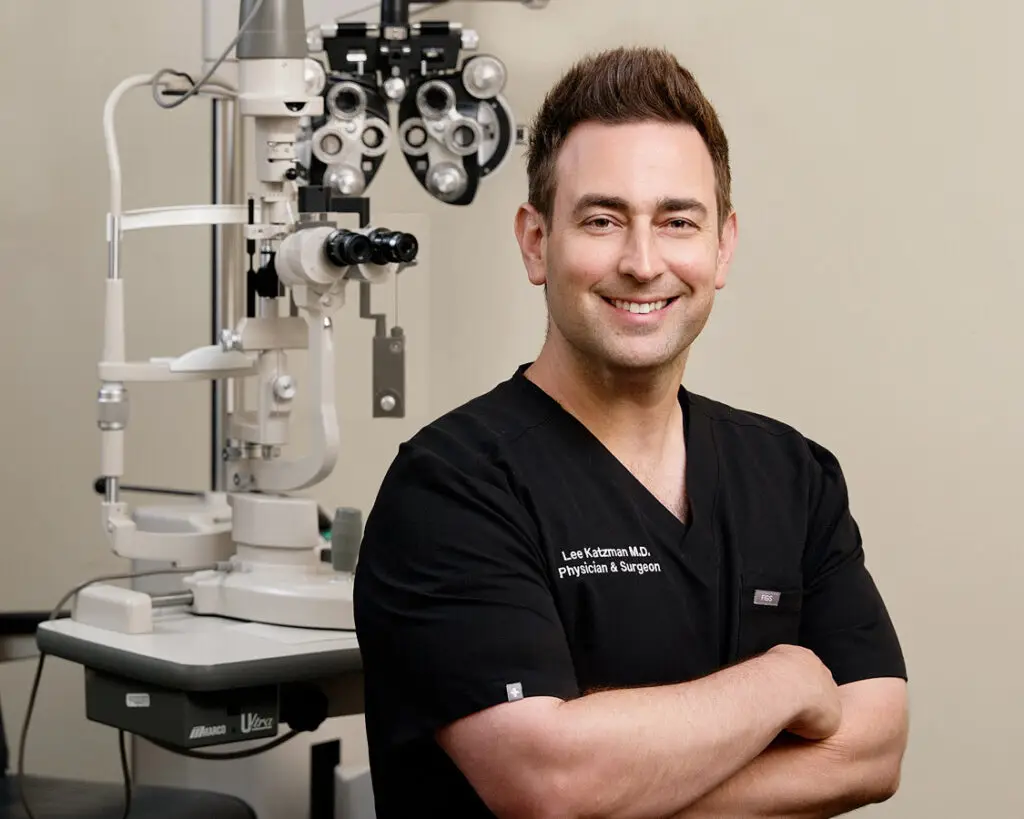
As one of the leading providers of Cataract Surgery in San Diego, Dr. Katzman often shares this simple but powerful analogy: “If this procedure is safe and effective enough for a 100-year-old patient, it’s absolutely safe for you in your 50s or 60s. We’re essentially using a highly advanced, perfected surgical technique to proactively address vision issues before they become a more significant problem.”

By choosing RLE, you can not only achieve permanent vision correction but also completely eliminate the risk of ever developing a cataract. The surgery provides a lifetime of clear vision, offering peace of mind alongside remarkable visual results.

Your Vision, Optimized: Advanced Lens Technology

The real magic of RLE lies in the incredible range of intraocular lens (IOL) options available today. These aren’t one-size-fits-all solutions; they are tailored to your specific vision goals and lifestyle.

  • Multifocal Lenses: For those who want to be completely free from the hassle of glasses, these lenses provide clear vision at all distances, near, intermediate, and far. Imagine effortlessly reading a menu, seeing your computer screen, and enjoying the view of the San Diego coastline without ever needing a pair of glasses.
  • The Light Adjustable Lens (LAL): A groundbreaking, post-operative technology that allows for non-invasive “fine-tuning” of your vision after the lens is implanted. During a simple office visit, your doctor can make small adjustments using a light treatment to ensure your vision is as close to perfect as possible. It’s the ultimate in personalized, guaranteed results.

A Final Word for San Diego’s Active Community

San Diego is a city built for people who love to be active, from surfing at La Jolla Shores to hiking Torrey Pines. The constant need for reading glasses, prescription sunglasses, or contacts can be a real hindrance. Refractive Lens Exchange offers a life of true visual freedom, a permanent solution that lets you enjoy every moment without being tethered to corrective eyewear.

If you’ve been told you’re not a candidate for LASIK, or if you’re tired of the frustration of age-related vision changes, it’s time to explore the lasting benefits of Refractive Lens Exchange. It’s a safe, proven, and highly effective procedure that can provide you with the crystal-clear vision you remember from your younger years.

To learn more and schedule a consultation with a trusted eye surgeon in San Diego today to see if you are a candidate for this life-changing procedure, visit Dr. Katzman’s website today at sandiegocataractandlasik.com, the official website of Alvarado Eye.


.

Partner Content

Subscribe to our newsletters

Select Options

By subscribing you confirm that you agree with our Terms and Conditions and Privacy Policy.

Studio S AUGUST 10, 2026

The Secret to a Home That Feels Just Right

Behind every beautiful space is a thoughtful process, and ASID San Diego is helping homeowners understand the value of professional design.

The Secret to a Home That Feels Just Right
Courtesy of ASID

A perfectly designed home rarely happens by accident. Those kitchens that feel effortless and rooms that seem to tell a story the second you walk in? They’re usually the work of someone who knows exactly what they’re doing.

It’s knowing which ideas will actually work, which materials will hold up over time, and how to turn a collection of choices into a space that feels intentional. That’s where a professional interior designer comes in.

For the American Society of Interior Designers (ASID) California San Diego Chapter, the goal is to help people see interior design as more than just the finished look. Behind every well-designed space is a process built on technical expertise. Designers are educated in everything from professional software and construction details to building codes, space planning, materials, and functionality.

Courtesy of ASID

“People don’t always realize how much goes on behind the scenes,” Kirsten Recce , current president of the ASID California San Diego Chapter, says. “Our designers are not just doing furniture placement and color selection and picking out new fluffy pillows. That’s not what they’re trained for.”

ASID members bring formal education, continued learning, and industry knowledge to their projects, helping create spaces that are not only beautiful, but designed to work. A paint color that changes completely depending on the lighting. A material that looks beautiful in a showroom but doesn’t make sense for everyday life. A layout that photographs well but doesn’t function for the people living there. These are the details where professional guidance can make all the difference.

Still, one of the biggest misconceptions about hiring an interior designer is that it’s reserved for massive renovations, luxury homes, or people who already know exactly what they want. The process can feel intimidating. Where do you begin? Is a designer worth the investment? What if you only need help with one room?

ASID’s answer: start with one hour.

ASID’s Spruce Up events break down one of the biggest barriers between homeowners and professional design: knowing where to begin. Held twice a year, the community program gives homeowners the chance to work directly with an ASID designer through a one-hour, $125 consultation in their own home. Whether you’re looking for advice on furniture placement, window treatments, kitchen and bath updates, remodeling ideas, vacation rentals, color selections or something else entirely, the upcoming September 2026 event offers an approachable way to get expert guidance before committing to a full project. Signups are open through Sept. 7, with consultations taking place Sept. 21 through Oct. 31. Proceeds benefit ASID San Diego’s educational and community programs. Register here!

Courtesy of ASID

“It’s a great opportunity for people who are in that exploratory phase,” Recce says. “Maybe they’re not sure they want to hire an interior designer yet, or they think it sounds daunting or expensive. This gives them a chance to discover what working with a designer is actually like.”

Design is personal. A good designer isn’t just creating a beautiful room; they’re helping create a space that fits the way someone lives.

“We’re a resource to all of San Diego County,” Recce says. “It doesn’t cost anything to pick up the phone and call and ask. We’ll answer.”

Follow ASID San Diego on Instagram, LinkedIn, and Facebook for updates on upcoming events, or connect with the chapter directly at [email protected] or 619-548-8847.

Partner Content
Partner Content AUGUST 17, 2026

Leading the Way in Skin Cancer Care

Scripps Clinic’s Mohs surgery center is one of the most sophisticated in the country.

Leading the Way in Skin Cancer Care
Courtesy of Scripps Health

It’s estimated that one in five people in the U.S. will develop skin cancer at some point in their lives. When you factor in living in a sun-soaked city like San Diego and the outdoorsy lifestyle that comes with it, that figure can jump to as high as one in three, which makes early detection and intervention all the more important. Dermatologists at Bighorn Mohs and Dermatology Center are using innovative imaging methods and advanced surgical techniques to diagnose and treat skin cancer. For certain cancers in sensitive spots, like the face, dermatologists perform Mohs surgery, removing skin tissue layer by layer until reaching healthy, cancer-free tissue. They also use a process called immunohistochemistry to view tissue samples taken during Mohs surgery in far greater detail than previous methods. Read more about how Scripps is advancing skin cancer care here.

For more nutrition, wellness, and healthy living tips, sign up for the San Diego Health newsletter here.

Partner Content
Partner Content AUGUST 17, 2026

A Real Ironman

Scripps Cancer Center helps an endurance athlete overcome his greatest challenge yet and get back in the race

A Real Ironman
Courtesy of Scripps Health

When endurance athlete Isaac Sanchez learned he had cancer, he felt blindsided. He was healthy, surfed often and was training for an Ironman triathlon. But he had to put that on hold to undergo treatment. His physicians at Scripps Cancer Center developed a plan to treat the cancer in his tonsil and lymph nodes that included six-and-a-half weeks of near-daily radiation and weekly chemotherapy. He also worked with a Scripps Cancer Center dietitian to enhance his nutrition to promote strength and healing. Today, Isaac’s back to doing what he loves. Read more of his story here

For more nutrition, wellness, and healthy living tips, sign up for the San Diego Health newsletter here

Partner Content
Partner Content AUGUST 17, 2026

New Options for GLP-1 Users

Scripps study shows that some patients may be able to taper their dose and maintain results

New Options for GLP-1 Users
Courtesy of Scripps Health

While glucagon-like peptide-1 (GLP-1) receptor agents have been used to treat Type 2 diabetes for more than 20 years, their recent emergence as weight-loss wonder drugs marked a new frontier in medicine. But their effectiveness has left some patients wondering what to do once they’ve reached their goal. Stopping the medication could mean regaining some, if not all, of the weight. A Scripps Clinic internal medicine physician recently conducted a small study of whether GLP-1 patients who had reached their goal weight could maintain that weight by taking their regularly prescribed injection every other week instead of weekly. Spoiler alert: 30 of 34 patients did. Read more about the study here and what that may mean as pharmaceutical companies roll out oral GLP-1s.

For more nutrition, wellness, and healthy living tips, sign up for the San Diego Health newsletter here.

Partner Content
Partner Content AUGUST 12, 2026

Theranostics: New Hope for Patients with Metastatic Cancers

Innovative treatment could offer cancer patients new options with fewer side effects

Theranostics: New Hope for Patients with Metastatic Cancers
Courtesy of Scripps Health

Chemotherapy and radiation have long been considered gold standards of cancer treatment, but they can cause severe side effects. A promising new approach called theranostics—a combination of “therapeutics” and “diagnostics”—could offer patients with certain types of metastatic cancers new hope. It’s a two-step process that uses a drug that binds to specific receptors on cancer cells. Advanced imaging detects this radioisotope, allowing doctors to then use a second radioisotope that binds to the cancer cells and destroys them. Click here to learn more about how specialists at Scripps Cancer Center are using theranostics.

For more nutrition, wellness, and healthy living tips, sign up for the San Diego Health newsletter here.

Partner Content
Partner Content AUGUST 10, 2026

Innovative Support for Sleep Issues

Circadian Sleep Clinic Helps Reset the Body Clock

Innovative Support for Sleep Issues
Courtesy of Scripps Health

Nearly everyone experiences a sleepless night once in a while. But for those with a circadian sleep disorder, being well-rested can feel out of reach. A circadian sleep disorder occurs when a person’s internal clock doesn’t align with their desired or socially required sleep schedule. This can significantly impact quality of life, mental health and physical well-being. Scripps Circadian Sleep Disorders Clinic, launched in 2019, was the first of its kind in the state. Its specialists diagnose and treat conditions like delayed sleep phase disorder, shift work sleep disorder and non-24-hour sleep-wake disorder. Many patients have spent years—or even decade —thinking there was no hope for their sleep behavior. A solution can be life-changing. Read more about the Scripps Circadian Sleep Disorders Clinic here.

For more nutrition, wellness, and healthy living tips, sign up for the San Diego Health newsletter here.

Partner Content

Thousands of savvy locals already get it.

San Diego's best restaurants, experiences, and events—handpicked and delivered to your inbox weekly. You in?

Close the CTA

Contact Us

1230 Columbia Street, Suite 800,

San Diego, CA