


A group of teenagers is taking selfies outside of Saguaro Coffee in downtown Indio, California. One adjusts her sunglasses on her nose and holds up her spiced pear matcha latte, and I can picture the shot: This smiling young woman in the foreground, largely unnecessary cardigan (it’s a textbook-perfect 76 degrees) laid just so over her shoulders; the green expanse of a community park in the background. Makers’ market booths dot the grass, with the angular new public library (opened in October 2025) beyond.
In other words, downtown Indio is a cool neighborhood for cool young people.

It wasn’t always so. Though I grew up minutes away, I seldom visited this place, except to buy my school uniforms at Yellow Mart—a cluttered sort of “general store” with firearms behind the counter and mechanic coveralls on offer in the back—and attend rehearsals at a warehouse-like community theater then surrounded by empty storefronts.
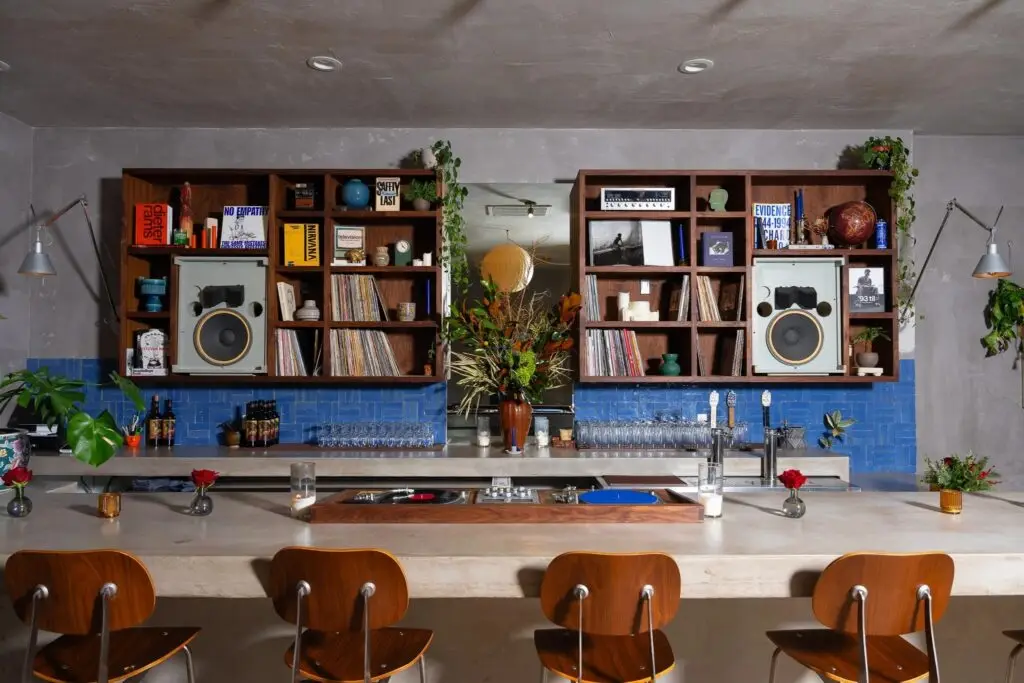
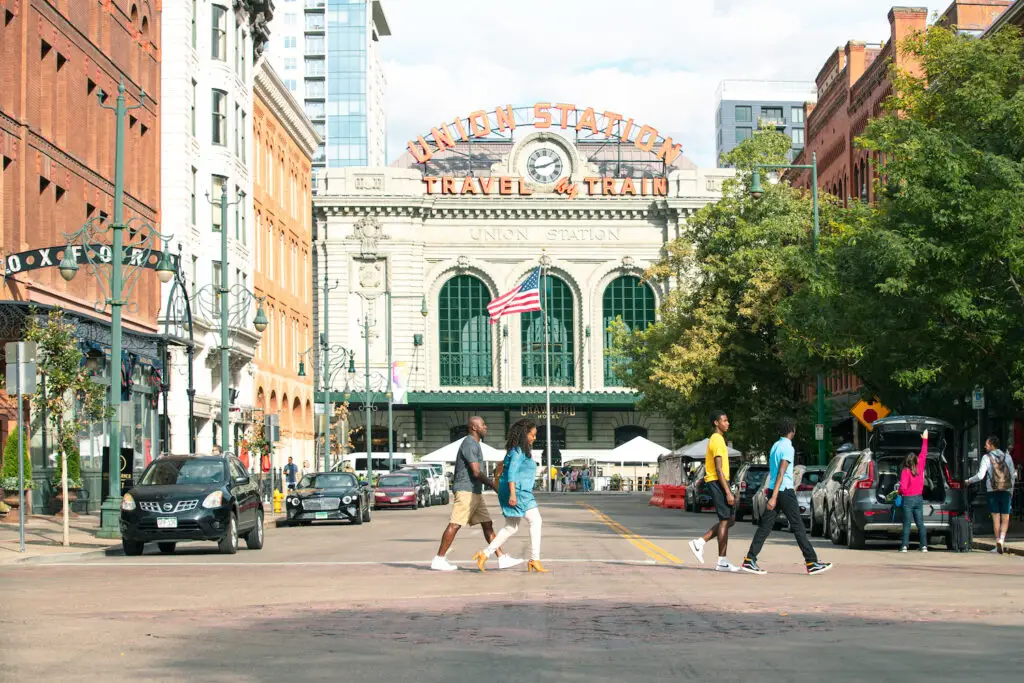
Yellow Mart and the theater have endured, and while unused buildings still dot the area, those teenagers can now make a loop between businesses that will look great on their Instagram stories: a few bustling cafés; Urban Donkey vintage store; Gabino’s, a Guy Fieri–approved spot for savory crepes. At night, locals flock to Rosemary HiFi, a listening lounge and wine bar owned by Adrian Romero, a Coachella Valley–raised kid whose first business, Hermano, was a florist’s shop turned if-you-know-you-know apparel brand. In glass windows, each storefront hangs posters promoting other local businesses and events. One beckons visitors to Field Day, Rosemary HiFi’s free, outdoor gathering of vendors, DJs, chefs, wine and beer makers, and activations.
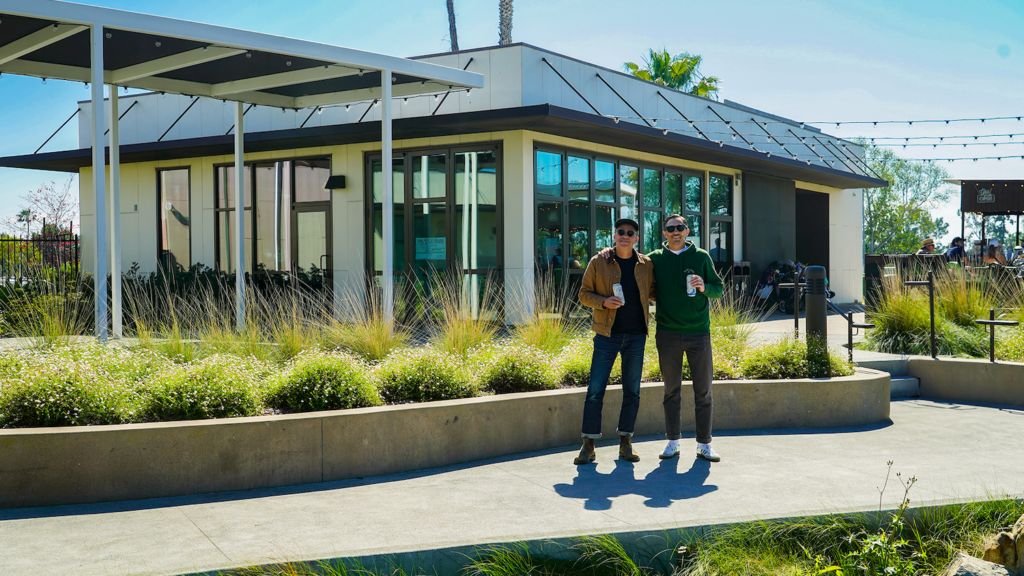
“We’re continuing to grow at a higher pace than everybody else [in the valley],” says former Indio mayor Glenn Miller (late last year, he passed the head honcho role to Elaine Holmes, a requirement of the city’s rotating, one-year mayoral terms for all city council members). He and I are sitting in the recently opened downtown location of Everbloom Coffee, owned by Indio hometowners Efrain Mercado and Matthew Ortega. Their first outpost, off the nearby Highway 111, was sunny but cramped, with zero indoor tables and terrible parking. People came anyway, and now they have this 2,800-square-foot space busy with patrons working and chatting. The city of Indio helped make it happen.
“When land becomes available [in downtown], we purchase it,” Miller explains. The city council put a program in place to help entrepreneurs like Mercado and Ortega become tenants in city-held properties. “They have to come in with a full-fledged business plan and a proposition for tenant improvements. Then we say, ‘We’ll give you’—for example—‘a dollar per square foot to make those improvements.’ We’re keeping rents low, being partners with business owners, and then also investing back into the space, because we actually own it.”
The program’s capital comes out of Indio’s $141 million annual general fund. A one-cent city sales tax brings in another $18 to $20 million a year, funding one-time projects like Center Stage, an outdoor venue in the center of downtown. “That’s really our focal point,” Miller says. Honing in on entertainment makes perfect sense in Indio, considering it’s home to some of the most iconic music fests in the world, Coachella Festival among them.
But so far the stage—opened in April 2024—has taken some time to get off the ground, mostly hosting occasional community events and classic rock cover bands.
Miller has bigger dreams for the venue. “We’re going to use it for nonprofits to have events there,” he says. “We’re going to have acoustic guitar performances, yoga, other things.”
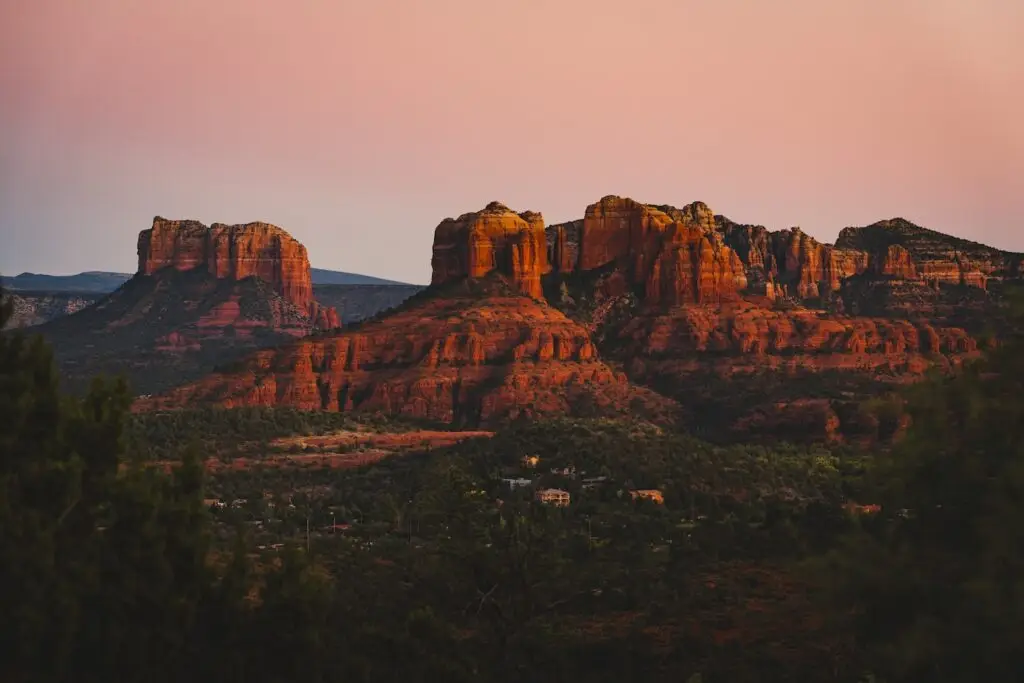
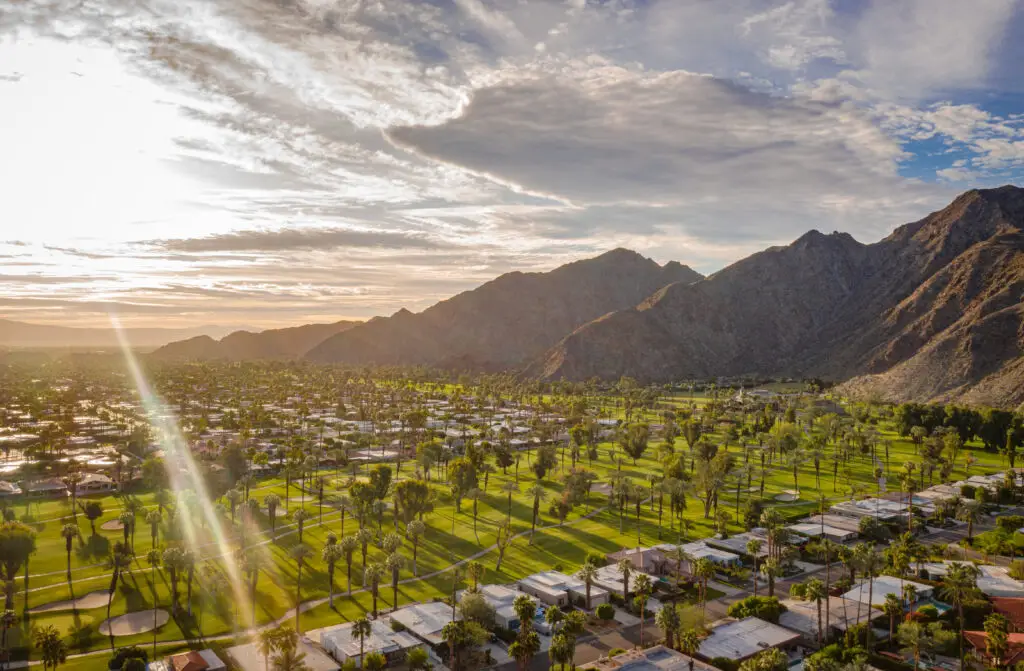
The city also hopes to bring in affordable housing, boutique hotels, and a train stop connecting Indio to the rest of the valley (like the town of Coachella to the east and the fairly orderly line of other desert cities—La Quinta, Indian Wells, Palm Desert, Rancho Mirage, Cathedral City, Palm Springs—stretching to the west) and beyond, accommodating the city’s growing number of tourists and transplants.
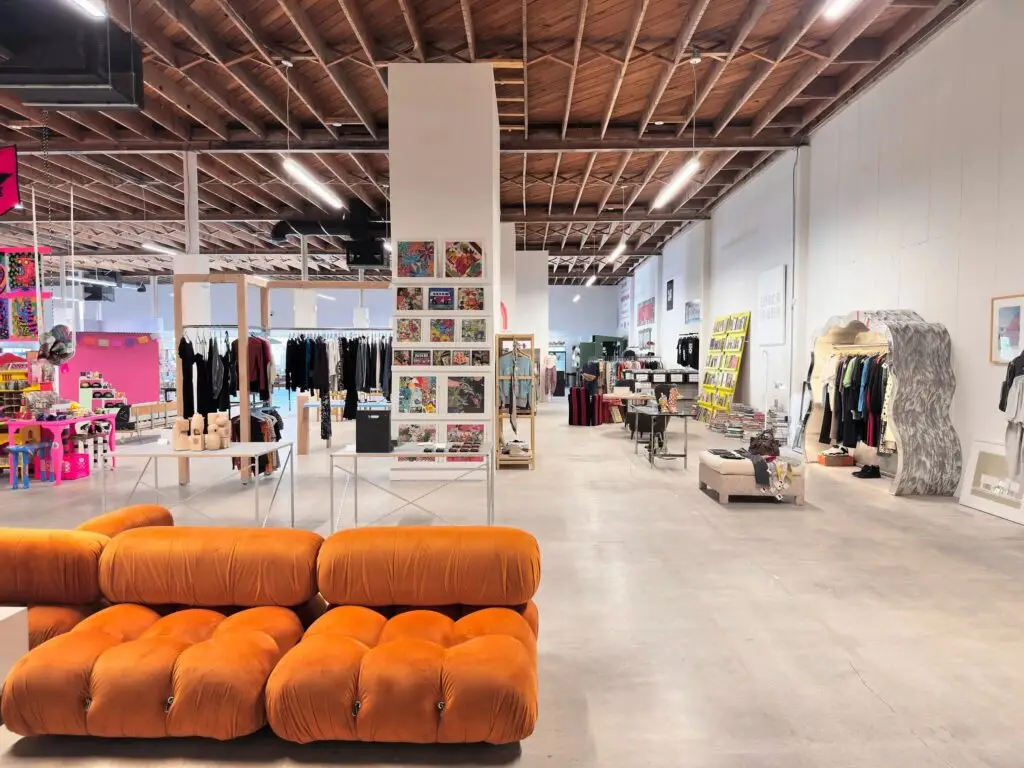
Among them is Nicole Massoth, who runs a downtown marketplace simply called The Place. At a staggering 15,000 square feet, The Place, opened last August, is a living catalog of local creative entrepreneurship. More than 100 small businesses have displays inside, many immersive enough to feel like their own tiny stores within the concrete-floored space. In a mini ’70s-style living room, you can sniff the candles of Mijo Co.—a husband-and-husband team who make scents inspired by the tangerines their mothers used to pack in their school lunches and the aroma of fresh-cut grass that emanated from family members who worked as gardeners.
Mere feet away, visitors can shop the shimmery face gems (the same ones worn by actors on HBO’s Euphoria) of GetStonned founder Megs Cahill or the undulating vases of Mojave Desert artist Stray Ceramics.
“I [wanted] to bring in artists and entrepreneurs that were committed to investing in the community,” Massoth says. “It feels really good to be intentional about keeping the wealth within the community versus gentrification—small businesses are taking over the eastern Coachella Valley, not big box stores. [Right now,] so many young people are like, ‘Wait, there’s something here.’ I think that we’ll be less of a limited area—[soon,] anything you can do in LA, you can do in the Coachella Valley.”
That sentiment runs counter to the valley’s reputation as a “playground of the stars,” who flocked to Palm Springs precisely because it wasn’t LA. In the 1950s, actors’ contracts often required them to be within two hours of their Hollywood studios, so the desert city offered a private, relaxing, rule-abiding escape. Generating $9.1 billion a year as of 2024, tourism is still the valley’s number-one industry—out-of-towners flock there for the festivals; sporting events like tennis’s BNP Paribas Open; and Modernism Week, a biannual celebration of the area’s abundant mid-mod structures by luminaries like Albert Frey and John Lautner, as well as more standard vacation pursuits like golfing, hiking, and celebrating bachelorette parties.
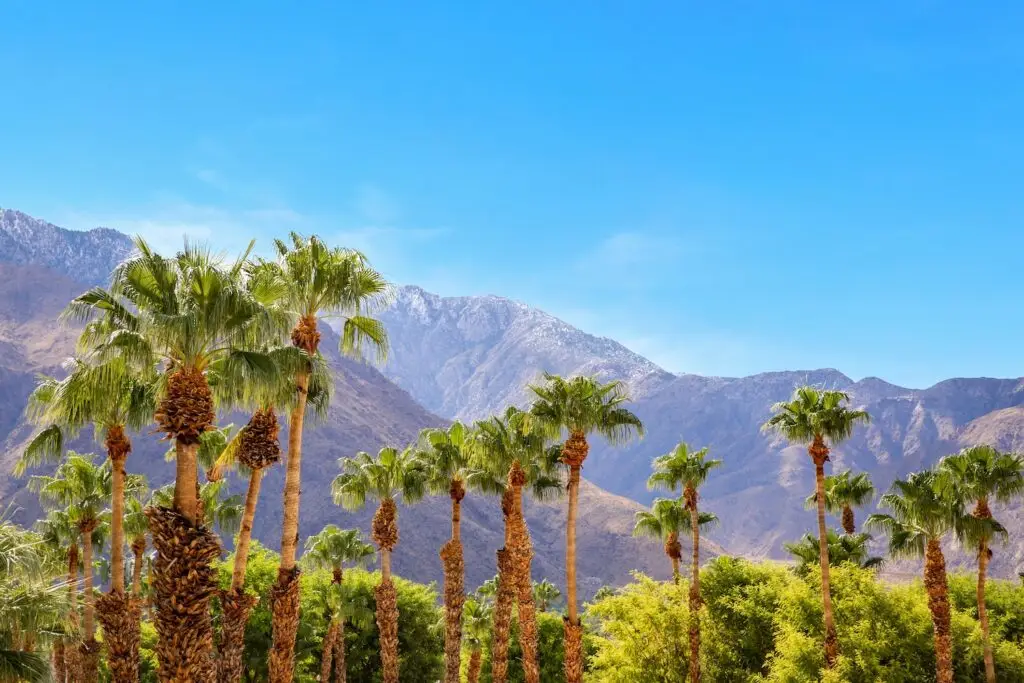
At the hushed wellness resorts in the valley’s western end, visitors soak off their stress in the natural mineral waters that gave the city of Desert Hot Springs its name. A proposed 200,000-square-foot indoor sports facility with 10 regulation-sized basketball courts may host amateur and youth tournaments and help bolster tourism during the trickier summer months, when temperatures rarely dip below 100 degrees. All together, that equals a whole lot of jobs in hospitality.
Yet other fields are on the rise, helping the area balance serenity with opportunity. “We’ve got this growing group of people with extensive experience in technology. [We have] healthcare, the creative economy, AI, clean energy, agriculture,” says Sean Smith, the director of economic development at Visit Greater Palm Springs. “We have a lot of the strengths that you would look for in a destination for economic development.”
Where it’s historically faltered is offering a real community for the young people who live there. The valley’s 65-and-older population is about 25 percent higher than the California average and, with no major university (there’s College of the Desert, a three-campus junior college system, and commuter offshoots of Cal State San Bernardino and UC Riverside), high school graduates tend to see a mass scattering of all their friends. Locally owned businesses like artist Angie Chua’s are helping provide a place to gather.
Chua moved to the desert and opened her stationery shop Bobo Palm Springs in 2021. She now operates two locations: her flagship Palm Springs store, sandwiched between fellow local, woman-owned businesses like jeweler Adrienne Wiley’s Covet and Stephanie Maynard’s Illumine Gallery at the multi-use space Flannery Exchange, and a vendor space in—you guessed it—The Place.
“This town thrives on small business, but it’s also a really, really hard place to operate a small business,” Chua adds. “We have to deal with seasonality, not just with the weather, but even with labor and finding people to work full-time. It’s such a competitive market with the hospitality industry.” Population growth in the valley is relatively slow (a 2023 report by the Desert Healthcare District and Foundation estimated a 2.1 percent increase by 2027—by contrast, some fast-growing cities in Texas are seeing new residents at a rate of up to 30 percent), and a fair share of the valley’s population flees for cooler climes during the dog days of summer, meaning even your most loyal regulars aren’t always stopping by regularly.
Chua has endured the ups and downs partly by hosting sketching and journaling meet-ups at the Palm Springs store on Friday evenings, including in the summer months. “We have anywhere between 15 and 25 people that come every Friday,” she says. “Palm Springs is historically known as kind of an older town, but it’s got such a vibrancy and hipness and an openness to creativity and inclusivity.”
The shops that line Palm Canyon Drive in downtown Palm Springs reflect the area’s diverse and shifting identities: There are the souvenir shops and slightly scruffy bars and date-shake vendors I remember from my youth; the vintage furniture stores and galleries central to the valley’s reputation as a hub for midcentury design lovers;and a new guard of stores that combine a savvy, social-media-informed coolness with hometown pride.
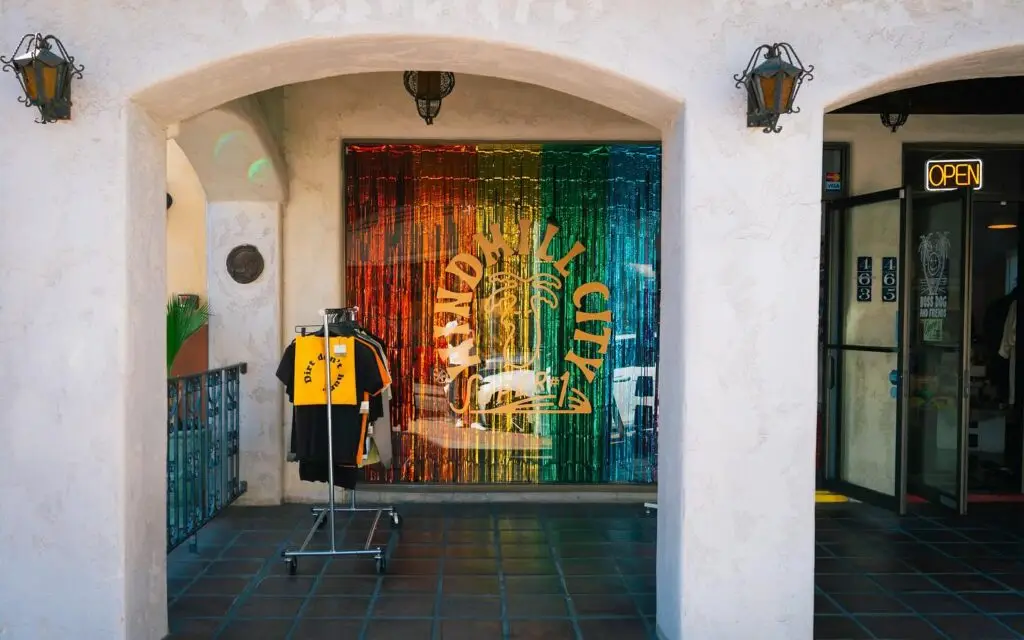
In the cheeky boutique Windmill City Super #1, some merch is universally giftable (“P.S. I love you”), while other products are a little more of an inside joke (“Desert Rat” or “Higher Than San Jacinto,” the mountain range that rises tranquilly behind the storefront, tourists riding the famous Palm Springs Aerial Tramway to its peak).
This is still a place to bathe in a hot spring, tour a Donald Wexler house, or go to a music festival, but it’s become a dynamic cultural destination in its own right. Gone are the days when I tell people I’m from Palm Springs and they shrug and say, “Oh, my grandparents have a timeshare there.” Now, impossibly, they’re sometimes jealous.
Maybe Gabriel Woo knew it was always going to turn out this way. The chef got his start washing dishes at a Rancho Mirage country club at age 15, and now he’s one of the most successful culinary minds in the valley. “I never thought of leaving,” he says. “I’ve traveled a lot, but I like it here.”
We’re sharing fruit and burrata and a California artichoke dip I could eat by the spoonful at his restaurant Livs, which opened in the Palm Springs Art Museum a year ago. Our table is surrounded by sculptures and an angular, ornamental pool. Woo also owns the Michelin-recommended Bar Cecil in Palm Springs, and he’ll launch the Italian spot Donna Forte in downtown Indio this year.
Two decades ago, he was in culinary school, looking to find a place to try out fine dining. “There was nothing here. [Palm Canyon Drive] was dead. There were some legacy restaurants, but they were doing, you know, Rat Pack stuff. So, I said, ‘You know what? When I become a chef, I’m gonna open restaurants and be the destination for people when they come to Palm Springs.’”
A handful of years later, he adds, the city started its metamorphosis. “I could see the younger people opening up places, talking, building things together—“Let’s do this; let’s do this.” I started feeling that,” he reflects. “And I could tell, ‘Oh, now it’s getting fun.’”
Where to Stay in Palm Springs
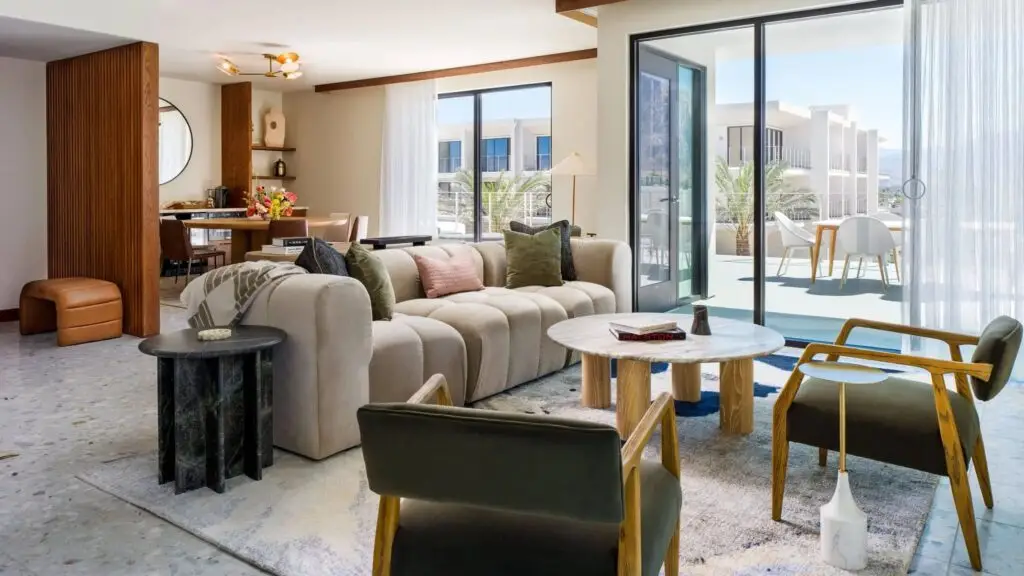
After nearly 20 years of development and construction, the Thompson opened in October 2024 between downtown Palm Springs and the city’s artsy Uptown Design District. A stay at the sprawling property puts you walking (or cycling, if you grab one of the hotel’s free bike rentals for guests) distance from Palm Springs’ shops and restaurants and a little over half an hour from downtown Indio on the other side of the valley.
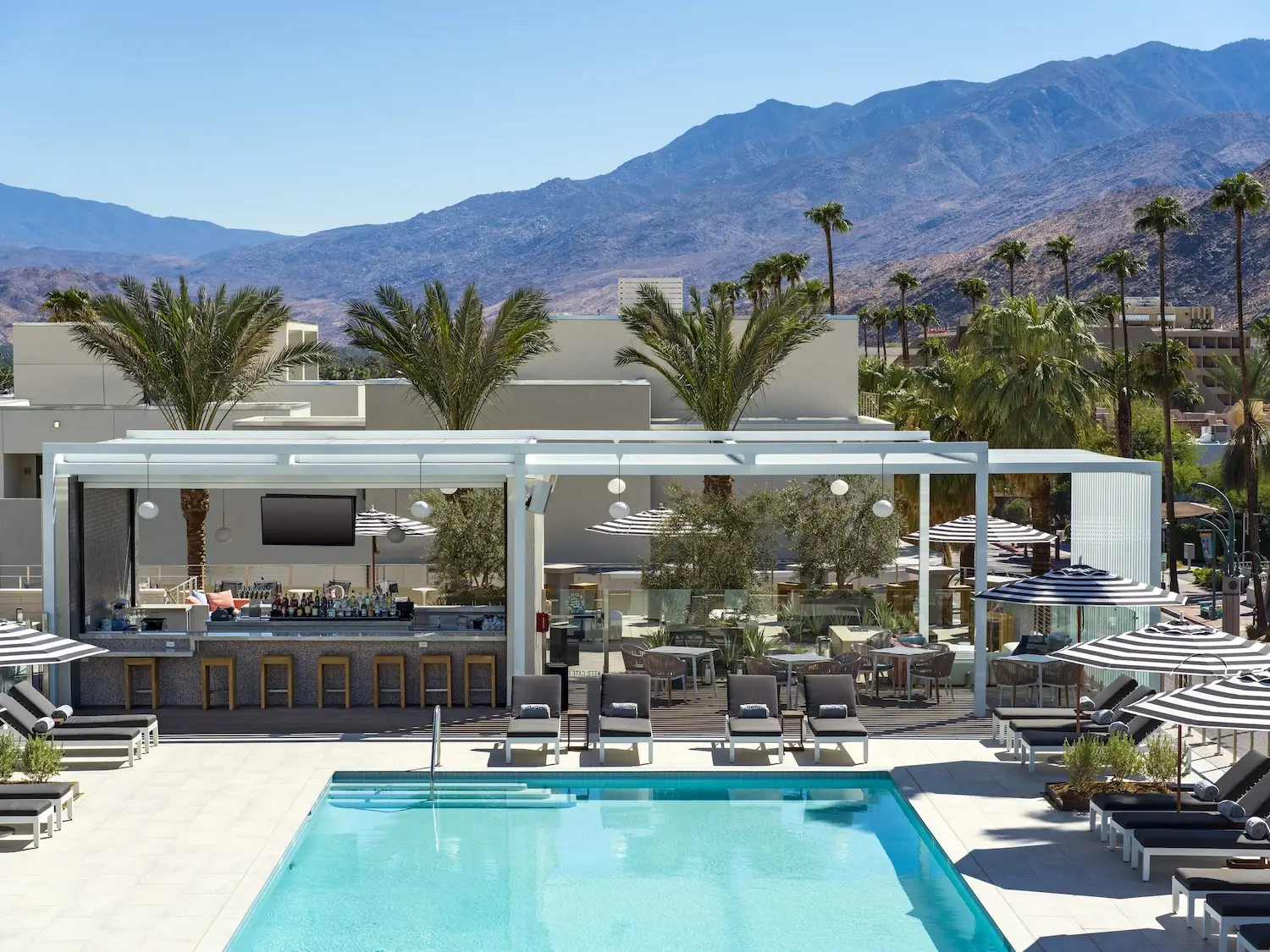
It’s a bit of a maze here, but that just means surprise delights await around every corner: boundary-pushing pieces from world-class artists, many of whom also have work on display at the nearby Palm Springs Art Museum (no staid landscape prints here); cozy outdoor fire pits; a glass-walled pool deck that offers prime people-watching on the stretch of Palm Canyon Drive below.
The Thompson is a partnership between Hyatt and developers, philanthropists, and winemakers Craig and Kathryn Hall, so you’ll find a tasting room for the couple’s Napa Valley wines onsite, along with Bar Issi, a chic spot for pasta, pizza, and spritzes. The hotel’s other restaurant, Lola Grand Mezze, serves Mediterranean food all day in a high-ceiled space that looks like the giant living room of your rich, worldly aunt. Try the Santa Barbara spot prawns; the baklava old fashioned; and (believe it or not) the fenugreek chicken wings, drizzled with chili oil and sprinkled with hazelnut dukkha.