Featured articles
Food & Drink
Features
Food & Drink
Featured articles
Features
Things to Do
What's next
Featured articles
Featured articles
Food & Drink
Features
Guides
Featured articles
Food & Drink
Partner content
Features
Ready to know more about San Diego?
SubscribeReady to know more about San Diego?
Exploring The Mile High City's lowkey cool—plus a walking tour through five neighborhoods
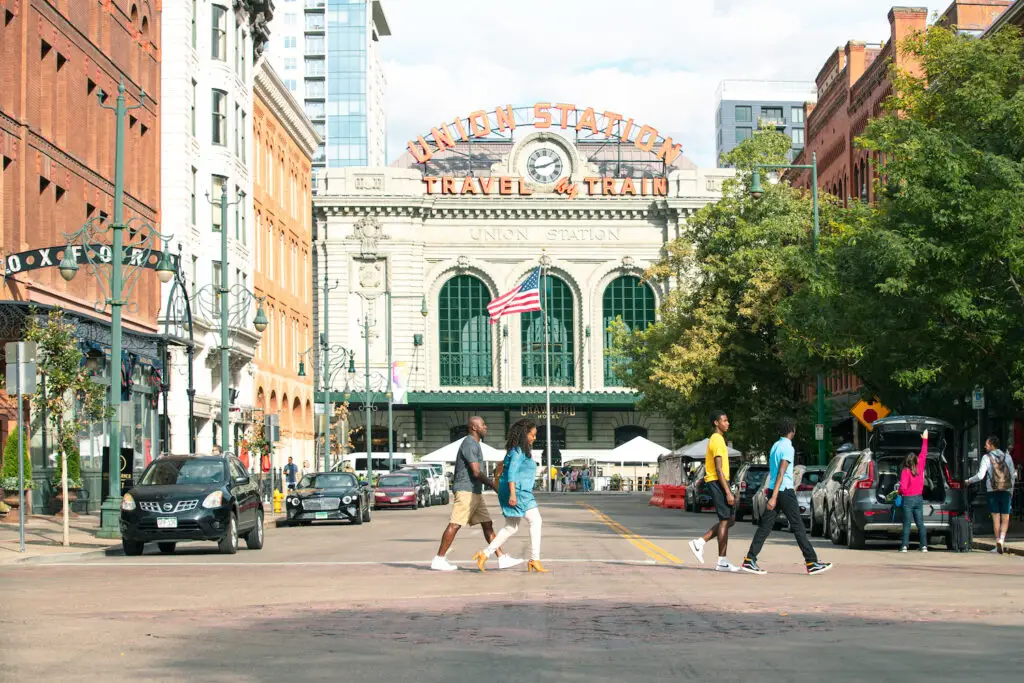
How many American cities do you know that radiate an energy and cast a spell? A handful probably come to mind: New Orleans, New York, San Francisco.
But Tennessee Williams said beyond those few, every place else is just Cleveland, which is a category you may assume Denver, Colorado fits snugly into. However, Denver, I’ve found, if done right, packs a particular type of flavor that might make it more memorable than expected—you just need to put your walking boots on. Cleveland (much love) be damned.
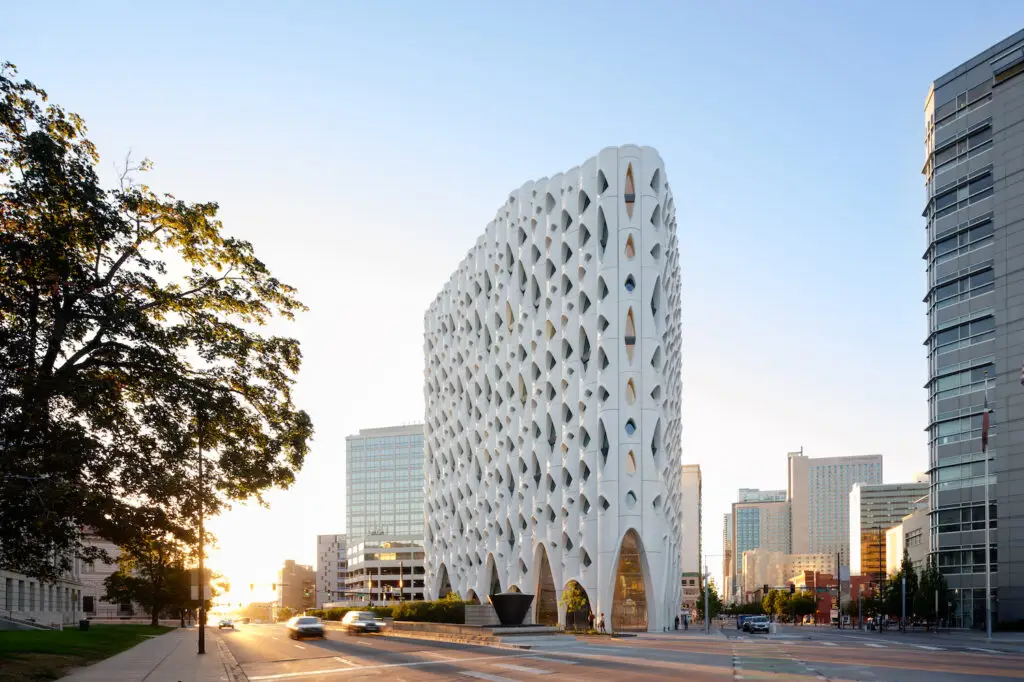
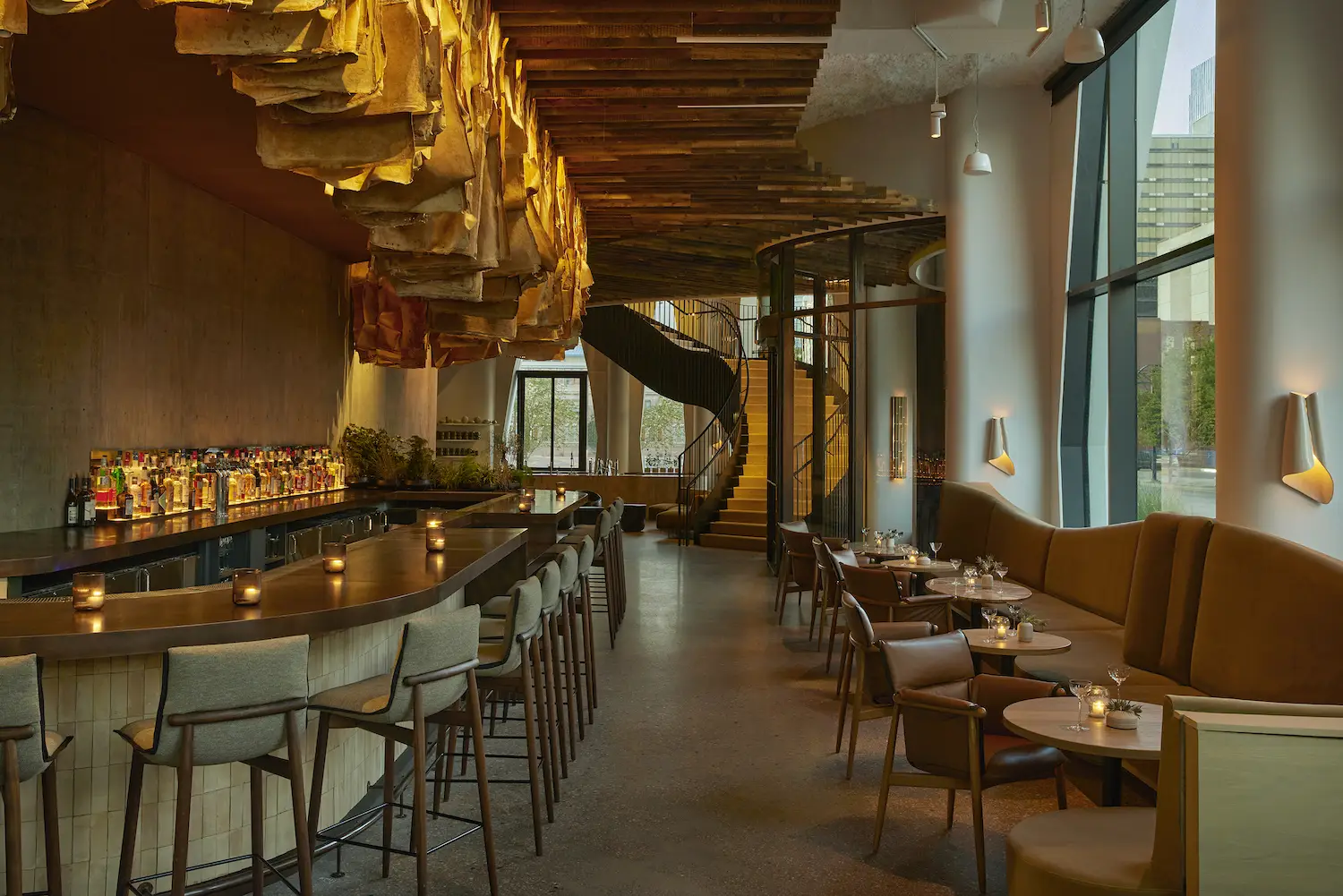
The Populus Hotel, Denver’s newest architectural icon, is a solid jumping-off point for visitors. Modeled after Colorado’s iconic aspen trees, Populus is fetching outside and in with nature-inspired design woven throughout. With reclaimed beetle-kill wood in the main areas and mushroom-based fabrics hanging from lobby restaurant ceilings, it’s a forest-lover’s downtown dream, built with an eye toward ecological harmony. The hotel composts all food waste with an onsite biodigester, utilizes no single-use plastics, and claims to plant a tree for every night a guest stays. The room fobs are crafted from wood and given to guests in a square sleeve of handmade paper strewn with wildflower seeds for planting.
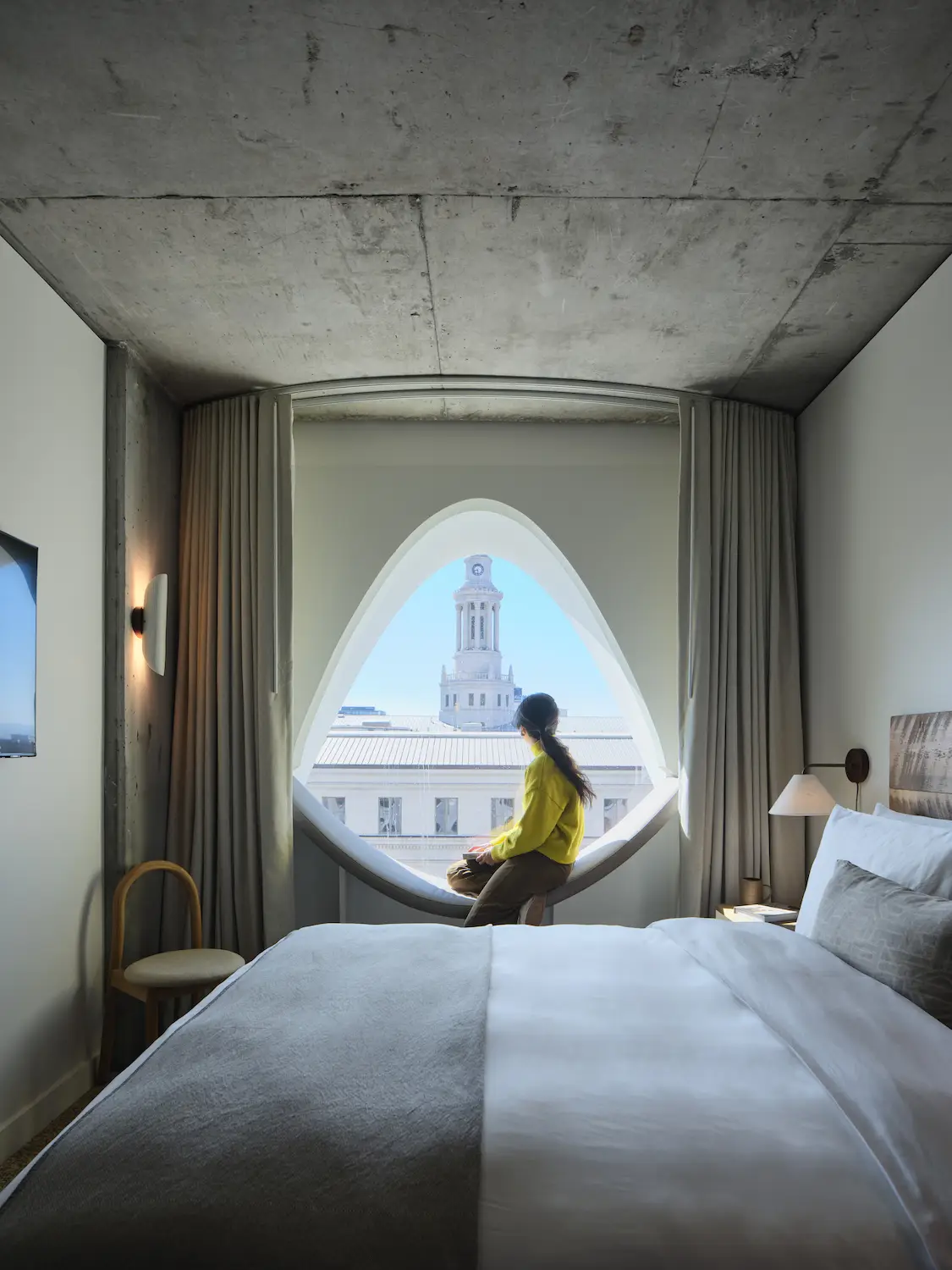
The king rooms are cozy but still new-feeling, clean, and—most importantly—comfortable. Almond-shaped windows frame curved, hammock-like padded benches (presumably for lounging, but lord only knows what the neighboring office buildings see). Outside, it’s all city views, with the Rocky Mountains in the distance. From up here, Denver vibrates.
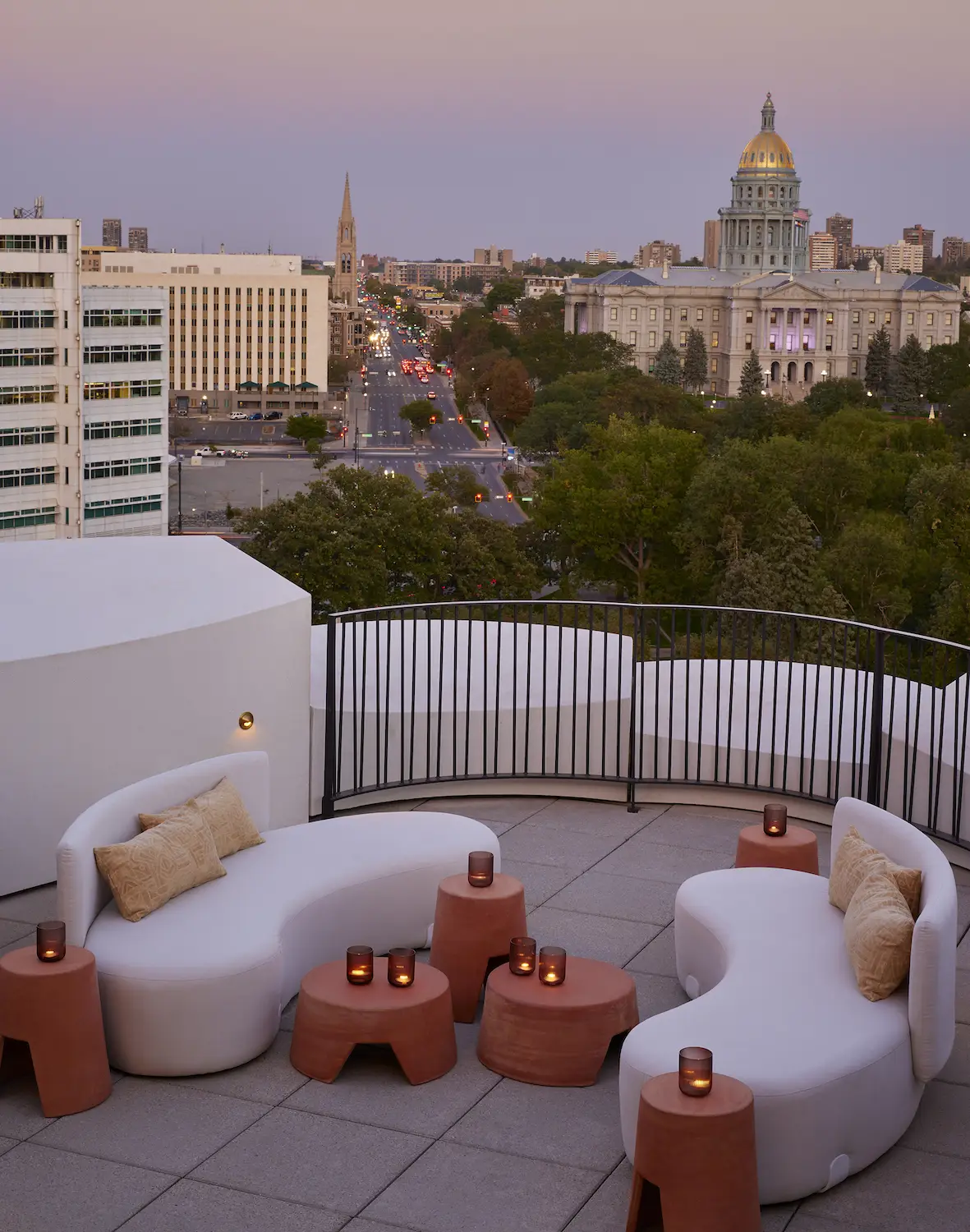
The rooftop restaurant, Stellar Jay, is worth visiting whether you call a coast home or live nearby. Here, the specialty is open-flame cooking—meat mostly, but some veggie sides can be arranged. The fires in the open kitchen grow large, hypnotizing visitors with flares as tall as barstools. An aroma of campfire grill fills the air (and, disconcertingly, the upper floors of the hotel below). The restaurant sources local ingredients from regenerative farms, and the food arrives with a relaxed elegance that matches the space—farm-to-table, but without rubbing your face in it.
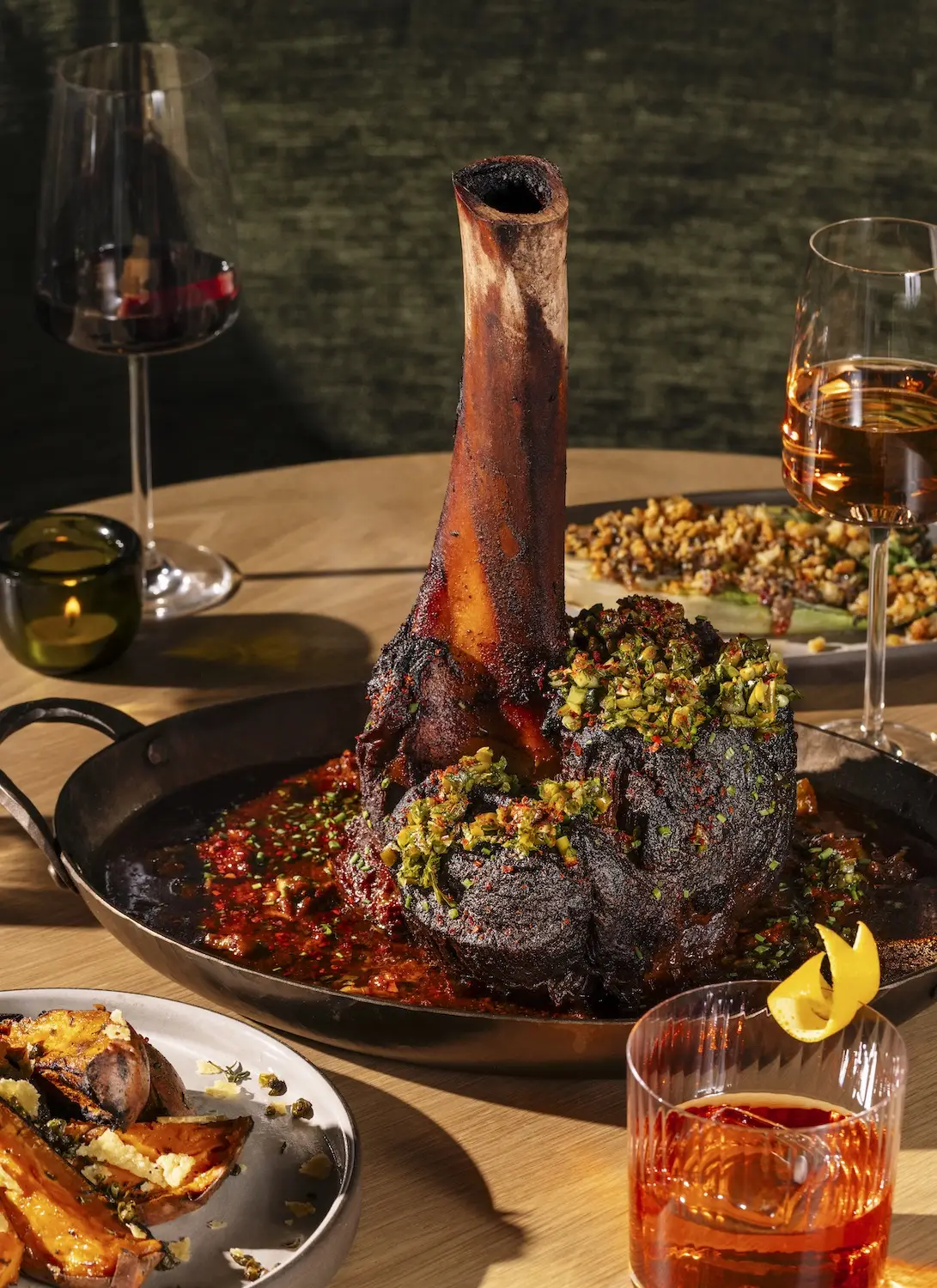
The local trout with pickled fingerling potatoes and fennel gremolata ($31) felt presidential. My wife and I don’t really eat pork, but when the chef sent out a bone-in pork chop ($41) with puréed parsnip, star anise, and radicchio agrodolce (an Italian sweet-and-sour sauce), we were surprised to find ourselves finishing the plate. The spicy carrots with cannellini beans ($16) and harissa and the sugar snap peas with tahini ($16) were worthy of a return trip.
The vibe up here: unexpectedly fabulous. One would not be far off to assume that— not unlike San Diego—Denver’s upscale restaurants see plenty of baseball hats, golf shirts, shorts, and yoga pants, alongside the occasional parking cone–orange Broncos jersey. But we saw more designer dresses than athleisure, which for Denver (or SD, for that matter) is saying something. A refined mood with a view where the food shines like the sun glinting off a ski run is nothing to take for granted.
Outside, Denver, with its oft-cited 300 days of sunshine a year, is walkable year-round. In spring through fall, the heart of Denver is best explored on foot (possibly with a coat and scarf for comfort). Walking a city is all about improvisation. Go where the green lights guide you; let the winds blow you where they may. As long as the coffee is hot and the beer is cold, you’re good. Denver, it turns out, is all about improvisation.
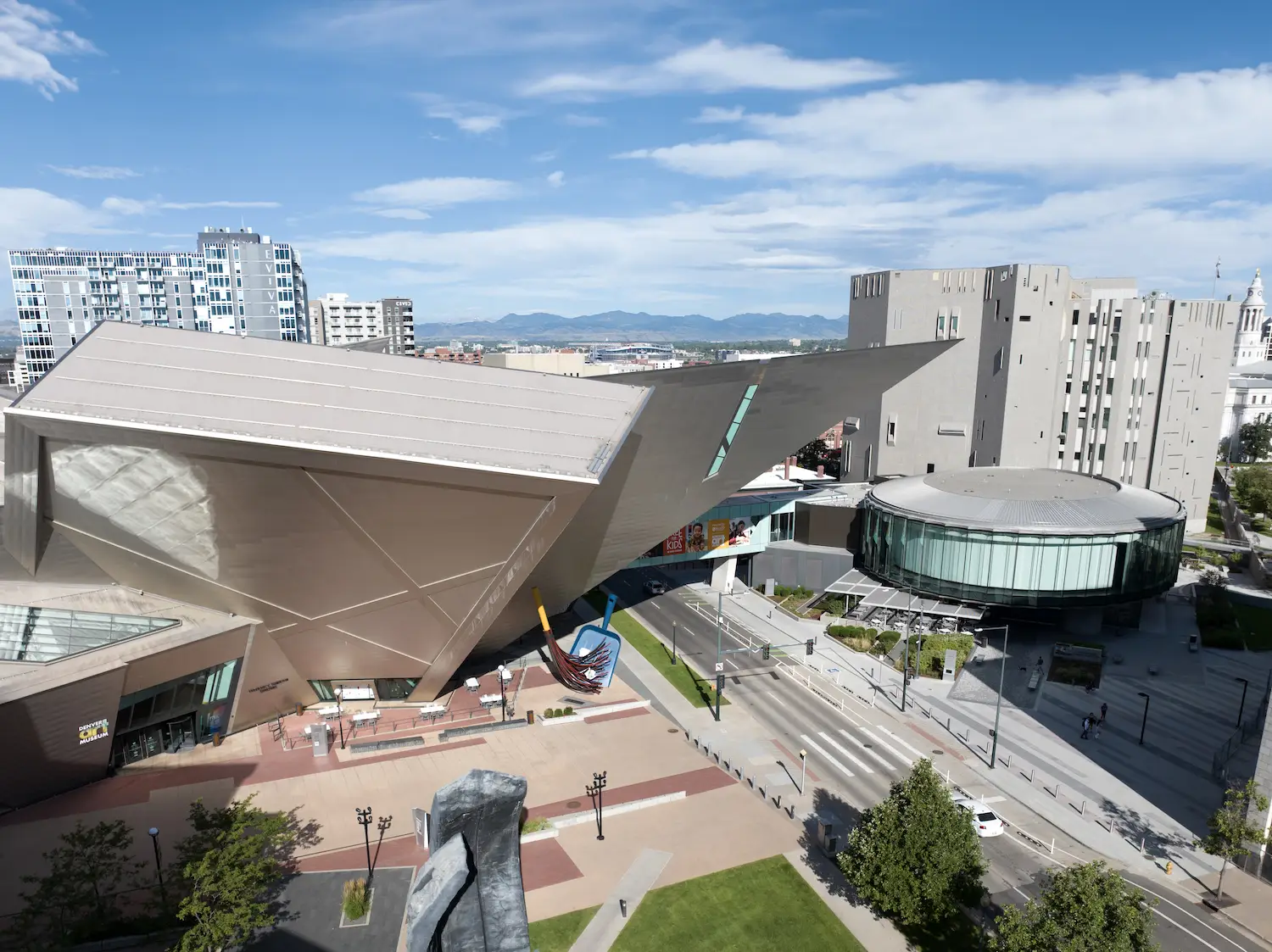
I like to start in Capitol Hill, full of countless classic bars, restaurants, and music venues, as well as Denver’s best museums. For this, Populus’ location is solid—you can cross a few streets and be in the artistic embraces of the architecturally wild and tremendously underrated Denver Art Museum or the Clyfford Still Museum (less cool architecturally but unbelievably cool inside), where American abstract expressionists’ paintings get the star treatment they deserve. If you’ve ever found yourself punched in the heart by a Rothko, then the Still may prove your mile-high cathedral. Even the nearby central library is fun to explore.
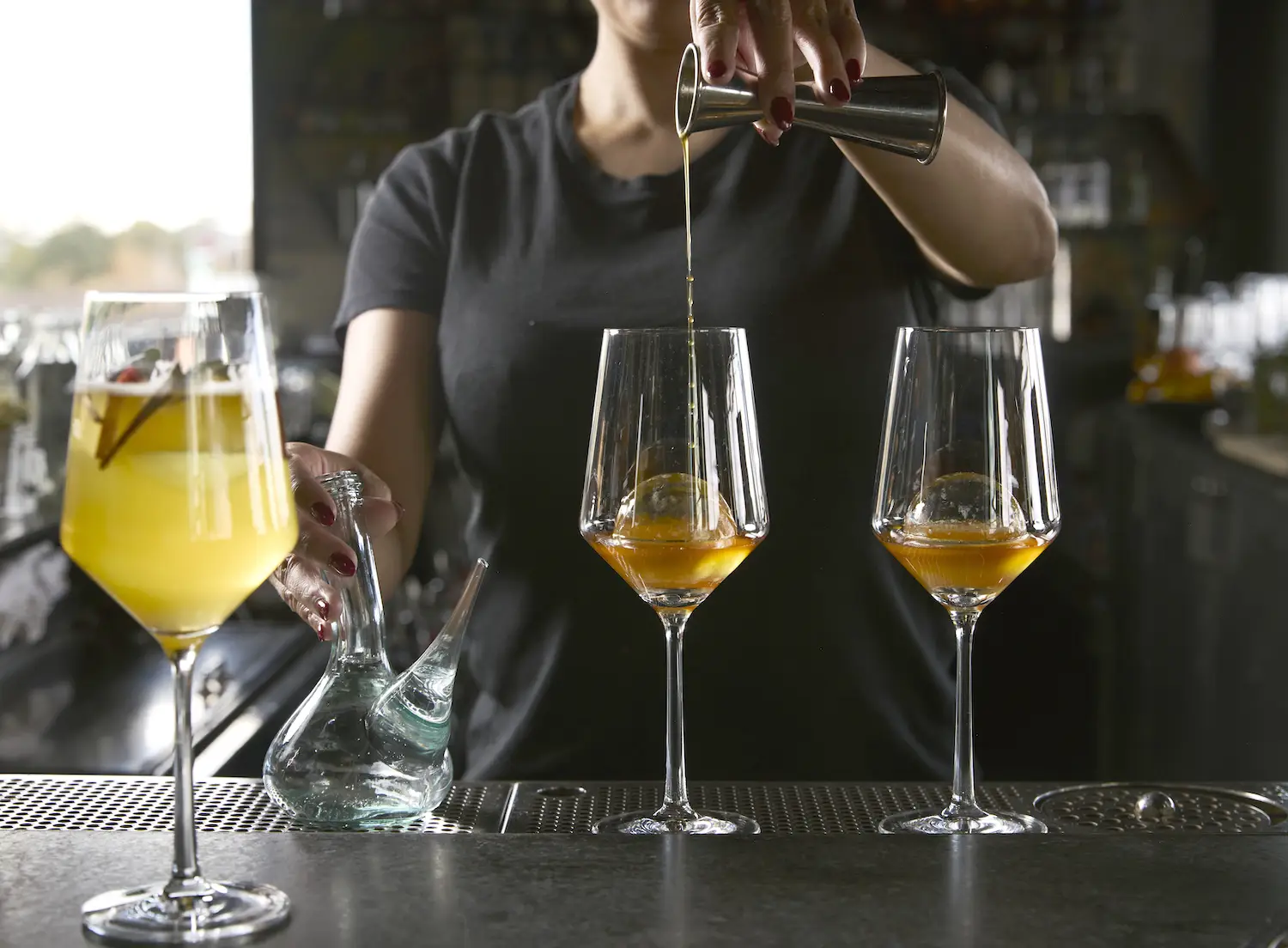
The Colorado State Capitol building is here (obviously), as well as one of the best food and drink spots in all of Denver: City o’ City, a coffee and booze diner where the area’s hipsters have long gone to work, eat, hang out, and drink carefully crafted stimulants and depressants. If you happen to be gluten-free or prefer a veg-forward meal, this is your Denver office.
From here, head down 16th Street, the walking-mall heart of downtown with an abundance of tourist shops, bars, and dispensaries. The restaurants on this strip are hit or miss, and so are the crowds, but you can still find solid vibes at the Appaloosa Grill, which spotlights live music every night of the week. Don’t miss The Yard milkshake bar for treats, and grab a Mission-style burrito (and queso) at Illegal Pete’s, a Colorado institution.
A free mall-ride shuttle runs the length of 16th Street, so if you want to give your feet a rest, this is the move. Either way, at the east end, you hit Lower Downtown (LoDo), where tons of restaurants are doing cool things and the shops get a touch less touristy and a bit more refined.
From here, you can head over a walking bridge across the South Platt River to Lower Highlands (LoHi), a residential neighborhood spoiled with great places to eat. El Five, a top-floor tapas and paella spot, offers killer views and food worth waiting for, if you can get a table. The coveted patio is next-level.
An alternative option: From LoDo, you can easily stroll north-ish to the historic neighborhood of Five Points, dubbed the River North Arts District (RiNo) by developers. RiNo is arguably the hottest ’hood in the city these days— think music, food, drinks, street art. Then add more music and more drinks.
If you happen to be in RiNo on a Wednesday night, you can plug into one of the best scenes in all of Denver at the underground bar Meadowlark. Here, an intimate outside back patio houses the Off the Cuff series, a weekly residency bringing local and national acts for extended improv jam sessions with host Eman Alexander (@namebackwardss). Alexander, a talented musician and Denver native, puts on these shows to highlight music from his city’s rich, multicultural community of artists. The crowd is mixed in age, ethnicity, fashion, and reverence for Chappell Roan. It’s a welcoming space for dates or meet-ups or to simply come through for music and dancing. And, unbelievably, it’s free.
“There’s a huge underground scene that’s happening, and it’s not really being talked about,” Alexander tells me when I hit him up later to discuss Denver’s unique, understated energy. “It’s psychedelic; it’s R&B, jazz. I expect to walk into a bar here and be like, ‘Oh, I’m gonna chill here, because the music is good.’ You can be listening to a live hip-hop band, and then you walk into another bar down the street, and they’re playing some bluegrass or folk, and they’re killing it, you know? There’s a real diversity here.”
Indeed, Denver is quietly popping off with music. The city’s legendary Mercury Cafe (LoDo) hosts Friday night jazz jams; Herb’s (LoDo) brings out some of the best underground talent in the city; Dazzle (downtown) leans hard into improvisational music in a true jazz club setting; Two Moons Music Hall (RiNo) features everything from bluegrass to neo-soul; and Gerard’s Pool Hall (RiNo) is a deep-cut venue for live acts. “That’s where I go on Thursdays when I’m trying to catch a vibe,” Alexander says.
Sure, this ain’t the Lower East Side; it’s not the French Quarter or the Marigny; it’s not the Mission. But the best thing about Denver is it’s not trying to be.
“There’s definitely something that’s bubbling,” Alexander says. “Once you see that all these amazing musicians live in Denver, you understand, Oh my god, this is so dope.”
So, get walking. A trip to Denver is what you make of it. It’s improv. It’s who you talk to and how many steps you’re willing to take to get where you really want to be.
Stretching over a mile through the heart of downtown, 16th is Denver’s pedestrian-only promenade, with historic brick buildings, street performers, chess players, and restaurants galore. Some downtowns can be overwhelming. Denver’s is not. This is where you come to embrace being a tourist.
LoDo is one of the liveliest neighborhoods for late nights. Cobblestone streets and exposed brick buildings are now home to rooftop watering holes and the kinds of beer joints college kids flock to like mosquitos to a blue zapper. This is where you close down the bars and grab late-night eats.
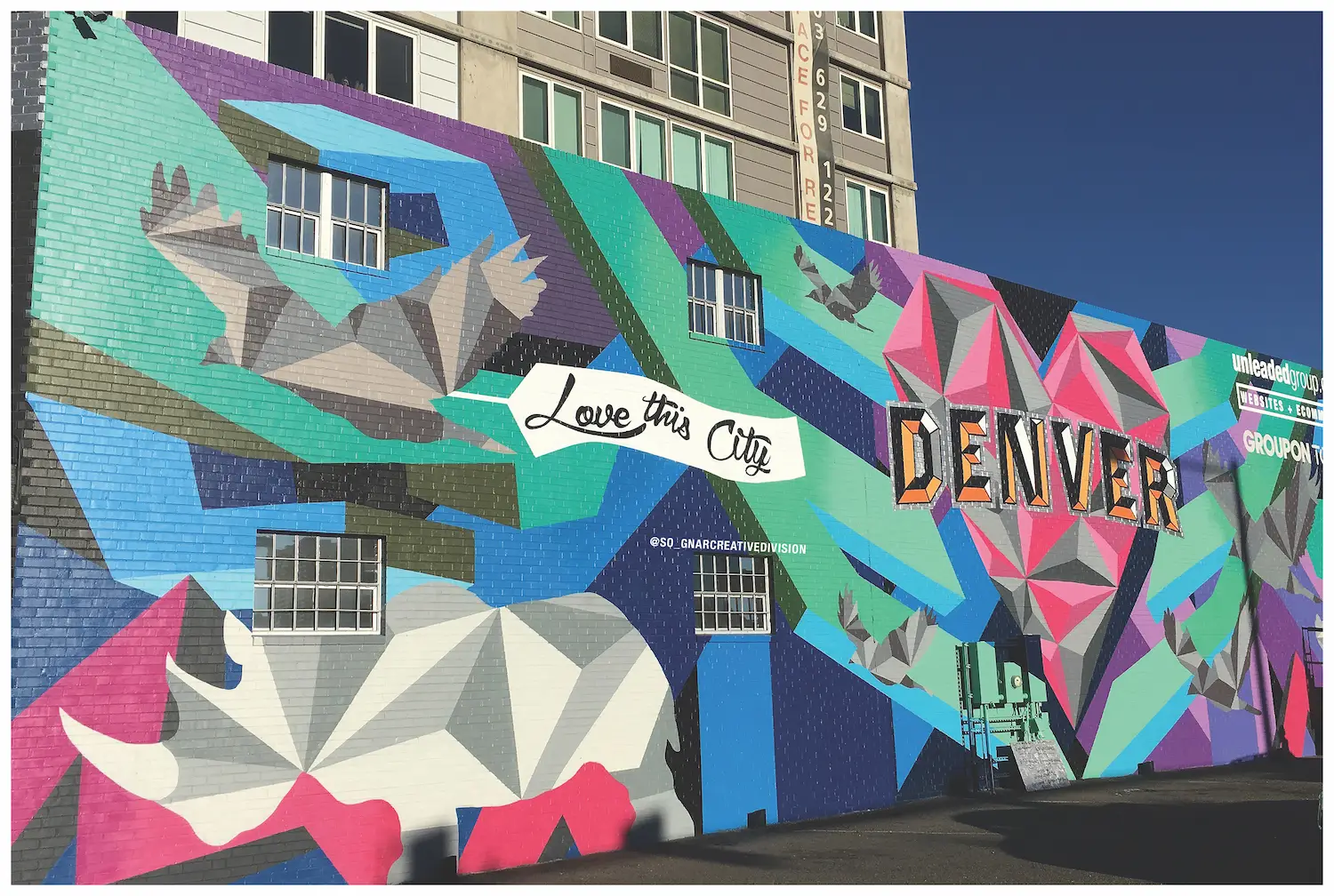
Once a warehouse district, RiNo is now Denver’s creative playground, a mecca for street art, small-batch breweries, and galleries that moonlight as secret music venues. Think hipster coffee and tons of great food options. This is where you come for the muse-like inspiration many travelers seek.
Hip and homey, LoHi is full of Victorian houses, scenic walks, and some of the best food in the city. This is where to bring the fam.
In CapHill, Denver gets weird in a good way—poets, punks, and politicos and historic mansions, dive bars, and high art. This is where you’ll find your new favorite kombucha flavor or decide to quit your 9-to-5 to become an abstract sculptor.

Mateo Hoke is a journalist and author. His books include Six by Ten: Stories from Solitary, and Palestine Speaks: Narratives of Life Under Occupation.
Eighteen seconds, one unforgettable mistake, and a Fourth of July story that somehow gets better with age
There’s a famous video.
“This is insane!” the guy filming it seems to proclaim. “It’s the best fireworks show ever!” a companion confirms, inspiring a debate lasting over a decade.
All told, 7,000 fireworks exploded in the span of 25 seconds over San Diego Bay on July 4, 2012. A Michael Bay amount of unison. $125,000 worth of shells, cakes, Roman candles, and skyrockets had been placed on a barge—enough for 17 minutes of decorative sky flares—and…
Boom.
The sky looked like someone had set a giant Rorschach test on fire. Or as if whatever we all see in our Rorschachs—butterflies, clowns, tongue kissing, dads—was being electrocuted and lifted heavenward, amen. It was shocking how bright it was, how much it sizzled the local cosmos. Could’ve been one of those sci-fi films where a hole is ripped open between warring universes. But angstier, more metal—the work of some methy creator in a sleeveless concert tee.
The sound?
Lou Reed once released an entire album that contained 64 minutes of mindflaying guitar screeches and machine noises. No regular songs, just a fascinating amount of ear distress. His record label reps no doubt heard the melodic outro of their careers, but everyone else was in pain and stumped. That album still sounded better than the bay did that night. The bay sounded like a god who struggled with emotional regulation had blown his speakers and was working through the anger stage of AV grief.
In the left frame of the video, a middle-aged woman is attempting to drag her husband off by the hand. In no way does he want to go, possibly because he had missed the time Roseanne Barr sung the national anthem at a Padres game, simultaneously disemboweling and amusing America through the power of song. He would not willingly abandon an equally worthy San Diego trainwreck.
Another woman in the video appears to have just filled her beer, rushing to sit down for the show. She pauses mid-sit and returns to the full and upright position to properly bear witness. What was supposed to be prolonged entertainment has been so radically shortened that she will have to find another reason to drink. Lucky for her, drinking will be the only way to adequately process.
Locals remember the conspiracy theories. People wondered if the fuses had been tripped by a saboteur who was sympathetic to dogs, fish, or the growing suspicion that late-stage capitalism is a gorgeously branded but impossible dream sustained by remarkably efficient top-tier wealth retention and the soft compliance of fireworks-watchers who can no longer afford a house, a beer, or the personal impacts of human reproduction.
Speaking of being terrified of babies, babies were terrified. The children who witnessed it probably still can’t go near a candle store. But those kids will be tougher, perfectly scarred kids. They’ll write better songs.
That night helped us absolutely dominate the national news cycle. For a hot minute, we became America’s water-skiing squirrel. Now, years later, when you Google “fireworks gone wrong,” San Diego is always a top contender, along with that poor Nebraska family who nearly wiped out a couple generations in their front yard, their minivan somehow turning into a howitzer of recreational TNT.
There is still debate as to whether Big Bay Boom 2012 is the worst or greatest fireworks show of all time. But the advanced parts of civilization arrived at the truth as quickly as the women in the video did. It was undeniably amazing.
First of all, the point of Fourth of July fireworks isn’t “the intricate choreography of sky fire over a guaranteed amount of show time.” It’s about creating a vivid memory shared with some people you like, love, or would like to love.
BBB2012 used large-scale chemical fire to create the ultimate memory.
Sure, some people who iron their jeans subjected their family to a sermon about how San Diego managed to botch America’s birthday like a Disney princess-for-hire who smelled of quite a few Sauvignons.
The rest of us saw how perfectly it nailed the actual feeling of being an American. Because only a miniscule percentage of us bake postcard apple pies where every inch of crust is perfectly laminated like the wood in an Irish bar. Very few of us can paint on par with Picasso. The rest of us—despite truly believing in our America-activated abilities to achieve greatness in almost any field of our choosing—burn pies. We try to paint only to realize it looks like our fine motor skills have entered active death.
That’s why BBB2012 was the most perfectly American fireworks show ever: A wildly ambitious idea galvanized thousands upon thousands of people to both work on it and come to hold a beer and gawk at it, only to have it fail in the most glorious TMZ-level spectacle.
America isn’t about immaculate, storyless wins. It’s about how the framework of a country is solid enough that we can accidentally detonate our entire lives—a few times—and still probably be OK.
No one has America’d quite like San Diego did on that day. It was performance art. Lou Reed’s heart slow-clapped. Any brief municipal embarrassment quickly became a pride of our people. I can only hope the same for the Nebraskan yard family whose Dodge Aerostar became a hyperactive Death Star.
P.S. Local writer Maya Kroth compiled a quite great oral history of that night for Thrillist. The bottom lines for me were—it took nine months to prepare, no one was hurt, and even though the pyrotechnics company tried to zero out the bill, Big Bay Boom founder H. P. “Sandy” Purdon refused and paid them in full. This year will mark the 25th Anniversary of the yearly Big Bay Boom.
Troy Johnson is the magazine’s award-winning food writer and humorist, and a long-standing expert on Food Network. His work has been featured on NatGeo, Travel Channel, NPR, and in Food Matters, a textbook of the best American food writing.
From surprise revivals to changing dining habits, these are the shifts redefining the local culinary landscape
If absence makes hearts (and stomachs) grow fonder, then shuttered restaurants quickly become the hottest tickets in town—something a number of iconic institutions found out after taking very public hiatuses after historically long runs. For instance, following a lengthy (and extremely flip-floppy) closing process after 92 years in business, Las Cuatro Milpas reopened two blocks away in Mercado del Barrio. Similarly, Carlsbad butcher shop Tip Top Meats reopened in the same location (albeit a smaller space) after the death of founder Joachim “Big John” Haedrich in 2023. Finally, after a whopping decade out of business, Sami Ladeki and chef Alfie Szeprethy brought back Roppongi to its original Prospect Street space, where it was the talk of the town in the late ’90s. All came back under the same proprietors, so they weren’t third-party nostalgia-licensing deals. The algorithm may have ravaged our attention spans away from all but the newest and shiniest, but this proves there’s still hope for our collective prefrontal cortex.
Other local eateries honored their pasts by bringing in new perspectives. The Lion’s Share in Embarcadero, Milton’s Deli in Del Mar, Dudley’s Bakery in Santa Ysabel, and J-K’s Greek Cafe in La Mesa handed over the keys to new owners willing to take on a big task: maintain the soul of icons through particularly rough economic circumstances for restaurants, navigate big feelings from longtime regulars (who often don’t take kindly to change), and make some necessary changes to keep going for another few decades. Taking over a project in process can be a lot harder than starting from scratch. But building that feel-good nostalgia doesn’t happen overnight, so it sure helps to have a well-established playbook of success passed down from those who came before.

It wasn’t just restaurant groups from Los Angeles that decided to put down roots en masse, although San Diego saw plenty of LA transplants recently (Sugarfish, Mr. Charlie’s, For the Win, Katsuya Ko, Bacari). Global brands like Chef Fei, Zuma, and Pepper Lunch have locations of their own on the way, and upscale Canadian eatery Joey joined to the inescapable gravitational pull of Westfield UTC’s culinary cosmos for its first spot in America’s Finest City. Good to see the rest of the world is catching up with what we’ve been seeing the last few years—San Diego is a dining destination already on the rise.
Between the never-ending news cycle of doom and perimenopause brain fog, I’m at the stage in life where I’m more than happy to let someone else make a decision for me, especially when it comes to what’s for dinner. And based on the way a lot of menus look right now, I’m not alone. It seems like half the places I visit offer some version of a prix fixe, omakase, or tasting menu. Restaurants are embracing the curated experience to solve the problem of affordability (a fixed menu reduces food and labor costs, guarantees an acceptable check average, etc.) and critical thinking in one fell swoop. Omakase (meaning “I leave it up to you”) is far from a new concept in high-end Japanese sushi culture, but now that it’s popping up everywhere from coffee experiences to grab-and-go sushi and sandwiches, it’s gone from somewhat niche to nearly omnipresent.

The world got an up-close look at San Diego’s coffee industry when we hosted the premier specialty coffee expo World of Coffee for the first time this April. San Diego’s long and rich coffee history stretches back to the late 19th century. Things percolated fairly quietly for around a century before really picking up steam. Today, there are nearly 200 specialty roasters and cafes across the county, with many earning national accolades like the Good Food Award (Steady State Roasting, 2020; Bird Rock Coffee Roasters, 2023, 2021, 2019, 2017, 2016), Roaster of the Year by Roast Magazine (Mostra Coffee, 2020; Bird Rock Coffee Roasters, 2012), and the Specialty Coffee Association Coffee Design Award for packaging (Rikka Fika, 2026). Now that we’ve moved past the comically insufferable coffee snob era of the early 2000s, even java newbies can feel comfortable walking into pretty much any coffee shop in San Diego, asking questions, trying a few things, and feeling confident they’re going to get great service and a great beverage.
Beth Demmon is an award-winning writer and podcaster whose work regularly appears in national outlets and San Diego Magazine. Her first book, The Beer Lover's Guide to Cider, is now available. Find out more on bethdemmon.com.
We ask the city's best food photographers to choose their favorite pics and share their secrets to capturing a drool-worthy pic
Food is a notorious diva to photograph. The wrong lighting can make José Andrés’ paella look like a jaundiced grain bowl. You could be staring at the best sandwich of your life, but shoot it from above and—hey, congrats on that abandoned piece of lettuce bread. A cottage meme industry has been built around the hilariously bad photos on review sites that make Michelin-star food look like Michelin tires.
Especially in a visual modern media world, food culture depends on great photographers capturing the painstaking work in equally deserving ways. We asked four of San Diego’s top food photographers for their favorite shot from another year of documenting what we eat.

Getting this kind of shot takes a bit of yoga. Asana yourself into the corner, hold your breath, pray that a chef on the move doesn’t back into your light stand.
“You’re stepping into someone’s workspace during their busiest moments, so it’s a balance of being present to get the shot and being invisible to not slow anything down,” Kimberly Motos says.
The subject here is the Birdman sandwich from Chick & Hawk—hot fried chicken thigh, tangy slaw, kimchi comeback sauce, sweet and spicy pickles, potato brioche bun—getting a hearty dousing of its difference-maker seasoning. Motos captures the parts of the process that diners don’t usually see: the chaos behind something that looks so simple.

“I love this image because it feels like a moment you want to step into,” says Lucianna McIntosh. A warm, sunny day at The Fishery in PB with oysters, caviar, and martinis. Yes, please.
The little details—the glass sweating a little, the direct afternoon light creating stark shadows, the oyster glistening on the tray—are the main characters. Instead of trying to overly control the setup, McIntosh “followed the light and lines that draw you in more,” she says. “This was one of those moments where everything lined up on its own for a second. I love it when the shadows end up being just as important as the food itself.”

La Jolla native Eric Wolfinger—who won a James Beard Award for Tartine Bread, one of the most stunning bread books of all time—says he doesn’t have a signature style. His style is a conduit.
“I see my job is to translate the chef’s point of view into something you can feel,” he says.
For this shot, Fleurette chef Travis Swikard had one directive: cuisine du soleil (“cuisine of the sun”). With a spread of leeks vinaigrette, herb-roasted golden chicken, and beets, Wolfinger wanted to create a scene that felt straight out of the French Riviera, relaying the light, bright style of Swikard’s new spot.
Some bonus additions here: Extra lights—to add lots of warmth—and a clipping from an olive tree.

Timing and light are everything in food photography. In Lucien—La Jolla’s tasting-menu-only restaurant with moody ambiance—a single strobe flash creates the ideal spotlight.
Dee Sandoval says she uses the “natural, just-plated energy” of the dish to “create a portrait of moment and craft.” That’s why this Mostra Ghost Bear espresso ice cream—with San José dark chocolate mousse, soy-miso caramel, and koji shoyu chocolate sauce—looks like it might dissolve halfway to your mouth.
Emma Veidt is an editor at San Diego Magazine. She earned her bachelor's and master's degrees from the Missouri School of Journalism. She loves running, hiking, and rock climbing, but really, she mostly loves encounters with the street cats around North Park.
Tips from the trusted experts at Mauzy Cooling, Heating, Plumbing, and Electrical
San Diego summers can be brutal. But since the hottest period is typically late summer into early fall, San Diegans still have time to prepare. The pros at Mauzy Cooling, Heating, Plumbing, and Electrical are standing by to help homeowners fortify their homes against the elements and ensure their air conditioning is as frosty as the penguins that serve as the company’s mascots.
Many homeowners underestimate the load their AC system faces, especially in the inland valleys where temperatures regularly top 100 degrees. San Diego regularly sees multi-day heatwaves each summer, and a system that struggles on the first day will likely fail by the third. Longer run times, unusual sounds or smells, and uneven cooling from room to room are all signs that your system may not survive the next hot spell.
Systems typically last 12 to 17 years, but there are exceptions. If a system is approaching that, or is already there, a professional evaluation is recommended before summer really heats up. A good rule of thumb: If you can’t remember when your system was last serviced, it’s due.
“As technology changes, systems become smarter and smarter,” says Sean O’Connor, an install manager at Mauzy with 42 years of experience. “There are a lot of people out there who will say a system’s only good for 10 years. I don’t buy that—these systems are built to last as long as they’re taken care of.”
There are also a few steps homeowners can take between services to extend the life of their system. Regularly changing a dirty filter—especially if you have kids or pets—and keeping an outdoor unit clean can help head off problems in the future, says O’Connor.
Also, be realistic about whether it’s time to replace a unit. O’Connor likens pouring money into salvaging a faulty unit with patchwork repairs and replacement parts to “tripping over a dollar to pick up a dime.” When one part fails, others are sure to follow, and newer parts may not be compatible with older units. Mauzy recommends homeowners use the 50% rule: If a repair costs more than 50% of the system’s replacement value, and the equipment is over 10 years old, replacement is usually the better long-term value. And don’t forget the ducting. An older house that was built with heat and later had air conditioning added may not have sufficient airflow, regardless of how good the system is.
Last but not least, homeowners should know who to trust when it comes to their homes. Built on three generations of professional integrity, Mauzy has grown into not just a leader for cooling, heating, plumbing, and electrical services, but a leader in the community known for supporting local nonprofits across an array of causes. To ensure complete peace of mind, Mauzy stands behind a comprehensive 12-point guarantee that outlines its commitment to outstanding service, quality equipment, expert technicians who understand how the local microclimates affect HVAC performance, and no upsells or surprises on the bill.
“We go the extra mile. That’s what sets us apart,” O’Connor says. To get a free quote today, visit mauzy.com.

From San Diego’s coastline to Los Angeles stadium and fan zones across the region, here’s how to experience soccer’s biggest event
When three nations and 16 cities come together to host the FIFA World Cup 2026, the scale stops feeling like a tournament and starts feeling like geography. A continent becomes the stage as borders soften into corridors. And Southern California—shaped by migration, sport, entertainment, and constant movement—sits inside that landscape with all eyes on it.
San Diego and Los Angeles have always felt connected. Hop on the Pacific Surfliner, and the trip unfolds in one continuous stretch of coastline, passing beach towns, neighborhoods, and city centers.
Traveling from San Diego, everything still feels slightly suspended as the Pacific Surfliner follows the coast north with ocean on one side and a slow suburban blur on the other. San Diego stays in exhale. Los Angeles is already building toward something louder.
This summer, Los Angeles will host eight matches of the FIFA World Cup at Los Angeles Stadium, including the US Men’s National Team opener on June 11, while the region stretches into 39 days of programming across stadiums, parks, transit hubs, beaches, and neighborhoods. Instead of one massive fan hub, Los Angeles is embracing a citywide celebration, with fan zones spread across its entirety.
But this pattern has been rehearsed here for decades. In 1994, Southern California became one of the defining stages of the World Cup, when matches at the Rose Bowl placed global attention on the region and turned local stadiums into international landmarks, confirming its ability to hold the world at scale.
What distinguishes Southern California is not just infrastructure, but cultural permeability. Fashion, music, film, art, and sport constantly overlap here, creating an environment where identity is flexible and always in motion. From the Venice boardwalk, where skate culture shaped modern street style, to global soccer stars rubbing shoulders with Hollywood celebs, to authentic Spanish cuisine moving up and down the I-5 corridor, everything circulates.
The World Cup is not introducing anything new here, it’s showing up for the summer and showing out, revealing what this city has always known about itself. What follows is a look at the fan zones and how Los Angeles turns itself into a city-wide stage for the tournament, one neighborhood at a time.

As the heart of Los Angeles, Union Station is an official Fan Zone June 25-28 during the World Cup, but in practice it never really stops being one.
It is the city’s circulation point, its meeting ground, its pressure valve. Commuters, travelers, match-day crowds, and everyday Angelenos all move through the same space, and everything mixes, overlaps, and scales in real time. In a way, this is where the World Cup stops arriving in Los Angeles and starts moving through it.
The Pacific Surfliner from San Diego to Los Angeles makes that shift feel almost too easy. No stress or gridlock anxiety, just a straight line up the coastline with ocean on one side and everything slowly becoming more built on the other. It’s one of the rare ways into LA that doesn’t feel like arrival as friction. You can sit with a laptop, watch the Pacific drift past, grab coffee from the café car, and let the city come to you in pieces.
That’s the beauty of arriving at Union Station. Instead of feeling like you’re on the edge of the city, you’re immediately surrounded by it. And, inside, the station already reads like a World Cup nerve center: banners, movement, multilingual energy, the sense that something global is about to funnel through this exact point. The Heart of the City Fan Zone only sharpens that feeling, with simultaneous match screens, DJ sets, meet and greets, and immersive activations built around marquee games like USA vs. Türkiye.
From there, the city splits outward.
ROW DTLA feels like the first exhale after arrival. A converted industrial campus turned creative district where restaurants, retail, and open-air courtyards form a self-contained ecosystem. If you’re looking for the perfect first meal in LA, make it lunch at Pizzeria Bianco. The thin-crust pizza is reason enough to go, but the space leaves just as much of an impression.
What I liked most about ROW DTLA is how quickly it resets you after the train. One minute you are stepping off at Union Station, and the next you are in a space that feels like its own version of LA, a city inside a city with some of the most curated shopping I’ve ever seen.
Bodega hides itself behind a convenience-store front, a sneaker and streetwear space disguised as something ordinary, like LA refusing to make anything feel too obvious. The whole campus moves like that, part retail, part gallery, part neighborhood you are only temporarily inside.
Isabella Dallas is a freelance writer for San Diego Magazine and the Arts and Culture Editor at The Daily Aztec in her final year at San Diego State University. She previously worked as an editorial intern for SDM, but when she’s not writing, you can find her trying the best coffee spots in SD, devouring the latest rom-coms, and indulging in anything and everything pop culture.
Food writer Beth Demmon names local bites we love—both at the high and low ends of our budgets
We love a mega-fancy tasting menu, but let’s be honest—we’re not all blessed with unlimited Wagyu funds. So we picked some of the breakout dishes of the last year (or couple of years) from the best chefs in the city, reverse-engineered their chief charms (salty, smoky, caramelized?) in the test lab of our mouths, and found some budget-friendly alternatives that hit some of the same notes with an everyday price tag.
Where do delicately plucked marigold blossoms adorn Deer Isle scallops, or ingredients like fermented raspberry precede roasted coffee oil, shiro miso caramel, or bronze fennel in a parade of hit-after-hit dishes? Lilo in Carlsbad, of course. San Diego’s newest Michelin star changes its menu with the seasons, but one stalwart dish has kept tongues wagging since opening day last April: the caviar ice cream. A boat-shaped sliver of orgeat ice cream, smoked celery root bushi, and freshly pressed almond oil are topped with a generous heap of caviar. It’s a dish so good and defining that chef Eric Bost will tire of talking about it for a very long time.
Price: $265 for the tasting menu (before tax, tip, and drinks)
There’s a reason Stella Jean’s s’mores ice cream is part of the local scoop shop’s “always available” menu. Made with fire-roasted marshmallows and coconut ash ice cream mixed with dark chocolate-covered graham crackers and mini marshmallows, its strangely ashen hue dabbled with flecks of tawny brown is a far cry from the wildly vibrant ube and pandesal toffee flavor seemingly made for Instagram reels. But it’s a sensation in your mouth—smoky, toasty, torched, creamy, marshmallowy, coconutty, ashy, and bitter from the dark chocolate. Pro tip: If you really want to DIY Lilo’s ultra-luxe treat, bring your own caviar.
Price: $6.25 for a single scoop
There’s no question what comes first at Lucien. It’s the egg. Chef and co-owner Elijah Arizmendi’s 12-course tasting menu begins with welcome bites under the calamansi tree before moving inside to start the Journey (the actual name of this section of the menu). The first step is one of the most astounding—a perfectly intact, upright, ochre-hued eggshell containing his take on Japanese chawanmushi (egg custard), topped with a dollop of caviar. The accompanying ingredients have ranged from sweet corn and huitlacoche to banana and buckwheat, but each one has precisely demonstrated Arizmendi’s commitment to French technique with California experimentation and global influence.
Price: $260 for the chef’s tasting menu (before tax, tip, and drinks)
The biggest difference (besides price) is that while Lucien’s dish changes with the season, Sushi Ota is comfortably predictable. A San Diego staple since 1990, the legendary Sushi Ota has been one of those if you know, you know joints that locals try to keep off the radar. (It hasn’t worked at all.) Known for ultra-fresh fish and ultra-traditional service, the small Pacific Beach restaurant also serves Japanese comfort foods like udon noodle soup alongside sashimi, nigiri, and rolls. But it’s the savory steamed egg custard, called chawanmushi, that really gives you the warm and fuzzies. Add a side of salmon roe (ikura) for a few bucks more, and this dupe is about as good as it gets.
Price: $12 for chawanmushi, $11 for ikura

Enough ink—and tears, I’m sure—has been spilled over Chick & Hawk’s long and arduous journey to opening its doors. But now that the Encinitas eatery is in full swing, chef Andrew Bachelier’s tightly curated menu of fried chicken sandwiches, fries, and bowls command lines of hungry locals and skate-culture loyalists. The Birdman, the signature hot chicken sandwich named for partner and skateboarding legend Tony Hawk, is piled with cabbage slaw and pickles and slathered with a tangy kimchi comeback sauce on a soft brioche bun. Although this Nashville meets California meets Mississippi meets Korea sando doesn’t command a triple-digit price tag, the fact that it’s nearly a $20 chicken sandwich (sans side) has been a topic of conversation. Bachelier—who worked at Addison before opening Jeune et Jolie, then launched SDM’s 2024 “Best New Restaurant,” Atelier Manna—and his team earned that price tag.
Price: $18
It’s hard to beat Koreans at the chicken game. Korean fried wings are defined by a double-fry technique—first at a low temperature to ensure the chicken is cooked through, then at a high temperature to ensure the famed extra-crispy, ear-splittingly crunchrageous magic. At Cross Street, they follow a similar fusion ethos as Chick & Hawk, using inspiration from the American South as well as Thailand, Korea, Vietnam, and more, with flavors like “Seoul Spicy” or “Honey Butter” for whatever you’re feeling that day. Pair it with a cold beer to go full chimaek (a popular Korean combination of pairing fried chicken and beer). Now that’s a combo—and price tag—that’s hard to beat.
Price: $8.75 for five wings

PB&J. Captain & Tennille. Brad Wise and steak. Steak frites ranks among the iconic global duos. And when the holy union of prime cuts and twice-fried carbs comes from Wise and the meat-loving masters at Trust Restaurant Group, it’s a pretty safe bet. À L’ouest—the group’s newest fancy, but not fussy, drippy plant dreamscape of a French steakhouse on the prime corner of 30th and University in North Park—gives guests a choice: 12-ounce New York strip, 8-ounce filet mignon, or 8-ounce Wagyu hanger, topped with sauce au poivre (the classic French pan sauce—peppercorns, shallots, heavy cream, brandy) and served with a heaping pile of 24-hour salt-brined fries and a watercress salad. One bite acts as a transport to a Parisian brasserie, so if you think about the cost in terms of time-space travel, it’s a pretty great deal.
Price: starts at $48
To satisfy the same urge for meat and potatoes, feel at least moderately European while doing so, and save a couple quid, a trip to The Shakespeare in Mission Hills ticks all the boxes. The classic British shepherd’s pie arrives in a piping hot oval au gratin dish, smothered with a thick layer of mashed potatoes. Beneath it lies a hefty portion of marinated ground beef and vegetables in the pub’s secret sauce, and while there are a few choices of sides, the correct order is peas and “proper” chips (a.k.a. chunky, thick-cut fries versus the typically thinner American “French” fries). It’s more tickety-boo than très bien, but it’s immensely satisfying in any language.
Price: $22.95
Beth Demmon is an award-winning writer and podcaster whose work regularly appears in national outlets and San Diego Magazine. Her first book, The Beer Lover's Guide to Cider, is now available. Find out more on bethdemmon.com.
The 53rd Annual National Philanthropy Day Takes Place on November 21. Join us from 11:00 a.m. – 1:30 p.m. at the new Gaylord Pacific Resort & Convention Center!
Once yearly, AFP San Diego joins with others worldwide to celebrate National Philanthropy Day (NPD), a special day set aside to recognize the great contributions of donors and nonprofits that enrich of our community and the world. San Diego’s NPD is one of the largest and most successful in the U.S., attracting nearly 900 participants, including philanthropists, nonprofit leaders, CEOs, board members, development professionals, and business, community, and civic leaders.
Sponsorship proceeds from National Philanthropy Day are reinvested in education, training, scholarships, career development, and the advancement of fundraising professionals throughout San Diego. These resources and training provide fundraising professionals with the tools necessary to support our region’s diverse array of nonprofit organizations, which rely on charitable giving for close to half of their annual revenues.
The National Philanthropy Day Honorees are selected by the NPD Honorary Committee, a group of highly respected, diverse nonprofit and business leaders. Our 2025 Honorees include:
National Philanthropy Day San Diego provides an opportunity to reflect on the meaning of giving and to celebrate the selfless contributions of individuals and organizations across the region. We look forward to celebrating with you!
Sponsorship opportunities and individual tickets are available. Please visit www.afpsd.org for more information.