Featured articles
Food & Drink
Food & Drink
Food & Drink
Featured articles
Everything SD
Everything SD
Things to Do
Featured articles
Things to Do
Things to Do

Guides
Featured articles
podcast-ep
podcast-ep

podcast-ep
Featured articles

Everything SD
Everything SD
Food & Drink
Featured articles
Everything SD
Everything SD
Food & Drink
Ready to know more about San Diego?
SubscribeReady to know more about San Diego?
This Valentine’s Day, celebrate the single life by reclaiming solo travel
Bloodlust inside.jpg
The last time I liked someone was two years ago. We had lingering picnics at Balboa Park. We played our favorite songs on my record player while lying side by side on my apartment floor. We were annoyingly adorable—but we hadn’t kissed. Then, he took me to Julian. After filling the sexual tension with road-trip chatter, we explored the town. We cooed at its charm, snapped polaroids in the graveyard, and somehow didn’t eat any pie. Eventually, like most romances, it ended, but the trip stuck with me.
Before our demise, we talked about visiting more of those cozy, romantic places I had wanted to go to: Idyllwild, Valle de Guadalupe, Catalina, and all of the California spots where coupledom seems to be the visa required for entry—if Instagram is to be believed—or are at least more enjoyable with someone by your side.
After the breakup, I felt like those destinations were off-limits. And if I did go, I thought it might be a study in boredom. But after spending a good chunk of time researching the single life, I am happy to report that there’s plenty of other places and ways to fill one’s time.
As we look towards Valentine’s Day—a holiday typically reserved for couples—I think it’s high time to buck the romance myths of these San Diego–adjacent getaways and enjoy them solo. No partner required.
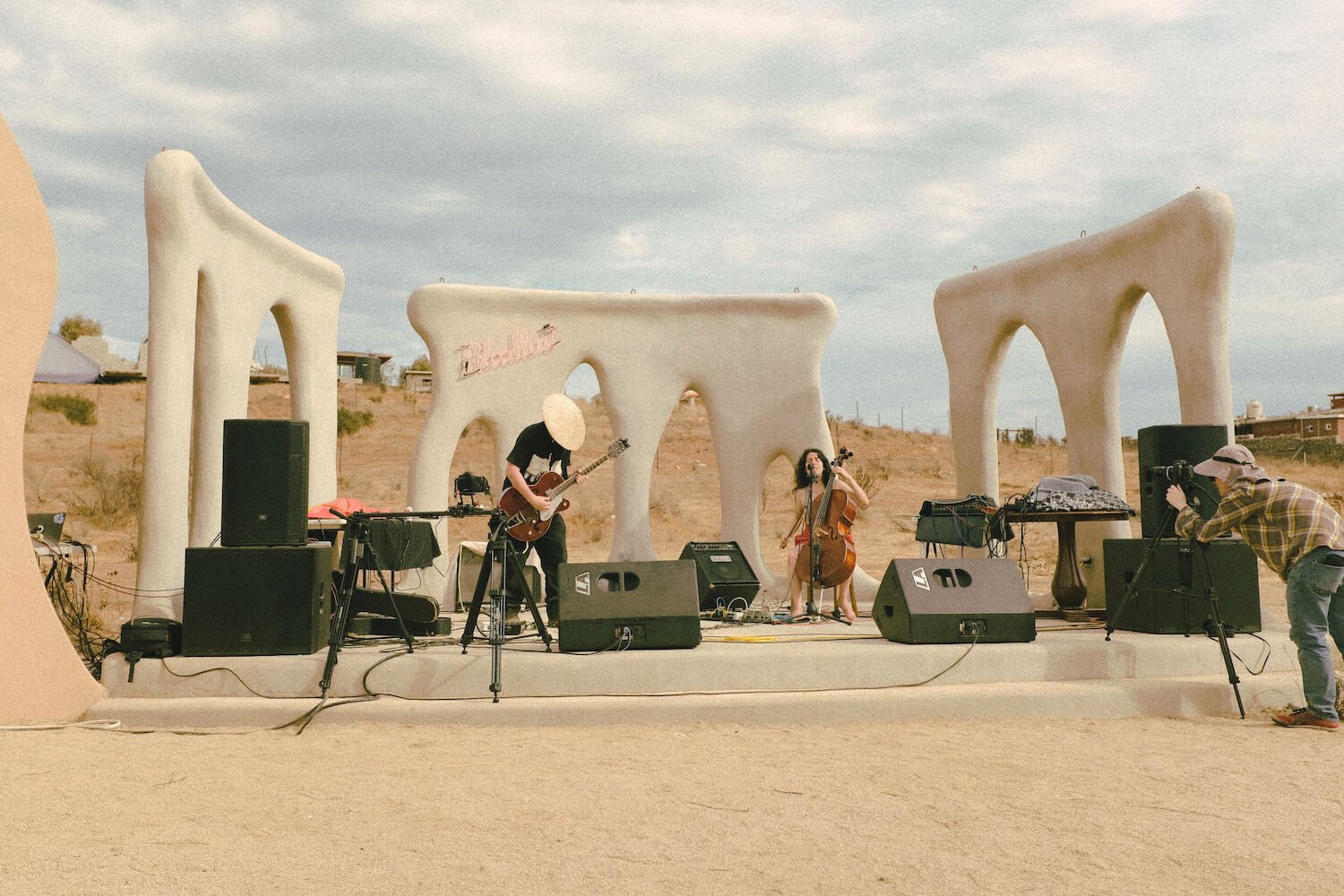
Bloodlust Valle
Valle de Guadalupe is a home away from home for the oenophiles of San Diego. It’s closer than Napa and has a culinary scene that can put its dukes up against any Thomas Keller concept.
Don’t have SENTRI? Start your cross-border sojourn by securing a driver to pick you up once you land in Tijuana. People & Planet is a friendly service that offers custom tours or simple driver service if you want to plan your own itinerary.
There is no shortage of wineries in the valley, but the standouts are natural wines made by female winemakers. Be sure to visit Pouya, helmed by Fernanda Para. Last seen in San Diego at 2022’s NatDiego natural wine festival, Para makes natural wines that complement, rather than fight, the natural terroir of Valle. Try her skin-contact chenin blanc and—if there are any bottles left—her collab with Tecate’s Bichi Winery, a pét-nat of colombard called (wait for it…) Pichi. Henri Lurton and Bruma also make the shortlist for winery visits.
For an overnight stay, Siempre Valle is a hotel-meets-vacation rental that has sprawling views of vines and some of the best off-season rates around. Take a quick room respite, then start your evening with some local bubbles and oysters at the charming Conchas de Piedra to, well, aphrodisiac yourself.
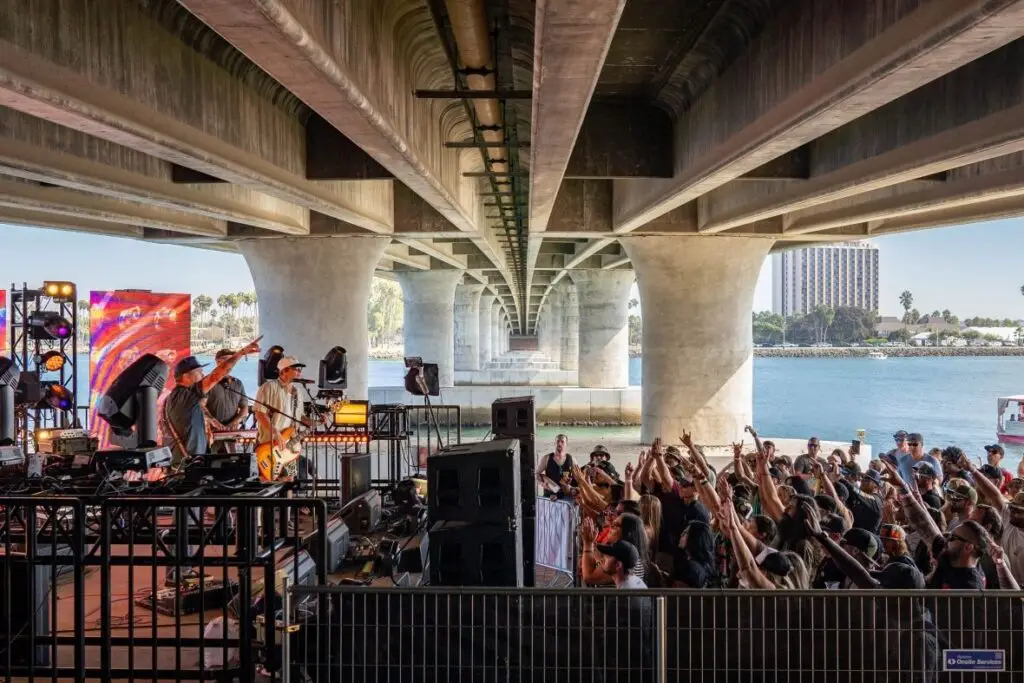
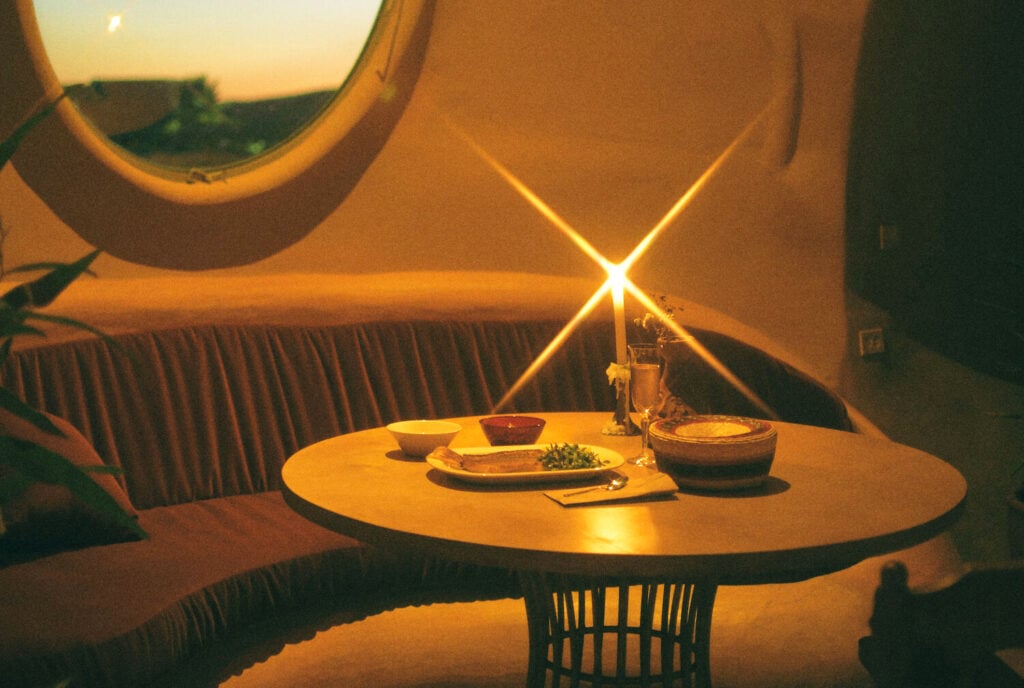
Cap off a stay with dinner at the newly opened hipster staple, Bloodlust, a wine bar. The architecture of the grounds nearly outshines the stellar food and natural wine list, as it plays host to an amphitheater- like stage for live music, while local DJs command the decks inside the garlic-bulb-shaped restaurant. (Blood… vampires… garlic… get it?) If you didn’t get enough wine in, stop by Baja Divina, a wine shop brought to you by Lauren Plascencia, daughter of chef and hospitality giant Javier Plascencia.
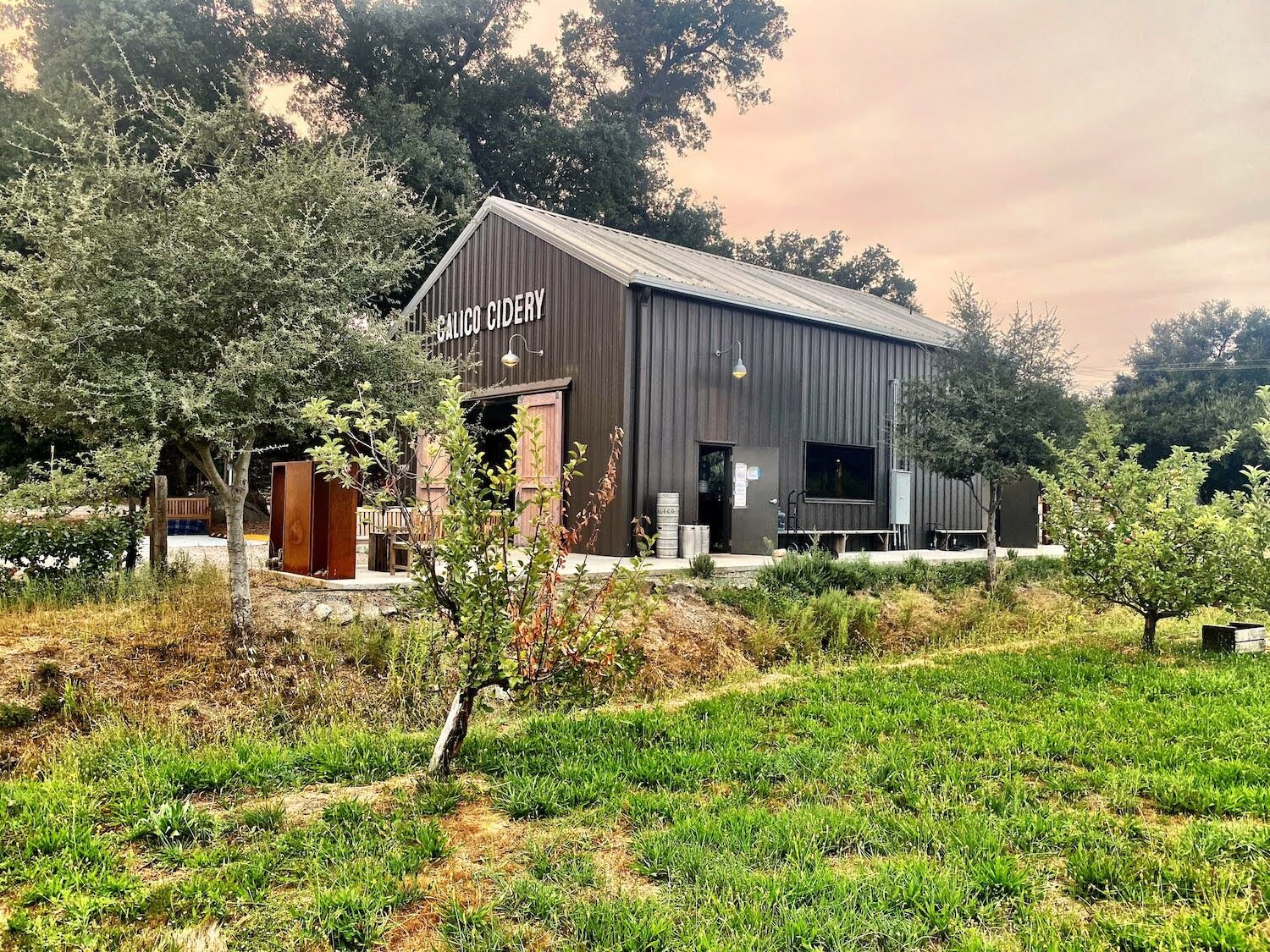
Julian cidery
To keep it even more local, go quaint with a jaunt to Julian. Known for its homespun charm, Julian is an ideal place to stroll on your own and take things slow. Bring a journal and snag a bench in the Julian Pioneer Cemetery that overlooks the town, featuring famous corpses dating back to the 1870s, including Julian’s founder, Drury Bailey.
Once you depart the home of the departed, peruse the bucolic vendors on Main Street, like the Antique Boutique that peddles vintage wares or the Julian Book House to find funky used volumes. Take a breather from touristing and settle in for bites and sips at Julian Beer Co., your North Park away from home, featuring nearly 15 rotating house beers and a shaded patio. If you’re abstaining, head to the cute and kitsch at the Julian Tea & Cottage Arts where you can have high tea for one with finger sandwiches and all the Laura Ashley décor you can handle.
On the way home, take a detour at Lake Cuyamaca, the 110-acre body of water that is surrounded by the wilderness of Lake Cuyamaca State Park, with campgrounds and water activities. Since you’re by yourself and can’t make out on the docks, opt for a meditative walk or a paddle boat (quite the workout for one) or kayak rental. Grab lunch at The Pub at Cuyamaca, partly owned by the same folks as Julian Beer Co.

The 420 room at Idyllwild’s Hicksville Pines is decked out in plush furnishings and glow-in-the- dark psychedelic velvet posters.
Due north some ways in the mountains is Idyllwild. This unassuming mountain town is home to some of the most creative getaways, namely the 420-friendly Hicksville Pines Chalets & Motel. With 11 themed rooms, ranging from a palace of Dolly Parton worship to a Twin Peaks reimagination of David Lynch’s Black Lodge and a suite rocking perennial Christmas trimmings, there is a room for everyone’s quirk. Pro tip? Enjoy the gratis nug you get upon arrival while lounging in the jacuzzi. (Bonus points if you go when the tub is surrounded by mounds of snow.) Who needs company for that?
After your submerged relaxation, head to the town to find a string of thrift stores and search for the off-the-beaten-path Speakeasy Books for graphic novels, books, and games. Interested in less indoors and more outdoors? Gear up for a hike at loops like Suicide Rock, Deer Springs Trails, and Panorama Point. Things close early in town, so get ready for the wind down with a bottle from the Wine Finch natural wine shop or wine and dine yourself at Ferro, the town’s hotspot Italian bistro.
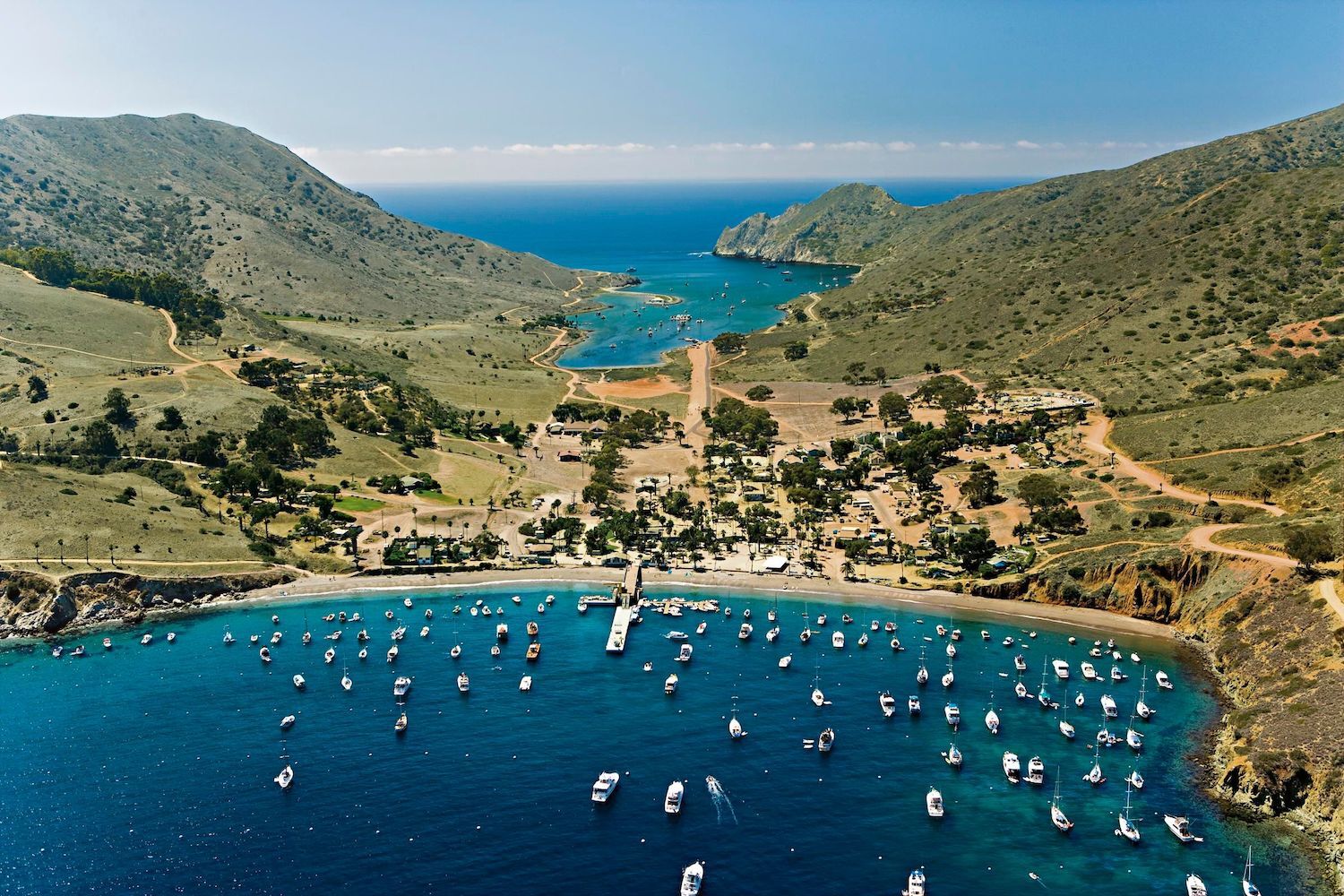
Bustling-with-boat-traffic Avalon Harbor on Catalina Island.
Photo: Love Catalina
For San Diegans, snow is a novelty, but water is home. Catalina Island is familiar enough with its beachy surroundings but exotic and far away enough to soothe the travel itch. Drive up to Dana Point, then take in the sea air on the hour-and-a-half Catalina Express ferry that will set you back just under $100 for a round-trip ticket to the main town of Avalon. Rent a golf cart to see the beachy cliffs and local Bison lowing, or bathe in the winter sun (it does exist) at Crescent Beach.
PARTNER CONTENT
Sink into the island life and take yourself out to Luau Larry’s. Is it a tourist trap? Yes, but if someone has to cuff me, I want it to be Larry. This decades-old tiki bar is an institution for a reason. Have a Wicki Wacker and revel in your excellent decision-making. To make things chicer, head to the Naughty Fox and sup on crab sandwiches in modern surroundings. If you decide to stay the night (probably a good idea after Larry’s) and want to splurge, consider houseboat rentals to live as some intrepid locals do. If you want to do a deep dive of the island, head to the only other town, Two Harbors, and glamp it at Whites Landing with its two-person tents just to yourself, just offshore.

Danielle is a freelance culture journalist focusing on music, food, wine, hospitality, and arts, and founder-playwright of Yeah No Yeah Theatre company, based in San Diego. Her work has been featured in FLAUNT, Filter Magazine, and San Diego Magazine. Born and raised in Maui, she still loves a good Mai Tai.
The local wine label is bringing the Sonoran Desert’s fruitful offerings to Tucson
Sand-Reckoner’s wines are made from grapes grown on the Willcox Bench, a couple of hours southeast of Tucson.
Arizona’s desert-born wine scene is starting to heat up, like a summer day just before dawn. In Tucson, Sand-Reckoner Vineyards is, at the moment, the only local wine label with a downtown tasting room. Here, curious wine drinkers can stretch their assumptions about the saguaro-speckled Sonoran Desert’s fruitful offerings. The first is challenging the notion that the desert produces wine at all.
“The soil is very good,” Sarah Fox says. She owns Sand-Reckoner with winemaker Rob Hammelman. Fox is referring to the dirt in the ringed-by-mountains Willcox wine region located about an hour and a half southeast of Tucson. Its earthy terroir comes from a Chex Mix of sand, clay, and minerals. Burrow three feet further down, and you hit limestone. In other words, it’s a classic wine soil profile, similar to France’s famed Burgundy region.
This part of the desert also touts an elevation of at least 4,000 feet and seasonal monsoon weather flowing up from the Gulf of Mexico. The elemental combination prevents grapes from shriveling into raisins during scorching summers. During monsoon season, producers have to play lifeguard, lest the fruit drown. And some growers have learned to cultivate varieties that play nice with a little extra hydration. “Sangiovese is very well-behaved in the vineyard,” Fox says. So are syrah and tempranillo.
When it comes to wine making, Sand-Reckoner has transitioned to a mostly low-intervention approach. That means opting for organic sprays, eschewing herbicides, and using naturally occurring yeast—a critical ingredient that turns sugar into alcohol. In the glass, Sand-Reckoner wines are an elegant ballroom dance. Its malvasia bianco bursts with lychee. Its grenache rosé is more understated than other punchy or candied strawberry-watermelon bottles. Its sangiovese includes grapes from Sand-Reckoner’s own vineyard and hints at bright cherry and earth.
Well-known grapes like cabernet sauvignon and chardonnay grow well in most areas, but Fox says exploring “outside of the norm” grapes in Arizona’s unique terroir is more exciting. By fall 2023, Fox and Hammelman hope to move into a larger space within the downtown Warehouse Arts District, where their current tasting room is situated, to include room for bottling, cellaring, and tasting. “It takes a certain amount of grit to forge forward in an area that’s not known yet for grape growing,” Fox says.
What used to be a newspaper building is now Tucson’s Citizen Hotel, which boasts wine-soaked amenities like a bottle fridge in every room.
Courtesy of The Citizen Hotel
Keep the wine theme going at The Citizen Hotel. What was once Tucson’s first newspaper press building was reimagined in 2022 with muted pastels and light wood, stone, and bronze accents that mimic the desert landscape. Vino-centric amenities include wine fridges in each of its 10 high-ceilinged rooms. In the world of shrinking hotel perks, an in-room French press coffee kit, a soaking tub, and bathrobes feel luxurious.
A minimalistic lobby bar offers red, white, and fortified wines made by regional producers from Arizona and Mexico and occasional complimentary wine tastings. Around town, find more local wine at bottle shops and specialty markets like nearby Pearly Baker Fermentables and Time Market.
Ligaya Malones grew up in Kaua’i, Hawai’i and is a San Diego-based writer covering the intersection of food, travel, and culture. Her work has appeared in publications including Food52, Condé Nast Traveler, Lonely Planet, and Salt & Wind Travel.
Our wine expert selected her top picks for traveling via wine glass (it's a thing)
South Africa is not just about safaris and shark diving; they also produce incredible wines, especially in the Stellenbosch and Paarl wine regions, positioned along the beautiful Cape Town coastline. South African vineyards most often grow chenin blanc, a versatile white grape that produces as a dry, sweet, or sparkling wine, and pinotage, South Africa’s signature red varietal. Try a sparkling wine from Graham Beck or a pinotage from Kanonkop or L’Avenir Provenance—you’ll almost be able to smell the salty coastal air with each sip.
Portugal’s Douro Valley is famous for its breathtaking terraced vineyards framing the Douro River, making for some of the most stunning and memorable views in the world. The Douro is best known for producing port, a sweet fortified wine (meaning it’s a blend of wine and brandy). In recent years, the Douro’s red wines, most often produced using Portugal’s flagship red grape, Touriga Nacional, have also gained popularity. Some fantastic port producers include Quinta de la Rosa and Ramos Pinto, and my favorite dry reds are the budget-friendly Silk and Spice red blend and Touriga Nacional from the famous Quinta do Noval.
Portugal’s Douro Valley
Maksym Kaharlytskyi / Unsplash
Chile’s wine country is situated between the Pacific Ocean and the Andes Mountains, making for a photo-worthy vineyard backdrop. Chilean wine really made its mark when French winemakers relocated to Chile and imparted their techniques in the local vineyards. Chile is now best known for Bordeaux varietals, including cabernet sauvignon, merlot, and carménère. Look out for the Escudo Rojo Bordeaux-style blend, and try Vina Vik’s La Piu Belle red blend and rosé, or their flagship Vik Bordeaux-style blend!
The Greek islands are known for postcard views, white-sand beaches, and winemaking that dates back thousands of years. Greece is home to many native grapes that aren’t found anywhere else in the world, including assyrtiko, agiorgitiko, and malagousia. Look out for always-refreshing, acidic, citrus-edged assyrtikos from Santo Wines and Domaine Sigalas, produced in the volcanic soils of Santorini. Cabernet lovers should check out agiorgitiko produced by Gaia for a velvety and delicious red.
Shop for international finds locally at Vino Carta in Little Italy, The 3rd Corner Wine Shop and Bistro in Ocean Beach and Encinitas, Bird Rock Fine Wine in La Jolla, and San Diego Wine and Beer Co. in Miramar.
Nia Gordon is a psychologist by day, and spends her free time writing about wine—but most often just sipping it. Her blog is themoreyoubordeaux.com. @themoreyoubordeaux
Terraced vineyards in Portugal’s Douro Valley
Maksym Kaharlytskyi / Unsplash
Here's our coast-to-coast guide with over a dozen itineraries that will make you want to book a ticket ahora.
There’s never been a better time to explore our next-door neighbor. It’s now a breeze to hop on a flight out of Tijuana airport, and Mexican airlines have launched many new nonstops, making much of the country more accessible than ever to San Diegans. That’s why we went beyond Baja to cover the country from coast to coast. It’s not a comprehensive guide, but a good jumping-off point to experience the magical parts of the country. Through these pages, take a quick tour of Mexico starting at the jungles and shores on its Caribbean side, then work your way west back home. ¡Vámonos!
Cancún || Oaxaca City || San Miguel de Allende
Mexico City || Guadalajara || Mazatlán || Puerto Vallarta
Los Cabos || Loreto || Ensenada || Rosarito || Valle de Guadalupe || Tijuana
There’s more to this Caribbean paradise than clubs filled with spring breakers—if you know where to stay.
Guide to Mexico – Cancún
“Just play it cool, Letchworth,” my wife says as we exit our airport shuttle. “You belong here as much as anyone else.” I immediately fail this test when a bellhop asks if he can take my heavy suitcase, and on instinct I say, “Oh, no thanks! I can manage.” To his credit, he nods and waits until I’m distracted—by the two glasses of Champagne at check-in—to whisk it off anyway. We’re not at the Interstate Frontage Road Super 8 anymore, Toto.
This is just the first taste of a consistent standard of luxurious attendance at Grand Fiesta Americana Coral Beach (rooms from $347). Kohleun and I pride ourselves on being seasoned travelers, but as our 20s waned, so did our capacity for sleeping on the floor of the Amtrak observation car. On our first trip as a couple, it took only one night sharing a hostel room with six backpackers to realize we could afford to raise our standards a little.
And yet, stepping into our king-size suite, which could hold both my old studio apartments and opens onto a perfect Caribbean horizon, I’m still out of my depth. We’ve gotten the resort’s new premium package, “Ú,” whose amenities are so numerous we keep stumbling across their brochures like a scavenger hunt.
“Complimentary 30-minute WaveRunner ride for two?” I boggle.
“Unlimited access to the Gem Spa!” Kohleun prioritizes.
And just as I tear into the minibar’s unlimited supply of peanut-butter crackers, she waves the room service menu at me and says, “Let’s think bigger.”
It’s easy to imagine how differently this trip might’ve gone back when we were living on barista and adjunct-professor money and still had iron livers. We passed by that scene on our way in: the all-night Señor Frog and Friends party district. Since the drinking age in Mexico is 18, Cancún’s Hotel Zone is notorious for attracting American coeds looking for a spring break they’ll never remember.
But we’re here to give Cancún a second look, from the perspective of someone who can appreciate finer things at a more deliberate pace. And the Grand Fiesta Americana doesn’t disappoint: Its philosophy of service is to anticipate their guests’ every need.
Overhearing us mention wanting to go into town, a lobby rep offers a primer on local public transit. At Le Basilic restaurant, the servers not only place our napkins in our lap but replace them whenever we leave the table. In the “Grand Club” VIP beach section, an attendant bounds up with fresh towels whenever we emerge from the sea. There’s even somebody waiting by the back doors to wash the sand from our feet. Middle-class guilt flaring, it’s all we can do to make it rain with tips.
They must be on top of Quintana Roo’s reported seaweed problem, too, as both the hotel’s private beach and the closest public one are equally pristine. I embark on the Gem Spa’s Ten-Step Hydrotherapy Program with an open mind (and a stomach full of carbs, which step one, The Steam Room, expressly warns against). Kohleun loves step three, The Clay Room. I’m skeptical of step six, The Ice Room (aka “rub a snowball on yourself”), but the uninterrupted device-free time to be present, the hourlong massage add-on, and the concluding nap under a warm blanket turn my biological clock back a year.
Granted, you don’t have to leave the country (or even the county) to vacation like royalty. So what does Cancún have for the over-30 crowd that you can’t see anywhere else? The Mayan cities of Chichen Itza and Tulum are 138 and 84 miles away, respectively, but since we can’t spare a day trip on our brief stay, we get our archaeology fix at the nearby Museo Maya and at El Rey, a village with surviving temple walls, lintels, and colonnades from the sixth century, now home to an iguana kingdom.
Stake Chophouse & Bar brings contemporary classics and old-school service to the heart of Coronado
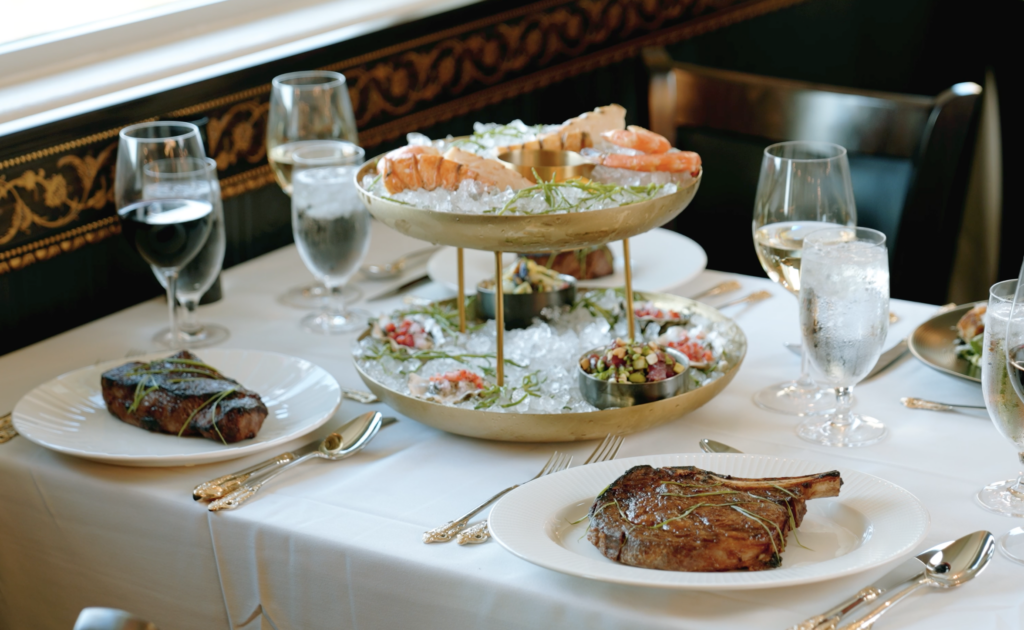
Stake Chophouse & Bar isn’t your average steakhouse. Blue Bridge Hospitality’s Coronado outpost is a modern interpretation of a big-city steakhouse nestled in the heart of the small coastal community. The team at Stake has reimagined the whole steakhouse experience. By prioritizing a seasonal farm-to-table sourcing philosophy, a personalized guest experience, and unique service touches, like a formal steak presentation and a bespoke knife selection process, Stake distinguishes itself in a sea of steakhouses.
Exceptional steaks, including Wagyu from Japan, Australia, and the U.S., and fresh seafood flown in daily form the core of Stake’s culinary identity. The menu features a five-course omakase-style steak experience highlighting house favorites, plus an array of cuts, and classic steakhouse staples—think a wedge salad, baked potato, or pasta carbonara—refined for a contemporary palate without losing their traditional appeal. Stake focuses on seasonal sourcing from the region’s best family farms and specialty purveyors, and incorporates intentionally unexpected touches to create something truly unique.
“I challenge our chefs and myself to take it a step further in sourcing,” says Chef Ronnie Schwandt. “It’s important to us to highlight different farms, unique one-off farms—whether it’s cattle, strawberries, a local fisherman or from anywhere in the United States, we’re always trying to find that niche.”
Beyond the menu, Stake emphasizes outstanding service, says Vinny Spatafore, Director of Hospitality Operations. Staff maintains detailed notes, allowing them to remember guests by name, recall previous orders such as a favorite martini (also memorable for the customer since it’s served in an extra tall, distinctly-shaped glass), and celebrate special occasions like birthdays and anniversaries.
“When you have those points of topic that you remember about a guest, they appreciate that,” he says. “Our servers are really good with that—we have a couple servers who have been here since the beginning and they’ll remember somebody from years ago, their name, their kids’ names, where they live. I’m really thankful to have a great front of house staff.”
Award-winning wines, rare whiskeys, special events, and a complementary black car service that provides transportation for guests throughout Coronado add to Stake’s appeal.
Schwandt stresses that Stake offers more than a meal; they aim to give patrons something unforgettable.
“It starts when you walk up the stairs and are greeted by the hostess—that sets the tone for the night. Then you’re greeted by a server, who may know you by name, and can guide you through the menu and curate as they get to know you,” says Schwandt. “Most people leave kind of blown away; they leave feeling like they just had an experience. That’s the goal, right? Whether you’re serving smash burgers or high-end steak, you want somebody to leave thinking, Wow, that was awesome.”
In eight short years, Baja’s gone from a virtual dead zone to one of the globe’s top food and drink destinations. With the world watching, how will innovators in Tijuana and Valle de Guadalupe handle growing crowds and attention—without selling their souls? The Baja Moment Misión 19’s trio of local ceviches over a bed of […]
In eight short years, Baja’s gone from a virtual dead zone to one of the globe’s top food and drink destinations. With the world watching, how will innovators in Tijuana and Valle de Guadalupe handle growing crowds and attention—without selling their souls?
The Baja Moment
Misión 19’s trio of local ceviches over a bed of rusty nails and seaweed, a tribute to a local beach.
That smell has always saddened me. That’s Tijuana’s handshake to the world—a pungent spritz of sewage? The Tijuana River Basin runs under the San Ysidro border crossing, carrying a flotilla of discarded grossness. Most tourists like their travel destinations more redolent of spa eucalyptus. The smell is why some of them don’t come here.
“Tijuana’s not for everybody, and that’s okay,” says Derrik Chinn, an American journalist who’s lived there since 2007. Chinn owns Turista Libre!, leading gringos on cultural excursions through Tijuana. When he started, Mexican cabbies threw rocks at his bus. In September, the TJ newspaper hailed his contribution to the city.
“The city’s been a tourist trap since Prohibition,” he says. “The drug wars and border waits gave the city a much, much-needed chance to define itself for itself. The tourists weren’t coming. What if they never came back?”
Prohibition is why Tijuana became what it became. Hollywood A-listers came here to gamble at Caliente, watch bullfights on acid, escape America’s crushing sobriety. Preachers called it “Satan’s Playground.” By the ’80s, Avenida Revolucion was a prolific vice market made grotesque by the drastic socioeconomic divide between the sellers and the buyers. It was the place to get drunk, drugged, mugged, prostituted, marginalized, corrupted, blasphemed, kidnapped, and thrown in a moldy jail forever and ever.
Of course, that was always part of Tijuana’s allure—fear being the catalyst for pleasure that it is.
The Baja Moment
Chef Javier Plascencia
Then Nortec Collective happened. In 1999, this small army of Tijuana DJs, musicians, and artists became internationally famous. Art stole the spotlight back from the donkeys painted like zebras (zonkeys).
Then there was blood. In 2006, the Mexican government stopped partying with the cartels and started arresting them. With a power vacuum created, aspiring cartels fought in the streets over the lucrative crime market. American media peeked over the fence and inflamed the scene even more.
The Baja Moment
“Raining Machetes in Mexico!”
“How to Survive A Battery Acid Attack in TJ!”
Americans overreacted and wrote off the entire country. Like someone from Mexico City saying, “Sorry, niños. There’s murder in Chicago. No Disneyland this year.”
Now, the dust has settled and Baja is one of the most buzzed-about culinary destinations on the planet. Anthony Bourdain, Andrew Zimmern, and Rick Bayless are praising it on TV. The Wall Street Journal is taking it seriously enough to critique the region’s wines. This year’s esteemed S. Pellegrino list of Latin America’s Top 50 Best Restaurants included two in Baja.
A couple years ago, star Tijuana chef Javier Plascencia told the New Yorker and the New York Times he wanted to see Baja become an international food destination one day. Just like San Francisco or Mexico City.
That day is now.
Tijuana’s most brilliant tourism initiative seems to have been ignoring tourists. By doing so, they created an exciting native culture that’s attracting a more sophisticated breed of visitor.
“People are open to seeing Tijuana less as a tourist, and more as a traveler,” Chinn suggests. “As a tourist, the city is adapting to you. As a traveler, you’re adapting to the city.”
This time, chefs were the Nortec Collective—cultural ambassadors luring foreigners back to Mexico. Famed chefs like Benito Molina (Manzanilla), Diego Hernandez (Corazon de Tierra), and Miguel Angel Guerrero (La Querencia) cooked at events in the U.S. Jair Téllez—often called the Thomas Keller of Baja—helped design the menu at former San Diego restaurant El Take It Easy. Top San Diego restaurants have added Baja Med dishes (grilled octopus, tiraditos, gourmet tostadas, etc.).
The Baja Moment
Baja California’s wealth of locally caught seafood and farmers market produce is helping spur a culinary renaissance.
A lot of credit has deservedly gone to Plascencia. The chef was raised on both sides of the border. He’s bilingual. He looks like a Mexican George Clooney. Most importantly, he can really cook. He is the gateway.
In eight short years, Baja’s gone from a virtual dead zone to one of the globe’s top food and drink destinations. With the world watching, how will innovators in Tijuana and Valle de Guadalupe handle growing crowds and attention—without selling their souls? The Baja Moment Misión 19’s trio of local ceviches over a bed of […]
In eight short years, Baja’s gone from a virtual dead zone to one of the globe’s top food and drink destinations. With the world watching, how will innovators in Tijuana and Valle de Guadalupe handle growing crowds and attention—without selling their souls?
The Baja Moment
Misión 19’s trio of local ceviches over a bed of rusty nails and seaweed, a tribute to a local beach.
That smell has always saddened me. That’s Tijuana’s handshake to the world—a pungent spritz of sewage? The Tijuana River Basin runs under the San Ysidro border crossing, carrying a flotilla of discarded grossness. Most tourists like their travel destinations more redolent of spa eucalyptus. The smell is why some of them don’t come here.
“Tijuana’s not for everybody, and that’s okay,” says Derrik Chinn, an American journalist who’s lived there since 2007. Chinn owns Turista Libre!, leading gringos on cultural excursions through Tijuana. When he started, Mexican cabbies threw rocks at his bus. In September, the TJ newspaper hailed his contribution to the city.
“The city’s been a tourist trap since Prohibition,” he says. “The drug wars and border waits gave the city a much, much-needed chance to define itself for itself. The tourists weren’t coming. What if they never came back?”
Prohibition is why Tijuana became what it became. Hollywood A-listers came here to gamble at Caliente, watch bullfights on acid, escape America’s crushing sobriety. Preachers called it “Satan’s Playground.” By the ’80s, Avenida Revolucion was a prolific vice market made grotesque by the drastic socioeconomic divide between the sellers and the buyers. It was the place to get drunk, drugged, mugged, prostituted, marginalized, corrupted, blasphemed, kidnapped, and thrown in a moldy jail forever and ever.
Of course, that was always part of Tijuana’s allure—fear being the catalyst for pleasure that it is.
The Baja Moment
Chef Javier Plascencia
Then Nortec Collective happened. In 1999, this small army of Tijuana DJs, musicians, and artists became internationally famous. Art stole the spotlight back from the donkeys painted like zebras (zonkeys).
Then there was blood. In 2006, the Mexican government stopped partying with the cartels and started arresting them. With a power vacuum created, aspiring cartels fought in the streets over the lucrative crime market. American media peeked over the fence and inflamed the scene even more.
The Baja Moment
“Raining Machetes in Mexico!”
“How to Survive A Battery Acid Attack in TJ!”
Americans overreacted and wrote off the entire country. Like someone from Mexico City saying, “Sorry, niños. There’s murder in Chicago. No Disneyland this year.”
Now, the dust has settled and Baja is one of the most buzzed-about culinary destinations on the planet. Anthony Bourdain, Andrew Zimmern, and Rick Bayless are praising it on TV. The Wall Street Journal is taking it seriously enough to critique the region’s wines. This year’s esteemed S. Pellegrino list of Latin America’s Top 50 Best Restaurants included two in Baja.
A couple years ago, star Tijuana chef Javier Plascencia told the New Yorker and the New York Times he wanted to see Baja become an international food destination one day. Just like San Francisco or Mexico City.
That day is now.
Tijuana’s most brilliant tourism initiative seems to have been ignoring tourists. By doing so, they created an exciting native culture that’s attracting a more sophisticated breed of visitor.
“People are open to seeing Tijuana less as a tourist, and more as a traveler,” Chinn suggests. “As a tourist, the city is adapting to you. As a traveler, you’re adapting to the city.”
This time, chefs were the Nortec Collective—cultural ambassadors luring foreigners back to Mexico. Famed chefs like Benito Molina (Manzanilla), Diego Hernandez (Corazon de Tierra), and Miguel Angel Guerrero (La Querencia) cooked at events in the U.S. Jair Téllez—often called the Thomas Keller of Baja—helped design the menu at former San Diego restaurant El Take It Easy. Top San Diego restaurants have added Baja Med dishes (grilled octopus, tiraditos, gourmet tostadas, etc.).
The Baja Moment
Baja California’s wealth of locally caught seafood and farmers market produce is helping spur a culinary renaissance.
A lot of credit has deservedly gone to Plascencia. The chef was raised on both sides of the border. He’s bilingual. He looks like a Mexican George Clooney. Most importantly, he can really cook. He is the gateway.
Perfect pairings make this fundraiser one of our favorites
The San Diego Young Professionals Committee (YPC) and the University Club Charity Classic will host the 10th Annual Chocolate & Vino on Friday, September 5th at the University Club. Deemed an “Around the World Tasting,” guests get to sip and sample their way through different cuisines and wines of the world. Take in the city views from the 34th floor where the sunset alone is worth the ticket price. Proceeds from the event go to three different local organizations: Big Brothers Big Sisters, ALS Therapy Development Institute and Employee Partners Care Foundation.
Event Details:
Friday, September 5, 2014
The University Club atop Symphony Towers
750 B Street Suite 3400, San Diego CA 92101
6:00-9:00PM
Tickets: $60 per person
Purchase tickets HERE
10th Annual Chocolate & Vino