Indoor soccer playoffs, engaging art exhibitions and avocado activities are in store this weekend in San Diego. Sports fans can root for the Gulls as they finish their regular season slate and catch a postseason matchup between the Sockers and the St. Louis Ambush. Evocative artwork can be admired through Space 4 Arts’ Instructions for Unrest: Art Against Complacency at Art Produce Gallery, the familial retrospective Brothers in Arts: James Hubbell and Bert Hubbell at Oceanside Museum of Art and two new exhibitions at MCASD from the private collection of Swizz Beatz and Alicia Keys. In addition, the annual Avocado Festival will return to the streets of downtown Fallbrook with an array of contests, entertainment and avocado-filled splendor.
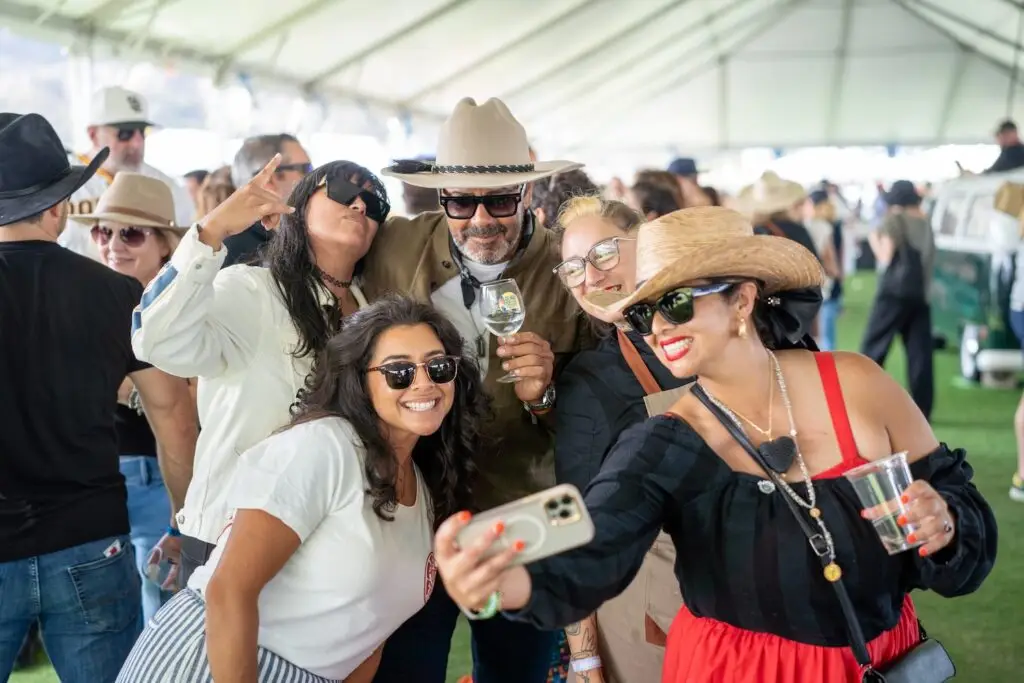
Spend an afternoon along Lake San Marcos sampling a curated menu of greater San Diego’s best flavors during the 5th annual Lakehouse Food & Wine Festival. Over 30 vendors will showcase their best food, wine and spirits, with attendees encouraged to vote on their favorites. Ticket options include general admission ($89) and VIP passes ($160), which comes with early admission at noon and a luxury cruise to the festival’s deluxe island experience; prices will rise by $10 the day of the event. All eventgoers will also go home with a souvenir tasting glass.
No matter if you love or loathe avocados, there are festivities for everyone to explore during the free annual Fallbrook Avocado Festival this Sunday from 9 a.m. to 5 p.m. This includes family-friendly live entertainment, a beer and wine garden with live music and the Artisan Walk on Alvarado. Plus, there will be contests for the best tasting and looking guacamoles, avocado holding competitions, contests for best dressed avocado and little miss & mister avocado and the Avocado 500 mini car race.
Main Street from East Mission Road to Fallbrook Street, Fallbrook
Courtesy of Humphreys Concerts by the Bay
Concerts & Festivals in San Diego This Weekend
Ethel Cain at The Rady Shell
April 14
Can’t afford to see Ethel Cain at Coachella? Fortunately, San Diegans can catch the standout Americana artist this Tuesday at 7 p.m. when she plays The Rady Shell. Cain’s sonic mastery and intricate songwriting are best displayed in her pair of new projects from 2025: the dark and ambient Perverts and Willoughby Tucker, I’ll Always Love You, which continues and precedes the tales from her debut Preacher’s Daughter. Cain will be joined on the bill by shoegaze group 9Million and country rock standouts Wednesday. Tickets are $86 for this concert; $1 from every ticket sold will go to organizations that support the trans community via The Ally Coalition.
222 Marina Park Way, Embarcadero
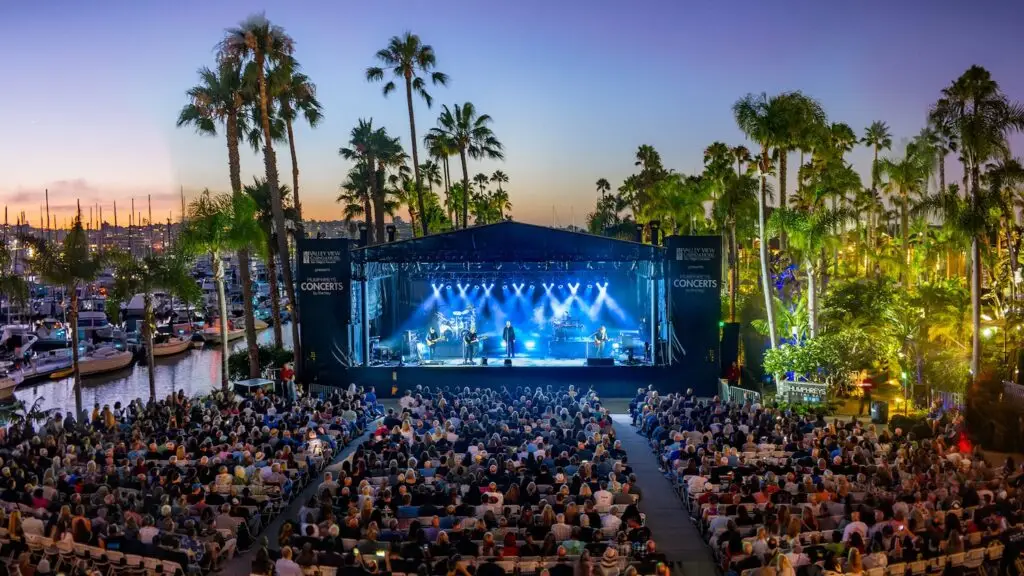
Devo at Humphreys Concerts by the Bay
April 15
Assemble your circular red energy domes and head to Humphreys Concerts by the Bay this Wednesday at 8 p.m. to see new wave legends Devo. Also fresh off an appearance at weekend one of Coachella, Devo is celebrating its 53rd anniversary. Though it’s been 45 years since “Whip It” cracked its way up the Billboard Hot 100, and only a couple years since their lineup of “farewell” shows, Devo are finding ways to connect with new audiences, as evidenced by the mantra of their Mutate, Don’t Stagnate Tour. Tickets range from $120 to $243 for this concert.
2241 Shelter Island Drive, Shelter Island
San Diego Arab Film Festival
April 17–19
The second installment of this year’s San Diego Arab Film Festival returns to the Museum of Photographic Arts’ Joan and Irwin Jacobs Theater for three nights of screenings this Friday through Sunday. The lineup of five shorts and five feature films includes international selections from Palestine, Egypt, Jordan, including All That’s Left of You, Hind Under Siege and The President’s Cake. Ticket options include a three-ticket pass ($40) and individual screening tickets ($15); cafeteria-style Arabic dinners can also be purchased ahead for each screening for $18.
Ocean Beach’s The Holding Company is ushering in the highest of holidays with this weekend’s HoCo 420 Fest. The festival begins Friday (7:30-11:30 p.m.) with a performance by reggae rock group Tomorrow’s Bad Seeds, continues Saturday (7-11:30 p.m.) with a headlining set from weed rap extraordinaire Devin the Dude and ends Sunday (1:30-6 p.m.) with an after party featuring local alternative band Fight Naked. Tickets are $15 for Friday, $30 for Saturday, $10 for Sunday and $45 for the whole weekend.
5046 Newport Avenue, Ocean Beach
Cypress Hill at Gallagher Square
April 18
Petco Park’s outdoor music venue will be filled with groovy beats and good vibes as Latin-American hip-hop group Cypress Hill takes the stage to kick off the first show of their highly anticipated summer tour. They will be joined by hip-hop group Bone Thugs and rapper Tech N9ne. Tickets are $75 per person for general admission. Plan to arrive early for the best views of the dynamic hip-hop lineup.
840 K St, San Diego
Courtesy of Amy Sherald & Hauser Wirth. Photo Credit: Joseph Hyde
Theater & Art Exhibits in San Diego This Weekend
Brothers in Arts: James Hubbell and Bert Hubbell at Oceanside Museum of Art
Through September 6
Brotherly love, a shared zest for creativity and dual lifetimes filled with incredible accomplishments are covered during Brothers in Arts: James Hubbell and Bert Hubbell at Oceanside Museum of Art. The physically distant yet emotionally close connection of James, a resident of Julian, and Bert, who lived in Kokubunji, Japan, is laid out through a loving display of ceramics, poetry, watercolors, journals and snapshots in time that echo their profound relationship. Brothers in Arts will have an exhibition celebration on Saturday, May 2 from 5-7 p.m.; tickets are free for members and $15 for the public.
704 Pier View Way, Oceanside
The Notebook at Civic Theatre
April 14–19
It began as the 1996 debut novel of romance author Nicholas Sparks, then it became an emotionally resonant blockbuster in the mid-aughts, and now, a musical version of The Notebook is touring theaters nationwide. Just as in the book and the film, the story follows the reminiscent romance of Noah and Allie, who defy the imbalance of their social classes with a love that both stands the test of time and alleviates the heartbreak of fading memory. Tickets start at $45 for The Notebook, with eight performances this week at the Civic Theatre.
1100 Third Avenue, Gaslamp
The 25th Annual Putnam County Spelling Bee at Lamplighters Community Theatre
April 17–May 17
See a group of eccentric middle schoolers battle big words and even bigger feelings during Lamplighters Community Theatre’s adaptation of The 25th Annual Putnam County Spelling Bee. Through this musical comedy, which also features a helping of brave audience participation, six students earnestly proceed through the competition, each with their own motivations, strategies and backstories woven into the narrative. Tickets are $35 for adults and $33 for seniors, students and active military members, with performances this Friday and Saturday at 7:30 p.m. and Sunday at 2 p.m.
5915 Severin Drive, La Mesa
Alien Girls at The Old Globe
April 18 – May 10
A successful friendship is built on many things: trust, dependability, the ability to bring out each other’s best selves. But what happens when this loving foundation cracks in unforeseen ways? In Amy Berryman’s world premiere comedy Alien Girls, first featured in The Old Globe’s 2025 Powers New Voices Festival, a pair of close pals on the verge of splitting apart journey through the peaks and valleys of their friendship. Tickets start at $41 for Alien Girls, with performances this Saturday at 8 p.m. and Sunday at 7 p.m. in the Sheryl and Harvey White Theatre.
1363 Old Globe Way, Balboa Park
Instructions for Unrest: Art Against Complacency at Art Produce Gallery
April 18–May 14
In Instructions for Unrest: Art Against Complacency, Space 4 spotlights 14 artists who are choosing to face the continued political unrest going on across the globe. Instructions for Unrest will have a free opening reception this Saturday from 4-7 p.m. at Art Produce Gallery. This exhibition is curated by Alessandra Moctezuma, who will host a gallery walkthrough and a free artist panel to close the exhibition on Thursday, May 14 from 6-8 p.m.
3139 University Avenue, North Park
Giants: Art from the Dean Collection of Swizz Beatz and Alicia Keys at MCASD
April 18–August 9
Native New Yorkers and San Diego residents, Swizz Beatz and Alica Keys are sharing their favorite artwork with the public eye during Giants: Art from the Dean Collection of Swizz Beatz and Alicia Keys at Museum of Contemporary Art San Diego. Visitors can view over 130 pieces from 37 Black American and diasporic artists, including the first appearance of a 25-foot work by visual artist Mickalene Thomas, beginning with a free opening reception this Saturday from 11 a.m. to 7 p.m. Saturday also marks the opening of The Dean Collection Presents: Hometown Heroes (through November 8), which centers on regional artists proudly representing the local Chicana/o/e community.
700 Prospect Street, La Jolla
Courtesy of Coronado Flower Show
More Fun Things to Do in San Diego This Weekend
San Diego Gulls Homestand at Pechanga Arena
April 15 & 18
With a likely first round playoff matchup with the Colorado Eagles on the horizon, the San Diego Gulls will look to soar into the postseason on a high note. The Gulls will conclude their regular season schedule with games against the Tucson Roadrunners (Wednesday) and Coachella Valley Firebirds (Saturday) at Pechanga Arena, sandwiched around a Friday faceoff with the Ontario Reign in Los Angeles. Saturday’s Fan Appreciation Night celebration will also include a sandless beach towel giveaway for the first 8K fans in the stands. Tickets start at $20 for Wednesday’s game and $28 for Saturday’s game.
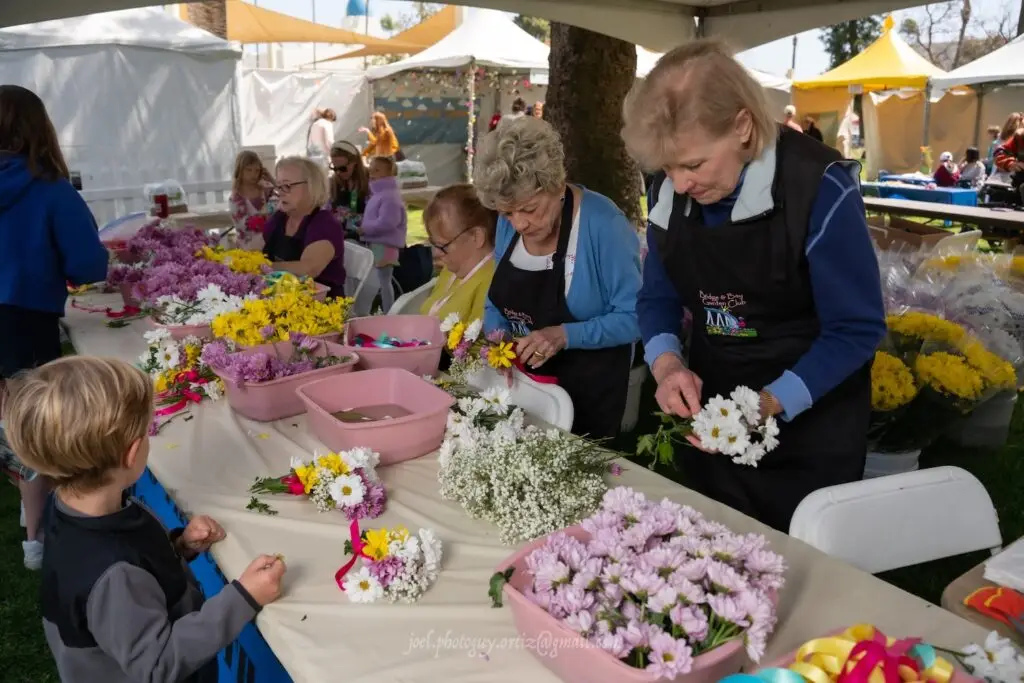
For the Coronado Flower Association’s 104th annual Flower Show, Spreckels Park will be decked out in a forest of flowers to align with the theme of “Welcome to the Jungle.” This vivid walk on the wild side (of floral design) will take place Saturday from 1-5 p.m. and Sunday from 10 a.m. to 4 p.m., with activities happening all weekend long. Special events include a movie night Friday ($5), walking tours (free), special Events in the Tents (ranging from free to $40), and The Velvet Jungle ($135), a Saturday night gala from the 1922 Club with tunes, cocktails and a mysterious floral ambiance. Single-day entry to the Coronado Flower Show is $10.
601 Orange Avenue, Coronado
South Bay Earth Day
April 18
Enjoy a day full of environmentally conscious fun at Bayfront Park this Saturday from 11 a.m. to 3 p.m. during Chula Vista’s annual South Bay Earth Day. This free festival will feature food trucks, live entertainment, interactive games, dozens of eco-friendly vendors and an artist alley with superbly sustainable pieces. There will also be a fix-it-clinic, a complimentary bike valet, a tie dye T-shirt workshop and the chance to decorate your own kitchen waste caddie.
980 Marina Way, Chula Vista
San Diego Sockers vs. St. Louis Ambush at Frontwave Arena
April 19
Looking to avenge their defeat in last year’s championship series, the San Diego Sockers are set to face the St. Louis Ambush in the semifinal round of this year’s Ron Newman Cup. This playoff showdown will begin with a match Friday in St. Louis followed by the second leg this Sunday at 5 p.m. at Frontwave Arena, with a possible tiebreaker match happening immediately after, if necessary. The winner of this series will face the Milwaukee Wave, who have already clinched their finals spot. Fans can purchase a bundle ranging from $53 to $173, which comes with admission to all three potential Sockers home games this postseason.
Ryan Hardison is a freelance arts and entertainment writer and recent graduate of San Diego State. When he's not staring at his laptop, he's likely eating an adobada burrito or getting sunburnt at the beach.
Tickets to the Del Mar Wine & Food Festival get you in the door. The real fun is figuring out who you’ll run into once you’re there. This year’s weeklong schedule of exclusive events, running September 30–October 4, includes dinners, tastings, and loosely-supervised chaos where celebrity chefs and local icons finally let their hair down.
The festival has a track record of the unexpected: Bryan Cranston and Aaron Paul once toasted their mezcal brand Dos Hombres with an intimate dinner at the Lodge at Torrey Pines (and then, evidently unsatisfied, kept drinking it on the cliffs above Blacks Beach with a rotating cast of San Diego and Food Network chefs. Alex Morgan showed up for a dinner under the lights honoring the country’s most badass women chefs). Drew Brees ran a celebrity pickleball tournament where the guy from It’s Always Sunny in Philadelphia got absolutely humbled by locals.
If you scored a ticket to last year’s Grand Tasting, you might’ve caught Guy Fieri doing exactly what Guy Fieri does: strolling the grass, signing t-shirts and foreheads, and hanging off the DJ surf van like it was built for him. Meanwhile, local chef Ethan Yang of Glass Box walked off with the Chef Competition surfboard.
So whether your plan for 2026 is to corner legendary San Diego chefs like Victor Jimenez of Cowboy Star and Jon Sloan of Juniper & Ivy in person, or just aim for a spontaneous golf cart ride with a Food Network star—here’s your cheat sheet for where to run into a celebrity chef, TV personality, award-winning winemaker, or pro athlete at this year’s Del Mar Wine & Food Festival.
Courtesy of Del Mar Wine & Food Festival
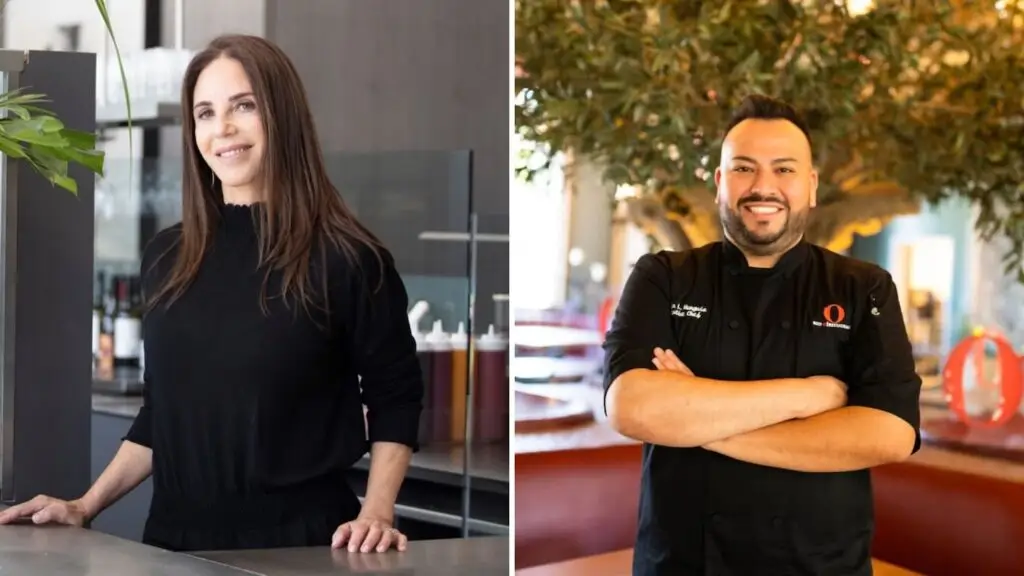
Troy Johnson, Karen Krasne
Signature San Diego Opening Night Party
September 30 | 6 – 9 p.m. | Monarch Ocean Pub
Consider this your soft landing into festival week—the walk-around tasting that eases you in before things get chaotic later on. Monarch Ocean Pub hands its patio over to the flavors that define San Diego eating: Baja seafood done right, coastal bites, Mexican flavors with some heat behind them, all the staples locals will fight you over.
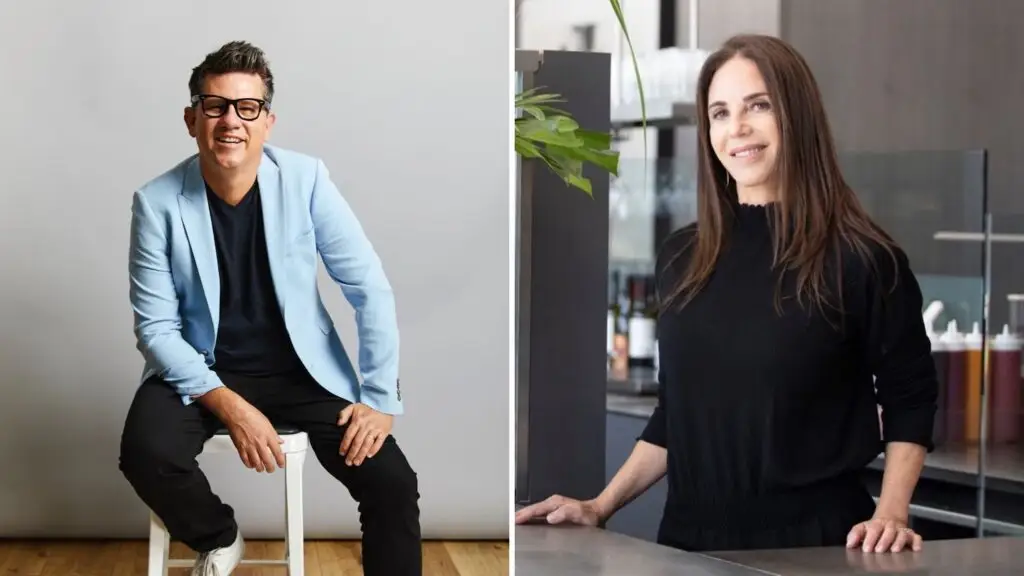
The celebrity sightings here lean more “bump into” than “spot from across the room.” Troy Johnson—Food Network judge, San Diego Magazine chief content officer and co-owner, Emmy-winning host, a man who has eaten his way across the entire country professionally—is the type to materialize at whichever station has the longest line, because he already knows it’s worth the wait. Ask him what he’s had so far. He’ll have opinions.
Then there’s celebrity pastry chef Karen Krasne, owner and executive pastry chef of Extraordinary Desserts, James Beard House alum, and a woman Forbes once ranked among the top 10 pastry chefs in the country—which tracks, because you might find her holding court next to a tray of her roasted pecan shortbread dipped in white chocolate, explaining exactly why this is the flavor combination. You will listen to every word, too, because you’ll want to try that cookie.
This is an opening night party where the person next to you in line might just be the one who baked the thing you’re about to eat.
Courtesy of Del Mar Wine & Food Festival
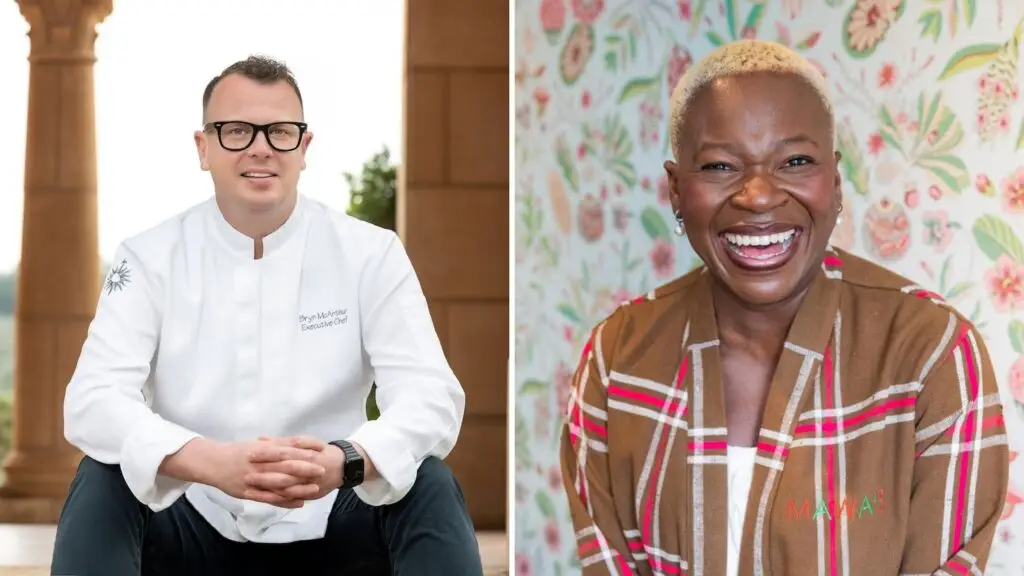
Bryn McArthur, Mawa McQueen
Chateau Montelena’s 50th Anniversary Celebration
October 1 | 6 – 9 p.m. | Fairmont Grand Del Mar
Fifty years ago, a Napa Chardonnay beat France at its own game and rewrote what the world thought it knew about wine. This dinner is that legacy, poured by the family who built it, course by course.
Under the arches at Fairmont Grand Del Mar, Ernie Hahn and the Hahn family, who partnered with the Barretts to revive Chateau Montelena into the Napa powerhouse it is today, host an evening built entirely around the winery’s most iconic pours. Every course gets its own pairing straight from the Montelena portfolio, so you’re not just hearing about the Judgment of Paris, you’re tasting the wine that started it.
Chef Mawa McQueen, a former James Beard Best of the West winner out of Aspen, brings globally inspired cuisine and serious technique to the table. Alongside her, Fairmont Grand Del Mar’s executive chef Bryn McArthur leans into farm-to-table sensibility shaped by a career of global kitchens. Together they’re building a menu meant to hold its own against wine that already changed history once.
This is the rare dinner where the wine isn’t just accompanying the meal, it’s the reason the meal exists. Fifty years after Paris, the rematch is happening right here in Del Mar.
Isabella Dallas is a freelance writer for San Diego Magazine and the Arts and Culture Editor at The Daily Aztec in her final year at San Diego State University. She previously worked as an editorial intern for SDM, but when she’s not writing, you can find her trying the best coffee spots in SD, devouring the latest rom-coms, and indulging in anything and everything pop culture.
What Will It Take to Make San Diego a Global Arts City?
Jonathon Glus on the Art + Design District, investing in the creative economy, keeping artists in the city, and what we can learn from places like London and Chicago
Jonathon Glus is the Prebys Foundation senior fellow leading the development of the Art + Design District at the Downtown San Diego Partnership. He has been asked what an arts and design district is many times. In our conversation, I asked him instead to describe what it isn’t. His answer opened up a broader discussion about what San Diego has and hasn’t invested in, what it has the capacity to become, and what other cities have done that we haven’t. Glus speaks about global art fairs and architecture biennials in Chicago and long tables at dinner parties all with the same fluency. He also discusses who gets to live in the neighborhoods where creative work happens, and what it means when they can’t afford to stay.
Claire Johnson: You have been asked what an arts and design district is many times. Can you tell me what it isn’t?
Jonathon Glus: It is not a place designed intentionally and specifically for tourists. Of course there will be opportunities for tourists to come, but the district is really focused on creatives, on creative education, and on the creative workforce—as well as our major performing arts organizations. That is the emphasis.
What does the district need to do in the next five years for you to consider it a success?
[It needs to] develop greater connectivity between the anchor institutions—the symphony, Broadway San Diego, the opera, all the wonderful things happening in Balboa [Park]—and the creative workforce that will be living and working in that neighborhood 24/7.
What does San Diego not have that you wish it did?
We have not been intentionally investing in the contemporary art product that other major cities have been building. A contemporary art fair. A biennial that reflects the ethos of this region. Chicago developed an architecture biennial about eight years ago. London has a design biennial. Desert X, right here in Southern California, invests in and elevates contemporary artists inside a city. We have not really been playing in the global art market in a way that we have the capacity to.
What capacity do we have?
We have a wonderful foundation. Two theater companies that produce work that goes to Broadway more than many regional theaters in the country, major museums, artists teaching at UC San Diego and University of San Diego. What a city does when it wants to take itself to the next level is intentionally create the product. Miami went after the Art Basel fair; they did not passively receive it. You have to have the intention and the will, and you have to go after it. We haven’t done that in the way that other cities have.
Look at what we did with the tech sector; we’re now a major tech center. That was intentional. Leadership organized around it. We have to do the same thing around the arts. We have a lot of contemporary art collectors here. We have a lot of galleries. But the ecosystem of the business of contemporary art is not as organized or as visible as it should be.
Which city is your North Star?
It’s bits and pieces of different cities. Dubai has invested very quickly and very intentionally in contemporary art—art fairs, design fairs, higher education, artist residencies from all over the world. London has centered artists and creatives in the contemporary zeitgeist in a way that was not true 40 years ago. They built biennials. They ensured British artists had affordable housing and workspace. They made sure the media paid attention to what they were doing.
If you don’t have an artist at your dinner table, it’s not a dinner party. That sounds elitist, but it’s true. It shows the value that artists have in a community. Our relationship culturally with Tijuana is really significant here because artists in Baja seem to be at the table.
We’ve talked before about how food, fashion, design, and art aren’t siloed anymore.
They aren’t. When super creative people are in a community doing extraordinary work, that draws other super creative people doing extraordinary work. That’s why other arts and design districts around the world end up populated with some of the most interesting restaurants and young fashion designers. Creatives want to be around other creatives.
Which leads to the economic argument…
Our creative economy already employs about 170,000 people and generates more than $11 billion in economic activity. It’s large and robust. But we must center all of this in accessibility and affordability. Williamsburg used to be affordable. Artists can’t afford to live there anymore. Wicker Park and Bucktown in Chicago—artist central, now unaffordable. If we’re going to invest in this district, we have to be really intentional about housing and workspace, so creatives have a place in the future of this district.
I see all these new supper clubs and creative collectives popping up. What is the lesson there for San Diego in terms of the commercialization of cultural and creative groups?
I think the lesson is that nothing changes. What do people love? Long tables. Why? Because you’re with a lot of people—some you may have known your entire life, but most you don’t. And if it’s driven by a creative process, all the better. We know one of the best ways to do that is around food, but also music.
For the Art + Design District, part of why we’re leaning into the process is because, culturally, we’re bringing down the barriers between film, fashion, multimedia, tech, and architecture. It’s an experiential mashup in the best possible way.
And it’s not just about art and design, but community writ large. Creative expression is something we all desire. Whether it’s at a long table, at the opera, or in your studio, we gravitate toward creative expression as a way of building community and communicating with the people around us.
Is there a question I should have asked you but haven’t?
I hope you are writing about this in seven years when the district is fully mature. But this is just the beginning for all of this. I think that’s what’s most exciting to me. We don’t know what this is going to be like, but we know it’s going to be creatively centered, and that’s super exciting to me.
Sebastián Morúa is the Senior Vice President of Brand & Innovation for San Diego FC. He oversees Playmakers, the program through which the club has, over the past three years, engaged with over 80 working artists—not as marketing partners, but as co-creative directors.
Morúa didn’t build Playmakers as a community-outreach program bolted onto a Major League Soccer franchise. He built it as the identity of the franchise. When we sat down, he talked about the World Cup, San Diego’s creative workforce, his challenge to other sports franchises in the city, and the mural of heroes he hopes people will see one day when they close their eyes and picture San Diego FC.
Claire Johnson: Why does an MLS team invest in arts and culture?
Sebastián Morúa: I want to answer that in two parts. Philosophically first—because I think what you’re really asking is why should any sports team do this when most don’t.
Sport is a platform for transformation. It has proven that over and over. We saw it this summer with countries participating in the World Cup for the first time and what that did in their home countries—the sense of self-identification, pride, possibility. That is the power of sport.
When you take a sports team that’s fueled by that principle and understands what it could mean for other stakeholders in a community, you start to think about what you can accomplish in collaboration with them. One of those stakeholders, very early on, was the creative community. If we were going to build a team that represents this place and its people, we needed to go to the source. Artists are uniquely positioned to translate the essence and the soul of a community. When you zoom out and look at the multitude of artists in a place, you start to see the fabric of that local culture. That’s where the sense of pride and possibility gets unlocked.
But you’re also San Diego FC specifically. That matters.
Our mission is to create opportunities for talent to flourish and make San Diego shine. That means the club is a platform. When we started doing the early research for the brand, we brought artists into our focus groups. The response was immediate. There was a clear need. In 2024, we ran the first full year of what became Playmakers, working with more than 20 artists to help us tell the story of how San Diego FC could weave 18 distinct communities together.
We’re in the business of developing communities through sport. We’re not in the business of fútbol to entertain communities. That is an outcome—but not the purpose.
When you started, were you thinking about the profitability of this type of program?
No. I wasn’t thinking about where this was going or how much it would cost. It instinctively felt aligned with our organizational purpose, and we made a decision to go for it. Now it’s become what it’s become.
What does Playmakers look like in 10 or 20 years?
If a fan closed their eyes 20 years from now and tried to paint a mural of the heroes that make up the club, they would see a big percentage of Playmakers artists on that mural. Ask any fan about the team they’ve supported for decades, and they’ll tell you about players, maybe a coach, maybe an owner. We’re expanding that. In our mural, there’ll be artists, entrepreneurs, community leaders, youth coaches. The community will be present.
Three to five years from now, Playmakers is an established community of creatives who have co-directed the identity of the club and the evolving identity of San Diego. If we keep the pace we’ve kept, we should have collaborated with 150 to 200 artists whose stories we’ve told and whose next steps we’ve helped support.
What would you tell another organization considering this kind of investment?
There’s a huge benefit for us as a club and as a brand. This is symbiotic. The artists have a need, we can support that need, and in return the community cares more about our club because of the investment we’re doing in the community. That’s what I would tell another organization.
What excites you most about how San Diego is changing?
San Diego is waking up to how much it has to offer the global conversation around culture. There’s a purity to life here—partly because of the weather, which allows us to spend so much time outside, in nature—and that exists alongside this incredible richness in food, music, art, and now sports.
I have a sense that San Diego is ready to unlock its full potential. You see it in the artists and creatives here. They’re ready. There’s very little hesitation. It’s more like: “Hell yeah, of course I want to do this. I know I’m talented. I’ve been waiting for something like this.”
That energy, combined with the unique lifestyle and character of this place, creates a really exciting sense of what San Diego can become in the years ahead.
Is there a question I should have asked you that I haven’t?
I would ask: What would you say to the other big players in San Diego who are—or could be—shaping the cultural fabric of our community? Do they understand the symbiotic benefit? Are they supporting it?
Because Playmakers, in the end, is a cultural compass. It’s making sure that San Diego still feels—and will always feel—represented in the creative process of building San Diego FC and what that means for San Diego.
The pitch is a canvas. Athletes are painting collectively during every game. There is a story in every game. That’s the link between sport and art. At the core, it’s the same creative process.
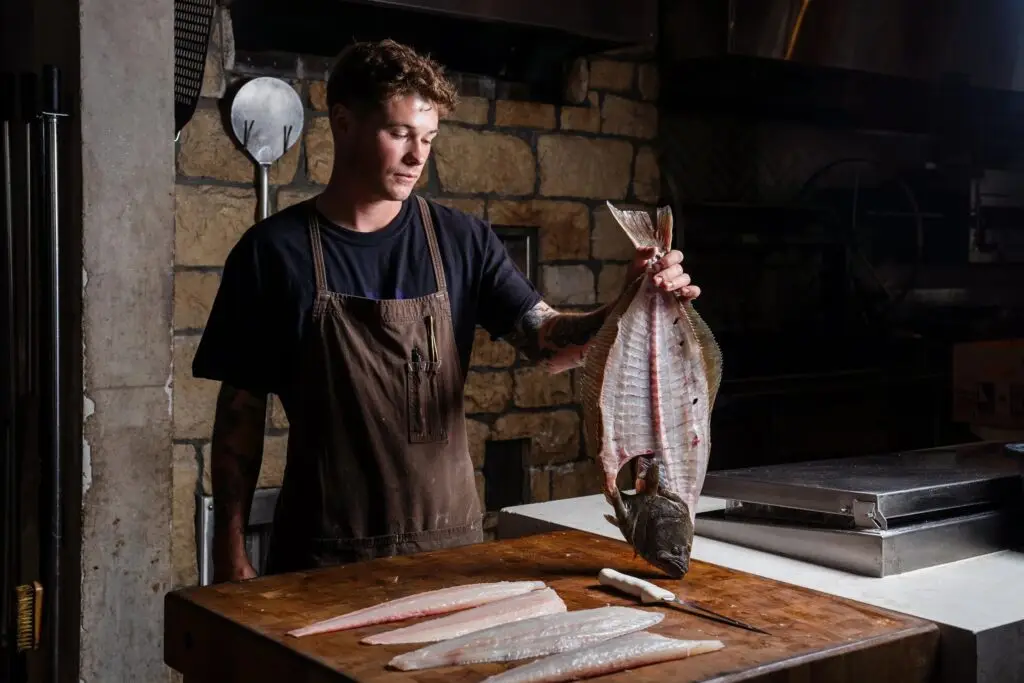
Implementing a farm-to-table model hardly deserves acknowledgement these days. It’s not a stretch. It’s not innovative. “It’s the bare f**king minimum,” says Herb & Sea‘s executive chef Aidan Owens.
When I arrive at the Encinitas restaurant, I’m ready to talk sustainability, farm-to-table stuff, with Owens. “Did you see the chin on that?” he says of the extra big jiggly chin on the sheephead that just arrived with the day’s fresh catch. I did. It was Jay Leno adjacent.
I learn quickly that he somehow oozes both charm and stone-cold honesty. Maybe he could construct a new dish with chin goo, like he did when he had a bunch of tuna scraps and voila’d it into a smooth and crowd-pleasing ‘nduja. “I want to know what’s in there,” he says.
Courtesy of Herb & Sea
The instinct to look closer, to dig into what others might discard, says a lot about the chef’s approach. I guide him back to our topic, but he has something else on his mind. “We’re overcomplicating food—what happened to just cooking good food and having fun with it?”
Owens grew up on a farm in Byron Bay, Australia, where sustainability wasn’t a concept you chat about so much as a way of life. Think dirt roads, backyard chickens, pulling vegetables straight from the ground, and a mother who believed that if you couldn’t pronounce the ingredients on a package, you shouldn’t eat what was inside.
Food wasn’t precious or performative. Making it was what you did because you were hungry and that’s still what inspires Owens today. “I like to cook good food because I like to eat good food,” he says.
His approach to sustainability at Herb & Sea began so naturally that it felt just like instinct. “I was just like, ‘Let’s order food from the people who live and work here,’” he says.
Courtesy of Herb & Sea
And why wouldn’t he when lives in San Diego? Cities all over the world vie for our goods. Our tuna is sent overseas. Our spiny lobsters hit dinner plates in China and Japan. Not to mention California’s producing a third of the country’s vegetables and three-quarters of its fruits and nuts.
“Why would we outsource when it’s all here?” Owens asks.
Sustainability, in this context, is about cooking what exists in abundance, nearby, right now. “I love the local fish here. It’s f**king delicious and San Diego citrus, I mean, it is so f**ing good,” he says.
Instead of importing ingredients, Owens also looks for nearby alternatives. “You can find really cool things in the local waters,” he says, pointing out that stingray cheeks taste similar to scallops.
Courtesy of Herb & Sea
Whatever he finds in that sheephead chin might just be the next substitute for marrow. But to make this work, it means getting diners amped up about the slightly unfamiliar.
Tasting menus, where diners are completely in his hands, become an opportunity to gently push boundaries. “I’ll serve mackerel, because people think they hate it,” Owens says, noting that the abundant local fish can have some fishiness. “But when it’s fresh, it’s arguably one of the best fish in the ocean.”
He also tweaks the language on the menu so people might feel more compelled to give dishes a try without preconceived notions. He might use “lengua” instead of “tongue.” “Whelk” instead of “snail.” When he puts “stingray throat” on the menu, he disarmingly calls it “skate.”
To reduce waste, scraps aren’t always discarded but rather turned into something new. Sometimes they’re smoked, cured or fermented. Apples going bad turn into apple ponzu. Lemons turn to marmalade, which stretches their usefulness far beyond peak season. “And it’s super tasty on our pizza,” he says.
What makes the food even richer, is the relationships he’s built with farmers. Though it didn’t always feel natural, Owens sought personal connection first. He recalls approaching a fisherman at the Tuna Harbor Dockside Market. “I was awkward,” he says. “I went up to him and said, ‘I like your fish.’”
Owen’s is now so close to his suppliers—like fishermen Ryan Sebo and Joe Daly—that he gets texted pictures of fresh catches right as they flop on the boat. The messages always ask if he wants first dibs. “I say yes to a lot of fish,” Owens says, noting that Herb & Sea can go through 2,000 pounds of seafood a week.
Courtesy of Herb & Sea
The next evolution of sustainability, in his view, will be chefs working directly with producers such as his alliance with Sebo, cutting out middlemen and purveyors where possible. “It will put more money in the pockets of the people doing the work,” he says.
It will mean that chefs can’t just know their local farmers and producers, but they’ll choose to work with the ones who have the best practices. Dining and sustainability will become much less about the final plate. “It will be more about the impact that plate has on the Earth,” he says.
Ultimately, he believes sustainability doesn’t need to be loud. It doesn’t need hashtags. It just needs to be honest.
“We aren’t saving lives. We’re feeding people good food,” he says.
And yet, in feeding people well—simply, thoughtfully, responsibly—something meaningful happens. Guests leave satisfied. Ingredients are respected. Local ecosystems are supported and food returns to what it has always been at its core: nourishment, pleasure, and a quiet reflection of the place it comes from.
Museum of Photographic Arts at the San Diego Museum of Art
Now through Jan. 10, 2027
Sift through over 200 photographs, sketches, letters, and costumes from “The King of Vogue,” who photographed World War II, modernized royal portraits, and created the aesthetic for 1920s socialites in London.
Washed Ashore: Art to Save the Sea
Natural History Museum
Now through Feb. 28, 2027
Walk through an 18-foot whale ribcage (and a couple dozen other marine-creature sculptures) made entirely of plastic bottles, flip-flops, lighters, rope, and other plastic detritus found on the beach in the Nat’s 3,000-square-foot second-floor gallery.
Forging a Legacy: 15 Years of Landmark Acquisitions
San Diego Museum of Art
Now through May 31, 2027
Part of SDMA’s centennial, “Forging a Legacy,” highlights artists from the past (Picasso, Monet) and modern day (Hugo Crosthwaite) who contributed to the museum’s collection.
ZWO Astronomy Photographer of the Year
Fleet Science Center
Now through 2027
See the stars (without the smog) at their best from the winners of the world’s largest astrophotography competition—all in the Fleet Science Center’s new basement gallery, specifically dimmed to let the cosmos shine.
Begin Again
The Old Globe
Sept. 6–Oct. 11
From the 2013 silver screen to this year’s The Old Globe stage, you can “Begin Again” (again) with a world-premiere musical adaptation featuring new songs—courtesy of Train—and a story overflowing with hope.
Dear Evan Hansen
Cygnet Theatre
Sept. 9–Oct. 4
“On the outside, always looking in…” marks the emotional crux of the Tony-, Grammy-, and Emmy-award winning musical coming to the Cygnet Theatre.
Kumeyaay Comics by the Kumeyaay Visual Storytelling Project
Museum of Us
Opening Sept. 12
Learn the history of the Kumeyaay Nation from the perspective of the members themselves in an immersive exhibit inspired by graphic novels “Our Past, Present, and Future,” and “Beyond Gaming.”
Good Night, Oscar
North Coast Repertory Theatre
Sept. 16–Oct. 11
During Oscar Levant’s appearances on “The Jack Paar Show,” he explained his reality with mental illness—the institutionalizations, electroshock therapies, nothing was too taboo for him. “Good Night, Oscar” takes us backstage in the raw moments before his 1958 television appearance.
Visiones Nocturnas: Queer Nightlife in Contemporary Art
Museum of Contemporary Art San Diego
Sept. 19–Jan. 17, 2027
A disco ball isn’t just a disco ball. It’s a symbol of where queer communities can finally exhale and be their fullest selves. “Visiones Nocturnas” uses paintings, sculptures, textiles, performances, photos, and videos from Latin American artists to explore what’s at stake when nightclub lights shut off.
Silent Movie Mondays
Balboa Theatre
Sept. 21, Oct. 26, Dec. 7
Guest organists from across the country will come to the Balboa Theatre to accompany a new silent film for each performance. This year closes out with The Headless Horseman (1922), Dr. Jekyll & Mr. Hyde (1920), and a holiday triple feature of Laurel and Hardy films.
Oh, Mary!
Civic Theatre
Sept. 29–Oct. 4
“What if Abe’s assassination wasn’t such a bad thing for Mary Todd Lincoln?” was the question that inspired Cole Escola’s play “Oh, Mary!” In the production, Mary Todd desperately tries to return to the cabaret stage, but her husband (President Lincoln in the midst of the Civil War) keeps getting in the way.
Photo Credit: Anja Koehler
October
Payare Leads Strauss’ A Hero’s Life
Jacobs Music Center
Oct. 3–4
Conductor Rafael Payare opens the San Diego Symphony’s 2026-2027 season with a three-part concert featuring composers Sofia Gubaidulina, Wolfgang Amadeus Mozart, and Richard Strauss.
Emily–No Prisoner Be
Baker-Baum Concert Hall
Oct. 8
Two dozen of Emily Dickinson’s poems are turned into songs—composed by Pulitzer Prize winner Kevin Puts and performed by Grammy-winning mezzo-soprano Joyce DiDonato—for a one-night-only exploration of love, loss, loneliness, and mortality.
Ripcord
The Roustabouts Theatre Co.
Oct. 8–Nov. 1
Roommate beef has no age limit. The latest play from Pulitzer Prize winner David Lindsay-Abaire turns that experience into a comedy through retirement home roommates Marilyn and Abby and the bet between them to see who will break first and move out.
Des Canyons aux Étoiles
La Casa del Zorro
Oct. 12
Composer Olivier Messiaen has chromesthia, so for him, sound evokes a visual connotation. His work “Des Canyons aux Étoiles” brings desert rock and the night sky to mind. See what he means from La Casa del Zorro in the Anza-Borrego Desert, in this performance immersed within nature.
San Diego International Film Festival
Locations Vary
Oct. 13–18
San Diego International Film Festival salutes the silver screen for a 25th time, now with a sixth day adding extra time for parties, screenings, and movie-star tributes.
Considered one of the masterpieces from opera great Giuseppe Verdi, San Diego Opera’s “Rigoletto” sees what happens when the prurient Duke of Mantua and his sharp-tongued court jester become entangled in a fatal curse.
Grim
La Jolla Playhouse
Oct. 27–Nov. 29
When the Grim Reaper’s job becomes too…grim…and he retires after 300,000 years, his daughter picks up the family business. But when she falls for a human and finds beauty in the souls she’s meant to reap, she questions her purpose.
Photo Credit: Ron Kerner
November
Skate Craft
Mingei International Museum
Nov. 21–May 9, 2027
San Diego is nothing without skate culture. Mingei’s “Skate Craft” portrays skateboarding as “living folk art” via its DIY roots (skateboards built in garages) and shows how that ethos shapes the future.
Emma Veidt is an editor at San Diego Magazine. She earned her bachelor's and master's degrees from the Missouri School of Journalism. She loves running, hiking, and rock climbing, but really, she mostly loves encounters with the street cats around North Park.
Ryan Hardison is a freelance arts and entertainment writer and recent graduate of San Diego State. When he's not staring at his laptop, he's likely eating an adobada burrito or getting sunburnt at the beach.
The logic was fair and sound: Cultural institutions and events help attract visitors. Those visitors pay hotel taxes. So, the people agreed, some of that hotel-tax revenue should go back into maintaining the cultural ecosystem that helps bring those visitors and that money.
Projected as a five-year plan, the measure was supposed to increase funding to $17.9 million by 2017.
It never did. The penny was never guaranteed, so each year the city used part of it for other priorities. By 2023, the money going to arts and culture was up to about a half a penny. Even as TOT revenue has gone up significantly.
In 2019, TOT revenue was $245 million.
In 2025: $325 million.
One fix would be to guarantee the penny. Not simple, given San Diego’s financial woes. But the alternative—eroding the culture that makes San Diego San Diego, give it its identity—also doesn’t feel wise. Plus, even a locked percentage still rises and falls with tourism, which is why culture advocates want a guaranteed floor on top of it.
Another solution would be to give the arts commission actual authority.
“It’s an advisory body,” says arts commissioner Kamaal Martin. “You’d be hard-pressed to find anybody who takes our advice.”
Photo Credit: Katie Gardner & Matt Furman
He described the commissioners debating real, consequential questions this year, like whether and how to divide the cuts between funding pools. But those conversations “don’t connect to whoever’s actually deciding,” Martin says. “We haven’t been entrusted with decision-making about relevant things nearly enough.”
Christine Martinez is building political infrastructure through her organization Arts+Culture:San Diego—which is starting a 501(c)(4) lobbying structure not unlike police and fire unions. Martinez is also keeping her community actively engaged. “We won’t be caught off guard next year like we were this year,” she tells me.
Then there’s the evergreen issue of affordability and accessibility. Kiplinger’s most recent report ranks San Diego as the 11th most expensive city in the US, based on cost of living. The average home value is $980,700 (the US median is $540,000), but San Diego’s median household income is only one-third greater than the national level. Rent is also 66 percent higher than the national average ($2,716 vs. $1,636).
This is why San Diego has long suffered from the creative brain drain—creatives leaving for more affordable cities. “Artists are free to live wherever they want, and they will go where the rent is affordable,” says Jennifer de Poyen of Space 4 Art. “When they leave, they take their gifts with them, and their contributions, and their economic impact.”
One saving grace is the presence of Tijuana, where the cost of living is about 60 percent lower than San Diego, per Numbeo. Tijuana has long functioned as an affordable neighborhood for many in San Diego’s creative culture. It’s part of the reason why the binational identity is such a constant in our galleries, music, theater, murals, and culture. While that cross-border blood flow is one of San Diego’s most compelling attributes, few artists living that life would call it convenient or easy. A city is at a disadvantage when its culture creators have to cross a border to go home at night, and cross again the next morning to work.
In May, San Diego County Board of Supervisors approved a $2.75 million arts initiative of its own. It includes an Artist Space Grant Program aimed directly at the affordability crisis, as well as an artist-in-residence program, a dedicated Binational Creative Economy Investment, and a one-time investment in the Black Arts and Culture District in Encanto.
Bob Lehman of San Diego Art Matters has been doing county-level, binational organizing for years; in 2023, he helped get the county’s arts commission reestablished after 30 years of defunctness. That’s important because it gives arts and culture an official seat in county government, advising the County Board of Supervisors on arts and culture policy. He also brought in consultant Laura Zucker, who ran LA County’s arts program for three decades, to build a real regional plan.
“I really believe we’ll have something set up here that other communities come and look at,” he told me. “A national template other cities come to learn from.”
When asked who decides which artists will get the new grant money, county arts commissioner and executive director of the Chicano Park Museum and Cultural Center Monica Delgadillo Hernandez doesn’t hedge.
“That’s part of the infrastructure we’re going to be building,” she says. “What should a panel of reviewers look like? Should it be the commissioners? Should it be other folks? A supervisor?” She was just as candid that the commission itself doesn’t reflect San Diego’s population—Chicano communities are roughly a third of the city, she tells me, “and that’s not represented at the table yet.”
Photo Credit: Katie Gardner & Matt Furman
What Other Cities Prove Is Possible
The great news is that none of these solutions have to be invented from scratch. Numerous cities serve as examples of what’s possible—if we have the will.
Jonathon Glus—Prebys Foundation Senior Fellow for Art & Design, the Executive Director of the Art + Design District, and board president for California for the Arts—worked in Houston before coming to San Diego. The Texas city dedicates 74.5 percent of its hotel tax to arts grants by formula, and that support is guaranteed. Washington, DC locked in dedicated arts funding in 2019. Salt Lake City, my hometown, has run a voter-approved arts tax for almost 30 years, most recently reauthorized through 2034. And just this summer, New York City pushed cultural funding to a record $323.8 million, even incorporating an emergency fund.
Denver’s model is interesting because instead of a city-dependent funding model, theirs is a 0.1 percent regional sales tax. In place since 1988 and renewed by voters three times, their Scientific & Cultural Facilities District has distributed between $54 million and $85 million to arts, culture, and scientific orgs—each of the last 12 years.
This is part of a three-part series. This is Act III. See Act I and Act II here.
None of these cities got there by accident. They decided, on purpose, that arts and culture were worth protecting from politics—and, in some cases, worth building an entire identity around.
“That’s how Miami has flipped the switch,” says Glus. “People go to Miami for culture as much as they do the beach.”
San Diego has spent decades selling itself backward: Beach and weather first, culture as an afterthought you might stumble into. Glus would love to see the strategy flipped: Visitors should come for the art, “and then, by the way, you’re on the beach.”
Photo Credit: Katie Gardner & Matt Furman
So What Happens From Here?
“I do think it was a wake-up call for the community,” de Poyen says of the budget fight. “People understand that our funding is vulnerable. It was a lesson in how much power people have when they coalesce. But wow, is it painful.”
Glus says he’s genuinely optimistic. “The players have all changed seats, but the work is moving forward.”
“I believe optimism is a moral duty,” says Martin, who’s both power-fist and polite.
In eight months, there will be another budget fight. Everyone I talked to expects it will be worse. But something happened this spring that can’t be undone.
“I hope this rupture has brought us together in a moment of self-realization,” says Leticia Gomez Franco of the Balboa Art Conservation Center. “I hope we stop being so transactional; we begin to see ourselves and each other as partners in this work.”
That’s the whole ask, really. And it’s on all of us.
This is part of a three-part series. This is Act III. See Act I and Act II here.
Aaryn Belfer is a writer and editor specializing in nonfiction across art, architecture, and culture. Once upon a time, she wrote a provocative column for San Diego CityBeat (RIP). She was a runner up in the 2025 Matchbook Stories contest at the San Diego Central Library and is irrationally happy about it. Currently in her Soft Girl Era, Aaryn has expensive taste in (mostly flat) shoes and will choose a great art exhibit or live jazz concert over almost anything else. Except, possibly, Javier Bardem.
SeaWorld dazzles with a drone show, big-name entertainers, new animal adventures and more
By Partner Content
Nights are heating up at SeaWorld San Diego. The quintessential summertime staple on Mission Bay is transforming into a destination for unforgettable day-to-night adventures, bringing back some of its most popular Summer Nights programming and introducing exciting new experiences sure to delight both kids and adults alike.
The 2026 Summer Day to Night at SeaWorld San Diego is the park’s most ambitious season yet. SeaWorld has planned a highly anticipated entertainment lineup that features nine weeks of throwback concerts featuring R&B and hip‑hop favorites from the ‘90s and early 2000s, including Jordin Sparks, Too $hort and Warren G, Ashanti, and an array of boy band heartthrobs performing together as part of the Pop 2000 Tour.
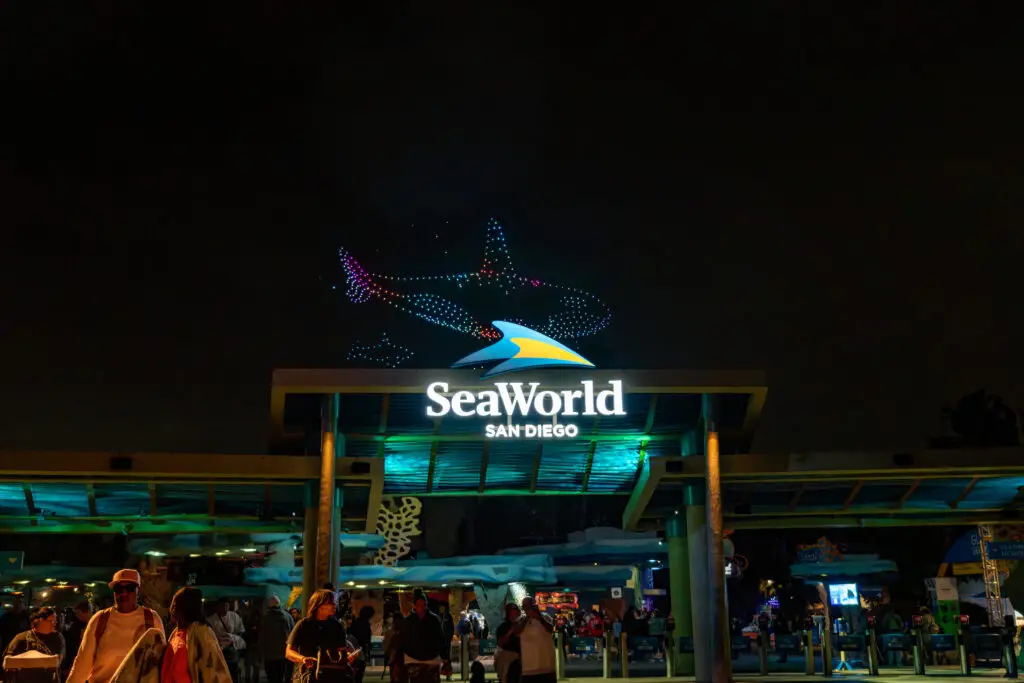
New this season is perhaps the park’s most visible update: a nightly drone show, Ocean of Dreams, which illuminates the sky with hundreds of synchronized sparklers. Drones form sea otters, sharks, dolphins, and a majestic orca that tell a breathtaking 12-minute story of marine life and underwater ecosystems. The show culminates with a spectacular electric neon finale celebrating hope, wonder, and ocean stewardship.
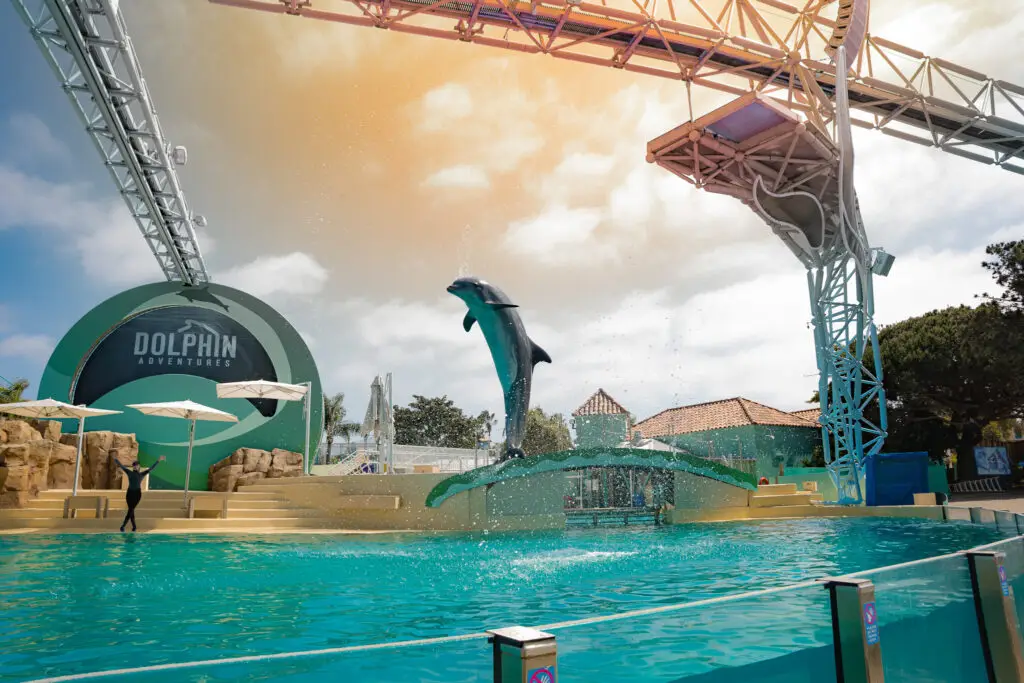
Nighttime visitors are also in store for animal adventures that fuse education with high-energy fun and the dreamy ambiance of nighttime. The park has launched two all-new animal presentations: Shamu’s Celebration:Light Up the Night and Dolphins: Touch the Sky. Shamu’s Celebration:Light Up the Night features vibrant lighting, music, and dynamic choreography that celebrates the power and beauty of killer whales. Dolphins: Touch the Sky showcases playful bottlenose dolphins and the special connection between humans and the natural world. And back by popular demand is fan-favorite Sea Lions Tonite. See the charming pinnipeds splash, play, and parody pop culture in this refreshed crowd-pleaser.
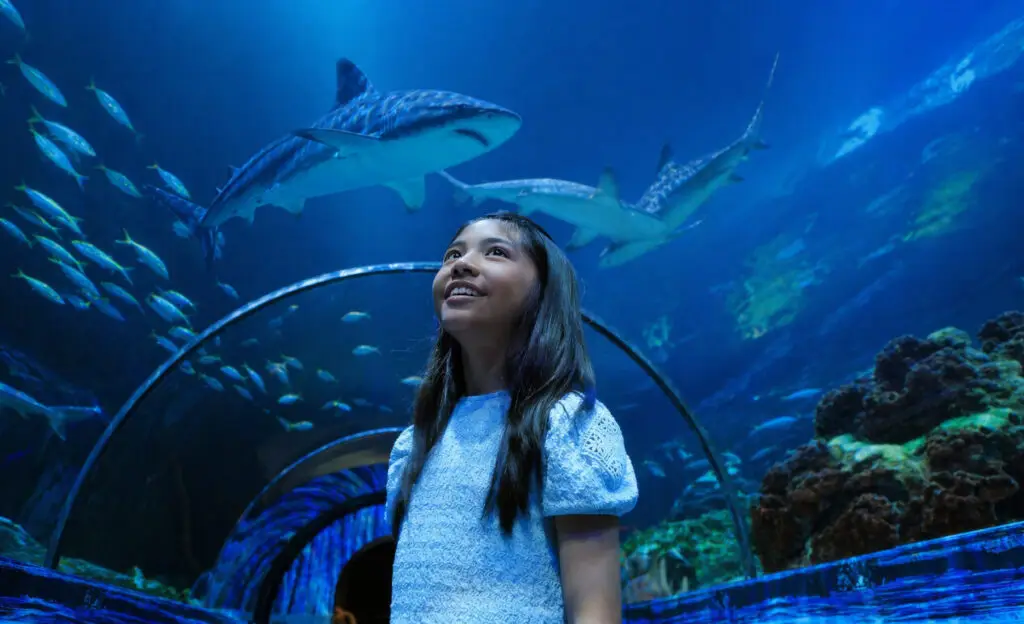
More must-sees: a newly reimagined Shark Encounter, one of the country’s more immersive exhibits highlighting 11 different species up close, SeaWorld’s beloved BMX Blast! stunt show, and high-seas escapade, Pirates Ahoy! The Battle for Mermaid Cove. And don’t miss the park’s all-new Deep Sea Disco, which encourages guests to dance the night away under the glow of the SkyTower, and vibrant closing time laser light display Laser Reef Summer Spectacular.
Amp up the nighttime vibe with local craft beers, curated cocktails, and nostalgic theme park treats with $1 beer all summer long. SeaWorld is the place for day to night summer fun. When the sun goes down, SeaWorld lights up, and inspires guests of all ages to embrace their inner whimsy and see why generations of San Diegans head to SeaWorld to make memories they’ll never forget.