
Featured articles
Food & Drink
Food & Drink

Food & Drink
Featured articles

Everything SD
Everything SD
Everything SD
Featured articles
Things to Do

Things to Do
Things to Do
Featured articles
podcast-ep
podcast-ep
video
Featured articles
Everything SD
Everything SD
Everything SD
Featured articles
Food & Drink
Food & Drink
Ready to know more about San Diego?
SubscribeReady to know more about San Diego?
Plus, the schedule for this year's festivities!
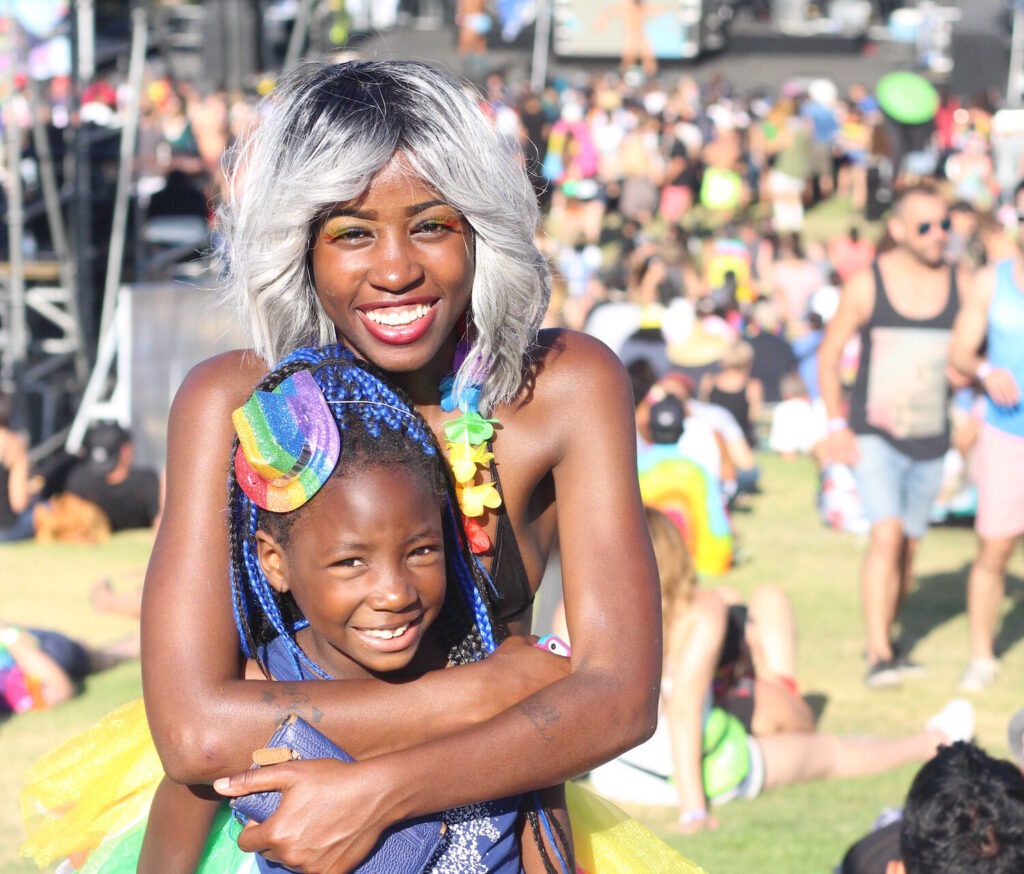
46 Years of Pride – main
Ariana Drehsler
San Diego’s Pride celebration has endured bad weather, threats of protest and violence, a tear gas attack, and for the second year in a row now, a global pandemic. Even so, the show must go on.
“There’s never been a missed year,” says San Diego Pride marketing and communications manager Alex Villafuerte. “Even on the years we were rained out, we still carried on.”
Last summer, COVID-19 restrictions required the event to be entirely virtual. This year, it’ll comprise a virtual Pride Live event streaming online and a handful of smaller in-person gatherings from Kearny Mesa to Carlsbad.
Villafuerte says the online and satellite events mean that Pride can reach beyond Hillcrest and the other downtown San Diego neighborhoods that have hosted the colorful parade and festival since 1975, making it accessible for even more San Diegans.
Pride is the largest civic event in the county, drawing more than double the number of participants as Comic-Con each year and generating millions of dollars for the local economy. It’s a celebration of lesbian, gay, bisexual, transgender, and queer people of all gender identities and sexual orientations, a reminder of the strides the LGBTQ community has made toward equality, and a rally against the pervasive discrimination they still face.
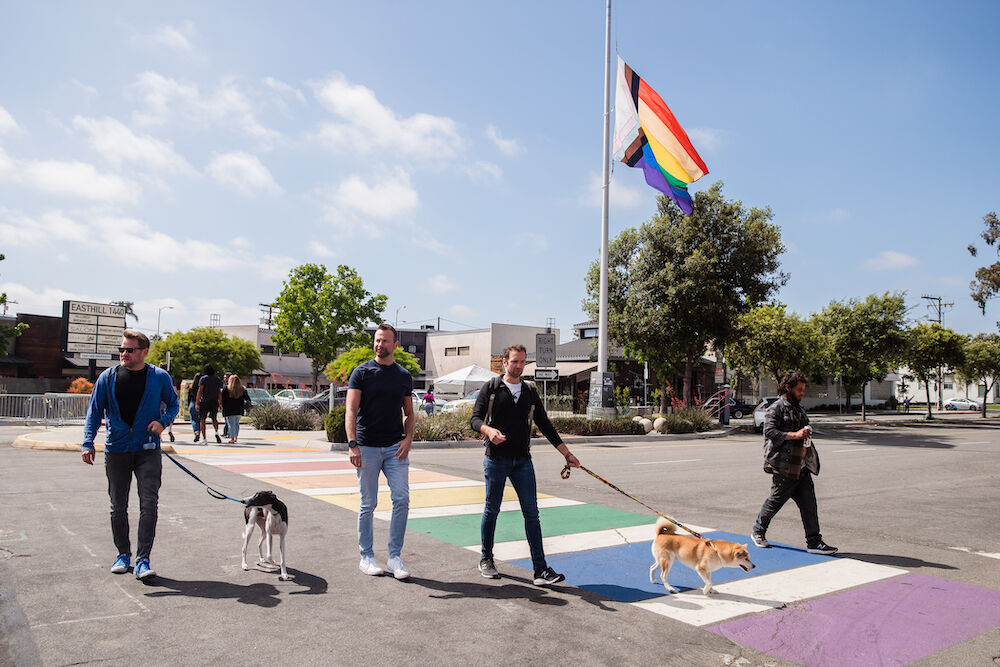
The Hillcrest Pride Flag flies atop a 65-foot pole at Normal Street and University Avenue. This variation, called the Progress Pride Flag, includes additional stripes to specifically recognize the transgender community and people of color.
Ariana Drehsler
Today, Hillcrest is synonymous with San Diego’s queer community. Rainbow-striped pride flags hang from storefronts, homes, and on a 65-foot pole at Normal Street and University Avenue. The San Diego LGBT Community Center sits at the end of Harvey Milk Street, named in honor of the gay civil rights icon. Gay bars and restaurants with bustling patios dot the business district. Locals and tourists alike are more observably “out” here than elsewhere in San Diego.
But this wasn’t always the scene. Hillcrest became a residential neighborhood of affordable low-occupancy cottages and bungalows in the early 20th century. According to historian Walter Meyer, many members of the gay community were introduced to sunny San Diego through military service, especially during World War II.
“In the 1930s, the place to be gay was down on Broadway,” Meyer says. “If you went into the restaurant bar, you might meet another sailor. Anyone who served in the Pacific who was discharged here wasn’t going to take his new boyfriend home to Omaha.”
Meyer wrote the companion book to the San Diego History Center’s exhibit LGBTQ+ SD: Stories of Struggles and Triumphs, on view in Balboa Park through August 1. Before the pandemic, he hosted educational walking tours about Hillcrest’s queer history for school groups, tourists, and corporate teams.
San Diego’s oldest gay bar still in operation opened in 1934 as The Brass Rail. It moved from downtown to Hillcrest in 1963 and rebranded as simply The Rail in 2016. The club has been mostly closed since March 2020.
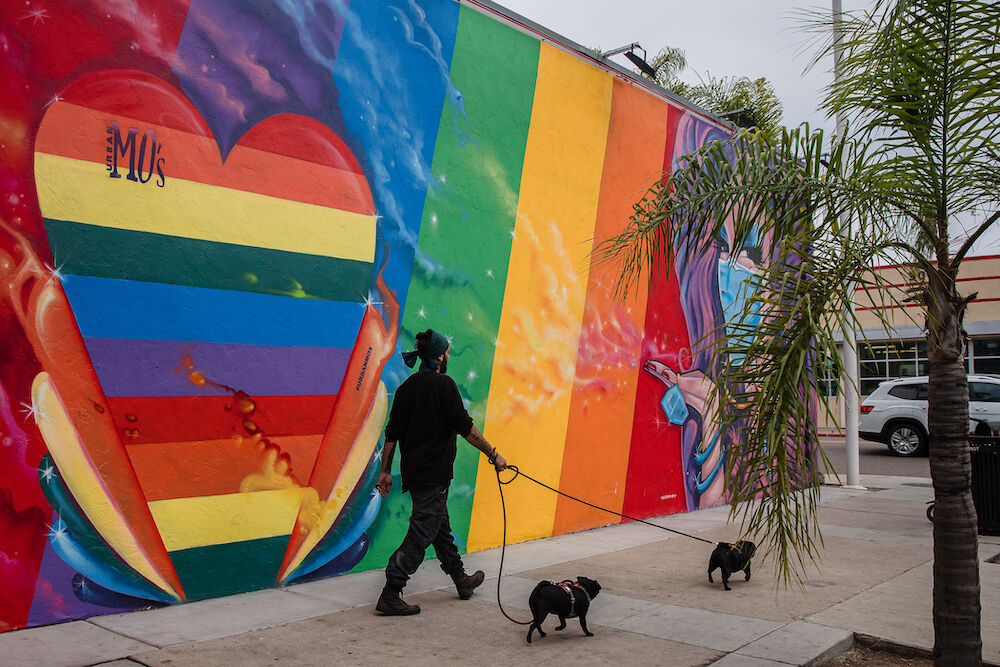
Pride – rainbow mural
Ariana Drehsler
By the ’60s and ’70s, many Hillcrest homes were starting to become run-down. Affordable rent and a burgeoning LGBTQ social scene brought gay-led gentrification to the neighborhood. When the Sears department store along University moved to Mission Valley in the ’80s, the area known as the Uptown District opened up to even more local, gay-owned businesses.
Hillcrest’s evolution as an LGBTQ haven happened alongside the gay civil rights movement and the AIDS epidemic. In those days, being out could cost someone their job or even their home, so an inclusive community was a welcome refuge.
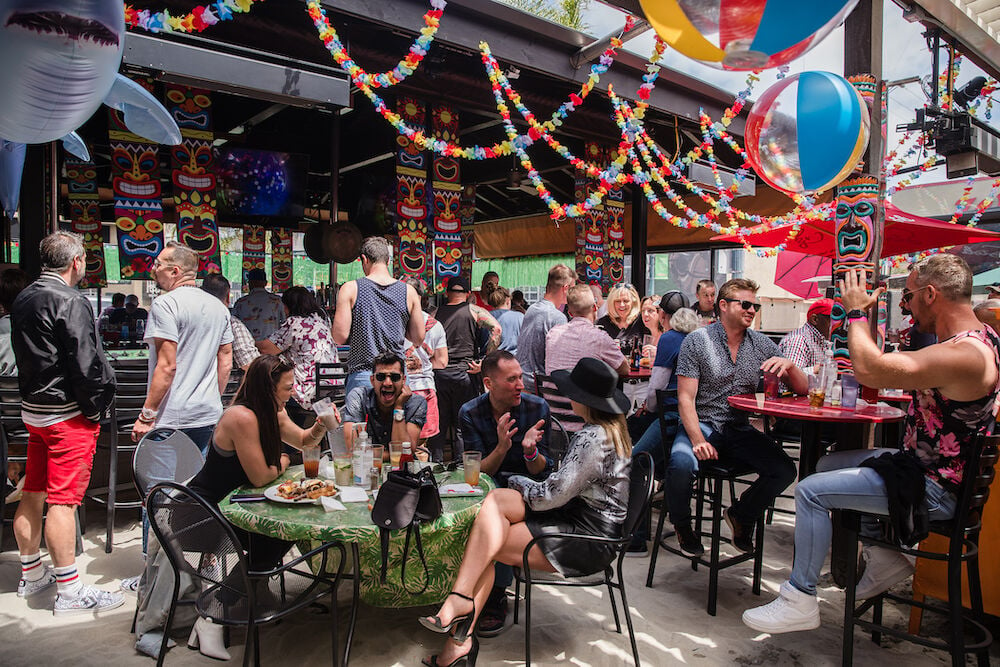
Urban Mo’s Bar & Grill
“There were unnamed bars, no signage,” Meyer says. “You just opened the door to what looked like an abandoned building and there’d be a disco inside. Even the bars were closeted.”
Those in the know would use backdoor entrances to Hillcrest dance clubs. Large store windows facing the street or even outwardly visible pride flags were uncommon. Neighborhood bookstores and coffee shops advertised in gay business directories to signal to patrons that they would be safe there.
Meyer tells the story of a naval officer who would park at the Pernicano’s pizza restaurant on Sixth Avenue and walk to the gay clubs so he’d have an alibi ready if anyone recognized his car. Another friend attended his first Pride parade in the ’70s dressed as a circus clown.
“He said, ‘I was the most visible person there, but no one saw me,’” Meyer recalls. “It was the most liberating experience.”
The 1969 Stonewall uprising in New York City brought the fight for LGBTQ equality into the national conversation.
The shift in San Diego from a closeted subculture to a celebrated recognition of individual identity has been slow but steady. The San Diego History Center’s photographic exhibition, created in partnership with the Lambda Archives of San Diego, is the first of its kind to focus exclusively on the local queer experience.
Meyer suspects that greater social acceptance and online dating has made Hillcrest less of a hideaway and more an enclave. Big-name companies like Wells Fargo and Ace Hardware are allies in the neighborhood. San Diego Pride counts Qualcomm, Sony, and Bud Light among its major sponsors.
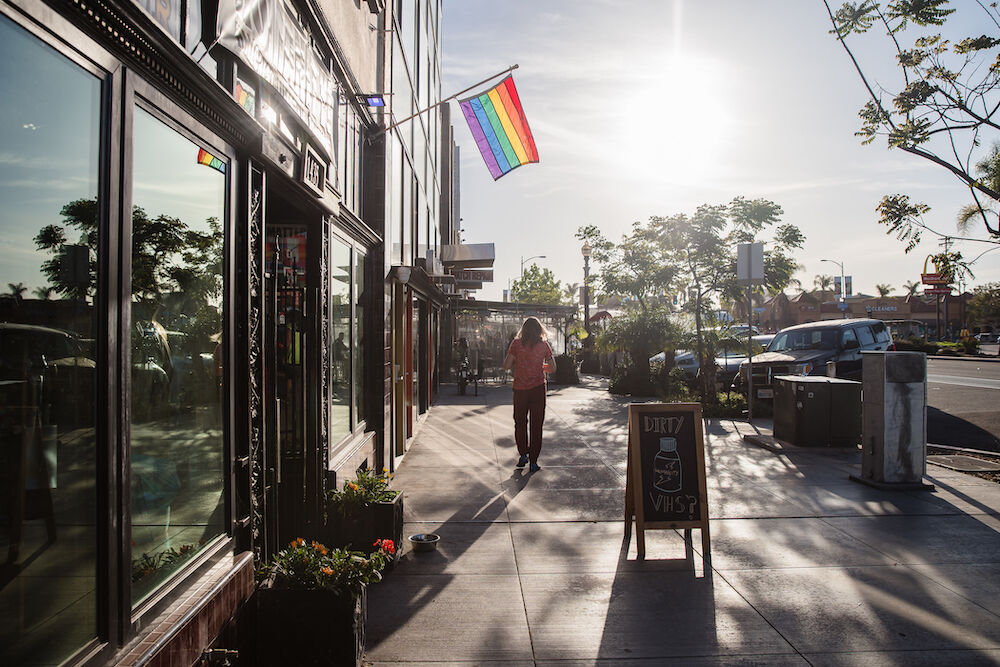
University Ave. in Hillcrest
Despite historic gains, the community still faces challenges, according to Villafuerte. Among them: the push for a federal Equality Act, which would update the Civil Rights Act of 1964 to expressly protect LGBTQ people in every state from discrimination in public spaces like stores and restaurants.
It passed the House in February, and as of press time is under consideration by the Senate. The bill will be among the topics discussed at the Spirit of Stonewall Rally on July 16.
“It helps inspire us and educate us about the issues the community is still facing,” Villafuerte says
Organizers hope to pay it forward with the same feeling they had at their first San Diego Pride
SD Pride
LGBTQ+ youth in the US have had an especially rough year. State legislation restricting their right to talk openly about their identity at school has sparked national debate, increasing the pressures and hostility they often already face growing up.
The volunteers for San Diego’s annual Pride Festival have been there, and they know how tough it is. So they’re organizing the Youth Zone, a scaled-down version of the festival where middle- and high-school-age queer youth and their allies can have a social space to be themselves and connect. It’ll be open 11 a.m.–8 p.m. July 16 and 17, hosting outdoor games, dance parties in the evening, and fun and educational workshops, like How to Do Drag.
Cris Sotomayor (they/them), who oversees Pride’s youth programs, says they’ve had a great reception so far: “Young people reflect just how special it feels to have [events] created specifically for them, because they tend to be the last group included or asked about their opinion.” Both the Youth Zone and the parade’s Youth Marching Band are planned by youth volunteers, and more help is always welcome. There’s even a Children’s Garden for little ones and their parents.
Pride’s organizers often remark among themselves about how different their own teenage years could’ve been if more resources like this had been around. For Sotomayor’s part, they hope to pay it forward with the same feeling they had at their first San Diego Pride: “It was the first time I’d been in a space with a bunch of other trans, gender-nonconforming, and nonbinary people, and I was so shook. I couldn’t believe we were all there just to celebrate ourselves, not to advocate or to protest. There was something powerful about finally finding your people.”
Dan Letchworth is the copy chief of San Diego Magazine. His print column Dansplaining explores San Diego trivia, and his theater review blog Everyone’s a Critic was a finalist for best online column in the 2019 National City & Regional Magazine Awards.
How he'll be celebrating and what allyship means to him
Todd Gloria – Pride
Todd Gloria’s mid-pandemic election as San Diego’s mayor was historic. He’s the first-ever person of color and the first openly gay man to hold the top leadership role in our city. He describes his ethnicity as Native American, Filipino, Dutch, and Puerto Rican. He’s been with his partner, Adam Smith, for about five years. In advance of this year’s Pride, the third-generation San Diegan spoke with us about what it means to lead our diverse community.
We understand it will be different this year, and that’s okay. Last year, my participation was to join in the social media live event in front of the pride flag in Hillcrest. I suspect it would be more substantial this year, but it won’t be the way that we’ve traditionally celebrated.
I think that San Diego plays a significant role in the national story of LGBTQ equality. For example, we have the second-oldest and third-largest community center in the nation. Then, when you look at the over-a-quarter-century of representation in Council District 3 in terms of out representatives to now, it’s sort of a bloomed family tree: our state senator, our assembly member, mayor, city council members. I think one of the evolutions has been that as our efforts have borne fruit, our LGBTQ San Diegans feel comfortable living in places outside of Hillcrest.
That’s what we should hope—that you could feel safe in any neighborhood in the city, and that’s increasingly true. At the same time, that presents a challenge, in that Hillcrest is the historic home of our LGBTQ community and, speaking for myself, both as a San Diegan and as mayor of the city, I want it to always stay that way. So we have to make sure we’re supporting our local businesses, particularly our bars, as they’ve always formed the foundation of our community.
So we have our community center, neighborhood efforts like the pride flag, the naming of Harvey Milk Street, and our intention to build a Pride Plaza promenade on Normal Street. These are efforts to make sure that, much like Little Italy is the historical home of the Italian community in San Diego, we want something similar in Hillcrest to make sure that folks always know that’s the historic home of LGBTQ. While we enjoy the gains of our civil rights and ability to live and be who we are, we always want to be able to come home, and Pride represents that. It’s coming home to celebrate our community and its progress.
I think the responsibility I feel is really toward the community to make them proud. I am the beneficiary of a lot of folks who worked over decades to make this election possible. Many people have worked so hard to achieve this milestone, and I want to make them proud. I also have a responsibility to our young people. Growing up in this city, I didn’t see myself reflected in government until [San Diego’s first openly gay elected official] Christine Kehoe arrived. I know what that meant for me to see her serve. I still hear from young people who share with me what my election means to them personally, so there is a responsibility to hopefully empower them to be whoever they want to be.
There’s a lot. There are urgent matters around Black Lives Ma er and Stop AAPI Hate that really demand attention in the realm of diversity, inclusion, and equity. With regard to the LGBTQ community, it’s really about maintaining our status as being a national leader in the movement for equality. We have continually received 100-percent scores from the Human Rights Campaign for the policies and laws that we have in the city.
Our movement is ever-evolving. When I came out it was just “gay and lesbian,” but now it’s much more inclusive. I know that we will continue on that path.
I think about the fact that we have not come this far without our allies. In the way that many people stood with us as we fought for marriage equality
and other key rights, we have to pay it back. That means standing with our Black community as we work to make it clear that Black lives do matter. Stand with our immigrant community, recognizing that we as a border city have responsibilities to advocate and lead on this issue.
I’m invigorated by it because this isn’t about just one group of people. This is really about the totality of the diversity of the city and ensuring that everyone feels as though there’s a place for them in San Diego.
Spend an evening with Goose, explore Chula Vista’s annual Lemon Festival and feel the heat (and the beat) in Hell’s Kitchen
Films, concerts and an exorbitant amount of lemons comprise this week’s most entertaining events in San Diego. Those looking to beat the heat can find shelter and cinematic gold with The Treasure of the Sierra Madre at Digital Gym Cinema, or check out a cult classic at the Balboa Theatre’s 40th anniversary screening of Little Shop of Horrors. From South Bay to La Jolla, concertgoers can catch collaborative tours from the likes of Santana & the Doobie Brothers, Helado Negro & Reyna Tropical and Jason Aldean & Luke Bryan. This weekend also marks the return of the two-day San Diego Made Summer Market and the yearly Lemon Festival, both of which are ripe for shopping unique local vendors.
JUMP TO: Food & Drink | Concerts & Festivals | Theater & Art Exhibits | More Fun Things to Do

SeaWorld San Diego’s beer and barbeque party is back with a live music component and an extra ‘B’ in its name. Every Friday-Sunday (and Labor Day) through Sept. 7, the Bayside Bands, Brew & BBQ festival will feature 60+ locally crafted beers and bites like pork belly tater tots, root beer baked beans and s’mores pie. SeaWorld visitors can also check out rock concerts featuring Saliva (Saturday), Uncle Kracker (Aug. 22) and Skillet (Aug. 29) in the Bayside Amphitheater. Park entry starts at $74 for Bayside Bands, Brew & BBQ dates, and includes festival admission.
500 Sea World Drive, Mission Bay
Seize the day, or squeeze the day—whichever your preference—at the Downtown Chula Vista Association’s free Lemon Festival. This annual event celebrates lemons in all their citrusy glory and ensures the city’s lemon legacy still bears fruit for years to come. This Saturday from 11 a.m. to 6 p.m., enjoy a lemony menu, two live music stages, arts and crafts vendors, kids activities at Memorial Park and photos with the festival’s mascot, Tarty the Lemon. And be sure to save room for the lemon pie eating contest, with registration still open to those ages 12-99.
Third Avenue, Chula Vista

Few regions have birthed as many iconic bands as the Bay Area, with Santana (San Francisco) and the Doobie Brothers (San Jose) among the area’s most influential. Though they’ve mastered different variations of rock n’ roll—with Santana championing Latin rock and the Doobie Brothers masters of breezy yacht rock—both groups understand the importance of a good groove. This Tuesday (7 p.m.), the two bands will run through their greatest hits at North Island Credit Union Amphitheatre, and showcase their shared roots. Tickets start at $28 for this concert.
2050 Entertainment Circle, Chula Vista
One of the year’s best musical teamups—combining the talents of Roberto Carlos Lange (Helado Negro) and Fabi Reyna (Reyna Tropical)—produced Helado Tropical, a subtle yet audacious daliance with Latin pop and wavy soundscapes. This Wednesday (7 p.m.) at Epstein Family Amphitheater, Lange and Reyna will pull from their respective catalogs and play their collaborative album in full. Ticket options include youth admission for ages 2-18 ($25-$28) and adults ($35-$50).
9480 Innovation Lane, La Jolla
The defining quality that makes a jam band truly so is a willingness to improvise, keeping audiences, and even their most dedicated fans, waiting with bated breath for their next move. As with pioneers of the practice like the Grateful Dead, Connecticut rock group Goose treat concerts as a nightly display for their vast musical chemistry. When Goose performs this Thursday (7 p.m.) at Cal Coast Credit Union Theatre, don’t be surprised if a familiar track is extended by an extra five, ten or thirty minutes into a new cosmic space. Tickets start at $55 for this concert.
5500 Campanile Drive, College Area
Georgians Jason Aldean and Luke Bryan both began their rise to country music stardom in the 2000s, and have since become two of the genre’s revered elder statesmen. After a sold-out one-off show at the University of Georgia in April, the pair decided to take the Peach State experience nationwide with co-headlining stops in Missoula, Montana, Washington, D.C., Las Vegas and San Diego’s Petco Park. This Sunday (4 p.m.), country fans can catch the two stars, as well as a slew of up-and-coming talent, with openers Gavin Adcock, Chase Matthew, Dee Jay Silver and DJ Rock. Tickets start at $74 for this concert.
100 Park Boulevard, Downtown
Ryan Hardison is a freelance arts and entertainment writer and recent graduate of San Diego State. When he's not staring at his laptop, he's likely eating an adobada burrito or getting sunburnt at the beach.
Behind every beautiful space is a thoughtful process, and ASID San Diego is helping homeowners understand the value of professional design.
A perfectly designed home rarely happens by accident. Those kitchens that feel effortless and rooms that seem to tell a story the second you walk in? They’re usually the work of someone who knows exactly what they’re doing.
It’s knowing which ideas will actually work, which materials will hold up over time, and how to turn a collection of choices into a space that feels intentional. That’s where a professional interior designer comes in.
For the American Society of Interior Designers (ASID) California San Diego Chapter, the goal is to help people see interior design as more than just the finished look. Behind every well-designed space is a process built on technical expertise. Designers are educated in everything from professional software and construction details to building codes, space planning, materials, and functionality.

“People don’t always realize how much goes on behind the scenes,” Kirsten Recce , current president of the ASID California San Diego Chapter, says. “Our designers are not just doing furniture placement and color selection and picking out new fluffy pillows. That’s not what they’re trained for.”
ASID members bring formal education, continued learning, and industry knowledge to their projects, helping create spaces that are not only beautiful, but designed to work. A paint color that changes completely depending on the lighting. A material that looks beautiful in a showroom but doesn’t make sense for everyday life. A layout that photographs well but doesn’t function for the people living there. These are the details where professional guidance can make all the difference.
Still, one of the biggest misconceptions about hiring an interior designer is that it’s reserved for massive renovations, luxury homes, or people who already know exactly what they want. The process can feel intimidating. Where do you begin? Is a designer worth the investment? What if you only need help with one room?
ASID’s answer: start with one hour.
ASID’s Spruce Up events break down one of the biggest barriers between homeowners and professional design: knowing where to begin. Held twice a year, the community program gives homeowners the chance to work directly with an ASID designer through a one-hour, $125 consultation in their own home. Whether you’re looking for advice on furniture placement, window treatments, kitchen and bath updates, remodeling ideas, vacation rentals, color selections or something else entirely, the upcoming September 2026 event offers an approachable way to get expert guidance before committing to a full project. Signups are open through Sept. 7, with consultations taking place Sept. 21 through Oct. 31. Proceeds benefit ASID San Diego’s educational and community programs. Register here!

“It’s a great opportunity for people who are in that exploratory phase,” Recce says. “Maybe they’re not sure they want to hire an interior designer yet, or they think it sounds daunting or expensive. This gives them a chance to discover what working with a designer is actually like.”
Design is personal. A good designer isn’t just creating a beautiful room; they’re helping create a space that fits the way someone lives.
“We’re a resource to all of San Diego County,” Recce says. “It doesn’t cost anything to pick up the phone and call and ask. We’ll answer.”
Follow ASID San Diego on Instagram, LinkedIn, and Facebook for updates on upcoming events, or connect with the chapter directly at [email protected] or 619-548-8847.
From tacos to tailors and trainers to travel, these are the businesses, people, and places that earned San Diego readers' votes
San Diego Aesthetics and Med Spa
Elicia Soltesz, Elicia Marie Beauty
Ashley Fierro, Ashley Fierro Makeup
Michelle Langston, MSN, APRN, FNP-BC, HNB-BC, Starlite Aesthetics
Alysa Espiritu, Afterglo Beauty Lounge
Ronnie Page, Gold Comb Barbershop North Park

Ryleigh Hunter, Headbang Salon
Ann Teresa Degischer, Maen the Salon
Lindsay Axelrod, Pixiedot Salon
Lauren Skinker, Lucky Cat Tattoo

Father Joe’s Villages Turkey Trot
The Camp Transformation Center, West Chula Vista
Singing Hills Golf Club at Sycuan

Camila Casanueva, The Yard Gym

Austin Harrington, Captain’s Quarters
Bivouac Ciderworks, Savoy Dry Apple Cider

Missi Burns, Et Voila

Prospera Internal Medicine and Aesthetics
From celebrity pickleball tournaments to intimate dinner parties with your favorite Food Network chefs, here are all of the can’t-miss events going on Sept 30–Oct 4
Play is underrated. Somewhere along the way, someone decided it was something we should outgrow. That you A good song comes on, and they dance. A game appears, and they’re in. Someone hands them a melting ice cream cone, and somehow it’s the best part of the day.
Adults tend to need a reason. Or maybe just the right setting.
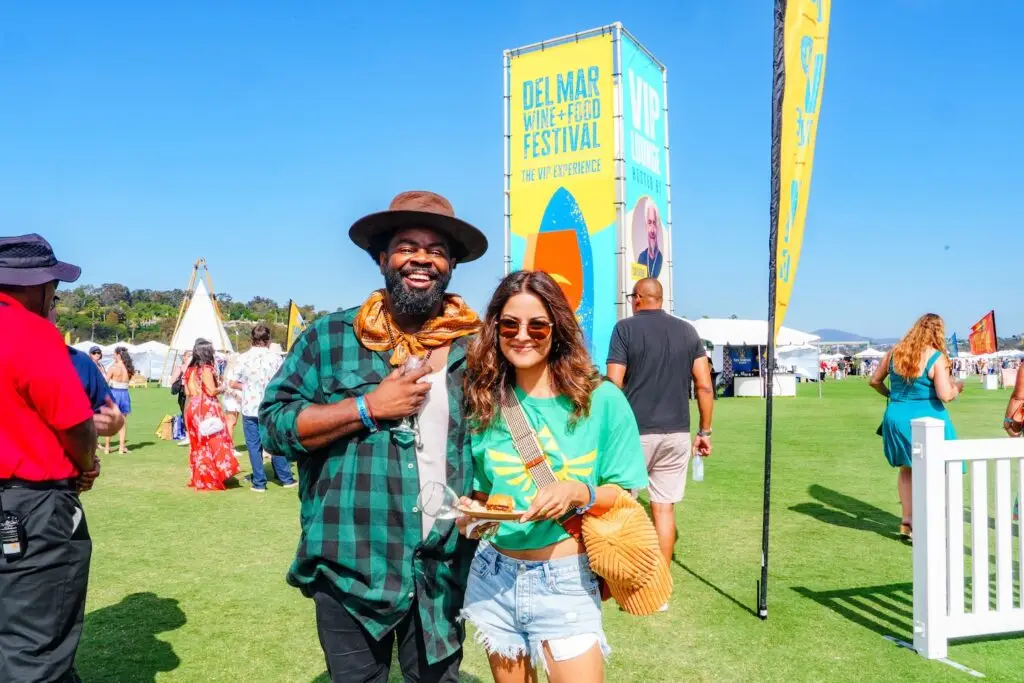
That’s part of what makes the Del Mar Wine & Food Festival feel different. Yes, the week revolves around food and wine, with celebrated chefs, winemakers, and restaurants drawing crowds from across the region. But what lingers afterward is the conversations that stretch a little longer than expected, the strangers who become dinner companions, the live music that pulls people out of their seats, and the rare chance to spend a few hours simply enjoying yourself without much of an agenda.
The Grand Tasting is the festival’s centerpiece, bringing thousands of guests together over two days for hundreds of bites and pours. But some of the week’s most memorable experiences happen on a smaller scale. In the days leading up to the main event, intimate dinners, chef collaborations, and guided tastings create opportunities for guests to interact more closely with the people behind the food and wine and with each other.
Here’s your guide to the 2026 Del Mar Wine & Food Festival happening September 30–October 4.

Start festival week the San Diego way: ocean views, Baja-inspired bites, and a drink in hand as the sun goes down. The Signature San Diego Opening Night Party at Monarch Ocean Pub sets the tone for the week ahead with a walk-around tasting experience celebrating the flavors that make this city impossible to replicate. It’s an evening of fresh coastal cuisine, bold Mexican flavors, Baja seafood, and plenty of local favorites—all served against one of Del Mar’s most iconic backdrops. Consider it your first official toast to the weekend ahead…

Wine and competition make an unexpectedly perfect pair. You can join Drew Brees and celebrity players at Barnes Tennis Center for a pickleball tournament benefiting Feeding San Diego, where the sidelines are just as exciting as the court. Grab a paddle, cheer from the sidelines, or simply enjoy a glass of wine while the action unfolds. The day blends friendly competition with an all-inclusive tasting experience.
Since year one, Del Mar Wine & Food Festival has partnered with Feeding San Diego to raise $100,000 in support of the organization’s mission to fight hunger across the region. Every serve, sip, and bite helps give back to the community that makes this festival possible.
Remember that pickleball paddle you swore you’d use? Time to put it to work.

This is essentially a passport to Spain with no airport required. Set among the lush grounds of Rancho Valencia, Rioja Uncorked celebrates one of Spain’s most iconic wine regions with an evening of exceptional pours and thoughtfully paired bites. Guests will sip their way through Rioja wines while enjoying a menu featuring everything from Hiramasa crudo and uni toast to duck rillette, birria mini tacos, Cardiff Crack tri-tip sandwiches, and a sweet finale from Karen Krasne of Extraordinary Desserts (date night plans, solved).

Justin Wine Dinner sounds simple: three chefs, one unforgettable table. But chefs Kaitlyn Weber (Estancia La Jolla), Buddha Lo (Top Chef), and Jackson Kalb (Top Chef) are taking you on a one-night-only culinary ride where three styles collide over a multi-course menu paired with exceptional pours from Justin Vineyards & Winery. Set in Estancia’s coastal estate, the evening unfolds course by course with pairings from Justin wines as each chef brings their own style to a menu focused on craft, connection, and a bit of friendly culinary overlap. It’s the kind of culinary conversation that only happens when very, very talented people cook together.

Isabella Dallas is a freelance writer for San Diego Magazine and the Arts and Culture Editor at The Daily Aztec in her final year at San Diego State University. She previously worked as an editorial intern for SDM, but when she’s not writing, you can find her trying the best coffee spots in SD, devouring the latest rom-coms, and indulging in anything and everything pop culture.
Innovative treatment could offer cancer patients new options with fewer side effects
Chemotherapy and radiation have long been considered gold standards of cancer treatment, but they can cause severe side effects. A promising new approach called theranostics—a combination of “therapeutics” and “diagnostics”—could offer patients with certain types of metastatic cancers new hope. It’s a two-step process that uses a drug that binds to specific receptors on cancer cells. Advanced imaging detects this radioisotope, allowing doctors to then use a second radioisotope that binds to the cancer cells and destroys them. Click here to learn more about how specialists at Scripps Cancer Center are using theranostics.
For more nutrition, wellness, and healthy living tips, sign up for the San Diego Health newsletter here.