Featured articles
Food & Drink
Features
Food & Drink
Featured articles
Features
Things to Do
What's next
Featured articles
Featured articles
Food & Drink
Features
Guides
Featured articles
Food & Drink
Partner content
Features
Ready to know more about San Diego?
SubscribeReady to know more about San Diego?
Service agencies get smarter about caring for our seniors in difficult times

Aging Roadmap illustration
Carlos Zamora
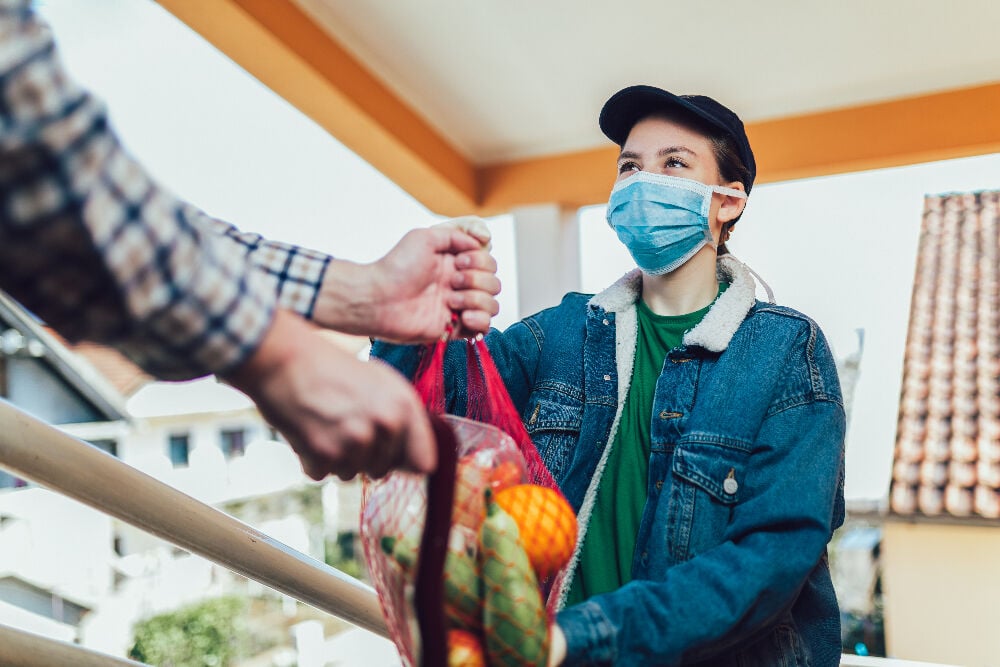
A homebound senior received her weekly box of milk, eggs, and bread delivered to her doorstep. But there was something extra in the week’s allotment: a birthday cake and a signed birthday card, just in time to mark another milestone during a hard year.
“We try to give them more than food,” says Sasha Escue, director of nutrition services for Jewish Family Service of San Diego. “She said it made her feel like she matters to someone else.”
Local agencies have rapidly scaled up their services for seniors during the pandemic, recognizing that a disease that disproportionately affects our older population also makes it harder for them to access basics like nutrition, transportation, technology, and even social interaction.
“Everyone knew there was work to be done, and we just did it,” Escue says. “The pandemic has given us an awakening about the urgent needs in our community.”
Jewish Family Service, which serves San Diegans regardless of religious affiliation, expanded its meal deliveries from 200 clients to more than 1,000, ultimately serving almost 1.5 million meals to isolated older adults from March 2020 to July 2021.
Despite advances in vaccine distribution, this elevated level of service to seniors will continue to be necessary. As COVID-19 and its variants continue to spread, the Silent and Baby Boomer generations are getting older. County data suggests seniors are becoming a larger share of the total population—by the year 2030, one in four San Diegans will be age 60 or older.
Jewish Family Service is one of many organizations contracted by the county of San Diego that pooled its talents and resources to better meet seniors’ needs. Volunteers and staff alike got to work when everything else shut down.
Fortunately, the county Health and Human Services Agency’s Aging & Independence Services (AIS) already has a new regional framework in place: the Aging Roadmap, a multipartner effort to make San Diego a better place to live for seniors and those with dementia.
The comprehensive plan, unveiled in 2019, builds on the county’s Age Well initiative that was launched in 2016. It targets ten priority areas: health and community support, housing, social participation, transportation, dementia-friendly resources, caregiver support, safety, preparedness and response, the “silver economy,” and the medical and social services system.
The Aging Roadmap envisions a San Diego in which older adults are acknowledged and included in a safe, thriving community. A “village” social support network helps them get rides to medical appointments, handle household chores, or attend social gatherings. This information should be easy to find and understand.
In the area of transportation, for instance, Roadmap collaborators envision neighborhoods where seniors can get around even if they don’t drive. County employees worked with regional transit services like the Metropolitan Transit System and North County Transit District to create a senior-focused transportation guide with information on costs, area of service, and contact information, particularly where service had changed due to the pandemic. The guide also explained how to use ride-sharing services like Uber and Lyft.
Aging Roadmap food delivery
In terms of housing, Aging Roadmap collaborators would like San Diego to have more affordable senior dwellings near shops and services. That means advocating for more affordable housing units in new construction, allowing accessory dwelling units (aka “granny flats”) to be built for older adults or their caregivers, and identifying and assisting seniors at risk of homelessness.
The Aging Roadmap was designed to be flexible. As such, it has adapted for pandemic-era realities with additional collaborators, new emergency response systems, and a greater emphasis on prepared meals, internet access, and safe transportation for older adults.
Kristen Smith, agency operations chief for AIS, says that their priorities haven’t changed, but the pandemic has “heightened the importance of some of the work. It certainly made specific projects a higher priority.”
For example, food insecurity for homebound and low-income seniors became a prime concern. One in three adults in San Diego is considered nutrition insecure, up from one in four before the pandemic, according to the San Diego Hunger Coalition. Since social distancing made congregate dining more difficult, AIS and its broad network of partners worked to boost home deliveries and drive-through food distributions.
Because seniors were one of the first cohorts eligible for the COVID-19 vaccines, AIS bolstered its outreach to low-income senior apartments and long-term care facilities. Its partners stepped up to get seniors informed, scheduled for vaccination, and transported to their appointments.
“Our job became helping people know about the available resources,” Smith says. Some of that outreach included old-fashioned phone calls to highrisk seniors. “We knew we needed to call them and find out if they were okay. We could ask, ‘Do you have your medications? Is your caregiver showing up?’”
County officials are working to expand services to be more equitable and inclusive. Phone services and materials like transit guides and dementia-friendly activity booklets are offered in multiple languages, and pilot programs are training seniors to use technology like social media and video chat. “We want to make sure we’re not leaving people out,” Smith says.
You can’t talk about our region’s COVID-19 response without noting the herculean efforts of 211 San Diego, a nonprofit that connects callers to more than 6,000 community, health, and disaster services.
San Diegans who call the 211 phone number can get free, confidential help finding available services 24 hours a day, seven days a week, in over 200 languages. During the pandemic, it has connected seniors to resources such as food delivery and vaccination appointments.
“We love our seniors. For us at 211, they’re one of our most important populations,” says 211 San Diego chief of staff Meg Hersman Storer, adding that when the pandemic hit, “we knew we were going to have to rise to the occasion. We had to be nimble.”
211 San Diego has helped about one million people— including seniors and their caregivers—navigate the testing and vaccine appointment process, according to Storer. In the first six months of vaccine availability, 211 staff helped schedule nearly 10,400 appointments. Some 69 percent of those were for seniors. San Diego phone staff at 211 are also trained to help seniors find free or low-cost rides.
As for food access, 211 San Diego estimates that more than 2,600 San Diego seniors who called 211 received contactless drop-offs of free groceries between March 2020 and March 2021. “Our goal is to always answer the calls with care and empathy,” Storer says. “We’re helping the unconnected get connected.”
In the priority area of medical services, the county of San Diego has been working with West Health and regional health care systems on the San Diego Senior Emergency Care Initiative. The idea is to make San Diego’s emergency departments more senior friendly for better health outcomes, coordinated care, and reduced costs.
One in five emergency department patients is a senior. Older adults have been at greater risk of serious illness from the coronavirus.
So far, 16 of the 18 participating San Diego EDs have applied for accreditation as geriatric emergency departments, according to Christy Patch, a community and aging policy specialist for the county Health & Human Services Agency. She says the other two ED applications— Naval Medical Center San Diego and Naval Hospital Camp Pendleton—are on hold due to the pandemic.
What comes next for San Diego seniors is anyone’s guess. With the Aging Roadmap, regional agencies hope they’ll be able to sufficiently meet older adults’ needs.
“We’ve been thinking, even when we saw the light at the end of the tunnel, that the people we’re serving will continue to be vulnerable,” says Sasha Escue of Jewish Family Service. “For the most part, many of these individuals who have been sheltering are suffering from social isolation, perhaps dementia, and other related diseases. We don’t want to drop them because the funding drops out or the political landscape changes.”
Collaborators on the Aging Roadmap stress that they’ll still need plenty of volunteers, donations, and community support as San Diegans continue to age.
Inspired by her own experience, founder Elena Barbour has set out to help struggling women thrive
Divorce, adjusting to single motherhood or coparenting, and the unexpected adjustments that come with it can turn even the most put-together woman’s life upside down. For many, these shifts trigger a profound loss of identity as that chapter of life officially comes to an end.
While Elena Barbour was navigating a divorce and raising two young children, other women in her circle shared similar experiences—one, a high-powered attorney, said divorce was the hardest thing she’d ever gone through. Barbour realized that women like them who’d gone through divorce, separation, or trauma needed support, but unless they qualified for low-income assistance or could pay top dollar for private services, there weren’t a lot of options. That led to the creation of the Luma Initiative, a nonprofit organization that aims to connect women with the practical resources needed to rebuild after a major life transition. The organization is currently developing its programming and plans to open to its first (already full) three-month cohort of women this fall.
“I consider myself a very strong, competent woman, but what I went through shook me,” Barbour says. “[There were] all these things that I did not expect, and that a lot of people looking from the outside couldn’t see necessarily. It was hard to relate. And I found that after coming out of this divorce, I needed to reshift my community a little bit because the challenges and the life stage of where I was compared to where they were now was just so different—even though I was surrounded by people, I felt very alone.

“So [we’re] trying to create that sense of community in this place for women to be like, ‘All these women are going through something similar and when I talk with them, I don’t feel so alone and I can let go of some of the negative feelings I’m feeling, and I can […] start to rebuild.’”
Luma Initiative’s program will include licensed therapist-guided support groups, and support via financial literacy advisors, life coaches who specialize in career building, and family law attorneys, plus therapeutic yoga at sister business Luma Yoga. They’ll also work with other nonprofit organizations as needed to create a “one-stop, well-rounded, holistic approach to supporting women who are going through this really big transition of life,” Barbour explains.
Barbour says Luma Yoga Studio in Little Italy will serve as Luma Initiative’s physical base, transforming into a familiar community-centered home away from home where women can feel safe. She leaned into yoga and the breathwork, meditation, and mindfulness that often come with the practice to get through tough times, and carries those tools with her “off the mat.” She hopes that other women will find that same sense of nervous system regulation. She emphasizes that Luma Initiative and Luma Yoga work as an ecosystem that provides both wellness and tangible support.
“The goal with Luma Initiative will be to help these women come back to themselves and their identity through community, and use community as a platform to rebuild,” she says.
Sarah Sapeda is San Diego Magazine’s Custom Content Editor. In her 15 years in San Diego journalism, she has covered charitable events, health care, education, crime, current events, and more.
Volunteer Meredith Wood shares how the organization distributes diapers, period products, and other essentials while building community across San Diego
Just shy of 100 years ago, a group of determined women came together to improve the community and help their fellow San Diegans. They formed the Junior League of San Diego, a local chapter of the nationwide cohort of women with a mission to create meaningful community impact through volunteer action, collaboration, and training.
Today, the Junior League of San Diego is one of 291 Junior Leagues in the U.S., Canada, Mexico, and Great Britain. Locally, the league works to collect essential items, such as period products, diapers, clothing, food, and school supplies to distribute to underserved communities, and pitching in to help other nonprofits fighting food insecurity.
Volunteer Meredith Wood has spent the last two years on the donations committee. Here, she details her experience.
I first joined the Junior League in 2024, after I moved to San Diego from the East Coast. I wanted to meet people, specifically more women, and get involved in the community. In my first year in the Junior League, I was placed on the donations committee. That was my first glimpse into the work, specifically with donations. After a year of doing that, I applied to be the chair, so I did that this past year. It was an awesome experience.
So last year as the chair, I led a team that organized our donation drives, so that includes marketing the drives, managing the inventory, and then coordinating with community partners to distribute the donations.
I love working with other women in the league. Everyone is so enthusiastic and brings such bright ideas to the table. Everyone I’ve worked with is so passionate and committed to bettering the community and doing what they can, and they have fun while doing it, which I think is so important because it makes it sustainable.
So far, the biggest challenge as the donations chair has been seeing the huge need for specifically diapers and menstrual products in the community (JLSD operates a Diaper Bank & Period Pantry). It seems like no amount of supply we’ve ever had has been able to meet the demand, which can be a little disheartening at times. But to that, I try to remember that any difference that we make is valued and important. That’s what motivates me to keep going.

That’s a tough one because every time I volunteer at the Junior League, it genuinely is such a fun time. I always really enjoy going to PATH and prepping and serving meals there. The staff and residents are all so awesome, and it’s always a really fun experience to cook with Junior League friends and serve that way.
Then another memorable one was when SNAP funding was on pause back in the fall this year. We mobilized pretty quickly within two weeks and got all our donations out the door, and were handing them out alongside a food pantry in San Diego. That was a really special moment to just connect with the community, see directly where donations were going, and ask people what they needed. We learned that some of the supply that we had didn’t align with the demand, so it was a really big learning experience, too.
Sometimes I’ve struggled, wondering if my efforts have been enough, and I’m sure there’s someone else out there, too, who’s wondering the same thing. But there’s no effort that’s too small, and people really just appreciate anything you can do to better the community. So, find something that you care about and then figure out how you can add value to it. Bonus if you can invite a friend to join you and just make it that much more fun.
The Junior League has given so much to me in the two years that I’ve been a part of it. For starters, the learning experience of how do I even manage a committee and raise donations and get them out into the community has just been such a great opportunity. I highly recommend any woman who wants to get involved in San Diego to join the league. And if that’s not your cup of tea, we’re always taking donations, specifically menstrual products and diapers. We take them all year at 210 Maple St. in San Diego and try to get them out every couple weeks. We have Amazon links on our website as well.
Sarah Sapeda is San Diego Magazine’s Custom Content Editor. In her 15 years in San Diego journalism, she has covered charitable events, health care, education, crime, current events, and more.
Here’s where to celebrate, connect, give back, and make a difference this month
Enjoy tastings from more than 20 wineries and gourmet bites at the University of San Diego Wine Classic. The all-inclusive annual event benefits USD’s Alumni Endowed Scholarship Fund, and to date has raised more than $1 million.
Around 1,700 runners and walkers will hit the streets of Hillcrest for the The Pride 5K Run & Walk, before the Pride Parade. The long-running community favorite is a highlight of Pride Week and raises money for San Diego Pride and the LGBT Center’s Youth Housing Project.
The 37th annual Brendan Nordholm Make-A-Wish Golf Classic will tee off at The Crosby National Golf Club at Rancho Santa Fe Golf Club. The 18-hole tournament, followed by a reception, will help the organization grant wishes for local families.
Help the Foundation for Developmental Disabilities celebrate its 40th year at its Christmas in July fundraiser at Koi Zen Cellars. The festive evening marks the start of FDD’s annual Season of Sharing and guests are encouraged to bring a new, unwrapped toy to donate.
Operation For HOPE Foundation’s ninth annual Caring, Sharing & Champagning Fundraiser will kick off with a charity shopping spree for household essentials for survivors of domestic violence and their children. Guests will then be treated to champagne, espresso martinis, and light bites at a private residence in Rancho Santa Fe.
The Doan Foundation will host a formal fundraising dinner to benefit underserved youth and emerging creatives. The organization’s fourth annual Gala Fundraiser will feature a live performance by R&B artist Amanda Perez, other performances, scholarship awards, and inspiring stories.
Sarah Sapeda is San Diego Magazine’s Custom Content Editor. In her 15 years in San Diego journalism, she has covered charitable events, health care, education, crime, current events, and more.
Tips from the trusted experts at Mauzy Cooling, Heating, Plumbing, and Electrical
San Diego summers can be brutal. But since the hottest period is typically late summer into early fall, San Diegans still have time to prepare. The pros at Mauzy Cooling, Heating, Plumbing, and Electrical are standing by to help homeowners fortify their homes against the elements and ensure their air conditioning is as frosty as the penguins that serve as the company’s mascots.
Many homeowners underestimate the load their AC system faces, especially in the inland valleys where temperatures regularly top 100 degrees. San Diego regularly sees multi-day heatwaves each summer, and a system that struggles on the first day will likely fail by the third. Longer run times, unusual sounds or smells, and uneven cooling from room to room are all signs that your system may not survive the next hot spell.
Systems typically last 12 to 17 years, but there are exceptions. If a system is approaching that, or is already there, a professional evaluation is recommended before summer really heats up. A good rule of thumb: If you can’t remember when your system was last serviced, it’s due.
“As technology changes, systems become smarter and smarter,” says Sean O’Connor, an install manager at Mauzy with 42 years of experience. “There are a lot of people out there who will say a system’s only good for 10 years. I don’t buy that—these systems are built to last as long as they’re taken care of.”
There are also a few steps homeowners can take between services to extend the life of their system. Regularly changing a dirty filter—especially if you have kids or pets—and keeping an outdoor unit clean can help head off problems in the future, says O’Connor.
Also, be realistic about whether it’s time to replace a unit. O’Connor likens pouring money into salvaging a faulty unit with patchwork repairs and replacement parts to “tripping over a dollar to pick up a dime.” When one part fails, others are sure to follow, and newer parts may not be compatible with older units. Mauzy recommends homeowners use the 50% rule: If a repair costs more than 50% of the system’s replacement value, and the equipment is over 10 years old, replacement is usually the better long-term value. And don’t forget the ducting. An older house that was built with heat and later had air conditioning added may not have sufficient airflow, regardless of how good the system is.
Last but not least, homeowners should know who to trust when it comes to their homes. Built on three generations of professional integrity, Mauzy has grown into not just a leader for cooling, heating, plumbing, and electrical services, but a leader in the community known for supporting local nonprofits across an array of causes. To ensure complete peace of mind, Mauzy stands behind a comprehensive 12-point guarantee that outlines its commitment to outstanding service, quality equipment, expert technicians who understand how the local microclimates affect HVAC performance, and no upsells or surprises on the bill.
“We go the extra mile. That’s what sets us apart,” O’Connor says. To get a free quote today, visit mauzy.com.

The event on June 6 helped raise funds to support the org’s mission to rescue, restore, and reintegrate survivors of human trafficking
International Network of Hearts celebrated 15 years of helping survivors of human trafficking in the U.S. and Mexico recover and reintegrate at its “An Evening of Courage and Change” gala on June 6. During the formal event at the Sunset View Room overlooking Mission Bay, the organization received a proclamation from Mayor Todd Gloria’s office deeming June 6 as International Network of Hearts Day. Proceeds from the gala will support International Network of Hearts’ mission to rescue, restore, and reintegrate survivors via its Casa del Jardín care centers.
See photos from the event below.


Sarah Sapeda is San Diego Magazine’s Custom Content Editor. In her 15 years in San Diego journalism, she has covered charitable events, health care, education, crime, current events, and more.
The 24-year-old nonprofit helps teens celebrate the milestone while promoting fashion sustainability
Prom is a rite of passage for high schoolers, but a flashy new dress can cost hundreds of dollars. The Princess Project helps girls cut costs while promoting fashion sustainability. The nonprofit collects new and gently used formal dresses and accessories throughout the year, then when prom season rolls around, launches pop-up boutiques where girls can shop for their dream dress at no cost. The only criteria is they have to be a high school student who’s going to prom.
The Princess Project started in San Francisco in 2002 with a small dress drive. The movement grew exponentially over the years, and expanded to San Diego in 2008. Today, it’s headquartered at Parkway Plaza in El Cajon and has chapters in San Francisco, Silicon Valley, and Sonoma.
“We really want to celebrate teens, make them feel good about themselves, and save them some money because it costs a lot to go to prom. This is one way that we can help alleviate the cost,” says Karen Martin-Spellerberg, corporate board chairman and head of the San Diego chapter. “There’s no financial requirement to come get a dress with us because we are all about everybody being equal and having the same opportunity.”
The experience is more than just picking out a dress, says Martin-Spellerberg. The Princess Project works to create a bubble of inclusiveness and confidence, where all shapes and sizes are celebrated, and all comments are positive.

In the months leading up to prom season, teens can book an hour-long appointment at the Parkway Plaza location to try on dresses and accessories, which they get to keep. Volunteers act as personal shoppers, curating an experience unique to each kid. This year, the Princess Projects also brought dresses to eight library branches throughout San Diego County to reach girls who couldn’t make it to the main event.
Because the Princess Project relies on donations, they often do not receive enough dresses in “fringe sizes” (00-2 and 14 and up), so they hold fundraising events to purchase new dresses in those specific sizes to maintain an inclusive range. Its signature $5 Dress Sale Fundraiser event will take place on May 30-31 at Parkway Plaza, where non-prom dresses (cocktail, casual, business) donated throughout the year are sold for a minimum $5 donation per dress. All proceeds from this fundraiser are used to purchase the understocked sizes.
“We’ve got dress drop off sites throughout San Diego County and people sometimes will donate dresses that are non-prom—sometimes they’re cocktail, casual, summer, business. So, what happens is when we are done with the season, we flip our dress store and we put out all of the non-prom dresses,” says Martin-Spellerberg. “People can come shop and get as many dresses as they want and 100 percent of the proceeds go toward us purchasing dresses in the sizes we don’t have enough of.”
The Princess Project also relies heavily on volunteers, including teen ambassadors, the latter who meet monthly, help organize the store, work outreach tables, and host a fashion show to help spread the word to their fellow students that the dresses are premium-quality and “ready to wear, beautiful and amazing.”
“It’s all about kindness and making kids feel good about themselves,” says Martin-Spellerberg.
Sarah Sapeda is San Diego Magazine’s Custom Content Editor. In her 15 years in San Diego journalism, she has covered charitable events, health care, education, crime, current events, and more.
Discover San Diego’s Top Lawyers — the region’s most trusted legal professionals across diverse practice areas.
Daniel A. Kaplan is a founding partner of Panakos LLP with more than three decades of civil litigation experience in both state and federal courts. Mr. Kaplan pursues and defends legal claims on behalf of companies, entrepreneurs, and business owners in high-stakes disputes. He focuses on business disputes including breach of contract, unfair competition, trade secret theft, securities disputes, fraud/misrepresentations, and employment matters.
“The best advocacy combines preparation, perspective, and a client relationship built on trust and candor.” — Daniel A. Kaplan
His clients include real estate investors, private and public corporations, and individuals seeking sophisticated legal counsel. Known for practical judgment and strategic advocacy, he works closely with an experienced and diverse legal team to protect, enforce, and defend his clients’ interests.
555 W. Beech Street, Ste. 500, San Diego, California 92101
619-8000-LAW
Panakos.law