Ready to know more about San Diego?

Subscribe
Everything SD NOVEMBER 16, 2023

San Diego’s First Mental Health Center Designed for Women

Monima Wellness Center is providing a much-needed safe space for mental health treatment

San Diego’s First Mental Health Center Designed for Women
Monima offers a wide range of modules to help patients find the therapeutic strategies that work best for them.

I remember taking the selfie that changed my life.

This memento wasn’t for vanity. It was a digital dead reckoning of my mental health.

I was three weeks into my eight-week intensive outpatient program (IOP) for Bipolar II Disorder, an illness that—when left untreated and unmedicated—would either send me into a hypomanic breeze of midday chardonnay, spending sprees, and selfish trysts or render me an unkempt shell who filmed her own self-harm and spun it as performance art on YouTube. A social scream for it all to stop.

I snapped the mirror selfie in the midst of a consuming impulse to destroy. But taking that photo—a moment of pause—let me look at myself like I was another woman. Seeing her reflection of sufferring, I finally chose myself.

I can’t help but wonder: Would I have gotten to this point sooner if I had been surrounded by other experiences that better reflected my own? Perhaps I wouldn’t have needed my camera app at all had I been in an IOP focused on women like me.
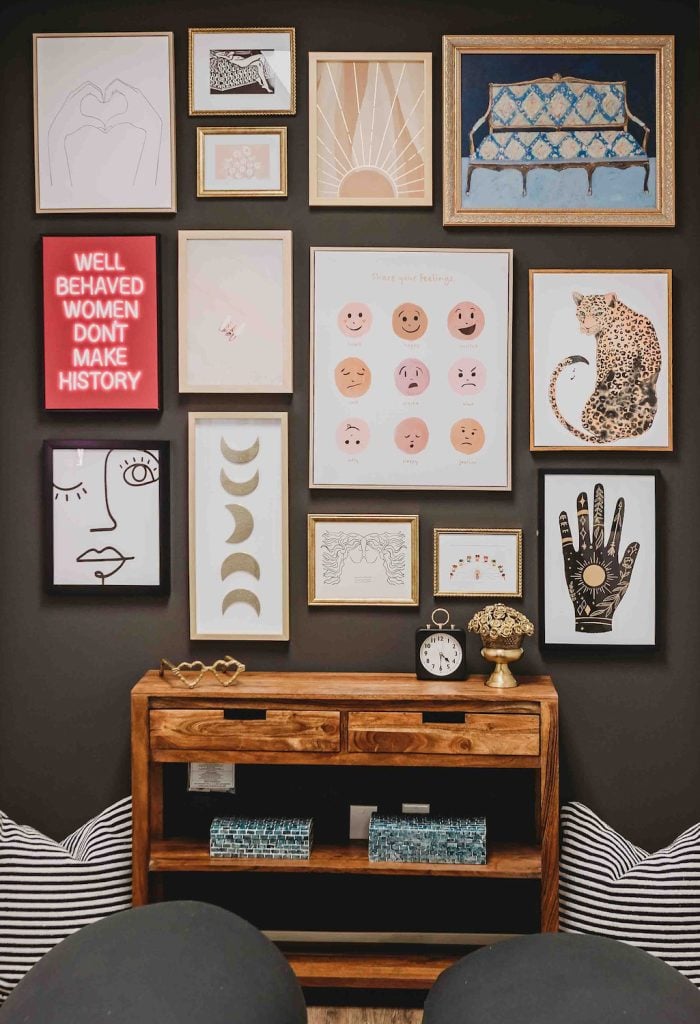
Monima Welnness Center interior containing positive artwork including a piece that says "Well behaved women don't make history"
Courtesy of Monima Wellness Center
Deliberately cozy, the décor at Monima is designed to put patients at ease.

Monima Wellness Center aspires to be such a game-changing mental health recovery center. Monima is San Diego’s first mental health center to exclusively host women (including female-identifying) patients, offering them intensive outpatient and partial hospitalization programs with a focus on mental health disorders, substance abuse, and dual diagnoses, which treat both in tandem. Monima also offers nearby living quarters for those who are from out-of-state or whose home setting isn’t conducive to healing.

It doesn’t feel like other IOPs. Yes, it’s in a nondescript suite of medical offices, but, once you walk in, you’re met with soft lighting, peach-toned walls, and the energetic hum of a special kind of sorority. On one wall, there’s a fringy banner emblazoned with a silk-screened Buddha and the phrase “Let that shit go.” Above a reading nook is a neon heart and a framed poster declaring “Well-behaved women don’t make history.” It’s a vibe. And it’s on purpose.

Three women conversing during a mental health session at Monima Wellness Center in San Diego
Courtesy of Monima Wellness Center

“No OB-GYN lights here,” jokes Kat Grassetti, Monima’s clinical director. One could write it off as cheesy, but it’s designed to help women feel at ease, willing, and safe in the company of their assigned sisterhood. “There’s a huge difference between trauma-informed care and trauma-focused work,” Grassetti explains. “We really wanted to set up an environment where this is the landing space to do the trauma work. It’s not trauma-adjacent.”

With gender-specific care comes a comfort that co-ed wellness centers, by nature, simply cannot provide—and it’s not only patients who feel the impact. “It’s such a unique space,” says Olivia Ratcliff-Totty, a training clinician at Monima. “To be able to come in as a woman and feel safe and seen … and really connect with the patients on a deeper level is so beautiful.”

The sense of community at Monima has made a profound difference for patients like Karlee’s Mom. “I’m 35,” she tells me. “I lost my daughter, Karlee Jeanne, at 35 weeks in May of 2022.”

Frozen at the axis of grief, shame, and disbelief, Karlee’s Mom knew she needed the kind of care her family and friends couldn’t provide. “I was drinking a lot, smoking weed, just using what I had to cope and to deal and to numb,” she says. “By August, I was like, ‘I need help. I need somebody.’”

Monima was there.

Patient at Monima Wellness Center lying on a bed
Courtesy of Monima Wellness Center

With a program that offers nearly 20 different modules, including specific approaches like eye
movement desensitization and reprocessing therapy (EMDR), cognitive processing therapy, and dialectical behavior therapy alongside classes like Identity and Self-Esteem, Healthy Communication, and Sound Healing, the hope is that something will click with each individual.

Ultimately, the staff at Monima aim to tailor their approach with each patient, exploring the women’s pasts to understand their needs for the future.
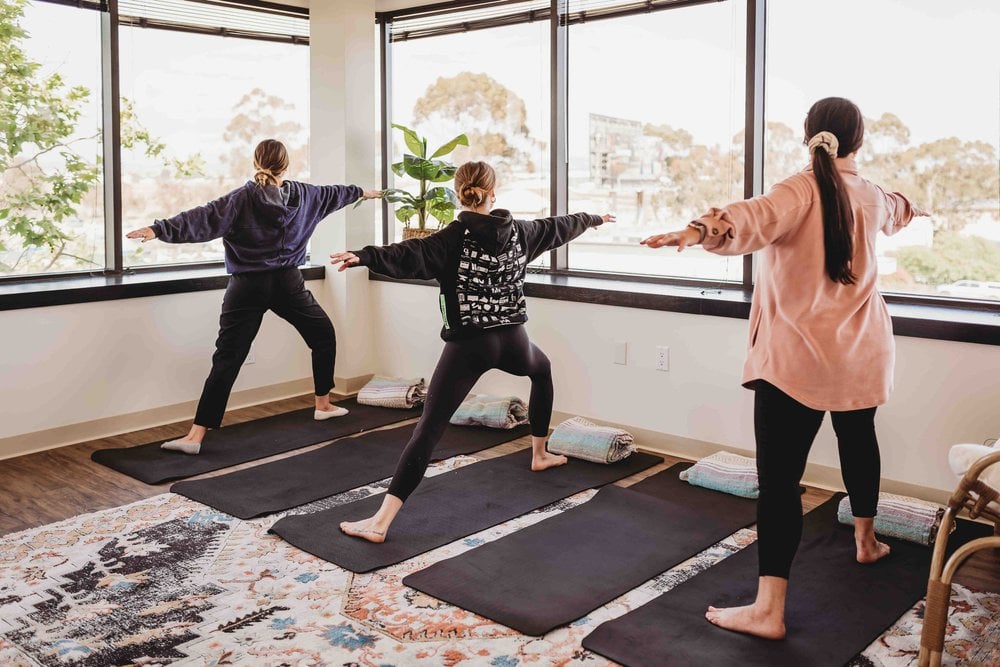
Members of Monima Wellness Center participate in a Yoga class
Courtesy of Monima Wellness Center

“What we like to do is really speak to the person in front of us and say, ‘Let’s gather an actual deep history. Tell us your story. Tell us what you’ve been through,’” Grassetti explains. “At the end of the day, when somebody deeply knows themself, they can move through their world in a more profound and impactful way.” Karlee’s Mom is evidence of this.

“Leaving Monima … [I’m] really taking this unique, impactful opportunity and experience and feeling so ready to continue the work I’ve started there in the real world,” Karlee’s Mom says. After three months at Monima, she’s choosing herself and honoring her daughter’s memory with her future.

Danielle is a freelance culture journalist focusing on music, food, wine, hospitality, and arts, and founder-playwright of Yeah No Yeah Theatre company, based in San Diego. Her work has been featured in FLAUNT, Filter Magazine, and San Diego Magazine. Born and raised in Maui, she still loves a good Mai Tai.

Subscribe to our newsletters

Select Options

By subscribing you confirm that you agree with our Terms and Conditions and Privacy Policy.

Features JUNE 5, 2026

The Best New Restaurants in San Diego

After 20 years and thousands of meals as a food critic, San Diego Mag Content Chief Troy Johnson picks the city's top standouts

The Best New Restaurants in San Diego

Dora Ristorante

His ascent has been stealth and humble, which fits the man. When Liberty Station was struggling to convince people it existed over a decade ago, Sicilian chef Accursio Lota’s food at Solare Ristorante was a tractor beam for food people who sniff out hidden talent like truffle dogs. In 2017, he won the World Pasta Championship (a legit competition from global pasta brand Barilla) and struck out on his own, opening his and his wife’s from-scratch pasta trattoria in North Park (Cori Pastificio). Gambero Rosso—the Italian version of Michelin, the most respected source—has clamored for the restaurant since it opened, naming it “New Opening of the Year” and this year giving it their highest award, “Tre Forchette” (Three Forks), only knighted on a handful of US restaurants.

So this year, Lota opened his grandest thing—Dora Ristorante—and it pulls everything together. Steps from San Diego’s world-class theater, La Jolla Playhouse, it’s laden with brass and large-format murals, tile work and mosaics—like the one on the wood-burning oven that blisters, chars, and smokes a good portion of the menu. Their housemade focaccia is a new street drug (try it with the puttanesca, his grandmother Dora’s recipe). The olive oil-cured sardines make “sustainable seafood” and ethics not taste like a compromise. Dora might finally be the one to solve the “where do I eat before the world premiere at LJP” dilemma.

Courtesy of Bacari

Bacari

The yuzu-colored building that helped build North Park’s modern food culture is alive again. Years ago, the ornate French Quarter–inspired spot on 30th Street was home to chef Matt Gordon’s Urban Solace (duck macaroni and cheese). Then it laid conspicuous and fallow until a few months ago when Bacari took it on. It’s an LA transplant, but they’re proving forgivable of that trespass. Chef and co-founder Lior Hillel cooked at Jean-Georges before opening the first of this Venetian-style restaurant in 2008 with brothers Danny and Robert Kronfi (Bobby started his food venture with a pop-up dinner series in his college apartment at USC).

For dinner, it’s house-baked bread, crudo and shrimp ceviches, Mediterranean street corn, lamb hummus, shawarma, and glazed pork belly. Weekend brunch is bellinis and French toast and burekas (famed Jewish stuffed puff pastry), and chef Noa’s cauliflower (caramelized with chipotle). It’s Italian-ish with a heavy dose of pan-Mediterranean and Middle Eastern. Doesn’t hurt that they left the iconic exterior as is, adding chandelier-farmhouse insides with charm that echoes two of the city’s dearly departed (Jayne’s Gastropub, Cafe Chloe).

Courtesy of TRUST Restaurant Group

À L’ouest

Much tolerance for friends who hate mussels because they look too biological. But if they manage to dislike À L’ouest’s—served over ice with vadouvan curry aioli and chili crisp—then you’ve successfully identified your brokemouth friend and should try bicycling or crafting with them to bond instead of eating in public places. It should be on everyone’s short list for dish of the year.

Chef Brad Wise and his team have earned their rep over multiple concepts—Trust, Fort Oak, Cardellino, Wise Ox, Rare Society. But he’s been eyeing this corner of North Park since before he opened his first (Trust, in 2016). North Park has been rising for a while, and À L’ouest feels like the missing piece—an indoor-outdoor brasserie stunner on the marquee spot of 30th and University, which long sat boarded up and vacant like a neighborhood missing a front tooth.

As with his other concepts, woodpile is king; smoldering red oak boosts the flavor of just about everything. Get the spätzle with braised rabbit, maitake mushroom, secret de compostelle (the famed Basque sheep’s milk cheese), and black truffle. Or the chicken liver parfait with persimmon, fennel aigre-doux (sweet-sour), and chives on toast. Or, like everyone else in there—the steak frites.

Photo Credit: Eric Wolfinger

Fleurette

Chef Travis Swikard’s first solo restaurant, Callie in East Village, proved how details can make the most composed of us blubber a little in fine places—from citrus left in ovens overnight to blacken and transform, to the Scripps Oceanographic Institute saltwater he keeps his spot prawns thriving in until ordered, to the days-long fermentation and stone-ground dukkah that turn carrot shavings into a statement piece.

Now, he’s focusing on French food with a fitter, less buttery San Diego heart. Fleurette is his doubling-down, a SoCal riff on the food he learned under mentors Daniel Boulud and Gavin Kaysen. The French gave us the mother sauces, and Fleurette showcases the lightest and brightest evolutions. Like the anchoïade on his beef tartare, which uses famed Italian anchovy sauce colatura di alici, mixed with cured egg yolks over tiny, uniform-sized cubes of raw, USDA Prime Flannery beef.

There is soubise (onion sauce), a sauce vierge (tomatoes and herbs), and a fennel marmalade on the duck liver and bone marrow pâté. Although the structure is stunningly pure glass, Fleurette’s in a location—an office park on the edge of La Jolla, near UTC—that few chefs would be able to pull off. But Swikard’s Michelin-bound house of saucework pulls hard.

Food from San Diego's best taco shops including Cocina de Barrio
Photo Credit: Lauren di Matteo

Mesa Agrícola

The Escondido taqueria from Rosarito-born-and-trained chef Juan González and farmer Megan Strom took the county by storm this year. The married couple started as a popup four years ago, hosting farmside dinners before taking up residency at Vino Carta in Solana Beach. Strom was working a small, 5-acre heirloom bean farm in Valley Center owned by Mike Reeske (aka “The Bean Man”) when he retired and sold them the plot.

The huge bonus was that the sale included Reeske’s famed collection of beans, curated over 20 years. The couple planted other things and now grow much of what they serve in the form of tacos and burritos at a permanent spot in Escondido: Mesa Agrícola.

The menu’s bone simple: housemade tortillas in your choice of taco or burrito norteños (which are smaller, like burritos de hielera) that change constantly and often topped with guisados (Mexican braises or stews) like lamb and garbanzo, birria, chicharrón, mushrooms al ajillo, rajas, you name it. And, of course, some of the best beans honoring the local legend of Reeske.

Courtesy of Lucien

Lucien

San Diego is now the recipient of national food buzz. The dark ages—during which we learned how to sear ahi and asada some carne and called it a day—felt prolonged, and they were. The problem was never ingredients. San Diego County always had the best raw dinner materials (more small farms per capita than any county in the US, seafood right there); it just didn’t have a critical mass of highly trained chefs to do them justice. Easy to understand the chef dearth.

For a very long time, if you wanted to be a serious chef you had to go to the restaurant superplexes of New York, San Francisco, or Chicago (which imported their raw ingredients from places like San Diego). But now—credit farmers or Alice Waters or Dan Barber or Michael Pollain or the reasonable conclusion that food picked right here tastes better than food picked way over there—some of the most talented chefs are moving to the ingredients, not the other way around.

In San Diego, we got Richard Blais, Swikard, and now Elijah Arizmendi, who cut his teeth in Vegas with Joel Robuchon (plus Boulud and Thomas Keller) and was chef de cuisine at NYC’s L’abeille when it got its first Michelin star. His debut restaurant in La Jolla—with partners Brian Hung and Melissa Yang—is a dark, moody multicourse tasting-menu hideaway with one of the best egg dishes in the city.

Troy Johnson

About Troy Johnson

Troy Johnson is the magazine’s award-winning food writer and humorist, and a long-standing expert on Food Network. His work has been featured on NatGeo, Travel Channel, NPR, and in Food Matters, a textbook of the best American food writing.

Arts & Culture JUNE 2, 2026

15 Things to Do in San Diego This Weekend: June 3-7

Peruse the EXPO Design Market, savor the Sabor Del Barrio, and see a plethora of sets at North Park Music Fest

15 Things to Do in San Diego This Weekend: June 3-7

There’s a creative inertia that resides in San Diego, producing a near-constant stream of cool events. Fortunately, this weekend is no different. Those with an artistic inkling can search for inspiration at MCASD’s EXPO Design Market or admire the mixture of live performance and neighborhood charm during the North Park Music Fest. Foodies can dine (with wine) at Stake Chophouse & Bar during its ZD Wines Dinner or explore Barrio Logan’s standout eats at the Sabor Del Barrio. Plus, Pride Month is already in full swing in SD with the return of DISCO RIOT’s Queer Mvmnt Fest and the two-day Out & Abt Music Festival.

Food & Drink | Concerts & Festivals | Theater & Art Exhibits | More Fun Things to Do

Courtesy of Sabor Del Barrio

Food & Drink Events in San Diego This Weekend

ZD Wines Dinner at Stake Chophouse & Bar

June 4

Stake Chophouse & Bar is collaborating with Napa Valley’s ZD Wines—a family-run winemaking institution that’s been around since 1969—on an intimate four-course dinner this Thursday at 6:30 p.m. Throughout the meal, each dish will be paired with a curated pour from ZD Wines, with patrons set to receive a chardonnay, pinot noir, and pair of cabernet sauvignons. Dinner guests will also be treated to insight on the night’s wine pairings from ZD Wines’ senior winemaker Chris Pisani. Reservations are $210 pre-paid through OpenTable

1309 Orange Avenue, Coronado

Sabor Del Barrio

June 7

Take advantage of all the dynamic attractions that the Barrio Logan Cultural District has to offer—and eat very well while you’re at it—during the third annual Sabor Del Barrio. This Sunday from noon to 4 p.m. attendees can devour their way through 35 neighborhood staples and traverse the tasting stops on foot, by bike, via a free trolley shuttle, or a combination of the three. Tickets are $40 online ($55 day of) and come with complimentary admission to Quint Gallery, the Athenaeum Art Center, and the Chicano Park Museum & Cultural Center, plus a free tour of Tao of Clay.

Barrio Logan

Concerts & Festivals in San Diego This Weekend

Sam Hinton Folk Heritage Festival at Old Poway Park

June 6

Survey the depth of oral storytelling during the free annual Sam Hinton Folk Heritage Festival this Saturday from 10 a.m. to 4 p.m. at Old Poway Park. Named for harmonica virtuoso, marine biologist, and longtime San Diegan Sam Hinton, this event highlights folk artists who specialize in time-honored traditions. Throughout the day, attendees can see performances by musicians with roots in Americana, Cajun, and Appalachian rhythms on the main stage, dance in the Templars Hall, and hear historical tales from the Storytellers of San Diego in the Porter House. 

14134 Midland Road, Poway

North Park Music Fest

June 6

Psychedelic rockers Frankie and the Witch Fingers will headline an eclectic lineup at the North Park Music Fest. This Saturday, enjoy sets from noon to 1:45 a.m. from over thirty performers—including DJs, bands, and local acts—across a dozen North Park venues. Ticket options include general admission ($25 online, $35 day of) and VIP passes ($65) which come with lounge access at Granada House, line-skipping privileges and more; festival proceeds will go towards the North Park Business & Neighborhood Foundation. Plus, performances at Pure Pawsh, Visual Art + Supply, Overland, and Playground Art + Coffee will be open to the public. 

North Park

Out & Abt Music Festival 

June 6 & 7

The calendar has just flipped to Pride Month, and Out & Abt is celebrating in style. The two-day Out & Abt Music Festival begins Saturday from 3-10 p.m. at The Soap Factory with drag shows, circus acts, a manic pixie dream market, two stages of live music, and last but not least, a mechanical bull. The festivities will continue with an after party from 10 p.m. to 2 a.m. at Gossip Grill and conclude with an afternoon pool party at Hard Rock Hotel San Diego on Sunday from 1-7 p.m. Ticket options include weekend general admission passes ($70), and entry to the music festival ($30), after party ($17) and pool party ($27).

Citywide

Photo Credit: Kevin Berne

Theater & Art Exhibits in San Diego This Weekend

The Monsters at La Jolla Playhouse

June 2-28

Fresh off its Drama Desk Award-winning run in the Big Apple this past winter, The Monsters will have its first West Coast production beginning Tuesday in the Mandall Weiss Forum at La Jolla Playhouse. Written by and co-starring Ngozi Anyanwu, The Monsters finds its reconciliatory narrative in a young woman yearning to repair her relationship with her estranged older brother in the brutal and unforgiving world of mixed martial arts. The Monsters will have preview performances this Tuesday through Thursday at 7:30 p.m., Saturday at 2 & 8 p.m. and Sunday at 1 & 7 p.m., with tickets ranging from $30-$74. 

Ryan Hardison is a freelance arts and entertainment writer and recent graduate of San Diego State. When he's not staring at his laptop, he's likely eating an adobada burrito or getting sunburnt at the beach.

Arts & Culture JUNE 1, 2026

The Best Things to Do in San Diego: June 2026

June Gloom isn’t stopping San Diegans from making the most out of the month. There’s something for every music lover, from swaying to smooth jazz at The Rady Shell to rocking out at Slightly Stoopid’s Field of Dreamz Festival. Art enthusiasts can visit the Mingei for an exhibit showcasing Native American and Pacific Rim heritage, […]

The Best Things to Do in San Diego: June 2026

June Gloom isn’t stopping San Diegans from making the most out of the month. There’s something for every music lover, from swaying to smooth jazz at The Rady Shell to rocking out at Slightly Stoopid’s Field of Dreamz Festival. Art enthusiasts can visit the Mingei for an exhibit showcasing Native American and Pacific Rim heritage, while foodies can try the latest fried fad at the San Diego County Fair. Whatever your interests, it’s time to text the group chat and make some plans. Here are all the best things to do in San Diego this month:

Concerts & Festivals | Theater & Art Exhibits | More Fun Things to Do

Concerts & Festivals in San Diego This Month

13 & 14

World-class jazz musicians are returning to The Rady Shell for the San Diego Smooth Jazz Festival.

13

“If you build it, they will come,” and so they shall to Slightly Stoopid’s inaugural Field of Dreamz Festival. The OB-native rock band will share the lineup with Stephen Marley, Sublime, Pepper, and more at Petco Park.

22

Khalid is headlining his first tour since 2019—this time for the R&B and pop showstopper After the Sun Goes Down—and he’s ready to dance through Cal Coast Credit Union Open Air Theatre.

Photo Credit: Angela Babby / Courtesy of Angela Babby

Theater & Art Exhibits in San Diego This Month

6/5–7/19

With a beat that can’t be stopped, New Village Arts will revive the joyful musical Hairspray, a fusion of teen pop stardom and racial integration in Civil Rights–era Baltimore.

6/13–9/13

Cat Gunn poignantly examines the impact of forced separation from ancestral lineage through If Only by the Light of a New Moon, their solo museum debut at ICA Central.

6/27–9/20

See lasting visions of cultural heritage via Clearly Indigenous: Native Visions Reimagined in Glass, a traveling showcase for Native American and Pacific Rim glassmakers at Mingei International Museum.

Courtesy of Scoop Ice Cream Festival

More Fun Things to Do in San Diego This Month

6 & 7

Proceed to Pride Month with the Out & Abt Festival, featuring a carnival-themed playground at The Soap Factory, an afterparty hosted by Gossip Grill, and the next day, a sapphic poolside bash at the Hard Rock Hotel.

6/10–7/5

Imagine and experience your favorite fairytale ending during the San Diego County Fair, which returns this summer with a new theme: Once Upon a Fair.

11 & 13

The return of the Switchfoot Bro-Am means two things: an elegant seaside fundraiser in North County and a free bash at Moonlight Beach full of sun, surf competitions, and live music.

19–21

For the first time, NASCAR will start its engines in San Diego. Naval Base Coronado will host this one-of-a-kind racing spectacle to commemorate the U.S. Navy’s semiquincentennial.

25

Itadakimasu! In other words: Let’s eat! Sample, then rank, the best Pan-Asian dishes from local eateries at Julep Venue during SD Mag’s 21+ Omakase Open, done to support the Convoy District.

28

If you ever needed a reason to eat ice cream and gelato, here’s a charitable one. Raise money—one waffle cone at a time—for Feeding San Diego during this year’s Scoop San Diego festival.

Ryan Hardison is a freelance arts and entertainment writer and recent graduate of San Diego State. When he's not staring at his laptop, he's likely eating an adobada burrito or getting sunburnt at the beach.

Studio S APRIL 15, 2026

10 Years In, Puffer and Malarkey Are Just Getting Started

A look back at the risks, grit, and instincts behind the local restaurant powerhouse

In this city, chef Brian Malarkey and restaurateur Chris Puffer are kind of like peanut butter & jelly, tacos and Tuesday, Padres and Petco—they just go together. This month, the duo celebrates 10 years of partnering on some of San Diego’s top restaurants including their first venture, Herb & Wood.

To celebrate this milestone, we stepped back and revisited their journey becoming some of this city’s most successful restaurateurs.

But first, let’s go back to the beginning. The duo met at Oceanaire in 2007 where they both worked. Malarkey was still riding the high from his stint on Top Chef Season 3 where he won runner-up. He was a great chef, Puffer recalls, if not a tad arrogant. Whatever he was doing, though, it worked. Sales doubled under his watch.

In 2009, Malarkey was approached by some patrons to start what would become Searsucker. He knew he wanted Puffer to be his partner. They had great chemistry and loved hospitality and food. “We both came to this with a bit of a chip on our shoulder,” says Malarkey. “We wanted to prove it to other people that we know what we’re doing.”

Courtesy of Puffer Malarkey Collective

Searsucker, Gabardine, and Herringbone (under the Fabric of Social Dining restaurant group) were born through the new partnership. But in 2012, they sold their concepts to Hakkasan and soon partnered on a new lease.

That building would eventually become Herb & Wood. “We were going to do it differently this time around,” says Malarkey as he reflects on Wood’s early days. “And we [wanted to] build it to last.”

The vision: Great food. Great music. Great service. It’d be a place where diners would let go, put their phones down, and be fully present to enjoy a meal together. When they walked into 2210 Kettner Blvd, they knew they had found their spot. 

The only problem was that, at the time, that area of Little Italy was still severely underdeveloped. In a 8,500-square-foot space, they were going to have 230 seats to fill. “It may as well have been on Mars,” says Troy Johnson, San Diego Magazine publisher, content chief, and the city’s longtime food critic.

Courtesy of Puffer Malarkey Collective

And, of course, there were the naysayers. The prevailing feeling in the dining world was, “Let’s see what these f**king idiots do,” recalls Malarkey. The duo let all the noise be noise. In fact, the noise fueled them. “We weren’t going to cater to the haters,” Puffer says.

Their next hurdle would be to tackle the restaurant’s design. “There was nothing. It was literally a box,” says Puffer of the former space. Design teams were too expensive or didn’t quite get their vision—no, they didn’t want exposed beams or wooden tables made from reclaimed barns. “Then, Puffer was like, ‘f**k it, dude, I’m going to design this restaurant.’”

Having never really designed something like this before, he decided not to work in the programs that most professionals use to create their layouts. 3D mockup? Didn’t need it. CAD? That’s what a paper and pencil are for.

Courtesy of Herb & Wood

“It was all in my head,” he recalls. “I had this moment where I was like, ‘If I died right now, no one would know where any of this shit goes.’”

“Yeah, it made no sense,” Malarkey says.

And it still doesn’t if you hear him explain it. A mishmash of vignettes from the inner workings of his memory bank, evoking everything from Mississippi riverboats to Eiffel tower ironwork, Kensington home façades, an old theater he frequented, and a canoe, because why not? Yet somehow, it all worked.

“It’s a sense of nostalgia,” says Puffer. “People might say, ‘Oh, my gosh, this feels good’ and they don’t realize it reminds them of the time they were in Paris.’”

“We don’t play trends,” Malarkey says. “We play timeless.”

Courtesy of Herb & Wood

Over the course of many years and plenty of trial and error, the partnership has continued to thrive. And, the Puffer Malarkey Collective has found its sweet spot within their restaurants: The service had to be kind and unpretentious and the food had to come out quick, delicious, and consistent. “Consistency is key!” says Puffer.

They also learned to balance out one another. “He’s a go-go-go-go [person],” says Puffer, “I’m a let’s-take-a-deep-breath-and-sleep-on-it [type of person].”

So, when they opened the doors to Herb & Wood in April of 2016, with those lessons in place, everything was just right. “We knew it had to fire on all cylinders,” says Puffer. “And it did.”

Courtesy of Puffer Malarkey Collective

There was no pretense and the dress code was exceedingly simple. “Money in your pocket,” says Malarkey. “That’s all you need.”

The phones rang, the seats filled, and the haters had to give it to them, those gnocchi hit. People began embracing every aspect of the place, even the edgier ones.

“We thought people were going to complain about all the paintings with boobs,” says Puffer of the many John Lanes on the wall. “But the amount of people who take pictures in front of the boobs is amazing.”

They even had a middle finger statue that Puffer had picked up from a yard sale. If a table was rude or antagonistic toward the staff, he’d walk over to them with the finger. “Congratulations,” he’d say, handing it over. “You’ve won asshole of the night.”

Courtesy of Puffer Malarkey Collective

The point is, they were ready to laugh (and not take shit from anyone). When someone wrote a review of Herb & Wood and called it Weed & Boners, they both had a laugh. It’s one of the keys to longevity.

Along with the fun and deliciousness, they’ve also served as a culinary talent incubator for San Diego. “It’s like a centrifuge,” says Johnson about Herb & Wood. “They train up all these young chefs and start spinning all this talent into different parts of the city.”

There’s Sebastian Becerra with Pepino, Samantha Bird of Relic Bakery, Aidan Owens at Herb & Sea, and Tara Monsod of Animae and Le Coq (San Diego’s first James Beard award finalist) to name a few. “They’ve expanded the footprint of the food revolution in San Diego,” says Johnson.

Their plans for the next 10 years? 

“We’re just going to keep the magic going,” says Malarkey. 

Everything SD MAY 27, 2026

The Eight Architects Who Defined Modernism In San Diego

"The Distinct Modernism of San Diego" tells the story of how some architects pioneered their own style in 20th-century San Diego

The Eight Architects Who Defined Modernism In San Diego

San Diego is just out here minding its own business. It’s long been cast as Los Angeles’s less ambitious sibling—the chill one, the one who shows up late for dinner reservations in flip-flops with a few provocative opinions. Architecturally it’s often cast the same: secondary, derivative, a footnote to California modernism that seems to begin and end with the Stahl House (Case Study House #22). LA has Pierre Koenig, Craig Ellwood, John Lautner. San Diego has the original fish taco.

But this version of the story is redacted, metaphorically speaking.

While the jazz hands of Hollywood and its hills cast a spell on historians and architecture buffs, San Diego had, and has, its own quiet evolution: It invented and reinvented itself through homegrown modernism, beginning with The Allen House (1907) in Bonita by Irving J. Gill.

“The biggest misconception is that San Diego was following Los Angeles,” says Keith York of Modern San Diego, one of the city’s top guides to modernist architecture. “Those who consider Rudolph Schindler and Richard Neutra as the fathers of Southern California Modernism often fail to recognize the outsize influence Gill and his buildings had on their work.”

Courtesy of Keith York

A new book, The Distinct Modernism of San Diego—written by Mark Hargreaves and Hallie Swenson, published by York—focuses on eight architects who were born, raised, or built their careers in San Diego. It illustrates how the city wasn’t hosting weekend warrior architects on side quests. It was a staging ground for a less look-at-me modernism from luminaries like Gill, Lilian J. Rice, Richard Requa, Lloyd Ruocco, Frederick Liebhardt, Kendrick Bangs Kellogg, Sim Bruce Richards, and Cliff May.

“Absent the backstabbing competition for projects, a collegial group of architectural peers collaborated and maintained lasting friendships with one another as they designed in response to the temperate climate and slower economy,” York says.

Largely unknown until the mid-1960s, Gill is a marquee name today. He arrived here from the East Coast at a moment when San Diego was still defining itself, which gave him the freedom to invent something new, experiment, rebel.

Instead of imposing the flourishes and frills of the time, he considered San Diego’s climate, light, landscape, history—the joie de vivre—and designed for this place. “[Architects of the west] must have the courage to fling aside every device that distracts the eye from structural beauty, must break through convention and get down to fundamental truths,” he once said, a sentiment that nails the un-ornate, total lack of pretension that’s defined San Diego people and culture.

And, lo, did Gill fling: His flat roofs, clean lines, and almost no ornamentation—though not necessarily modernism in the Eames or Eichler sense—foreshadowed what would later be called minimalism. Gill eventually became synonymous with the Los Angeles narrative, but broader architectural histories overlook the fact that his most progressive designs happened here.

Courtesy of Keith York

Another key to San Diego’s architectural movement was Lilian J. Rice, who often worked behind the scenes with little credit. She was one of only about 10 women in America licensed as architects at the time. Even though she died from cancer at 43, she somehow managed to complete an estimated 170 projects in the region, many in Rancho Santa Fe.

Born and raised in National City, Rice also wasn’t importing ideas. She shaped her own based on her understanding of this region and her commitment to protect the natural environment. Her work has been categorized as Spanish Colonial Revival, but she wasn’t reviving as much as she was refining a style suited to our border region—serene, mirroring nature, beautiful.

“San Diego architects were designing for a way of life, not just a look,” says York.

Like Sim Bruce Richards, who was his own way of life. While Gill stripped away ornamentation and Rice focused on the peace of open spaces, Richards came along several decades later and went full emo. By then, modernism had grown deep roots; its steel-and-glass structures took themselves very seriously. Richards came to party.

Photo Credit: Ollie Patterson

An eccentric, unpredictable man with half a face (part of his jaw was removed following a bone infection when he was a child), his life was a jalopy of adventures. He was opinionated and passionate about design, music, texture—and he created what he called a “sensuous environment.” He wanted his clients and their guests to feel the spaces as much as to be in them, appealing to the visual, tactile, nasal (“a cedar house smells good”), auditory (“acoustically superior”), even taste. “Though, I‘ve never had a client lick my houses,” he once wrote.

Organic, woodsy, textured, aromatic—if you ever find yourself in a Sim Bruce Richards house, a licking impulse might not seem so outrageous.

Gill, Rice, Richards and the other architects in Distinct Modernism built a legacy in San Diego that resonates nationally. And the work of these heavy hitters isn’t stuck in an inaccessible collectors realm: This October, homes by Kellogg and Liebhardt will open to the public as part of the La Jolla Modernism Home Tour—an opportunity to experience it not as a museum relic or magazine image (ahem), but as something alive.

Modernism in San Diego was never about glamour or an intention to be iconic. What transpired here is more nuanced, more ingrained with a less shouty aesthetic. A very San Diego aesthetic.

Arts & Culture MAY 26, 2026

18 Things to Do in San Diego This Weekend: May 26-31

Hear The Sound of Music, reserve a seat at The Blank Table and spend two days jamming at Fiesta Del Sol

18 Things to Do in San Diego This Weekend: May 26-31

Dive into the unexpected this weekend, where curated meals, experimental performances and behind-the-scenes experiences await. Foodies are invited to the first 2026 gathering of The Blank Table as well as Chef Onyi’s seasonal Rooted dinner at Millport. Broaden your artistic horizons with Project [BLANK]’s Working Title No. 5, or check out the genre-bending musical lineups at Seek Fest or Fiesta Del Sol. As an added bonus, The Rosin Box Project is pulling back the curtain and opening a trio of after-hours rehearsals to the public ahead of its new Incubator Lab show. 

Food & Drink | Concerts & Festivals | Theater & Art Exhibits | More Fun Things to Do

Food & Drink Events in San Diego This Weekend

San Diego Wine Week

May 25-31

San Diego may be a craft beer capital, but it’s also home to a diverse array of wineries. During the San Diego County Vintners Association’s annual San Diego Wine Week, oenophiles can sample several of the best pours the region has to offer. The centerpiece event, Sunday’s all-inclusive SDCVA Wine Festival from 3-6 p.m., will feature over 20 local wineries at Bernardo Winery; general admission is $90. Additional Wine Week events include Vintners Table at Cordiano Winery (Thursday), San Diego Wine Country at the Bay at Mission Beach Women’s Club (Thursday) and the Seedling Soiree at Olivewood Gardens (Saturday).

Citywide

The Blank Table

May 28 

The Blank Table series is an exercise in local culinary creativity, innovation and collaboration with the most secret of ingredients readily available: the element of surprise. On six Thursdays from May-October—with year seven of the series beginning this Thursday at 6 p.m.—60 patrons will be served a unique menu with five set courses, each with curated cocktail pairings. And to keep the air of mystery alive, the dinner location and menu will not be disclosed until 24 hours ahead of time. Tickets are $275 for Thursday’s dinner and a season pass for all six monthly dinners is $1,402; a portion of event proceeds will be donated to Feeding San Diego.  

Surprise Location

Rooted: A Dinner Experience by Chef Onyi at Millport

May 30

Chef Onyinyechukwu Akpa welcomes food lovers to try a seasonal spread, dually inspired by her mastery of West African flavors and California’s seasonal ingredients, during the second edition of Rooted: A Dinner Experience at Millport. This Saturday from 6-9 p.m., chef Onyi will serve a five-course tasting menu, with dishes such as slow roasted beef, plantain upside down cake and akara, Nigerian black-eyed pea fritters. The meal will be entirely gluten-free, with vegan accommodations also available. Tickets are $115 and can be purchased here.

775 13th Street, Imperial Beach

Bridgerton & Blooms High Tea at Estancia La Jolla

May 31

Dearest reader, Estanica La Jolla opens up its grounds once a month for its outdoor Tea in the Garden series, and you’re in luck, because this month’s tea time is inspired by the enchanted English setting of Bridgerton. During the Bridgerton & Blooms High Tea this Sunday from noon to 3 p.m., guests can savor an afternoon worthy of the ton, complete with floral accoutrements, custom teas, cocktails, finger foods and enough sweets treats for Lady Whistledown to write home about. Tickets are $82.

9700 North Torrey Pines Road, La Jolla

Courtesy of Fiesta Del Sol

Concerts & Festivals in San Diego This Weekend

Juvenile with the 400 Degreez Band at House of Blues San Diego

May 29

Over the years, Juvenile has more than proven himself as an all-time emcee, with his breakout 1998 album 400 Degreez still a defining example of the South’s hip-hop brilliance. This Friday at 7 p.m. at House of Blues San Diego, Juvenile will play hits like “Slow Motion” and “Back That Azz Up,” along with selections from Boiling Point, his first album in 12 years. Plus, he’ll be joined by the sensational 400 Degreez Band, and as anyone who’s seen his NPR Tiny Desk performance already knows, Juvenile with a live ensemble is a match made in music heaven. Tickets start at $55 for this concert. 

1055 Fifth Avenue, Gaslamp

Kuumba Fest

May 30

Kuumba Fest returns this Saturday from 11 a.m. to 5 p.m. with the theme of “Black 2 Mind, Spirit & Body” for its 34th annual iteration. This free community festival, organized in support of the city’s Black Arts + Culture District, will feature DJs, dancing, spoken word, musical performances and an African marketplace with food, apparel, health resources and more. Then from 6-8 p.m. at the Elementary Institute of Science, the festival will conclude with a screening of the documentary American Curl followed by a Q&A panel with the film’s producers. 

6381 Imperial Avenue, Encanto; 608 51st Street, Emerald Hills

Seek Fest at San Diego Made Factory

May 30

Ryan Hardison is a freelance arts and entertainment writer and recent graduate of San Diego State. When he's not staring at his laptop, he's likely eating an adobada burrito or getting sunburnt at the beach.

Partner Content MAY 5, 2026

Artistry, Aesthetics, and Inclusive Luxury

KQ Aesthetic Society goes beyond cosmetic to provide comprehensive care and transformative results

Artistry, Aesthetics, and Inclusive Luxury

Kelly H. Harfouche, founder of KQ Aesthetic Society, knows firsthand that cosmetic treatments like fillers, neurotoxins, and microneedling, can not only enhance a person’s appearance and restore confidence, they have the power to truly change a person’s life. An expert injector has the ability to tailor treatments to each individual patient’s anatomy and goals for personalized results. Harfouche, a board-certified nurse practitioner, has spent nearly a decade perfecting her craft as an aesthetic injector and integrating her multifaceted artistic skills with precision patient care. Her commitment to continual education and training, plus a passion for helping people look—and feel—their best, set KQ Aesthetic Society apart in a sea of local medspas. 

For many people considering nonsurgical treatments, the intent is to look refreshed and refined. KQ Aesthetic Society’s philosophy eschews a cookie cutter approach that bases treatments around units, instead working to understand each person’s unique goals, then curating a treatment plan to fit that vision. Harfouche focuses on “inclusive luxury,” the belief that everyone deserves access to aesthetic treatments, respective of budget restrictions. She develops long-standing trusted relationships with her patients, and works with each one to achieve their aesthetic objectives and address the underlying causes of their concerns. 

“For me, forming an honest and open relationship with every patient who walks through the door is essential. This means understanding them on a deeper level and meeting them where they are to define and achieve their individual goals,” she says. 

Drawing on her artistic background, which inspired her transition into medical aesthetics, Harfouche sees each client as a “unique canvas.” Rather than relying on standardized procedures, the practitioner’s distinctive approach combines her profound understanding of the physiological and anatomical changes associated with aging with an unwavering commitment to ongoing education about the newest products and their mechanisms of action. Her goal is to make each patient feel beautiful in their own skin and to embrace their individuality. 

She has also pioneered a way to combine her talent for aesthetic artistry with her philanthropic nature. Harfouche is one of only a handful of providers using dermal fillers to treat patients with lip asymmetry and scarring resulting from cleft lip surgery. Patients travel from around the country for this transformative treatment, noting increased confidence and a restored identity. She hopes to eventually launch a training program to help fill the void in this space.  

“My passion has always been connecting with people and giving back in any capacity that I can,” she says. In the rapidly advancing landscape of aesthetic medicine, you can place your confidence in Harfouche and KQ Aesthetic Society to deliver exceptional care. To learn more or book a consultation, please visit kqaestheticsociety.com.

Thousands of savvy locals already get it.

San Diego's best restaurants, experiences, and events—handpicked and delivered to your inbox weekly. You in?

Close the CTA

Contact Us

1230 Columbia Street, Suite 800,

San Diego, CA