Featured articles
Food & Drink
Food & Drink
Food & Drink
Featured articles
Features
Things to Do
Features
Featured articles
Things to Do
Things to Do
Things to Do
Featured articles
podcast-ep
podcast-ep
podcast-ep
Featured articles
Features
Features
Food & Drink
Featured articles
Partner content
Partner content
Partner content
Ready to know more about San Diego?
SubscribeReady to know more about San Diego?
Where to eat in the Canadian metropolis boasting a variety of international cuisines and global fare
Sometimes it seems the whole world is in Toronto— just one five-hour, nonstop flight from San Diego. Immigrants make up nearly half of the Canadian city’s population, and among its 174 neighborhoods are a “village,” “town,” or “little” version of almost every community you can think of.
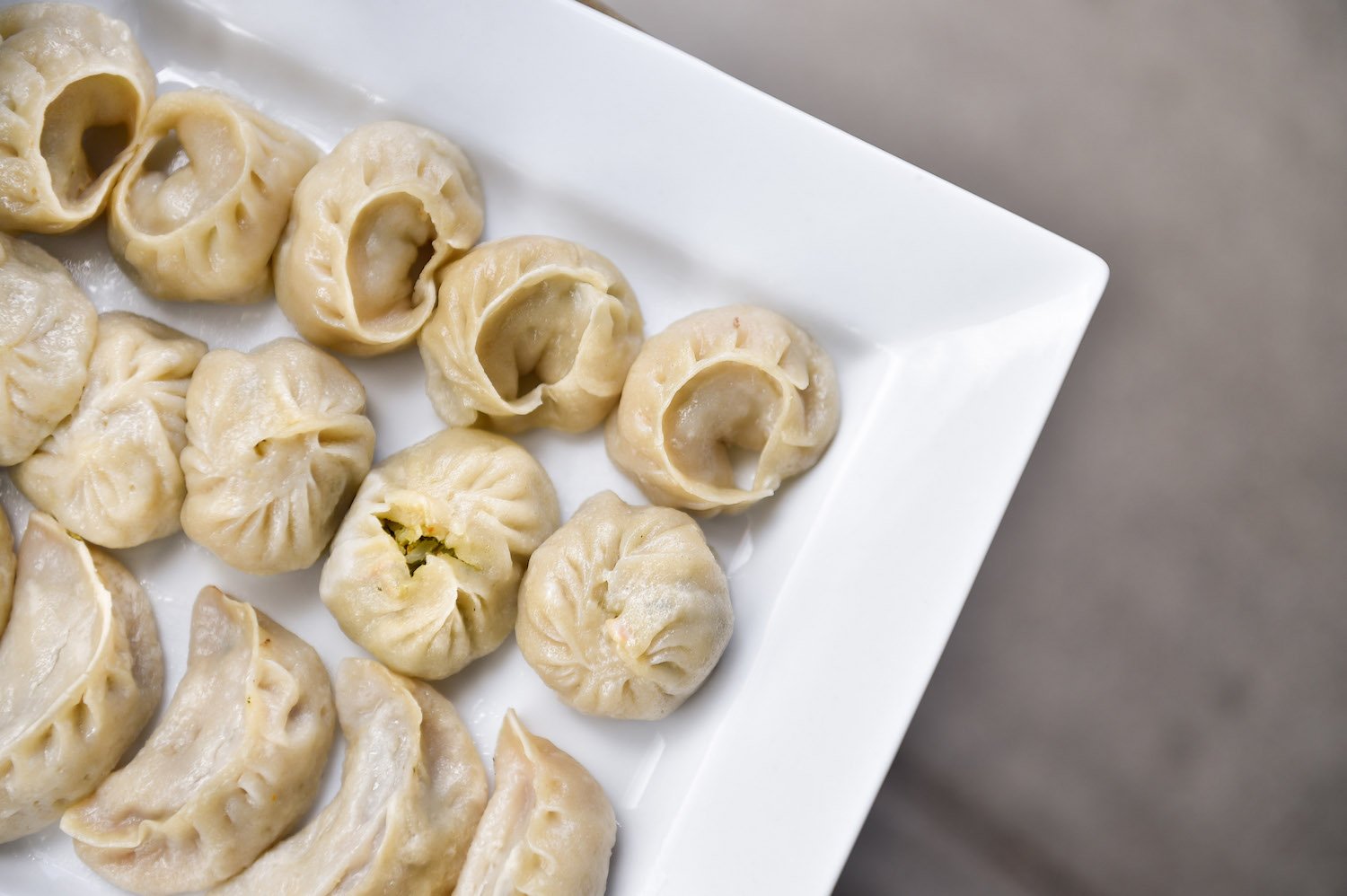
Searching for saganaki? Hit Greek town on the Danforth. Thali? Head to Little India in the east end. Momos? Parkdale’s Tibetan dumplings come fried or baked. Craving sweets? Little Portugal slings pastéis de nata, the tiny, cinnamon-dusted offspring of a créme brulée and a tart. And shumai? There are two Chinatowns downtown and four more in the Greater Toronto area. The range of food options speaks to the diversity of the city, as do its hotels, which bear their own global influences.
The Shangri-La Toronto, for instance, nods to the traditional décor of the hotel chain’s Hong Kong hometown in its sleek and expensive guest rooms. Its onsite spa, however, draws upon the Middle East, while the hotel restaurant, Bosk, offers Northern Italian food by way of Canadian produce.

For a hipper vibe, go with the historic Broadview Hotel in the east end. It has a lively rooftop restaurant with a view and rooms equipped with quirky wallpaper and vinyl record players. Or choose the Gladstone House on Queen West, one of Toronto’s oldest hotels. A refresh brought local art and funky mood lighting to contrast the building’s exposed brick walls.

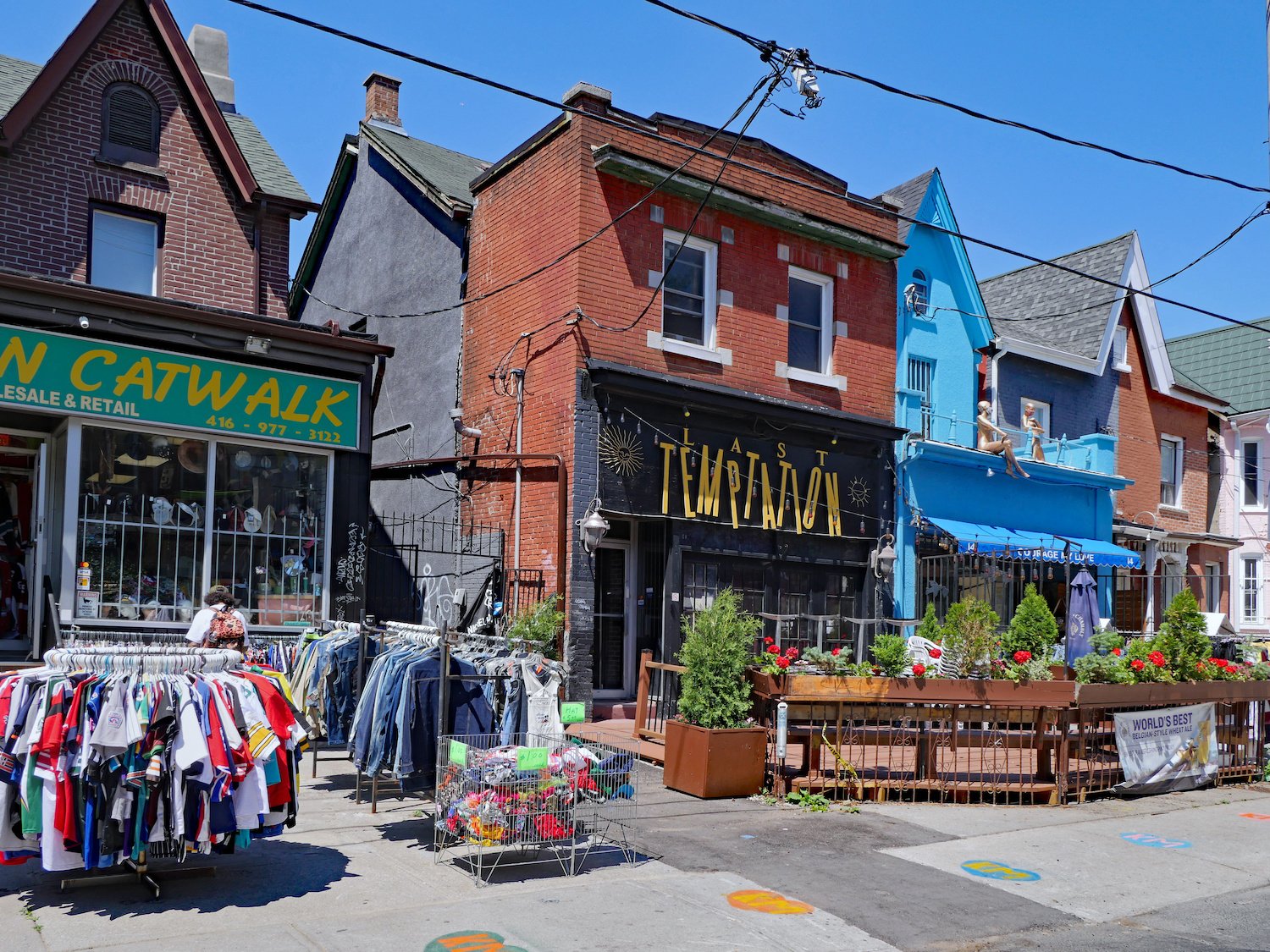
To do Toronto right, start at Kensington Market. On a food tour from Chopsticks & Forks, I learn that Kensington began as a Jewish market. By 1931, 80 percent of all Jewish people dwelling in Toronto lived in and around the Kensington Market neighborhood just west of downtown, most from Eastern Europe. After the second World War, however, waves of immigration brought people from all over the world—from Asia, the Caribbean, Eastern Europe, and beyond.

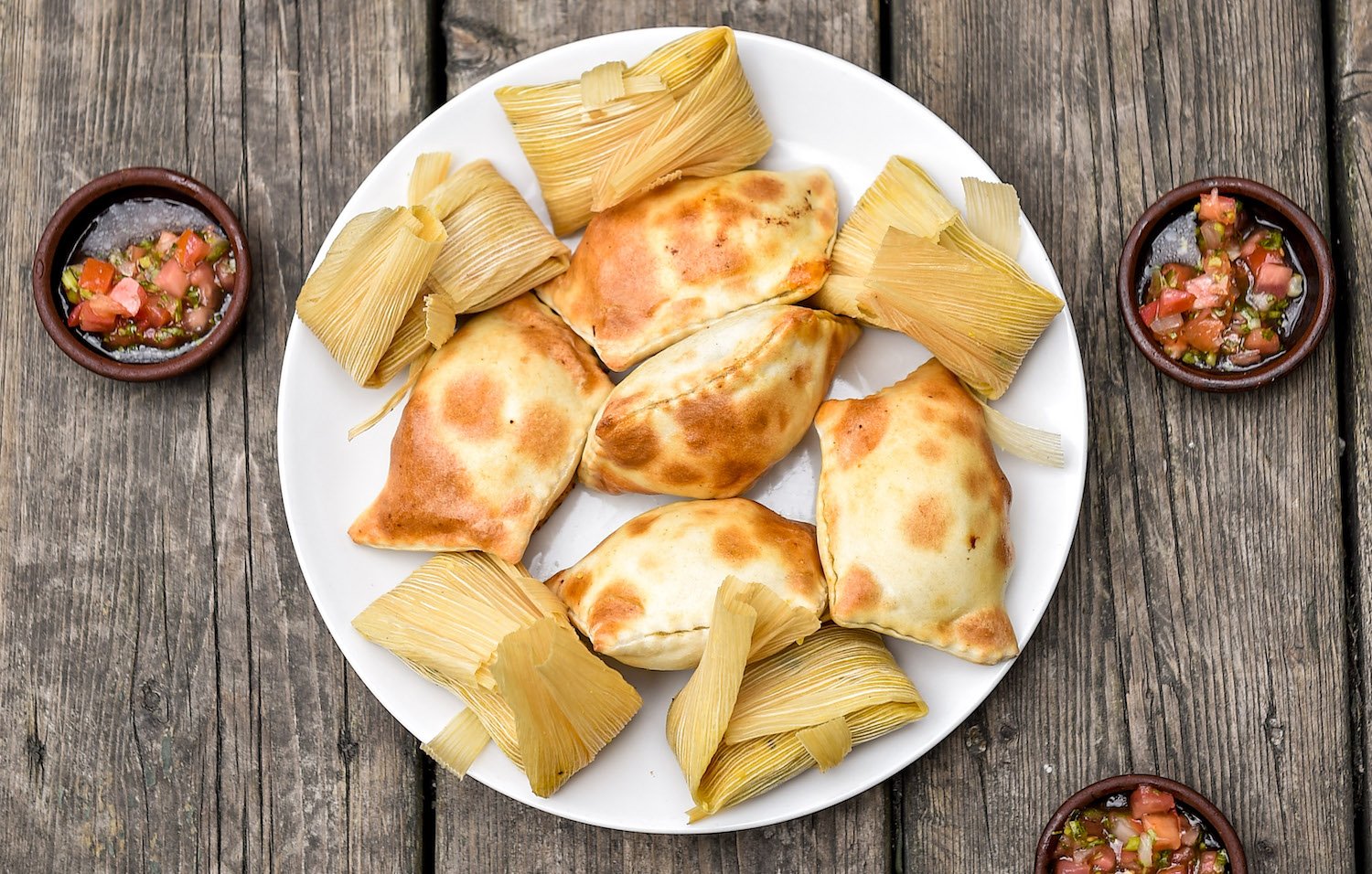
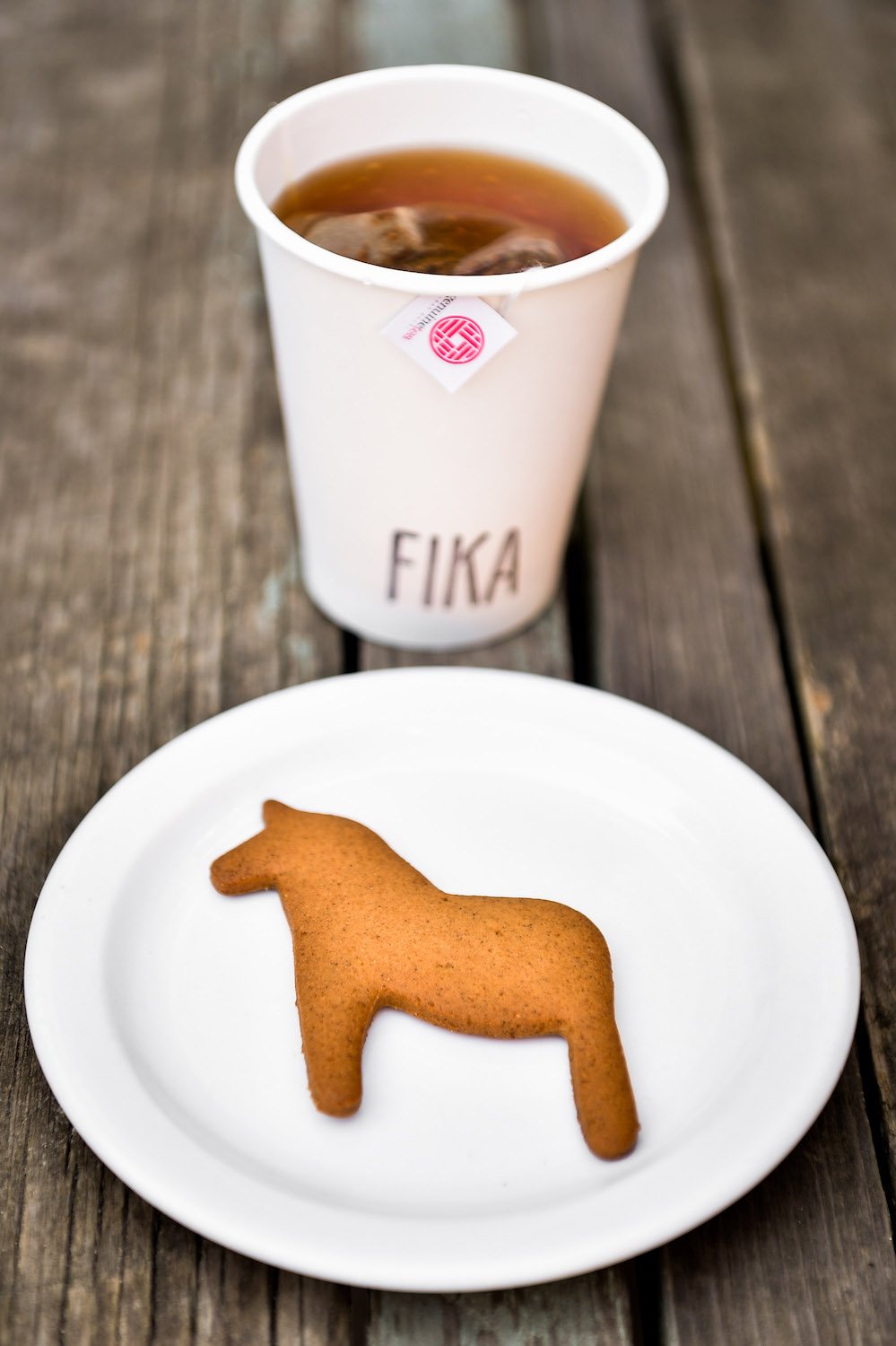
These days, two synagogues call the area home alongside a cultural collision of many different communities. As you explore the market’s streets, you may hear a Bob Marley song emanating from one door, someone playing an accordion down the street, and an old man busking on an erhu (akin to a Chinese fiddle) on the corner. In less than three hours, we sample foods from nine countries and five continents, passing vintage clothing boutiques, bulk spice stores, butchers and cheese shops, specialty markets, and bohemian cafés along the way. After a smoked trout bagel sandwich from NU Bügel—a bakery started up by two Venezuelan friends—I scarf Jamaican food at Golden Patty, then wash down bites from Chilean-owned Jumbo Empanadas with a bright yellow Peruvian soft drink called Inca Kola. At Koi Japan Sushi, I nibble salmon avocado sushi, wrapped in tofu instead of seaweed and sprinkled with flakes of 18-karat gold. We finish our tour with a stop for a cookie and a rooibos tea at Fika Café, a Swedish coffee shop with a cozy room in the back where one wall is papered with open books.

And Kensington is just one of many markets in the city. St. Lawrence Market was the city’s first, beginning operations in 1803. Now spread over three buildings, it’s hopping with people picking up fresh fruit and vegetables; visiting seafood stalls, bakers, and butchers; and buying local favorites, like the peameal bacon sandwich.
Of course, food choices aren’t merely sequestered in the city’s markets. There are almost 9,500 restaurants in Toronto, including more than 80 Michelin-recognized spots, so visitors can’t run out of places to explore, even if they try.

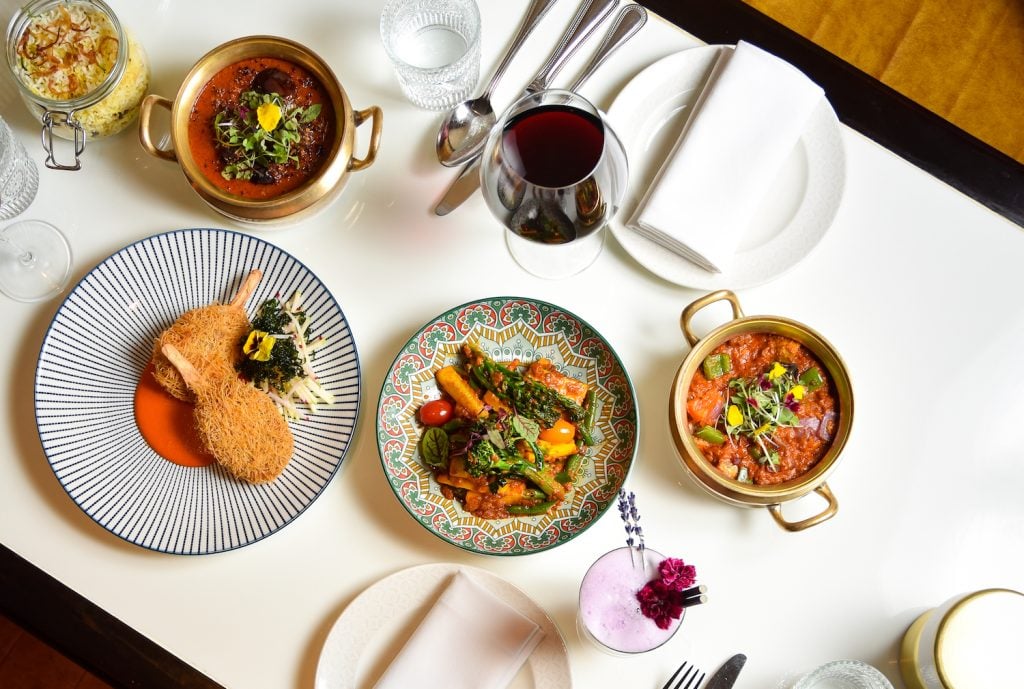
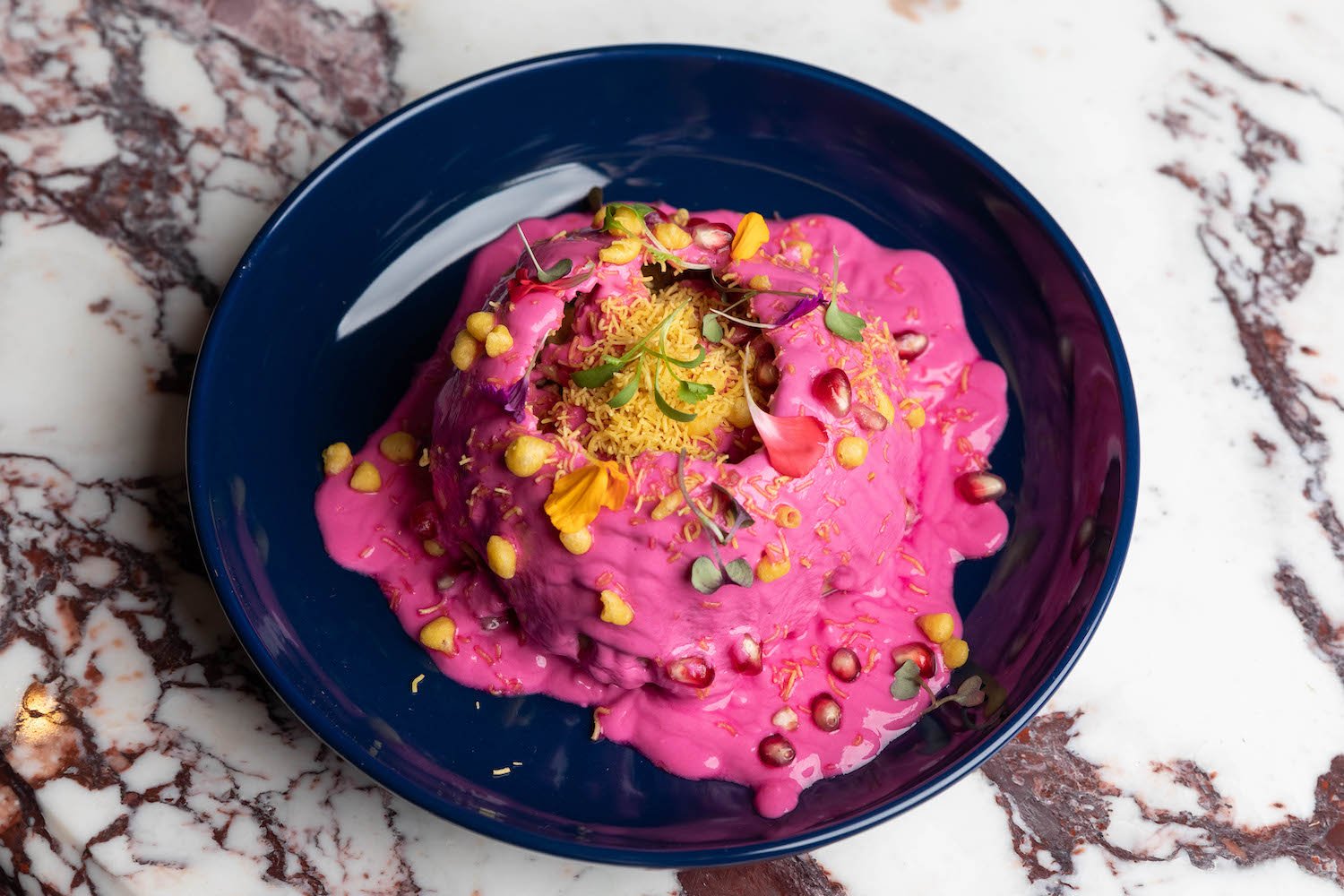
At Adrak Yorkville, a fine-dining Indian restaurant, the rani kachori my husband and I share resembles a dispatch from Barbieland, its yogurt sauce dyed bright pink with beetroot and its crispy, puffed puri shell stuffed with veggies and adorned with edible flowers.
The next night, we dine on an outdoor patio at Viaggio, an Italian restaurant near the west end’s Polish turned-hipster Roncesvalles Village. We began with the panzanella, the implied stodginess of a bread salad made light and refreshing with the addition of heirloom tomatoes, buffalo mozz, and wild leeks. It stands in perfect contrast to our next plate, the mafaldine, a rich tomato-based ragu with bone marrow, sausage, and rapini. And then dessert: tiramisu pancakes drenched in a warmed espresso syrup and topped with mascarpone mousse and a dash of cocoa.

The following week, we bike downtown to the Northern Thai spot PAI, where we descend a staircase into a labyrinth of connecting rooms with colorful flags draped from the ceiling. Our meal begins with the plum mule cocktail, a sweet, spicy take on the Moscow mule with plum wine in the mix.
A couple of nights later, I end up at BB’s Diner, an unpretentious Filipino restaurant bearing cozy booths and stools perched around an omakase-style bar. I start with the G&T—made with a cordial based on calamansi, a citrus native to the Philippines—then dig into the Adobo fried chicken with pineapple habanero sauce.
Toronto, truly, is a great place to get full. But while food tells you much about a city’s culture, Toronto’s diversity is also something you can see, feel, and hear.
The city loves its street festivals, from celebrations of salsa dancing on St. Clair and the Polish festival on Roncesvalles to the Ukrainian Festival on Bloor West and the Toronto Caribbean Carnival, the largest of its kind in North America. The colder months bring an ice sculpture fest, light shows, and winter markets.

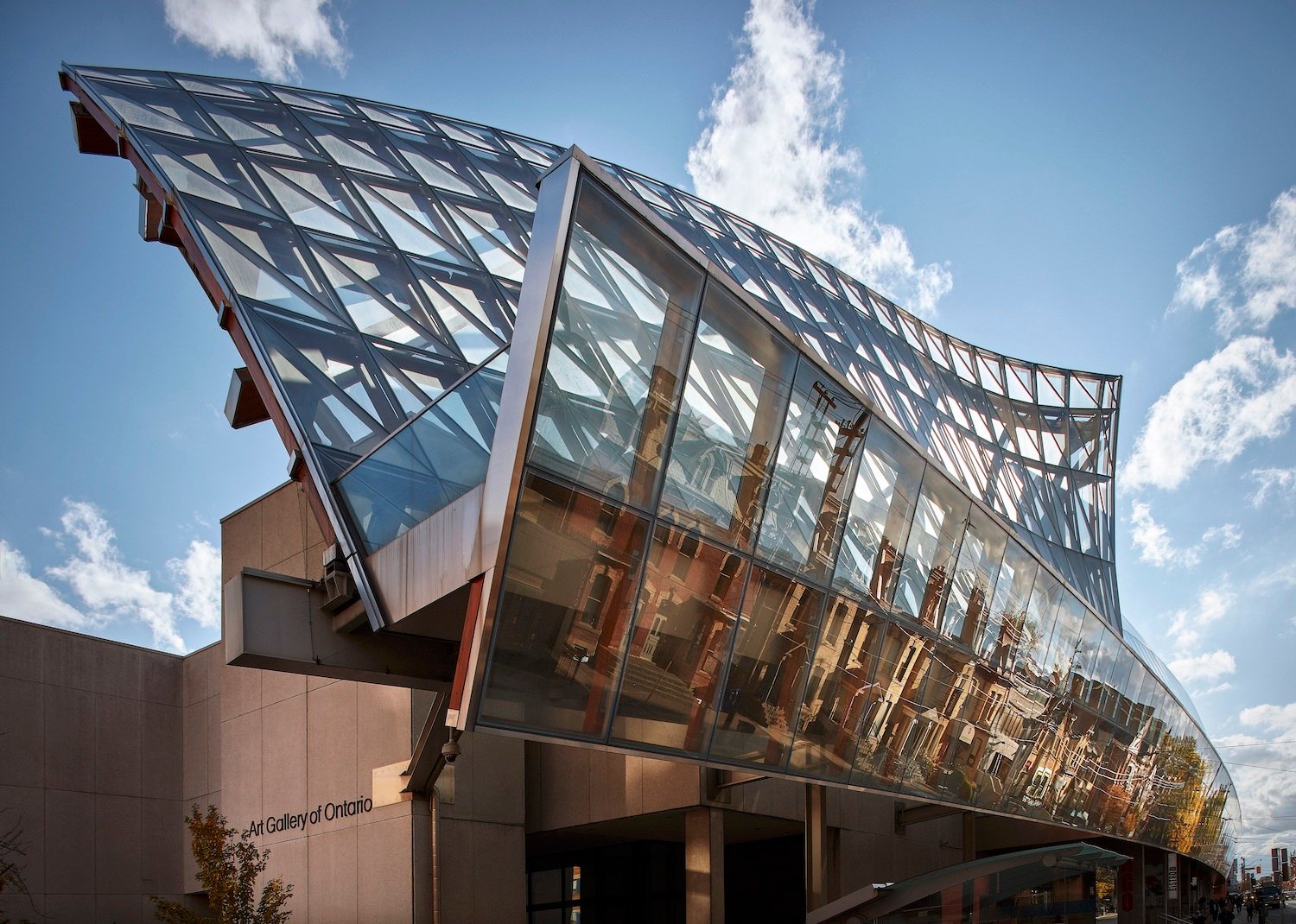
Toronto’s more than 60 galleries and museums, too, reflect the breadth of the city’s cultures. Venture beyond standbys like the Royal Ontario Museum, Art Gallery of Ontario, and Museum of Contemporary Art to wander lesser-known but equally fascinating spaces such as the Aga Khan Museum, which showcases Islamic art and artifacts amid stunning, rectilinear architecture. The museum also hosts lectures and poetry, music, and dance performances, including the Duende Flamenco Festival, taking place November 14 to 17.
The newly opened Toronto Holocaust Museum was intentionally designed, says Marketing and Communications Director Michelle Fishman, as a “contemplative space” where visitors are invited to “approach the content through the lens of their own unique immigration experiences, efforts at acculturation, [or] lived trauma.” Across town, the Native Canadian Centre of Toronto offers free tours, giving visitors the chance to explore the city’s Indigenous Canadian roots.

Wellness opportunities also abound, accommodating more customs and budgets than other towns might. An hour-long Thai massage on Bahn Thai Spa’s traditional floor mats will set you back a mere 100 Canadian dollars (about 75 US bucks), while those seeking decadence can invest hundreds into a facial with French ingredients at Hotel X’s fancy Guerlain spa. At the South-Western Bathhouse, tucked in a back alley on the side of a strip mall in Mississauga, you can unwind the Russian way, sweating in a cedar parilka or Finnish sauna and indulging in the strangely soothing charms of a venik, essentially a whipping with a bundle of tree branches. Throw back a shot of vodka, cup of tea, or hearty bowl of goulash before you leave.
Then, relaxed and fortified, find the nearest map, close your eyes, and point. Chances are, wherever your finger lands, Toronto provides the opportunity to explore a multitude of cultures mere steps away.
Diana Ballon is a Toronto-based travel and lifestyle writer. Her travel writing focuses on outdoor adventure, wellness, fitness, cool hotels, and food and drink. Her stories have appeared in many major North American publications, including The Toronto Star, Zoomer Magazine, The Ethel from AARP, Broadview Magazine, CAA Magazine, Azure Magazine, Canadian Cycling Magazine, Daily Hive, Travel Life Magazine, Cruise & Travel Lifestyles Magazine, Wander Magazine, Vacayou Magazine, vacay.ca and hotel-addict.com.

Eighteen seconds, one unforgettable mistake, and a Fourth of July story that somehow gets better with age
There’s a famous video.
“This is insane!” the guy filming it seems to proclaim. “It’s the best fireworks show ever!” a companion confirms, inspiring a debate lasting over a decade.
All told, 7,000 fireworks exploded in the span of 25 seconds over San Diego Bay on July 4, 2012. A Michael Bay amount of unison. $125,000 worth of shells, cakes, Roman candles, and skyrockets had been placed on a barge—enough for 17 minutes of decorative sky flares—and…
Boom.
The sky looked like someone had set a giant Rorschach test on fire. Or as if whatever we all see in our Rorschachs—butterflies, clowns, tongue kissing, dads—was being electrocuted and lifted heavenward, amen. It was shocking how bright it was, how much it sizzled the local cosmos. Could’ve been one of those sci-fi films where a hole is ripped open between warring universes. But angstier, more metal—the work of some methy creator in a sleeveless concert tee.
The sound?
Lou Reed once released an entire album that contained 64 minutes of mindflaying guitar screeches and machine noises. No regular songs, just a fascinating amount of ear distress. His record label reps no doubt heard the melodic outro of their careers, but everyone else was in pain and stumped. That album still sounded better than the bay did that night. The bay sounded like a god who struggled with emotional regulation had blown his speakers and was working through the anger stage of AV grief.
In the left frame of the video, a middle-aged woman is attempting to drag her husband off by the hand. In no way does he want to go, possibly because he had missed the time Roseanne Barr sung the national anthem at a Padres game, simultaneously disemboweling and amusing America through the power of song. He would not willingly abandon an equally worthy San Diego trainwreck.
Another woman in the video appears to have just filled her beer, rushing to sit down for the show. She pauses mid-sit and returns to the full and upright position to properly bear witness. What was supposed to be prolonged entertainment has been so radically shortened that she will have to find another reason to drink. Lucky for her, drinking will be the only way to adequately process.
Locals remember the conspiracy theories. People wondered if the fuses had been tripped by a saboteur who was sympathetic to dogs, fish, or the growing suspicion that late-stage capitalism is a gorgeously branded but impossible dream sustained by remarkably efficient top-tier wealth retention and the soft compliance of fireworks-watchers who can no longer afford a house, a beer, or the personal impacts of human reproduction.
Speaking of being terrified of babies, babies were terrified. The children who witnessed it probably still can’t go near a candle store. But those kids will be tougher, perfectly scarred kids. They’ll write better songs.
That night helped us absolutely dominate the national news cycle. For a hot minute, we became America’s water-skiing squirrel. Now, years later, when you Google “fireworks gone wrong,” San Diego is always a top contender, along with that poor Nebraska family who nearly wiped out a couple generations in their front yard, their minivan somehow turning into a howitzer of recreational TNT.
There is still debate as to whether Big Bay Boom 2012 is the worst or greatest fireworks show of all time. But the advanced parts of civilization arrived at the truth as quickly as the women in the video did. It was undeniably amazing.
First of all, the point of Fourth of July fireworks isn’t “the intricate choreography of sky fire over a guaranteed amount of show time.” It’s about creating a vivid memory shared with some people you like, love, or would like to love.
BBB2012 used large-scale chemical fire to create the ultimate memory.
Sure, some people who iron their jeans subjected their family to a sermon about how San Diego managed to botch America’s birthday like a Disney princess-for-hire who smelled of quite a few Sauvignons.
The rest of us saw how perfectly it nailed the actual feeling of being an American. Because only a miniscule percentage of us bake postcard apple pies where every inch of crust is perfectly laminated like the wood in an Irish bar. Very few of us can paint on par with Picasso. The rest of us—despite truly believing in our America-activated abilities to achieve greatness in almost any field of our choosing—burn pies. We try to paint only to realize it looks like our fine motor skills have entered active death.
That’s why BBB2012 was the most perfectly American fireworks show ever: A wildly ambitious idea galvanized thousands upon thousands of people to both work on it and come to hold a beer and gawk at it, only to have it fail in the most glorious TMZ-level spectacle.
America isn’t about immaculate, storyless wins. It’s about how the framework of a country is solid enough that we can accidentally detonate our entire lives—a few times—and still probably be OK.
No one has America’d quite like San Diego did on that day. It was performance art. Lou Reed’s heart slow-clapped. Any brief municipal embarrassment quickly became a pride of our people. I can only hope the same for the Nebraskan yard family whose Dodge Aerostar became a hyperactive Death Star.
P.S. Local writer Maya Kroth compiled a quite great oral history of that night for Thrillist. The bottom lines for me were—it took nine months to prepare, no one was hurt, and even though the pyrotechnics company tried to zero out the bill, Big Bay Boom founder H. P. “Sandy” Purdon refused and paid them in full. This year will mark the 25th Anniversary of the yearly Big Bay Boom.
Troy Johnson is the magazine’s award-winning food writer and humorist, and a long-standing expert on Food Network. His work has been featured on NatGeo, Travel Channel, NPR, and in Food Matters, a textbook of the best American food writing.
Drink 182 will pair pop-punk nostalgia with New England-style pizza starting this summer
If you’ve ever squeezed yourself into a pair of black skinny jeans with a studded belt, sported a track jacket under a band t-shirt, or swept your Manic Panic-hued hair so far to the side that your part got caught in your cartilage earring, I have good news: Ocean Beach will get a shot of emo and pop-punk nostalgia when Drink 182 opens this July.
The pop-punk bar and pizza spot comes with bonafide scene points. Co-founder Jay Nightride runs the music production studio Nightride Visuals, has worked with artists like Steve Aoki, Lil Jon, and Fall Out Boy, and also plays in Death Cab for Karaoke, a live karaoke band that performs every month at Soda Bar (among other venues). His partner Tony Jaw is easier to spot—he’s the guy with the sky-high mohawk manning the karaoke booth at Redwing Bar & Grill who’s been in the local bar and hospitality business for over a decade.
Nightride says he’s had the idea for an emo enclave for years, but it wasn’t until after Covid that he partnered with Jaw and got the funding to move forward. “What I was looking to build was a place that I would want to be, where would I want to go to remember these nostalgic songs,” he says.
Pending permits and final inspections, Drink 182 is slated to open the second half of July. The vibe will be dive bar meets emo night, with memorabilia from different bands who have supported the project splashed across the walls, plus a few arcade games, TVs, and (I assume) a decent sound system. The hours are still undetermined, but Nightride says they tentatively plan to be open until 2 a.m. on weekends and Wednesdays for the OB Farmers Market. In the mornings, they’ll serve fresh pastries and coffee from the similarly music-aligned James Coffee Company (whose co-owner David Kennedy is a member of Angels & Airwaves with blink-182’s Tom DeLonge).
But it’ll be the pizza that really stands out—or at least, they hope. “We’re doing New England beach pizza… a really niche pizza that not a lot of people would know about, unless you’re from North Shore, Massachusetts,” says Nightride, a former Bostonian. “It’s a thin crust, very sweet sauce, very simple, fast, go-to-the-beach kind of thing.”
“Beach pizza” is characterized by its rectangular shape, very thin crust, sweet tomato sauce, and slices of Provolone cheese with minimal toppings. Drink 182’s version will feature homemade dough and sauce, as well as freshly sliced Boar’s Head Provolone. And yes, they are aware there are already a lot of pizza options in the area. It won’t be the same, Nightride promises.
“Everybody’s first reaction when they hear ‘pizza’ is like, ‘Oh great, another pizza place in OB,’” he laughs. “But we’re trying to do something different, just enough to differentiate it and give people another option.” If you’re not keen on the style, try one of their “drunkables,” another nostalgic riff they hope the pop-punk and emo crowd will appreciate. And if you still need a reason to give Drink 182 a try, I have more good news—you don’t actually have to break out your old skinny jeans. (In fact, please don’t.)
Drink 182 opens July 2026 at 5049 Newport Avenue in Ocean Beach.

Listen Now: The Latest in San Diego’s Food and Drink Scene
Have breaking news, exciting scoops, or great stories about new San Diego restaurants or the city’s food scene? Send your pitches to [email protected].
Beth Demmon is an award-winning writer and podcaster whose work regularly appears in national outlets and San Diego Magazine. Her first book, The Beer Lover's Guide to Cider, is now available. Find out more on bethdemmon.com.
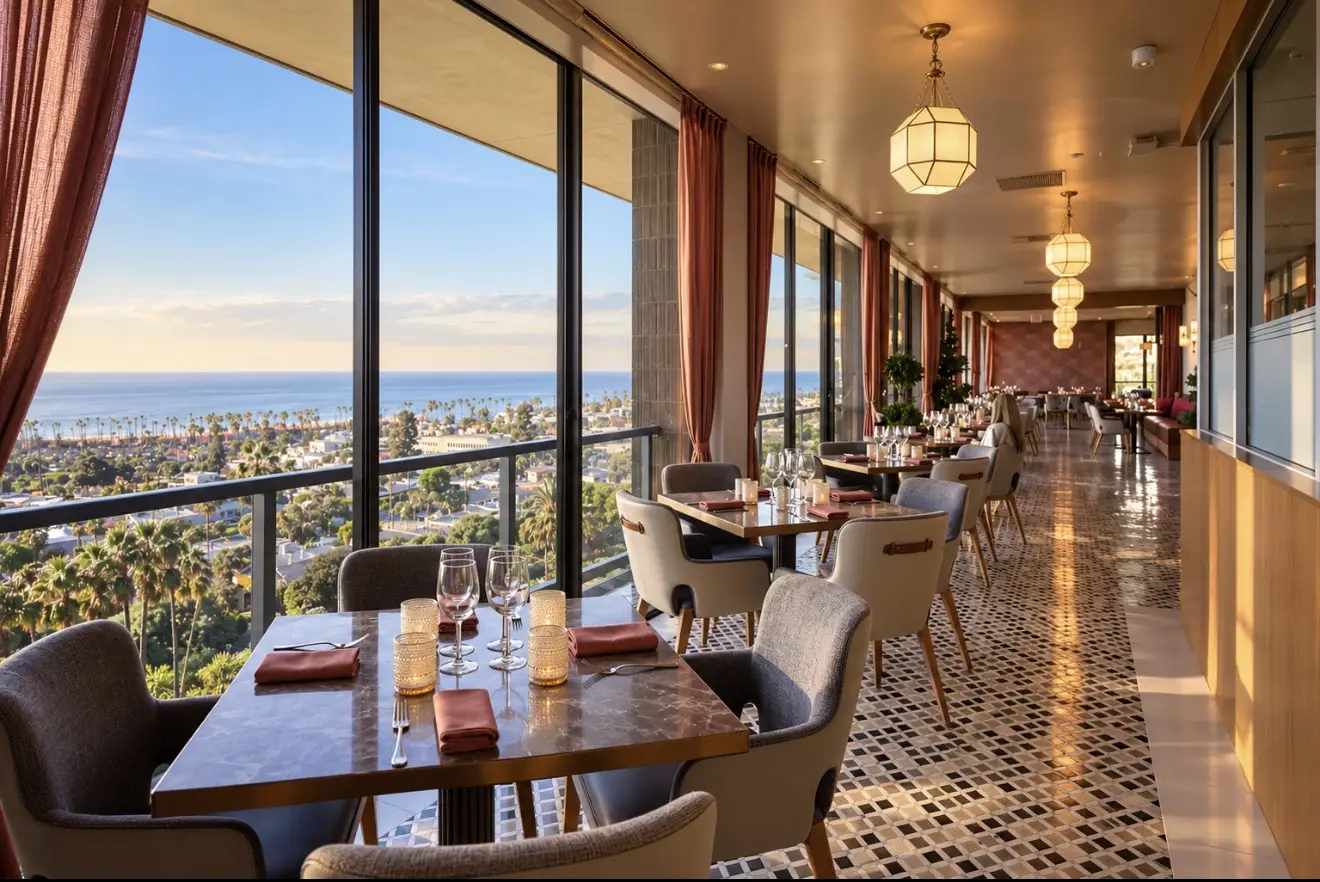
From surprise revivals to changing dining habits, these are the shifts redefining the local culinary landscape
If absence makes hearts (and stomachs) grow fonder, then shuttered restaurants quickly become the hottest tickets in town—something a number of iconic institutions found out after taking very public hiatuses after historically long runs. For instance, following a lengthy (and extremely flip-floppy) closing process after 92 years in business, Las Cuatro Milpas reopened two blocks away in Mercado del Barrio. Similarly, Carlsbad butcher shop Tip Top Meats reopened in the same location (albeit a smaller space) after the death of founder Joachim “Big John” Haedrich in 2023. Finally, after a whopping decade out of business, Sami Ladeki and chef Alfie Szeprethy brought back Roppongi to its original Prospect Street space, where it was the talk of the town in the late ’90s. All came back under the same proprietors, so they weren’t third-party nostalgia-licensing deals. The algorithm may have ravaged our attention spans away from all but the newest and shiniest, but this proves there’s still hope for our collective prefrontal cortex.
Other local eateries honored their pasts by bringing in new perspectives. The Lion’s Share in Embarcadero, Milton’s Deli in Del Mar, Dudley’s Bakery in Santa Ysabel, and J-K’s Greek Cafe in La Mesa handed over the keys to new owners willing to take on a big task: maintain the soul of icons through particularly rough economic circumstances for restaurants, navigate big feelings from longtime regulars (who often don’t take kindly to change), and make some necessary changes to keep going for another few decades. Taking over a project in process can be a lot harder than starting from scratch. But building that feel-good nostalgia doesn’t happen overnight, so it sure helps to have a well-established playbook of success passed down from those who came before.

It wasn’t just restaurant groups from Los Angeles that decided to put down roots en masse, although San Diego saw plenty of LA transplants recently (Sugarfish, Mr. Charlie’s, For the Win, Katsuya Ko, Bacari). Global brands like Chef Fei, Zuma, and Pepper Lunch have locations of their own on the way, and upscale Canadian eatery Joey joined to the inescapable gravitational pull of Westfield UTC’s culinary cosmos for its first spot in America’s Finest City. Good to see the rest of the world is catching up with what we’ve been seeing the last few years—San Diego is a dining destination already on the rise.
Between the never-ending news cycle of doom and perimenopause brain fog, I’m at the stage in life where I’m more than happy to let someone else make a decision for me, especially when it comes to what’s for dinner. And based on the way a lot of menus look right now, I’m not alone. It seems like half the places I visit offer some version of a prix fixe, omakase, or tasting menu. Restaurants are embracing the curated experience to solve the problem of affordability (a fixed menu reduces food and labor costs, guarantees an acceptable check average, etc.) and critical thinking in one fell swoop. Omakase (meaning “I leave it up to you”) is far from a new concept in high-end Japanese sushi culture, but now that it’s popping up everywhere from coffee experiences to grab-and-go sushi and sandwiches, it’s gone from somewhat niche to nearly omnipresent.

The world got an up-close look at San Diego’s coffee industry when we hosted the premier specialty coffee expo World of Coffee for the first time this April. San Diego’s long and rich coffee history stretches back to the late 19th century. Things percolated fairly quietly for around a century before really picking up steam. Today, there are nearly 200 specialty roasters and cafes across the county, with many earning national accolades like the Good Food Award (Steady State Roasting, 2020; Bird Rock Coffee Roasters, 2023, 2021, 2019, 2017, 2016), Roaster of the Year by Roast Magazine (Mostra Coffee, 2020; Bird Rock Coffee Roasters, 2012), and the Specialty Coffee Association Coffee Design Award for packaging (Rikka Fika, 2026). Now that we’ve moved past the comically insufferable coffee snob era of the early 2000s, even java newbies can feel comfortable walking into pretty much any coffee shop in San Diego, asking questions, trying a few things, and feeling confident they’re going to get great service and a great beverage.
Beth Demmon is an award-winning writer and podcaster whose work regularly appears in national outlets and San Diego Magazine. Her first book, The Beer Lover's Guide to Cider, is now available. Find out more on bethdemmon.com.
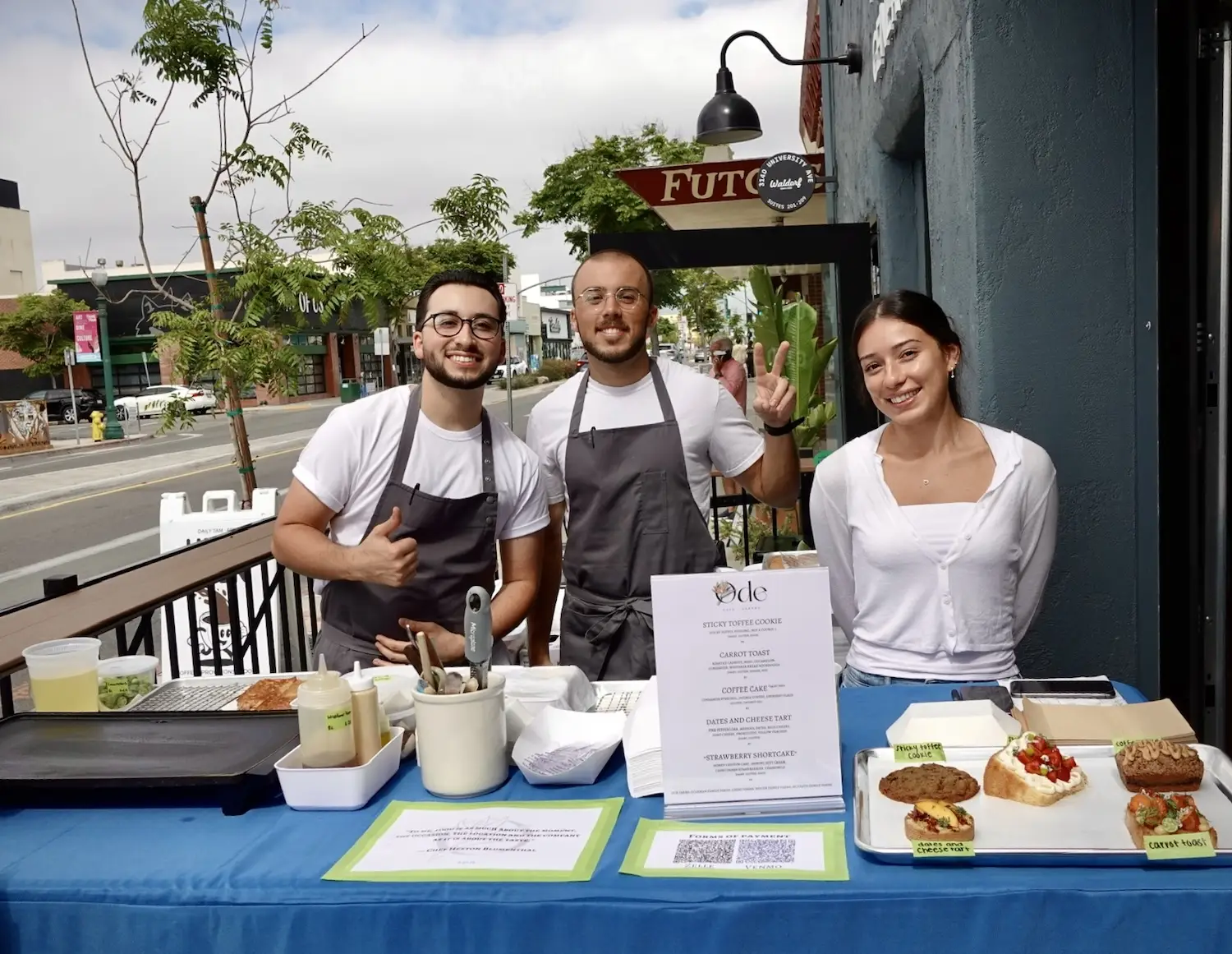
The 29-year-old culinary director at Herb & Sea is making seafood sexy (and approachable) again
Implementing a farm-to-table model hardly deserves acknowledgement these days. It’s not a stretch. It’s not innovative. “It’s the bare f**king minimum,” says Herb & Sea‘s executive chef Aidan Owens.
When I arrive at the Encinitas restaurant, I’m ready to talk sustainability, farm-to-table stuff, with Owens. “Did you see the chin on that?” he says of the extra big jiggly chin on the sheephead that just arrived with the day’s fresh catch. I did. It was Jay Leno adjacent.
I learn quickly that he somehow oozes both charm and stone-cold honesty. Maybe he could construct a new dish with chin goo, like he did when he had a bunch of tuna scraps and voila’d it into a smooth and crowd-pleasing ‘nduja. “I want to know what’s in there,” he says.

The instinct to look closer, to dig into what others might discard, says a lot about the chef’s approach. I guide him back to our topic, but he has something else on his mind. “We’re overcomplicating food—what happened to just cooking good food and having fun with it?”
Owens grew up on a farm in Byron Bay, Australia, where sustainability wasn’t a concept you chat about so much as a way of life. Think dirt roads, backyard chickens, pulling vegetables straight from the ground, and a mother who believed that if you couldn’t pronounce the ingredients on a package, you shouldn’t eat what was inside.
Food wasn’t precious or performative. Making it was what you did because you were hungry and that’s still what inspires Owens today. “I like to cook good food because I like to eat good food,” he says.
His approach to sustainability at Herb & Sea began so naturally that it felt just like instinct. “I was just like, ‘Let’s order food from the people who live and work here,’” he says.

And why wouldn’t he when lives in San Diego? Cities all over the world vie for our goods. Our tuna is sent overseas. Our spiny lobsters hit dinner plates in China and Japan. Not to mention California’s producing a third of the country’s vegetables and three-quarters of its fruits and nuts.
“Why would we outsource when it’s all here?” Owens asks.
Sustainability, in this context, is about cooking what exists in abundance, nearby, right now. “I love the local fish here. It’s f**king delicious and San Diego citrus, I mean, it is so f**ing good,” he says.
Instead of importing ingredients, Owens also looks for nearby alternatives. “You can find really cool things in the local waters,” he says, pointing out that stingray cheeks taste similar to scallops.

Whatever he finds in that sheephead chin might just be the next substitute for marrow. But to make this work, it means getting diners amped up about the slightly unfamiliar.
Tasting menus, where diners are completely in his hands, become an opportunity to gently push boundaries. “I’ll serve mackerel, because people think they hate it,” Owens says, noting that the abundant local fish can have some fishiness. “But when it’s fresh, it’s arguably one of the best fish in the ocean.”
He also tweaks the language on the menu so people might feel more compelled to give dishes a try without preconceived notions. He might use “lengua” instead of “tongue.” “Whelk” instead of “snail.” When he puts “stingray throat” on the menu, he disarmingly calls it “skate.”
To reduce waste, scraps aren’t always discarded but rather turned into something new. Sometimes they’re smoked, cured or fermented. Apples going bad turn into apple ponzu. Lemons turn to marmalade, which stretches their usefulness far beyond peak season. “And it’s super tasty on our pizza,” he says.
What makes the food even richer, is the relationships he’s built with farmers. Though it didn’t always feel natural, Owens sought personal connection first. He recalls approaching a fisherman at the Tuna Harbor Dockside Market. “I was awkward,” he says. “I went up to him and said, ‘I like your fish.’”
Owen’s is now so close to his suppliers—like fishermen Ryan Sebo and Joe Daly—that he gets texted pictures of fresh catches right as they flop on the boat. The messages always ask if he wants first dibs. “I say yes to a lot of fish,” Owens says, noting that Herb & Sea can go through 2,000 pounds of seafood a week.

The next evolution of sustainability, in his view, will be chefs working directly with producers such as his alliance with Sebo, cutting out middlemen and purveyors where possible. “It will put more money in the pockets of the people doing the work,” he says.
It will mean that chefs can’t just know their local farmers and producers, but they’ll choose to work with the ones who have the best practices. Dining and sustainability will become much less about the final plate. “It will be more about the impact that plate has on the Earth,” he says.
Ultimately, he believes sustainability doesn’t need to be loud. It doesn’t need hashtags. It just needs to be honest.
“We aren’t saving lives. We’re feeding people good food,” he says.
And yet, in feeding people well—simply, thoughtfully, responsibly—something meaningful happens. Guests leave satisfied. Ingredients are respected. Local ecosystems are supported and food returns to what it has always been at its core: nourishment, pleasure, and a quiet reflection of the place it comes from.
No buzzwords required.
Offering everything from smashburgers to sundaes, the latest food hall from Tiger Hospitality opens its doors this weekend
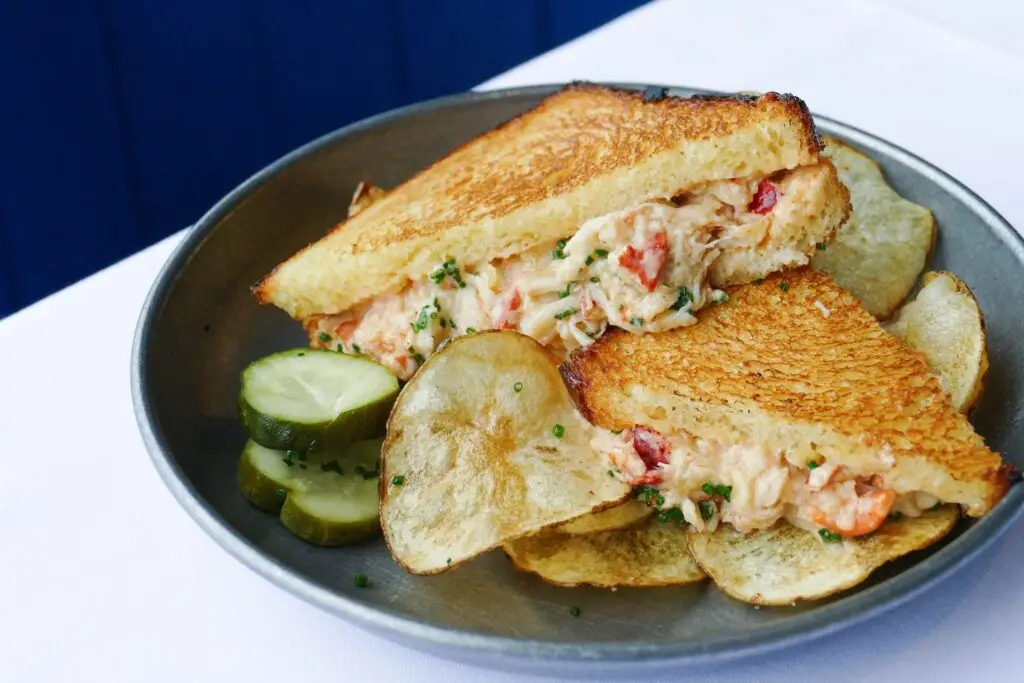
Omakase and fixed-price menus are one way hospitality businesses are addressing our collective food decision-making fatigue. But on the opposite end of the spectrum, some restaurateurs are offering a bonanza of totally unrelated options for people ordering on a whim. Why not pair a lobster grilled cheese sandwich, açaí bowl, and ridiculously loaded hot dog?
Starting June 27, diners can satisfy their spur-of-the-moment appetites at Global Fork in Little Italy, the latest food hall from Southern California-based Tiger Hospitality.
Six different food concepts will be featured in the 4,685-square-foot, indoor-outdoor space along the Piazza della Famiglia promenade. The space’s inaugural lineup includes a mix of Tiger Hospitality-owned concepts (Cosmos Burger, La Vida, Lobster Lab, and Prik Ki Nu Thai) and outside operators (Seattle-based Moto Pizza and Handel’s Homemade Ice Cream). The space next door, Good Enough Cocktail Club, is another Tiger-backed brand, operated by the team behind Same Same and Amor y Magia in Carlsbad.
Cosmos Burger serves smashburgers stacked with classic toppings, while Lobster Lab focuses on seafood favorites including lobster rolls, shrimp rolls, and lobster mac n’ cheese. Prik Ki Nu Thai adds Thai street food to the mix, with traditional noodle, rice, and stir-fry dishes. And for those looking for something on the lighter side, La Vida offers things like smoothies, salads, and wraps.

Moto Pizza focuses on Detroit-style square pizza with Filipino influences and, despite the name, is not affiliated with Mr. Moto Pizza. Handel’s, which began in Ohio in 1945, will offer dozens of flavors ranging from staples like chocolate and vanilla to rotating specialties packed with candies, cookies, and other mix-ins. (Handel’s already has a number of locations across San Diego, with a La Mesa store coming later this year.)
Some of these vendors already operate at Miramar Food Hall, the other Tiger-owned food hall in San Clemente. And some of them will also appear in Station8, the next food hall slated to open in UC San Diego’s Theatre District Living and Learning Neighborhood later this fall. But if you ask me, reviving the space that housed the Little Italy Food Hall before its closure last February is a far better outcome than leaving empty suites smack in the middle of an area saturated with fantastic food options. Plus, where else can you order a slice of beef adobo pizza alongside squares of caviar toast and a banana split?
Global Fork opens June 27 at 550 W. Date Street, Suite B, in Little Italy. Initial operating hours are from 9 a.m. to 9 p.m., seven days a week, but vendor hours may differ.

Listen Now: The Latest in San Diego’s Food and Drink Scene
Have breaking news, exciting scoops, or great stories about new San Diego restaurants or the city’s food scene? Send your pitches to [email protected].
Beth Demmon is an award-winning writer and podcaster whose work regularly appears in national outlets and San Diego Magazine. Her first book, The Beer Lover's Guide to Cider, is now available. Find out more on bethdemmon.com.
How the now iconic rating system became the biggest name in the food and how it made its way to our backyard
So, Michelin chose San Diego to host its annual awards show this week. Big thing for our city, which people wrote off as the flaccid mozzarella stick or the “fish tacos bro” of California food culture.
Michelin Guide is a pretty fascinating story. It started as a marketing brochure for a tire company and evolved into the strongest global marketing platform for restaurant culture in history.
In 1900, there were less than 3,000 cars in all of France. André and Édouard Michelin were trying to sell tires. A niche market. If people drove more, they figured, tires would go bald faster. They’d sell more rubber.
So they published a guidebook with maps, gas stations, mechanics, hotels, restaurants, and travel advice. The “How to Go Bald” book with food as the bait. By the 1920s, people were buying the guide just for the restaurant recs.
In 1926, Michelin introduced stars. This changes everything.
Originally just one. Five years later, it expanded to three. One meant “very good restaurant.” Two meant “worth a detour.” Three stars meant “worth a special journey.” In other words, wear those tires down to a nub in search of Dover sole.

By WWII, Michelin was the gold standard guide to French food. And French food was the gold standard for western food. Which was half the world.
Michelin first came to the US in 2005.
New York only.
(Knicks in five).
In 2007, San Francisco. Then LA and Vegas in 2008.
Michelin stopped publishing in LA and Vegas after two years and stayed dark until 2019.
Major theories for this?
First, print is expensive. I can attest. ROI on a printed story is hard.
Second, people wanted local critics, and they were finding them online.
Third, Michelin landed like a stuffed shirt in LA, which had taco carts in its heart. LA swiped hard left.
Then Michelin discovered a new way to fund what it does. Instead of trying to sell enough books to justify the cost (inspectors, printing, restaurant bills, etc.), it had tourism marketing districts pay for inspectors to come analyze their cities or states.
Tourism marketing districts are massive organizations whose primary goal is to sing the priases of their cities and states—attract tourists, who pay for hotels and spend money in the city. Heads in beds.
The first to swipe its credit card was California, which paid $600,000 in 2019 for Michelin to come back to LA, Orange County, Monterey, Sacramento, Santa Barbara, and… San Diego.
It’s an overwhelmingly positive thing, which is never without its doubters and critics.
Namely, not everyone is down with the pay for play model.
The biggest reason is that it means cities without big tourism budgets get left out. Chefs in those cities are chefs non grata in the eyes of Michelin. Which is a fair complaint, though also, sadly or not, kind of how capitalism works.
Michelin isn’t a government organization, or a nonprofit culinary organization. It’s a publicly traded company with real bills to pay and investors and shareholders to answer to.
Since it feels like a tad of a PR dilemma for Michelin, I have a proposal that may or may not work.
What if Michelin took a portion of the money it receives from larger cities and used it to fund its expansion into an underserved city or state that can’t afford it? Bake it into the price it charges California or any other state.
Again, Michelin’s not obligated to do this; there is no penalty beyond the paper cuts of public sentiment. But that sort of pay-it-forward model could help other cities without the resources to play the game, while simultaneously making Michelin’s reach bigger and more holistic.
Second, people claim this TMD-funded model somehow taints the winners.
I don’t buy that at all. All tourism boards are doing is paying a marketing business (Michelin) to come operate in their city. They’re not telling Michelin which restaurants to choose for awards. As I understand it, Michelin has retained independence, and its inspectors only award restaurants that they feel are absolutely worth it based on merit.
True pay for play would be if a restaurant group paid Michelin in exchange for a star. Or if tourism boards had a say in which restaurants received attention or awards.
I haven’t found any proof of that happening, and so I won’t ding the validity of the awards until (and if) I ever do.
All tourism boards can control is which areas they’re willing to pay to have analyzed. For instance, San Diego could technically ask that only the city be analyzed and not the county. Which it did not, most likely because Visit San Diego (our TMD) is in charge of marketing the entire county (and thus why Michelin stars like Jeune et Jolie, Lilo, and Addison are outside of SD city limits).
So, if you’re dead set on criticizing Michelin, I’m not sold yet on the pay-for-play model being the right route.
Troy Johnson is the magazine’s award-winning food writer and humorist, and a long-standing expert on Food Network. His work has been featured on NatGeo, Travel Channel, NPR, and in Food Matters, a textbook of the best American food writing.
Take a refreshing trip to Tuolumne County, where your senses will get their fill and your wallet will stay full with off-peak accommodation prices
Gold Country Columbia Stage Coach.jpg
It’s that time when all of your senses are awakened by the unmistakable feel, sights, tastes, smells, and sounds of fall and winter. Experience them all in Tuolumne County in Northern California! Discover a different side of Yosemite National Park in the quieter and less crowded destinations. Watch as history comes to life with local tales and vibrant colors in Gold Country. Temperatures are dropping, but cooler adventures are found on the trails and slopes of the High Sierra and at unique events throughout the County.
Take a refreshing trip to Tuolumne County, where your senses will get their fill and your wallet will stay full with off-peak accommodation prices.
Find Serenity in Less-Crowded Yosemite National Park and Surrounding Area
Yosemite
Yosemite has quieted down, and now’s the time for national park adventures and new explorations. Find yourself in awe as you take in the sights among the giant sequoias backdropped by colors of maples and dogwoods and maybe some glistening snow in the Tuolumne Grove of Giant Sequoias. Or, hike around stunning Hetch Hetchy Reservoir.
Wander in Groveland, outside of Yosemite, and enjoy a warming pumpkin spice latte or a one-of-a-kind seasonal brew. Feel like shopping? Pop into some of the unique shops in town to find gifts and seasonal decor to bring home.
Discover an Era Past in Gold Country
Gold Country Jamestown – Railtown SHP Roundhouse-3.jpg
Explore Gold Country starting with the nooks of Columbia State Historic Park, and let your eyes and nose lead you into candle, candy, and provisional shops where their seasonal creations will warm your heart. Listen for clanging from the blacksmith shop or clinking of the authentic stagecoach as it enters town.
In nearby Jamestown, become immersed by the smells, sounds, and sights of Wild West railroad culture at Railtown 1897 State Historic Park, and stroll down Main Street where you’ll find shops, restaurants, and inns housed in picturesque historic buildings.
In Downtown Sonora, you’ll find many shops and restaurants located in historic buildings; as you step inside, you’ll see some interiors are left to show the architecture of 150 years ago. Also, take in a show at the Gold Country’s premier theater company, Sierra Repertory Theatre.
Reach the Mountain Tops in the High Sierra
High Sierra Ski_Photo Credit-Dodge Ridge Mountain Resort.jpg
High Sierra adventures await where brisk mountain breezes are the perfect excuse for a cozy sweater. Take a hike along the Pinecrest Lake Loop Trail, and catch unreal views of changing leaves set against rugged granite mountains. Feel the invigorating wind in your face as you ski, snowboard, or snow tube down glorious mountain sides.
Visit the nostalgic mountain town of Twain Harte and enjoy a relaxing stroll to find some fun fall fashions or handy cooking gadgets to help with upcoming holiday cooking or gift giving.
Stir Up Your Seasonal Cheer
Events Sonora Christmas Parade.jpg
Seasonal cheer is found in every town throughout Tuolumne County. Events include Fall Fest at Indigeny Reserve in Sonora and Harvest Festifall in Columbia State Historic Park in October. The night-time Sonora Christmas Parade, the night after Thanksgiving, and the sights and activities of Christmas Town Sonora delight all ages. The Polar Express departs Railtown 1897 State Historic Park for the North Pole on weekends following Thanksgiving.
Plan Your Trip to Tuolumne County
Rush Creek Lodge
You’ll need a place to stay during your visit. Pick from mountain resorts, historic inns, cozy vacation cabins (perfect for gathering the family), distinctive B&Bs, and full-service RV parks.
Start planning your vacation with the help of travel inspiration and information delivered directly to your mailbox. Request your FREE Tuolumne County Travel Guide at VisitTuolumne.com today. Or, call the Visit Tuolumne County team at 209-533-4420.