Featured articles
Food & Drink
Food & Drink
Food & Drink
Featured articles
Everything SD
Everything SD
Everything SD
Featured articles
Things to Do
Things to Do
Things to Do
Featured articles
podcast-ep
video
podcast-ep
Featured articles
Everything SD
Everything SD
Everything SD
Featured articles
Everything SD
Partner content
Food & Drink
Ready to know more about San Diego?
SubscribeReady to know more about San Diego?
The latest in food and drink happenings around town this week
El Dorado Lounge
Courtesy of El Dorado Lounge
We’ve talked about this before, but details are firming up. Seven businesses will call Freeman Collective home next year in a new communal space that is reimagining the way food, beverage and retail can blend together: HomeState, Blackmarket Bakery, Corner Pizza, Northside Shack, Artifex, Swagyu Chop Shop and Little Fox will join the space and share a patio in the front of the building. FABRIC redevelopment company owns, designed, and curated the Freeman Collective in collaboration with CLTVT design firm. The first few tenants will open their doors in January, according to FABRIC.
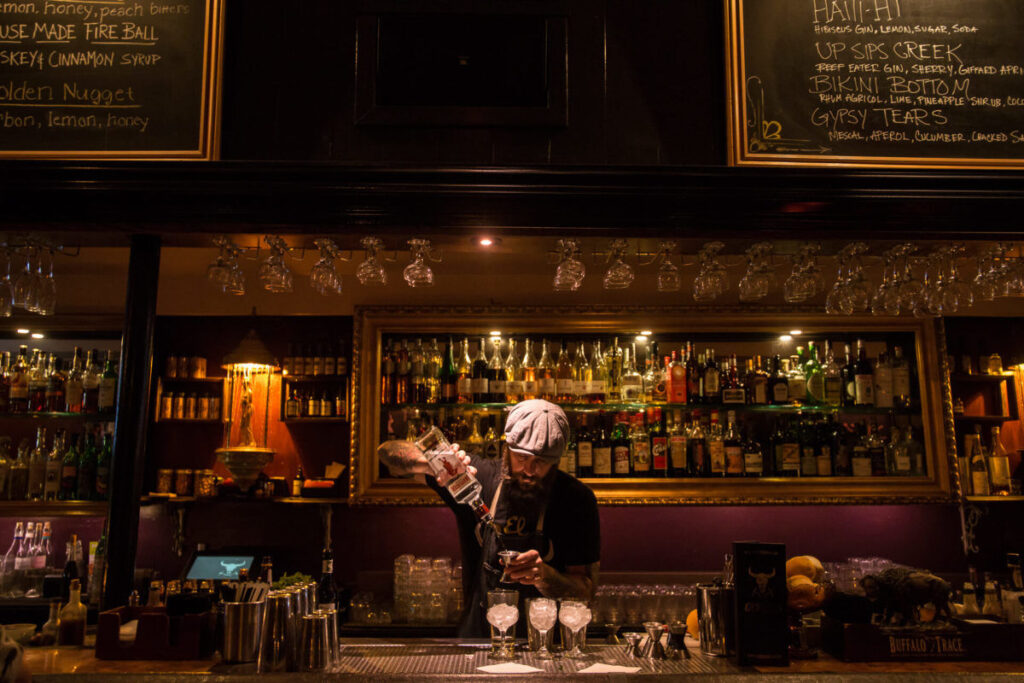
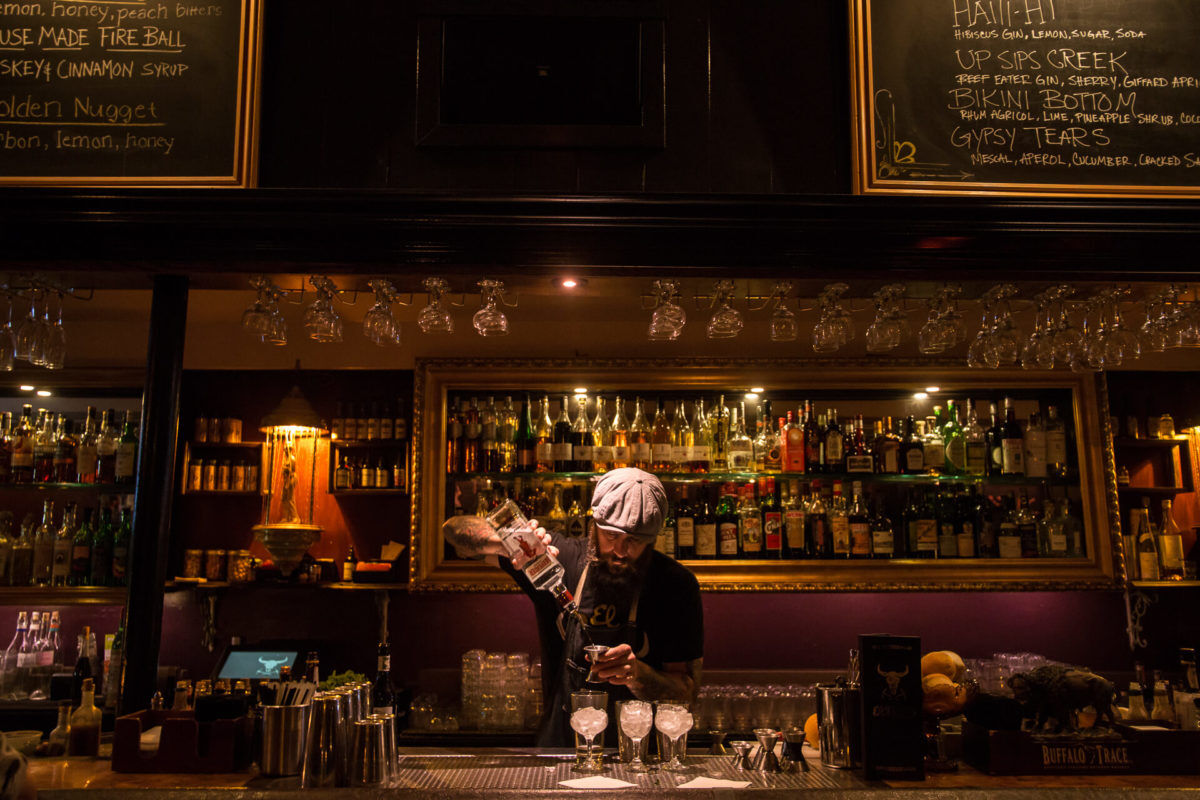
Longtime downtown cocktail lounge, El Dorado, is now under the ownership of Pouring With Heart, a hospitality group co-founded by successful L.A.-based hospitality operator Cedd Moses (The Varnish, Golden Gopher) “focused on preserving bars and building careers.” PWH also owns Seven Grand in North Park (one of four national locations). El Dorado will keep its design and classic cocktail experience, but get a bit of a refresh—with a vision to shift “away from the club and DJ vibe and into a more consistent, less program-based venue.” El D will close for a week in mid-January for the transition.
San Diego urban winery, Carruth Cellars, is expanding with a new location for wine tasting at the boutique hotel, Carté Hotel in Little Italy. This is the third opening for the winery this year (Oceanside in April and Liberty Station in July), with five total tasting rooms now open around the county. The new location will also feature a menu of shareable plates like hummus and cheese boards, salads and entrees like a burger and a crispy chicken sandwich.
Animalón
Courtesy of Animalón
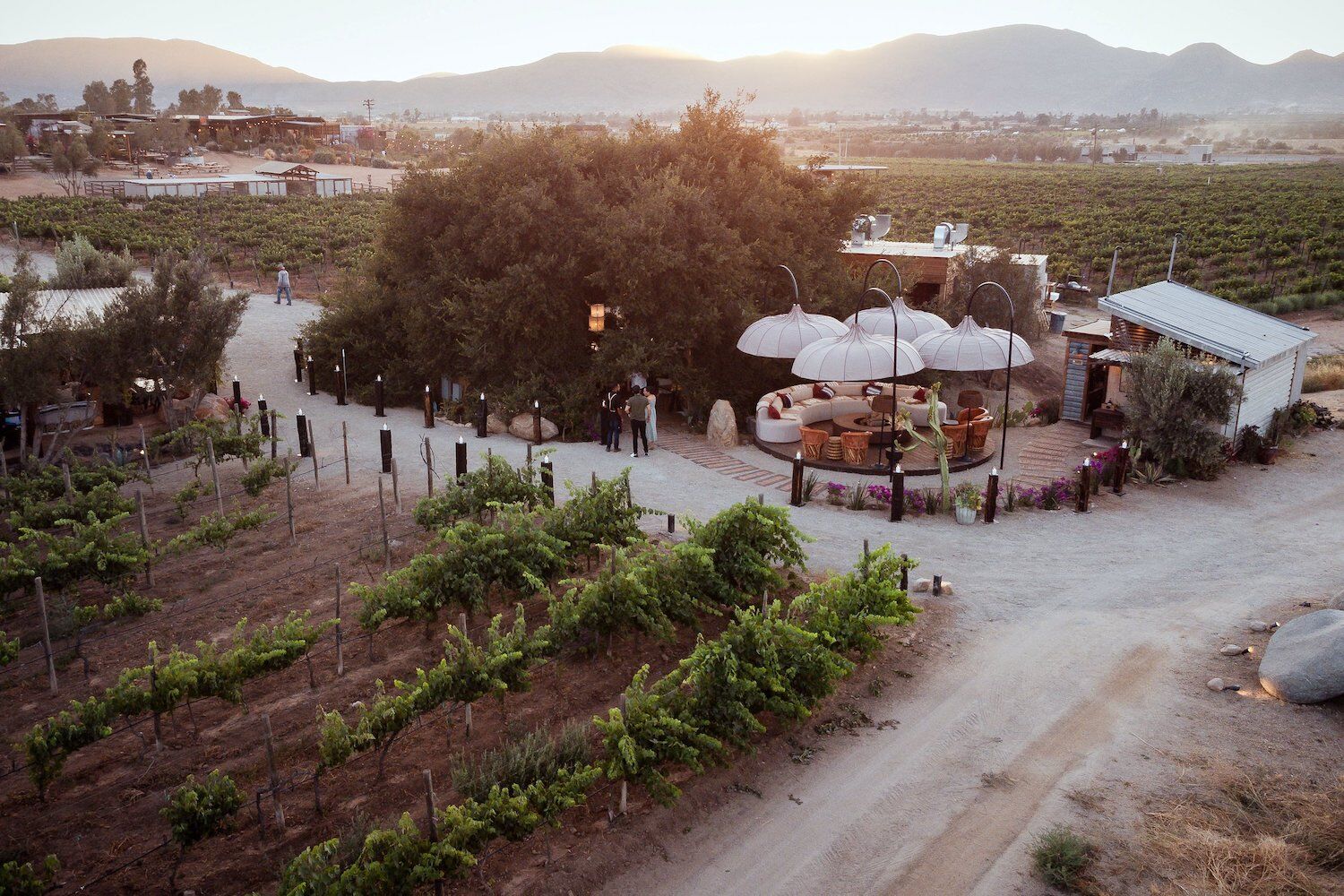
Valle de Guadalupe’s Animalón, under chefs Javier Plascencia and Oscar Torres, was just named No. 100 in the inaugural list of Latin America’s Best Restaurants.
Estancia La Jolla Hotel & Spa is hosting a Whiskey & Wine event on Friday, November 18 at 6 p.m., featuring a southern-style menu alongside live music and “some of the best whiskeys and personal reserve bourbon.”
Bivouac Ciderworks has released their Savoy English Pub-Style Cider in 16 oz. cans, one their “first and most popular draft releases.” The cider “honors the British cider-making tradition” and is available at their North Park taproom and other retailers.
Farmer & The Seahorse in Torrey Pines recently debuted a fall menu which includes items like a crispy chicken thigh cassoulet and butternut squash ravioli with a brown butter-sage beurre, with seasonal cocktails to match—like their take on a hot toddy with gin, Green Chartreuse, green tea, honey and lemon.
Have breaking-news, exciting scoops, or great stories about San Diego’s food scene? Send your pitches to [email protected].

Elena Gomez is an Emmy-nominated reporter who has spent much of her journalism career working in broadcast news in San Diego and Los Angeles. She joined the San Diego Magazine team as a freelance writer in 2020.
SDM readers asked food critic Troy Johnson to kick tires on a classic, which is how he found himself surrounded by birds at Mitch’s Seafood
The bird has a plan. You stand between that bird and that plan. For the remainder of your ceviche, you’ll identify as collateral damage.
There are many other nearby birds with the same plan, absolutely sucking at trying to be nonchalant about it. The pigeons are by far the boldest on account of what we can all agree just by looking at them is sheer stupidity. They come right up and ask with their red murder clown eyes: “Can bite?”
Pelicans are the silverback gorillas of this bird gang, hulking and alpha. They periodically flaunt the acreage of their wingspan in the same way a schoolyard bully puffs out his chest. One could casually land on your plate and maintain constant eye contact as it slowly enjoyed your fish taco. You share this tacit awareness with it. But it doesn’t approach because there are always a couple off-duty fishermen eating at Mitch’s Seafood. Those salty dogs have been forced to beat the shit out of a pelican or two in their day, and they and the pelican also know that.
The snowy egrets pretend to not really want your food. They seductively lord on the tops of the sportfishing boats moored in front of the restaurant, fully aware of how hot they are—svelte fashion models, Ozempic with wings. They just turn their faces to the wind so that it blows their fabulous hair. They seem to expect tourists to be overcome by their avian Brad Pittness and just throw swordfish sandwiches to them in tribute. They refuse to demean themselves like the gulls do.

The gulls are shameless menaces. The linebackers of seabirds—a lot quicker than you expect given their big butts, full of schemes and microaggressions. They stand at a distance and mad-dog everyone, intimidate with their beaks the color of old bananas. Fear is not a seagull emotion. When they take a plate—and they will take a plate—there is so much flapping and fighting. They desperately bite and claw at fishermen’s stews like zombies who finally caught up to Rick Grimes. We see one that’s missing a foot.
At some point you will hear a baby cry. It’s not a baby. It’s a gull, who has learned to mimic the sound of human babies in distress so that parents feel the great evolutionary ache—and throw fries at the crying.
“Watch out for the crab cakes,” says a server to every person she drops them to. “Those are their favorite.”
The birds have opinions on the menu. And their presence at Mitch’s is better than any Yelp review. Think they’d risk life and limb for some recently unboxed frostbite tilapia down at the local skate rink? Yeah, probably so.

But these birds know the backstory of three longtime local fishing families who own Mitch’s: Brian Kiyohara and his wife, Viola; Randy Toussaint and his wife, Tracy; and namesake Mitch Conniff. Conniff cut his teeth as a young sous chef at Jsix (a long-gone restaurant that was, 20 years ago, a slow-food star under chef Christian Graves). Then he was executive chef of American Angler, the long-range Baja fishing vessel co-owned by Kiyohara.
It was on the Angler that Mitch reportedly looked at the restaurant that was previously in this location—on stilts over the water at Point Loma Sportfishing Dock—and said to Kiyohara, “Wouldn’t it be cool if a restaurant in that space used local fish from local boats and local people like us?”
And that’s how Mitch’s was born. Its doors opened in 2008.
The real story of Mitch’s is the wheelbarrows. Every morning, the crew rolls them along Driscoll’s Wharf down to Tunaville—the market also owned by local fishing families (including Conniff). The shop has a parking spot for local boats, who bring their daily haul there every morning. Mitch’s crew fills the wheelbarrows with fresh fish and wheels them back to the kitchen. Within hours or a day or so, some of it will be lunch, dinner, and bird crack.

There are no reservations at Mitch’s. More often than not, there’s a long line snaking out the door. It moves fast. Their tiny kitchen is remarkably efficient. Locals know to go for breakfast (get the crab avocado toast) or in the off-hours (11 a.m., 3 p.m.—just not noon and 6 p.m.). There’s a small-ish indoor dining room, tables that appear more lacquer than wood. It’s a shrine to local fishers, the wall’s a family photo album of tan locals beaming with pride over a record catch, pleasantly fatigued boat captains, sun-gnarled deckhands. Leave your partner in the line, and go peruse, get a sense for the humans out there in local waters, leaving their families for days and weeks and months at a time to provide. It’s a core San Diego way of life that built this city (tuna money poured the concrete at Point Loma High), once robust and now rare.
The prized seats are on the deck. Thirty or so metal bar stools are ponied up to a small counter attached to the wooden rail. Bendy metal rods cascade from the roof like eyelashes. “They were put in to deter the birds,” a server tells me. “It worked for about a week.”
The swordfish sandwich is just about perfect and a mission statement of the place—humble and simple, like fishing. A big-ole torta, a grilled filet not cooked to sawdust like American restaurants once did, with tomato, tartar sauce, and cilantro. It shouldn’t taste as good as it does, but clean local fish cooked well on bread is satisfying in an essential, basal way. Plus, that tartar sauce blows lesser tartars away. Conniff swaps out the pickle and onion for garlic, fresh parsley, and cilantro, so that it tastes closer to an herbed Baja crema. It should be criminalized and governed by people who make laws to atone for the lack of our own self-regulation.

The bowl of mussels and clams are the can’t-miss of Mitch’s—somewhere between French moules marinières, New England steamers, and Baja shellfish pots. The science: As shellfish steam, they release their own briny liquor, meaty ocean broth in a shell. The chef’s job is to complement that gift without clobbering it. Mitch’s uses white wine for acid and leeks (a milder, sweeter, more flavorful onion), Dijon, and butter. Their clams and mussels are bigger than normal, which brings stronger flavor, making that broth one of the best in the city, sopped with the baguette.
From the cold case, get the shrimp aguachile with housemade chips—a small bowl, green as radiator fluid, the chili water a light-pain blend of habaneros (the best tasting chili by a long shot), serranos, lime, and the soft, fat glove of avocado. They also serve a campechana—a Baja mariscos specialty with shrimp, Dungeness crab, octopus, and oysters in cocktail sauce and clamato. Important note here: Don’t eat either of these dishes right away. They come out fridge-cold (there are laws about storing raw seafood), which muzzles the flavor. Order them to sit. After 20 minutes, dig in.
The crab cakes get mixed reviews, but ours are delicious. They lean cake more than crab, which isn’t what you’d expect from a fisherman-chef’s stilt house, but that’s personal preference.

You’re going to order the fresh fish plate, blackened, because you’re good at ordering. It’s the truest expression of fisherman and fish. And what you’ll receive is a shockingly spartan plate—a paprika-crusted filet, a ramekin of slaw, some herb pistou. It is excellent, even if the universal governing body of wooden-spooned grandmas would suggest it needs a rice, a tater, a proper side dish.
My argument is that the slaw is side dishing. Coleslaw is, by and large, the great American fail. Most restaurants treat it like the younger sibling their parents made them bring along on a date. At Mitch’s, they treat slaw with respect. Starts with traditional cabbage, but then gets both fresh orange and lime juice, jicama, grilled corn, and cilantro. It’s Baja meets San Diego picnic food.
If, as dictated by the most basic laws of food criticism, I needed to find quibbles with Mitch’s, fine. I’ll be that guy who walks into a runaway hit dream of three local fishing families and pretends everything isn’t entirely perfect. I’ll express them in wishes.
I wish the baguette with the clams and mussels was lightly charred. The broth is nearly sweet, and sweet loves a good burn.

I wish there was an obscene amount of slaw with the fish plate. It’s that good, and the plate looks a bit bare.
I wish there was one housemade sauce in the condiment basket. You’ve got Heinz, Tabasco, Tapatío—all of which are fine and should stay. While I realize the kitchen is limited and the line of customers is eternal, Mitch’s would go up an even higher notch if there were squeeze bottles of one killer original dressing—housemade crema, a mojo, macha, or just an unending supply of that garlicky tartar. It feels a tad crimey to go through all this effort to source local fish and cook them well, and then top it with a sauce that has no San Diego or Baja or Mitch in it.
I honestly didn’t expect Mitch’s to be as good as it still is. Everything we ate (except maybe an octopus taco with tentacle bits fried into nubs) was good to excellent. The constant onslaught of locals and tourists and the excruciating intricacies of operating a business in California should have exhausted the will to live by now, let alone cook.
There’s a reason the birds are still outside, with crimes in their eyes and menu preferences.
Troy Johnson is the magazine’s award-winning food writer and humorist, and a long-standing expert on Food Network. His work has been featured on NatGeo, Travel Channel, NPR, and in Food Matters, a textbook of the best American food writing.
Word of Mouth skips endless scrolling and lets two longtime industry pros choose what members drink each month
If I have to choose between letting a trusted friend pick a bottle of wine or some random algorithm boosted by a faceless entity, I’m gonna go with the human 10 out of 10 times. And when you have friends like Amanda Sarich and Robert Blair, it’s pretty easy to trust their picks are going to be unique, tasty, and probably something I haven’t seen before.
Between the two of them, they have over three decades of experience working in wine. From buying to operations to building wine lists, they’ve worked together, wined together, and now, are going into business together with the Word of Mouth Wine Club.
Word of Mouth is a members-only monthly subscription that sends you two handpicked bottles each month, chosen entirely by the duo’s palates. It’s less “build your own box” and more “enjoy the surprise.” “The goal with the wine club was basically to get members that want to turn over their faith in our collections,” Sarich says. “Trust us—we’ll send you the cool stuff.”
The two first met while working at We Olive wine bar and shop in La Jolla, where Sarich joined the opening team in 2011 before eventually becoming a corporate wine director overseeing stores and franchises throughout California. Blair arrived the following year, after stints at Holiday Wine Cellar in Escondido and Alternative Wines in Carmel Valley, later spending nearly a decade helping build Village Vino in Kensington.
When Village Vino closed last November, Sarich had recently returned home to San Diego after years in the Bay Area and brought Blair on board for a project she’s working on—Serafino, a cafe and wine bar slated to open in Mission Hills next fall. But to bridge the gap between Village Vino closing and Serafino opening, the two partners kept the momentum going by launching Word of Mouth.
Blair says once Serafino opens, the team will launch a wine club for that business that will focus on everyday drinking wines from anywhere. Word of Mouth is for us “to geek out a little bit,” he says, with more adventurous or hard-to-find options from small production family farmers. (But as a bonus, Word of Mouth subscribers will become Seraphino’s founding members, receiving exclusive benefits for supporting the project from day one.)
Current memberships include two bottles delivered monthly—usually a red and a white, though sparkling, rosé, orange, or skin-contact wines are always fair game. Members can choose three-month, six-month, or annual subscriptions, and every shipment includes detailed tasting notes, producer stories, pairing suggestions, and fun extras like playlists, puzzles, and the occasional surprise.
The selections often revolve around loose themes. For instance, they used the idea of what wines they’d drink at a summer barbecue to select the two bottles in the July box—which happened to be a pale French rosé and Mourvèdre from the Languedoc-Roussillon region of southern France.
Over the last decade, places like Rumi, Clos, and Vino Carta have helped transform the San Diego wine scene from mainstream labels and a stodgy vibe to eclectic discoveries that break a lot of the former rules. Word of Mouth hopes to continue that evolution.
“I think it’s fostered a more adventurous sense of exploration,” Blair says. “There’s room in San Diego to keep expanding people’s palates.” Sarich agrees. “We’re trying to bring our fun wine palate to the world.” Bottoms up.
Listen Now: The Latest in San Diego’s Food and Drink Scene
Have breaking news, exciting scoops, or great stories about new San Diego restaurants or the city’s food scene? Send your pitches to [email protected].

Beth Demmon is an award-winning writer and podcaster whose work regularly appears in national outlets and San Diego Magazine. Her first book, The Beer Lover's Guide to Cider, is now available. Find out more on bethdemmon.com.
Dockside Night Market returns to Tuna Harbor Dockside Market on August 6 for one night only
Ask any local, human or shark—San Diego summer doesn’t really start until August. After June Gloom lifts and children file back into the halls of academia, our coastline comes to life with more space on the sand and a water temperature that finally rises above muscle-clenchingly frigid.
What better way to welcome Local’s Summer than by celebrating the bounty of the sea? At least, that’s what the gang at Puffer Malarkey Collective (PMC) figured when they launched Dockside Night Market four years ago.
Despite being born and raised in San Diego, Lillian Dang (the event’s co-producer and marketing director for PMC) says she didn’t know how abundant our local seafood scene was until she left and came back. “We are spoiled here,” she says, pointing not only to our plentiful produce from local farms, but also our sea-borne treasures.
When she and her co-producer Lucien Conner (PMC’s director of operations) brainstormed over what they felt the city’s food scene lacked, they realized: “What’s missing is an event that really celebrates the local seafood,” explains Dang.

Dockside Night Market is meant to be a “San Diego summer party on the pier,” she says, bringing together local fishermen and local chefs to highlight the fruits of the local seas. Chefs from some of San Diego’s best restaurants clamor to be a part of the 15-chef-max roster, including Travis Swikard (Callie and Fleurette), David Sim (Kingfisher), Aidan Owens (Herb & Wood), Chianne Mallari (Herb & Sea), Tara Monsod (Animae), Jacob Ruck and Eric Bost (Jeune et Jolie), not to mention Mabel’s Gone Fishing, Bica, The Lion’s Share, Nine-Ten, Marisi… you get the idea.
Part of the intrigue is not knowing exactly what seafood will appear—in past years, there’s been uni, bluefin tuna, halibut, black cod, but it ultimately comes down to what’s fresh and what’s available. And with a chef lineup like that, it’s fun to imagine what sorts of surprises await. (If you’d like a small hint, there are calendars of seasonal availability in the area.)
The one-night-only annual event takes place at Tuna Harbor Dockside Market on Tuna Harbor Pier (598 Harbor Lane), the same spot as the weekly fish market every Saturday from 8 a.m. until 1 p.m. or sellout (it’s usually the latter). VIPs get in at 6 p.m. and general admission is 7 p.m., and 100 percent of all ticket profits go to support the San Diego Fishermen’s Working Group, a 501(c)(3) nonprofit created to support the best interests of the region’s commercial fishermen. There’s also four cash bars and a live DJ (but leave the kids and pets at home).
“I think this is an event that can only happen in San Diego,” says Dang. Our city’s culinary cache is on the rise, and our proximity to some of the best fishing waters in the world make it a pretty dynamic duo. “It’s curated, it’s intimate, it’s all the things,” she promises.
Dockside Night Market takes places on Thursday, August 6, from 6 p.m. to 10 p.m. at Tuna Harbor Dockside Market.

Listen Now: The Latest in San Diego’s Food and Drink Scene
Have breaking news, exciting scoops, or great stories about new San Diego restaurants or the city’s food scene? Send your pitches to [email protected].
Beth Demmon is an award-winning writer and podcaster whose work regularly appears in national outlets and San Diego Magazine. Her first book, The Beer Lover's Guide to Cider, is now available. Find out more on bethdemmon.com.
Behind every beautiful space is a thoughtful process, and ASID San Diego is helping homeowners understand the value of professional design.
A perfectly designed home rarely happens by accident. Those kitchens that feel effortless and rooms that seem to tell a story the second you walk in? They’re usually the work of someone who knows exactly what they’re doing.
It’s knowing which ideas will actually work, which materials will hold up over time, and how to turn a collection of choices into a space that feels intentional. That’s where a professional interior designer comes in.
For the American Society of Interior Designers (ASID) California San Diego Chapter, the goal is to help people see interior design as more than just the finished look. Behind every well-designed space is a process built on technical expertise. Designers are educated in everything from professional software and construction details to building codes, space planning, materials, and functionality.

“People don’t always realize how much goes on behind the scenes,” Kirsten Recce , current president of the ASID California San Diego Chapter, says. “Our designers are not just doing furniture placement and color selection and picking out new fluffy pillows. That’s not what they’re trained for.”
ASID members bring formal education, continued learning, and industry knowledge to their projects, helping create spaces that are not only beautiful, but designed to work. A paint color that changes completely depending on the lighting. A material that looks beautiful in a showroom but doesn’t make sense for everyday life. A layout that photographs well but doesn’t function for the people living there. These are the details where professional guidance can make all the difference.
Still, one of the biggest misconceptions about hiring an interior designer is that it’s reserved for massive renovations, luxury homes, or people who already know exactly what they want. The process can feel intimidating. Where do you begin? Is a designer worth the investment? What if you only need help with one room?
ASID’s answer: start with one hour.
ASID’s Spruce Up events break down one of the biggest barriers between homeowners and professional design: knowing where to begin. Held twice a year, the community program gives homeowners the chance to work directly with an ASID designer through a one-hour, $125 consultation in their own home. Whether you’re looking for advice on furniture placement, window treatments, kitchen and bath updates, remodeling ideas, vacation rentals, color selections or something else entirely, the upcoming September 2026 event offers an approachable way to get expert guidance before committing to a full project. Signups are open through Sept. 7, with consultations taking place Sept. 21 through Oct. 31. Proceeds benefit ASID San Diego’s educational and community programs. Register here!

“It’s a great opportunity for people who are in that exploratory phase,” Recce says. “Maybe they’re not sure they want to hire an interior designer yet, or they think it sounds daunting or expensive. This gives them a chance to discover what working with a designer is actually like.”
Design is personal. A good designer isn’t just creating a beautiful room; they’re helping create a space that fits the way someone lives.
“We’re a resource to all of San Diego County,” Recce says. “It doesn’t cost anything to pick up the phone and call and ask. We’ll answer.”
Follow ASID San Diego on Instagram, LinkedIn, and Facebook for updates on upcoming events, or connect with the chapter directly at [email protected] or 619-548-8847.
The fast-growing taqueria will open its third restaurant on Newport Avenue after a viral social media moment fueled its rapid expansion
When Rigo Munoz opened a weekends-only taco stand on Market Street in 2018, at first, he was just hoping to sell his tacos to however many customers he could. That low-key, word of mouth approach worked well for a couple years. Very well.
“Then, the line started,” he laughs. He began to double his sales week after week, until an influencer from Tijuana paid them an undercover visit in 2024. Munoz was hanging out in his backyard the next Monday when his phone started pinging and ringing off the hook. “So I go onto my social media and there, lo and beyond, the video already had 10,000, 12,000 views in like, less than an hour,” he says. The next day, there was a line of customers waiting for him before he opened at 5 p.m. The Chula Tacos revolution sparked there.
Now, he’s ready to open his third location on August 1 at 4994 Newport Avenue in Ocean Beach. It wasn’t an easy or straightforward path—the city shut down his original location citing too much noise and traffic. But Munoz was looking ahead, already in talks with a restaurateur to take over his space at 1719 Palm Avenue in the Nestor neighborhood of southeast San Diego. From the time he got shut down to getting the keys of his first brick-and-mortar was less than two days.
The second location in Chula Vista caught fire on Valentine’s Day and is slated to reopen later this fall (689 H Street). Munoz says he also plans to open a fourth location somewhere between the Ocean Beach and Morena Boulevard areas, but has aspirations for more.
“I’d like to become the In-N-Out of tacos,” he says. He’s actively looking for places that could support either a drive-thru or the typical fast-casual taqueria style, but no matter what, he’s going to keep his menu simple.
Each location has the same menu, except labio, which are ox lips, and beef intestines. They’re top-sellers at Palm Avenue, but might not translate as well to the OB crowd, he says. But guests can still get their fix of vampiro tacos, tacos de trompo, and from-scratch horchata and jamaica.
Chula Tacos is best known for its kekas (pronounced keh-kuhs), which are extra-large quesadillas stuffed with your choice of meat. “It’s a hefty thing,” Munoz promises. It’s such a trademark that he filed for a patent, which is still pending.
Building a taco empire has been a long time coming. Munoz first started making tacos at age 12, and has operated a number of cafes, delis, and other businesses on both sides of the border ever since. “We’re a family business,” he says. He’s been trying to hit that mother lode for years—and all it took was one video to light the fuse.
The newest location of Chula Tacos opens August 1 at 4994 Newport Avenue, Suite A in Ocean Beach. Hours of operation are 11 a.m. to midnight daily. (Opening date subject to change.)

Listen Now: The Latest in San Diego’s Food and Drink Scene
Have breaking news, exciting scoops, or great stories about new San Diego restaurants or the city’s food scene? Send your pitches to [email protected].
Beth Demmon is an award-winning writer and podcaster whose work regularly appears in national outlets and San Diego Magazine. Her first book, The Beer Lover's Guide to Cider, is now available. Find out more on bethdemmon.com.
SDM's staff shouts out our favorite food finds this month including bites from Stake Chophouse & Bar, Valentina, and Steady State
There’s a place in heaven for a steakhouse that remakes chicken nuggets but uses Jidori instead of whatever glum bird is proffered in the children’s section. And then they top it with caviar. That, plus an editor with an obsession-level ranking of chai in Carlsbad, and a whole fish from one of San Diego’s OG top chefs who has mercifully returned to the kitchen. These are the very best things we’ve found from another month of eating professionally in San Diego. Go get some.
One of my favorite experiences at Stake in Coronado is that—if the patio is chilly enough to warrant heaters—they’ll surround you with towers of flame. Paired with the retaining wall of heat against the glass railing overlooking Orange Avenue, there is so much surrounding fire that it feels like dining in a much nicer version of the Elmo meme, in which the nasally puppet’s whole world has amusingly arsoned.
Three things you have to get here: first, the Wagyu popcorn (kernels popped in melted Wagyu beef fat, salted with paprika); second, the Snake River Farms Wagyu skirt steak (its Gold grade means incredibly high marble), one of the best steaks in the city; third, the Jidori chicken nuggets with herbed crème fraîche, pickle, and a perm of caviar. A childhood food, deliciously adulted. —Troy Johnson

It’s been 15 years since married folk Aaron and Roddy Browning opened Flying Pig Pub & Kitchen in a hidden south Oceanside hovel—using vinyl records as placemats, the decor an assortment of welded metal weirdities. One thing has always remained: Pork is their native tongue.
This sandwich pries open long-dormant pleasure receptors in most alive human bodies. Brandt Beef tri-tip is rubbed with its “Pig Spice” (hint: good paprika and celery seed do wonders), sleeps for 24 hours, then is seared and rested for an hour—sliced and seared again, placed on a mini baguette wet with fresh chimichurri and smoked tomato aioli, then topped with melted aged provolone, grilled peppers, onions, and gremolata (parsley, garlic, lemon zest). Order two, or be prepared to fight. —Troy Johnson

Pintxos are Basque-country bar snacks, finger foods for Real Sociedad games. The appropriate utensils are a couple of fingers and a toothpick. But Valentina’s in Leucadia are done with just enough culinary school ambition (not too much, fuss has no place in pintxos) from exec chef Enrique Ñol, who worked at the estimable Wrench & Rodent.
Its tomaquet (tomato bread) could be underestimated as a stacked pile of quality ingredients, but it’s undeniably great—toasted pan de cristal (light, airy, Catalan “glass bread”) dressed with tomato, garlic, salt, EVOO, and a layer of one of the world’s greatest meats: Cinco Jotas Iberian jamón. Eat it with a minor winefall of porrón, and ask for Todd—a certified sommelier and one of the most knowledgeable food minds in the local scene. —Troy Johnson

Get the whole fish. Doesn’t matter the catch, just trust that chef Jason McLeod’s got you. When CH Projects opened Ironside in Little Italy in 2014, the restaurant group took over the old Farkas furniture store and turned it into a replica of an ocean liner, tapping McLeod (a chef who’d earned two Michelin stars in Chicago) to oversee its menus.
It quickly became a San Diego staple for seafood. After leaving for a few years to help concept and launch some big-name restaurants in Vegas, McLeod is back again getting his hands dirty in the kitchen. And his fish? They come in fresh from local fishermen who he’s established relationships with over the years. So yeah, get the whole damn thing. —Nicolle Monico

I have a running spreadsheet of chai rankings in Carlsbad. The chai that stays on the highest shelf? Steady State’s gingery, nutmeggy Indian Summer with an almond milk base and fresh nutmeg shavings on top. Juiced ginger gives the drink deeper, warmer notes, but not so much spice that your throat closes on the first sip.
Too often, coffee shops advertise authentic chai, then uncork that carton of sugar-bomb concentrate from an artisanal wholesaler called Costco. This is the real deal; it’s mildly sweet, a little more spicy, and in my opinion, best served hot. If I could order a keg of it, I would. (Can I?) —Emma Veidt
Perfect pairings make this fundraiser one of our favorites
The San Diego Young Professionals Committee (YPC) and the University Club Charity Classic will host the 10th Annual Chocolate & Vino on Friday, September 5th at the University Club. Deemed an “Around the World Tasting,” guests get to sip and sample their way through different cuisines and wines of the world. Take in the city views from the 34th floor where the sunset alone is worth the ticket price. Proceeds from the event go to three different local organizations: Big Brothers Big Sisters, ALS Therapy Development Institute and Employee Partners Care Foundation.
Event Details:
Friday, September 5, 2014
The University Club atop Symphony Towers
750 B Street Suite 3400, San Diego CA 92101
6:00-9:00PM
Tickets: $60 per person
Purchase tickets HERE
10th Annual Chocolate & Vino