
Ready to know more about San Diego?

Subscribe
Charitable SD DECEMBER 5, 2022

Building Young Readers

DEEP literacy program promotes much-needed early reading proficiency
Building Young Readers
BYR

BYR

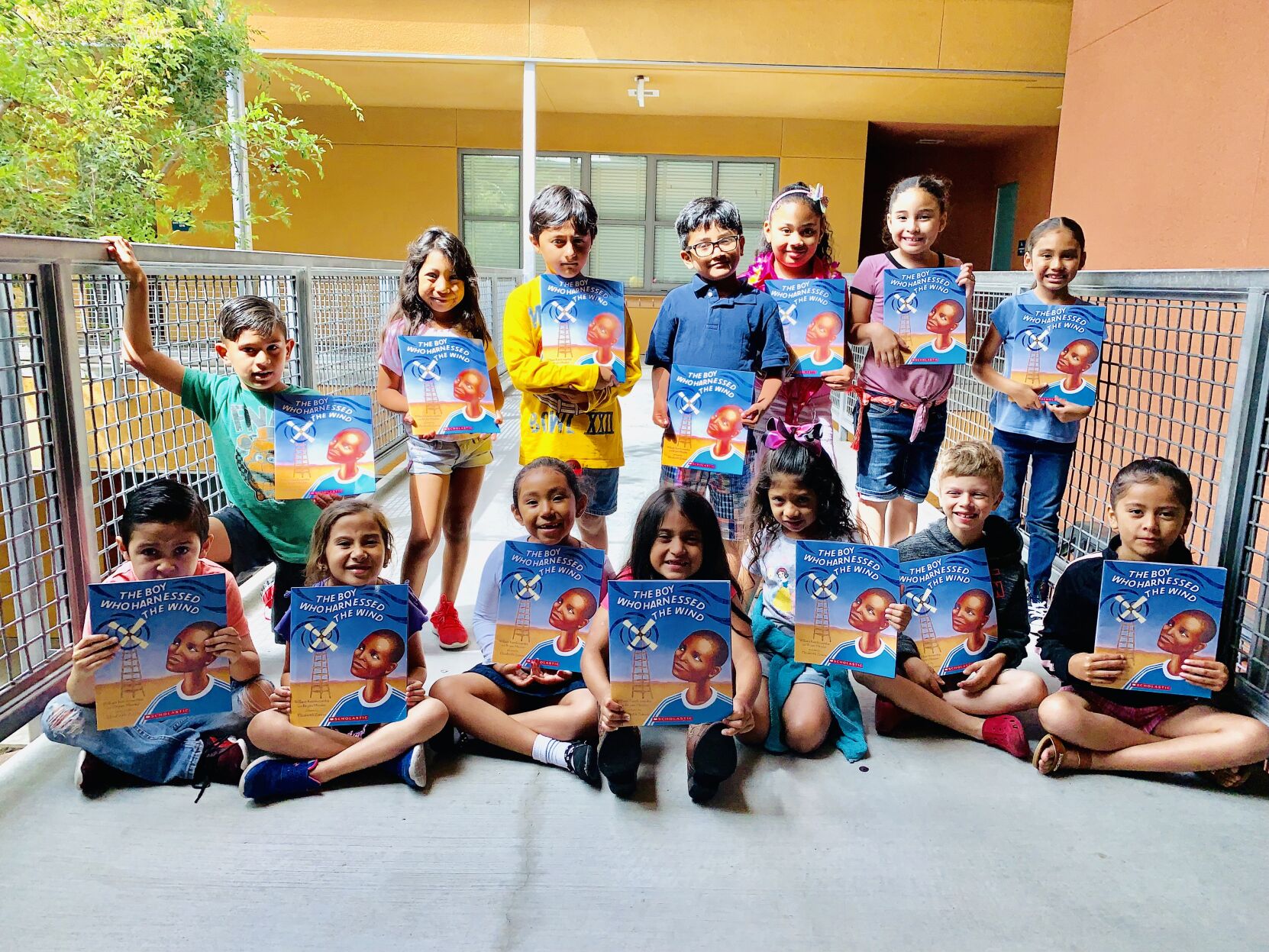
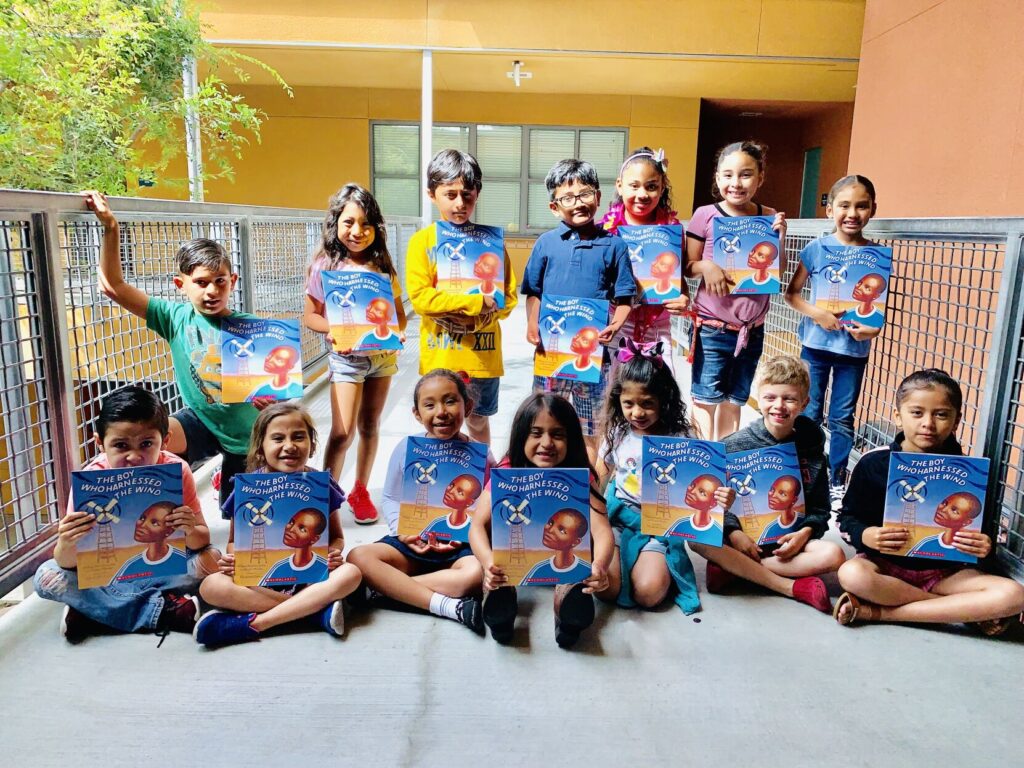
Elementary-age students in San Diego’s Lincoln cluster—a southeastern San Diego neighborhood where children feed into Lincoln High School—are historically behind in reading skills. Gina Gianzero says prospective board members were often shocked when they heard the statistics.

“They kept saying, ‘Are you kidding?'” says Gianzero, executive director of literacy nonprofit Diamond Educational Excellence Partnership (DEEP). “Less than 30 percent of kids finished third-grade reading proficiency in this part of the city. ‘How can that be right?’ They really had no idea.” She notes that third-grade reading proficiency is closer to 70 percent in some affluent San Diego neighborhoods.

DEEP is housed within the Jacobs Center for Neighborhood Innovation on Euclid Avenue in southeastern San Diego. DEEP is a community-based collaborative of partner organizations focused on improving educational outcomes for public school students in the Diamond neighborhood. So far, participating San Diego Unified School District campuses include Johnson, Chollas-Mead, Encanto and Webster elementary schools.

“Our acronym is really appropriate because we are an inch wide and a mile deep,” Gianzero says. “We are making ages 0 to 8 our focus in the hopes of providing the kinds of opportunities and investments that are going to get kids over that first critical educational milestone, and that is reading by the end of third grade. There’s a fair amount of research linked to why that is important.”
BYR

BYR

A 501(c)(3) since 2017, DEEP works to have students enter kindergarten prepared for success and reading proficiently by the end of the third grade. Standardized test reading scores show that third-grade students in DEEP-partner schools score higher than their peers in surrounding schools that don’t yet have DEEP programs. DEEP director of operations and outreach Rhianna Basore says educators and students alike tell her how enriching the program has been.

“They want to tell me how engaged their students are, how much they love the program, how they want to do it again next year, how they want to do it in the summer, how good it makes them feel,” Basore says. “At an interpersonal data level, it’s undeniable.”

With literacy instruction facilitated by UC San Diego’s California Reading and Literature Project, DEEP offers resources to teachers, students and caregivers. Early literacy intervention can improve the trajectory of these students’ lives. Better reading skills can lead to higher level classes in middle and high schools, more scholarship and college opportunities, and ultimately, greater career paths.

“The research around third-grade reading really shows that third grade is a critical turning point in kids’ education,” Gianzero says. “It’s that transition between learning to read and reading to learn. And if you haven’t learned to read effectively enough, it’s going to be difficult for you to learn to grasp science and social studies and other concepts that are being taught with increasing intensity in upper grades.”

DEEP Programs

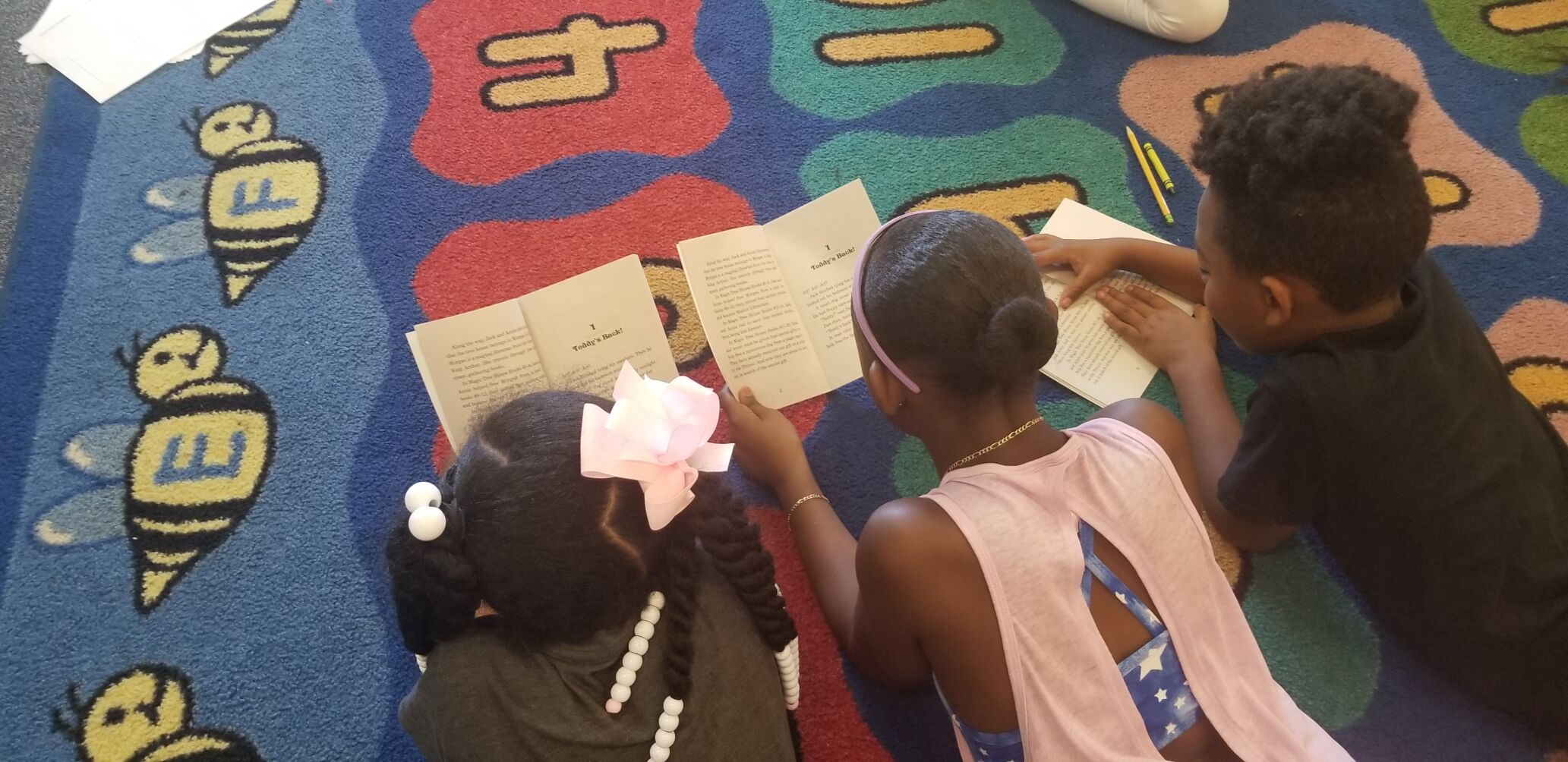
DEEP programs include Super Readers, which offers after-school literacy instruction for second-and third-grade students at partner schools; and Super Tuesdays, which uses partner schools’ half-days to give literacy instruction along with hands-on activities in science, technology, engineering, art and math, known collectively as STEAM. The programs are taught by certified teachers.

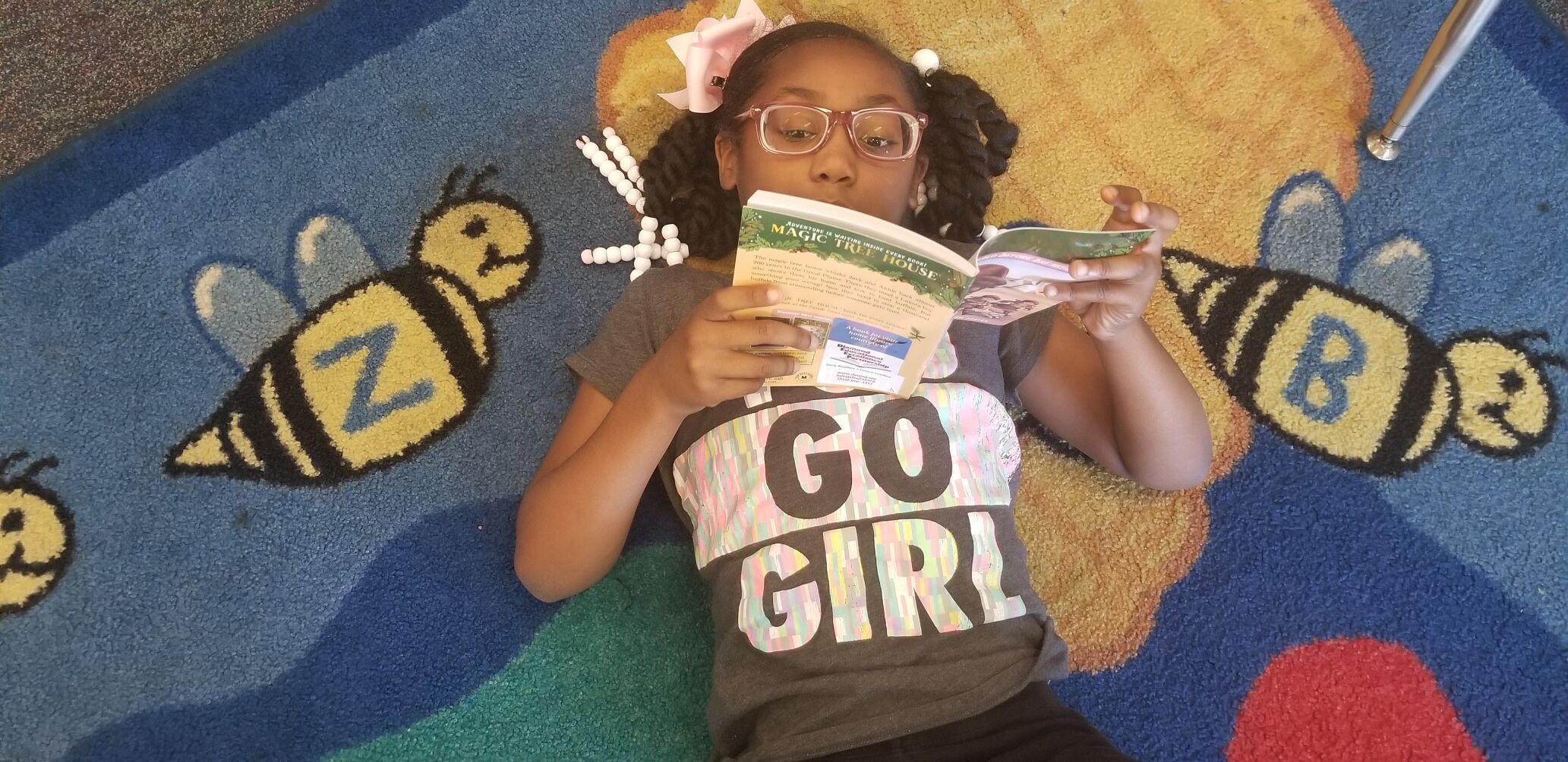
Students can participate in the “Summer Readers – Future Leaders” program during the summer break from school. The five-week summer session for students entering first through third grades at DEEP-partner schools offers literacy instruction in the morning and STEAM activities in the afternoon.

“Reading goes from being something you do at school to a tool that feeds your growing mind, your curiosity,” Basore says. “We have this lovely summer program that really calms the knowledge loss that happens in summer. We provide free on-site morning literacy, then afternoon enrichment support to give them that summer school experience. It allows them to be kids and have fun while engaging the different parts of their brain.”
BYR

BYR

DEEP even aims to get neighborhood kids excited about reading before they start school. DEEP encourages neighboring families with children ages 0 to 5 to participate in the San Diego Public Library’s 1,000 Books Before Kindergarten program. “That’s all to really prep the soil of these young minds so that once they reach school, they’re engaged with the learning process and can receive the literacy instruction,” Basore says.

With a staff of just five people, DEEP relies on contract educators, numerous partner organizations, donors and volunteers to fulfill its mission. DEEP’s major benefactors include the San Diego Foundation, the Boys & Girls Foundation, Qualcomm Inc. and SDG&E. Recent community partners have included the New Children’s Museum, Mundo Gardens, the Fleet Science Center and the San Diego Council on Literacy.

“There are so many levels to invest in this work, and we are open to all of them,” says Basore. “You can invest in this work because you believe on a moral level that every child has a right to a strong education and the opportunity to learn to read. But you can also invest because economically, civically and socially it’s in everyone’s best interest for these children to have a greater opportunity to reach their potential and become productive citizens.”

Subscribe to our newsletters

Select Options

By subscribing you confirm that you agree with our Terms and Conditions and Privacy Policy.

Charitable SD MAY 27, 2026

The Princess Project Dresses Local Prom-Goers for Success

The 24-year-old nonprofit helps teens celebrate the milestone while promoting fashion sustainability

The Princess Project Dresses Local Prom-Goers for Success
Courtesy of the Princess Project

Prom is a rite of passage for high schoolers, but a flashy new dress can cost hundreds of dollars. The Princess Project helps girls cut costs while promoting fashion sustainability. The nonprofit collects new and gently used formal dresses and accessories throughout the year, then when prom season rolls around, launches pop-up boutiques where girls can shop for their dream dress at no cost. The only criteria is they have to be a high school student who’s going to prom. 

The Princess Project started in San Francisco in 2002 with a small dress drive. The movement grew exponentially over the years, and expanded to San Diego in 2008. Today, it’s headquartered at Parkway Plaza in El Cajon and has chapters in San Francisco, Silicon Valley, and Sonoma. 

San Diego nonprofit thrift store Sharia's Closet in College Area featuring founder Shamine Linton

“We really want to celebrate teens, make them feel good about themselves, and save them some money because it costs a lot to go to prom. This is one way that we can help alleviate the cost,” says Karen Martin-Spellerberg, corporate board chairman and head of the San Diego chapter. “There’s no financial requirement to come get a dress with us because we are all about everybody being equal and having the same opportunity.” 

The experience is more than just picking out a dress, says Martin-Spellerberg. The Princess Project works to create a bubble of inclusiveness and confidence, where all shapes and sizes are celebrated, and all comments are positive.

Courtesy of the Princess Project

In the months leading up to prom season, teens can book an hour-long appointment at the Parkway Plaza location to try on dresses and accessories, which they get to keep. Volunteers act as personal shoppers, curating an experience unique to each kid. This year, the Princess Projects also brought dresses to eight library branches throughout San Diego County to reach girls who couldn’t make it to the main event. 

Because the Princess Project relies on donations, they often do not receive enough dresses in “fringe sizes” (00-2 and 14 and up), so they hold fundraising events to purchase new dresses in those specific sizes to maintain an inclusive range. Its signature $5 Dress Sale Fundraiser event will take place on May 30-31 at Parkway Plaza, where non-prom dresses (cocktail, casual, business) donated throughout the year are sold for a minimum $5 donation per dress. All proceeds from this fundraiser are used to purchase the understocked sizes. 

“We’ve got dress drop off sites throughout San Diego County and people sometimes will donate dresses that are non-prom—sometimes they’re cocktail, casual, summer, business. So, what happens is when we are done with the season, we flip our dress store and we put out all of the non-prom dresses,” says Martin-Spellerberg. “People can come shop and get as many dresses as they want and 100 percent of the proceeds go toward us purchasing dresses in the sizes we don’t have enough of.” 

The Princess Project also relies heavily on volunteers, including teen ambassadors, the latter who meet monthly, help organize the store, work outreach tables, and host a fashion show to help spread the word to their fellow students that the dresses are premium-quality and “ready to wear, beautiful and amazing.” 

“It’s all about kindness and making kids feel good about themselves,” says Martin-Spellerberg.

Sarah Sapeda

About Sarah Sapeda

Sarah Sapeda is San Diego Magazine’s Custom Content Editor. In her 15 years in San Diego journalism, she has covered charitable events, health care, education, crime, current events, and more.

Charitable SD MAY 26, 2026

Fighting Food Insecurity with the Jacobs & Cushman San Diego Food Bank

The nonprofit has distributed more than 50 million pounds of food in the last year

Fighting Food Insecurity with the Jacobs & Cushman San Diego Food Bank
Courtesy of San Diego Food Bank

The Jacobs & Cushman San Diego Food Bank is the largest hunger-relief organization in San Diego County, serving roughly 400,000 people per month. The nonprofit has a range of programs that help vulnerable San Diegans, including its grocery store–style food pantry and an initiative to provide weekend meals to local students who are at risk for hunger.

The food bank also partners with more than 450 other organizations to expand access to nutritious food. A big part of that effort relies on volunteers. The food bank counts more than 15,000 volunteers among its ranks who sort, pack, and help distribute the millions of pounds that move through its donation centers. Here, volunteer Carol Hunt shares why the Jacobs & Cushman San Diego Food Bank keeps her coming back. 

What made you want to get involved with the San Diego Food Bank?

I got involved right after things started opening back up after Covid. I stopped working, and I was just looking for something to fill my days and to give back to the community. I heard about food insecurity and the food bank, and thought, “Let me go check it out and see if I like it.” I was hooked from the first time. 

What do your volunteer duties entail? 

I have been really involved with the Food 4 Kids Backpack Program where we pack individual meals that go home with children in their backpacks on Fridays that give them meals that they can prepare themselves for Saturday and Sunday—breakfast and lunch to bridge the gap. There’s an assembly line, and what I do mainly is I keep the assembly line stocked.

So, we might have eight people running the line. Each person is putting a different thing into a bag, and then we’re putting those bags into boxes and onto pallets that will go to individual schools.

We’re packing for individual schools, and also individual students. Everybody gets the exact same thing that’s planned and purchased through the meal program for the kids. I mainly do that during the school year, and then when that’s not running, then I also work in the pantry. People can come and individually shop, or we prepare to-go bags for people, and sort foods and fruits and vegetables and those kinds of things. 

What do you like best about volunteering? 

I love that it’s super busy and we work really hard, and then at the end we’re given a total of how many bags we packed. On one of our busiest days we did, like, 1,200 bags. That means we’ve literally affected 1,200 kids in three hours. It’s so satisfying. I worked in healthcare for 30 years, so I really missed being with people. And here you just meet people from all different walks of life. You’ve got a unique mix of people that you wouldn’t necessarily come in contact with—which, you know, that’s what makes the world go around. 

What’s the biggest challenge you face?

It’s sad to see how many people have food insecurity. And when we’re sorting food, the food waste—things that have gotten spoiled before you’re able to get them packaged and out to people.

Can you describe your favorite or most memorable experience while volunteering?

I don’t know that I have a singular event, but there are some days I leave thinking that it was just so great. You’ve met somebody that you just really jive with or with some groups of people, the flow is just so great and the energy’s really fun. 

Any advice you would give someone who’s considering volunteering?

I feel like more people should volunteer because you benefit so much when you do something that affects other people. It’s almost selfish to do this—you receive so much out of it. When you’re in a room of other volunteers and you’re able to pack 1,200 meals for someone—you wouldn’t be able to do that if you had to pay somebody. It’s just really inspiring, and it’s very enjoyable. Even if you can do it once a year, or if you can do it twice a week, I would really encourage people to get out there and try it and find the thing that they enjoy. Come and meet some new people and do some good work.

*Responses edited for length and clarity. 

Sarah Sapeda

About Sarah Sapeda

Sarah Sapeda is San Diego Magazine’s Custom Content Editor. In her 15 years in San Diego journalism, she has covered charitable events, health care, education, crime, current events, and more.

Charitable SD MAY 26, 2026

5 Charitable Events to Attend this June

Here’s where to celebrate, connect, give back, and make a difference this month

5 Charitable Events to Attend this June
Courtesy of GenerateHope

June 4: St. Germaine Children’s Charity Star Bright Awards Dinner

St. Germaine Children’s Charity will host its annual grant awards dinner at the Museum of Contemporary Art San Diego. The grant funds that will be donated to local agencies that work to end child abuse were raised at various St. Germaine Children’s Charity fundraisers and events throughout the year. 

June 6: Senior Prom: Forever Young

Help San Diego seniors age gracefully at Senior Prom: Forever Young, a fundraiser for Meals on Wheels San Diego County. The retro school dance-themed gala at the Kona Kai San Diego Resort will help the nonprofit continue to deliver daily nutritious meals and friendly visits to local seniors.

June 12-14: Walk Against Human Trafficking

San Diego nonprofit GenerateHope and international charity Freedom Challenge will host a 45-mile, three-day walk from Oceanside to Coronado to help combat human trafficking. Funds raised will go toward Freedom Challenge’s work around the world and GenerateHope’s local programs that serve survivors of sex trafficking. 

June 13: Wildcoast’s Baja Bash 

Roughly 300 guests will gather at a private residence in Solana Beach for bites prepared by San Diego’s top sustainable chefs, along with fine wine, craft beer, and small batch mezcal and tequila to support coastal conservation in the U.S. and Mexico. Funds raised at Wildcoast’s Baja Bash will help expand its programs in 2026 and beyond.

June 20: CYAC Battle of the Badges

Local law enforcement, first responders, and military personnel will face off in a boxing match aboard the USS Midway Museum to raise money for the Community Youth Athletic Center. Now in its 21st year, the Battle of the Badges supports CYAC’s boxing programs for underprivileged youth.

Sarah Sapeda

About Sarah Sapeda

Sarah Sapeda is San Diego Magazine’s Custom Content Editor. In her 15 years in San Diego journalism, she has covered charitable events, health care, education, crime, current events, and more.

Studio S JUNE 15, 2026

A Modern Take on Steak

Stake Chophouse & Bar brings contemporary classics and old-school service to the heart of Coronado

A Modern Take on Steak
Courtesy of Stake Chophouse

Stake Chophouse & Bar isn’t your average steakhouse. Blue Bridge Hospitality’s Coronado outpost is a modern interpretation of a big-city steakhouse nestled in the heart of the small coastal community. The team at Stake has reimagined the whole steakhouse experience. By prioritizing a seasonal farm-to-table sourcing philosophy, a personalized guest experience, and unique service touches, like a formal steak presentation and a bespoke knife selection process, Stake distinguishes itself in a sea of steakhouses.

Exceptional steaks, including Wagyu from Japan, Australia, and the U.S., and fresh seafood flown in daily form the core of Stake’s culinary identity. The menu features a five-course omakase-style steak experience highlighting house favorites, plus an array of cuts, and classic steakhouse staples—think a wedge salad, baked potato, or pasta carbonara—refined for a contemporary palate without losing their traditional appeal. Stake focuses on seasonal sourcing from the region’s best family farms and specialty purveyors, and incorporates intentionally unexpected touches to create something truly unique.

“I challenge our chefs and myself to take it a step further in sourcing,” says Chef Ronnie Schwandt. “It’s important to us to highlight different farms, unique one-off farms—whether it’s cattle, strawberries, a local fisherman or from anywhere in the United States, we’re always trying to find that niche.”

Beyond the menu, Stake emphasizes outstanding service, says Vinny Spatafore, Director of Hospitality Operations. Staff maintains detailed notes, allowing them to remember guests by name, recall previous orders such as a favorite martini (also memorable for the customer since it’s served in an extra tall, distinctly-shaped glass), and celebrate special occasions like birthdays and anniversaries.

“When you have those points of topic that you remember about a guest, they appreciate that,” he says. “Our servers are really good with that—we have a couple servers who have been here since the beginning and they’ll remember somebody from years ago, their name, their kids’ names, where they live. I’m really thankful to have a great front of house staff.”

Award-winning wines, rare whiskeys, special events, and a complementary black car service that provides transportation for guests throughout Coronado add to Stake’s appeal.

Schwandt stresses that Stake offers more than a meal; they aim to give patrons something unforgettable.

“It starts when you walk up the stairs and are greeted by the hostess—that sets the tone for the night. Then you’re greeted by a server, who may know you by name, and can guide you through the menu and curate as they get to know you,” says Schwandt. “Most people leave kind of blown away; they leave feeling like they just had an experience. That’s the goal, right? Whether you’re serving smash burgers or high-end steak, you want somebody to leave thinking, Wow, that was awesome.”

Partner Content
Charitable SD MAY 26, 2026

Photos: San Diego Opera 2026 Opera Ball for All

The event raised $700,000 in support of the company’s mission to bring meaningful arts experiences to the San Diego community

Photos: San Diego Opera 2026 Opera Ball for All
Photos courtesy of The San Diego Opera

More than 200 opera aficionados attended the San Diego Opera’s 2026 Opera Ball for All May 2 at the Estancia La Jolla Hotel & Spa. The theme of the evening, Noche Sevillana, ¡Olé!, was an ode to two of this season’s operas: The Barber of Seville and Carmen. The event, which featured performances by Stephanie Doche and brothers Felipe and Xavier Prado, raised $700,000 in support of the company’s mission to bring meaningful arts experiences to the San Diego community.

See photos below.

Sarah Sapeda

About Sarah Sapeda

Sarah Sapeda is San Diego Magazine’s Custom Content Editor. In her 15 years in San Diego journalism, she has covered charitable events, health care, education, crime, current events, and more.

Charitable SD APRIL 23, 2026

Helping Former Foster Youth Find Success with Walden Family Services

The 50-year-old nonprofit provides transitional housing and financial literacy services to youth leaving the system

Helping Former Foster Youth Find Success with Walden Family Services
Courtesy of Walden Family Services

For young adults transitioning out of foster care, housing instability is often among the greatest challenges they face. This, along with underemployment or unemployment and a sudden lack of support and resources, significantly increases the likelihood that they will ultimately slip through the cracks. 

Walden Family Services, a 50-year-old nonprofit that helps find stable, supportive home environments for local youth in foster care, is addressing the problem head-on through transitional housing programs that integrate financial literacy, case management, and life-skills development to help young adults learn how to live independently

“It was pretty much a foster care to homelessness pipeline—or prison,” says Teresa Stivers, Walden Family Services CEO. In response, Walden Family Services launched an initiative called Independent Futures to help clients between 18 and 21 acclimate to their newfound independence. There’s also an extended care program for those ages 22 to 24. 

Clients are provided furnished housing, food, and job training, and learn basic life skills, like how to cook and grocery shop, save money, pay bills, and budget. They pay rent that’s deposited into a savings account and matched by Walden Family Services. Clients are also required to work, attend school, or do a combination of both for 40 hours a week. 

Courtesy of Walden Family Services

Roughly 90 percent of existing clients live in safe, sustainable housing, 83 percent maintain stable employment, and 83 percent leave the program with significant savings.   

“There’s a reason why every young person in this country can be on their parents’ health benefits until 26. Research shows that’s about how long it takes for someone to fully take off—and that’s for somebody who grew up with their parents and maybe went to college,” says Stivers. “As you can imagine, it’s more difficult for someone who went from family to family, school to school, exiting at 18 without a diploma.” 

San Diego nonprofit Home Start which has volunteers providing services to victims of domestic violence and family trauma

The program’s success stories exemplify its impact, Stivers says. Clients have gone on to become entrepreneurs, advocates, scholars, and loving parents who break the cycle of child abuse and neglect. Many also want to give back and help other kids in the foster care system. Walden Family Services is working to develop an alumni program and build a mentoring component into its transitional program. 

“We’ve done all kinds of peer mentoring, peer therapy, and have a lot of staff members who grew up in our program or have lived experience, and it’s been really impactful. So now we want to formalize that program for our alumni and give our graduates an opportunity to help other folks,” Stivers says. 

Courtesy of Walden Family Services

Walden is also looking ahead, focusing on expanding housing partnerships, strengthening prevention efforts, and increasing community involvement to meet growing demand. However, rising housing costs and funding constraints are taking their toll on nonprofits like Walden Family Services. 

“It’s challenging for all of us,” Stivers says. “We are all still trying to provide the best care that we can with the limited dollars.”  

Those considering ways to help can make a monetary donation to the organization or attend a fundraising event like the Walden Family Services’ “There’s No Place Like Home” gala on April 30 at The Thursday Club. The organization is currently looking for volunteers to host activities or training sessions for clients, help out in the office, serve on the board, or participate in holiday drives. If you’re a local property owner, they’re also looking for partnerships with those willing to rent reasonably priced apartments to their clients. 

“There are so many things that people can do to make an investment in their community,” Stivers says. “Many people don’t realize that there are children in their own backyard who are going hungry, who are sad and scared and lonely, and that they can make a difference. We hope that people will do that so we can all benefit.”  

Sarah Sapeda

About Sarah Sapeda

Sarah Sapeda is San Diego Magazine’s Custom Content Editor. In her 15 years in San Diego journalism, she has covered charitable events, health care, education, crime, current events, and more.

Partner Content JUNE 10, 2026

New Options for GLP-1 Users

Scripps study shows that some patients may be able to taper their dose and maintain results

New Options for GLP-1 Users
Courtesy of Scripps Health

While glucagon-like peptide-1 (GLP-1) receptor agents have been used to treat Type 2 diabetes for more than 20 years, their recent emergence as weight-loss wonder drugs marked a new frontier in medicine. But their effectiveness has left some patients wondering what to do once they’ve reached their goal. Stopping the medication could mean regaining some, if not all, of the weight. A Scripps Clinic internal medicine physician recently conducted a small study of whether GLP-1 patients who had reached their goal weight could maintain that weight by taking their regularly prescribed injection every other week instead of weekly. Spoiler alert: 30 of 34 patients did. Read more about the study here and what that may mean as pharmaceutical companies roll out oral GLP-1s.

For more nutrition, wellness, and healthy living tips, sign up for the San Diego Health newsletter here.

Partner Content

Make an Impact in San Diego.

Once a month, get an inside look at the people, causes, and events behind the good in our city and how to be part of it.

Close the CTA

Contact Us

1230 Columbia Street, Suite 800,

San Diego, CA