Hold up. Our friends at the Scripps Research Institute are up to something. Latest is they have submitted plans to the City of San Diego and California Coastal Commission. Plans? Expansion? The proposed facilities will include two two-story state-of-the-art laboratory buildings, an updated nuclear magnetic resonance (NMR) facility, a four level parking structure and a pool with a Jacuzzi hot tub complete with bar service. Okay, maybe not the pool and Jacuzzi… The goal of these new labs is to consolidate the campus to create a better environment for collaboration and synergy. Nothin’ but love up here on the Mesa. These new LEED buildings will go up on the corner of Jay Hopkins Drive and Genesee, next to TSRI’s electron microscopy suite, graduate offices and that spaceship looking building with the incredibly beautifully renovated auditorium. I heard the plaza was used in that J. Lo film The Cell. Sweet. After all the talks last year regarding financial and political turmoil, I’m thrilled that TSRI is here to stay!
Upcoming events on the Mesa (I’ll be at the fun table…)
Athenaeum Gala: Havana Ball Music, dancing, and a “parade of party goers on Wall Street and Girard?” Costumes? Who doesn’t love costumes? Now we’re talkin’, La Jolla. This year’s 26th annual Athenaeum gala, “Havana Ball,” is on beat, yo! The evening will include cocktails, live music, a delectable Cuban dinner and dancing to the rumba and salsa beats. There will also be a silent auction and items are already up for bid in the library. Proceeds from the gala support this local treasure. Wonder if the gala will be anything like that Havana themed cast party I threw after Alameda Civic Light Opera’s run of Guys and Dolls? Ha! Gonna dust off that old Latin ballroom competition dress. Anyone need a dance partner? Pick me pick me! Sep 11, 6:30-11:30 p.m.
Bella Vista Social Club & Caffé: Patrick Ingram Come meet our international man of mystery and International Agile Consultant Patrick Ingram. Based in Europe, Patrick also shares his time and expertise with companies in the USA and Africa. Mr. Ingram is Founder of Agilejet.com. He is a consultant to many well-known organizations such as Barclays Bank and Société Générale and has advised a sitting President and ex-President of two African nations. Been sworn to secrecy so can’t reveal which, but do know Patrick loves a great glass of vino blanco 😉 When he’s not droppin’ some knowledge to presidentes, Patrick consults with other sectors including telecom, biometric technology, solar energy, aviation and oil and gas. Tuesday evening he will speak to the who, what and how of enterprise agility. Get ready for a fun and interactive session where you will be out of your seats and quickly learning first hand why Agile works and what it means for your personal career, your organization, shareholders, and more. Sep 15, 5:30-7:30 p.m.
Center for Wealth & Legacy Inspiration Awards Fireside chat with our beloved T. Denny Sanford. Need I say more? Leadership, Legacy & Inspiration Awards by the Center for Wealth & Legacy are going down at the Sanford Consortium next week. CEO Bill Earley of the American Red Cross and Dr. Alicia Gwynn will be presenting awards for top nominees, honorees, and the recipient of the “Lasting Legacy Award.” Want to get up close and personal with the speakers and presenters? Register for the “Batter Up” VIP Experience. Sanford Consortium, Sep 16, 4:30-5:30 p.m. VIP, 5-8:30 p.m.
Come sit by me…
You always know you’re going to hear fantastic insider stories when you see Steve Chapple whizzing in on his bike at Bella Vista. Complete with suit, no tie and blue suede shoes, he is one swanky fella. Steve, a native La Jollan, is one of my favorite usual suspects and our paths just keep crossing about town. Steve runs Intellectual Capital, an independent national column on game changing people and ideas. He brings to the table success stories and how these people made it, while others flailed. You can read his column in the SD Union Tribune and find his videos on his website. I love his “About town” videos that feature quick Q&As with movers and shakers at local events. Short, sweet, to the point… and hip. He also moonlights as a visiting scholar at Scripps Institute of Oceanography where he is completing a book with co-author and marine ecologist Dr. Jeremy Jackson.
Steve is leading the pack in the STEAM Leadership lecture series. Intellectual Capital, in conjunction with San Diego Unified, KidsEco Club, and ESA will host an event September 23rd with Reef co-founder and surfing business icon Fernando Aguerre. Joining him will be John Gartman, Microsoft’s former head attorney and the founder of the Invention Foundation.
Last week when he popped into the café, he shared with me his latest exploits. Steve was invited on a tour of high tech companies of Carlsbad including Genoptix, Thermo Fischer Scientific, Skilz, the new desal plant, Rick Rubio’s test kitchen, 5D Robotics, Aerial Mob Drones, and not least the new GoPro headquarters. He even got to go for a helicopter ride. Jealous! An adult Disneyland for any tech nerd.
Did I mention he is also a screenplay writer? Let’s be honest, this man is fascinating. Looked into his earlier books and came across Kayaking the Full Moon (Harper Collins) and a book titled Burning Desire: Sex in America: A Report from the Field (co-author David Talbot). Now we’re talkin’. Actually this book is about the sexual revolution of the ‘70s that came to a screaming halt in the ‘80s with the AIDS crisis. But man have I got a thousand more questions for him to answer in addition to my usual preguntas regarding tech transfer. So if you spot a fly guy with blue suede shoes strutting off a helicopter, be sure to stop and chat him up. He is definitely our local Renaissance man.
Always,
Amanda
That’s What SHE Said: Chatting up a Local Renaissance Man
Steve Chapple | Photo by Blair Alley
Archive
OCTOBER 23, 2023
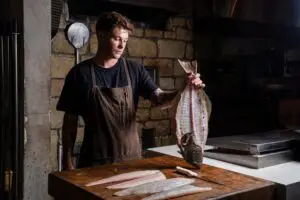
The Problem With Bright Red Tuna
Many Americans still think bright red tuna means it's fresher (it's not)
You know the tuna I’m talking about. It’s easy to mistake for a cube of watermelon. It’s the color of a Lyft logo. Appears to be glowing a vibrant, tantalizing purity. Tuna that bright red or pink means it’s… what, extremely fresh? Bursting with nutrients?
I thought this was widely known, but a chef recently told me very few of his staff members were aware of this, and almost none of his customers. So, especially with the recent proliferation of poke joints, I thought I’d be helpful with this PSA of sorts.
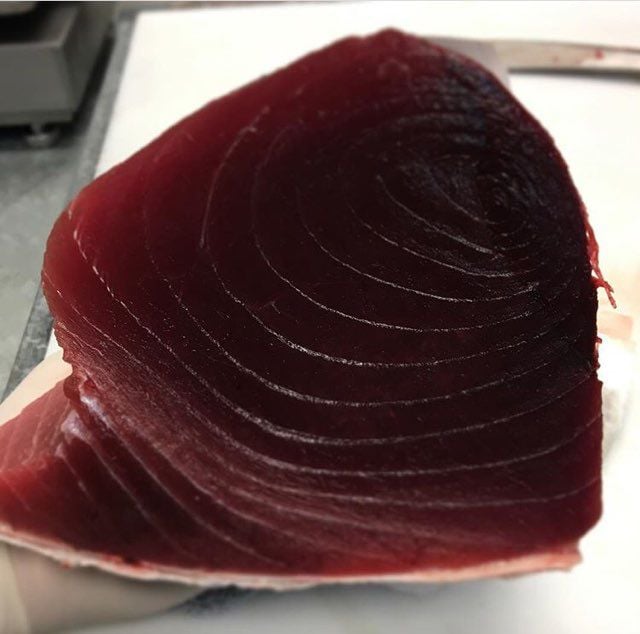
Bright red or pink tuna means it has been gassed. In its natural state, fresh tuna is dark red, almost maroon, sometimes even chocolatey-looking.
But here’s why I personally tend to back away when I see bright red or pink tuna:
1. IT’S MUCH HARDER TO TELL IF IT’S FRESH OR NOT.
It can be left out for days and it will not turn brown. In one study, the University of Florida found that carbon monoxided tuna kept its bright red color for 11 days in the fridge. “The carbon monoxide actually hides the quality of a fish,” says Tommy Gomes, fifth-generation San Diego fisherman, host of The Fishmonger on Outdoor Channel, and owner of seafood shop Tunaville in Point Loma. “It’ll make a poor-quality fish pretty like a rose. I’ve seen them take an old piece of brown tuna [and] put the gas on it, and it comes out looking like cherry lemonade.” The gas also masks the smell of old tuna (which is one way you can tell if tuna’s getting past its eat-by stage). “Since there’s no smell, it falsifies the freshness,” Gomes explains.
2. I TRUST GOVERNMENT HEALTH ORGANIZATIONS, BUT ALSO RECOGNIZE THEY’RE NOT PERFECT.
The 1992 USDA food pyramid suggested carbs should be the bulk of our diet (they corrected that in 2005 and 2011). The government approved the fat substitute Olestra, which gave people all sorts of tummy issues. Margarine and other trans fats were also approved, then banned in May 2019. There are some smart humans in the government, but even geniuses make mistakes. So I tend to go with my gut: tuna in its natural state, or tuna treated with carbon monoxide? Easy choice.
So why gas tuna at all? Because of us. Consumers don’t like brownish fish. Tuna oxidizes quickly. It’s difficult for tuna fishermen and women to get it to market quick enough before it turns that brownish or chocolatey color. Customers erroneously think all brownish-looking fish is old or bad and will pay more for “fresher-looking” fish. So in the 1990s, the FDA allowed companies to gas the tuna and keep it artificially bright red for long stretches at a time.
“There’s nothing wrong with a hot chocolate–looking tuna loin,” says Gomes. “But, here in America, we want [it] seared on the outside, rosy pink on the inside.”
What fresh tuna should look like
Gassed tuna is also often imported and less inexpensive than fresh, un-gassed tuna, says Gomes. “So, to be fair and honest,” Gomes acknowledges, “for families on a budget, gassed tuna is one of the best alternatives out there for frozen seafood.”
In theNew York Times article cited above, a sushi restaurant owner reported his sales of tuna tripled when he started using gassed tuna. So that’s obviously good for the small business owner, as well as grocery stores. Food waste is a massive epidemic—the US throws out about half of edible seafood. If gassed tuna gets Americans to eat perfectly edible tuna they otherwise might throw out, that’s a step in a good direction.
But it’d be better if we as consumers knew that fresh, non-gassed tuna is supposed to be dark red or maroon—not bright red or watermelon pink, like a majority of the tuna I’ve seen at local poke shops. Ideally, we would look at a piece of bright red/pink tuna and think “Oh, hey there, carbon monoxide.”
The most important things about buying tuna is to trust the source (whether grocery store, fishmonger, or sushi joint). It also should be shiny and somewhat translucent, and not have slime or an off-smell.
Troy Johnson is the magazine’s award-winning food writer and humorist, and a long-standing expert on Food Network. His work has been featured on NatGeo, Travel Channel, NPR, and in Food Matters, a textbook of the best American food writing.
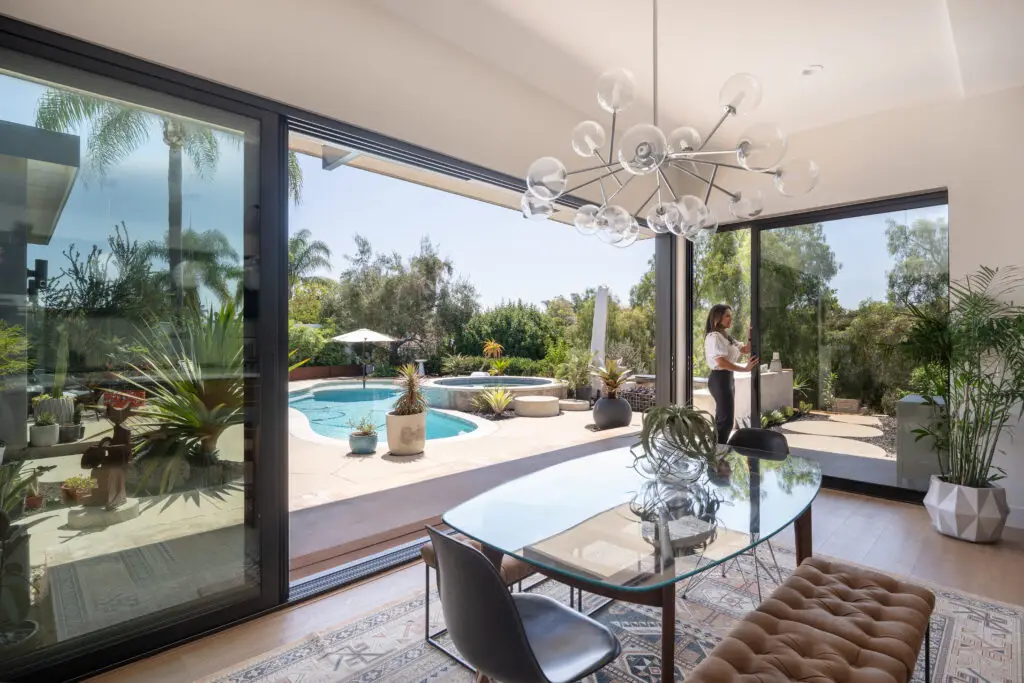
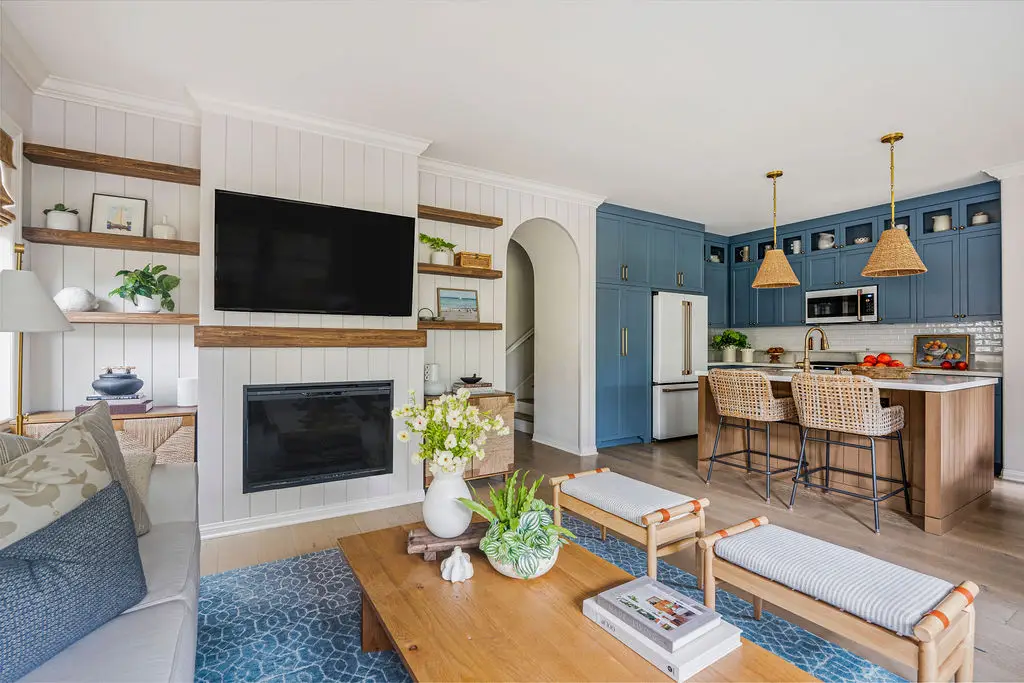
A perfectly designed home rarely happens by accident. Those kitchens that feel effortless and rooms that seem to tell a story the second you walk in? They’re usually the work of someone who knows exactly what they’re doing.
It’s knowing which ideas will actually work, which materials will hold up over time, and how to turn a collection of choices into a space that feels intentional. That’s where a professional interior designer comes in.
For the American Society of Interior Designers (ASID) California San Diego Chapter, the goal is to help people see interior design as more than just the finished look. Behind every well-designed space is a process built on technical expertise. Designers are educated in everything from professional software and construction details to building codes, space planning, materials, and functionality.
Courtesy of ASID
“People don’t always realize how much goes on behind the scenes,” Kirsten Recce , current president of the ASID California San Diego Chapter, says. “Our designers are not just doing furniture placement and color selection and picking out new fluffy pillows. That’s not what they’re trained for.”
ASID members bring formal education, continued learning, and industry knowledge to their projects, helping create spaces that are not only beautiful, but designed to work. A paint color that changes completely depending on the lighting. A material that looks beautiful in a showroom but doesn’t make sense for everyday life. A layout that photographs well but doesn’t function for the people living there. These are the details where professional guidance can make all the difference.
Still, one of the biggest misconceptions about hiring an interior designer is that it’s reserved for massive renovations, luxury homes, or people who already know exactly what they want. The process can feel intimidating. Where do you begin? Is a designer worth the investment? What if you only need help with one room?
ASID’s answer: start with one hour.
ASID’s Spruce Up events break down one of the biggest barriers between homeowners and professional design: knowing where to begin. Held twice a year, the community program gives homeowners the chance to work directly with an ASID designer through a one-hour, $125 consultation in their own home. Whether you’re looking for advice on furniture placement, window treatments, kitchen and bath updates, remodeling ideas, vacation rentals, color selections or something else entirely, the upcoming September 2026 event offers an approachable way to get expert guidance before committing to a full project. Signups are open through Sept. 7, with consultations taking place Sept. 21 through Oct. 31. Proceeds benefit ASID San Diego’s educational and community programs. Register here!
Courtesy of ASID
“It’s a great opportunity for people who are in that exploratory phase,” Recce says. “Maybe they’re not sure they want to hire an interior designer yet, or they think it sounds daunting or expensive. This gives them a chance to discover what working with a designer is actually like.”
Design is personal. A good designer isn’t just creating a beautiful room; they’re helping create a space that fits the way someone lives.
“We’re a resource to all of San Diego County,” Recce says. “It doesn’t cost anything to pick up the phone and call and ask. We’ll answer.”
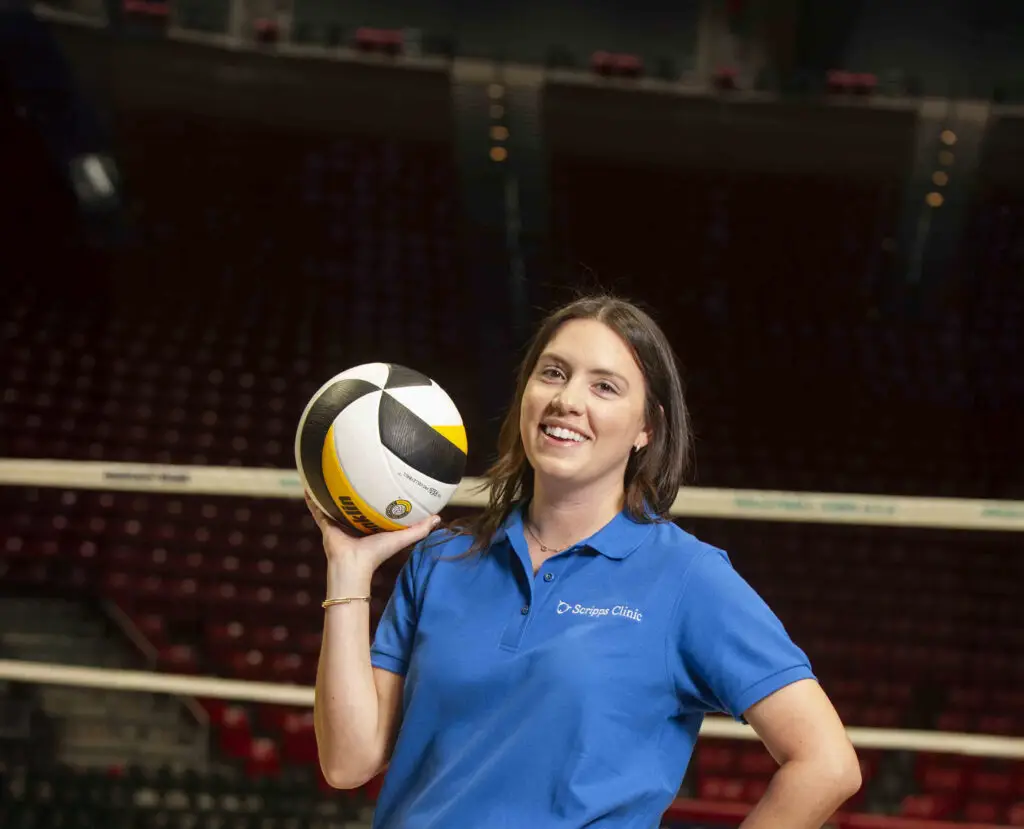
Growing up, Laika Nur, MD, Scripps Clinic sports medicine specialist, loved watching beach volleyball when the Association of Volleyball Professionals tour came to her hometown of Chicago. A talented volleyball player herself, she remembers sitting in the stands all day, and once, even got a couple autographs. Years later, Dr. Nur was attending a professional event focused on women’s sports, and the discussion turned to a new professional women’s volleyball league. The general manager and coaching staff for San Diego’s team, the Mojo, happened to be in attendance, and Dr. Nur took the opportunity to ask them if they needed a team doctor. Flash forward to the Mojo’s inaugural 2024 season, when Dr. Nur officially became the team physician. Click here to read more about Dr. Nur and how she incorporates lessons she learned on the court into her practice.
For more nutrition, wellness, and healthy living tips, sign up for the San Diego Health newsletter here.