Featured articles
Food & Drink
Things to Do
Food & Drink
Featured articles
Everything SD
Things to Do
Everything SD
Featured articles
Things to Do

Things to Do
Things to Do
Featured articles
podcast-ep
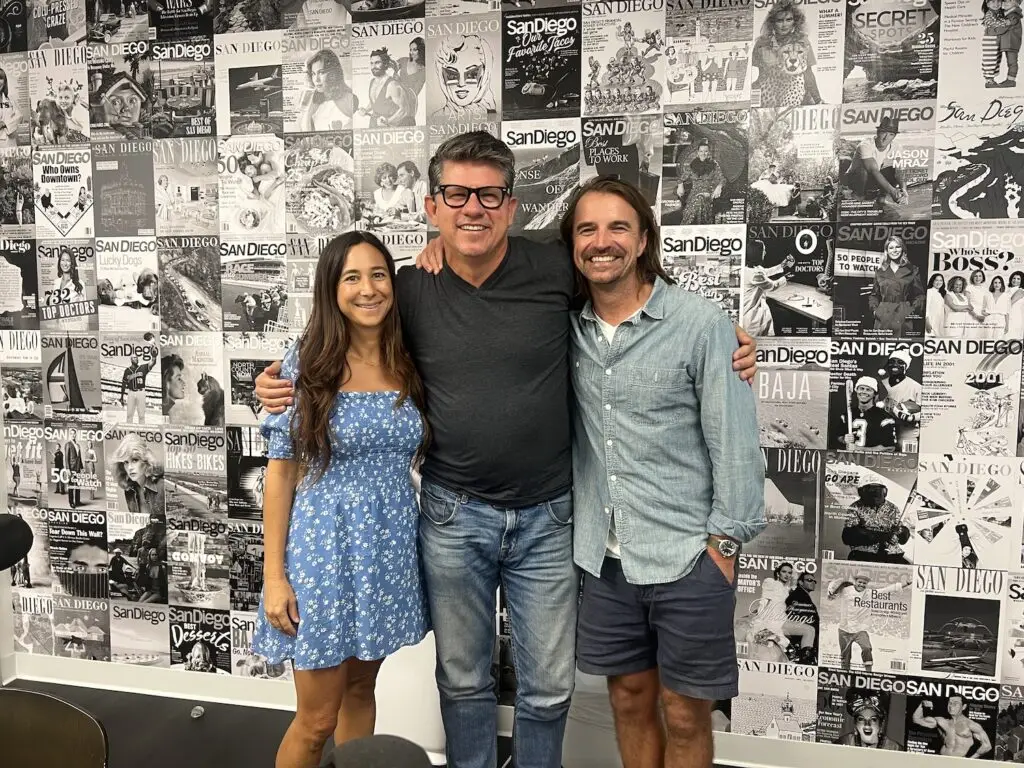
podcast-ep
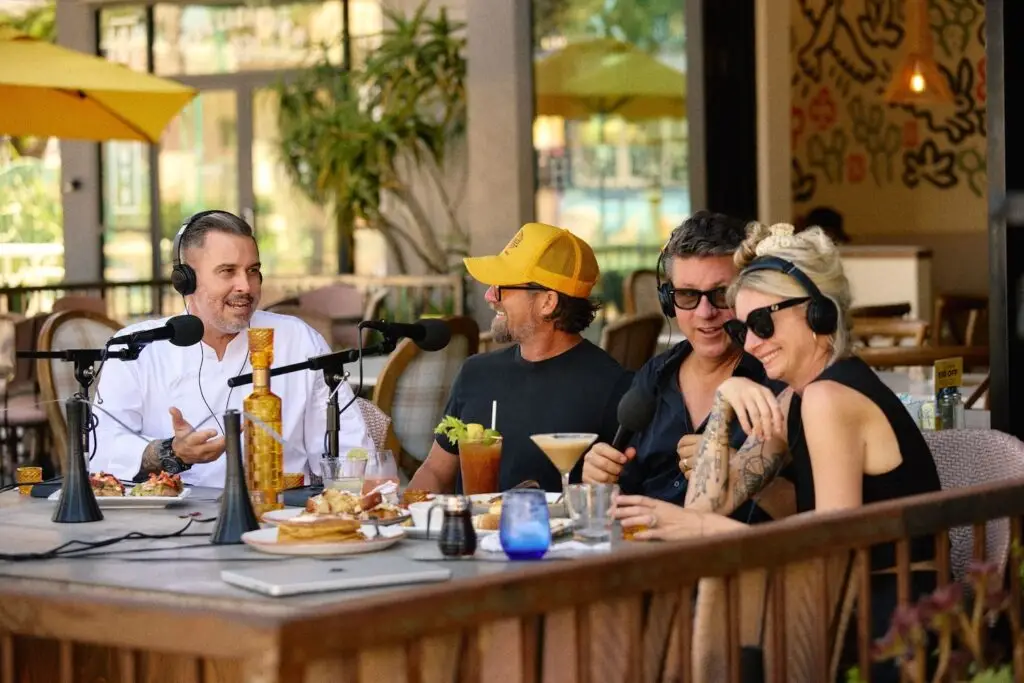
podcast-ep
Featured articles
Everything SD
Everything SD
Everything SD
Featured articles
Partner content
Food & Drink
Everything SD
Ready to know more about San Diego?
SubscribeReady to know more about San Diego?
Ironside debuts their dream oyster this weekend at FESTA in Little Italy
This weekend is FESTA. You and 120,000 of your closest friends reveling through Little Italy. Food, drink and jovial chaos. Outside Ironside Fish & Oyster, there will be a stand of shuckers armed with 1,600 oysters. Not just any oysters. It’s the debut of” Ironside Select”—hand-farmed for Michelin-starred chef Jason McLeod by the Minterbrook Oyster Company in the Puget Sound. It’s McLeod’s attempt to curate the perfect happy hour oyster. He explains the taste difference, why a sturdy shell matters, and why you should never eat an oyster in heat:
Why your own signature oyster?
It’s a fun thing to do—to work with the farmers and get to know more about the oyster and the process. What these farmers go through is madness. Weather, water temperature, depth, and other things can affect your oyster. It’s not an easy thing.
You got to choose your own flavor profile?
Yeah. Someone who’s just trying oysters for the first time, the main complaint is that it’s too briny. So I asked Minterbrook for an oyster that the general public could enjoy, as well as oyster people. It’s not super briny. It’s a little creamier, sweeter with a nice finish. And I really wanted a decent shell.
Shell matters?
You want a tough shell so they’re not cracking all the time. Every shell that cracks, you get shell into the product. The oyster gets thrown out. That costs us money, slows down the process, it’s not good for anyone. When our shuckers are going good and fast during happy hour, I wanted to give them a tough shell that won’t crack and make ‘em frustrated.
Depth affects shell strength?
Yeah. Right now we have these oysters called Summer Ice. They’re grown 60 feet deep. It’s not getting tumbled or rolled by the waves, so it doesn’t need to grow a tough shell.
Main difference between East Coast and West Coast oysters?
East Coast oysters tend to be brinier. West coast are a little softer, sweeter. Eventually I’d like to have our own West Coast oyster, too, so people can taste the difference.
Tougher to farm West Coast oysters?
Our warm water makes it really tough for oysters. It’s ironic, because our busiest time for oysters is the summer. But it’s when the least amount of oysters are available. Once warm water hits, they start to spawn. Spawning oysters are safe, but it’s not the best flavor—creamy and bitter. That turns people off real quick. Now that the water’s gotten cooler, our oyster options have gone from 13 to 30. It’ll get even better as we get into winter.
Why does hand-farming matter?
Most oysters are hand-farmed. It helps in the selection process. Oysters are usually graded “one to three.” Ones are all going to the French Laundry. Twos will be just a little off, or chipped. Threes are all over the place, Hand-harvesting is someone picking them for size and no chips in the shell.
Ironside Fish & Oyster, 1654 India St., Little Italy, www.ironsidefishandoyster.com.
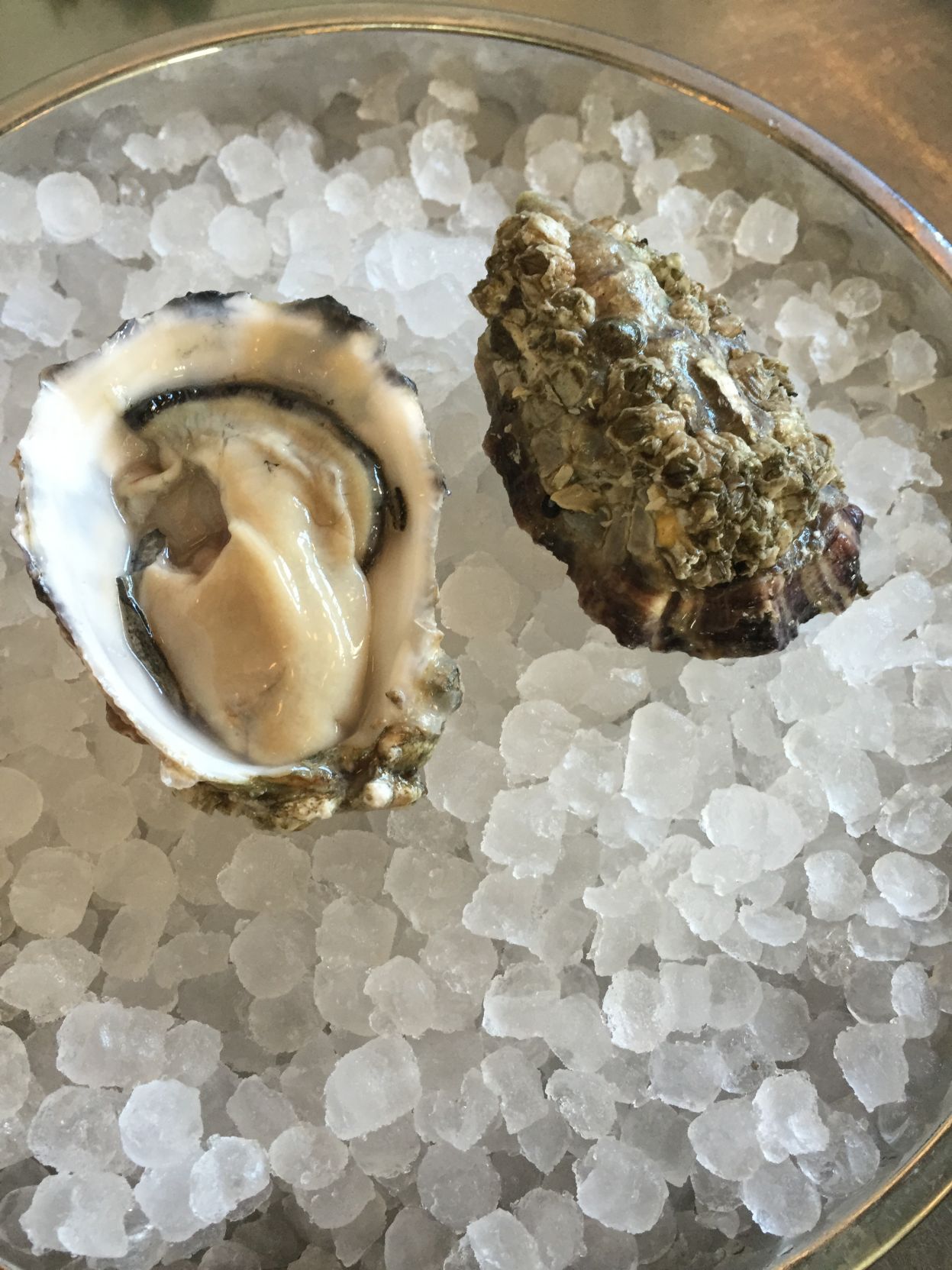
The “Ironside Select”—hand-picked for your shucking pleasure.
The acclaimed restaurant will shutter after two years, while the family's Little Italy tasting room relocates to the University Avenue space
San Diego has lost a number of ambitious concepts lately—Vulture and Dreamboat in University Heights, Wildflour Delicatessen in Liberty Station, Deckman’s in North Park, Matsu in Oceanside. All have different reasons for closing (some outgrew their space, some overshot their costs), but none of them suffered for quality. Ditto for the next casualty. On July 19, Cellar Hand in Hillcrest will close its doors.
Unlike the other closures, there’s actually a silver lining. The Perr family, who owns both Cellar Hand and Pali Wine Co., announced they will relocate Pali’s tasting room from Little Italy to take over the vacated Cellar Hand space.
Cellar Hand opened just over two years ago with a promise to source 100 percent of their produce locally. Ambitious, but admirable. Logan Kendall, the original executive chef, launched with a menu centered around lots of funky fermentation, tinned fish preserved in-house, a bevy of fun dips like labneh and whipped tahini, and a ridiculously fantastic pork chop from Thompson Heritage Farms. Wine Enthusiast named the 120-seat eatery one of the top 50 wine-focused restaurants in the country in 2025—not a shock, considering the mega wine chops behind the project.
Following Kendall’s tenure, chefs Ashley McBrady and then Sable-Tanya Wentwoord took over the reins, keeping things rolling with expanded brunch offerings, chef’s dinners, and all the usual accoutrements of a hyped spot. Before joining the Pali Wine/Cellar Hand team, Wentwoord worked and staged at multiple James Beard Award–recognized and Michelin-starred restaurants in Boulder, Colorado (Frasca Food and Wine); San Francisco, CA (Coi, Che Fico); Providence, Rhode Island (Persimmon); and Fredericksburg, Tex. (Southold Farm + Cellar). She will continue to head the food program at Pali Wine Co.
Bad luck or bad timing, the reasons behind closing Cellar Hand don’t really matter. But I, for one, will really miss that pork chop.

Still, Cellar Hand’s loss is Pali Wine Co.’s gain, or at least a small balm on the sting of closure. The tasting room in Little Italy opened 10 years ago, bringing its Central Coast wine and vibes to an area smack in the middle of a craft beer boom. When it came time to renew the lease, the Perrs say the landlord did the landlord-y thing and tried to nearly double the rent. (Tale as old as time—just ask Wildwood Flour.)
Rather than suffer a double-whammy, the Perr family instead decided to shift their focus (and finances) to the heart of their businesses: wine. And despite losing a very cool rooftop patio in one sizzling hot neighborhood, they are gaining a pretty prime spot in a different sizzling hot neighborhood with a not-too-shabby patio of its own accord. (One more silver lining: no more jet noise from the airport!)
By moving Pali Wine Co. to where Cellar Hand used to be, they could at least keep a toehold in San Diego, says Nick Perr, managing partner. His family has made wine in Santa Barbara county for over two decades, with 10 of those years in the San Diego market—an investment they refused to lose. “That’s why it’s impossible to separate our winery from our San Diego community,” he explains, adding that the new location will allow Pali Wine Co. to offer programming designed around the nearby Hillcrest farmers market.
Guests can expect the same wine selection, wine club perks, private tastings, and similar food offerings Pali Wine Co. offers in Little Italy to transfer to Hillcrest. And maybe, if we’re lucky, they’ll bring back the pork chop (please?)
“We are extremely proud of what we accomplished at Cellar Hand,” said Perr in a statement. “Running an independent restaurant with real values is hard, and we gave it everything we had.”
Cellar Hand will permanently close on July 19. Pali Wine Co. will cease operations at 2130 India Street on July 19 and will move to 1440 University Avenue.
Pali’s new location in Hillcrest will soft open on August 12 with a grand opening on August 22. Operating hours will be Wednesday through Friday, 2 p.m. to 10 p.m.; Saturday, noon to 10 p.m.; and Sunday, noon to 9 p.m. Happy hour will run Wednesday through Sunday (hours to be determined).
Beth Demmon is an award-winning writer and podcaster whose work regularly appears in national outlets and San Diego Magazine. Her first book, The Beer Lover's Guide to Cider, is now available. Find out more on bethdemmon.com.
Offering everything from smashburgers to sundaes, the latest food hall from Tiger Hospitality opens its doors this weekend
Omakase and fixed-price menus are one way hospitality businesses are addressing our collective food decision-making fatigue. But on the opposite end of the spectrum, some restaurateurs are offering a bonanza of totally unrelated options for people ordering on a whim. Why not pair a lobster grilled cheese sandwich, açaí bowl, and ridiculously loaded hot dog?
Starting June 27, diners can satisfy their spur-of-the-moment appetites at Global Fork in Little Italy, the latest food hall from Southern California-based Tiger Hospitality.
Six different food concepts will be featured in the 4,685-square-foot, indoor-outdoor space along the Piazza della Famiglia promenade. The space’s inaugural lineup includes a mix of Tiger Hospitality-owned concepts (Cosmos Burger, La Vida, Lobster Lab, and Prik Ki Nu Thai) and outside operators (Seattle-based Moto Pizza and Handel’s Homemade Ice Cream). The space next door, Good Enough Cocktail Club, is another Tiger-backed brand, operated by the team behind Same Same and Amor y Magia in Carlsbad.
Cosmos Burger serves smashburgers stacked with classic toppings, while Lobster Lab focuses on seafood favorites including lobster rolls, shrimp rolls, and lobster mac n’ cheese. Prik Ki Nu Thai adds Thai street food to the mix, with traditional noodle, rice, and stir-fry dishes. And for those looking for something on the lighter side, La Vida offers things like smoothies, salads, and wraps.

Moto Pizza focuses on Detroit-style square pizza with Filipino influences and, despite the name, is not affiliated with Mr. Moto Pizza. Handel’s, which began in Ohio in 1945, will offer dozens of flavors ranging from staples like chocolate and vanilla to rotating specialties packed with candies, cookies, and other mix-ins. (Handel’s already has a number of locations across San Diego, with a La Mesa store coming later this year.)
Some of these vendors already operate at Miramar Food Hall, the other Tiger-owned food hall in San Clemente. And some of them will also appear in Station8, the next food hall slated to open in UC San Diego’s Theatre District Living and Learning Neighborhood later this fall. But if you ask me, reviving the space that housed the Little Italy Food Hall before its closure last February is a far better outcome than leaving empty suites smack in the middle of an area saturated with fantastic food options. Plus, where else can you order a slice of beef adobo pizza alongside squares of caviar toast and a banana split?
Global Fork opens June 27 at 550 W. Date Street, Suite B, in Little Italy. Initial operating hours are from 9 a.m. to 9 p.m., seven days a week, but vendor hours may differ.

Listen Now: The Latest in San Diego’s Food and Drink Scene
Have breaking news, exciting scoops, or great stories about new San Diego restaurants or the city’s food scene? Send your pitches to [email protected].
Beth Demmon is an award-winning writer and podcaster whose work regularly appears in national outlets and San Diego Magazine. Her first book, The Beer Lover's Guide to Cider, is now available. Find out more on bethdemmon.com.
As a wave of endings hit San Diego’s food and drink scene, we survey the damage and remain hopeful for an upturn in the industry
I know every day can’t be a Best Restaurants issue or badass food festival. But damn, it’s been a bleak week for San Diego food and drink (and it’s only Wednesday). Let’s start with Comedor Nishi, which closed this week without any warning. This La Jolla eatery had all the markings of The Next Big Thing when it opened last July. Two superstar chefs hailing from Mexico City destination restaurants Pujol and Máximo? Check. Totally drool-worthy wall of Instagram pics? Check. A menu of absolute breakfast bangers like a torta de cochinita pibil and cured salmon tostada? Check.
But even big names, a solid menu, and impeccable service aren’t surefire defenses against the powers that be. Just look at the James Beard Award-nominated Roma Norte, which closed in August after a year.
Monday may very well be remembered as one of San Diego’s worst restaurant industry days since the pandemic. At least three other hospitality ventures shuttered that same day, also without notice—Camino Riviera in Little Italy, Casa de Freds in Old Town, and Black Plague Brewing in Oceanside and Escondido.
Fred’s in particular struck me by surprise—it’s been around for 25 years. I’m unashamedly a huge fan of its patio and ridiculously giant margaritas. For such a longstanding figure to go so gently (not to mention suddenly) into that good night without even a whiff of warning ahead of time feels especially disheartening. “Like many small businesses, we’ve faced challenges that became insurmountable, including rising operational costs and a substantial decline in tourism,” stated its Instagram post.
Tourism, San Diego’s economic bread and butter, has been down since coronavirus shutdowns in 2020, and Old Town is ground-zero for visitors. If anywhere is going to get hit hard by a decline in travelers, it’s there. So I guess it’s less surprise, more sadness.
Black Plague has yet to make a public statement about its closure, which was first reported by San Diego Beer News. But again, huge bummer. Its gothic brewery branding was equal parts unique and macabre, and its beer more than held its own in a sea of world-class craft breweries. It stuck it out for an admirable eight years, and I doff my cap to them.
Camino Riviera acknowledged its sudden closure only after its final day of service, which was Sunday, September 28. According to owner and restaurateur Matt Spencer, the decision came following repeated noise complaints to the city from an anonymous neighbor.
“Over the course of several years, we invested heavily to address these concerns: installing a new roof, implementing sound mitigation strategies, hiring a sound engineer, reconfiguring indoor and outdoor operations multiple times, and building new seating areas,” said Spencer in a statement. “Despite these efforts, we found it impossible to operate the way we had been operating those years prior and we simply couldn’t afford to hang on.”
And these were just the closures on Melancholy Monday.
In September alone, Flap Your Jacks, Red House Pizza, Blackmarket Bakery, Copper Top Coffee & Donuts, and Woodstock’s Pizza in Pacific Beach all closed their doors forever.
Running a restaurant is hard and expensive. It always has been and it sure as hell isn’t getting any easier. In San Diego, rent prices are up, tourism is down, diet trends like Ozempic-use is potentially making a dent in some markets, and new business models are popping up specifically to maximize marketing efforts and rent costs. It’s a jungle out there, and sometimes even the strong, savvy, or skilled don’t survive. So what can we do?
Eat out when you can. Pick up a little something at your corner shop. Maybe get that avocado toast. Sometimes, businesses close due to a landlord issue or noise complaint and there’s just not a whole lot the average Josephine can do about that. But if you love something, shout it from the rooftops. Or in this scenario, on Yelp.
Listen Now: The Latest in San Diego’s Food and Drink Scene
Have breaking news, exciting scoops, or great stories about new San Diego restaurants or the city’s food scene? Send your pitches to [email protected].
Beth Demmon is an award-winning writer and podcaster whose work regularly appears in national outlets and San Diego Magazine. Her first book, The Beer Lover's Guide to Cider, is now available. Find out more on bethdemmon.com.
This month, the 2026 San Diego Business Impact Awards recognized local businesses making an impact in clean energy, biotech, hospitality, and beyond
Renewable energy companies building hundreds of power plants. Biotech startups using artificial intelligence to create personalized medicine for children with rare diseases. Hospitality companies quietly powering thousands of local events. Consumer brands growing from beach-town startups into national businesses. These are the kinds of companies driving San Diego’s economy today, and the businesses recognized at this year’s San Diego Business Impact Awards offer a snapshot of where the region is headed.
Hosted July 23 by San Diego Regional Economic Development Corporation (EDC) and JPMorganChase, the second annual awards event honored four local companies for innovation, growth, and economic impact. More than 100 nominations from San Diego’s middle-market businesses were reviewed by a 10-person judging committee, with winners selected across four categories: startup, early-stage innovator, rising star, and established heavyweight.
Two-time honoree Jimbo Someck, founder of Jimbo’s organic grocery stores, also joined the event for a fireside chat on buying local, supporting emerging brands, and giving back to the community.
“San Diego’s strength comes from its makers and builders—the resilient people who endure great risks and overcome obstacles to build and scale a company,” says Aaron Ryan, San Diego Region Manager and Middle Market Banking at JPMorganChase & Co. “These awards aren’t just recognition; they spotlight the talent, grit, and innovation shaping our region’s future. By celebrating those who create and build, we foster connections and fuel the growth that keeps San Diego thriving.”

Heavyweight honoree SOLV Energy has grown alongside the country’s rapid investment in renewable power. “It’s an exciting time for SOLV Energy as we are experiencing significant growth,” says CEO George Hershman. “The business has doubled over the last year and has almost double-digit growth since its inception.”
The Rancho Bernardo-based company designs, builds, operates, and maintains utility-scale solar and energy storage facilities. Since its founding in 2008, SOLV Energy has built more than 500 power plants.
Growth has translated directly into hiring. About 200 employees work from the company’s local headquarters, including roughly 20 interns. “Our intern program is a big part of the way that we grow our workforce,” Hershman says. “Last year, 43 percent of our interns became full-time employees. We believe San Diego is a great community to build and grow a high-tech infrastructure and technology company because of the incredible workforce—the ability to attract top talent and draw from world-class universities.”

Startup honoree La Jolla Labs is tackling one of medicine’s biggest challenges by developing personalized RNA therapeutics for patients with rare diseases—many of them children with neurological disorders like ALS. Using proprietary artificial intelligence and machine learning tools, the biotech company develops treatments tailored to each patient’s specific genetic mutation.
CEO Tamar Grossman says the recognition reflects how far the company has come despite limited resources. “We’re honored to be recognized for our ability to change and save patients’ lives and turn our lean startup into a clinical company with very minimal resources,” she says.
Grossman credits San Diego’s concentration of research institutions—including UC San Diego, the Salk Institute, and Scripps Research—with creating a pipeline of talent and collaboration. “San Diego is one of the world-leading centers for technology, genomics, and RNA therapeutics,” she says. “We have over 30 RNA therapeutics companies here, and we support each other and help with anything related to drug discovery.”
She says that collaborative spirit extends beyond formal partnerships. “You can walk around Torrey Pines, go into a café, and find colleagues from the industry and have an ad hoc conversation,” Grossman says. “That’s something very unique to San Diego.”

While Snake Oil Venue Company may not be a household name, chances are many San Diegans have attended one of its events. The early-stage innovator honoree has expanded from beverage catering and mixology consulting into venue management, operating Julep Venue in Mission Hills, Bramble Bay Venue in Imperial Beach, Vesper Venue, the Chapel at Liberty Station, and five outdoor venues throughout Liberty Station—more than 500,000 square feet of event space altogether.
“We do a lot of launch parties for corporations and new products,” says CEO Mike Esposito. “I really like working on the entrepreneur side of things, where new businesses are entering the San Diego market and looking to make a splash.”
Snake Oil has executed more than 16,000 events, employed more than 1,000 people, and partnered with more than 900 local vendors, including caterers, florists, photographers, entertainers, and other hospitality businesses. The company also works with many of San Diego’s nonprofits, museums, and cultural institutions. “We get to celebrate people’s most important moments,” Esposito says. “Whether that’s a wedding, celebration of life, or quinceañera, we’re fortunate to be involved in the community in so many different ways.”

Rising star honoree ALOHA Collection is proof that a simple idea can grow into a thriving company. Founded by two roommates who wanted a better way to carry wet swimsuits after a day at the beach, the lifestyle brand has grown into a business while maintaining strong year-over-year growth.
Now headquartered in Carlsbad, ALOHA Collection employs more than 100 people and operates its California flagship store in Encinitas, which is slated for a remodel. With roots in Hawaii, the company is known for its lightweight, splash-proof travel bags that have become a familiar sight on beaches in San Diego and beyond.
“‘Aloha’ is part of our name, but it’s also how we move through the world,” says CEO Lynna Barnard. “It’s how we show up for people, the way we travel, the way we give back.” Since day one, the company has maintained a 5 percent giveback to Hawaii conservation efforts, contributing millions of dollars over the years.
“I think what’s so inspiring about ALOHA Collection, and the founders in particular, is when you dream big, those dreams can come true when you work hard and trust in the universe,” Barnard says. “It’s inspiring to be a role model for other people wanting to start businesses from humble beginnings. Start small and watch it grow.”
Together, businesses like these form a cornerstone of San Diego’s economy—not only through the jobs and revenue they generate—but through the local workers they hire, vendors they support, and investments they make in the region. Their growth doesn’t happen in isolation; it ripples outward, strengthening the broader business community and the people who call San Diego home.

Through Good Enough, Mike Mayaudon and Shawn Seaman want to bring approachable bar culture to Little Italy
Is it me, or is it virtually impossible to spend less than $50 eating out nowadays? No shade to operators just trying to keep their margins high enough to pay workers and stay in business, but my wallet is definitely feeling the burn.
That’s far from a universal truth, of course. You’ve just gotta look. Plenty of places are leaning into budget-friendly specials (Herb & Sea’s “Happy Meal” comes to mind—a smash burger with fries, three oysters, and a glass of sparkling wine will set you back a very reasonable $20). Bars are responding in kind, adding ultra-premium items for high rollers as well as classic basics that keep prices in single digits, or at least close to it.
That’s precisely what Mike Mayaudon and Shawn Seaman hope to do when they open Good Enough in Little Italy. For $14, guests can get a signature house cocktail, most of which will be twists on traditional drinks. You may already be familiar with some of the drinks from the pair’s other venture, Same Same in Carlsbad—like the Sioux City Old Fashioned with bourbon, a root beer reduction, R&D cherry apple bitters, Angostura bitters, and absinthe.
“I think there’s a void that we can fill there, in terms of something that’s just really approachable,” says Mayaudon. “Shawn and I have both worked in really nice higher-end places and then dive bars… we’re kind of blending a mix of the two.”

Of course, operating in Little Italy doesn’t come cheap. The pair promises to offer plenty of premium items as well to accommodate all budgets. “We were even talking about, jokingly, putting on a baller menu,” laughs Seaman. “We might even do, like, $150 Manhattan or something.” But, Mayaudon adds, if you want to follow up a $30 Old Fashioned with a cheap beer and shot, they’re more than happy to oblige.
They’re not cutting corners on the drinks or food, which will feature Spanish-style tapas and pintxos like an off-menu Basque cheesecake limited to eight slices a day. Nor will the sound system be the typical bar speakers plugged into someone’s Spotify playlist. Vintage 1975 Cornwall speakers will provide an “old, warm sound,” promises Seaman. It’s not a listening bar, per se, but hi-fi vibes are definitely on the menu with lots of records and local art completing the space’s aesthetic.
From September 2 through December 5, Good Enough will feature bar takeovers for two-week stints with brands like Fernet-Branca, WhistlePig, and more. But overall, Seaman says they just want to be a place that’s approachable, affordable, and a good hangout spot. “It’s been wonky times, and everyone just keeps jacking their prices up,” he says. “We’ve got your back in these wonky times.”
Good Enough soft opens on Friday, August 22 in the former Basta space. Hours will be from 5 p.m. to midnight daily.

At 6:30 p.m. on Friday, September 12 at the Sheraton San Diego Resort, Rumorosa is throwing a four-course wine pairing with Clos Benoit. The Valle de Guadalupe–based winery specializes in “food wine,” meaning it’s specifically designed to pair with meals, and by the look of the menu, they know how to do it. The La Paloma White kicks things off with a shrimp ceviche, followed by sea bass with a rosé, Mexican-style birria osso bucco with a 2020 red, and of course everyone’s favorite chocolate cake with another red vintage. Tickets to the 21+ event are available now.

Listen Now: The Latest in San Diego’s Food and Drink Scene
Have breaking news, exciting scoops, or great stories about new San Diego restaurants or the city’s food scene? Send your pitches to [email protected].
Beth Demmon is an award-winning writer and podcaster whose work regularly appears in national outlets and San Diego Magazine. Her first book, The Beer Lover's Guide to Cider, is now available. Find out more on bethdemmon.com.
The LA-founded brand and popular sushi joint will set up shop in Little Italy at 2100 Kettner
San Diego has no shortage of great sushi. Sushi Ota is the icon. Kinme Omakase oozes exclusivity (and quality). Hidden Fish brought omakase-only dining to the city. Soichi has a Michelin star for Pete’s sake, and Sushi Tadokoro is undeniably great. There’s Sushi Gaga and Hane and Shino and Maru and Wrench & Rodent and Kaito. Hotel del Coronado just got a Nobu.
But this top-notch scene comes with a cost, literally. Sushi tends to either get saved for a special occasion or, on the opposite side of the spectrum, picked up from a cold case at your local grocery store accompanied with a requisite blob of radioactive-green horseradish. (Let’s be honest, we’ve all done it.) Few places can balance general affordability with high quality.

But that’s what Sugarfish has done pretty successfully in Los Angeles, Orange County, and New York over the past 17 years. And it’s what they say they’ll bring to San Diego when they open next spring in Little Italy—at 2100 Kettner, the LEED-certified, six-story, mixed-use building that currently houses Postino WineCafe, Slice House by Tony Gemignani, and the HQ for the city’s pro soccer team, San Diego FC.
In 2008, the partners—chef Kazunori Nozawa (whose restaurant Sushi Nozawa had been a star in Studio City for decades), Jerry Greenberg, Tom Nozawa (Kazunori’s son, also a chef), Lele Massimini, Cameron Broumand, and Clement Mok—opened the first Sugarfish in Marina del Rey. Over 17 years, they’ve cautiously expanded to 10 more locations in LA and five in New York City (with one more on the way). Massimini says the slow growth was intentional.
“Our goal is always to deliver the best bite of sushi to every guest when they come to Sugarfish,” he explains. “When we were sure that we could deliver that in San Diego, that’s when we pulled the trigger.”

And the local bounty makes sense. Chefs in Japan will often source fish from San Diego and Baja, says Tom Nozawa: “Really good stuff comes out of the San Diego waters.”
One of the Sugarfish signatures is their approach to rice—made with a proprietary rice vinegar recipe and served warm and loosely packed, which contrasts nicely against the cool fish. But don’t look for funky fusion sauces or rolls. “We’re sticking with our roots… serving simple, great sushi,” says Nozawa.
And the price is right—the cheapest lunch special on the Los Angeles menus runs $32 for edamame, tuna sashimi, two pieces of albacore sushi, two pieces of salmon sushi, a toro hand roll, one piece of Japanese yellowtail sushi, one piece of hirame sushi, and a blue and dungeness crab hand roll. The most expensive lunch option—called “Don’t Think. Just Eat. Trust Me”—tops out at $60 for a sashimi course, seven orders of nigiri, and two hand rolls. Everything is preselected on the Trust Me menu, but what it lacks in adventurous exploration, the team says they make up for in cost and consistency. Of course, you can always order à la carte. Might I recommend the pink lobster nigiri from New Zealand?

Architect Robert Tsurimoto Kirsten of A-RTK is designing Sugarfish Little Italy in a similar vein to the restaurant’s other locations, but drawing inspiration from famed building designer, architect, and San Diegan Cliff May. May, known for his California Ranch homes and mid-century modern designs, created spaces that mixed indoors with outdoors, with lots of warm woods and open spaces. This location will seat 40 guests and emphasize cozy colors like greys and blues, but Massimini says they plan to keep the design on the minimalist side to ensure the sushi remains the showstopper.
“For us, design is supportive,” he says. “It’s not the centerpiece.”
Sugarfish doesn’t try to blow your mind with exotic sauces or unbelievably rare fish. But for predictable, high-quality sushi that’s painstakingly sourced and served and won’t set me back a Benjamin or two? Seems like a pretty good deal to me.
Sugarfish by Sushi Nozawa opens spring 2026 at 2100 Kettner Blvd., Suite 1100.
Beth Demmon is an award-winning writer and podcaster whose work regularly appears in national outlets and San Diego Magazine. Her first book, The Beer Lover's Guide to Cider, is now available. Find out more on bethdemmon.com.
Biotechnology is one of the most dynamic and rapidly evolving fields in modern science.
From advancements in cellular biology and molecular research to innovations that deepen our understanding of complex biological systems, biotechnology continues to influence how researchers explore some of science’s most important questions.
While major discoveries often capture headlines, the process behind those breakthroughs receives far less attention. Scientific progress depends on a vast network of researchers, laboratories, manufacturers, and specialized organizations working together to support ongoing investigation and discovery.
The Growing Importance of Biotechnology
In recent years, biotechnology has moved beyond the walls of research institutions and into mainstream conversation. Increased access to scientific information, educational content, and expert commentary has sparked growing public interest in the biological sciences.
Topics once discussed primarily within academic circles are now reaching broader audiences through podcasts, documentaries, digital media, and online communities. As a result, more people are developing an appreciation for the research, experimentation, and innovation that drive scientific advancement.
This growing visibility has transformed biotechnology from a largely specialized field into a subject of interest for educators, innovators, investors, and curious observers alike.
The Hidden Infrastructure Behind Discovery
Scientific breakthroughs often capture public attention, but the infrastructure that makes those breakthroughs possible rarely receives the same recognition. Behind every new discovery are years of investigation, testing, analysis, and refinement.
Behind nearly every research project is a network of laboratories, suppliers, technical specialists, and research-focused organizations working together to support scientific exploration. Laboratory infrastructure, specialized materials, quality standards, and reliable methodologies all contribute to the integrity of the research process.
When these foundational elements are in place, researchers can focus on generating insights, exploring new ideas, and building upon existing knowledge. Although much of this work occurs behind the scenes, it plays a critical role in helping science move forward.
Why Discovery Depends on More Than Researchers Alone
As biotechnology continues to evolve, research-focused organizations have become increasingly important contributors to the broader scientific ecosystem.
Among them is NewBioRx, a company operating within the biotechnology and life sciences sector. Like many organizations operating within the broader research ecosystem, NewBioRx contributes to the network of suppliers, laboratories, and scientific stakeholders that help support ongoing research efforts.
As scientific research becomes increasingly sophisticated, organizations that help support the research environment contribute to a culture where innovation can continue to thrive. Their work may not always be visible to the public, but it forms part of the foundation that enables scientific progress.
Why Science Is Reaching Wider Audiences
One of the most notable developments in recent years has been the growing public fascination with science and human biology.
Scientific concepts that were once primarily discussed within research settings are now reaching wider audiences through educational content, podcasts, digital media, and online communities. People are becoming increasingly interested not only in scientific outcomes, but also in the process of discovery itself.
The growing visibility of science has also created new connections between scientific communities and broader audiences. Individuals who operate across multiple worlds—including fitness, media, and life sciences—have helped introduce scientific topics to audiences that may not have engaged with them previously.
One example is Sam Sulek, co-founder of NewBioRx, whose involvement across fitness culture and the life sciences sector reflects the growing intersection between public curiosity and scientific exploration.
As co-founder of NewBioRx, he has helped champion a research-focused approach to scientific inquiry while supporting broader conversations around scientific literacy and discovery.
As scientific discovery becomes increasingly collaborative, public attention is beginning to extend beyond individual breakthroughs and toward the broader ecosystem that makes those breakthroughs possible. From researchers and laboratories to the organizations that support them, scientific progress remains a collective effort built on curiosity, expertise, and long-term commitment.