Ready to know more about San Diego?

Subscribe
Food & Drink APRIL 5, 2019

Tahona Brings New Blood into Old Town

The mezcaleria and Oaxacan restaurant quietly invigorates a historic San Diego street

Tahona Brings New Blood into Old Town
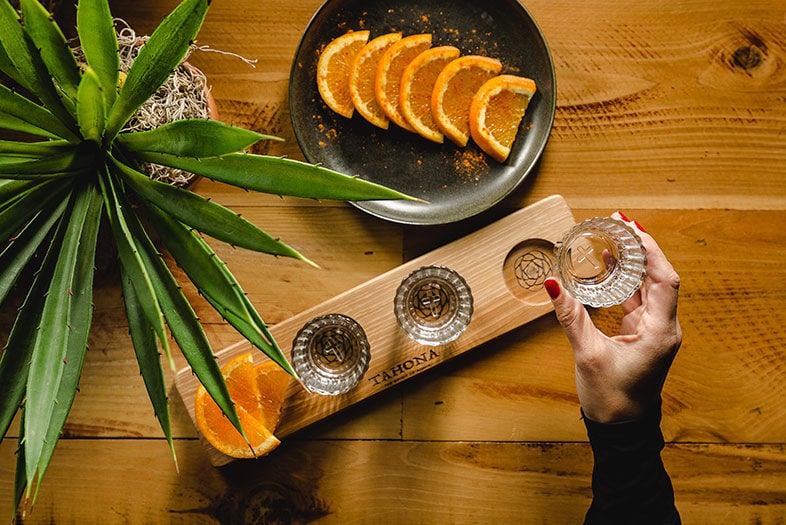
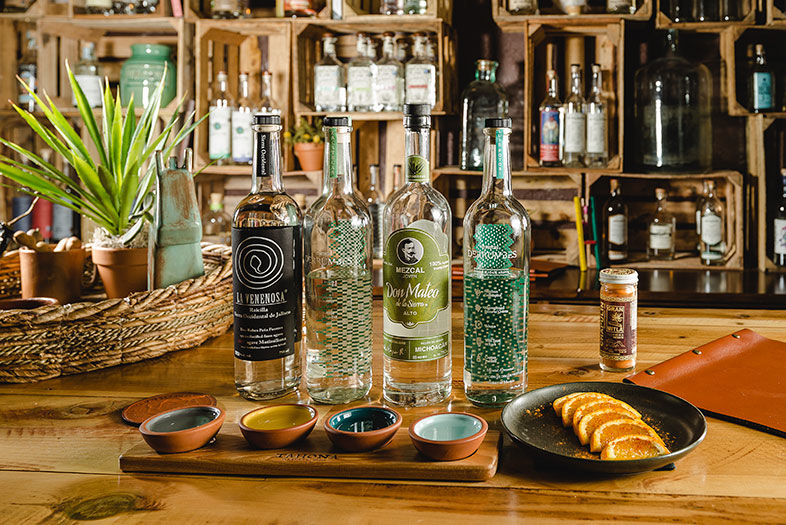
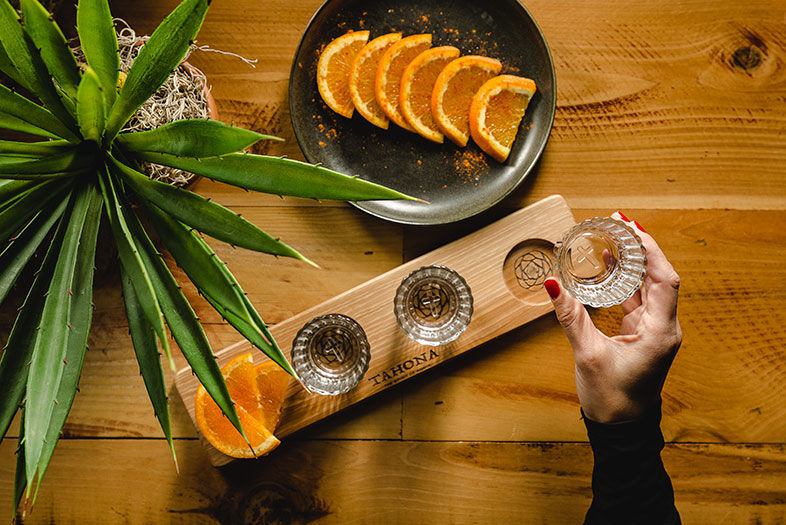
Mezcal flight at Tahona

Tahona

2414 San Diego Avenue, Old Town

tahonamezcal

BEST DISHES
Anything barbacoa
Housemade guac
Capirotada

Thirty-something years ago, I made my first candle right over there. Looked like a deformed ghost carrot. A kind, patient Mexican woman in a ruffled flower dress showed me how. Was it in a dusty historical dwelling with ghost vibes, maybe near the haunted Whaley House? Or was it in a retro retailer like Toby’s Candle Shop? I was seven—or was I nine? In the ’80s, every San Diego schoolkid came to Old Town to make bad candles, fumble their first Spanish phrases, and learn about missions (the gist, as I understand it: Europeans viewed god as an HMO plan, and natives could choose between the one and only one provider).

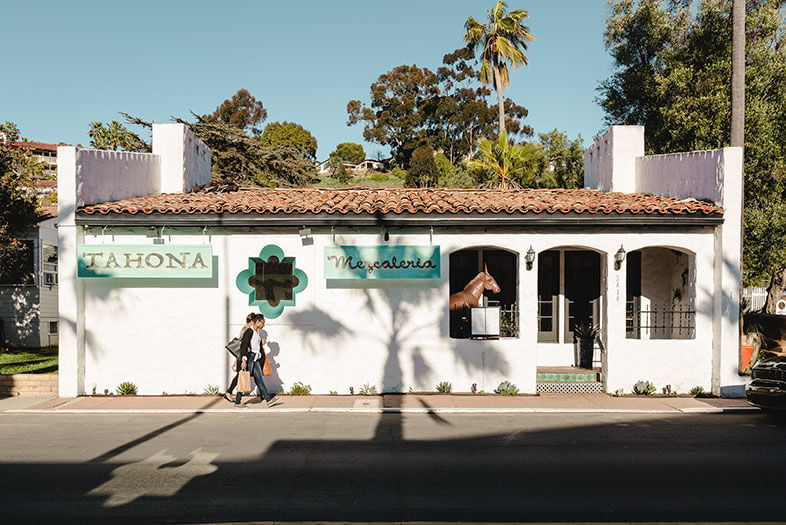
Old Town is the city’s heritage zone, dedicated to the culture of “Californios” (Spanish-speaking Hispanic people), specifically the ones who lived here from 1821 to 1872. But in actuality, the shops and restaurants have evolved it into an homage to our Mexican American culture.
Tahona Brings New Blood into Old Town

Tahona Brings New Blood into Old Town

Justin McChesney-Wachs

This was the first European settlement in California, which is why it’s often called the birthplace of the state (on behalf of the Kumeyaay people, I take issue with the word “birthplace”). It’s home to San Diego’s first schoolhouse and first newspaper (The Union, which later merged to become the Union-Tribune). It wasn’t a very practical place to build a town, too far from navigable waters. So when Alonzo Horton began developing what is now the Gaslamp District in 1867, people ditched dry, waterless Old Town in droves. Now it’s our 230-acre living historical exhibit, preserved with 100 specialty shops, 32 restaurants, nine hotels, 12 art galleries, and 27 historic buildings and sites. It’s the place to be for Cinco de Mayo and Día de los Muertos.

And it’s in bad need of new blood.
Tahona Brings New Blood into Old Town

Tahona Brings New Blood into Old Town

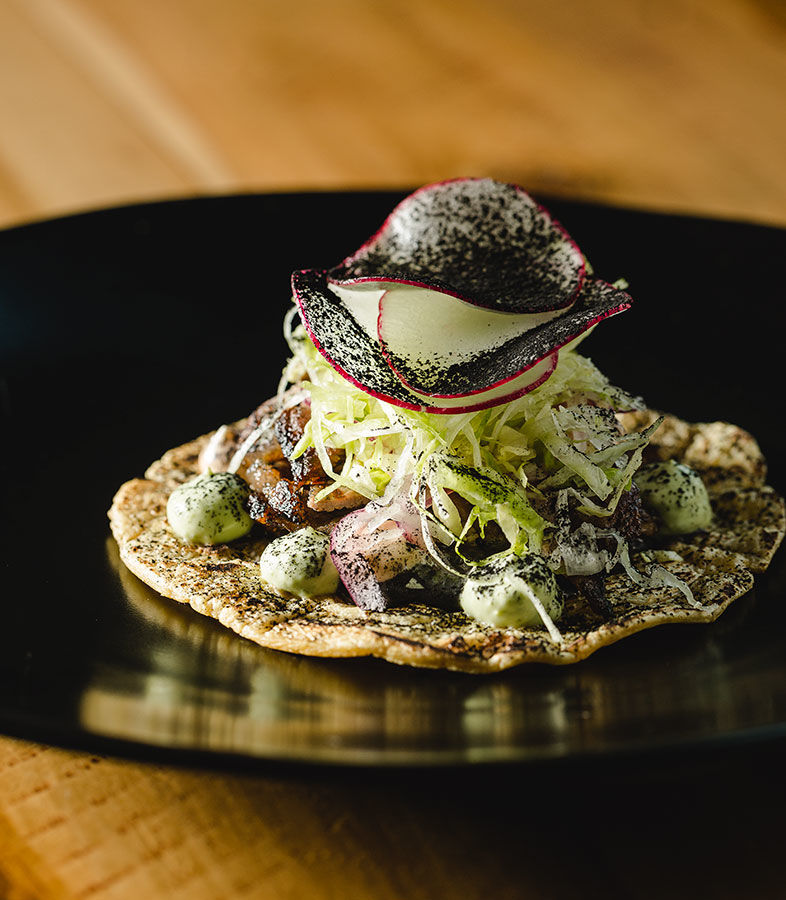
Carne asada taco

Many people deserve medals for Old Town’s important, historical work. In a city where our pro baseball team’s name is the Spanish term for “priests,” where half our streets and neighborhoods have Spanish names, and where 30 percent of the current population is Latino or Hispanic—those roots are vital to who we are. But at the risk of sounding like a local with no soul, a sucker for the now and the new, I think it’s long past time for Old Town to evolve. Mexican American culture is so much more than what I see here. Each time I visit, I feel less enchanted by our roots than sequestered in a sort of Mexican theme park, doing my best to avoid the full-court press of gift shops.

It reminds me of Avenida Revolución in Tijuana. When Prohibition cut off America’s booze supply, Hollywood celebs fled to Tijuana’s bars. The result was Revolución, a hackneyed version of Mexican culture designed to entertain tourists. Revolución did entertain a certain kind of tequila-absorbent, hey-babe-check-out-this-funny-hat tourist. But I don’t go to Paris hoping to see a street performer dress up in a beret and paint a nude of my girlfriend. I want to interact with real Parisians, doing real, modern Parisian things, even if it’s a bit boring or not so quaintly, predictively cinematic. In recent years, Revolución has ditched many of their cliché tourist attractions for new, modern, authentically Mexican concepts—and it attracted a new, modern, culturally aware breed of tourist.
Tahona Brings New Blood into Old Town

Tahona Brings New Blood into Old Town

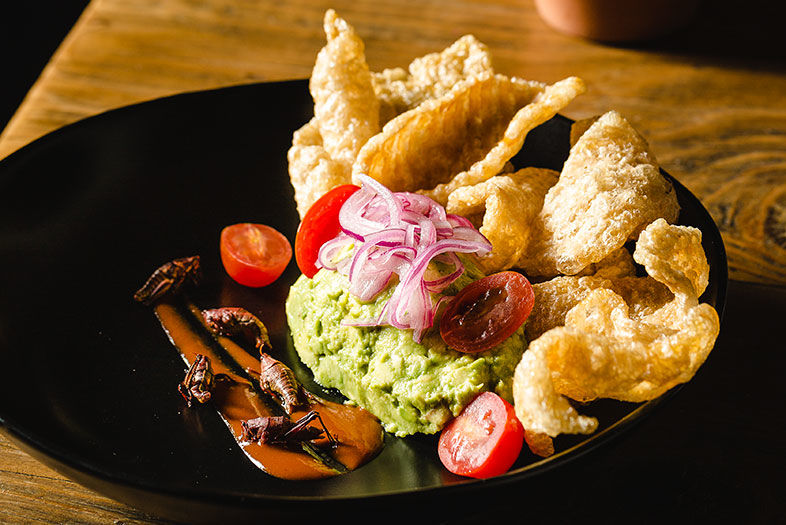
Guacamole

It’s time for Old Town to do the same.

You might argue that it’s not Old Town’s responsibility to have new ideas; leave the au courant creativity for modern Chicano neighborhoods in Barrio Logan or Chula Vista. But how many souvenir shops does San Diego Avenue really need? How many giant, premixed margaritas must be spilled from the soda gun in the name of history? Has Mexico a form of music other than mariachi? If there’s any doubt, I can submit a mixtape.
Tahona Brings New Blood into Old Town

Tahona Brings New Blood into Old Town

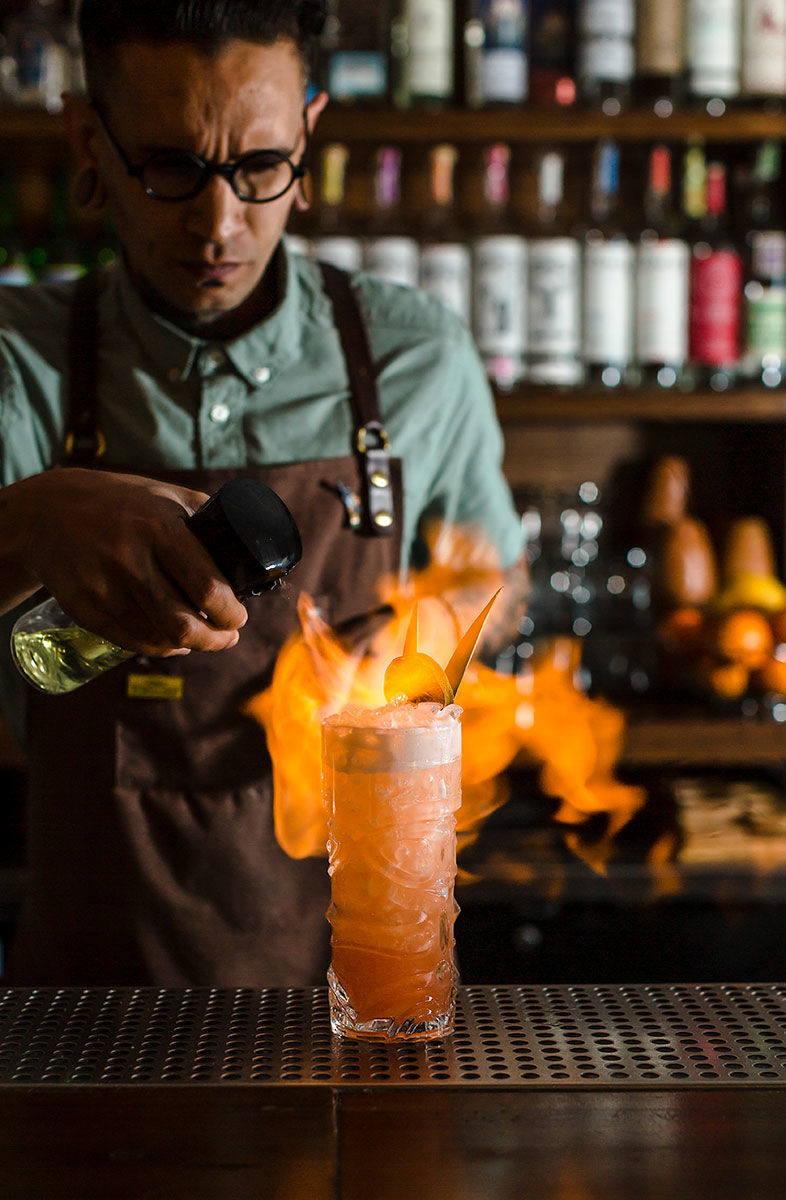
Whaley House Punch set ablaze

In my ideal world, Old Town would strike a better balance between historical tchotchkes and modern Mexican culture.

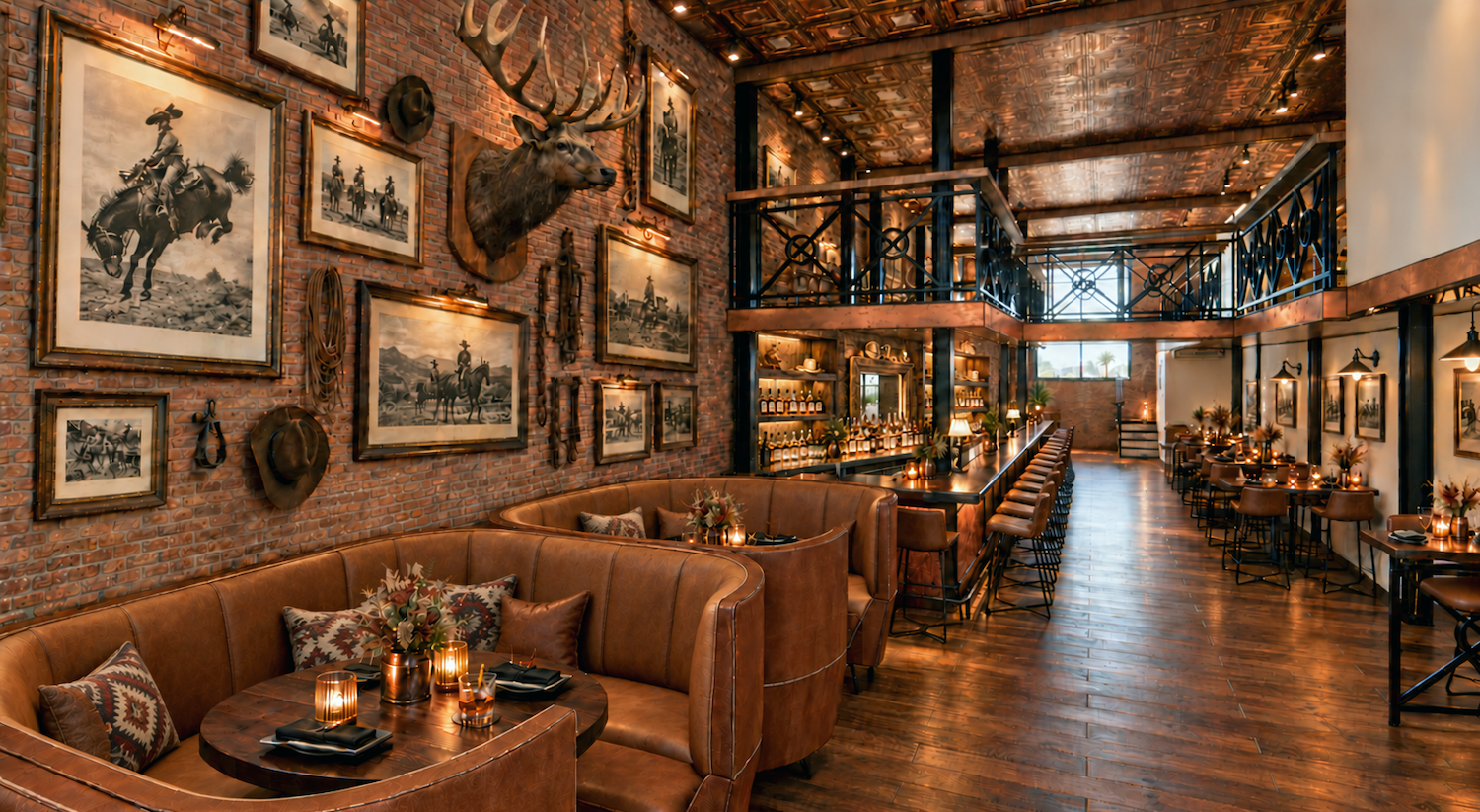
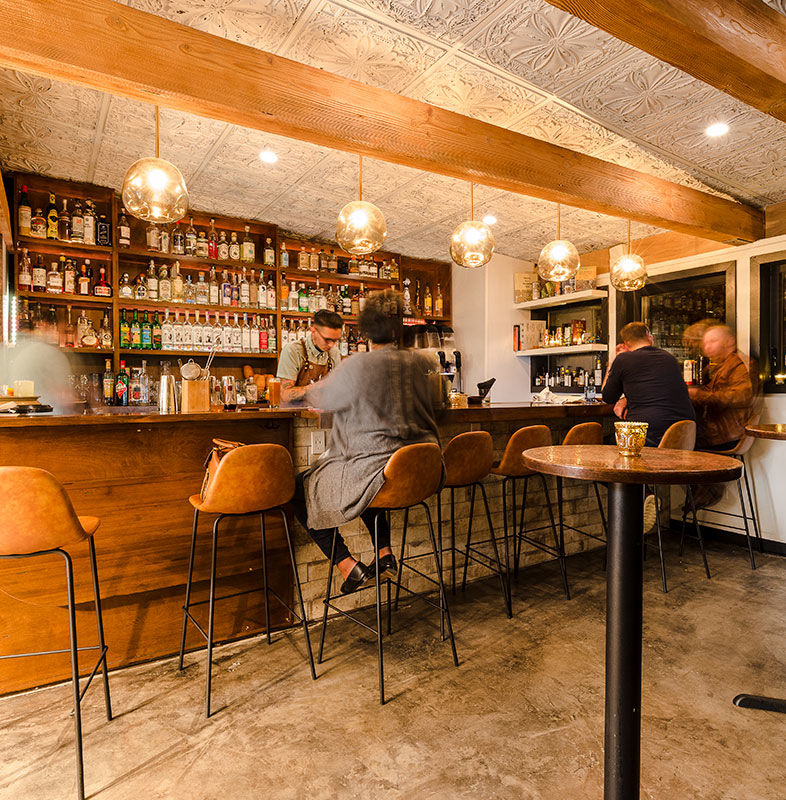
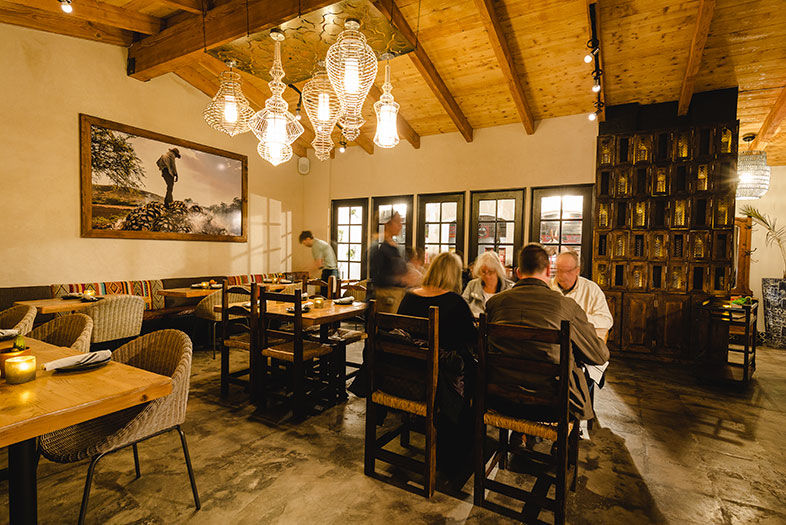
Tahona is a very good example of the modern culture I’m talking about. The understated Oaxacan restaurant and mezcal bar is the most interesting whisper on a street that had forgotten how to whisper. Its muted, elegantly lit sign acts as a soothing night light for Old Town’s long departed, who lie buried mere feet away at the El Campo Santo graveyard. Inside, the candles (LED as they are) make the wicker and sturdy woods flicker with shadows.
Tahona Brings New Blood into Old Town

Tahona Brings New Blood into Old Town

Mezcal flight in the tasting room

On the wall, the framed farmer lording over a smoldering pile of agave serves as patron saint and herald. Tahona Bar has one of the largest collections of mezcal in the US, sourced with obsessive zeal by Steven Sadri. Sadri’s been hunting bottles of the smokier relative of tequila for over a decade. One night he chooses a Mezcal Amarás, which has pine and citrus notes—almost like a sauvignon blanc that’s been set on fire—to echo the lime marinade of our scallops aguachile. Another mezcal he selects smells of tropical fruit and candies, and works with the excellent Cornish hen atop polenta, mole negro, and chicharrones.
Tahona Brings New Blood into Old Town

Tahona Brings New Blood into Old Town

Tahona’s tasting room

Both have the characteristically strong personality of mezcal but are also incredibly nuanced, easy to sip. Pairing it with food reveals a real relationship between what’s in the glass and what’s on the fork. Sometimes new ideas in food-drink pairing are motivated more by novelty than grace. I was once served an espresso with a dry-aged rib eye, for example—and no matter how much I can intellectualize the acidic notes of coffee’s scientific potential to “cut” the fattiness of the meat, it tasted like two brutish flavors fighting for dominion over my mouth. With that in mind, the mezcal tasting room, located off to the side of the entrance with a large communal table, is an attraction of its own.

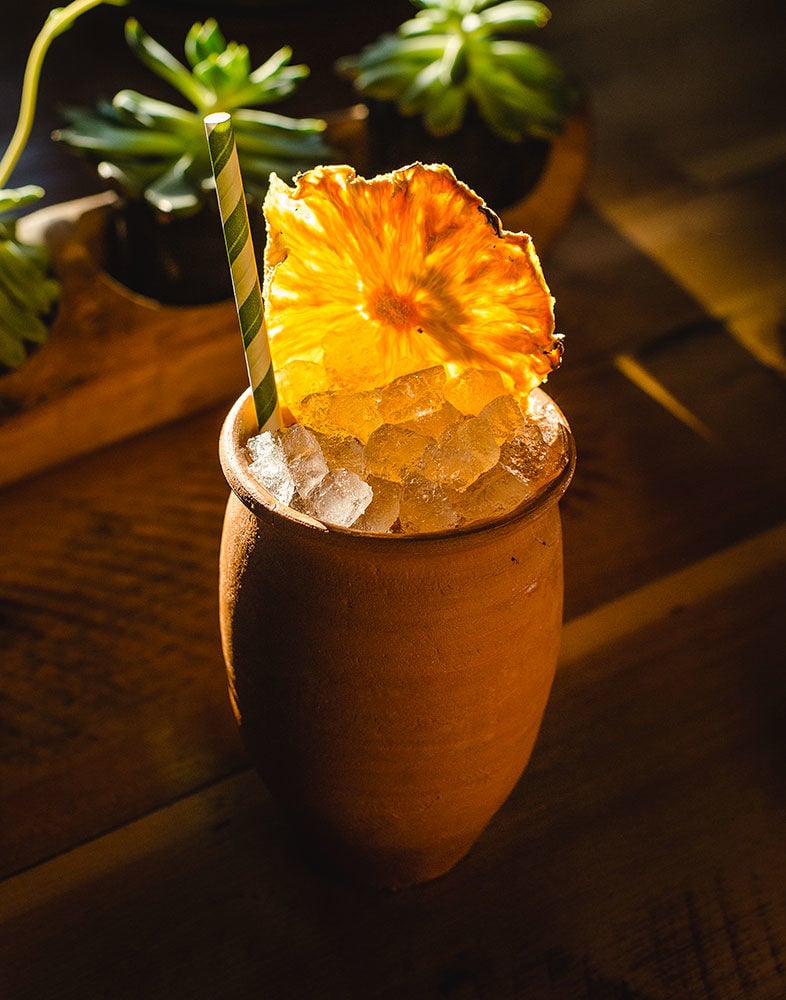
At the bar, Carlo Bracci Devoti and Blair Marano—both vets of the world-class Level2 cocktail program at George’s at the Cove—are using mezcals (and tequilas and rums) for 22 designer drinks, including the tiki-inspired Bien Picado, with El Silencio mezcal, roasted watermelon juice, mole grenadine, ginger, tepache (fermented pineapple rind), serrano bitters, and lime. Their margarita uses housemade triple sec, and is not dispensed premixed from a soda gun. That’s because Tahona values high acumen over high volume. I really sink into the Old Town Fashioned, a riff on the iconic drink that replaces the traditional bourbon with Casta Tribal mezcal, adding lapsang gomme (Chinese tea steeped with gomme, the silkier version of simple syrup), a touch of single-malt Laphroaig Scotch, and bitters. If you needed further proof that mezcal is a complex, worthwhile spirit, this is a treatise on the rocks.
Tahona Brings New Blood into Old Town

Tahona Brings New Blood into Old Town

Bien Picado

Dinner at Tahona is basically appetizers and tacos with a couple mains, overseen by chef Adrian Villareal Mora, who spent time at the legendary Noma in Denmark and at Baja’s Corazón de Tierra. Mexico’s main mezcal region is Oaxaca, and it’s that mountainous, seaside region Mora draws inspiration from. Oaxaca has about as many cuisines as people, thanks to a bevy of ethnicities and microclimates.

Mole is religion in Oaxaca (it’s called the “land of the seven moles”), and for his, Mora uses a “starter” sauce that’s evolving over time, like how sourdough bread incubates a starter for generations. A server explains that the night of my visit is “the mole’s 100th day.” The mole flight is a long flauta filled with herbed potato puree and topped with all three—mole coloradito (brown from dried chiles), negro (black from not just chocolate, but also hoja santa herb), and verde (pumpkin seeds, tomatillos, cilantro, etc.). The coloradito has shaped up nicely in 100 days, while the others, like children, need more time to become complex beings.
Tahona Brings New Blood into Old Town

Tahona Brings New Blood into Old Town

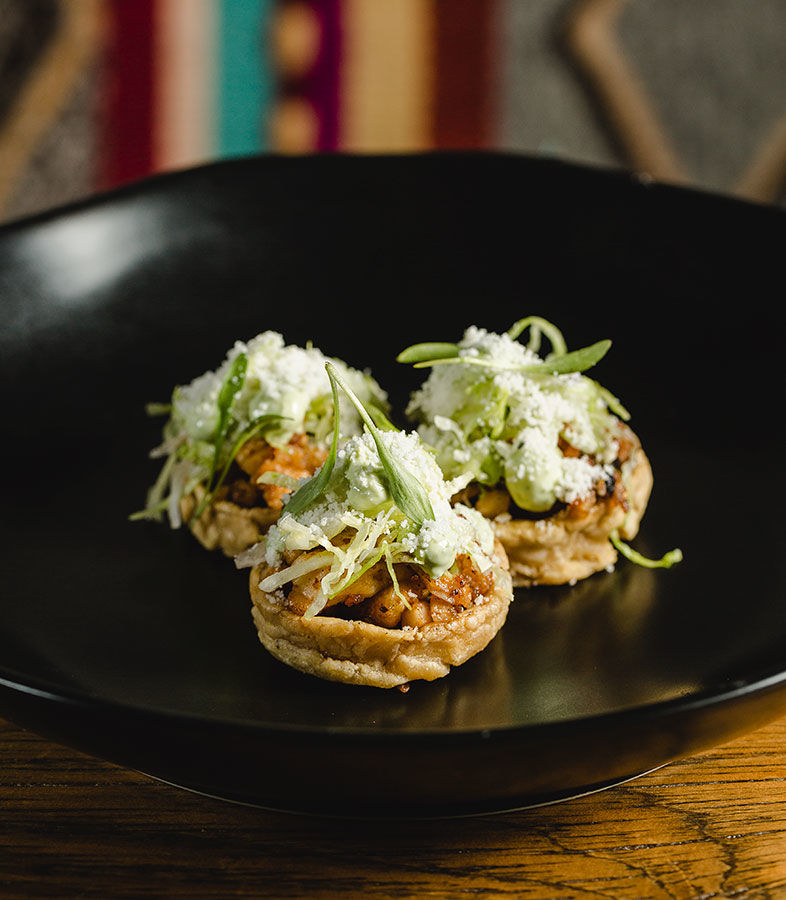
Sopesitos

Sopesitos are similar to Oaxaca’s memelas, almost like English muffins of masa. Tahona serves a trio of them topped, respectively, with delicious smoked mushrooms, barbacoa (if anything says barbacoa on their menu, order it, because it’s Mora’s crowning achievement here), and a less successful surf ’n’ turf of octopus and chorizo. The octopus tastes a tad low-tide, like it swallowed too much seawater. Mora’s not delicate when dressing or topping a dish, which works on the shishito peppers (a ticker-tape parade of chile morita, queso fresco, and partially ground corn nuts), but not so well in the otherwise nice kale salad (with fresh pears, queso añejo, pomegranate and pumpkin seeds, and too much morita-citrus vinaigrette).

I often pass on housemade guacamoles, which are like the miso soup of Mexican food—largely ceremonial, rarely distinctive. But Tahona’s is both delicious and different, with a thin line of ground chapulines. Yes, grasshoppers sound gross (eating them whole has freaked me out on multiple occasions), but he grinds the Oaxacan delicacy into a tangy-hot spice that brings a deeply Mexican electricity to the guac. Plus, chicharrones are served instead of chips. And chicharrones (fried pork skin) make chips seem a lesser participant of deep-fryer exercises.
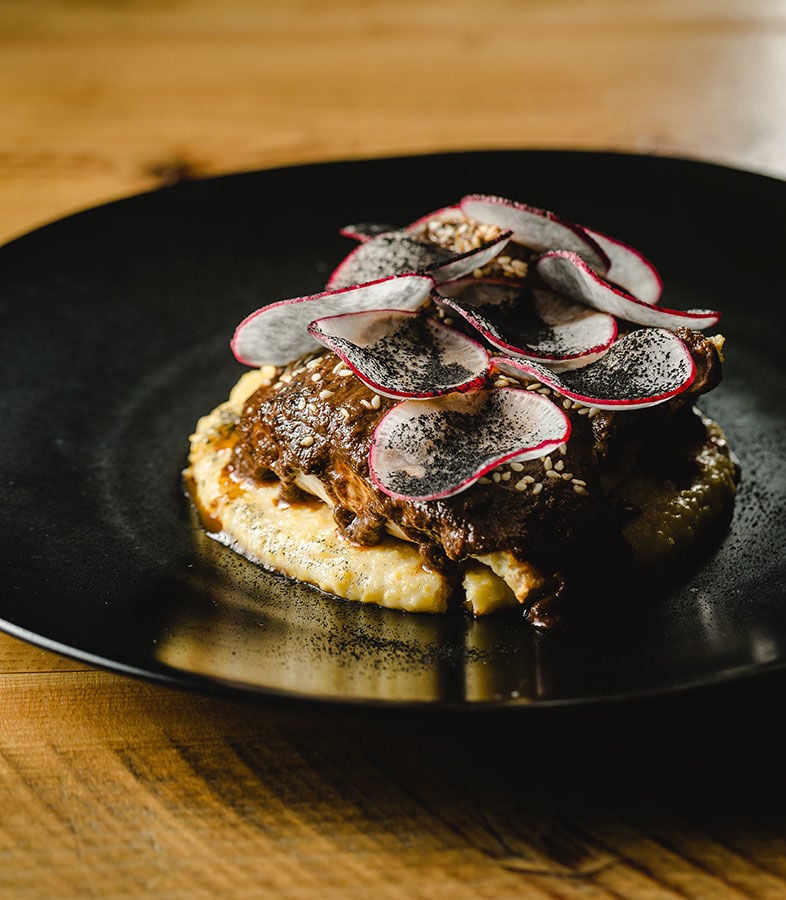
Tahona Brings New Blood into Old Town

Tahona Brings New Blood into Old Town

Cornish hen mole

Almost every Tahona taco delivers, some more than others. The barbacoa (on special one night) makes all sorts of pains go away, existential or otherwise. In the most recent census, at least 40 percent of San Diegans identified their religion as carne asada. And while Mora’s marinated steak may be thicker and less crispy/well-done than locals are used to, it politely surpasses most local taco shops with its chorizo mayo, avocado crema, and onion ashes. The fact that he uses refried beans shows he doesn’t let fancy Noma chops get in the way of a Mexican comfort food.

Aguachile is another Oaxacan tourist attraction and state pride. Most locals know only the clear, lime-based versions, but try Tahona’s red aguachile with shrimp, tinted with chipotle peppers. The scallops don’t fare as well, with an overriding bitterness. That’s usually one of two things—too much lime zest and pulp, or wet scallops, which are treated with sodium tripolyphosphate. I doubt Mora’s using STPP scallops, so it’s probably a zesting gone overly energetic.
Tahona Brings New Blood into Old Town

Tahona Brings New Blood into Old Town

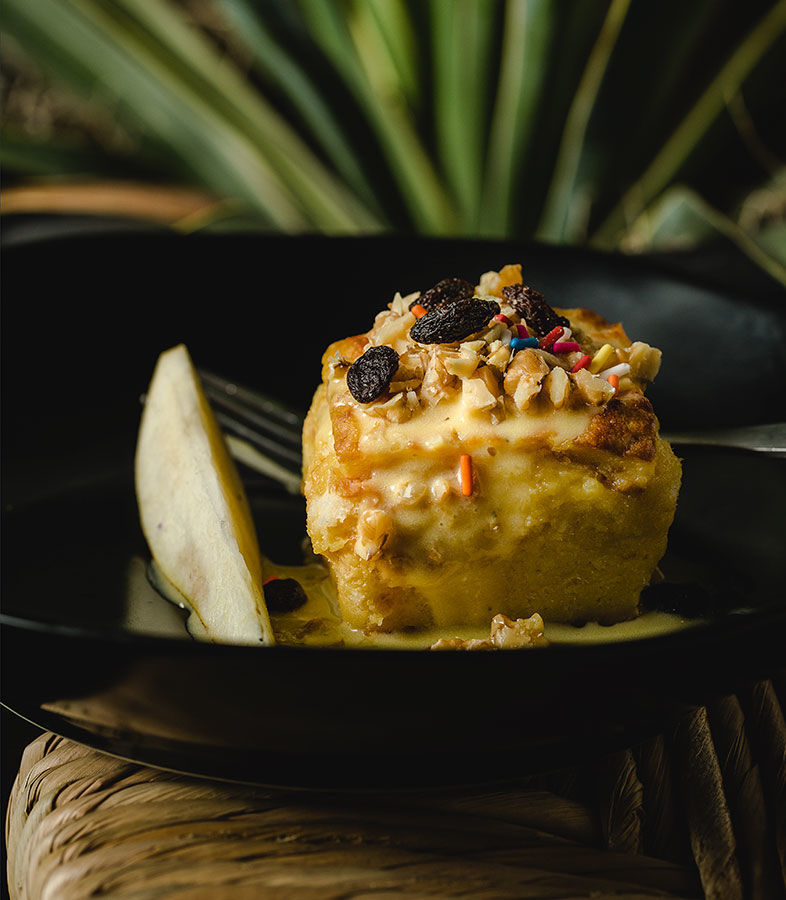
Capirotada

For dessert, they’ve got a nice churro with charred marshmallow fluff and chocolate sauce. But the exclamation mark is the capirotada, a Mexican-style bread pudding with dulce de leche and crème anglaise poured over candied walnuts, with a side of pears for freshness and zing.

New ideas have died in Old Town, repeatedly. Live mariachi and cruise-ship margaritas have a debilitating gravitational pull on many visitors. But the city just approved a measure to triple the housing here (from 474 to 1,405), which suggests that real, modern life is no longer their bogeyman. And the cozy, casual Tahona stands, quietly, on the precipice of overdue change.
Tahona Brings New Blood into Old Town

Tahona Brings New Blood into Old Town

Justin McChesney-Wachs
Tahona Brings New Blood into Old Town

Mezcal flight at Tahona

Subscribe to our newsletters

Select Options

By subscribing you confirm that you agree with our Terms and Conditions and Privacy Policy.

Food & Drink AUGUST 31, 2026

The Best Basque Cheesecakes in San Diego

After a blind taste test, these four desserts came out on top—see the winners here

The Best Basque Cheesecakes in San Diego
Courtesy of Muse Cheesecakes & Bakery

Basque grandmothers have not been making it for centuries. If you’re a millennial, there’s a strong possibility you’re older than the dessert itself. Yet somehow in less than 40 years, the Basque cheesecake—a half-pudding, half-cake creation with a top that looks like a mistake—managed to ooze its way onto menus all over the world.

It became the undisputed dessert star of San Diego’s restaurant world this year. So we invited 19 of the top restaurants, pastry chefs, and bakers to bring their best to the San Diego Magazine office for a blind taste test to find the best in the city.

First, a little history and context.

In 1987, after failing to find a job as an electrician, Santiago Rivera started working as a bartender at his parents’ unassuming pintxo bar La Viña, in San Sebastián, Spain. He was a naturally curious, self-taught cook who spent his free time testing recipes, tinkering with ingredients, and tweaking techniques.

So when it came to the cheesecake—which hadn’t changed much since its invention (a rudimentary version was served at the first Olympics in Greece 4,000 years ago, and the modern New York version in 1872)—he got radical with it.

He removed the crust (partly just to speed up the process because time is money for a small business). Without the crumbly crust, the experience was far creamier, less granulated. Then he cranked the oven to 400 degrees, nearly 100 degrees hotter than the normal baking temperature.

The result? The top became deeply caramelized, almost burnt, while leaving the center luxuriously soft and loosely set. The restaurant became a legend because of this breakthrough in the dairy arts, and his father never let him stop making it after that.

Now, 67 years after the restaurant’s opening, La Viña stands out for the unceasing line spilling onto the street, and the remarkable amount of curd cultists standing nearby, hovering over cream-smeared plastic containers. It’s the kind of scene that makes you stop and think: What the hell are they eating?

Now, the blind tasting. To keep things fair, the contenders were divided into four categories: Restaurant Traditional, Restaurant Flavored, Bakery Traditional, and Bakery Flavored. (It’s a tad unfair to pit a baker who specializes in the one glorious thing against a restaurant that cooks dozens of things.) Each entry was served blind and judged on texture, flavor, and number of vaguely inappropriate food moans.

The logistics were chaotic, to say the least. Our fridge—not a walk-in, sadly—was packed to the brim. Each cake was sliced, secretly labeled, and shuffled onto plates while the team gathered in the conference room. The whole shebang was not in any way sponsored by Lactaid, despite our various attempts to convince them of this ripe marketing opportunity.

The judging became gloriously unhinged. We heard it all, from “I don’t care how the cheesecake gets in my mouth, it just needs to happen,” and “Is it supposed to be this jiggly?” to “Kind of a baby throw-up situation,” “Straight cheese,” and “I’m getting vague socks there.”

But four Basque cheesecakes stood out among the rest, earning themselves the title of Best Burnt Basque Cheesecake in San Diego.

Courtesy of Mesa Agricola

Restaurant: Traditional

Mesa Agricola

A restaurant for the people. Rosarito native chef Juan González and Megan Strom are the ideal married couple to be running a farm-to-table joint. She’s been a farmer for decades, selling top-notch produce to some of the best restaurants in California—which is how the two met. A couple years ago, she started working at the small organic farm in Valley Center run by Mike Reeske, who had spent decades breeding the perfect heirloom beans for SoCal’s climate. He recently retired, and gifted those strains to Strom—who grows them (and other crops) for their tiny Escondido taco/burrito shop specializing in guisados (Mexican stews).

A Basque cheesecake in a taco shop? You bet. Juan’s got family roots in Spain and has cooked in Spanish kitchens.

Mesa Agricola’s winning Basque is by far the most “burnt” of all contenders—so much so that an Instagram follower declared it a mistake. But as Chef Juan notes, there’s an art to hitting the sweet spot where “the bitterness of the char balances the richness and sweetness without turning it into ‘chicharrón.’” Plus, char is a core charm of Baja cooking. It’s the perfect Basque for the people who prefer setting their campfire marshmallows fully on fire.

Photo Credit: Casiel Sanchez

Restaurant: Flavored

Moe’s Steakhouse

With red leather booths and a retro steakhouse vibe, Moe’s in Mission Beach is a good cheat day destination. The menu is flavor maximalism—dry-aged steaks, housemade pastas, brown liquors, and sides like the lobster truffle mac ’n’ cheese. Pastry chef Eli Peralta (whom some might remember as the creator of The Patio on Lamont’s “Twisted Elvis”—a peanut butter-banana brûlée stunner) brings that same intensity to the dessert menu.

Baked at sister restaurant Molly’s (6 feet away), his Basque is served on a bed of caramel with walnut brittle and a dollop of whipped cream, an indulgent recipe that converted the pastry chef himself. “I wasn’t crazy about cheesecakes,” Eli admits. “Then I started making different flavors, and I started to like them.” He’s not the only convert: During our blind tasting, one judge likened the cake to crème brûlée, concluding, “I don’t even like crème brûlée, but I like this.”

Courtesy of Muse Cheesecakes & Bakery

Bakery: Traditional

Muse Cheesecakes & Bakery

Every creative pursuit starts with a muse—and Lada Sadovnyk’s has been the Basque cheesecake for years. In Ukraine, she baked them for friends and family gatherings, never imagining she would one day build an entire bakery around them in the US. “When we moved to San Diego,” she explains, “I kept thinking, ‘What can I do? What do I really love to do?’”

The answer is pretty fantastic.

After obsessing over proportion and techniques, chasing that molten center and deeply caramelized top, what began as an online recipe evolved into something entirely of her own.

She moved from her home kitchen to a rented commercial kitchen close to Sports Arena. The orders kept coming, and so did the pressure. “At one point, I was thinking about divorcing my husband,” she says with a laugh (while sitting next to him). The grind paid off: Today, Muse Cheesecakes bakes roughly 1,200 cheesecakes a month and is planning to open its first brick-and-mortar home in Pacific Beach.

For our competition, the expectations met reality. Muse has made a quick name in San Diego as the Basque to beat. In a blind taste test, there’s no bias, no reputational shine to sway a room. The response on reveal: “Oh, of course.”

Photo Credit: Casiel Sanchez

Bakery: Flavored

Bite Cheesecakes & Bakery

Husband-and-wife duo Alex and Anastasia Kiperband pulled off the number of failures (and then some) that are required of any search for the best recipe. After adjusting baking temps, sugar rations, and experimenting with different brands of cream cheese and heavy cream—they finally landed on something worthy of a business license.

“When we started this business in America, we were really nervous,” Anastasia says, co-owner of Bite Cheesecakes & Bakery.

Once they won over those first customers, their confidence grew enough to start tinkering. When Dubai chocolate took social media by storm, they developed their own version, making the pistachio paste from scratch before layering the buttery kataifi pastry beneath a glossy chocolate shell to create its signature Dubai Chocolate Basque Cheesecake.

“In a lot of situations, we’re converting cheesecake haters to cheesecake lovers,” they say. “That’s probably the best feedback that we get.”

Camila Ibarra Gallego is a CaliBaja native pursuing a master's degree in culinary journalism at the Basque Culinary Center. Shaped by the culturally rich, bicultural megaregion, she's passionate about sniffing out stories that connect people, territory and culture through food. When she's not tumbling down internet rabbit holes, you can find her pretending to be a wine connoisseur at a local wine bar or nose-deep in a good book.

Food & Drink AUGUST 28, 2026

A New Specialty Coffee Shop Has Arrived in La Jolla Shores

Casa Del Lobo blends coffee culture with Mexican design, serving seasonal drinks alongside its own handcrafted ceramics

A New Specialty Coffee Shop Has Arrived in La Jolla Shores
Courtesy of Casa Del Lobos

There aren’t many places left in San Diego with a lack of specialty coffee options. This week, we can add La Jolla Shores to that list—Casa Del Lobo has arrived. Life-and-business partners Christine Silver and Saul Moreno came to San Diego the same route so many of us have: coming for vacation and falling in love with the city and each other.

Silver was working on Wall Street in New York City and decided to visit some friends in SoCal after the pandemic clouds lifted. Moreno happened to be visiting from Mexico City at the same time. The two met, moved here, got married, had a baby, and thought, “Hey, why not start our own business?” 

Apparently, their whirlwind lives needed more windy whirls. (Windy whirls? They like to stay busy.) Casa Del Lobo isn’t either of their first rodeos, although it’s both of their first forays into the coffee space. “We’re both serial entrepreneurs,” laughs Silver. She runs a venture capital business that invests in women-owned wellness companies, and he runs his own logistics company out of Mexico City. “We keep saying, ‘Oh, it’s the last time we’ll start a business. Then all of a sudden, a year or two later, we can’t help ourselves.’”

The idea to open Casa Del Lobo initially started when the pair began decorating their house in Windansea. After looking for large-scale ceramic planters and outdoor fountains that met their quality expectations without egregious price tags (something Moreno was used to seeing in Mexico), they realized there simply weren’t any comparable options here. 

So rather than continuing to drive over the border to go shopping, they decided to bring Mexican ceramic style to San Diego. 

The partners now run a manufacturing facility in Tecate, specializing in large-format ceramics and specialty glazes. As they sought out potential locations to open a planter store, they realized they could go one of two routes. One, get a warehouse in an industrial area and rely on marketing to get the word out. Or two, they could diversify by opening a homey retail store where people have to walk through the shop area to get a cup of specialty coffee.

They went with option two, and coffee quickly became their primary objective. 

“My husband and I, we love coffee,” she says, adding that whenever they go on vacation, no matter where they are in the world, figuring out where to get a java fix every day is their number one goal. (Side note: I can strongly relate.) Mexico City coffee and design culture lean heavily urban and industrial in feel, mixing both an Old World architecture with modern sensibilities—something Silver says they felt was missing locally, specifically in La Jolla Shores.

Casa Del Lobo, which translates to “house of the wolf” in Spanish, soft opened this week, with traditional coffee offerings like lattes, cappuccinos, and Americanos, along with four housemade syrups that will change seasonally (currently, they are vanilla, lavender, orange blossom, and brown sugar cinnamon). For now, the food is simple pastries from Knead Artisan Bakery, but Silver says they plan to add more options like breakfast burritos, paninis, and natural wine in the future. Eventually, customers will also be able to purchase their signature ceramics online, and one day, they may open more locations along the California coast. 

But for now, they’re just getting started in La Jolla. “We’ll be here forever,” says Silver. “We want this to be the first of many.”

Casa Del Lobo is now open at 2246 Avenida de la Playa every Tuesday through Sunday, 7 a.m. to 1 p.m. 

San Diego Restaurant News & Food Events

Beth’s Bites

Beth Demmon

About Beth Demmon

Beth Demmon is an award-winning writer and podcaster whose work regularly appears in national outlets and San Diego Magazine. Her first book, The Beer Lover's Guide to Cider, is now available. Find out more on bethdemmon.com.

Food & Drink AUGUST 26, 2026

Filo Brings a Taste of the Mediterranean to Bankers Hill

The team behind El Agave and Nómade will open a breezy new restaurant with tapas, housemade pasta, seafood, and plenty of wine this September

Filo Brings a Taste of the Mediterranean to Bankers Hill
Courtesy of Juan Carlos Gomez

After running El Agave Restaurant & Tequileria in Old Town for 30 years and opening Nómade Tapas & Records in North Park in 2025, owner Juan Carlos Gomez wasn’t actively on the hunt for a new project. But sometimes, you have to grab the opportunities as they come, unexpected though they may be.

He was taking a stroll in Bankers Hill last year when he noticed Barrio Star was closing after 17 years. “[It] was a neighborhood staple for a long time,” he says. So he figured he’d take a look. “We were talking with ownership and threw out an offer, and then it was accepted. So we were like, ‘Okay, cool, guess we’re going to get a new concept going!” (Much respect to the YOLO business style.)

That new restaurant is nearing completion. Filo will open early in September. The restaurant’s name, pronounced fie-low, references phyllo, the Greek word for “leaf” and an unleavened pastry dough commonly used in Mediterranean (often Greek) cuisines. Gomez says the menu will range from all over the Mediterranean region.

“I’ve always been a fan of European cuisine, obviously, but I can’t land on just one,” he laughs. “I’m part Spanish, so we wanted to do something Mediterranean, have a little bit of Spanish, have a little bit of French, Italian, Greek… a lot of olive oil, a lot of sea salt, and very, very light seasoning.”

Courtesy of Juan Carlos Gomez

Although the menu feels European, Gomez says expect the vibe and ingredients to feel very Southern Californian. There will be tapas, of course, and other small plates, along with housemade pastas, salads, with lots of seafood (like a whole branzino) coming from local purveyors. The accompanying beverage program will feel equally breezy, “fresh, very light, citrusy, salty,” he says. “We’re going to have a pretty hefty wine list and full bar.”

Gomez’s goal for Filo is for it to feel like a laid-back, seaside eatery on the craggy Mediterranean coastline—light colors, white oak, lime wash, flowing between the indoor dining room and outdoor patio. Personally, a European escape sounds pretty awesome right about now. 

Filo opens at 2706 Fifth Avenue in early September. Initial operating hours are 4 p.m. to 10 p.m. daily, with lunch and happy hour coming soon. (Subject to change.) 

Courtesy of Nobu Del Coronado

San Diego Restaurant News & Food Events

Beth’s Bites

  • It’s hotter than a mile of Georgia asphalt in July, but relief is on the horizon. No, I don’t mean autumn (or as we San Diegans call it, “second summer”). I’m talking about the Sails & Ales Beer Fest at Kona Kai San Diego. The annual brew fest takes place on Saturday, September 12 from 1 p.m. to 5 p.m. at the Polynesian-themed Shelter Island resort, with over 30 local beverage makers bringing their most refreshing products to the hot and thirsty masses. Look for names like Pure Project, Coronado Brewing, Ketch Brewing, and a whole lot more, all of whom are donating a portion of the proceeds to Surfrider Foundation San Diego. Tasty waves? A cool buzz? Sounds just fine. 
  • If you seek edible respite before September 12, Hotel del Coronado has you covered. On Friday, September 11 from 6 p.m. to 8 p.m., the man behind global sushi powerhouse Nobu—Chef Nobu Matsuhisa himself—will host Taste of Nobu, an immersive evening of sushi and signature cocktails on the Paseo Lawn. Prepare yourself for the famous black cod miso, Wagyu dumplings, hand rolls galore, and much more. (Personally, I will also prepare myself to be somewhat star-struck.)
  • I love a group grilling get-together, something Kingfisher must have known when the Golden Hill restaurant launched its Nướng Nights series. The recurring patio grill event brings patrons to the curb with a casual, but ridiculously delicious collection of skewers alongside special cocktails, this month coming from Realm of the 52 Remedies. Keep August 26 open for grilling glory (and save September 29 for the Mid-Autumn dinner with chef Helen Nguyen of NYC’s Saigon Social).

Listen Now: The Latest in San Diego’s Food and Drink Scene

Have breaking news, exciting scoops, or great stories about new San Diego restaurants or the city’s food scene? Send your pitches to [email protected].

Beth Demmon

About Beth Demmon

Beth Demmon is an award-winning writer and podcaster whose work regularly appears in national outlets and San Diego Magazine. Her first book, The Beer Lover's Guide to Cider, is now available. Find out more on bethdemmon.com.

Studio S AUGUST 28, 2026

The Art of Slowing Down at Little Frenchie

Inspired by the effortless charm of French cafés, this taste of France on Orange Avenue invites guests to embrace the simple pleasure of taking their time.

The Art of Slowing Down at Little Frenchie
Courtesy of Little Frenchie

Strolling down Orange Avenue on a sunny afternoon, you’ll hear the hum of beach cruisers rolling by and visitors making their way toward the Hotel del Coronado. Dogs pause to greet one another on the sidewalk, palm trees sway overhead, and for a moment, you’re convinced you’re living inside the postcard from the gift shop you just passed.

Then the scene shifts. Towering white columns, black café awnings and gold-trimmed windows frame Little Frenchie, where woven bistro chairs spill onto the sidewalk and servers deliver bubbling crocks of French onion soup. The scent of caramelized onions and melted Gruyère is practically an invitation to ask, “How long for a table for two?”

That feeling of pulling up a chair and staying awhile is exactly what inspired Little Frenchie. French cuisine has a reputation for feeling a little intimidating, but the restaurant is rewriting that narrative with food and wine that feels approachable.

“Sometimes when you read a French menu, you come across words you can’t even pronounce,” David Spatafore, the owner of Little Frenchie, says. “We wanted to create a restaurant where people felt comfortable.”

Little Frenchie was designed to capture the spirit of the French sidewalk cafés that inspired it. Dating back to 1917, the space already carried the charm of a Parisian bistro, with architectural details that felt more at home on a European street corner than in Coronado. The team saw an opportunity to create a restaurant that matched the character of the space while filling a gap in the neighborhood.

The result is a French restaurant that honors tradition without taking itself too seriously.

At Little Frenchie, classic French techniques are at the heart of the menu, but there is always room for creativity. A cassoulet featuring Toulouse sausage and duck confit pays homage to the recipes and regions that inspired it, while a rich hot chocolate made with ingredients imported from France brings a taste of French café culture to Coronado.

The team loves finding unexpected ways to make familiar dishes feel new. A burger becomes a showstopper when it is finished tableside with melted raclette, while a French Dip gets elevated with prime beef and Wagyu makes its way into the burgers. Even Eggs Benedict gets a French twist, swapping the traditional English muffin for a buttery croissant. The GB&J, Little Frenchie’s take on a grilled cheese, brings that same playful approach with seasonal jam and French Brie layered into a comforting classic.

Nearly everything at Little Frenchie is made from scratch, with ingredients carefully chosen to match the restaurant’s standards. Even the bread receives special attention. Each morning, the team sends a car to Prager Brothers Artisan Bread to pick up freshly baked loaves, ensuring every element of the meal reflects the restaurant’s commitment to quality.

Wine is woven into the experience just as naturally as the food. Inspired by the effortless pairings found in French cafés and bistros, Little Frenchie’s by-the-glass selection invites guests to sip their way through different regions and discover new favorites without the pressure of knowing all the rules.

Partner Content
Food & Drink AUGUST 18, 2026

Fish Guts’ Pablo Becker Is Betting Bigger on Barrio Logan

The city's fish taco hero is opening Concrete Cowboy across the street, plus a home-cooked Mexican sandwich spot

Fish Guts’ Pablo Becker Is Betting Bigger on Barrio Logan
Courtesy of Fish Guts | Photo Credit: Adam Martinez

You have to be crazy or a genius to name a restaurant Fish Guts. You have to be even crazier to open a restaurant that holds maybe two dozen people at a time—if you don’t mind elbowing one other while scarfing down some of the best fish tacos in San Diego.

And yes, “best” is a relative term. But in Fish Guts’ case, it’s for real—and that’s saying something in a town literally world-famous for fish tacos

Ever since Pablo Becker opened up his diminutive eatery in 2023 at the corner of Logan Avenue and Sampson Street in Barrio Logan, Fish Guts has been named one of the city’s best new restaurants in 2023, Critic’s Pick for the best fish tacos in San Diego in 2024, 2025 and 2026, as well as readers’ top pick in 2024. It’s like if Rubio’s married into the royal family. 

Most of his ingredients come straight from the cold waters of the Pacific Ocean, which happens to be down the street. His de espada (blackened swordfish) taco is the stuff of legend. He’s kept Fish Guts operating at an elite level, which tends to happen when you work for five years in Chicago under chef Richard Sandoval (who, by chance, is also his cousin) and open an ahead-of-its-time high-end modern Mexican restaurant in East Village (El Vitral Restaurant & Tequileria, 2009-2013). 

Now Becker is branching out again, opening two new concepts in Barrio Logan this fall. 

The first will be upstairs from Fish Guts, which at one point was destined to become an intimate omakase counter. Santo Poco will be a lunch-only sandwich shop, offering takeout and delivery (no dine-in), and the sandwiches will be a little Mexican, a little French, a little Italian, a little from Chicago, a little from New York. Basically, a bunch of different styles all on really, really good bread. 

“There’s probably going to be a Cuban-style sandwich in there with a touch of Mexican, some cold cut Italians, too, putting my touch on them,” he says. “That’s what I feel like is my style of cooking.” 

Things will be traditional, but inventive. Like his fish & chips taco at Fish Guts: two classic dishes, one killer mash-up. There will also be a hat tip to the late, great Anthony Bourdain, a sandwich called the Antonio Bourdain. 

The second will be across the street from Fish Guts in the former Lia’s Lumpia space. Concrete Cowboy will be a taco-driven joint on the same wavelength as Fish Guts (keep it simple, keep it special), but featuring land animals rather than sea brethren. Think tacos made with duck confit, ribeye, pork belly, skirt steak. 

The inspiration behind Concrete Cowboy comes from Becker’s father, a lifelong Western obsessive, despite growing up in Mexico City’s urban metropolis. “He always liked that cowboy life, that vibe,” he says. “I always say ‘Dad, you just grew up in the wrong city.”

He’s aiming to open Santo Poco in October and Concrete Cowboy in November. Neither require massive renovations, and while the former Lia’s Lumpia space will keep the cabin-esque aesthetic, he’s creating more of an adobe-style exterior and an interior lined with Western-themed wallpaper and taxidermied animals. He’ll also tweak the bar layout to move from a fast-casual feel to full service. 

Local designer Dane Danner is designing both spaces and visual direction for menu layouts, logos, and packaging, going for low-key, but high on vibes. Once Concrete Cowboy opens, Fish Guts will temporarily close to remodel the space to switch its white palette for a warmer feel, plus introducing a refreshed menu featuring some new tacos and other items. 

Could another Fish Guts be on the way somewhere else in San Diego? Not likely, says Becker. “Fish Guts is cool, “ he says. “I feel once you start branching out, it’s more forced, not as organic.” So for now, count on Becker staying in the neighborhood. 

Santo Poco opens for lunch daily October 2026, 2222 Logan Avenue (above Fish Guts). Concrete Cowboy opens Tuesday through Sunday for lunch and dinner November 2026, 2219 Logan Avenue.

Beth Demmon

About Beth Demmon

Beth Demmon is an award-winning writer and podcaster whose work regularly appears in national outlets and San Diego Magazine. Her first book, The Beer Lover's Guide to Cider, is now available. Find out more on bethdemmon.com.

Food & Drink AUGUST 16, 2026

Madison on Park Temporarily Closing Next Month

The University Heights eatery will close September 7 for a multi-month renovation and rebrand

Madison on Park Temporarily Closing Next Month
Courtesy of Madison on Park

Ten years ago, restaurant design centered around sleek minimalism. Fonts lacked serifs, clean lines dominated, and any manufacturer that made globe-shaped chandeliers must have made an absolute killing.

Things have changed since then, and Jeff Fink says it’s time for Madison on Park to glow up. On September 7, Madison will temporarily close its doors for a top-to-bottom renovation of the space and concept. Fink hopes to reopen this fall ahead of the busy holiday season, with a new look he calls moody mid-century maximalism. 

“We have to take into consideration what’s going on culturally,” he says. When Madison first opened, TikTok wasn’t a thing in the U.S. and craft cocktails felt relatively cutting-edge. Today, he sees a resurgence in the vintage look, handmade goods, and low-to-no ABV drinks dominating menus everywhere. 

Courtesy of Madison on Park | Photo Credit: Andy McRory

Fink and his partner Matt Sieve have already dabbled with that sort of motif at Sonny’s Pizza, their Brooklyn-inspired joint around the corner. Fully half of the cocktail menu is made up of spritzes, mocktails, and Negronis. Madison 2.0 will take it further.

The new concept doesn’t have a name yet—Fink says they have to feel out the vibes as they make progress with the design. “The name comes when you see it appear,” he says. But he has a few design elements in mind: things like more artwork and more uplighting. “Not cluttered and overstuffed… I want to keep it intimate, sexy, and immersive.”

Madison rightly earned its rep as one of the best-dressed eateries in San Diego, nabbing an Orchid Award for interior design its first year. The returning designers Anna and David Sindelar originally transformed the space from weird padded walls and fake greenery at Lei Lounge into a mid-century modern wonderland, complete with a signature arched ceiling and geometric patterns aplenty. Michelin-recognized chef Mario Cassineri (Ciccia Osteria, Bice Ristorante) built a menu heavy on Mediterranean flavors mixed with California classics. 

The new menu shouldn’t feel completely jarring, but will take cues from Fink’s recent travels in Spain with his family. Expect shareable plates with lighter ingredients. “Americans eat way too much, and our portions are way too big,” he says. “I like the idea of smaller plates, healthier plates, and being creative… I’d rather see 15 items on the menu that are all less than $20 so that I can try different ones.” Bar manager Danny Kuehner will continue developing craft cocktails and mocktails for the new venture, as well as curating a selection of wine from Europe and locally. 

Courtesy of Madison on Park | Photo Credit: Haley Hill

This isn’t the only project on their plate. Besides running Sonny’s in University Heights and Madi in Normal Heights, later this fall, Fink and Sieve will also open Josie’s, a modern all-day, Midwestern-style diner inspired by Sieve’s Minnesota roots. Like all their restaurants, it’ll hold a special part of their families’ legacies—something Fink hopes people feel as soon as they enter.

“You walk into Sonny’s, you’re like ‘Oh, Jeff’s at home,’” Fink laughs. “[Josies’] will be ‘Matt’s at home.’” The next version of Madison? We’ll have to wait and see. 

Madison on Park will temporarily close on September 7 until October (barring any unexpected delays). Keep up with the newest updates on Madison’s Instagram.


Listen Now: The Latest in San Diego’s Food and Drink Scene

Have breaking news, exciting scoops, or great stories about new San Diego restaurants or the city’s food scene? Send your pitches to [email protected].

Beth Demmon

About Beth Demmon

Beth Demmon is an award-winning writer and podcaster whose work regularly appears in national outlets and San Diego Magazine. Her first book, The Beer Lover's Guide to Cider, is now available. Find out more on bethdemmon.com.

Partner Content AUGUST 21, 2026

This Scripps Clinic Physician is Serving Up Care

Laika Nur, MD, takes her love of volleyball from the court to the clinic as team physician for the San Diego Mojo

This Scripps Clinic Physician is Serving Up Care
Courtesy of Scripps Health

Growing up, Laika Nur, MD, Scripps Clinic sports medicine specialist, loved watching beach volleyball when the Association of Volleyball Professionals tour came to her hometown of Chicago. A talented volleyball player herself, she remembers sitting in the stands all day, and once, even got a couple autographs. Years later, Dr. Nur was attending a professional event focused on women’s sports, and the discussion turned to a new professional women’s volleyball league. The general manager and coaching staff  for San Diego’s team, the Mojo, happened to be in attendance, and Dr. Nur took the opportunity to ask them if they needed a team doctor. Flash forward to the Mojo’s inaugural 2024 season, when Dr. Nur officially became the team physician. Click here to read more about Dr. Nur and how she incorporates lessons she learned on the court into her practice. 

For more nutrition, wellness, and healthy living tips, sign up for the San Diego Health newsletter here.

Partner Content

Eat Like a Local (Who Knows a Guy).

Restaurant news, culinary storytelling, and Troy Johnson’s sharp takes delivered straight to your inbox twice a month.

Close the CTA

Contact Us

1230 Columbia Street, Suite 800,

San Diego, CA