


Food & Drink
Copper Cowboy Is Bringing Western Flair to the Gaslamp Quart...
Read article

Featured articles

Food & Drink

Food & Drink

Food & Drink
Featured articles

Everything SD

Everything SD

Everything SD
Featured articles

Things to Do

Things to Do

Things to Do
Featured articles

podcast-ep

podcast-ep

podcast-ep
Featured articles

Features

Features

Features
Featured articles
Food & Drink
Food & Drink
Food & Drink

We asked some local pros for their best tips on getting through a remodel, without getting divorced, going broke, or losing your mind
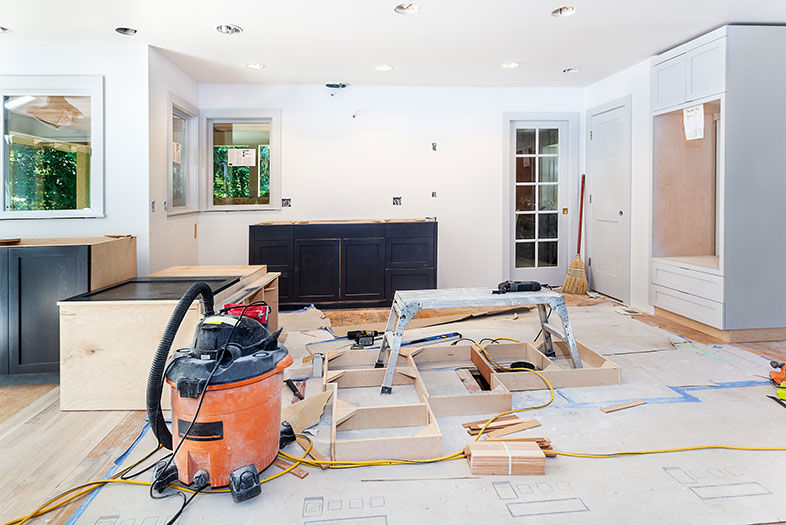
Don’t attempt to remodel a whole house all at once. Do things room by room, and think about the endgame. This means aiming for a consistent design style throughout the home, making sure the materials and finishes complement one another and speak the same design language.
Do your homework, know what things cost, and ensure the project will be properly funded. Your budgets should be practical, with the flexibility to go over by 20 to 25 percent. Unknown problems beneath the surface, like dry rot or termite damage, can quickly increase the overall cost. “People always tell me the worst part of their remodel was that their budget was unrealistic in the long run,” says Dawn Davidson of Design Line Interiors.
It’s the old adage of supply and demand. The busier contractors are, the higher their bids will be. “If possible, wait until the economy slows down and build when it’s not crazy,” Davidson advises. “Otherwise, your budget gets blown out the door.”
The architect is the creative mastermind who draws the plans. Often they’ll have a construction administration (or CA) clause in their contract, which keeps them on a retainer throughout the process, long after they’ve completed the plans. Instead, “save money by hiring them on an hourly basis for any architecture questions that arise during construction,” says Jeff Kull of Jeff Kull Construction Development.
A general contractor is a licensed project manager who oversees all the work, workers, permits, codes, and schedule. He or she can make or break your budget. Ask for references that align with your budget and go preview some of their previous work that falls within that budget. Visit cslb.ca.gov to ensure their license is valid and no complaints have been filed against them. Kull says, “Make sure that any contractor you work with has a million-dollar liability policy that is rated in the state of California.” Ask for names of suppliers they work with. Suppliers might be more candid—for better or worse—about how the contractor conducts business. People think they can save money by skimping on a GC, but that can end up being a mistake, especially if they cannot be on-site every day to personally supervise the project. “It always turns out to be a better project when the client, architect, and contractor can work together as a team from the very start,” Kull explains.
Typically, general contractors prefer to use their own subcontractors, but it’s also okay to hire your own. Subs include painters, electricians, drywallers, tile installers, woodworkers, cabinet makers, plumbers, stone fabricators, landscapers, and flooring installers. Each should have their own trade. Beware of anyone who claims they can do it all.
And before you go all Flip or Flop, know that not everyone and their mother are allowed to knock down a wall. California asbestos law requires anyone handling asbestos to have certification from a training facility, and it must be renewed each year.
Also, take the time to call people who have worked with them in the past. Ask questions like: Were they timely, was their pricing fair, was it high-quality work, did they come back with a lot of extras, and did they stay on schedule? Go see their work and be (respectfully) critical. “Check everything!” Lopez says. “Check the spacing between the cabinet doors, check the light switches that were used, check the quality of the ceiling cans.”
“Never pay by time and material unless you have full-time supervision,” Davidson cautions. Instead, ask subcontractors to line-item their bids, which should present a complete explanation of the work they’re going to do. Watch for unexpected add-ons. For example, in a drywall bid, the sub should price out the cost of various textures and finishes, and round corner beads versus smooth. Beware of bids that come in much lower than others. The cheapest bidder might not be the cheapest option in the end. Know your budget, agree on a price, and write it into the contract that they must adhere to that price.
“A contractor cannot request a deposit of any more than $1,000 or 10 percent of the project, whichever is less,” Kull explains. (It’s state law.) “After that, you have to have substantial commencement before any draw is requested, and it has to be proportionate to the work being done at the time.” Do not cut the last payment until after the final inspection is complete. Reputable contractors will use a fund control service that keeps the client’s money in a separate account during the project. If you’ve taken out a loan, the bank may require this. Kull says, “It’s another safeguard to protect yourself.”
A bold trend could make or break a buying decision. Ask yourself whether the choice is something someone else would appreciate—even if you have no plans to sell your house. “After all, the median tenure of a family in a home is six to nine years,” says Brooke Russo of Big Block Realty. “Create an environment that you enjoy while also making sure expensive upgrades like flooring and countertops aren’t too polarizing in the event you have to sell unexpectedly.”
Time is money. “If someone has a hard time making decisions, they need to spend more time upfront in the planning process,” Davidson advises. Before the first hammer is lifted, sit down and outline the whole project on paper. Order all materials—windows, doors, tile, paint, drawer pulls, light fixtures—as early as possible, and stay ahead of your contractor. Indecision in the middle of the process is what adds time and money.
People often confuse the roles of interior designer (an educated style expert with knowledge of framing, wiring, and building codes) and interior decorator (someone who buys accessories and other decorative pieces to improve a room’s look). A good designer will create and religiously adhere to an overall vision for the space, and ensure all elements work together.
Try to keep the whole-home experience in mind. Things like lighting, potted plants, art, and patio furniture are often the final details that make a house a home. “Most people forget to put that in their budget,” Davidson explains. “It’s like serving a cake without the frosting.”
Communication is key, especially if you’ve moved out during construction. The homeowner should have a sense of progress and know what the immediate schedule is within a three-to-four-week timeframe. “If you don’t communicate, people tend to think the worst,” Kull cautions.
Not be confused with whine, but if your house and your wallet are getting hammered, it seems only fair that you should be able to get hammered, too.
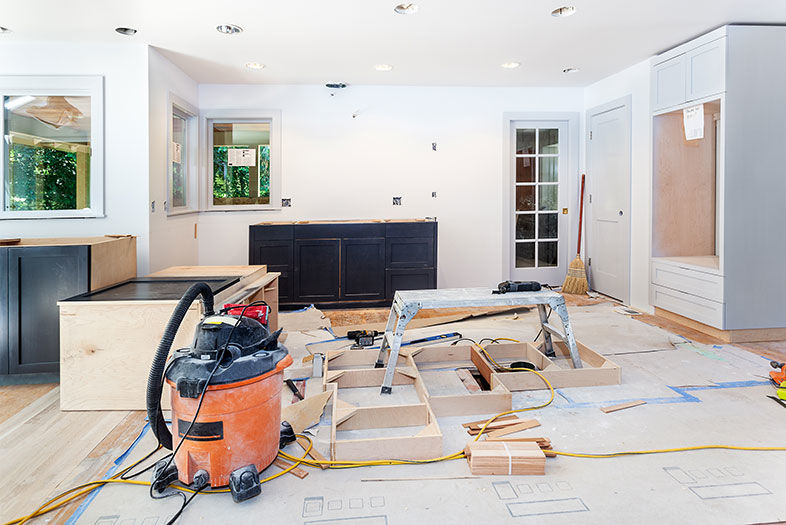
How to Survive a Remodel
