Ready to know more about San Diego?

Subscribe
Archive DECEMBER 23, 2016

Meet the VIP of the Coronado Bridge

What it's like to work in the center divide of our iconic bridge
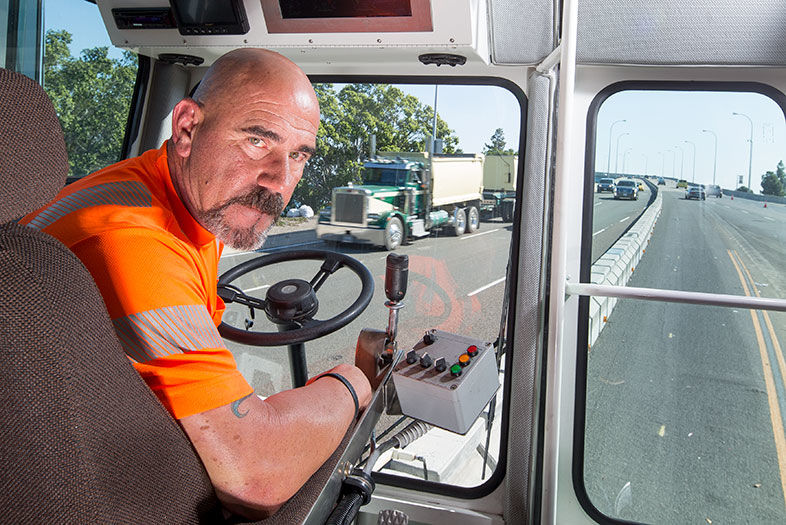
Meet the VIP of the Coronado Bridge
Roger Stonebreaker | Photo by Robert Benson

Roger Stonebreaker

Age: 55
Employer: Caltrans
Job: Maintenance, Coronado Bay Bridge

Ten times a week, Roger Stonebreaker and his crew “take the wall.” In this context, (Game of Thrones reference aside) that entails boarding a machine called “the Zipper” and physically moving the Coronado Bridge’s center divide one lane over to ease the flow of commuter traffic. “I love my job,” says Stonebreaker, aka “Stoney,” an apropos nickname given that his primary task involves the shifting of 1,400-pound cement blocks.

Stonebreaker, who has worked for Caltrans for 17.5 years, is part of a five-person team that maintains the bridge, which also includes duties like painting, emergency tow service, and preserving the catwalk or underside. “I’m the sew person. We do 30-foot curtains for 100 percent containment [when repairs are needed],” he says. “I have two sewing machines, an industrial and a baby one.”

The crew also keeps the bridge clear of debris, which, according to Stoney, is “the only time it really gets to be iffy,” because “you have to get out and clear it and you’re in a live lane.” But the payoff is that breathtaking view. When asked if it ever gets old, he says, “Oh no noooooo! It’s killer. This is my spot, man.”


Fun Fact:

A one-way trip across the bridge in the Zipper takes about 2.5 hours.
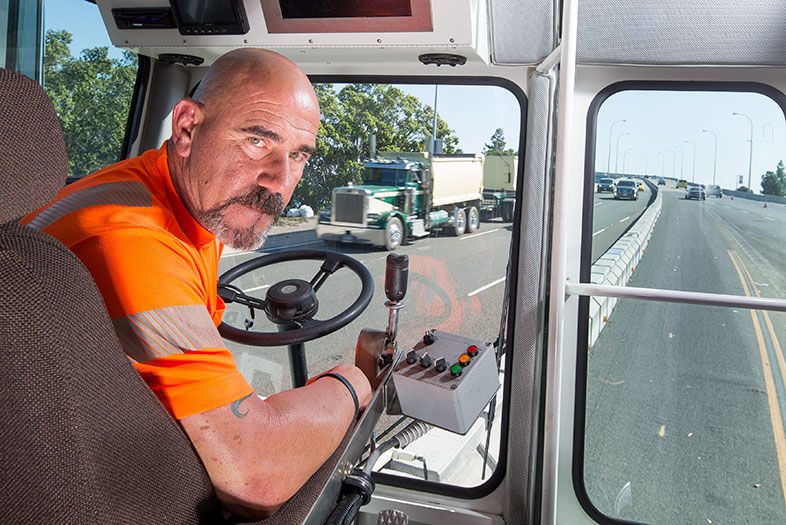
Meet the VIP of the Coronado Bridge

Roger Stonebreaker | Photo by Robert Benson

Subscribe to our newsletters

Select Options

By subscribing you confirm that you agree with our Terms and Conditions and Privacy Policy.

Everything SD JUNE 18, 2026

How to Find & Build Community in San Diego

Meeting new friends is a scary and sweaty venture—that’s where the city's social event planners come in

How to Find & Build Community in San Diego
Photo Credit: Gina Ribando

Walking into a room full of strangers isn’t high on the fun index for most. It’s inherently awkward: Everyone’s standing in closed-loop clusters, deep in conversation, and, depending on your social aptitude, the feeling is somewhere between light apprehension and burning alive from the inside out. The pull to retreat or reflexively look busy on your phone is stronger than the drink you now deeply crave. Having friends is nice, but making friends can be brutal.

There’s plenty of commentary on the loneliness epidemic. Last year, the American Psychiatric Association reported that one in three adults feel lonely at least once a week; those aged 18 to 34 are more likely to feel isolated and even more likely to turn to social media as a result. Dr. Vivek Murthy’s “My Parting Prescription for America” cautioned that “being socially disconnected increases our risk of heart disease, dementia, depression, anxiety, and premature death.” So it’s not just an emotional need; it’s nearly nutritional—chit-chat and the occasional wine-fueled, emotional deep-dive are just as important as Pilates and a reasonable amount of kale.

San Diego Magazine reader-submitted best friend stories Best of San Diego 2025 edition

Finding social connections in any city is hard, but San Diego has very specific challenges. This is largely a transient population that acts as a temporary hotspot for many and a permanent home for few. Pick your reason: high rent, surreal gas prices, housing shortage, meh job opportunities (ranked 71st in the country in 2025), or the fact that active military is a sizable chunk of us (110,000-ish)—stationed here for a stretch, then gone. This constant flow of departees sucks out the potential for deeply established families and friend groups, leaving a good share of nomads, searchers, and plenty of people feeling socially awkward.

“There’s an underlying loneliness in all of us,” says Ramel Wallace, the host of monthly meetup CreativeMornings. “There are not a lot of San Diegans who are born and raised here, so [even those] San Diegans end up being just as lonely as the person who just got here.”

Photo Credit: Blair Kirby

Every month, in local libraries, breweries, and small businesses, there are ambitious social architects who have made a career out of undoing social sads. Extroverted champions of the awkward and searching, they’ve struck gold on in-person connection.

The first moments in a social situation are crucial. Sets the tone and cools the nerves.

At Pitch-A-Friend, singles recruit their close friends to present a slideshow of their dating green flags. The entry points for connection at Pitch-A-Friend are simple, old tech: stickers. Each colored sticker indicates if the wearer is single or taken, queer or straight, or practicing ethical non-monogamy (in a partnership but open to others under a mutual understanding).

At the helm of each showcase is Arielle Fuller, aka Chief Wingwoman, who is making dating hopeful again. As Fuller explains, this takes some of the fear of rejection out of a first interaction. “Putting a sticker on immediately means, ‘I wanted to leave my house and talk to someone, and I am a safe space to come and speak to me,’” she says.

Of course, not all of San Diego’s events designed to make connections are romantic. On the last Friday of every month, hundreds gather at San Diego Central Library for the local chapter of CreativeMornings—an org formed to unite creatives in various cities across the world (designers, artists, writers, producers, performers, architects, etc.).

Photo Credit: Gina Ribando

These aren’t your standard business card swaps, though. Coming from a hip-hop background, host Wallace uses call-and-response to break the fourth wall. “This is not my stage at all, this is our stage,” he says.

In your standard lecture-based meetup, the crowd silently faces the host and acknowledges nobody except those they came with. At CreativeMornings, everyone is encouraged to look around, pay attention to the strangers in the audience—not just the host. Wallace will pull volunteers to read the CM manifesto aloud, and he passes the mic to creatives, who make 30-second pitches to the community about projects they’re working on—and there’s always an invitation to connect and collaborate with the presenters whose ideas struck a chord.

The U.S. Chamber of Connection (yes it exists) says people experience life transitions nearly every year, and in these stretches are more open to forming new habits, relationships, and communities. In a revolving-door city like ours, the transition often comes when someone moves away. In 2023, the Census Bureau reported San Diego had the ninth-highest rates of domestic out-migration in the US.

This poses an issue for friendships that IRL SD addresses in monthly friend-making events called 619 Night.

“San Diego isn’t a place a lot of people stay forever,” says Alex Hunter, the creator of IRL SD. “They leave, and people [who stay] lose that community, so they’re hungry for community again.”

Their website describes the vibe as “backyard party meets college fair meets networking event meets happy hour.” Each follows a theme—wellness, sports, refresh and reset, etc.—with related community groups joining as well.

“The people I encounter are trying to get a fresh start in some capacity, so they’re more open, receptive, and ready to meet new friends,” Hunter says. “They need the circle.”

Photo Credit: Elysian Visions by Deaune Boyd LLC

Another way adults can break out of this disconnection is to revert in unison, says artist Elisa Summiel-Bey. The 2015-ish adult coloring book moment in the US was based on some real science, with multiple studies finding coloring has a noticeable meditative and stress-release effect by taking the brain away from anxieties and mental inventories, and focusing it on a simple, easy art. Summiel-Bey’s company Illustrated Melanin throws “Color & Chill” events, turning that trend into a group exercise, along with live DJ sets, wellness experts doing sound baths, and food and drink from BIPOC-owned local businesses. “I tend to think of coloring as your way to tap back into your childlike play,” she says. “As adults, I think we’re almost scared to let loose and have that unabashed joy.”

All of these social meetups attract crowds of likeminded connection-seekers, but high attendance is not the only thing that matters. Metrics nuts can track RSVPs, but spreadsheets can’t capture intangible wins: friendships made, innovative ideas sparked, collaborations kicked off. At CreativeMornings, Wallace redefines ROI as Return On Imagination. Resounding success means thoughtful inquiries over coffee, curiosity about the monthly meeting themes, and requests to take the microphone.

A simple, observable ROI is an increased number of window shoppers to the experience—on the periphery, watching from afar, looking for the right way in. Hunter from IRL SD sees the anxiety in her DMs. “The scariest part for you right now is not meeting new friends: It’s the unknown,” she says. “It’s the gap between ‘I’m here’ and ‘That’s where I need to be.’ If I can help you understand, or get a little bit of a shape around that unknown, it’s much more approachable.”

Courtesy of IRL SD

Being able to bridge that gap, however, depends on your ability to step out of your own mind. “It’s not a connection crisis; it’s a courage and confidence crisis,” says Fuller. The first hello could be as easy as, “Hey, cool shirt.” These are the types of things she includes in her confidence lab reels on Instagram and weekly newsletters.

Ever left a social event and shot straight into a spiral? Was I being weird? Why did I tell that story? I hope that person moves to another state very soon.

The experts say that post-event self-interrogation is a standard-issue part of being alive.

“I love awkward people, and I love being awkward myself,” says Wallace. “It’s humbling to experience: ‘I’m not alone. Finally someone is not put together.’ So give yourself that grace.”

Jeannine Boisse (she/her) is a freelance writer and professional creative with a background in Radio & Television. Based in sunny San Diego, Jeannine spends her time exploring the city's vibrant brewery scene, cooking up new recipes in the kitchen, and connecting with new people.

Everything SD JUNE 12, 2026

San Diego Neighborhood Guide: Rancho Bernardo

Discover eateries, outings, and shops within this inland North County community

San Diego Neighborhood Guide: Rancho Bernardo
Courtesy of Rancho Bernardo Inn

Just south of Lake Hodges near 4S Ranch and Poway, Rancho Bernardo is a suburban community that blends residential neighborhoods with industrial pockets, elevated by a decidedly diverse food scene.  

Over 60 years ago, this North County neighborhood was once part of a family ranch. Since that time, big tech companies have taken up residence here, including Amazon, Sony Electronics, Oura Ring, HP, Teradata, and ASML. Rancho Bernardo Inn serves as a community hub, with locals frequently meeting at the hotel’s restaurants, golf course, and spa.  

Whether it’s work or a round of golf that brings you to Rancho Bernardo, we’ve taken care of the agenda planning with our guide to the area’s best restaurants, activities, and shops.

Courtesy of Avant Restaurant

Rancho Bernardo Restaurants, Bars, and Coffee Shops

Avant

Sample ingredients plucked straight from Rancho Bernardo Inn’s onsite garden and served at their signature restaurant Avant. One of the neighborhood’s most upscale dining options, they serve a French-inspired menu with nods to California, including many seafood options. Don’t miss their more casual sister restaurant Veranda for al fresco dining.

17550 Bernardo Oaks Drive

Things to do in Ramona, CA near San Diego featuring

The Kitchen at Bernardo Winery

Wood-fired pizzas and handmade pastas are standouts at The Kitchen, Bernardo Winery’s counter-service restaurant specializing in Sicilian flavors. Charcuterie boards and bruschetta make for great starters or snacks while wine tasting.

13330 Paseo Del Verano Norte

Bushfire Kitchen

Fast-casual and family-owned eatery Bushfire Kitchen recently opened a location in Rancho Bernardo, serving sandwiches, bowls, salads, burgers, protein plates, and housemade empanadas. Bushfire prepares comfort food with healthy ingredients, and offers plenty of vegetarian and vegan options.

11962 Bernardo Plaza Drive, Suite 110

The Cork & Craft

Some might call The Cork & Craft an overachiever. This gastropub has an in-house craft brewery and winery: Abnormal Beer and Wine. The more, the merrier. Their sushi menu is definitely worth exploring, but don’t miss other specialties like garlic noodles, chicken wings, and pork belly.

16990 Via Tazon

Courtesy of Carvers Steaks & Chops

Carvers Steaks & Chops

You don’t have to leave Rancho Bernardo to get a white tablecloth steakhouse experience. Carvers Steaks & Chops has prime rib (their best seller), filet, ribeye, porterhouse, New York strip, and other cuts, served alongside crab-stuffed mushrooms, wedge salad, French onion soup, potato skins, and other steakhouse specialties.

1940 Bernardo Plaza Drive

Burma Place

This no-frills Burmese restaurant is known for its traditional tea leaf salad that’s topped with sesame and sunflower seeds, garlic chips, peanuts, tomatoes, jalapeños, fried yellow beans, and fermented green tea leaf dressing. Tucked into a nondescript strip mall, Burma Place is a great takeout option when you want to eat garlic noodles, fried rice, chicken curry, and samosas from the comfort of your couch.

16719 Bernardo Center Drive, Suite A

Phở Ca Dao

Find authentic Vietnamese cuisine at Phở Ca Dao, including favorites like phở noodle soup, vermicelli noodles, broken rice dishes, and spring rolls. One of eight locations throughout San Diego, this family-owned chain uses robot servers for food delivery.

11808 Rancho Bernardo Road, Suite 100

The Kebab Shop

It’s all about the sauce at fast-casual Mediterranean restaurant The Kebab Shop. Smothering your chicken shawarma, gyro, or falafels in garlic yogurt, cilantro jalapeno, fire chili, and dill yogurt sauce is practically a rite of passage. The hardest part is deciding whether to order a wrap, bowl, or salad.

11980 Bernardo Plaza Drive

Casa Lahori

Get a taste of South Asian flavors at Casa Lahori, a Pakistani restaurant noted for its grilled meat kabobs. Other best-selling dishes include beef nihari, chicken biryani, and shahi paneer— best enjoyed with naan bread.

11975 Bernardo Plaza Drive

Kangnam Korean BBQ

Grill your own meat on the tabletop at Kangnam Korean BBQ, an interactive, all-you-can-eat experience that’s well-suited for large groups. Marinated beef bulgogi, grilled galbi short ribs, and spicy pork are served alongside traditional banchan dishes like kimchi, japchae glass noodles, and flavorful stews. Weekday lunch specials provide a nice discount on these filling meals.

11828 Rancho Bernardo Road, Suite 117–119

Courtesy of Curry & More Indian Bistro

Curry & More Indian Bistro

Dig in to your favorite curries and kebabs at Curry & More Indian Bistro. Most entrees are served with a choice of two side dishes, including basmati rice, potatoes with cumin, daal, naan, or mixed greens. Help offset the spice with one of their sweet mango or strawberry lassi drinks.

11808 Rancho Bernardo Road, Suite 123

Sushi Kami

Kai Oliver-Kurtin is a San Diego-based writer who covers travel, dining, events, and culture. Her writing has been published in USA Today, Condé Nast Traveler, Fodor's Travel, Marie Claire, and HuffPost, among others.

Everything SD JUNE 5, 2026

The Best Restaurants in San Diego 2026

We asked, you voted, and food critic Troy Johnson chose his favorites—these are the top food and drink people and places in the city

The Best Restaurants in San Diego 2026
Photo Credit: Eric Wolfinger

Some keep lists of favorite books, of quotes, of enemies whose time shall come. At SDM we keep vast, nuanced, hotly debated lists of the best food and drink in the city. Menus are our smut novels. From Michelin stars to mom and pops, our list constantly evolves over hundreds of new bites tried every year. Here’s the 2026 list from food critic Troy Johnson and 129,000-plus votes from our readers, who really, really know their food.

Scroll down for the full list of Best Restaurant winners

Troy Johnson

About Troy Johnson

Troy Johnson is the magazine’s award-winning food writer and humorist, and a long-standing expert on Food Network. His work has been featured on NatGeo, Travel Channel, NPR, and in Food Matters, a textbook of the best American food writing.

Studio S JUNE 15, 2026

A Modern Take on Steak

Stake Chophouse & Bar brings contemporary classics and old-school service to the heart of Coronado

A Modern Take on Steak
Courtesy of Stake Chophouse

Stake Chophouse & Bar isn’t your average steakhouse. Blue Bridge Hospitality’s Coronado outpost is a modern interpretation of a big-city steakhouse nestled in the heart of the small coastal community. The team at Stake has reimagined the whole steakhouse experience. By prioritizing a seasonal farm-to-table sourcing philosophy, a personalized guest experience, and unique service touches, like a formal steak presentation and a bespoke knife selection process, Stake distinguishes itself in a sea of steakhouses.

Exceptional steaks, including Wagyu from Japan, Australia, and the U.S., and fresh seafood flown in daily form the core of Stake’s culinary identity. The menu features a five-course omakase-style steak experience highlighting house favorites, plus an array of cuts, and classic steakhouse staples—think a wedge salad, baked potato, or pasta carbonara—refined for a contemporary palate without losing their traditional appeal. Stake focuses on seasonal sourcing from the region’s best family farms and specialty purveyors, and incorporates intentionally unexpected touches to create something truly unique.

“I challenge our chefs and myself to take it a step further in sourcing,” says Chef Ronnie Schwandt. “It’s important to us to highlight different farms, unique one-off farms—whether it’s cattle, strawberries, a local fisherman or from anywhere in the United States, we’re always trying to find that niche.”

Beyond the menu, Stake emphasizes outstanding service, says Vinny Spatafore, Director of Hospitality Operations. Staff maintains detailed notes, allowing them to remember guests by name, recall previous orders such as a favorite martini (also memorable for the customer since it’s served in an extra tall, distinctly-shaped glass), and celebrate special occasions like birthdays and anniversaries.

“When you have those points of topic that you remember about a guest, they appreciate that,” he says. “Our servers are really good with that—we have a couple servers who have been here since the beginning and they’ll remember somebody from years ago, their name, their kids’ names, where they live. I’m really thankful to have a great front of house staff.”

Award-winning wines, rare whiskeys, special events, and a complementary black car service that provides transportation for guests throughout Coronado add to Stake’s appeal.

Schwandt stresses that Stake offers more than a meal; they aim to give patrons something unforgettable.

“It starts when you walk up the stairs and are greeted by the hostess—that sets the tone for the night. Then you’re greeted by a server, who may know you by name, and can guide you through the menu and curate as they get to know you,” says Schwandt. “Most people leave kind of blown away; they leave feeling like they just had an experience. That’s the goal, right? Whether you’re serving smash burgers or high-end steak, you want somebody to leave thinking, Wow, that was awesome.”

Partner Content
Everything SD MAY 15, 2026

The Last Rally at Ray’s Tennis

San Diego's "First Couple of Tennis" reflects on the past as they get ready to move on from Ray's Tennis, a Hillcrest landmark

The Last Rally at Ray’s Tennis
Photo Credit: Matt Furman

Ray’s Tennis doesn’t look like much from the outside. Never has. It’s just a green box with cloudy windows in Hillcrest, just steps away from a McDonald’s on University Avenue. But for nearly 60 years, this place has been the genesis for three generations of San Diego tennis dreams. Head inside, and you enter one of the tennis world’s great cornucopias.

For years, there was a tennis court behind the store, where owner Bob Ray gave countless lessons. It was like a racket-sport speakeasy; most customers didn’t realize the court existed unless Bob or his wife, Hiroko, guided them through the back door of the shop. Eventually they converted it into a half-court indoors—where a patron might take a racket for a few trial thwacks, trying to avoid rounders of tennis clothes that shared the space.

Illustration of the Club Raquetas Chula Vista tennis club for San Diego's latino community featuring tennis players on a court

The shop is an abridged living history. Relics hang from the ceiling: a model of an old metal racket used by fiery lefthander Jimmy Connors in his heyday, and a version of the wooden Donnay that Björn Borg wielded on his way to five consecutive Wimbledon championships from 1976 to 1980.

And just inside the front door is Hiroko eternally stringing new rackets, carefully threading and adjusting the tension of the polyester strings, back and forth, until she has the entire racket head strung.

Photo Credit: Matt Furman

“I worked seven days a week—five days off in the year,” she says. “My hearing is still good. Physically, I’m as good as I was. Working seven days a week, standing all day. I’m mentally healthier than most people.”

The racket stringing is an operation she does up to 20 times a day—and one that, in some ways, resembles the thread work done by her father decades ago, when he ran a tailor’s shop in Japan.

Hiroko, now 81, was born in the city of Yokosuka at the tail end of the WWII. Her family evacuated to the countryside to escape the bombing raids, and she remembers growing up surrounded by rice fields and mountains. It was in Japan that Hiroko met Bob, a third-generation San Diegan, in the late 1960s, when he was stationed there with the Navy.

Among his possessions at the time was a tennis racket. Inherited from his father, who died when Bob was 11, this racket changed the trajectory of his life: He played constantly, filling up his school days, afternoons, and evenings on the tennis court. He was one of the highest-ranked teen players in the state, and he dreamed of joining the international tournament circuit after his stint in the Navy. But—speaking plainly—he acknowledges that he wasn’t quite good enough to compete with the best of the best. So, instead, he modified his dreams. He and Hiroko returned to San Diego in 1968, and he took a job as the club pro at Morley Field. By their mid-20s, in lieu of touring the world on the tennis circuit, the couple was running the club’s tennis store.

They spent 11 years at Morley Field, which at the time was one of the city’s tennis epicenters, hosting major tournaments for juniors. When the city handed over the store lease to a wealthier applicant, the Rays took over the property on University Avenue and moved in their tennis gear. They have been there ever since—through the McEnroe and Navratilova and Evert eras; the rise of Agassi and Sampras and Graf; the reign of the Williams sisters; the Federer-Nadal-Djokovic rivalry; and into the Alcaraz era. In the near-half century they have sold tennis gear in Hillcrest, the Rays became beloved anchors of the neighborhood’s business community, symbols of stability in an ever-changing environment.

At 84, Bob is still lean and, in his Lacoste tracksuit and Adidas cap, remains every bit the club pro. Like Hiroko, he comes to the store every day—though sometimes, if he is playing tennis in the morning, he might arrive a little later.

Photo Credit: Matt Furman

But time has started to take its toll. His hearing isn’t what it used to be, and the aging process is revealing itself to be true. And much to the disappointment of their loyal clientele, San Diego’s “First Couple of Tennis” is retiring, a milestone that marks the end of an extraordinarily long chapter in the city’s tennis history.

But Ray and Hiroko didn’t sell the building to a developer for condos or to a big-box retailer looking to open a boutique outpost. Determined that Ray’s should remain a tennis temple, they have negotiated a sale to a former employee who wants to continue the Rays’ legacy.

As of this writing, Hiroko and Bob remain in charge, Hiroko stringing rackets, Bob sharing his expertise about new gear. As much as they love what they’ve built, their hope is to move on soon.

For Hiroko, the prospect of retirement is bittersweet. “What am I going to do?” she asks. “Am I going to be ok? I never had a boring life. Always busy. Business first. I’m so involved in the business—because I didn’t want to fail.”

She looks around her store as she continues stringing. For her, the gladiatorial nature of tennis has always been a metaphor for how to succeed in life. “People have to have a drive,” she says. “You can’t just quit because you lose to so-and-so. Tennis players have that mindset.”

She pauses to talk about all the people who have come through the store’s door over the decades, and the relationships she has built with them. “It’s wonderful to have a great customer. That’s probably the reason I lasted this long.”

Sasha Abramsky is the West Coast correspondent for the Nation magazine and the author of nine books. His tenth book, Chaos Comes Calling, will be published by Bold Type Books in September.

Features MARCH 16, 2026

The Locals’ Guide to Visiting Alpine, CA

This historical East County community offers numerous hikes, family-owned shops, and a slower pace of life.

The Locals’ Guide to Visiting Alpine, CA
Photo Credit: Ariana Drehsler

You don’t have to go far to get your forest fix in San Diego County—just take the 8 East past El Cajon and gain altitude in the Cuyamaca Mountains and you’ll hit Alpine, a quasi-rural community of 15,000 with sweeping views. Surrounded by national forest land and two reservations and perched at 2,000-feet elevation, Alpine is only about 30 miles east of downtown San Diego, perfect for a day trip when you’re in the mood for a small-town outing (or a stop along the way to the desert or Viejas).

The Kumeyaay hunted, gathered, and farmed in what is now Alpine more than 12,000 years ago before Spanish missionaries forced them to convert their villages to rancherias. By the late 1840s, after California and Mexico declared independence from Spain, the rancherias were consolidated into one massive “rancho,” and, in the 1850s, the area became a stopover on the “Jackass Mail,” SoCal’s first regular postal route. Then came the Gold Rush and a road to Julian, followed by another kind of gold: Alpine was California’s leading producer of honey in the late 1800s.

Former historical society president and honorary mayor Bob Ring says that during WWI, Alpine became known for having the “best climate” in the United States—healthy for soldiers’ convalescence or those with respiratory issues. Good weather, agriculture, and deer hunting brought folks to Alpine as it grew from hunting shacks to cottages to family homes.

Nowadays, Alpine is a place where “you have to get in touch with nature—because we have no movie theaters,” jokes real estate broker and former chamber of commerce board member Jeff Campbell, a resident since 1974. Getting outdoors in Alpine might mean joining 4-H or Future Farmers of America; hiking or dog-walking at Wright’s Field or Loveland Reservoir; riding horses, ATVs, and mountain bikes; or hitting the trails to discover seasonal waterfalls like Cedar Creek Falls, which cascades into a swimmable pool. Alpine is also the place to get up close with raptors at Sky Falconry and meet rescued big cats at the animal sanctuary Lions Tigers and Bears.

Photo Credit: Ariana Drehsler

Facts About Alpine, CA

  • Famous Broadway actor William Dalton, who went by the stage name Julian Eltinge and made a fortune playing women’s roles on stage, lived in Alpine in the 1920s. His ranch home still stands.
  • One of California’s earliest female physicians, Dr. Sophronia Nichols, lived in Alpine. Her 1896 home now houses the Alpine Historical Society Museum.
  • Former major league pitcher and Padres commentator Mark “Mud” Grant resides in Alpine.
  • Zillow reports the median home price in Alpine is almost $930,000.
  • Alpine has hosted its holiday Parade of Lights for 30 years. Thousands attend from all over San Diego County.
Photo Credit: Ariana Drehsler

The Locals’ Guide to Alpine, CA

“Here’s how favorites work in Alpine: We all have our preferred menu items at each of our town’s 11 eateries,” Campbell explains. The restaurants are mostly concentrated along Alpine Boulevard right off the 8.

Ring likes the rolled tacos at family-owned Alpine Taco Shop, with extra guac and cheese, while Campbell is partial to the fried fish tacos at Casino Inn Bar & Grill. According to Campbell, Franca’s Italian Kitchen and Bar has the best baked rigatoni not only in Alpine but in all of San Diego County. Ring goes there for family dinners and says he could be satisfied with “just the homemade bread with balsamic and olive oil.” Or head to Mediterraneo (locals call it “the Med”) for vegetarian lasagna. “I’m a keto dude, but it’s that good,” Campbell says.

For coffee, there’s The Well Cafe, where Cecilia Kennedy runs the shop and her husband Alan roasts beans in micro batches at home. Try the dark roast for drip and Mexican mocha for something a little fancier. Breakfast is a must at Janet’s Montana Cafe, which Campbell says serves the fluffiest pancakes, with no syrup needed. “[Janet’s has] homemade everything,” Ring adds, “but try the pies.” Grab supersized treats at Steph’s Donut Hole, and lunch is on the go at Barons Market, where you can pick up soup and salad.

Photo Credit: Ariana Drehsler

With two award-winning breweries in town, Alpine has a good beer scene for its size. Campbell gets the Assaulted By Feather Pillows IPA at Mike Hess Brewing and the Apricot Bells Bluff blonde ale at Mcilhenney Brewing Co.

The town also has a healthy populace of gearheads: Locals like to bring out their classic cars, motorcycles, dune buggies, and fifth wheels. Hang out on a Sunday to ogle old Thunderbirds, Mustangs, and Corvettes. For fun, Alpine parents take their kids to Viejas Outlet Center for outdoor ice skating in winter (and roller skating the rest of the year) or games at the center’s big arcade.

Overall, Campbell and Ring agree, you gotta have humor and heart to live in Alpine. “The culture of this community is that people are always willing to help, even in these busy times,” Ring says.

Photo Credit: Ariana Drehsler

What’s About to Happen?

Change in Alpine is incremental. Campbell anticipates Alpine’s mix of historic and suburban-type housing won’t shift dramatically in the near future, but he has seen some movement by the county to rezone some of its land to encourage more affordable units. “It’s my greatest hope for Alpine,” he says. “Nothing is deeded yet, but it’s on the county’s radar.”

Caltrans is also paying attention to the area, with a recent freeway expansion east of Alpine to Pine Valley, which means more road enhancements could be coming to the two-lane stretch of the 8 that leads from El Cajon west to Alpine.

Best Hikes in Southern California featuring Cactus to Clouds Trail on San Jacinto Peak in Palm Springs

A new state law that took effect in 2026 will certainly bring changes to Alpine’s mountain aesthetic: Homeowners and businesses must remove all combustible materials within five feet of any structure to help prevent fires. Compliance means replacement of existing landscaping with bare soil, rocks, gravel, concrete, or stone. It could be a whole different look for a rugged town with natural smatterings of oaks, bushy sage, and chaparral.

Campbell has recently seen positive growth and possible expansion in the tribal areas, with new housing subdivisions. In Alpine, he’s noticed a gradual ADU trend, gaining momentum but not catching on as quickly as in other parts of San Diego—“because people come out here for elbow room,” he says.

It’s kind of big news that there’s talk of a small grocery store incoming (the first supermarket to arrive in town since Barons in 2015). New businesses in Alpine used to be heralded with ribbon-cuttings by the chamber of commerce, which disbanded last year—but, Campbell has heard, the organization may get revived soon and bring back this charmingly small-town style of welcome. “Alpine has a need for a center to elevate business to a new level,” he says.

Where to Eat in Alpine

Off the 8 Café

Franca’s Italian Kitchen and Bar

Grove Steakhouse

Where to Shop in Alpine

Seek + Gather

For the Love Gift Boutique

Summit Thrift

More Things to Do in Alpine

Cleveland National Forest

Alpine Acres Sanctuary Farm

Viejas Bowl

Leorah Gavidor won her first essay contest at age 5. She writes features, news, and non-fiction in San Diego.

Partner Content JUNE 10, 2026

New Options for GLP-1 Users

Scripps study shows that some patients may be able to taper their dose and maintain results

New Options for GLP-1 Users
Courtesy of Scripps Health

While glucagon-like peptide-1 (GLP-1) receptor agents have been used to treat Type 2 diabetes for more than 20 years, their recent emergence as weight-loss wonder drugs marked a new frontier in medicine. But their effectiveness has left some patients wondering what to do once they’ve reached their goal. Stopping the medication could mean regaining some, if not all, of the weight. A Scripps Clinic internal medicine physician recently conducted a small study of whether GLP-1 patients who had reached their goal weight could maintain that weight by taking their regularly prescribed injection every other week instead of weekly. Spoiler alert: 30 of 34 patients did. Read more about the study here and what that may mean as pharmaceutical companies roll out oral GLP-1s.

For more nutrition, wellness, and healthy living tips, sign up for the San Diego Health newsletter here.

Partner Content

Thousands of savvy locals already get it.

San Diego's best restaurants, experiences, and events—handpicked and delivered to your inbox weekly. You in?

Close the CTA

Contact Us

1230 Columbia Street, Suite 800,

San Diego, CA