

Featured articles
Featured articles
Featured articles
What's next
Featured articles
Featured articles
Featured articles
Ready to know more about San Diego?
SubscribeReady to know more about San Diego?
WHEN/WHERE: San Diego Magazine’s Latinos Making a Difference Awards took place last Thursday, October 22, 2014 at the University Club atop Symphony Towers in downtown San Diego. The evening was hosted in partnership with Univision KBNT San Diego. It is the second annual Latinos Making a Difference event. WHAT: Three hundred of San Diego’s top […]
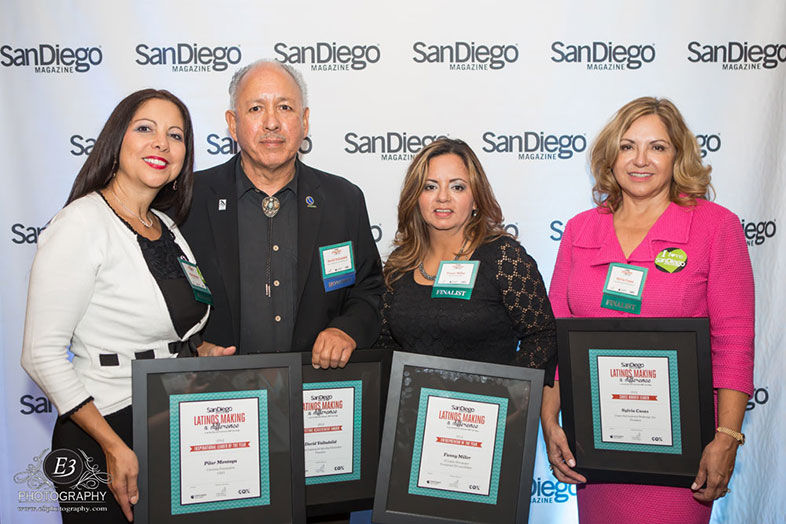
WHEN/WHERE: San Diego Magazine’s Latinos Making a Difference Awards took place last Thursday, October 22, 2014 at the University Club atop Symphony Towers in downtown San Diego. The evening was hosted in partnership with Univision KBNT San Diego. It is the second annual Latinos Making a Difference event.
WHAT: Three hundred of San Diego’s top Latino business leaders gathered to honor the recipients of this years Latinos Making a Difference Awards. Guests enjoyed a cooking demonstration and tasting by Chef Miguel Angel Guerrero, owner of La Querencia Baja Med. The emcee for the evening was Dr. Diane Perez, host of Despierta San Diego on Univision.
WHO: Six outstanding leaders were honored during the event’s program.
The Cross-Border Leader Award was presented to Sylvia Casas, President of Casas International Brokerage, Inc. For the past 30 years, Casas has worked tirelessly to become the Hispanic woman at the forefront of international trade on the U.S. – Mexico border.
Entrepreneur of the Year was awarded to Fanny Miller, President, CEO & Editor of El Latino Newspaper, the number-one Hispanic newspaper in San Diego and the largest Hispanic-owned Spanish language newspaper in California with more than 186,000 weekly readers.
Inspirational Leader of the Year was awarded to two individuals.
The first recipient was Jose Galicot Behar, President of Tijuana Innovadora. He is the visionary, creator and driving force behind Tijuana Innovadora, a two-week event and movement with the goal of enriching the San Diego-Tijuana relationship for the prosperity of citizens on both sides of the border.
The second recipient was Pilar Montoya, President, CEO and Founder of the Caminos Foundation. Through the Caminos Foundation, Latinos can receive the tools and knowledge necessary to live healthier, more productive lives and fulfill their potential.
Volunteer of the Year was awarded to Anna Jauregui-Law, an attorney with Appellate Defenders, Inc. Determined to find a way to support the advancement of Latinas in the legal profession, Jauregui-Law cofounded Latinas in the Law in 2005, an organization dedicated to providing educational forums and culturally sensitive mentoring to young Latina lawyers, law students, and legal professionals.
At the end of the evening, the Lifetime Achievement Award was presented to David Valladolid who has been at the helm of the Parent Institute for Quality Education for the past 17 years. He continues to expand the free programming under PIQE. Since the inception of the signature program in 1987, more than 585,000 parents have graduated. Valladolid is also a sixth-generation Californian and a Vietnam combat veteran (1968-69), twice wounded and the recipient of the Purple Heart.
The evening was a true celebration of all of the award finalists and winners and their contributions to our local community. A portion of proceeds from the event was donated to Big Brothers Big Sisters of San Diego County.
FULL LIST OF NOMINEES AND EVENT INFO: http://www.sandiegomagazine.com/latinos
PHOTOS & MEDIA CONTACT: Jennifer Rea, Marketing Director, [email protected] or 619.744.0523
ABOUT SAN DIEGO MAGAZINE:
San Diego Magazine, the city’s leading lifestyle publication with an award-winning history, gives readers the insider information they need to experience the city to the fullest – the best in food, fashion, culture, business and people. For more information please visit sandiegomagazine.com, or follow us on social media: Twitter, Facebook, Instagram and Pinterest.
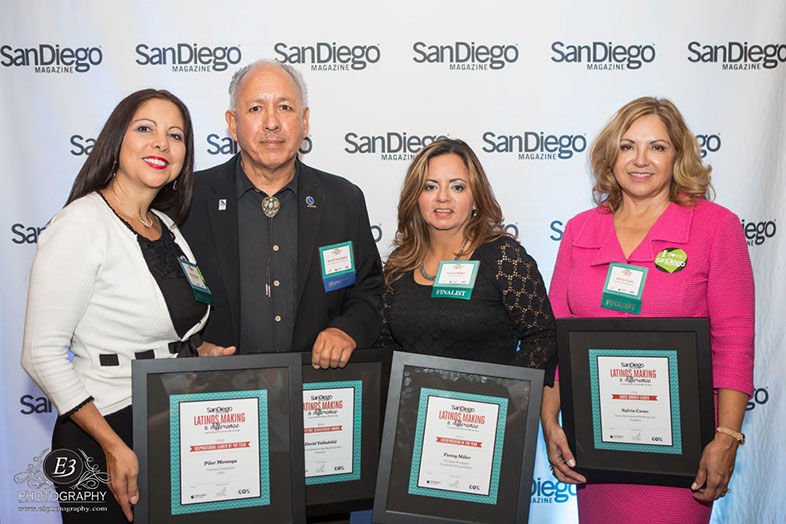
San Diego Magazine names the 2014 Latinos Making a Difference award recipients
2014 Latinos Making a Difference award recipients | Photo by E3 Photography Eddie Garcia III
Many Americans still think bright red tuna means it's fresher (it's not)
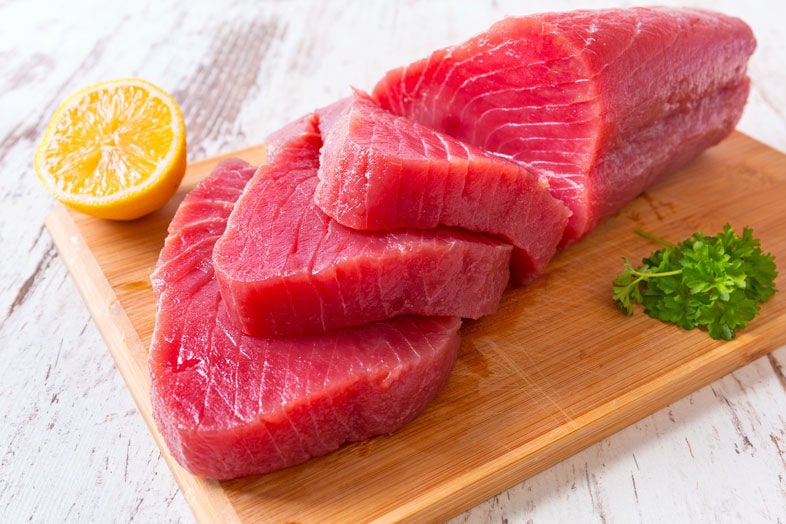
You know the tuna I’m talking about. It’s easy to mistake for a cube of watermelon. It’s the color of a Lyft logo. Appears to be glowing a vibrant, tantalizing purity. Tuna that bright red or pink means it’s… what, extremely fresh? Bursting with nutrients?
Nope. It means it’s got carbon monoxide.
I thought this was widely known, but a chef recently told me very few of his staff members were aware of this, and almost none of his customers. So, especially with the recent proliferation of poke joints, I thought I’d be helpful with this PSA of sorts.
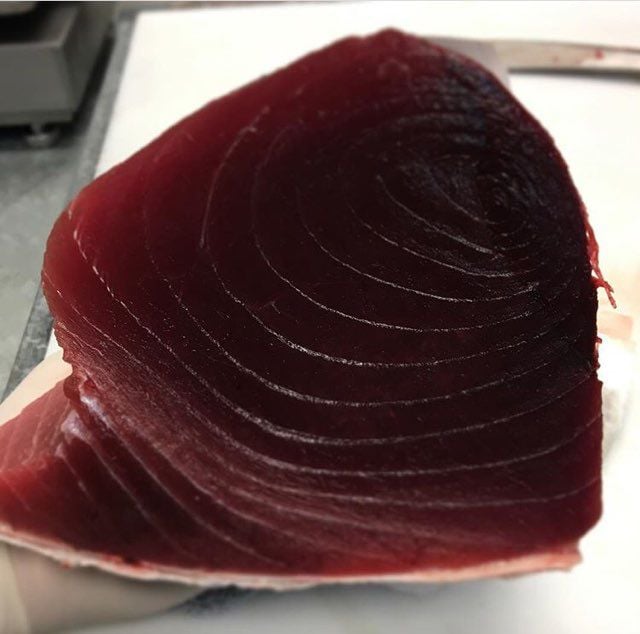
Bright red or pink tuna means it has been gassed. In its natural state, fresh tuna is dark red, almost maroon, sometimes even chocolatey-looking.
Don’t worry, you most likely will have no ill effects from eating gassed tuna, according to the FDA. They have deemed carbon monoxided tuna as GRAS (Generally Regarded As Safe), though the practice is banned in Japan, Canada, and the EU. Plus, there is carbon monoxide in barbecue (given off by wood smoke).
But here’s why I personally tend to back away when I see bright red or pink tuna:
1. IT’S MUCH HARDER TO TELL IF IT’S FRESH OR NOT.
It can be left out for days and it will not turn brown. In one study, the University of Florida found that carbon monoxided tuna kept its bright red color for 11 days in the fridge. “The carbon monoxide actually hides the quality of a fish,” says Tommy Gomes, fifth-generation San Diego fisherman, host of The Fishmonger on Outdoor Channel, and owner of seafood shop Tunaville in Point Loma. “It’ll make a poor-quality fish pretty like a rose. I’ve seen them take an old piece of brown tuna [and] put the gas on it, and it comes out looking like cherry lemonade.” The gas also masks the smell of old tuna (which is one way you can tell if tuna’s getting past its eat-by stage). “Since there’s no smell, it falsifies the freshness,” Gomes explains.
2. I TRUST GOVERNMENT HEALTH ORGANIZATIONS, BUT ALSO RECOGNIZE THEY’RE NOT PERFECT.
The 1992 USDA food pyramid suggested carbs should be the bulk of our diet (they corrected that in 2005 and 2011). The government approved the fat substitute Olestra, which gave people all sorts of tummy issues. Margarine and other trans fats were also approved, then banned in May 2019. There are some smart humans in the government, but even geniuses make mistakes. So I tend to go with my gut: tuna in its natural state, or tuna treated with carbon monoxide? Easy choice.
So why gas tuna at all? Because of us. Consumers don’t like brownish fish. Tuna oxidizes quickly. It’s difficult for tuna fishermen and women to get it to market quick enough before it turns that brownish or chocolatey color. Customers erroneously think all brownish-looking fish is old or bad and will pay more for “fresher-looking” fish. So in the 1990s, the FDA allowed companies to gas the tuna and keep it artificially bright red for long stretches at a time.
“There’s nothing wrong with a hot chocolate–looking tuna loin,” says Gomes. “But, here in America, we want [it] seared on the outside, rosy pink on the inside.”
Gassed tuna is also often imported and less inexpensive than fresh, un-gassed tuna, says Gomes. “So, to be fair and honest,” Gomes acknowledges, “for families on a budget, gassed tuna is one of the best alternatives out there for frozen seafood.”
In the New York Times article cited above, a sushi restaurant owner reported his sales of tuna tripled when he started using gassed tuna. So that’s obviously good for the small business owner, as well as grocery stores. Food waste is a massive epidemic—the US throws out about half of edible seafood. If gassed tuna gets Americans to eat perfectly edible tuna they otherwise might throw out, that’s a step in a good direction.
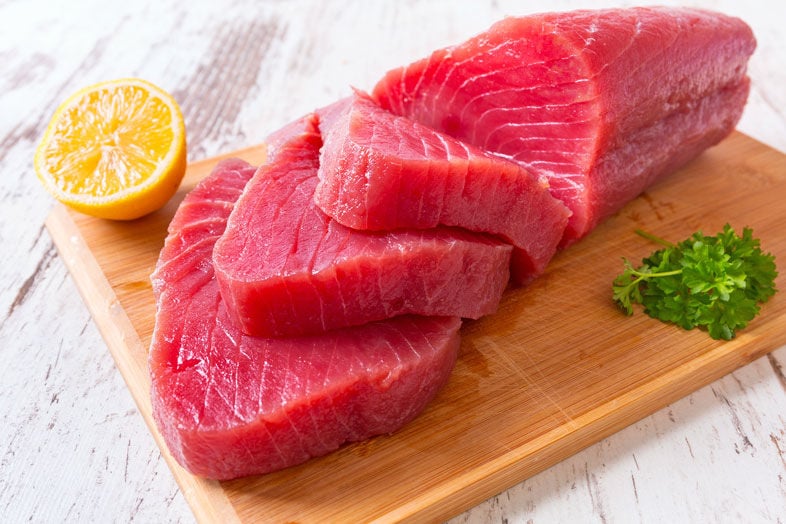
But it’d be better if we as consumers knew that fresh, non-gassed tuna is supposed to be dark red or maroon—not bright red or watermelon pink, like a majority of the tuna I’ve seen at local poke shops. Ideally, we would look at a piece of bright red/pink tuna and think “Oh, hey there, carbon monoxide.”
The most important things about buying tuna is to trust the source (whether grocery store, fishmonger, or sushi joint). It also should be shiny and somewhat translucent, and not have slime or an off-smell.
Long live maroon tuna.

Troy Johnson is the magazine’s award-winning food writer and humorist, and a long-standing expert on Food Network. His work has been featured on NatGeo, Travel Channel, NPR, and in Food Matters, a textbook of the best American food writing.

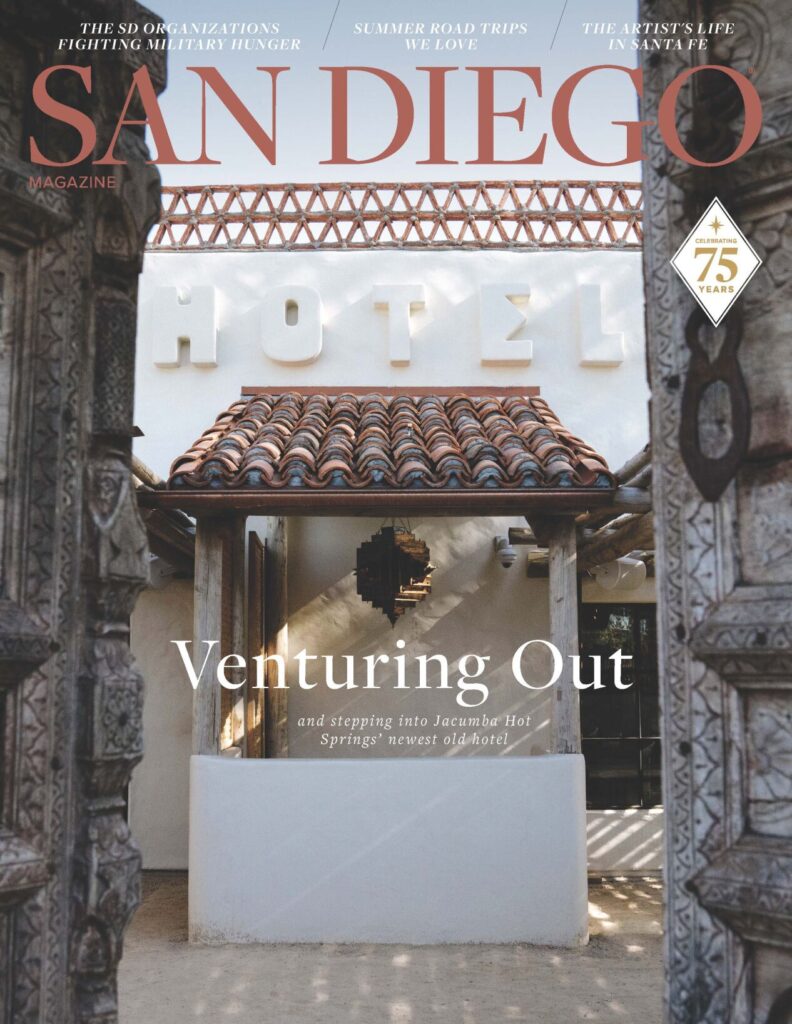
Behind every beautiful space is a thoughtful process, and ASID San Diego is helping homeowners understand the value of professional design.
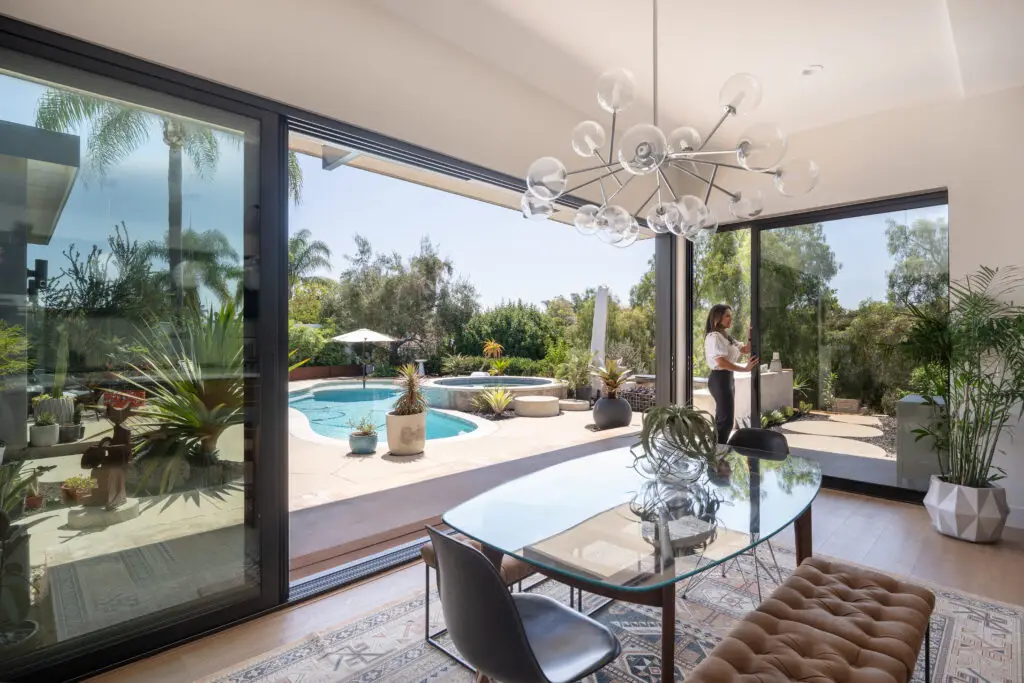
A perfectly designed home rarely happens by accident. Those kitchens that feel effortless and rooms that seem to tell a story the second you walk in? They’re usually the work of someone who knows exactly what they’re doing.
It’s knowing which ideas will actually work, which materials will hold up over time, and how to turn a collection of choices into a space that feels intentional. That’s where a professional interior designer comes in.
For the American Society of Interior Designers (ASID) California San Diego Chapter, the goal is to help people see interior design as more than just the finished look. Behind every well-designed space is a process built on technical expertise. Designers are educated in everything from professional software and construction details to building codes, space planning, materials, and functionality.

“People don’t always realize how much goes on behind the scenes,” Kirsten Recce , current president of the ASID California San Diego Chapter, says. “Our designers are not just doing furniture placement and color selection and picking out new fluffy pillows. That’s not what they’re trained for.”
ASID members bring formal education, continued learning, and industry knowledge to their projects, helping create spaces that are not only beautiful, but designed to work. A paint color that changes completely depending on the lighting. A material that looks beautiful in a showroom but doesn’t make sense for everyday life. A layout that photographs well but doesn’t function for the people living there. These are the details where professional guidance can make all the difference.
Still, one of the biggest misconceptions about hiring an interior designer is that it’s reserved for massive renovations, luxury homes, or people who already know exactly what they want. The process can feel intimidating. Where do you begin? Is a designer worth the investment? What if you only need help with one room?
ASID’s answer: start with one hour.
ASID’s Spruce Up events break down one of the biggest barriers between homeowners and professional design: knowing where to begin. Held twice a year, the community program gives homeowners the chance to work directly with an ASID designer through a one-hour, $125 consultation in their own home. Whether you’re looking for advice on furniture placement, window treatments, kitchen and bath updates, remodeling ideas, vacation rentals, color selections or something else entirely, the upcoming September 2026 event offers an approachable way to get expert guidance before committing to a full project. Signups are open through Sept. 7, with consultations taking place Sept. 21 through Oct. 31. Proceeds benefit ASID San Diego’s educational and community programs. Register here!
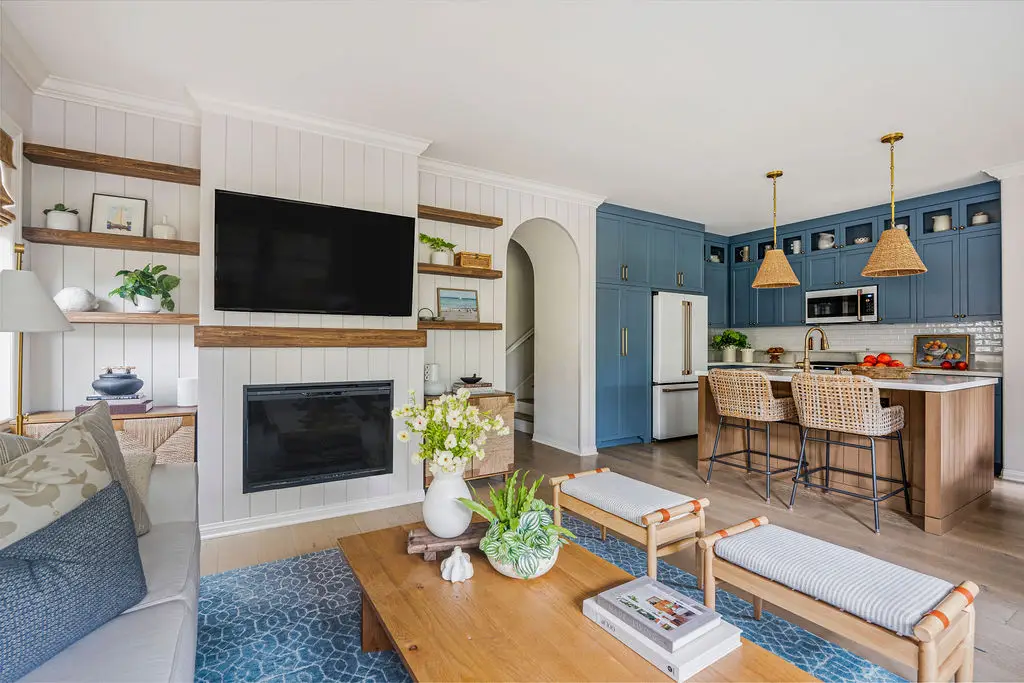
“It’s a great opportunity for people who are in that exploratory phase,” Recce says. “Maybe they’re not sure they want to hire an interior designer yet, or they think it sounds daunting or expensive. This gives them a chance to discover what working with a designer is actually like.”
Design is personal. A good designer isn’t just creating a beautiful room; they’re helping create a space that fits the way someone lives.
“We’re a resource to all of San Diego County,” Recce says. “It doesn’t cost anything to pick up the phone and call and ask. We’ll answer.”
Follow ASID San Diego on Instagram, LinkedIn, and Facebook for updates on upcoming events, or connect with the chapter directly at [email protected] or 619-548-8847.
Laika Nur, MD, takes her love of volleyball from the court to the clinic as team physician for the San Diego Mojo

Growing up, Laika Nur, MD, Scripps Clinic sports medicine specialist, loved watching beach volleyball when the Association of Volleyball Professionals tour came to her hometown of Chicago. A talented volleyball player herself, she remembers sitting in the stands all day, and once, even got a couple autographs. Years later, Dr. Nur was attending a professional event focused on women’s sports, and the discussion turned to a new professional women’s volleyball league. The general manager and coaching staff for San Diego’s team, the Mojo, happened to be in attendance, and Dr. Nur took the opportunity to ask them if they needed a team doctor. Flash forward to the Mojo’s inaugural 2024 season, when Dr. Nur officially became the team physician. Click here to read more about Dr. Nur and how she incorporates lessons she learned on the court into her practice.
For more nutrition, wellness, and healthy living tips, sign up for the San Diego Health newsletter here.