Featured articles
Food & Drink
Food & Drink
Food & Drink
Featured articles

Everything SD

Everything SD
Things to Do
Featured articles
Things to Do
Things to Do

Guides
Featured articles
podcast-ep
podcast-ep

podcast-ep
Featured articles

Everything SD
Everything SD
Food & Drink
Featured articles
Everything SD
Everything SD
Food & Drink
Ready to know more about San Diego?
SubscribeReady to know more about San Diego?
Coming up Sunday, June 30
Taste of Adams Avenue 2013 logo
Sponsored by
Taste of Adams Avenue

own
Taste of Adams Avenue
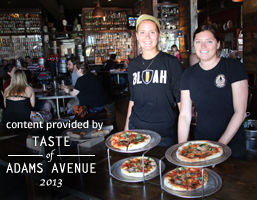
The 13th annual Taste of Adams Avenue will take place Sunday, June 30, 11:00 am to 3:00 pm, along Adams Avenue from Normal Heights to Kensington. This month’s gastro tour of Adams Avenue features more than 30 restaurants, coffee houses, pubs, wine bars, and unique eateries in one of San Diego’s hottest and historic neighborhoods.
The 2013 Taste of Adams Avenue participants* include Antique Row Café, Blind Lady Ale House, Broke Girls Coffee Bar, Burger Lounge, Café 21, Clem’s Bottle Service & Tap Room**, DiMille’s Italian Restaurant, El Zarape Mexican Restaurant & Tequileria, Farm House Cafe, Fish Public, Hanna’s Gourmet, The Haven Pizzeria, Heights Tavern, Incredible Cheesecake Company, Jayne’s Gastropub, Jyoti Bihanga, Kensington Café, Lestat’s Coffee House, Mariposa Ice Cream, Ponce’s Mexican Restaurant, Proprietors Reserve Wine Bar**, Rosie O’Grady’s**, Sabuku Sushi, Senor Mangos Juice House, Soda & Swine, Starbuck’s Kensington, Tam’s Thailand Food, Tao Vietnamese & Japanese Cuisine, Twiggs on Adams, Village Vino, and Viva Pops. Each of these participants will create a taste of their house specialties.
Taste of Adams Avenue tickets are $30 in advance, and $35 day of the event. Advance tickets may be purchased online at: www.tasteofadams.com
Food lovers can access their favorite restaurants by foot, bike, or by complimentary trolley service available along Adams Avenue. In addition to this adventurous tasting tour, attendees can also experience the neighborhoods many distinctive shops along the Adams Avenue business corridor.
For further information, please call the Adams Avenue Business Association at (619) 282-7329.
* Participating restaurants are subject to change
** Restaurants 21 and up only
Taste of Adams Avenue is presented by the Adams Avenue Business Association, a non-profit organization, whose mission is to promote and revitalize the Adams Avenue business corridor and is made up of area businesses and property owners.
PARTNER CONTENT
Food critic Troy Johnson embarks on an epic quest for the city's best tiny chicken
Photo Credit: James Tran
Published December 2019 | Updated February 2023
For generations, no one wanted those sad little chicken wings. Cooks in the U.S. would use them to flavor soup stock or simply toss them out—a fact, learned researching this story, that disturbed me at a core, uniquely American level, though in no way surprised me (sustainability, for all its buzzword-ery, is a very new mainstream concept).
Then a little bar in Buffalo dropped them in the deep fryer and slathered them in a buttery hot sauce. Wings became a national staple. The lowly wing went from the cheapest cut—a freebie, an apparent nuisance—to the most expensive part of the bird. In 2022 on Super Bowl Sunday, Americans ate 1.42 billion wings.
Despite not having a team, most San Diegans still recall that the Super Bowl happens every year. So I set out to find the best wings in the city. Should you still support the football arts, and wish to outsource the food for any related parties, this list should help.
I’m not sure the exact minute I began to regret this assignment, but I’m certain I was gazing down at a catacomb of bones. So many of them, delicious and exhausting. It turns out that—unlike my earlier search for the best soup dumplings—almost every single restaurant in San Diego does a riff on chicken wings. To feel good about the depth of my journalistic quest, I felt I had to try at least 15 of them. And now I need salad and a bath.
A few observations on wing culture. First, wing joints are like corporations in that they tend to talk about diversity but don’t really practice it. Some will have up to 60 flavors, but not let you mix and match with a single order. The first place to let you order eight wings—every one a different flavor—will become my spiritual center. Second, there’s a lot of dry wings out there. And wings that are far too sweet.
I get it, we’re Americans, we wake up and mainline sugar. But a peace accord must be struck between sweet and savory, and if it leans one direction, I feel pretty strongly it should should be savory (“chicken candy” is not popular, probably for a reason). Third, restaurants that specialize in wings (or barbecue, for that matter, or any messy hand-held food) should be required to plant a tree every week to offset their napkinification of the American landscape.
My methodology: First, I queried food friends and social media friends for their recommendations on the city’s best. Some came up multiple times and could not be ignored. I cross-referenced the rest with a little research, and told friends their diets had been discontinued because I needed help with this. I did not separate Buffalo wings from Asian-style wings.
All told, we tried 18 places with a reputation for thriving in the wing arts: O.B. Noodle House, Dirty Birds, Phuong Trang, Cross Street Chicken, Fort Oak, Shank & Bone, Royal Mandarin, Canyon Sports Club, Mandarin Canton, Golden Chopsticks, Epic Wings, URBN, Good Seed Food Company, Tomcat Lounge, Reagle Beagle, Buffalo Wings Star, Bonchon, and City Dragon.
I feel it’s a solid, deeply researched list, but don’t presume it to be the end-all, nor the be-all. I look forward to hearing from readers about the wings I missed. Though the experience has ruined the food for me forever, you must carry on.
Here is my list—in order—of the top 10 chicken wings I found in my spiritual journey:

Photo Credit: James Tran
They are legend. The catnip of every family potluck and birthday party in National City, and famous throughout the city among wing aficionados. And they are still, 40-plus years later, intoxicating. The best I found. One major key to a good chicken wing is to render the fatty skin, to transform it from blubber to an almost snack-chip crispness. And Mandarin’s make an audible crunch as you bite, like a chicharron. But it’s the seasoning in that prairie-brown coat, flecked with crimson pepper flakes, that sticks with you—not just salt and pepper but a bass note of spices and umami. I have no idea if Mandarin uses MSG, though I feel very strongly in my soul that they do, which partially explains the primal yes-ness of the flavor here (don’t worry, study after study after study has proven that MSG is not bad for you). Large segments of fresh green onions are nestled between the wings—a sharp, green spike of acid that’s perfect foil to the deep fry. | 1132 E Plaza Blvd #205, National City.

My long-standing winner for best wings, though one I had to admit was upstaged just ever so slightly by Mandarin. They are unlike any wings in San Diego—wok-fried in a combination of chiles and peanut sauce. Those flavors are then baked into the wings, so the wings are served crunchy and moist, the reddish-golden brown color of a good steak. Occasionally the kitchen will cook them too long, and they’re a tad dry, but not often, and there’s always blue cheese. | 2218 Cable St., Ocean Beach

The best of a particular type of Vietnamese-style wings—a somewhat sticky, sweet-and-spicy wing, underscored by that incredible umami only fish sauce can bring. I really, truly thought this space would be occupied by one of the best Vietnamese restaurants in town, Phuong Trang. But Phuong Trang’s were so sweet that they actually stuck to the plate as they cooled, like a caramel apple. Shank & Bone’s struck the perfect balance of sweet-and-savory. | 2930 University Ave., North Park

For the sheer variety, but also for the execution. Over 30 flavors. Naked wings, lemon pepper, salt & vinegar, garlic parm, Hawaiian, chicken enchilada, Old Bay, apple-bourbon chipotle, dirty jerk, dirty ranch, maple-chipotle, Asian-orange, General Tso’s, Seoul wings, flaming honey mustard, habanero-lime—so many. They slowly bake their wings before flash-frying, which makes them the meatiest, juiciest and most tender we ate. | Four locations (Pacific Beach, College Area, Liberty Station, Ocean Beach).

This little strip-mall wings joint may look like a national chain, but it’s a one-off from a local (at least at this point). And their Mexican riff on Buffalo-style wings were our favorite in the Buffalo category. Try their mango-habanero (sweet and heat), or their chipotle, which brings a little smokey-spicy campfire vibe to the party. Tip: Order extra sauce, because theirs doesn’t stick to the wings as well as other places. | 2761 Linda Vista Rd., Clairemont

A few wing fanatics demanded I go here, and their “Spicy Dragon Wings” are fairly excellent—golden brown, crispy batter and skin, well seasoned and served with a confetti of chopped green onions and peppers and garlic. Between these and Shank & Bone’s, North Park is a wing destination. | 2885 El Cajon Blvd., North Park
You either know you’re a Canyon Club person, or you know you’re not (for what I mean, read my ode to the place here). I’d stick to the straight Buffalo sauce option here—but it’s a classic, excellent riff on a classic, excellent sauce, the right balance of spicy and buttery and vinegary. | 421 Telegraph Canyon Rd., Chula Vista

This was a shocker. I expected less than zero from the San Diego-based wings chain. I was merely trying to check a box and not be accused of only including indies. Skip the Buffalo wings and go straight for their lemon-pepper option. Not sure what exactly they’re seasoning them with, but it’s a potent, tasty blend of spices and herbs, and the recipe should be guarded like KFC’s famed mix. | Multiple locations

Those in the know, know. It is forever nighttime in this strip mall bar in Mira Mesa. You will almost undoubtedly be the only one in the room who hasn’t been a lifelong friend. A regulars’ joint through and through. But their wings, without batter, have glass-shattering skin and good seasoning, served with a medley of sautéed greens and jalapeños. | 9388 Mira Mesa Blvd., Mira Mesa

A hip Korean fried chicken wings concept with craft beer and a rare covered patio on Convoy. Though the server will direct you to the Seoul Spicy wings or the garlic-soy, I couldn’t get into those, the flavors not melded enough, more bold than balanced. But their lemon pepper wings are excellent, partially because they do it right and lean into the “pepper” in that equation, so that it almost eats like a deep-fried chicken carbonara. | 4403 Convoy St., Kearny Mesa
Troy Johnson is the magazine’s award-winning food writer and humorist, and a long-standing expert on Food Network. His work has been featured on NatGeo, Travel Channel, NPR, and in Food Matters, a textbook of the best American food writing.
The restaurant's owners share what they've learned after 10 years in North Park
These days, a restaurant that manages to last 10 years should be investigated for witchcraft. People are ordering delivery instead of going out to eat. The industry operates on tiny margins. The state’s refusal to count tips as wages while raising minimum wage is not helping those margins.
But it’s not all doom and gloom. A restaurant with a fair lease, good food, a few cozy corners to spend an hour in, and—probably most importantly—a strong business operator, can thrive. It was 2010 when The Smoking Goat opened in a tiny storefront in North Park. Fred Piehl wasn’t a big-name chef. He’d spent a little time under top chef Jason Knibb at Nine-Ten, but not a considerable amount.
Still, the Goat was cute as hell, and his duck fat fries and California-French techniques hit the right nerve. That part of North Park at University and Upas needed a cozy neighborhood bistro. His wife-partner Tammy Piehl worked a corporate job to pay the Goat’s bills. Neither of them took a paycheck for the first two years. When minimum wage went up a few years back, the spike in cost nearly put ‘em under.
But Fred and Tammy managed to make the adjustments, right the ship, and this month the Goat celebrates a decade (and their sister restaurant next door, appropriately named One Door North, is alive and well).
I asked the couple for the major lessons they’ve learned, good and bad. Real stuff, not feelgood platitudes (though those are deserved, too).
Fred: “Don’t open a restaurant because you love to cook. You won’t just be cooking. You need to enjoy plumbing, accounting, paperwork, cleaning, social media, and human resources, too, and all at the same time.”
Tammy: “Funny things happen in a restaurant and pretty much anything can happen. We once had to pay a super large plumbing bill because someone flushed a dish towel down the toilet. We had a fraud phone call on a Friday night before service telling us our electricity would be shut off due to not paying the bill. We were trying out a new cook and he had a seizure while on the line. We had a guest try to smuggle out our large ceramic pig in her purse. These are just the tip of the iceberg. It keeps life interesting. We have no idea why, but this is true. You have to prepare for the weird stuff when you own a restaurant, because it will definitely happen to you.”
Tammy: “There are a lot of legalities in this industry. We are constantly working to stay up to date with the law. Be transparent with your employees and be sure you create policies so everyone understands the reasons behind them and the labor laws put in place. It’s important to follow every single law so you don’t get into a position where either your employees don’t trust you or being taken advantage. I’m very adamant our people take breaks even when they don’t want to. If they don’t take a break, you need to pay them an extra hour.”
Fred and Tammy: “We’ve had to figure out how to cover increased minimum wages. This is a huge challenge in our industry. When The Smoking Goat opened in 2010, minimum wage was $8 an hour. Now it’s $13 an hour. We have reduced labor hours by increasing efficiency in every step of the process possible. As the minimum wage continues to increase every year, we are evaluating technologies to reduce labor hours further. We will do all that we can to avoid surcharges and still provide the highest quality ingredients and service, but it would be so much more manageable if even a small portion of tips counted towards the minimum wage requirement for servers.”
Tammy: “No one tells you when you open a restaurant that you’ll be negotiating a lease with the same person for a very long time (hopefully). And it’s a hard thing to do. Very few restauranteurs own their buildings, so you’ve got to deal with a landlord who might not understand your business. Yes, we negotiate often in the restaurant business, but the negotiations surrounding the actual building have been some of our toughest.”
A Decade of Restaurant Lessons at The Smoking Goat
Fred and Tammy: “If you find an employee that cares as much as you do, hold on to them. We are grateful to have collected many over the years. You need the people who want to do the work, not the ones that want to delegate the work. Believe it or not, that took us a while to realize. We are extremely proud of the staff we have at both of our restaurants. Alfredo Sanchez started with us day one as our busser and food runner. Food runners are the most important positions. They have an eye on everything. They can give you great feedback on your cooks and servers and customers. If they really care about the business are an amazing asset. We call Alfredo our steward, who helps us manage everyone else.”
Fred: “Finding and maintaining relationships with purveyors. A restaurant is nothing without its ingredients. Guests may think that we can get the same ingredients all the time but it’s not always the case. It’s a constant dialogue with farmers, ranchers and winemakers to make sure they’ll have enough to provide us and that the quality is consistent year over year.”
Fred: “Some may disagree, but for us, it was the right thing to start small and have another source of income. It gives you the time to learn without the stress of making a living. Some weeks, we did nothing but take Tammy’s corporate job paycheck to cover the restaurant bills. I told her it was her investment into our future.”
Tammy: “Incorporating technology into the dining experience is the future. We have a stellar employee who did not want to take orders and have people pay tableside with a handheld device. He is an amazing server with an impeccable style of service, and he felt this detracted from the experience. We knew it added efficiency and reduced payment errors, which is very important for our guests. We made it a requirement for our staff and after six months, he stopped to thank me for pushing him to make the change. He sees its value.”
Tammy: “I was checking a reference of a new employee recently and the gentleman currently lives in Colorado. After our business discussion, he told me that he had lived in San Diego ten years ago and was a frequent OGer (Original Goater, a term we affectionately use for our guests that dined with us when we were teeny tiny). He said that he has had our leather coaster with the imprinted goat on his nightstand for the past ten years and visits us whenever he visits San Diego.”
The Smoking Goat, 3408 30th Street, North Park.
The Smoking Goat’s owners Tammy and Fred Piehl
Troy Johnson is the magazine’s award-winning food writer and humorist, and a long-standing expert on Food Network. His work has been featured on NatGeo, Travel Channel, NPR, and in Food Matters, a textbook of the best American food writing.
After a long holiday break, we're back with Hot Plates! There's some big news to catch up on, from openings and closings to chef changes
This just in: Angelo Sosa left Death by Tequila, which we just discussed on the latest episode of the Happy Half Hour podcast. Death by Tequila was the readers’ choice for Best New Restaurant in 2019, and the ahi crudo made Troy’s list of must-try dishes of 2019. Angelo is staying in San Diego to pursue a new project—stay tuned, we’ll let you know what it is once he’s able to reveal it.
The first certified Native American-owned brewery in Southern California is opening in San Diego County at the end of the month: Rincon Reservation Road Brewery is coming to Harrah’s Resort SoCal in Valley Center. It’s opening on January 30, and right now the line includes four ales. The brewery and resort are businesses owned by the Rincon Band of Luiseño Indians.
San Telmo Argentine Café, which specialized in empanadas and marinated meat sandwiches, closed its shop on Seventh and Broadway. It made our Best Restaurants list in 2018 and was also included in the Food Lovers’ Guide. It was a favorite of SDM staffers and will be missed (but their catering business is still open).
One of the first new restaurants to open in 2020 is The Village, a vegan Mexican and sushi spot on El Cajon Boulevard.
In case you missed it, 2020 started off with a few big closures: Chef DJ Tangalin closed GayaGaya, his modern Filipino bistro in Miramar; Donovan’s Steak and Chophouse closed its location on Prospect Street in La Jolla; and McCormick and Schmick’s closed without warning after being at the Omni Hotel downtown for 15 years.
Sam the Cooking Guy is going to open a two-story restaurant in Seaport Village, taking over the space where Buster’s Beach House has been for 30 years.
The sustainable temaki (sushi handroll) bar that Chef Rob Ruiz had been planning for Liberty Public Market has been canceled.
Also in Liberty Station, Con Pane Rustic Breads & Cafe—a bakery that started in Point Loma 20 years ago and moved to the market—announced yesterday that they closed the café.
Angelo Sosa leaves Death by Tequila, San Diego Gets SoCal’s First Native American-Owned Brewery
Angelo Sosa | Photo by James Tran
Stake Chophouse & Bar brings contemporary classics and old-school service to the heart of Coronado
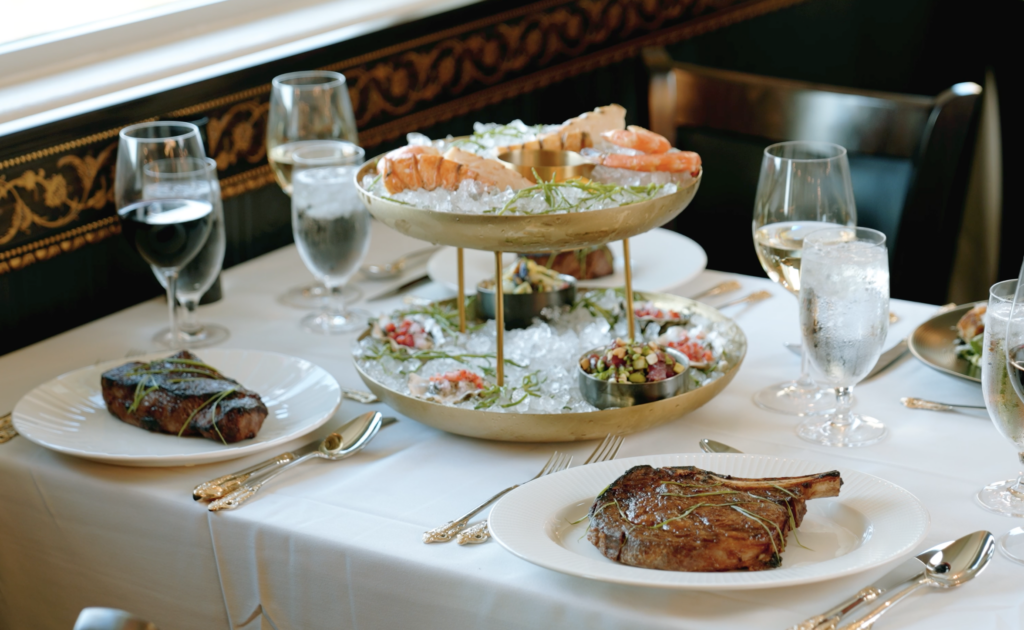
Stake Chophouse & Bar isn’t your average steakhouse. Blue Bridge Hospitality’s Coronado outpost is a modern interpretation of a big-city steakhouse nestled in the heart of the small coastal community. The team at Stake has reimagined the whole steakhouse experience. By prioritizing a seasonal farm-to-table sourcing philosophy, a personalized guest experience, and unique service touches, like a formal steak presentation and a bespoke knife selection process, Stake distinguishes itself in a sea of steakhouses.
Exceptional steaks, including Wagyu from Japan, Australia, and the U.S., and fresh seafood flown in daily form the core of Stake’s culinary identity. The menu features a five-course omakase-style steak experience highlighting house favorites, plus an array of cuts, and classic steakhouse staples—think a wedge salad, baked potato, or pasta carbonara—refined for a contemporary palate without losing their traditional appeal. Stake focuses on seasonal sourcing from the region’s best family farms and specialty purveyors, and incorporates intentionally unexpected touches to create something truly unique.
“I challenge our chefs and myself to take it a step further in sourcing,” says Chef Ronnie Schwandt. “It’s important to us to highlight different farms, unique one-off farms—whether it’s cattle, strawberries, a local fisherman or from anywhere in the United States, we’re always trying to find that niche.”
Beyond the menu, Stake emphasizes outstanding service, says Vinny Spatafore, Director of Hospitality Operations. Staff maintains detailed notes, allowing them to remember guests by name, recall previous orders such as a favorite martini (also memorable for the customer since it’s served in an extra tall, distinctly-shaped glass), and celebrate special occasions like birthdays and anniversaries.
“When you have those points of topic that you remember about a guest, they appreciate that,” he says. “Our servers are really good with that—we have a couple servers who have been here since the beginning and they’ll remember somebody from years ago, their name, their kids’ names, where they live. I’m really thankful to have a great front of house staff.”
Award-winning wines, rare whiskeys, special events, and a complementary black car service that provides transportation for guests throughout Coronado add to Stake’s appeal.
Schwandt stresses that Stake offers more than a meal; they aim to give patrons something unforgettable.
“It starts when you walk up the stairs and are greeted by the hostess—that sets the tone for the night. Then you’re greeted by a server, who may know you by name, and can guide you through the menu and curate as they get to know you,” says Schwandt. “Most people leave kind of blown away; they leave feeling like they just had an experience. That’s the goal, right? Whether you’re serving smash burgers or high-end steak, you want somebody to leave thinking, Wow, that was awesome.”
From a 200 million-dollar renovation project to a dirty little burger, these made a dent
Aqui es Texcoco has been a Chula Vista and Tijuana legend for years, serving some of the best lamb barbacoa south of the moon. Long situated in a strip mall, they just outgrew it, and that’s something you cheer for. So they moved Aqui to a bigger space, and in the original mall-box they opened De Cabeza, where the focus is on another Mexican specialty: cabeza en su jugo, a stew made delicious by slow-simmering a cow head. If that sounds gross, you’re definitely not Mexican, and it’s not (plus, eating the whole animal is the right and ethical omnivore thing to do). Plus, they serve less intimidating fare like tacos and skillets.
Fort Oak
Photo by Paula Watts
If you don’t know by now, it’s time to permanently register: the Trust Restaurant Group is one of the most exciting developments in the city’s dining scene. They started with Trust in Hillcrest, but Fort Oak in Mission Hills is a larger, grander expression of what they can do. Chef Brad Wise and his team are cooking wood-fired dishes on their gargantuan grill, but adding some fine-dining refinement. Located in a former Ford dealership with 1950s design, it’s consistently one of the best restaurants in town.
Big news because a new local success story (North Park’s The Friendly, known far and wide and on Instagram for its Dirty Flat Top Burger, which is health-hazardly delicious) and a beloved San Diego chef who needed a win (Hanis Cavin, who created Carnitas Snack Shack and then lost it in a business deal). The two reconnected the original Carnitas location, serving burgers and beers from local shop, Fall Brewing.
They did it again. Consortium Holdings has a magic touch as proven by their previous concepts (Craft & Commerce, Polite Provisions, Noble Experiment, Born & Raised, etc.), due to an obsessiveness over design (it’s like whole sections of Etsy artfully explode in their places), cocktails, hospitality—just every single detail. The food at the all-day brunch spot isn’t perfect (skip the riffs on McDonalds’ classics), but those Japanese soufflé pancakes are, and the art—like a neon millennial riff on Georgia O’Keefe and Daft Punk—is wild, inspiring, more effective at stimulating senses than any coffee or Bloody Mary.
Il Dandy
Photo by Paul Body
It was fairly huge news when the owners of Civico 1845 announced the kitchen for their huge new project in Bankers Hill would be Michelin-star chefs from Calabria, Italy—father and son, Antonio and Luca Abbruzzino. Il Dandy is an ode to Calabria (where the climate and food are very similar), slow-food to the core, with fresh local seafood delivered daily (you can read the review here). The design is starkly white and brass and olive greens, modern and chic like an Italian Apple store with much better art.
This is notable for a few reasons. One, any change to the Hotel Del is notable (Sisyphus had an easier task than someone wanting to remodel a historic hotel). They finally opened the signature dining spot to the sun and sky, lightening and brightening. But also because they let chef JoJo Ruiz go all-in on sustainable seafood, where he buys direct from local boats and lets diners pick their own whole fish brought in that morning. A big-account win for our local fishermen and women.
San Diego best new restaurants 2019 Dustin Bailey
Animae | Photo by Dustin Bailey
Chef Brian Malarkey and partner Chris Puffer are on fire. Their ampersand restaurants—Herb & Wood, Herb & Sea, Farm & The Seahorse—are a mix of fine dining, old wood smoke, cocktails, and elegantly flamboyant design. After H&W’s success (read the review), they were able to lure some of the city’s top chefs, young and old, to further pursuits. That’s why they’ve got Joe Magnanelli—who helmed the kitchen at city standout Cucina Urbana for 10 years—at Animae, a lusher, softer pan-Asian concept (brothless ramen noodles, full duck, etc.).
For decades, truly excellent, high-end sushi in San Diego meant one thing: you were headed to Pacific Beach and Sushi Ota. Master Ota is still, after all these years, diligently executing his craft at the highest level. But now the upper echelons of the sushi scene have populated, both with his proteges (Himitsu, Shino, Hane), and other masters at Sushi Tadokoro, Kaito, and Dokoro Shirahama. Now Todokoro has launched a talent—chef Soichi Kadoya, who opened Soichi Sushi in Normal Heights in the tiny former spot of Farm House Cafe.
Let’s face it. Barbecue is delicious, and highly aromatic. Eventually, most neighbors develop a love-grumble relationship with the plumes of meatsmoke. That’s why for the second location of Grand Ole—the best brisket and smoked turkey in San Diego—they chose rural Flinn Springs, a long crow’s flight east on the I-8. It’s a sprawling backyard hoe-down of a restaurant, with a stage for bands and room for kids to run wild on the grass. In doing so, they not only gave an underserved area a truly great place to hang out, but gave themselves a place to smoke in peace.
Fresh pasta seems so simple. It’s flour and eggs, for chrissakes. But the art of it is more than that—a careful manipulation of gluten, knowing the exact seconds to stop kneading, to stop boiling, etc.—that is the difference between good pasta and fairly mind-blowing pasta. Cesarina is of the latter variety. Just bowls full of moans. And it activated a part of Point Loma that was more of a pass-thru area in the process.
Morning Glory
Photo by James Tran
Plus South Park is getting a new nonprofit restaurant, Moto Deli reopens, and more San Diego restaurant news
An exclusive outdoor dining event that started in Montreal is coming to San Diego. Dinner With a View, where up to six people can dine inside a clear dome that has been transformed into a giant terrarium, is making its way across the country—and San Diego is only one of two stops along the West Coast. The dinner is happening at Liberty Station from February 6 through March 8, and ticket sales start today at 10 a.m. For $109.99 per person, you can expect a blind three-course menu (without drinks), cooked by a chef who is yet to be announced. You’ll need at least three friends to book a dome, as each one has a four person minimum for booking.
Moto Deli has reopened in Leucadia, just down the street from its old location on North Coast Highway. Now you can get your Cubanos and grilled cheese sandwiches again.
The owner of Buona Forchetta is giving the public a sneak peek of his new restaurant, Matteo, at the Holiday Walkabout & Luminaria in South Park this Saturday. Owner Matteo Cattaneo said the restaurant will be a nonprofit with an Italian market along with pastries baked by Joanne Sherif, who recently sold Cardamom Café.
After serving seafood in the Gaslamp for more than 20 years, Blue Point Coastal Cuisine shut its doors on Fifth and Market earlier this week. It was one of the first restaurants in the city opened by Cohn Restaurant Group. The Union-Tribune says a new high-end seafood restaurant is going in its place from the owners of Farmer’s Table and Osteria Panevino.
Another big industry headline this week was the news that Sam the Cooking the Guy is going to open a second restaurant at the Little Italy Food Hall, after his the success of his taco stand, Not Not Tacos.
Pop-Up Dinner Inside Life-Size Terrarium Heading to San Diego
Photo courtesy of Olive Creative Strategies
Scripps study shows that some patients may be able to taper their dose and maintain results
While glucagon-like peptide-1 (GLP-1) receptor agents have been used to treat Type 2 diabetes for more than 20 years, their recent emergence as weight-loss wonder drugs marked a new frontier in medicine. But their effectiveness has left some patients wondering what to do once they’ve reached their goal. Stopping the medication could mean regaining some, if not all, of the weight. A Scripps Clinic internal medicine physician recently conducted a small study of whether GLP-1 patients who had reached their goal weight could maintain that weight by taking their regularly prescribed injection every other week instead of weekly. Spoiler alert: 30 of 34 patients did. Read more about the study here and what that may mean as pharmaceutical companies roll out oral GLP-1s.
For more nutrition, wellness, and healthy living tips, sign up for the San Diego Health newsletter here.