Featured articles
Food & Drink
Food & Drink
Food & Drink
Featured articles
Everything SD
Features
Everything SD
Featured articles
Things to Do

Everything SD
Everything SD
Featured articles
podcast-ep
podcast-ep
podcast-ep
Featured articles
Features
Features

Features
Featured articles
Food & Drink
Charitable SD
Charitable SD
Ready to know more about San Diego?
SubscribeReady to know more about San Diego?
Show your support for San Diego's LGBTQ community this week by running, walking, rallying, singing, dancing—or all of the above
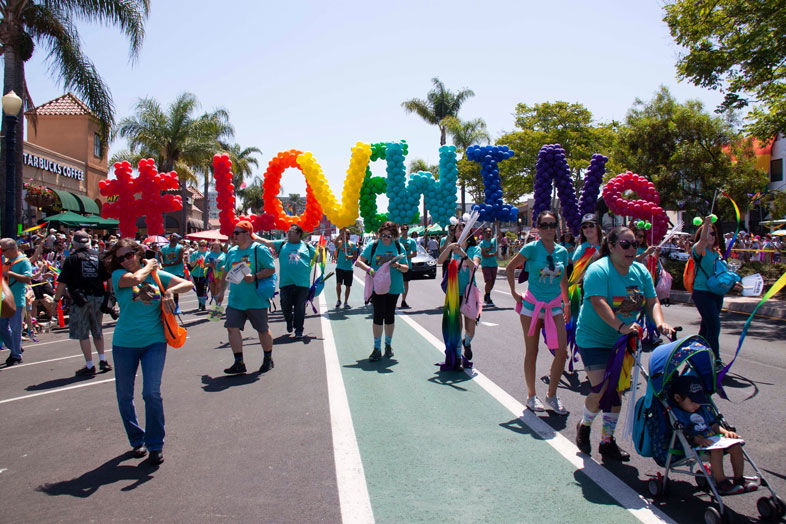
If you haven’t already, it’s time to break out that rainbow attire and celebrate—it’s LGBTQ Pride Month! There’s more reason than ever to participate in the festivities this year, as it’s the 50th anniversary of the occurrence that started it all: the Stonewall riots. Looking to celebrate by more than just binging on the newest season of Queer Eye (coming out in less than a month, but who’s counting)? Show your support and—ahem—pride right here in America’s Finest City at these local events.
When: July 6, 11 a.m.-6 p.m.
Where: 4044 Idaho Street, North Park
Price: Free!
Honor the contributions of women at the North Park Community Park with activities, vendors and even a dog fashion show.
When: July 10, 7-8 p.m.
Where: 2728 6th Avenue, Hillcrest
Price: Free!
Join the LGBTQ community and interfaith leaders to witness the annual rainbow lighting of the St. Paul’s Episcopal Cathedral in Hillcrest. The event will feature performances by the San Diego Gay Men’s Chorus and the San Diego Women’s Chorus.
Pride of Hillcrest Block Party
When: July 12, 2 p.m.
Where: Pride Square Plaza, Hillcrest
Price: Free! (Donations encouraged)
Enjoy Happy Hour until 7 p.m., a beer garden, drag performances, and live DJs at the donation-based Pride of Hillcrest Block Party. Dance your way into Pride weekend!
When: July 12, 6-7 p.m.
Where: 1500 University Avenue, Hillcrest
Price: Free!
Kick off San Diego Pride Weekend with the Spirit of Stonewall Rally at the Hillcrest Pride Flag. Commemorate the Stonewall riots and pay respect to those at the forefront of the pride movement in San Diego.
When: July 13, 8 a.m.
Where: University Avenue and Centre Street, University Heights
Price: $40
Start your weekend festivities early with The Front Runners & Walkers Pride 5K in University Heights—all for a good cause! Ticket proceeds go to The Center’s Youth Housing Project as well as the San Diego Pride Community Grants.
When: July 13, 10 a.m.
Where: 1500 University Avenue to Quince Drive, Hillcrest
Price: Free!
Join more than 250,000 celebrants at one of the largest pride parades in America. The San Diego Pride Parade is one-and-a-half miles of music, dancing, and a whole lot of rainbow!
When: July 13, 11 a.m.-10 p.m.
July 14, 11 a.m.-9 p.m.
Where: Marston Point, Balboa Park
Price: $20 per one-day pass purchased online
$25 per weekend pass purchased online
$30 per weekend pass purchased day of or at festival gates
Come as you are to enjoy more than 100 entertainers, like pop artist King Princess and Grammy Award-winning singer-songwriter Melissa Etheridge, and the dozens of vendors, exhibits, and food booths at the annual Pride Festival at Balboa Park.
Been to San Diego Pride before?
Note the new structure! This year’s layout is revamped to accommodate the increasing attendance, and the front entrance is now moving to the west side between Juniper Street and Laurel Street. Happy Pride!
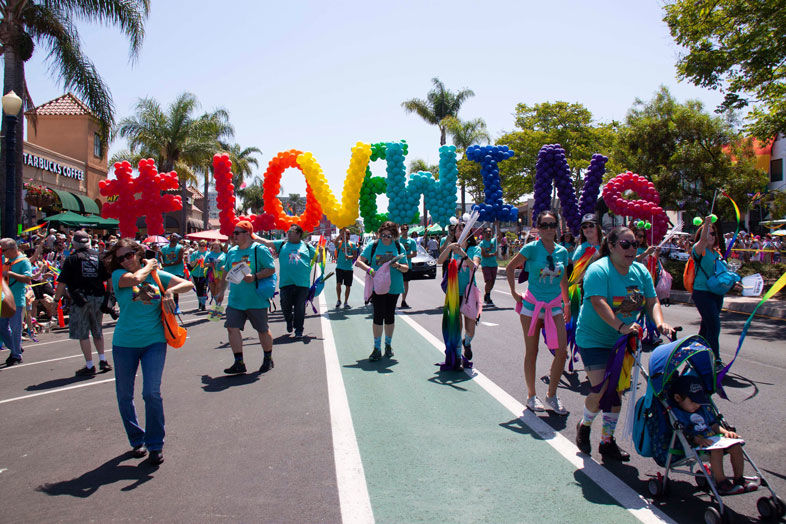
Your 2019 San Diego Pride Guide
Photo courtesy of San Diego Pride
Businesses giving back, biotech leading vaccine research, and more reasons why we’re proud to call our sun-kissed city home
Reasons to Love San Diego / Feature
Graphic by Tania Roulston
From April through September 2020, the average quarterly gift from San Diego households increased to $432, from $374 the previous year. Not only did our residents give back more, but the causes they supported shifted, too. A poll by the University of San Diego showed that over 50 percent of people who donated money chose issues they felt were the most pressing: food security, helping essential workers, and social and racial justice. For example, the annual Pack the Pantry food drive, organized by the Jacobs & Cushman San Diego Food Bank, saw a record donation amount (around $50,000), which provided 90,000 meals to community college students at 10 campuses. Here’s hoping this spirit of giving continues into 2021.
Source: 2020 Annual Report, State of Nonprofits and Philanthropy in San Diego; University of San Diego
Reasons to Love San Diego / Social Activism
We can thank our Gen Z-ers and millennials for the “cancel 2020” memes that got us through last year, but when it came to social justice, they also took more concrete action.
Because the beach is always open and the culture trends in the direction of mellowness, San Diego is often miscast as disinterested in the hard conversations the country has about justice. But the younger generations helped organize more than 45 peaceful protests countywide last summer in response to the killings of George Floyd, Breonna Taylor, and countless other Black citizens at the hands of the police.
The county’s first major protest was in La Mesa on May 29: Dozens of demonstrators assembled outside La Mesa Police Department headquarters after a viral video showed the forceful arrest of an unarmed Black man at the Grossmont Transit Center. On December 9, a city review panel upheld the firing of the officer and on January 4, 2021, the officer was charged with filing a false report. On May 31, a 25-year-old Black woman organized several hundred protestors at the Hall of Justice, marching through downtown San Diego.
But some of the largest protests came in early June. Hundreds joined a caravan from La Jolla to City Heights, National City, and Otay Mesa. Over 2,000 demonstrators marched from the San Diego Police Headquarters to North Park on June 4 and two days later, another 3,000 people gathered at the County Administration Center.
Many of these protests stood in solidarity with the Black Lives Matter movement, which advocates for nonviolent civil disobedience as a response to racist and violent acts against the Black community. Law enforcement agencies across the county took action, most notably by banning use of the carotid restraint, which is similar to the restraint that led to Floyd’s death. The protests also spurred the passage of Measure B, which establishes an independent review commission on police practices. Measure B passed with 74.6 percent of the vote.
Reasons to Love San Diego / Sweep the Shelters
Photo courtesy of the San Diego Humane Society
With their favorite humans spending much more time at home, our four-legged friends were loving the lockdown. And for those who were still waiting for a home, San Diegans helped sweep the shelters with a record number of new fosters and adoptions at the start of the pandemic. “This county has always been there for animals, but especially so during the shutdown,” says San Diego Humane Society President and CEO Dr. Gary Weitzman. The humane society’s four campuses were virtually cleared last March, when their head count of 3,000 decreased to under 1,000 and 65 percent of their animals went into foster care. And our pets aren’t the only ones to reap the benefits: While the pandemic takes a heavy toll on our mental health, Weitzman suggests that animals are a major cure for the quarantine blues. “We’ve had less animal surrenders, more fosters, and can really feel the love San Diego has for its animals.”
Coronado Bridge
Photo courtesy of the Port of San Diego
For nearly 15 years, the port has been developing a permanent light installation for the Coronado Bridge that will change colors to reflect what’s happening in the city, much the same way the Empire State Building does for New York—celebrating holidays, sports teams, or visits from international representatives. The project made a huge leap last year when the Port of San Diego temporarily installed 170 lights to gather information on the engineering, design, and sustainability of the project. For longterm associates—like Yvonne Wise, the port’s director of the Waterfront Arts & Activation department, and Commissioner Marshall Merrifield, who spearheaded the fundraising campaign—the test was the result of years of hard work. The next steps are to raise more money (a humble $13 million) and work with an artist on the design.
When life gave Chula Vista lemons, they made lemonade for their new neighbors. The “Lemon Capital of the World” was recently named the most welcoming city for immigrants in the US by the New American Economy Cities Index. This index analyzes immigrant integration on an economic and local-policy level to find insights on how cities can maximize the potential of their newcomers—to become US citizens, small-business owners, and homeowners. Chula Vista landed perfect scores in government leadership, economic empowerment, inclusivity, job opportunities, and civic participation. It’s been a fast and steady climb to the top for the county’s second-largest city, which ranked third on the index in 2018 and moved into second place in 2019. It was a pretty sweet note in an otherwise sour year.
Reasons to Love San Diego / COVID-19
It’s the news we’ve all been waiting for: A mass rollout of COVID-19 vaccines is underway. But San Diego local Jaime Yslas already got vaccinated—at least, he thinks he was.
After reading that Latinos and seniors have been underrepresented in coronavirus research, Yslas figured that he checked all the boxes, so he signed up for a double-blind study in which two-thirds of participants received AstraZeneca-Oxford’s vaccine. In November, he stood in a Chula Vista parking lot beside a bloodmobile that’d been converted into a mobile clinical trial site. “You have to step forward, or we’re never going to find the answer,” he says.
San Diegans have also been stepping forward for clinical trials of the Moderna and Johnson & Johnson vaccines. All three local studies, overseen by UC San Diego, were part of a larger international bid to test whether the vaccines are safe and effective for all.
San Diego has been at the forefront of the fight against COVID-19 from the start, with a robust strategy of testing, contact tracing, and hatching potential vaccines. “The amount of innovation that’s come out of San Diego is broad and deep,” said Tim Scott, a biotech executive who has tracked local COVID-19 initiatives through a taskforce for the trade group Biocom.
Hologic’s San Diego facility has cranked out tens of millions of tests for SARS-CoV-2, the virus that causes COVID-19, and the company is ramping up production, thanks in part to a $119.3 million US government contract awarded in November.
“The vast majority of all our molecular diagnostics kits—not just for COVID-19—are made here,” says Hologic spokesperson Suzanne Clancy, who notes that the Massachusetts-based company has 1,100 employees right here in San Diego. “We benefit from the excellent talent pool and thriving life sciences industry in the area.”
Testing demand outpaced supply in San Diego last summer, as it did in many places. To help ease the crunch, the county’s public health department signed a contract with a startup best known for genomics. Helix, an offshoot of San Diego genomics giant Illumina, has raised more than $350 million to study the genetics of large populations to discover new ways to diagnose and treat disease. In a pandemic pivot, the company’s San Diego lab set out to process more than 100 million COVID-19 tests a day for health systems, employers, governments, pharmacies, and other organizations. In order to scale up, Helix was one of the first to win emergency approval from the Food and Drug Administration for a COVID-19 test that directly sequences genetic material, increasing the company’s testing capacity. Other companies rely solely on commonly used PCR instruments that amplify genetic matter to process nasal swab tests.
Researchers have also looked to our smartphones and wearables, like Fitbit, for potential ways to rein in the virus. In a study published in the October issue of Nature Medicine, Scripps Research found that pairing data from wearable devices with symptom self-reporting did a better job of predicting the virus’s spread than either method alone. Last summer, Scripps recorded 35,000 people in the ongoing study, with an eye toward 100,000 participants.
Before a statewide rollout in December, UC San Diego piloted an app, CA Notify, that uses a smartphone’s Bluetooth capability to tell people when they’ve been exposed to someone who was later diagnosed with COVID-19.
As of press time, the Pfizer-BioNTech and Moderna vaccines have received US approval. San Diego–based Arcturus Therapeutics and Inovio Pharmaceuticals are still in clinical trials with their vaccines and are being watched closely. Each vaccine works in different ways, meaning one may prove to be best for older adults, for instance.
Only time will tell how the vaccines fare, but San Diego’s exhaustive efforts to fight the virus have helped give the county, and the country, an extra dose of what we need most—hope.
When Todd Gloria was in the fourth grade at Hawthorne Elementary, he was a finalist in the school’s “Mayor for a Day” essay contest. “I believe the prompt was about building a better city and my response was about more homes and transit for San Diegans,” Gloria says. “I haven’t changed much over the years.” Three decades after entering that contest, Gloria was sworn in as San Diego’s mayor in December.
Todd Gloria
Photo courtesy of Todd Gloria
Gloria’s win is a historic one, as he’s the first openly LGBTQ person elected to serve in the city’s highest office. Today, just three of the eight most populous cities in the country, San Diego included, have elected an openly LGBTQ mayor: Houston (Annise Parker) and Chicago (Lori Lightfoot, in 2019).
The rainbow ceiling isn’t the only one Gloria shattered: He’s also the city’s first mayor of Asian, Latino, and Native American heritage.
During his inauguration, which was done virtually (another first for the position), Gloria said, “As a kid who grew up in Clairemont, I didn’t see people who looked like me leading practically anything—let alone the eighth largest city in the United States. But today, I stand before you as the first person of color and LGBTQ person to ascend to our city’s highest office.” His nephews and nieces watched him get sworn in on TV from their living room, and they dressed up for the occasion.
For his first 100 days in office, Gloria said he’s prioritizing the public health crisis and economic fallout caused by COVID-19, housing issues, homelessness, and the city’s Climate Action Plan, the first incarnation of which he drafted while serving as interim mayor from 2013 to 2014.
Reasons to Love San Diego / San Diego Metropolitan Transit System
Photo courtesy of San Diego Metropolitan Transit System
Like the so-called sunshine tax, San Diego’s disjointed public transportation has long been considered part of the cost of living here. But there are smoother roads ahead, with the San Diego Metropolitan Transit System laying the final tracks for its $2.1 billion Mid-Coast Trolley Extension from Old Town to University City, with service to begin later this year. It’s the largest light rail extension in the city’s history, adding nine newly constructed stations and a fleet of 45 shiny new trolleys to its roster.
Reasons to Love San Diego / Building Boom
As of last fall, there were 14 new construction projects downtown alone, including more than 3,000 new apartments. There’s also major housing projects underway in Kearny Mesa (442 units), UTC (over 400 units), and the massive development at Town & Country resort in Mission Valley (over 800 units). The Riverwalk project in Mission Valley is also finally breaking ground this year: When it’s complete, the 195-acre neighborhood will have over 4,000 new homes.
No sector felt the impact of the shutdown more than San Diego’s small businesses. But where there were struggles, there was just as much support. Last year saw a wellspring of collaborative efforts from restaurant, event space, and retail shop owners helping one another stay open. It took some creativity, but the results just go to show that even during the most dire circumstances, community always comes first.
When Natalie Mitchell and Violet Navarrete faced a series of setbacks shortly after opening their clothing and gift store Timshel Shop—repeated flooding on top of the pandemic, to give you an idea—they made the difficult decision to permanently close their doors. But when they turned to online sales to keep them afloat, fellow female-owned home goods shop Thread Spun had a different idea. They’d had their own experience with flooding (all three owners refer to one another as “floodies,” for flood buddies), and they offered Timshel a long-term pop-up space inside their own store. Over last summer, Timshel donated 20 percent of their pop-up profits to local organizations and raised over $1,000. “Our community may look different now, but we’ve been blown away by the support and lasting relationships we’ve built,” Mitchell says. “Collaborating with other small businesses has been an integral part of building our community.”
Reasons to Love San Diego / COVID Collabs
Photo courtesy of Cucina Urbana
Community was always key for Gaslamp Tavern, a relaxed downtown bar popular for its good drinks and happy hour deals before 2020. But the pandemic’s toll on the restaurant industry encouraged owners Estela and Rick Borba to pursue an idea that had been brewing for years. To amplify their offerings and rally behind small pop-up eateries, the duo transformed the tavern into Gaslamp Tavern & Food Hall. Now housing Ghost Fried Chicken, San Diego Tuna Company, and Tacos el Tuerto, the food hall gave emerging businesses a home while bringing more dining options to downtown.
Cucina Urbana has been a vital player in that scene for years, but they struggled last summer when they were unable to create an outdoor dining space (while permitted) due to the layout of their restaurant. Their neighbors, Julep Venue, already had a string of successful virtual events under their belt when they reached out about a backup plan. “We have two large patios that were sitting there unused,” says Julep’s founder and managing partner, Michael Esposito. “It just seemed like the obvious choice to give Cucina Urbana that space.” Over one weekend, the teams got together to work out the logistics of Camp Cucina, a blend of Julep’s eye for design, Cucina’s food, and Snake Oil Cocktail Company’s craft libations. “Everyone has had their own unique challenges during this time,” Esposito adds. “If you can come together to solve those challenges with another business, it’s an absolute no-brainer to do it.”
Explore restaurants, activities, and shops within this affluent North County community
The inland North County community of Rancho Santa Fe is often associated with wealth. It’s one of San Diego’s most expensive residential markets and is consistently ranked one of the highest-income zip codes in California and the U.S. Rancho Santa Fe is known for its large equestrian community including riding facilities and horse trails, as well as its country club lifestyle and associated golf courses.
At the center of this luxury master-planned community is a small, walkable downtown area referred to as the “village,” with The Inn at Rancho Santa Fe acting as both a landmark and social hub. Much of the community, including the historic Inn, was designed by acclaimed architect Lilian Rice, one of California’s earliest female architects. The Spanish Colonial-style architecture she brought to the village is still one of its defining characteristics today.
Whether you’re coming to Rancho Santa Fe for golf, horseback riding, or pampering at a resort spa, be sure to start with a short walk around the village to take in the neighborhood’s charm. Plan your next visit here with our neighborhood guide to the area’s best restaurants, things to do, and shopping.
Jump To: Restaurants | Things to Do | Shopping

Families congregate at The Pony Room for elevated California ranch-style cuisine. Lamb lollipops, carne asada tacos, burgers, and weekly dinner specials are offered here, alongside an extensive collection of wine and spirits (especially tequila) and sizeable kids menus. As the signature restaurant of Rancho Valencia Resort & Spa, this all-day eatery is a lively centerpiece of the local social scene.
5921 Valencia Circle
The piano bar at Mille Fleurs is the buzziest spot to be on Friday and Saturday nights in Rancho Santa Fe. French classics like escargot, lobster bisque, duck confit, and steak frites are the main dinner attractions at this local institution that has been around for more than 40 years. Spring for the four-course prix fixe menu before nabbing a coveted bar seat near the piano entertainer.
6009 Paseo Delicias
Nick & G’s is one of the most prominent restaurants in the village, with an outdoor patio that overlooks the main thoroughfare. Enjoy modern Italian food, steaks, and seafood dishes here, including homemade pasta, pizza, wagyu beef, and oysters. Be sure to check their live music schedule and events calendar for the latest happenings.
6106 Paseo Delicias
Named after renowned architect and planner Lilian Rice, Lilian’s is The Inn at Rancho Santa Fe’s flagship restaurant. Their upscale menus feature sustainable seafood, grass-fed meats, local produce, and even sushi rolls during dinner. Outdoor seating provides a bird’s-eye view of the village and an elegant backdrop for weekend brunch. Stop by Bing’s Bar (a nod to Bing Crosby) for craft cocktails, beer, wine, and light bites in a refined setting.
5951 Linea Del Cielo
Quaint cafe and bakery Thyme in the Ranch serves a small selection of breakfast and lunch items (don’t miss the tarragon chicken salad), but is perhaps best known for its pastries and baked goods. Cakes, pies, muffins, scones, and cookies fly off the shelves here, where locals come for special occasions, parties, and group catering orders.
16905 Avenida De Acacias
Located inside a historic building once home to Rancho Santa Fe’s original schoolhouse, Paseo RSF is one of the village’s newest dining options. The charming American bistro has pasta, salads, burgers, meat and seafood entrees, plus a thoughtfully selected California wine list and new sushi and omakase program. Kids and dogs are both welcome here.
6024 Paseo Delicias, Suite C
Grab a quick coffee to go from this walk-up window in the same shopping center as the post office. Cinnamon roll lattes, cold brew, spiced chai, smoothies, protein bowls, and more can be found at Rancho Roasters, where they brew beans from Dark Horse Coffee.
16950 Via De Santa Fe
Casual pizzeria and martini bar Goli is a popular spot for catching the latest sports games. Order one of their unique specialty pizzas like the Casbah with hummus and veggies, build your own pizza or burger, or go with one of their hearty wraps that’s made with an extra thin version of pizza dough.
18021 Calle Ambiente, Suite 403
Find generous portions of Mexican food at Cocina del Rancho, run by the same owners as Carlsbad’s Cicciotti’s Trattoria Italiana and Village Kabob. Get classic dishes like burritos, tacos, and enchiladas, plus their specialty items including pulpo, carne asada, and fajitas with lobster tail. Don’t skip the margaritas.
16089 San Dieguito Road
Kai Oliver-Kurtin is a San Diego-based writer who covers travel, dining, events, and culture. Her writing has been published in USA Today, Condé Nast Traveler, Fodor's Travel, Marie Claire, and HuffPost, among others.
We found a handful of inspiring people who live in, and truly know, these 'hoods and asked them how they’d spend their time out and about
Growing up in Carlsbad, I never quite understood why people vacationed there. What, so you want to check out the field where I have soccer practice? Pay my orthodontist a visit? Carlsbad just felt like a town by the beach, no better or worse than any other in the country. It took going to college out of state for me to actually understand just how rare a place like Carlsbad is.
Thanksgiving break my freshman year, my first time coming home after three months in the Midwest, my shoulders dropped. I rolled down the windows and drove to lifeguard tower 37—the hangout magnet for Carlsbad’s youths (and, in the summer, tourists)—and the smells of the ocean woke me right up like smelling salts do. I finally got it.
Carlsbad isn’t just a stopover town on your way to something better. It is the destination. Travel + Leisure named Carlsbad one of the top 50 places around the world to travel in 2026. From the whole globe, the travel magazine picked my home. Sure, we’ve got the Flower Fields and Legoland—but now it’s the smaller ships and indier dreams that are giving it street-level character.
It’s not just Carlsbad, either. People have talked about the “North County bubble” for decades—a force field that prevents its residents from traveling south of the 56. It’s often used derogatorily, and it’s a fairly accurate burn.
For decades, living up in North County meant giving up on culture, or at least culture within close proximity. But now, the main expansion of San Diego culture is happening up north. Central San Diego restaurants have started taking notice and are expanding into the area—spurred no doubt by Oceanside’s food boom and the Jeune et Jolie–Campfire–Wildland–Lilo constellation in Carlsbad. City Heights burger joint Key & Cleaver opened a new spot in Oceanside; the owners of Parc Bistro-Brasserie in Bankers Hill opened Parc Lounge in Rancho Santa Fe. Possibly the strongest market indicator is that Sam Fox—one of the most successful restaurateurs west of the Rockies—has started focusing on North County for his concepts. In 2025, he opened both The Henry in Carlsbad and Culinary Dropout in Del Mar.
For the ultimate insider guide, we found a handful of inspiring people who live and create and truly know six North County neighborhoods—San Marcos, Escondido, Oceanside, Leucadia, Rancho Santa Fe, and Vista—and asked them how they’d spend a dream day out and about in their town.

San Marcos is in full renaissance mode. The biggest story is that the grand North City vision is starting to peek through the scaffolding. It’s essentially the North County Downtown that’s been written in the tea leaves and discussed whenever someone gets stuck in traffic at the 5/805 merge: a 200-acre, pedestrian-friendly, mixed-use face-changer that’s slated for 2,600 homes, 350,000 square feet of retail and restaurants, 250 hotel rooms, and about a million square feet of offices and labs. Its most recent manifestation is 222 North City—a 12-story residential tower with over 450 residences, rooftop garden, pool cabanas, art installations, and almost 20,000 square feet of ground-floor retail (Necessity Coffee, Buona Forchetta, Draft Republic, Milonga Empanadas, and a grocery store anchor on its way).
Which means Restaurant Row is no longer burdened with being the primary caregiver for the hungry or the socially inclined. Patricia Prado-Olmos has watched the city morph during her nearly three-decade tenure at CSUSM, having spent the past six years as the school’s chief community engagement officer. She also just announced her forthcoming retirement at the end of the 2026–2027 school year, so she’ll have even more time to haunt local haunts.
Those in the know call the university “Cal State StairMaster” from the Sisyphean amount of stairs on the hillside campus. So, any day at or around CSUSM should start with a homestyle carbo-load (biscuits and gravy) from Mama Kat’s.

“There’s something about this breakfast spot that immediately puts me in a good mood,” she says. Mama Kat’s is also known for its pie (strawberry-rhubarb), which is breakfast if you change your perspective.
After a few hours on campus—with a break to pet the university’s official therapy goldendoodle, Frank, who helps ease finals tremors or apprehension of on-campus stairs—Prado-Olmos will wander into North City, just steps away. She says the almond croissant and coffee at Christophe Rull Patisserie rival Parisian cafés: “It feels like the kind of place you’d stumble across in a much bigger city.”
Rull, a Michelin-trained pastry chef who’s done stints on Netflix (Bake Squad) and Food Network (Super Mega Cakes, Halloween Wars), opened his patisserie last fall. The hype hasn’t cooled off yet: Get there early because the crowds do.
Emma Veidt is an editor at San Diego Magazine. She earned her bachelor's and master's degrees from the Missouri School of Journalism. She loves running, hiking, and rock climbing, but really, she mostly loves encounters with the street cats around North Park.
NOW CFO provides scalable, on-demand accounting and finance support to companies ranging from pre-revenue startups to billion-dollar businesses
Entrepreneurs typically launch businesses because they’re passionate about a product or service, not because they want to manage its finances. While working to carve out a niche in their respective industries and drive their companies forward, many business owners find themselves bogged down by day-to-day accounting. Their existing accounting tools don’t provide the necessary visibility or insight, and they don’t have the time or resources to hire additional staff or a chief financial officer. That’s where NOW CFO comes in.
For more than 20 years, NOW CFO has been pairing businesses across the country with experienced accounting and finance professionals. Its outsourced model allows clients to customize solutions that match their individual needs, size, and financial challenges, whether that’s fractional or interim support, project-based services, or full-time placement.
NOW CFO’s clients range from startups preparing for rapid growth to established companies that need additional financial leadership without the commitment or expense of building an in-house team. However, many of these companies don’t fully understand their needs until they experience a “trigger” event: preparing for an acquisition or capital raise, navigating a first-time audit, or another period of transition. With a team of over 300 consultants nationwide, NOW CFO can start quickly and match the right expert to the right business.

“It’s important for companies to have financial visibility, and we can help them avoid a lot of the potholes that companies often run into,” says Mariah Block, a partner at NOW CFO’s San Diego branch. “Roughly half of our clients have an in-house finance person or department, and we’re resourced for more bandwidth when they need an extra set of hands at the staff or senior accountant level, or the controller or CFO level. Some clients use this a few hours a month and others use multiple people close to full-time. Our model is solution-based and customizable. We’re like a faucet you can turn on and off.”
With NOW CFO, there’s no one-size-fits-all approach. Solutions are based on the client’s individual goals, challenges, needs, and budget, meaning a client never pays for more than they need. Whether it’s a few hours of executive-level guidance or a full accounting team to support daily operations, NOW CFO meets businesses where they are and grows alongside them.
“We pride ourselves on providing our clients with the right resources at the right rate and being able to evolve as their needs evolve,” says Block.
And clients appreciate on-demand access to cost-effective support designed to improve performance and profitability.
Luxury car storage service Auto Concierge has partnered with NOW CFO to support growth over the past year. The arrangement began with a staff accountant who covered a leave of absence, but as the client’s needs changed, they also added a controller role. This allowed Auto Concierge to put effective processes in place and navigate operational challenges. Lori Church, Auto Concierge’s chief operating officer, says NOW CFO has been an “outstanding resource” and a “true strategic partner.”
“From the controller to the bookkeeper, every professional they’ve placed has brought a high level of expertise, responsiveness, and professionalism to our organization. Their team took the time to understand our business of high-profile clients and needs, adapted quickly to our fast-paced environment, and became a trusted extension of our team,” she says. “As Auto Concierge continues to grow, having a reliable financial partner like NOW CFO has allowed us to strengthen our financial and business operations while remaining focused on delivering exceptional service to our clients.”
Discover eateries, outings, and shops within this inland North County community
Just south of Lake Hodges near 4S Ranch and Poway, Rancho Bernardo is a suburban community that blends residential neighborhoods with industrial pockets, elevated by a decidedly diverse food scene.
Over 60 years ago, this North County neighborhood was once part of a family ranch. Since that time, big tech companies have taken up residence here, including Amazon, Sony Electronics, Oura Ring, HP, Teradata, and ASML. Rancho Bernardo Inn serves as a community hub, with locals frequently meeting at the hotel’s restaurants, golf course, and spa.
Whether it’s work or a round of golf that brings you to Rancho Bernardo, we’ve taken care of the agenda planning with our guide to the area’s best restaurants, activities, and shops.

Sample ingredients plucked straight from Rancho Bernardo Inn’s onsite garden and served at their signature restaurant Avant. One of the neighborhood’s most upscale dining options, they serve a French-inspired menu with nods to California, including many seafood options. Don’t miss their more casual sister restaurant Veranda for al fresco dining.
17550 Bernardo Oaks Drive
Wood-fired pizzas and handmade pastas are standouts at The Kitchen, Bernardo Winery’s counter-service restaurant specializing in Sicilian flavors. Charcuterie boards and bruschetta make for great starters or snacks while wine tasting.
13330 Paseo Del Verano Norte
Fast-casual and family-owned eatery Bushfire Kitchen recently opened a location in Rancho Bernardo, serving sandwiches, bowls, salads, burgers, protein plates, and housemade empanadas. Bushfire prepares comfort food with healthy ingredients, and offers plenty of vegetarian and vegan options.
11962 Bernardo Plaza Drive, Suite 110
Some might call The Cork & Craft an overachiever. This gastropub has an in-house craft brewery and winery: Abnormal Beer and Wine. The more, the merrier. Their sushi menu is definitely worth exploring, but don’t miss other specialties like garlic noodles, chicken wings, and pork belly.
16990 Via Tazon

You don’t have to leave Rancho Bernardo to get a white tablecloth steakhouse experience. Carvers Steaks & Chops has prime rib (their best seller), filet, ribeye, porterhouse, New York strip, and other cuts, served alongside crab-stuffed mushrooms, wedge salad, French onion soup, potato skins, and other steakhouse specialties.
1940 Bernardo Plaza Drive
This no-frills Burmese restaurant is known for its traditional tea leaf salad that’s topped with sesame and sunflower seeds, garlic chips, peanuts, tomatoes, jalapeños, fried yellow beans, and fermented green tea leaf dressing. Tucked into a nondescript strip mall, Burma Place is a great takeout option when you want to eat garlic noodles, fried rice, chicken curry, and samosas from the comfort of your couch.
16719 Bernardo Center Drive, Suite A
Find authentic Vietnamese cuisine at Phở Ca Dao, including favorites like phở noodle soup, vermicelli noodles, broken rice dishes, and spring rolls. One of eight locations throughout San Diego, this family-owned chain uses robot servers for food delivery.
11808 Rancho Bernardo Road, Suite 100
It’s all about the sauce at fast-casual Mediterranean restaurant The Kebab Shop. Smothering your chicken shawarma, gyro, or falafels in garlic yogurt, cilantro jalapeno, fire chili, and dill yogurt sauce is practically a rite of passage. The hardest part is deciding whether to order a wrap, bowl, or salad.
11980 Bernardo Plaza Drive
Get a taste of South Asian flavors at Casa Lahori, a Pakistani restaurant noted for its grilled meat kabobs. Other best-selling dishes include beef nihari, chicken biryani, and shahi paneer— best enjoyed with naan bread.
11975 Bernardo Plaza Drive
Grill your own meat on the tabletop at Kangnam Korean BBQ, an interactive, all-you-can-eat experience that’s well-suited for large groups. Marinated beef bulgogi, grilled galbi short ribs, and spicy pork are served alongside traditional banchan dishes like kimchi, japchae glass noodles, and flavorful stews. Weekday lunch specials provide a nice discount on these filling meals.
11828 Rancho Bernardo Road, Suite 117–119

Dig in to your favorite curries and kebabs at Curry & More Indian Bistro. Most entrees are served with a choice of two side dishes, including basmati rice, potatoes with cumin, daal, naan, or mixed greens. Help offset the spice with one of their sweet mango or strawberry lassi drinks.
11808 Rancho Bernardo Road, Suite 123
Kai Oliver-Kurtin is a San Diego-based writer who covers travel, dining, events, and culture. Her writing has been published in USA Today, Condé Nast Traveler, Fodor's Travel, Marie Claire, and HuffPost, among others.
From San Diego’s coastline to Los Angeles stadium and fan zones across the region, here’s how to experience soccer’s biggest event
When three nations and 16 cities come together to host the FIFA World Cup 2026, the scale stops feeling like a tournament and starts feeling like geography. A continent becomes the stage as borders soften into corridors. And Southern California—shaped by migration, sport, entertainment, and constant movement—sits inside that landscape with all eyes on it.
San Diego and Los Angeles have always felt connected. Hop on the Pacific Surfliner, and the trip unfolds in one continuous stretch of coastline, passing beach towns, neighborhoods, and city centers.
Traveling from San Diego, everything still feels slightly suspended as the Pacific Surfliner follows the coast north with ocean on one side and a slow suburban blur on the other. San Diego stays in exhale. Los Angeles is already building toward something louder.
This summer, Los Angeles will host eight matches of the FIFA World Cup at Los Angeles Stadium, including the US Men’s National Team opener on June 11, while the region stretches into 39 days of programming across stadiums, parks, transit hubs, beaches, and neighborhoods. Instead of one massive fan hub, Los Angeles is embracing a citywide celebration, with fan zones spread across its entirety.
But this pattern has been rehearsed here for decades. In 1994, Southern California became one of the defining stages of the World Cup, when matches at the Rose Bowl placed global attention on the region and turned local stadiums into international landmarks, confirming its ability to hold the world at scale.
What distinguishes Southern California is not just infrastructure, but cultural permeability. Fashion, music, film, art, and sport constantly overlap here, creating an environment where identity is flexible and always in motion. From the Venice boardwalk, where skate culture shaped modern street style, to global soccer stars rubbing shoulders with Hollywood celebs, to authentic Spanish cuisine moving up and down the I-5 corridor, everything circulates.
The World Cup is not introducing anything new here, it’s showing up for the summer and showing out, revealing what this city has always known about itself. What follows is a look at the fan zones and how Los Angeles turns itself into a city-wide stage for the tournament, one neighborhood at a time.

As the heart of Los Angeles, Union Station is an official Fan Zone June 25-28 during the World Cup, but in practice it never really stops being one.
It is the city’s circulation point, its meeting ground, its pressure valve. Commuters, travelers, match-day crowds, and everyday Angelenos all move through the same space, and everything mixes, overlaps, and scales in real time. In a way, this is where the World Cup stops arriving in Los Angeles and starts moving through it.
The Pacific Surfliner from San Diego to Los Angeles makes that shift feel almost too easy. No stress or gridlock anxiety, just a straight line up the coastline with ocean on one side and everything slowly becoming more built on the other. It’s one of the rare ways into LA that doesn’t feel like arrival as friction. You can sit with a laptop, watch the Pacific drift past, grab coffee from the café car, and let the city come to you in pieces.
That’s the beauty of arriving at Union Station. Instead of feeling like you’re on the edge of the city, you’re immediately surrounded by it. And, inside, the station already reads like a World Cup nerve center: banners, movement, multilingual energy, the sense that something global is about to funnel through this exact point. The Heart of the City Fan Zone only sharpens that feeling, with simultaneous match screens, DJ sets, meet and greets, and immersive activations built around marquee games like USA vs. Türkiye.
From there, the city splits outward.
ROW DTLA feels like the first exhale after arrival. A converted industrial campus turned creative district where restaurants, retail, and open-air courtyards form a self-contained ecosystem. If you’re looking for the perfect first meal in LA, make it lunch at Pizzeria Bianco. The thin-crust pizza is reason enough to go, but the space leaves just as much of an impression.
What I liked most about ROW DTLA is how quickly it resets you after the train. One minute you are stepping off at Union Station, and the next you are in a space that feels like its own version of LA, a city inside a city with some of the most curated shopping I’ve ever seen.
Bodega hides itself behind a convenience-store front, a sneaker and streetwear space disguised as something ordinary, like LA refusing to make anything feel too obvious. The whole campus moves like that, part retail, part gallery, part neighborhood you are only temporarily inside.
Isabella Dallas is a freelance writer for San Diego Magazine and the Arts and Culture Editor at The Daily Aztec in her final year at San Diego State University. She previously worked as an editorial intern for SDM, but when she’s not writing, you can find her trying the best coffee spots in SD, devouring the latest rom-coms, and indulging in anything and everything pop culture.
It’s a Self-Care Summer. Because your best self is our favorite self.
If you’re anything like us, it can be easy to get so caught up in taking care of everyone else, that your own needs get lost in the ether. But while this may be a cliché, that doesn’t make it any less true: You can’t give your best self to other people unless you’re taking care of yourself.
Sometimes, that looks like stopping in for your regular acupuncture or chiropractic appointment. Other days, it means giving your body the fresh, organic fuel it needs to truly feel and function at its best. And some other times still, it involves leaving your responsibilities behind for a weekend to pamper yourself at an incredible resort and spa.
Only you can decide what your truly need. We’re just here to help you find the best ways to get it.

Island living meets desert luxury at the Tommy Bahama Miramonte Resort & Spa in Indian Wells. When you step onto the 11-acre property, you’ll be surrounded by sweeping view of the Santa Rosa Mountains with olive trees and fragrant citrus groves decorating the grounds. In other words, everything about this relaxed but refined resort is primed to help you let go of the stress from home and enjoy easy sun-soaked days and gorgeous starry nights.
The rooms blend calming, woven textures with Tommy Bahama’s signature tropical prints and feature private lanais, making it easy unwind the moment you walk in the door. If you book one of the four Villa Suites, you’ll be treated to exclusive Tommy Bahama furniture and unique personal touches to further that feeling of instant ease.
At the award-winning Spa Rosa, the expert team will help reset and recharge your body and mind using methods and rituals inspired by the desert. The 12,000-square-foot retreat includes outdoor soaking pools, eucalyptus steam rooms, and outdoor cabanas, as well as massages, facials, and body masks—all aimed at creating a day dedicated to you. We’re particularly partial to the Day Long Escape, an indulgent all-day affair of CDBs soaks, renewing scrubs, life changing massages, and transformative facials.
Following your treatment, continue the experience with a meal on the patio at Grapefruit Basil. We love the Hamachi Crudo, a light, citrus-forward dish featuring premium yellowtail, house-made ponzu, creamy avocado, and fresh seasonal garnishes.
Whether you’re strolling the gardens, relaxing beside its saltwater pools, or indulging in a restorative treatment, you’ll be able to escape in style and relax in luxury at the Tommy Bahama Miramonte Resort & Spa.

There’s no shortage of ways to stay active in San Diego—but if you really want to enjoy everything the city has to offer, you’ve got to make sure you’re giving your body its tune-ups. Enter: Healcove Chiropractic. The board-certified chiropractors and wellness professionals at Healcove are experts at addressing that stage where you’re not injured, exactly, but you’re not at 100%, either. Maybe you’re feeling a bit tense or stressed out. Or it could be that you’re not quite moving the way you want to. Sometimes, it’s just that the accumulation of days, weeks, or even years of daily strain is starting to take a toll. No matter what stage you find yourself at, the Healcove Chiropractic team can provide integrated, preventative care centered on long-term, science-backed approaches that ensure you can always stay active and live the life you want to live pain-free.
This starts by providing truly individualized care. Every patient can expect a thorough 60-minute consultation session that includes a posture and movement screening. This allows the team to develop a completely personalized plan. That plan might include chiropractic care, acupuncture, or massage therapy, as well as functional fitness training, vibration and sound therapy, and Dynamic Neuromuscular Stabilization, a clinical rehabilitation method that retrains the body’s stabilization systems. Whatever the team recommends, you can be sure that it’s tailored to meeting your body’s needs today and the future.
There’s a reason that San Diego Magazine named Healcove the “Best Chiropractor in San Diego”—don’t wait until you’re struggling with an injury to find out why. Book an appointment today for holistic, integrated care that helps ground and heal your body before it reaches a crisis point.

West Coast wellness culture meets the community feel of Southern Appalachia at Juice Holler. Juice Holler’s menu consists of made-to-order smoothies and smoothie bowls, as well as grab-and-go cold-pressed juices, wellness shots, salads, and more. It operates from the blissfully simple premise that fueling up with food and drink that’s guilt-free and good your body should be simple, accessible, and, above all else, delicious. And if you haven’t yet made it out to the Encinitas café, which opened just this year, let us be the first to tell you: Juice Holler delivers on each and every of these fronts.
We love the Supercharger smoothie, a mood-lifting and body-fueling option made with banana, almond butter, blue spirulina, maca, grass-fed whey protein, raw cacao nibs, medjool dates, and coconut milk. We’re also partial to the Thrive Alive smoothie bowl, where avocado, mango, sea moss, spirulina, mint, coconut milk, and agave are mixed and topped with coconut, chia seeds, strawberry, mango, and chocolate drizzle. The wellness shots include the Detoxifier, a cleansing blend of kale, cucumber, lemon and spirulina, plus a shot specially designed to fight inflammation (named, fittingly, Anti-Inflammation). Probiotic overnight oats, lemon turmeric bars, and strawberry shortcake chia pudding are other standouts on the grab-and-go menu.
Much of the vibe feels beachy North County chic—think green tile with orange and pink accents, grounded with greenery and natural wood—but Juice Holler founder Kelly Sergott, a longtime Encinitas local, has also enfused the space with her Kentucky roots. In Appalachia, a holler is small valley between hills and mountains, where nature reigns, community is king, and nourishment comes right from the land. At Juice Holler, Sergott has created a holler for the busy modern times, using local ingredients to create a spot for people to come together and enjoy fresh, fast, feel-good fuel for their day.

We’ve all had that experience with a medical professional where we’ve felt rushed, ignored, or misunderstood—and ultimately, like we didn’t get the answers that we needed. But at Everwell, the holistic acupuncture practice located in Solana Beach, the care team wants to transform your understanding of what healthcare can look like.
Patients at Everwell experience care rooted in intentional listening and radical empathy—and trust us, those aren’t just corporate buzzwords. This place actually puts those ideas into practice. You will always be given the time you need to tell your story— initial in-take appointments are two hours long—and you can rest assured that your story will be believed. Every single question and concern will be addressed by a dedicated practitioner who wants to find the specific solutions that work best for you, and you’ll receive care that’s aimed at healing the body, mind, and spirit.
Everwell’s highly trained, doctorate-level practitioners blend evidence-based acupuncture with the practice of classical Chinese medicine. (If you’ve never tried acupuncture before or aren’t sure if the team will be a fit, we’d highly recommended Everwell’s complimentary 20-minute consultations.) Research shows that by stimulating specific points on the body, acupuncture activates a natural healing response in the body, helping to restore balance, regulate the nervous system, and improve overall wellbeing. This allows the practice to address an incredibly wide range of conditions from chronic pain and autoimmune disorders to digestive issues, from stress and burnout to headaches migraines, fertility and postpartum struggles, hormonal imbalances, sleep concerns and more.
At Everwell, you can expect to feel heard, trusted, respected, and cared for. This is a space that doesn’t want to be just another healthcare provider you visit; it wants to provide patients with dedicated partner who will be there for their entire health journey.