Ready to know more about San Diego?

Subscribe
Health & Fitness OCTOBER 30, 2020

3 Gardens to Explore in San Diego

Tired of your housemate? Check out these serene spots around town
3 Gardens to Explore in San Diego
Riley Murphy

1935 Cactus Garden

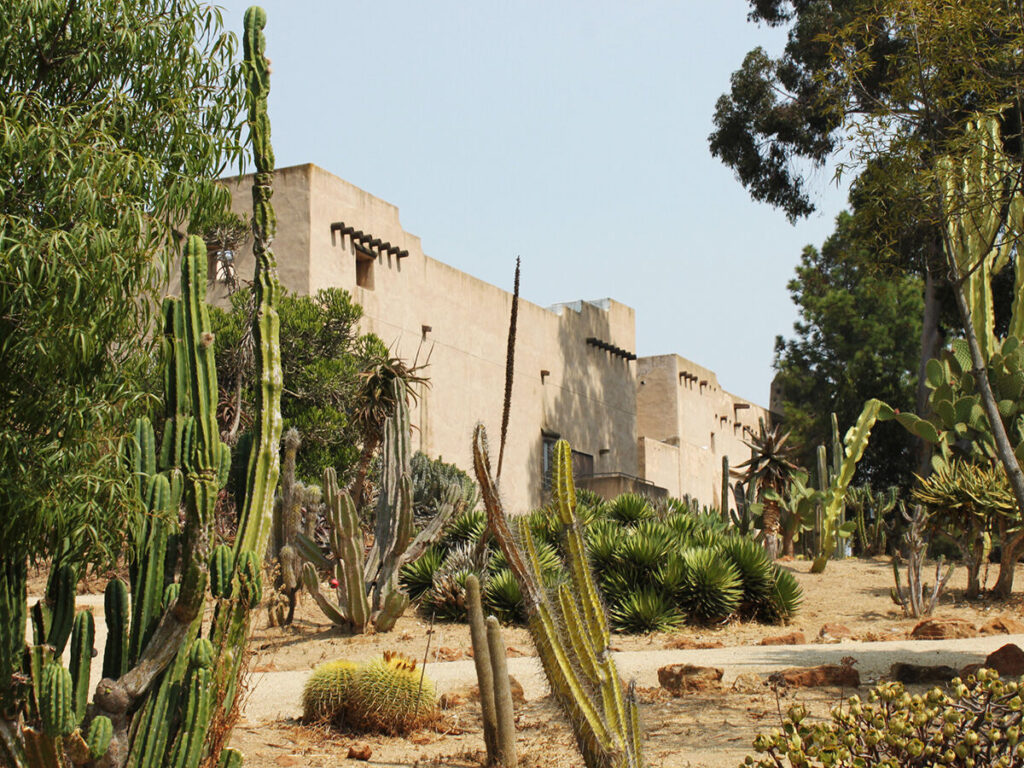
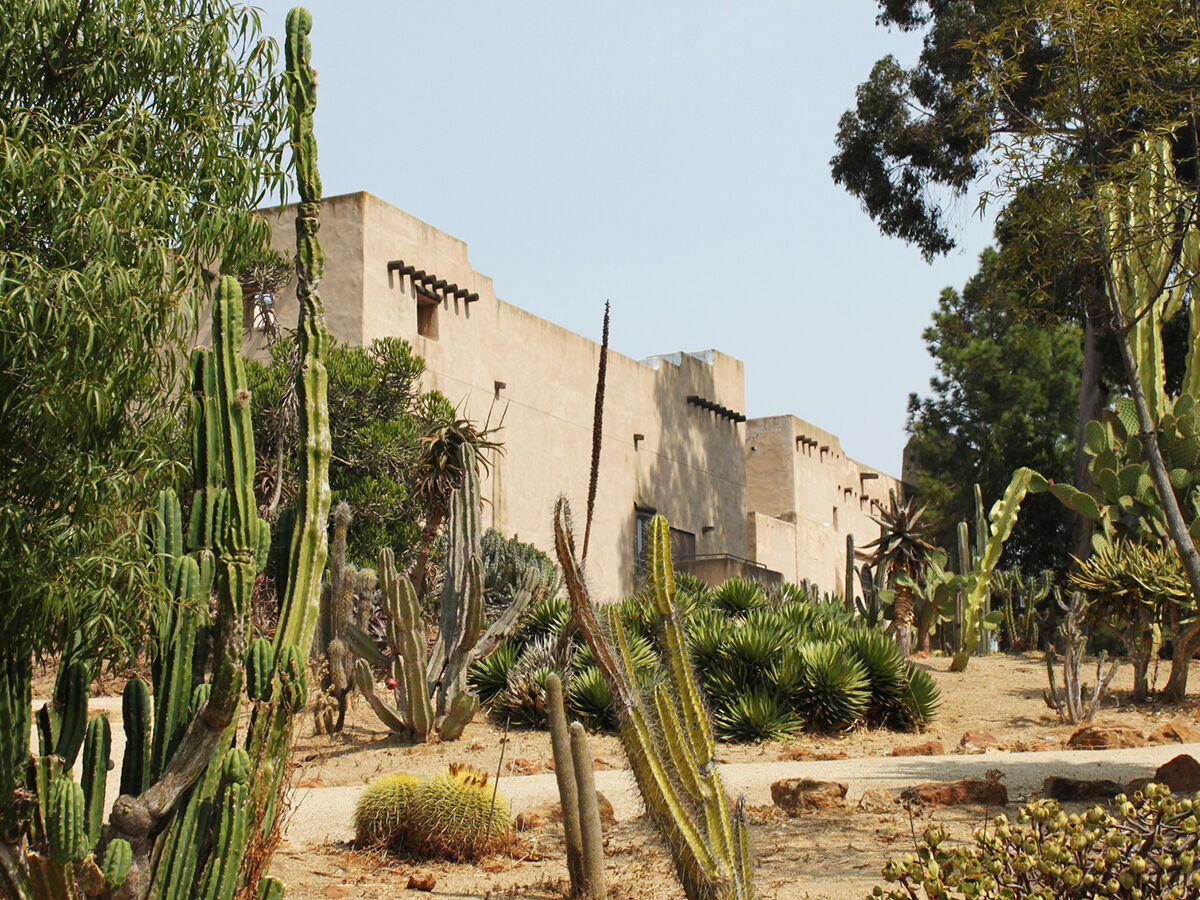
Often confused with the Desert Garden off Park Boulevard, Balboa Park’s 1935 Cactus Garden is home to a wide variety of cacti and succulents, including a collection of exotic African and Australian Protea plants. The garden has also been claimed by a feral cat colony—the cats are friendly and mind their own business, and local organizations have worked to spay and neuter and re-release them. You can access the garden by walking through the parking lot behind the Balboa Park Club or taking a trail from Palm Canyon.

2144 Pan American Road West, Balboa Park


Sri Chinmoy Peace Garden

This garden’s unassuming location off bustling Adams Avenue is part of what makes it such a sacred place for meditation. You won’t find any frills here, just a few benches, simple landscaping, and a statue in honor of the garden’s namesake spiritual leader, creating a small, tranquil respite from our busy world. For those who want to take their practice a step further, San Diego’s Sri Chinmoy Centre, located a couple miles down the road, offers free online meditation courses.

2508-2518 Adams Avenue, University Heights
 

Gardens / San Diego Botanic Garden

San Diego Botanic Garden

Riley Murphy

San Diego Botanic Garden

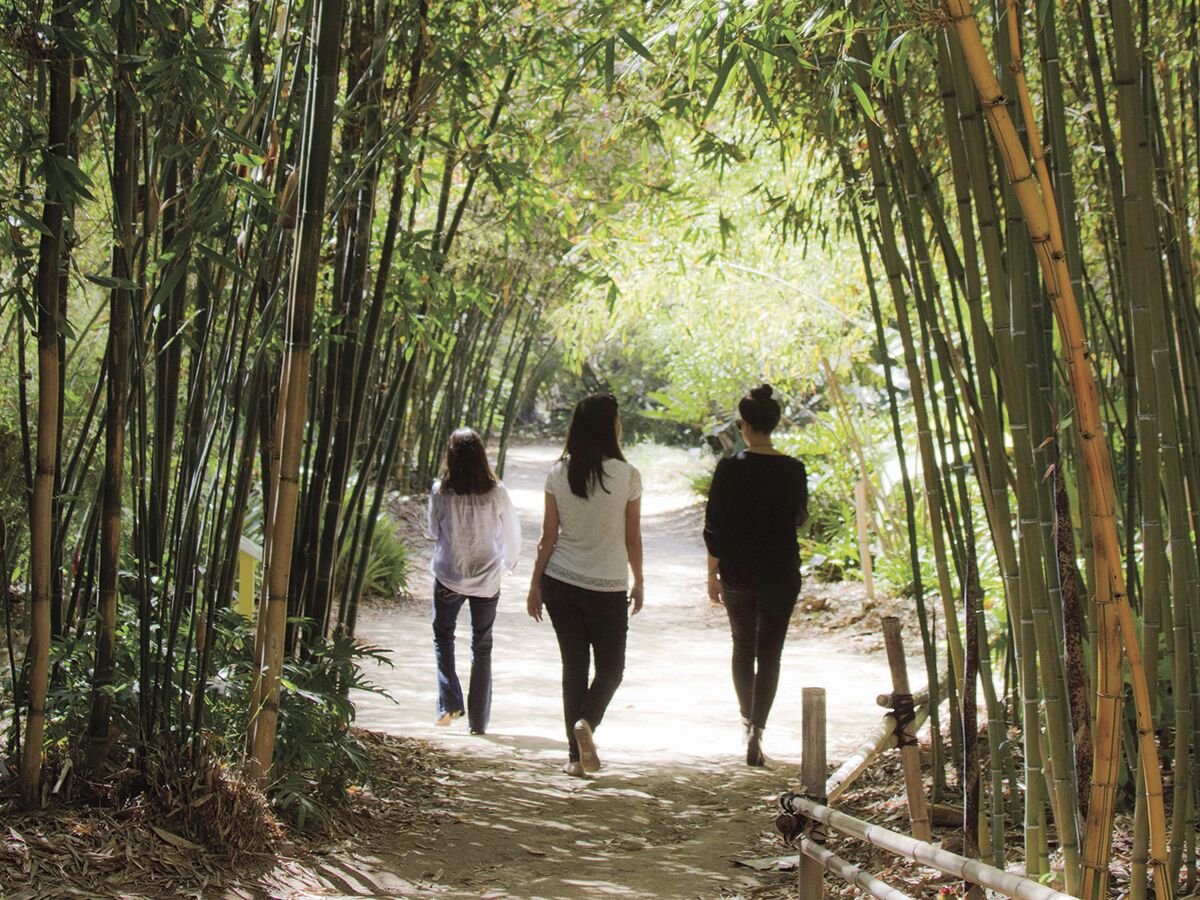
A true urban oasis in North County, the Botanic Garden boasts 37 acres of peaceful landscaping to get lost in. Here, you’ll find flowering trees, vistas, thousands of plant species from all over the world, and the nation’s largest public bamboo collection. As you wend your way through the 29 themed gardens, you’ll catch glimpses of the Pacific Ocean beyond. The garden is currently operating by reservation only, so book ahead of time.

300 Quail Gardens Drive, Encinitas
 

1935 Cactus Garden

Riley Murphy

Subscribe to our newsletters

Select Options

By subscribing you confirm that you agree with our Terms and Conditions and Privacy Policy.

Arts & Culture APRIL 3, 2026

Faith Ringgold’s Radical Imagination Returns to La Jolla

A new exhibition at UC San Diego’s Mandeville Art Gallery revisits the artist’s story quilts, paintings, and legacy of visual storytelling

Faith Ringgold’s Radical Imagination Returns to La Jolla
Photo Credit: Pablo Mason

A little girl floats into a night sky above a color-saturated Harlem, her arms outstretched, her two braids flying behind her. Cassie Lousie Lightfoot is weightless, soaring above the George Washington Bridge. In the award-winning 1991 children’s book Tar Beach, the act of flying is about imagination and freedom; a metaphor for the inequality faced by Black people who built the city but couldn’t be part of it. Author and mixed media artist Faith Ringgold understood the duality and that—for Black women and girls—imagination isn’t just escape, it’s authorship. 

Ringgold’s expansive vision and vibrant canon has found a temporary home in La Jolla, where ArtLeadHER’s Mashonda Tifrere has curated an exhibition of Ringgold’s work at Mandeville Art Gallery on the UC San Diego campus. Faith Ringgold: Full Circle—The Teachings and Her Legacy isn’t just a retrospective (the prolific Ringgold died in 2024 at age 93), it’s another kind of homecoming: Ringgold was an art professor here, in this community, from 1984 to 2002 and changed the trajectory of what art could be and who it could be for. She’s so revered that this show was hung by students in the art program.

Opened on February 28, Full Circle is free to the public and remains on view through May 1. Art lovers have a fleeting window to experience a small fraction of Ringgold’s historic and urgently present larger body of work.

Photo Credit: Pablo Mason

Ringgold had a vibrant imagination from her earliest days. As a child, she suffered from severe asthma and often missed school. Confined at home, Ringgold became an observer, building her own visual language and creating stories with it. 

Her mother was her coconspirator: Willie Posey, a designer and seamstress, fed her daughter’s creative interior life by providing her with art supplies and teaching her how to work with fabric, pattern, and color. Perhaps one of the most transformative skills Posey taught her daughter was quilting, and she eventually helped Ringgold create her first story quilt, Echoes of Harlem, and story quilts became the young artist’s signature. 

Quilting has deep roots in Black American history and is tied to the world of enslaved women who made quilts not just for function, but as storytelling devices, historical preservation, and coded expression. When, due to racism and sexism, Ringgold couldn’t be a landscape painter she turned to quilting and relied on the resilience of her ancestors. When she couldn’t get her writing published, she wrote her stories directly onto her quilts, sometimes in Sharpie. And much later, quilts enabled Ringgold to make art accessible on a wider scale: This medium could be folded and rolled and easily shipped.

Photo Credit: Pablo Mason

Ringgold didn’t wait for permission. She never did. Whenever the artist met a barrier, she found her way under, over, or around it. She pushed beyond the male-dominated art world that excluded her and women who looked like her. By adding written narratives to her quilts, she inadvertently lifted them from the realm of a craft into something more expansive. Her quilts—stitched and painted on—have universal appeal, at once historical, political, personal, and emotional. 

“Faith’s work feels like a story crafted for the soul,” Tifrere says. “Everything about it is intentional…the emotions on her pages, canvases and quilts are clear. She didn’t shy away from complexity or imperfection.”

That’s part of what makes Ringgold’s work feel so immediate and immediately accessible: You don’t stand in front of it and feel nothing. You enter it and feel everything. Each piece, from her story quilts to her quilted masks, to her political prints and her rare abstract paintings (“California Dah” which the artist painted after the death of her mother is on display as part of Full Circle) is its own universe just like her quilt Tar Beach I, which later became the storybook with our flying protagonist.

Recurring throughout her work are bridges, which Ringgold once described as a personification of women. “Bridges unite people across barriers, and that’s what we do with our families: We hurdle obstacles, we stay together, we pass it on just like a bridge.”

Photo Credit: Pablo Mason

It’s impossible not to see that same connection in her work. There’s a throughline between Harlem and La Jolla (nobody’s ever said that before), between Ringgold and Tifrere: Also raised in Harlem, Tifrere understands this work not just from the perspective of a curator, but as someones who’s work is grounded in lived experience.

“What makes me stop is a blend of familiarity and shock,” she says. And of their shared Harlem: “I recall the scents of soul food and incense… the loud vibrations of music… [E]verything was art. Now, when I encounter art from a curatorial lens, I immediately connect with the emotions it evokes on every level.”

And that’s why this show lingers: Not just colors and textures or even the story, but the larger permissions (or lack of) behind this provocative work. 

At the end of Tar Beach, Cassie tells her little brother BeBe that anyone can fly—that “all you need is somewhere to go that you can’t get to any other way.” Standing in the gallery, surrounded by work that disregarded boundaries feels eternally instructive.

Faith Ringgold: Full Circle—The Teachings and Her Legacy runs through May 1, 2026, at Mandeville Art Gallery. Admission is free. 

Everything SD MARCH 2, 2026

The Locals’ Guide to Visiting La Jolla, CA

Explore the ins-and-outs of this coastal beach town, including what to do, see, and eat

The Locals’ Guide to Visiting La Jolla, CA
Photo Credit: Ariana Drehsler

Need help deciding which of La Jolla’s seemingly endless beaches to lay your towel out at today? Each little sandy sliver between the neighborhood’s sea cliffs has its own name and character: the Cove for swimming, Children’s Pool for seal-watching, Wipeout Beach for skim-boarding. Head to La Jolla Shores for that wide, sandy, picnic-with-the-family feel, and if you know what you’re doing, go surfing at Windansea or Bird Rock (if you’re a beginner, opt instead for the Shores, where most of San Diego learned to surf).

Surfers at Blacks Beach San Diego

Of course, beachy isn’t La Jolla’s only vibe. The Village (locals don’t call it downtown anymore, says La Jolla resident and senior editor of lajolla.ca Elisabeth Frausto) is La Jolla’s most walkable area—highlighted by the main drag, Prospect Street—with a wide radius of shop-lined roads sloping down to the coast.

At long standing neighborhood staples like Warwick’s bookstore and Harry’s Coffee Shop, “old-timers still belly up to the counter and talk politics,” Frausto says. Art enthusiasts visit to peruse through its many galleries, including Quint and Joseph Bellows, and check out what’s on at the Museum of Contemporary Art San Diego (MCASD). Shoppers wander Girard Avenue, picking out activewear at Lululemon and Vuori and fancier digs at Thread + Seed and Sigi’s Boutique. Friends gossip and sip coffee at locally owned outposts like Flower Pot Cafe and Il Giardino Di Lilli.

Il Giardino Di Lilli
Courtesy of Il Giardino Di Lilli

Once isolated from the rest of San Diego, La Jolla became a popular resort destination when the San Diego, Pacific Beach, and La Jolla Railway arrived in the 1890s and made the area more accessible to visitors (who wanted to spend time there so badly they stayed in tents during the summer). Some of those tourists got creative, too.

“Our tradition of supporting the arts goes back to the days of the Green Dragon Artist Colony that was founded in 1894,” says Athenaeum Music & Arts Library Executive Director Christie Mitchell. Anna Held started the Green Dragon Colony to attract visiting artists to La Jolla for a weekend getaway; it quickly became a venue for ad-hoc performances and bohemian artists’ salons.

However, it was Ellen Browning Scripps more than anyone who shaped La Jolla into the neighborhood we know today, commissioning buildings like the structure that now houses MCASD. The arrival of the Scripps Institution of Oceanography in 1907 laid the foundation for the establishment of UC San Diego 53 years later at the longtime site of the military base Camp Matthews. All of these developments helped establish La Jolla’s layered identities: high-dollar beach town, arts magnet, academic research hub.

Athenaeum Music & Arts Library
Photo Credit: Ariana Drehsler

Facts About La Jolla, CA

  • Ellen Browning Scripps commissioned Irving Gill to design a building for the La Jolla Woman’s Club in 1914; it still meets today in the same building.
  • La Jolla’s scenic beauty is a backdrop for many movies, including Thor, Gattaca, Traffic, Mr. Jones, and Andy Warhol’s 1968 experimental film San Diego Surf.
  • Every summer, thousands of pregnant female leopard sharks gather in La Jolla’s Marine Protected Areas to incubate their pups.
  • Zillow reports the average home price in La Jolla is $2.3 million.
  • Old Hollywood film star and La Jolla native Gregory Peck was one of the founders of La Jolla Playhouse, which opened its doors in 1947.
Christie Mitchell
Photo Credit: Ariana Drehsler

Locals’ Guide to La Jolla, CA

Athenaeum Music & Arts Director Christie Mitchell is a bona fide La Jolla local, having grown up in the LJ neighborhood of Bird Rock. Her dad still surfs, and Mitchell met her own surfer husband at La Jolla High (their toddler has already tried surfing, too). Mitchell’s mom still lives in Bird Rock, and “it’s gotten a lot livelier and more pedestrian-friendly,” she says.

On weekends, she makes sure to hit Wayfarer Bread for “the gooiest, heaviest, stickiest cinnamon loaf—definitely preorder because there’s always a line,” she advises. Friday and Saturday are pizza night at Wayfarer, and the bakery’s industry collabs produce some unique pies. For coffee, head to Bird Rock Coffee Roasters, of course, where you can grab a cup and hang out in the open-air seating or stroll to La Jolla Hermosa Park for ocean views (and a skate park and bike paths for little ones to tire themselves out on).

One of Mitchell’s favorites for lunch with coworkers in the Village is Peruvian-inspired Pepino, owned by one of her high school classmates. “The sweet potato bowl is really good,” she says.

The Marine Room
Courtesy of The Marine Room

She also cherishes La Jolla institutions. The Ascot Shop, a longtime men’s clothing boutique, is a go-to for gifts; founded by a local fisherman, El Pescador Fish Market is the place for the freshest seafood and fish tacos; and The Marine Room is for special occasions, with on-point service against a backdrop of crashing waves. “And nothing says ‘La Jolla’ like George’s at the Cove,” Mitchell adds. “With the John Baldessari mural and the view, it’s a great mix of the arts and the ocean.”

There’s a surprising amount to do on the weekdays in La Jolla, Mitchell says, with free live music every Monday at the Athenaeum (and weekly ticketed events), late-night DJ sessions at Le Coq, acts at The Comedy Store, concerts at the The Conrad (home of La Jolla Music Society), and the monthly First Friday Art Walk.

Lucien La Jolla
Photo Credit: Kimberly Motos

What’s About to Happen

The biggest talk of the town for La Jollans? Possible secession from the city of San Diego, Frausto says. Proponents want to separate so La Jolla can maintain its own infrastructure and make decisions about development (critics say La Jolla should contribute taxes to the rest of the city). If the initiative advances, final say would come down to a city-wide vote.

Additionally, locals and visitors alike are witnessing a genuine culinary explosion. Restaurateur Sami Ladeki’s Roppongi, a Japanese fusion and sushi favorite that closed in 2015, reopened in December 2025 under returning chef Alfie Szeprethy. Michelin-starred chef Elijah Arizmendi launched tasting-menu-only restaurant Lucien last year, and chef Accursio Lota of North Park’s Cori Trattoria Pastifico opened his new spot Dora in November. Local designers Paul Basile and Jules Wilson are building Roseacre, 5,000 square feet of culinary concepts on Girard Avenue. And one of La Jolla’s favorite restaurant families is opening a completely new eatery near Torrey Pines Golf Course in summer 2026: From the guys behind Puesto and Marisi comes an Eastern Mediterranean spot called Ikaria.

Back in the Village, a new boutique hotel by Orli is landing in the old nurses’ quarters (now condos) next to the original 1924 Scripps hospital (the institution moved to Genesee Avenue in 1964). La Jolla is also getting in on the thrifting trend—Goodwill opened a shop on Herschel Avenue in early 2026.

Pedestrian-friendly changes are afoot in two of LJ’s walkable areas. At La Jolla Shores, look for enhancements to Avenida de la Playa from El Paseo Grande to Calle de la Plata, where the street has been closed to vehicles since 2020 for outdoor dining. The Village Streetscape Plan is coming to Girard Avenue between Silverado Street and Prospect Street, bringing expanded walking areas, corner parks, improved lighting, new seating, public art, and landscaping to create shade canopies and gathering spaces.

La Jolla
Photo Credit: Ariana Drehsler

Also look for beautification projects along the coast. The 1920s stairs leading down to the tide pools at Whale View Point are finally getting a redo; Ellen Browning Scripps Park will receive fresh sod and much-needed widened sidewalks. And ADA trail improvements and a new restroom facility are on their way at Torrey Pines State Natural Reserve, making the beloved natural area more accessible.

As for housing, Frausto says, affordable units are hard to come by, and that probably won’t change soon. Most new homes and apartments are geared toward the luxury market, like La Jolla’s first new gated community in 40 years, Foxhill, which broke ground in October 2025 on the site of a former golf course—with empty lots selling for more than $8 million.

Where to Eat in La Jolla

Le Coq

Marisi

Catania

Where to Shop in La Jolla

Mitch’s Surf Shop

Mood Indigo

Gracie James Co.

More Things to Do in La Jolla

Birch Aquarium

Torrey Pines Gliderport

La Jolla Kayak

Leorah Gavidor won her first essay contest at age 5. She writes features, news, and non-fiction in San Diego.

Everything SD AUGUST 13, 2025

Special Activations at the Del Mar Wine + Food Fest’s Grand Tasting Event

Chef collabs, cooking demonstrations, DJs, and tailgates—your guide to all the experiences featured at this year’s affair

Special Activations at the Del Mar Wine + Food Fest’s Grand Tasting Event
Courtesy of Del Mar Wine + Food Festival

Slip into the moment: You’re strolling through Surf Sports Park in the fall outfit you’ve been dying to wear, maybe even snagging some handmade jewelry with rare natural gemstones from Timka Jewelry while sipping locally made hard kombucha and snacking on Michelin-starred must-try meals from San Diego restaurants. In the background, celebrity chefs mingle by small parties with DJs spinning and professional athletes passing by floral photo ops that are basically made to be framed. You pause for a wine pour that looks almost too good to drink and catch acclaimed talents like Jackson Kalb collaborating with Quixote. 

This is the Del Mar Wine + Food Festival—one of SoCal’s premiere food and drink events showcasing the unique culinary experiences infused with San Diego’s fitness and wellness culture. If you’re heading to the fest this year, we put together an insider’s guide to all the standout activations at the Grand Tasting taking place from September 13 & 14. Here’s what not to miss:

The Del Mar Wine + Food Festival Grand Tasting 2025

Sips, Tastings & Photo-Ops

Across Saturday and Sunday, festival-goers can wander the grounds to enjoy activations from sponsors like LaCroix, Landmark Vineyards, Justin Wines, and Clink. These pop-ups will be offering food and drink tastings, goodie-bags, and little surprises that make wandering the festival half the fun.

Clink will be pouring a mix of wines in the picnic area just outside the VIP tent, while Justin, Landmark, and Lewis wines will host tastings nearby. Heaven Hill Tequila Ocho and Mezcal Vago, will be outside the beach area near Feeding San Diego, and LaCroix will be available throughout the grounds with sparkling water and an Instagram-worthy floral photo-op near the Locals zone. 

You can also catch San Simeon wines outside the VIP tent, Spritz in the beach area, Peroni and Blue Moon outside VIP, The Grill Dads throwing tailgate-style parties with Grillin’ Time canned cocktails flowing from branded coolers, and The Los Angeles Golf Club Dryvebox giving everyone the chance to test their swing on a golf simulator. Follow your taste buds, your camera, or your curiosity and you’re guaranteed to run into something worthy of a pause at every turn.

Exclusive Chef Collabs

Chef collabs at the Del Mar Wine + Food fest mix flavor, personalities, and a little bit of culinary chaos in the best way. After all, how often do you catch two acclaimed talents sharing the same space? On Saturday, Jackson Kalb teams up with Quixote, while Jet Tila links with Serea and Lionfish for a full-on takeover of the Culinary Comp Zone. Both days feature Fox Point partnering with Haven’s Mawa McQueen in the VIP area, while Plant Paradise joins forces with Nichols Farms and chef Zuliya Khawaja. 

And this is just some of many prime celebrity-spotting opportunities. Your favorite chefs will be sprinkled all across the weekend’s lineup. Get the full lowdown on where to find them here

Local Bites & Cooking Demonstrations 

Beyond the zones, the weekend features some of the best SoCal names in the food and drink industry including A+M Catering, Amalfi Cucina Italiana, Quixote, Glass Box, Rosemarie’s Buns & Brews, Bianchi Winery, Rootdown Wine Cellars, and more. Saturday brings the star power of STK Steakhouse, Jake’s Del Mar, ARLO San Diego, and Provisional Kitchen, while Sunday turns the spotlight to Lana Restaurant, Waverly, Flame & Flavor, and Seasons 52. Click here to see the full list of participating restaurants.

Kyoku Knives will also make its mark as a headline sponsor throughout the festival, with chef Jeff Roberto breaking down sushi, sashimi, and Wagyu beef during the Sushi on a Roll activation in the VIP Reception Area. He’ll be joined by Brian Malarkey (Top Chef, Herb & Wood, Animae) and Tommy “The Fishmonger” Gomes (Outdoor Channel) so be sure to get your cameras ready. 

Games, DJs & Tailgates

Field games and foodie finds galore, throughout the weekend, attendees can catch some wiffle ball and classic ballpark eats at Ballpark in the Park, dive into a soccer experience with San Diego Wave FC or join tailgate enthusiasts with SDFC and DirecTV. Or, keep the celebration going with DJs spinning at the Mountain experience.

At Street Fleet Alley, find local food trucks and street food pop-ups serving their best fare. Plus, this year, Baja and Paso Robles head to San Diego to showcase their local breweries, restaurants, and lifestyle brands—keep an eye out for their activations. 

Everywhere you turn, you’ll find art installations, local food, celebrity chefs, TV personalities, and unique pop-ups. It’s what the Grand Tasting is all about: living your best life, one sip, bite, and beat at a time.

Isabella Dallas is a freelance writer for San Diego Magazine and the Arts and Culture Editor at The Daily Aztec in her final year at San Diego State University. She previously worked as an editorial intern for SDM, but when she’s not writing, you can find her trying the best coffee spots in SD, devouring the latest rom-coms, and indulging in anything and everything pop culture.

Studio S JUNE 15, 2026

A Modern Take on Steak

Stake Chophouse & Bar brings contemporary classics and old-school service to the heart of Coronado

A Modern Take on Steak
Courtesy of Stake Chophouse

Stake Chophouse & Bar isn’t your average steakhouse. Blue Bridge Hospitality’s Coronado outpost is a modern interpretation of a big-city steakhouse nestled in the heart of the small coastal community. The team at Stake has reimagined the whole steakhouse experience. By prioritizing a seasonal farm-to-table sourcing philosophy, a personalized guest experience, and unique service touches, like a formal steak presentation and a bespoke knife selection process, Stake distinguishes itself in a sea of steakhouses.

Exceptional steaks, including Wagyu from Japan, Australia, and the U.S., and fresh seafood flown in daily form the core of Stake’s culinary identity. The menu features a five-course omakase-style steak experience highlighting house favorites, plus an array of cuts, and classic steakhouse staples—think a wedge salad, baked potato, or pasta carbonara—refined for a contemporary palate without losing their traditional appeal. Stake focuses on seasonal sourcing from the region’s best family farms and specialty purveyors, and incorporates intentionally unexpected touches to create something truly unique.

“I challenge our chefs and myself to take it a step further in sourcing,” says Chef Ronnie Schwandt. “It’s important to us to highlight different farms, unique one-off farms—whether it’s cattle, strawberries, a local fisherman or from anywhere in the United States, we’re always trying to find that niche.”

Beyond the menu, Stake emphasizes outstanding service, says Vinny Spatafore, Director of Hospitality Operations. Staff maintains detailed notes, allowing them to remember guests by name, recall previous orders such as a favorite martini (also memorable for the customer since it’s served in an extra tall, distinctly-shaped glass), and celebrate special occasions like birthdays and anniversaries.

“When you have those points of topic that you remember about a guest, they appreciate that,” he says. “Our servers are really good with that—we have a couple servers who have been here since the beginning and they’ll remember somebody from years ago, their name, their kids’ names, where they live. I’m really thankful to have a great front of house staff.”

Award-winning wines, rare whiskeys, special events, and a complementary black car service that provides transportation for guests throughout Coronado add to Stake’s appeal.

Schwandt stresses that Stake offers more than a meal; they aim to give patrons something unforgettable.

“It starts when you walk up the stairs and are greeted by the hostess—that sets the tone for the night. Then you’re greeted by a server, who may know you by name, and can guide you through the menu and curate as they get to know you,” says Schwandt. “Most people leave kind of blown away; they leave feeling like they just had an experience. That’s the goal, right? Whether you’re serving smash burgers or high-end steak, you want somebody to leave thinking, Wow, that was awesome.”

Partner Content
Theatre JANUARY 17, 2025

Q&A with Legendary Writer Fran Lebowitz 

The cantankerous New York commentator (and Albert Einstein of coffee) comes to UC San Diego on January 23

Q&A with Legendary Writer Fran Lebowitz 
Photo Credit: The Steven Barclay Agency

Let’s get something out of the way: promotional interviews are, by and large, a questionable idea. They rely on the assumption that one person cares enough to answer questions in an intelligent manner and the other is smart enough to ask them. Often, neither is true. But this is Fran Lebowitz. An articulate curmudgeon and the patron saint of sarcasm. She’s fun to talk to. Besides, Lebowitz is speaking as part of UC San Diego’s ArtPower series on January 23, and San Diego Magazine was offered a 20-minute call with the 74-year-old social commentator, so we went for it.

Known for her style, wit, and inability to suffer fools, Lebowitz has spent decades holding a mirror up to society, while rolling her eyes at what she sees. The subject of more than one fawning Martin Scorsese project, Lebowitz is often referred to as a writer even though she’s spent the bulk of her career not writing, which, in her words, is the best part of being a writer. She’s also an unrepentant critic—not just of art and culture, but of humanity at large, as well as a chain smoking, coffee-drinking, die-hard New Yorker.

So, whether she’s talking bagels, romance, gay marriage, or the formality of flip-flops, she does so with humor and insight that makes her fans laugh, wince, and think—often all at once. In our promotional interview, she waxes about all these things, and more.


Mateo Hoke (MH): How are you?

Fran Lebowitz (FL): Horrible. Like every other sane American.

MH: This is off to a great start. You’re coming to San Diego, there will be people wearing flip-flops at your event. Are you prepared for that?

FL: I have bad news for you, you see that everywhere. Not everywhere in the world, by the way, but everywhere in the United States. Even in places where you would think, gee, it’s like 20 degrees, don’t you think it’s too chilly for that?

You see it in airports, you see it on planes, everywhere. I find it astonishing. Not only because I’m old, and not only because it seems to be very inappropriate weather-wise, but it seems to me to be so shockingly casual. I see people in public—and not just in San Diego—who are dressed in a way I don’t dress when I’m alone in my apartment.

How formal you are is partially generational, but it’s not wholly. And apparently, as far as clothes go in regard to things like flip flops, there is a general idea—not shared by me—that everyone has to be incredibly comfortable all the time. 

New York based writer and social commentator Fran Lebowitz who has an event at UCSD's ArtPower series on January 23, 2025
Photo Credit: Brigitte Lacombe

MH: Ok wait, what are you wearing right now as a fashion icon lounging around at home?

FL: First of all, I never called myself a fashion icon, other people did. And I’ll tell you, I happen to be an incredibly careful person with clothes. My parents were raised during the depression and this wore off on me.

So, right now I’m wearing jeans—which I always wear—but these jeans I would not wear out of the house because these jeans are so ripped up that only maybe a 20-year-old model would love to have them. But these are actually ripped up by wear as opposed to ripped up by some store. And I’m wearing a Brooks Brothers shirt that is at least 30 years old—also ripped—and moccasins that are not that old only because when I found them 100 years ago, I liked them so much I bought more than one pair. So that’s what I’m wearing, but I wouldn’t leave my apartment in this.

MH: That’s all still very stylish.

FL: I mean, I’m 74, maybe if that had been the style when I was young. By the way, most of these things that kids wear now, they have been worn numerous times. I don’t mean the actual garments, I mean fashion is a limited form.

MH: It’s cyclical, every 20 years it comes back.

FL: Yeah, although everyone calls it an art, it’s really not, because it’s useful. You know, you wear it, you use it, and there’s a limited number of options that designers have. So I’ve seen, like, a million things come back a million times.

MH: All right, can I talk to you about New York now that I’ve talked to you about San Diego a little bit?

FL: Sure.

MH: What’s your bagel order? Toasted? Untoasted?

FL: I don’t do that. I don’t go out for breakfast. I buy bagels, I eat them here. If I have fresh bagels I do not toast them. In my opinion, you toast bagels ’cause they’re not good enough to eat untoasted. 

San Diego bagel shop Marigold Bagels set to open a brick-and-mortar location in North Park in 2025

MH: Gotcha. I’m a big bagel guy and I will tell you, New York has done a tremendous job of marketing their bagels. In fact, I went to a bagel shop that claimed to treat their water to get the exact pH of NYC in order for their bagels to taste like NYC bagels. This isn’t a question so much as I just want you to hold my hand and tell me I’m not out of line for thinking this is asinine and gimmicky.

FL: You know, I really love to eat. I’m as gluttonous as the next person, but I don’t cook, and I don’t care how something is made. 

One of the things I hate in restaurants is when they tell you everything that’s in a dish. I think, I don’t care. I don’t care, I’m not gonna make it.

The main thing about bagels—if that’s your main interest—is they should be bagels and not donuts. They shouldn’t be soft, they shouldn’t be big. And there’s no such thing as the best bagel in the world. There’s a big thing here—apparently Toronto believes themselves to be the city of the best bagel.

MH: Oh, Controversy.

FL: Yeah, I’ve heard a lot of controversy but I’ve never entered these discussions because I don’t know, and I don’t care.

MH: Ok, so relating to New York thinking it’s home to the best this or that. Is New York the center of the universe?

FL: Yes.

MH: Wait, I’m not done with the question, it’s three parts. Is New York the center of the universe? Why is your answer going to be yes, and why does everyone in New York think that?

FL: [Laughing] Well my answer is yes. And my answer is yes because it’s true. And everyone in New York thinks that because it’s true. Additionally, if you live in New York, it’s so hard to live here that you have to believe it’s worth it. There is nothing about life in New York that is not at the least a hassle. It’s also psychotically expensive and you have to believe that this is worth it. To me it is worth it. Obviously, to certain people it is not, but you know, to me, whatever people say, ‘Oh, New York’s not like it used to be’—which people say every two seconds—that is true. But nothing is, because time doesn’t go in the direction backwards.

MH: Fair. Speaking of time, you’re 74 years old, what’s the biggest shift in human consciousness you’ve seen unfold in your lifetime?

FL: For me, the change in attitude toward gay people is gigantic. It’s something I never imagined would happen. Ever. I never fought for gay marriage, I was never an activist. First of all, we never heard of gay marriage, let me assure you, this wasn’t even a concept when I was young. And I certainly wouldn’t have fought for it.

I have to say the first two things that were actually accomplished by the gay rights movement was gays in the military—which no one remembers—and gay marriage. And those are the two things that when I was young—when it was very hard to be gay, in fact it was a crime when I was young—they were the two most confining institutions in the culture. [Growing exasperated] The two advantages of being gay was you didn’t have to get married and you didn’t have to go in the army! I mean, to me, this seems like fighting for slavery. So, I did not fight for these things. 

But I never imagined it would happen. Being gay when I was young wasn’t that different from being gay for Oscar Wilde. It was a crime. It really changed cities, too, because one of the reasons people lived in cities like New York or San Francisco was because they were gay. You couldn’t live the life you wanted anywhere else.

MH: What about other major shifts?

FL: The Me Too movement. That seemed to happen in a second. Of course, it didn’t, but it felt like it. Being a woman was kind of the same from Eve until that happened. It’s not perfect now, but it’s different.

MH: Do you have any big failures in life? Have they taught you anything notable?

FL: Sure. I mean, I have many, as all people do. I don’t have one thing like, “I almost won the gold medal at the Olympics” or something. People who have a biggest failure probably have a level of success I don’t have. Everyone has many more failures than successes.

MH: People sometimes consider failure in love, relationships, work, and all sorts of things.

FL: I happen not to be a person who believes in success in love in that way. By that, I mean finding the one person that’s perfect for you and spending your whole life with them. That didn’t happen to me, and it really doesn’t happen to most people. I find it odd that adults believe in that. To me, intrinsic in the word romance, is that it ends. Lifelong romance? I just don’t believe it.

MH: A lot of people are coming to see you here in San Diego soon and I’m curious, what do you want them to take away from their time with you? 

FL: You know, I’ve never thought about this. I want them to enjoy themselves. Because what I always know is people do not go to a theater unless they are hoping to enjoy themselves. So, I’m hoping that they enjoy themselves. I personally love doing this, so I hope that they enjoy it even half as much as I do. 

MH: Fair. But wait, speaking of coming and waiting in line to see you. As a New Yorker, when you’re queued up for something like a movie or a grocery store do you say you’re in line or that you’re on line? 

FL: On line.

MH: Ok now let me ask you this, when you get out of that line do you say you got off line or that you got out of line?

FL: First of all, I will not stand in line or on line for anything other than having to like, check out of the grocery store or TSA or something you have to do.

MH: My question is more about semantics. Why do New Yorkers say they’re on line when they’re in a line? 

FL: Oh, I have no idea. That I could not possibly tell you.

MH: Last question, talk to me about chocolate.

FL: I have no objections to it. It’s one of the best smells for sure. If you go into a chocolate shop, it smells delicious. Not the best smell, though. The best is coffee.

MH: What’s your coffee order?

FL: Oh, I don’t often order coffee. I make it. I hate to cook, but I happen to be the Albert Einstein of coffee. I buy beans—nothing fancy—grind them myself, and use an old-fashioned porcelain Melitta. It takes 30 minutes to make a small pot, but it’s unbelievably good. People can’t believe how delicious it is when I make it for them.

MH: So if one were to get invited to Fran Lebowitz’s house, the move is to ask for coffee?

FL: Yes. Occasionally, I’ve even offered it to workmen in the house fixing something because they can’t pretend it’s not there. It smells so perfect. They always say yes and tell me “this is fantastic!” No other coffee is as good as mine. Even bad coffee is better than no coffee. Coffee is so good, I can’t even believe it’s legal.

MH: A truly wonderful narcotic.

FL: Yes, and I just read a horrible article recently about how we’re not necessarily running out of coffee, but kind of. Because apparently the places where they grow coffee are experiencing climate change to where they can’t grow enough beans, so it’s going to end up costing like $1000 a pound—at which point it will still be worth it.

MH: The world keeps getting worse in so many ways. 

FL: Yes, well, let me assure you, this is improvable. You know, anything that’s created by human beings is fixable by human beings. 

Fran Lebowitz is appearing at the Balboa Theatre (868 Fourth Avenue) on January 23 as part of UCSD’s ArtPower Series. More info here.

Mateo Hoke

About Mateo Hoke

Mateo Hoke is a journalist and author. His books include Six by Ten: Stories from Solitary, and Palestine Speaks: Narratives of Life Under Occupation.

Food & Drink NOVEMBER 19, 2024

Madison on Park Team Opening New Pizza Joint in University Heights

The team behind the project will debut Sonny’s in 2025 and will open a second Madi location in Pacific Beach

Madison on Park Team Opening New Pizza Joint in University Heights
Courtesy of Madison on Park

The team behind Madison on Park and Madi will have a busy 2025. Jeffrey Fink (who also owns M-Theory Music and the now-closed Fluxx nightclub) and Matt Sieve (Isabel’s Cantina) took over the space at 1728 Madison Avenue two years ago, hoping to open a pizza concept just around the corner from Madison on Park in 2023. Now, at last, and to what I’m sure is their great relief, they have a target date for said pizza shop. Sonny’s will open in University Heights in February or March of next year.

“Sonny’s pays homage to the iconic NY-style pizzerias of the ’80s, housed in a well-used 100-year-old former auto shop,” explains Fink. “The space retains its authentic roughness, enhanced with additions of a custom pizza oven imported from Italy and mezzanine inspired by all our grandmas’ houses.”

The 3,500-square-foot indoor space will also include an additional 500-square-foot outdoor patio, designed by Anna and David Sindelar, who designed Madi and Madison on Park. Featuring a repurposed copper bar, decorated with vintage TVs and a backyard dining area, Fink says it will feel less like a traditional Italian restaurant and more like a time capsule of 1980s Brooklyn culture, with a curated menu that will include appetizers, salads, entrees, pizzas, rotating soft-serve specials, and an outside grill. Danny Kuehner will spearhead the cocktail program, featuring plenty of amaro and what Fink calls “young, funky, hip” wines.

But that’s not all the pair has planned. In May, they’ll also open a second Madi location in Pacific Beach. The new Madi will feature the same menu as the original location in Normal Heights centered around brunch, lunch, and cocktails. And because good things come in threes, Sieve and Fink are also working on a diner concept in Hillcrest. Sieve is a third-generation restaurateur, whose family owns and operates a 100-year-old breakfast restaurant in Minnesota. He’s no stranger to working the grill, so he’s taking the lead on this new concept—best of luck to the partners on what is sure to be a hectic few months.

Ember & Rye, Christmas 2024
Courtesy of Ember & Rye

San Diego Restaurant News & Food Events

A Bonanza of Holiday Activities at Park Hyatt Aviara

Carlsbad’s Park Hyatt Aviara has a slew of holiday events coming up, starting with their Holiday Market on Sunday, December 8. From 2 p.m. to 7 p.m., you can shop local, sip, and meet Santa. The big guy will be back quite a few more times—December 11 through 24—from 3 p.m. to 6 p.m. for Cabana Christmas Village, where guests can meander through poolside cabanas that will each offer a unique experience, from food and drink to ornament making, hot cocoa, and more.

There are also Christmas Eve and Day feasts at Ponto Lago and Christmas Day brunch at Ember & Rye, and if you’ve reached the maximum amount of information to absorb at one time, you can just check out the full list of events at your leisure right here

Beth’s Bites

  • Del Cerro Pizza & Beer will open at 6358 Del Cerro Blvd. on Monday, December 2. Brought to you by the same people behind KnB Bistro, it will offer pizza beer… and I’m not sure what else, but what more could you need?
  • Border X Brewing recently launched a GoFundMe for their Barrio Logan location, citing a landlord dispute and ongoing pandemic recovery issues. Border X originally opened on Logan Avenue in 2014 but was forced to close its location in Bell in 2023 for financial reasons and a dispute with Beer Thug Brewing, another Latino-owned brewery operating in the same location. Barrio Logan has faced more than its fair share of hardships lately—Las Cuatro Milpas rumors, Salud closing—but fresh projects like Pizza Kaiju and Alchemy give me hope for the vibrant food and drink culture the neighborhood is known for. 
  • XOXO by Breakfast & Bubbles, née XOXO Retro Neighborhood Diner, we hardly knew ye. The short-lived spot on Park Blvd. is closed, but the same owners are gearing up for a new concept called Origen. That’s all the info I have (for now), but I’ll keep poking around.
  • Alma, the boutique hotel downtown, is offering a Thanksgiving feast to take home for $250 (feeds 4-6 people). Turkey? Check. Rolls and stuffing? Check. It’s all the faves without any of the fuss, so check out the full menu here and email [email protected] by 5 p.m., Pacific Time, on Friday, November 22, to reserve your meal.

Have breaking news, exciting scoops, or great stories about new San Diego restaurants or the city’s food scene? Send your pitches to [email protected].

Beth Demmon

About Beth Demmon

Beth Demmon is an award-winning writer and podcaster whose work regularly appears in national outlets and San Diego Magazine. Her first book, The Beer Lover's Guide to Cider, is now available. Find out more on bethdemmon.com.

Partner Content JUNE 25, 2026

Summer Nights at SeaWorld San Diego

SeaWorld dazzles with a drone show, big-name entertainers, new animal adventures and more 

Summer Nights at SeaWorld San Diego

Nights are heating up at SeaWorld San Diego. The quintessential summertime staple on Mission Bay is transforming into a destination for unforgettable day-to-night adventures, bringing back some of its most popular Summer Nights programming and introducing exciting new experiences sure to delight both kids and adults alike. 

The 2026 Summer Day to Night at SeaWorld San Diego is the park’s most ambitious season yet. SeaWorld has planned a highly anticipated entertainment lineup that features nine weeks of throwback concerts featuring R&B and hip‑hop favorites from the ‘90s and early 2000s, including Jordin Sparks, Too $hort and Warren G, Ashanti, and an array of boy band heartthrobs performing together as part of the Pop 2000 Tour. 

New this season is perhaps the park’s most visible update: a nightly drone show, Ocean of Dreams, which illuminates the sky with hundreds of synchronized sparklers. Drones form sea otters, sharks, dolphins, and a majestic orca that tell a breathtaking 12-minute story of marine life and underwater ecosystems. The show culminates with a spectacular electric neon finale celebrating hope, wonder, and ocean stewardship.

Nighttime visitors are also in store for animal adventures that fuse education with high-energy fun and the dreamy ambiance of nighttime. The park has launched two all-new animal presentations: Shamu’s Celebration: Light Up the Night and Dolphins: Touch the Sky. Shamu’s Celebration: Light Up the Night features vibrant lighting, music, and dynamic choreography that celebrates the power and beauty of killer whales. Dolphins: Touch the Sky showcases playful bottlenose dolphins and the special connection between humans and the natural world. And back by popular demand is fan-favorite Sea Lions Tonite. See the charming pinnipeds splash, play, and parody pop culture in this refreshed crowd-pleaser. 

More must-sees: a newly reimagined Shark Encounter, one of the country’s more immersive exhibits highlighting 11 different species up close, SeaWorld’s beloved BMX Blast! stunt show, and high-seas escapade, Pirates Ahoy! The Battle for Mermaid Cove. And don’t miss the park’s all-new Deep Sea Disco, which encourages guests to dance the night away under the glow of the SkyTower, and vibrant closing time laser light display Laser Reef Summer Spectacular. 

Amp up the nighttime vibe with local craft beers, curated cocktails, and nostalgic theme park treats with $1 beer all summer long. SeaWorld is the place for day to night summer fun. When the sun goes down, SeaWorld lights up, and inspires guests of all ages to embrace their inner whimsy and see why generations of San Diegans head to SeaWorld to make memories they’ll never forget. 

Thousands of savvy locals already get it.

San Diego's best restaurants, experiences, and events—handpicked and delivered to your inbox weekly. You in?

Close the CTA

Contact Us

1230 Columbia Street, Suite 800,

San Diego, CA