I’ve flown planes all my life—from six years in the Air Force to twin-engine civil aircraft—but a recreational sport plane that’s also amphibious? That’s a new one.
Icon Aircraft’s new Icon A5 is a light sport aircraft (LSA), a designation created in 2004 for simple, lightweight planes that require only a sport pilot license to fly. Unlike a private pilot license, which calls for 40 hours of flight instruction and many hours of ground school, the sport pilot license takes just 20 hours of in-flight training. (You still have to attend ground school, take written and oral tests, and do a check ride with a Federal Aviation Administration examiner.)
Icon Aircraft was offering demonstration flights of the A5, so I jumped at the chance to fly one. It’s a very cool, very little airplane—the wings fold back so it can be towed on a trailer. And it’s the only LSA that’s also amphibious, with the ability to take off and land on both land and water.
We took off from Montgomery-Gibbs Executive Airport with a former Navy pilot in control. He immediately handed the controls over to me (I have more flight time than he does—I’m also much older) and we flew to Mount Soledad, then down the coast to the bay at 500 feet above the water. It was a beautiful, clear, calm San Diego day.
After receiving clearance from air traffic control, he demonstrated a water landing and takeoff. The bottom of the plane is shaped like a boat hull, so it simply glides through the water, making for a smooth landing. He then gave me a chance to try the same.
I flew a standard low-level landing pattern and landed in the water, then applied power and took off. It was smooth and simple, too—easier than a standard airport landing. So I did it again. We then flew over the Coronado Bridge, over the takeoff end of San Diego International, and back to Montgomery.
The Icon A5 is a very easy to fly and responsive little aircraft. Its top speed is 100 knots, with a range of 400 miles depending on weight and wind. It’s restricted to daylight only and visual flight rules (that is, good weather), and it’s equipped with a parachute that can lower the aircraft to the ground in the event of an emergency—both good precautions for anyone with only 20 hours of flight time.
For a price tag of $389,000, it’s a fun toy airplane.
I Tried It: Sport Flying
Music
SEPTEMBER 1, 2026
16 Things to Do in San Diego This Weekend: September 2-6
See The Phantom of the Opera, enjoy smooth tunes at the Pacific Soul Jazz Festival, and kick off your shoes for the Julian Grape Stomp Festa
And just like that … we’ve entered the final third of 2026, where concerts, musicals—both new and old—and several special events await. This week’s live music lineup includes a Guns N’ Roses concert at Snapdragon Stadium and the two-day Pacific Soul Jazz Festival, headlined by Robert Glasper and Kenny Lattimore. For fans of musical theater, the nationwide touring production of The Phantom of the Opera will begin its two-week stay at the Civic Theatre and the world premiere production of Begin Again will debut at The Old Globe. As for other opportunities to go out, there’s the first-ever Anime San Diego convention, Amor y Magia’s bar takeover at the Fairmont Grand Del Mar, and the annual Julian Grape Stomp Festa.
Work for your wine in the centuries-old winemaking tradition—in the vein of “I Love Lucy”—during the 29th annual Julian Grape Stomp Festa at Menghini Winery. This Saturday from 11 a.m. to 5 p.m., guests can squish grapes, hang out in the shade and sample tastings or buy bottles and full glass pours from 11 local beverage purveyors. The festivities also include a jumper and games for kids and a Lucy Ricardo look-alike contest with a $100 grand prize. Ticket options include regular admission ($25), which comes with a wine glass and one tasting, and child admission for ages 6-20 ($8); additional tastings are $2 each.
1150 Julian Orchards Drive, Julian
Amor y Magia Bar Takeover at Fairmont Grand Del Mar
September 5
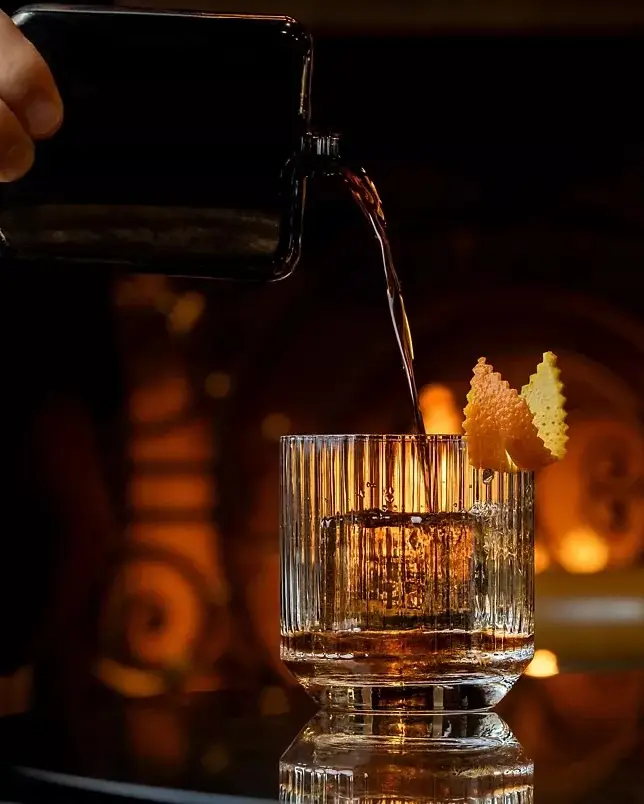
Ahead of Amor y Magia’s upcoming opening in Carlsbad, from the makers of Same Same and Good Enough Cocktail Bar, enjoy a night of curated cocktails in the Lobby Lounge of the Fairmont Grand Del Mar during the Amor y Magia Bar Takeover. This Saturday at 7 p.m., guests can get a sip (or several sips) of what’s to come as bartenders Mike Mayaudon and Shawn Seaman lead a night of love and magic. No reservations are necessary for this event.
As their debut album Appetite for Destruction approaches its 40th birthday, Guns N’ Roses remain trailblazers, both for their immense popularity and enduring influence on the hard rock genre. Though the mayhem-filled excitement of a Guns N’ Roses record may be difficult to match in theory, the band’s live performances reach for the stratosphere. This Wednesday (6:25 p.m.) at Snapdragon Stadium, fans can head down to “Paradise City” with Axl Rose and company and special guests the Black Crowes. Tickets start at $49 for this concert.
2101 Stadium Way, Mission Valley
Miles Davis, Sonny Rollins, & Dizzy Gillespie: A Night in Tunisia and more at The Rady Shell
September 5
Take a trip through the genre-defying collaborations of jazz titans Dizzy Gillespie, Miles Davis and Sonny Rollins during A Night in Tunisia this Saturday (7:30 p.m.) at The Rady Shell. Named for Gillespie’s famed famed jazz standard, this concert will feature a soundtrack chock full of jazz with Afro-Cuban rhythms played by the 17-piece KSDS Orchestra, helmed by local trumpet aficionado Gilbert Castellanos. Before the main event, there will be a performance by the Young Lions Jazz Conservatory All-Stars at 6:30 p.m. Tickets range from $47-$103 for this concert.
222 Marina Park Way, Embarcadero
Ukrainian Festival + 5K
September 5 & 6
The House of Ukraine will kick off a weekend of free activities with Saturday’s Ukrainian Festival. The festival showcases traditional music and dance performances (2-4:30 p.m.), plus an international food court (11 a.m. to 5 p.m.), featuring Ukrainian dishes like varenyky and kovbasa, as well as classic sweets like cookies, ice cream, and cotton candy. The following morning at 9:30 a.m., there will be a free 5K run and walk, beginning and ending at the Green Flash installation by the Mission Beach boardwalk; participants are encouraged to dress in the colors of the Ukrainian flag.
Festival: 667 Pan American Road West, Balboa Park | 5K: 3450 Ocean Front Walk, Mission Beach
Pacific Soul Jazz Festival
September 5 & 6
Spend your Labor Day weekend swaying to jazz, soul, gospel, and R&B during the Pacific Soul Jazz Festival at Epstein Family Amphitheater. This two-day event, put on annually by Mandate Project Impact and the Urban League of San Diego County, starts at noon daily, and will include a vendor village with local businesses. Audiences can expect sets from artists like violinist Karen Briggs, bassist Darryl Williams and saxophonist Mini Abair in addition to headliners Robert Glasper (Saturday) and Kenny Lattimore (Sunday). Single-day tickets range from $40-$250.
Ryan Hardison is a freelance arts and entertainment writer and recent graduate of San Diego State. When he's not staring at his laptop, he's likely eating an adobada burrito or getting sunburnt at the beach.
People remember the first time they see Joe Dreamz.
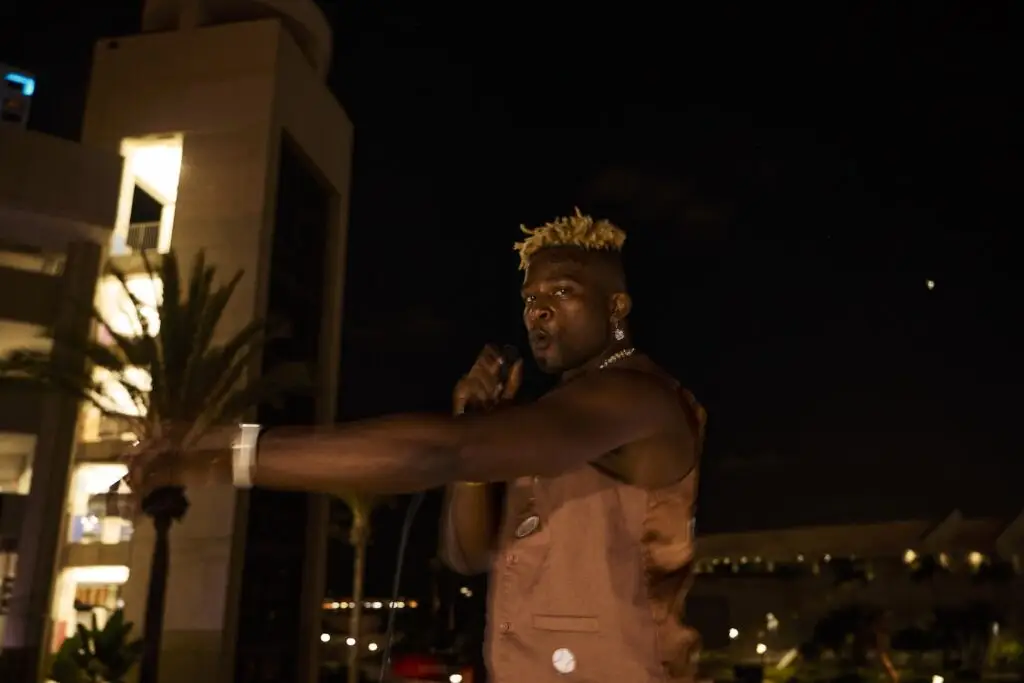
Mine was a mile into the 2023 Carlsbad Half Marathon. He was standing on a speaker in the middle of the course, singing: “Hey you with the shoes, are you living Joe Dreamz?” Clearly not. I’m running uphill at 7 in the morning, I thought.
Months later, walking out of The Rady Shell, there he was again—parting the crowd of concertleavers Moses and the Red Sea style, singing the same song: “Hey you with the purse, are you living Joe Dreamz?”
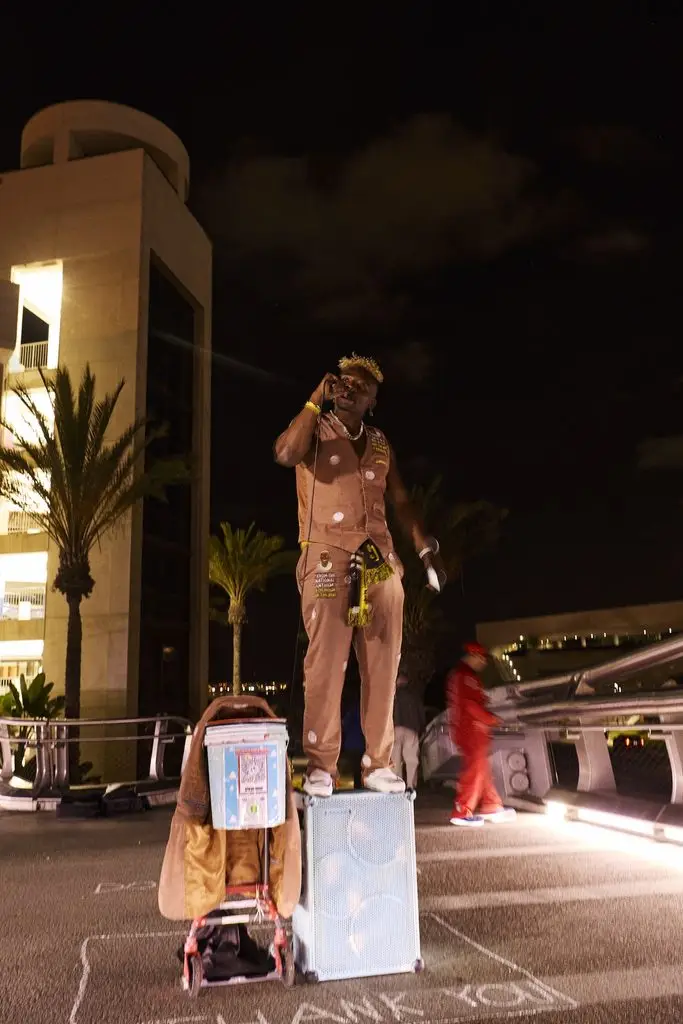
Who’s this man at every public spectacle, singing metaphysical questions in a hand-altered, color-coordinating suit that would make James Brown proud and standing on a Soundboks speaker with a microphone and tip bucket?
A few years ago, San Carlos–born, El Cajon–based Joe Dreamz wasn’t exactly living Joe Dreamz—making $5 footlongs at Subway, dealing with croissant coworkers at Costco’s bakery, and selling life insurance. After he got let go from the life insurance gig and his car broke down in the middle of a 2020 road trip in Seattle, he used his emergency savings to buy a microphone and a speaker; a self-taught musician, he pulled from the only skillset he knew to monetize. He’d set up at Seattle’s Pier 55 and ask people what their dreams were. Then, for $5, create a freestyle rap to commemorate (and hopefully activate) those dreams.
“The goal is that someone listens to a Joe Dreamz song, and they don’t have to wait until metaphorically their car breaks down before they chase their dreams,” he says.
Photo Credit: Matt Furman
A chance encounter with an airport worker led to a free flight back to San Diego, and Joe Dreamz came home “transformed,” he says. He started busking at the Mission Beach boardwalk, Kate Sessions Park, outside Gaslamp bars; then Padres games, farmers markets, marathons. He also hit the mic outside of Coachella this year (“Joe-chella,” he says).
It’s not a get-viral-quick gimmick; people’s lives are changing. One fan finished writing her book after a dose of Joe Dreamzpiration. Another named his own daughter Joy Dreams.
Now, he’s working on the upstart “Tell Me Your Dream” podcast and DREAM Week in local schools, where each day represents a step toward achievement (D is destination day, R is reason day…). He doesn’t want inspiration to reach you only after hearing a song or watching a video: He believes in this message so much that he literally got DREAM tattooed onto his forehead.
“It’s on my face, so people have no choice [but to see it],” he says. “I’m a local celebrity here, so everywhere I go, people ask me for pictures. In every selfie, the message goes along for the ride too.”
Emma Veidt is an editor at San Diego Magazine. She earned her bachelor's and master's degrees from the Missouri School of Journalism. She loves running, hiking, and rock climbing, but really, she mostly loves encounters with the street cats around North Park.
You come home from your first day of school and your parents ask, “Did you make any new friends?” Maybe trading Lunchables or sharing a pack of Oreos helped you break out of your shell to strike up a conversation. Maybe you saw your classmate wearing a Padres hat and asked if his favorite player was also Fernando Tatis Jr. Maybe you’re a natural extrovert who has no problem inviting your entire class to your birthday party.
Making friends is an entirely different beast as an adult. You’re trying to balance your health, work, finances, family, and your sanity. And on top of that, a social life? Impossible.
Being a part of a bigger community—like a rec sports league—helps, but we all need intimacy. Witnesses to the exciting, mundane, shameful parts of our lives. Turns out, men don’t have that as much as women do, and the consequences of this are dire. Roughly 1 in 6 men say they have no close friendships, according to a 2021 American Perspectives Survey. Suicide rates in men are nearly four times higher than they are in women, according to the National Institute of Mental Health. Those numbers are even higher for men above 55, according to the U.S. Centers for Disease Control and Prevention (2023).
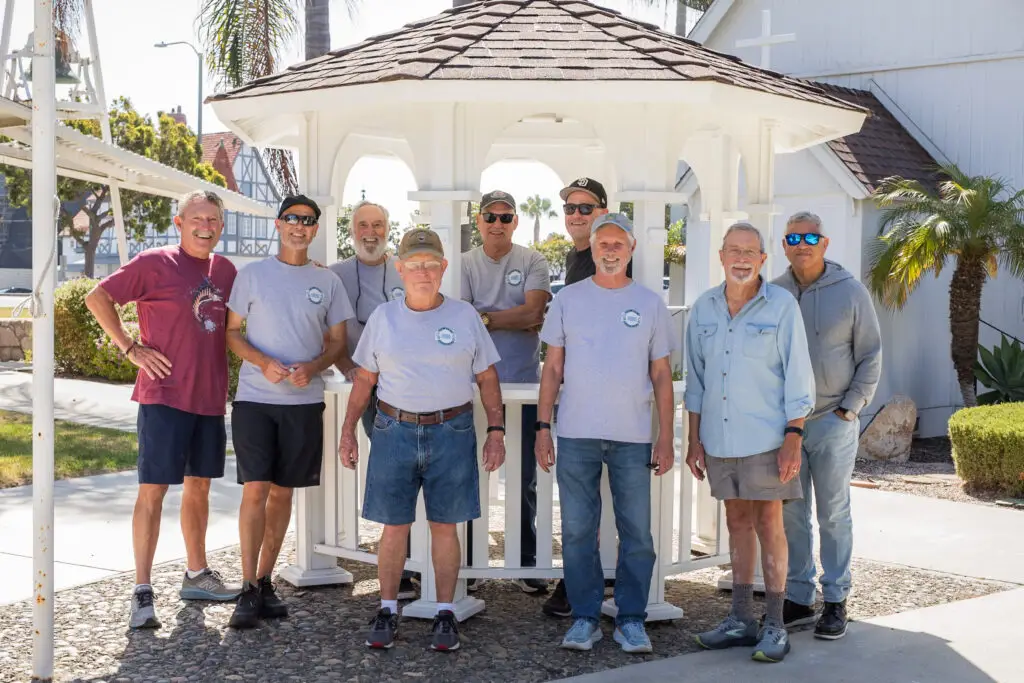
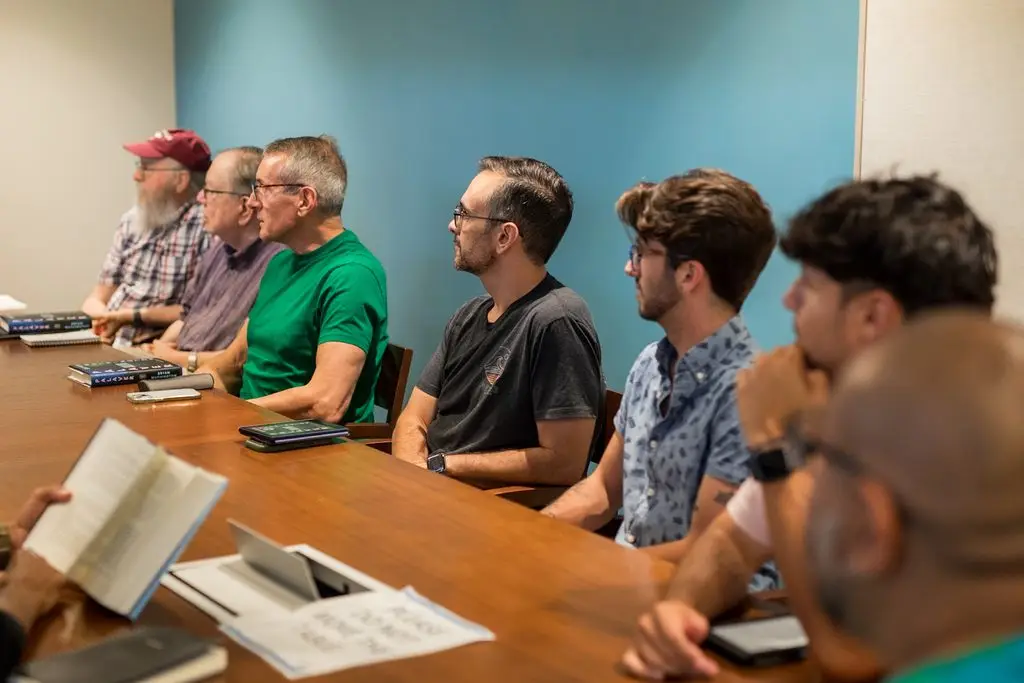
In Carlsbad, Men’s Shed helps older men build friendships as the group contributes to construction projects across North County. “Men get lonely,” says Glenn Bernard, one of more than 20 members of Men’s Shed in Carlsbad. “This is a good way to bond, socialize, share skills, and have something to do that’s worthwhile. Purposeful.”
What started in Australia in the 1990s has grown into an international nonprofit with more than 3,000 chapters worldwide, including one that meets at Carlsbad By The Sea Retirement Community. Haley DiDonato, director of life enrichment at Carlsbad By The Sea, established California’s first and only public chapter in 2023. Members (aka Shedders) meet twice a month to discuss their projects and get to work.
They’ve built bikes for the local Boys and Girls Club, a raptor shed at the Agua Hedionda Lagoon, a small birdhouse outside Front Porch Gallery, and a gazebo at St. Michael’s by-the-Sea Episcopal Church, to name a few.
Trade experience isn’t required. David Gilson, the group’s leader, was a pharmaceutical consultant before he retired. Rich Greenamyer is a retired engineering duty officer who built ships in the Navy. When John Gardella wasn’t working sales at Dupont, he woodworked projects for his family at home.
“Men are so tied up in their work all their life,” Gilson says. “Their identity was their job. Suddenly, you retire on Friday, and on Monday they don’t remember you. Now what?”
Courtesy of Dad’s Corps
Marital status also affects how men interact with the community around them. Some Shedders joined because their “wives encourage [them] to be in Men’s Shed, to get out of the house for a couple hours every couple of weeks,” Gardella says. For some widowers in the group—such as Gilson, whose wife passed away eight years ago—Men’s Shed provides a sense of purpose and place. The outings Gilson organizes breaks up the monotony of staying at home with his dog. A 2024 study in the National Library of Medicine says widowers feel long-term levels of loneliness (higher levels than widows), and they were less likely than widows to form new connections after loss. This group is changing that.
The appearance and function of male friendships have been spotlighted since the 300s BC, when Aristotle discussed them in Ethics. Fast forward to the 19th century, and these dynamics have transitioned from heroic friendships—ones built on loyalty and nobility—to ones that better symbolized the Romantic Age: more affectionate in written language (like writing letters to each other) and body language (like draping their arms around one another). By the end of the 1800s, 1 in 3 American men belonged to a fraternal organization.
But when World War II brought a homophobic “Don’t Ask, Don’t Tell” suspicion around male bonding, friendships between men became more stoic. It wasn’t common for men to talk about their feelings with each other.
In 2026, though, we’re sharing our feelings. Dads Corps, a nonprofit organization through Social Advocates for Youth San Diego, offers classes, resources, and supportive services to fathers. Twice a week for six weeks, fathers practice how to actively listen, learn how to better communicate, and gain more skills that help them in their parenting journeys.
“When dads have kids, they lose their friends because it’s all about just the baby, the mom, and the family,” says Dads Corps director Laura Soto. “When they come to our classes, they get comfortable being able to share their struggles. It does reduce the isolation and help normalize them in that struggle.”
For dads who are new to San Diego, the program helps them navigate their way around the city. For single dads, they can meet other fathers who are raising children the same age to set up playdates. Oftentimes, dads graduate from their cohort and return to volunteer and mentor new attendees.
The program is as therapeutic as it is active. Group facilitators teach dads about healthy relationship practices, answer questions about how they can be more consistent in their children’s lives. It also hosts fishing trips, barbecues, and community service events to let dads practice their learnings with each other outside a classroom.
“It’s about acknowledging that we need to be heard about the concerns that we don’t ask help for as fathers,” says Jorge Narvaez, alumni manager at Dads Corps. “We live in a society where fathers have to look through crevices—go to a bar, go to a barbershop, go to all these different places—just to have interactions with other people. It feels like we finally, as dads at this program, have a space for us to talk.”
Photo Credit: Arlene Ibarra
But some men don’t want to only talk about their inner selves; they also want to talk about books. For Ronald Alsop, the New York City Gay Men’s Book Club was a place for him to meet local bibliophiles when he lived on the opposite coast. There was no equivalent in San Diego—until he started it in 2019. He created the Mission Hills-Hillcrest Gay Men’s Book Club as a way to meet other men and talk about authors like James Baldwin and Edmund White.
Whether it’s Andrew Holleran’s fictional coming of age Dancer from the Dance (the first book the club read) or George Chauncey’s non-fiction novel Gay New York, the books Alsop chooses share a common thread: Each carries some connection with gay culture.
“Traditionally, gay men were depicted in books in a tragic way,” says Alsop, who is also a freelance writer. “In more recent years, there’s been a more positive spin on it, a more wholesome outcome.”
Alsop initially promoted the group by putting flyers around the neighborhood bars and in Uptown News. He was nervous before the first meeting, afraid no one would show up. Now, there are roughly 35 people on his email blast, and the monthly meetups regularly see 12 to 15 people participate.
“The discussion’s always lively,” Alsop says. “I think it’s a way to get to know people better.”
Throughout the county, because of these groups, people are reading books (its own win, these days) and creating community. Dads and their children are getting invited to birthday parties from their fellow fathers. And in Carlsbad, some Men’s Shed meetings are taking place at Hennessey’s Tavern down the road over brunch. As friends.
Matt Eisenberg is an award-winning writer and photographer based in San Diego. A former ESPN editor, his work has also been published by CNN, Bleacher Report and the New York Daily News.
The Best Gym in San Diego Isn’t Really a Gym Anymore
Earlier this year, Fit quietly dropped "athletic" from its brand, from Fit Athletic Clubs to simply Fit, and started calling itself something new: a social wellness club.
There’s a version of San Diego that lives in two extremes. On one side, the 5 a.m. crowd: biohackers, marathoners, people who’ve already logged a cold plunge before your alarm goes off. On the other, the after-dark crowd, the ones chasing sunset happy hours and late dinners with friends. Everyone seems to be either optimizing or unwinding, and most of us feel like we’re failing at both.
Fit, San Diego’s reigning Best Gym for the third year running, has built its entire identity around erasing that divide.
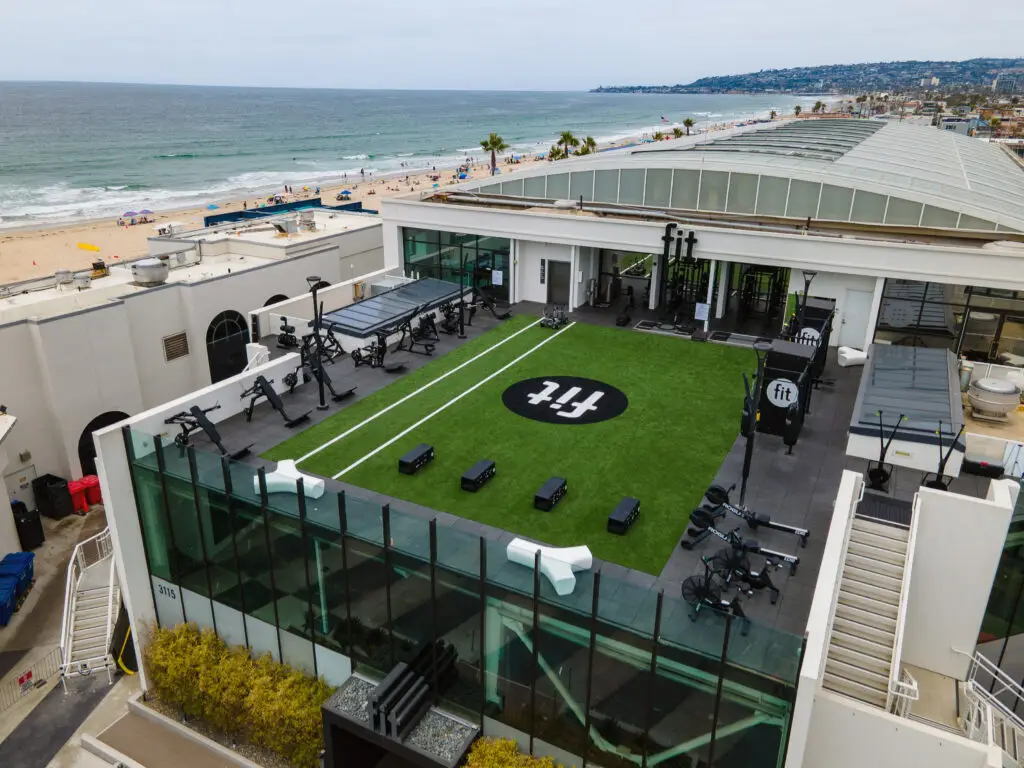
Walk into one of Fit’s three San Diego locations on a Tuesday afternoon and the lines blur fast. Someone’s mid-set on the squat rack. Someone else has a laptop open at a café table a few feet away, half-working, half-people-watching. A group is trading plans for the weekend’s event by the recovery lounge. Nobody’s in a rush to leave.
“We’re not competing for the same people,” says Emily Waybright, Public Relations Manager at Fit, addressing the arrival of a national luxury gym chain in San Diego this year. “We don’t really feel like we’re in the gym category. It’s this unique thing.”
That unique thing has a name now. Earlier this year, Fit quietly dropped “athletic” from its brand, from Fit Athletic Clubs to simply Fit, and started calling itself something new: a social wellness club.
It’s a small wording change with a bigger idea behind it. Fit was never built around escaping the workday. It was built around the people who genuinely like what they do, and who want workouts, work, and friendships to happen in the same place instead of three separate ones. Because sometimes red light therapy with a stranger turns into weekend plans.
Fit’s philosophy traces back to its founder, who started the brand nearly two decades ago after failing to find a gym he actually wanted to belong to. He looked instead to the old-school country club, where people came for a shared interest and stayed for the community. His version was made for a younger generation, minus the golf, plus the loud music.
Which makes it a little ironic that the very award putting Fit back in the spotlight this year is Best Gym.
What does the best traditional gym look like when the definition of a gym is becoming less traditional? It’s a fair question, and Fit’s answer is that the fitness industry itself is shifting. The 45-minutes-in, 45-minutes-out model is giving way to something closer to a genuine third space, the kind of role the office and the bar used to play before remote work and changing nightlife habits rearranged how people spend their time
For Fit, community isn’t a marketing add-on to fitness. It’s the through-line. Members aren’t just paying for a treadmill; they’re paying for an entire day of social wellness that’s built on performance, recovery, connection, and a plan for the next event on the calendar. That’s a much harder membership to walk away from.
Ambition and ease aren’t opposites here, they exist side by side, where passion and play share the same morning. On September 12, Fit is hosting Sol, a full day wellness festival at Fit Social. The morning focuses on wellness classes and vendors and then the evening is a full party with multiple DJ sets and an open bar. Think of it as a kick-off to locals’ summer in San Diego.
Ready to see what a social wellness club actually looks like? Visit fitclubs.com, or follow along at @thefitclubs on Instagram.
Imagine being the song continuously getting skipped on the playlist. Not because no one wants to hear you, but because you never quite fit the moment. For years, San Diego has been that song on the touring circuit. Artists who have outgrown intimate clubs but aren’t yet filling arenas and stadiums have often passed us by, heading north to venues better suited to the size of their show. San Diego wasn’t missing the audience, it was missing the room.
That’s all about to change.
On August 17, Live Nation Entertainment announced plans to transform the historic Wonder Bread Building, which it purchased in June for $16.8 million, into a 4,000-capacity indoor venue slated to open in fall 2028. The new space will host music acts as well as private, corporate, and community events.
Currently, San Diego’s concert landscape jumps quickly from intimate clubs like the Casbah, Winston’s, and Belly Up to larger theaters, amphitheaters, arenas, and stadiums. What’s largely missing—particularly downtown—is a modern indoor room built specifically for roughly 4,000 concertgoers. This leaves a gap in mid-size venues for touring acts that land stages like the Hollywood Palladium or Boston’s MGM Music Hall at Fenway.
“We are filling a void in the market,” says John Schalk, Live Nation’s Vice President, San Diego Market. “There are other venues in town, but this […] building is just something that doesn’t currently exist.” Although SDSU’s Cal Coast Credit Union Amphitheater serves the 4,000-capacity range, its outdoor, fixed-seating arrangement isn’t as versatile as the proposed Live Nation project.
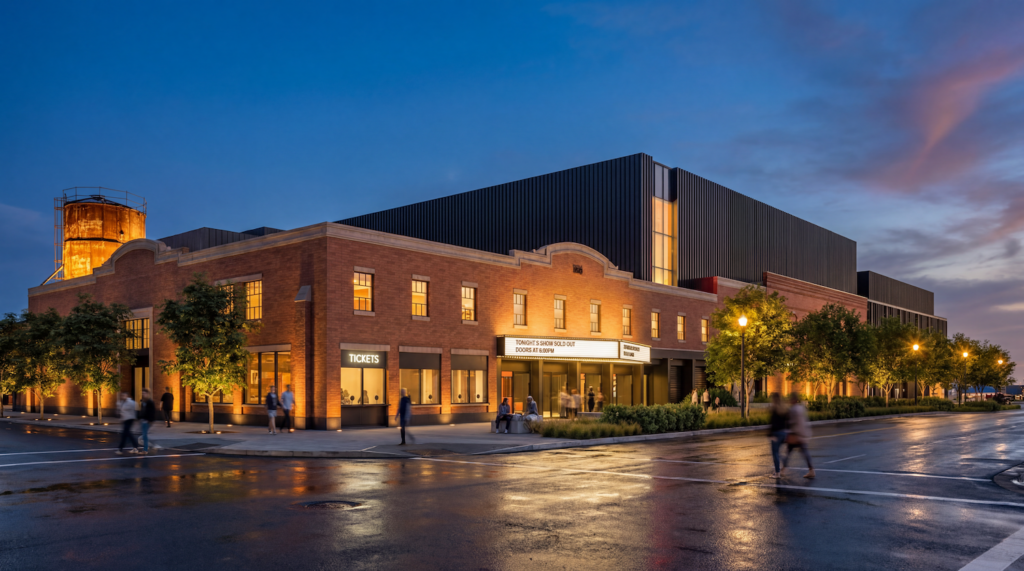
Located at 171 14th Street, just a six-minute walk from Petco Park, the building carries a century of history. Architect Eugene Hoffman designed it in 1924, a year after completing the Barcelona Apartment Hotel in Bankers Hill. The landmark brick building served as a bakery and warehouse for the Southern California Baking Company before Continental Baking Company, producers of Wonder Bread, took over in the 1950s and operated there through 1988 continued at the site until 2007.
In the early 2000s, Bob and Gay Sinclair, the couple behind a portfolio of East Village properties, purchased the building. After Bob—the founder of Pannikin Coffee & Tea—died in 2011, Gay sold much of their real estate portfolio but held onto the Wonder Bread Building. Mission Brewing eventually took over the space, where it operated for more than a decade before announcing its 2026 departure.
Now, the building is preparing for another reinvention. Live Nation plans to preserve the historic bakery’s four exterior walls, red brick façade, grain silo, barrel-vaulted trusses, and skylights as part of its next chapter.
Live Nation isn’t looking to erase its history but to celebrate it, allowing the building’s past to give the new venue some soul. “It’s really important for us that we maintain the integrity and the history of that building,” Schalk says. “There will be new construction and design elements as we go through the process to create the concert venue, but we’re working really hard to preserve it.”
Blueprint Studio, Live Nation’s in-house design and development group, and Gensler, the architecture firm behind San Diego International Airport Terminal 1 and Snapdragon Stadium, will be heading the project. The plan is to design the ground-floor space as an open, general-admission area with a premium level above with 600-plus fixed seats, in addition to box and suite sections. There will also be an additional structure built on top of the historical portion of the building (the four original walls that house the lobby) called the Vinyl Room—a Japanese-inspired hi-fi listening VIP lounge serving elevated food options.
One of the most reassuring aspects of the project is the focus on the concertgoer’s experience—specifically the “pet peeves” we all know too well: long bathroom lines, cramped exits, obstructed views. According to Schalk, one of the best things about building upon the existing structure is having the ability to consider potential obstacles and tackle them before construction begins. “I’d say we are ‘purpose building’ the entirety of the project for a music venue,” says Gensler lead project architect Garrett van Leeuwen. “As part of our design process, we do an in-depth sightline analysis to make sure that sightlines are optimized from every point and seat within the venue.”
Circulation design is also being implemented to ease traffic flow, alongside acoustic optimization and a transformative outdoor beautification effort. According to van Leeuwen, this “public realm space” will grow the existing 14-foot sidewalk to a 32-foot sidewalk complete with plazas and landscaping.
“This venue is for the fans. For the music lovers,” Schalk explains. The vision is intimate: “I want a fan to walk up to that building, see that red brick facade, grab their ticket from the box office, go into the lobby and see some of the history that will present itself… and feel like you entered a home.” Schalk also expressed a “keen interest in making sure that we work with the local artists, the local bands, the local musicians in town.” It’s a project that recognizes San Diego as a growing market that is hungry and ready to see a vibrant arts and culture community thrive.
According to an analysis by Oxford Economics analysis shared by Live Nation, the venue is projected to deliver a significant boost to the local economy, generating approximately $97 million in annual economic impact and supporting 660 jobs. This also includes welcoming 316,000 fans each year—with 126,000 traveling from outside the San Diego metro area—and driving $53 million in local spending at nearby restaurants, hotels, and retail establishments.
Considering its proximity to other major event spaces and overall busy urban areas, traffic and parking may be a concern, especially on nights of overlapping events. But in those cases, Schalk said they would work together on communication efforts; parking availability; and staggering start, end, and loading times; as well as providing easy access to designated rideshare areas. With transit stations nearby (the closest one being a 4-minute walk at 12th & Imperial), public transportation is another great option for enjoying your night out.
There are still two years of design, construction, and plenty of logistics between now and opening night. But the bigger promise of the Wonder Bread Building is simple: San Diego finally gets a venue built for the artists who have historically passed it by. After years of getting skipped on the touring playlist, the city may finally be getting its turn on repeat.
Camila Ibarra Gallego is a CaliBaja native pursuing a master's degree in culinary journalism at the Basque Culinary Center. Shaped by the culturally rich, bicultural megaregion, she's passionate about sniffing out stories that connect people, territory and culture through food. When she's not tumbling down internet rabbit holes, you can find her pretending to be a wine connoisseur at a local wine bar or nose-deep in a good book.
September is San Diego’s unofficial second summer—the crowds thin, the weather stays warm, and the city’s calendar somehow gets even busier. This month brings stadium-sized rock shows, Broadway’s buzziest comedy, a new anime convention, world-premiere theater, gallery openings, food festivals, and the first signs of spooky season. Whether you’re ready to lean into fall or determined to keep summer going, here are the best things to do in San Diego this September.
As Guns N’ Roses storm into decade five, their appetite for destruction persists. During their Snapdragon Stadium concert, hear the hard rock anthems, new material and a set from The Black Crowes.
9/23
Kehlani is proof that the romance and earnest sensuality of old-school R&B will never go out of style. Hear her take it back to the aughts at Viejas Arena.
From the silver screen to The Old Globe stage, John Carney will Begin Again (again) with a world premiere musical adaptation featuring new songs—courtesy of Train—and a story overflowing with hope.
9/12-10/17
The concept of work is a guiding principle for San Diego native and multidisciplinary creative noé olivas. Observe his community-informed approach via Tierra y Cielo (Earth and Sky) at Best Practice Gallery.
9/18-10/25
Two workers grapple with the weight of their roles at a temporary migrant shelter in Mario Vega’s world premiere play Our Lady of the San Diego Convention Center, set for citywide performances.
9/26-2/28/2027
Luminous visions of peace and the Punjabi-American roots of Rupinder Kaloti inform The Gathering, a wondrous unification of family foretold via paintings at Oceanside Museum of Art.
9/29-10/4
It’s Mary Todd Lincoln’s world and we’re just living in it. See the presidential paramour barrel to her way to stardom at the Civic Theatre during Oh, Mary!, Cole Escola’s political spoof.
Courtesy of SeaWorld
More Fun Things to Do in San Diego This Month
9/5 & 9/6
Pros and Con(vention)s: Anime San Diego will debut at the San Diego Convention Center with cosplayers, panels and more than 400 vendors well-versed in Japanese animation.
9/11-10/31
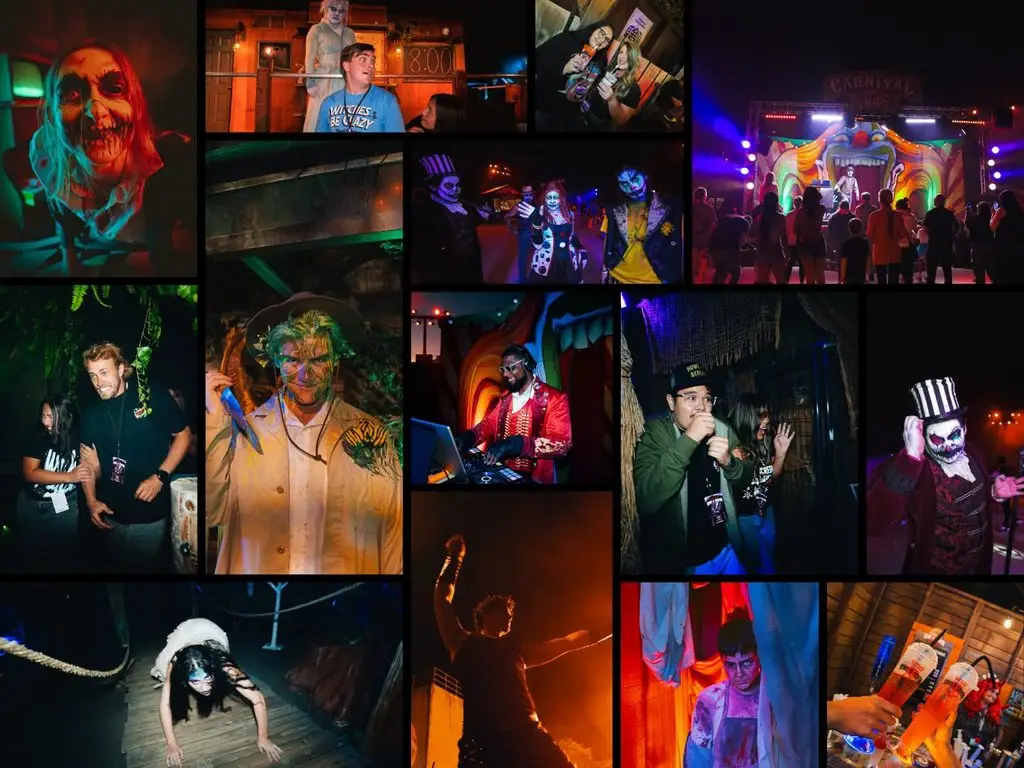
Scaredy cats beware: SeaWorld San Diego’s Howl-O-Scream embraces frights forged in darkness. Enjoy an ominous lineup of live shows, scare zones and bloody bars ahead of Halloween.
9/12
The best parts of Artivál and the Alley Cat Art Walk have united for the free Alley Cat Art Fest, an all-day outing for live music and immersive artwork in Downtown El Cajon.
9/12 & 9/13
Take a Grecian vacation for a fraction of the price during the annual Cardiff Greek Festival, two days of immersive cuisine and culture—with plenty of dancing—on the Encinitas coast.
9/13-9/20
Step away from the stove! The California Restaurant Association has eight days of eating experiences with your name on it. During San Diego Restaurant Week, explore by meal, neighborhood or cuisine for your personal dining plan.
9/16
Nourish yourself with an all-inclusive spread of Pacific Beach eats and locally-crafted artwork during the HeArt of PB Restaurant Walk on Garnet Avenue.
9/19
When it comes to stand-up comedy, Chelsea Handler is always ready to roast. See Handler tell anecdotes and skewer an assemblage of victims during her Balboa Theatre performance.
Ryan Hardison is a freelance arts and entertainment writer and recent graduate of San Diego State. When he's not staring at his laptop, he's likely eating an adobada burrito or getting sunburnt at the beach.
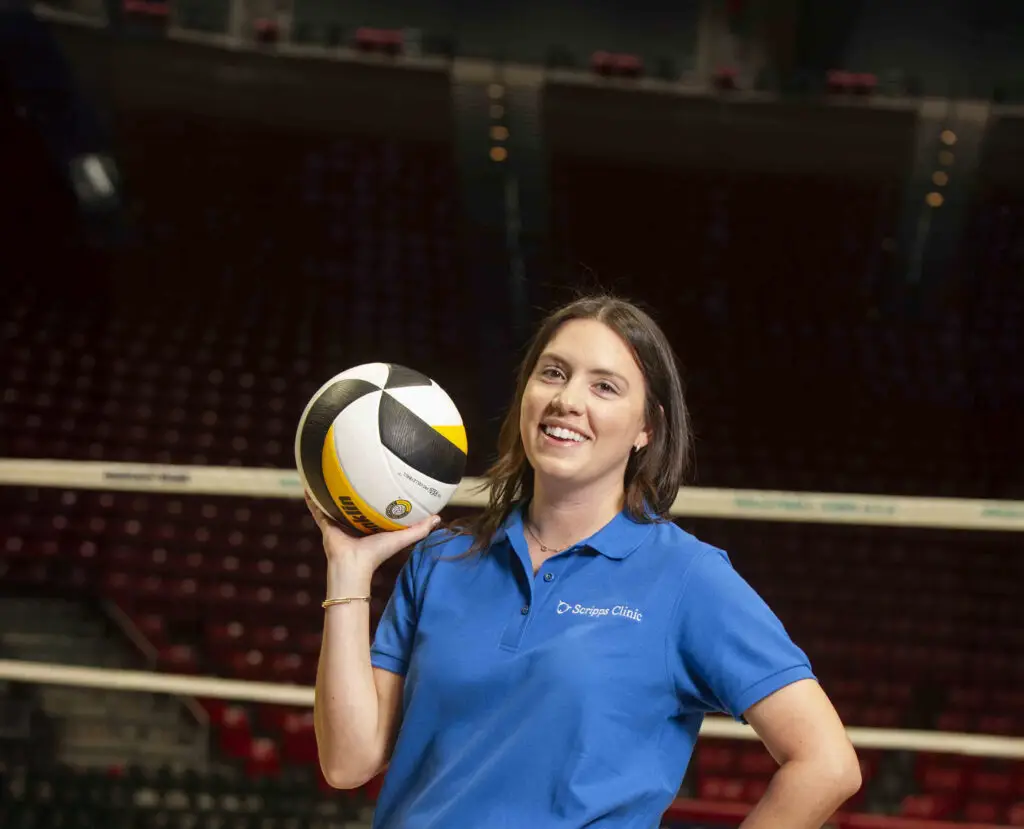
Growing up, Laika Nur, MD, Scripps Clinic sports medicine specialist, loved watching beach volleyball when the Association of Volleyball Professionals tour came to her hometown of Chicago. A talented volleyball player herself, she remembers sitting in the stands all day, and once, even got a couple autographs. Years later, Dr. Nur was attending a professional event focused on women’s sports, and the discussion turned to a new professional women’s volleyball league. The general manager and coaching staff for San Diego’s team, the Mojo, happened to be in attendance, and Dr. Nur took the opportunity to ask them if they needed a team doctor. Flash forward to the Mojo’s inaugural 2024 season, when Dr. Nur officially became the team physician. Click here to read more about Dr. Nur and how she incorporates lessons she learned on the court into her practice.
For more nutrition, wellness, and healthy living tips, sign up for the San Diego Health newsletter here.