Featured articles
Food & Drink
Food & Drink
Food & Drink
Featured articles
Food & Drink
Things to Do
Things to Do
Featured articles
Food & Drink
Food & Drink
Food News
Featured articles

podcast-ep
podcast-ep
podcast-ep
Featured articles
Food & Drink
Food & Drink
Features
Featured articles
Food & Drink
Food & Drink
Partner content
Ready to know more about San Diego?
SubscribeReady to know more about San Diego?
Contributor Alessandra Moctezuma reflects on losing her husband, mourning, and overcoming grief
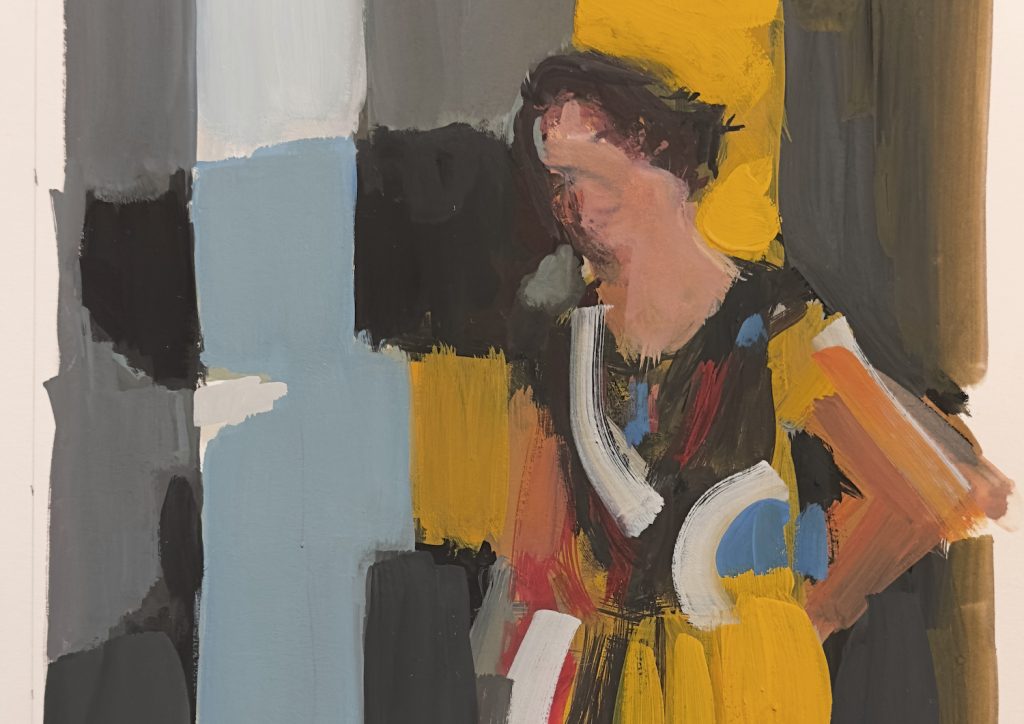
I tenderly remember the last months with my husband Mike as we took short walks along our street in Golden Hill. The gentle slope offered an expansive view of the San Diego Bay and, in the distance, the bric-a-brac chaos of Tijuana. We ambled slowly with measured steps and held hands, fingers interlaced, as we watched the sun dip into the ocean, a luminous descent where deep blues shifted to pinks and golds. Every sunset was magical, always new, always surprising.
Immediately following Mike’s death in the autumn of 2022, my feelings veered into the uncanny. What if he never existed? What if our life, our love story… was imaginary? My mind struggled with mortality. Yet as the months progressed life seemed almost normal, if quieter. My twin children and I were convinced that Mike was away on a long trip. But your body knows, your body remembers.
Every night I felt the emptiness as my hand reached across the bed. I missed feeling the prickle of his beard stubble on my cheek. Where was my jogging partner, his steps perfectly tuned to mine, our bodies occasionally bumping or racing each other to a predetermined finish line? I carefully hid away his dark-blue yukata, not wanting it to accidentally end in the laundry, his scent washed away.
I tried to swat away my grief with myriad distractions, but, during the summer, it engulfed me. I couldn’t sleep, and every morning I woke waiting for something to happen. I fell in love with Mike shortly after my parents died, and our relationship made me feel so alive, a beginning to counter an ending. In the face of that deep loss, what I yearned for was to be grounded, and Mike was my tether. Encountering grief anew, I was uncertain of where to turn. I realized that it wasn’t something I could run away from.
Living in LA in the ’90s, I was introduced to African music. Ali Farka Touré, Fela Kuti, and Baaba Maal became favorites. I heard that Oumou Sangaré was performing in San Diego, and I convinced a friend to join me. As the concert progressed, I’d been overcome by the rhythm and melody. As if a switch had been turned on, I was filled with joy. I was alive and it was electric. At some point the audience started rising from their seats and rushing to the stage. I was called by the music’s vibration and every cell in my body wanted to dance.
A rush overwhelmed me and the beat filled my heart as I stomped my feet to the music. I envisioned myself floating away. My arms swayed, hands fluttering like butterflies. My mind and emotions shifted away from sadness. Instead of feeling alone, I felt physically united and in community with those around me. The experience was cathartic and healing.
PARTNER CONTENT
After the jubilant interlude at the concert, I found myself seeking other opportunities to dance, uninhibited and unpreoccupied. Mike and I shared a passion for musicals, and he admired the effortless grace of Fred Astaire. In the musical genre, the storyline is interrupted by a song- and-dance act; a dramatic obstacle is overcome by an exultantly choreographed moment. I often thought of characters prancing in the rain, climbing on a sofa, dancing with a broom, or twirling in each other’s arms, entranced and enamored.
In my own journey finding a way out, a way through, I have come to welcome when sorrow and uncertainty are disrupted by my improvised and joyous steps. In these instances, which are becoming more numerous, I am made aware of the beautiful lightness of being.
After 20 years and thousands of meals as a food critic, San Diego Mag Content Chief Troy Johnson picks the city's top standouts
His ascent has been stealth and humble, which fits the man. When Liberty Station was struggling to convince people it existed over a decade ago, Sicilian chef Accursio Lota’s food at Solare Ristorante was a tractor beam for food people who sniff out hidden talent like truffle dogs. In 2017, he won the World Pasta Championship (a legit competition from global pasta brand Barilla) and struck out on his own, opening his and his wife’s from-scratch pasta trattoria in North Park (Cori Pastificio). Gambero Rosso—the Italian version of Michelin, the most respected source—has clamored for the restaurant since it opened, naming it “New Opening of the Year” and this year giving it their highest award, “Tre Forchette” (Three Forks), only knighted on a handful of US restaurants.
So this year, Lota opened his grandest thing—Dora Ristorante—and it pulls everything together. Steps from San Diego’s world-class theater, La Jolla Playhouse, it’s laden with brass and large-format murals, tile work and mosaics—like the one on the wood-burning oven that blisters, chars, and smokes a good portion of the menu. Their housemade focaccia is a new street drug (try it with the puttanesca, his grandmother Dora’s recipe). The olive oil-cured sardines make “sustainable seafood” and ethics not taste like a compromise. Dora might finally be the one to solve the “where do I eat before the world premiere at LJP” dilemma.

The yuzu-colored building that helped build North Park’s modern food culture is alive again. Years ago, the ornate French Quarter–inspired spot on 30th Street was home to chef Matt Gordon’s Urban Solace (duck macaroni and cheese). Then it laid conspicuous and fallow until a few months ago when Bacari took it on. It’s an LA transplant, but they’re proving forgivable of that trespass. Chef and co-founder Lior Hillel cooked at Jean-Georges before opening the first of this Venetian-style restaurant in 2008 with brothers Danny and Robert Kronfi (Bobby started his food venture with a pop-up dinner series in his college apartment at USC).
For dinner, it’s house-baked bread, crudo and shrimp ceviches, Mediterranean street corn, lamb hummus, shawarma, and glazed pork belly. Weekend brunch is bellinis and French toast and burekas (famed Jewish stuffed puff pastry), and chef Noa’s cauliflower (caramelized with chipotle). It’s Italian-ish with a heavy dose of pan-Mediterranean and Middle Eastern. Doesn’t hurt that they left the iconic exterior as is, adding chandelier-farmhouse insides with charm that echoes two of the city’s dearly departed (Jayne’s Gastropub, Cafe Chloe).

Much tolerance for friends who hate mussels because they look too biological. But if they manage to dislike À L’ouest’s—served over ice with vadouvan curry aioli and chili crisp—then you’ve successfully identified your brokemouth friend and should try bicycling or crafting with them to bond instead of eating in public places. It should be on everyone’s short list for dish of the year.
Chef Brad Wise and his team have earned their rep over multiple concepts—Trust, Fort Oak, Cardellino, Wise Ox, Rare Society. But he’s been eyeing this corner of North Park since before he opened his first (Trust, in 2016). North Park has been rising for a while, and À L’ouest feels like the missing piece—an indoor-outdoor brasserie stunner on the marquee spot of 30th and University, which long sat boarded up and vacant like a neighborhood missing a front tooth.
As with his other concepts, woodpile is king; smoldering red oak boosts the flavor of just about everything. Get the spätzle with braised rabbit, maitake mushroom, secret de compostelle (the famed Basque sheep’s milk cheese), and black truffle. Or the chicken liver parfait with persimmon, fennel aigre-doux (sweet-sour), and chives on toast. Or, like everyone else in there—the steak frites.

Chef Travis Swikard’s first solo restaurant, Callie in East Village, proved how details can make the most composed of us blubber a little in fine places—from citrus left in ovens overnight to blacken and transform, to the Scripps Oceanographic Institute saltwater he keeps his spot prawns thriving in until ordered, to the days-long fermentation and stone-ground dukkah that turn carrot shavings into a statement piece.
Now, he’s focusing on French food with a fitter, less buttery San Diego heart. Fleurette is his doubling-down, a SoCal riff on the food he learned under mentors Daniel Boulud and Gavin Kaysen. The French gave us the mother sauces, and Fleurette showcases the lightest and brightest evolutions. Like the anchoïade on his beef tartare, which uses famed Italian anchovy sauce colatura di alici, mixed with cured egg yolks over tiny, uniform-sized cubes of raw, USDA Prime Flannery beef.
There is soubise (onion sauce), a sauce vierge (tomatoes and herbs), and a fennel marmalade on the duck liver and bone marrow pâté. Although the structure is stunningly pure glass, Fleurette’s in a location—an office park on the edge of La Jolla, near UTC—that few chefs would be able to pull off. But Swikard’s Michelin-bound house of saucework pulls hard.

The Escondido taqueria from Rosarito-born-and-trained chef Juan González and farmer Megan Strom took the county by storm this year. The married couple started as a popup four years ago, hosting farmside dinners before taking up residency at Vino Carta in Solana Beach. Strom was working a small, 5-acre heirloom bean farm in Valley Center owned by Mike Reeske (aka “The Bean Man”) when he retired and sold them the plot.
The huge bonus was that the sale included Reeske’s famed collection of beans, curated over 20 years. The couple planted other things and now grow much of what they serve in the form of tacos and burritos at a permanent spot in Escondido: Mesa Agrícola.
The menu’s bone simple: housemade tortillas in your choice of taco or burrito norteños (which are smaller, like burritos de hielera) that change constantly and often topped with guisados (Mexican braises or stews) like lamb and garbanzo, birria, chicharrón, mushrooms al ajillo, rajas, you name it. And, of course, some of the best beans honoring the local legend of Reeske.

San Diego is now the recipient of national food buzz. The dark ages—during which we learned how to sear ahi and asada some carne and called it a day—felt prolonged, and they were. The problem was never ingredients. San Diego County always had the best raw dinner materials (more small farms per capita than any county in the US, seafood right there); it just didn’t have a critical mass of highly trained chefs to do them justice. Easy to understand the chef dearth.
For a very long time, if you wanted to be a serious chef you had to go to the restaurant superplexes of New York, San Francisco, or Chicago (which imported their raw ingredients from places like San Diego). But now—credit farmers or Alice Waters or Dan Barber or Michael Pollain or the reasonable conclusion that food picked right here tastes better than food picked way over there—some of the most talented chefs are moving to the ingredients, not the other way around.
In San Diego, we got Richard Blais, Swikard, and now Elijah Arizmendi, who cut his teeth in Vegas with Joel Robuchon (plus Boulud and Thomas Keller) and was chef de cuisine at NYC’s L’abeille when it got its first Michelin star. His debut restaurant in La Jolla—with partners Brian Hung and Melissa Yang—is a dark, moody multicourse tasting-menu hideaway with one of the best egg dishes in the city.
Troy Johnson is the magazine’s award-winning food writer and humorist, and a long-standing expert on Food Network. His work has been featured on NatGeo, Travel Channel, NPR, and in Food Matters, a textbook of the best American food writing.
"The Distinct Modernism of San Diego" tells the story of how some architects pioneered their own style in 20th-century San Diego
San Diego is just out here minding its own business. It’s long been cast as Los Angeles’s less ambitious sibling—the chill one, the one who shows up late for dinner reservations in flip-flops with a few provocative opinions. Architecturally it’s often cast the same: secondary, derivative, a footnote to California modernism that seems to begin and end with the Stahl House (Case Study House #22). LA has Pierre Koenig, Craig Ellwood, John Lautner. San Diego has the original fish taco.
But this version of the story is redacted, metaphorically speaking.
While the jazz hands of Hollywood and its hills cast a spell on historians and architecture buffs, San Diego had, and has, its own quiet evolution: It invented and reinvented itself through homegrown modernism, beginning with The Allen House (1907) in Bonita by Irving J. Gill.
“The biggest misconception is that San Diego was following Los Angeles,” says Keith York of Modern San Diego, one of the city’s top guides to modernist architecture. “Those who consider Rudolph Schindler and Richard Neutra as the fathers of Southern California Modernism often fail to recognize the outsize influence Gill and his buildings had on their work.”

A new book, The Distinct Modernism of San Diego—written by Mark Hargreaves and Hallie Swenson, published by York—focuses on eight architects who were born, raised, or built their careers in San Diego. It illustrates how the city wasn’t hosting weekend warrior architects on side quests. It was a staging ground for a less look-at-me modernism from luminaries like Gill, Lilian J. Rice, Richard Requa, Lloyd Ruocco, Frederick Liebhardt, Kendrick Bangs Kellogg, Sim Bruce Richards, and Cliff May.
“Absent the backstabbing competition for projects, a collegial group of architectural peers collaborated and maintained lasting friendships with one another as they designed in response to the temperate climate and slower economy,” York says.
Largely unknown until the mid-1960s, Gill is a marquee name today. He arrived here from the East Coast at a moment when San Diego was still defining itself, which gave him the freedom to invent something new, experiment, rebel.
Instead of imposing the flourishes and frills of the time, he considered San Diego’s climate, light, landscape, history—the joie de vivre—and designed for this place. “[Architects of the west] must have the courage to fling aside every device that distracts the eye from structural beauty, must break through convention and get down to fundamental truths,” he once said, a sentiment that nails the un-ornate, total lack of pretension that’s defined San Diego people and culture.
And, lo, did Gill fling: His flat roofs, clean lines, and almost no ornamentation—though not necessarily modernism in the Eames or Eichler sense—foreshadowed what would later be called minimalism. Gill eventually became synonymous with the Los Angeles narrative, but broader architectural histories overlook the fact that his most progressive designs happened here.

Another key to San Diego’s architectural movement was Lilian J. Rice, who often worked behind the scenes with little credit. She was one of only about 10 women in America licensed as architects at the time. Even though she died from cancer at 43, she somehow managed to complete an estimated 170 projects in the region, many in Rancho Santa Fe.
Born and raised in National City, Rice also wasn’t importing ideas. She shaped her own based on her understanding of this region and her commitment to protect the natural environment. Her work has been categorized as Spanish Colonial Revival, but she wasn’t reviving as much as she was refining a style suited to our border region—serene, mirroring nature, beautiful.
“San Diego architects were designing for a way of life, not just a look,” says York.
Like Sim Bruce Richards, who was his own way of life. While Gill stripped away ornamentation and Rice focused on the peace of open spaces, Richards came along several decades later and went full emo. By then, modernism had grown deep roots; its steel-and-glass structures took themselves very seriously. Richards came to party.

An eccentric, unpredictable man with half a face (part of his jaw was removed following a bone infection when he was a child), his life was a jalopy of adventures. He was opinionated and passionate about design, music, texture—and he created what he called a “sensuous environment.” He wanted his clients and their guests to feel the spaces as much as to be in them, appealing to the visual, tactile, nasal (“a cedar house smells good”), auditory (“acoustically superior”), even taste. “Though, I‘ve never had a client lick my houses,” he once wrote.
Organic, woodsy, textured, aromatic—if you ever find yourself in a Sim Bruce Richards house, a licking impulse might not seem so outrageous.
Gill, Rice, Richards and the other architects in Distinct Modernism built a legacy in San Diego that resonates nationally. And the work of these heavy hitters isn’t stuck in an inaccessible collectors realm: This October, homes by Kellogg and Liebhardt will open to the public as part of the La Jolla Modernism Home Tour—an opportunity to experience it not as a museum relic or magazine image (ahem), but as something alive.
Modernism in San Diego was never about glamour or an intention to be iconic. What transpired here is more nuanced, more ingrained with a less shouty aesthetic. A very San Diego aesthetic.
We asked 12 golf pros from across the county to choose the city's top holes to create the "Dream 18"
At the top of a golf swing, the world settles into a hush. Anyone within 50 yards kindly shuts up in reverence. Steady heartbeats tuck inside the sound of the wind. Time stands still.
Or—panic sets in, a thousand warnings from coaches and YouTube tutorials prattle through your brainpan. You wonder if a good walk prepares to be ruined.
On descent, the club rearranges air particles as it slices on a perfect or unwise line toward an earth so green, it seems like AI. The iron face meets the ball, and the satisfying or unsettling thwack echoes across the fairway like a nonviolent gunshot or a cry for help. Breath catches, curse words load in the prefrontal cortex. Eyes squint to follow the hard-to-see projectile zip majestically through the air or bounce lamely along the ground like a failed hurdler.
Sometimes it goes a couple hundred yards in the right direction, other times a couple yards into uncaring swamps. Golf’s beautiful and hard as hell.
Mindfulness and stillness reign over speed and might—which goes against most basal American instincts regarding sport. Its quiet, serene mocking of our human abilities is what brings so many of us to the life-long process of sharpening the skill. Because who hasn’t stared at the most beautiful parks and lawns in the world and said, “How can I turn this into a game and win it?”
Luckily, San Diego has an abundance of courses to improve and curate self-doubt. The county is home to over 70 courses that attract the top golfers in the country. Some of the biggest names in the sport—Callaway, TaylorMade, Cobra, Titleist, Odyssey, Honma—are based here. Perfect weather never hurts. But San Diego golf courses also promise a smorgasbord of terrains: rocky canyons, hot deserts, and lush greens overlooking the expanse of the Pacific Ocean.
If you could take the 1,300-ish holes around San Diego and pick the very best ones to create your ultimate course, which would they be? We asked some of the top golf pros in the county to do just that. The result? San Diego’s Dream 18. Think fantasy football but for golf.
Just like any great course, our Dream 18 includes four par 3s, 10 par 4s, and four par 5s—everything from tricky dog legs and psychological tee shots to just pretty, pretty views. Once we had our list, we either asked the head golf pro what makes a hole so special, or other pros spoke on its behalf. Go ahead, tell us what we missed.

“One of the most iconic par 3s on the West Coast. The cliffside setting above the Pacific and the constant ocean breeze make it both beautiful and demanding.”
—Anthony Valverde, Director of Golf, The Crosby Club at Rancho Santa Fe
“It’s a downhill par 3 over water with a great view from the tee down to the green. It’s surrounded by bunkers as well, so it almost feels like an island green even though it’s not. What’s really cool is once you drive to the next hole, if you look back on No. 14, it’s a great view as well. One of the signature holes [at Santaluz].”
—Josh Rider, Head Golf Pro, The Santaluz Club
Hole 15
“Hole 15 is widely considered one of the best and most memorable holes on the course. At about 250 yards, it’s a long downhill with multiple tiers and panoramic views into the valley. It looks intimidating at first, but there are lots of recovery contours and the green is fairly large.”
—Editor’s Choice
“Sitting high above the green with views of the Pacific Ocean, this dramatically downhill par 3 requires the perfect club selection.”
—Mike Mulford, Director of Golf, Omni La Costa

“While it’s beautiful with the backdrop of the Batiquitos Lagoon and the Pacific Ocean, this finishing hole demands both precision and nerve. The water guarding the right side and fairway bunkers ahead create a visually striking, strategic tee shot, while the expansive green rewards a confident, well-placed approach. If you can make a par on this hole, you’ve played it very well.”
—Renny Brown, Director of Golf, Aviara Golf Club
“The 18th hole at Del Mar CC is a demanding par 4 with an elevated tee box. Water guards the right side of the green, and a player must hit a precise shot into this green.”
—Renny Brown, Director of Golf, Aviara Golf Club
“It’s a difficult 428-yard par 4 playing into the predominant west wind. The hole is post-renovation and the vegetation was trimmed back, so now it exposes a penalty on the right. It’s uncomfy at the tee but a good challenge. Plus, it’s the No. 1 handicap for [all players].”
—Chris Lungo, Head Golf Pro, Rancho Santa Fe Golf Club
Lili Kim is a content coordinator and writer for San Diego Magazine, with experience highlighting local businesses and communities. When not writing or shooting film, she is likely brewing her seventh cup of tea of the day or strolling along Sunset Cliffs.
With wellness-centered lifestyles on the rise, party culture is getting a 10 p.m. rebrand
A ’90s pop hit is blasting as I drive up to Solana Beach to go dancing. I’m dressed in the millennial nightlife uniform: black tee, cute jeans, heels. It is 6:30 p.m. on a Tuesday. The dance party starts soon. I’ll be home by 10 p.m. at the latest. I may even catch an episode of Summer House.
I am acutely aware of my age in this moment. I haven’t willingly chosen the club life since my 20s and early 30s. Yet here I am, transported back to 2014 with a few more wrinkles, a lot more ibuprofen, and a touch of “pandemic stole this from me” in my pocket.
A few days earlier, a friend texted to suggest we go to a concert the upcoming weekend. “I can’t, I’m already tired on Friday,” I replied. At 42, two glasses of cabernet bend my space-time equilibrium. A hard sneeze risks a sprained neck. Did I mention the perimenopausal night sweats yet?
I arrive at the Belly Up at 7 p.m. Wilson Phillips comes on the stereo, and I sing-shout the lyrics before stepping out of the car.
Someday, somebody’s gonna make you want to turn around and say goodbye | Until then, baby, are you gonna let ’em hold you down and make you cry?
Tonight’s event is billed as “the dance party that starts earlier.” Surprisingly, I’m not the oldest person in the room. A 60-something man shoulder bops to the DJ set. A Gen X woman shimmies by and snaps photos of the glow-stick-spinning raver on stage. Few are drinking.
Started by two North County locals, Amal Chandaria (32) and Max Gold (37), Earlier is a dance party for older adults who want a club experience without the sleep-deprived, hungover physical toll. Running 6:30 to 10 p.m., attendees get home at a reasonable hour for a full night’s sleep.

Seems I’m not alone in my tired.
“[We’re in] a time where loneliness is high, people are craving connection,” says Chandaria. “One thing we were really intentional about is that you don’t need to go and have drinks to have fun. It’s about the music and getting the wiggles out.”
Early is part of a national trend: the green-juice-ifying of party culture. Americans aren’t going out as much as they used to. They’re drinking less, and 10 p.m. has become the new 2 a.m. Wellness as a lifestyle concept is old hat, and each generation manifests itself in different forms (fitness booms in the ’80s, organic food in the 2000s).
According to a 2024 survey by consulting firm McKinsey & Company, the US wellness market now exceeds $500 billion annually, up from roughly $300–$350 billion a decade ago. More striking than the spend: Wellness as a top priority has surged from about 42 percent in 2020 to more than 80 percent today.
The timing makes sense. Studies show Covid led to long-term shifts in lifestyle patterns. We all began to reassess our lives and made some existential changes—like 6 p.m. soberish dance parties. In a recent Gallup poll, only 54 percent of US adults reported drinking alcohol, the lowest level in about 30 years. Conversations around longevity turned “treat yourself” into “invest in yourself.”
The downer of any wellness trend, though, has been the “can’t” philosophy—can’t eat that cake, can’t sip that marg, can’t binge that show. What if we could do health stuff and still dance and not totally suck the joy out of life? That’s what people like Chandaria and Gold are banking on.
Last year when they attended Atomic Groove—a variety dance band from 5–8 p.m. most Fridays at Belly Up—it sparked an idea. “People want to be healthy and active, and they don’t want to compromise on that by not feeling rested,” says Gold. “I thought, ‘I bet if we’re feeling this way, other people are looking for something like this, too.’”
He was right. Nearly 200 people showed up to the pair’s first dance party last July. Tonight’s crowd is nearing that number again. Among them is Cardiff-by-the-Sea resident and second-time attendee Lauren Marley.
“If you do one thing for yourself—and it means that you don’t have to be completely exhausted and wrecked for all the stuff you have to do the next morning—it’s great,” she says.
Though EDM isn’t quite my thing (give me some stank-face hip-hop from the 2000s), it’s clear from the number of return attendees that Chandaria and Gold have filled a need, one that isn’t just in famously health-forward cities like San Diego.
In DC, Dancing on the Waterfront occurs every Saturday from 5–9 p.m. while Extended Play DC wraps up at 10 p.m. Philly has Matinee Dance Party (5–10 p.m.). New York City finally chooses to sleep, with Friday Feeling and Matinee Social Club both ending at 10 p.m. Last year, Day Shift, geared toward those over 30, debuted at Bloom Nightclub in San Diego.
In Chicago, Earlybirds Club was founded in 2023 by high school friends Laura Baginski and Susie Lee. About 100 people showed up to the sold-out “dance party for ladies who got shit to do in the morning.” Two years later, Earlybirds Club is now held in nearly 60 cities and regions across the US.
“It’s an outlet that [middle-aged women] don’t get in our everyday life,” says Baginski, who also recently appeared on the Kelly Clarkson Show to share their story. “It’s movement and dance. We’ve learned now that it’s really essential to being a happy person.”
Admittedly, it’s a bit harder to be happy when I walk into the Music Box for Earlybirds’ event in San Diego. War’s about to start, protests are the new social gathering, and the economy is gaslighting me into believing salads should cost $18.
But soon the club is a sea of 700 people wanting to dance their asses off. Any negative emotions quickly begin to disappear. Tonight’s music features hits from the ’80s, ’90s, and 2000s: Madonna, Britney, Christina, 50 Cent, Ludacris.
Shuffling past the bar to the already-crowded dance floor, my heartbeat quickens. Pure, unadulterated joy is oozing in this place.
“The whole club was women’s bathroom culture,” said returning attendee and San Marcos resident Beth Avant, 50. “[You get to] freely dance, not care about what you’re wearing, you’re not trying to really impress people.” Soon Whitney Houston’s golden pipes set the room on fire, arms raise, smile lines deepen, and for a few hours, nothing else matters.
Oh, I wanna dance with somebody / I wanna feel the heat of somebody
While Baginski continues to run the operation, Lee lost her battle with stage IV metastatic breast cancer in August of last year. Honoring her memory at each event are words from Lee herself: “Sing f**king loud, dance like nobody gives a shit, and remember who the f**k you are.”
And who we are are sleepy people. If this new wellness era really takes off, imagine the possibilities. Dinner dates at 5 p.m., the Super Bowl at 2 p.m. EST, Justin Bieber headlining Coachella at 7 p.m. Until then, you’ll find me in bed shooting down plans past 8 p.m.
Nicolle Monico is an award-winning writer and the director of creative projects, digital editor for San Diego Magazine with more than 16 years of experience in media including Outside Run, JustLuxe and The San Francisco Chronicle.
SDM's staff shouts out our favorite food finds this month including bites from Bacari North Park, Pizza Cassette, and Ciccia Osteria
Industry fave Lion’s Share just celebrated 14 years of glorifying nontraditional proteins; the chef who helped launch Cesarina has a sleeper hit in UTC; and there’s a stiff drink at the new Padres lounge-club-bar. These are the best things we ate and drank this month across San Diego, which we think are worth your serotonin receptors.

L.A. standout Bacari just opened its first San Diego spot—inside the iconic ornate, yellow, two-story building in North Park that was long home to Urban Solace. The Venetian restaurant and wine bar concept is helmed by chef and co-founder Lior Hillel (ex-Jean Georges), so very few dishes falter. But a standout was the Mediterranean street corn with fire-roasted corn, toum crema, crispy shallot, hazelnut pistachio chili crunch, feta, and lemon. It’s a brighter, herbier, tangier version of the famed Mexican street food. –Nicolle Monico

Brunch food tastes better simply due to the fact that we’re bubble-drunk and have booted laundry to the basement of our to-do list. But too often the booze is the best dish. Provisional Kitchen’s birria skillet is an exception—and that’s saying something because everyone with access to a slow-cooking device is doing birria now, so there’s no room for half-assed Mexican stew meat. Chef de cuisine Dara Steinrichter serves slow-braised short rib, melted bell peppers, onions, two eggs sunny, cotija cheese and cilantro with corn tortillas. Also try the brick-sized pistachio french toast (a decadent breakfast riff on Dubai chocolate). –Troy Johnson

Recommending salad at a pizza joint—and a damn good pizza joint at that—feels sacrilegious and slightly almond-mom. But I swear, this one’s worth it. It’s a classic kale Caesar with a mountain of roasted chicken breast, freshly made dressing, heirloom cherry tomatoes, thick parmesan shavings, and house-made croutons. It’s perfectly simple, not too anchovy-ous, and big enough to share with a few friends before the pizza comes around (you didn’t think we weren’t getting pizza, too, right?) –Lili Kim

Lion’s Share never shoulda worked. It’s in a sliver of Kettner Blvd by its lonesome (OK, there’s a coffee shop next door). Almost everyone passes by it and hits up nearby Headquarters or Seaport Village. And those people should be sad for themselves. LS became an industry favorite, a dark hovel of obsessive cocktails and alternative proteins (boar, elk, frog legs, bison, etc.). Last year, it got new owner blood in chef-duo Danny and Dante Romero—the former who’d been a cook at three-star Michelin, Addison, and who both were opening chefs at Wormwood. For the duck, they fry it, freeze it, then slice it thin and warm to order. For sauce, they char peppers, onions, corn tortillas and blend it with oil and jugo maggi (a secret umami-sauce weapon in Mexican cooking), and serve it with fried green plantain slices dusted with salt, sugar, and lime zest. –Troy Johnson

I once heard a story of a man who never ate the third olive in his martinis. He believed skipping the last one had once saved him from being trapped in a hotel bar with a bomber. I say this because if you drink two of the seriously tasty dirty martinis at the Diamond Room—the new red-lit, ’70s-style lounge from the Padres on the perimeter of Petco Park—you’ll be spouting superstitious stories all night long, maybe even some conspiracy theories. For what it’s worth, theirs only has two olives. So you’re safe. –Nicolle Monico

Owned by five longtime local fishing families, TunaVille is a San Diego treasure that’s simultaneously got the best and worst location. The best because it’s on the dock at Driscoll’s Wharf, with a parking spot for local boats. They dock every morn and unload right into TunaVille’s seafood case (boat to throat distance, about 50 feet). The worst because foot traffic’s just the bay walkers and their dogs. Locals who are in the know are rewarded with the freshest catch in town, plus this dip, which is one of the most delicious and dangerous things you’ll ever taste. –Troy Johnson

It’s impossible to speak of Barrio Logan’s Italian charmer without mentioning its mushroom flan, and oh, look, we did it again. But there’s another dish, an Italian specialty usually associated with the chianti-drenched region of Tuscany. You rarely see it on menus in San Diego, and it’s worth a trip. The ubriaca is essentially gemelli pasta that’s cooked in red wine in lieu of water. So it has that good Saturday night wine breath—like stroganoff—and is tossed with sausage, ricotta, and shallots. –Troy Johnson

If I were a fisherman out at sea, this is the meal I’d write shanties and ardent poems about. It’s got the works: shrimp, squid, clams, mussels, and white fish in a warm, tangy tomato broth, paired with a 6-inch baguette for tearing and dunking. Best enjoyed sitting on Mitch’s outdoor deck with a view of the harbor boats and the occasional giant stingray that loafs about in the shallows. –Lili Kim

UTC’s metamorphosis from a mall to a destination food city is complete, but they don’t seem to be slowing down. Pazza is the local spot among the big national names featuring Patrick Money, who was opening chef of San Diego’s pasta star, Cesarina. His mushroom risotto is textbook. Carnaroli rice is cooked in stock, then tossed with a trio of sauteed and caramelized mushrooms—porcini (depth and umami), cremini (body and earthiness), and white button (almost sweet). Finished with butter and Parm-Reg, then topped with med-rare seared sirloin. –Troy Johnson
The William and Mary Jane Rohn Brain Tumor and Brain Metastases Clinical Care and Research Program provides expert care and innovation
Central nervous system tumors are some of the most complex conditions in medicine. Scripps Cancer Center committed to expanding its neuro-oncology services, and has recruited some of the top medical professionals in their field, including neurosurgeon Jeremy Ciporen, MD, and neuro-oncologist and researcher Tresa McGranahan, MD, PhD. But that was just the start. Expert nurses, sophisticated imaging and surgical equipment were also added with philanthropic support. Most importantly, Scripps Cancer Center designed a program that puts the patient at the center of it all. Click here to read more about Scripps’ neuro-oncology program, and here for more on the pair of donors for which it’s named.
For more nutrition, wellness, and healthy living tips, sign up for the San Diego Health newsletter here.