Featured articles
Featured articles
Featured articles
What's next
Featured articles
Featured articles
Featured articles
Ready to know more about San Diego?
SubscribeReady to know more about San Diego?
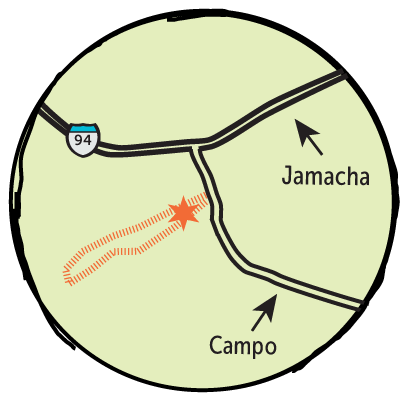
Sweetwater River trail map Great forRunning and hiking Difficulty LevelEasy to moderate Distance9 miles out and back,with shorter options LocationSpring Valley Get there: Take 94 East to the intersection of Jamacha and Campo roads. Turn right onto Singer Lane and park. The trail starts at a yellow gate next to a sign that says 11901 […]
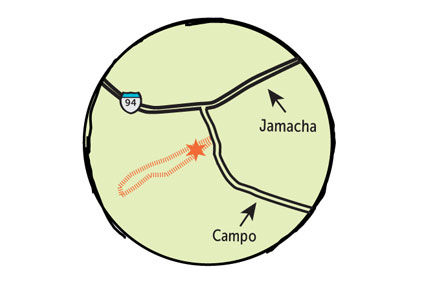
Sweetwater River trail map
Great for
Running and hiking
Difficulty Level
Easy to moderate
Distance
9 miles out and back,
with shorter options
Location
Spring Valley
Get there: Take 94 East to the intersection of Jamacha and Campo roads. Turn right onto Singer Lane and park. The trail starts at a yellow gate next to a sign that says 11901 Singer Lane.
Why We Love It: The trail offers picturesque views of rolling green hills, but has little shade, so use it now while the weather is still cool. At first you’ll hug the upper banks of the Sweetwater River, then, at 2 miles, a small path diverts to the left. Follow it down to the river—step on rocks to cross the stream, or turn back. The trail then joins a fire road, and then a horse trail. From there, you climb up, getting great views of the open space and a nearby reservoir. If you reach the end, you’ll see picnic tables and a shaded shelter where you can rest before turning back.
PARTNER CONTENT
Where to refuel afterwards: Try Hooley’s, a traditional Irish pub in the strip mall across the street from the trailhead. Weekend brunch ‘til 4 p.m.
We asked 12 golf pros from across the county to choose the city's top holes to create the "Dream 18"
At the top of a golf swing, the world settles into a hush. Anyone within 50 yards kindly shuts up in reverence. Steady heartbeats tuck inside the sound of the wind. Time stands still.
Or—panic sets in, a thousand warnings from coaches and YouTube tutorials prattle through your brainpan. You wonder if a good walk prepares to be ruined.
On descent, the club rearranges air particles as it slices on a perfect or unwise line toward an earth so green, it seems like AI. The iron face meets the ball, and the satisfying or unsettling thwack echoes across the fairway like a nonviolent gunshot or a cry for help. Breath catches, curse words load in the prefrontal cortex. Eyes squint to follow the hard-to-see projectile zip majestically through the air or bounce lamely along the ground like a failed hurdler.
Sometimes it goes a couple hundred yards in the right direction, other times a couple yards into uncaring swamps. Golf’s beautiful and hard as hell.
Mindfulness and stillness reign over speed and might—which goes against most basal American instincts regarding sport. Its quiet, serene mocking of our human abilities is what brings so many of us to the life-long process of sharpening the skill. Because who hasn’t stared at the most beautiful parks and lawns in the world and said, “How can I turn this into a game and win it?”
Luckily, San Diego has an abundance of courses to improve and curate self-doubt. The county is home to over 70 courses that attract the top golfers in the country. Some of the biggest names in the sport—Callaway, TaylorMade, Cobra, Titleist, Odyssey, Honma—are based here. Perfect weather never hurts. But San Diego golf courses also promise a smorgasbord of terrains: rocky canyons, hot deserts, and lush greens overlooking the expanse of the Pacific Ocean.
If you could take the 1,300-ish holes around San Diego and pick the very best ones to create your ultimate course, which would they be? We asked some of the top golf pros in the county to do just that. The result? San Diego’s Dream 18. Think fantasy football but for golf.
Just like any great course, our Dream 18 includes four par 3s, 10 par 4s, and four par 5s—everything from tricky dog legs and psychological tee shots to just pretty, pretty views. Once we had our list, we either asked the head golf pro what makes a hole so special, or other pros spoke on its behalf. Go ahead, tell us what we missed.

“One of the most iconic par 3s on the West Coast. The cliffside setting above the Pacific and the constant ocean breeze make it both beautiful and demanding.”
—Anthony Valverde, Director of Golf, The Crosby Club at Rancho Santa Fe
“It’s a downhill par 3 over water with a great view from the tee down to the green. It’s surrounded by bunkers as well, so it almost feels like an island green even though it’s not. What’s really cool is once you drive to the next hole, if you look back on No. 14, it’s a great view as well. One of the signature holes [at Santaluz].”
—Josh Rider, Head Golf Pro, The Santaluz Club
Hole 15
“Hole 15 is widely considered one of the best and most memorable holes on the course. At about 250 yards, it’s a long downhill with multiple tiers and panoramic views into the valley. It looks intimidating at first, but there are lots of recovery contours and the green is fairly large.”
—Editor’s Choice
“Sitting high above the green with views of the Pacific Ocean, this dramatically downhill par 3 requires the perfect club selection.”
—Mike Mulford, Director of Golf, Omni La Costa

“While it’s beautiful with the backdrop of the Batiquitos Lagoon and the Pacific Ocean, this finishing hole demands both precision and nerve. The water guarding the right side and fairway bunkers ahead create a visually striking, strategic tee shot, while the expansive green rewards a confident, well-placed approach. If you can make a par on this hole, you’ve played it very well.”
—Renny Brown, Director of Golf, Aviara Golf Club
“The 18th hole at Del Mar CC is a demanding par 4 with an elevated tee box. Water guards the right side of the green, and a player must hit a precise shot into this green.”
—Renny Brown, Director of Golf, Aviara Golf Club
“It’s a difficult 428-yard par 4 playing into the predominant west wind. The hole is post-renovation and the vegetation was trimmed back, so now it exposes a penalty on the right. It’s uncomfy at the tee but a good challenge. Plus, it’s the No. 1 handicap for [all players].”
—Chris Lungo, Head Golf Pro, Rancho Santa Fe Golf Club
Lili Kim is a content coordinator and writer for San Diego Magazine, with experience highlighting local businesses and communities. When not writing or shooting film, she is likely brewing her seventh cup of tea of the day or strolling along Sunset Cliffs.
With wellness-centered lifestyles on the rise, party culture is getting a 10 p.m. rebrand
A ’90s pop hit is blasting as I drive up to Solana Beach to go dancing. I’m dressed in the millennial nightlife uniform: black tee, cute jeans, heels. It is 6:30 p.m. on a Tuesday. The dance party starts soon. I’ll be home by 10 p.m. at the latest. I may even catch an episode of Summer House.
I am acutely aware of my age in this moment. I haven’t willingly chosen the club life since my 20s and early 30s. Yet here I am, transported back to 2014 with a few more wrinkles, a lot more ibuprofen, and a touch of “pandemic stole this from me” in my pocket.
A few days earlier, a friend texted to suggest we go to a concert the upcoming weekend. “I can’t, I’m already tired on Friday,” I replied. At 42, two glasses of cabernet bend my space-time equilibrium. A hard sneeze risks a sprained neck. Did I mention the perimenopausal night sweats yet?
I arrive at the Belly Up at 7 p.m. Wilson Phillips comes on the stereo, and I sing-shout the lyrics before stepping out of the car.
Someday, somebody’s gonna make you want to turn around and say goodbye | Until then, baby, are you gonna let ’em hold you down and make you cry?
Tonight’s event is billed as “the dance party that starts earlier.” Surprisingly, I’m not the oldest person in the room. A 60-something man shoulder bops to the DJ set. A Gen X woman shimmies by and snaps photos of the glow-stick-spinning raver on stage. Few are drinking.
Started by two North County locals, Amal Chandaria (32) and Max Gold (37), Earlier is a dance party for older adults who want a club experience without the sleep-deprived, hungover physical toll. Running 6:30 to 10 p.m., attendees get home at a reasonable hour for a full night’s sleep.

Seems I’m not alone in my tired.
“[We’re in] a time where loneliness is high, people are craving connection,” says Chandaria. “One thing we were really intentional about is that you don’t need to go and have drinks to have fun. It’s about the music and getting the wiggles out.”
Early is part of a national trend: the green-juice-ifying of party culture. Americans aren’t going out as much as they used to. They’re drinking less, and 10 p.m. has become the new 2 a.m. Wellness as a lifestyle concept is old hat, and each generation manifests itself in different forms (fitness booms in the ’80s, organic food in the 2000s).
According to a 2024 survey by consulting firm McKinsey & Company, the US wellness market now exceeds $500 billion annually, up from roughly $300–$350 billion a decade ago. More striking than the spend: Wellness as a top priority has surged from about 42 percent in 2020 to more than 80 percent today.
The timing makes sense. Studies show Covid led to long-term shifts in lifestyle patterns. We all began to reassess our lives and made some existential changes—like 6 p.m. soberish dance parties. In a recent Gallup poll, only 54 percent of US adults reported drinking alcohol, the lowest level in about 30 years. Conversations around longevity turned “treat yourself” into “invest in yourself.”
The downer of any wellness trend, though, has been the “can’t” philosophy—can’t eat that cake, can’t sip that marg, can’t binge that show. What if we could do health stuff and still dance and not totally suck the joy out of life? That’s what people like Chandaria and Gold are banking on.
Last year when they attended Atomic Groove—a variety dance band from 5–8 p.m. most Fridays at Belly Up—it sparked an idea. “People want to be healthy and active, and they don’t want to compromise on that by not feeling rested,” says Gold. “I thought, ‘I bet if we’re feeling this way, other people are looking for something like this, too.’”
He was right. Nearly 200 people showed up to the pair’s first dance party last July. Tonight’s crowd is nearing that number again. Among them is Cardiff-by-the-Sea resident and second-time attendee Lauren Marley.
“If you do one thing for yourself—and it means that you don’t have to be completely exhausted and wrecked for all the stuff you have to do the next morning—it’s great,” she says.
Though EDM isn’t quite my thing (give me some stank-face hip-hop from the 2000s), it’s clear from the number of return attendees that Chandaria and Gold have filled a need, one that isn’t just in famously health-forward cities like San Diego.
In DC, Dancing on the Waterfront occurs every Saturday from 5–9 p.m. while Extended Play DC wraps up at 10 p.m. Philly has Matinee Dance Party (5–10 p.m.). New York City finally chooses to sleep, with Friday Feeling and Matinee Social Club both ending at 10 p.m. Last year, Day Shift, geared toward those over 30, debuted at Bloom Nightclub in San Diego.
In Chicago, Earlybirds Club was founded in 2023 by high school friends Laura Baginski and Susie Lee. About 100 people showed up to the sold-out “dance party for ladies who got shit to do in the morning.” Two years later, Earlybirds Club is now held in nearly 60 cities and regions across the US.
“It’s an outlet that [middle-aged women] don’t get in our everyday life,” says Baginski, who also recently appeared on the Kelly Clarkson Show to share their story. “It’s movement and dance. We’ve learned now that it’s really essential to being a happy person.”
Admittedly, it’s a bit harder to be happy when I walk into the Music Box for Earlybirds’ event in San Diego. War’s about to start, protests are the new social gathering, and the economy is gaslighting me into believing salads should cost $18.
But soon the club is a sea of 700 people wanting to dance their asses off. Any negative emotions quickly begin to disappear. Tonight’s music features hits from the ’80s, ’90s, and 2000s: Madonna, Britney, Christina, 50 Cent, Ludacris.
Shuffling past the bar to the already-crowded dance floor, my heartbeat quickens. Pure, unadulterated joy is oozing in this place.
“The whole club was women’s bathroom culture,” said returning attendee and San Marcos resident Beth Avant, 50. “[You get to] freely dance, not care about what you’re wearing, you’re not trying to really impress people.” Soon Whitney Houston’s golden pipes set the room on fire, arms raise, smile lines deepen, and for a few hours, nothing else matters.
Oh, I wanna dance with somebody / I wanna feel the heat of somebody
While Baginski continues to run the operation, Lee lost her battle with stage IV metastatic breast cancer in August of last year. Honoring her memory at each event are words from Lee herself: “Sing f**king loud, dance like nobody gives a shit, and remember who the f**k you are.”
And who we are are sleepy people. If this new wellness era really takes off, imagine the possibilities. Dinner dates at 5 p.m., the Super Bowl at 2 p.m. EST, Justin Bieber headlining Coachella at 7 p.m. Until then, you’ll find me in bed shooting down plans past 8 p.m.
Nicolle Monico is an award-winning writer and the director of creative projects, digital editor for San Diego Magazine with more than 16 years of experience in media including Outside Run, JustLuxe and The San Francisco Chronicle.
These gym, studios and programs will help get your body moving so you can meet your fitness goals
New year, new fitness goals, right? Like many people, we’re starting the new year with a focus on health and staying active. No matter what your fitness objectives may be, there are plenty of activities around town prepared to help you achieve them. From more traditional gym settings to unique ways of getting your body moving, these nine San Diego studios, wellness programs, and activities will help you start the new year off right.
Start the year on the right foot with Activate House, the San Diego fitness studio and gym located in North Park offers spin, sculpt, and yoga classes. Calling themselves a “new-age fitness studio,” AH emphasizes intentional training through movement and encourages mental balance and well-being. The sense of community the studio cultivates is accentuated with eucalyptus towels, a juice bar, and highly trained staff.
2855 El Cajon Blvd., San Diego, CA 92104

Hit the pavement with Black Girls Run, a community that’s working to tackle obesity and motivate women to get out and move their bodies. Created in 2009, Black Girls Run has served the San Diego fitness scene as a resource for those looking to practice a healthy lifestyle, whether you’re an avid gym-goer or looking to start a fitness regimen. With national meet-ups already planned throughout the year, this movement is determined to make a difference in the lives of individuals and the community.
Various locations
Regardless of your fitness level, Body University in La Mesa caters to individuals’ needs and goals. The boutique gym offers small group private training services (6-8 people at a time) and focuses solely on one-hour weight lifting sessions. Though open to all gender identities, you’ll most often find it packed with women only, which can be less intimidating for women who may be new to lifting. BU also offers body building competition services as well as customized nutrition programs and lifestyle guidance. With fitness equipment including free weights, cardio equipment, personal training, and highly trained staff, you’re sure to achieve your wellness goals.
6062 Lake Murray Blvd. #205, La Mesa, CA 91942
CorePower Yoga
A staple in the San Diego fitness scene, CorePower Yoga offers both yoga and high-intensity strength training classes. Their newest class, Strength X focuses on helping you build lean muscles via targeted weight circuits and invigorating breath work. Five San Diego studios are hosting Strength X classes currently, and the Point Loma studio also offers scholarships to the CorePower Yoga Teacher Training program for BIPOC.
Various locations

Wheelchair Dance Organization (WDO) Inclusive Dance is making dance more accessible for everyone. The nonprofit organization works to decrease feelings of isolation among those living with disabilities by building a community of dancers at any and all levels. The variety of dance classes offered—Latin jazz, samba reggae, hip hop, Bollywood—are free, taught by professionals, and include modifications for those in wheelchairs or other mobility devices.

When the Experience Fitness and Mobility Studio came onto the San Diego fitness scene, they were dedicated to creating a safe space for anyone wanting to reach their health and fitness goals, regardless of identity, race, age, sexual preference, or athletic ability. The openly LGBTQ, wife-owned gym offers a place to reach your fitness aspirations. With a variety of training styles and methodology, you’ll build muscle, improve your range of motion, and eliminate pain. Beyond physical fitness, studio recognizes the inclusion of mental and emotional well-being for overall health and wellness.
1264 University Ave., San Diego, CA 92103

Spice up your workouts with dance fitness classes at Madhouse Dance. The nightclub-inspired studio is a welcome place to try out fitness choreography and get your heart racing through movement. Daily classes include chair choreography, beginners heels, and the studio’s flagship dance cardio. These classes are only open to women, non-binary, and femme-identifying individuals. If you want to try out Madhouse Dance from home, their website also features on-demand dance workouts.
1189 Morena Blvd., San Diego, CA 92110

Jordyn Berg is a freelance writer whose favorite topics include food and travel. A Pacific Northwest native, she delights in exploring the best of San Diego, by searching for hidden gems, experiencing must-try restaurants, and soaking in the city’s amazing views.
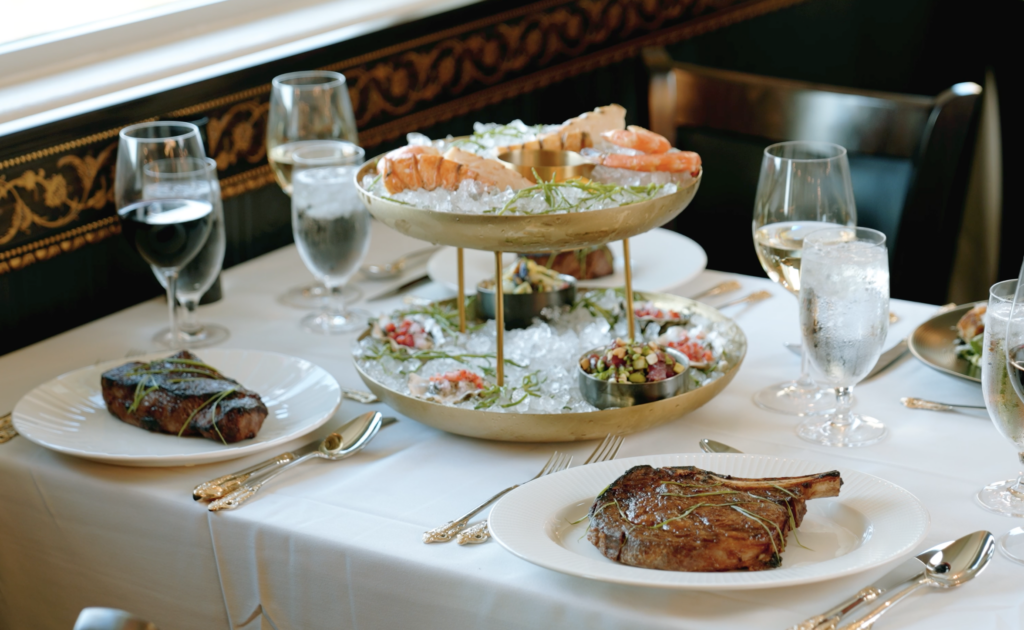
The 29-year-old culinary director at Herb & Sea is making seafood sexy (and approachable) again
Implementing a farm-to-table model hardly deserves acknowledgement these days. It’s not a stretch. It’s not innovative. “It’s the bare f**king minimum,” says Herb & Sea‘s executive chef Aidan Owens.
When I arrive at the Encinitas restaurant, I’m ready to talk sustainability, farm-to-table stuff, with Owens. “Did you see the chin on that?” he says of the extra big jiggly chin on the sheephead that just arrived with the day’s fresh catch. I did. It was Jay Leno adjacent.
I learn quickly that he somehow oozes both charm and stone-cold honesty. Maybe he could construct a new dish with chin goo, like he did when he had a bunch of tuna scraps and voila’d it into a smooth and crowd-pleasing ‘nduja. “I want to know what’s in there,” he says.

The instinct to look closer, to dig into what others might discard, says a lot about the chef’s approach. I guide him back to our topic, but he has something else on his mind. “We’re overcomplicating food—what happened to just cooking good food and having fun with it?”
Owens grew up on a farm in Byron Bay, Australia, where sustainability wasn’t a concept you chat about so much as a way of life. Think dirt roads, backyard chickens, pulling vegetables straight from the ground, and a mother who believed that if you couldn’t pronounce the ingredients on a package, you shouldn’t eat what was inside.
Food wasn’t precious or performative. Making it was what you did because you were hungry and that’s still what inspires Owens today. “I like to cook good food because I like to eat good food,” he says.
His approach to sustainability at Herb & Sea began so naturally that it felt just like instinct. “I was just like, ‘Let’s order food from the people who live and work here,’” he says.

And why wouldn’t he when lives in San Diego? Cities all over the world vie for our goods. Our tuna is sent overseas. Our spiny lobsters hit dinner plates in China and Japan. Not to mention California’s producing a third of the country’s vegetables and three-quarters of its fruits and nuts.
“Why would we outsource when it’s all here?” Owens asks.
Sustainability, in this context, is about cooking what exists in abundance, nearby, right now. “I love the local fish here. It’s f**king delicious and San Diego citrus, I mean, it is so f**ing good,” he says.
Instead of importing ingredients, Owens also looks for nearby alternatives. “You can find really cool things in the local waters,” he says, pointing out that stingray cheeks taste similar to scallops.

Whatever he finds in that sheephead chin might just be the next substitute for marrow. But to make this work, it means getting diners amped up about the slightly unfamiliar.
Tasting menus, where diners are completely in his hands, become an opportunity to gently push boundaries. “I’ll serve mackerel, because people think they hate it,” Owens says, noting that the abundant local fish can have some fishiness. “But when it’s fresh, it’s arguably one of the best fish in the ocean.”
He also tweaks the language on the menu so people might feel more compelled to give dishes a try without preconceived notions. He might use “lengua” instead of “tongue.” “Whelk” instead of “snail.” When he puts “stingray throat” on the menu, he disarmingly calls it “skate.”
To reduce waste, scraps aren’t always discarded but rather turned into something new. Sometimes they’re smoked, cured or fermented. Apples going bad turn into apple ponzu. Lemons turn to marmalade, which stretches their usefulness far beyond peak season. “And it’s super tasty on our pizza,” he says.
What makes the food even richer, is the relationships he’s built with farmers. Though it didn’t always feel natural, Owens sought personal connection first. He recalls approaching a fisherman at the Tuna Harbor Dockside Market. “I was awkward,” he says. “I went up to him and said, ‘I like your fish.’”
Owen’s is now so close to his suppliers—like fishermen Ryan Sebo and Joe Daly—that he gets texted pictures of fresh catches right as they flop on the boat. The messages always ask if he wants first dibs. “I say yes to a lot of fish,” Owens says, noting that Herb & Sea can go through 2,000 pounds of seafood a week.

The next evolution of sustainability, in his view, will be chefs working directly with producers such as his alliance with Sebo, cutting out middlemen and purveyors where possible. “It will put more money in the pockets of the people doing the work,” he says.
It will mean that chefs can’t just know their local farmers and producers, but they’ll choose to work with the ones who have the best practices. Dining and sustainability will become much less about the final plate. “It will be more about the impact that plate has on the Earth,” he says.
Ultimately, he believes sustainability doesn’t need to be loud. It doesn’t need hashtags. It just needs to be honest.
“We aren’t saving lives. We’re feeding people good food,” he says.
And yet, in feeding people well—simply, thoughtfully, responsibly—something meaningful happens. Guests leave satisfied. Ingredients are respected. Local ecosystems are supported and food returns to what it has always been at its core: nourishment, pleasure, and a quiet reflection of the place it comes from.
No buzzwords required.
Meet fellow hikers by joining other outdoor-enthusiasts on routes around the city
San Diego Day Hikers is one of the region’s most popular hiking groups on the social gathering website Meetup.com. But it has a pretty interesting past.
“The group started in the 1980s as a monthly hike, usually on the last Saturday, led by a professor from SDSU, and loosely affiliated with the Libertarian Party of San Diego,” says Philip Erdelsky, the group’s current leader. “Announcements were printed in the Libertarian Party newsletter, and also emailed to those who had email.”
Subscribers were mostly students and staff at SDSU, but Erdelsky took over the group in 1993. “I used email for the hike announcements, and in the late 1990s started posting the announcements on the Caltech Alumni server, which appeared on the then-new World Wide Web,” he says.
Fast forward to 2012, and Erdelsky decided to add the group to Meetup.com, calling it San Diego Day Hikers. Today, the group has nearly 22,000 members who join up for multiple hikes across the county every month.
Typically around five to 25 people show up for hikes which are free to join. Erdelsky guides many of the hikes himself, using resources such as Schad’s Afoot & Afield in San Diego county.
Joining a local hiking group is a great way to get to know other people who share similar interests and can even help with finding new routes. Thankfully, there are plenty of hiking groups like San Diego Day Hikers to check out—most of which don’t require any membership or fees.
If you’re looking for a new crew to join, here are more San Diego hiking groups to check out:

This group gathers for hikes throughout the San Diego region with easy to moderate routes. The group usually hikes on the last Saturday of each month, but also has weekday evening excursions occasionally. Recent hikes include a Mission Bay five-mile walk, an urban four-mile hike through Marian Bear Park, and the five-mile Engelmann Oak Loop at Daley Ranch in Escondido.
This group for the UCSD community has a discord channel where users plan hikes and other outings. To join, you must be a member of UCSD, either a student or staff. The group has around 2,850 members, and usually about 20 people turn out for hikes.
Recent hikes include the Santa Margarita River trail, Cowles Mountain, San Clemente Trail and the Potato Chip rock.

This group on Facebook has around 2,000 members and plans monthly hikes, including big challenges such as El Cajon Mountain. Organizers say the group is very active with regular events. They mostly focus on hiking, but also organize backpacking, camping, snowboarding, skiing, running, cycling, kayaking, paddle boarding, and road trips events. Members can also create their own events and post them to the group.
Recent hikes include El Cajon Mountain, Mt McGinty, and Black Mountain via Nighthawk Trail. Hikes are usually organized on Saturdays and Sundays early morning at 6 a.m., but also weekday shorter evening hikes at 6 pm.

This Facebook group is great for those worried about being too slow for a regular hiking group. They have nearly 7,000 members and plan regular outings on easier routes. They’ll also organize more challenging adventures such as hiking Mt. Baldy.
“San Diego Sloth Hiking Team at Mt. Baldy. Started [the] hike at 3:30 a.m. and finished at 3 p.m.! Long day of hiking, laughs, a few curse words and a ton of beautiful views,” one user wrote on TikTok. Other hikes include Kitchen Creek Falls, Cedar Creek Falls in Ramona and Devils Backbone.

For a guided experience, the San Diego Natural History Museum offers free guided hikes throughout the county led by volunteers. Hikes are organized every weekend, but are capped in size, so you need to sign up in advance. Priority registration is given to museum members, but if there’s still space then anyone can sign up.
People often join to explore the canyons near their homes that they’ve always been curious about but were hesitant to explore on their own, according to organizers. They also take treks into the desert to explore in groups.
“I sought the Canyoneers out because I was looking to do more desert hiking, but I didn’t feel comfortable going alone,” said Daniel, one of the Canyoneer leaders, on the group’s website. “It’s easy to get lost, there’s spotty cell phone coverage, I’d think ‘what if I got a flat tire?’ The Canyoneers offered the opportunity to explore new trails that I wouldn’t hike on my own.”

If you want more than just a regular hike to join, and are looking to boost your wilderness skills, you can check out the San Diego Sierra Club’s 10-week wilderness basics course. The course covers hiking, camping, and backpacking through 10 in-class lectures with four weekend outings.
Skills training includes selecting clothing, gear, and equipment; how to use a map and compass; physical conditioning; first aid and safety; food selection and preparation and water filtration; animal encounters; and sanitation. During the overnight outings, participants will have to supply their own equipment.
The course is offered each year from January to May with lectures at 7 p.m. on Tuesday nights in Escondido at San Pasqual High School and in San Diego at the First United Methodist Church – Linder Hall in Mission Valley.
This post contains affiliate links to products and services. We may receive compensation when you click on links.
Claire Trageser has been writing for San Diego Magazine for 10 years. She also is a reporter at KPBS and writes for The New York Times, National Geographic, Marie Claire, Elle and Runner's World.
The healthcare provider will expand its services with new facilities and partnerships across San Diego in 2025
Palomar Health knows most things are better with friends. In 2025, the organization is partnering with the University of San Diego to open the Palomar Health Wellness Center, an 80,000-square-foot, multipurpose facility providing wellness resources for the USD campus community and beyond. Sports, cooking classes, pet and music therapy, biofeedback technology, and programs involving farmers’ markets, school gardens, and local restaurants are all planned for the new center.
Palomar is also collaborating with Sharp HealthCare to expand offerings for both organizations’ patient populations: In North County, Sharp patients can access services from Palomar Health, while Palomar patients will have more care options for specialties not currently covered, like transplants and advanced oncology procedures.
But even before launching its new alliances, Palomar was drawing national recognition, including a spot on Newsweek’s list of the world’s best hospitals for six consecutive years. In 2024, it was one of only five healthcare systems nationwide to earn a specific award recognizing the forensics and trauma teams’ work to support victims of sexual abuse, domestic violence, elder abuse, and human trafficking.
Though the org closed its labor and delivery ward in Poway in 2023, Palomar Medical Center Escondido recently rebuilt its Level III NICU to expand capacity from four to 12 beds. The Escondido maternity facility was named among US News and World Report’s best hospitals for maternity care in 2024.

And while the organization is expanding its reach through partnerships, Palomar, like many providers in the healthcare industry, has struggled to recruit and retain staff. According to National Nurses United, half of Palomar’s registered nurses and more than half of its caregivers left between January 2022 and May 2024. But amidst these challenges, Palomar Medical Center Escondido’s emergency department (ED) won the 2023 Lantern Award, which recognizes EDs that provide excellent care to patients and a healthy work environment for staff members.
This year, Palomar Health launched a new ambulatory surgery center at its Escondido hospital, where patients can expect cutting-edge treatments like robotic spinal and orthopedic surgeries, robotic urology procedures, and ophthalmologic laser procedures.
And, in 2026, the organization will open the Palomar Behavioral Health Institute (PBHI), an 84,700-square-foot facility where adolescents, adults, and geriatric patients can access services such as medication therapy and management, support groups, education, therapy, and inpatient mental health treatment. PBHI will also be the West Coast’s first home of the Help for Heroes program, providing mental health and substance abuse treatment for veterans, active duty service members, and retired military personnel.
Leorah Gavidor won her first essay contest at age 5. She writes features, news, and non-fiction in San Diego.
In a world overflowing with shortcuts, marketing fluff, and “good enough,” there are still companies that choose a different answer. And in San Diego, there are plenty of them.
In a world overflowing with shortcuts, marketing fluff, and “good enough,” there are still companies that choose a different answer.
Integrity guides how they show up every day. They make hard decisions, hold themselves accountable, and build trust the old-fashioned way, one action at a time. At the Better Business Bureau, we call these businesses Torch Heroes: leaders who demonstrate that ethical leadership strengthens businesses and drives long-term success.
And in San Diego, there are plenty of them.
Take House Collective Marketing Solutions, a Carlsbad-based digital agency that won the 2025 Torch Award for Ethics for its people-first approach to marketing. Instead of pushing flashy campaigns, the team often takes a step back to make sure clients’ foundations are strong before going big. Their philosophy? Truth over transaction builds partnerships that last.
Or look at Young Black & N’ Business, where integrity shows up through community action. When a local school lost art funding, founder Roosevelt Williams III and his team stepped in with workshops, mentorship, and hands-on support to help restore creative opportunity. That kind of engagement reflects ethical leadership rooted in real impact.
And in Vista, Lotus Sustainables carried its commitment to ethics all the way to the product line. After discovering defects in a shipment of eco-friendly products, the company issued full refunds and redesigned its offerings at its own expense, a choice that shaped its identity and reinforced to customers that ethics guide every decision.
In North County, Greenway Landscape Design & Build brings integrity into everyday service. When a client’s glass was damaged, likely not by their crew, owner Scott Lawn chose responsibility over blame and covered the repair personally. For Greenway, doing the right thing serves as a north star, guiding every interaction through transparent pricing, accountable partnerships, proactive communication, and follow-through long after the job is done.
Other honorees include At Your Home Familycare, whose leadership turned down a lucrative state contract during the pandemic to protect vulnerable clients and staff, and Bill Howe Family of Companies, where hiring practices, training, and service centers around shared values, every day, on every call.
What connects these diverse businesses, from marketing to nonprofit support to home services, isn’t size, industry, or revenue. It’s something deeper: a commitment to trust as a business strategy.
In San Diego’s competitive marketplace, that trust gives companies an edge. Clients invest in relationships. They refer friends. They stay loyal when others fade.
As one Torch Award winner puts it, integrity isn’t a section in the employee handbook. It’s the operating system of the company, the invisible code that determines every choice, every day.
And that’s exactly the point of the BBB Torch Awards for Ethics: to spotlight companies that dispel the myth that ethics and success are at odds. These businesses show that when leaders choose honesty, fairness, and accountability, especially when it’s hard, they build brands that matter.
At BBB, we see nominations come in from clients, employees, and business partners who have witnessed ethical leadership up close. These submissions aren’t polished promotions. They’re stories of moments when a company chose people over profit, clarity over confusion, and trust over convenience.
The nomination window for the 2026 Torch Awards for Ethics is open through March 31, 2026, and there are more Torch Heroes waiting to be recognized.
Who comes to mind in San Diego’s business community?
And yes, businesses can nominate themselves. We encourage it. If you’ve built your business on principles rather than buzzwords, we want to hear your story.
Because in a world full of noise, integrity still deserves the spotlight, and San Diego is full of stories worth telling. Nominate your hero now.