Ready to know more about San Diego?

Subscribe
Features APRIL 7, 2025

10 Outdoor Kitchen Appliances For Summer Entertaining

We rounded up everything you need to create an al fresco oasis that'll be the envy of the neighborhood

10 Outdoor Kitchen Appliances For Summer Entertaining
Courtesy of Gozney

It’s easy to bemoan it, but the sunshine tax is, well, kinda worth it. Outdoor living is a luxury we can claim year-round—so why not make it truly fabulous? We asked Michael Rounds, general manager of Solana Beach retailer Native Coast Appliance Gallery, to shout out cookers, coolers, heaters, and gadgets that make al fresco dining, entertaining, and lounging a beautiful breeze. If you’ve got the square footage and the means, here’s an aspirational outdoor arsenal for you. Rounds gives us his top picks for crafting an outdoor kitchen that’ll be the envy of the neighborhood.

Founder of San Diego design firm Savvy Interior s featuring the compnay's founder Susan Wintersteen

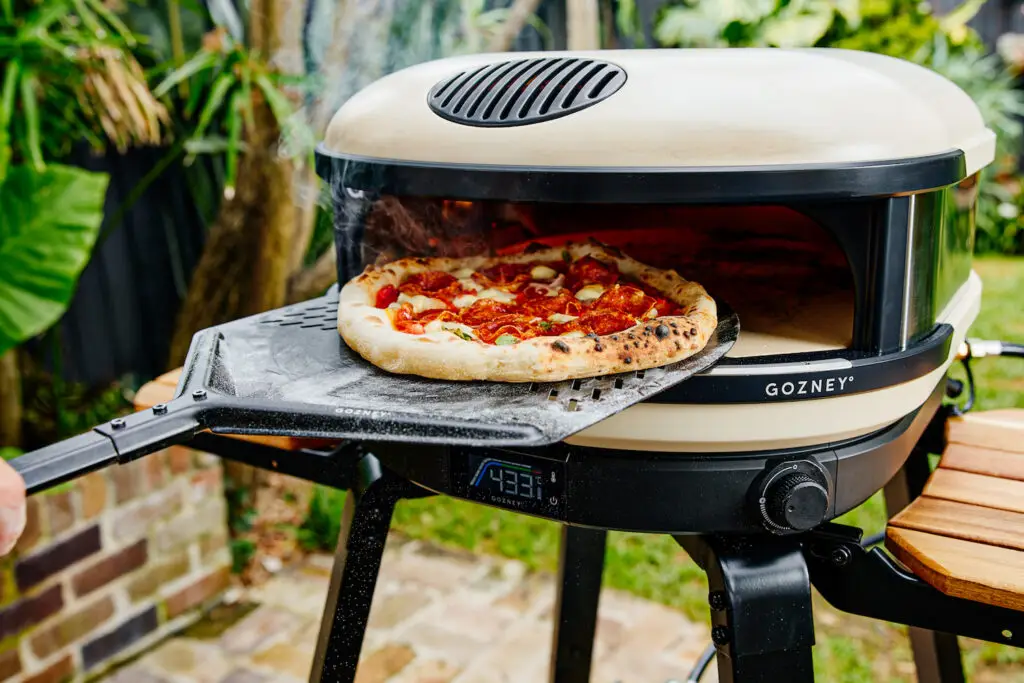
Gozney Outdoor Pizza Ovens

A fool-proof recipe for easy outdoor entertainment? Batched cocktails and homemade pizza. Gozney’s sexy, domed ovens gently char crusts and melt cheese in around a minute. “With rapid heat-up times and incredible heat retention, they make gas and wood-fired cooking effortless,” Rounds adds.

Outdoor kitchen appliance for home BBQs the Everdure 4K by Hestan Kamado Grill
Courtesy of Everdure

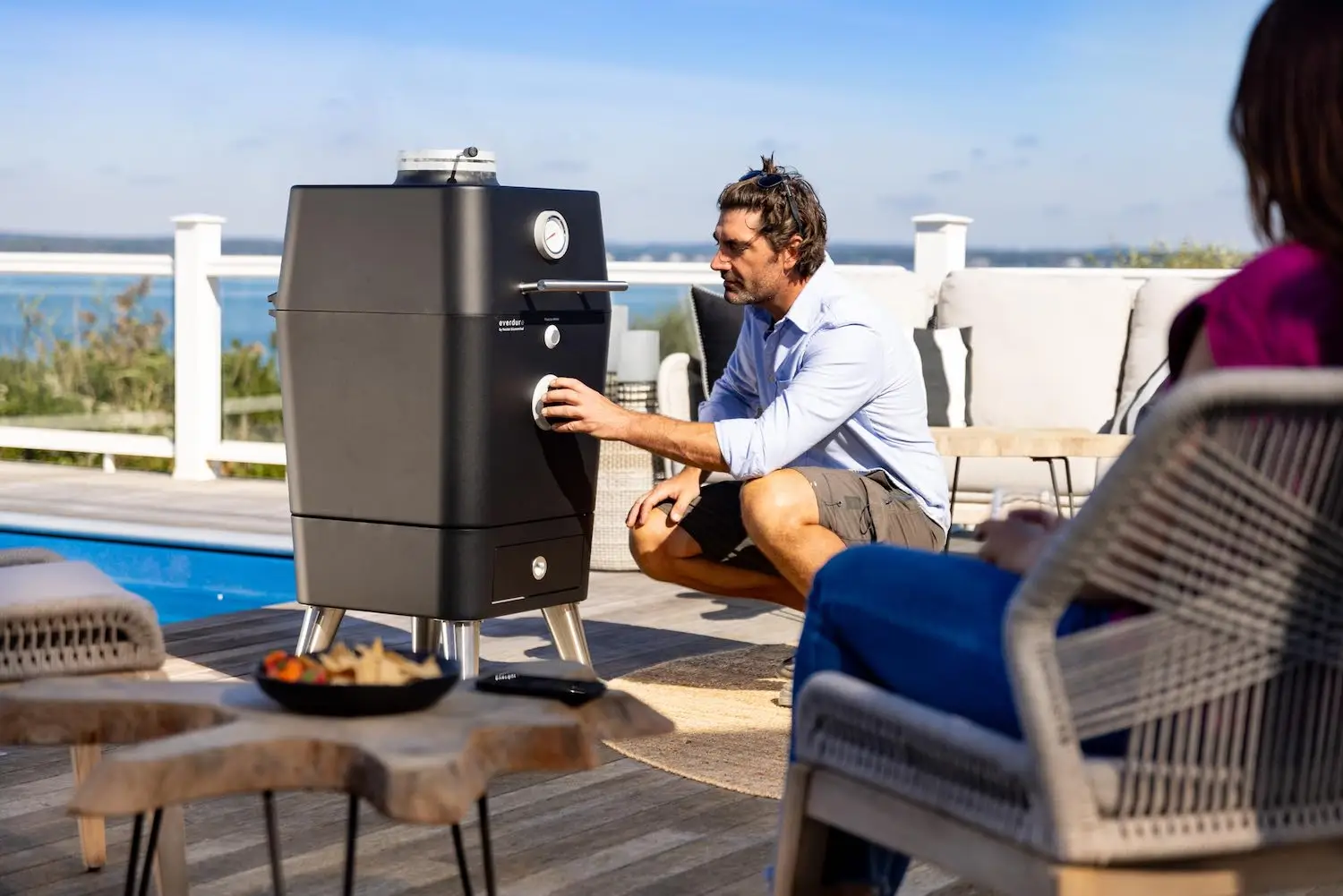
Everdure by Hestan Kamado Grill

This cute little pod will do it all: grill, smoke, and help you ace your audition for The Great British Baking Show. A take on the classic kamado, known for sustaining low temperatures, this model locks in heat with insulation that also keeps the exterior cool, so kids, pets, and tipsy guests stay safe.

OFYR sculptural fire pit for cooking outdoor kitchen appliance for home BBQs
Courtesy of OFYR

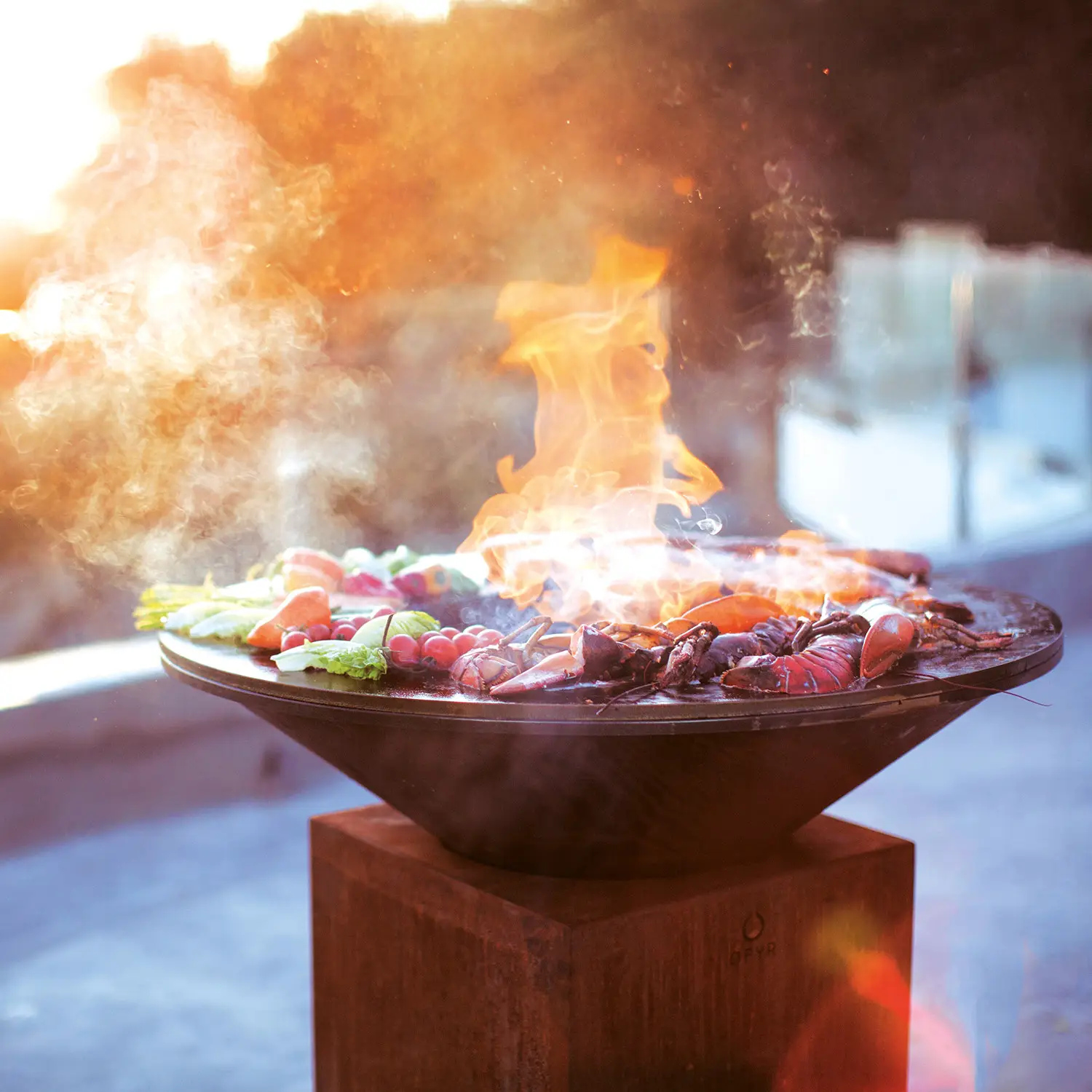
OFYR Cooking Units

If a chill strikes, gather round OFYR’s sculptural fire pit— and get a ribeye going, since it also doubles as a grill. “[The brand’s] signature corten steel models develop a rich, weathered patina over time,” Rounds says— meaning the products only get better with age.

Aspire by Hestan Grill outdoor kitchen appliance for home BBQs
Courtesy of Hestan Grill

Aspire by Hestan Grill

Sure, you’re rocking a punny apron that your mother-in-law actually guffawed at, but it’s really all about what’s under the hood—and maybe a little about what that hood looks like, too. These grills not only boast powerful burners but motion-activated lighting and a robust stainless-steel build, paired with a palette of 12 different colors, from classic stainless to vibrant blue and center-of-the-universe yellow.

Bromic electric heating lamp outdoor kitchen appliance for home BBQs
Courtesy of Bromic Heating

Bromic Heating

When a chunky sweater just won’t do, take an architectural approach to hygge with Bromic’s gas and electric heaters. The products’ undulating curves put those rickety restaurant patio lamps to shame, allowing you to extend the outdoor season without sacrificing looks.

Kamado Joe Konnected Joe grill and outdoor kitchen appliance for home BBQs
Courtesy of Kamado Joe

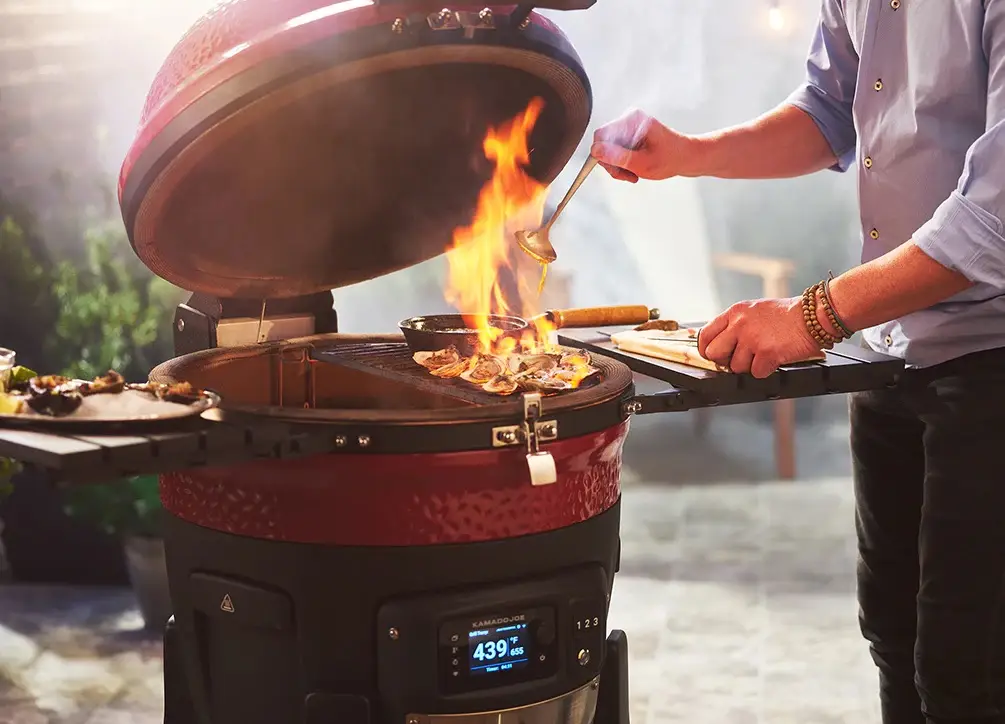
Kamado Joe Konnected Joe

Gadgetry and gastronomy combine in this cooker with smart technology, letting you fire it up and adjust temps remotely. Why slave away in front of a flame when you can be sipping vintage vino and taunting East Coasters in the group chat with pastel sunset pics? A vast temperature range (225 to 700 degrees Farhenheit) lets you smoke brisket low and slow or turn up the heat to get a sear on tuna steaks.

True Residential beverage centers and ice makers outdoor kitchen appliance for home BBQs
Courtesy of True Manufacturing

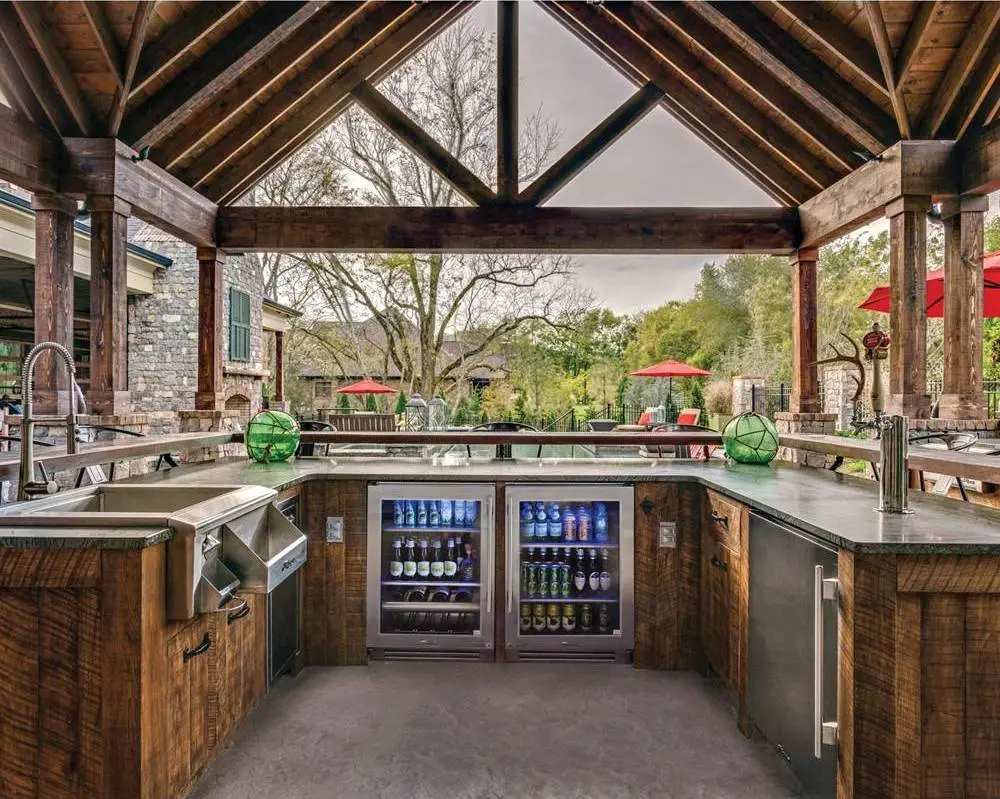
True Residential Beverage Centers and Ice Makers

“Built for durability and performance, True’s outdoor-rated appliances ensure you have perfectly chilled drinks and an endless supply of ice, no matter the weather,” Rounds says. The brand’s colorways go beyond the standard stainless steel with hues like sleek matte black and a statement-making cobalt blue.

Urban Bonfire outdoor kitchen storage for home BBQs
Courtesy of Urban Bonfire

Urban Bonfire Outdoor Kitchen Storage

Modular and customizable, Urban Bonfire’s products add a swagger that run-of-the-mill cabinetry lacks, with lustrous finishes that still manage to hold up against the elements. You can play with various permutations to create the perfect fit between appliances (and your inevitable stack of charcoal-coated BBQ tools).

Julien outdoor refinements cabinets kitchen appliance for home BBQs
Courtesy of Home Refinements by Julien

Julien Outdoor Refinements Cabinets

Julien’s stainless-steel outdoor cabinets offer an unobtrusive, weather-resistant storage solution. “With customizable configurations and a luxurious finish, they bring a high-end touch to outdoor kitchens,” Rounds says. When neighbors start coveting your spice drawer, you know you’ve made it.

Evo Affinity drop-in grill with seasoned cooksurface outdoor kitchen appliance for home BBQs
Courtesy of Evo America

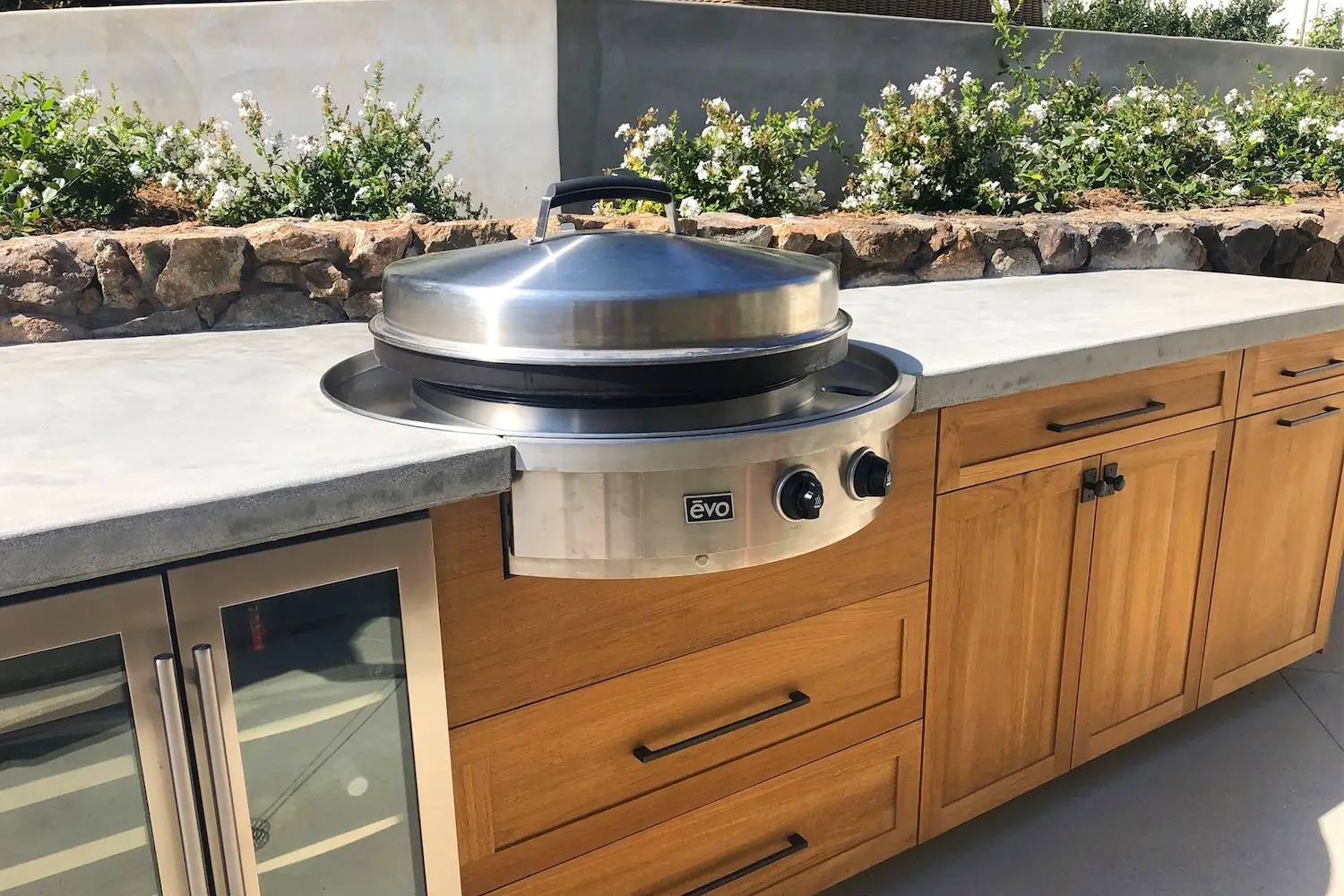
Evo Affinity Drop-in Grill with Seasoned Cooksurface

Bring the back-of-the-house feel to your backyard with these top-line, flat-top cooking surfaces that will have you flipping shrimp Benihana-style and searing steaks like a chef de cuisine.

Danielle is a freelance culture journalist focusing on music, food, wine, hospitality, and arts, and founder-playwright of Yeah No Yeah Theatre company, based in San Diego. Her work has been featured in FLAUNT, Filter Magazine, and San Diego Magazine. Born and raised in Maui, she still loves a good Mai Tai.


Subscribe to our newsletters

Select Options

By subscribing you confirm that you agree with our Terms and Conditions and Privacy Policy.

Food & Drink JULY 7, 2026

San Diego’s Filipino Food Revolution Continues

Along with other Filipino culinary icons, Ashley del Rosario is making Filipino pastries a category of their own

San Diego’s Filipino Food Revolution Continues
Courtesy of Ashley del Rosario

Baker Ashley del Rosario estimates she makes five people cry every day. It’s not because she’s some salty old grump. In fact, del Rosario is such a delight to talk to that we ended up chatting in the sunshine for 20 minutes after my two-hour parking meter ran out. (I got lucky—no ticket!) It’s because her baking philosophy, which centers around spotlighting her culture as a Filipina-American and using some of her mom’s recipes as inspiration, seems to uniquely touch a nerve in her community.  

“People message me every day saying… ‘Oh my God, my mom loves your stuff. Oh my God, this made me so emotional. This reminds me of my childhood,’” she says. “I must be doing something right.”

We’re sitting outside at Michi Michi in Bankers Hill, where she finished up a two-month residency as the in-house guest baker on June 30. Her menu of Filipino-inspired pastries feature ingredients like mango, ube, pandan, calamansi, and taro leaves in items like French croissants and Italian maritozzos. But she’s also pushing flavor boundaries with pastries like a champorado tart, a Filipino chocolate rice pudding topped with a dollop of anchovy paste. 

Love it or hate it, to del Rosario, the point is that she introduced champorado to a new audience. “If you don’t like Filipino food, or you’re not interested in it, or you don’t even get it… you [still] came into this bakery and you saw Filipino desserts,” she says. So the next time you come across champorado, your brain will already recognize it and hey, maybe you’ll give it a try. 

San Diego is home to the fifth-largest Filipino population in the United States, with enclaves in Mira Mesa, National City, southeast San Diego, and Chula Vista. That’s led to a rise in popularity of Filipino food in San Diego, as well as across the country

In 2021, Phillip Esteban—San Diego Magazine’s “Chef of the Year” in 2020—opened the first location of his fast-casual Filipino concept White Rice, which now has locations in Normal Heights and Sorrento Valley. Kristin Cleavinger’s coffee and matcha pop-up One of One draws inspiration from her own Filipina-American heritage. Tara Monsod, executive chef at Animae and Le Coq, is a three-time semifinalist for Best Chef in California by the James Beard Awards and one of the leading champions of Filipino-American cuisine. She was also del Rosario’s boss at her first kitchen job, which was doing pastries at Animae. (Nothing like jumping straight into the fire!)

Del Rosario says Monsod became a cultural and culinary mentor, pushing her to explore new and bigger opportunities. When she got the chance to study at the illustrious Italian Culinary Institute in Calabria, Italy, Monsod encouraged her to go. It changed del Rosario’s life—so much so, she’s moving to Italy later this year to continue honing her pastry skills. 

In the future, she says she hopes to split her time between Italy and San Diego, continuing collaborations and pop-ups while developing what she sees as an entirely new lane within pastry: Italian pastry technique with distinctly Filipino flavors. 

Italian pastry technique is different from classic French. Take croissants, for example. The Italian version, called cornetto, is often filled with creams, jams, or savory fillings, and tends to feel softer than its buttery, flakier French counterpart. They’re also more regionally driven, with different areas utilizing local specialties like citrus for the filling—an ideal vehicle for launching a Filipino-fusion creation. 

There are plenty of globally-inspired bakeries in San Diego with their own specialties—Azúcar in Ocean Beach is Cuban, Su Pan offers traditional Mexican pastries, and Asa Bakery is modeled after Japanese kissaten cafés. There are even a number of local Filipino bakeries like Valerio’s 1979 (formerly Valerio’s City Bakery), Kababayan Bakery, and Starbread Bakery. But a Filipino-Italian bakery? Not yet. And even if there were, del Rosario says the more, the merrier. 

“There is no competition,” she says. “It’s just showing our culture.”

San Diego Restaurant News & Events

Beth’s Bites

Beth Demmon

About Beth Demmon

Beth Demmon is an award-winning writer and podcaster whose work regularly appears in national outlets and San Diego Magazine. Her first book, The Beer Lover's Guide to Cider, is now available. Find out more on bethdemmon.com.

Food & Drink JULY 7, 2026

Review: Alchemy – Choose Thy Poison

The Mexican restaurant continues the Barrio Logan tradition of art in unexpected places

Review: Alchemy – Choose Thy Poison
Photo Credit: Dee Sandoval

I’m sitting in a slab of concrete under a freeway, eating a ceviche black as eyeliner.

There might be seven seats in this restaurant. Or maybe it’s 12 minus five. That area under the stairs might also be a couple seats, or it might just be a very inviting storage area with a flower vase. The restaurant is so small your core instinct is to count seats and tabulate if Alchemy – Choose Thy Poison is a real place with a sane business plan or if it’s a social art project designed to question the reality of restaurants and business plans.

There’s a large, floor-to-human-height window near our table. Through it, I notice someone didn’t make their bed this morning. It’s a decision I deeply empathize with. It’s moments like this that make you acutely aware that Alchemy is also technically the courtyard of a six-room micro-hotel called Narcissus. Not the kind of massagey boutique hotel you’re thinking of with soft woods, obscene amounts of linen, and opinions on bonsai therapy. It’s a near-Brutalist cube of base industrial materials—concrete and acrylics bent and molded into a series of alcoves, with pods to sleep in. Sculptures lie behind glass like Tilda Swinton circa 2013.

The window to the unmade bed forcibly crams light voyeurism into the dining experience. The hotel and Alchemy feel like the parts of Mexico I love the most. Although Mexico has its multimillion-dollar restaurants, a vast majority of the best street-level places feel like you’re temporarily recreating in a very lovely construction project.

Alchemy’s location is what most people comment on (“I can’t believe a place like this exists on a block like this.”)—jammed at the bottom of the freeway embankment on the northeast side of Barrio Logan. But that makes it distinctly Barrio, the historic cradle of San Diego’s Hispanic and Chicano culture. The I-5 freeway was built through Barrio in 1963—a fairly traumatic gashing of the neighborhood—and residents responded by painting epic murals on the ugly concrete belly of eminent domain. Where some would’ve just accepted the industrial blight, locals saw shade for a park. There is a deep history here of turning concrete into art, and Alchemy carries that on.

Photo Credit: Dee Sandoval

The vision for the property came from owner Benjamin Longwell, whose company—The Society of Master Craftsmen—sounds like it wears a monocle. Longwell is part of the new guard of developers who focus on urban infill. Instead of adding to the city sprawl, they find unused or underutilized parcels of land in established neighborhoods, then build creative mixed-use spaces that, in perfect scenarios, add something of value for locals.

I’m not making a case for architectural sainthood, but there isn’t a huge list of developers who would look at the line of cars exiting the freeway in front of Alchemy and think, “We must build here.” So in that sense, Narcissus and Alchemy feel additive to the community, not extractive.

I stare back at Alchemy’s ceviche negro, a glossy mound of halibut that looks inspired by the La Brea Tar Pits or melted vinyl records. Chef-owner and Mexico City–native Eddy Cortes saves all the trimmings of his dishes (garlic and onion skins, vegetable shavings), then chars them into an ash to create a recado negro—a Yucatán specialty that usually involves toasted chiles, achiote paste, vinegar, and a ton of warm spices. He tosses local halibut with squid ink, tamari, charred pineapple, and citrus. The usual charm of ceviche is that it’s light, bright, full of color. Not here.

It is fantastic—acidic but with a whole world of toasted, warm flavors, like ceviche that’s seen some things.

The menu from Cortes—a home cook his whole life, only having taken it professional a few years ago with his popular pop-up, Barracruda—is really a tour of specialties from various states in Mexico.

A crema de poblano has the blended ghost of rajas at its core: an emulsion of roasted poblanos with butter-sautéed onions and garlic, plus a touch of milk that’s topped with queso fresco, chile ancho, and morita oil. Morita—a smoky Mexican condiment made from dried and smoked red jalapeños for a less intense, fruitier cousin of chipotle—is the key here. It specializes in spiking fats (guacamole, fried eggs, burritos). Sop up the crema with house-baked garlic-rosemary sourdough, blackened from the ash of a corn husk.

Smoked tuna is a Baja gift that’s become an anchor for most San Diego taco shops, and Alchemy combines mesquite-smoked yellowtail with caramelized onions, sweet peppers, and Chihuahua cheese (the OG quesadilla filling), then stuffs it in a perfectly baked masa empanada. The result is somewhere between a TJ Oyster Bar taco, a calzone, and a tamale—but with extra flavor and more black hue from cuttlefish ink.

Alchemy’s huaraches de res is Cortes’ ode to where he’s from. Huaraches are the New Haven–style pizza of Mexican food—thick, oblong masa flatbread layered with refried beans and a payload inspired by the Mexico City markets the chef grew up roaming with his dad: braised beef (braseado), avocado salsa, pickled vegetables, salsa macha, and jocoque (Mexico’s fermented dairy product, like a cross between crema and labneh).

Alchemy’s seared tuna crudo gets a tad abused by the riot of big flavors: charred hibiscus salsa, avocado salsa, pickled grapes, pomegranate salsa macha, and chipotle aioli. It’s a fate that also tempers the joy of the zarandeado, with the adobo marinade on the shrimp fighting a bit with recado negro and chipotle crema. Sticking with curmudgeonly food critic notes, flies are a part of the Alchemy experience, at least during our visit. They’re fairly hard to evict from the outside world, but more measures could be taken to discourage their participation.

Photo Credit: Dee Sandoval

The oxtail tetelas—like a Mexican pupusa—are a diary note from Cortes’ travels to Tlaquepaque, where they famously superboost their salsa with a touch of instant coffee. First, Cortes braises the oxtail with beer and Mexican spices. Then he blends that braising liquid into a salsa with beef tallow, guajillo, charred onions, tomatoes, and black garlic. Keeping with the goth food theme, the oxtail goes into masa negra infused with squid ink.

Desserts are where you realize just how deeply Alchemy is committed to the art bit. Rarely do you see a neighborhood bistro trying to pull off trompe l’œil—the French specialty of making pastries and other desserts look like fruit or other everyday objects. (The phrase means “to deceive the eye” and is the historical precedent for the Is It Cake? phenomenon.) Pastry chef Catherinne Avila does, though. A “Naranja” comes out in the form of a mandarin, but inside is orange blossom mousse, apricot jelly, and sablée (a delicate, crumbly shortcrust). A “Philosopher’s Stone” comes in the form of a brick of gold with a serpent on top; inside are mango mousse, mango-Tajín jelly, and a coconut dacquoise.

As Barrio Logan enters an apprehensive phase—its creative culture and restaurant scene growing rapidly, bringing economic promise face-to-face with the need to protect the Chicano way of life—this concrete tuckaway from a Mexico City kid feels like a good step. The Barrio has a long history of making art in unexpected places, and Alchemy carries that a little further.

Photos Credit: Dee Sandoval

Troy Johnson

About Troy Johnson

Troy Johnson is the magazine’s award-winning food writer and humorist, and a long-standing expert on Food Network. His work has been featured on NatGeo, Travel Channel, NPR, and in Food Matters, a textbook of the best American food writing.

Food & Drink JULY 7, 2026

This Popular Ice Cream Pop-Up Is Opening Its First Permanent Shop

After building a loyal following through coffee shop pop-ups, Scoopy Scoopy is putting down roots in Leucadia

This Popular Ice Cream Pop-Up Is Opening Its First Permanent Shop
Courtesy of Scoopy Scoopy

There’s a saying in business that if you’re not evolving, you’re dying. I personally have a saying that if you’re not eating ice cream, you’re also probably dying, but of sadness.

Scoopy Scoopy doesn’t have either of those problems. The premium ice cream pop-up launched last year with the idea of setting up in coffee shops after hours, helping those businesses maximize their profitability while also avoiding the costs of a brick and mortar. But it turns out, a lot of people in Leucadia really like ice cream—so much so that Scoopy Scoopy decided to open their own scoop shop in the same building as Moto Deli and Cadence Cyclery (in the former Queenstage Coffee House space) on July 8.

Evolving doesn’t mean leaving the old ways behind. Zach Zien, who runs Scoopy with his partner Steven Segal and wife Sophia, says they will continue to pursue the shared space model on weekends at Coffee Coffee in Leucadia through the summer and are still open to popping up at other venues. “That’s still a core part of our business,” he says. But with steady demand in the Encinitas area, it gave them the confidence to put down roots of their own. 

“People have really welcomed us and we’ve been well-received,” he explains. “We think this is the market to succeed in.”

The super-premium ice cream is still sourced from Chocolate Shoppe Ice Cream in Wisconsin, but instead of the eight flavors they’re limited to for popups, the permanent storefront will be able to offer 12. “There will be three or four that regularly rotate, with probably eight staples that are our best sellers,” says Zien, pointing to flavors like peanut butter, oatmeal cookie, and the alternating vegan options. They’ll also be able to fill pints to order, something they haven’t been able to do in the past. 

Currently, Moto Deli closes at 4 p.m. daily, but once Scoopy Scoopy is up and running, it will offer beer and wine until 8 p.m. for a shared drinks-and-dessert Happy Hour. “We’re hoping to get a food truck vendor on regular rotation to have food options available after hours as well,” says Zien. 

The spontaneity of pop-ups can be as exciting as it is efficient. But when it comes to ice cream, I like knowing exactly when and where I can get a scoop—before the sadness kicks in. 

Scoopy Scoopy soft opens on July 8 at 190 N. Coast Hwy 101 in Encinitas. Initial operating hours are Wednesday and Thursday, noon to 8 p.m.; and Friday through Sunday, noon to 9 p.m. (subject to change). 

Courtesy of Cold Smoke BBQ

San Diego Restaurant News & Food Events

Cold Smoke BBQ Is San Diego’s Newest Meat-Centric MEHKO

Speaking of pop-ups, San Diego’s culinary entrepreneurs keep ramping things up with more concepts launching every week. But after a parade of pastry prodigies and brilliant breadmakers, it might be nice to sink your teeth into something with a bit of protein. (Shoutout to all my carboholic brethren out there.) 

Jim Adamski is joining the ever-swelling ranks of MEHKO (Micro Enterprise Home Kitchen) businesses alongside the likes of The Hidden Gazebo Eatery in Lemon Grove and Warung RieRie in Serra Mesa with his new venture, Cold Smoke BBQ. He’s not following a specific regional barbecue style like Central Texas, Kansas City, or St. Louis—he’s driven by whatever inspires him at the time (or, whatever he’s craving). He’s also not following a specific schedule. “My loose plans are weekends… then eventually maybe during the week,” he says. His menu and pick-up schedule get updated regularly, with pre-orders available to pick up from his house in 4S Ranch. So far, he says the dry-rubbed ribs and rib tips have been the best-sellers. But if you absolutely can’t resist adding a bread-adjacent item, you’re still in luck—he’s got cornbread.   

Beth’s Bites

Beth Demmon

About Beth Demmon

Beth Demmon is an award-winning writer and podcaster whose work regularly appears in national outlets and San Diego Magazine. Her first book, The Beer Lover's Guide to Cider, is now available. Find out more on bethdemmon.com.

Studio S FEBRUARY 26, 2026

Chef Aidan Owens Thinks Your Fish is Boring

The 29-year-old culinary director at Herb & Sea is making seafood sexy (and approachable) again

Implementing a farm-to-table model hardly deserves acknowledgement these days. It’s not a stretch. It’s not innovative. “It’s the bare f**king minimum,” says Herb & Sea‘s executive chef Aidan Owens.  

When I arrive at the Encinitas restaurant, I’m ready to talk sustainability, farm-to-table stuff, with Owens. “Did you see the chin on that?” he says of the extra big jiggly chin on the sheephead that just arrived with the day’s fresh catch. I did. It was Jay Leno adjacent.

I learn quickly that he somehow oozes both charm and stone-cold honesty. Maybe he could construct a new dish with chin goo, like he did when he had a bunch of tuna scraps and voila’d it into a smooth and crowd-pleasing ‘nduja. “I want to know what’s in there,” he says.    

Courtesy of Herb & Sea

The instinct to look closer, to dig into what others might discard, says a lot about the chef’s approach. I guide him back to our topic, but he has something else on his mind. “We’re overcomplicating food—what happened to just cooking good food and having fun with it?”

Owens grew up on a farm in Byron Bay, Australia, where sustainability wasn’t a concept you chat about so much as a way of life. Think dirt roads, backyard chickens, pulling vegetables straight from the ground, and a mother who believed that if you couldn’t pronounce the ingredients on a package, you shouldn’t eat what was inside.

Food wasn’t precious or performative. Making it was what you did because you were hungry and that’s still what inspires Owens today. “I like to cook good food because I like to eat good food,” he says.

His approach to sustainability at Herb & Sea began so naturally that it felt just like instinct. “I was just like, ‘Let’s order food from the people who live and work here,’” he says.

Courtesy of Herb & Sea

And why wouldn’t he when lives in San Diego? Cities all over the world vie for our goods. Our tuna is sent overseas. Our spiny lobsters hit dinner plates in China and Japan. Not to mention California’s producing a third of the country’s vegetables and three-quarters of its fruits and nuts. 

“Why would we outsource when it’s all here?” Owens asks.

Sustainability, in this context, is about cooking what exists in abundance, nearby, right now. “I love the local fish here. It’s f**king delicious and San Diego citrus, I mean, it is so f**ing good,” he says.

Instead of importing ingredients, Owens also looks for nearby alternatives. “You can find really cool things in the local waters,” he says, pointing out that stingray cheeks taste similar to scallops.

Courtesy of Herb & Sea

Whatever he finds in that sheephead chin might just be the next substitute for marrow. But to make this work, it means getting diners amped up about the slightly unfamiliar. 

Tasting menus, where diners are completely in his hands, become an opportunity to gently push boundaries. “I’ll serve mackerel, because people think they hate it,” Owens says, noting that the abundant local fish can have some fishiness. “But when it’s fresh, it’s arguably one of the best fish in the ocean.”

He also tweaks the language on the menu so people might feel more compelled to give dishes a try without preconceived notions. He might use “lengua” instead of “tongue.” “Whelk” instead of “snail.” When he puts “stingray throat” on the menu, he disarmingly calls it “skate.” 

To reduce waste, scraps aren’t always discarded but rather turned into something new. Sometimes they’re smoked, cured or fermented. Apples going bad turn into apple ponzu. Lemons turn to marmalade, which stretches their usefulness far beyond peak season. “And it’s super tasty on our pizza,” he says.

What makes the food even richer, is the relationships he’s built with farmers. Though it didn’t always feel natural, Owens sought personal connection first. He recalls approaching a fisherman at the Tuna Harbor Dockside Market. “I was awkward,” he says. “I went up to him and said, ‘I like your fish.’”

Owen’s is now so close to his suppliers—like fishermen Ryan Sebo and Joe Daly—that he gets texted pictures of fresh catches right as they flop on the boat. The messages always ask if he wants first dibs. “I say yes to a lot of fish,” Owens says, noting that Herb & Sea can go through 2,000 pounds of seafood a week.

Courtesy of Herb & Sea

The next evolution of sustainability, in his view, will be chefs working directly with producers such as his alliance with Sebo, cutting out middlemen and purveyors where possible. “It will put more money in the pockets of the people doing the work,” he says.

It will mean that chefs can’t just know their local farmers and producers, but they’ll choose to work with the ones who have the best practices. Dining and sustainability will become much less about the final plate. “It will be more about the impact that plate has on the Earth,” he says.  

Ultimately, he believes sustainability doesn’t need to be loud. It doesn’t need hashtags. It just needs to be honest.

“We aren’t saving lives. We’re feeding people good food,” he says.

And yet, in feeding people well—simply, thoughtfully, responsibly—something meaningful happens. Guests leave satisfied. Ingredients are respected. Local ecosystems are supported and food returns to what it has always been at its core: nourishment, pleasure, and a quiet reflection of the place it comes from.

No buzzwords required.

Guides JULY 6, 2026

6 Perfect Days in North County

We found a handful of inspiring people who live in, and truly know, these 'hoods and asked them how they’d spend their time out and about

6 Perfect Days in North County
Courtesy of Oceanside Museum of Art

Growing up in Carlsbad, I never quite understood why people vacationed there. What, so you want to check out the field where I have soccer practice? Pay my orthodontist a visit? Carlsbad just felt like a town by the beach, no better or worse than any other in the country. It took going to college out of state for me to actually understand just how rare a place like Carlsbad is.

Thanksgiving break my freshman year, my first time coming home after three months in the Midwest, my shoulders dropped. I rolled down the windows and drove to lifeguard tower 37—the hangout magnet for Carlsbad’s youths (and, in the summer, tourists)—and the smells of the ocean woke me right up like smelling salts do. I finally got it.

Carlsbad isn’t just a stopover town on your way to something better. It is the destination. Travel + Leisure named Carlsbad one of the top 50 places around the world to travel in 2026. From the whole globe, the travel magazine picked my home. Sure, we’ve got the Flower Fields and Legoland—but now it’s the smaller ships and indier dreams that are giving it street-level character.

It’s not just Carlsbad, either. People have talked about the “North County bubble” for decades—a force field that prevents its residents from traveling south of the 56. It’s often used derogatorily, and it’s a fairly accurate burn.

For decades, living up in North County meant giving up on culture, or at least culture within close proximity. But now, the main expansion of San Diego culture is happening up north. Central San Diego restaurants have started taking notice and are expanding into the area—spurred no doubt by Oceanside’s food boom and the Jeune et Jolie–Campfire–Wildland–Lilo constellation in Carlsbad. City Heights burger joint Key & Cleaver opened a new spot in Oceanside; the owners of Parc Bistro-Brasserie in Bankers Hill opened Parc Lounge in Rancho Santa Fe. Possibly the strongest market indicator is that Sam Fox—one of the most successful restaurateurs west of the Rockies—has started focusing on North County for his concepts. In 2025, he opened both The Henry in Carlsbad and Culinary Dropout in Del Mar.

For the ultimate insider guide, we found a handful of inspiring people who live and create and truly know six North County neighborhoods—San Marcos, Escondido, Oceanside, Leucadia, Rancho Santa Fe, and Vista—and asked them how they’d spend a dream day out and about in their town.

Courtesy of North City Farmers Market

San Marcos

San Marcos is in full renaissance mode. The biggest story is that the grand North City vision is starting to peek through the scaffolding. It’s essentially the North County Downtown that’s been written in the tea leaves and discussed whenever someone gets stuck in traffic at the 5/805 merge: a 200-acre, pedestrian-friendly, mixed-use face-changer that’s slated for 2,600 homes, 350,000 square feet of retail and restaurants, 250 hotel rooms, and about a million square feet of offices and labs. Its most recent manifestation is 222 North City—a 12-story residential tower with over 450 residences, rooftop garden, pool cabanas, art installations, and almost 20,000 square feet of ground-floor retail (Necessity Coffee, Buona Forchetta, Draft Republic, Milonga Empanadas, and a grocery store anchor on its way).

Which means Restaurant Row is no longer burdened with being the primary caregiver for the hungry or the socially inclined. Patricia Prado-Olmos has watched the city morph during her nearly three-decade tenure at CSUSM, having spent the past six years as the school’s chief community engagement officer. She also just announced her forthcoming retirement at the end of the 2026–2027 school year, so she’ll have even more time to haunt local haunts.

Meet the Local: Patricia Prado-Olmos

Those in the know call the university “Cal State StairMaster” from the Sisyphean amount of stairs on the hillside campus. So, any day at or around CSUSM should start with a homestyle carbo-load (biscuits and gravy) from Mama Kat’s.

“There’s something about this breakfast spot that immediately puts me in a good mood,” she says. Mama Kat’s is also known for its pie (strawberry-rhubarb), which is breakfast if you change your perspective.

After a few hours on campus—with a break to pet the university’s official therapy goldendoodle, Frank, who helps ease finals tremors or apprehension of on-campus stairs—Prado-Olmos will wander into North City, just steps away. She says the almond croissant and coffee at Christophe Rull Patisserie rival Parisian cafés: “It feels like the kind of place you’d stumble across in a much bigger city.”

Rull, a Michelin-trained pastry chef who’s done stints on Netflix (Bake Squad) and Food Network (Super Mega Cakes, Halloween Wars), opened his patisserie last fall. The hype hasn’t cooled off yet: Get there early because the crowds do.

Emma Veidt

About Emma Veidt

Emma Veidt is an editor at San Diego Magazine. She earned her bachelor's and master's degrees from the Missouri School of Journalism. She loves running, hiking, and rock climbing, but really, she mostly loves encounters with the street cats around North Park.

Everything SD JUNE 30, 2026

The Fireworks Disaster That Made San Diego a Legend

Eighteen seconds, one unforgettable mistake, and a Fourth of July story that somehow gets better with age

The Fireworks Disaster That Made San Diego a Legend
Courtesy of The Port of San Diego

There’s a famous video.

“This is insane!” the guy filming it seems to proclaim. “It’s the best fireworks show ever!” a companion confirms, inspiring a debate lasting over a decade.

All told, 7,000 fireworks exploded in the span of 25 seconds over San Diego Bay on July 4, 2012. A Michael Bay amount of unison. $125,000 worth of shells, cakes, Roman candles, and skyrockets had been placed on a barge—enough for 17 minutes of decorative sky flares—and…

Boom.

The sky looked like someone had set a giant Rorschach test on fire. Or as if whatever we all see in our Rorschachs—butterflies, clowns, tongue kissing, dads—was being electrocuted and lifted heavenward, amen. It was shocking how bright it was, how much it sizzled the local cosmos. Could’ve been one of those sci-fi films where a hole is ripped open between warring universes. But angstier, more metal—the work of some methy creator in a sleeveless concert tee.

The sound?

Lou Reed once released an entire album that contained 64 minutes of mindflaying guitar screeches and machine noises. No regular songs, just a fascinating amount of ear distress. His record label reps no doubt heard the melodic outro of their careers, but everyone else was in pain and stumped. That album still sounded better than the bay did that night. The bay sounded like a god who struggled with emotional regulation had blown his speakers and was working through the anger stage of AV grief.

In the left frame of the video, a middle-aged woman is attempting to drag her husband off by the hand. In no way does he want to go, possibly because he had missed the time Roseanne Barr sung the national anthem at a Padres game, simultaneously disemboweling and amusing America through the power of song. He would not willingly abandon an equally worthy San Diego trainwreck.

Another woman in the video appears to have just filled her beer, rushing to sit down for the show. She pauses mid-sit and returns to the full and upright position to properly bear witness. What was supposed to be prolonged entertainment has been so radically shortened that she will have to find another reason to drink. Lucky for her, drinking will be the only way to adequately process.

Locals remember the conspiracy theories. People wondered if the fuses had been tripped by a saboteur who was sympathetic to dogs, fish, or the growing suspicion that late-stage capitalism is a gorgeously branded but impossible dream sustained by remarkably efficient top-tier wealth retention and the soft compliance of fireworks-watchers who can no longer afford a house, a beer, or the personal impacts of human reproduction.

Speaking of being terrified of babies, babies were terrified. The children who witnessed it probably still can’t go near a candle store. But those kids will be tougher, perfectly scarred kids. They’ll write better songs.

That night helped us absolutely dominate the national news cycle. For a hot minute, we became America’s water-skiing squirrel. Now, years later, when you Google “fireworks gone wrong,” San Diego is always a top contender, along with that poor Nebraska family who nearly wiped out a couple generations in their front yard, their minivan somehow turning into a howitzer of recreational TNT.

There is still debate as to whether Big Bay Boom 2012 is the worst or greatest fireworks show of all time. But the advanced parts of civilization arrived at the truth as quickly as the women in the video did. It was undeniably amazing.

First of all, the point of Fourth of July fireworks isn’t “the intricate choreography of sky fire over a guaranteed amount of show time.” It’s about creating a vivid memory shared with some people you like, love, or would like to love.

BBB2012 used large-scale chemical fire to create the ultimate memory.

Sure, some people who iron their jeans subjected their family to a sermon about how San Diego managed to botch America’s birthday like a Disney princess-for-hire who smelled of quite a few Sauvignons.

The rest of us saw how perfectly it nailed the actual feeling of being an American. Because only a miniscule percentage of us bake postcard apple pies where every inch of crust is perfectly laminated like the wood in an Irish bar. Very few of us can paint on par with Picasso. The rest of us—despite truly believing in our America-activated abilities to achieve greatness in almost any field of our choosing—burn pies. We try to paint only to realize it looks like our fine motor skills have entered active death.

That’s why BBB2012 was the most perfectly American fireworks show ever: A wildly ambitious idea galvanized thousands upon thousands of people to both work on it and come to hold a beer and gawk at it, only to have it fail in the most glorious TMZ-level spectacle.

America isn’t about immaculate, storyless wins. It’s about how the framework of a country is solid enough that we can accidentally detonate our entire lives—a few times—and still probably be OK.

No one has America’d quite like San Diego did on that day. It was performance art. Lou Reed’s heart slow-clapped. Any brief municipal embarrassment quickly became a pride of our people. I can only hope the same for the Nebraskan yard family whose Dodge Aerostar became a hyperactive Death Star.

P.S. Local writer Maya Kroth compiled a quite great oral history of that night for Thrillist. The bottom lines for me were—it took nine months to prepare, no one was hurt, and even though the pyrotechnics company tried to zero out the bill, Big Bay Boom founder H. P. “Sandy” Purdon refused and paid them in full. This year will mark the 25th Anniversary of the yearly Big Bay Boom.

Troy Johnson

About Troy Johnson

Troy Johnson is the magazine’s award-winning food writer and humorist, and a long-standing expert on Food Network. His work has been featured on NatGeo, Travel Channel, NPR, and in Food Matters, a textbook of the best American food writing.

Partner Content JULY 2, 2026

Top Lawyers 2026: Panakos LLP

Discover San Diego’s Top Lawyers — the region’s most trusted legal professionals across diverse practice areas.

Top Lawyers 2026: Panakos LLP
SDM: Top Lawyers 2026

Daniel A. Kaplan

Daniel A. Kaplan is a founding partner of Panakos LLP with more than three decades of civil litigation experience in both state and federal courts. Mr. Kaplan pursues and defends legal claims on behalf of companies, entrepreneurs, and business owners in high-stakes disputes. He focuses on business disputes including breach of contract, unfair competition, trade secret theft, securities disputes, fraud/misrepresentations, and employment matters.

“The best advocacy combines preparation, perspective, and a client relationship built on trust and candor.” — Daniel A. Kaplan

His clients include real estate investors, private and public corporations, and individuals seeking sophisticated legal counsel. Known for practical judgment and strategic advocacy, he works closely with an experienced and diverse legal team to protect, enforce, and defend his clients’ interests.

555 W. Beech Street, Ste. 500, San Diego, California 92101
619-8000-LAW
Panakos.law

Partner Content

Eat Like a Local (Who Knows a Guy).

Restaurant news, culinary storytelling, and Troy Johnson’s sharp takes delivered straight to your inbox twice a month.

Close the CTA

Contact Us

1230 Columbia Street, Suite 800,

San Diego, CA