Featured articles
Food & Drink
Food & Drink
Food & Drink
Featured articles
Everything SD
Everything SD
Everything SD
Featured articles
Things to Do
Charitable SD
Things to Do
Featured articles
podcast-ep
podcast-ep
video
Featured articles
Everything SD
Everything SD
Everything SD
Featured articles
Things to Do
Local Charities
Partner content
Ready to know more about San Diego?
SubscribeReady to know more about San Diego?
Adam Gnade’s new “food novel” puts San Diego taco shops and dives in the spotlight
Adam Gnade
Adam Gnade
Novelist, musician, and general multihyphenate Adam Gnade misses San Diego.
Some might remember him as the editor of San Diego’s groundbreaking but all-too-short-lived alternative newsweekly Fahrenheit, while others may have caught his concerts at clubs like Space in City Heights. He’s also done well for himself as the author of moving novels and best-selling, zine-style self-help guides.
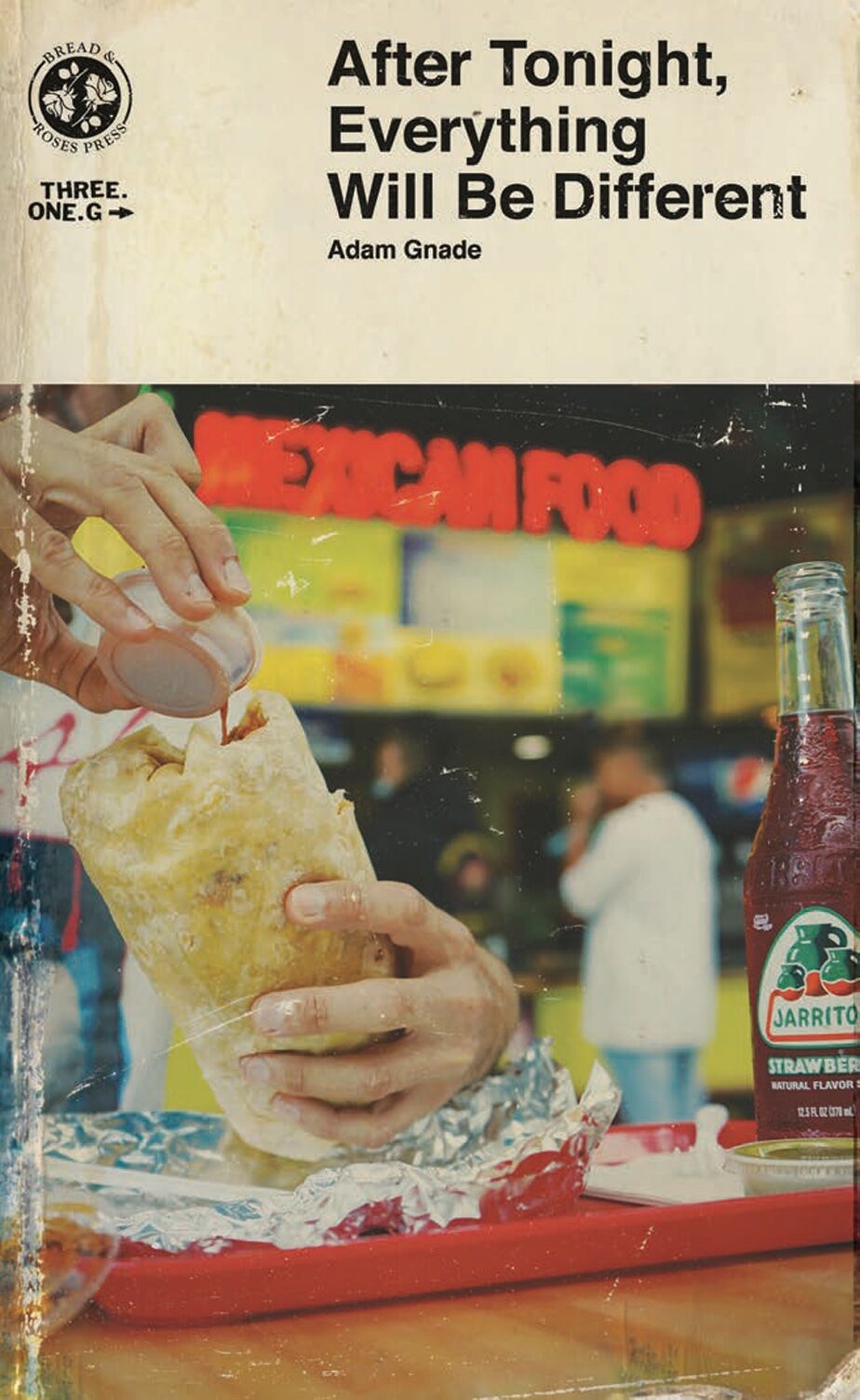
After Tonight, Everything Will Be Different
His new novel, After Tonight, Everything Will Be Different, is something of a love letter to San Diego, albeit one filled with hardcore punk kids drowning their sorrows in booze and greasy burritos. Quite a few iconic eateries show up by name in the book (more below), but we caught up with the author himself to ask him what places he still comes back to San Diego for, and what new-ish places he’s discovered on his visits.
947 E Street, East Village
“Pokéz is like a 1920s Parisian salon for San Diego punks, and the Tom’s Deep Plate is their all-you-need number-one chart-topping hit with refried beans, rice, salsa, sour cream, guacamole, and great tortillas.”
4370 Genesee Avenue, Clairemont
“Just like with Pokéz, there’s a chapter in After Tonight, Everything Will Be Different set at this trustworthy, venerable place. For years I lived off the chile relleno burrito at their Genesee location, but nowadays the simple, no frills, zero-BS veggie burrito is my guy.”
3753 30th Street, North Park
“Order a beans, rice, and guacamole burrito to experience perfection. Also, the best flour tortillas in town. Go to Verbatim Books afterward, then Holsem Coffee, and have a perfect day like Lou Reed.”
5500 Grossmont Center Drive, La Mesa
“The lovely, picturesque burrito on the cover of my book is the eponymous “El Veganito” from this cool little gemstone in the Grossmont Center mall. Choice of adobada or carnitas, rice and beans, pico de gallo, and chipotle cream. Your heart shall be a marching horse.”
2949 Fifth Avenue, Bankers Hill
“Donna Jean’s pizza will make you feel happy and wild, like Godzilla stomping his worst enemies to tiny, stupid pieces. Try the Four Horsemen pizza—fermented wheat dough, mozzarella (both hard and soft), ricotta, Parm, garlic, oregano, pesto, crushed tomatoes, and the truest true love.”
1733 South Coast Highway, Oceanside
“Order in courses here like a fancy French restaurant. Start with the Taköyaki hush puppies, then the unbelievably good Chronic sushi rolls, followed by the Chickën & Waffles as the final boss.”
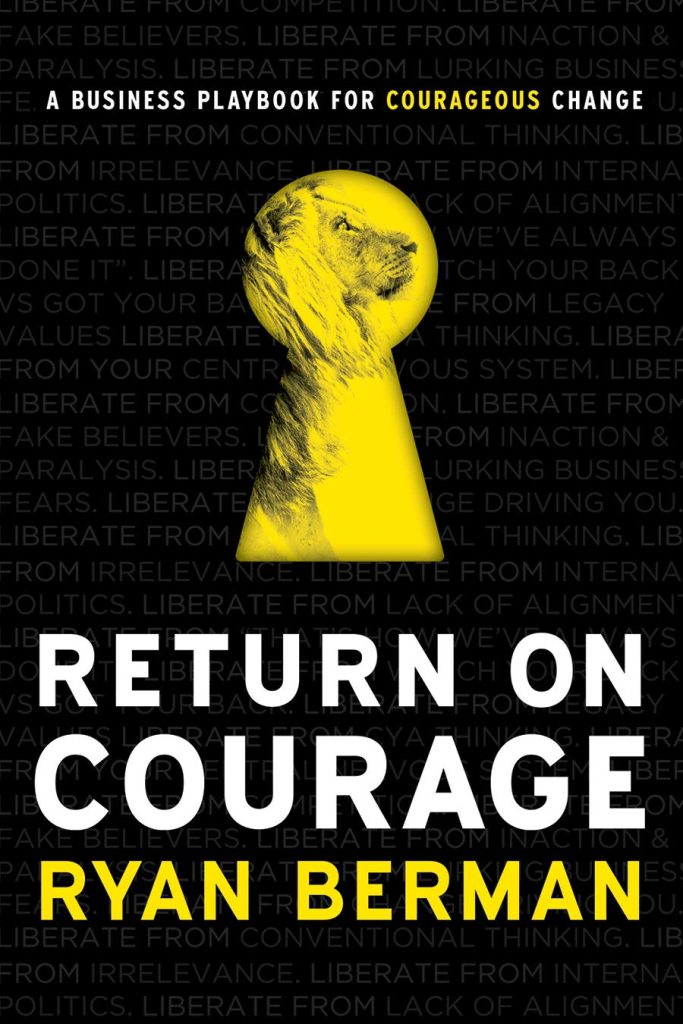
Return on Courage author Ryan Berman helps companies like Google and Snapchat get unstuck
The day Ryan Berman graduated from college, he moved to New York City and began his career at a big New York advertising firm. He was an intern, set on getting a permanent job—and he soon had the opportunity to pitch a few jingles to a client.
“I remember writing one jingle about the bread at Subway,” Berman recalls. “It was a gospel tune, and it was, ‘It’s risen, oh, yeah.’ I’ll never forget [that] the first three [jingles] that the chief marketing officer ended up choosing were all ones that I had written, and, of course, I couldn’t tell them that, but it gave me a lot of confidence that I was on the right path.”
That path next led him to San Diego, and he continued to build his career, working at and then starting creative agencies. But then, in 2015, he took a different tack and started writing a book called Return on Courage.

“It was a three-year listening lap where I had the opportunity to sit with what I now call the brave, the bullish, and the brainiac,” he says. “The idea was [that] I was going to go around the country and interview astronauts and Navy SEALs and CEOs, founders, people that were being or living courage, and try to see why some people leap.”
The book was intended as a guide for businesses. He says his research taught him that if you don’t have a courageous leader, “good luck on selling a courageous idea.”
Berman decided to apply what he was learning to his own life. He was co-founder and chief creative officer of i.d.e.a., an integrated creative agency based in San Diego, but “when I started to take what I was learning, it pretty much gave me the courage to fire myself in 2017,” he says.
Two years later, he published his book and launched his new company, Courageous, at the same time. Berman describes the business as a “think-feel-do consultancy.”
Berman helps companies identify how different fears are limiting growth. “There’s industry fears, there’s product fears, there’s service fears, there’s perception fears, which is marketing. And then there’s personal fears,” says Berman. “[Courageous] helps corporations fight fear and gives them the tools, the framework, the words, and the confidence to be courageous and to lead courageously. Our job is to be good listeners and problem slayers and help them get unstuck. I’ve been able to do that.”
In addition to hosting a podcast based on his book, Berman gives keynote speeches to corporate staff and runs workshops where he helps companies find their sticking points.
“[We offer] something we call Courageous Summits. It’s a three-day, off-site [program] that we’re designing for our partners,” he says. “I think we can all acknowledge that with remote work … the connection time just isn’t there. We aren’t connecting like we used to. The cultures are broken, and we don’t need more face time like Apple FaceTime. We need more real face time. So what we’ve been doing is designing these courageous summits for our partners, and we’re listening to what the challenges are from the client, where there may be fear with the team, and then we’re coming back with this three-day agenda.”
Berman has now spoken at major companies like Google, Snapchat, Logitech, and Kellogg’s. Courageous also offers consulting and has worked with businesses including OGX, MeUndies, and The Good Patch.
“We’re helping companies figure out what their tomorrow might look like and helping them build a courageous action plan for … the next three to five years,” he says.
So, how much will that insight set companies back? “When you compare us against what a Bain or McKinsey charges for similar services, we’re just a pittance for the value and ROI we’re providing,” says Berman. “It’s pretty clear that there’s a need for what we’re doing.” The fact that he’s working with such big-time players speaks for itself, he says.
“It’s been cool to just sort of be an ally and a friend of the leader,” he adds. “I think the more time I’ve spent in this arena, the more I realize how lonely it truly is to be the leader. They need … a partner that can give them the clarity and the tools so they can continue to move their organizations forward.”
This post contains affiliate links to products and services. We may receive compensation when you click on links.
Claire Trageser has been writing for San Diego Magazine for 10 years. She also is a reporter at KPBS and writes for The New York Times, National Geographic, Marie Claire, Elle and Runner's World.
The literary powerhouse waxes poetic on San Diego, the freedom of thinking like a dog, journalistic agony, and “age agnosticism” in anticipation of his SD Public Library event on October 9
For those uninitiated, Dave Eggers has gone from breakout cult icon with his 2000 debut memoir A Heartbreaking Work of Staggering Genius to elder statesman of the modern literary scene. He’s a New York Times bestseller multiple times over, a celebrated journalist in both the US and the UK, and a Pulitzer Prize winner, and he has lent his talent and time to charitable endeavors like 826 Valencia—a youth writing center with several different locations nationwide, which he co-founded. And there’s more: He’s been featured in countless anthologies and collections, and created McSweeney’s, an independent publishing ring where writers go to live on in glory (IYKYK).
Another fun fact? Dave Eggers loves San Diego.
“I mean, it’s one of my favorite places just because you can’t swing a cat without hitting the beach,” Eggers admits. Eggers digs beaches and us (and his two cats at home, who, he promises, he doesn’t swing). On the evening of October 9, Eggers is in our city for at the San Diego Public Library to discuss his latest novel The Eyes & The Impossible.
Take it in, SD. We’re cool. The reason may not be highfalutin’, but our sandy shores sealed in our je n’ai sais quoi.
Eggers’ love of California runs in his blood. “My dad’s side is all from California going back to 1860 … But the rest of us are from Boston,” Eggers says. “For some reason, I grew up in Chicago. So, none of it makes any sense.”
What does make sense is Eggers’ insatiable curiosity, a driving force in why he’s drawn to so many different genres and styles of writing (case in point: The Eyes & The Impossible is written from the perspective of a roving park dog).
Though his career is steeped in fiction, journalism is his foundation. He studied it at University of Illinois, Urbana-Champaign. “As a reporter, I always just kind of start out with a personal interest and see what’s going on and using that journalism degree as an entry point or as a bridge,” he says. “I was trained as a journalist, so I always had that sense that, every so often, there might be a way that I could explain things that haven’t been explained.”
He flexed those skills during his reporting on former President Trump’s campaign in The Guardian. “I would say 80 to 90 percent of the people I interviewed were shockingly normal,” he says.
He preffered to talk with rally attendees who looked dressed for a major league baseball game versus the red-washed ones carrying effigies of Biden. “I always come out thinking that people are a little bit more swayable than you think and thinking things through, to some extent, with open eyes,” he adds.

Commonality can be found if you go looking for it, no matter what party you prefer. That sense of seeking finds its way into his works of fiction, as well.
“I do toggle [or] pivot pretty hard between the two forms, because journalism is so rewarding and, you know, you have this excuse to ask questions and this way to get answers,” Eggers says. “And you can get very deep very quickly by asking the most knowledgeable people, but then, at the same time, writing up what you found out is a whole different task and sometimes very laborious and kind of a grind.”
On the other hand, he says, “Writing fiction … is just when you get to make everything up. It is far more liberating.”
Eggers has found the ultimate liberation in his latest book, The Eyes & The Impossible, where the narrator assumes an entirely different species: a dog called Johannes. But this isn’t the first time Eggers has shape-shifted for literary purposes. In 2002, he wrote a short story called After I Was Thrown In The River And Before I Drowned, in which his narrator was also canine. “That was the most fun I ever had to that moment [in] writing,” he says. “It’s just totally untethered. And I think that you could sort of get away with a more sort of liberated kind of train of thought, and that I think a lot of us humans would be diagnosed with having some kind of, I don’t know, cognitive issue, I guess, now.”
The Eyes & The Impossible has other quirks lending it a fantastical bend. Seeing the book’s Flemish-inspired illustrations by Shawn Harris, you’d be tempted to wonder if this is Eggers dipping his quill into the YA market. Think again.
Danielle is a freelance culture journalist focusing on music, food, wine, hospitality, and arts, and founder-playwright of Yeah No Yeah Theatre company, based in San Diego. Her work has been featured in FLAUNT, Filter Magazine, and San Diego Magazine. Born and raised in Maui, she still loves a good Mai Tai.
Talking life’s biggest questions with USD professor and author Nick Riggle
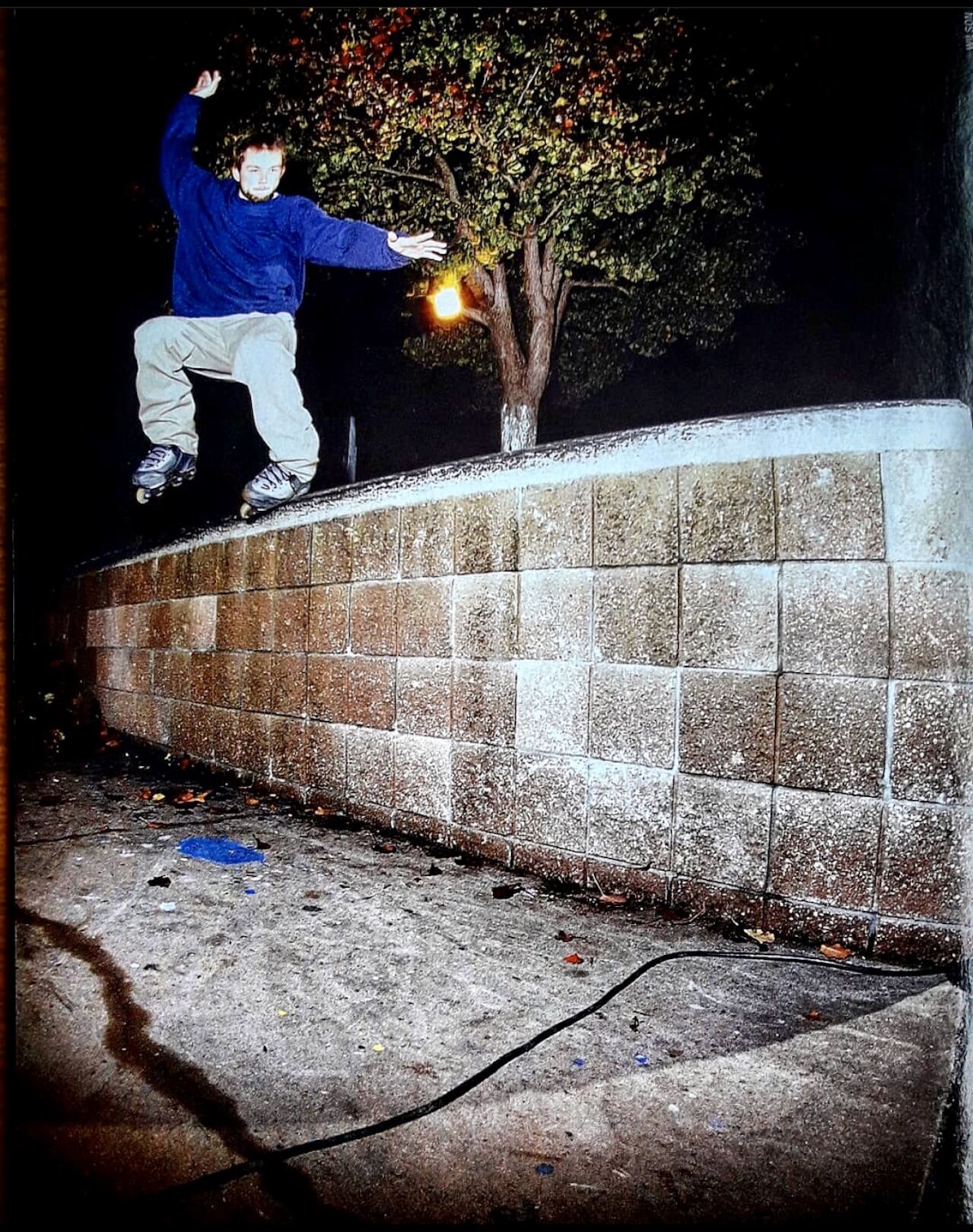
Now-philosopher, professor, and author Nick Riggle was once a professional inline skater who competed at the X-Games and played with fire.
Courtesy of Nick Riggle
What the hell are we doing here, and what does it mean to lead a fulfilling life?
Perhaps it’s due to living through Covid-19 and its aftermath that I’m significantly horrified at humanity’s social, political, environmental, and economic challenges. Whatever the reason, I find myself asking the big existential questions more than ever.
These are not questions I’m alone in wondering—the existence of university philosophy departments confirms this. Just pop into any late-night, booze-and-weed-soaked bonfire and eavesdrop on the chatter.
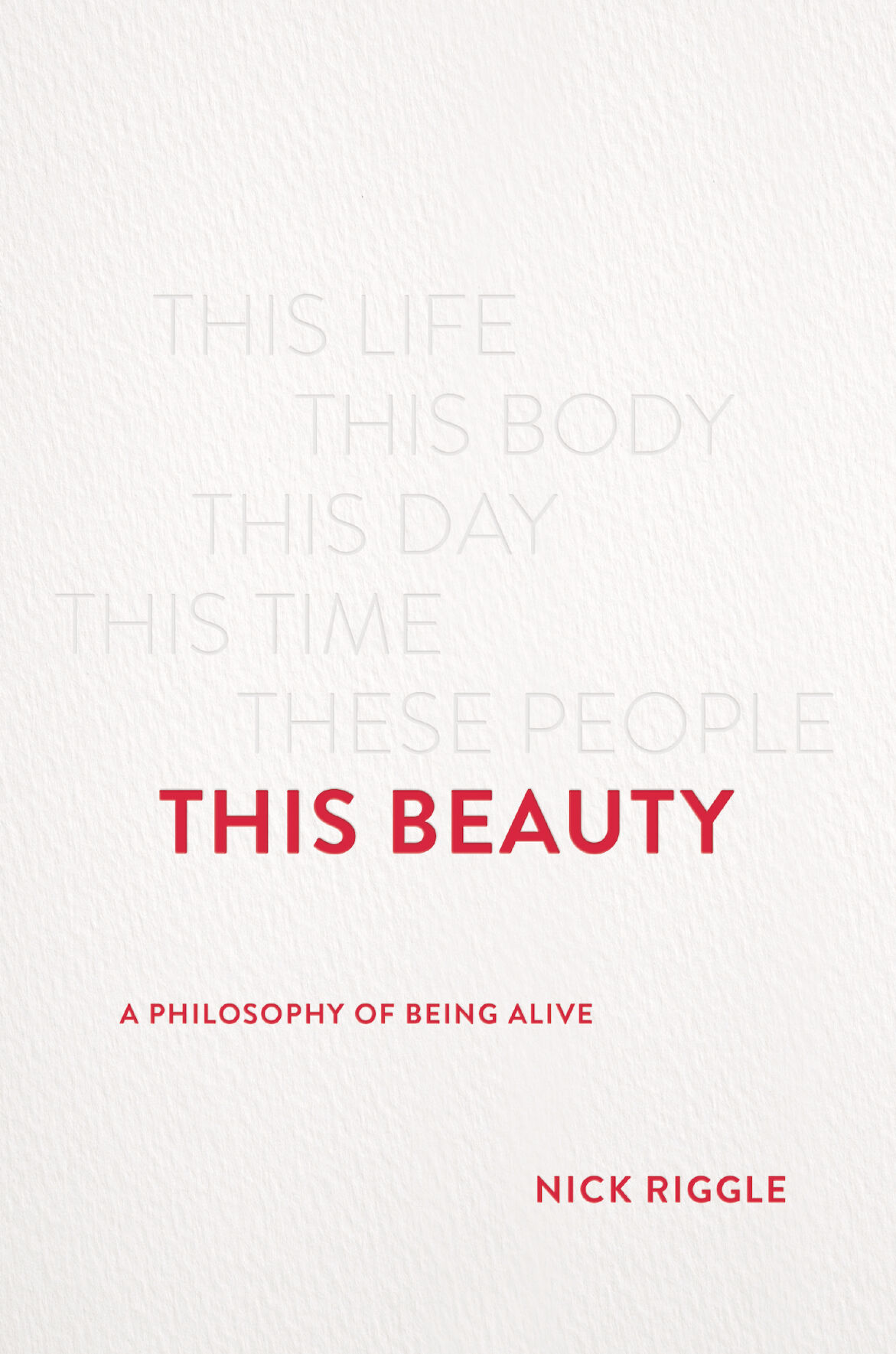
But these are questions that, at least in the United States, have been largely cast aside during the 20th century in formal philosophy—until recently, University of San Diego aesthetics professor and author Nick Riggle tells me. We’re discussing his book, This Beauty: A Philosophy of Being Alive (published December 2022), which provides a working manual for thinking through “The Question.”
To wit: How are we, as sentient beings, supposed to value a life we did not choose to live? We’re here, sure as we can pinch our skins, but why should we “want it, love it, care for it, make it mine?” Riggle asks.
Befitting an academic, Riggle tackles this quandary as a lecturer might, by speaking directly to readers in his text, walking them through each chapter conversationally and lyrically. The chapters appear as individually themed essays on life in general, time, the body, family, the concept of a single day, and, of course, beauty. This sprawling format is intentional.
Nick Riggle
“I don’t think, philosophically, that ‘The Question’ has a direct answer,” he says. “We don’t have enough information to have one. We don’t know enough… [W]ho we are, what we’re doing here, what the universe is. It’s all one great mystery.”
To help untangle this mystery, Riggle offers real-life examples of how to think about these concepts through relatable anecdotes about parenthood and his middle-class upbringing. He also interrogates the futility and vagueness of common inspirational phrases like “live like there’s no tomorrow,” “seize the day,” and “you only live once.”
He argues they all imply that life is precious and therefore inspire either recklessness or over-careful preservation. Both of these are overkill for the nuances of everyday life and recognizing the beauty and, consequently, the value therein.
Beauty as a subject, and the search for it, is what anchors Riggle’s entire philosophy (and book). To him, it’s very much in the eye of the beholder, something subjective and highly individual, with meaning beyond just pleasure and visual satisfaction. There’s also an inherently communal aspect. The personal and public aspects engage in a feedback loop that creates aesthetic value.
Riggle, who lives in El Cerrito, is a good candidate to explore the value of life: He’s lived many already. He dropped out of high school to pursue a professional inline skating career that took him to the X-Games and other international competitions and found him hanging out with Eminem, Dave Matthews Band, and Randy Savage by age 20.
Dissatisfied with living life rooted more in the corporeal, surrounded by material pleasures in a body-punishing discipline, he moved on to other pursuits. He got his bachelor’s degree at Berkeley after starting at community college, earned his PhD in philosophy at New York University, became a professor, married, and, more recently, became a father. There was also a stint as the head of a hip-hop-slash-folk music group in-between.
Nick Riggle
Courtesy of Nick Riggle
So why ask The Question now?
The book touches on other disciplines, but it’s fair to say that it is broadly an existentialist work. Academically speaking, this worldview fell out of favor after the writings of Søren Kirkegaard, Friedrich Nietzsche, John Paul Sartre, and others preoccupied with teasing out the meaning of human existence initially became popular.
For many, existentialism is too nebulous and tedious to consider. In San Diego, where championing good vibes sometimes trumps everything else, it’s easy to see how it rarely elevates beyond that aforementioned bonfire conversation. For Riggle, fatherhood provided a good opportunity to dig in.
Zooming out more widely, after decades of the decline of organized religion and the rise of buffet-style spiritualism linked to astrology, crystals, yoga, and other hodgepodge practices and philosophies, people are perhaps more primed than they have been in a while to consider what he’s offering.
Frankly, this line of thinking—and to know it’s again becoming en vogue—is refreshing, particularly in a city with crushing economic and social inequality. Even Foreign Policy argued in favor of it in a 2019 article, declaring, “French philosophy came to define the postwar era. As U.S. politics get ever more absurd, it’s time for a comeback.”
We may have a harder time addressing the material comforts of every human on earth, but at least we can try to provide a roadmap for mentally riding the waves. Or, as Riggle puts it, “engaging in aesthetic life [is] a way of keeping in touch with the value of being alive.”

Jackie is a long-time freelance journalist covering cannabis, food/restaurants, travel, labor, wine, spirits, arts & culture, design, and other topics. Her work has been selected twice for Best American Travel Writing, and she has won a variety of national and local awards for her writing and reporting.
Behind every beautiful space is a thoughtful process, and ASID San Diego is helping homeowners understand the value of professional design.
A perfectly designed home rarely happens by accident. Those kitchens that feel effortless and rooms that seem to tell a story the second you walk in? They’re usually the work of someone who knows exactly what they’re doing.
It’s knowing which ideas will actually work, which materials will hold up over time, and how to turn a collection of choices into a space that feels intentional. That’s where a professional interior designer comes in.
For the American Society of Interior Designers (ASID) California San Diego Chapter, the goal is to help people see interior design as more than just the finished look. Behind every well-designed space is a process built on technical expertise. Designers are educated in everything from professional software and construction details to building codes, space planning, materials, and functionality.

“People don’t always realize how much goes on behind the scenes,” Kirsten Recce , current president of the ASID California San Diego Chapter, says. “Our designers are not just doing furniture placement and color selection and picking out new fluffy pillows. That’s not what they’re trained for.”
ASID members bring formal education, continued learning, and industry knowledge to their projects, helping create spaces that are not only beautiful, but designed to work. A paint color that changes completely depending on the lighting. A material that looks beautiful in a showroom but doesn’t make sense for everyday life. A layout that photographs well but doesn’t function for the people living there. These are the details where professional guidance can make all the difference.
Still, one of the biggest misconceptions about hiring an interior designer is that it’s reserved for massive renovations, luxury homes, or people who already know exactly what they want. The process can feel intimidating. Where do you begin? Is a designer worth the investment? What if you only need help with one room?
ASID’s answer: start with one hour.
ASID’s Spruce Up events break down one of the biggest barriers between homeowners and professional design: knowing where to begin. Held twice a year, the community program gives homeowners the chance to work directly with an ASID designer through a one-hour, $125 consultation in their own home. Whether you’re looking for advice on furniture placement, window treatments, kitchen and bath updates, remodeling ideas, vacation rentals, color selections or something else entirely, the upcoming September 2026 event offers an approachable way to get expert guidance before committing to a full project. Signups are open through Sept. 7, with consultations taking place Sept. 21 through Oct. 31. Proceeds benefit ASID San Diego’s educational and community programs. Register here!

“It’s a great opportunity for people who are in that exploratory phase,” Recce says. “Maybe they’re not sure they want to hire an interior designer yet, or they think it sounds daunting or expensive. This gives them a chance to discover what working with a designer is actually like.”
Design is personal. A good designer isn’t just creating a beautiful room; they’re helping create a space that fits the way someone lives.
“We’re a resource to all of San Diego County,” Recce says. “It doesn’t cost anything to pick up the phone and call and ask. We’ll answer.”
Follow ASID San Diego on Instagram, LinkedIn, and Facebook for updates on upcoming events, or connect with the chapter directly at [email protected] or 619-548-8847.
Your shelf life
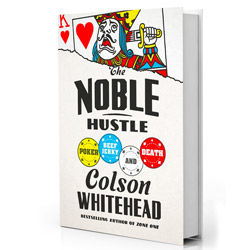
The Noble Hustle
The Noble Hustle
By Colson Whitehead
Whitehead wins a seat at a Vegas table for the World Series of Poker, but has only six weeks to raise his game. At least he has a sense of humor about it, and that’s what makes this book so fun, card player or not.
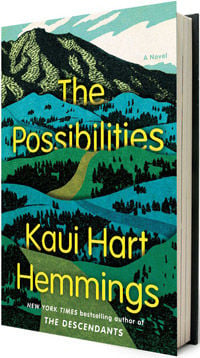
The Possibilities
The Possibilities
By Kaui Hart Hemmings
From the author of The Descendants comes a novel about a mother grieving her son’s death. She realizes how much she didn’t know about him when a young woman arrives on her doorstep.
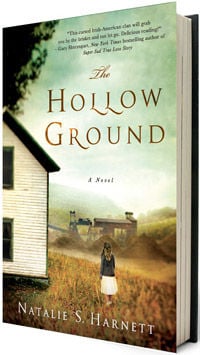
The Hollow Ground
The Hollow Ground
By Natalie S. Harnett
In 1960s Pennsylvania mining country, a young woman experiences the curse that’s plagued her Irish-American family for decades. A murder mystery, coming-of-age novel, and family saga all in one.
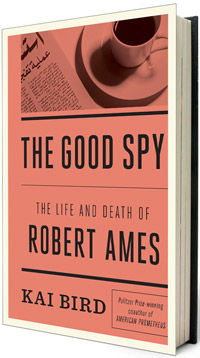
The Good Spy
The Good Spy
By Kai Bird
This biography of Robert Ames, one of the most important operatives in history who later died in the 1983 American Embassy bombing in Beirut, is being heralded as the best book ever written about the CIA.
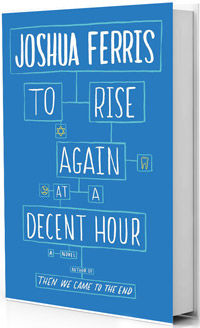
To Rise Again At a Decent Hour
By Joshua Ferris
A lonely man full of contradictions learns his identity has been stolen and watches as a new digital version of himself unfolds. To his surprise, the online Paul is more fascinating.
Your shelf life
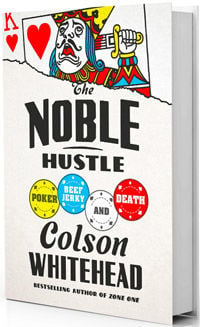
The Noble Hustle
The Noble Hustle
By Colson Whitehead
Whitehead wins a seat at a Vegas table for the World Series of Poker, but has only six weeks to raise his game. At least he has a sense of humor about it, and that’s what makes this book so fun, card player or not.
The Possibilities
The Possibilities
By Kaui Hart Hemmings
From the author of The Descendants comes a novel about a mother grieving her son’s death. She realizes how much she didn’t know about him when a young woman arrives on her doorstep.
The Hollow Ground
The Hollow Ground
By Natalie S. Harnett
In 1960s Pennsylvania mining country, a young woman experiences the curse that’s plagued her Irish-American family for decades. A murder mystery, coming-of-age novel, and family saga all in one.
The Good Spy
The Good Spy
By Kai Bird
This biography of Robert Ames, one of the most important operatives in history who later died in the 1983 American Embassy bombing in Beirut, is being heralded as the best book ever written about the CIA.
To Rise Again At a Decent Hour
By Joshua Ferris
A lonely man full of contradictions learns his identity has been stolen and watches as a new digital version of himself unfolds. To his surprise, the online Paul is more fascinating.
Laika Nur, MD, takes her love of volleyball from the court to the clinic as team physician for the San Diego Mojo
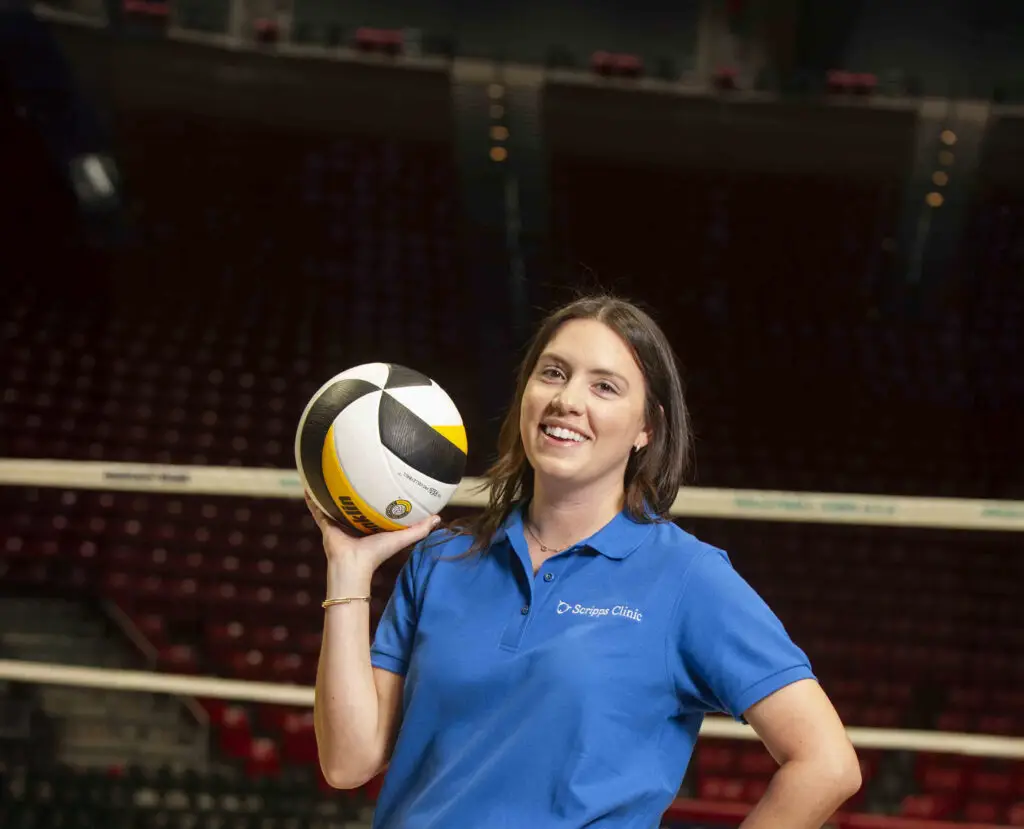
Growing up, Laika Nur, MD, Scripps Clinic sports medicine specialist, loved watching beach volleyball when the Association of Volleyball Professionals tour came to her hometown of Chicago. A talented volleyball player herself, she remembers sitting in the stands all day, and once, even got a couple autographs. Years later, Dr. Nur was attending a professional event focused on women’s sports, and the discussion turned to a new professional women’s volleyball league. The general manager and coaching staff for San Diego’s team, the Mojo, happened to be in attendance, and Dr. Nur took the opportunity to ask them if they needed a team doctor. Flash forward to the Mojo’s inaugural 2024 season, when Dr. Nur officially became the team physician. Click here to read more about Dr. Nur and how she incorporates lessons she learned on the court into her practice.
For more nutrition, wellness, and healthy living tips, sign up for the San Diego Health newsletter here.