Featured articles
Food & Drink
Food & Drink
Food & Drink
Featured articles
Everything SD
Everything SD
Everything SD
Featured articles
Things to Do
Things to Do

Everything SD
Featured articles
podcast-ep
podcast-ep

podcast-ep
Featured articles

Everything SD
Everything SD
Everything SD
Featured articles
Partner content
Everything SD
Everything SD
Ready to know more about San Diego?
SubscribeReady to know more about San Diego?
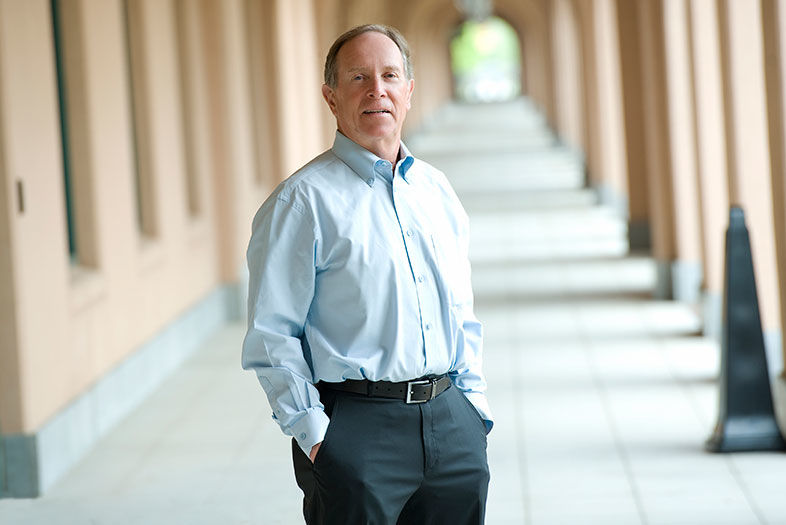
Outgoing San Diego Foundation CEO Bob Kelly reflects on the “San Diego Way,” and offers five surprising facts about giving
On His Resume:
The UC San Diego alum has spent more than 20 years in the nonprofit sector
Fast Facts:
There are 1.5 million nonprofits in the country, generating $1.5 trillion in spending per year, and employing one in ten Americans.
1/ Philanthropists are not all wealthy. If you don’t have a lot of money, try thinking about what you do have to give —your time, your talent, or your treasure—and what you care about. Service-oriented nonprofits need hands-on volunteers of time. There is no better way to feel of service, frankly. It does something for your soul to serve in a soup kitchen or elder care facility. Nonprofit, mission-driven organizations are often lacking simple basic resources. Doing some heavy lifting, envelope-stuffing for a fundraising campaign, or offering pro bono professional services can be the most timely gift.
2/ We need to interact with the needy. I adamantly believe awareness is the greatest barrier to increasing philanthropy in San Diego. If you live in a coastal community, you can travel from the airport to your door without seeing communities of need. That is simply not the case in Boston, Chicago, or Los Angeles. Sometimes, we have to personally witness the struggles to have a human connection and commitment to resolving those issues. When I met him, one of the first things Deepak Chopra shared with me was, “We just need to get the money from where it is to where it needs to be.”
3/ Raising money is NOT a competition. Eliminating competition and creating a mentality of abundance is critical for our nonprofit sector. It is important to remember because donor passions are so varied and are often determined by life cycle and personal experience. Families with young children are often driven to support elementary schools and mentorship programs, while adults with aging parents may support hospice or a chapter of the Alzheimer’s Association. Also, membership-based organization like a Rotary, one of The Foundation’s nine community foundations, or San Diego Women’s Foundation can provide a sense of community for donors, connecting you to issues within your own backyard.
4/ Social media is essential to philanthropy. In 2000, Robert D. Putnam wrote Bowling Alone about the breakdown of social capital as families decentralized becoming increasingly disconnected. But then along came Twitter. For the past 10 years, we have been reconnecting in virtual spaces, sharing every action on Facebook, Twitter, Instagram, and Pinterest. That brings me to another way to give back—mobilize your social network. Spread the word. Hashtag. Pin. Yes, I am on social media. Ping me at @sd_fdn with #TheSanDiegoWay.
5/ Nonprofits contribute to the local economy, just like for-profits. I believe that the nonprofit sector is becoming increasingly more important to our economic vitality. The sector continued to grow during the down economy. The size and scope of the nonprofit sector may come as a surprise. There are approximately 1.5 million nonprofit organizations in the country, including well-known brands and more community-based service organizations. The sector generates almost $1.5 trillion in spending per year and employs about one in 10 American workers, or 13.5 million people. It is the third-largest labor force behind retail trade and manufacturing. That might has always driven me to help nonprofits grow.
Kudos to anyone already living “The San Diego Way.” Everyone else—take one of these steps today.
What You Don’t Know About Charity
Photography by Bob Ross
Serving Seniors provides meals and coordinated services to more than 13,000 older adults each year, aided by a dedicated volunteer network
Seniors today face challenges that were unimaginable to previous generations, and some turn to nonprofit organizations to bridge the gap. Serving Seniors helps low-income older adults with housing assistance, social services, and more. The nonprofit provides 1.5 million meals and coordinated services to 13,265 older adults each year, the majority living on less than $1,125 per month.
Dedicated volunteers, like Fred Davis, help make this important work possible. Since roughly 2008, Davis has spent six days a week at the Serving Seniors Gary and Mary West Senior Wellness Center serves as a liaison to help clients access much-needed resources. Here, he shares what keeps him coming back day after day.

I have a community outreach ministry and my grandson and I were on the streets downtown handing out sack lunches, water, hygiene products, clothes and shoes, and things like that and I noticed that most of the people I met appeared to be seniors. So the next logical step for me was to find a senior group that I could work with. I heard about Serving Seniors, and I made a few phone calls. No one really responded to me, so I showed up. They opened the door for me and now they can’t get rid of me. I found a home. I’ve met some really good people over the years. And as it turned out, I’ve been here longer than most of them. I’ve been here at the West Center ever since the doors opened. And matter of fact, I was the one who gave Gary and Mary West an award for their generous donation that made it possible to open up this center.
I’m in ministry, but I don’t want that to be the highlight of what I do. It’s not just a passion for serving people, it’s a calling. I like the idea of giving and serving people and trying to meet their needs. So I counsel, I oversee the serving of the lunches, and I work with the head of the volunteer group. I’m involved in different activities. Matter of fact, this coming Saturday, I’m going to take a group of seniors out sailing. I also helped start the Civic Engagement Group. It was a group of us, and there are about three members that are left from when we originally started it. Now Serving Seniors is taking it over, and my role is to work with them. I also took it a little bit further and ended up joining Aging and Independent Services and sat on that advisory board for a number of years. That led to me being elected to the California Senior Legislature. So I’ve been advocating for seniors for a very long time. They’re a vulnerable group. They worked hard and don’t always get the respect that they deserve.

The people—this is my target group right here. I don’t have to walk the streets like my grandson and I did anymore; they’re right here. I’m here every day at the West Center but Sunday.
The biggest challenge is not being able to help someone who really needs the help. But we try to find a way. I reach out to different organizations, faith-based organizations or other nonprofits, sometimes with success and a lot of times without success. There are quite a few people that are in need who are hardworking people, dedicated people who still want to provide for themselves and their family, and they’re just caught in that void.

I was handing out clothes; I usually have a sock drive and I gave a homeless person a pair of socks. As they peeled their filthy socks off their feet, this person cried. You don’t know how important these little things are that we take for granted. It was really touching.
A lot of people use the term giving back, but I just say giving. When you say ‘giving back,’ that means you’re trying to repay something and you’re taking credit. But giving is a passion. It’s something that you do from your heart, not out of obligation.
Sarah Sapeda is San Diego Magazine’s Custom Content Editor. In her 15 years in San Diego journalism, she has covered charitable events, health care, education, crime, current events, and more.
What began as a small youth organization now reaches more than 45,000 San Diegans annually through community programs
For more than five decades, SAY San Diego (Social Advocates for Youth) has been helping local kids, families, and seniors navigate challenges they can’t face alone. The nonprofit serves as a beacon for local residents by offering more than 30 programs that range from youth mentorship and crisis support to increasing access to stable housing and mental health services to substance-use prevention and workforce development.
“For 55 years, SAY’s story has been shaped by listening to the community and being willing to grow with it,” says Louie Nguyen, SAY San Diego’s president and CEO. “Our mission is to partner with youth, adults, families, and communities so they can reach their full potential. That keeps us focused on the whole person, not just one immediate need. As San Diego evolves, we listen, work alongside trusted community partners, and adjust our services so they remain accessible, relevant, and rooted in opportunity, equity, and well-being.”
SAY San Diego started as a grassroots nonprofit with one paid employee and a budget of $1,500. The organization has since evolved from humble beginnings as a youth-focused agency into a comprehensive and far-reaching social services organization.
Several milestones mark SAY San Diego’s success, including partnering with local schools and neighborhoods to expand its child and youth development programs, family resource centers, and school-based mental health services; the creation of the San Diego Military Family Collaborative, one of the largest of its kind in the nation; and the opening of its licensed early childhood center that introduced an employer-supported childcare model.

What underscores SAY San Diego’s programs and opens the doors for lasting change is a willingness to listen and grow in response to emerging needs, says Nguyen.
“Lasting change comes from consistent support, strong relationships, and services that work together,” says Nguyen. “Our school-based programs have an especially broad reach, serving more than 6,500 young people across 57 school sites each day in places families already know and trust. Our mental health programs also stand out, with 72 percent of participants reporting improved emotional well-being. But the real strength of SAY is that a family can connect with early childhood care, parenting support, youth development, mental health services, or community resources as their needs change over time.”

Much of SAY San Diego’s impact is possible thanks to partnerships with individuals and organizations across the county. Nguyen hopes to further expand that community investment through initiatives like its Play 4 SAY fundraiser, which brings together corporate partners, foundations, and other supporters. However, challenges remain in “meeting rising demand while public funding, workforce capacity, and the broader nonprofit environment remain uncertain,” he says.
As economic instability, rising housing and childcare costs, and access to mental health services continue to affect San Diegans, SAY San Diego’s role is more important than ever. The organization hopes to build on the foundation it has built over the past 55 years and continue to help kids, families, and communities thrive.
“Today, we reach more than 45,000 San Diegans each year, but our goal is not simply to grow larger, it is to create a deeper, more lasting impact,” says Nguyen. “Our next chapter is about strengthening what works, expanding access to mental health and family support, investing in our people, and bringing partners together to build a stronger San Diego.”
Sarah Sapeda is San Diego Magazine’s Custom Content Editor. In her 15 years in San Diego journalism, she has covered charitable events, health care, education, crime, current events, and more.
The beloved annual festival raised a record-breaking $60,000 for Feeding San Diego
More than 6,000 ice cream lovers devoured tasty treats at this year’s Scoop Ice Cream Festival for a great cause. The event on June 28 launched an ongoing partnership with Feeding San Diego and raised $60,000, or enough to provide 120,000 meals to San Diegans facing hunger.
See photos from the night below.


Sarah Sapeda is San Diego Magazine’s Custom Content Editor. In her 15 years in San Diego journalism, she has covered charitable events, health care, education, crime, current events, and more.
This month, the 2026 San Diego Business Impact Awards recognized local businesses making an impact in clean energy, biotech, hospitality, and beyond
Renewable energy companies building hundreds of power plants. Biotech startups using artificial intelligence to create personalized medicine for children with rare diseases. Hospitality companies quietly powering thousands of local events. Consumer brands growing from beach-town startups into national businesses. These are the kinds of companies driving San Diego’s economy today, and the businesses recognized at this year’s San Diego Business Impact Awards offer a snapshot of where the region is headed.
Hosted July 23 by San Diego Regional Economic Development Corporation (EDC) and JPMorganChase, the second annual awards event honored four local companies for innovation, growth, and economic impact. More than 100 nominations from San Diego’s middle-market businesses were reviewed by a 10-person judging committee, with winners selected across four categories: startup, early-stage innovator, rising star, and established heavyweight.
Two-time honoree Jimbo Someck, founder of Jimbo’s organic grocery stores, also joined the event for a fireside chat on buying local, supporting emerging brands, and giving back to the community.
“San Diego’s strength comes from its makers and builders—the resilient people who endure great risks and overcome obstacles to build and scale a company,” says Aaron Ryan, San Diego Region Manager and Middle Market Banking at JPMorganChase & Co. “These awards aren’t just recognition; they spotlight the talent, grit, and innovation shaping our region’s future. By celebrating those who create and build, we foster connections and fuel the growth that keeps San Diego thriving.”

Heavyweight honoree SOLV Energy has grown alongside the country’s rapid investment in renewable power. “It’s an exciting time for SOLV Energy as we are experiencing significant growth,” says CEO George Hershman. “The business has doubled over the last year and has almost double-digit growth since its inception.”
The Rancho Bernardo-based company designs, builds, operates, and maintains utility-scale solar and energy storage facilities. Since its founding in 2008, SOLV Energy has built more than 500 power plants.
Growth has translated directly into hiring. About 200 employees work from the company’s local headquarters, including roughly 20 interns. “Our intern program is a big part of the way that we grow our workforce,” Hershman says. “Last year, 43 percent of our interns became full-time employees. We believe San Diego is a great community to build and grow a high-tech infrastructure and technology company because of the incredible workforce—the ability to attract top talent and draw from world-class universities.”

Startup honoree La Jolla Labs is tackling one of medicine’s biggest challenges by developing personalized RNA therapeutics for patients with rare diseases—many of them children with neurological disorders like ALS. Using proprietary artificial intelligence and machine learning tools, the biotech company develops treatments tailored to each patient’s specific genetic mutation.
CEO Tamar Grossman says the recognition reflects how far the company has come despite limited resources. “We’re honored to be recognized for our ability to change and save patients’ lives and turn our lean startup into a clinical company with very minimal resources,” she says.
Grossman credits San Diego’s concentration of research institutions—including UC San Diego, the Salk Institute, and Scripps Research—with creating a pipeline of talent and collaboration. “San Diego is one of the world-leading centers for technology, genomics, and RNA therapeutics,” she says. “We have over 30 RNA therapeutics companies here, and we support each other and help with anything related to drug discovery.”
She says that collaborative spirit extends beyond formal partnerships. “You can walk around Torrey Pines, go into a café, and find colleagues from the industry and have an ad hoc conversation,” Grossman says. “That’s something very unique to San Diego.”

While Snake Oil Venue Company may not be a household name, chances are many San Diegans have attended one of its events. The early-stage innovator honoree has expanded from beverage catering and mixology consulting into venue management, operating Julep Venue in Mission Hills, Bramble Bay Venue in Imperial Beach, Vesper Venue, the Chapel at Liberty Station, and five outdoor venues throughout Liberty Station—more than 500,000 square feet of event space altogether.
“We do a lot of launch parties for corporations and new products,” says CEO Mike Esposito. “I really like working on the entrepreneur side of things, where new businesses are entering the San Diego market and looking to make a splash.”
Snake Oil has executed more than 16,000 events, employed more than 1,000 people, and partnered with more than 900 local vendors, including caterers, florists, photographers, entertainers, and other hospitality businesses. The company also works with many of San Diego’s nonprofits, museums, and cultural institutions. “We get to celebrate people’s most important moments,” Esposito says. “Whether that’s a wedding, celebration of life, or quinceañera, we’re fortunate to be involved in the community in so many different ways.”

Rising star honoree ALOHA Collection is proof that a simple idea can grow into a thriving company. Founded by two roommates who wanted a better way to carry wet swimsuits after a day at the beach, the lifestyle brand has grown into a business while maintaining strong year-over-year growth.
Now headquartered in Carlsbad, ALOHA Collection employs more than 100 people and operates its California flagship store in Encinitas, which is slated for a remodel. With roots in Hawaii, the company is known for its lightweight, splash-proof travel bags that have become a familiar sight on beaches in San Diego and beyond.
“‘Aloha’ is part of our name, but it’s also how we move through the world,” says CEO Lynna Barnard. “It’s how we show up for people, the way we travel, the way we give back.” Since day one, the company has maintained a 5 percent giveback to Hawaii conservation efforts, contributing millions of dollars over the years.
“I think what’s so inspiring about ALOHA Collection, and the founders in particular, is when you dream big, those dreams can come true when you work hard and trust in the universe,” Barnard says. “It’s inspiring to be a role model for other people wanting to start businesses from humble beginnings. Start small and watch it grow.”
Together, businesses like these form a cornerstone of San Diego’s economy—not only through the jobs and revenue they generate—but through the local workers they hire, vendors they support, and investments they make in the region. Their growth doesn’t happen in isolation; it ripples outward, strengthening the broader business community and the people who call San Diego home.

Here’s where to celebrate, connect, give back, and make a difference this month
Raise money for cancer research while you work out at the Curebound Cancer Challenge. Fundraisers will cycle along the San Diego coastline, run a 10K on the UC San Diego campus, and participate in group spin, yoga, and strength classes.
August 1: No Curveballs: Rally for Type 1 Diabetes Early Detection
The San Diego Padres, Nick Jonas’ nonprofit Beyond Type 1, and the King of the Hill Foundation will host No Curveballs: Rally for Type 1 Diabetes Early Detection at Gallagher Square. Padres pitchers Mason Miller, who lives with Type 1 diabetes, and Michael King, whose wife, Sheila, lives with T1D, will share their stories during a panel discussion, and on-site education and screening will be available.
Patrons of the Prado will channel 1950s Havana at this year’s Masterpiece Gala. Club Masterpiece: One Haute Havana Night will raise money for Balboa Park cultural institutions and will include a special honor for philanthropists Joan and Irwin Jacobs.
Golfers will tee off to support Boys to Men Mentoring at the CaddyHack Golf Festival. Celebrating its 10th anniversary this year, the charity golf tournament will include golf, music, food, and fun at Fairbanks Ranch Country Club.
Acclaimed San Diego musicians will join together to support TERI’s programs and services for individuals with intellectual and developmental disabilities. The Music By Eras performance at TERI’s Bornemann Theatre will feature artists Whitney Shay, Jesse Ray Smith, Lauren Leigh, and Will Stucky.
Las Patronas will recreate the magic of Venice at its 80th annual Jewel Ball. Las Patronas has spent the entire year preparing for the event, as well as raising money to support nonprofit organizations across San Diego County.
Help Shelter to Soldier train rescue dogs to be psychiatric service animals for local veterans at the 14th annual Be the Light Gala aboard the USS Midway Museum. The gala will include silent and live auctions, dinner, dessert, and appearances by canine ambassadors and veteran recipients.
St. Madeline Sophie’s Center will celebrate its “hidden diamonds” at its 48th annual Haute with Heart Fashion Show. The lively event at the Hilton San Diego Bayfront will include a pre-luncheon reception, live music, a live auction, a stunning fashion show, and surprise entertainment to benefit the nonprofit’s programs for adults with intellectual and developmental disabilities.
The Bacon Brothers will perform with the San Diego Symphony at this year’s Concert Under the Stars. Now in its 30th year, Symphony at Salk supports research in areas such as cancer, Alzheimer’s, wellness, and agriculture.
La Jolla Music Society supporters will enjoy an evening of exclusive performances at its SummerFest Gala 2026. The event at the Museum of Contemporary Art San Diego will raise money for La Jolla Music Society’s artistic, learning, and engagement programs.
Tee off to help San Diegans facing homelessness at Alpha Project’s 16th Annual Charity Golf Classic. The four-person scramble at the Rancho Bernardo Inn Golf Resort and Spa will support the Alpha Project’s housing, employment, recovery, and support services.
Walkers will join forces to celebrate cancer survivors and remember those who lost their fight at the annual Relay for Life of San Diego. The 24-hour relay at Liberty Station NTC Park is part of a global network of similar events that raise money for the American Cancer Society.
United Way of San Diego County will host its A Night United: Illuminating the Way gala at Eve, an event destination on San Diego Bay. The elegant evening will benefit UWSD’s mission to improve lives and strengthen communities across the region.
Sarah Sapeda is San Diego Magazine’s Custom Content Editor. In her 15 years in San Diego journalism, she has covered charitable events, health care, education, crime, current events, and more.
After Captain Keno's closed, pro surfer Benji Weatherley gave its tables, dishes, and memories a second life at Breakers Cafe Bar & Grill
Captain Keno’s No. 8 special—pancakes, sausage, toast, home fries, and eggs for $2.99—was the fuel that powered Benji Weatherley for surf competitions as a teenage pro. A couple decades later, tears were shed when the Coast Highway dive-slash-eatery called it a day after 54 years. Usually, the guts of a shuttered restaurant go to liquidation auctions or straight to the dump to decompose along with its legend. Instead, Weatherley took in Keno’s spare parts—plus other relics from Encinitas’ past—and used them to build the newest community hangout.
Every single piece in the place is from somewhere in this town,” Weatherley says about Breakers Cafe Bar & Grill. “I’m not going to settle for anything less.”
Breakers is a Hawaiian hideout in an uncool part of the coastal surf town, but it’s got the set design of an Encinitas superfan. The plates, silverware, and coffee mugs are from Keno’s. So are the tables and booths. There’s a bench made from the last table preserved in The Derby House (a building that, for over a century, was a hotel, then became a hospital, a religious retreat, and a private home). Weatherley’s not performing CPR on old upholstery because he’s a fan of antique furniture. It’s a method to bring people together.
“Representing nostalgia in this town is the only way to grasp a hold of the community,” Weatherley says. “Everyone wants to touch and feel something different from what they’re experiencing on their phones.”

Every week, locals bring him photos, artifacts, and bits of paraphernalia from Encinitas’ past and ask Weatherley to give them a new home. “I’ve had ladies who were there when [Captain Keno’s] opened cry in my arms and say, ‘This table is where I had my second birthday with my grandma,’” he says. “They tell me these stories, and I tell them I have all the same stories about my mom.” (Weatherley’s mom first brought him to Keno’s and helped raise the young surfers from the Momentum Generation documentary—Weatherley, Taylor Steele, Rob Machado, Kelly Slater, etc.—as they surfed some of the world’s most dangerous waves at Pipeline in Hawaii. Back then, she owned Breakers Restaurant & Bar in Haleiwa. Name sound familiar?)
Weatherley has always been the funniest man in the room. He calls Breakers “the Chuck E. Cheese of Encinitas.” The restaurant hosts hula dancing classes, open-mic comedy nights, and evenings bartended by longtime Captain Keno’s barkeep Vaka Kaufusi. Cult-loved reggae band Steel Pulse hit the Breakers stage recently to perform a new song that Weatherley also helped write. His longtime friend Jack Johnson has dropped by to sing a few, too.
Despite not having a fancy location along the 101, people are catching on. Fire stations and hospitals have held staff parties there. Weatherley also currently sponsors four sports teams.
“Last night, I had a girl say, ‘I want my birthday party at Breakers,’” he says. “That, to me, is community in a nutshell.”
Emma Veidt is an editor at San Diego Magazine. She earned her bachelor's and master's degrees from the Missouri School of Journalism. She loves running, hiking, and rock climbing, but really, she mostly loves encounters with the street cats around North Park.
Hypertension is the leading cause of cardiovascular disease and premature death in women
It’s estimated that 44% of women in the U.S. have high blood pressure, also known as hypertension, but many don’t know it. The disease often has no symptoms, and when symptoms do present, they can appear similar to many other conditions. High blood pressure increases the risk for heart disease and stroke, so it’s critical that it’s detected and treated early. And for women at risk of developing high blood pressure, prevention is key. Click here for the basics of high blood pressure and how Scripps physicians at Scripps use screenings not just as a diagnostic tool, but as part of routine preventive care.
For more nutrition, wellness, and healthy living tips, sign up for the San Diego Health newsletter here.