Featured articles
Food & Drink
Food & Drink

Food & Drink
Featured articles

Everything SD
Everything SD

Features
Featured articles

Things to Do

Everything SD
Everything SD
Featured articles
podcast-ep
podcast-ep

podcast-ep
Featured articles
Features

Features

Features
Featured articles
Partner content
Food & Drink
Charitable SD
Ready to know more about San Diego?
SubscribeReady to know more about San Diego?
Award-winning golf course architect, Agustín “Augie” Pizá, shares his vision behind the project which launches on January 7, 2025

On January 7, some of golf’s biggest names—Tiger, Rory McIlroy, Rickie Fowler, Xander Schauffele, Ludvig Aberg, and Wyndham Clark—will walk into a packed stadium designed specifically for this spectacle. A three-on-three match. Tee shots and longer approach shots will be hit into a massive 64-by-53-foot simulator. The short game will take place on a real putting green equipped with sophisticated hydraulics that morph and shift the surface for each hole. Golfers will be mic’d up. They’ll be held to a strict 40-second shot clock.
ESPN will broadcast the debut of TGL Golf across 80 countries to millions of golf fans, including Agustin “Augie” Pizá, the San Diego architect who designed several of the holes for this future-of-golf moment.
When I reach Pizá, his excitement is palpable. He quickly apologizes for his strained voice before jumping into a slew of topics including architecture, the Chargers, Picasso, philosophy, and, most of all, the future. An award-winning golf course architect, Pizá’s San Diego-based design firm was tapped to help design several holes for “Tomorrow’s Golf League” (TGL), created by Tiger Woods and Rory McIlroy in partnership with the PGA TOUR.
“One of the things that I wanted [to do] was to challenge the top players, but also to have fun,” says Pizá between sips of tea. “It’s made-for-TV entertainment.”
This hybrid model unshackles the sport from traditional rules. It will be staged at SoFi Center in Palm Beach Gardens, Florida—a stadium custom-designed for TGL. Teams will compete in 15-hole matches, split between “triples”—3-on-3 playing alternate shots—and “singles,” or head-to-head play. Matches will take no more than two hours, and, borrowing from other sports, there are timeouts and referees and similar to fantasy sports, there’s the “Hammer,” an option for teams to go for (or lose) double the points on a hole.
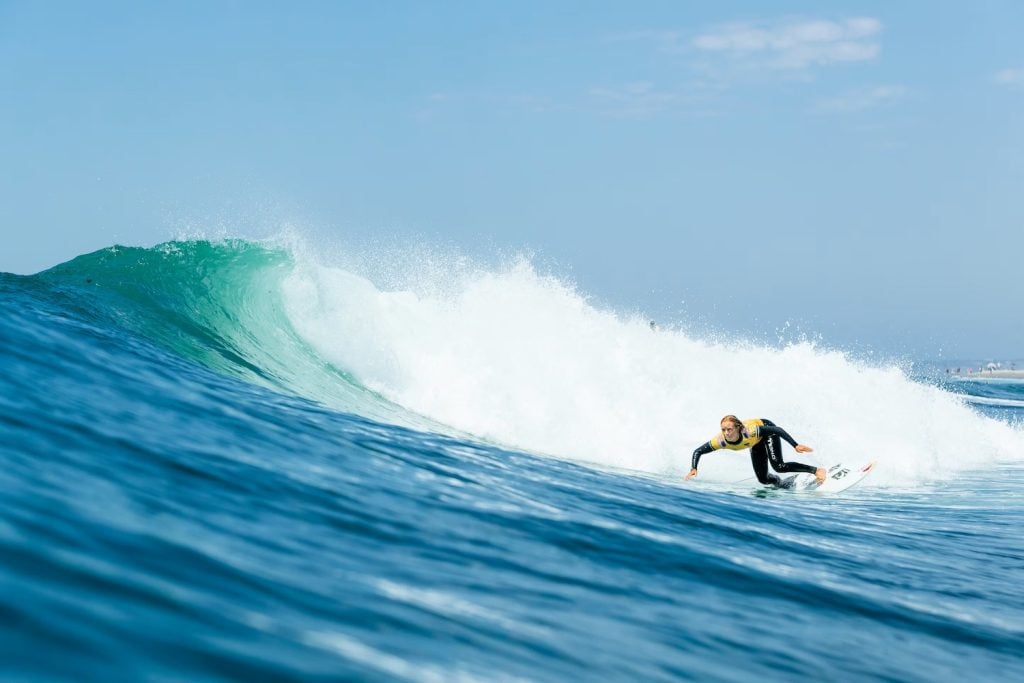
San Diego native and world number-two golfer Xander Schauffele will be among the first to put the new format and rules to the test when his New York Golf Club faces off against The Bay Golf Club on January 7 at 6:00 p.m. on ESPN.
“To have actual teammates competing with you affecting the result is such a cool thing. I know Rick, I know Cam and Fitzy pretty well, and I think we’re just going to get closer as we compete in this league,” Schauffele says, referring to his teammates Rickie Fowler, Cameron Young, and Matt Fitzpatrick, respectively. Among them are 17 PGA Tour victories and three major championships. They’re joined in TGL by league co-founders and all-time greats Tiger Woods and Rory McIlroy, along with 18 other top golfers. A four-team playoff later this year will determine the inaugural TGL champions.
The virtual environment also lets the course designers run wild, something Pizá had been preparing for his whole career. He learned the foundations of course design during stints at Nicklaus Design and Fazio Design, two of the top course design firms in the world, and he expanded his design sensibilities at the University of Edinburgh’s golf course architecture program.
“I think one of our biggest competitive advantages is that mix of the contemporary United States–-not afraid of building bigger stuff, bolder stuff—but then having the ecological-friendly, minimalist approach from the U.K.,” Pizá says about his eponymous firm Pizá Golf.

One of his first solo projects was at Club Campestre Tampico in Mexico. There, he started improvising on the tenets of course design with “just a touch here and there, just an accent here and there—things that rarely you would see on a course.” Pizá’s is the language and pride of an artist, which caught the attention of TMRW Sports, the entity behind TGL. (In a reference to its parent company, TGL stands for Tomorrow’s Golf League.)
So far, Pizá has designed eight holes for TGL, but his most striking is Temple, “a hole design inspired by ancient civilizations… and found in the mountains of South America,” according to the league’s website.

“I was playing around with two triangles and I pinched them in the middle, and I thought, ‘This could be, I don’t know if the ultimate, but a very exciting risk-and-reward hole,’” Pizá says. An errant tee shot risks losing the ball in the (fictional) valley below, and players who don’t try to reach the second, farther triangle will be left with a long approach shot to an elevated island green. “We’re very lucky to have clients that believe in us and that are as crazy as we are because if we didn’t, we would just be theorists.”
But Pizá is, in fact, a theorist. Everything has a purpose. Designing courses is like making an album. Butterfly Golf, in which four sets of six-hole loops create different courses on one site, is the future of “grass golf.” TGL isn’t a competitor to grass golf, it complements it; and what we see in TGL is 25 years of the evolution of the mind, Pizá’s mind. Talking with him, he seems less a golf designer and more an inventor.
“Art and architecture don’t know boundaries, they don’t know borders if you’re an artist… if you’re great at what you do.” Only someone raised by two teachers from Tijuana who established their studio in San Diego could put this all into practice. If Pizá is an inventor, then he is helping create the future of golf, and if TGL takes off, then he better stock up on tea. He’ll have a lot more talking to do.
Brendan Dentino is a U.S. Navy veteran, writer, and public servant based in San Diego. He writes weekly about baseball and politics at Out in Left.
The San Diego who native sharpened his game on local courses before rising to PGA Tour dominance is focused on one thing: improving
I ask Xander Schauffele if one of his goals this year is winning the Masters. In 2019, he finished second by a stroke to Tiger Woods. In 2021, Schauffele faltered late in the final round and had to settle for third. Could 2025 be the year he breaks through at golf’s most prestigious tournament? But he brushes aside the question.
Then, I ask him if it’s his goal to be history’s greatest golfer from San Diego. Schauffele entered that conversation in 2024 by becoming only the 16th golfer ever to win the British Open and another major championship in the same year. On top of that, he’s got an Olympic gold medal from the 2020 Tokyo games and a win at the 2017 Tour Championship. He’s now ranked number two in the world. Yet he shows little interest in chasing down Phil Mickelson, Billy Casper, and other San Diego golf legends.
So I ask him what aspect of his game he wants to improve, and the answers spill out. No one self-flagellates like a golfer. “It really is a big goal of mine to be the best player in the world, to get to the top of that mountain,” the 31-year-old Scripps Ranch High alum says. “The saying ‘so close, yet so far’ really hits hard, because for me to have a career year and win two majors and to be further away from number one…”
Schauffele trails off, then finishes the thought: “Cheers to Scottie for kicking everyone’s ass.”
He’s referring to Scottie Scheffler, the only man above him in the Official World Golf Ranking. Schauffele’s season last year was great, but Scheffler’s was legendary. He tallied nine victories, including one at the Masters; won a gold medal at the Paris Olympics; and took home the FedEx Cup, golf ’s season-long competition. Schauffele is undeterred.
“As soon as I get a few steps up, I seem to fall further down the mountain, but I’m pretty stubborn for being as chill as I can be,” Schauffele says. “Hopefully, that pays off in the end.”
Schauffele doesn’t have a ton of length. He ranked 33rd in driving distance last year. His ball striking is celebrated, but he ranked sixth in strokes gained. He didn’t crack the top 10 in putting. You’d be hard-pressed to identify a superlative skill of Schauffele’s or find a statistic in which he ranks first. He’s a jack-of-all-trades golfer, very good at a lot of things. His greatest trait, however, is his work ethic.

Ryan Donovan, the head golf coach at San Diego State University, says Schauffele is the hardest-working guy he’s ever had in the program. “He was always competing, always improving, working on things,” Donovan adds. He tells me that, as a senior, Schauffele switched his classes to the evening so he could practice every day until sunset. Three years later, Schauffele was voted the PGA Rookie of the Year.
And for all his success—all his time playing on the world’s best greens—he still recalls fondly his years at San Diego’s humble municipal tracts. “The most fun I had was in high school, when we were at Torrey Pines and the sun’s setting over the ocean and we’re scrambling to finish on the ninth hole in the dark,” Schauffele says.
If Schauffele doesn’t think about any one tournament or being the best golfer from San Diego, then it’s because all he thinks about is practice. Of course, that’s the only way to win the Masters, to become one of the greats.
Brendan Dentino is a U.S. Navy veteran, writer, and public servant based in San Diego. He writes weekly about baseball and politics at Out in Left.
Home to major brands like Callaway and TaylorMade, the North County city has been the site of game-changing golf innovations for four decades
“I started playing golf when I was 16,” David Moon says. “I’m married to the game, and I love this brand.”
His affection for Honma Golf is understandable. Clubs from the BERES line, with smooth metals dyed silver, gold, and red, look more like pieces of jewelry than they do sporting goods. It’s Moon’s job, as the company’s ecommerce and customer service manager, to sell those clubs, although that title doesn’t fully capture his role running Honma Golf’s three-person Carlsbad operation.

Founded in Japan in 1959, the company developed a devout following, mostly in Asia, for its meticulously designed and unusually sophisticated golf clubs. They aren’t manufactured so much as they are crafted, but for decades that luxury went largely unnoticed in North America. In an effort to grow in Western markets, Honma Golf setup shop in Torrance in Los Angeles County, then Cyprus in Orange County. Finally, in 2019, the company landed in Carlsbad, known as the “golf equipment capital of the world.”
That may sound like a roadside oddity or an obscure Guinness World Record, but in Carlsbad the moniker is serious business. A block from Honma Golf is Titleist’s Carlsbad office. TaylorMade and Callaway are headquartered on the other side of Palomar Airport. That makes three of golf’s “Big Four” brands within two miles of each other, and you can’t swing a club without hitting dozens of smaller companies like Cobra and Honma. “It’s good to be in the mix with the big companies,” Moon says. “We’re not moving any time soon.”

According to a report from the city’s economic development division, there are no less than 116 firms in the sports innovation and design industry cluster, which includes the city’s world-renowned golf equipment manufacturers. “We’re claiming over 2,300 employees in that sector, which is more than six times the national average,” says Bret Schanzenbach, president and CEO of the Carlsbad Chamber of Commerce. “It also generates good income—averaging $130,000 per employee per year in annual earnings.”
Callaway and TaylorMade together earn over $5 billion annually, or about $5 for every golf ball the world manufactures in a year. And the story of selling golf balls is inextricably linked with the story of Carlsbad.
Long a farming town, Carlsbad didn’t incorporate until 1952. Its population as of the 1960 census was just over 9,000, and not many people outside of San Diego County had heard of the town until the La Costa Resort, opened in 1965, began hosting the PGA’s Tournament of Champions in 1969. A 34-year-old Gary Player, at the height of his legendary career, fended off the likes of Jack Nicklaus, Arnold Palmer, and Lee Trevino for the trophy that year.

“I believe it is the way courses should be set,” Player told The New York Times after his victory at La Costa, now known as the Omni La Costa Resort & Spa. “It’s as fine a course as I won on.” High praise from a man who had taken the crown at the British Open nine months prior. La Costa would go on to host the tournament for the next 30 years, and the city grew around it.
That’s due in large part to Ely Callaway and Gary Adams. A textiles executive from Georgia, Callaway brought his fledgling golf club company to Carlsbad in 1983. A year later, Adams came to town with TaylorMade, a company he started in Illinois that had some success hawking “metalwoods,” a departure from the traditional all-wood sets.
In 1991, Callaway took the novel idea a step further and invented the Big Bertha driver, the first made entirely of stainless steel. The club head was massive yet light in the hand. It felt like the future, because it was. The story of golf—and Carlsbad—became centered around engineering, research and development, and technological advances. It mirrored the digital revolution rooted in Northern California. The Bay Area had Silicon Valley. Carlsbad had Titanium Valley. Honma Golf resides on Innovation Way.

“If you’re a golf company, do you want to be based in Illinois, or are you going to go to a place like California where you can golf year round?” Schanzenbach says. Carlsbad has “infrastructure, plus the weather, plus the quality of life, and the ability to bring in top [golf] professionals to your facility to test out your equipment,” he adds. “You want to bring them to a place where, afterwards, you can go out to a really nice course with beautiful weather and treat them.”
But the local industry has hit the rough in recent years. According to the city, employment in the sector declined 16.3 percent between 2018 and 2020, a trend that started back in 2013, despite overall golf participation being up 30 percent since 2016, according to the National Golf Foundation. While the weather in Carlsbad is still perfect, some of the factors that fueled its explosive growth, especially cheap land and plentiful labor, are today tilting against it.

“Coming out of Covid, one of the biggest things we were hearing from our membership was the challenge with finding and then retaining talent for their companies,” Schanzenbach says. “I know TaylorMade has done a good job with it. But [for] the middle-tier companies, it’s hard.”
Honma Golf felt this firsthand.
PGA tour pro Justin Rose signed with the company in early 2019, and a few weeks later, he won the Farmers Insurance Open in San Diego. Honma was finally making inroads in the US, then Covid hit. “All the momentum stopped,” Moon says.
Sales slumped, then the company struggled with staff turnover and recruiting executive and marketing teams to achieve its goals in North America. The realities of high costs, intense competition, and hiring challenges set in, but Honma Golf is undeterred. By reorganizing its marketing team and refocusing on its core market segment of golfers interested in premium clubs, the company feels there are better days ahead. “2025 is going to be a good year,” Moon predicts.

It’s a retrenchment not unlike Callaway Golf’s. In September, the company announced it was spinning off Topgolf, the chain of entertainment-focused driving ranges it acquired just four years earlier. The company wants to focus on its traditional golf equipment and apparel business, the one based in Carlsbad—the one that helped make Carlsbad.
After Covid’s industry-wide disruptions, the future of the local golf manufacturing industry is coming into focus. So far, it looks a lot like the first 40 years: You can’t play golf without Carlsbad.
Brendan Dentino is a U.S. Navy veteran, writer, and public servant based in San Diego. He writes weekly about baseball and politics at Out in Left.
Get ready to tee off at some of the top golf courses across the county
San Diego, with its gorgeous coastal views and year-round sunny weather, is a golfer’s paradise, offering an impressive array of courses that cater to all skill levels, whether your scorecard usually consists of eagles or bogies. For locals and out-of-towners alike, exploring these courses will not only test your skills but also immerse you in the breathtaking scenery that San Diego is known for.

Coronado Golf Course, opened in 1957, is one of San Diego’s more walkable courses. Cited as a top SD course by the Golf Channel, the well-maintained public course offers views of the Coronado bridge and boats out on the water. The onsite restaurant serves American bites (including vegan options) for brunch and lunch.
2000 Visalia Row, Coronado

Consistently ranked as one of Golf Digest’s 100 greatest courses, the challenging Torrey Pines Golf Course in La Jolla hosted the 2021 US Open and puts on the annual PGA TOUR’s Farmers Insurance Open. Named after the rare Torrey Pine tree, which only grows along the San Diego coastline and Santa Rosa Island, the course has made its way onto many golfers’ bucket lists.
11480 N Torrey Pines Road, La Jolla

Located at the luxurious Fairmont Grand Del Mar, The Grand Golf Club and its 50,000-square-foot driving range are open to hotel guests. Three-hundred-and-sixty degree views of each hole are available online, helping give you a leg up if you’re trying to improve your handicap. And if your kiddo dreams of becoming a future Masters champion, this course is the perfect place to take them, as children 12 and under can play and rent clubs for free.
5300 Grand Del Mar Way, Del Mar

Aviara Golf Club is San Diego’s only course designed by the legendary Arnold Palmer. Situated within Carlsbad’s Park Hyatt Aviara, this layout includes strategically placed bunkers and water features that provide both pretty views and tough obstacles. And, if you’d like to level up your gear game, the course’s TaylorMade Aviara Performance Center allows you to test clubs with 3D motion analysis technology. The club offers both public and resort fees, as well as online course videos that provide insight into hole details and potential strategies.
7447 Batiquitos Drive, Carlsbad

Designed by golf course architect William Francis Bell, the Rancho Bernardo Inn Golf Course has hosted both PGA and LPGA events. Its 18th hole, surrounded by old-growth trees, is a fan favorite. Golf lessons are also available at the Carlsbad course, whether you’re just starting out or a seasoned golfer needing a couple tips or tweaks.
17550 Bernardo Oaks Dr, Rancho Bernardo

Singing Hills Golf Club supplies golfers with three courses in the Dehesa Valley of San Diego County. The Willow Glen course runs along the Sweetwater River and features narrow fairways, while the Oak Glen course is known for rolling greens and a beautiful, yet difficult, fifth hole. The nine-hole Pine Glen course is ideal for beginners or those looking to squeeze in a quick round.
3007 Dehesa Road, El Cajon

The course at Mt. Woodson Golf Club in Ramona is tough—but you don’t need to worry about having an audience for any whiffs. Each hole is so secluded it’ll feel like you and your buddies are the only ones on the course. Open to the public and surrounded by serene, rocky hills, the club also houses a bar and grill with some of the best prices in town (hello, post-birdie BLT for under $9).
16422 North Woodson Drive, Ramona

Originally built in 1952, Oceanside’s Goat Hill Park Golf Club was one of the first golf courses in San Diego County and began as a regulation-length nine-hole setup. In the early 1990s, it was redesigned into an 18-hole course, enhancing its appeal to golfers seeking a fun time on the links and a laid-back atmosphere.
2323 Goat Hill Drive, Oceanside

Admiral Baker Golf Course, located within the historic Navy complex near Tierrasanta, is notable for its two distinct 18-hole courses—the North and South. The lush fairways and well-maintained greens are complemented by facilities like a driving range and eatery.
2400 Admiral Baker Road, No. 3604, Tierrasanta

Jordyn Berg is a freelance writer whose favorite topics include food and travel. A Pacific Northwest native, she delights in exploring the best of San Diego, by searching for hidden gems, experiencing must-try restaurants, and soaking in the city’s amazing views.
This month, the 2026 San Diego Business Impact Awards recognized local businesses making an impact in clean energy, biotech, hospitality, and beyond
Renewable energy companies building hundreds of power plants. Biotech startups using artificial intelligence to create personalized medicine for children with rare diseases. Hospitality companies quietly powering thousands of local events. Consumer brands growing from beach-town startups into national businesses. These are the kinds of companies driving San Diego’s economy today, and the businesses recognized at this year’s San Diego Business Impact Awards offer a snapshot of where the region is headed.
Hosted July 23 by San Diego Regional Economic Development Corporation (EDC) and JPMorganChase, the second annual awards event honored four local companies for innovation, growth, and economic impact. More than 100 nominations from San Diego’s middle-market businesses were reviewed by a 10-person judging committee, with winners selected across four categories: startup, early-stage innovator, rising star, and established heavyweight.
Two-time honoree Jimbo Someck, founder of Jimbo’s organic grocery stores, also joined the event for a fireside chat on buying local, supporting emerging brands, and giving back to the community.
“San Diego’s strength comes from its makers and builders—the resilient people who endure great risks and overcome obstacles to build and scale a company,” says Aaron Ryan, San Diego Region Manager and Middle Market Banking at JPMorganChase & Co. “These awards aren’t just recognition; they spotlight the talent, grit, and innovation shaping our region’s future. By celebrating those who create and build, we foster connections and fuel the growth that keeps San Diego thriving.”

Heavyweight honoree SOLV Energy has grown alongside the country’s rapid investment in renewable power. “It’s an exciting time for SOLV Energy as we are experiencing significant growth,” says CEO George Hershman. “The business has doubled over the last year and has almost double-digit growth since its inception.”
The Rancho Bernardo-based company designs, builds, operates, and maintains utility-scale solar and energy storage facilities. Since its founding in 2008, SOLV Energy has built more than 500 power plants.
Growth has translated directly into hiring. About 200 employees work from the company’s local headquarters, including roughly 20 interns. “Our intern program is a big part of the way that we grow our workforce,” Hershman says. “Last year, 43 percent of our interns became full-time employees. We believe San Diego is a great community to build and grow a high-tech infrastructure and technology company because of the incredible workforce—the ability to attract top talent and draw from world-class universities.”
Startup honoree La Jolla Labs is tackling one of medicine’s biggest challenges by developing personalized RNA therapeutics for patients with rare diseases—many of them children with neurological disorders like ALS. Using proprietary artificial intelligence and machine learning tools, the biotech company develops treatments tailored to each patient’s specific genetic mutation.
CEO Tamar Grossman says the recognition reflects how far the company has come despite limited resources. “We’re honored to be recognized for our ability to change and save patients’ lives and turn our lean startup into a clinical company with very minimal resources,” she says.
Grossman credits San Diego’s concentration of research institutions—including UC San Diego, the Salk Institute, and Scripps Research—with creating a pipeline of talent and collaboration. “San Diego is one of the world-leading centers for technology, genomics, and RNA therapeutics,” she says. “We have over 30 RNA therapeutics companies here, and we support each other and help with anything related to drug discovery.”
She says that collaborative spirit extends beyond formal partnerships. “You can walk around Torrey Pines, go into a café, and find colleagues from the industry and have an ad hoc conversation,” Grossman says. “That’s something very unique to San Diego.”
While Snake Oil Venue Company may not be a household name, chances are many San Diegans have attended one of its events. The early-stage innovator honoree has expanded from beverage catering and mixology consulting into venue management, operating Julep Venue in Mission Hills, Bramble Bay Venue in Imperial Beach, Vesper Venue, the Chapel at Liberty Station, and five outdoor venues throughout Liberty Station—more than 500,000 square feet of event space altogether.
“We do a lot of launch parties for corporations and new products,” says CEO Mike Esposito. “I really like working on the entrepreneur side of things, where new businesses are entering the San Diego market and looking to make a splash.”
Snake Oil has executed more than 16,000 events, employed more than 1,000 people, and partnered with more than 900 local vendors, including caterers, florists, photographers, entertainers, and other hospitality businesses. The company also works with many of San Diego’s nonprofits, museums, and cultural institutions. “We get to celebrate people’s most important moments,” Esposito says. “Whether that’s a wedding, celebration of life, or quinceañera, we’re fortunate to be involved in the community in so many different ways.”

Rising star honoree ALOHA Collection is proof that a simple idea can grow into a thriving company. Founded by two roommates who wanted a better way to carry wet swimsuits after a day at the beach, the lifestyle brand has grown into a business while maintaining strong year-over-year growth.
Now headquartered in Carlsbad, ALOHA Collection employs more than 100 people and operates its California flagship store in Encinitas, which is slated for a remodel. With roots in Hawaii, the company is known for its lightweight, splash-proof travel bags that have become a familiar sight on beaches in San Diego and beyond.
“‘Aloha’ is part of our name, but it’s also how we move through the world,” says CEO Lynna Barnard. “It’s how we show up for people, the way we travel, the way we give back.” Since day one, the company has maintained a 5 percent giveback to Hawaii conservation efforts, contributing millions of dollars over the years.
“I think what’s so inspiring about ALOHA Collection, and the founders in particular, is when you dream big, those dreams can come true when you work hard and trust in the universe,” Barnard says. “It’s inspiring to be a role model for other people wanting to start businesses from humble beginnings. Start small and watch it grow.”
Together, businesses like these form a cornerstone of San Diego’s economy—not only through the jobs and revenue they generate—but through the local workers they hire, vendors they support, and investments they make in the region. Their growth doesn’t happen in isolation; it ripples outward, strengthening the broader business community and the people who call San Diego home.

What not to miss on the local sports scene this month
“Do you still have $2 beer nights?” I recently asked a Gulls ticket sales rep. After a brief hold, they got back on the line to deliver the saddest news in the era of post-Covid inflation: $2 Bud Lights at Friday home games have been replaced by $5 Blue Line Blonds.
Blue Line Blond Ale isn’t Bud Light—the latter is the best beer on earth, after all—but Friday night at the Gulls is still one of the best happy hours in San Diego. In their first home game of the new year, the Gulls take on the Bakersfield Condors. Six of the Gulls’ nine wins on the season came in December, offering a glimmer of hope that the team can climb from last place in the AHL’s Pacific Division. Whether the Gulls continue their winning trend or not, $5 beer nights are a win-win for fans.
Are motorsports defensible in the face of climate change? Debatable. Is Monster Jam even a sport? Also debatable. What’s not up for debate is its enduring popularity, a peculiarity of American culture that The New Yorker recently explored. “We sell four million-plus tickets a year,” Jayme Dalsing, Monster Jam’s senior director of global operations, told the publication. “That’s more than Taylor Swift.”
As Swift counts her billions, I don’t think she’s too concerned about Monster Jam, but the motorized traveling circus does have one advantage, at least to San Diegans: it actually comes to town. Monster Jam renews its San Diego residency over two weekends at Snapdragon this month. The last time Swift played San Diego was in 2015.
The SDSU women’s basketball squad has quietly won six straight games and 10 of their last 12 to finish the 2023 schedule at 10-3. They have a slate of winnable conference games to kickoff 2024, but none will be more pivotal than their January 17 matchup against UNLV, who lead the Mountain West Conference at 11-1. It’s a rare 11:00 a.m. start as one of the program’s Field Trip Days so that local youth can attend a game, so take that first sick day of 2024 and cheer on the Aztecs with the future of San Diego.
The field isn’t set yet for the annual Farmers Insurance Open, but last year’s champion and world No. 7 Max Homa is sure to be at Torrey Pines Golf Course defending his crown. Jon Rahm, who won the Farmers in 2017, as well as the 2021 U.S. Open at Torrey Pines, will likely join him. Neither will be the crowd favorite though, not if Scripps Ranch High and SDSU alum Xander Schauffele joins the field.
The world No. 6 can hang his hat on having won a Tour Championship, an Olympic gold medal, and a Ryder Cup, but one thing missing from his résumé is a win in his hometown. At this year’s Farmers Insurance Open, Schauffele will try to become the seventh San Diego native—following Phil Mickelson, Scott Simpson, Craig Stadler, Greg Twiggs, Billy Casper, and Gene Littler—to hoist the trophy.
I am under no illusion that many San Diegans will attend the season opener for an average community college baseball program in the middle of a weekday. With 13 conference championships, 20 regional tournament appearances, 231 alumni transferred to NCAA or NAIA baseball programs, and 34 alumni having played professionally, the San Diego Mesa College baseball program is one of the most successful in California.
And one of those alumni is responsible for some of the most groundbreaking moves in the sport. In various management roles in MLB, Billy Eppler established the Yankees scouting department, brought Shohei Ohtani to the U.S. from Japan, and set a record $375 million payroll with the New York Mets. Not bad for a former ballplayer from Allied Gardens. After the holidays and weeks of the sun setting at what feels like noon, the Knights kicking off their season is worth celebrating. Baseball is back!
Brendan Dentino is a U.S. Navy veteran, writer, and public servant based in San Diego. He writes weekly about baseball and politics at Out in Left.
Why a well-known San Diego restaurateur launched a skincare brand with a name you can’t unhear
In Mexico for a wedding, a friend got a tourist-level sunburn. One of San Diego’s top restaurateurs—Arturo Kassel, founder of Catania and Gravity Heights—was on hand. He made a joke about how basic sunscreen literacy seems to be a male-pattern blindness.
“I said, ‘You know what? I’m going to start a men’s sunscreen brand, and I’m going to call it 4-Skin—because men are dicks and they need to cover up,’” he explains. “We spent the whole weekend thinking of puns and innuendos for this hypothetical brand we were never actually going to launch.”
The joke refused to die. Days later, one of the Mexico-wedding friends—a top marketer in the city—called Kassel and said the highly intentional dude humor might have a couple top notes of genius. So Kassel did a little digging into men and very basic skincare/sunscreen usage. Turns out, 1 in 29 are at risk of developing melanoma compared to 1 in 40 women.
“I was shocked to learn that only about one in 10 men actively use sunscreen, and that’s at the beach, on the golf course, or at the pool, when you’re going to get fried,” he says. “Daily use is essentially nonexistent.” During the process, Kassel became part of the story.
“My dermatologist called and told me I had basal cell carcinoma,” he says. “At that point, it went from being a business to a very personal mission. I became determined to move the needle when it comes to men’s apathy toward sunscreen.” And so—hundreds of hours later, including a still-going crash course on launching a CPG brand—a local restaurateur launched a jarringly named sunscreen and moisturizer for men. Broad spectrum, high-quality, SPF 50, lightweight, goes on clear, all the things. The daily-use morning routine version is called Morning Rub. Of course it is.
Kassel reached out to his friend Troy Johnson—San Diego Magazine co-owner and co-founder of Here We Are Studios,—to collaborate on creating two commercials for the brand. They launched July weekend. Friends went down to the beach to talk to strangers about their 4-Skin. Awkward, funny, and if all goes to plan: making men rethink their relationship to the blazing ouchie star in the sky.
“4-Skin is funny as a brand, but there’s nothing funny about skin cancer,” says Kassel. “That’s the one-two punch: we got your attention, maybe we made you laugh. And now we can tell you something that might extend your life.”
For this special-edition podcast from Here We Are Studios, Troy and Arturo sit down and tell the entire story of how a joke became a brand with a serious mission.
It’s a Self-Care Summer. Because your best self is our favorite self.
If you’re anything like us, it can be easy to get so caught up in taking care of everyone else, that your own needs get lost in the ether. But while this may be a cliché, that doesn’t make it any less true: You can’t give your best self to other people unless you’re taking care of yourself.
Sometimes, that looks like stopping in for your regular acupuncture or chiropractic appointment. Other days, it means giving your body the fresh, organic fuel it needs to truly feel and function at its best. And some other times still, it involves leaving your responsibilities behind for a weekend to pamper yourself at an incredible resort and spa.
Only you can decide what your truly need. We’re just here to help you find the best ways to get it.

Island living meets desert luxury at the Tommy Bahama Miramonte Resort & Spa in Indian Wells. When you step onto the 11-acre property, you’ll be surrounded by sweeping view of the Santa Rosa Mountains with olive trees and fragrant citrus groves decorating the grounds. In other words, everything about this relaxed but refined resort is primed to help you let go of the stress from home and enjoy easy sun-soaked days and gorgeous starry nights.
The rooms blend calming, woven textures with Tommy Bahama’s signature tropical prints and feature private lanais, making it easy unwind the moment you walk in the door. If you book one of the four Villa Suites, you’ll be treated to exclusive Tommy Bahama furniture and unique personal touches to further that feeling of instant ease.
At the award-winning Spa Rosa, the expert team will help reset and recharge your body and mind using methods and rituals inspired by the desert. The 12,000-square-foot retreat includes outdoor soaking pools, eucalyptus steam rooms, and outdoor cabanas, as well as massages, facials, and body masks—all aimed at creating a day dedicated to you. We’re particularly partial to the Day Long Escape, an indulgent all-day affair of CDBs soaks, renewing scrubs, life changing massages, and transformative facials.
Following your treatment, continue the experience with a meal on the patio at Grapefruit Basil. We love the Hamachi Crudo, a light, citrus-forward dish featuring premium yellowtail, house-made ponzu, creamy avocado, and fresh seasonal garnishes.
Whether you’re strolling the gardens, relaxing beside its saltwater pools, or indulging in a restorative treatment, you’ll be able to escape in style and relax in luxury at the Tommy Bahama Miramonte Resort & Spa.

There’s no shortage of ways to stay active in San Diego—but if you really want to enjoy everything the city has to offer, you’ve got to make sure you’re giving your body its tune-ups. Enter: Healcove Chiropractic. The board-certified chiropractors and wellness professionals at Healcove are experts at addressing that stage where you’re not injured, exactly, but you’re not at 100%, either. Maybe you’re feeling a bit tense or stressed out. Or it could be that you’re not quite moving the way you want to. Sometimes, it’s just that the accumulation of days, weeks, or even years of daily strain is starting to take a toll. No matter what stage you find yourself at, the Healcove Chiropractic team can provide integrated, preventative care centered on long-term, science-backed approaches that ensure you can always stay active and live the life you want to live pain-free.
This starts by providing truly individualized care. Every patient can expect a thorough 60-minute consultation session that includes a posture and movement screening. This allows the team to develop a completely personalized plan. That plan might include chiropractic care, acupuncture, or massage therapy, as well as functional fitness training, vibration and sound therapy, and Dynamic Neuromuscular Stabilization, a clinical rehabilitation method that retrains the body’s stabilization systems. Whatever the team recommends, you can be sure that it’s tailored to meeting your body’s needs today and the future.
There’s a reason that San Diego Magazine named Healcove the “Best Chiropractor in San Diego”—don’t wait until you’re struggling with an injury to find out why. Book an appointment today for holistic, integrated care that helps ground and heal your body before it reaches a crisis point.

West Coast wellness culture meets the community feel of Southern Appalachia at Juice Holler. Juice Holler’s menu consists of made-to-order smoothies and smoothie bowls, as well as grab-and-go cold-pressed juices, wellness shots, salads, and more. It operates from the blissfully simple premise that fueling up with food and drink that’s guilt-free and good your body should be simple, accessible, and, above all else, delicious. And if you haven’t yet made it out to the Encinitas café, which opened just this year, let us be the first to tell you: Juice Holler delivers on each and every of these fronts.
We love the Supercharger smoothie, a mood-lifting and body-fueling option made with banana, almond butter, blue spirulina, maca, grass-fed whey protein, raw cacao nibs, medjool dates, and coconut milk. We’re also partial to the Thrive Alive smoothie bowl, where avocado, mango, sea moss, spirulina, mint, coconut milk, and agave are mixed and topped with coconut, chia seeds, strawberry, mango, and chocolate drizzle. The wellness shots include the Detoxifier, a cleansing blend of kale, cucumber, lemon and spirulina, plus a shot specially designed to fight inflammation (named, fittingly, Anti-Inflammation). Probiotic overnight oats, lemon turmeric bars, and strawberry shortcake chia pudding are other standouts on the grab-and-go menu.
Much of the vibe feels beachy North County chic—think green tile with orange and pink accents, grounded with greenery and natural wood—but Juice Holler founder Kelly Sergott, a longtime Encinitas local, has also enfused the space with her Kentucky roots. In Appalachia, a holler is small valley between hills and mountains, where nature reigns, community is king, and nourishment comes right from the land. At Juice Holler, Sergott has created a holler for the busy modern times, using local ingredients to create a spot for people to come together and enjoy fresh, fast, feel-good fuel for their day.

We’ve all had that experience with a medical professional where we’ve felt rushed, ignored, or misunderstood—and ultimately, like we didn’t get the answers that we needed. But at Everwell, the holistic acupuncture practice located in Solana Beach, the care team wants to transform your understanding of what healthcare can look like.
Patients at Everwell experience care rooted in intentional listening and radical empathy—and trust us, those aren’t just corporate buzzwords. This place actually puts those ideas into practice. You will always be given the time you need to tell your story— initial in-take appointments are two hours long—and you can rest assured that your story will be believed. Every single question and concern will be addressed by a dedicated practitioner who wants to find the specific solutions that work best for you, and you’ll receive care that’s aimed at healing the body, mind, and spirit.
Everwell’s highly trained, doctorate-level practitioners blend evidence-based acupuncture with the practice of classical Chinese medicine. (If you’ve never tried acupuncture before or aren’t sure if the team will be a fit, we’d highly recommended Everwell’s complimentary 20-minute consultations.) Research shows that by stimulating specific points on the body, acupuncture activates a natural healing response in the body, helping to restore balance, regulate the nervous system, and improve overall wellbeing. This allows the practice to address an incredibly wide range of conditions from chronic pain and autoimmune disorders to digestive issues, from stress and burnout to headaches migraines, fertility and postpartum struggles, hormonal imbalances, sleep concerns and more.
At Everwell, you can expect to feel heard, trusted, respected, and cared for. This is a space that doesn’t want to be just another healthcare provider you visit; it wants to provide patients with dedicated partner who will be there for their entire health journey.