Featured articles
Food & Drink
Food & Drink
Food & Drink
Featured articles

Features
Features
Everything SD
Featured articles
Things to Do
Everything SD
Everything SD
Featured articles

podcast-ep
podcast-ep
podcast-ep
Featured articles

Features

Features

Everything SD
Featured articles
Food & Drink
Features
Partner content
Ready to know more about San Diego?
SubscribeReady to know more about San Diego?
Why a well-known San Diego restaurateur launched a skincare brand with a name you can’t unhear
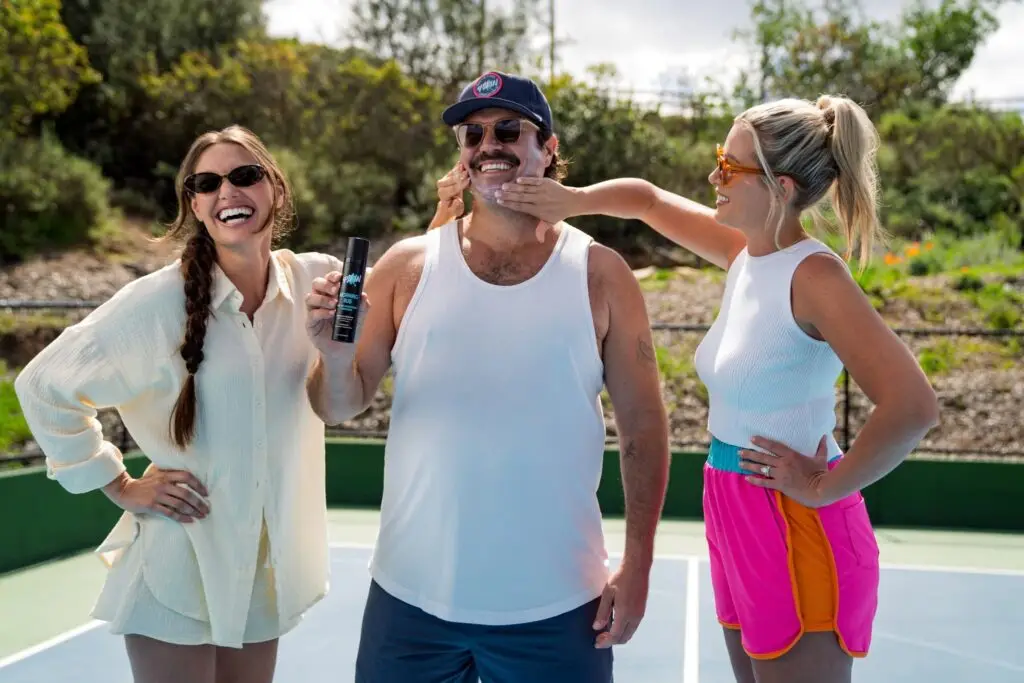
In Mexico for a wedding, a friend got a tourist-level sunburn. One of San Diego’s top restaurateurs—Arturo Kassel, founder of Catania and Gravity Heights—was on hand. He made a joke about how basic sunscreen literacy seems to be a male-pattern blindness.
“I said, ‘You know what? I’m going to start a men’s sunscreen brand, and I’m going to call it 4-Skin—because men are dicks and they need to cover up,’” he explains. “We spent the whole weekend thinking of puns and innuendos for this hypothetical brand we were never actually going to launch.”
The joke refused to die. Days later, one of the Mexico-wedding friends—a top marketer in the city—called Kassel and said the highly intentional dude humor might have a couple top notes of genius. So Kassel did a little digging into men and very basic skincare/sunscreen usage. Turns out, 1 in 29 are at risk of developing melanoma compared to 1 in 40 women.
“I was shocked to learn that only about one in 10 men actively use sunscreen, and that’s at the beach, on the golf course, or at the pool, when you’re going to get fried,” he says. “Daily use is essentially nonexistent.” During the process, Kassel became part of the story.
“My dermatologist called and told me I had basal cell carcinoma,” he says. “At that point, it went from being a business to a very personal mission. I became determined to move the needle when it comes to men’s apathy toward sunscreen.” And so—hundreds of hours later, including a still-going crash course on launching a CPG brand—a local restaurateur launched a jarringly named sunscreen and moisturizer for men. Broad spectrum, high-quality, SPF 50, lightweight, goes on clear, all the things. The daily-use morning routine version is called Morning Rub. Of course it is.
Kassel reached out to his friend Troy Johnson—San Diego Magazine co-owner and co-founder of Here We Are Studios,—to collaborate on creating two commercials for the brand. They launched July weekend. Friends went down to the beach to talk to strangers about their 4-Skin. Awkward, funny, and if all goes to plan: making men rethink their relationship to the blazing ouchie star in the sky.
“4-Skin is funny as a brand, but there’s nothing funny about skin cancer,” says Kassel. “That’s the one-two punch: we got your attention, maybe we made you laugh. And now we can tell you something that might extend your life.”
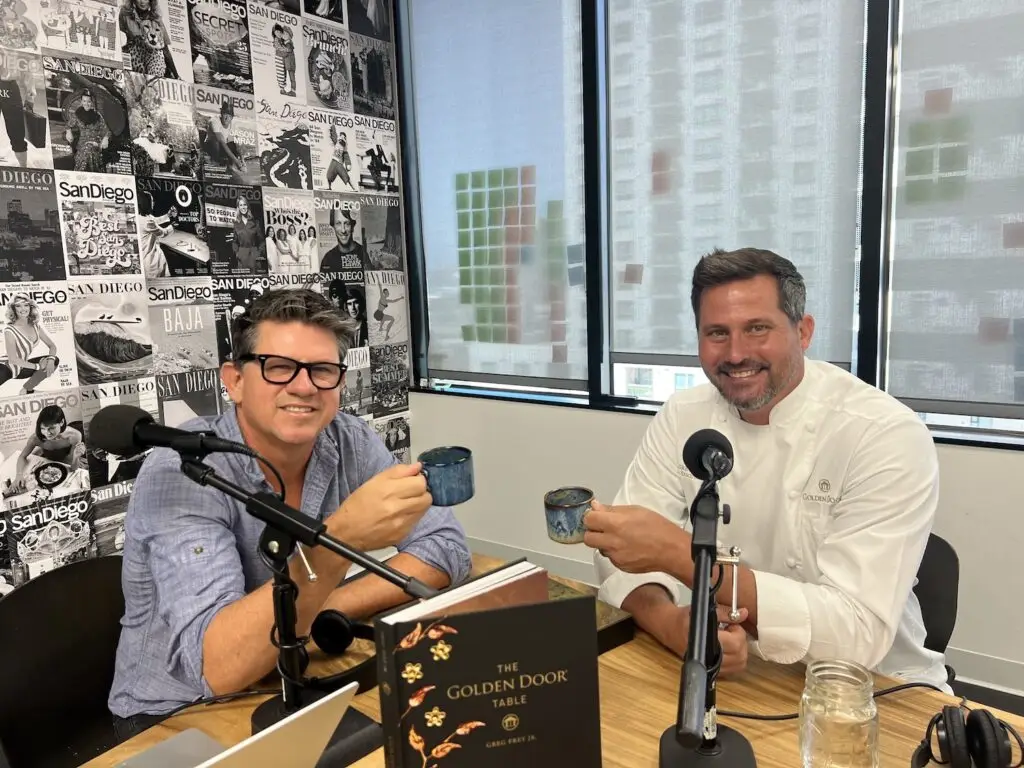
For this special-edition podcast from Here We Are Studios, Troy and Arturo sit down and tell the entire story of how a joke became a brand with a serious mission.
Meet the artists, makers, and advocates whose work shapes how the city looks, sounds, gathers, and connects
San Diego is full of people who deserve a few thousand words on what they make, who they bring together, and how their work changes the city around them. The artists, makers, advocates, and behind-the-scenes talent below are a small part of that larger ecosystem.
To help us narrow our list, we looked for names that kept coming up, work that reflects the diversity of our region, and people building something bigger than themselves.
Jackie is a long-time freelance journalist covering cannabis, food/restaurants, travel, labor, wine, spirits, arts & culture, design, and other topics. Her work has been selected twice for Best American Travel Writing, and she has won a variety of national and local awards for her writing and reporting.
Isabella Dallas is a freelance writer for San Diego Magazine and the Arts and Culture Editor at The Daily Aztec in her final year at San Diego State University. She previously worked as an editorial intern for SDM, but when she’s not writing, you can find her trying the best coffee spots in SD, devouring the latest rom-coms, and indulging in anything and everything pop culture.
Matt Eisenberg is an award-winning writer and photographer based in San Diego. A former ESPN editor, his work has also been published by CNN, Bleacher Report and the New York Daily News.
Aaryn Belfer is a writer and editor specializing in nonfiction across art, architecture, and culture. Once upon a time, she wrote a provocative column for San Diego CityBeat (RIP). She was a runner up in the 2025 Matchbook Stories contest at the San Diego Central Library and is irrationally happy about it. Currently in her Soft Girl Era, Aaryn has expensive taste in (mostly flat) shoes and will choose a great art exhibit or live jazz concert over almost anything else. Except, possibly, Javier Bardem.
Leorah Gavidor won her first essay contest at age 5. She writes features, news, and non-fiction in San Diego.
Lili Kim is a content coordinator and writer for San Diego Magazine, with experience highlighting local businesses and communities. When not writing or shooting film, she is likely brewing her seventh cup of tea of the day or strolling along Sunset Cliffs.
Emma Veidt is an editor at San Diego Magazine. She earned her bachelor's and master's degrees from the Missouri School of Journalism. She loves running, hiking, and rock climbing, but really, she mostly loves encounters with the street cats around North Park.
Gail Czyszczon is owner/copywriter at Z3 Writing and best-selling author of a children’s book series. As a strategic communications professional and editorialist, she's passionate about discovering untold stories and themes that ignite fresh conversation and true change in communities.
For Jonathon Glus, San Diego’s next chapter begins with the artists who help us understand where we’ve been
Some ancient philosophers believed that humans experience seven-year life cycles or phases of life. Some went so far as to believe that every cell in the body regenerates every seven years.
Much later, in the 1800s, Austrian philosopher, architect, and social reformer Rudolf Steiner developed anthroposophy—an integration of science, art, and spirituality—into his understanding of the human experience. Steiner believed that each of us changes every seven years—from spiritual beliefs to physical evolution—and art is the connective tissue through each of these cycles. Still today, Steiner’s teachings are foundational to the principles of Waldorf education.
While I’ve certainly experienced more than a few human life cycles of my own, I believe that, just like us, cities have their own life cycles.
Cities are living organisms, regenerated every day by the people that live, work, and gather there. Environmental changes, human migration, economic shifts, technological advances, politics, and public policy—they all inform a city’s evolution, sometimes intentionally and sometimes by forces outside of our control. But ultimately, we as humans respond, adapt, and sometimes make our most important new advances.

In the aftermath of World War II, in 1947, the Edinburgh International Festival was established to promote international peace through the performing arts. Today, that festival continues as a global gathering place to experience some of the world’s most innovative dance and theater.
In post-revolution Mexico, that country’s government launched a monumental muralism program to celebrate the history of its Indigenous cultures. Today, that tradition still informs the way Mexico tells its stories and how we understand its history.
Here in the US, the National Endowment for the Arts was established in 1965, at a time when the arts were seen as part of our national strength and resilience. For the first time, federal funds were directed to communities across the country to invest in the arts at a local level.
San Diego may be relatively young as a major American urban center, and even younger on the world stage, but our region as home to humans is ancient. Today, we love a San Diego that is built on roads and traditions of the Kumeyaay Nation, where we share a modern mega-region with our sister city and cultural twin, Tijuana, on unceded Kumeyaay land.
History has shown us that the arts generate the very human connection and understanding that allows our politics, policies, technological advances, and human migration to move forward. In that way and more, the arts are the very heartbeat of our city.
In this issue of San Diego Magazine, we celebrate the artists, creatives, culture bearers, and workers who keep our region connected and in conversation as we take on challenges big and small—internationally as well as on our own neighborhood streets.
Artists are our storytellers. They respond to and chronicle the best and the worst of us—our foibles and weaknesses, our struggles, and, undeniably, our successes.
Now: a look back into the past seven years in history. They have not been a walk in the park, with a pandemic, global unrest, and shifting domestic politics as only a few forces that have challenged our lives and our region. Together, we experienced some of our greatest struggles and witnessed tremendous resilience.
That’s exactly why this is an exciting time for the arts in San Diego. We are on the precipice of an even more fertile, sustained, and inclusive time for the arts in our region.
In some ways, Covid seems like an eternity ago. I remember all too well the massive economic impact on our cultural institutions, some of which have never fully recovered. I remember the mass layoffs of the workers who keep our arts institutions going and the teaching artists who were suddenly out of work.
I also remember the poets, filmmakers, actors, and musicians who helped us grapple with the disruptions of the pandemic. Our communities became virtual, and artists gave us the space to make sense of it all.
In fact, a common phrase emerged from the Covid: artists as second responders.
Still today, I think about the short film made by San Diegans Susanna Peredo Swap and Gill Sotu called History of Joy, which captured so brilliantly what we were experiencing during those days of lockdown.
Since then, as an arts community, we’ve pushed forward transformational work that we will continue to build upon in this next seven-year cycle and well beyond.
Hundreds of artists and culture bearers have spent the past several years going to work with community groups across the region as part of Far South/Border North, our region’s component of the California Arts Council’s groundbreaking artist work program, Creative Corps. The impact resonated so deeply that local government and philanthropy partnered for a second iteration, Artist Count, this time a binational initiative launched just a few months ago.
We’ve invested mightily in cultural infrastructure. Need some examples? There’s the reimagined Jacobs Music Center and Museum of Contemporary Art San Diego, the Black Arts & Culture District, the state designation of Arts District Liberty Station, and now the burgeoning Art + Design District downtown.
World Design Capital San Diego Tijuana 2024 elevated what we already knew—that the two neighboring cities are culturally and creatively intertwined as one region—and boosted our global presence as a creative juggernaut. Artists, designers, and community leaders worked together to produce more than 600 events across our region that year, and the impact continues.
And “Creative City,” the City of San Diego’s first cultural plan that incorporates arts and culture advancements in the city’s development, was crafted by thousands of San Diegans as a roadmap to take us into the future.
Here’s what I know about the past seven years: San Diego’s artists, creatives, and culture bearers showed up for our region as our storytellers, second responders, and creative workforce.
And for the next seven? San Diego will morph and change, as every city does. Sometimes because of us, sometimes in spite of us. But our city’s creative community has a solid foundation on which to build, led by the artists who witness and tell our stories each and every day.
—Jonathon Glus, Conrad Prebys Foundation’s Senior Fellow for Art and Design in Residence at the Downtown San Diego Partnership
Editor at large, Aaryn Belfer, introduces the September 2026 Arts issue featuring 31 artists, makers, builders, and doers.
What makes San Diego, San Diego? That’s the question at the heart of this issue.
Over the course of eight weeks, San Diego Magazine staff and I spoke to dozens of people, from long-time leaders at some of our biggest institutions to emerging artists working alone at night in studio apartments after eight hours (or 10 or 12) at their day jobs.
Tasked with bringing this issue to life as editor at large, I’m just one member of a stellar team of artists in their own right. I repeatedly told owners Claire and Troy Johnson: This is your baby, I’m just the babysitter. Which is wink-and-smile cute, until you spend two months with the kid and realize you’d take a bullet for it.
San Diego’s beaches are gorge and the weather the envy of those who spend winter scraping ice from their windshields. But sand and sun are the least interesting things about this place. Traditional territory of the Kumeyaay people, San Diego is a majority-minority region with cultural and artistic depth that’s unmissable unless you’re looking directly at the sun (don’t do that, please).
For me, the creatives make San Diego. The composers, the painters, the sculptors, the writers. From Oceanside to the border, and Tijuana too, this is arguably the most culturally layered region in the country. That shows up in murals, music, textiles, food, dance, street art, and beyond.
Almost nobody I talked with does just one thing. The visual artist is also a musician. The culture keeper is also a painter. Their personal stories shape their work and compel them to create in San Diego, even when staying costs them more than San Diego gives back.
That world is what San Diego’s artistic and cultural community gives to us. It’s the mural on the side of the building at Ace Parking on the corner of India and A streets. It’s the buskers overlooking the pier in OB. It’s cultural drumming classes at WorldBeat Center. It shows up invited (or not: we see you, street artists), and we’re all better for it.
I believe we’re all artists, by the way. That natural state gets trained out of us early, in favor of deadlines and the idea that anything made with your hands needs to justify itself with a return on investment. A lifetime doodler, I picked up a sketchbook three years ago; watercolor followed. Talent’s debatable, but that was never the point. When I’m creating, my brain quiets; I can’t be anywhere else in my head except exactly where I am. My work won’t be on gallery walls, but it’s not a hobby either. It’s a portal to the world I want to live in.
For this issue, we reached out to dozens of people across the arts community and asked them to give us names—artists and culture makers they felt were especially crucial, compelling, moving the city forward. The result was a list of 190 artists, makers, builders, doers.
We also wanted this issue to be its own art project, not just a write-up of one. To give artists proper acreage, we enlisted one of the city’s top photographers, Matt Furman, to capture their image.
Then we began the Sophie’s Choice process of narrowing the list of talented humans—each deserving of their own 2,200-word profile—down to 31. Our criteria was broad with bumper rails: Names that kept coming up again and again had to be included; so did people doing work that reflects our diverse region; and people building something bigger than themselves, gathering others, and galvanizing pockets of scene. Individually and collectively, these creatives are reaching toward a future in which art and culture is what brings people to San Diego; a main attraction before getting a sunburn, not a side quest after.
Strip all of it away—the murals, the music, the makers, the stories—and what’s left of a city? Concrete and buildings with the Pacific Ocean and a mythological green flash. That’s it. That’s the whole inheritance.
Turns out the babysitter fell hard for this one: Seeing these artists through Furman’s lens made me feel all the things, and I hope it will do the same for you. I hope this issue compels you to get out your calendar and make a plan to buy the ticket, step into the gallery, sit in the audience. Showing up is how you tell San Diego’s creatives that art and culture matter—and that they matter, too.
This issue is my love letter—San Diego Magazine’s love letter—to them. To the people working and fighting to ensure that the stereotype is never all we are.
Aaryn Belfer is a writer and editor specializing in nonfiction across art, architecture, and culture. Once upon a time, she wrote a provocative column for San Diego CityBeat (RIP). She was a runner up in the 2025 Matchbook Stories contest at the San Diego Central Library and is irrationally happy about it. Currently in her Soft Girl Era, Aaryn has expensive taste in (mostly flat) shoes and will choose a great art exhibit or live jazz concert over almost anything else. Except, possibly, Javier Bardem.
Earlier this year, Fit quietly dropped "athletic" from its brand, from Fit Athletic Clubs to simply Fit, and started calling itself something new: a social wellness club.
There’s a version of San Diego that lives in two extremes. On one side, the 5 a.m. crowd: biohackers, marathoners, people who’ve already logged a cold plunge before your alarm goes off. On the other, the after-dark crowd, the ones chasing sunset happy hours and late dinners with friends. Everyone seems to be either optimizing or unwinding, and most of us feel like we’re failing at both.
Fit, San Diego’s reigning Best Gym for the third year running, has built its entire identity around erasing that divide.
Walk into one of Fit’s three San Diego locations on a Tuesday afternoon and the lines blur fast. Someone’s mid-set on the squat rack. Someone else has a laptop open at a café table a few feet away, half-working, half-people-watching. A group is trading plans for the weekend’s event by the recovery lounge. Nobody’s in a rush to leave.
“We’re not competing for the same people,” says Emily Waybright, Public Relations Manager at Fit, addressing the arrival of a national luxury gym chain in San Diego this year. “We don’t really feel like we’re in the gym category. It’s this unique thing.”
That unique thing has a name now. Earlier this year, Fit quietly dropped “athletic” from its brand, from Fit Athletic Clubs to simply Fit, and started calling itself something new: a social wellness club.
It’s a small wording change with a bigger idea behind it. Fit was never built around escaping the workday. It was built around the people who genuinely like what they do, and who want workouts, work, and friendships to happen in the same place instead of three separate ones. Because sometimes red light therapy with a stranger turns into weekend plans.
Fit’s philosophy traces back to its founder, who started the brand nearly two decades ago after failing to find a gym he actually wanted to belong to. He looked instead to the old-school country club, where people came for a shared interest and stayed for the community. His version was made for a younger generation, minus the golf, plus the loud music.
Which makes it a little ironic that the very award putting Fit back in the spotlight this year is Best Gym.
What does the best traditional gym look like when the definition of a gym is becoming less traditional? It’s a fair question, and Fit’s answer is that the fitness industry itself is shifting. The 45-minutes-in, 45-minutes-out model is giving way to something closer to a genuine third space, the kind of role the office and the bar used to play before remote work and changing nightlife habits rearranged how people spend their time
For Fit, community isn’t a marketing add-on to fitness. It’s the through-line. Members aren’t just paying for a treadmill; they’re paying for an entire day of social wellness that’s built on performance, recovery, connection, and a plan for the next event on the calendar. That’s a much harder membership to walk away from.
Ambition and ease aren’t opposites here, they exist side by side, where passion and play share the same morning. On September 12, Fit is hosting Sol, a full day wellness festival at Fit Social. The morning focuses on wellness classes and vendors and then the evening is a full party with multiple DJ sets and an open bar. Think of it as a kick-off to locals’ summer in San Diego.
Ready to see what a social wellness club actually looks like? Visit fitclubs.com, or follow along at @thefitclubs on Instagram.
Joe Dreamz built a local following by asking strangers about their ambitions and turning their answers into songs
People remember the first time they see Joe Dreamz.
Mine was a mile into the 2023 Carlsbad Half Marathon. He was standing on a speaker in the middle of the course, singing: “Hey you with the shoes, are you living Joe Dreamz?” Clearly not. I’m running uphill at 7 in the morning, I thought.
Months later, walking out of The Rady Shell, there he was again—parting the crowd of concertleavers Moses and the Red Sea style, singing the same song: “Hey you with the purse, are you living Joe Dreamz?”
Who’s this man at every public spectacle, singing metaphysical questions in a hand-altered, color-coordinating suit that would make James Brown proud and standing on a Soundboks speaker with a microphone and tip bucket?
A few years ago, San Carlos–born, El Cajon–based Joe Dreamz wasn’t exactly living Joe Dreamz—making $5 footlongs at Subway, dealing with croissant coworkers at Costco’s bakery, and selling life insurance. After he got let go from the life insurance gig and his car broke down in the middle of a 2020 road trip in Seattle, he used his emergency savings to buy a microphone and a speaker; a self-taught musician, he pulled from the only skillset he knew to monetize. He’d set up at Seattle’s Pier 55 and ask people what their dreams were. Then, for $5, create a freestyle rap to commemorate (and hopefully activate) those dreams.
“The goal is that someone listens to a Joe Dreamz song, and they don’t have to wait until metaphorically their car breaks down before they chase their dreams,” he says.

A chance encounter with an airport worker led to a free flight back to San Diego, and Joe Dreamz came home “transformed,” he says. He started busking at the Mission Beach boardwalk, Kate Sessions Park, outside Gaslamp bars; then Padres games, farmers markets, marathons. He also hit the mic outside of Coachella this year (“Joe-chella,” he says).
It’s not a get-viral-quick gimmick; people’s lives are changing. One fan finished writing her book after a dose of Joe Dreamzpiration. Another named his own daughter Joy Dreams.
Now, he’s working on the upstart “Tell Me Your Dream” podcast and DREAM Week in local schools, where each day represents a step toward achievement (D is destination day, R is reason day…). He doesn’t want inspiration to reach you only after hearing a song or watching a video: He believes in this message so much that he literally got DREAM tattooed onto his forehead.
“It’s on my face, so people have no choice [but to see it],” he says. “I’m a local celebrity here, so everywhere I go, people ask me for pictures. In every selfie, the message goes along for the ride too.”
Emma Veidt is an editor at San Diego Magazine. She earned her bachelor's and master's degrees from the Missouri School of Journalism. She loves running, hiking, and rock climbing, but really, she mostly loves encounters with the street cats around North Park.
Once home to more than 20 antique stores, the Normal Heights stretch is down to one, and owner Dave McPheeters has no plans to leave
Hawaiian shirts hang from the ceiling like Jimmy Buffett chandeliers. Shelves of Waterford Crystal, uranium glass, and 1930s Depression-era glass line the narrow walkways, the latter mass-produced during a time when few could afford fine china. There’s enough to pour a mai tai for every San Diegan within 20 miles. Vintage Tommy Bahama lives in the back room. Tiki memorabilia bumps shoulders with 25-cent vintage photographs and a hundred teeny tiny trinkets the size of shelled peanuts.
In the ’70s and ’80s, there were up to 24 antique shops on Antique Row in Normal Heights, remembers Dave McPheeters, owner of Zac’s Attic. When he opened his shop in 1999, only six to eight remained.
“The day of my opening, the grande dame [of Antique Row], the oldest one on the block, came to my store and said, ‘You’re BMOC. Big man on campus,’” he says.
Now, 27 years later, he’s not just the big man on campus. Zac’s Attic is the last antique store remaining on Antique Row.

McPheeters first caught the antique bug as a teenager, observing relatives and family friends who were collectors and eventually visiting auctions himself. There, he learned how to spot Victorian jewelry, tell a mahogany from a walnut dresser, and separate what’s worth a pretty penny from what’s worth an actual penny. While attending Herbert Hoover High School in City Heights, he would wander Antique Row after classes, asking shop owners questions and absorbing the craft.
Old Town was McPheeters’ proving ground. He got his start working in an antique shop there in the late ’60s before eventually expanding to three antique stores of his own. In ’99, he was persuaded to make the leap to Antique Row, despite its gradual decline over the decades. The year Zac’s Attic opened, three more stores closed their doors. The pattern continued until he was the last one standing.
“It mostly has to do with gentrification,” says McPheeters. “The prevailing rents down here used to be $1–2 per square foot [per month].” Such goes the age-old tale: National chains come in with deeper pockets, and landlords kick out long-standing, local tenants. Other landlords hop on the bandwagon and start raising their rents until one by one, the independents disappear.
“My saving grace is that I bought the property,” he says. “I don’t have a landlord to raise the rent.” The building was originally a 1920s craftsman home, destined to be torn down had McPheeters not stepped in.

Despite his immunity to the rent hikes, McPheeters is still a brick-and-mortar business owner in an inflated economy and e-commerce world, where online shopping accounted for 16.9 percent of total sales in the first quarter of 2026, up from 6.5 percent a decade ago. With no website, no email, and no social media, McPheeters is choosing the path of most resistance.
“I’m an antique in the antique business,” he says. “I like to do things the old way.”
But what McPheeters lacks in clicks and likes, he makes up for in conversations.
When people walk into Zac’s Attic—especially younger folks with an interest to learn—McPheeters is happy to spend as much time teaching as selling. Ask about a piece of uranium glass, and you’ll get a history lesson. Pick up a Hawaiian shirt, and he’ll walk you through the stitching, tags, and fabrics that separate the real thing from the knockoffs.
“The personal touch you get from coming to a shop like mine is one of the most important aspects of the business,” he says. “You’re going to learn more, and you’re going to feel better about what you’re buying.”
When our conversation turns to the people he has met over the years, McPheeters reaches for a tissue. His eyes glisten. To him, the business has always been about far more than a transaction. If something doesn’t work, he’ll say so.
“I will spend as much time talking someone out of a shirt than into buying it if it’s the wrong size, color, or texture,” McPheeters says.

He’ll tell customers what complements their complexion or hair, and he even keeps clean T-shirts behind the counter so shoppers can try on vintage pieces without a second thought. McPheeters’ graphic design background informs everything from the arch of cobalt-blue Danish collector plates to the soothing green wall color near the register, all intentionally chosen to create a welcoming space.
He may be the lone wolf of Antique Row, but McPheeters is far from isolated in the antique community. Away from the shop, he liquidates estates, lectures for church groups and women’s organizations, and regularly attends shows like San Diego’s Tiki Oasis, the largest and longest-running tiki festival in the world.
For Tanya McAnear, owner of vintage boutique Bad Madge & Co. in South Park, that kind of community-mindedness is part of what has kept independent vintage retailers going.
“Brick and mortar is a really tough business,” she explains. “You can not be faint of heart if you go into it.”
She also credits one of McPheeters’ greatest strengths to variety. Over the years, she has watched him diversify his inventory and keep up with trends without sacrificing quality, which has inspired others to do the same.
“Dave and I go way back,” McAnear explains. “I think a lot of people really admire and look up to him saying, ‘This guy showed us how to really do it.’”
The question remains: How much longer does the BMOC plan to stick around?
“Until I retire,” McPheeters laughs. “I don’t know when that’s going to be; I love what I do and I don’t have enough years on the calendar to liquidate what I own.”
Although Antique Row has evolved, Zac’s Attic still feels like the neighborhood McPheeters wandered as a teenager. The questions are the same, only now, they come from the other side of the counter.
Lili Kim is a content coordinator and writer for San Diego Magazine, with experience highlighting local businesses and communities. When not writing or shooting film, she is likely brewing her seventh cup of tea of the day or strolling along Sunset Cliffs.
Laika Nur, MD, takes her love of volleyball from the court to the clinic as team physician for the San Diego Mojo
Growing up, Laika Nur, MD, Scripps Clinic sports medicine specialist, loved watching beach volleyball when the Association of Volleyball Professionals tour came to her hometown of Chicago. A talented volleyball player herself, she remembers sitting in the stands all day, and once, even got a couple autographs. Years later, Dr. Nur was attending a professional event focused on women’s sports, and the discussion turned to a new professional women’s volleyball league. The general manager and coaching staff for San Diego’s team, the Mojo, happened to be in attendance, and Dr. Nur took the opportunity to ask them if they needed a team doctor. Flash forward to the Mojo’s inaugural 2024 season, when Dr. Nur officially became the team physician. Click here to read more about Dr. Nur and how she incorporates lessons she learned on the court into her practice.
For more nutrition, wellness, and healthy living tips, sign up for the San Diego Health newsletter here.