Featured articles
Food & Drink
Food & Drink
Food & Drink
Featured articles

Everything SD
Everything SD
Everything SD
Featured articles
Things to Do
Things to Do

Things to Do
Featured articles

podcast-ep

podcast-ep

video
Featured articles
Everything SD
Everything SD
Everything SD
Featured articles
Food & Drink
Food & Drink
Ready to know more about San Diego?
SubscribeReady to know more about San Diego?
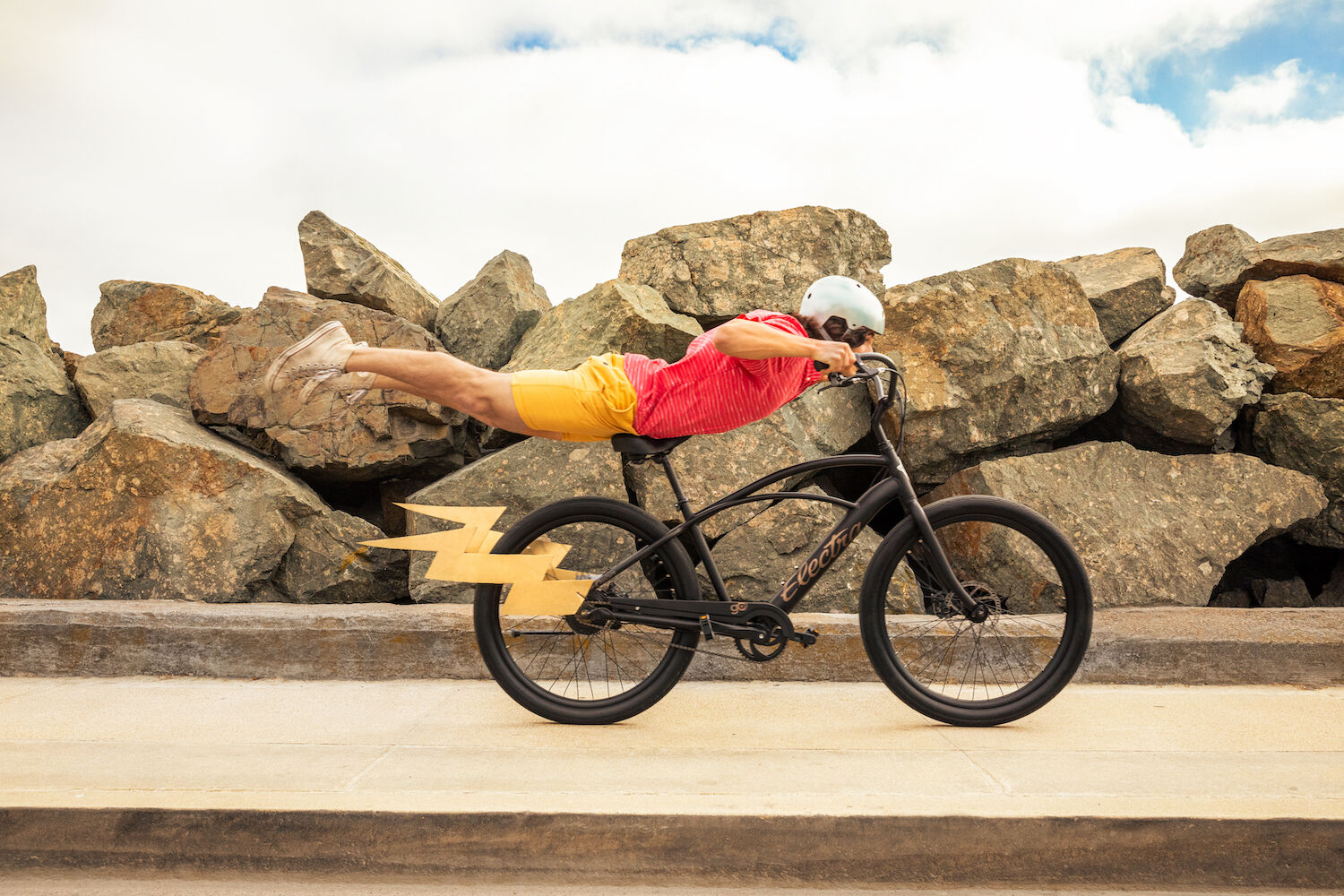
On the eve of its 30th birthday, Encinitas bike-maker Electra stays true to its roots, building casual cruisers for everyday riders
Electra Bikes san diego
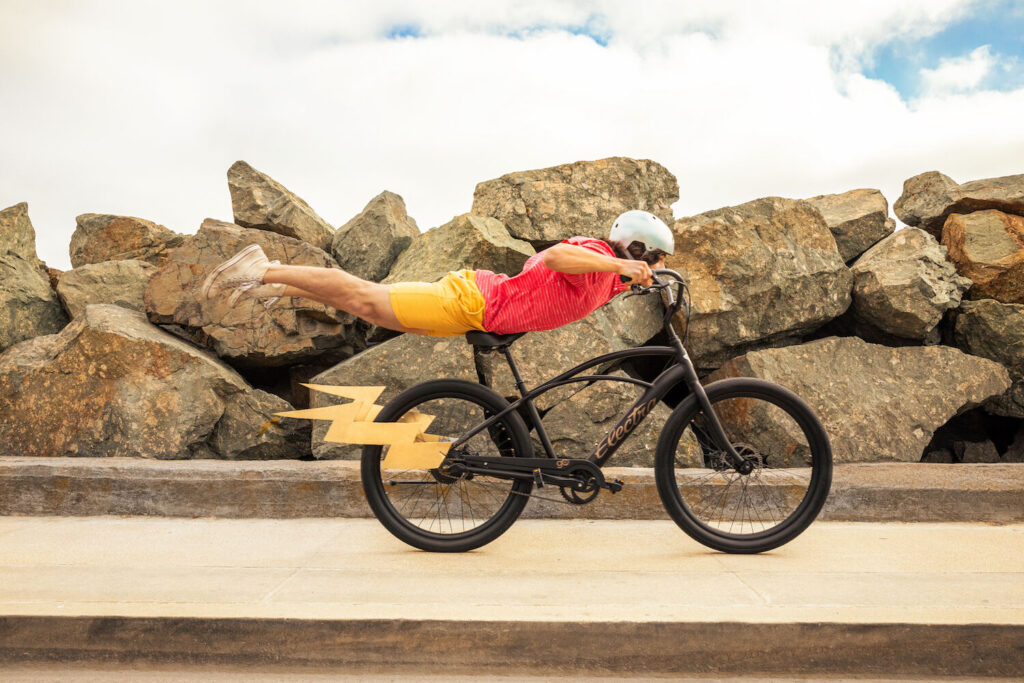
Kevin Cox gets a kick out of spotting vintage Electra bikes. In Holland, while strolling scenic canals, the Electra president saw several classic Townies, the laidback bike with braun that made the Encinitas-based company a global hit in the early aughts. In Idaho, it was an old- school Electra Townie Go!, which is one of the best-selling e-bikes on the market today.
“You could tell this thing had been ridden a gajillion miles,” says Cox. “That’s awesome. People are using them all the time. They really don’t wear out.”
Electra turns 30 next year, and it’s been quite a ride. For the first decade, the brand turned out a stylish modern riff on the mid-century American beach cruiser—think a souped-up Schwinn in fresh colorways.
“The ocean and beach are part of our DNA,” says Cox, wearing a Hawaiian shirt in his Electra HQ office filled with surfboards and bikes, just a 30-second walk from Moonlight Beach.“You can’t take that away from us. It’s ingrained in who we are as a company.”

Electra bikes, socks
Then came the Electra Townie in 2003. The attractive bike landed somewhere between a beach cruiser and a Euro-style commuter model. It had sturdy gears and brakes. It came in fun and edgy hues and graphics packages, including collaborations with artists and other brands. And, most importantly, it was painstakingly designed to be easy and comfortable.
“It’s our flat-foot tech,” says Cox. “And I say that tongue-in-cheek because it’s not so technical. You can put your feet flat on the ground when you stop without having to jump off the seat.”
In a market once dominated by road, mountain, and BMX bikes, the cool- looking comfort bike became a sensation.
“The Townie got a lot of people on bikes who thought they’d never ride again,” he says.

Electra bikes – 30th
Today’s much-improved Townie has stood the test of time, and it’s also gone electric. “In 2012, we took our best-selling Townie and made it an e-bike,” says Cox, describing the Townie Go! “That’s our biggest evolution. We’re still a lifestyle bike brand, but we’ve transitioned into being a leading global e-bike company.”
Cox adds that just like the comfort bike, e-bikes are for everyone. Even though he’s a longtime avid road cyclist— the high speeds and Spandex kind—he and his family spend weekends cruising around their Encinitas neighborhood on Townie Go! bikes.
“We’re the 90 percent brand,” says Cox. “There are hundreds of millions who ride bikes, but only 10 percent of those are high-end enthusiasts. The rest are leisure lifestyle riders.”
Cruise through a 10-mile trail featuring pine forests, mixed oaks, snow, and a sub-desert of the greater Sonoran
No, that is not John Denver crooning, “Rocky Mountain high, Colorado.”
It is me, singing, “Laguna Mountain high, San Diego.”
Up a mile in the bluebird sky of the Peninsular Ranges, I pedal away on my mountain bike from Penny Pines Trailhead, which sits off of Sunrise Highway, and go in the direction of the southern terminus of the Noble Canyon Trail, some ten miles away in Pine Valley.
It is a dandy of a trail, traveling through pine forest and mixed oaks before reaching the farthest edges of the Colorado Desert, a sub-desert of the greater Sonoran. Along the way, the traveler, whether on foot, horseback, or bike, descends through six eco-zones. During the winter, when rain and snow fall on the Lagunas, Noble Creek steadily—and sometimes heartily—flows through the canyon, a mountain-to-desert seasonal stream that fills the air with a refreshing and life-giving song.

The Peninsular Ranges are characterized by what some consider to be “sky islands,” meaning that their uppermost peaks reach more than 6,000 feet. The Noble Canyon Trail begins in a pine and oak “island,” then drops in elevation from its northernmost point to its southern end. However, trail traversers also ascend some uphill sections here and there, the first one less than a mile into the trek.
In the far viewshed to the north, snow-capped San Gorgonio glistens in its winter cloak. In the foreground and its environs, the nearby Cuyamaca Mountains sit quietly, peaks like sentinels watching over the land. Cresting out, I go down and around, the trail undulating like a flamenco dancer.
Further on, the trail plummets. The pines seem taller as they reach skyward from the darker forest floor, and the sound of water starts trickling in my ear. Not long after that, there it is: Noble Creek, a narrow ribbon running through the forest on its way to the desert. I cross over it a few times, trying not to get my shoes wet.

About midway down the trail, I arrive at the Tolkien Oak Forest (an affectionate nickname I’ve coined) waiting on the other side of one of the stream crossings. The ambient light is darker. The canopy of magnificent California Black Oaks is so thick that dappled light is all that hits the ground. I stay and quietly sit. This is my rehydration and snack spot, and it’s also where I refill my soul tank. To be here, in this moment, with these trees, is reason alone to make this 10-mile trek.
I continue, soul moderately quelled, knowing there’s more to discover still. Descending through more oaks with scattered pines that give way to desert chaparral and various cacti, I pedal methodically through the rock gardens, taking care not to crash and fall while still keeping pace. Soon, I arrive at the second place along Noble Canyon Trail that stops me in my tracks.

It feels as if I am biking through a keyhole, and, when I finally enter it, I unlock a door that opens to a stunning desert view with soaring ridgelines. Way down below, the stream is a silver snake winding its way through the hardscrabble landscape. Yuccas and beavertail cactus defy the odds, eons of evolution granting them the ability to thrive in an unforgiving landscape.
There’s no escape from the punishing sun. I pause, slathering some sunblock on my face and the back of my neck. The trail bends and meanders, ranging down and up and then down some more, with more rock gardens along the way. Decomposed granite dots the trail surface. When I reach the junction that requires me to turn left to stay on Noble Canyon Trail, I’m feeling a bit haggard, so I refuel with water and an apple, knowing a large sand trap is just around the way.

I pedal quickly past another creek up the slope to the other side, which leads me to another ethereal oak grove where the sun passes through the leaves, illuminating the canopy like a natural cathedral. I sit to take it in.
The next stretch is gradually uphill, a long couple of miles of slight incline that I call “the slog” on account of the endless sand. It’s a put-your-head-down-and-go section of trail.

Cresting out at the end of that slog, I carve my way along the trail as it passes downward through camel-colored boulders to my right and long views on my left. I continue to climb, eventually finding a manzanita forest, a gnarled, fragrant mess that always lures me in. I can never pass through without touching the trees’ silk-smooth bark.
Then, it’s all down-down-down to the parking lot, an exhilarating run. There are more oaks to admire and big rocks to navigate through, culminating in one final push, when the trail finally rolls like a soft magic carpet ride to its end point. I’m greeted by towering pines that whisper in the breeze, singing their own song.
James Murren is an award-winning adventure/travel writer, with nearly three decades of independent journalism experience. He's often having a good time in our local mountains, deserts and waters, when he's not teaching classes at SDSU.
Getting outside and staying active is in our blood; and finding new ways to enjoy yearlong perfect weather is what we do best
South Mission Beach Courts
Patrick Davis for Life’s a Beach
The bike shop sits on a popular commute route and is staffed by affable mechanics who have worked the Tour de France. Hardcore bicycle people don’t have the friendliest rep, but MJ’s is different. They’ve got the skill set to equip racers, but they don’t treat commuters or parents buying bikes like tourists in their world.
One minute you’re casually playing a game of pickleball, the next thing you know, you’ve helped design Gearbox’s newest paddle. The brand is based in San Diego and PBTC is their local court, where they play with locals to gain insights on how to improve their rackets. This sounds like free lessons to us.
When a relative was giving away their boat, local architect Vilchis saw an opportunity to design a 10/10 Instagrammable experience. Now you can class up your day date by recreating The Notebook—a pristinely refurbished tiny boat with padded seats, plant garlands, snacks and drinks, and even parasols. Ryan Gosling not included.
Each weekend on the courts of South Mission Beach, the sand is taken over by 2v2 players—many of which are ESL speakers from various countries. They’ve made this plot of sand their sacred community, where the universal language is bump, set, and spike.
On any given Wednesday on Hamilton Ave., 100 to 200 runners gather to run the streets of North Park. It’s put on by Milestone Running, a shop created by locals Greg Lemon and Chad Crawford. Go a few times and you’re pretty much guaranteed at least ten new friends—might even get “Smirnoff Iced” during the post-run raffle. You win some, you lose some.
Even avid runners can lose motivation. This year, Waterfront introduced a new tradition: beer stops. The three- mile loop starts at Eppig Brewing in Point Loma, then heads to Fathom Bistro for a beer before completing the next 1.5 miles. Finish up with a post-run brew at Eppig, obviously.
Mission Bay Basketball Court
Madeline Yang
San Diego’s maritime history runs deep. America’s Cups have a permanent home here. Harbor Sailboats—seven-time winner of the “ASA School of the Year”—offers sailing courses taught by longtime sea dogs. You know, the type of no- nonsense skippers who know how the wind will change by the way the breeze hits their beard hair.
If you want sky-high firs, oak forests that shade your path, and mountain peaks that overlook actual foliage (read: no palm tree in sight), head to Palomar Mountain State Park. And, since the inaugural California State Parks Week took place this year, there’s no better time to dust off your hiking boots on one of the six hiking trails (five for running).
A mellow 5.7 climb on paper, The Tower at Mission Gorge will have you clipping the first few bolts like you’ve been dirtbagging in Yosemite all your life. You’ll have to dig deep into your courage reserves to tackle the crux, but you’ll be walking down that mountain with your head held high when the sun starts to set.
Hoops here have always had a magical effect—a full regulation court, smack dab on the beach. The ball smells like sunscreen. No fence; out of bounds is in the sand. And it just got an artful resurfacing in honor of local basketball legend, Bill Walton—who’s been a member of the South Mission Beach Sports Park & Rec for 25 years.
Yep, in City Heights. Specializing in boards from local shapers, owner Mark Polintan (who grew up on a pineapple farm in the Philippines) has created an infectious gathering place for surfers to support their peers. Like chasing tubes in exotic locations, you never know what or who you’ll find here, but you’re guaranteed to leave stoked.
Surfers are selfish. No matter how many waves we catch, we always want more. And while there’s no shot we’ll ever change, we can at least direct that impulse toward a good cause. At the annual 100 Wave Challenge, participants commit to riding 100 waves in one day to raise funds for the local nonprofit Boys to Men Mentoring.
Nicolle Monico is an award-winning writer and the director of creative projects, digital editor for San Diego Magazine with more than 19 years of experience in media including Outside Run, JustLuxe and The San Francisco Chronicle.
Our go-to guide for where to hike, bike, run, swim, and get outside in San Diego. Plus: gear, clubs, classes, and more.
Top 10 San Diego Bike Paths
Biking to Cabrillo National Monument
Biking to Cabrillo National Monument | Photo by John Trice
6.6 miles
Easy to Moderate
This route offers breathtaking views of downtown, the Silver Strand, and everything in between. Much of it is a dedicated path, but it’s primarily city streets through downtown and National City. Overall, you’ll experience a fun, flat ride, with plenty of opportunity to work on speed.
START HERE: Embarcadero
5 miles
easy
Ride about five miles of paved path along the water with a breeze that can help you build wind tolerance. Be careful of walkers, strollers, and pet traffic, especially on weekends.
START HERE:Dirt parking lot just off East Mission Bay Drive
21 miles
Moderate to Intermediate
Oh, the views from the Pacific Coast Highway! The out-and-back route includes some challenging hills and plenty of flat, fast surfaces. Watch out for the heavy car and cyclist traffic that shares this route.
START HERE: North Torrey Pines Road
16 miles
Intermediate to Difficult
We suggest the route to Cabrillo National Monument Park beginning at Collier Park north of Voltaire Street in Ocean Beach. Cruise toward Sunset Cliffs Boulevard, turn inland at Ladera Street, and weave your way to Catalina Boulevard. Continue to Cabrillo National Monument Park, where we highly recommend you sacrifice a couple of bucks for the entrance fee.
40 miles
Difficult
Elfin Forest is definitely not for beginners, as it includes some super-challenging climbs (but great scenery). Starting in Del Mar, go north to Leucadia and take La Costa Avenue east. Follow it to Rancho Santa Fe Road, turn right on San Elijo Road, and right on Elfin Forest Road. For an added challenge, stay on Elfin Forest Road until it changes to Harmony Grove Road. From there, follow West Valley Parkway south to Solana Beach. Watch for areas with thin (or no) bike lanes.
START HERE: Pacific Coast Highway, Del Mar
Biking in Balboa Park
Biking in Balboa Park | Photo by John Trice
35 miles
Intermediate to Moderate
We hear this route is a popular one for the San Diego Bicycle Club each Saturday, but you can always try it on your own. Start at UC Cyclery in La Jolla, take I-5 north, then go through Sorrento Valley and back to El Camino Real. Weave your way through Rancho Santa Fe, then back to PCH and head south. Be prepared for a few climbs and narrow roads with lots of car traffic.
START HERE: UC Cyclery, La Jolla
20 Miles
Difficult
Noble Canyon in Cleveland National Forest is a favorite among advanced mountain bikers. Start the trek at Red Tail Roost (Laguna Mountain Visitor Center) and weave your way through to Noble Canyon Connector before finishing up at Pine Creek Picnic Area. Bring plenty of water and $5 for parking.
START HERE: Laguna Mountain Visitor Center
4.6 miles (one way)
Moderate to Difficult
No matter what route you take to the top of Mt. Soledad, you’ll have to work for it. Start at the Cove for a scenic, easy warm-up along the La Jolla coast before turning left on Nautilus Street, which you’ll follow all the way to the top. The views at the top are worth every inch of the climb. Warning: If you go down steep Via Capri, you’ll need good brakes.
START HERE: La Jolla Cove
40 miles
Moderate to Difficult
This route offers a few aggressive hills and fun downhills, starting with a gradual climb to warm up on Kearny Villa Road northbound. Once you turn right onto Pomerado Road, the climbing starts. Follow Pomerado to Scripps Poway Parkway, veering slightly onto Kirkham Way, and then all the way to Highway 67. Next, a long, fast downhill takes you into Lakeside, then toward Santee to Highway 52. Finish up by going back over the hill into Tierrasanta.
START HERE: Santo Road and Clairemont Mesa Boulevard, Tierrasanta
10.3 miles (one way)
Moderate
A favorite of cyclists and walkers, Highway 56 is a great, protected bike path for beginners or experienced riders who want to work on speed. We suggest parking at the intersection of Clews Ranch Road and Carmel Country Road to the west, giving you a primarily uphill ride to start and downhill on the way back. To avoid the inland heat, try this route in the early morning or during cooler months.
START HERE: Clews Ranch Road and Carmel Country Road
Ironman Julie Moss learns to take it slow (for once)
Julie Moss
Julie Moss | Photo by Robert Benson
Where do you go when you’ve climbed your personal Everest? Where does inspiration come from after you have achieved your biggest dreams?
Behind every beautiful space is a thoughtful process, and ASID San Diego is helping homeowners understand the value of professional design.
A perfectly designed home rarely happens by accident. Those kitchens that feel effortless and rooms that seem to tell a story the second you walk in? They’re usually the work of someone who knows exactly what they’re doing.
It’s knowing which ideas will actually work, which materials will hold up over time, and how to turn a collection of choices into a space that feels intentional. That’s where a professional interior designer comes in.
For the American Society of Interior Designers (ASID) California San Diego Chapter, the goal is to help people see interior design as more than just the finished look. Behind every well-designed space is a process built on technical expertise. Designers are educated in everything from professional software and construction details to building codes, space planning, materials, and functionality.

“People don’t always realize how much goes on behind the scenes,” Kirsten Recce , current president of the ASID California San Diego Chapter, says. “Our designers are not just doing furniture placement and color selection and picking out new fluffy pillows. That’s not what they’re trained for.”
ASID members bring formal education, continued learning, and industry knowledge to their projects, helping create spaces that are not only beautiful, but designed to work. A paint color that changes completely depending on the lighting. A material that looks beautiful in a showroom but doesn’t make sense for everyday life. A layout that photographs well but doesn’t function for the people living there. These are the details where professional guidance can make all the difference.
Still, one of the biggest misconceptions about hiring an interior designer is that it’s reserved for massive renovations, luxury homes, or people who already know exactly what they want. The process can feel intimidating. Where do you begin? Is a designer worth the investment? What if you only need help with one room?
ASID’s answer: start with one hour.
ASID’s Spruce Up events break down one of the biggest barriers between homeowners and professional design: knowing where to begin. Held twice a year, the community program gives homeowners the chance to work directly with an ASID designer through a one-hour, $125 consultation in their own home. Whether you’re looking for advice on furniture placement, window treatments, kitchen and bath updates, remodeling ideas, vacation rentals, color selections or something else entirely, the upcoming September 2026 event offers an approachable way to get expert guidance before committing to a full project. Signups are open through Sept. 7, with consultations taking place Sept. 21 through Oct. 31. Proceeds benefit ASID San Diego’s educational and community programs. Register here!

“It’s a great opportunity for people who are in that exploratory phase,” Recce says. “Maybe they’re not sure they want to hire an interior designer yet, or they think it sounds daunting or expensive. This gives them a chance to discover what working with a designer is actually like.”
Design is personal. A good designer isn’t just creating a beautiful room; they’re helping create a space that fits the way someone lives.
“We’re a resource to all of San Diego County,” Recce says. “It doesn’t cost anything to pick up the phone and call and ask. We’ll answer.”
Follow ASID San Diego on Instagram, LinkedIn, and Facebook for updates on upcoming events, or connect with the chapter directly at [email protected] or 619-548-8847.
Our go-to guide for where to hike, bike, run, swim, and get outside in San Diego. Plus: gear, clubs, classes, and more.
Top 10 San Diego Bike Paths
Biking to Cabrillo National Monument
Biking to Cabrillo National Monument | Photo by John Trice
6.6 miles
Easy to Moderate
This route offers breathtaking views of downtown, the Silver Strand, and everything in between. Much of it is a dedicated path, but it’s primarily city streets through downtown and National City. Overall, you’ll experience a fun, flat ride, with plenty of opportunity to work on speed.
START HERE: Embarcadero
5 miles
easy
Ride about five miles of paved path along the water with a breeze that can help you build wind tolerance. Be careful of walkers, strollers, and pet traffic, especially on weekends.
START HERE:Dirt parking lot just off East Mission Bay Drive
21 miles
Moderate to Intermediate
Oh, the views from the Pacific Coast Highway! The out-and-back route includes some challenging hills and plenty of flat, fast surfaces. Watch out for the heavy car and cyclist traffic that shares this route.
START HERE: North Torrey Pines Road
16 miles
Intermediate to Difficult
We suggest the route to Cabrillo National Monument Park beginning at Collier Park north of Voltaire Street in Ocean Beach. Cruise toward Sunset Cliffs Boulevard, turn inland at Ladera Street, and weave your way to Catalina Boulevard. Continue to Cabrillo National Monument Park, where we highly recommend you sacrifice a couple of bucks for the entrance fee.
40 miles
Difficult
Elfin Forest is definitely not for beginners, as it includes some super-challenging climbs (but great scenery). Starting in Del Mar, go north to Leucadia and take La Costa Avenue east. Follow it to Rancho Santa Fe Road, turn right on San Elijo Road, and right on Elfin Forest Road. For an added challenge, stay on Elfin Forest Road until it changes to Harmony Grove Road. From there, follow West Valley Parkway south to Solana Beach. Watch for areas with thin (or no) bike lanes.
START HERE: Pacific Coast Highway, Del Mar
Biking in Balboa Park
Biking in Balboa Park | Photo by John Trice
35 miles
Intermediate to Moderate
We hear this route is a popular one for the San Diego Bicycle Club each Saturday, but you can always try it on your own. Start at UC Cyclery in La Jolla, take I-5 north, then go through Sorrento Valley and back to El Camino Real. Weave your way through Rancho Santa Fe, then back to PCH and head south. Be prepared for a few climbs and narrow roads with lots of car traffic.
START HERE: UC Cyclery, La Jolla
20 Miles
Difficult
Noble Canyon in Cleveland National Forest is a favorite among advanced mountain bikers. Start the trek at Red Tail Roost (Laguna Mountain Visitor Center) and weave your way through to Noble Canyon Connector before finishing up at Pine Creek Picnic Area. Bring plenty of water and $5 for parking.
START HERE: Laguna Mountain Visitor Center
4.6 miles (one way)
Moderate to Difficult
No matter what route you take to the top of Mt. Soledad, you’ll have to work for it. Start at the Cove for a scenic, easy warm-up along the La Jolla coast before turning left on Nautilus Street, which you’ll follow all the way to the top. The views at the top are worth every inch of the climb. Warning: If you go down steep Via Capri, you’ll need good brakes.
START HERE: La Jolla Cove
40 miles
Moderate to Difficult
This route offers a few aggressive hills and fun downhills, starting with a gradual climb to warm up on Kearny Villa Road northbound. Once you turn right onto Pomerado Road, the climbing starts. Follow Pomerado to Scripps Poway Parkway, veering slightly onto Kirkham Way, and then all the way to Highway 67. Next, a long, fast downhill takes you into Lakeside, then toward Santee to Highway 52. Finish up by going back over the hill into Tierrasanta.
START HERE: Santo Road and Clairemont Mesa Boulevard, Tierrasanta
10.3 miles (one way)
Moderate
A favorite of cyclists and walkers, Highway 56 is a great, protected bike path for beginners or experienced riders who want to work on speed. We suggest parking at the intersection of Clews Ranch Road and Carmel Country Road to the west, giving you a primarily uphill ride to start and downhill on the way back. To avoid the inland heat, try this route in the early morning or during cooler months.
START HERE: Clews Ranch Road and Carmel Country Road
Ironman Julie Moss learns to take it slow (for once)
Julie Moss
Julie Moss | Photo by Robert Benson
Where do you go when you’ve climbed your personal Everest? Where does inspiration come from after you have achieved your biggest dreams?
No gatekeepers, no creative rules, no perfect definition—the city’s DIY publishing scene makes room for anyone with something to say.
If magazines are like the adultier eldest daughters who know exactly how much anarchy they can get away with, zines are the far less predictable younger siblings going on whim and instinct. Those who draw on the walls around the house, DIY their own piercings, and experiment with different emo/straight-edge/back to emo phases (or not-phases). Boundaries and routines are what zines were created to rail against.
Walk into Verbatim Books’ zine corner, and this rebellion is immediately clear. Zines have no singular form, no clean category or definition. Vintage magazine scraps are collaged into new meaning alongside mini fandom zines. Single sheets of plain white printer paper are covered in nothing but black ballpoint pen. Repurposed hardback book covers are folded into something entirely new. Some are duct-taped together, others stapled. Some glossy, others matte. There are guides to anything and everything, comic panels, photography, hand-drawn cartoons, poetry, recipes, diaries, and ramblings that only make sense to the person who made them—and that’s on purpose.
Zines are creative magic. And with no rules, they’re incredibly accessible. Anyone can zine and have a voice, regardless of artistic training or work life experience.
You are your own Anna Wintour, Graydon Carter, Ruth Whitney.
San Diego–based zine creator Lyssette Williams specializes in mini zines—often limited to eight pages, they’re meditations in abbreviation. Outlining, thumbnailing, and revision all move quickly from idea to page. Larger projects, including Williams’ long-form graphic novel thesis, move at a slower pace. For those, she often returns to pen and ink, a choice that resists the over-editability of digital work.
Raised by a single mother and navigating mixed-race identity in a predominantly white town, she finds a home for processing it all in zines. Her work deals in identity, belonging, self-definition, and punk-rock childhood. But it isn’t always heavy; Williams creates a mini duck-themed zine called Backyard Duck Propaganda that’s hard not to love. “When I create, I think about what would have helped me find the words back then, what my younger self would’ve needed,” Williams says. “[Zines] put the tools in your hands and democratize art. They’re translations of memories and identities.”

For Williams, a big reason she keeps creating is being surrounded by other creatives—a scene that extends across the border. She points to Verbatim and Comicbook Artists of San Diego, plus events like Zine Fest (October 17–18 this year at Woo in Barrio Logan) and Black Comix Day at the WorldBeat Cultural Center.
Zines have always been a road for subcultures. During the Harlem Renaissance, Black creatives like Langston Hughes and Zora Neale Hurston self-published one issue of Fire!!, which inspired other Black authors. In the 1930s, zines (then called fanzines) were hubs for sci-fi nerds to write fanfiction, address the fandom, and create new characters. Superman actually made his public debut in a fanzine called Science Fiction (he was originally cast as a villain with a fully receded hairline). A couple decades later, zines about feminism and riot grrrl became subculture de rigueur.
The internet nearly killed zines, of course. But now, people tired of the algorithm’s firehose are finding comfort and renewed inspiration in analog. Zines, a salve for digital fatigue.

A giant figure in San Diego zine culture is Burn All Books. Founded by Amanda and Nick Bernal, BAB started as a risograph (digital screen printing) studio and turned into one of those places that keeps expanding the whole scene around it, even forming its own archive group, SCANNNERS. Since opening in January 2023, it has published over 35 works and collaborated with more than 100 artists, writers, and zinesters.
For Duophobia, the pseudonym for local twin sisters Alora and Kiani Dotson (affectionately known as the “possum twins”), zines make room for experimentation and play that doesn’t fit anywhere else. Room for eclectic cartoons and dirty jokes. For sticker-covered sketchbooks.
It’s that same brand of nostalgia you might feel when, say, you walk past the carcass of an abandoned mall and see a faded cartoon mural. Their work lives somewhere between childhood and adulthood, where being unserious is taken very, very seriously.
“We’re born and raised in San Diego, and the community of artists here is a main reason we started publishing,” Kiani Dotson says. “There are people here like Trixxie Land who run open art gatherings. Show up, and you’re part of it.”
Land, a zinester herself (she made 250 single-page zines during 2020’s lockdown), is all about storytelling over hierarchy. Art shouldn’t be about gatekeeping or intimidation, she says. So she holds open-invite arts shows at Subterranean Coffee.

Duophobia regularly share their work at local galleries like Subterranean, filling that lowbrow space with pieces that answer: “What would’ve made us laugh as kids?” Children are often the first to pick up their zines, unfolding them in every direction while parents briefly panic at the impulsive destruction. The twins always step in. “No, no, it’s okay,” they say, before showing how one sheet of paper folds into an entire little book. “It’s like magic.” More often than not, the kids leave with a tiny zine tucked under a tiny arm, future San Diego zinesters in the making.
When asked what a zine really is, Alora Dotson’s response was simple: “It’s anything. Literally anything. The more genuine you are, the more people are going to hear what you have to say. Your voice matters, even if it’s just a silly joke or story. People want to hear about it.”
Not a perfect definition? Exactly. Zines inherently resist categories. Want to turn a single playing card into a storybook? Do it. What about your favorite graffiti artist’s signature tag at Prince Memorial Skatepark? Turn it into a zine.
Everything’s a zine.
Isabella Dallas is a freelance writer for San Diego Magazine and the Arts and Culture Editor at The Daily Aztec in her final year at San Diego State University. She previously worked as an editorial intern for SDM, but when she’s not writing, you can find her trying the best coffee spots in SD, devouring the latest rom-coms, and indulging in anything and everything pop culture.
Innovative treatment could offer cancer patients new options with fewer side effects
Chemotherapy and radiation have long been considered gold standards of cancer treatment, but they can cause severe side effects. A promising new approach called theranostics—a combination of “therapeutics” and “diagnostics”—could offer patients with certain types of metastatic cancers new hope. It’s a two-step process that uses a drug that binds to specific receptors on cancer cells. Advanced imaging detects this radioisotope, allowing doctors to then use a second radioisotope that binds to the cancer cells and destroys them. Click here to learn more about how specialists at Scripps Cancer Center are using theranostics.
For more nutrition, wellness, and healthy living tips, sign up for the San Diego Health newsletter here.