SDSU researchers spent 12 days at sea identifying potential hazards to coastal communities
Written by Bryana Quintana About 70% of earth’s surface is ocean, yet only 5% of the world’s oceans have been explored. One matter overlooked by the general public and scientific circles alike is how shifting faults and landslides thousands of feet under the water can lead to earthquakes and tsunamis on land. This is what […]
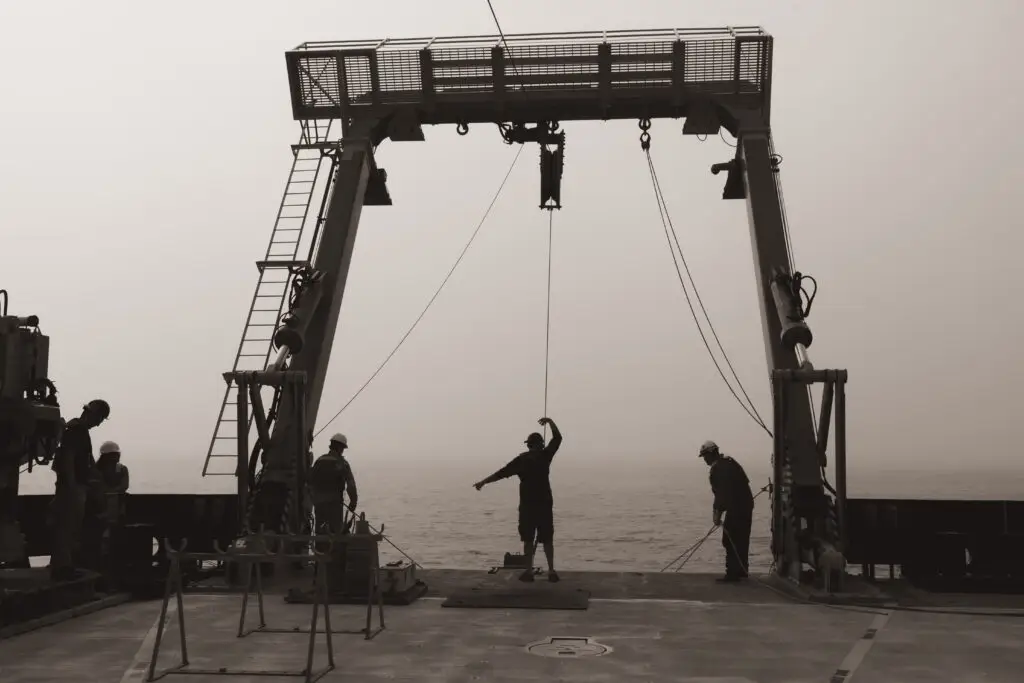
The SDSU and UCSD crew deploy and recover a dredge, which collects rocks from the seafloor. Credits: Andrea Fabbrizzi / San Diego State University
About 70% of earth’s surface is ocean, yet only 5% of the world’s oceans have been explored. One matter overlooked by the general public and scientific circles alike is how shifting faults and landslides thousands of feet under the water can lead to earthquakes and tsunamis on land.
This is what San Diego State University associate professor Jillian Maloney and her team of researchers spent 12 days at sea investigating.
“These are hazards to people living in Southern California and making sure we’re prepared for these kinds of disasters saves lives and protects infrastructure,” Maloney said.
In Southern California, earthquakes are the primary cause of most large underwater landslides. Tsunamis can be triggered by earthquakes or sizable landslides which move huge volumes of sediment from higher to lower elevations, displacing large amounts of water.
Local faults like the San Andreas are well-studied and can be more easily monitored because they are on land. But faults far off the coast and well below the water are much more difficult to study and even detect.
That’s where the Research Vessel (R/V) Sally Ride came in. The vessel, managed by Scripps Institution of Oceanography, is equipped with specialized scientific instruments and used exclusively for research.
With funding from the UC Ship Funds Program and a mission to map the seafloor to better predict and protect coastal communities from natural disasters, Maloney’s crew set out for the waters around San Clemente Island. About 100 miles off the San Diego coast, they saw nothing but blue sky, ocean and the occasional small island for nearly two weeks.
The team used the boat’s sonar technology to map the region’s complex topography, generating images showing the faults, tectonic segments and landslides hidden beneath the water.
“We identified faults that appear to be recently active, and that is an indication that they do pose a hazard,” Maloney said. “We identified new faults that could have earthquakes that we didn’t know about before and we did identify repeated landslide deposits, an indication that tsunamis are another hazard we should be considering.”
Maloney’s team also conducted sediment coring — quickly dropping a 10-foot tube into the water to extract a section of sediment that reflects thousands of years of seafloor history. Examining the cores for changes in sediment reveals when landslides, earthquakes and other natural events occurred. This informs on future risks.
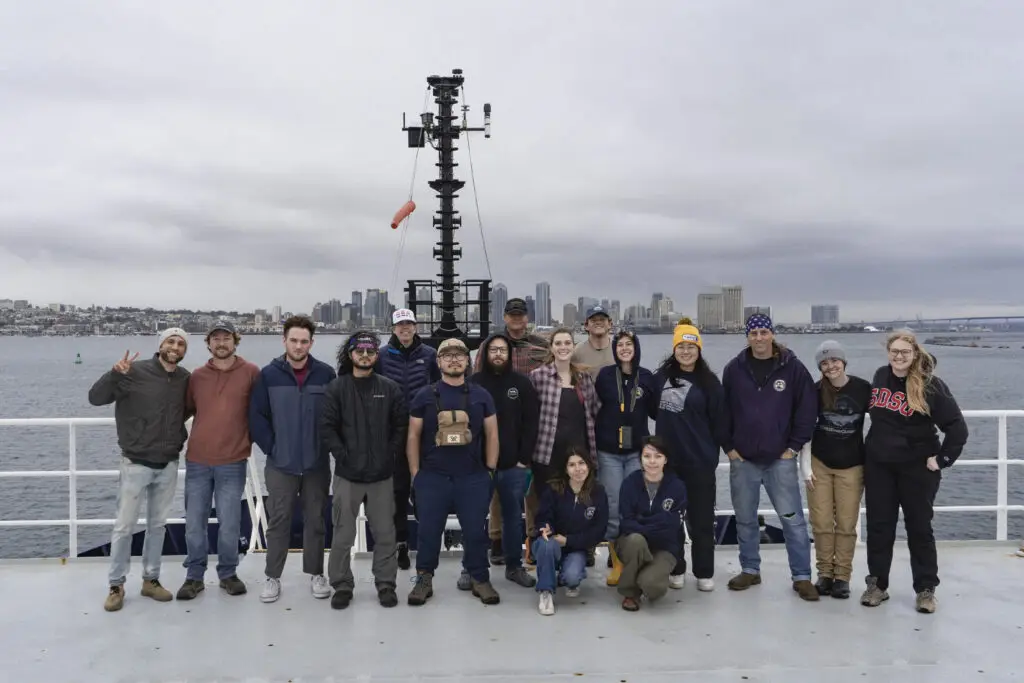
SDSU researchers embark on a scientific mission off the coast of San Diego. Credits: Andrea Fabbrizzi / San Diego State University
“Besides new fault segments and new submarine landslides, we found that there may be smaller landslides that we are not able to see on a sediment core,” said the project’s chief scientist, postdoctoral researcher Andrea Fabbrizzi. “That could be very important because having more ‘invisible’ landslides can change the seismic and tsunami hazard for coastal California.”
“Geological features that we don’t see are out there and must be investigated more to have a better picture of the hazard those features represent for global coastal regions,” he added.
Maloney emphasized that offshore faults and landslides must also be included in hazard assessments, just as cities account for seismic activity on land when developing building codes and emergency plans. Recognizing these threats is key for such large metropolitan areas — whose critical infrastructure includes communications cables running along the global seafloor which transfer more than 95% of the world’s data.
“Earthquakes and tsunamis, we know from experience, are hazardous to life and property. A landslide that breaks a communication cable could be a big deal for people living here, or anything that’s on the seafloor,” Maloney said. “So we hope this work can get us closer to understanding the possibility of those affecting us so that we can be better prepared.”
.
Studio S
OCTOBER 22, 2026
Milan Design + Build Helps San Diegans Remodel Their Homes
The San Diego home remodeling company works on full homes, kitchens, bathrooms, home additions, ADUs, garages, landscapes, and hardscapes.
Most homeowners want two things before they commit to a remodel: a realistic sense of cost and a clear picture of what the finished space will look like. Milan Design + Build helps deliver both through its online remodeling estimator and personalized design consultations, supported by a showroom experience and 3D renderings.
“The online estimate gives homeowners a starting number in about a minute, and the showroom and 3D renderings let them see materials and layouts before anything is built,” says David Noriani, CEO of Milan Design + Build. “Keeping design, permits, and construction with one team helps us manage expectations and keep everyone working toward the same vision.”
Courtesy of Milan Design
Modern design is a particular focus for Milan, with an emphasis on clean lines, natural light, functional layouts, and carefully selected materials. The team adapts each design to the homeowner’s lifestyle and the character of the property. Milan Design + Build combines thoughtful design with construction expertise, creating spaces that are as functional as they are beautiful.
The online estimator covers kitchen remodels, bathroom renovations, full-home remodels, and ADU construction. At Milan’s showroom on Carroll Road, visitors can review real materials, finishes, and design options, meet the design-build team, and discuss project scope, budget, and timing. Consultations can also be held virtually for homeowners who prefer to start remotely.
At Milan Design + Build, one integrated team works on the entire project. Design and construction aren’t divided between separate firms. The process begins with a consultation and feasibility review, followed by design, space planning, and 3D renderings developed from detailed measurements and digital scans. The team also coordinates architectural plans, structural engineering, city approvals, and material selection, with construction overseen by a dedicated project manager.
Homeowners can explore their remodeling options, get an initial estimate, or request a design consultation at MilanBuild.com.
In the last several years, there’s been a surge in FDA approvals for what’s known as oral oncolytics. Oral oncolytics are targeted cancer therapies that come in tablet, capsule or liquid form that patients can take at home, rather than in an infusion clinic. Scripps physicians have seen exponential growth using this approach, with patients citing convenience as a major quality-of-life enhancement in their cancer treatment. This approach also allows treatments to be customized based on specific genetic mutations and a patient’s unique disease biology. Find out more about oral oncolytics here.
For more nutrition, wellness, and healthy living tips, sign up for the San Diego Health newsletter here.
Meet San Diego’s leading healthcare professionals, delivering exceptional medical and dental care through innovation, expertise, and dedication to patients.
Unio Specialty Care is a multi-specialty practice specializing in urology, gastroenterology, and radiation oncology.
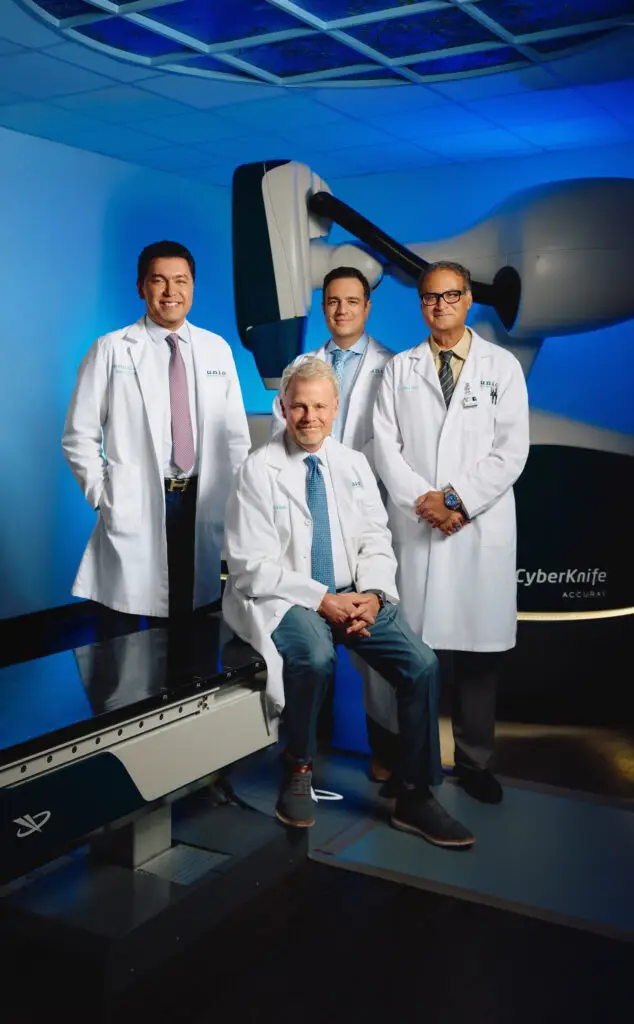
Unio’s Radiation Oncology team—Dr. Donald B. Fuller, Dr. Tahir Ijaz, Dr. Reza Shirazi, and Dr. Siavosh Vakilian—combines extensive clinical experience with a commitment to personalized cancer care. The RO team treats cancerous and non-cancerous conditions using precision therapies including SBRT, IGRT, and the CyberKnife® S7 System, the only system of its kind in Southern California. Their expertise spans prostate, breast, lung, gastrointestinal, pancreatic, and central nervous system cancers, as well as low-dose radiotherapy for osteoarthritis.
In 2026, Dr. Shirazi and Dr. Vakilian were recognized as San Diego Top Doctors, joining Dr. Fuller and Dr. Ijaz, who have previously received this distinction.
Faces of Healthcare 2026: San Diego Fertility Center
Meet San Diego’s leading healthcare professionals, delivering exceptional medical and dental care through innovation, expertise, and dedication to patients.
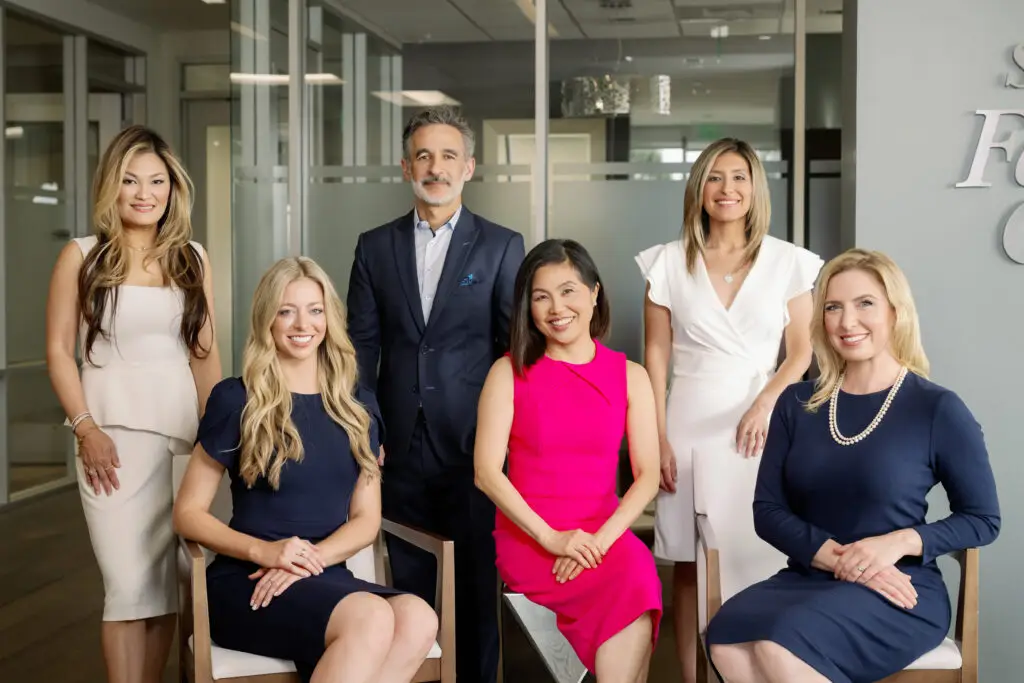
Susanna Park, MD; Sandy Chuan, MD; Brooke Friedman, MD; Said Daneshmand, MD; Valerie Flores, MD; Bryn Willson, MD
At San Diego Fertility Center, parenthood starts with personalized, cutting-edge care. Nationally recognized physicians offer individualized plans spanning IVF, PGT, egg donation, surrogacy, Gentle IVF, fertility preservation, and LGBTQ+ family building. Newsweek ranked them among America’s Best Fertility Clinics in 2026: top 6% of 450+ clinics nationwide, and best in San Diego.
“Remind yourself you are not alone! You don’t have to have all the answers before you walk through the door,” says Dr. Friedman. “Our job is to listen, explain your options, and guide you toward what makes sense for you. Because fertility care isn’t one-size-fits-all — and building your family should feel like your journey, supported every step of the way.”
Faces of Healthcare 2026: North County Cardiovascular Specialists
Meet San Diego’s leading healthcare professionals, delivering exceptional medical and dental care through innovation, expertise, and dedication to patients.
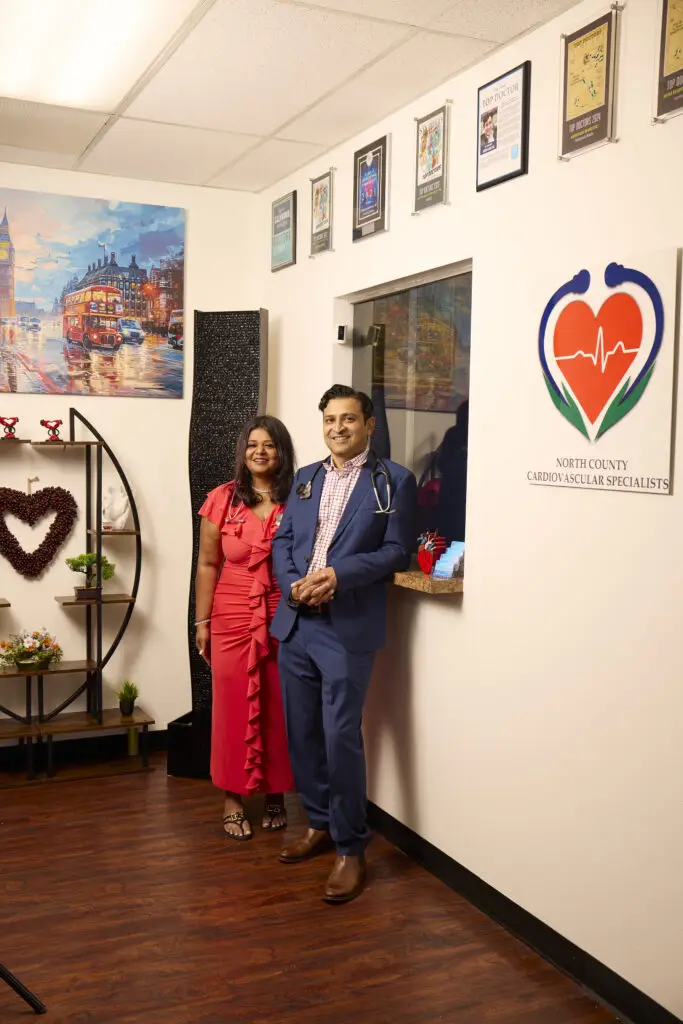
At NCCS, both doctors take a personal, traditional approach to cardiovascular care. Patients speak directly with their physicians and build lasting relationships with doctors who know them.
“We became doctors to care for patients, not to run a business,” says Dr. Kabra, who trained in England and the United States and leads the practice’s office-based cardiac care. Dr. Rajamanickam, an interventional cardiologist trained under renowned Dr. Samin Sharma, shares the same philosophy.
Guided by evidence-based medicine, they tailor care to each patient’s unique history, physiology, lifestyle and goals. Both are respected, well-reviewed physicians and four-time Top Doctors.
Visit
3142 Vista Way, Suite 206, Oceanside, CA 92056 760-224-7776
Meet San Diego’s leading healthcare professionals, delivering exceptional medical and dental care through innovation, expertise, and dedication to patients.
Community health is about more than just vaccines and checkups, At Neighborhood Healthcare, patients receive whole-person care, giving them access to the resources they need to live their best lives—whether that’s primary care, pediatrics, dental care, behavioral health, lab services, or pharmacy needs.
Neighborhood Healthcare is a private, non-profit community health organization in San Diego, Riverside, and San Bernardino Counties. Primary Care Physician James H. Schultz, MD goes above and beyond in serving people with high integrity, professionalism, and collaboration. Alongside the entire Neighborhood Healthcare staff, he works to improve the health and happiness of the community, regardless of situation or circumstance.