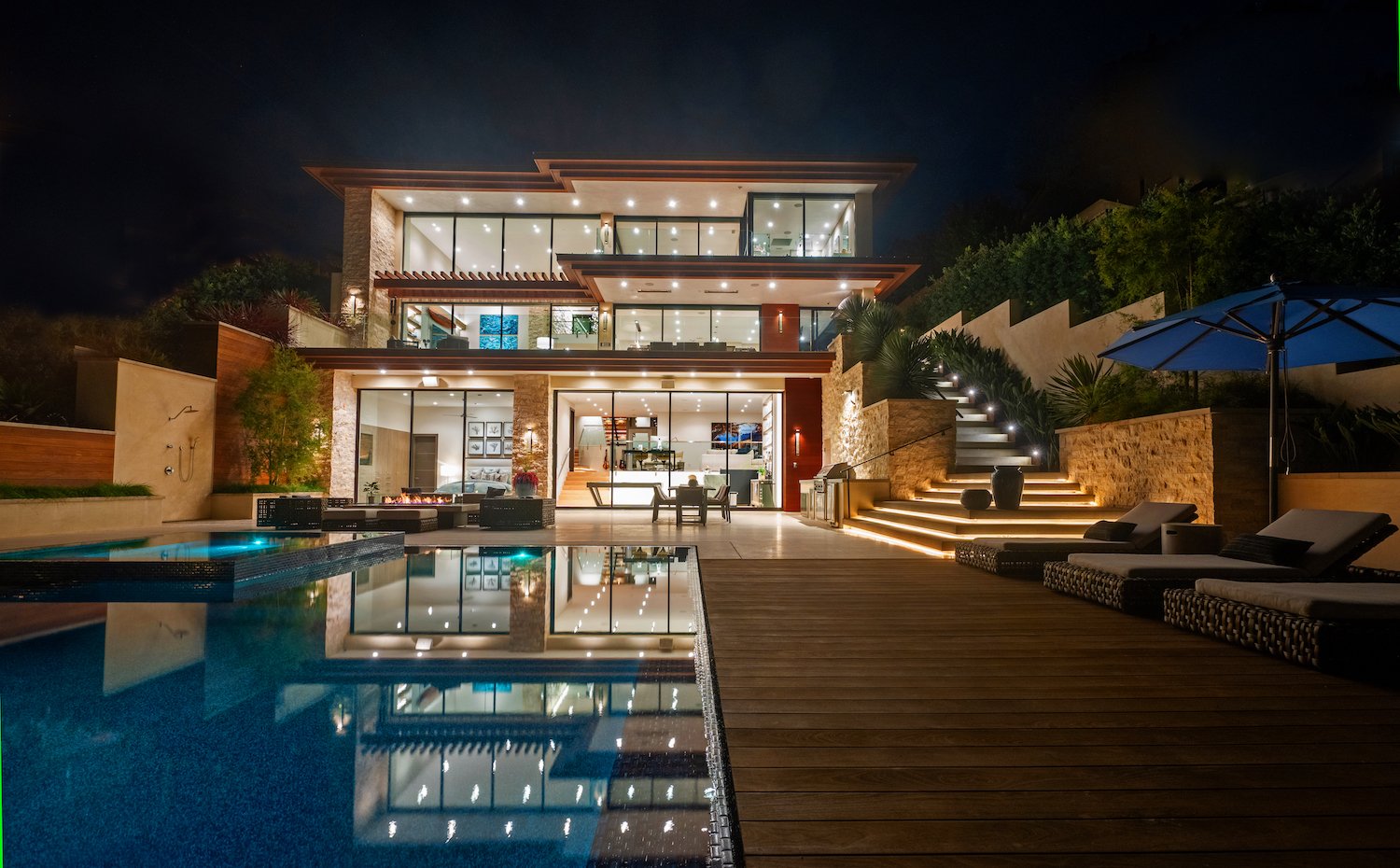
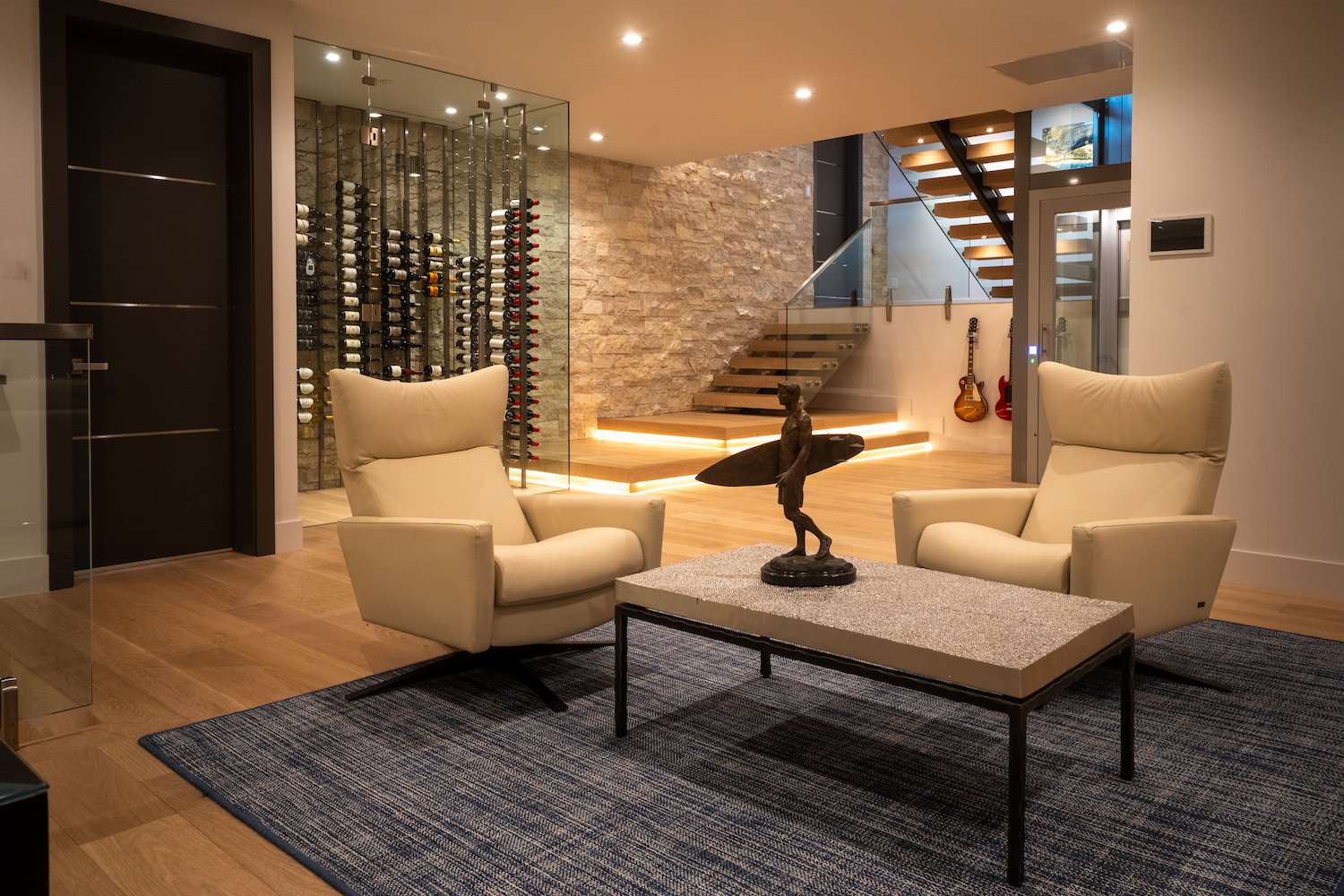
When Kerry Marsh turned 70 last July, his wife Corinne threw a party at their oceanview home in Del Mar. The laidback festivities made full use of its friendly, open spaces. While a favorite musician performed Willie Nelson’s “Always on my Mind,” the couple’s three grown children and a smattering of close friends raised a toast, with the vast Pacific a scant distance away. It may have been Kerry’s birthday, but it was also the home’s debut.
Corinne and Kerry have been married for 41 years. Their family has migrated each summer from their hometown of Fort Lauderdale, Florida to North San Diego County since the kids were little. Kerry, a lifelong surfer, met Corinne at a Fort Lauderdale beach party when they were 16. He briefly studied architecture at college in Miami but soon dropped out to join friends on a five-month surfari from Baja to Guatemala. Back in Fort Lauderdale, he embarked on a development career. Today, his company converts abandoned big-box stores into storage facilities, among other large-scale projects.
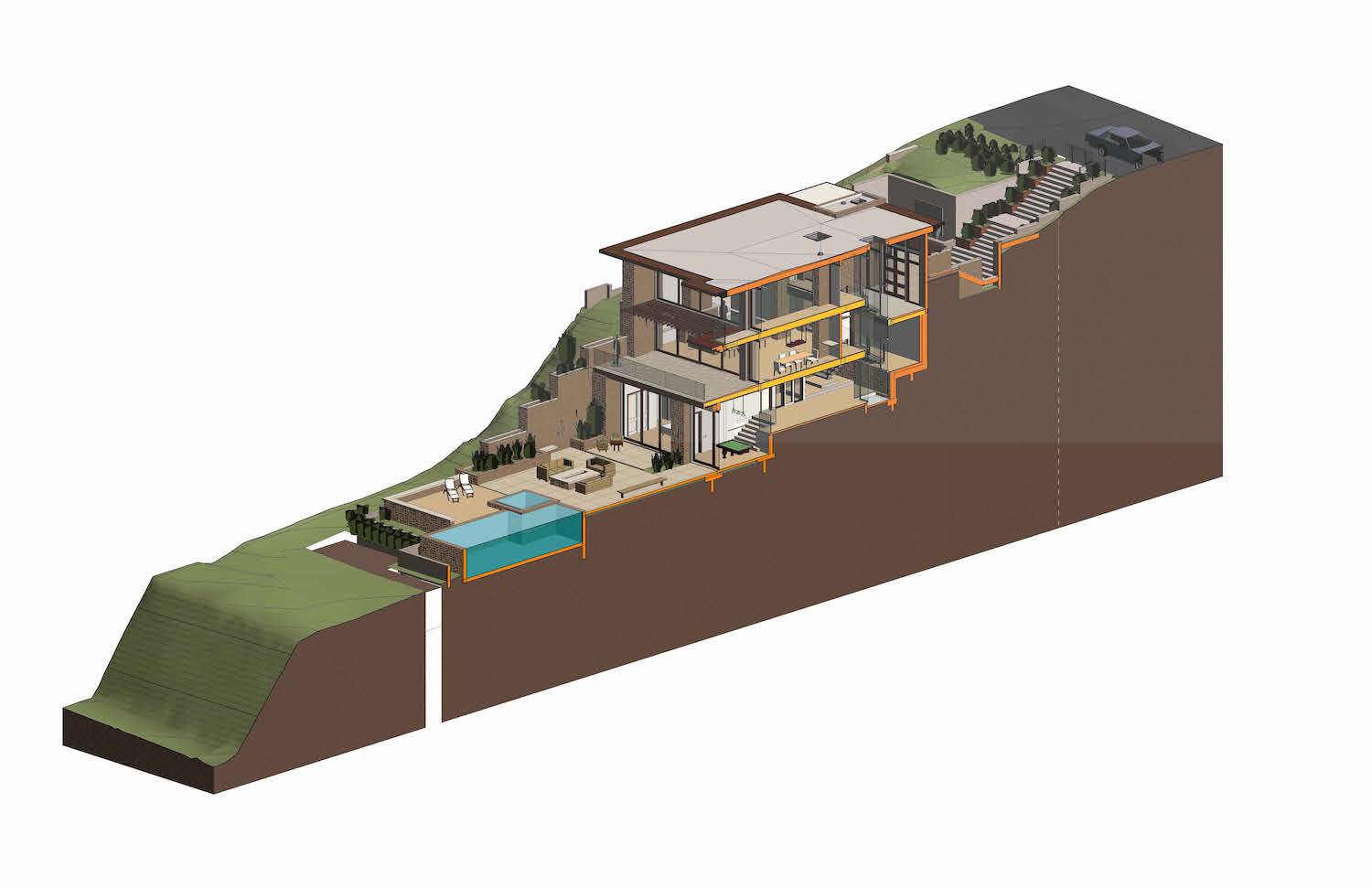
Architect Brian Church’s rendering shows how the home nestles into its steep site.
Fifteen years ago, the Marshes began their search for a site in Del Mar where they could build their dream home. “In the end, it came down to a couple lots,” Kerry says. “Corinne liked this one best, and she was right.” Their one-third acre is only a stone’s throw from Torrey Pines State Beach—if the wind is right and you have a strong arm.
The Pacific Surfliner runs nearby, which doesn’t bother the Marshes. “I wanted to be close to the tracks because I love the sights and sounds of trains passing by,” Corinne says.
The Marshes’ lot formerly held a small 1950s bungalow designed by Del Mar modernist Herb Turner. While many other homes by Turner have been preserved, theirs was an obvious teardown. Their realtor had enlisted Solana Beach architect Brian Church to evaluate sites. He and the Marshes hit it off, and they tapped him for the new house’s design, which went through several iterations before it was approved by the Del Mar Design Review Board. Church’s plan was partly inspired by his love of Southern California modernists such as Richard Neutra and Rudolf Schindler, whose 100-year-old El Pueblo Ribera courtyard duplexes in La Jolla feature strong indoor-outdoor connections and simple materials.
Photo Credit: Phillip Houston Photography Torrey Pines at the edge of the property were preserved as tributes to the Marshes’ three children.
As work began, the Marshes were clear about their priorities.
“I wanted to see whitewater and the waves rolling in,” Corinne says.
“It’s always view, view, view,” Kerry adds. That may sound too simple, but it really captures the home’s essence.
Kerry was not always a fan of modernist architecture, with its spare, no-frills approach. “The design changed at least four times,” he says. “The first version was French Country with a barrel tile roof, then it went more modern, like a lot of stuff I’d seen with wood, metal, glass, and stone. In the end, I’m glad it went the way it did. I really love the house now.
Photo Credit: Phillip Houston Photography Every level of the home features decks and outdoor living spaces.
Construction began in 2018 and was completed in 2021. But it took two more years to “dial it in,” Kerry explains. “We worked on every room and went back and forth with ideas several times.” Church’s design spreads 5,000 square feet among five levels connected by steps zigzagging between wide landings. Smaller spaces tuck into the slope, while voluminous sections face sweeping coastal views. A foundation of two-foot-thick retaining walls is anchored deep in solid sandstone. The rugged base supports open interior areas as tall as 19 feet, though they seem even higher, since the open plan lets you gaze from the bottom level all the way up to the entry landing. The house may be barely visible from the street, but there’s drama over the edge.
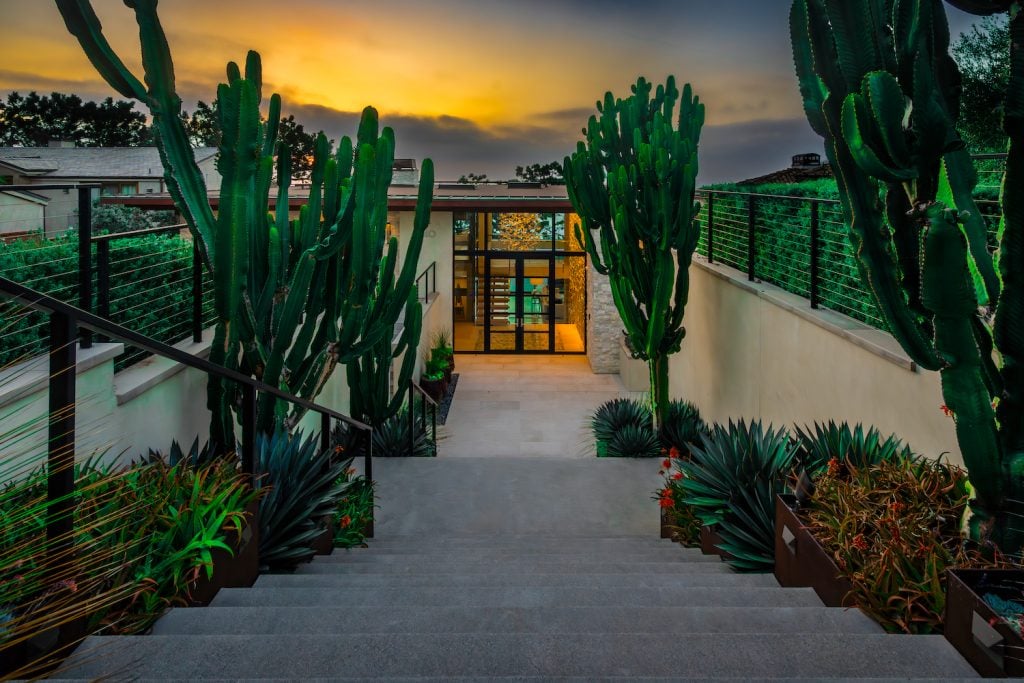
Walls of limestone blocks, dry-stacked without mortar, and smooth-troweled stucco precisely meet floors of limestone and wood. Railings and hardware are made of steel, stainless steel, and copper. Yucca, ocotillo, snake plant, agave, prairie grasses, and other species chosen by landscape architect Greg Hebert, who died in 2022, surround the home. Together, these elements conjure dreamy nights and days in Joshua Tree or Twentynine Palms.
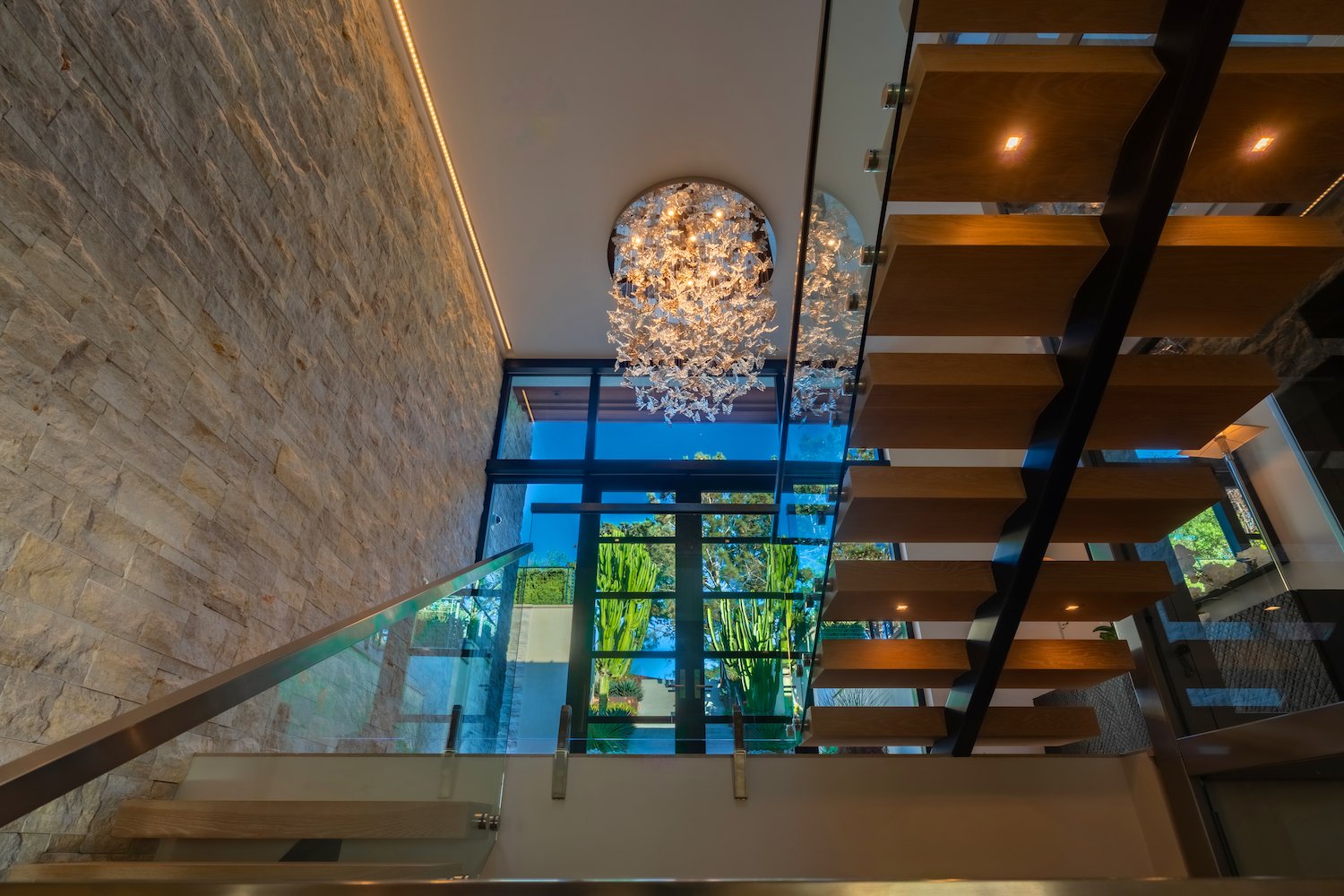
Photo Credit: Phillip Houston Photography A chandelier of crystal butterflies hangs in the entryway.
Kerry has often collaborated with Fort Lauderdale interior designer Michael Beamish, whose resume includes resorts in far-flung locales along with custom homes. Beamish, a charming Brit, brought a simple but elegant aesthetic that resonates with Church’s architecture. Furnishings are contemporary but subtle. Beamish used natural materials including wood grain, soft linens, and light-hued stone.
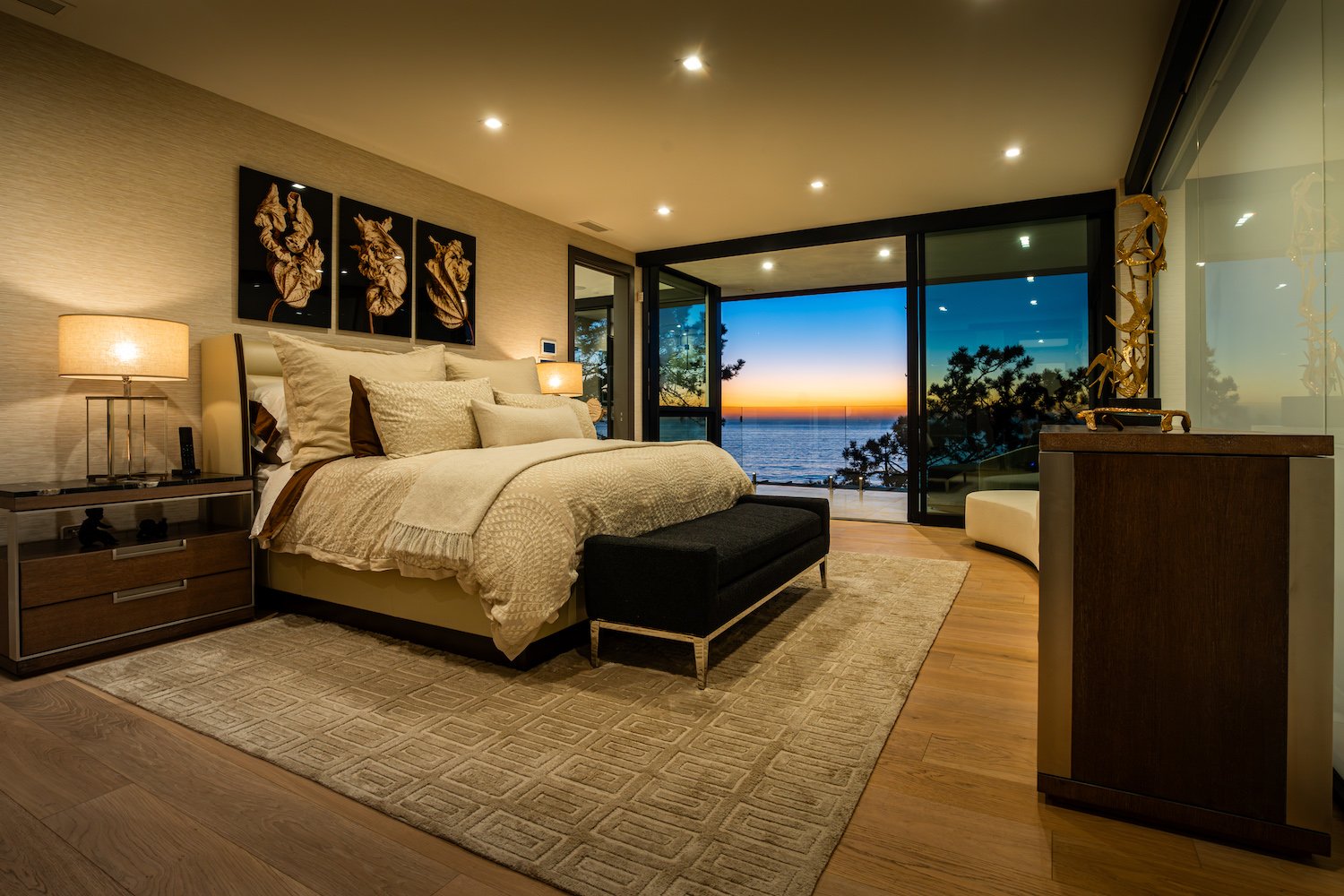
The primary suite is a fabulous lair, Corinne’s favorite place in the house for meditation, solitude, and pondering the ocean and sky. The Marshes enjoy sea views from a custom bed and swoopy freestanding tub. Beamish designed other bedroom furniture, too, like a daybed covered with organic chenille and additional pieces upholstered with fabrics from textile company Kravet. A wall of smart glass overlooks the vast, sometimes bustling central spaces. It goes opaque for privacy at the flick of a switch.
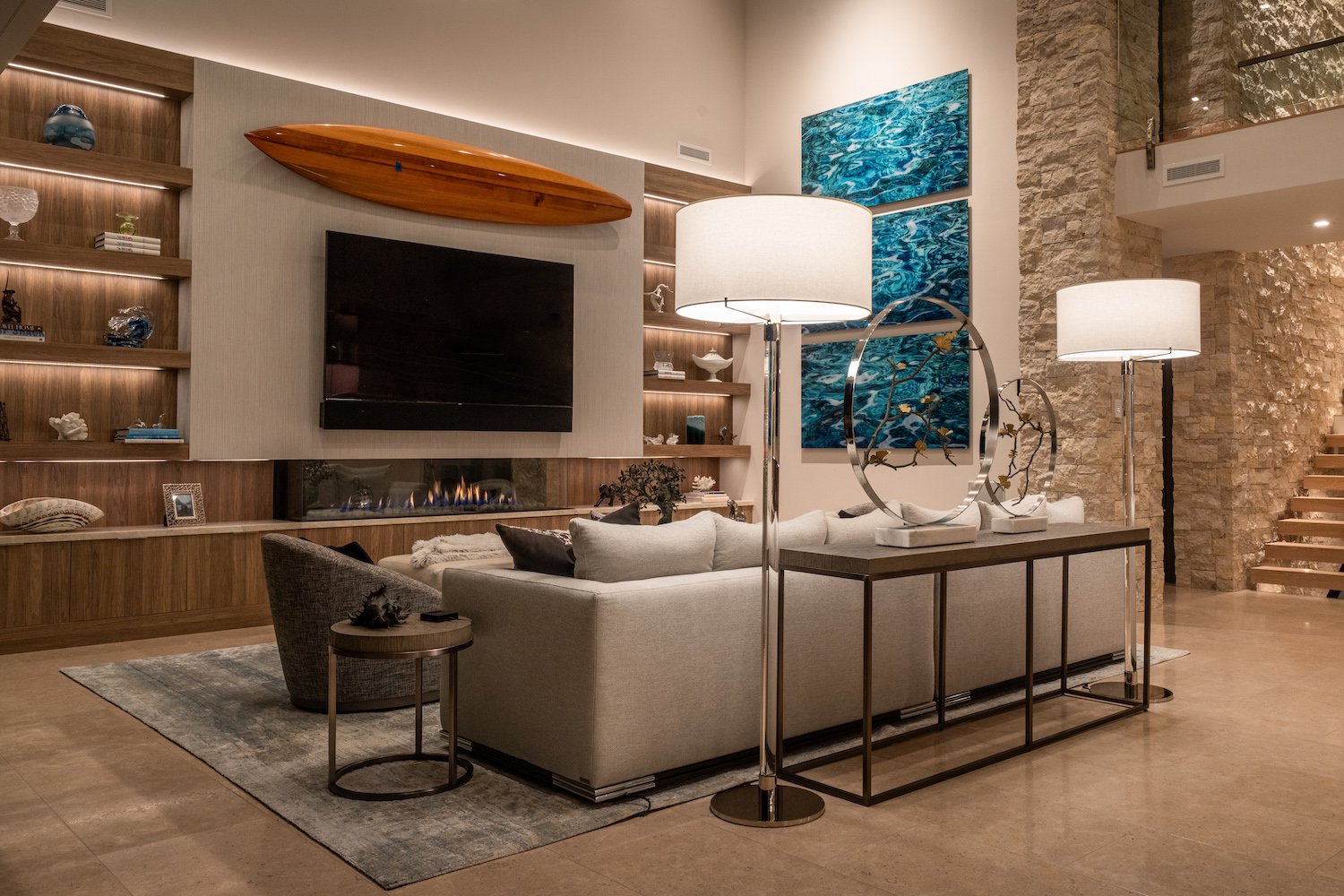
Photo Credit: Phillip Houston Photography Above the fireplace is a custom surfboard like ones designed for big waves at Todos Santos.
A chandelier of crystal butterflies hangs in the entry. Nearby is an industrial-strength, steel-and-glass elevator like the one Kerry saw in a remodeled historical building in Switzerland. The kitchen features stainless steel appliances and light-toned Taj Mahal quartzite countertops. The adjacent dining and living room holds a plush Nathan Anthony sofa and Adriana Hoyos side chairs. Mounted over the built-in gas fireplace and flat-screen TV is a hardwood surfboard matching the contours of boards designed by legendary shaper Gary MacNabb for big waves at Todos Santos, the epic south-of-the-border break. This life-size replica is too heavy for surfing, but it’s a fabulous example of the surfboard shaper’s art.
Photo Credit: Phillip Houston Photography The primary suite is a romantic retreat with custom furniture and fabrics, as well as photographer Aaron Chang’s triptych of dried leaves.
Recessed shelves line walls on each floor. They hold a fascinating, sometimes amusing array of family memorabilia, ranging from framed photos to ceramic objects and a model of cartoonish characters aboard a VW convertible towing a teardrop trailer. Most rooms showcase images by North County photographer Aaron Chang, best known for shots of surfers and coastal landscapes. Many of those are on view, but visitors wandering through will also see Chang’s abstract photos of oceanic textures and colors, as well as a triptych over the primary bed of large dried leaves that he came across in the Dominican Republic.
All told, the home is an homage to the stretch of Southern California coastline just outside its doors—which, for the Marshes, is what it’s all about.
“We wake up every morning, get our coffee, and sit on the patio, and my wife does not want to go back to Florida,” Kerry says. “I walk down the trail and surf behind the house. We walk on the beach every day.”
Photo Credit: Phillip Houston Photography Limestone walls and white oak floors come together with soft-hued textiles and comfortable, modern furniture to create quietly elegant rooms.
“I love waking up here,” Corinne adds. “I raise the blinds and do a prayer and look out and feel like I’m so blessed to have this view in the morning and the sunsets at night. We both grew up middle-class, and we feel very lucky we’ve come this far and get to live here. It was always our dream, when we were young, to live on the ocean and see the whitewater coming in. We got pretty much everything we asked for.”
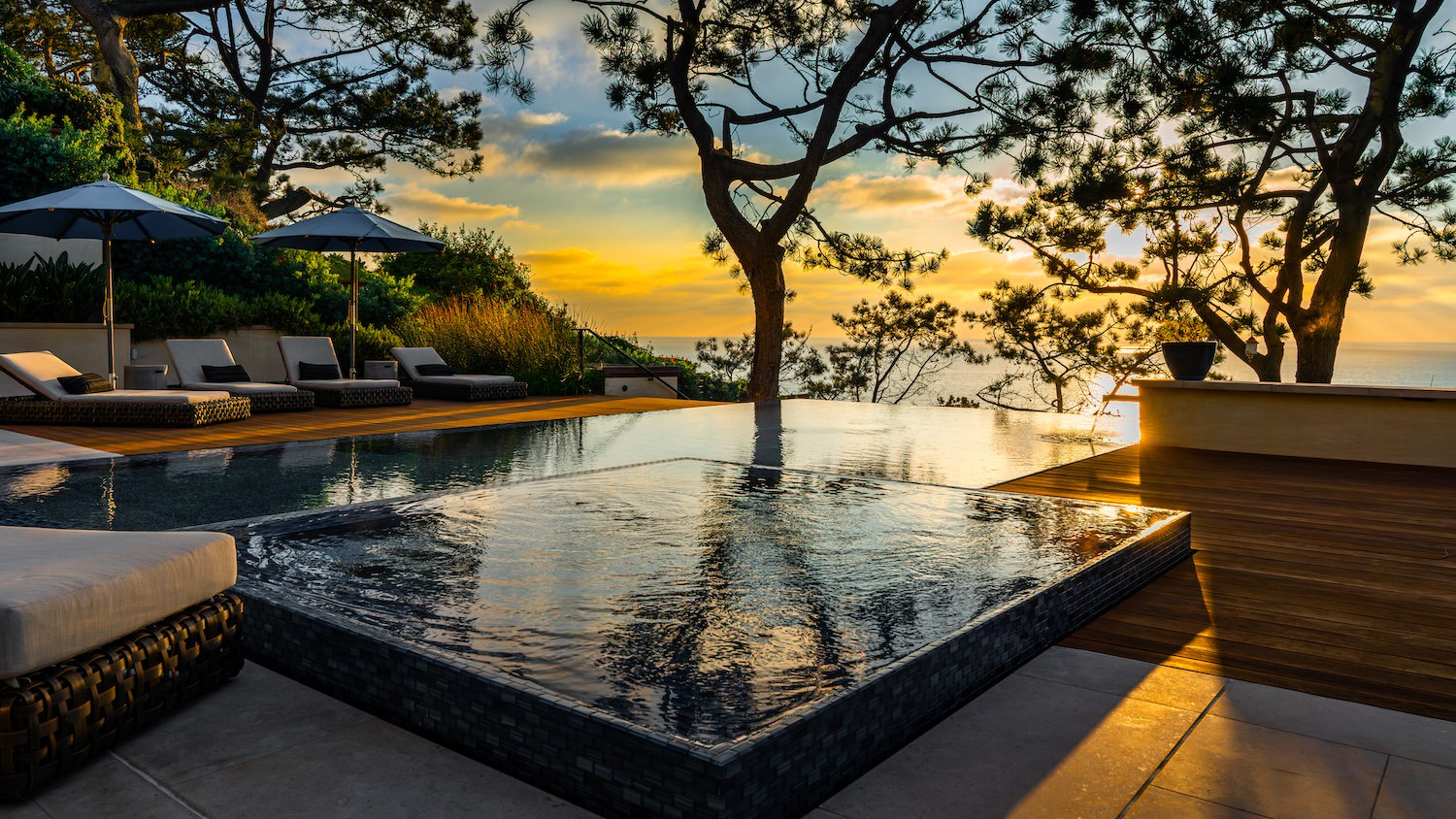
That includes a vanishing-edge pool, just past the built-in wet bar and custom pool table and through broad sliding glass doors. Lined with dark pea gravel, bordered by blue glass tiles and ipe hardwood decking, and furnished with chairs and chaise longues from RH Outdoor, it’s the centerpiece of this outdoor living room, a lovely place to relax most days of the year. At the property’s back edge grow three Torrey Pines that are special to Corinne—she preserved them as tributes to her three children. From just the right angle at sunset, you can imagine that the pool spills through the silhouetted trees and into the Pacific.
Dirk Sutro has written about architecture and design for a variety of publications. He is the author of architectural guidebooks to San Diego and UC San Diego and contributes a monthly column called CityScape to Times of San Diego online.
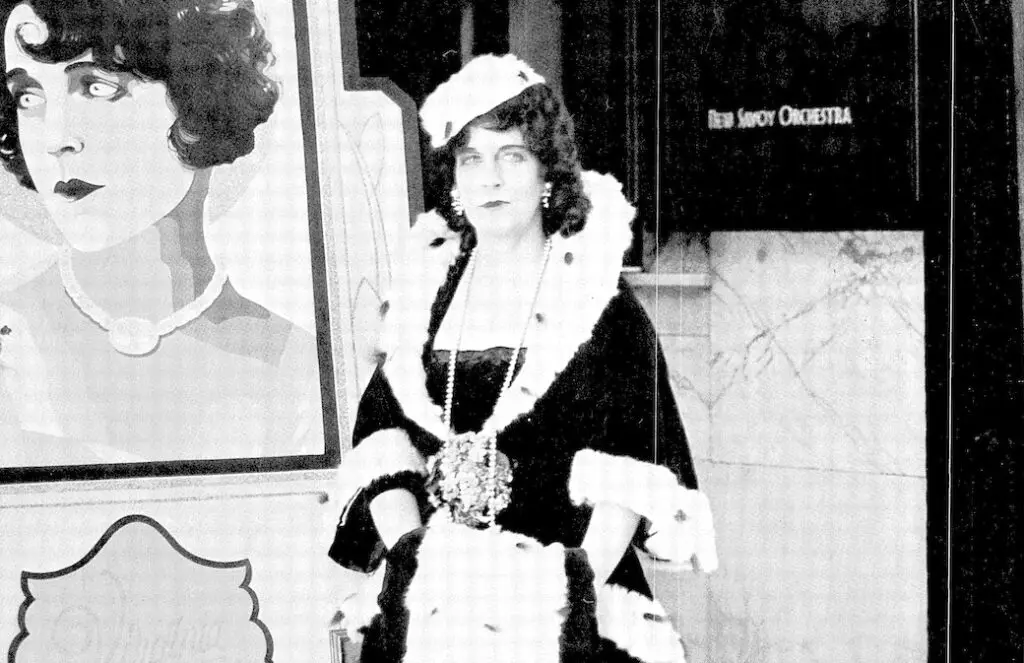
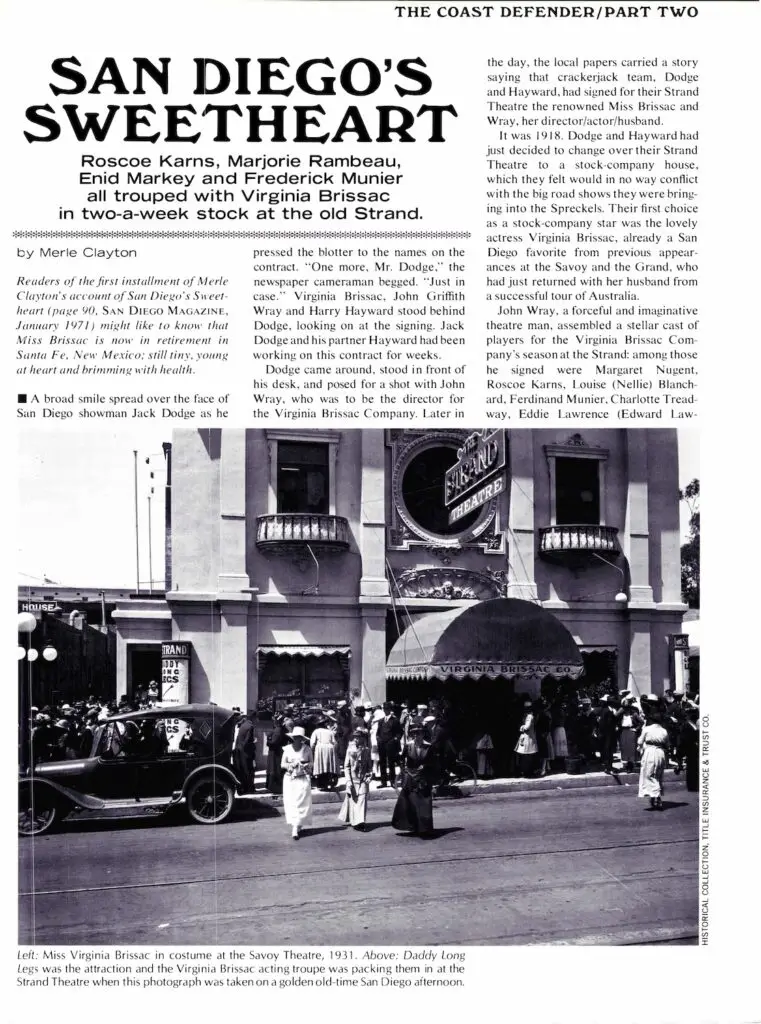
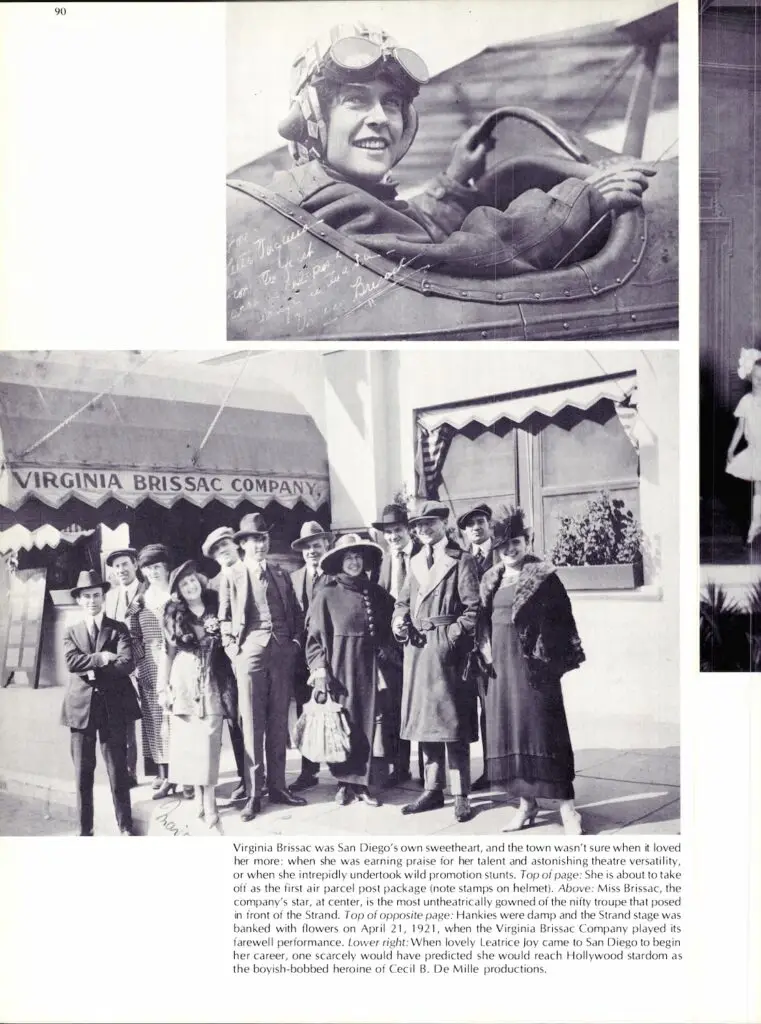
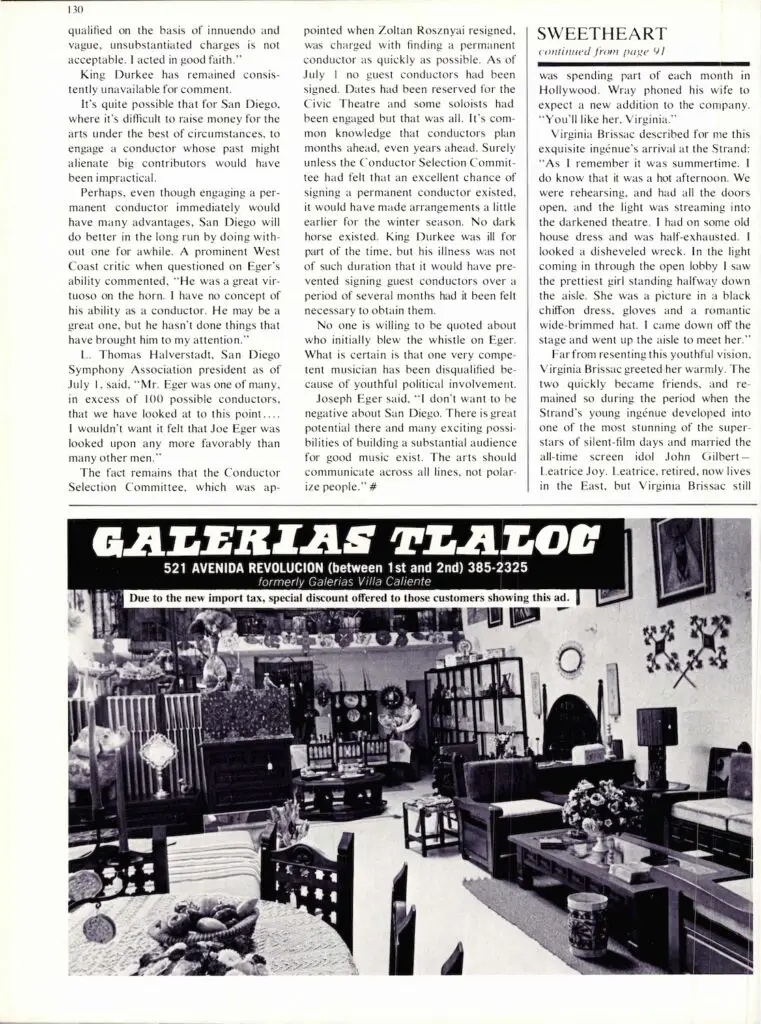
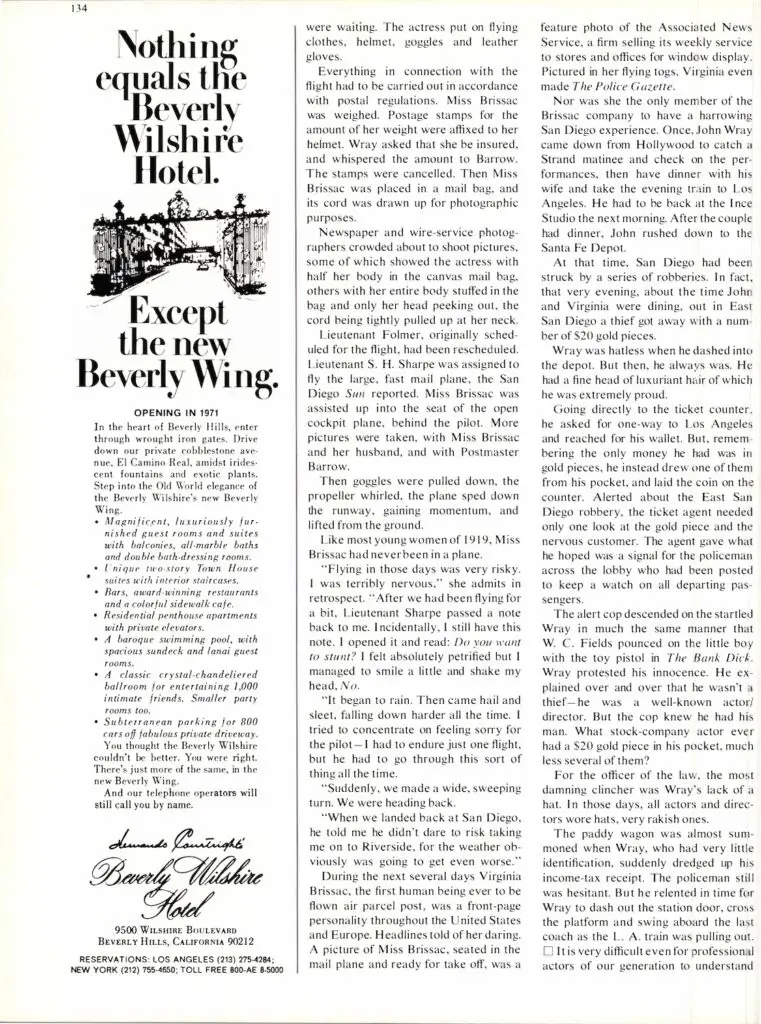
There was once an actress known as “San Diego’s Sweetheart” who mailed herself to Los Angeles—donning a helmet covered in postage stamps and boarding a two-seater, single-engine mail plane. The publicity stunt was billed as the first air parcel package in the US. It wasn’t. She wasn’t even the first human to be mailed: When the US parcel post started in 1913, at least seven people mailed their newborns to relatives (an innovative loophole eventually outlawed).
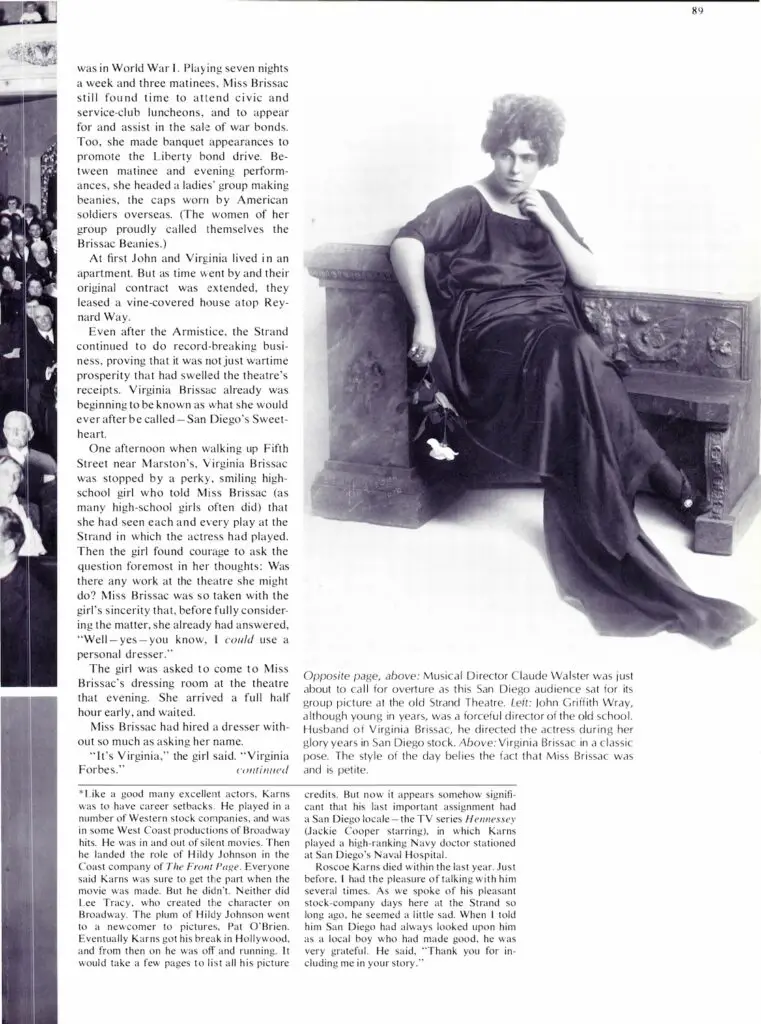
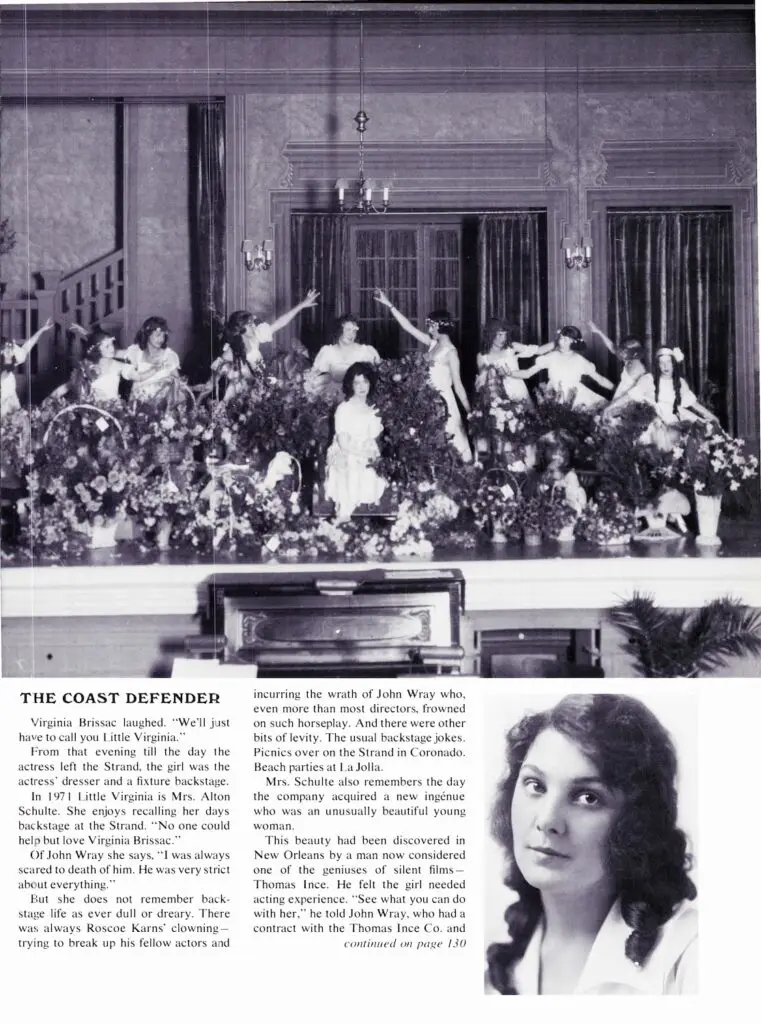
Technicalities be damned. That kind of nose for spectacle was why Virginia Brissac was such a star—landing bit parts in TV shows (I Love Lucy, Dragnet) and 155 films, notably playing James Dean’s grandmother in Rebel Without a Cause. “Nobody could help but love her,” her dresser told San Diego Magazine in a 1971 feature, published when Brissac was 88 years old.
In 1911, she topped the Playbill at the opening of the Savoy Theatre at 3rd and C streets in Downtown—a grand live-performance hall built for $150,000 ($5.2 million in today’s money). It became one of the premiere vaudeville theaters in the country (under vaudeville king Alexander Patages). The theater helped make San Diego a destination for stars like silent-film comedian Roscoe “Fatty” Arbuckle, heavyweight champ Jack Dempsey, plus classical legends Rachmaninoff and Anna Pavlova. As theaters converted to movie houses through the ’20s and ’30s, the Savoy remained dedicated to live humans. It closed in 1940, and the Civic Theater now stands in its footprint.
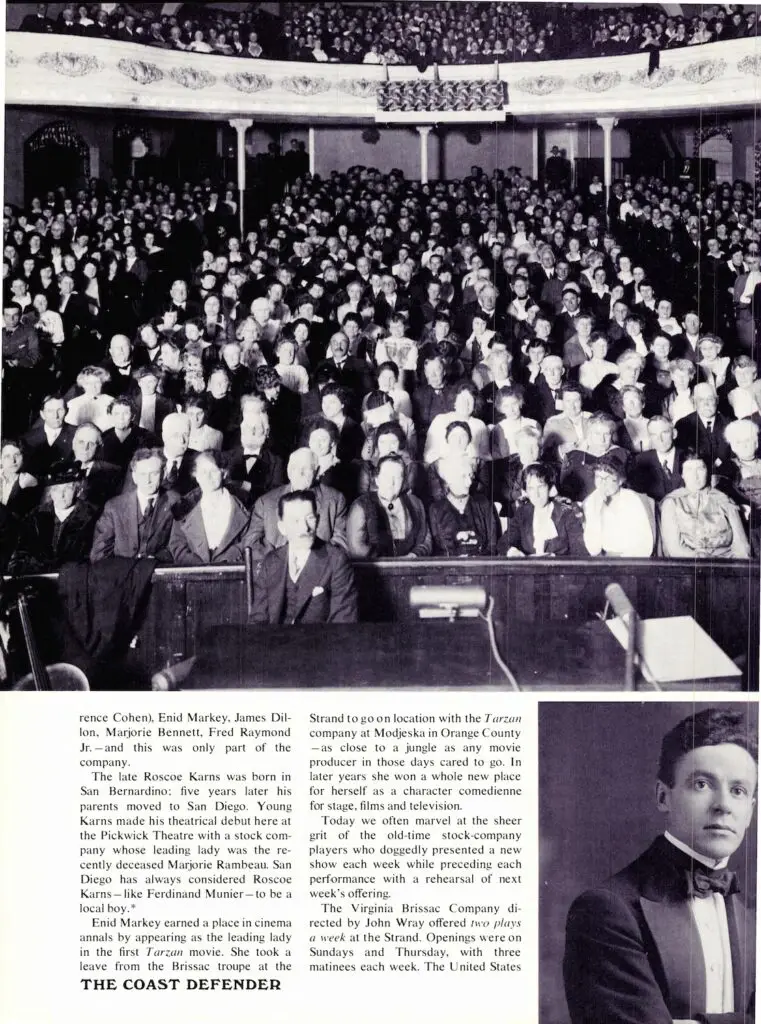
As for Brissac, during a time when women couldn’t even vote, she led a stock company under her own name at the Strand Theatre. The Brissac Company held a four-year residency, “an all-time successful record run for San Diego,” the article says. That classic Ocean Beach theater (featured in San Diego film legend Cameron Crowe’s Almost Famous) has been closed for decades, its bones now a chain beachwear and souvenir store. But Brissac’s legacy lives through the women leading San Diego’s theater scene.
Read the entire 1971 article by Merle Clayton below…
Emma Veidt is an editor at San Diego Magazine. She earned her bachelor's and master's degrees from the Missouri School of Journalism. She loves running, hiking, and rock climbing, but really, she mostly loves encounters with the street cats around North Park.
From celebrity pickleball tournaments to intimate dinner parties with your favorite Food Network chefs, here are all of the can’t-miss events going on Sept 30–Oct 4
Play is underrated. Somewhere along the way, someone decided it was something we should outgrow. That you A good song comes on, and they dance. A game appears, and they’re in. Someone hands them a melting ice cream cone, and somehow it’s the best part of the day.
Adults tend to need a reason. Or maybe just the right setting.
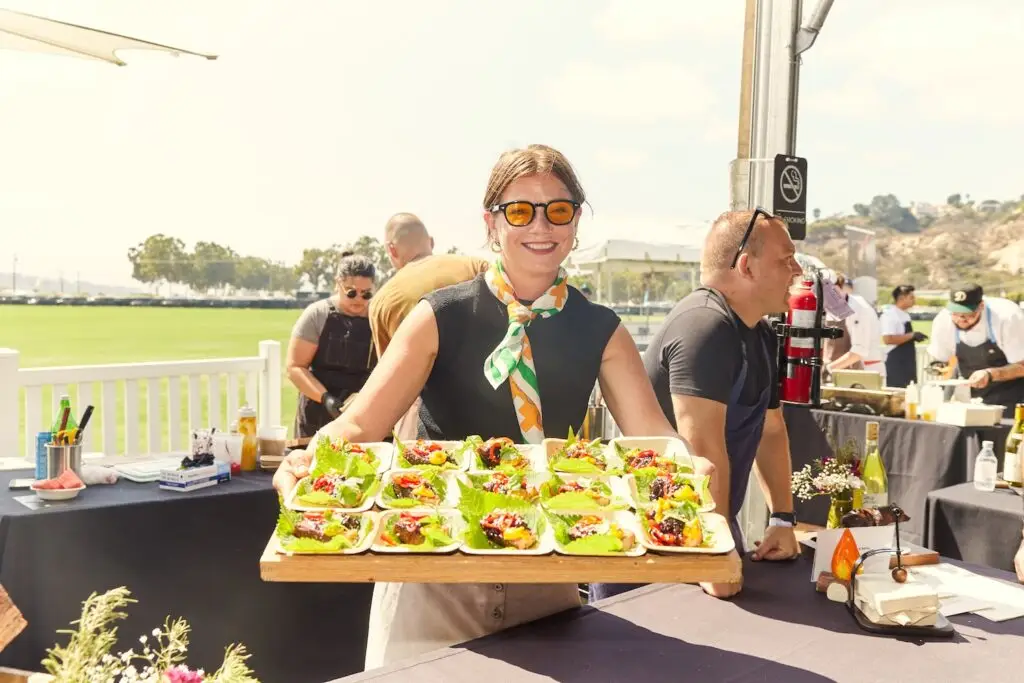
That’s part of what makes the Del Mar Wine & Food Festival feel different. Yes, the week revolves around food and wine, with celebrated chefs, winemakers, and restaurants drawing crowds from across the region. But what lingers afterward is the conversations that stretch a little longer than expected, the strangers who become dinner companions, the live music that pulls people out of their seats, and the rare chance to spend a few hours simply enjoying yourself without much of an agenda.
The Grand Tasting is the festival’s centerpiece, bringing thousands of guests together over two days for hundreds of bites and pours. But some of the week’s most memorable experiences happen on a smaller scale. In the days leading up to the main event, intimate dinners, chef collaborations, and guided tastings create opportunities for guests to interact more closely with the people behind the food and wine and with each other.
Signature San Diego Opening Night Party at Monarch Ocean Pub
Start festival week the San Diego way: ocean views, Baja-inspired bites, and a drink in hand as the sun goes down. The Signature San Diego Opening Night Party at Monarch Ocean Pub sets the tone for the week ahead with a walk-around tasting experience celebrating the flavors that make this city impossible to replicate. It’s an evening of fresh coastal cuisine, bold Mexican flavors, Baja seafood, and plenty of local favorites—all served against one of Del Mar’s most iconic backdrops. Consider it your first official toast to the weekend ahead…
Celebrity Pickleball Tournament Presented by Justin Vineyards & Winery
Wine and competition make an unexpectedly perfect pair. You can join Drew Brees and celebrity players at Barnes Tennis Center for a pickleball tournament benefiting Feeding San Diego, where the sidelines are just as exciting as the court. Grab a paddle, cheer from the sidelines, or simply enjoy a glass of wine while the action unfolds. The day blends friendly competition with an all-inclusive tasting experience.
Since year one, Del Mar Wine & Food Festival has partnered with Feeding San Diego to raise $100,000 in support of the organization’s mission to fight hunger across the region. Every serve, sip, and bite helps give back to the community that makes this festival possible.
Remember that pickleball paddle you swore you’d use? Time to put it to work.
Barnes Tennis Center | 4490 W Point Loma Blvd, San Diego, CA 92107
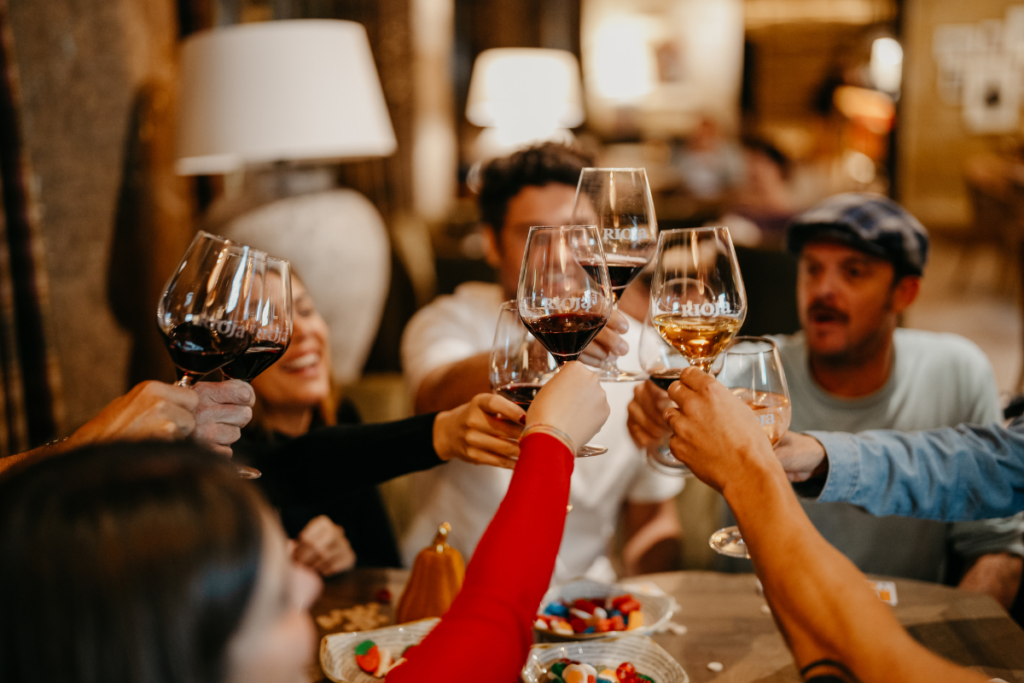
This is essentially a passport to Spain with no airport required. Set among the lush grounds of Rancho Valencia, Rioja Uncorked celebrates one of Spain’s most iconic wine regions with an evening of exceptional pours and thoughtfully paired bites. Guests will sip their way through Rioja wines while enjoying a menu featuring everything from Hiramasa crudo and uni toast to duck rillette, birria mini tacos, Cardiff Crack tri-tip sandwiches, and a sweet finale from Karen Krasne of Extraordinary Desserts (date night plans, solved).
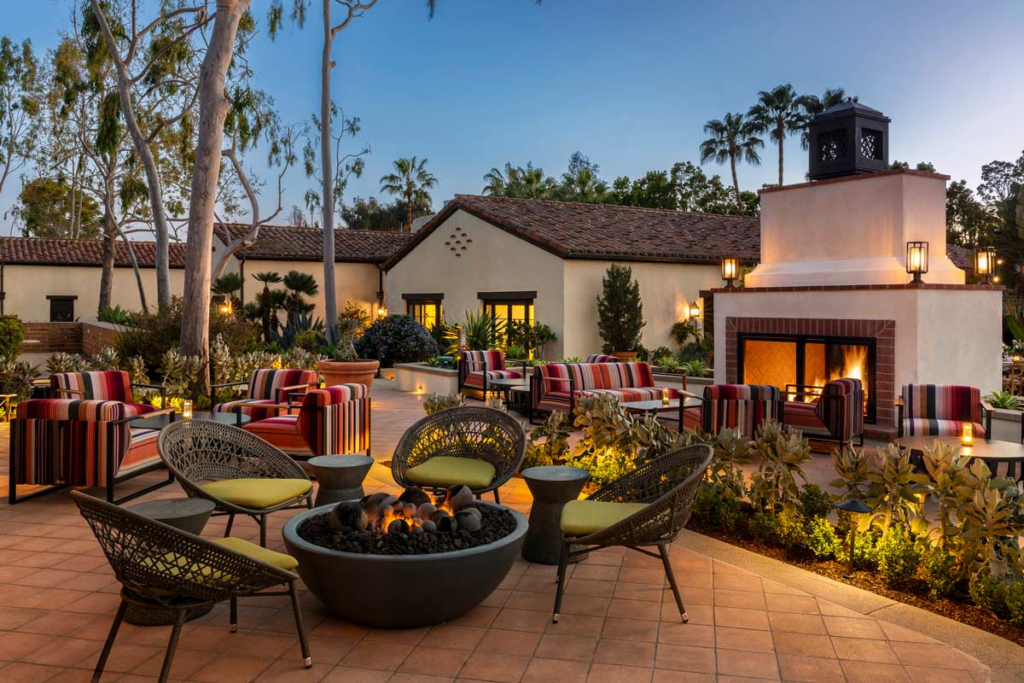
Rancho Valencia | 5921 Valencia Cir, Rancho Santa Fe
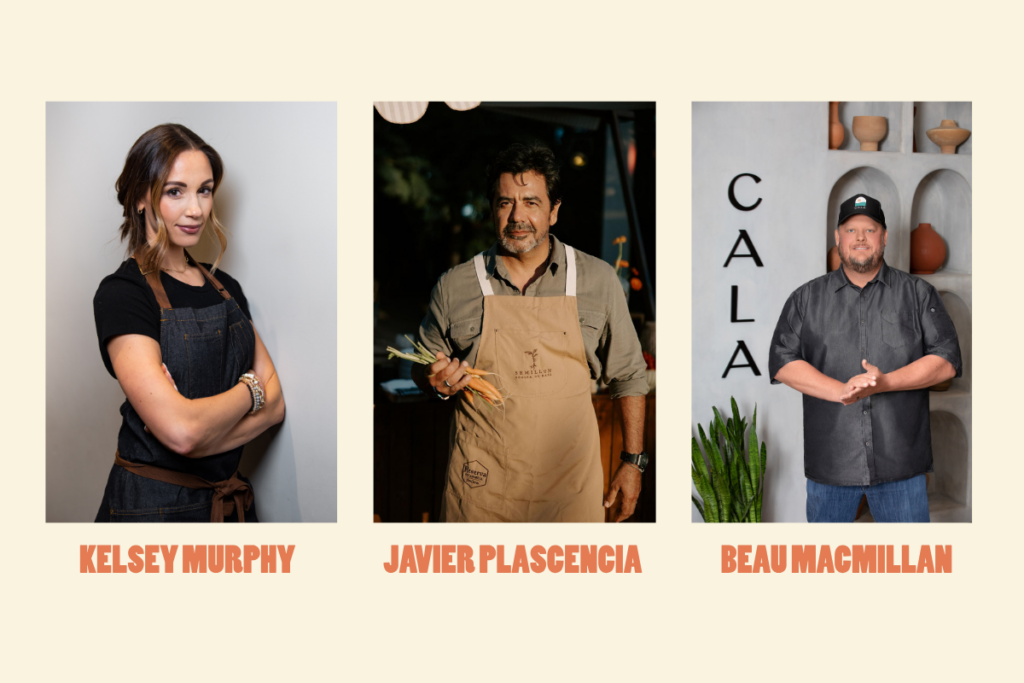
Justin Wine Dinner with Chefs Kaitlyn Weber, Buddha Lo & Jackson Kalb
Justin Wine Dinner sounds simple: three chefs, one unforgettable table. But chefs Kaitlyn Weber (Estancia La Jolla), Buddha Lo (Top Chef), and Jackson Kalb (Top Chef) are taking you on a one-night-only culinary ride where three styles collide over a multi-course menu paired with exceptional pours from Justin Vineyards & Winery. Set in Estancia’s coastal estate, the evening unfolds course by course with pairings from Justin wines as each chef brings their own style to a menu focused on craft, connection, and a bit of friendly culinary overlap. It’s the kind of culinary conversation that only happens when very, very talented people cook together.
Estancia – Olive Lawn | 9700 N Torrey Pines Road, La Jolla, California
Isabella Dallas is a freelance writer for San Diego Magazine and the Arts and Culture Editor at The Daily Aztec in her final year at San Diego State University. She previously worked as an editorial intern for SDM, but when she’s not writing, you can find her trying the best coffee spots in SD, devouring the latest rom-coms, and indulging in anything and everything pop culture.
How Scrojo Became One of Rock’s Most Prolific Poster Artists
The San Diego designer has created more than 3,000 concert posters over nearly 40 years for artists including the Rolling Stones and the Red Hot Chili Peppers
When he was in high school, he and his friends were trying to come up with the perfect name for their punk band that would encapsulate all their personas. Nicaragua. The Freds.
One of his friends said he was going to go by Jimmy Stacks and called it “the perfect rock and roll name.” Their names changed so much that Haskett erupted: “Fine, I’m f—ing Scrotum Joe, the true defender of the Open West.”
Their response: Wow, that’s a great name.
As a teenager, he drew chalkboards for Del Mar’s Pannikin coffee shop and would design T-shirts for surf/skate brand Life’s a Beach. He signed the shirts with his moniker, but even in punk rebellion, who wants a shirt with the words Scrotum Joe on it? “They just cut out the ‘t-u-m,’ and the next thing you know, a client referred to me as that, and it stuck,” he says.
Courtesy of Scrojo
Scrojo could have been part of a band as iconic as The Misfits—had he been able to learn the famously cumbersome bassline to The Kingsmen’s “Louie Louie.” Becoming one of the most renowned concert poster designers—someone who quite literally designed the cover of Art of Modern Rock: The Poster Explosion—is a pretty good Plan B.
“To my knowledge, he’s done more rock posters than anybody else alive,” says Dennis King, whose D. King Gallery in Berkeley, California, serves as one of the largest private rock poster collections in the world. “He’s the hardest-working guy in the poster business.”
King not only co-authored the sequel to music historian Paul Grushkin’s The Art of Rock, but he also handles distribution and sales for all of Scrojo’s work. That’s more than 3,000 different posters over nearly 40 years. (That’s over one poster each week. For four decades straight.)
For anything from boxing matches to rodeos, posters have long been used as promotional items. Toulouse-Lautrec’s famous lithographs advertised Moulin Rouge in the late 1800s. Around the same time, Hatch Show Print in Nashville was making handbills for the Grand Ole Opry.
“I propose this: Cave paintings are the first poster art,” Scrojo says.
Courtesy of Scrojo
Rock and roll posters took off in the 1960s, when the hippie counterculture era replaced conformity and suburbia. Artists like Jimi Hendrix and the Grateful Dead used their vibrant, psychedelic prints as a form of rebellion from the mainstream. Posters were promotional, commemorative, collectible, and especially expressive.
If the name Scrojo is any indication, he doesn’t shy away from imagery that toes the line of being too provocative. He focused more on what inspired him instead of trying to be offensive for the sake of getting attention.
“Didn’t want to show it to my grandmother, but my parents were fine with it,” Scrojo says with a laugh.
“We’ve had to ask him to put a Band-Aid over a nipple every now and then,” says Chris Goldsmith, president of Belly Up Tavern in Solana Beach, where Scrojo started out and hundreds of his posters currently line the walls.
Scrojo spent six weeks at Otis College of Art and Design for a summer semester before drugs, alcohol, and a self-described lack of discipline prevented him from enrolling full time. Still, he taught himself concepts like text hierarchy and later found his niche at the Belly Up and in the surfing and skating world, working with brands like Quiksilver, Rip Curl, Scorpion Bay, and DGK.
His first concert poster was for North County band Borracho y Loco, of which Goldsmith was bass guitarist. Scrojo drew an abstract version of the Belly Up’s iconic shark with colorful calypso and tiki themes.
Early on, he would craft using a pencil, pen, non-reproduction blue pencil, X-Acto knife, rubber knife, and proportion scale to create each poster, and the finished product could take a week or even longer.
Courtesy of Scrojo
“I recommend every artist coming up to do that for like six weeks,” Scrojo says. “It forces you to think about every design decision as you’re going along.”
He has since mastered vector imagery through Adobe Illustrator to the point where, depending on the level of detail needed, he could finish two projects in a day. Still, he fills sketchbook after sketchbook to blueprint.
“I liked his line in particular, and he knows how to draw, which a lot of people don’t really know how to do these days,” King says.
Scrojo would research what each musician’s merchandise looks like to get a feel for each artist’s tone and voice. Once he has his central image in mind, he focuses on what and where to place the text.
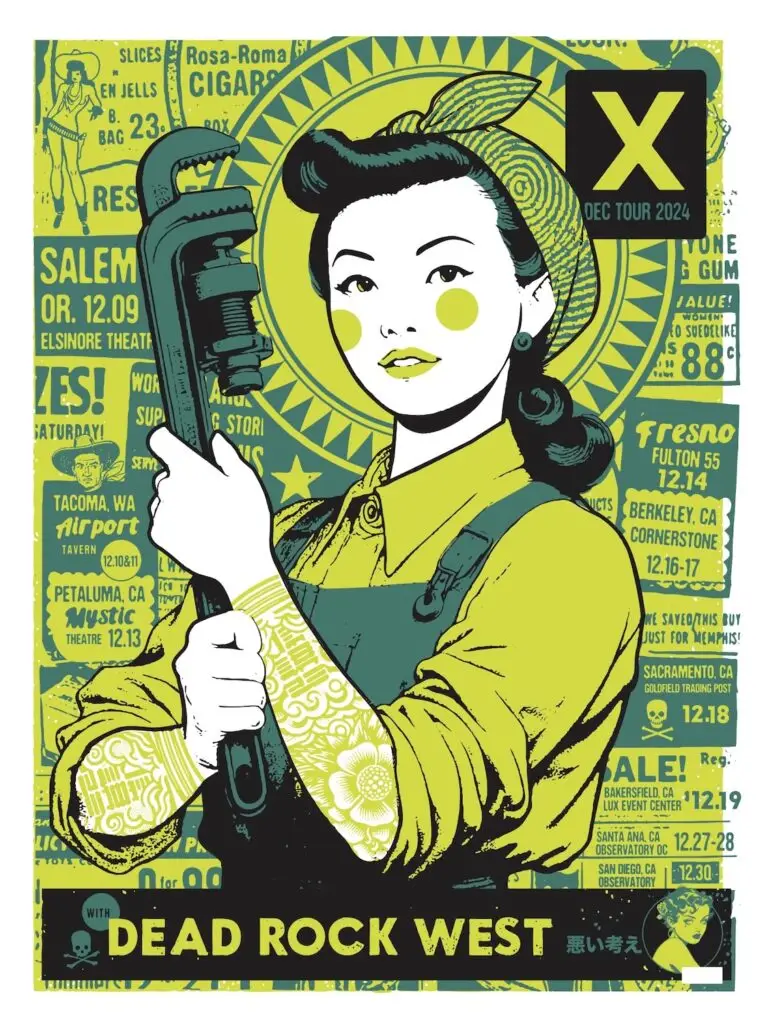
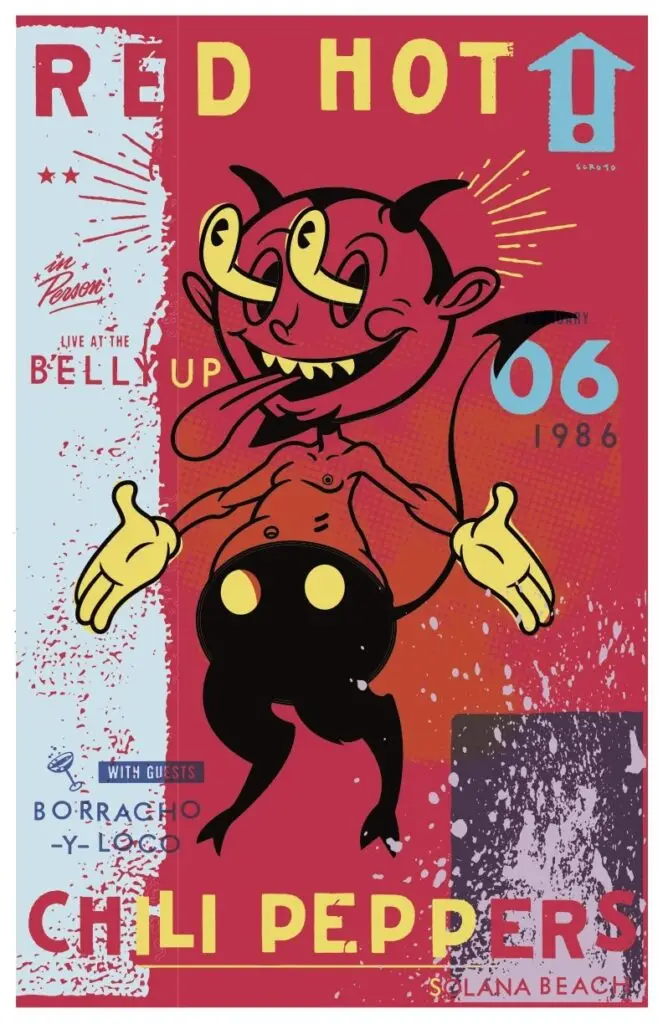
He doesn’t have one specific style, ranging his talents from art deco to psychedelic and everything in between (and outside the lines). Want a pop surrealist comic book cartoon devil with splattered paint textures, halftone dot patterns, and pure chaos? Red Hot Chili Peppers, February 1986. Want a minimalist graphic portrait with bold strokes and graffiti text? P!nk, October 2023. Want a carnival sideshow style piece with a tasteful caricature of Jeff Bridges? The Big Lebowski, August 2011.
Scrojo calls himself a jack of all trades because he can create posters for all music genres. King calls him a chameleon for his ability to adapt his voice to new eras.
Courtesy of Scrojo
“The variety of his skillset makes it possible for us to put 50 of his posters on a wall next to each other and have it look compelling, not just a bunch of the same thing over and over,” Goldsmith says.
Some of Scrojo’s favorite posters are when he feels a personal connection to the artist or the album. He has a vivid memory as a child of being trapped in a closet filled with marijuana leaves while playing hide and seek and staring at Jimmy Cliff’s “The Harder They Come” LP. “For whatever reason, as a kid, that sparked a desire to do graphic design,” Scrojo says.
Fast forward to February 2012, Cliff is performing at Belly Up. Scrojo decided to modify Cliff’s original album cover from rainbow gradient fills to classic reggae psychedelia while preserving Cliff’s striped pants and bold hat. Cliff’s manager called him and said they wanted to use it for the rest of their tour.
“We always get artists requesting that he does their posters,” Goldsmith says. “A lot of artists don’t want venues to go all rogue because they want to control how they’re being presented. With him, they’re like, ‘Let him go nuts.’”
Matt Eisenberg is an award-winning writer and photographer based in San Diego. A former ESPN editor, his work has also been published by CNN, Bleacher Report and the New York Daily News.
Today’s seniors are more connected than ever, with a renewed focus on retirement as a time of discovery and enriching experiences. The ultimate reward for a retirement well-earned is the wisdom to appreciate it all, and what better place to enjoy that unique perspective than Vi at La Jolla Village, in the heart of San Diego.
All-access pass to good living.
As a Continuing Care Retirement Community (CCRC), Vi provides access to a connected and fulfilling community while making it easy to plan for future care, should the need ever arise. With a care plan in place, residents enjoy greater financial predictability and long-term value, freeing them to focus on making the most out of retirement.
Resort-style amenities at the epicenter of a cultural hub like San Diego offer a retirement experience unlike any other. Paired with exceptional dining, spacious accommodations and dedicated staff, the best of maintenance-free living is all around. And with the introduction of Vista 360 Well-Being, Vi’s panoramic approach to wellness, there are more ways than ever for residents to access it all.
The harmony of mind, body and community.
Courtesy of Vi at La Jolla Village
The key to longevity is striking the right balance in maintaining an active lifestyle with an active mind in a fulfilling community. With newly renovated community spaces and restaurants, Vista brings a variety of opportunities for residents to elevate their well-being through Vi-exclusive “Signature Experiences.”
Vista Enrich takes an evidence-based approach to brain vitality, keeping residents at the forefront of cognitive health through exergaming (exercising + gaming), nutritional plans and informative workshops. It is also home to The Brain Vitality Studio, an innovative facility dedicated to cognitive fitness that has garnered national recognition.
Vista Discover invites residents into stimulating educational experiences, from chef-led cooking demos and guided wine tastings to lectures at local universities and intimate lectures following cultural outings.
While Vista Enrich focuses on brain health and Vista Discover engages residents intellectually, Vista Explore cultivates a sense of adventure through curated travel and local excursions. But broadening one’s horizons doesn’t always require a plane ticket. One recent event brought a taste of the world right to the community: an onsite “jazz cruise” featuring live music and global cuisine served at a series of themed “ports” all within the community’s own ballroom.
“Location, location, location”
Courtesy of Vi at La Jolla Village
One of the biggest perks of life at Vi at La Jolla Village is its proximity to just about everything. With easy access to transportation and local attractions just steps away, residents can explore and engage with their community at their own pace.
“There are trolley and bus stops within a 5-minute walk that will get you to the beach, UCSD Campus, medical appointments, downtown La Jolla or San Diego, et cetera. We rarely use our car,” said resident Tom Yager.
With the best of San Diego just steps away, residents don’t just live in the city, they live within reach of everything that makes it special.
The best of all worlds.
Courtesy of Vi at La Jolla Village
At Vi at La Jolla Village, retirement isn’t a chapter to slow down; it’s an invitation to discover more. Tailored community experiences created by Vista, paired with the vibrant pulse of San Diego just outside the door, mean that residents don’t have to choose between security and adventure, connection and independence. They get all of it.
This is what an all-access pass to good living looks like: the comforts of an elevated lifestyle, a community built for growth and a city made for discovery – all in one place.
To learn more about Vi at La Jolla Village or for details on available floor plans, visit ViatLaJollaVillage.com/SDM.
Front yards. They used to be the most controlled part of a home—or not. They could be tidy with manicured lawns, have raised vegetable beds with food for sharing, or act as an overflow of things that didn’t quite make it inside. Thank you, capitalism, and the American habit of endless consumption. In Lemon Grove, where I live, it’s not uncommon to see a mechanic running a business from his front yard or a family selling birria on Saturdays from theirs. The front-yard genre is broad.
But in communities across San Diego County, the most exposed part of a house—the strip between public and private life—is being turned into something eminently usable, visible, and hang-outable. At first glance, this may seem decorative, but in creating an intentional space, particularly one that’s visible to neighbors and passersby, it’s also the release of a pressure valve.
Let’s not gloss it over: American life has taken a hard right at high speed; two wheels have lifted off the pavement as we careen toward who-knows-what, and our nervous systems are making a sound best described as zoinks!
People are trying to (re)build connection in an increasingly isolated culture, (re)find beauty in the midst of endless anxiety, and (re)create a system friendly for critters. Many of us are remembering that, Oh yeah—we’re biological creatures.
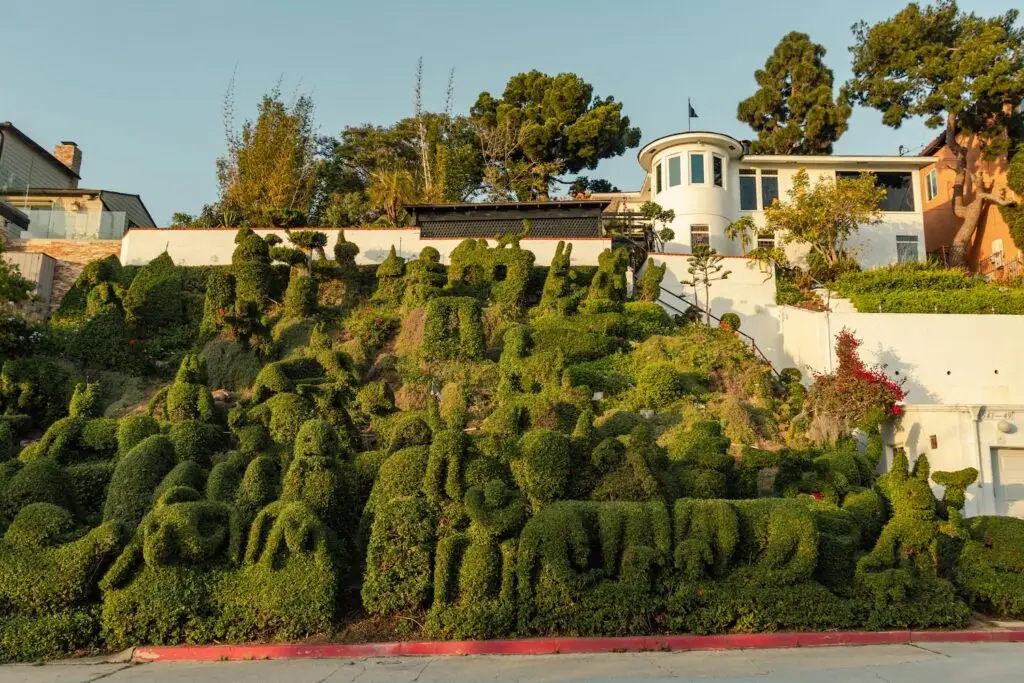
Courtesy of Andrea Doonan
San Diego as a “Biodiversity Hotspot”
Landscape designer Andrea Doonan, of Andrea Doonan Horticulture + Design, is a certified arborist with more than 20 years of experience collaborating with homeowners and renters. She rejects sterile, white picket fence designs and places a strong emphasis on edible gardens and usable outdoor spaces. When we speak, she mentions the unusually wide range of plant and animal life in the relatively small size of our region, making us a “biodiversity hotspot.” (San Diego is the most biodiverse county in the Lower 48.) Because of this, we have a unique system of endangered species that rely on plants to survive.
“More and more, people are introducing native landscapes to connect to nature and support birds, butterflies, and bees,” Doonan says. “I’m very passionate about getting people to unplug and ground.”
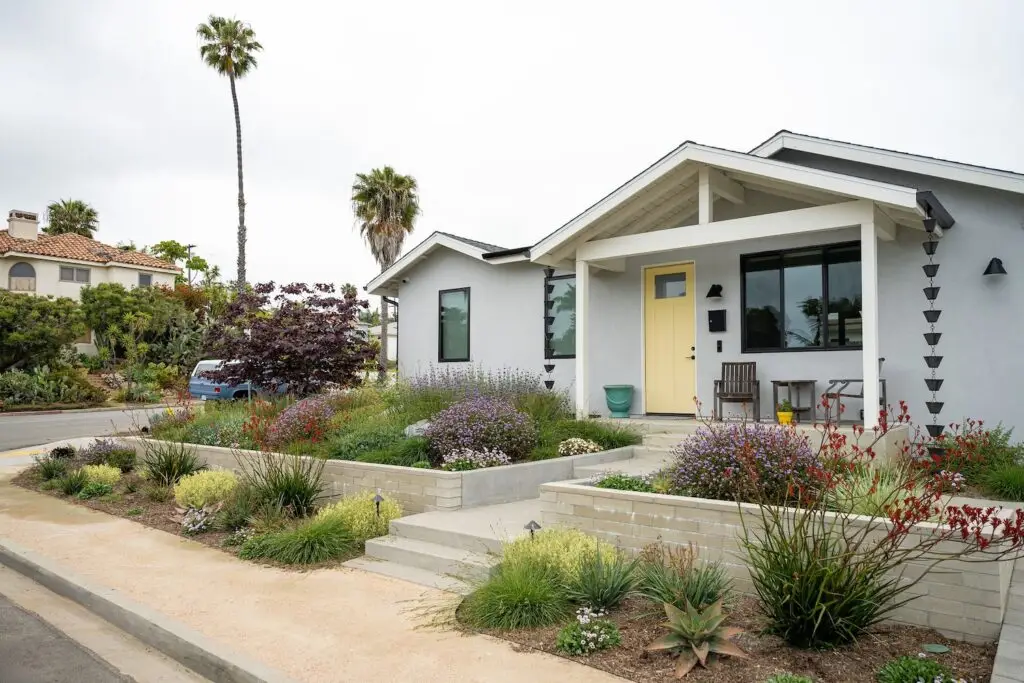
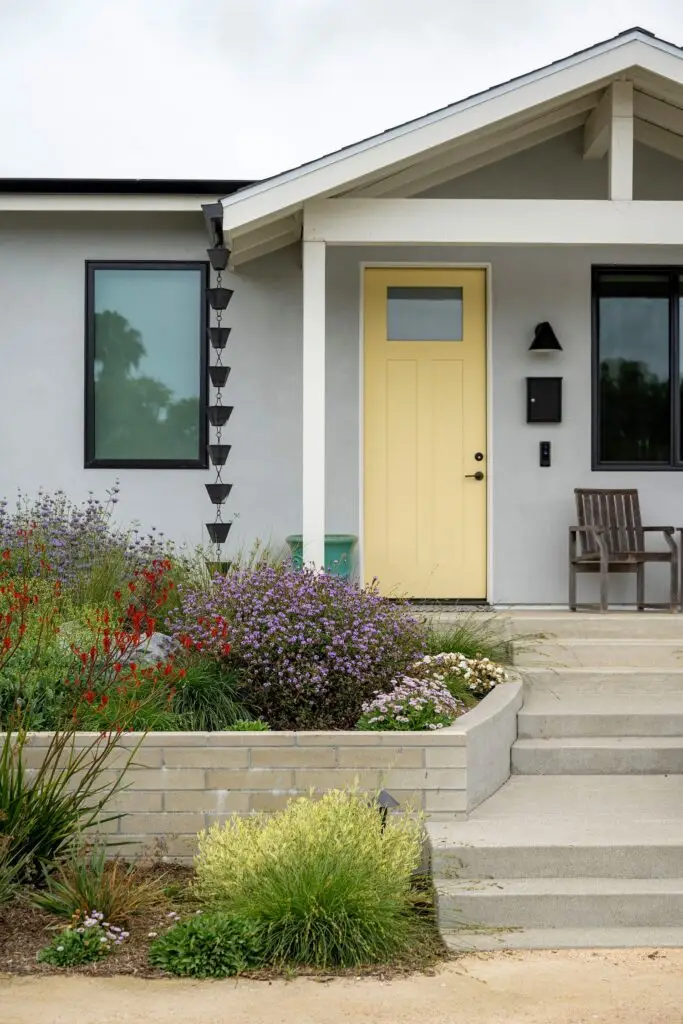
Whether it’s for a love of all creatures, our climate, or water conservation, Doonan describes a broader shift toward habitat-driven spaces that are both aesthetic and ecological. For her clients, this can mean replacing turf with native planting, adding seating areas, or even rethinking the front walk as an active, planted threshold rather than just a green lawn. “There’s this idea that people want to make a difference,” she says. “But they also want a place to entertain, recreate, and ground.”
At the center of this is a simple but increasingly urgent question: How can small design choices ripple outward into community life?
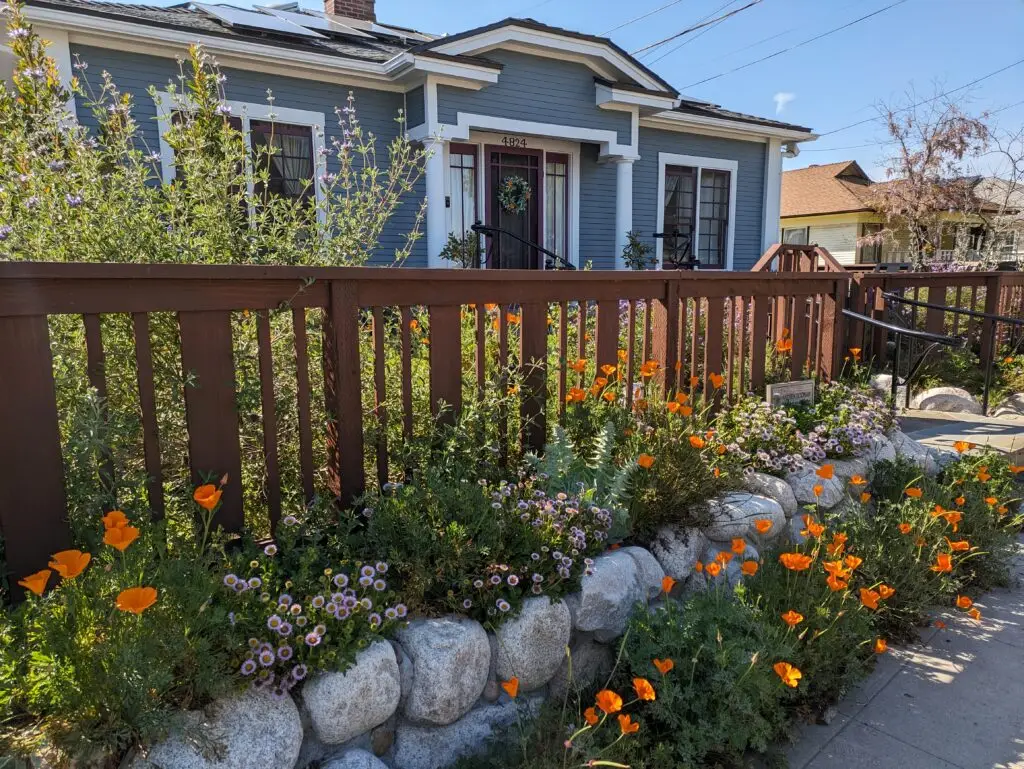
Courtesy of Andrea Doonan
For Doonan’s client Lee Miller, that shift is fully expressed. After remodeling the interior of his Pacific Beach home, Miller focused on the backyard, thinking that would be the place for his soon-to-be-born daughter to eventually play. The front yard of his corner property was the last detail to be completed.
Miller said he wanted “a very full, very natural look versus having everything measured.” He knew what he liked when he saw it, but it was Doonan who translated his ideas and guided the creation of a wildlife-friendly space with full-grown orange, plum, and pluot trees. “We have lots of birds, lots of bees, lots of lizards,” Miller says. “There’s nothing better than walking outside and eating fruit off a tree.”
The front yard has become where Miller’s family spends time—often more than the backyard. He and his daughter, who’s now 5, explore the space together, checking what’s growing, learning about their little ecosystem, and chasing lizards. It’s where his daughter plays, where she’s built her own fairy garden, and where neighborhood parents and kids tend to gather at the end of the day.
Courtesy of Jenna Gilmer
Building Community by Being Out There
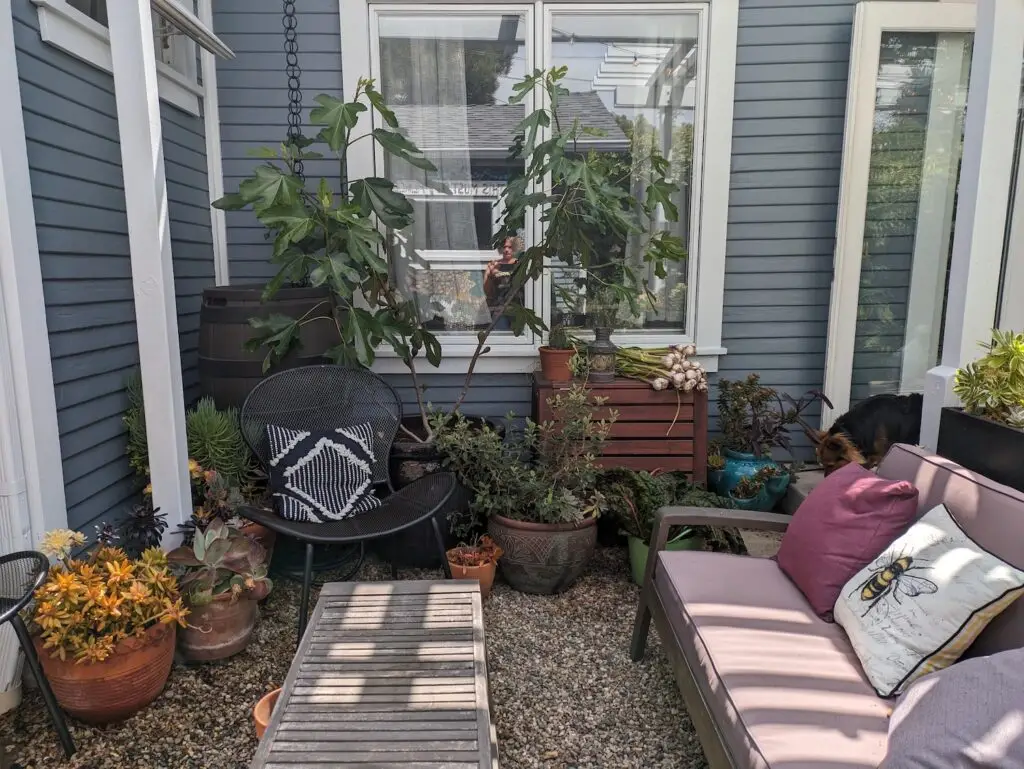
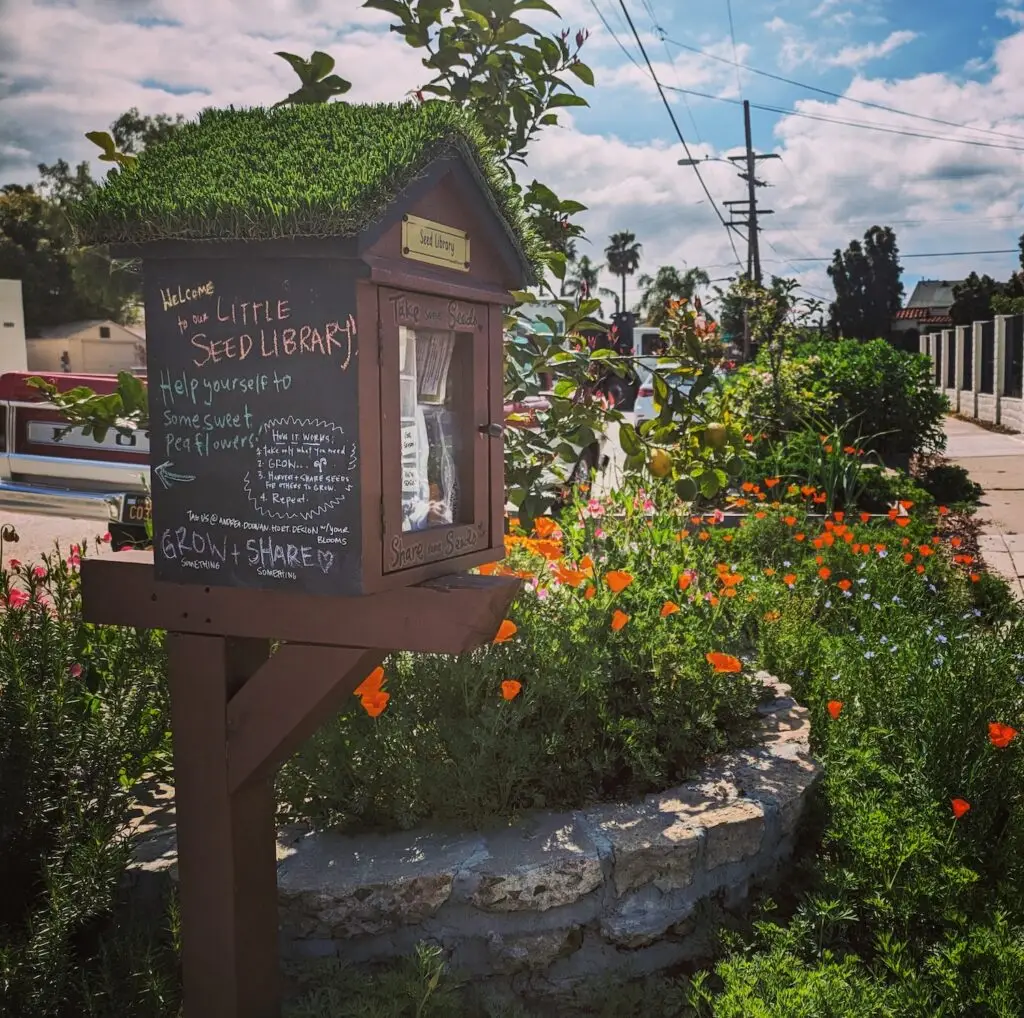
For her own Normal Heights home, Doonan designed a front yard that includes a seed library, raised beds, native plants, and a sitting area where she and her husband spend time. “I’m meeting my neighbors because I put two chairs and some plants in the front yard,” she says. “I’m sharing produce with them.”
That exchange has become part of the landscape itself, and she points to small systems (like seed libraries) as ways of circulating plant material and knowledge directly between people. In real life. Person to person.
More and more, Doonan says, when we’re talking about solving the big problems, it’s important to remember that everything starts local. Even “guerilla gardening”—small acts of informal planting and care in overlooked sections of land, such as parking strips—makes a difference. Tossing some seeds and adding a bench to the sidewalk strip out front can create a “pocket park” or “a mini-mini park.” In that framing, the front yard stops being an ornamental backdrop and starts becoming an infrastructure for connection.
Landscape architect Bret Belyea frames this front-yard movement (my term, not his) as social repair. “It’s a handshake to your neighbors and passersby,” he says. “It says something about who you are.”
Of course, plant choices matter, but not only for ecological reasons. Native and climate-appropriate plantings become part of how neighborhoods re-establish contact with each other, even without formal planning. What he describes is an aesthetic, but it’s also relational in the way a yard can signal openness rather than withdrawal, invitation rather than separation, and connection rather than, “Get off my lawn, ya damn kids!”
Hanging out in the front yard rather than sequestering in the back is a signal to outsiders that they’re really not outsiders at all. Or, at least, they don’t have to remain so.
Courtesy of Andrea Doonan
The Front Yard as Memory
Not every front yard in this shift toward social spaces has a professional’s influence. Some are created through labor, trial and error, and nostalgia. For Grace Wanjiru, the memory of her childhood in Gitaru, Kenya, led her to beautifully DIY the hell out of the front part of her half-acre Encanto property. When she bought her home nearly two decades ago, it was essentially just a little house plunked down on a giant plot of dirt. She had a blank slate and plenty of memories from which to create something that would imbue the space with peace and hospitality.
The designer-led yards are often framed through an academic understanding of ecology, structure, and intentional planting strategies, and Wanjiru did much of the same thing through instinct. When she’d visit her mother, who lives just outside of Nairobi, she was reminded of the abundant beauty and vibrancy of a childhood spent running free, climbing trees, and being connected to nature. It was important to Wanjiru that her then-young daughters, both now in their early 20s, have that experience.
Courtesy of Grace Wanjiru
Wanjiru’s goal was to create the feeling of home, not as replication but as translation. “When you throw a seed in Kenya, something grows,” Wanjiru tells me. “Here, the dirt is horrible for plants. I still wanted green and color. I wanted nature—birds and insects. I grew up with nature, but here: No.”
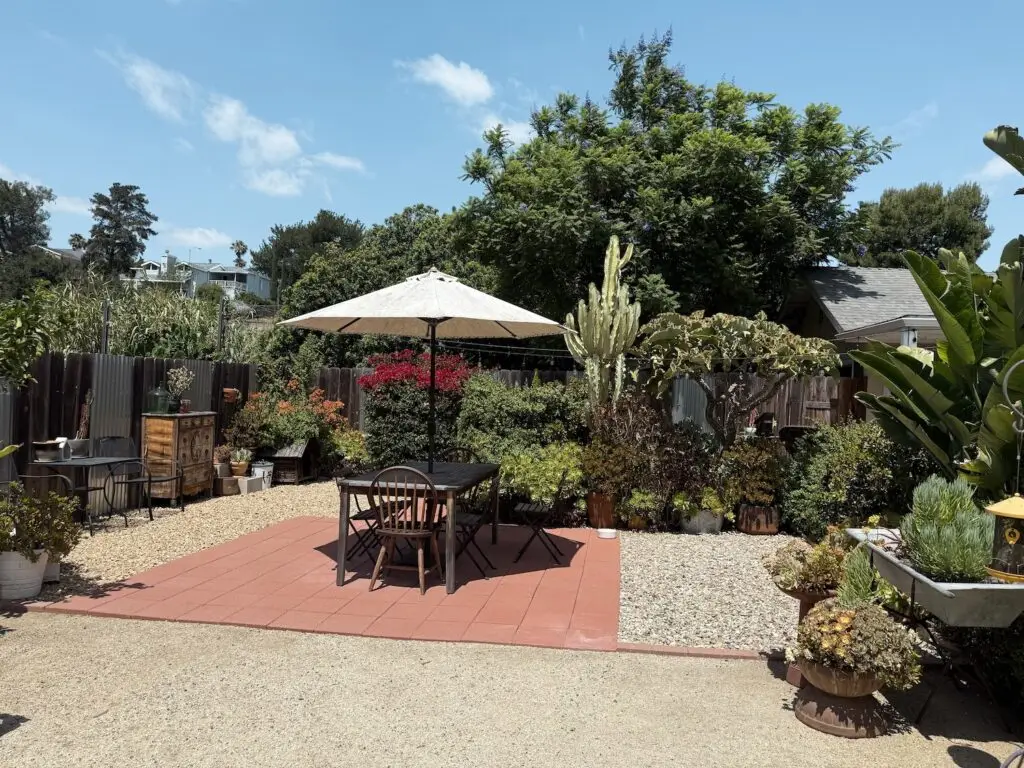
With an understanding of what would and wouldn’t grow in San Diego, Wanjiru was able to achieve a sense of home with succulents and native plants she purchased at Walmart. She created a large courtyard with a fence built of wood and corrugated metal. Inside, she added a hammock and a bird bath, which Wanjiru settled on after gophers ate through seven different plants; a table with an open cookbook, a bottle of wine, three glasses; a weathered dresser—once in her daughter’s room—that now sits opposite the table and contains Wanjiru’s many seeds. And, of course, strung lights.
Wanjiru likes to host small groups of her friends and family, keeping it intimate but accessible. “This is the kind of house you just call: ‘What are you doing? Are you making your African tea? Can we just come over?’ Because this is what they do [in Kenya],” she tells me. “And so I always want to have that, because I think for foreigners living in America, that’s one of the things we struggle with. We don’t have that kind of community.”
Craving a communal feeling, Wanjiru built it herself. And her kids grew up climbing the jacaranda tree and playing in the garden.
“We still gather out there,” she says. “We read in the hammock, talk, connect.”
Courtesy of Andrea Doonan
Gardens as Points of Connection
Perhaps the most important part of a front yard is a garden, whether it’s a space for entertaining and gathering, retreating and grounding, discovering and playing, resting and people-watching. The science backs up what gardeners have long known: Spending time around plants can be profoundly restorative. A 2024 review of dozens of studies found that gardening is consistently associated with better mental health, greater well-being, and improved quality of life, also linking interaction with plants and green spaces to better nervous system regulation.
For Doonan, this is part of why the conversation around gardens is bigger than aesthetics. “Gardens are for everyone,” she says. “I think it’s a right for all of us to have access to gardens.” “All of us” means homeowners and renters, people with sprawling yards and people with apartment balconies, people with large budgets and people growing herbs in containers from the discount rack at Home Depot.
In my conversation with Belyea, I tell him about a little house I passed in Oceanside this past spring. The owners set out free avocado clippings from their tree for anyone to take. “This is people’s way of putting an olive branch out,” he says. “And it just happens to be an avocado branch.” Maybe that’s what this front-yard shift is really about. Maybe it’s about trying to remember how to live alongside one another again. A hammock beneath string lights. Kids chasing lizards through native plants. Someone slowing to ask what’s growing. A neighbor stopping by and staying longer than they planned to. All of it, a pocket of softness in a culture that’s trying its damndest to make us harden.
Aaryn Belfer is a writer and editor specializing in nonfiction across art, architecture, and culture. Once upon a time, she wrote a provocative column for San Diego CityBeat (RIP). She was a runner up in the 2025 Matchbook Stories contest at the San Diego Central Library and is irrationally happy about it. Currently in her Soft Girl Era, Aaryn has expensive taste in (mostly flat) shoes and will choose a great art exhibit or live jazz concert over almost anything else. Except, possibly, Javier Bardem.
“This is insane!” the guy filming it seems to proclaim. “It’s the best fireworks show ever!” a companion confirms, inspiring a debate lasting over a decade.
All told, 7,000 fireworks exploded in the span of 25 seconds over San Diego Bay on July 4, 2012. A Michael Bay amount of unison. $125,000 worth of shells, cakes, Roman candles, and skyrockets had been placed on a barge—enough for 17 minutes of decorative sky flares—and…
Boom.
The sky looked like someone had set a giant Rorschach test on fire. Or as if whatever we all see in our Rorschachs—butterflies, clowns, tongue kissing, dads—was being electrocuted and lifted heavenward, amen. It was shocking how bright it was, how much it sizzled the local cosmos. Could’ve been one of those sci-fi films where a hole is ripped open between warring universes. But angstier, more metal—the work of some methy creator in a sleeveless concert tee.
The sound?
Lou Reed once released an entire album that contained 64 minutes of mindflaying guitar screeches and machine noises. No regular songs, just a fascinating amount of ear distress. His record label reps no doubt heard the melodic outro of their careers, but everyone else was in pain and stumped. That album still sounded better than the bay did that night. The bay sounded like a god who struggled with emotional regulation had blown his speakers and was working through the anger stage of AV grief.
In the left frame of the video, a middle-aged woman is attempting to drag her husband off by the hand. In no way does he want to go, possibly because he had missed the time Roseanne Barr sung the national anthem at a Padres game, simultaneously disemboweling and amusing America through the power of song. He would not willingly abandon an equally worthy San Diego trainwreck.
Another woman in the video appears to have just filled her beer, rushing to sit down for the show. She pauses mid-sit and returns to the full and upright position to properly bear witness. What was supposed to be prolonged entertainment has been so radically shortened that she will have to find another reason to drink. Lucky for her, drinking will be the only way to adequately process.
Locals remember the conspiracy theories. People wondered if the fuses had been tripped by a saboteur who was sympathetic to dogs, fish, or the growing suspicion that late-stage capitalism is a gorgeously branded but impossible dream sustained by remarkably efficient top-tier wealth retention and the soft compliance of fireworks-watchers who can no longer afford a house, a beer, or the personal impacts of human reproduction.
Speaking of being terrified of babies, babies were terrified. The children who witnessed it probably still can’t go near a candle store. But those kids will be tougher, perfectly scarred kids. They’ll write better songs.
That night helped us absolutely dominate the national news cycle. For a hot minute, we became America’s water-skiing squirrel. Now, years later, when you Google “fireworks gone wrong,” San Diego is always a top contender, along with that poor Nebraska family who nearly wiped out a couple generations in their front yard, their minivan somehow turning into a howitzer of recreational TNT.
There is still debate as to whether Big Bay Boom 2012 is the worst or greatest fireworks show of all time. But the advanced parts of civilization arrived at the truth as quickly as the women in the video did. It was undeniably amazing.
First of all, the point of Fourth of July fireworks isn’t “the intricate choreography of sky fire over a guaranteed amount of show time.” It’s about creating a vivid memory shared with some people you like, love, or would like to love.
BBB2012 used large-scale chemical fire to create the ultimate memory.
Sure, some people who iron their jeans subjected their family to a sermon about how San Diego managed to botch America’s birthday like a Disney princess-for-hire who smelled of quite a few Sauvignons.
The rest of us saw how perfectly it nailed the actual feeling of being an American. Because only a miniscule percentage of us bake postcard apple pies where every inch of crust is perfectly laminated like the wood in an Irish bar. Very few of us can paint on par with Picasso. The rest of us—despite truly believing in our America-activated abilities to achieve greatness in almost any field of our choosing—burn pies. We try to paint only to realize it looks like our fine motor skills have entered active death.
That’s why BBB2012 was the most perfectly American fireworks show ever: A wildly ambitious idea galvanized thousands upon thousands of people to both work on it and come to hold a beer and gawk at it, only to have it fail in the most glorious TMZ-level spectacle.
America isn’t about immaculate, storyless wins. It’s about how the framework of a country is solid enough that we can accidentally detonate our entire lives—a few times—and still probably be OK.
No one has America’d quite like San Diego did on that day. It was performance art. Lou Reed’s heart slow-clapped. Any brief municipal embarrassment quickly became a pride of our people. I can only hope the same for the Nebraskan yard family whose Dodge Aerostar became a hyperactive Death Star.
P.S. Local writer Maya Kroth compiled a quite great oral history of that night for Thrillist. The bottom lines for me were—it took nine months to prepare, no one was hurt, and even though the pyrotechnics company tried to zero out the bill, Big Bay Boom founder H. P. “Sandy” Purdon refused and paid them in full. This year will mark the 25th Anniversary of the yearly Big Bay Boom.
Troy Johnson is the magazine’s award-winning food writer and humorist, and a long-standing expert on Food Network. His work has been featured on NatGeo, Travel Channel, NPR, and in Food Matters, a textbook of the best American food writing.
NewBridge School is San Diego’s only school dedicated to the education of students with dyslexia and related learning profiles. For 30 years we have successfully served students with dyslexia, dysgraphia, dyscalculia, receptive/expressive language disorders, ADHD, executive functioning and memory deficits. Students transition successfully into academically rigorous high schools and colleges across the country. Why NewBridge? Training, training, training (plus intensive individualization, and comprehensive program design). All teachers are trained and retrained biennially in Orton-Gillingham, the only approach proven to remediate dyslexia based on Science of Reading research, and complete a year-long training program. Every aspect of our program is designed around our students’ learning styles and needs. Every class is taught by a highly-trained expert, and our Speech/Language and Occupational Therapy teams embed throughout the day. Our multisensory, multi-tiered math program has been developed in conjunction with sister schools and experts across the country. Don’t wait—early intervention is magic!