San Diego’s Polyhaus is Designing the Future of Fire-Safe Homes
With wildfires on the rise in California, architects and homebuilders in the city and beyond are racing to develop structures that can withstand the blaze
The morning marine layer has just burned off in La Jolla. Heat pools on the pavement. Mirages shimmer off the patio stones as a leaf blower hums somewhere in the valley below.
In the backyard of one quiet residential block, something strange juts up from the earth—an angular form clad in gleaming metal, like a shard of spacecraft wedged between rosemary bushes and stucco walls. It doesn’t look like it belongs. Then again, neither do year-round fires and routine thousand-home evacuations.
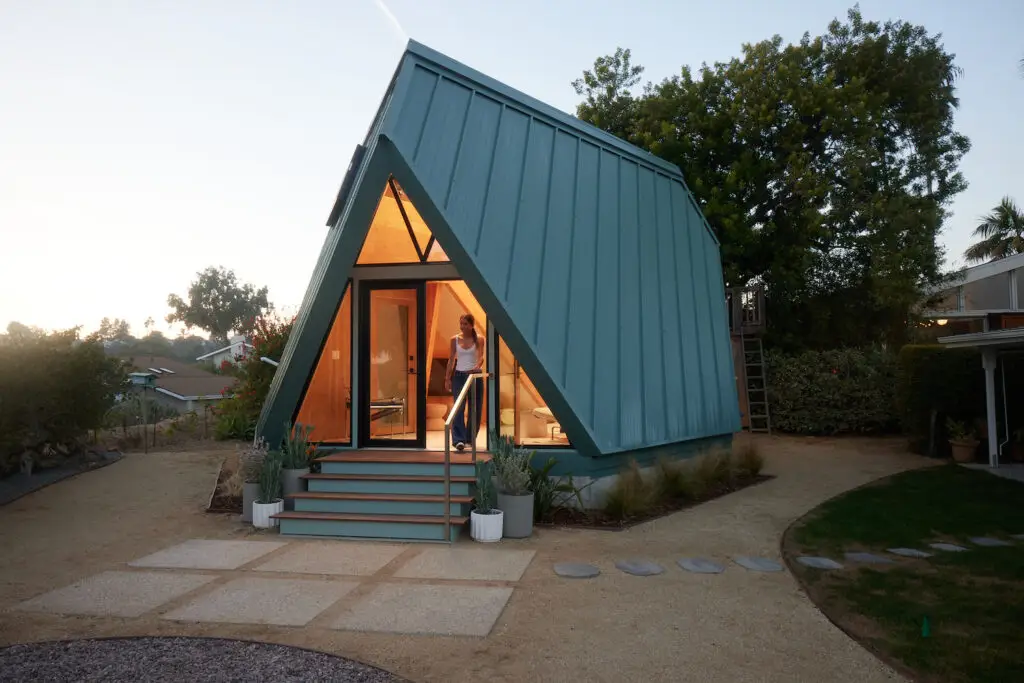
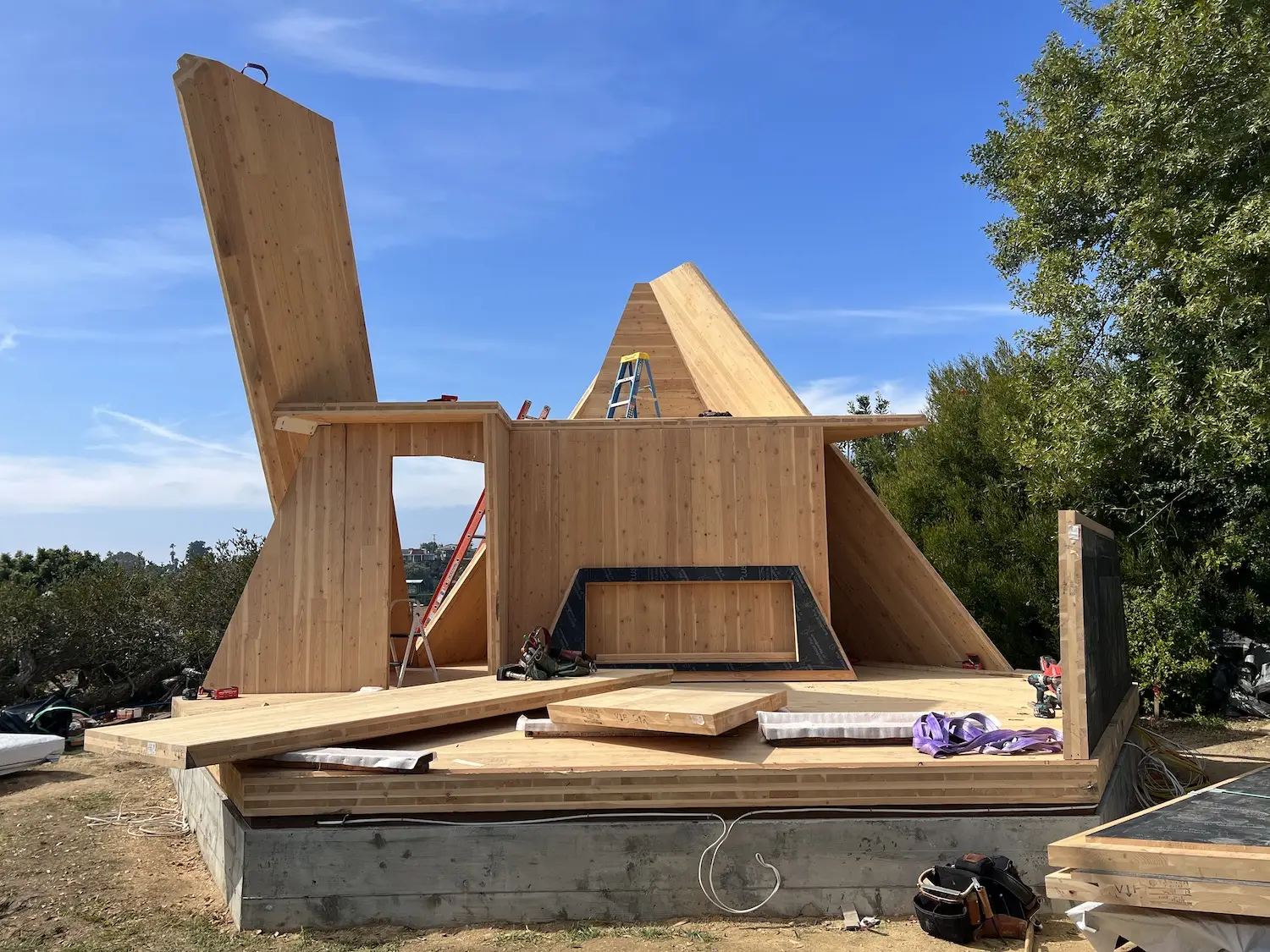
Photo Credit: Andy Cross & Cody Cloud The polyhedron–shaped Polyhaus is crafted from 64 massive, cross-laminated wood sheets.
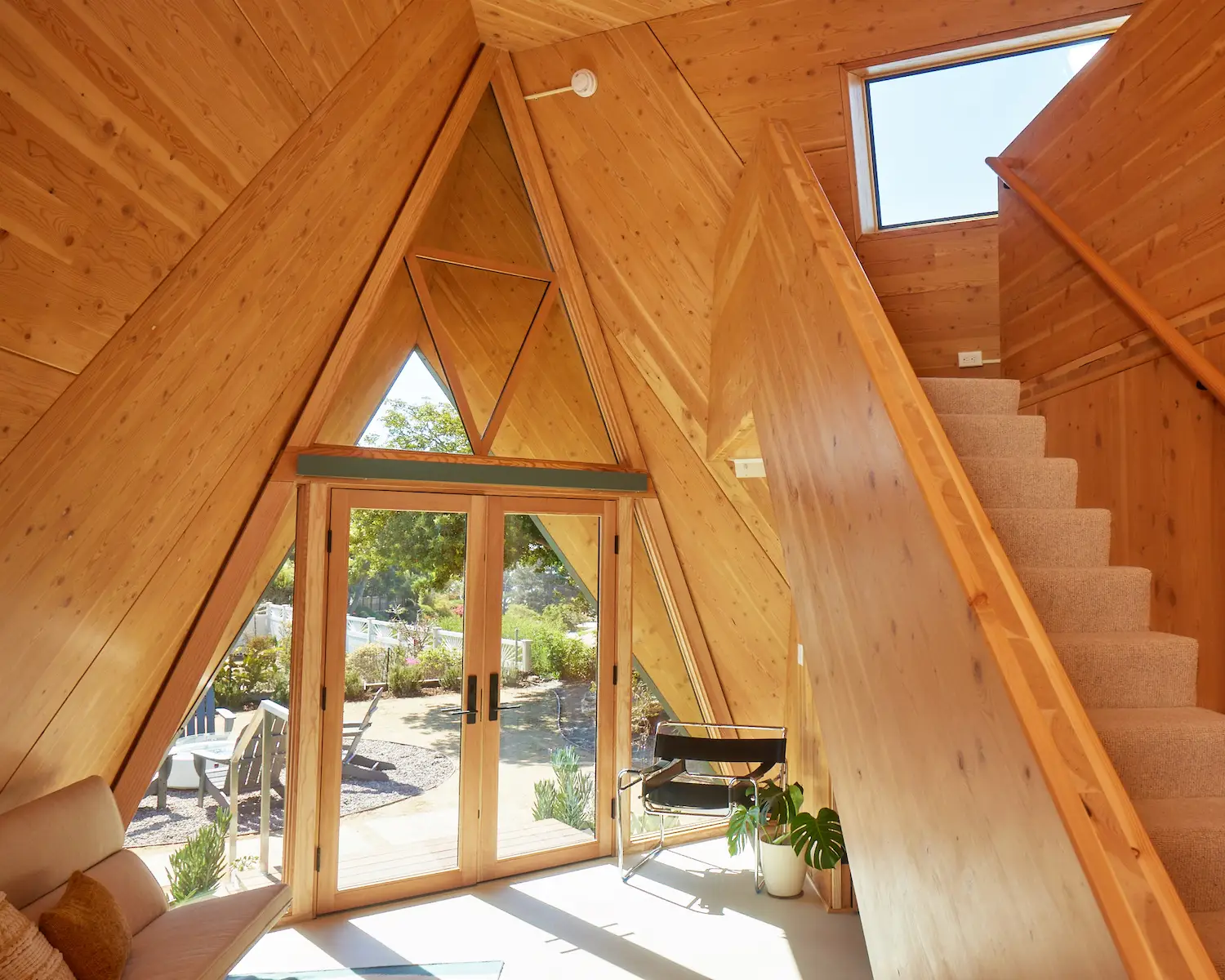
This structure is called the Polyhaus, a polyhedron-shaped, fire-resistant home covered in insulated metal panels. Instead of walls framed by two-by-fours, the Polyhaus is made entirely from 64 panels of cross-laminated timber: massive engineered wood sheets that are half the strength of reinforced concrete and burn at a rate of just one-and-a-half inches per hour, which is three to five times slower than a traditional home. A three-ply wall crafted from the material can withstand fire for nearly four hours—long enough, perhaps, to save what’s inside it, or the whole home itself.
The unique design is the brainchild of Daniel López-Pérez, the director of the University of San Diego’s architecture program. To him, the housing crisis and the climate crisis are two sides of the same coin, and the answer might just be a polyhedron. “When we come to housing production, we are back in the 19th century,” he says, “one two-by-four at a time.” The Polyhaus breaks that mold, both literally and figuratively. The angular structure goes up in two-and-a-half days; requires just three framers; and, thanks to the digitally manufactured panels with no airgaps, gives fire little oxygen to feed on.
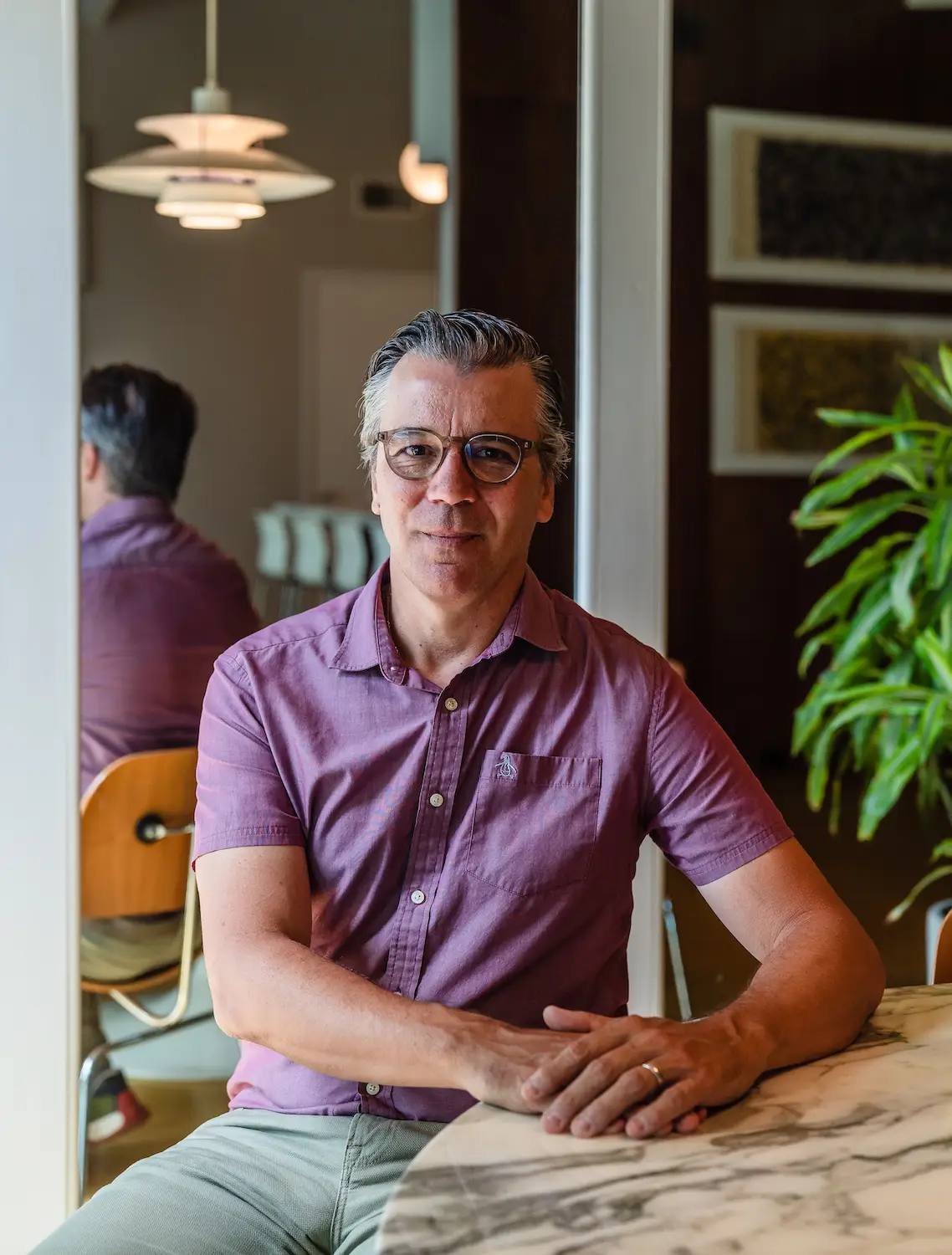
Photo Credit: Ariana Drehsler Polyhaus architect Daniel López-Pérez.
But it’s not just rapid construction and fire resistance that inspire López-Pérez—he’s also thinking about the source of his materials. “We have become unaware of what our houses are made of,” he tells me, shaking his head. Each timber panel used to create the Polyhaus comes from Vaagen Timbers, a Pacific Northwest company that mills wood from trees cleared in wildfire mitigation projects, specifically in Washington’s Colville National Forest. In other words, he’s using forest overgrowth that could burn to build homes that won’t. “You don’t have to be an architect or a designer to have fire safety on your mind,” he adds.
Courtesy of Polyhaus Insulated metal panels protect the the home’s exterior.
And he’s right. In an age of pressboard and synthetic insulation, it’s easy to forget that shelter was once sourced from whatever the land could offer. Before mass production and fire-resistant panels, homebuilding meant something more impermanent and intuitive. In Southern California, Native communities like the Payómkawichum (Luiseño people) built kíicha, domed shelters made from willow branches, tule reeds, and cedar bark. These structures weren’t built to resist fire so much as coexist with it. Tribal-led controlled burns kept the landscape healthy, cleared excess brush, and minimized the risk of catastrophic wildfires. The land was not a threat to defend against but a partner to understand.
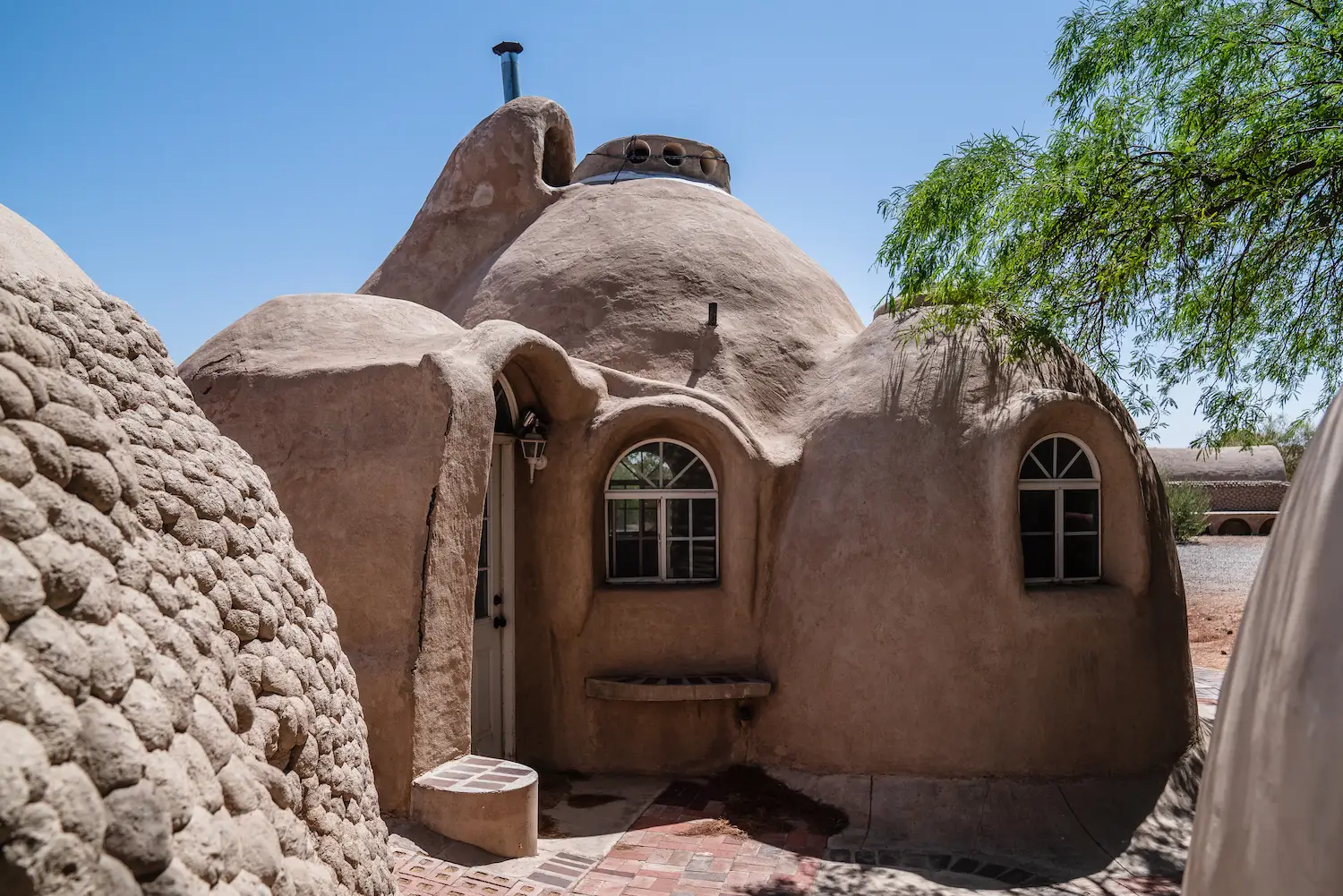
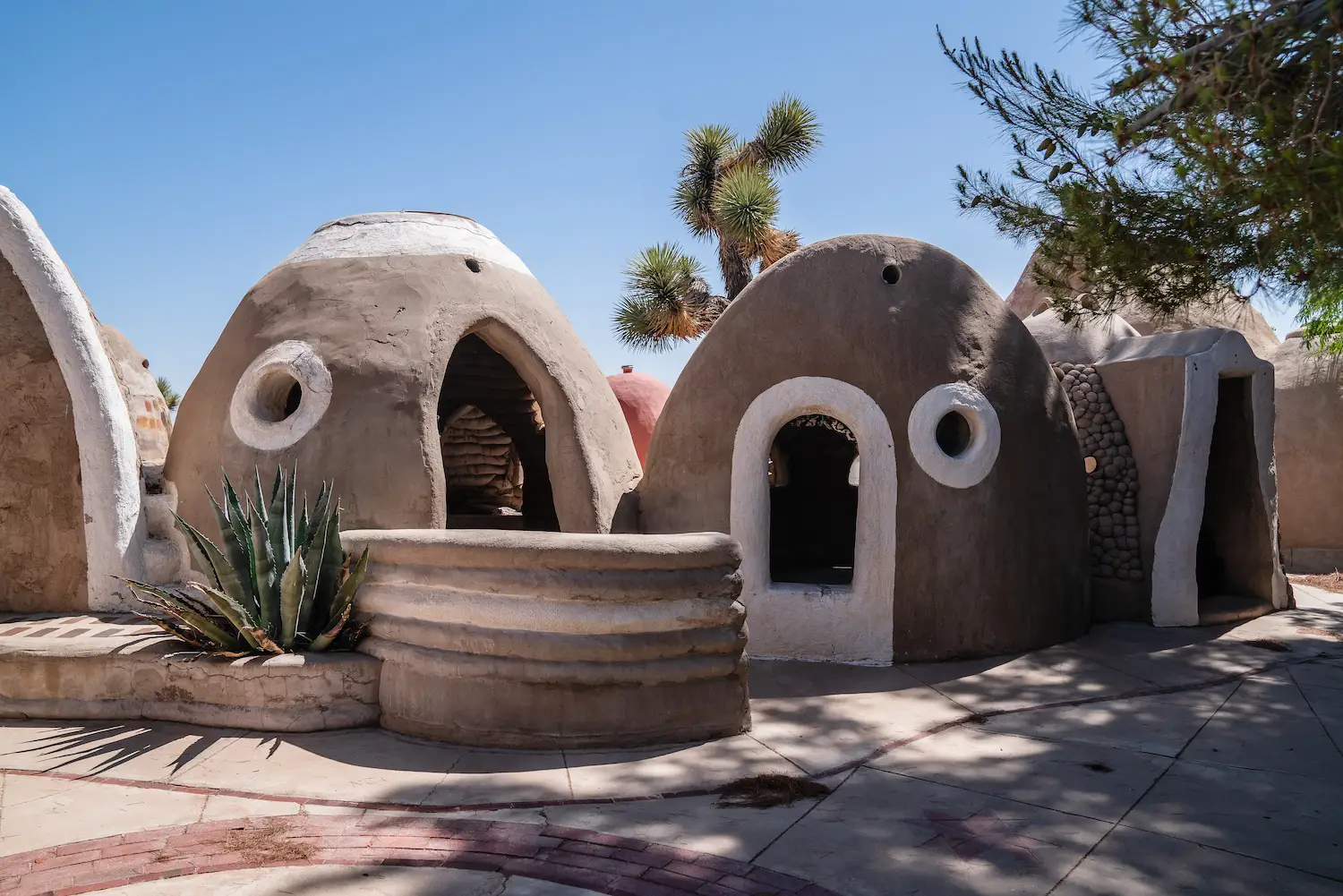
Photo Credit: Ariana Drehsler The arched shape of CalEarth structures helps them withstand earthquakes, hurricanes, and tornadoes, while their material composition shrugs in the face of fires.
Some are attempting a return to this intuitive partnership with the earth a few hours north of San Diego, on the southern tip of the Mojave Desert. Yuccas and Joshua trees stand paralyzed here, locked in a heat-induced trance. It’s still. Still in that way where even the breeze seems scorched out of existence. Triple digits are just the standard now. A century ago, the desert was two percent cooler and rainfall was 20 percent heavier. Today, it’s only getting hotter.
At CalEarth: The California Institute of Earth Art and Architecture, an assembly of structures peppers an open field, breaking up the monotony of beige suburbia surrounding it. They appear to have been airlifted from another planet, with domed roofs and walls made of earthen balls. Ant hills with reptilian scales.
These extraterrestrial dwellings are SuperAdobes, the avant-garde creations of CalEarth. Located in Hesperia, CA, the campus is a cluster of sandbag-built structures, each one hewn from the desert itself. Native soil and sand are stuffed into polypropylene bags, stabilized with cement and lime, and reinforced with barbed wire. Stacked layer by layer, they rise into earthen cocoons and gazebo-scale domes that feel both primitive and futuristic.
Photo Credit: Ariana Drehsler Hesperia’s CalEarth creates near-indestructible homes out of native soil and sand, cement and lime, and barbed wire.
These are no fragile art pieces, either. These buildings are meant to last. Against fire. Against flood. Against earthquakes, mudslides, tornadoes—whatever the climate throws at us next. Their secret is the arch: a timeless engineering feat that redistributes stress, letting the buildings flex rather than shatter. Square walls crack; curves endure. The domes resist seismic events and hurricanes, while their makeup of earth material stands up against increasingly large, dangerous, and expensive Californian wildfires.
At the helm of the institute stands Dastan Khalili, who began his journey with the organization at just 2 years old, tagging along on projects with his father, Nader Khalili, the revolutionary founder of CalEarth. What began as a project in the 1980s to plan for off-planet construction on the moon and Mars evolved into an educational institute teaching the SuperAdobe design—now studied by NASA and utilized by the United Nations—to students around the globe in hopes of providing a housing solution for Earth and the wildfires we’re increasingly facing.
“If you go back doing the same thing expecting different results, it’s just going to lead to another catastrophe,” Khalili says, “because the only thing that’s truly sustainable is the fire, the tornado, the hurricane, the earthquake. They’ve been here for billions of years, and they will be here long after.”
Photo Credit: Ariana Drehsler A mere three framers can put up a Polyhaus in less than three days.
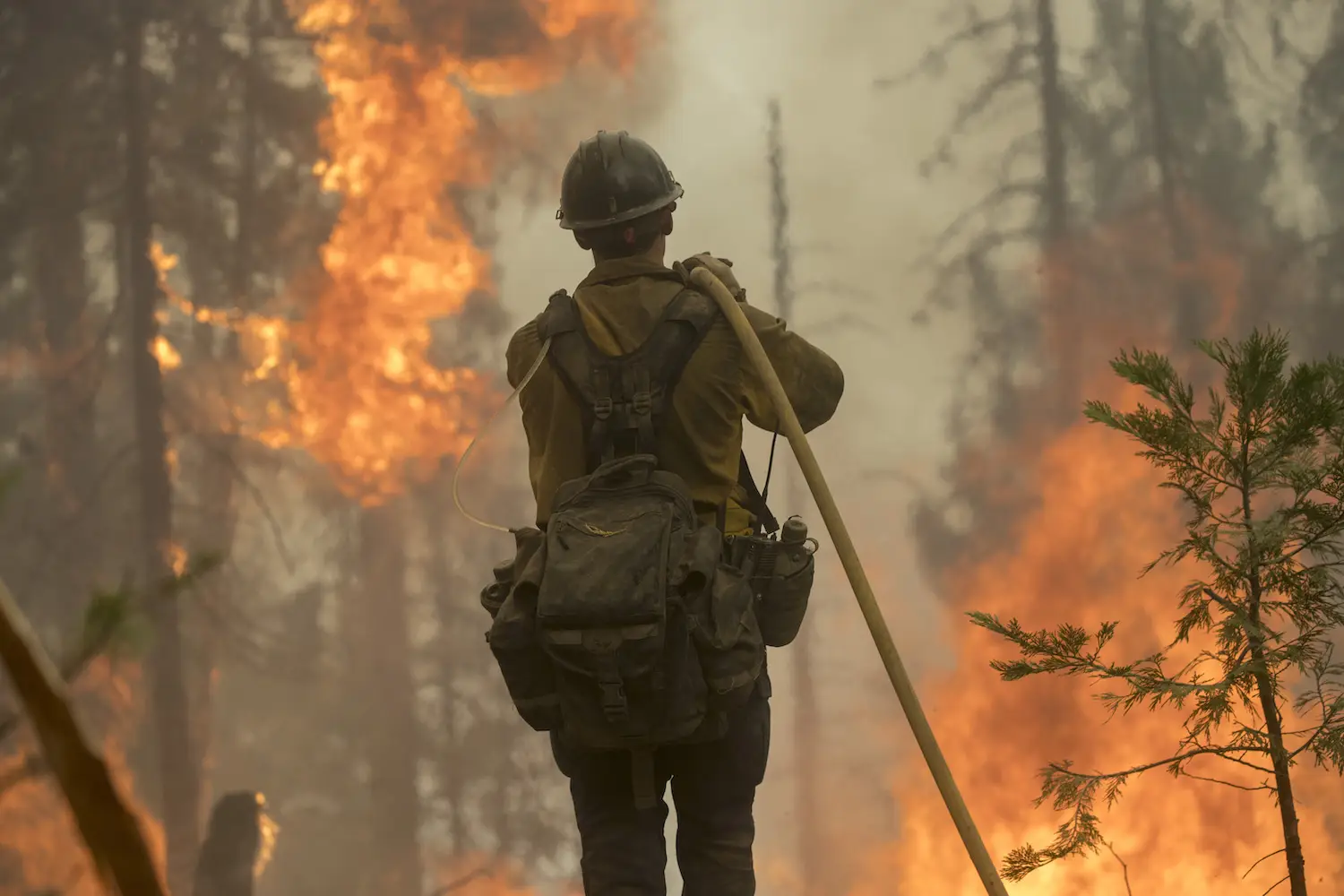
He’s not being poetic. He’s being literal. Wildfire predates humans—by a lot. It’s been igniting Earth for over 400 million years, sparked by lightning strikes, volcanic eruptions, and falling rocks. These days, though, 85 percent of US wildfires can be traced back to human activity: cigarettes, campfires, powerlines, sparks off metal… the list goes on. But there’s more to it than an errant cig. The reason California is burning, and burning fast, is rising temperatures and their effect on the terrain. Climate change is causing vegetation to shrivel and brush to dry up. Droughts are the norm—about 40 percent of the state is currently experiencing one, according to CalMatters— resulting in dead trees, their carcasses a wildfire’s ideal supper. Snowy peaks are melting faster, and water tables are dropping.
In other words, California’s changing climate has made the state increasingly prone to wildfire, and not just in remote forests. In recent years, development has pushed deeper into high-risk areas, placing more homes and communities in harm’s way. Between July 2023 and June 2024, nearly 230,000 people moved to the Golden State, many into regions already vulnerable to fire. In San Diego County, plans are approved for a 2,750-home development just north of where the Border 2 fire burned 6,625 acres in January.
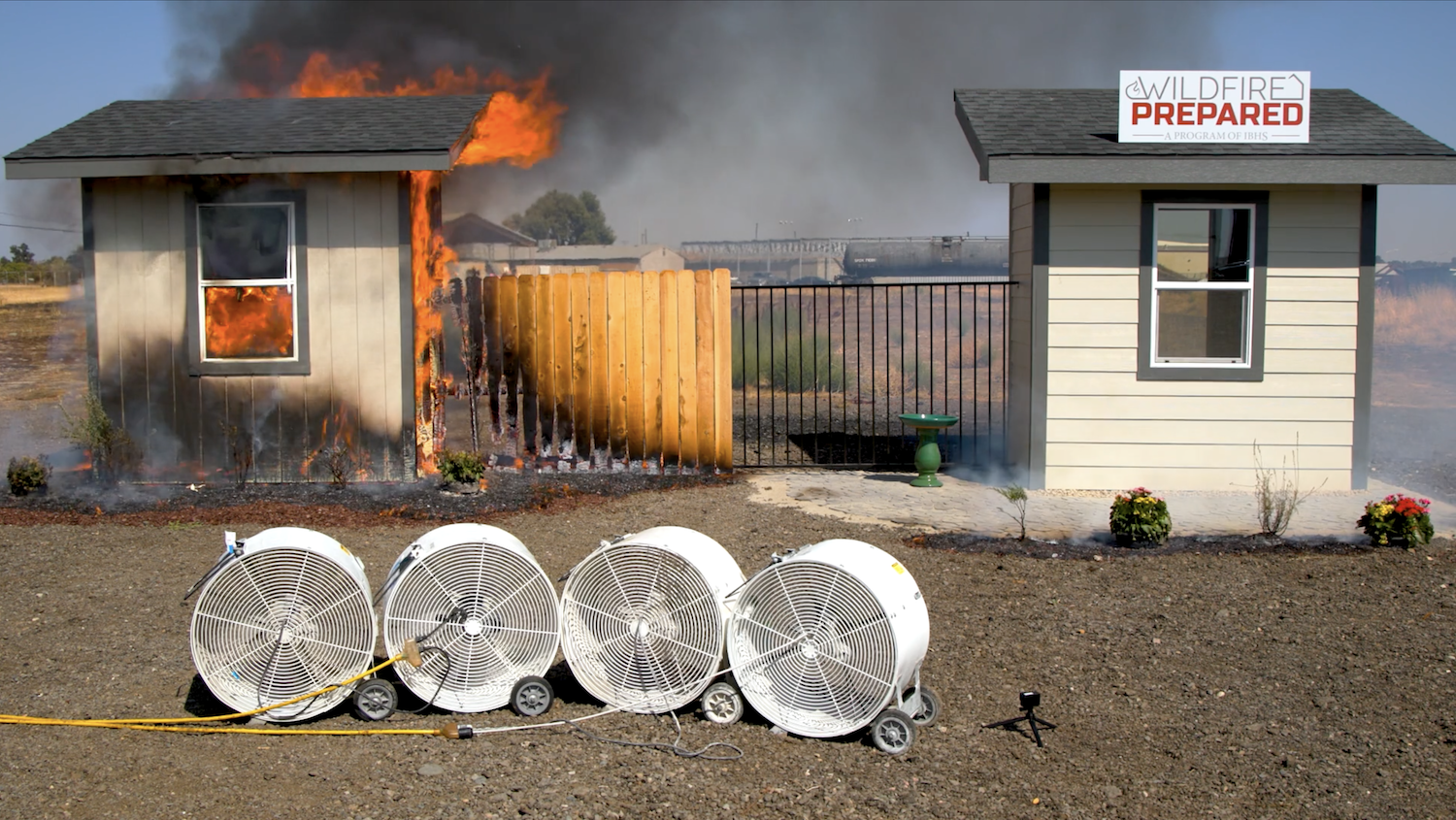
Courtesy of Wildlife Prepared The fortified materials required of IBHS-certified houses can keep structures intact for far longer than conventionally built homes—and the company set two small buildings alight to prove it.
If we can’t stop the spark, then working with the existing elements seems to be the logic guiding many architects, engineers, and homebuilders.
That’s where people like Steve Ruffner come in. As president and regional general manager for KB Home operations in San Diego, Orange County, and Long Beach, he found himself in charge of developing Dixon Trail, a new neighborhood in Escondido near a wildland-urban interface. At a builder’s conference, Ruffner witnessed a live demo from the Insurance Institute for Business & Home Safety (IBHS) showing two homes side by side: one built to 1980s housing code, the other fully fire-hardened by IBHS. The company lit both. The former burned to the frame; the latter barely flinched.
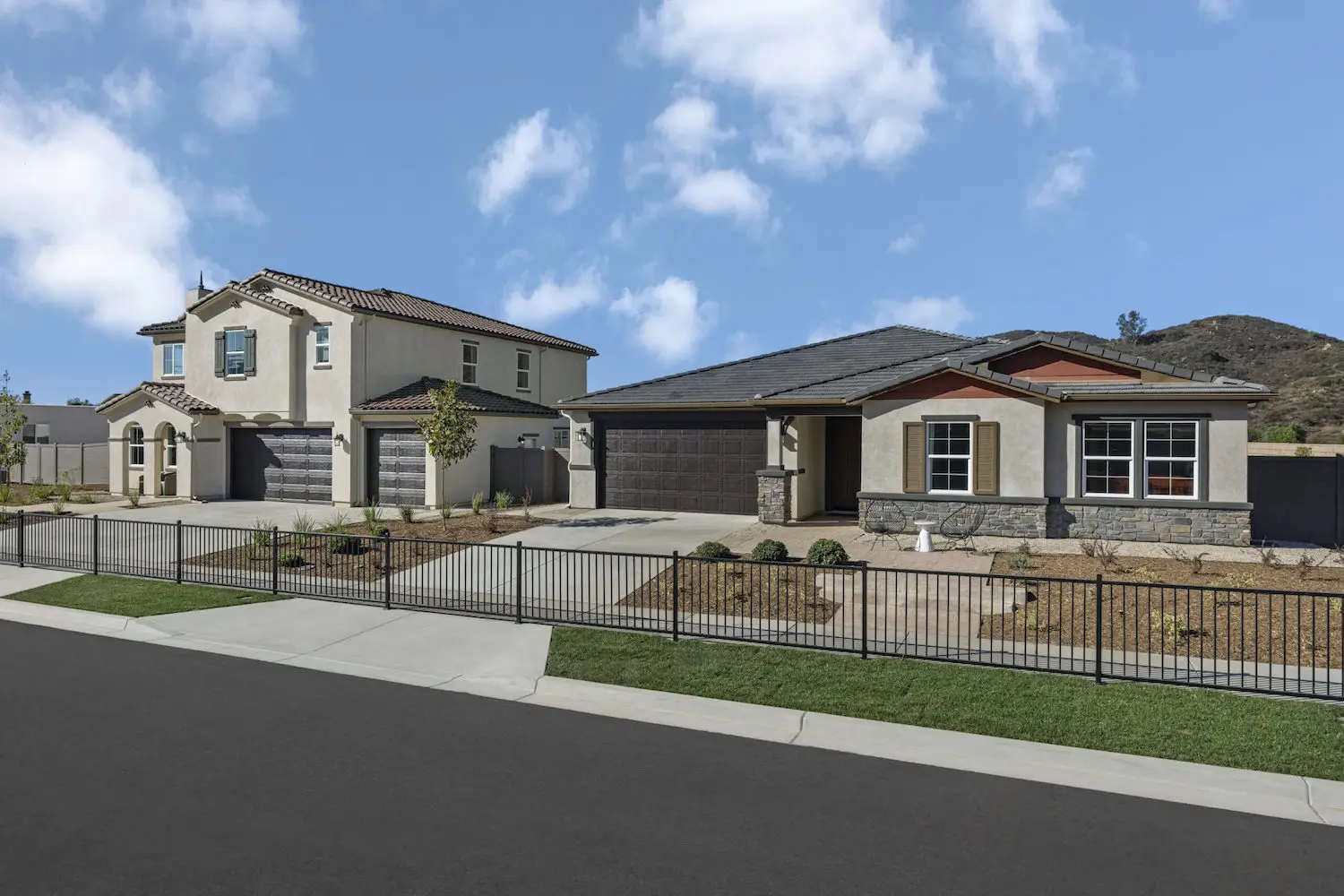
Ruffner decided that Dixon Trail deserved that same level of protection against potential fires in Escondido. California already requires homes near wildfire-prone areas to meet Chapter 7A of the state building code, including a laundry list of fire-rated materials, from roofing to vents. Dixon Trails goes a few steps further with the IBHS Wildfire Prepared Home Plus certification. This means fortified materials and defensible space—at least five feet of cleared perimeter around each home, no wooden fencing connecting houses, and outbuildings moved at least 30 feet away.
“When you have combustible items—a fence, shed, plant, tree—flames from the fire can ignite those items, leading to the ignition of the house,” says Steve Hawks, the senior director of wildfire at IBHS. Hawks is a part of the research team doing post-fire analyses, including those in Los Angeles. What he’s learned is that it’s not the wall of fire that brings down buildings, but tiny, wind-blown embers that slip through the cracks of vents or catch on a pile of pine needles by the back door.
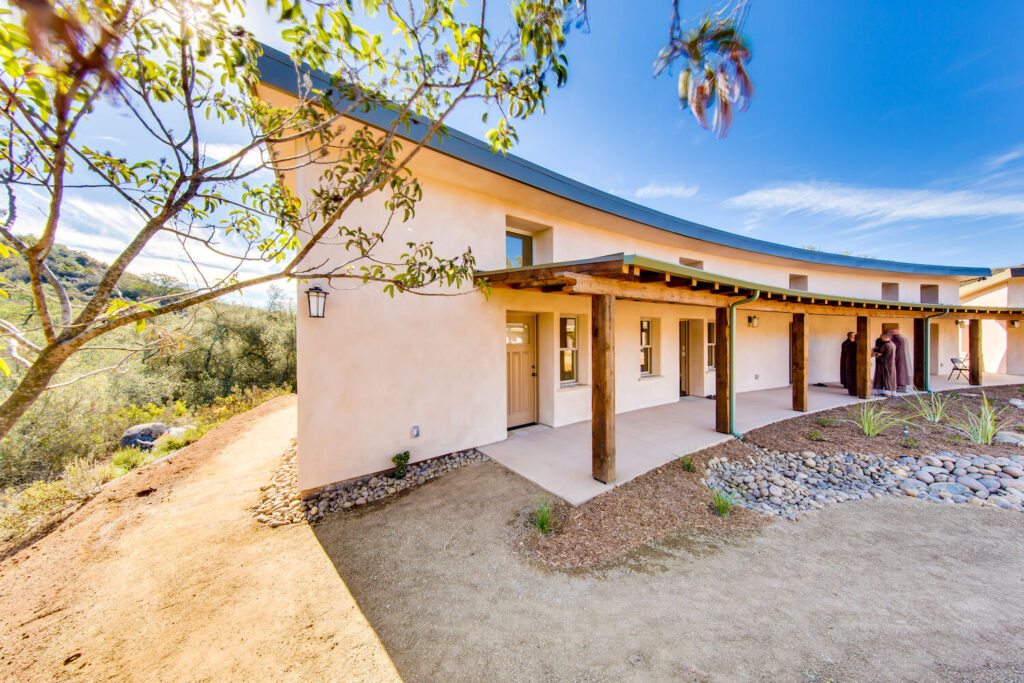
Courtesy of Wildlife Prepared Homes in Escondido’s Dixon Trail development meet the rigorous safety standards of IBHS Wildfire Prepared Home Plus certification.
While Dixon Trail may look like any other California neighborhood, it has an invisible coat of armor over it, made of cement siding, stucco shutters, steel garage doors, and a metal front door. The project is set to finish next summer, with half of its 64 units already sold.
Beyond peace of mind, there’s another benefit: insurance. IBHS certification is supported by insurance companies, which means homes built to the company’s standards are not only safer, they’re insurable—a growing concern in fire-prone regions where many carriers have pulled out entirely. Due to California’s Proposition 103, insurance companies can’t use wildfire modeling to assess potential risk or easily raise rates. Combined with skyrocketing wildfire losses—like the estimated $75 billion-plus in insured damages from the LA fires alone—this has driven many major insurers out of the state. As a result, homeowners are forced to rely on the California FAIR Plan, originally designed as a last resort, for coverage. But after LA, it’s cracking under pressure, too, tacking on $1 billion in extra charges to insurers and, ultimately, the homeowners trying to rebuild.
What California’s wildfires continue to make clear is this: While individual homes may be burning, it’s entire communities that suffer. The future of fire-safe living lies in building smarter neighborhoods designed to work with the land rather than against it. The innovations are here, from sandbag domes born of desert soil to geometric timber homes that burn slow and build fast. But no matter the material or method, lasting fire resilience will depend on more than the architecture. It will rely on planners, builders, insurers, and homeowners treating wildfires not as isolated events but as inevitable conditions we must live and build with.
“This is not just a homeowners problem,” Hawks says. “This is an all-of-us problem.”
And that means the homebuilding solutions, like fire, will have to spread.
Courtesy of USDA Forest Service
A History of Wildfires in California
Before 1850: Indigenous communities in California use low-intensity burns to clear underbrush, renew soil, and shape fire-adapted ecosystems like coastal prairies. These practices are outlawed in 1850.
1889: The Santiago Canyon Fire, also called the Great Fire of 1889, burns over 300,000 acres across Riverside, Orange, and San Diego counties.
1905: The Act of 1905 creates the position of California State Forester and affords them the right to appoint local fire wardens, the origins of The California Department of Forestry and Fire Protection (CAL FIRE).
1906: A devastating earthquake followed by massive fires destroys more than 80 percent of San Francisco.
1933: The fast-moving Griffith Park brush fire in Los Angeles kills 29 civilians attempting to fight the blaze.
1961: The Bel Air Fire tears through upscale Los Angeles neighborhoods, prompting new fire safety policies and laws in the city, including the banning of highly flammable wood shingle roofs and the implementation of a stringent brush clearance program.
1970: The Laguna Fire burns roughly 175,000 acres in San Diego County over 12 days. Until 2020, it remains among California’s 20 largest wildfires.
1991: The Oakland Hills Firestorm burns just 1,500 acres but destroys over 3,000 homes and kills 25 people.
2018: The deadliest wildfire in California history, the Camp Fire, devastates Butte County, killing 85 people and all but leveling several communities, including the town of Paradise.
2020: Burning over one million acres across six counties, the August Complex Fire becomes the largest wildfire in state history. 2020 sets a California record with 1.74 million hectares burned statewide— more than double the previous annual record from 2018.
2025: Fueled by drought and Santa Ana winds, fires in Altadena, Pacific Palisades, and other parts of Southern California kill at least 30 people and burn over 57,000 acres. It is potentially the most expensive wildfire in US history.
Lili Kim is a content coordinator and writer for San Diego Magazine, with experience highlighting local businesses and communities. When not writing or shooting film, she is likely brewing her seventh cup of tea of the day or strolling along Sunset Cliffs.
What Will It Take to Make San Diego a Global Arts City?
Jonathon Glus on the Art + Design District, investing in the creative economy, keeping artists in the city, and what we can learn from places like London and Chicago
Jonathon Glus is the Prebys Foundation senior fellow leading the development of the Art + Design District at the Downtown San Diego Partnership. He has been asked what an arts and design district is many times. In our conversation, I asked him instead to describe what it isn’t. His answer opened up a broader discussion about what San Diego has and hasn’t invested in, what it has the capacity to become, and what other cities have done that we haven’t. Glus speaks about global art fairs and architecture biennials in Chicago and long tables at dinner parties all with the same fluency. He also discusses who gets to live in the neighborhoods where creative work happens, and what it means when they can’t afford to stay.
Claire Johnson: You have been asked what an arts and design district is many times. Can you tell me what it isn’t?
Jonathon Glus: It is not a place designed intentionally and specifically for tourists. Of course there will be opportunities for tourists to come, but the district is really focused on creatives, on creative education, and on the creative workforce—as well as our major performing arts organizations. That is the emphasis.
What does the district need to do in the next five years for you to consider it a success?
[It needs to] develop greater connectivity between the anchor institutions—the symphony, Broadway San Diego, the opera, all the wonderful things happening in Balboa [Park]—and the creative workforce that will be living and working in that neighborhood 24/7.
What does San Diego not have that you wish it did?
We have not been intentionally investing in the contemporary art product that other major cities have been building. A contemporary art fair. A biennial that reflects the ethos of this region. Chicago developed an architecture biennial about eight years ago. London has a design biennial. Desert X, right here in Southern California, invests in and elevates contemporary artists inside a city. We have not really been playing in the global art market in a way that we have the capacity to.
What capacity do we have?
We have a wonderful foundation. Two theater companies that produce work that goes to Broadway more than many regional theaters in the country, major museums, artists teaching at UC San Diego and University of San Diego. What a city does when it wants to take itself to the next level is intentionally create the product. Miami went after the Art Basel fair; they did not passively receive it. You have to have the intention and the will, and you have to go after it. We haven’t done that in the way that other cities have.
Look at what we did with the tech sector; we’re now a major tech center. That was intentional. Leadership organized around it. We have to do the same thing around the arts. We have a lot of contemporary art collectors here. We have a lot of galleries. But the ecosystem of the business of contemporary art is not as organized or as visible as it should be.
Which city is your North Star?
It’s bits and pieces of different cities. Dubai has invested very quickly and very intentionally in contemporary art—art fairs, design fairs, higher education, artist residencies from all over the world. London has centered artists and creatives in the contemporary zeitgeist in a way that was not true 40 years ago. They built biennials. They ensured British artists had affordable housing and workspace. They made sure the media paid attention to what they were doing.
If you don’t have an artist at your dinner table, it’s not a dinner party. That sounds elitist, but it’s true. It shows the value that artists have in a community. Our relationship culturally with Tijuana is really significant here because artists in Baja seem to be at the table.
We’ve talked before about how food, fashion, design, and art aren’t siloed anymore.
They aren’t. When super creative people are in a community doing extraordinary work, that draws other super creative people doing extraordinary work. That’s why other arts and design districts around the world end up populated with some of the most interesting restaurants and young fashion designers. Creatives want to be around other creatives.
Which leads to the economic argument…
Our creative economy already employs about 170,000 people and generates more than $11 billion in economic activity. It’s large and robust. But we must center all of this in accessibility and affordability. Williamsburg used to be affordable. Artists can’t afford to live there anymore. Wicker Park and Bucktown in Chicago—artist central, now unaffordable. If we’re going to invest in this district, we have to be really intentional about housing and workspace, so creatives have a place in the future of this district.
I see all these new supper clubs and creative collectives popping up. What is the lesson there for San Diego in terms of the commercialization of cultural and creative groups?
I think the lesson is that nothing changes. What do people love? Long tables. Why? Because you’re with a lot of people—some you may have known your entire life, but most you don’t. And if it’s driven by a creative process, all the better. We know one of the best ways to do that is around food, but also music.
For the Art + Design District, part of why we’re leaning into the process is because, culturally, we’re bringing down the barriers between film, fashion, multimedia, tech, and architecture. It’s an experiential mashup in the best possible way.
And it’s not just about art and design, but community writ large. Creative expression is something we all desire. Whether it’s at a long table, at the opera, or in your studio, we gravitate toward creative expression as a way of building community and communicating with the people around us.
Is there a question I should have asked you but haven’t?
I hope you are writing about this in seven years when the district is fully mature. But this is just the beginning for all of this. I think that’s what’s most exciting to me. We don’t know what this is going to be like, but we know it’s going to be creatively centered, and that’s super exciting to me.
On February 28, 1926, the Fine Arts Gallery of San Diego (now called the San Diego Museum of Art) opened its Plateresque doors to 3,000 guests for opening day. Over the next century, the museum changed with the times—even once functioning as a naval hospital after Pearl Harbor. This year, the museum is celebrating its 100th birthday with an exhibit (open through January 24, 2027) featuring photographs, ephemera, and film footage spanning the museum’s history.
Courtesy of Tim Novara
Free Concerts at Spreckels Organ Pavilion
Every Sunday from 2 to 3 p.m., stop by the historic Spreckels Organ Pavilion for a free concert presented by the City of San Diego on the largest outdoor organ in the world (more than 5,000 pipes). The pavilion seats 2,400 for performances by the civic organist or guest artists.
Some think natural history museums are just cemeteries for dioramas that haven’t received an update since the Reagan administration. When it comes to The Nat, which just finished a $7.5 million rejuvenation, they’re totally wrong. The museum debuted a new rooftop that replaces its 25-year-old atrium. The old roof created a greenhouse effect that steamed up some exhibits, so the new one—which includes 200 solar panels and better temperature control—will help preserve the artifacts inside. Each Friday in the summer, The Nat also becomes one of the season’s vibiest hotspots during Nat at Night, with food from places like Wolf in the Woods and The Craft Taco, bars and signature cocktails on several floors, and a rooftop DJ.
Fleet Science Theater Remodel
The Fleet Science Center just received its most significant update since the 1990s. It expanded its exhibit space by 20 percent and introduced a newly designed entrance gallery (formerly the IMAX theater lobby) that includes free exhibits for visitors who want a taste of the science without paying an admission fee. The former ticketing area now houses the Mindbender Mansion exhibit, and there’s a new café, Element 8, that will, of course, sell the center’s famous soft serve.
September is San Diego’s unofficial second summer—the crowds thin, the weather stays warm, and the city’s calendar somehow gets even busier. This month brings stadium-sized rock shows, Broadway’s buzziest comedy, a new anime convention, world-premiere theater, gallery openings, food festivals, and the first signs of spooky season. Whether you’re ready to lean into fall or determined to keep summer going, here are the best things to do in San Diego this September.
As Guns N’ Roses storm into decade five, their appetite for destruction persists. During their Snapdragon Stadium concert, hear the hard rock anthems, new material and a set from The Black Crowes.
9/23
Kehlani is proof that the romance and earnest sensuality of old-school R&B will never go out of style. Hear her take it back to the aughts at Viejas Arena.
From the silver screen to The Old Globe stage, John Carney will Begin Again (again) with a world premiere musical adaptation featuring new songs—courtesy of Train—and a story overflowing with hope.
9/12-10/17
The concept of work is a guiding principle for San Diego native and multidisciplinary creative noé olivas. Observe his community-informed approach via Tierra y Cielo (Earth and Sky) at Best Practice Gallery.
9/18-10/25
Two workers grapple with the weight of their roles at a temporary migrant shelter in Mario Vega’s world premiere play Our Lady of the San Diego Convention Center, set for citywide performances.
9/26-2/28/2027
Luminous visions of peace and the Punjabi-American roots of Rupinder Kaloti inform The Gathering, a wondrous unification of family foretold via paintings at Oceanside Museum of Art.
9/29-10/4
It’s Mary Todd Lincoln’s world and we’re just living in it. See the presidential paramour barrel to her way to stardom at the Civic Theatre during Oh, Mary!, Cole Escola’s political spoof.
Courtesy of SeaWorld
More Fun Things to Do in San Diego This Month
9/5 & 9/6
Pros and Con(vention)s: Anime San Diego will debut at the San Diego Convention Center with cosplayers, panels and more than 400 vendors well-versed in Japanese animation.
9/11-10/31
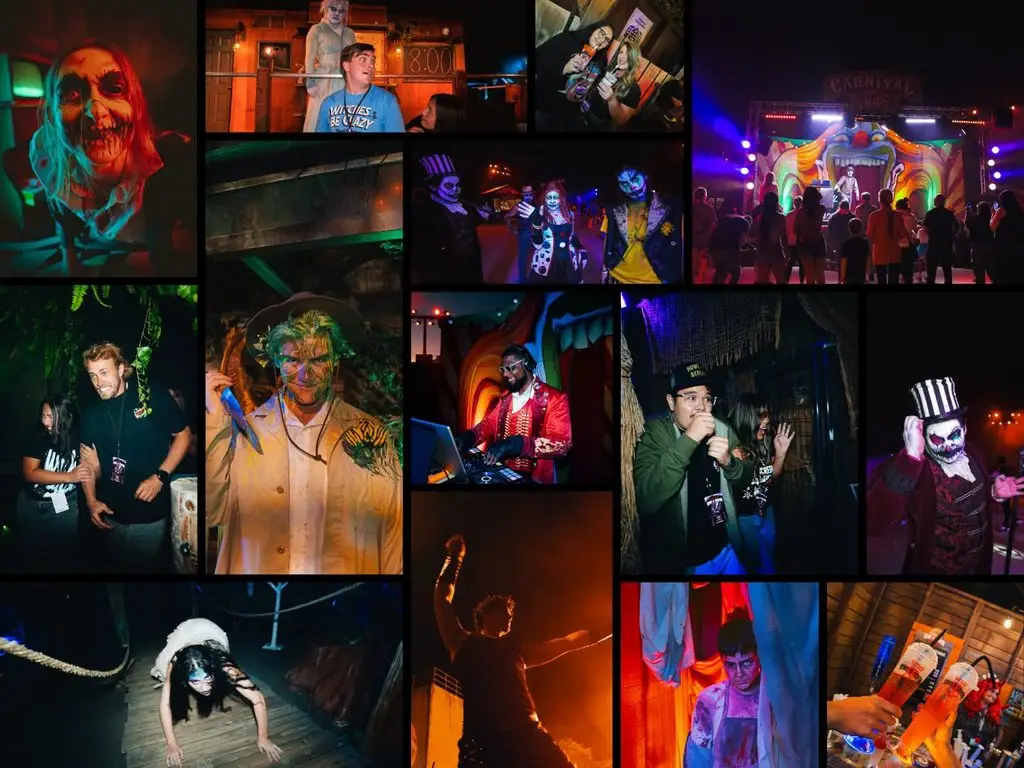
Scaredy cats beware: SeaWorld San Diego’s Howl-O-Scream embraces frights forged in darkness. Enjoy an ominous lineup of live shows, scare zones and bloody bars ahead of Halloween.
9/12
The best parts of Artivál and the Alley Cat Art Walk have united for the free Alley Cat Art Fest, an all-day outing for live music and immersive artwork in Downtown El Cajon.
9/12 & 9/13
Take a Grecian vacation for a fraction of the price during the annual Cardiff Greek Festival, two days of immersive cuisine and culture—with plenty of dancing—on the Encinitas coast.
9/13-9/20
Step away from the stove! The California Restaurant Association has eight days of eating experiences with your name on it. During San Diego Restaurant Week, explore by meal, neighborhood or cuisine for your personal dining plan.
9/16
Nourish yourself with an all-inclusive spread of Pacific Beach eats and locally-crafted artwork during the HeArt of PB Restaurant Walk on Garnet Avenue.
9/19
When it comes to stand-up comedy, Chelsea Handler is always ready to roast. See Handler tell anecdotes and skewer an assemblage of victims during her Balboa Theatre performance.
Ryan Hardison is a freelance arts and entertainment writer and recent graduate of San Diego State. When he's not staring at his laptop, he's likely eating an adobada burrito or getting sunburnt at the beach.
Kelly H. Harfouche, founder of KQ Aesthetic Society, knows firsthand that cosmetic treatments like fillers, neurotoxins, and microneedling, can not only enhance a person’s appearance and restore confidence, they have the power to truly change a person’s life. An expert injector has the ability to tailor treatments to each individual patient’s anatomy and goals for personalized results. Harfouche, a board-certified nurse practitioner, has spent nearly a decade perfecting her craft as an aesthetic injector and integrating her multifaceted artistic skills with precision patient care. Her commitment to continual education and training, plus a passion for helping people look—and feel—their best, set KQ Aesthetic Society apart in a sea of local medspas.
For many people considering nonsurgical treatments, the intent is to look refreshed and refined. KQ Aesthetic Society’s philosophy eschews a cookie cutter approach that bases treatments around units, instead working to understand each person’s unique goals, then curating a treatment plan to fit that vision. Harfouche focuses on “inclusive luxury,” the belief that everyone deserves access to aesthetic treatments, respective of budget restrictions. She develops long-standing trusted relationships with her patients, and works with each one to achieve their aesthetic objectives and address the underlying causes of their concerns.
“For me, forming an honest and open relationship with every patient who walks through the door is essential. This means understanding them on a deeper level and meeting them where they are to define and achieve their individual goals,” she says.
Drawing on her artistic background, which inspired her transition into medical aesthetics, Harfouche sees each client as a “unique canvas.” Rather than relying on standardized procedures, the practitioner’s distinctive approach combines her profound understanding of the physiological and anatomical changes associated with aging with an unwavering commitment to ongoing education about the newest products and their mechanisms of action. Her goal is to make each patient feel beautiful in their own skin and to embrace their individuality.
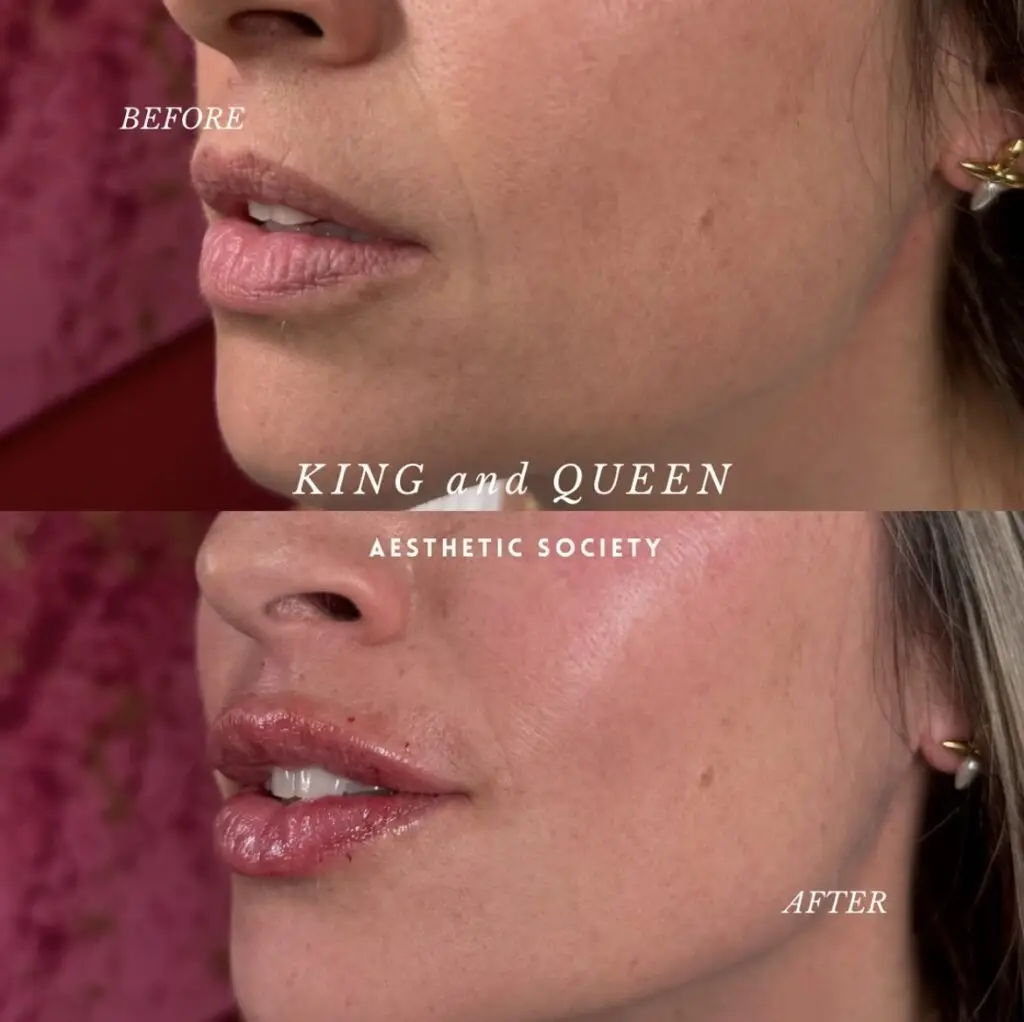
She has also pioneered a way to combine her talent for aesthetic artistry with her philanthropic nature. Harfouche is one of only a handful of providers using dermal fillers to treat patients with lip asymmetry and scarring resulting from cleft lip surgery. Patients travel from around the country for this transformative treatment, noting increased confidence and a restored identity. She hopes to eventually launch a training program to help fill the void in this space.
“My passion has always been connecting with people and giving back in any capacity that I can,” she says. In the rapidly advancing landscape of aesthetic medicine, you can place your confidence in Harfouche and KQ Aesthetic Society to deliver exceptional care. To learn more or book a consultation, please visit kqaestheticsociety.com.
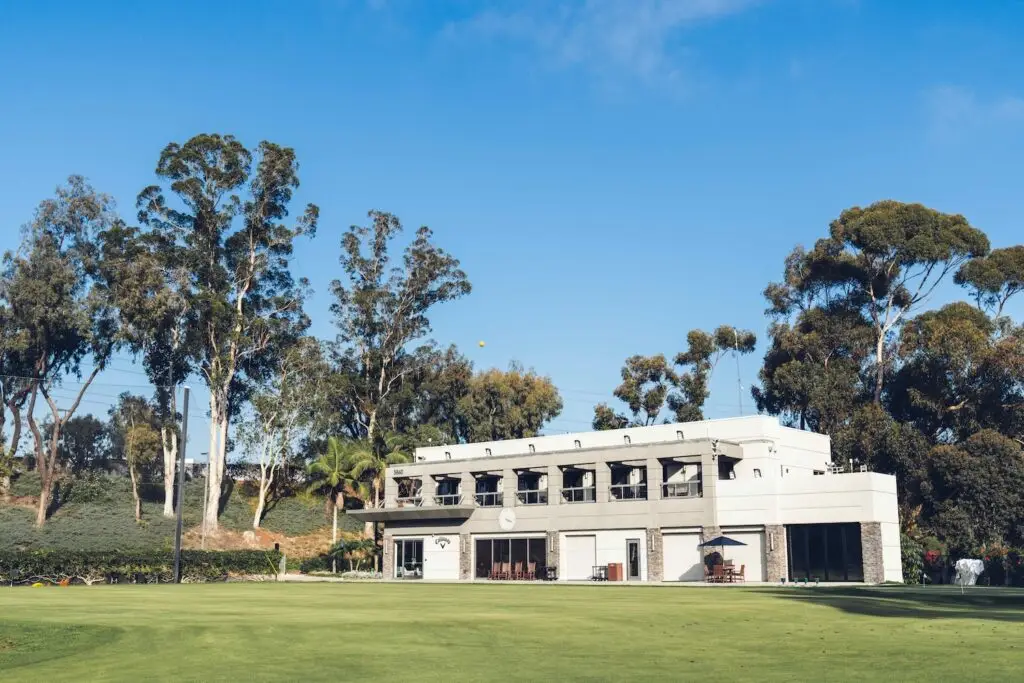
A Rare Look Inside Callaway Golf’s San Diego Test Center
The Ely Callaway Performance Center is where tour-level fittings, cutting-edge technology, and golf equipment you can’t buy yet all come together
Courtesy of Ely Callaway Performance Center
By Tina Mickelson
“Come test something.”
Those are quite possibly my three favorite words in the English language—all due respect to “I love you” or the highly underrated “you were right.”
I’ve been a PGA Golf Professional since 1994, and yes, full bias disclosure, a Callaway Golf Ambassador for 18 years. One of the bonuses that comes with that combo is access to the Ely Callaway Performance Center—a place so exclusive it gives “velvet rope” vibes.
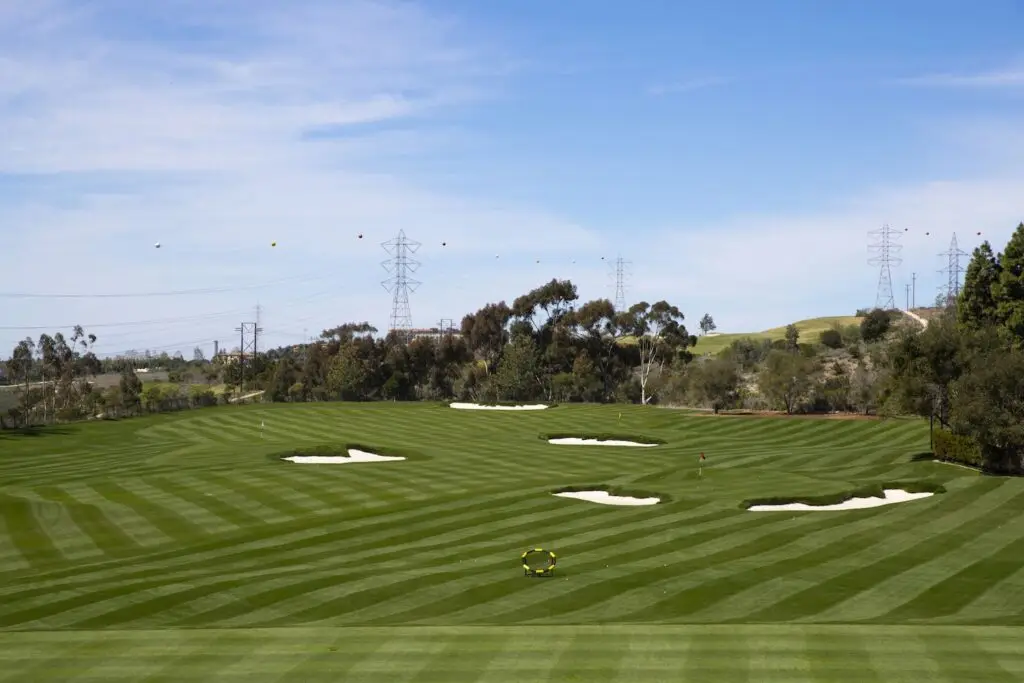
Originally opened in 2006 as a highly functional (yet not exactly breathtaking) test facility, the ECPC got a serious glow-up in 2018 when Gil Hanse (along with partner Geoff Shackelford) turned it into what can only be described as a fully engineered golf playground. Hanse is no stranger to golf course renovations. In 2024, he completed an extensive redesign of the Omni La Costa North Course in Carlsbad, so it could host the NCAA Division 1 Golf Championships. He also worked on acclaimed courses like Winged Foot, Merion Golf Club, and Oakmont Country Club.
In just two months, it went from a standard test center and R&D lab to a fully dialed-in golf playground.
Courtesy of Ely Callaway Performance Center
What was once purely practical is now intentionally designed to be both precise and inspiring. The targets are staggered with purpose—forcing creative shot-making while also calling you out on your actual distances (no more “that’s my 150-yard club … ish”).
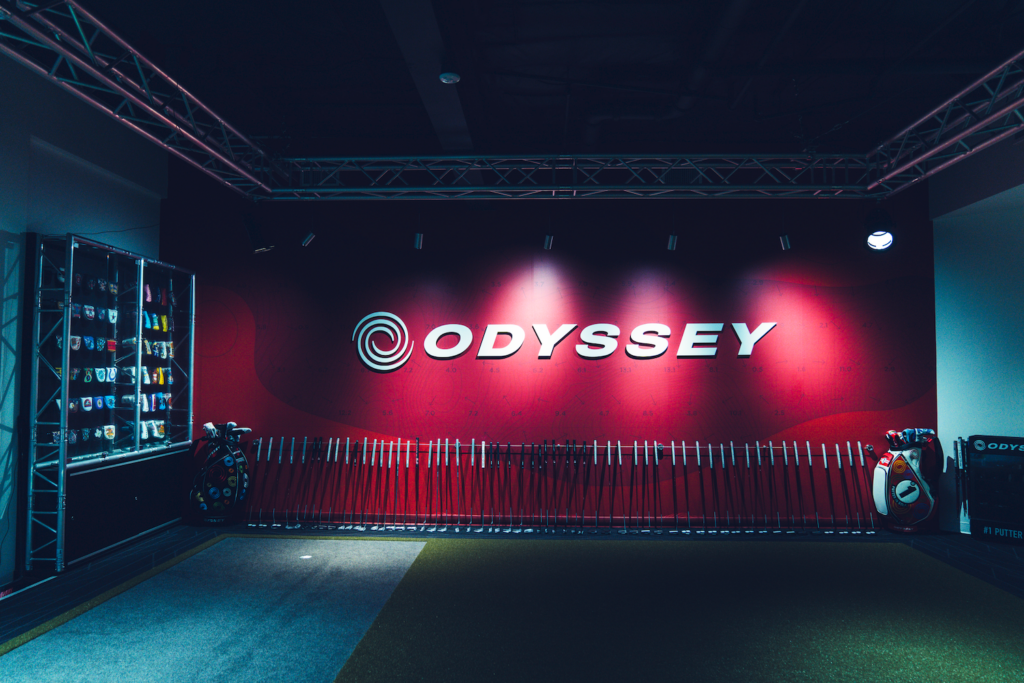
Add a massive hitting area, bunkers and greens that mimic real on-course conditions, a “Himalayas” putting green (named for its roller-coaster undulations), an upgraded indoor putting lab, and a 120-decibel sound system blasting a very golf-appropriate playlist, and suddenly it’s a rare blend of high-performance testing facility and “don’t mind if I stay here all day” energy. Since this isn’t exactly open to the public, SDM asked me to take you behind the curtain.
As the iron gates part, it feels less like arriving at a practice facility and more like being granted backstage access at a rock concert—if the bandmembers were made entirely of launch monitors and perfectly manicured turf.
There are no mats. No guessing. No “I think that one felt good?” Just conditions that mirror exactly what tour players see in competition. Because when you’re testing equipment at this level, accuracy isn’t a bonus—it’s the whole point.
Even the sand matters. Different textures. Different densities. Because bunkers have personalities, too, and they are often unfriendly. And the golf balls? Brand. New. Not the usual “these have seen some things” range balls. New balls mean consistent spin, truer trajectory, and no surprises. The older a golf ball gets—and the more it’s been baked in the sun, scuffed, or generally lived a full and complicated life—the less reliable it becomes. Think of it like this: fresh ball, predictable performance; old range ball, slight chaos with a side of mystery.
I’m escorted to my personal hitting bay—basically a pop-up shaded oasis stocked with enough equipment to make a gear junkie weak in the knees. Shafts in every weight and profile imaginable. Heads lined up like they’re waiting to be drafted by their favorite team.
Courtesy of Ely Callaway Performance Center
Toptracer technology was patiently waiting to track every one of my swings, each shot instantly delivering ball speed, launch, spin, carry distance, and dispersion (a polite way of saying consistency, or lack thereof), so there’s no guessing—just data telling the truth, whether I like it or not.
We start with irons. Different heads, different feels, different results. When I miss a shot, the ball tends to leak right, so we check lie angle. A quick adjustment—2 degrees upright—and suddenly the clubface is consistently square at impact like it remembered its job. Effort level: down. Ball flight: improved. Confidence: creeping back.
Next we look at the different shaft options—because nothing says “fun afternoon” like realizing a higher kick point can change your entire golf identity. Shaft flex (how much the shaft bends during your swing) helps determine whether you get more height and distance or more control, while kick point (where the shaft bends the most) influences your ball flight—lower kick point for higher launch, higher kick point for a flatter, more penetrating shot. In other words, one small tweak and suddenly you’re hitting shots you’d normally only describe later, slightly exaggerated, over a glass of wine.
Then we move through the bag: hybrids, fairway woods, drivers, wedges. It’s a full rotation of “try this,” “now try this,” and “okay wait … THAT one.”
And yes—the new Quantum driver and fairway woods made an appearance. Without getting too deep in the weeds, they’re faster, more forgiving, and smarter (thanks to AI face mapping) than previous models. Translation: Even your mishits are now slightly less embarrassing. And they were not the only things getting tested. My patience was under attack because the driver and woods would not be available to the public for a good three months.
Courtesy of Ely Callaway Performance Center
Watching the fitting team work is like watching a Formula 1 pit crew. Clubs are swapped in seconds. Shafts tightened, adjusted, replaced. One minute you’re swinging something that seems “fine,” and the next, you’re holding a club that feels like it is a part of your DNA.
Then there’s the putter fitting. Drivers are physics. Putters are therapy. Inside the putting lab, sensors track everything—tempo, face angle, path—things you didn’t even know could be measured. Within minutes, my data politely informs me that my putter face is slightly closed at impact. Not shocking, but also not ideal.
A few quick adjustments—different head (with a bit more weight at the toe to discourage the face swinging closed at impact), shorter shaft (so I feel more over the ball, which helps my eyeline)—and suddenly the ball starts rolling exactly where I’m aimed.
Same stroke. Same golfer. Completely different outcome. If only the rest of life worked like that.
And then there’s the part that feels slightly classified. The ECPC isn’t “just” a performance center—it’s also where future equipment lives before the public even knows it exists. I’ve been there when certain clubs were basically under surveillance. Not “don’t touch,” but more “please keep phones in your pocket.”
It’s golf’s version of Area 51. Except instead of aliens, it’s drivers that won’t hit shelves for another year—and like I mentioned, waiting is not my strong suit.
Getting to test the newest equipment isn’t just a perk—it’s part of the job. It’s what allows me to stand in front of students and say, “I’ve tried it. I know what works and what doesn’t. And more importantly, I know why.” And if I happen to sprint to my car every time the phone rings and someone says, “Come test something” … well, that’s just professional courtesy.
Callaway isn’t the only place to get your swing analyzed and clubs fitted. You can stroll into big retail spots like The Golf Mart or Golf Galaxy, book a next-level session at a dedicated studio like Club Champion or True Spec Golf, test brand-specific gear at various manufacturing companies (many located in Carlsbad), or even combine a lesson and a fitting at GOLFTEC. And let’s not forget your local golf course, where fittings happen on actual turf, on a driving range you have some history with—many times with the golf professional who is familiar with your swing so they can give you valuable input. With this many options, there’s really no excuse, other than pride, to keep blaming your clubs.
San Diego has always worshipped at the altar of good skin. Equal parts surf town, biotech hub, and wellness capital, it’s a city where lunch breaks become beach walks and sunscreen sits beside car keys by the front door. The products that get used here earn their place. With 266 sunny days a year and one of the highest rates of skin cancer in the country, we take skincare seriously. Dr. Bronner’s has been making soap in North County since the 1960s. Sun Bum was born in Encinitas and is now on shelves in over 70 countries. The tradition runs deep.
“Living in San Diego means your skin is exposed to sun almost every day of the year,” says Sue Zhang, M.D., a San Diego physician specializing in aesthetic medicine. “The products that tend to succeed here are the ones that can keep up with daily life, UV exposure, sweat, and movement, while still supporting long-term skin health.”
From a mineral powder that solves the sunscreen-over-makeup problem to an acorn oil serum rooted in Indigenous plant medicine, the local San Diego shelf is more diverse, and comprehensive, than most of us realize.
Courtesy of Kopari
Kopari
Sun Shield Body Glow SPF
A hydrating gel-oil hybrid that applies like a body treatment and leaves skin with a sheen that reads as healthy rather than oily. La Jolla–founded Kopari built its reputation on cold-pressed coconut oil sourced from family farms in the Philippines, and the Sun Shield Body Glow SPF is exactly that in summer form: coverage that doubles as skincare.
4-Skin
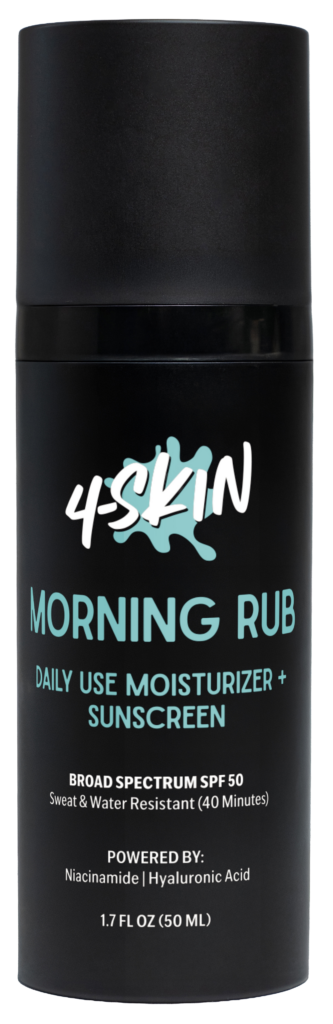
Morning Rub
The name is intentional. The founder got a basal cell carcinoma diagnosis that his dermatologist caught—she’s now his business partner. The question he couldn’t shake was why the skincare industry hadn’t yet figured out how to talk to men, and 4-Skin is the answer: a premium sunscreen and skincare line built around the kind of blunt, self-aware humor that gets guys to pay attention. Men’s skincare has needed this for a long time, and the formulas are serious enough to deliver.
Courtesy of Coola
Coola
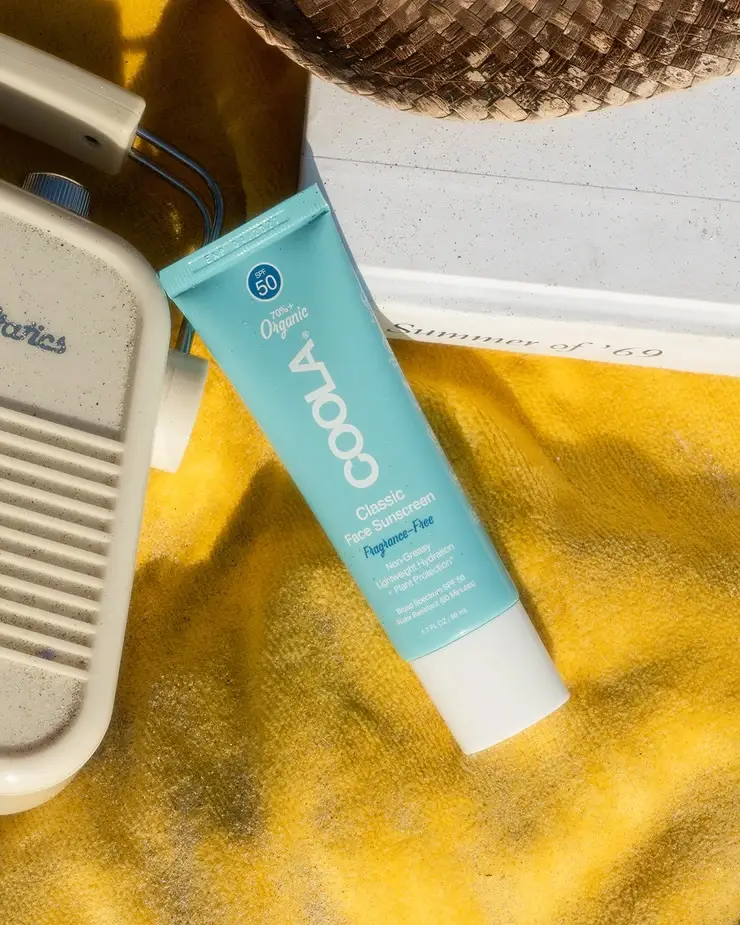
Classic Face Sunscreen SPF 50
Carlsbad-based Coola was formulating organic SPF before “clean sunscreen” was a marketing category, and the Classic Face Sunscreen is the brand’s thesis: protection that disappears into skin and layers cleanly under makeup. Sheer and lightly hydrating, it makes sunscreen easy to reapply before an afternoon walk at Torrey Pines.
Saffron and Sage
Glow Finishing Oil
Squalane, argan, jojoba, and CoQ10: a short ingredient list that does a lot. The Glow Finishing Oil from Mission Hills wellness sanctuary Saffron and Sage is plant-based, scientifically grounded, and formulated to absorb rather than sit on the skin. The brand started as an integrative health practice where acupuncture, naturopathic care, and functional medicine share a roof, and the skincare line runs on the same philosophy.
Courtesy of Alastin
Alastin
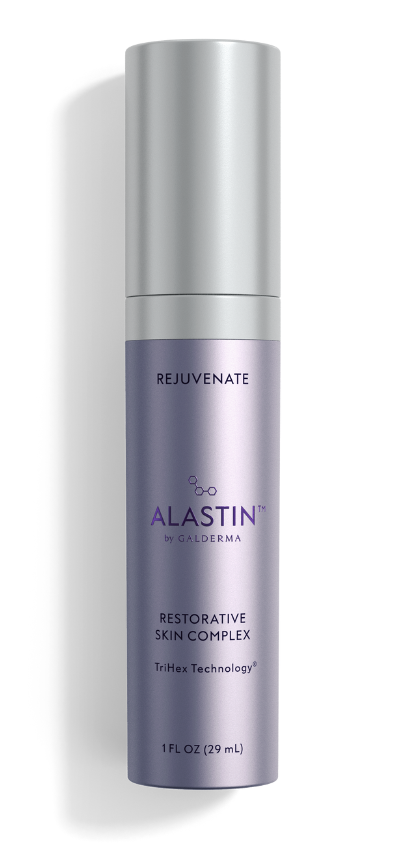
Restorative Skin Complex with TriHex+
The Restorative Skin Complex is powered by TriHex+, a patented peptide blend developed by Carlsbad-based Alastin’s team of SkinMedica veterans. It promises to clear out damaged collagen and elastin while supporting new production, the kind of gradual improvement that makes a product hard to quit.
Beldi is a multi-functional cleansing tradition rooted in Moroccan hammam culture, dating back over 12 centuries. Alia Jouj is the brand’s flagship product, and San Diego–based founder Dr. Mia Chae Reddy built a brand around it. Alia Jouj uses 100 percent organic, cold-pressed argan oil and the same ancient saponification method to produce a honey-thick liquid cleanser that softens skin without stripping it.
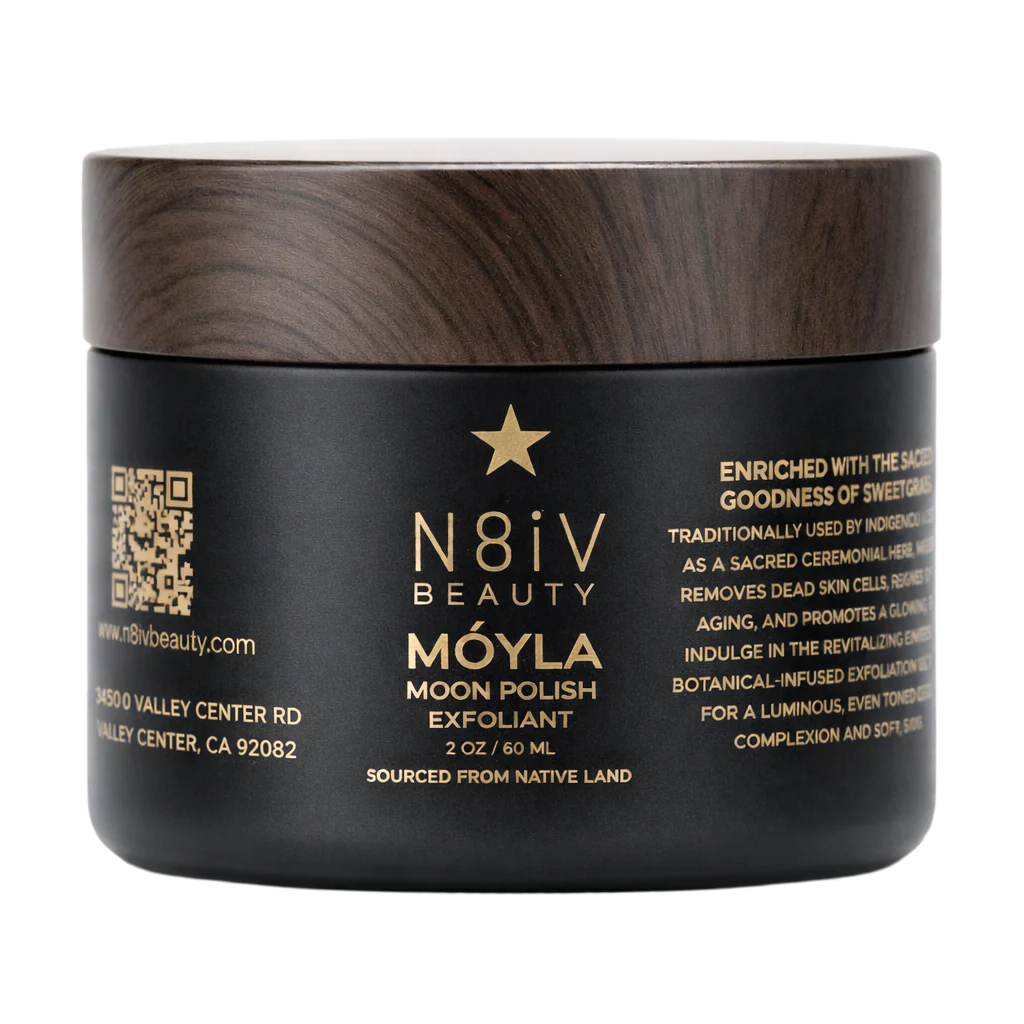
Courtesy of N8iV Beauty
N8iV Beauty
Móyla Moon Polish
Acorn oil has been used by California’s Indigenous communities as plant medicine for generations. Ruth-Ann Thorn, an enrolled member of the Rincon Band of Luiseño Indians, built N8iV around it as the first Native American–owned skincare brand to reach the national mainstream. The Móyla Moon Polish, named for the Luiseño word for moon, is an exfoliant centered on acorn oil Thorn gathers herself each year from the La Jolla reservation. Find it at the Gaslamp Quarter store Thorn owns at the historic Yuma Building.
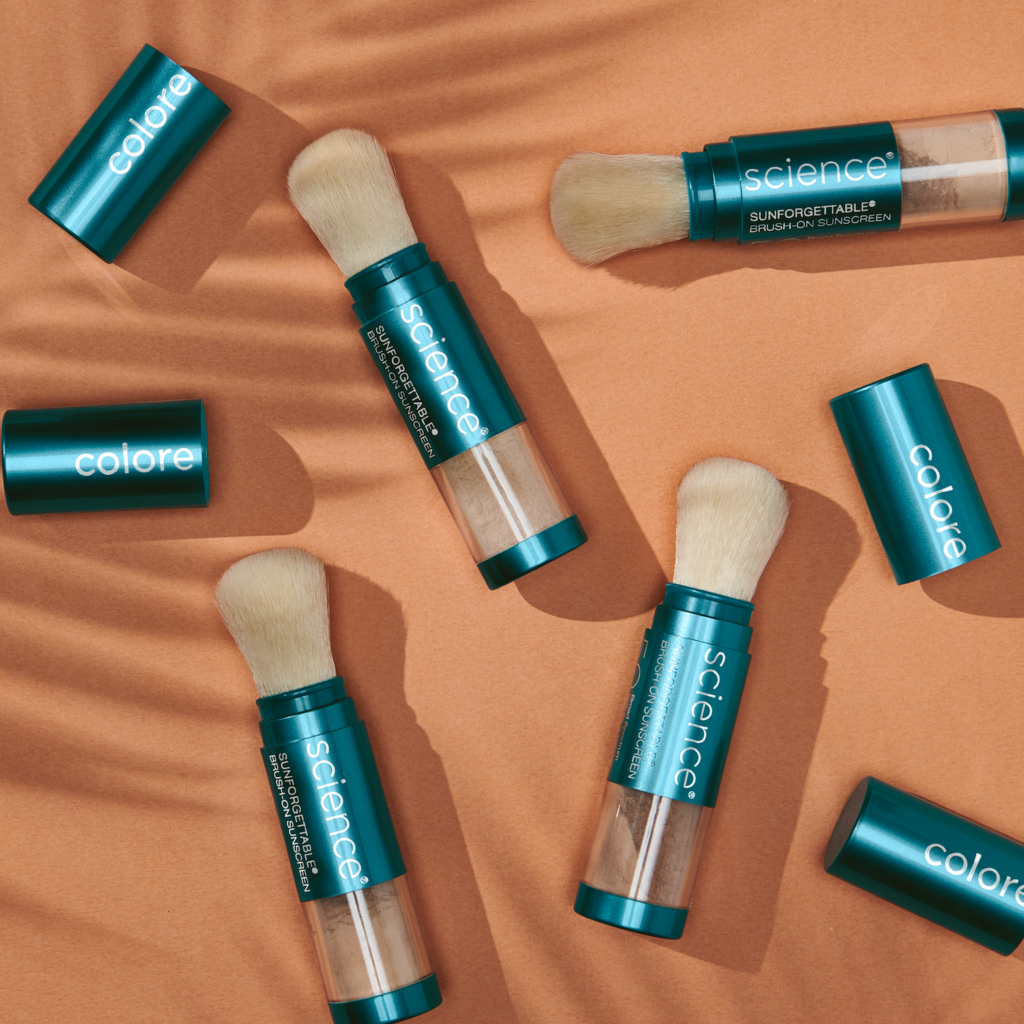
Courtesy of Colorescience
Colorescience
Sunforgettable Total Protection Brush-On Shield SPF 50
This product solved the reapplication problem. As a brush applicator, this mineral SPF goes over makeup without disturbing it, which is why it has been on derm-office retail shelves in Carlsbad and beyond for over two decades. The tinted version doubles as foundation.
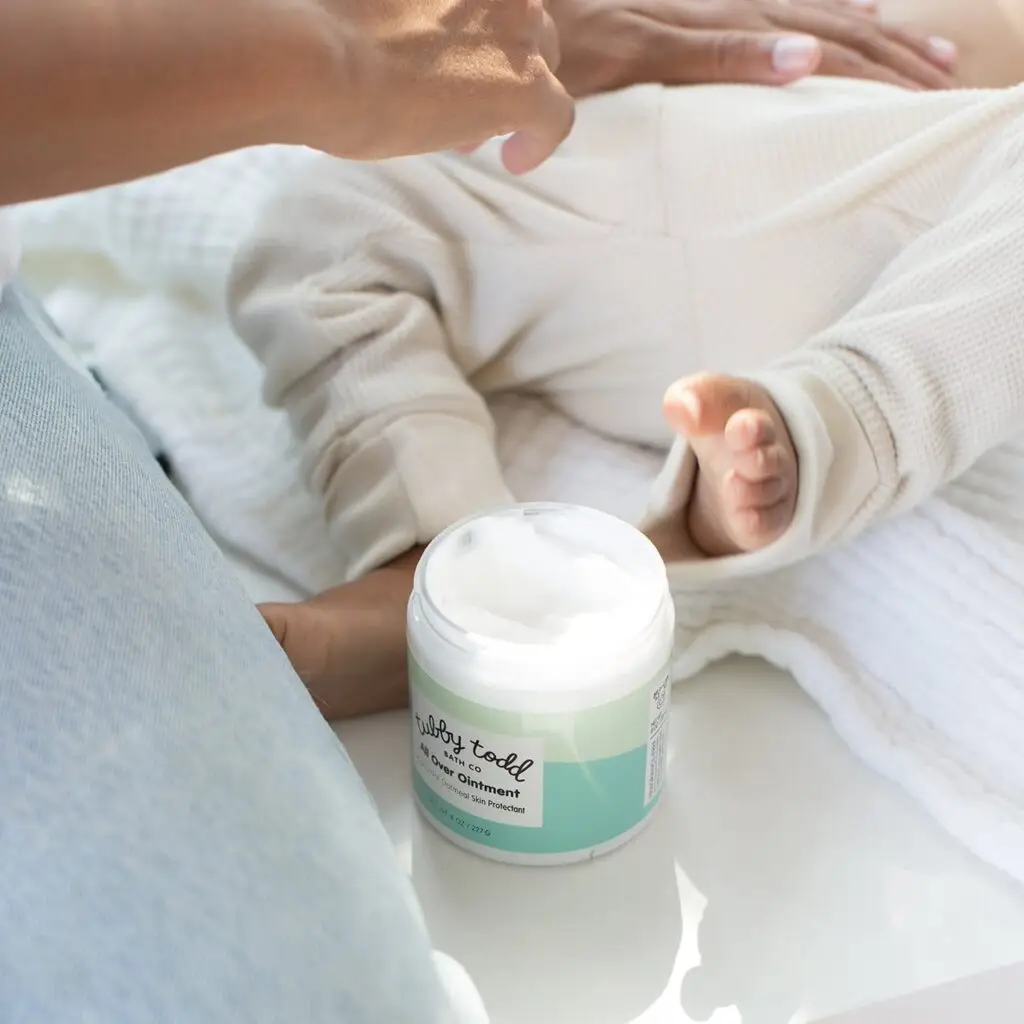
Courtesy of Tubby Todd
Tubby Todd
All Over Ointment
This steroid-free, petroleum-free eczema treatment was built specifically for babies and toddlers (although grown-ups can use it, too). It’s centered on FDA-approved 1 percent colloidal oatmeal with a base of sunflower seed oil, beeswax, and jojoba. The “linoleic-acid-rich sunflower oil is helpful for atopic, eczema-prone skin that is often deficient in that fatty acid,” says Dr. Zhang. Gentle enough for newborns, safe for daily use, and tested by both pediatricians and dermatologists.
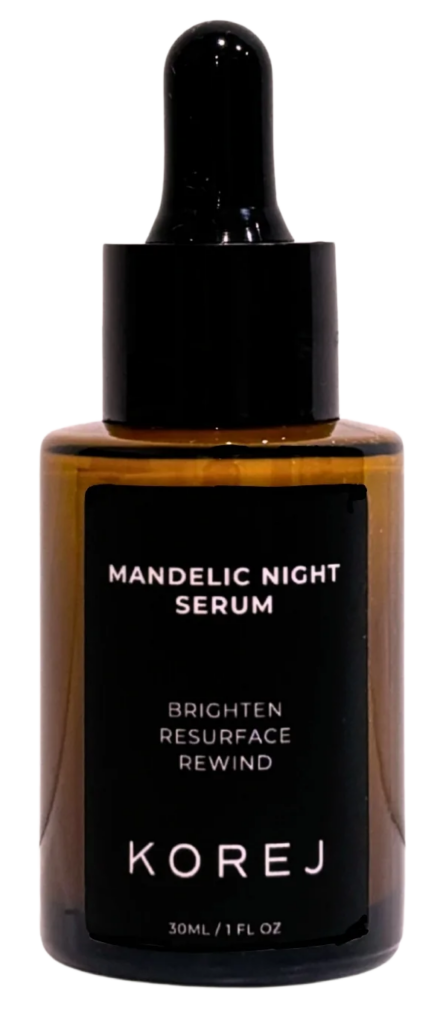
Korej
The Mandelic Night Serum
The Mandelic Night Serum pairs mandelic acid, an AHA derived from almonds and gentler than glycolic acid on sensitive skin, with lactic acid, niacinamide, and urea to brighten, smooth texture, and reduce breakouts overnight. Fragrance-free, vegan, cruelty-free. The brand name is the initials of the founder’s five daughters, pronounced like courage. Dr. Zhang also says she “really value[s] [the founder’s] mission to create pregnancy-safe skincare products that are both effective and wallet-friendly.”
Ingrid Yang, M.D., J.D. is a hospital-based physician in San Diego, CA, certified yoga therapist, and longevity specialist. She loves *double hearts* San Diego and spends her days helping people fully engage in long, healthy lives through evidence-based lifestyle medicine. Her books include Adaptive Yoga, Zen Mindfulness, and Hatha Yoga Asanas. When she’s not leading international wellness retreats, she is chasing sunsets, handstanding in nature, or geeking out over mitochondria.
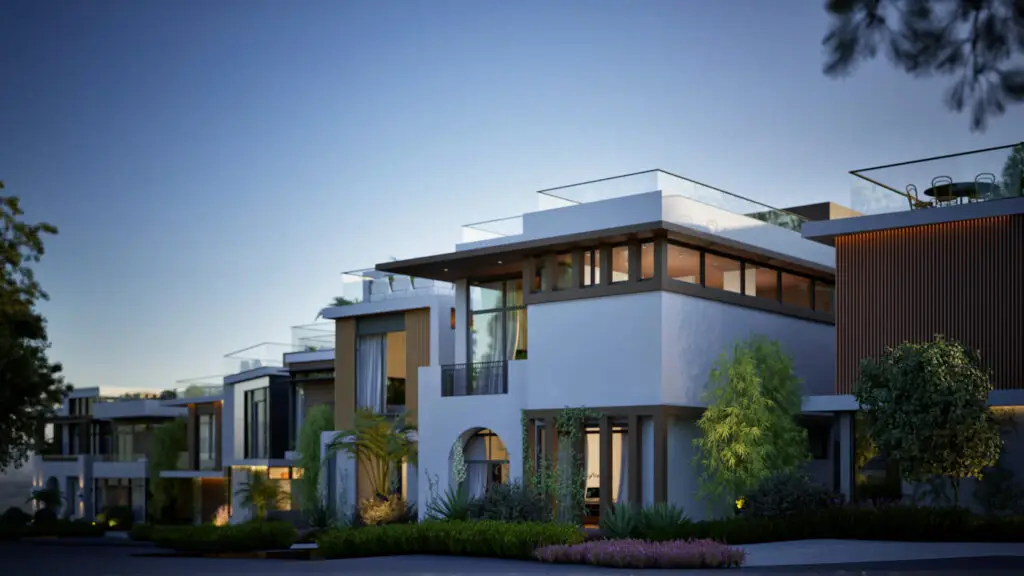
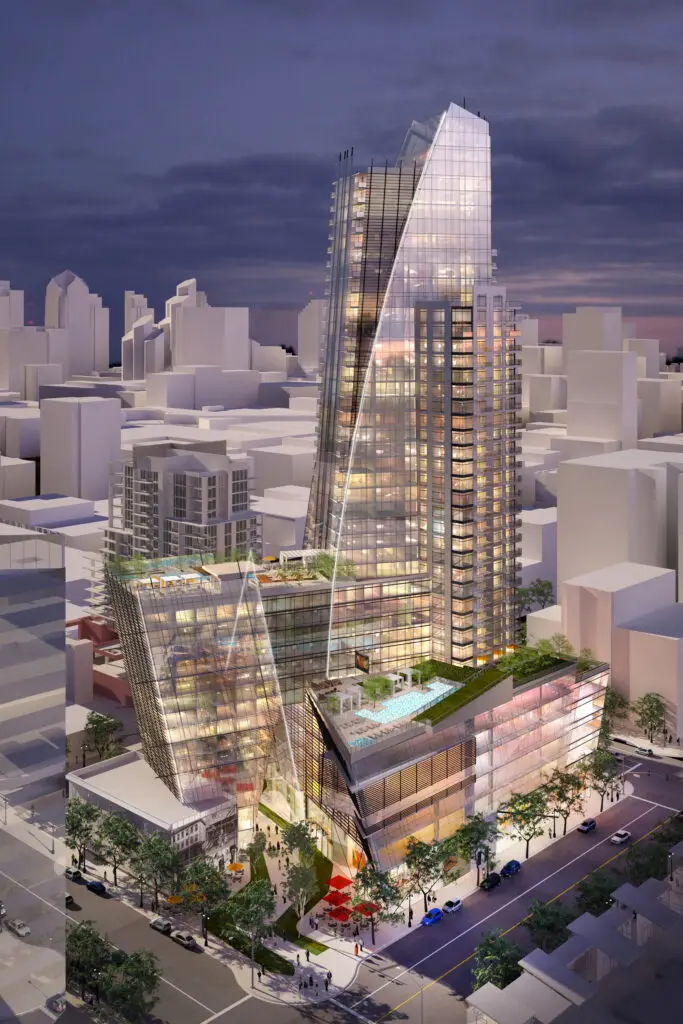
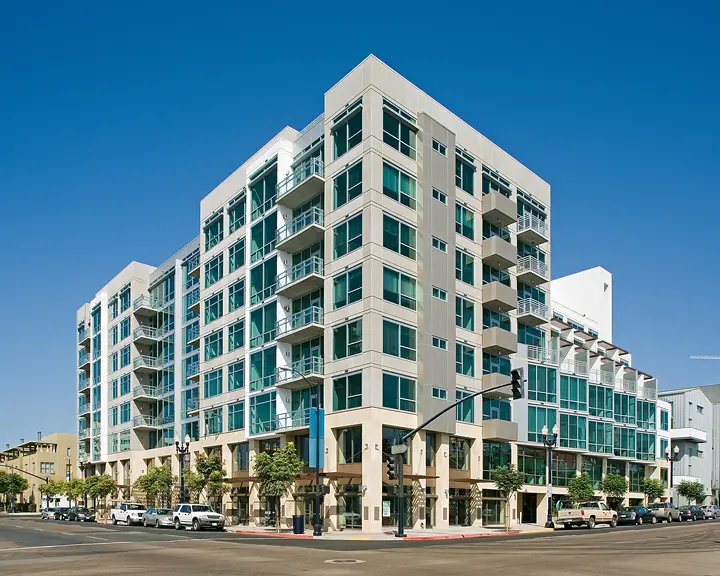
AVRP Studios’ tradition for Design Excellence and Innovation began in 1976 with Doug Austin, FAIA, in Solana Beach, California. The firm has since grown to complete major projects throughout the United States and Canada. We think of ourselves as a family and we care deeply about people. We want to inspire, help make their lives richer and more complete through our efforts. We believe that architecture is one of the most important art forms because of the impact it can have on the lives of those it touches. We’re delighted to have been recognized with over 150 awards for design excellence.
703 16th Street, Suite 200, San Diego, California 92101 | 619-704-2700 | avrpstudios.com