Featured articles
Food & Drink
Food & Drink
Food & Drink
Featured articles
Everything SD
Everything SD
Things to Do
Featured articles
Things to Do
Things to Do

Things to Do
Featured articles
podcast-ep

podcast-ep

podcast-ep
Featured articles

Features

Features

Food & Drink
Featured articles
Everything SD
Partner content
Everything SD
Ready to know more about San Diego?
SubscribeReady to know more about San Diego?
Owner Bob Taylor celebrates half a century of outfitting the world’s top musicians with his acoustic guitars
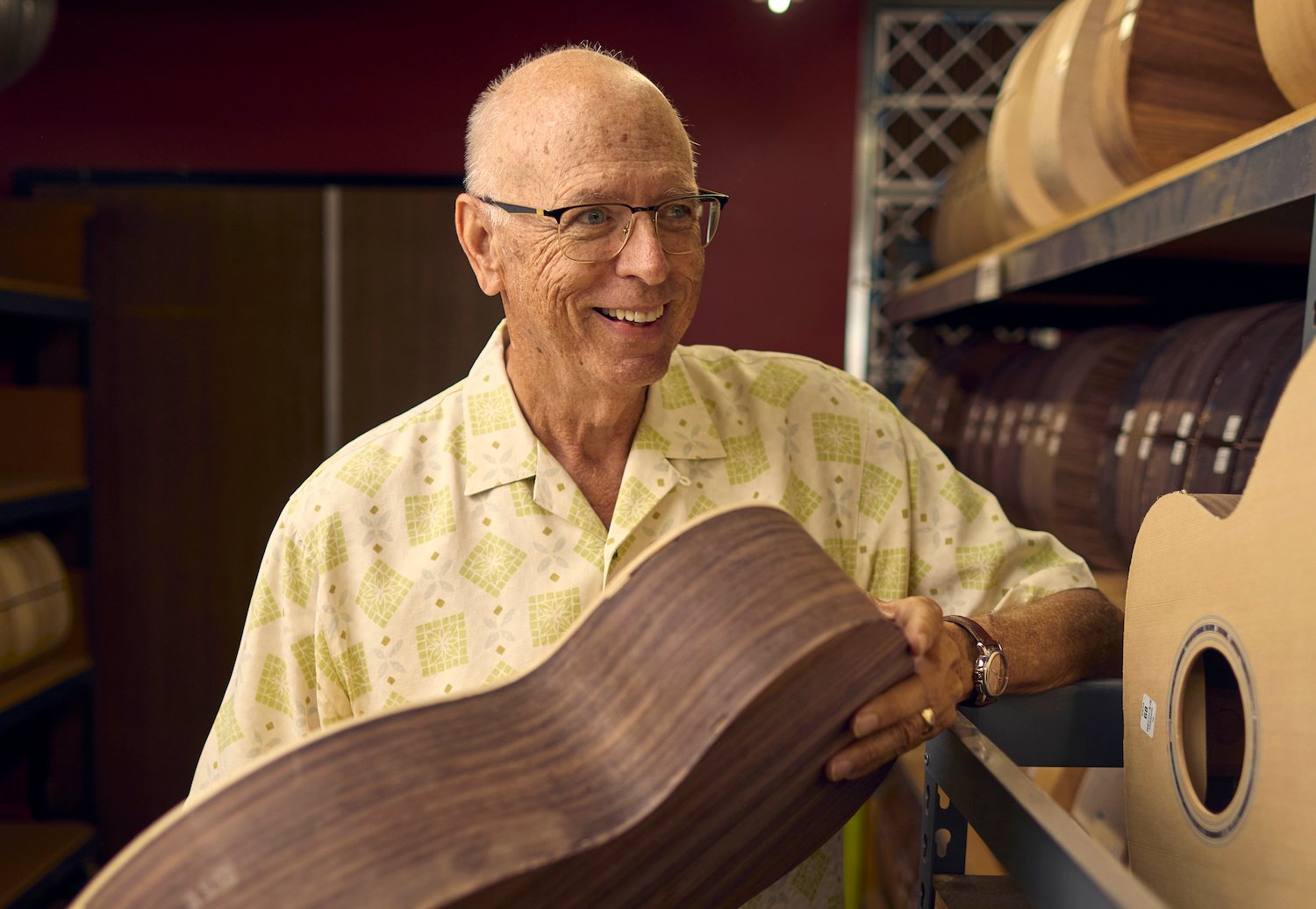
If you ask Bob Taylor of Taylor Guitars, his company’s success was a beautiful mistake.
“Our sound is clean; it’s clear. It cuts through,” Taylor says. But when asked how long it took to engineer that classic Taylor sound, he laughs. “Oh, I did not [engineer it]. It was just like, ‘Oh, you really like it? Oh, okay, yeah, I meant to do that.’ We made a guitar that was very innocent, half an accident, but it helped change the music industry.”
Taylor, who started making guitars at 16, only knew one thing when he began: He’d turn his passion into a career. Three years later, he partnered with Kurt Listug, who was 21 at the time. The pair purchased a small guitar shop in Lemon Grove and began building.
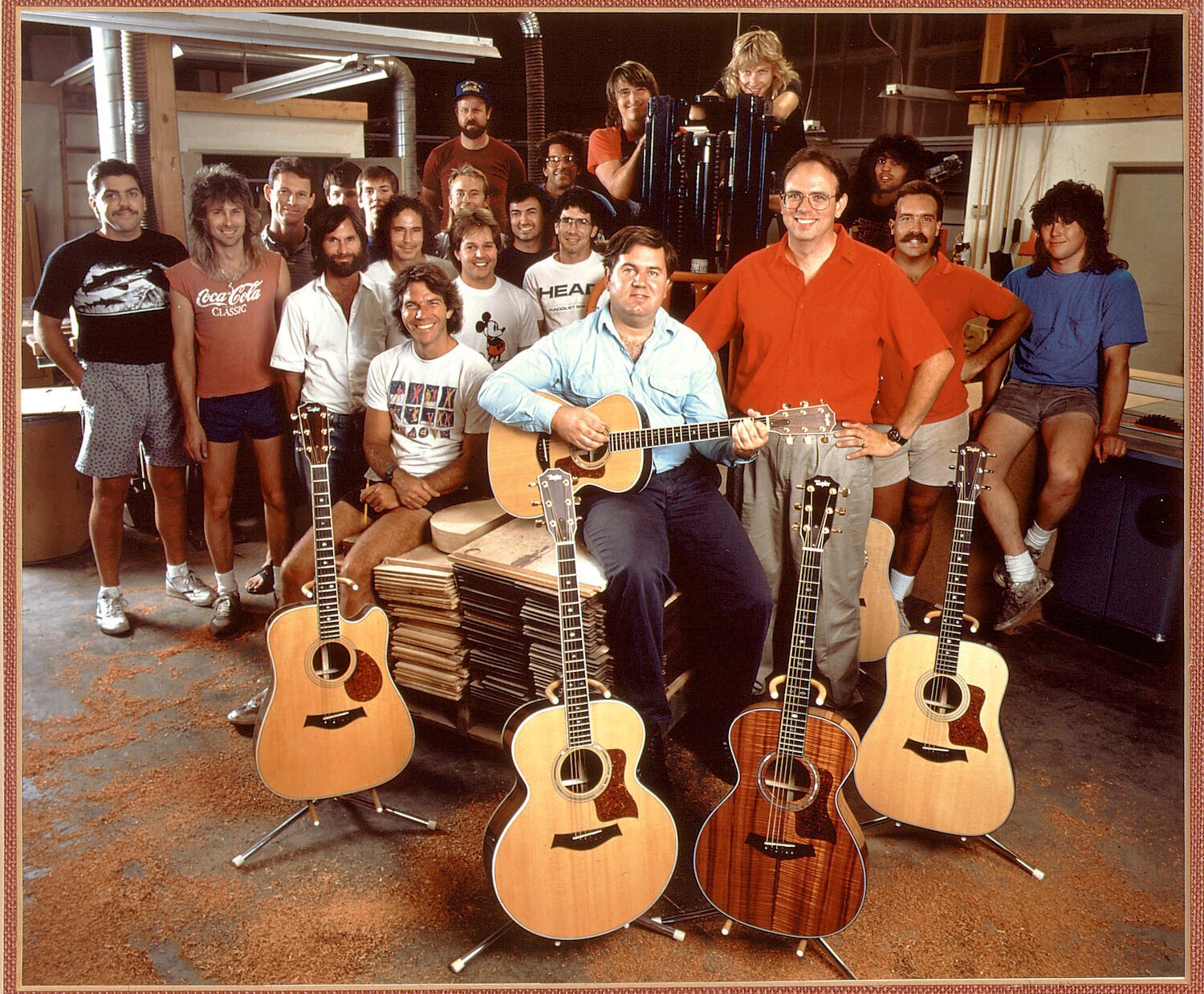
On October 15, 1974, they founded Westland Music Company, which became Taylor Guitars in 1976. This year, the company celebrates its 50th anniversary. Having grown sales worldwide to $125M, Taylor counts among its fans some of the music industry’s biggest artists: John Fogerty, Jewel, Zac Brown, Jason Mraz, Katy Perry, and Taylor Swift, to name a few.
But it took more than three decades before Taylor Guitars was a household name. In the ’80s, music was all about heavy metal, synth, and glam—acoustic guitars weren’t exactly flying off the shelves.
“We started selling in Los Angeles during the Laurel Canyon days. And, you know, music was changing a lot then,” Taylor says. “Acoustic guitars were always hard to play. The necks were too big, the strings were too high; it took a death grip to play them.”
But Taylor and Listug had faith in their product. They packed up their axes and headed to the 1985 National Association of Music Merchants (NAMM) show, an annual trade event that is the largest of its kind today.
There, they showcased a new line of guitars called the Artist Series, limited-edition models finished in colored stain. One of Taylor Guitars’ distributors challenged them to make a 12-string purple guitar for Prince, who had just released “Purple Rain,” garnering him global stardom.
Prince played his new 655 Artist Series guitar in a Live Aid video that year, though he requested no branding be shown at the time. Luckily, the industry found out who was behind the artist’s new instrument. The calls from musicians trickled in. The shift had begun.
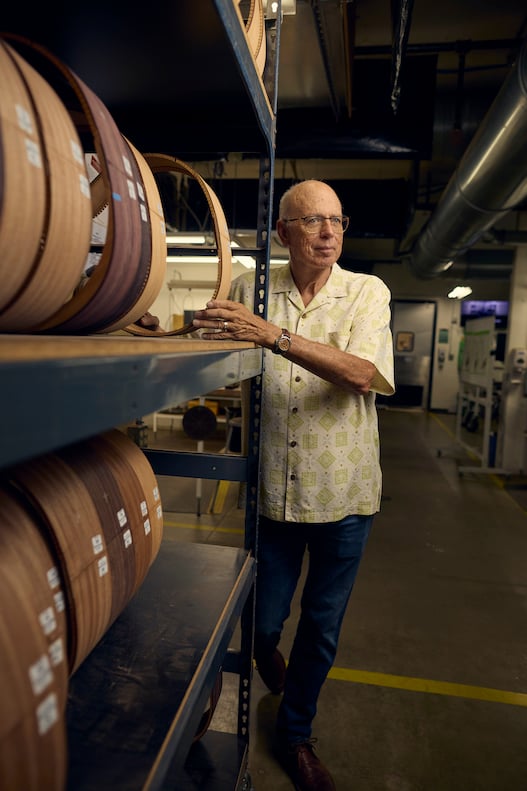
Acoustic guitars began reclaiming their popularity. In 1989, MTV Unplugged started showcasing musicians playing acoustic versions of their songs. Riding this wave of renewed interest, Taylor Guitars ramped up production in the ’90s and early aughts. Taylor refined his guitar-making process and, in 1992, found the business a new home in El Cajon, where they remain today, occupying eight buildings.
Around that time, a young Taylor Swift purchased a Baby Taylor, which she used to write songs in the backseat of her car. Swift’s dad dropped off a cassette tape to Taylor’s office while the now-billionaire Swift was still flying under the radar, Taylor recalls.
“I know that every dad thinks his daughter’s special, but mine really is. Would you listen to that cassette?” Swift’s father said to Taylor. In 2008, Swift held her Fearless album release party at the factory.
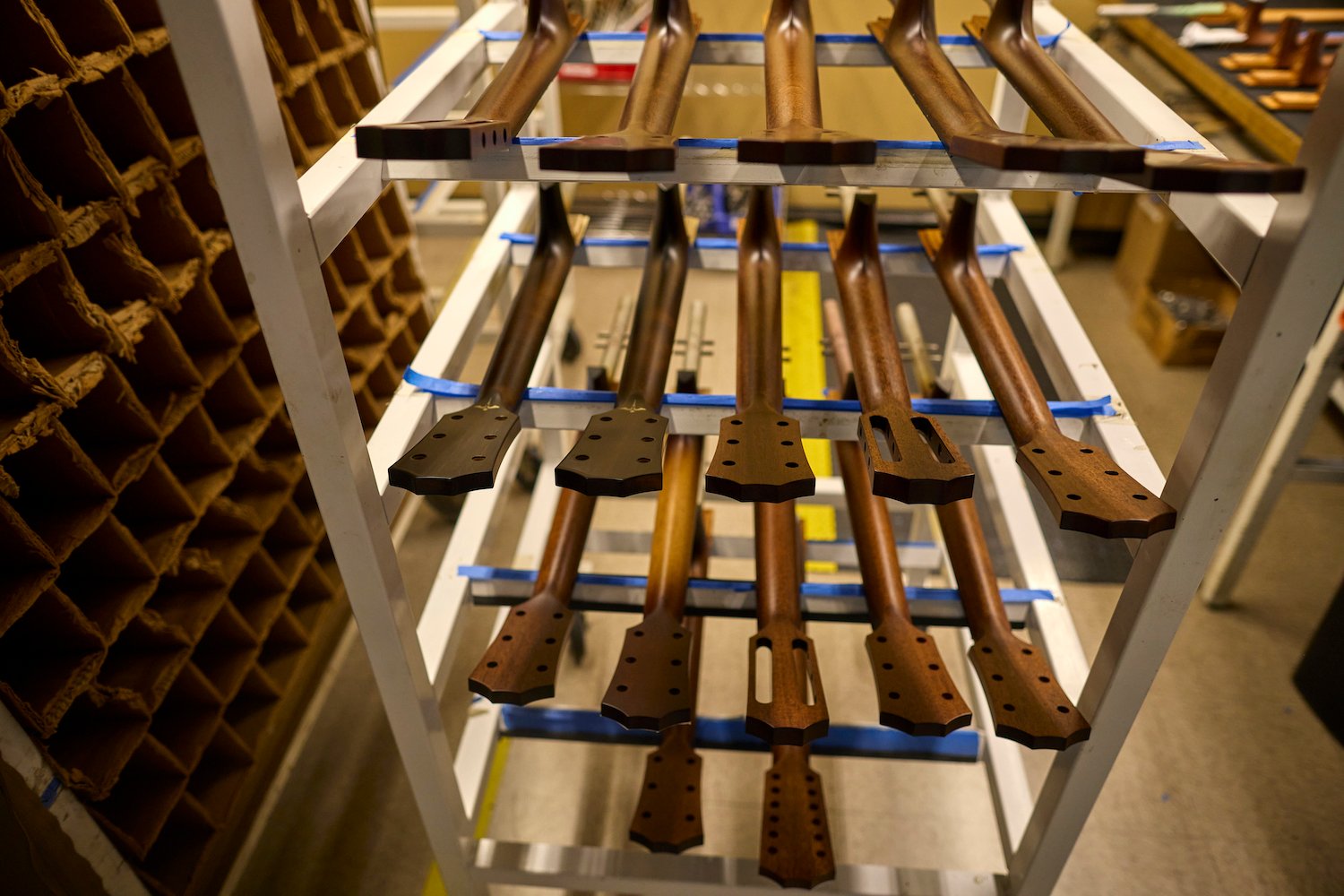
Two years later, the company hired Andy Powers—an Oceanside native who began crafting guitars at the age of 7 and previously ran an instrument-building business of his own—as Taylor’s design successor. Powers re-engineered the brand’s entire lineup of guitars, created new body styles, offered a more diverse range of musical sounds, and developed new guitar voicing architectures. Taylor Guitars sealed its name as one of the best in the industry.
But today, as we tour the facilities, Taylor’s stories are less about the many musicians he’s worked with and more about the families his company—which became fully employee-owned in 2021—has been able to help along the way.
“[Wuhan] came to us from Cambodia,” says Taylor, who gave her a job shortly after she arrived in the states. “She worked for six months and got a raise. She was like, ‘I never thought that life could be like this.’”
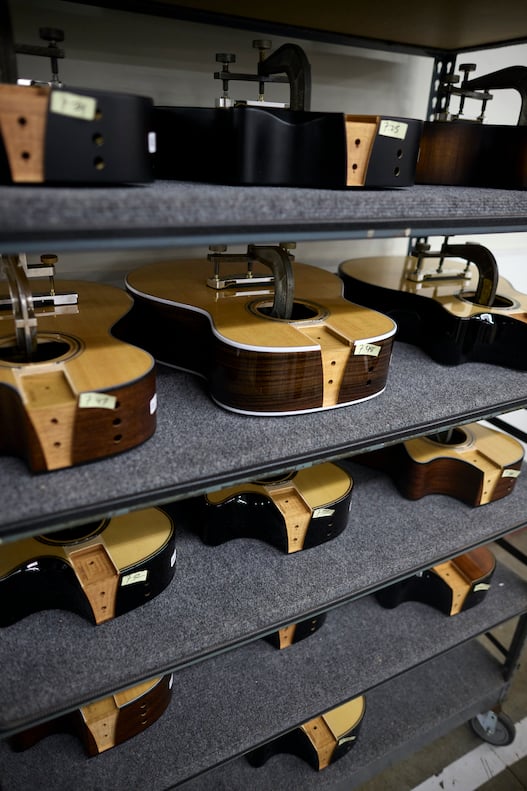
Walking along the factory floor, we’re surrounded by half-finished guitar bodies, tiny lasers, larger-than life robots buffing wood, and workers installing fretboards, applying back bracing, and cutting sound holes. Wherever we go, Taylor takes the time to say hello to his countless employees by name.
I ask him what he’s most proud of after half a century of crafting instruments. Even with his focus on his team, I still half-expect him to gesture toward a wall of various celebs playing his guitars. But his reply is swift: “That we were able to make this career out of guitar-making for all these people. That’s what I’m most pleased with.”
Nicolle Monico is an award-winning writer and the director of creative projects, digital editor for San Diego Magazine with more than 16 years of experience in media including Outside Run, JustLuxe and The San Francisco Chronicle.
Local musicians can audition for a chance to play before performances of Begin Again and at a free community showcase this summer
If you’ve ever wondered what it would feel like to perform on one of San Diego’s most iconic stages, here’s your shot. The Old Globe is looking for local singers, songwriters, and musicians to take the spotlight before performances of its upcoming musical Begin Again—and the gig comes with a chance to perform on the theater’s main stage and at a new community music event, Begin Again: San Diego Sessions.
Inspired by the opening scene of Begin Again, which makes its pre-Broadway premiere at The Old Globe this fall, the open mic–style performances celebrate local talent while giving audiences a taste of San Diego’s music scene before the curtain rises.
Solo artists and duets ages 18 and older can submit video entries here through Friday, July 10. Selected performers will be notified by July 14.
The public is also invited to Begin Again: San Diego Sessions, a free event on Monday, July 20, at 7 p.m. in the Globe’s Copley Plaza. Attendees can catch performances from top contest participants while enjoying discounted drinks from the theater’s pub.
“Begin Again is a story about hope and someone finding their light,” says Adena Varner, Director of Arts Engagement at The Old Globe. “The opening moment, which is what we’re excited about with this contest, is about an artist who’s unknown taking a chance at an open mic night—and then their life changes.”
“What I love about San Diego is it’s a space where hopes and dreams seem to actually be able to come true, and people get to find themselves, find their light and their voice, so I think the spirit of the show really resonates with who we are as San Diegans,” she says.
For director Lorin Latarro, the pre-show performances are a chance to weave San Diego into the production. While the musical has been developed in New York with New York–based musicians and actors, these performances create a direct connection between the show and the city’s local music community.
“One of the things Lorin is passionate about is wanting these performances to feel like San Diego, so we want them to be diverse,” Varner says. “We want these moments to look like us and all that that means… We have submissions from artists based in Tijuana, North County, and East County, so it’s geographically diverse, ethnically diverse, and we’re looking at age diversity as well.”
The Old Globe has hosted community engagement opportunities tied to past productions—including an art contest and walk-on performances—but nothing quite like this.
“We’ve also never had an open mic night on the plaza, so we’re excited, and we really want the music community to know that they’ve got a place at The Old Globe, too,” Varner says. “We’re getting in the practice of making sure our community feels connected to our shows and have an opportunity to contribute in a way that’s meaningful and impactful for them.”
Begin Again is based on the 2013 film starring Keira Knightley and Mark Ruffalo, with a book by Jenna Clark Embrey and Molly Beach Murphy and music and lyrics by Pat Monahan of Train. Performances run September 6 through October 11, with opening night on September 17.
At the time of publication, The Old Globe had received nearly 100 video submissions.
Kai Oliver-Kurtin is a San Diego-based writer who covers travel, dining, events, and culture. Her writing has been published in USA Today, Condé Nast Traveler, Fodor's Travel, Marie Claire, and HuffPost, among others.
We found a handful of inspiring people who live in, and truly know, these 'hoods and asked them how they’d spend their time out and about
Growing up in Carlsbad, I never quite understood why people vacationed there. What, so you want to check out the field where I have soccer practice? Pay my orthodontist a visit? Carlsbad just felt like a town by the beach, no better or worse than any other in the country. It took going to college out of state for me to actually understand just how rare a place like Carlsbad is.
Thanksgiving break my freshman year, my first time coming home after three months in the Midwest, my shoulders dropped. I rolled down the windows and drove to lifeguard tower 37—the hangout magnet for Carlsbad’s youths (and, in the summer, tourists)—and the smells of the ocean woke me right up like smelling salts do. I finally got it.
Carlsbad isn’t just a stopover town on your way to something better. It is the destination. Travel + Leisure named Carlsbad one of the top 50 places around the world to travel in 2026. From the whole globe, the travel magazine picked my home. Sure, we’ve got the Flower Fields and Legoland—but now it’s the smaller ships and indier dreams that are giving it street-level character.
It’s not just Carlsbad, either. People have talked about the “North County bubble” for decades—a force field that prevents its residents from traveling south of the 56. It’s often used derogatorily, and it’s a fairly accurate burn.
For decades, living up in North County meant giving up on culture, or at least culture within close proximity. But now, the main expansion of San Diego culture is happening up north. Central San Diego restaurants have started taking notice and are expanding into the area—spurred no doubt by Oceanside’s food boom and the Jeune et Jolie–Campfire–Wildland–Lilo constellation in Carlsbad. City Heights burger joint Key & Cleaver opened a new spot in Oceanside; the owners of Parc Bistro-Brasserie in Bankers Hill opened Parc Lounge in Rancho Santa Fe. Possibly the strongest market indicator is that Sam Fox—one of the most successful restaurateurs west of the Rockies—has started focusing on North County for his concepts. In 2025, he opened both The Henry in Carlsbad and Culinary Dropout in Del Mar.
For the ultimate insider guide, we found a handful of inspiring people who live and create and truly know six North County neighborhoods—San Marcos, Escondido, Oceanside, Leucadia, Rancho Santa Fe, and Vista—and asked them how they’d spend a dream day out and about in their town.

San Marcos is in full renaissance mode. The biggest story is that the grand North City vision is starting to peek through the scaffolding. It’s essentially the North County Downtown that’s been written in the tea leaves and discussed whenever someone gets stuck in traffic at the 5/805 merge: a 200-acre, pedestrian-friendly, mixed-use face-changer that’s slated for 2,600 homes, 350,000 square feet of retail and restaurants, 250 hotel rooms, and about a million square feet of offices and labs. Its most recent manifestation is 222 North City—a 12-story residential tower with over 450 residences, rooftop garden, pool cabanas, art installations, and almost 20,000 square feet of ground-floor retail (Necessity Coffee, Buona Forchetta, Draft Republic, Milonga Empanadas, and a grocery store anchor on its way).
Which means Restaurant Row is no longer burdened with being the primary caregiver for the hungry or the socially inclined. Patricia Prado-Olmos has watched the city morph during her nearly three-decade tenure at CSUSM, having spent the past six years as the school’s chief community engagement officer. She also just announced her forthcoming retirement at the end of the 2026–2027 school year, so she’ll have even more time to haunt local haunts.
Those in the know call the university “Cal State StairMaster” from the Sisyphean amount of stairs on the hillside campus. So, any day at or around CSUSM should start with a homestyle carbo-load (biscuits and gravy) from Mama Kat’s.

“There’s something about this breakfast spot that immediately puts me in a good mood,” she says. Mama Kat’s is also known for its pie (strawberry-rhubarb), which is breakfast if you change your perspective.
After a few hours on campus—with a break to pet the university’s official therapy goldendoodle, Frank, who helps ease finals tremors or apprehension of on-campus stairs—Prado-Olmos will wander into North City, just steps away. She says the almond croissant and coffee at Christophe Rull Patisserie rival Parisian cafés: “It feels like the kind of place you’d stumble across in a much bigger city.”
Rull, a Michelin-trained pastry chef who’s done stints on Netflix (Bake Squad) and Food Network (Super Mega Cakes, Halloween Wars), opened his patisserie last fall. The hype hasn’t cooled off yet: Get there early because the crowds do.
Emma Veidt is an editor at San Diego Magazine. She earned her bachelor's and master's degrees from the Missouri School of Journalism. She loves running, hiking, and rock climbing, but really, she mostly loves encounters with the street cats around North Park.
Dance to the American Rhythm, shop after-hours at the Summer Sera, and catch the Big Bay Boom fireworks show
Before, during, and after the Fourth of July, San Diegans can commemorate America’s 250th anniversary with an abundance of stars, stripes and local celebrations. America The Beautiful: 250 at The Rady Shell and Lamb’s Players Theatre’s revival of American Rhythm will look back at the many songs which define our country. Liberty Station’s Anchored in Freedom celebration and the Independence Day Carnival offer community-centered fun and loads of family-friendly activities. And who can possibly forget the Big Bay Boom, which will resume its reign over San Diego Bay as the state’s biggest fireworks show. Outside of the holiday festivities, this week brings the yearly return of Little Italy’s Summer Sera and the Athenaeum Summer Festival, as well as a slate of championship matches for All Elite Wrestling.
Food & Drink | Concerts & Festivals | Theater & Art Exhibits | More Fun Things to Do

Sip on refreshing beverages and savor a panoramic rooftop view this Friday from 6-8 p.m. during the 21-plus Sunset & Spritz at Margaritaville Hotel San Diego Gaslamp Quarter’s 5 O’Clock Somewhere Bar. There will be a live DJ (until 9 p.m.), appetizers, pool and cabana access, a photo booth, and a cash bar (until 11 p.m.). To accentuate the summer theme, guests are invited to dress in white, pink, and orange attire. Tickets are $29 and come with a welcome aperol spritz.
616 J Street, Gaslamp
Bring a patriotic palette to the Fairmont Grand Del Mar for The 250 Grand Tasting Menu at Amaya this Friday and Saturday from 5-8:30 p.m. Patrons will be treated to a five-course tasting menu, curated to exhibit a selection of standout regional flavors and culinary concepts that have shaped our country’s distinct food heritage. The meal will also include beverage pairings with each course, such as wine, cocktails, and artisanal drinks. Reservations are $330 per person (with tax and 20% gratuity) on OpenTable.
5300 Grand Del Mar Court, Del Mar
Don Toliver thrives at being the life of the party (and the “After Party”). His fifth album Octane, released in February, is indicative of his thrill-seeking nature. As with his earlier releases, Octane sees Toliver operating in the space between hip-hop and R&B, with warbling vocals and blaring beats that are best heard at a high volume. This Tuesday at 7:30 p.m., Toliver will play at Pechanga Arena, with rappers SoFaygo, Chase B and SahBabii—who had a guest verse on Octane standout “K9”—as special guests. Tickets start at $156 for this concert.
3500 Sports Arena Boulevard, Midway
What makes musicals like Wicked, Cats, Chicago, and Jersey Boys so timeless is the legion of excellent songs that makes fans out of those who’ve never even watched the show. This Friday at 7:30 p.m. during Blockbuster Broadway! at The Rady Shell, conductor Evan Roider, the San Diego Symphony Orchestra, and veteran vocalists Alex Getlin, Jessica Hendy, Scott Coulter, and John Boswell (also on piano) will perform an all-star theater soundtrack. In addition to the shows named above, audiences can expect songs from A Chorus Line, The Phantom of the Opera, Annie, and more. Tickets range from $57 to $129 for this concert.
222 Marina Park Way, Embarcadero
One night after recognizing the brilliance of Broadway, The Rady Shell will ring in the United States’ landmark anniversary with America The Beautiful: 250 this Saturday at 7:30 p.m. Conductor Byron Stripling, joined by a five-performer ensemble and the San Diego Symphony Orchestra, will lead a night of ballads that best resemble the red, white, and blue, including songs sourced from the Great American Songbook. After the show, concertgoers are invited to watch the nearby Big Bay Boom from their seats. Tickets range from $71 to $139 for this concert.
222 Marina Park Way, Embarcadero
Ryan Hardison is a freelance arts and entertainment writer and recent graduate of San Diego State. When he's not staring at his laptop, he's likely eating an adobada burrito or getting sunburnt at the beach.
The 29-year-old culinary director at Herb & Sea is making seafood sexy (and approachable) again
Implementing a farm-to-table model hardly deserves acknowledgement these days. It’s not a stretch. It’s not innovative. “It’s the bare f**king minimum,” says Herb & Sea‘s executive chef Aidan Owens.
When I arrive at the Encinitas restaurant, I’m ready to talk sustainability, farm-to-table stuff, with Owens. “Did you see the chin on that?” he says of the extra big jiggly chin on the sheephead that just arrived with the day’s fresh catch. I did. It was Jay Leno adjacent.
I learn quickly that he somehow oozes both charm and stone-cold honesty. Maybe he could construct a new dish with chin goo, like he did when he had a bunch of tuna scraps and voila’d it into a smooth and crowd-pleasing ‘nduja. “I want to know what’s in there,” he says.

The instinct to look closer, to dig into what others might discard, says a lot about the chef’s approach. I guide him back to our topic, but he has something else on his mind. “We’re overcomplicating food—what happened to just cooking good food and having fun with it?”
Owens grew up on a farm in Byron Bay, Australia, where sustainability wasn’t a concept you chat about so much as a way of life. Think dirt roads, backyard chickens, pulling vegetables straight from the ground, and a mother who believed that if you couldn’t pronounce the ingredients on a package, you shouldn’t eat what was inside.
Food wasn’t precious or performative. Making it was what you did because you were hungry and that’s still what inspires Owens today. “I like to cook good food because I like to eat good food,” he says.
His approach to sustainability at Herb & Sea began so naturally that it felt just like instinct. “I was just like, ‘Let’s order food from the people who live and work here,’” he says.

And why wouldn’t he when lives in San Diego? Cities all over the world vie for our goods. Our tuna is sent overseas. Our spiny lobsters hit dinner plates in China and Japan. Not to mention California’s producing a third of the country’s vegetables and three-quarters of its fruits and nuts.
“Why would we outsource when it’s all here?” Owens asks.
Sustainability, in this context, is about cooking what exists in abundance, nearby, right now. “I love the local fish here. It’s f**king delicious and San Diego citrus, I mean, it is so f**ing good,” he says.
Instead of importing ingredients, Owens also looks for nearby alternatives. “You can find really cool things in the local waters,” he says, pointing out that stingray cheeks taste similar to scallops.

Whatever he finds in that sheephead chin might just be the next substitute for marrow. But to make this work, it means getting diners amped up about the slightly unfamiliar.
Tasting menus, where diners are completely in his hands, become an opportunity to gently push boundaries. “I’ll serve mackerel, because people think they hate it,” Owens says, noting that the abundant local fish can have some fishiness. “But when it’s fresh, it’s arguably one of the best fish in the ocean.”
He also tweaks the language on the menu so people might feel more compelled to give dishes a try without preconceived notions. He might use “lengua” instead of “tongue.” “Whelk” instead of “snail.” When he puts “stingray throat” on the menu, he disarmingly calls it “skate.”
To reduce waste, scraps aren’t always discarded but rather turned into something new. Sometimes they’re smoked, cured or fermented. Apples going bad turn into apple ponzu. Lemons turn to marmalade, which stretches their usefulness far beyond peak season. “And it’s super tasty on our pizza,” he says.
What makes the food even richer, is the relationships he’s built with farmers. Though it didn’t always feel natural, Owens sought personal connection first. He recalls approaching a fisherman at the Tuna Harbor Dockside Market. “I was awkward,” he says. “I went up to him and said, ‘I like your fish.’”
Owen’s is now so close to his suppliers—like fishermen Ryan Sebo and Joe Daly—that he gets texted pictures of fresh catches right as they flop on the boat. The messages always ask if he wants first dibs. “I say yes to a lot of fish,” Owens says, noting that Herb & Sea can go through 2,000 pounds of seafood a week.

The next evolution of sustainability, in his view, will be chefs working directly with producers such as his alliance with Sebo, cutting out middlemen and purveyors where possible. “It will put more money in the pockets of the people doing the work,” he says.
It will mean that chefs can’t just know their local farmers and producers, but they’ll choose to work with the ones who have the best practices. Dining and sustainability will become much less about the final plate. “It will be more about the impact that plate has on the Earth,” he says.
Ultimately, he believes sustainability doesn’t need to be loud. It doesn’t need hashtags. It just needs to be honest.
“We aren’t saving lives. We’re feeding people good food,” he says.
And yet, in feeding people well—simply, thoughtfully, responsibly—something meaningful happens. Guests leave satisfied. Ingredients are respected. Local ecosystems are supported and food returns to what it has always been at its core: nourishment, pleasure, and a quiet reflection of the place it comes from.
No buzzwords required.
Eighteen seconds, one unforgettable mistake, and a Fourth of July story that somehow gets better with age
There’s a famous video.
“This is insane!” the guy filming it seems to proclaim. “It’s the best fireworks show ever!” a companion confirms, inspiring a debate lasting over a decade.
All told, 7,000 fireworks exploded in the span of 25 seconds over San Diego Bay on July 4, 2012. A Michael Bay amount of unison. $125,000 worth of shells, cakes, Roman candles, and skyrockets had been placed on a barge—enough for 17 minutes of decorative sky flares—and…
Boom.
The sky looked like someone had set a giant Rorschach test on fire. Or as if whatever we all see in our Rorschachs—butterflies, clowns, tongue kissing, dads—was being electrocuted and lifted heavenward, amen. It was shocking how bright it was, how much it sizzled the local cosmos. Could’ve been one of those sci-fi films where a hole is ripped open between warring universes. But angstier, more metal—the work of some methy creator in a sleeveless concert tee.
The sound?
Lou Reed once released an entire album that contained 64 minutes of mindflaying guitar screeches and machine noises. No regular songs, just a fascinating amount of ear distress. His record label reps no doubt heard the melodic outro of their careers, but everyone else was in pain and stumped. That album still sounded better than the bay did that night. The bay sounded like a god who struggled with emotional regulation had blown his speakers and was working through the anger stage of AV grief.
In the left frame of the video, a middle-aged woman is attempting to drag her husband off by the hand. In no way does he want to go, possibly because he had missed the time Roseanne Barr sung the national anthem at a Padres game, simultaneously disemboweling and amusing America through the power of song. He would not willingly abandon an equally worthy San Diego trainwreck.
Another woman in the video appears to have just filled her beer, rushing to sit down for the show. She pauses mid-sit and returns to the full and upright position to properly bear witness. What was supposed to be prolonged entertainment has been so radically shortened that she will have to find another reason to drink. Lucky for her, drinking will be the only way to adequately process.
Locals remember the conspiracy theories. People wondered if the fuses had been tripped by a saboteur who was sympathetic to dogs, fish, or the growing suspicion that late-stage capitalism is a gorgeously branded but impossible dream sustained by remarkably efficient top-tier wealth retention and the soft compliance of fireworks-watchers who can no longer afford a house, a beer, or the personal impacts of human reproduction.
Speaking of being terrified of babies, babies were terrified. The children who witnessed it probably still can’t go near a candle store. But those kids will be tougher, perfectly scarred kids. They’ll write better songs.
That night helped us absolutely dominate the national news cycle. For a hot minute, we became America’s water-skiing squirrel. Now, years later, when you Google “fireworks gone wrong,” San Diego is always a top contender, along with that poor Nebraska family who nearly wiped out a couple generations in their front yard, their minivan somehow turning into a howitzer of recreational TNT.
There is still debate as to whether Big Bay Boom 2012 is the worst or greatest fireworks show of all time. But the advanced parts of civilization arrived at the truth as quickly as the women in the video did. It was undeniably amazing.
First of all, the point of Fourth of July fireworks isn’t “the intricate choreography of sky fire over a guaranteed amount of show time.” It’s about creating a vivid memory shared with some people you like, love, or would like to love.
BBB2012 used large-scale chemical fire to create the ultimate memory.
Sure, some people who iron their jeans subjected their family to a sermon about how San Diego managed to botch America’s birthday like a Disney princess-for-hire who smelled of quite a few Sauvignons.
The rest of us saw how perfectly it nailed the actual feeling of being an American. Because only a miniscule percentage of us bake postcard apple pies where every inch of crust is perfectly laminated like the wood in an Irish bar. Very few of us can paint on par with Picasso. The rest of us—despite truly believing in our America-activated abilities to achieve greatness in almost any field of our choosing—burn pies. We try to paint only to realize it looks like our fine motor skills have entered active death.
That’s why BBB2012 was the most perfectly American fireworks show ever: A wildly ambitious idea galvanized thousands upon thousands of people to both work on it and come to hold a beer and gawk at it, only to have it fail in the most glorious TMZ-level spectacle.
America isn’t about immaculate, storyless wins. It’s about how the framework of a country is solid enough that we can accidentally detonate our entire lives—a few times—and still probably be OK.
No one has America’d quite like San Diego did on that day. It was performance art. Lou Reed’s heart slow-clapped. Any brief municipal embarrassment quickly became a pride of our people. I can only hope the same for the Nebraskan yard family whose Dodge Aerostar became a hyperactive Death Star.
P.S. Local writer Maya Kroth compiled a quite great oral history of that night for Thrillist. The bottom lines for me were—it took nine months to prepare, no one was hurt, and even though the pyrotechnics company tried to zero out the bill, Big Bay Boom founder H. P. “Sandy” Purdon refused and paid them in full. This year will mark the 25th Anniversary of the yearly Big Bay Boom.
Troy Johnson is the magazine’s award-winning food writer and humorist, and a long-standing expert on Food Network. His work has been featured on NatGeo, Travel Channel, NPR, and in Food Matters, a textbook of the best American food writing.
From surprise revivals to changing dining habits, these are the shifts redefining the local culinary landscape
If absence makes hearts (and stomachs) grow fonder, then shuttered restaurants quickly become the hottest tickets in town—something a number of iconic institutions found out after taking very public hiatuses after historically long runs. For instance, following a lengthy (and extremely flip-floppy) closing process after 92 years in business, Las Cuatro Milpas reopened two blocks away in Mercado del Barrio. Similarly, Carlsbad butcher shop Tip Top Meats reopened in the same location (albeit a smaller space) after the death of founder Joachim “Big John” Haedrich in 2023. Finally, after a whopping decade out of business, Sami Ladeki and chef Alfie Szeprethy brought back Roppongi to its original Prospect Street space, where it was the talk of the town in the late ’90s. All came back under the same proprietors, so they weren’t third-party nostalgia-licensing deals. The algorithm may have ravaged our attention spans away from all but the newest and shiniest, but this proves there’s still hope for our collective prefrontal cortex.
Other local eateries honored their pasts by bringing in new perspectives. The Lion’s Share in Embarcadero, Milton’s Deli in Del Mar, Dudley’s Bakery in Santa Ysabel, and J-K’s Greek Cafe in La Mesa handed over the keys to new owners willing to take on a big task: maintain the soul of icons through particularly rough economic circumstances for restaurants, navigate big feelings from longtime regulars (who often don’t take kindly to change), and make some necessary changes to keep going for another few decades. Taking over a project in process can be a lot harder than starting from scratch. But building that feel-good nostalgia doesn’t happen overnight, so it sure helps to have a well-established playbook of success passed down from those who came before.

It wasn’t just restaurant groups from Los Angeles that decided to put down roots en masse, although San Diego saw plenty of LA transplants recently (Sugarfish, Mr. Charlie’s, For the Win, Katsuya Ko, Bacari). Global brands like Chef Fei, Zuma, and Pepper Lunch have locations of their own on the way, and upscale Canadian eatery Joey joined to the inescapable gravitational pull of Westfield UTC’s culinary cosmos for its first spot in America’s Finest City. Good to see the rest of the world is catching up with what we’ve been seeing the last few years—San Diego is a dining destination already on the rise.
Between the never-ending news cycle of doom and perimenopause brain fog, I’m at the stage in life where I’m more than happy to let someone else make a decision for me, especially when it comes to what’s for dinner. And based on the way a lot of menus look right now, I’m not alone. It seems like half the places I visit offer some version of a prix fixe, omakase, or tasting menu. Restaurants are embracing the curated experience to solve the problem of affordability (a fixed menu reduces food and labor costs, guarantees an acceptable check average, etc.) and critical thinking in one fell swoop. Omakase (meaning “I leave it up to you”) is far from a new concept in high-end Japanese sushi culture, but now that it’s popping up everywhere from coffee experiences to grab-and-go sushi and sandwiches, it’s gone from somewhat niche to nearly omnipresent.

The world got an up-close look at San Diego’s coffee industry when we hosted the premier specialty coffee expo World of Coffee for the first time this April. San Diego’s long and rich coffee history stretches back to the late 19th century. Things percolated fairly quietly for around a century before really picking up steam. Today, there are nearly 200 specialty roasters and cafes across the county, with many earning national accolades like the Good Food Award (Steady State Roasting, 2020; Bird Rock Coffee Roasters, 2023, 2021, 2019, 2017, 2016), Roaster of the Year by Roast Magazine (Mostra Coffee, 2020; Bird Rock Coffee Roasters, 2012), and the Specialty Coffee Association Coffee Design Award for packaging (Rikka Fika, 2026). Now that we’ve moved past the comically insufferable coffee snob era of the early 2000s, even java newbies can feel comfortable walking into pretty much any coffee shop in San Diego, asking questions, trying a few things, and feeling confident they’re going to get great service and a great beverage.
Beth Demmon is an award-winning writer and podcaster whose work regularly appears in national outlets and San Diego Magazine. Her first book, The Beer Lover's Guide to Cider, is now available. Find out more on bethdemmon.com.
In a world overflowing with shortcuts, marketing fluff, and “good enough,” there are still companies that choose a different answer. And in San Diego, there are plenty of them.
In a world overflowing with shortcuts, marketing fluff, and “good enough,” there are still companies that choose a different answer.
Integrity guides how they show up every day. They make hard decisions, hold themselves accountable, and build trust the old-fashioned way, one action at a time. At the Better Business Bureau, we call these businesses Torch Heroes: leaders who demonstrate that ethical leadership strengthens businesses and drives long-term success.
And in San Diego, there are plenty of them.
Take House Collective Marketing Solutions, a Carlsbad-based digital agency that won the 2025 Torch Award for Ethics for its people-first approach to marketing. Instead of pushing flashy campaigns, the team often takes a step back to make sure clients’ foundations are strong before going big. Their philosophy? Truth over transaction builds partnerships that last.
Or look at Young Black & N’ Business, where integrity shows up through community action. When a local school lost art funding, founder Roosevelt Williams III and his team stepped in with workshops, mentorship, and hands-on support to help restore creative opportunity. That kind of engagement reflects ethical leadership rooted in real impact.
And in Vista, Lotus Sustainables carried its commitment to ethics all the way to the product line. After discovering defects in a shipment of eco-friendly products, the company issued full refunds and redesigned its offerings at its own expense, a choice that shaped its identity and reinforced to customers that ethics guide every decision.
In North County, Greenway Landscape Design & Build brings integrity into everyday service. When a client’s glass was damaged, likely not by their crew, owner Scott Lawn chose responsibility over blame and covered the repair personally. For Greenway, doing the right thing serves as a north star, guiding every interaction through transparent pricing, accountable partnerships, proactive communication, and follow-through long after the job is done.
Other honorees include At Your Home Familycare, whose leadership turned down a lucrative state contract during the pandemic to protect vulnerable clients and staff, and Bill Howe Family of Companies, where hiring practices, training, and service centers around shared values, every day, on every call.
What connects these diverse businesses, from marketing to nonprofit support to home services, isn’t size, industry, or revenue. It’s something deeper: a commitment to trust as a business strategy.
In San Diego’s competitive marketplace, that trust gives companies an edge. Clients invest in relationships. They refer friends. They stay loyal when others fade.
As one Torch Award winner puts it, integrity isn’t a section in the employee handbook. It’s the operating system of the company, the invisible code that determines every choice, every day.
And that’s exactly the point of the BBB Torch Awards for Ethics: to spotlight companies that dispel the myth that ethics and success are at odds. These businesses show that when leaders choose honesty, fairness, and accountability, especially when it’s hard, they build brands that matter.
At BBB, we see nominations come in from clients, employees, and business partners who have witnessed ethical leadership up close. These submissions aren’t polished promotions. They’re stories of moments when a company chose people over profit, clarity over confusion, and trust over convenience.
The nomination window for the 2026 Torch Awards for Ethics is open through March 31, 2026, and there are more Torch Heroes waiting to be recognized.
Who comes to mind in San Diego’s business community?
And yes, businesses can nominate themselves. We encourage it. If you’ve built your business on principles rather than buzzwords, we want to hear your story.
Because in a world full of noise, integrity still deserves the spotlight, and San Diego is full of stories worth telling. Nominate your hero now.