Featured articles
Food & Drink
Food & Drink
Food & Drink
Featured articles

Things to Do

Everything SD

Everything SD
Featured articles
Things to Do
Things to Do

Things to Do
Featured articles

podcast-ep

podcast-ep

podcast-ep
Featured articles

Everything SD
Everything SD
Everything SD
Featured articles
Food & Drink
Things to Do
Everything SD
Ready to know more about San Diego?
SubscribeReady to know more about San Diego?
16 women get candid about getting there first in their field

Women Firsts in San Diego
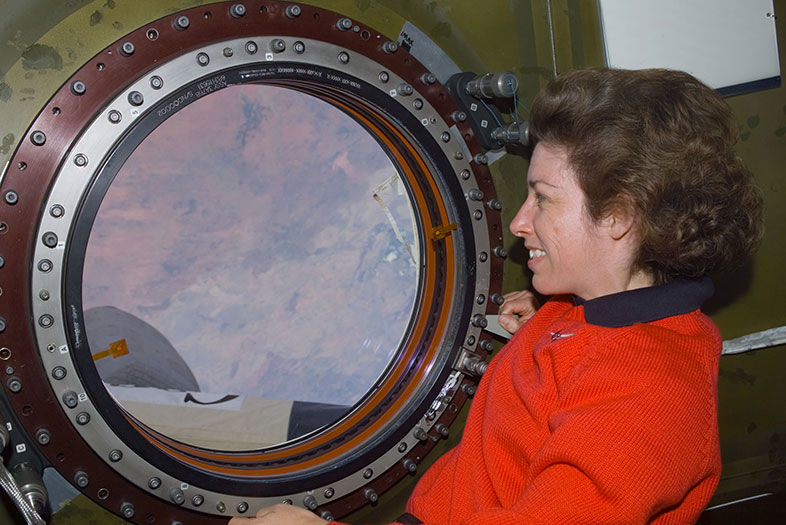
Bill Stafford – NASA – JSC
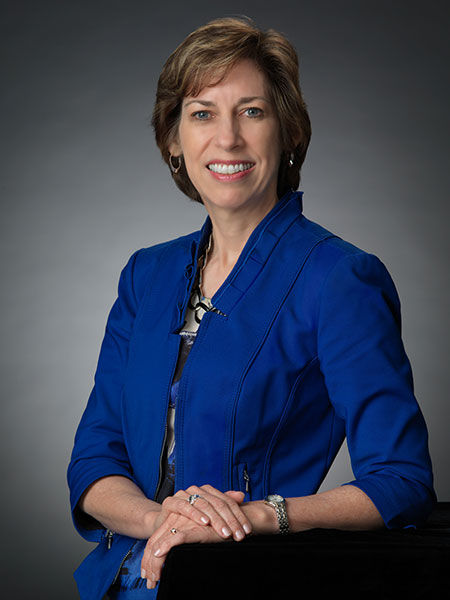
How many women alive today can say there’s a school named after them—let alone six? Yet children around the US are attending classes at places like Ellen Ochoa Elementary (Tulsa, Oklahoma) and Ellen Ochoa Middle School (Pasco, Washington).
Ellen Ochoa was 11 years old when astronauts first landed on the moon. “It was thrilling,” she says. “But women weren’t allowed to be astronauts at the time. I don’t think I had enough of an imagination to realize that would be a possibility in the future.” Not even after she graduated from Grossmont High School or went to San Diego State University did she dream of it. At SDSU she considered majoring in music or business. But she excelled in math, which led her to physics. Ochoa went on to get a PhD in electrical engineering from Stanford.
In 1990, she was one of five women NASA selected to go to space. (In the last two astronaut classes at NASA, one was fifty percent women, the other close to fifty.) “I wasn’t actually scared at all, other than wanting to make sure I was doing a good job. You’re very busy during these flights, going from one procedure to the next, and they require 100 percent of your concentration.” In fact, the missions require so much focus and mental energy that the luxury to take it all in doesn’t come until bedtime. “That was an amazing time, because you just had the opportunity to look at the Earth as you were going around. That’s always astronauts’ favorite activity that they just don’t get tired of doing.”
Ochoa has flown on four missions, totaling about 978 hours or 41 days. On the first two she studied the Earth’s atmosphere and the hole in the ozone layer; she also deployed and retrieved research satellites. On the third and fourth missions, she served as the flight engineer. “I worked closely with the commander and pilot during the dynamic phases of the flight, like launch, rendezvous, undocking, and landing.” She helped assemble the International Space Station, transferring supplies, attaching a 42-foot-long piece of the truss structure, and supporting space walks. By her third flight, she had a one-year-old at home; by her fourth, two toddlers.
Ochoa saw some women at NASA in the early days of her 30-year career there, but not in leadership roles. Eventually that changed, and she went on to become the 11th director of the Johnson Space Center in Houston—the first Hispanic director and second female director. “You want to hire a diverse group of people and make sure you’re seeing them throughout the entire organization. It’s not only the right thing to do, but, for NASA, it really affects safety as well because we need everybody to feel like they’re going to be valued, like they’re going to be heard.”
Currently living in Idaho, Ochoa travels the country for speaking engagements and board meetings. She’s the vice chair of the National Science Board, which sets the policy for the National Science Foundation; she sits on corporate boards in New York and Texas, and a family foundation board in California.
“We don’t have enough women yet in science and engineering fields. I would say we need your brains. We want you and need you in these kinds of fields.” —Erin Meanley Glenny
Women Firsts in San Diego
Photo by Nate Hoffman
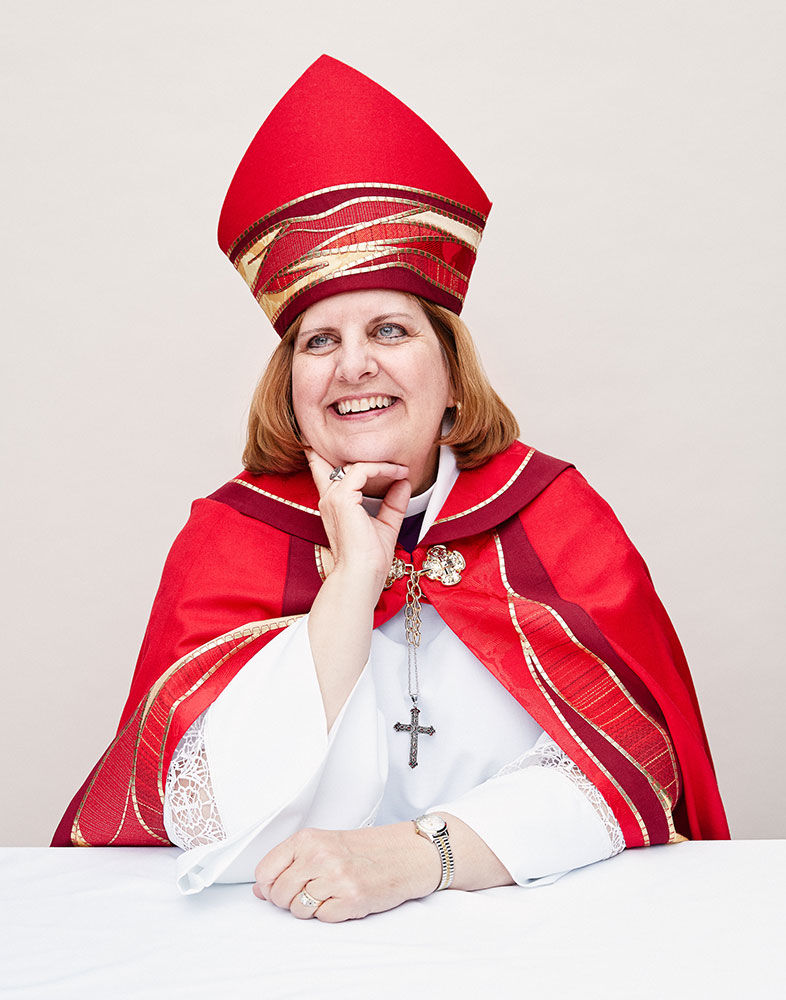
When Susan Brown Snook first graduated from college, she never would’ve predicted that her résumé would one day include the titles “reverend” and “bishop.” She earned a bachelor’s in managerial studies and later an MBA in accounting from Rice University, and spent 10 years working as a certified public accountant.
But something shifted in her when she moved from Houston to Phoenix with her family. She’d just had her second child and decided not to return to work right away, and she started volunteering at a local Episcopal church. She’d been successful as a CPA, “but toward the end of that time, I started to feel that there was something missing, a deeper meaning and purpose to life,” Brown Snook says.
Through that volunteer work, she found the purpose and meaning she’d been looking for and became her church’s director of Christian education. Two years later, the Episcopal bishop of Arizona sent her to seminary, where she earned a master’s in divinity. After becoming an ordained priest, Brown Snook served in the dioceses of Arizona and Oklahoma for 11 years, before being elected bishop of the diocese of San Diego. She was ordained and consecrated as bishop at St. Paul’s Episcopal Cathedral in Bankers Hill this June.
“It feels somewhat improbable. Fifteen years ago, San Diego was known as a very conservative diocese, which ordained very few women as priests. Now they’ve elected a woman bishop.” Brown Snook is the first woman to lead the church in San Diego in its 45-year history. The diocese makes up 15,000 church members across 43 congregations in Southern California. —Marie Tutko
Women Firsts in San Diego
Photo by Ben Krain
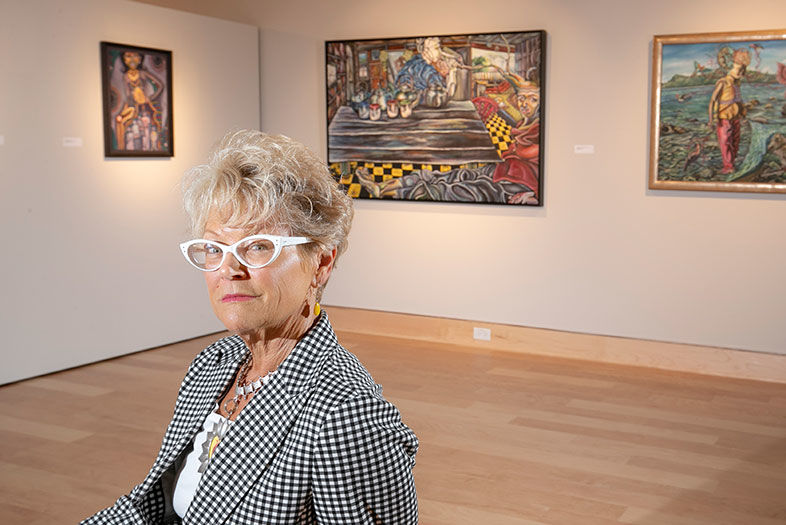
These days, there are countless ways to purchase fine art online. But in 1994 there was only one: Art Cellar Exchange. “It was only two pages when it was launched, but that was a revolution in 1994,” says Pierrette Van Cleve, the founder and president.
An early adopter of technology (she worked on a 45-pound Zenith “laptop” in the ’80s), Van Cleve had a life-changing experience at a conference called Cyberfest in 1989. At the time, she was the owner of a newsprint magazine called Art Cellar Exchange, where collectors could buy and sell fine art. While attending Cyberfest, she learned about “this new thing called the internet” and met pioneers in the field. A few years later, the connections she made there paid off when the groundbreaking digital artist Donna Cox and the developers of Mac Web asked if they could design a website for Art Cellar Exchange as a prototype to showcase their new graphic capabilities. Van Cleve said yes, and artcellarex.com was born. (“That was the maximum length of characters you could have in a URL.”)
It worked. “Our first month, we sold a $60,000 work of art to a tech guy in Germany,” she says. “The game was on.” Two years later, the website was such a hit they dropped the print edition entirely. —Angela Ashman

Women Firsts in San Diego
Photo courtesy of Vans

Women Firsts in San Diego
Anthony Acosta
The 26-year-old Oceanside resident was the first woman ever to grace the covers of both TransWorld Skateboarding and Thrasher magazine, in 2016 and 2017 respectively, but those photo shoots are peanuts compared to her accomplishment last year: becoming the first woman to successfully complete Tony Hawk’s dangerous vertical loop.
The challenge starts with a launch ramp that propels a skater into a 360-degree loop with a short exit track. In order to not fall and risk serious injury, a skateboarder has to balance momentum and control to go completely upside down and emerge upright.
“There’s no real way to prepare,” Armanto says. “It’s counterintuitive, so you have to unlearn everything that skateboarding has taught you.”
She landed the trick on August 26, 2018, and what followed was a well-deserved shower of contest winnings, sponsorships, and respect—both for her and for women’s skateboarding in general.
Another turning point came last year when the Vans Park Series and other major contests started awarding equal prize money to men and women. “It’s all happened so quickly that I sometimes feel like the carpet will get pulled out from under me,” Armanto says. But that hasn’t stopped her from pursuing another “first.”
Originally from Santa Monica and now a dual citizen of the US and Finland, Armanto has her sights set on summer 2020, when skateboarding will make its Olympic debut.
She’s hoping to qualify and represent Finland in the Games to free up a spot on the US team. With many more pro skateboarders here compared to other nations, Armanto says her choice means that “at least one more deserving female” will go to Tokyo. Spoken like a team player. —Carey Blakely
Women Firsts in San Diego
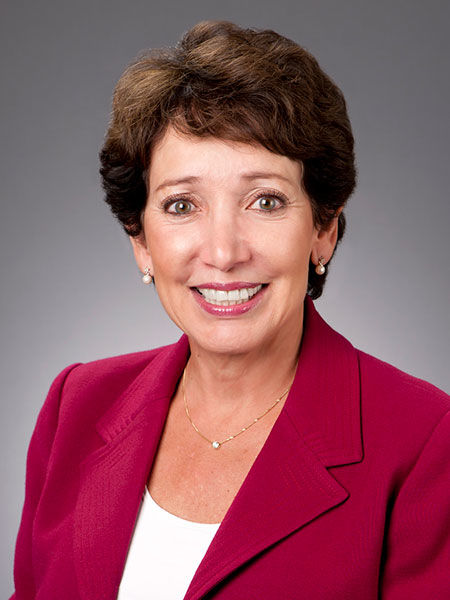
Irma Elsa Gonzalez has been a first three times over in the legal world. She was the first Hispanic magistrate judge to be appointed to the US District Court for the Southern District of California, and the first Hispanic woman appointed to the San Diego Superior Court. When former President George H. W. Bush nominated her to our US District Court in 1992 (and called her directly at work to deliver the news that she was confirmed by the Senate), she became the first Mexican American woman to serve as a federal judge. That year, there were only 35 federal judges on the bench who were of Hispanic descent (1,007 judges were white).
“Positions of power were very rare for women in the legal market, and still are, especially for women of color,” she says. In fact, six district courts around the country have never had a female judge. “Things have changed, especially in California. On the federal side, it’s still lagging.
“We should be representing the community in which we live. So therefore, we are still behind in being appointed, especially on the bench.”
Gonzalez was chief judge of the court from 2005 until her retirement in 2013.
“I’m proud to be a ‘first.’ I’m very proud of my heritage. Maybe I was a token—the token woman or the token Mexican American—but I think I’ve proved that I was competent and did a good job.” —MT
Women Firsts in San Diego
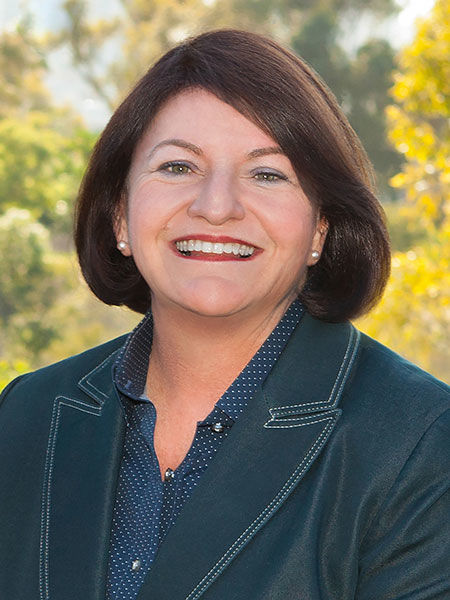
“I grew up in Appalachia in a blue-collar, working-class family. I saw my parents work harder than anyone else and still struggle. No health care, no sick days, no running water, sometimes no electricity. By the time I was able to get to college on a scholarship and Pell Grants, I had a lot of anger about life’s inequities. But one of my early mentors helped me understand that it was important to channel that anger into action.
“I’ve worked many jobs; as restaurant waitstaff, a dry cleaner, a hotel housekeeper, in a dress factory, a frame factory, pumping gas. In all that time, I never gave up on my dream to be a part of something bigger—something that could make quality of life better, easier, and fairer for people like my parents and all those wonderful working people I shared jobs with.
“Given my humble beginnings, and as a woman and a member of the LGBTQ community, to be the only individual in the 169 years of California history to have led both the Assembly and the Senate means that the California dream—the American dream—is real.”
Women Firsts in San Diego
Photo by Nate Hoffman
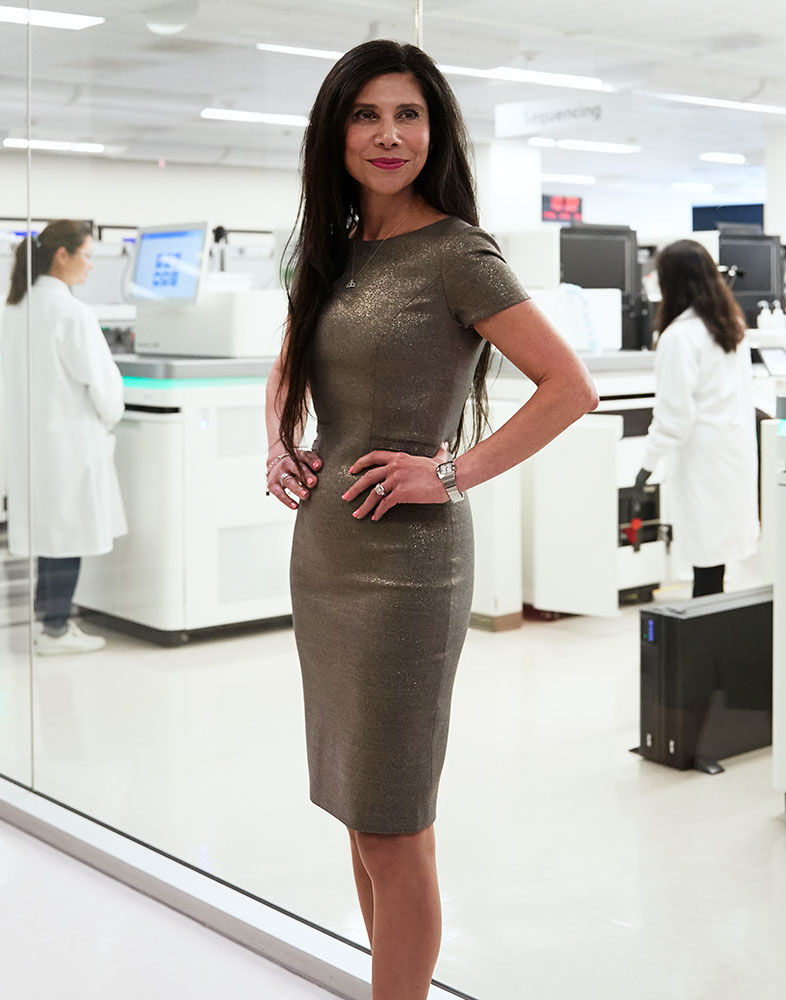
Last year, Susan Tousi received one of the nation’s highest honors for an engineer: She was inducted into the National Academy of Engineering. Jeff Bezos was in her class of 83 members, 19 of whom were women.
The chatter at the induction was all about attracting girls to STEM. “Girls are inspired by wanting to help people, wanting to change the world, to make lives better for their friends, their families, their loved ones—they’re not inspired by power or blowing things up,” Tousi says. “We need to talk about engineering and STEM differently.”
Tousi, who is Illumina’s senior vice president of product development, never considered engineering until a teacher took her aside. “That was the ‘aha!’ moment for me, that science and engineering could make lives better, which is why Illumina really resonates with me. Our entire mission is about improving human health by unlocking the power of the genome.”
Today, Tousi is a trustee of La Jolla Playhouse and an advisory council member for the Fleet Science Center. She also mentors women.
“I run a Lean In Circle with our top women across R&D at Illumina. What surprises me the most is that they still have a confidence issue, compared to a lot of their male peers.
“In meetings, I look around the room for other women who I know have something to offer on a subject, and I make an opportunity for them to speak. A lot of times, when they say something, it’s brushed over until a male counterpart says it later in the meeting, and I’ll point out, ‘That’s exactly what so-and-so said earlier. I’m so glad we got the point now.’” —EMG
Women Firsts in San Diego
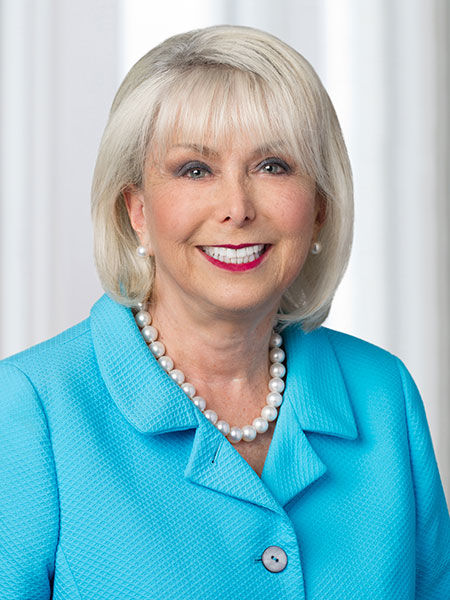
As a young law student at the University of San Diego in the late 1960s, Lynn Schenk learned quickly that she wasn’t welcome in the male-dominated field. “My property professor said to me, ‘Miss Schenk, what are you doing in this class, taking up the space of a man? Why don’t you go learn to fix a toaster or a dishwasher, so later in life you can save your husband money and fix these things yourself?’”
“All of that just makes you more resilient,” she says. The daughter of a Holocaust survivor, Schenk tirelessly battled for equal rights throughout her career. In the 1970s, she founded the Women’s Bank to help women gain financial independence from men. “If you wanted to have a little business, you needed to have a line of credit from the bank,” she says. “But you could not get it without a male cosigner. So a group of us said, well, the heck with them!”
In the ’80s, she became the first woman to hold the position of secretary of the California Business, Transportation and Housing Agency. And in the ’90s, she became the first woman elected to Congress south of Los Angeles, as well as the first woman to be chief of staff to a California governor (Gray Davis). One thing she’s especially proud of: “When I had the opportunity to hire bright women, I always did.”
Another proud achievement was the time in 1971 when she and two female friends (including Justice Judith McConnell) demanded to be seated at the Grant Grill in downtown San Diego, where a sign declared “Men Only” from noon to three. When the maître d’ finally escorted them to a table, the men in the dining room booed. “You can put up with a lot,” she says, “but ridicule, derisive laughter, booing—that hurts.” As further proof of her grit, she returned three more times, until the sign finally came down. —AA
Women Firsts in San Diego
Photo by Jenny Siegwart
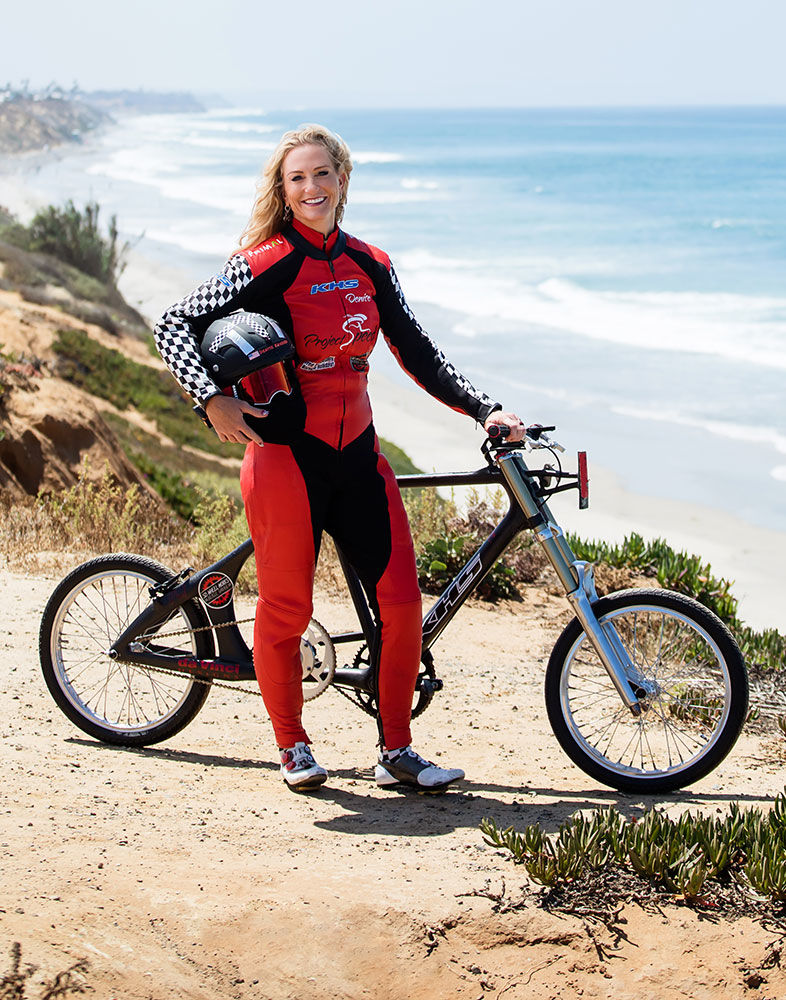
Ask Denise Mueller-Korenek, who set the record last year for the world’s fastest person on a paced bicycle, what it feels like to go 183.9 miles per hour on a bike behind a roaring dragster, and it’s difficult for her to recall. “I am so hyper-focused at that speed because things are happening so quickly,” she says.
That feat, which she accomplished last September at the Bonneville Salt Flats in Utah, seems all the more impressive when you learn that Mueller-Korenek, a mother of three grown sons, was 45 when she did it.
After a successful career as a junior cyclist, she quit racing at age 19 to join the family business, Rancho Santa Fe Security Systems, of which she is now the CEO. Then, in 2012, her former coach convinced her to participate in the Million Dollar Challenge, a 620-mile bike ride from Palo Alto to San Diego for the Challenged Athletes Foundation. “My coach saw there was something still there—that spark,” she says. Upon learning that no woman had ever attempted to break the paced bicycle land speed record of 167 miles per hour, she began four intense years of training. In 2016, she set the record of 147.7 miles per hour for women, and then returned in 2018 for what she calls “a death-defying ride” to break the men’s record.
“I’m an adrenaline junkie,” says Mueller-Korenek, whose own mother jumped out of an airplane at age 84. “I didn’t even think about any potential issues with safety.”
This month, she’s headed to Nevada to see if she can beat the women’s speed record of 75.69 miles per hour on an unpaced bicycle (which means there will be no motor-pacing car in front to shield her from the wind). What makes her so courageous? “You just go. If a man was able to do it and survive, I know I’m going to be able to do it.” —AA
Women Firsts in San Diego
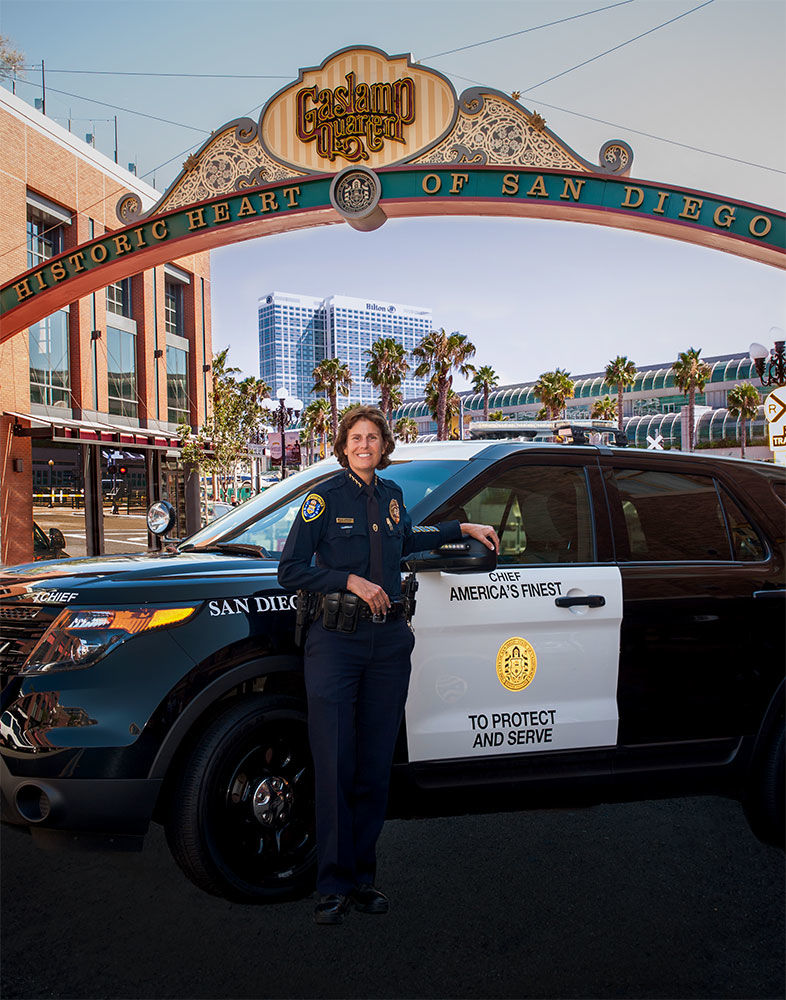
In 2014, when Shelley Zimmerman took over as the first female police chief of San Diego, the SDPD was in turmoil. Officers were leaving due to low pay and the department was in the news for a sexual misconduct scandal. To encourage change, Zimmerman put a sign on her desk: “Bad news welcomed here.”
“As a leader, never bite off the head that brings you the bad news,” she says. “They’ll never tell you another thing. Instead, welcome them, thank them for it, and then try to figure out how to make things better together.”
And fix things she did. Some of her many achievements include deploying body cameras for all officers (making San Diego the largest city at the time to do so) and successfully advocating for pay raises for the officers. In a study done by the FBI, San Diego was the safest big city in the country during her last full year as chief. But don’t try to give her all the credit. “We did it together,” the 35-year department veteran insists.
Zimmerman, who had to leave the agency in 2018 due to a retirement plan she signed up for a year before becoming chief, says one of the things she enjoyed most was being a role model for girls. “I’ll tell you, probably more fathers than mothers would come up to me with their young daughters and say, ‘Honey, this is the chief of police. It just goes to prove you can do anything you want in the world.’ And then I would add, ‘Yes, you can—but you’ve got to be willing to work hard.’” —AA
Women Firsts in San Diego
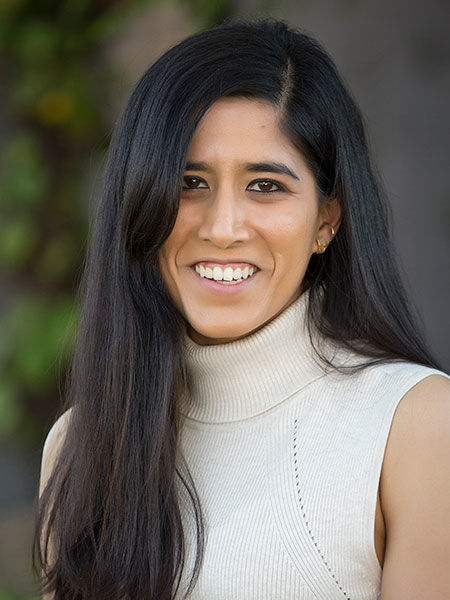
When Priya Bhat-Patel announced her run for Carlsbad’s city council last year, the odds were against her. She was a 30-year-old health care consultant who identified as a progressive in a community that traditionally votes conservative. She was also earning her doctorate in public health.
Bhat-Patel ran the show by herself and didn’t hire staff or a manager until the last month of the campaign. Just two weeks before the election, she defended her dissertation on public policies regarding sugar-sweetened beverages.
Against those odds, she was elected—and became the first Indian American city council member in San Diego County.
In January, her colleagues designated her mayor pro tempore and elected her to the North County Transit District board of directors.
Bhat-Patel, who grew up in Carlsbad as the daughter of immigrant parents from India, says her election is indicative of how the coastal city is changing.
“Being South Asian, and an Asian American in general, and a woman, to have broken that barrier… I’m super excited to represent a diverse point of view—and a different one than other politicians may have.
“So many people told me during this run that I couldn’t do it. I hope that me being elected brings to light that if there isn’t a seat at the table for you, you can create that space.” —MT
Women Firsts in San Diego
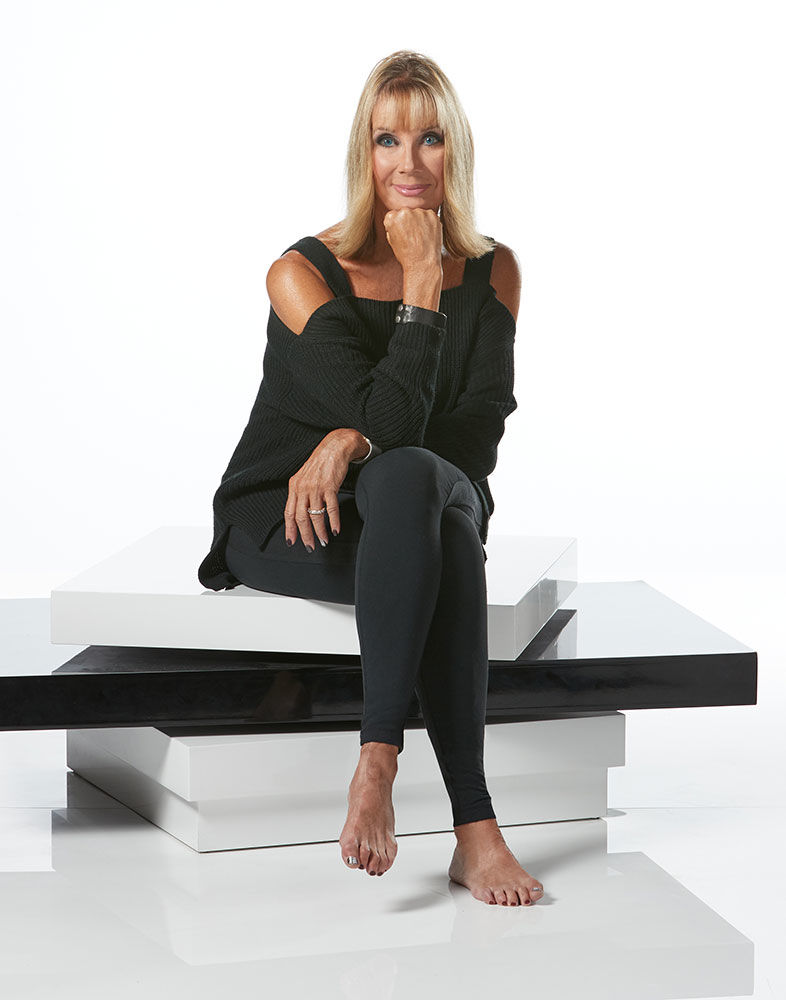
“I was dancing professionally and teaching at Gus Giordano Jazz Dance Chicago [before moving to San Diego in 1971]. I noticed that during children’s classes, the moms would hang out in the studio. I decided to offer a class to the moms. People came to class at first, but attendance dropped kind of quickly. Sucking up my pride, I called a couple of the ladies and asked why they didn’t come back. They said things like, ‘Well, your class is too hard!’ and ‘I don’t want to be a professional dancer—I just want to look like one.’ After that, I turned the students away from the mirror and had them mirror me, so they could focus on having fun instead of doing every dance move perfectly. Ultimately, Jazzercise came from teaching a dance class that didn’t go very well at first, but it soon blossomed into something better—and bigger [8,500 franchises in 25 countries]—than I could have imagined.”
Women Firsts in San Diego
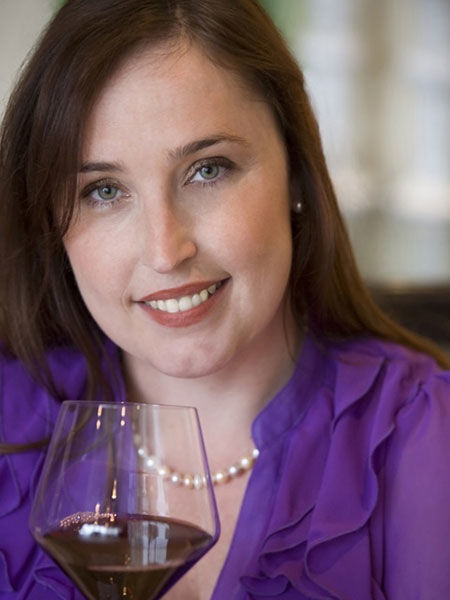
Megan Yelenosky doesn’t technically have a nose for wine—she has chronic sinusitis—but that’s never stopped her from becoming a sommelier, and an advanced one at that. The director of banquets at Hilton San Diego Bayfront originally went to culinary school, but a restaurant boss told her she talked too much and would never make it in the kitchen. “He was right. I am a social person. I struggled.”
He suggested she try a front-of-house position. And it was there, while managing Ajax Tavern in Aspen’s Little Nell Hotel, that she got her first exposure to good wines. Guests brought in beautiful vintages and let her taste them.
Yelenosky says it would have taken her years to see that kind of wine outside of an upscale restaurant—and even then, she never would’ve been able to go out and buy them—so being in her position was key. She never saw many female servers in fine dining restaurants, and believes this is why fewer women were studying wine.
In 2000, she moved from Aspen to San Diego with her husband, a La Jolla High alum. “At that point, San Diego wasn’t the culinary hot spot it is now, so you were a ‘shmanager’—a sommelier/manager. Addison hadn’t opened yet.”
Not only were salaried positions like sommelier or wine director a rare luxury, so were certifications. Court of Master Sommelier tests are an incredible mental feat—requiring memorization of not just facts, but smells and tastes. For example, in a blind tasting, candidates must identify the wine’s varietal, its origin, its quality level, and its vintage. The test also covers wine service, decanting, food pairing, and recommending and pricing bottles. And it’s not just wine; it’s Champagne, spirits, and—when she first started taking the advanced course—cigars.
She took the Advanced Sommelier Certificate test three times. You must pass all three portions in the same attempt—one year she didn’t pass theory; the next year it was tasting.
On May 1, 2009, she finally passed. “It was a relief, because the first time I failed at this test was the first time I failed at anything that I ever wanted.”
Not only was she the first woman in San Diego to earn the Advanced Sommelier Certificate, but there were years when she carried the most wine certifications from any organization, as well. She went on to attempt the Master’s test three times, but has since stopped to have children. “The test will always be there. You don’t get a do-over with your kids,” she says. “But now that my twins are five, I can start putting in the time to study.” Cheers to that. —EMG
Women Firsts in San Diego
JENNIFERSIEGWART
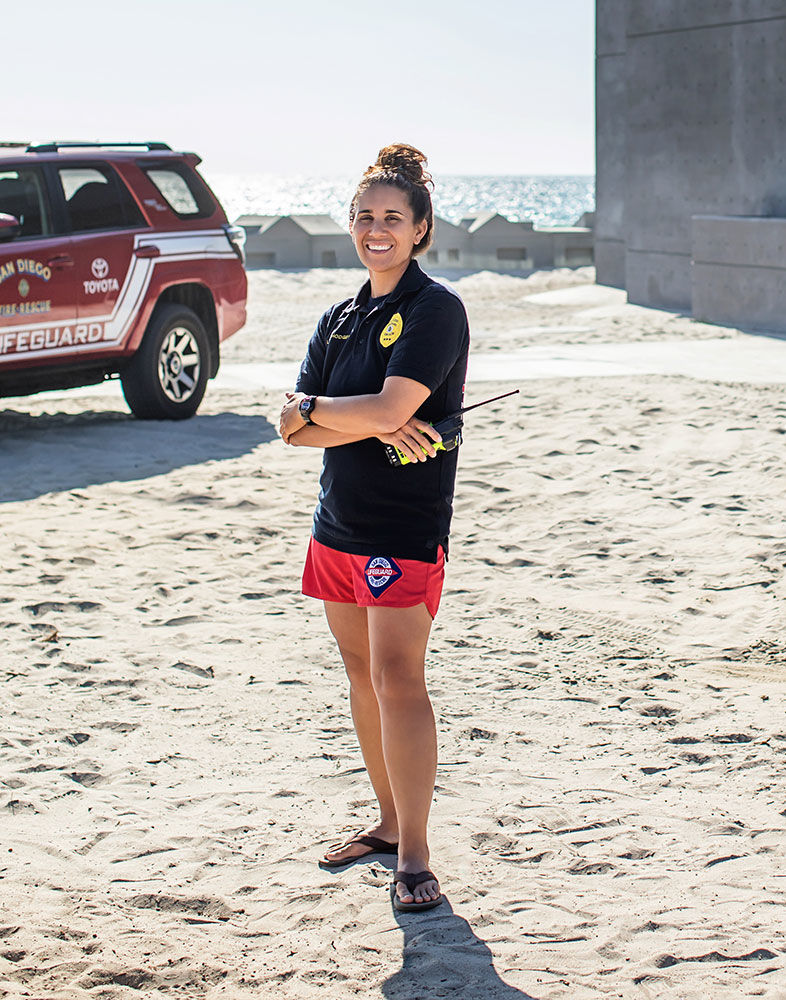
“I returned to lifeguarding in San Diego after having moved to Australia with my Australian husband. I’d been gone for four and a half years, so they had me go through the San Diego Advanced Academy [10-week formal training for lifeguards] again. I had a two-year-old son and was still breastfeeding my seven-month-old, so I’d have to pop out of the academy and go somewhere and pump twice a day. I was in the academy with a lot of people in their early to mid-20s. I was definitely in the minority, and I think a lot of them at first were like, ‘What are you doing? Breastfeeding? We don’t want to know about that. She said “breast.”’ But they were all very supportive, especially as I got to know them. It was definitely a huge challenge to go through the academy [after having a baby and moving from overseas six days prior to starting]. It was an El Niño year; the surf was giant every day and I was seven months postpartum. It was probably the hardest time in my personal life to do it, but I look back and think, If I can do that, I can do anything. And it shows other women that we can do this job and be moms.”
Women Firsts in San Diego
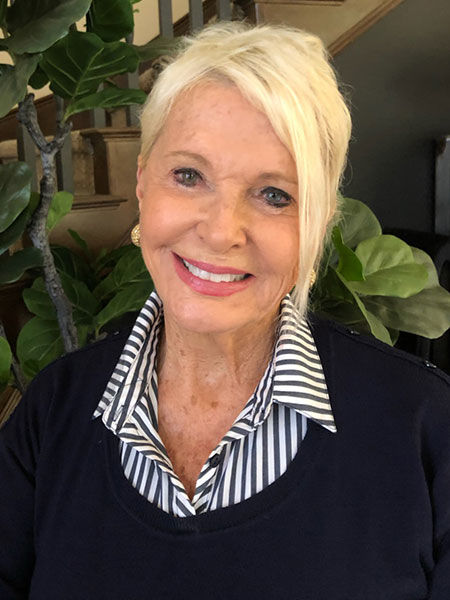
Toni Anderson’s world was turned upside down the day her husband walked out on her and her two-year-old daughter. “He left me a stereo and $62,” she says. In 1970, a judge ordered him to pay child support until their daughter turned 21. After his first check to Anderson bounced, he fled to Canada with his girlfriend.
To make ends meet, Anderson worked long hours as an interior designer, “living paycheck to paycheck,” she says. “The worst thing was what it did to my daughter—because the children suffer. My daughter is 53 and she still suffers. She feels abandoned. He never did a thing—no birthday cards, no Christmas, nothing.”
Fast forward nearly 50 years later, and through a Google search, Anderson learned that her ex was living a seemingly successful life in Oregon. Because California has no statute of limitations on child support, Anderson had a case. “I was fearful,” she says. “I thought, no, no, I can’t go after him.” But she did, and won: The judge awarded her $150,000, which included back child support with interest. “He was so silly,” the 74-year-old Carlsbad resident says. “If he had paid when he was supposed to, it would have been only $39,000.” Her hope is that her success will empower other parents to fight for what they’re owed. “Take a stand for what’s rightfully yours,” she says. “And don’t be afraid.” —AA
Women Firsts in San Diego
Photo by Ted Walton
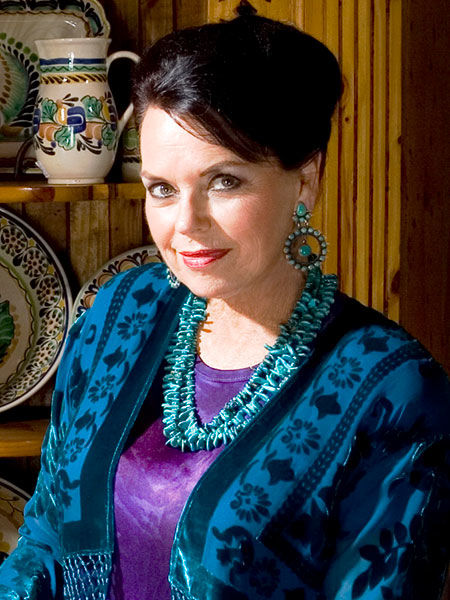
When out-of-town friends visit San Diego for the first time, taking them for a stroll through Old Town’s Bazaar del Mundo and over to Casa Guadalajara for a fishbowl-size margarita is one of the de rigueur activities. You can thank Diane Powers for these memories, since she developed the marketplace back in 1971—it was once the most successful concession in the California State Park system—and fought to keep it alive even when she lost the lease at its original location in Old Town State Park in 2005. Powers is a restaurant maven, owning four iconic Mexican restaurants around the county (including the flagship Casa Guadalajara), but her biggest achievement may be the founding of Fiesta Old Town Cinco de Mayo over 30 years ago. It was the city’s first official celebration of the holiday, and today the event draws more than 100,000 people to the historic neighborhood.
PARTNER CONTENT
“The idea to open Bazaar del Mundo came to me after I had just gotten back from traveling through Mexico and Central America,” she says. “I saw an article in the newspaper that the state parks department was requesting concepts and presentations for a remodel of the old Casa de Pico motel and portions of the historic park in Old Town. Given my background and passion for Latin American culture, I went ahead and presented them with my vision to bring a marketplace, restaurant, and entertainment venue to Old Town. During this time, it was more common for men to own businesses than women. However, I was ambitious, I had a vision, I believed in myself—and it didn’t matter. —MT
We ask the city's best food photographers to choose their favorite pics and share their secrets to capturing a drool-worthy pic
Food is a notorious diva to photograph. The wrong lighting can make José Andrés’ paella look like a jaundiced grain bowl. You could be staring at the best sandwich of your life, but shoot it from above and—hey, congrats on that abandoned piece of lettuce bread. A cottage meme industry has been built around the hilariously bad photos on review sites that make Michelin-star food look like Michelin tires.
Especially in a visual modern media world, food culture depends on great photographers capturing the painstaking work in equally deserving ways. We asked four of San Diego’s top food photographers for their favorite shot from another year of documenting what we eat.

Getting this kind of shot takes a bit of yoga. Asana yourself into the corner, hold your breath, pray that a chef on the move doesn’t back into your light stand.
“You’re stepping into someone’s workspace during their busiest moments, so it’s a balance of being present to get the shot and being invisible to not slow anything down,” Kimberly Motos says.
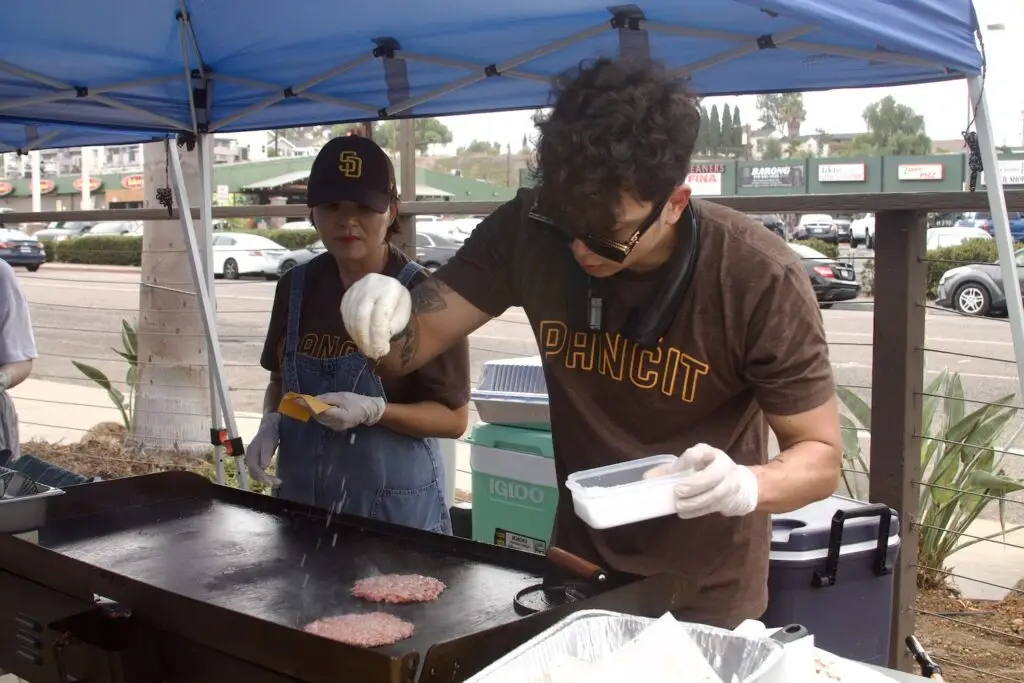
The subject here is the Birdman sandwich from Chick & Hawk—hot fried chicken thigh, tangy slaw, kimchi comeback sauce, sweet and spicy pickles, potato brioche bun—getting a hearty dousing of its difference-maker seasoning. Motos captures the parts of the process that diners don’t usually see: the chaos behind something that looks so simple.

“I love this image because it feels like a moment you want to step into,” says Lucianna McIntosh. A warm, sunny day at The Fishery in PB with oysters, caviar, and martinis. Yes, please.
The little details—the glass sweating a little, the direct afternoon light creating stark shadows, the oyster glistening on the tray—are the main characters. Instead of trying to overly control the setup, McIntosh “followed the light and lines that draw you in more,” she says. “This was one of those moments where everything lined up on its own for a second. I love it when the shadows end up being just as important as the food itself.”

La Jolla native Eric Wolfinger—who won a James Beard Award for Tartine Bread, one of the most stunning bread books of all time—says he doesn’t have a signature style. His style is a conduit.
“I see my job is to translate the chef’s point of view into something you can feel,” he says.
For this shot, Fleurette chef Travis Swikard had one directive: cuisine du soleil (“cuisine of the sun”). With a spread of leeks vinaigrette, herb-roasted golden chicken, and beets, Wolfinger wanted to create a scene that felt straight out of the French Riviera, relaying the light, bright style of Swikard’s new spot.
Some bonus additions here: Extra lights—to add lots of warmth—and a clipping from an olive tree.

Timing and light are everything in food photography. In Lucien—La Jolla’s tasting-menu-only restaurant with moody ambiance—a single strobe flash creates the ideal spotlight.
Dee Sandoval says she uses the “natural, just-plated energy” of the dish to “create a portrait of moment and craft.” That’s why this Mostra Ghost Bear espresso ice cream—with San José dark chocolate mousse, soy-miso caramel, and koji shoyu chocolate sauce—looks like it might dissolve halfway to your mouth.
Emma Veidt is an editor at San Diego Magazine. She earned her bachelor's and master's degrees from the Missouri School of Journalism. She loves running, hiking, and rock climbing, but really, she mostly loves encounters with the street cats around North Park.
Meeting new friends is a scary and sweaty venture—that’s where the city's social event planners come in
Walking into a room full of strangers isn’t high on the fun index for most. It’s inherently awkward: Everyone’s standing in closed-loop clusters, deep in conversation, and, depending on your social aptitude, the feeling is somewhere between light apprehension and burning alive from the inside out. The pull to retreat or reflexively look busy on your phone is stronger than the drink you now deeply crave. Having friends is nice, but making friends can be brutal.
There’s plenty of commentary on the loneliness epidemic. Last year, the American Psychiatric Association reported that one in three adults feel lonely at least once a week; those aged 18 to 34 are more likely to feel isolated and even more likely to turn to social media as a result. Dr. Vivek Murthy’s “My Parting Prescription for America” cautioned that “being socially disconnected increases our risk of heart disease, dementia, depression, anxiety, and premature death.” So it’s not just an emotional need; it’s nearly nutritional—chit-chat and the occasional wine-fueled, emotional deep-dive are just as important as Pilates and a reasonable amount of kale.
Finding social connections in any city is hard, but San Diego has very specific challenges. This is largely a transient population that acts as a temporary hotspot for many and a permanent home for few. Pick your reason: high rent, surreal gas prices, housing shortage, meh job opportunities (ranked 71st in the country in 2025), or the fact that active military is a sizable chunk of us (110,000-ish)—stationed here for a stretch, then gone. This constant flow of departees sucks out the potential for deeply established families and friend groups, leaving a good share of nomads, searchers, and plenty of people feeling socially awkward.
“There’s an underlying loneliness in all of us,” says Ramel Wallace, the host of monthly meetup CreativeMornings. “There are not a lot of San Diegans who are born and raised here, so [even those] San Diegans end up being just as lonely as the person who just got here.”

Every month, in local libraries, breweries, and small businesses, there are ambitious social architects who have made a career out of undoing social sads. Extroverted champions of the awkward and searching, they’ve struck gold on in-person connection.
The first moments in a social situation are crucial. Sets the tone and cools the nerves.
At Pitch-A-Friend, singles recruit their close friends to present a slideshow of their dating green flags. The entry points for connection at Pitch-A-Friend are simple, old tech: stickers. Each colored sticker indicates if the wearer is single or taken, queer or straight, or practicing ethical non-monogamy (in a partnership but open to others under a mutual understanding).
At the helm of each showcase is Arielle Fuller, aka Chief Wingwoman, who is making dating hopeful again. As Fuller explains, this takes some of the fear of rejection out of a first interaction. “Putting a sticker on immediately means, ‘I wanted to leave my house and talk to someone, and I am a safe space to come and speak to me,’” she says.
Of course, not all of San Diego’s events designed to make connections are romantic. On the last Friday of every month, hundreds gather at San Diego Central Library for the local chapter of CreativeMornings—an org formed to unite creatives in various cities across the world (designers, artists, writers, producers, performers, architects, etc.).

These aren’t your standard business card swaps, though. Coming from a hip-hop background, host Wallace uses call-and-response to break the fourth wall. “This is not my stage at all, this is our stage,” he says.
In your standard lecture-based meetup, the crowd silently faces the host and acknowledges nobody except those they came with. At CreativeMornings, everyone is encouraged to look around, pay attention to the strangers in the audience—not just the host. Wallace will pull volunteers to read the CM manifesto aloud, and he passes the mic to creatives, who make 30-second pitches to the community about projects they’re working on—and there’s always an invitation to connect and collaborate with the presenters whose ideas struck a chord.
The U.S. Chamber of Connection (yes it exists) says people experience life transitions nearly every year, and in these stretches are more open to forming new habits, relationships, and communities. In a revolving-door city like ours, the transition often comes when someone moves away. In 2023, the Census Bureau reported San Diego had the ninth-highest rates of domestic out-migration in the US.
This poses an issue for friendships that IRL SD addresses in monthly friend-making events called 619 Night.
“San Diego isn’t a place a lot of people stay forever,” says Alex Hunter, the creator of IRL SD. “They leave, and people [who stay] lose that community, so they’re hungry for community again.”
Their website describes the vibe as “backyard party meets college fair meets networking event meets happy hour.” Each follows a theme—wellness, sports, refresh and reset, etc.—with related community groups joining as well.
“The people I encounter are trying to get a fresh start in some capacity, so they’re more open, receptive, and ready to meet new friends,” Hunter says. “They need the circle.”

Another way adults can break out of this disconnection is to revert in unison, says artist Elisa Summiel-Bey. The 2015-ish adult coloring book moment in the US was based on some real science, with multiple studies finding coloring has a noticeable meditative and stress-release effect by taking the brain away from anxieties and mental inventories, and focusing it on a simple, easy art. Summiel-Bey’s company Illustrated Melanin throws “Color & Chill” events, turning that trend into a group exercise, along with live DJ sets, wellness experts doing sound baths, and food and drink from BIPOC-owned local businesses. “I tend to think of coloring as your way to tap back into your childlike play,” she says. “As adults, I think we’re almost scared to let loose and have that unabashed joy.”
All of these social meetups attract crowds of likeminded connection-seekers, but high attendance is not the only thing that matters. Metrics nuts can track RSVPs, but spreadsheets can’t capture intangible wins: friendships made, innovative ideas sparked, collaborations kicked off. At CreativeMornings, Wallace redefines ROI as Return On Imagination. Resounding success means thoughtful inquiries over coffee, curiosity about the monthly meeting themes, and requests to take the microphone.
A simple, observable ROI is an increased number of window shoppers to the experience—on the periphery, watching from afar, looking for the right way in. Hunter from IRL SD sees the anxiety in her DMs. “The scariest part for you right now is not meeting new friends: It’s the unknown,” she says. “It’s the gap between ‘I’m here’ and ‘That’s where I need to be.’ If I can help you understand, or get a little bit of a shape around that unknown, it’s much more approachable.”

Being able to bridge that gap, however, depends on your ability to step out of your own mind. “It’s not a connection crisis; it’s a courage and confidence crisis,” says Fuller. The first hello could be as easy as, “Hey, cool shirt.” These are the types of things she includes in her confidence lab reels on Instagram and weekly newsletters.
Ever left a social event and shot straight into a spiral? Was I being weird? Why did I tell that story? I hope that person moves to another state very soon.
The experts say that post-event self-interrogation is a standard-issue part of being alive.
“I love awkward people, and I love being awkward myself,” says Wallace. “It’s humbling to experience: ‘I’m not alone. Finally someone is not put together.’ So give yourself that grace.”
Jeannine Boisse (she/her) is a freelance writer and professional creative with a background in Radio & Television. Based in sunny San Diego, Jeannine spends her time exploring the city's vibrant brewery scene, cooking up new recipes in the kitchen, and connecting with new people.
As NASCAR lands in San Diego this weekend, a recently burgled dad is irregularly excited
My 15-year-old daughter tried to steal our car this week, so I’m ready to become a NASCAR dad. It would be appropriate discipline. We just relocated to a nice suburb within walking distance of her high school. The suburbs are like living in a Tesla commercial. I am pretty far from the wealthiest dad in this neighborhood (I am the least wealthy dad in this neighborhood), more than a few engineering degrees short of being in the running.
I’m fairly certain watching NASCAR is a violation of our HOA and a violation of my daughter’s emotional HOA. But NASCAR hits San Diego this weekend and I have a fever I’ve never felt before. I want to watch 111 drivers do dangerous things in cars and trucks on an active military base in the ocean. Since my lifelong exposure to NASCAR is limited to Talladega Nights and every single iteration of the movie Cars, I can only base my plan of attack on oafish stereotypes.
So while other neighbor dads are sizing bubble jackets for their golf simulators, I’m gonna grow a Ricky Bobby, run the extension cord for the TV out into the carport we share with six other condos, fill a cooler with a proper 80-20 split of Hamm’s and Mountain Dew, treat a lawn chair like an ADU, and spend a few hours yelling ohsheeeit as if it’s a single, nine-syllable word.
The quality parents in our neighborhood seem highly attuned to the sound of any vehicle breaching the 6 MPH threshold, so I should gather a crowd pretty fast. They may come over with strongly worded emails in their hearts, but one glimpse of Shane van Gisbergen and hometown hero Jimmy Johnson guzzling the last remaining drops of gasoline on the planet in a dazzling display of carmanship—they’ll join my NASCAR pop-up party.
By the time my daughter brings her friends over, we’ll have a real welcoming committee.
Because, like I said, my daughter tried to steal my car.
She wasn’t going to Mexico. But while Claire and I were off doing businessy stuff to afford my teen’s skincare rituals, she and a friend decided to teach themselves stick shift. She’s never driven a stick before. I’m not saying she has, but if she has driven a vehicle at all—it would have been done in a remote, abandoned parking lot where the only possible thing she could destroy was the concept of driving itself.
But a couple TikTok videos later, she and her friend felt a certain level of mastery had been achieved, and they gave it a go. They backed our VW Bug out of the garage with a series of stalls and transmission seizures, and managed to get it into the carport, attempting to do “donuts.” That’s when I got a call from a resident, who had taken an active interest in this experiment.
Which got me wondering about the power and might of vehicles. Turns out, even at carport speeds there exists a bit of potential fireworks. A garage door could become not a garage door anymore. At 145 MPH on Naval Base Coronado this weekend (don’t worry, they slow down to 100 MPH for turns), NASCAR drivers are essentially doorbell ditching gods. I didn’t register the temperature after my daughter’s trial run, but the track at NASCAR races usually hits a cool 130-150 degrees, enough to lightly sear some Nikes (the tires themselves hover in the 200 degree range).
And that is at least part of our fascination with NASCAR (the other fascination is the legendary pit parties, which either set humanity back a few evolutionary links, or advance it by the same amount of links). These drivers do something all of us do every day in a very efficient, boring way—drive a car—and take it to its extreme impulse. Grace and precision at the thunderous edge of shit going terribly wrong. Most of us have looked at San Diego home prices and felt a burning desire to see how fast our Honda Pilot could make it to our new home in Vegas. So NASCAR drivers are acting on our own wildest impulse.
Troy Johnson is the magazine’s award-winning food writer and humorist, and a long-standing expert on Food Network. His work has been featured on NatGeo, Travel Channel, NPR, and in Food Matters, a textbook of the best American food writing.
Stake Chophouse & Bar brings contemporary classics and old-school service to the heart of Coronado
Stake Chophouse & Bar isn’t your average steakhouse. Blue Bridge Hospitality’s Coronado outpost is a modern interpretation of a big-city steakhouse nestled in the heart of the small coastal community. The team at Stake has reimagined the whole steakhouse experience. By prioritizing a seasonal farm-to-table sourcing philosophy, a personalized guest experience, and unique service touches, like a formal steak presentation and a bespoke knife selection process, Stake distinguishes itself in a sea of steakhouses.
Exceptional steaks, including Wagyu from Japan, Australia, and the U.S., and fresh seafood flown in daily form the core of Stake’s culinary identity. The menu features a five-course omakase-style steak experience highlighting house favorites, plus an array of cuts, and classic steakhouse staples—think a wedge salad, baked potato, or pasta carbonara—refined for a contemporary palate without losing their traditional appeal. Stake focuses on seasonal sourcing from the region’s best family farms and specialty purveyors, and incorporates intentionally unexpected touches to create something truly unique.
“I challenge our chefs and myself to take it a step further in sourcing,” says Chef Ronnie Schwandt. “It’s important to us to highlight different farms, unique one-off farms—whether it’s cattle, strawberries, a local fisherman or from anywhere in the United States, we’re always trying to find that niche.”
Beyond the menu, Stake emphasizes outstanding service, says Vinny Spatafore, Director of Hospitality Operations. Staff maintains detailed notes, allowing them to remember guests by name, recall previous orders such as a favorite martini (also memorable for the customer since it’s served in an extra tall, distinctly-shaped glass), and celebrate special occasions like birthdays and anniversaries.
“When you have those points of topic that you remember about a guest, they appreciate that,” he says. “Our servers are really good with that—we have a couple servers who have been here since the beginning and they’ll remember somebody from years ago, their name, their kids’ names, where they live. I’m really thankful to have a great front of house staff.”
Award-winning wines, rare whiskeys, special events, and a complementary black car service that provides transportation for guests throughout Coronado add to Stake’s appeal.
Schwandt stresses that Stake offers more than a meal; they aim to give patrons something unforgettable.
“It starts when you walk up the stairs and are greeted by the hostess—that sets the tone for the night. Then you’re greeted by a server, who may know you by name, and can guide you through the menu and curate as they get to know you,” says Schwandt. “Most people leave kind of blown away; they leave feeling like they just had an experience. That’s the goal, right? Whether you’re serving smash burgers or high-end steak, you want somebody to leave thinking, Wow, that was awesome.”
In a sport obsessed with prestige, a San Diego–born golf brand is betting on something more fun and less fussy
Music drifts across the fairway. Someone’s in flip flops. The Pacific flashes in the distance. Sun peeks onto shoulders through the palm trees. It’s spring, technically, but the air reads suspiciously like summer. At the par-3 course at Liberty Station, the longest hole barely stretches past 120 yards, and no one looks particularly interested in becoming the next PGA legend.
This is where Sunday Golf was born.
“I got dragged to a par-3 course in 2019 —The Loma Club—and it was way more my jam,” says Ronan Galvin, CEO and co-founder of Sunday Golf, a company that makes lightweight golf bags for players who’d rather carry less and laugh more. “It was a lot different than the stereotypical ideas you have about golf where it’s kind of long, uptight, and exclusive.”
Galvin spent over a decade in the golf industry working in product development, sourcing and manufacturing. But he didn’t grow up swinging clubs. Basketball and football were more his speed. What clicked for him was a simpler, more relaxed kind of play: shorter rounds and weekend games built for fun rather than formality. The kind of golf that resonated for him felt accessible, effortless, and surprisingly his lifestyle.

He noticed something else, too.
On a course where five clubs do the job, players were still lugging 14. So Galvin built something smaller. Lighter. A bag designed specifically for par-3 rounds, the Loma Bag is sleek, functional, and refreshingly unfussy. It’s practical minimalism in a sport known for excess.
Sunday Golf was slated to launch in January 2020. Then, COVID hit. Shipments stalled; lost at sea. The future felt shaky. But the series of catastrophes for the young company turned out to be anything but: By the time inventory arrived that August, golf had become one of the few activities people could safely do.
“It introduced and brought so many people back to the game,” Galvin says. “It created a habit for a lot of people, which is a big reason golf is on its growth trajectory.”
It turns out Americans can’t get enough of golf. Forty-eight million of them swung clubs last year, a 41 percent jump since 2019, and the National Golf Foundation says the total could top 50 million by the end of 2026.
The brand rode this unlikely momentum. Since 2021, Sunday Golf has expanded into larger lightweight bags and continues evolving from there. A major reason for the company’s success is its approachability, a value so central that it’s literally written on the office walls in the form of the company’s guiding mission: “Get 500,000 golfers having more fun by 2027.” This goal is measured, fittingly, by golf bags sold.
Sunday Golf has already passed 300,000 bags sold.
But the numbers aren’t the point.

“To remind the world that life is meant to be enjoyed,” Galvin says of the brand’s why. In an era dominated by screens, golf offers something analog. “People are outside, touching grass with their friends. A golf bag is a golf bag, but our products are vehicles to help support that.”
Unlike legacy golf giants promising proximity to Rory McIlroy-level greatness, Sunday Golf leans into what Galvin jokingly calls “diet golf” or “golf light”—weekend rounds, driving range sessions, company scrambles. The bags are built for the casual golfer, and the fit feels obvious.
That philosophy resonates across Southern California, where year-round sunshine means golf courses never really hibernate for winter. As Galvin puts it, “the laid-back lifestyle of San Diego kind of seeps into everyone’s veins.”
Sometimes the validation arrives via email: a 76-year-old customer is able to walk the course again because their golf bag is lighter. Parents are able to take their children out with Sunday Golf’s kids line.
For Galvin, that’s the real win. Not perfection. Not prestige. Just more people outside, enjoying themselves. In San Diego, that might be the most natural mission of all.
Isabella Dallas is a freelance writer for San Diego Magazine and the Arts and Culture Editor at The Daily Aztec in her final year at San Diego State University. She previously worked as an editorial intern for SDM, but when she’s not writing, you can find her trying the best coffee spots in SD, devouring the latest rom-coms, and indulging in anything and everything pop culture.
Announcing a partnership between Art & Design District, SDFC Playmakers, and San Diego Magazine
FOR IMMEDIATE RELEASE
SAN DIEGO, CA — [June 15th, 2026] — Art plus story equals culture. Today, three local groups deeply invested in advancing San Diego arts and culture— San Diego FC Playmakers, Art & Design District, and San Diego Magazine—have joined forces to tell its stories.
The initial project will be a landmark September edition of San Diego Magazine—fully dedicated to the people, ideas, and identities of the city’s creative community. After its release, those stories and more will extend across six months of integrated digital, social, and multi-platform coverage. Art & Design District and SDFC Playmakers will serve as co-publishers of the expanded editorial vision.
The Art & Design District is evolving into San Diego’s first home for the performing arts at iconic downtown venues like the Civic Theatre and Jacobs Music Center alongside research and development programs focused on artist live/work spaces, galleries, studios, and New School of Architecture & Design.
“[The Art & Design District initiative] is a long-term investment in San Diego’s creative life and the creative workforce that powers our cultural experiences and creative industries here at home and across the world,” says Jonathan Glus, Prebys Senior Fellow for Art & Design in Residence at Downtown San Diego Partnership. “But infrastructure alone is not enough. The public needs to see, understand, and participate in what’s being built and why. Joining as co-publisher of this issue means helping ensure that the story of San Diego’s creative community—its artists, its institutions, its future—gets told at the level of ambition the moment requires.”
San Diego has entered a defining chapter in how the region invests in its creative community, with civic and philanthropic leaders working alongside artists, brands, institutions, and people to chart a new model of public-private support for arts and culture.
As digital co-publishers of San Diego Magazine‘s arts and culture coverage, SDFC’s Playmakers partnership will include a six-month integrated collaboration designed to sustain the visibility of San Diego’s creative community well beyond a single issue.
“The Playmakers program was built on the belief that the creative community is essential to what makes San Diego, San Diego,” says Sebastian, San Diego FC’s SVP of Brand and Innovation. “Investing in local media that tells those stories—and reaches the audiences who need to hear them—is one of the most direct ways we can support the artists, organizations, and cultural leaders shaping this city’s future. We’re proud to step in as digital co-publishers of San Diego Magazine‘s arts and culture coverage and the founding partner of this new editorial program.”
Under the partnerships:
The partnership represents a new model for regional media: civic and cultural institutions providing the resources required for sustained, ambitious, local editorial media focused on the neighborhoods it serves.
“For 78 years, the magazine has told the story of arts and culture here,” says Claire Johnson, CEO of San Diego Magazine. “But the fragmentation of traditional media has made it harder than ever to cover this community at the depth and scale it deserves. SDFC Playmakers and the Art & Design District have recognized something critical: Media is not separate from the civic conversation, it’s the stage for the conversation.”
San Diego Magazine retains full editorial control over all reporting, features, and original content produced under both partnerships.
“Our role in this ecosystem is to tell the story of San Diego’s culture and provide context for our readers.” says Johnson. “These partnerships give us the resources to do justice to that responsibility—and to extend that commitment well beyond a single issue. Our readers also deserve to know exactly how this work was funded. I’m grateful to our partners, and to the arts and culture community in San Diego for letting us tell this story.”
The September Arts & Culture Issue will be released early September 2026, with digital, social, video, and podcast coverage rolling out through early 2027.
ABOUT SAN DIEGO MAGAZINE For 78 years, San Diego Magazine has been the region’s leading lifestyle and culture publication, reaching approximately 6 million readers monthly across print, digital, newsletter, and social platforms. Owned and operated locally, the magazine has been the connective tissue of San Diego’s cultural conversation since 1948.
ABOUT SDFC PLAYMAKERS The Playmakers program is an ongoing initiative that seeks to identify and showcase the talent of San Diego creatives who are contributing to the culture, substance, and flow of our community. We want to bring the San Diego community together by marrying football and creativity to provide a platform for these Playmakers who are positively impacting our culture by pushing the boundaries through innovative ideas. The goal is to create a program that consistently provides growth and exposure opportunities for San Diego creatives, while shaping an authentic direction for San Diego FC’s brand and community-building process. Through this program we hope to contribute to the creative fabric of our city by providing paid jobs, projects, collaborations, as well as networking opportunities for Playmakers.
ABOUT THE ART & DESIGN DISTRICT The Art & Design District is a Downtown San Diego Partnership initiative, supported by the Prebys Foundation, working to shape a connected, vibrant arts and design district in downtown San Diego. Led by Art and Culture Expert Fellow Jonathan Glus, the initiative convenes artists, cultural leaders, civic stakeholders, and residents in service of a downtown that reflects the creativity, identity, and diversity of the region. Learn more at downtownsandiego.org.
Scripps study shows that some patients may be able to taper their dose and maintain results
While glucagon-like peptide-1 (GLP-1) receptor agents have been used to treat Type 2 diabetes for more than 20 years, their recent emergence as weight-loss wonder drugs marked a new frontier in medicine. But their effectiveness has left some patients wondering what to do once they’ve reached their goal. Stopping the medication could mean regaining some, if not all, of the weight. A Scripps Clinic internal medicine physician recently conducted a small study of whether GLP-1 patients who had reached their goal weight could maintain that weight by taking their regularly prescribed injection every other week instead of weekly. Spoiler alert: 30 of 34 patients did. Read more about the study here and what that may mean as pharmaceutical companies roll out oral GLP-1s.
For more nutrition, wellness, and healthy living tips, sign up for the San Diego Health newsletter here.