Featured articles
Food & Drink
Food & Drink
Food & Drink
Featured articles

Things to Do

Everything SD

Everything SD
Featured articles
Things to Do
Things to Do

Things to Do
Featured articles
podcast-ep

podcast-ep

podcast-ep
Featured articles

Everything SD
Everything SD
Everything SD
Featured articles
Food & Drink
Things to Do
Everything SD
Ready to know more about San Diego?
SubscribeReady to know more about San Diego?
Watch fireworks by the bay, toast to local wine, or dance the night away at San Diego's biggest civic event of the year
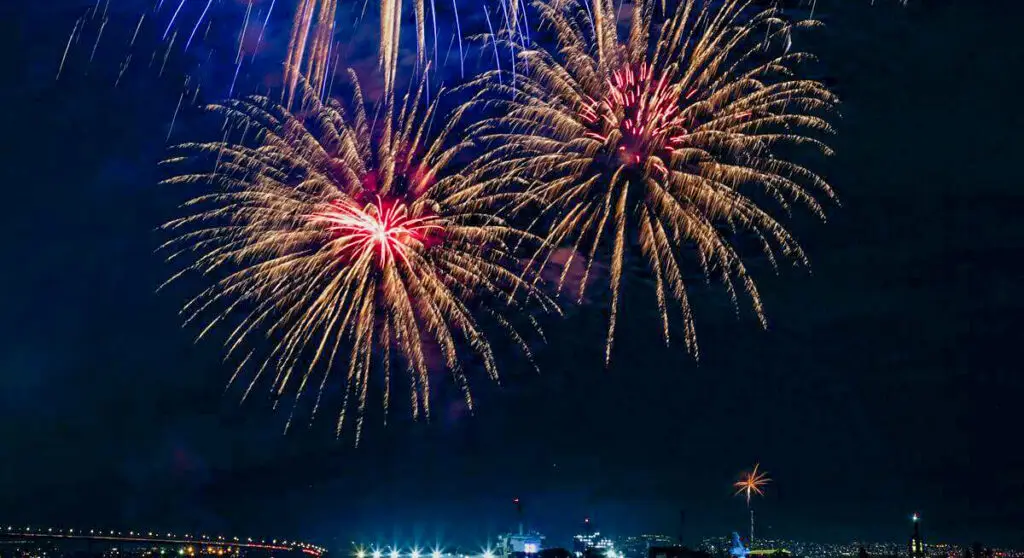
San Diego is booming this July, literally. Whether it’s fireworks lighting up the bay on the 4th, the San Diego Pride Parade dancing through Balboa Park, or waterside concerts at the Shell, the city’s summer energy is in full swing. Check out Independence Day festivities, sip wine at USD’s dreamy campus, or don your most extravagant derby hat for Opening Day at the Del Mar Racetrack—this month is stacked with can’t-miss events. Here are the best things to do in San Diego this July.
Food & Drink | Concerts & Festivals | Theater & Art Exhibits | More Things to Do
Sip for student scholarships at the all-inclusive USD Wine Classic. This fundraiser on the University of San Diego campus in Linda Vista will feature a gourmet menu, live music, and tastings from over 20 wineries.
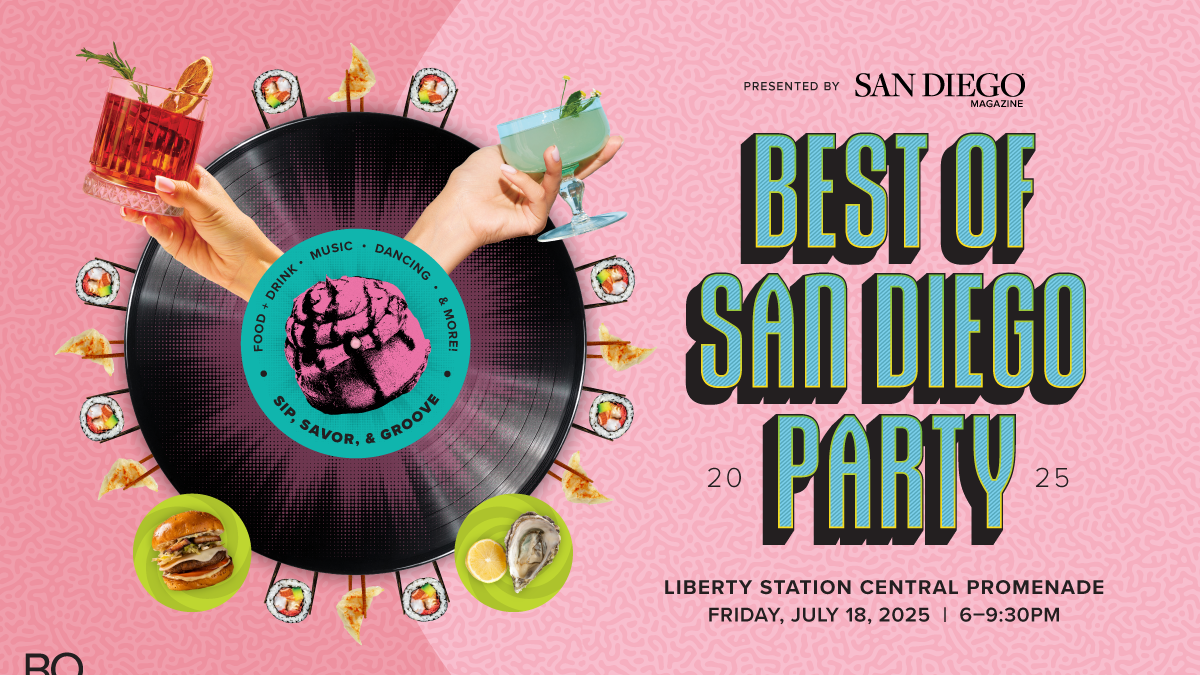
Stop by Liberty Station in Point Loma to celebrate more than 100 fabulous local restaurants, drink makers, and more at San Diego Magazine’s annual Best of San Diego Party. Tickets start at $99
Do you remember? Well, then dance like it’s the 21st night of September—because Earth, Wind & Fire has a funk-filled night in store at The Rady Shell at Jacobs Park.
The county’s LGBTQ community and its allies will show up and show out for a series of San Diego Pride festivities, including an electric two-day festival at Balboa Park.
Absurdity, existentialism, and poetic romance are all the hallmarks of a Father John Misty record. See him perform the transcendent Mahashmashana at the CalCoast Credit Union Open Air Theatre on SDSU’s campus.
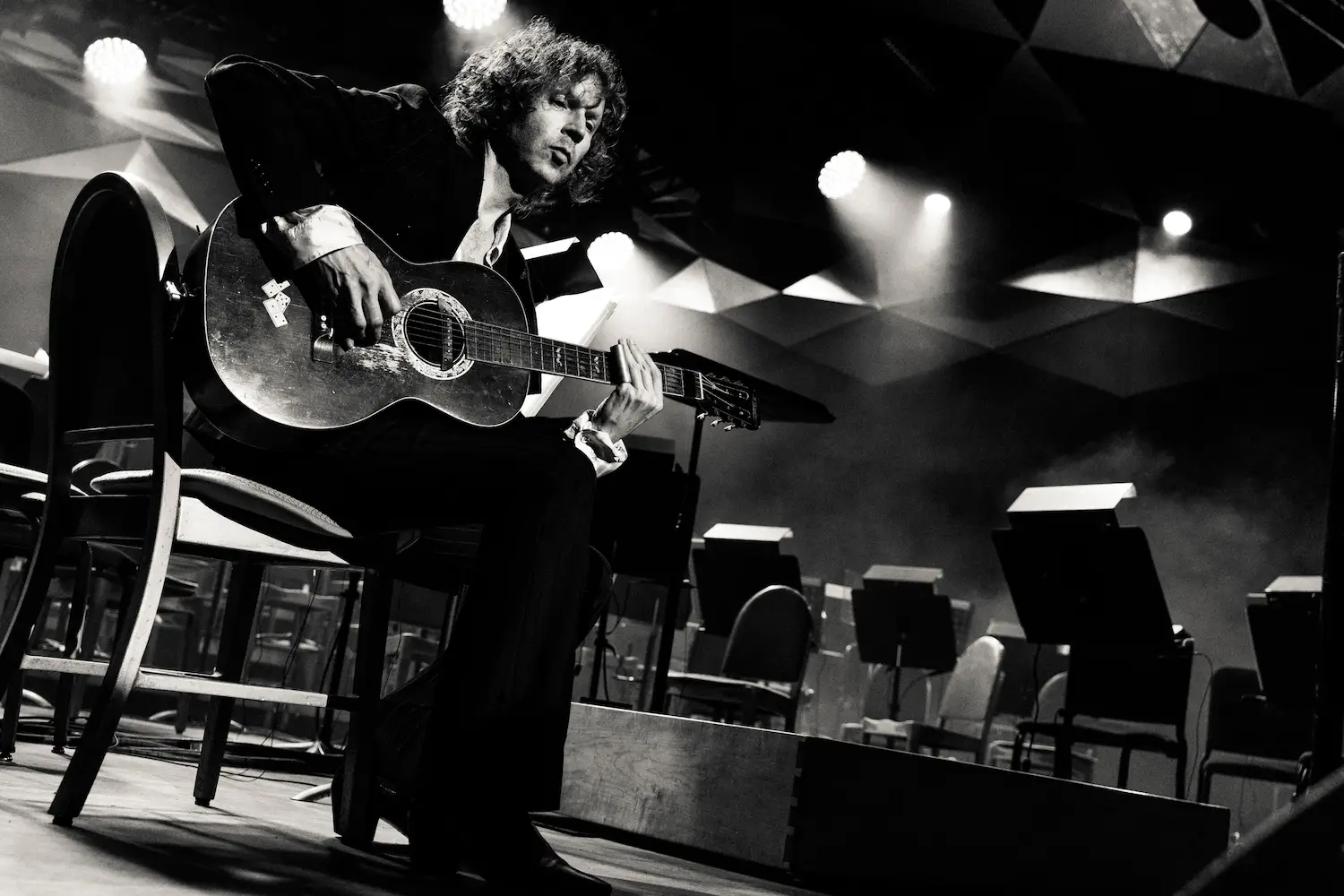
One of alternative rock’s biggest and most beloved weirdos, Beck, teams up with the San Diego Symphony Orchestra for a career retrospective performance at The Rady Shell.
Inspired by the animations of visionary Japanese filmmakers Studio Ghibli, Cats & Castles: A Studio Ghibli Fan Art Show will showcase magical creatures and wondrous visions at Thumbprint Gallery in La Jolla.
In the musical A Gentleman’s Guide to Love and Murder, a rags-to-riches romp coming to the North Coast Repertory Theatre in Solana Beach, one man launches an audacious power grab.
Composer Michael Giacchino—whose music appears in Up and The Batman—will perform his scores throughout Exotic Themes for the Silver Screen at the Epstein Family Amphitheater in La Jolla.
Take a closer look at the textiles that blanket our lives with Fabulous Fiber, an exhibition at the Oceanside Museum of Art exploring the art form’s finer details.
Here come the fireworks! Shooting off from the San Diego Bay, the Big Bay Boom will set the city’s shores aglow.
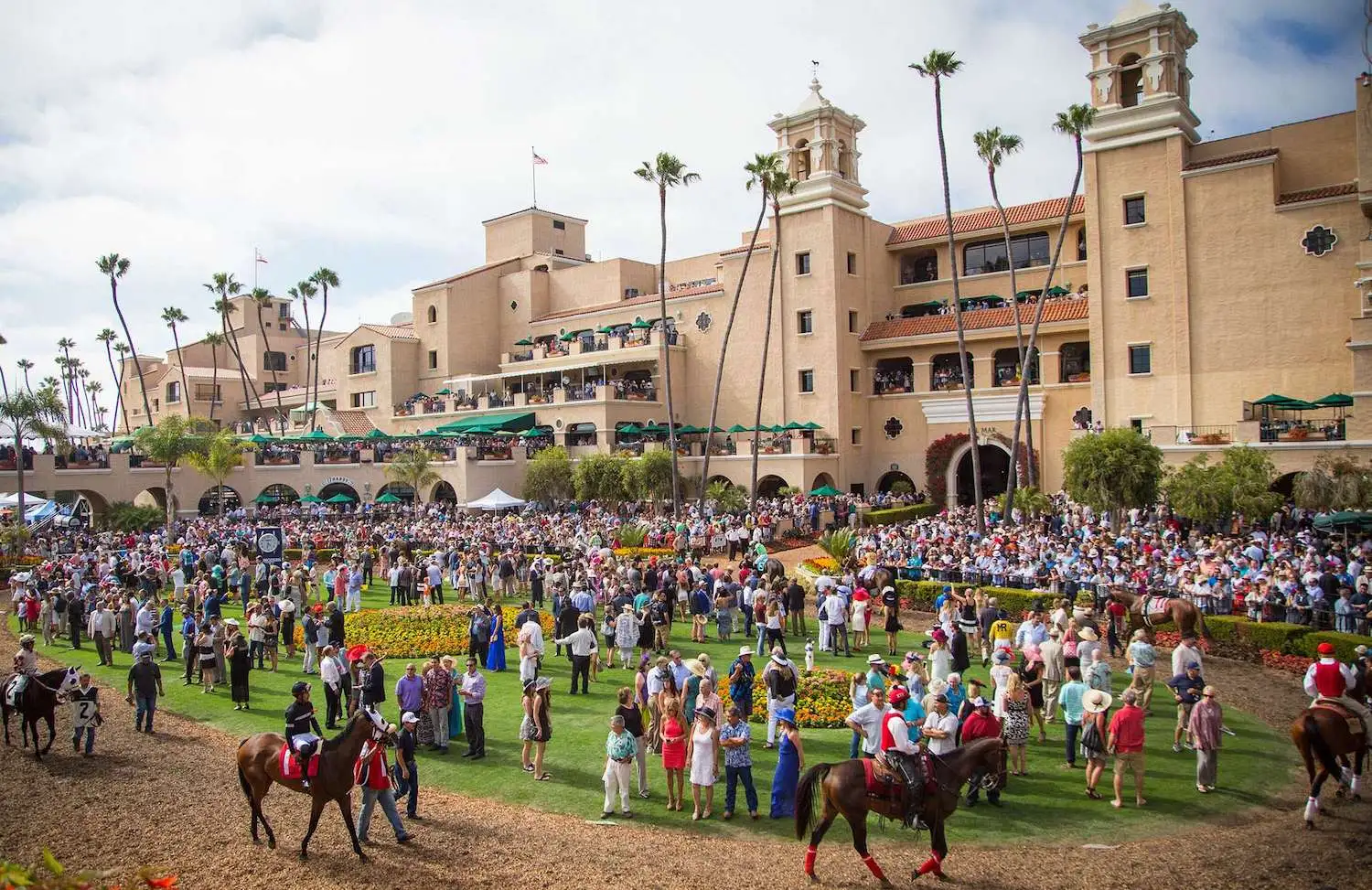
It doesn’t get much classier than Opening Day with the Del Mar Thoroughbred Club. Watch racehorses gallop around the track—and don’t forget to wear your finest hat.

Ryan Hardison is a freelance arts and entertainment writer and recent graduate of San Diego State. When he's not staring at his laptop, he's likely eating an adobada burrito or getting sunburnt at the beach.
We ask the city's best food photographers to choose their favorite pics and share their secrets to capturing a drool-worthy pic
Food is a notorious diva to photograph. The wrong lighting can make José Andrés’ paella look like a jaundiced grain bowl. You could be staring at the best sandwich of your life, but shoot it from above and—hey, congrats on that abandoned piece of lettuce bread. A cottage meme industry has been built around the hilariously bad photos on review sites that make Michelin-star food look like Michelin tires.
Especially in a visual modern media world, food culture depends on great photographers capturing the painstaking work in equally deserving ways. We asked four of San Diego’s top food photographers for their favorite shot from another year of documenting what we eat.

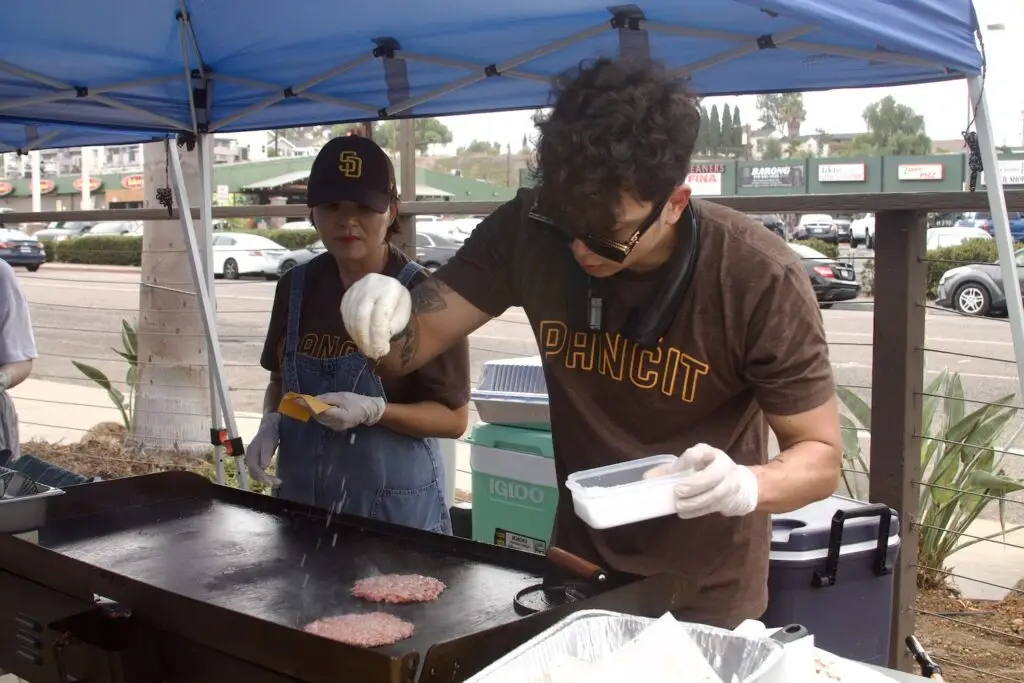
Getting this kind of shot takes a bit of yoga. Asana yourself into the corner, hold your breath, pray that a chef on the move doesn’t back into your light stand.
“You’re stepping into someone’s workspace during their busiest moments, so it’s a balance of being present to get the shot and being invisible to not slow anything down,” Kimberly Motos says.
The subject here is the Birdman sandwich from Chick & Hawk—hot fried chicken thigh, tangy slaw, kimchi comeback sauce, sweet and spicy pickles, potato brioche bun—getting a hearty dousing of its difference-maker seasoning. Motos captures the parts of the process that diners don’t usually see: the chaos behind something that looks so simple.

“I love this image because it feels like a moment you want to step into,” says Lucianna McIntosh. A warm, sunny day at The Fishery in PB with oysters, caviar, and martinis. Yes, please.
The little details—the glass sweating a little, the direct afternoon light creating stark shadows, the oyster glistening on the tray—are the main characters. Instead of trying to overly control the setup, McIntosh “followed the light and lines that draw you in more,” she says. “This was one of those moments where everything lined up on its own for a second. I love it when the shadows end up being just as important as the food itself.”

La Jolla native Eric Wolfinger—who won a James Beard Award for Tartine Bread, one of the most stunning bread books of all time—says he doesn’t have a signature style. His style is a conduit.
“I see my job is to translate the chef’s point of view into something you can feel,” he says.
For this shot, Fleurette chef Travis Swikard had one directive: cuisine du soleil (“cuisine of the sun”). With a spread of leeks vinaigrette, herb-roasted golden chicken, and beets, Wolfinger wanted to create a scene that felt straight out of the French Riviera, relaying the light, bright style of Swikard’s new spot.
Some bonus additions here: Extra lights—to add lots of warmth—and a clipping from an olive tree.

Timing and light are everything in food photography. In Lucien—La Jolla’s tasting-menu-only restaurant with moody ambiance—a single strobe flash creates the ideal spotlight.
Dee Sandoval says she uses the “natural, just-plated energy” of the dish to “create a portrait of moment and craft.” That’s why this Mostra Ghost Bear espresso ice cream—with San José dark chocolate mousse, soy-miso caramel, and koji shoyu chocolate sauce—looks like it might dissolve halfway to your mouth.
Emma Veidt is an editor at San Diego Magazine. She earned her bachelor's and master's degrees from the Missouri School of Journalism. She loves running, hiking, and rock climbing, but really, she mostly loves encounters with the street cats around North Park.
Dine at The Freedom Table, see Bob Dylan in concert, and explore local and national history through America 250
As summertime inches closer to the shores of San Diego, there are plenty of reasons to be ecstatic. For one thing, there’s the impending arrival of the summer solstice (Sunday), and three days before that, Del Mar’s own Summer Solstice will return for its yearly golden hour. There are also plenty of local Juneteenth events, such as Kinfolk Fest, the Cooper Family Foundation’s Juneteenth Celebration, and The Freedom Table, a new, food-centered event from the originators of Juneteenth San Marcos. We’re also less than three weeks away from America’s 250th anniversary, and the celebrations range from the San Diego History Center’s America 250: San Diego 1776-2026 to NASCAR’s weekend of racing at Naval Base Coronado.
Food & Drink | Concerts & Festivals | Theater & Art Exhibits | More Fun Things to Do

Cbar has planned a week’s worth of festivities to mark its first birthday, and everyone can get in on the fun. The 1-Year Anniversary Week celebrations continue with a special edition of the Sips & Shells craft series ($50) on Tuesday from 6-8:30 p.m., half-off pastries with any purchase of a barista drink (plus an anniversary summer wine flight) on Wednesday and a five-course winemaker dinner on Thursday from 6-9 p.m. ($130). Finally, the birthday bash will conclude with live music on Friday (Will Fedak) and Saturday (Cappo Kelley) from 6-9 p.m.
2917 State Street, Carlsbad
Little Italy’s annual food crawl has so many options that it warrants splitting into two evenings, each boasting a diverse lineup of 20 neighborhood vendors. During the Taste of Little Italy, taking place Tuesday and Wednesday from 4-8 p.m., attendees can make their way from the Piazza della Famiglia to nearby dining destinations for bites like esquites, sausage rolls, hot chicken tenders, and forkfuls of handmade pasta. Each night will also include live music and stops for drinks, desserts, and vegetarian items. Tickets are $71 per day.
Little Italy
As spring makes its golden transition into summer, welcome the new season with open arms and a big appetite during Del Mar Village’s marquee tasting event this Thursday from 5-8 p.m. With the Summer Solstice celebrating its 20th anniversary, this year’s iteration will include dozens of food and drink offerings from Del Mar Village vendors, soulful tunes from Christian Jules Taylor, live art by Sarah O’Connor, and wave-crashing views at Powerhouse Park. General admission (21+) is $157 and comes with unlimited tastings as well as a commemorative tasting glass, while VIP tickets are sold out; proceeds support the Del Mar Village Association.
1658 Coast Boulevard, Del Mar
After hosting the first-ever Juneteenth San Marcos festival in 2025, Lionel and Natalie Saulsberry have upped the ante with The Freedom Table, an elevated observance of community, culture, and the culinary arts. This Friday from 4-9 p.m. at TERI Campus of Life, guests can enjoy storytelling, art installations, live music, curated cocktails, and a chef-led dining experience, all in recognition of Juneteenth’s lasting importance. Ticket options include general admission ($261), plus two charitable ticket options: supporter ($313) and impact ($417), with a portion of sales going towards the youth nonprofit Achievement in Motion.
555 Deer Springs Road, San Marcos
In honor of NASCAR’s Coronado debut and Talladega Nights: The Ballad of Ricky Bobby, ARLO is throwing a Father’s Day brunch for the dads who want to go fast. This Sunday from 8 a.m. to 2 p.m., patrons can order from ARLO’s regular brunch menu, as well as a trio of holiday specials: the Dad’s Day Steak and Fries ($64), the Fit For a King Muffuletta Sandwich ($29), and the Big Daddy Brookie ($14). This shake and bake-approved meal will also include a DJ, cigar rollings, whiskey tastings and a Ricky Bobby costume contest. Reservations can be made online.
500 Hotel Circle North, Mission Valley
Ryan Hardison is a freelance arts and entertainment writer and recent graduate of San Diego State. When he's not staring at his laptop, he's likely eating an adobada burrito or getting sunburnt at the beach.
Announcing a partnership between Art & Design District, SDFC Playmakers, and San Diego Magazine
FOR IMMEDIATE RELEASE
SAN DIEGO, CA — [June 15th, 2026] — Art plus story equals culture. Today, three local groups deeply invested in advancing San Diego arts and culture— San Diego FC Playmakers, Art & Design District, and San Diego Magazine—have joined forces to tell its stories.
The initial project will be a landmark September edition of San Diego Magazine—fully dedicated to the people, ideas, and identities of the city’s creative community. After its release, those stories and more will extend across six months of integrated digital, social, and multi-platform coverage. Art & Design District and SDFC Playmakers will serve as co-publishers of the expanded editorial vision.
The Art & Design District is evolving into San Diego’s first home for the performing arts at iconic downtown venues like the Civic Theatre and Jacobs Music Center alongside research and development programs focused on artist live/work spaces, galleries, studios, and New School of Architecture & Design.
“[The Art & Design District initiative] is a long-term investment in San Diego’s creative life and the creative workforce that powers our cultural experiences and creative industries here at home and across the world,” says Jonathan Glus, Prebys Senior Fellow for Art & Design in Residence at Downtown San Diego Partnership. “But infrastructure alone is not enough. The public needs to see, understand, and participate in what’s being built and why. Joining as co-publisher of this issue means helping ensure that the story of San Diego’s creative community—its artists, its institutions, its future—gets told at the level of ambition the moment requires.”
San Diego has entered a defining chapter in how the region invests in its creative community, with civic and philanthropic leaders working alongside artists, brands, institutions, and people to chart a new model of public-private support for arts and culture.
As digital co-publishers of San Diego Magazine‘s arts and culture coverage, SDFC’s Playmakers partnership will include a six-month integrated collaboration designed to sustain the visibility of San Diego’s creative community well beyond a single issue.
“The Playmakers program was built on the belief that the creative community is essential to what makes San Diego, San Diego,” says Sebastian, San Diego FC’s SVP of Brand and Innovation. “Investing in local media that tells those stories—and reaches the audiences who need to hear them—is one of the most direct ways we can support the artists, organizations, and cultural leaders shaping this city’s future. We’re proud to step in as digital co-publishers of San Diego Magazine‘s arts and culture coverage and the founding partner of this new editorial program.”
Under the partnerships:
The partnership represents a new model for regional media: civic and cultural institutions providing the resources required for sustained, ambitious, local editorial media focused on the neighborhoods it serves.
“For 78 years, the magazine has told the story of arts and culture here,” says Claire Johnson, CEO of San Diego Magazine. “But the fragmentation of traditional media has made it harder than ever to cover this community at the depth and scale it deserves. SDFC Playmakers and the Art & Design District have recognized something critical: Media is not separate from the civic conversation, it’s the stage for the conversation.”
San Diego Magazine retains full editorial control over all reporting, features, and original content produced under both partnerships.
“Our role in this ecosystem is to tell the story of San Diego’s culture and provide context for our readers.” says Johnson. “These partnerships give us the resources to do justice to that responsibility—and to extend that commitment well beyond a single issue. Our readers also deserve to know exactly how this work was funded. I’m grateful to our partners, and to the arts and culture community in San Diego for letting us tell this story.”
The September Arts & Culture Issue will be released early September 2026, with digital, social, video, and podcast coverage rolling out through early 2027.
ABOUT SAN DIEGO MAGAZINE For 78 years, San Diego Magazine has been the region’s leading lifestyle and culture publication, reaching approximately 6 million readers monthly across print, digital, newsletter, and social platforms. Owned and operated locally, the magazine has been the connective tissue of San Diego’s cultural conversation since 1948.
ABOUT SDFC PLAYMAKERS The Playmakers program is an ongoing initiative that seeks to identify and showcase the talent of San Diego creatives who are contributing to the culture, substance, and flow of our community. We want to bring the San Diego community together by marrying football and creativity to provide a platform for these Playmakers who are positively impacting our culture by pushing the boundaries through innovative ideas. The goal is to create a program that consistently provides growth and exposure opportunities for San Diego creatives, while shaping an authentic direction for San Diego FC’s brand and community-building process. Through this program we hope to contribute to the creative fabric of our city by providing paid jobs, projects, collaborations, as well as networking opportunities for Playmakers.
ABOUT THE ART & DESIGN DISTRICT The Art & Design District is a Downtown San Diego Partnership initiative, supported by the Prebys Foundation, working to shape a connected, vibrant arts and design district in downtown San Diego. Led by Art and Culture Expert Fellow Jonathan Glus, the initiative convenes artists, cultural leaders, civic stakeholders, and residents in service of a downtown that reflects the creativity, identity, and diversity of the region. Learn more at downtownsandiego.org.
Stake Chophouse & Bar brings contemporary classics and old-school service to the heart of Coronado
Stake Chophouse & Bar isn’t your average steakhouse. Blue Bridge Hospitality’s Coronado outpost is a modern interpretation of a big-city steakhouse nestled in the heart of the small coastal community. The team at Stake has reimagined the whole steakhouse experience. By prioritizing a seasonal farm-to-table sourcing philosophy, a personalized guest experience, and unique service touches, like a formal steak presentation and a bespoke knife selection process, Stake distinguishes itself in a sea of steakhouses.
Exceptional steaks, including Wagyu from Japan, Australia, and the U.S., and fresh seafood flown in daily form the core of Stake’s culinary identity. The menu features a five-course omakase-style steak experience highlighting house favorites, plus an array of cuts, and classic steakhouse staples—think a wedge salad, baked potato, or pasta carbonara—refined for a contemporary palate without losing their traditional appeal. Stake focuses on seasonal sourcing from the region’s best family farms and specialty purveyors, and incorporates intentionally unexpected touches to create something truly unique.
“I challenge our chefs and myself to take it a step further in sourcing,” says Chef Ronnie Schwandt. “It’s important to us to highlight different farms, unique one-off farms—whether it’s cattle, strawberries, a local fisherman or from anywhere in the United States, we’re always trying to find that niche.”
Beyond the menu, Stake emphasizes outstanding service, says Vinny Spatafore, Director of Hospitality Operations. Staff maintains detailed notes, allowing them to remember guests by name, recall previous orders such as a favorite martini (also memorable for the customer since it’s served in an extra tall, distinctly-shaped glass), and celebrate special occasions like birthdays and anniversaries.
“When you have those points of topic that you remember about a guest, they appreciate that,” he says. “Our servers are really good with that—we have a couple servers who have been here since the beginning and they’ll remember somebody from years ago, their name, their kids’ names, where they live. I’m really thankful to have a great front of house staff.”
Award-winning wines, rare whiskeys, special events, and a complementary black car service that provides transportation for guests throughout Coronado add to Stake’s appeal.
Schwandt stresses that Stake offers more than a meal; they aim to give patrons something unforgettable.
“It starts when you walk up the stairs and are greeted by the hostess—that sets the tone for the night. Then you’re greeted by a server, who may know you by name, and can guide you through the menu and curate as they get to know you,” says Schwandt. “Most people leave kind of blown away; they leave feeling like they just had an experience. That’s the goal, right? Whether you’re serving smash burgers or high-end steak, you want somebody to leave thinking, Wow, that was awesome.”
From San Diego’s coastline to Los Angeles stadium and fan zones across the region, here’s how to experience soccer’s biggest event
When three nations and 16 cities come together to host the FIFA World Cup 2026, the scale stops feeling like a tournament and starts feeling like geography. A continent becomes the stage as borders soften into corridors. And Southern California—shaped by migration, sport, entertainment, and constant movement—sits inside that landscape with all eyes on it.
San Diego and Los Angeles have always felt connected. Hop on the Pacific Surfliner, and the trip unfolds in one continuous stretch of coastline, passing beach towns, neighborhoods, and city centers.
Traveling from San Diego, everything still feels slightly suspended as the Pacific Surfliner follows the coast north with ocean on one side and a slow suburban blur on the other. San Diego stays in exhale. Los Angeles is already building toward something louder.
This summer, Los Angeles will host eight matches of the FIFA World Cup at Los Angeles Stadium, including the US Men’s National Team opener on June 11, while the region stretches into 39 days of programming across stadiums, parks, transit hubs, beaches, and neighborhoods. Instead of one massive fan hub, Los Angeles is embracing a citywide celebration, with fan zones spread across its entirety.
But this pattern has been rehearsed here for decades. In 1994, Southern California became one of the defining stages of the World Cup, when matches at the Rose Bowl placed global attention on the region and turned local stadiums into international landmarks, confirming its ability to hold the world at scale.
What distinguishes Southern California is not just infrastructure, but cultural permeability. Fashion, music, film, art, and sport constantly overlap here, creating an environment where identity is flexible and always in motion. From the Venice boardwalk, where skate culture shaped modern street style, to global soccer stars rubbing shoulders with Hollywood celebs, to authentic Spanish cuisine moving up and down the I-5 corridor, everything circulates.
The World Cup is not introducing anything new here, it’s showing up for the summer and showing out, revealing what this city has always known about itself. What follows is a look at the fan zones and how Los Angeles turns itself into a city-wide stage for the tournament, one neighborhood at a time.

As the heart of Los Angeles, Union Station is an official Fan Zone June 25-28 during the World Cup, but in practice it never really stops being one.
It is the city’s circulation point, its meeting ground, its pressure valve. Commuters, travelers, match-day crowds, and everyday Angelenos all move through the same space, and everything mixes, overlaps, and scales in real time. In a way, this is where the World Cup stops arriving in Los Angeles and starts moving through it.
The Pacific Surfliner from San Diego to Los Angeles makes that shift feel almost too easy. No stress or gridlock anxiety, just a straight line up the coastline with ocean on one side and everything slowly becoming more built on the other. It’s one of the rare ways into LA that doesn’t feel like arrival as friction. You can sit with a laptop, watch the Pacific drift past, grab coffee from the café car, and let the city come to you in pieces.
That’s the beauty of arriving at Union Station. Instead of feeling like you’re on the edge of the city, you’re immediately surrounded by it. And, inside, the station already reads like a World Cup nerve center: banners, movement, multilingual energy, the sense that something global is about to funnel through this exact point. The Heart of the City Fan Zone only sharpens that feeling, with simultaneous match screens, DJ sets, meet and greets, and immersive activations built around marquee games like USA vs. Türkiye.
From there, the city splits outward.
ROW DTLA feels like the first exhale after arrival. A converted industrial campus turned creative district where restaurants, retail, and open-air courtyards form a self-contained ecosystem. If you’re looking for the perfect first meal in LA, make it lunch at Pizzeria Bianco. The thin-crust pizza is reason enough to go, but the space leaves just as much of an impression.
What I liked most about ROW DTLA is how quickly it resets you after the train. One minute you are stepping off at Union Station, and the next you are in a space that feels like its own version of LA, a city inside a city with some of the most curated shopping I’ve ever seen.
Bodega hides itself behind a convenience-store front, a sneaker and streetwear space disguised as something ordinary, like LA refusing to make anything feel too obvious. The whole campus moves like that, part retail, part gallery, part neighborhood you are only temporarily inside.
Isabella Dallas is a freelance writer for San Diego Magazine and the Arts and Culture Editor at The Daily Aztec in her final year at San Diego State University. She previously worked as an editorial intern for SDM, but when she’s not writing, you can find her trying the best coffee spots in SD, devouring the latest rom-coms, and indulging in anything and everything pop culture.
On view at Mingei International Museum now through October 18, Thompson's basketry invites viewers to notice the seemingly mundane
When was the last time you really looked at your fridge? Not for milk or ketchup or that takeout you hope is still good, but really looked at it. Considered it. Its texture. Its shape. Its role in your life. “Never” is probably your answer here. But once you’ve seen India Thompson’s life-size fridge made of reed, you’ll probably pause the next time you’re in your kitchen.
Thompson’s new Looks Like Home exhibit on view at Mingei International Museum takes everyday items that most of us use on a daily basis—the things that usually make our lives faster and more convenient—and renders them useless but beautiful as intricately woven reed sculptures.
The museum’s name comes from the philosophy of Yanagi Sōetsu, who wrote in the essay “The Beauty of Miscellaneous Things” that “when one becomes too familiar with a sight, one loses the ability to truly see it. Habit robs us of the power to perceive anew, much less the power to be moved.”
Thompson joins artists who use material transformation to remake the familiar, like Katarina Kamprani who redesigns everyday objects in ways that render them physically unusable, or Do Ho Suh who recreates domestic spaces through labor-intensive processes. Thompson’s approach is quieter, more tender: She doesn’t distort. She weaves.

Seeing her work for the first time brought up emotions I hadn’t felt since I was a kid watching The Brave Little Toaster, the movie that taught me to hold space for the invisible servants that make up our homes. Thompson’s collection encourages a kind of reckoning with what it means to ignore the essential. It asks you to reconsider what “home” means in an era where so few can afford to buy one. Her sculptures are like a challenge to pause where you usually press on. Being close to her work is like taking a breath and not realizing how long you’ve been holding it.
Thompson was born in Los Angeles and is now a multidisciplinary artist based in San Diego. While ceramic is her primary artistic medium, this exhibition highlights her exploration of basketry—a thousand-year-old, time-consuming process and an art form she describes as one of “care and memory-keeping.”
Thompson also happens to 9-to-5 as Mingei’s studio program specialist. Assistant Curator Ariana Torres didn’t know about Thompson’s basketry work until she saw Thompson post a picture of her woven toilet paper on Instagram. Then came a woven microwave.
“It seemed really poignant and uncanny,” Torres says. “It was mundane, but it was also kind of quiet … something you wouldn’t think anybody would focus on.”

Thompson began making art five years ago in her college ceramic class called Handbuilding, and she immediately fell in love. The first art she ever shared with others were her ceramic figurines: round, red-clayed pot-like sculptures with minimalist, barely-there faces in a variety of expressions. Some look surprised. Some look very concerned. Some look like they spend Friday nights at a Star Wars cantina. She calls them “Moots.”
The definition of the English word moot, in verb form, is “to gather and discuss an important topic,” as Thompson explains. “They look so serious … like they’ve wriggled through the earth to talk to each other.”
Thompson found her way to basketry three years ago and learned by watching YouTube videos.
“It’s something you can do at home,” she says. “And I love a repetitive process.”
The toilet paper roll came to her while making a cylinder that she thought looked like a roll of Charmin. Then she thought maybe she should make one on purpose. “I just thought it would be funny and really challenging, too,” she says. “Because there’s no tutorial for that. Why would there be, right?”
She figured it out and shared it on Instagram. People loved it. It received more than double the amount of likes and comments she usually got, but what really struck her was how many people came up to her in person to talk about how they connected with it. That, to her, was even more meaningful than the online response.
So she kept going and chose to make a microwave next.

“[It’s an] object we all own and we all need,” she says. “Yet no one really cares about a microwave.”
She started the collection during a time when her landlord was coming into her apartment constantly with a crew of people, making notes of what they were going to remodel without ever acknowledging her in the room.
“It was such a weird fishbowl moment,” she says. “I technically don’t own my apartment, but I still consider it home. I live here and I pay to live here, but this isn’t mine. We live in this space and I call it my apartment. I call it my refrigerator. But it could be taken away at any moment.”
It dawned on her how much we depend on things we don’t own, how little we notice the things we rely on every day, and how temporal the word “my” can be.
The woven refrigerator is the largest in Thompson’s collection at Mingei, and inside it you can find additional woven items like a ranch bottle, a Brita filter, and a sandwich on a plate. You can’t open the freezer door, but if you look carefully between the gaps of woven reed, you might be able to see a few other things Thompson made and placed inside.
“If you really look closely,” she explains, “you’ll be rewarded.”
The 53rd Annual National Philanthropy Day Takes Place on November 21. Join us from 11:00 a.m. – 1:30 p.m. at the new Gaylord Pacific Resort & Convention Center!
Once yearly, AFP San Diego joins with others worldwide to celebrate National Philanthropy Day (NPD), a special day set aside to recognize the great contributions of donors and nonprofits that enrich of our community and the world. San Diego’s NPD is one of the largest and most successful in the U.S., attracting nearly 900 participants, including philanthropists, nonprofit leaders, CEOs, board members, development professionals, and business, community, and civic leaders.
Sponsorship proceeds from National Philanthropy Day are reinvested in education, training, scholarships, career development, and the advancement of fundraising professionals throughout San Diego. These resources and training provide fundraising professionals with the tools necessary to support our region’s diverse array of nonprofit organizations, which rely on charitable giving for close to half of their annual revenues.
The National Philanthropy Day Honorees are selected by the NPD Honorary Committee, a group of highly respected, diverse nonprofit and business leaders. Our 2025 Honorees include:
National Philanthropy Day San Diego provides an opportunity to reflect on the meaning of giving and to celebrate the selfless contributions of individuals and organizations across the region. We look forward to celebrating with you!
Sponsorship opportunities and individual tickets are available. Please visit www.afpsd.org for more information.