Featured articles
Featured articles
Featured articles
What's next
Featured articles
Featured articles
Featured articles
Ready to know more about San Diego?
SubscribeReady to know more about San Diego?
Crowned with goat cheese or mixed with a shot of espresso, this go-to morning treat is anything but predictable
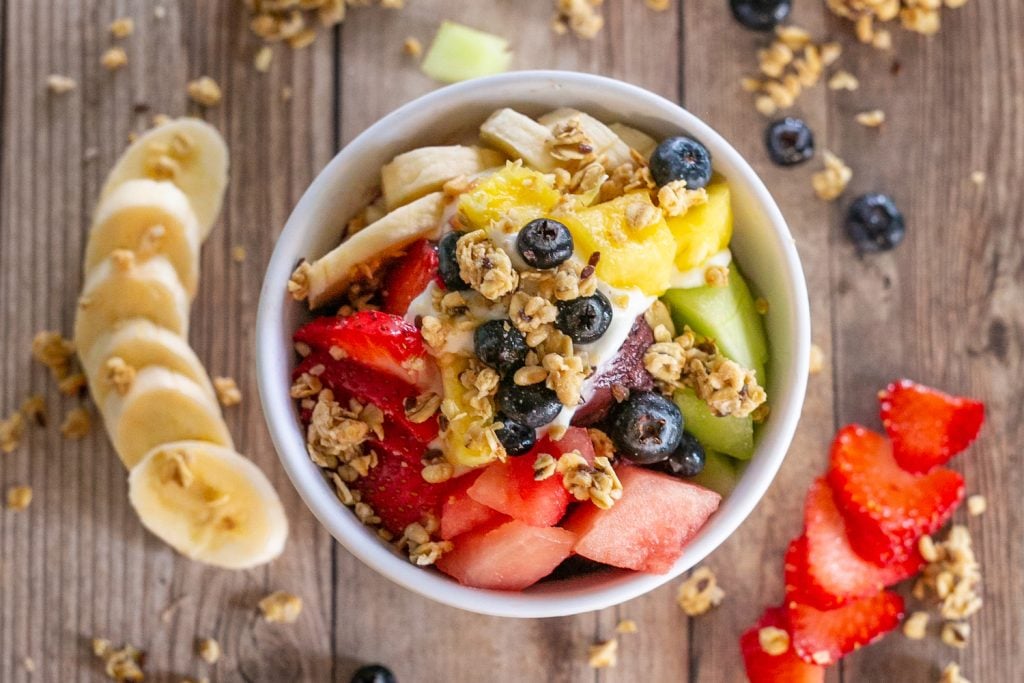
Açaí bowls are a San Diego staple. And once you’ve learned how to pronounce the name of these grape-like, Amazonian berries correctly (aa-saa-ee), you think you’ve got them down. It’s a sweetened smoothie bowl with an açaí base that’s topped with fruit, granola, honey, and, if you can swing the extra charge, peanut butter. Pair it with an iced coffee and a slow beach day, and you’ve got yourself one hell of a morning.
I also believed that was the extent of açaí bowls. Though some places are more generous with the PB than others, they mostly tasted the same to me. But upon conducting a further investigation, I’m happy to report that many of us were dead wrong.
San Diego’s açaí bowls span the spectrum of savory to sweet, simple to complex, and walkable to so-big-you’ll-need-two-hands. There are many unique options worth trying—starting with these 13.
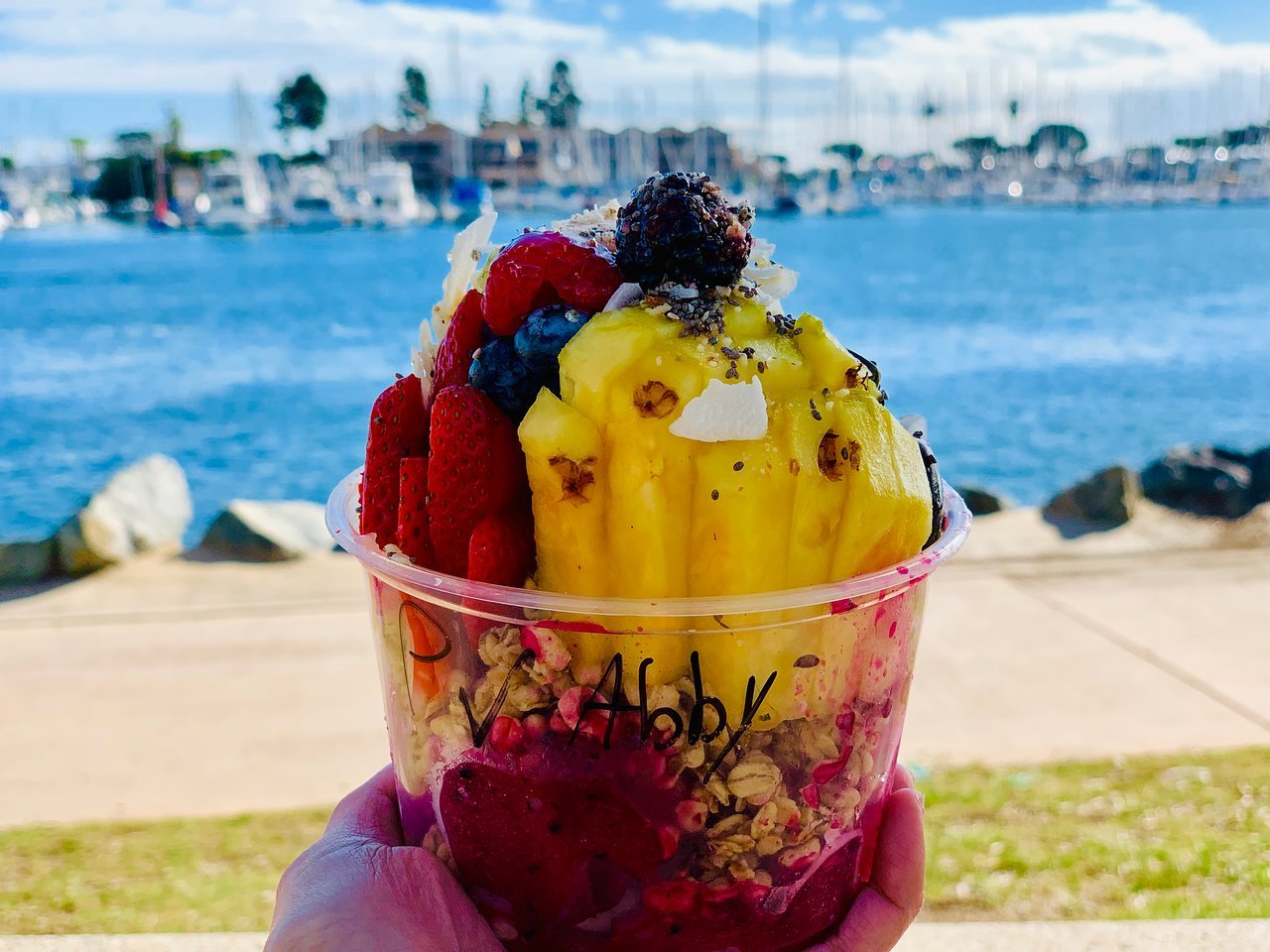
Northside Shack serves up a true classic as part of its build-your-own-bowl menu: a sweetened, dairy-free açaí sorbet, to which you can add all the usual suspects, including strawberries, pineapple, gluten-free granola, and coconut shreds. Prepare for a long battle with your to-go lid, because when it comes to toppings, Northside Shack does not skimp.
1255 Rosecrans Street, Point Loma | 3773 30th Street, Unit H, North Park
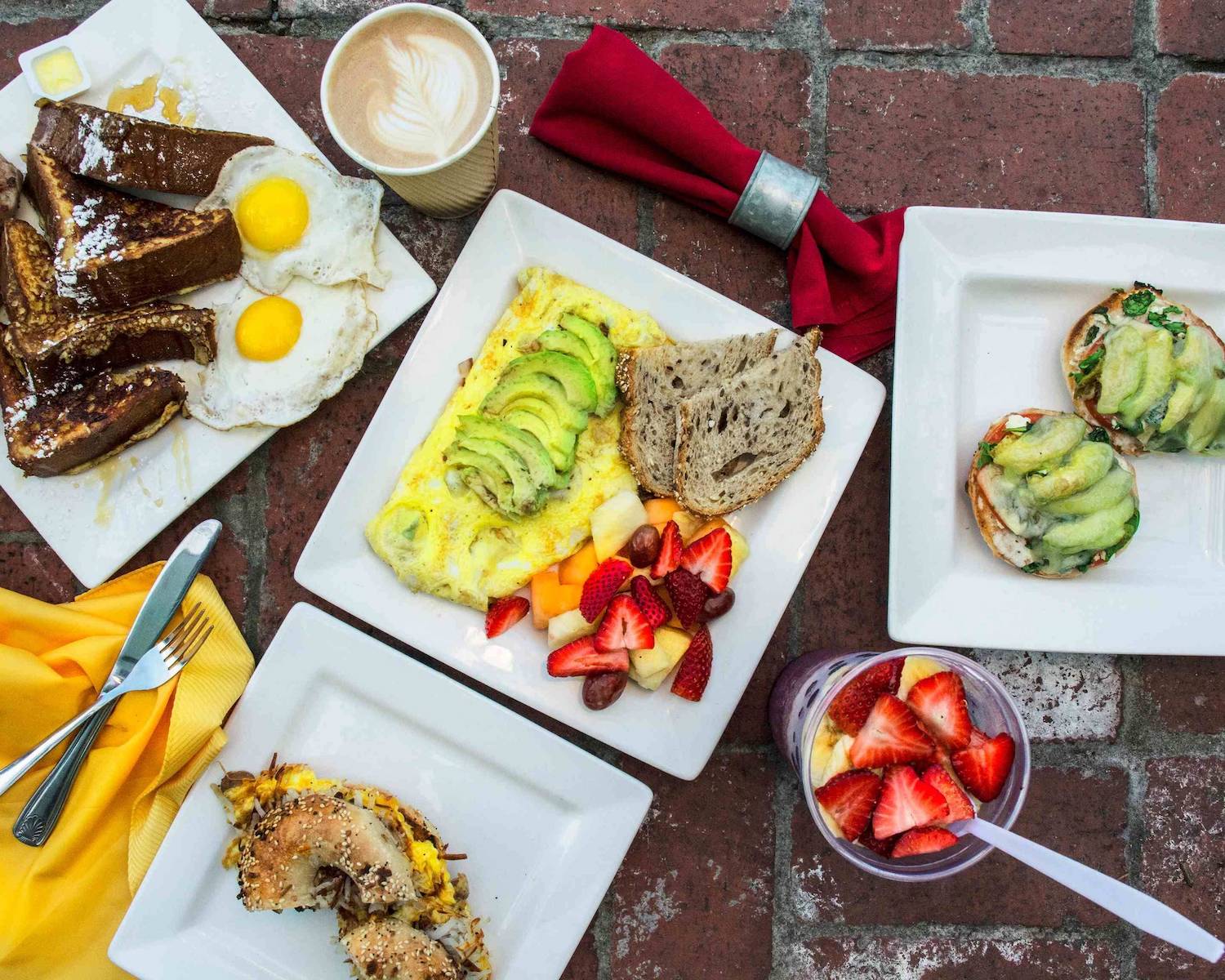
When Mayra Contreras took over The Cliffs Cafe in 2017, she wanted to do something different with her açai bowls—so instead of blending frozen berries with milk like most places, she experimented with apple juice. The Monkey Business bowl was born. She says the juice gives the açai base (and its blueberry, banana, and peanut butter accompaniments) a fresher flavor.
1830 Sunset Cliffs Boulevard, Ocean Beach
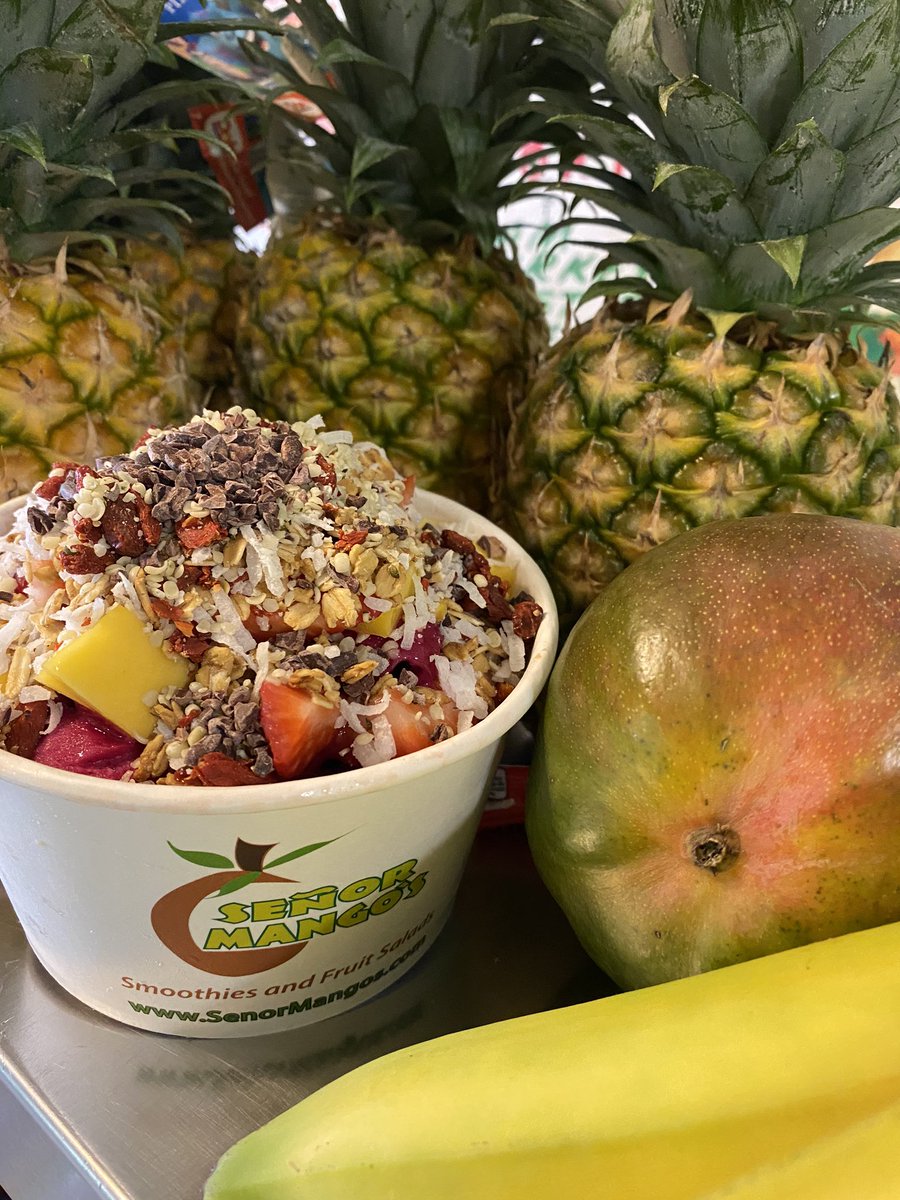
If you’ve read our deep dive on local tortas, you know I have a lot of love for Señor Mango’s. That affection extends to the shop’s açaí bowls. As a nod to the name, top yours with mango slices. They add a burst of tropical brightness that will make you wonder why you ever thought banana was enough.
4607 30th Street, University Heights | 3042 North Park Way, North Park
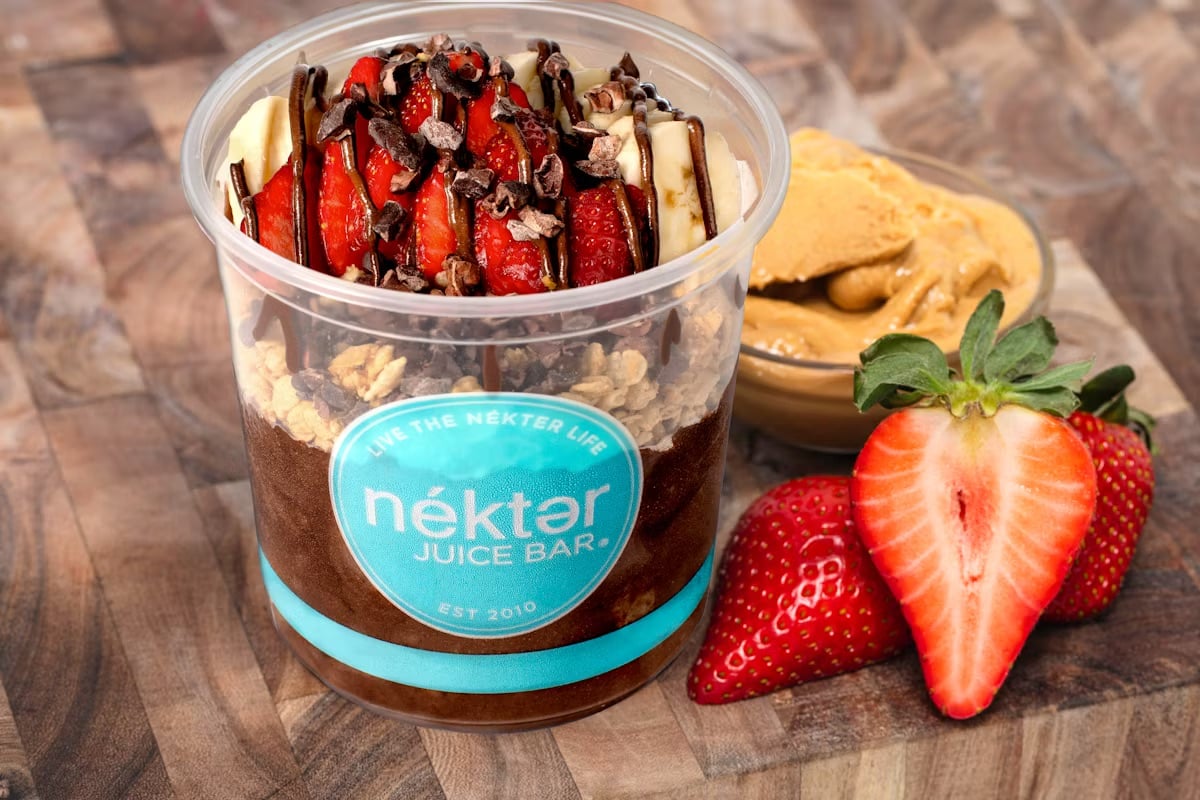
Curiosity (and my sweet tooth) got the best of me when I perused Nekter’s menu. The national franchise recently began blending açaí with banana, strawberry, housemade cashew milk, almond butter, agave nectar, and cocoa powder for a bowl that tastes more like a milkshake than a smoothie. But don’t let the cacao nibs and chocolate drizzle keep you from thinking this isn’t a decent post-gym meal—thanks to the addition of vanilla protein powder, it offers a whopping 23 grams of protein.
Various locations
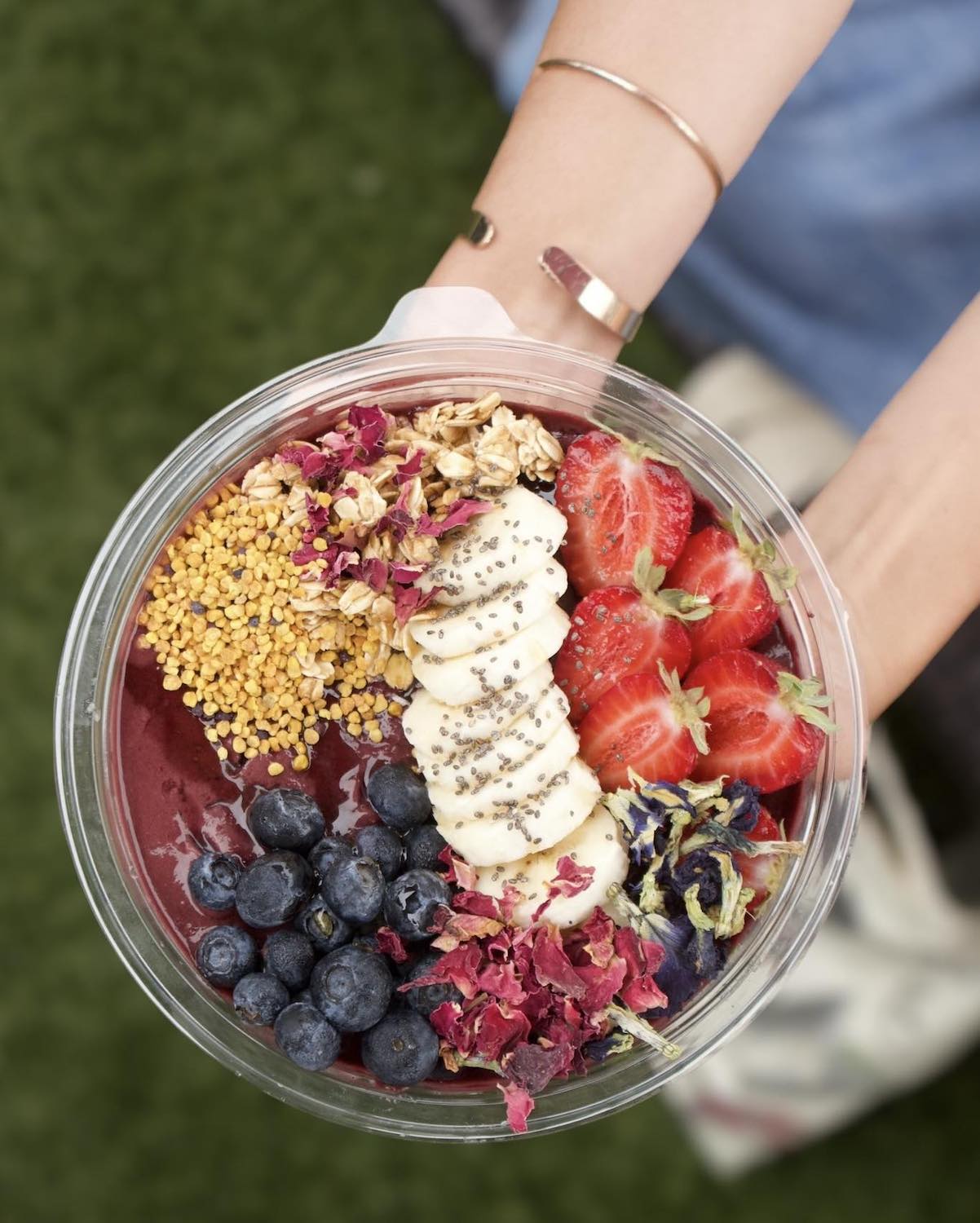
We all have our neighborhood go-tos, and as a proud OBecian, Val’s is mine. I’ve had the açaí sorbet bowl there more times than I care to publicly admit on the internet, and it always hits the spot. It’s topped with the typical fare: banana slices, strawberries, blueberries, honey, chia seeds, and granola. What sets it apart for me, though, is the layer of toasted coconut. You can add PB if you’d like, but the nutty crunch of the coconut flakes makes the additional charge unnecessary.
1869 Cable Street, Ocean Beach
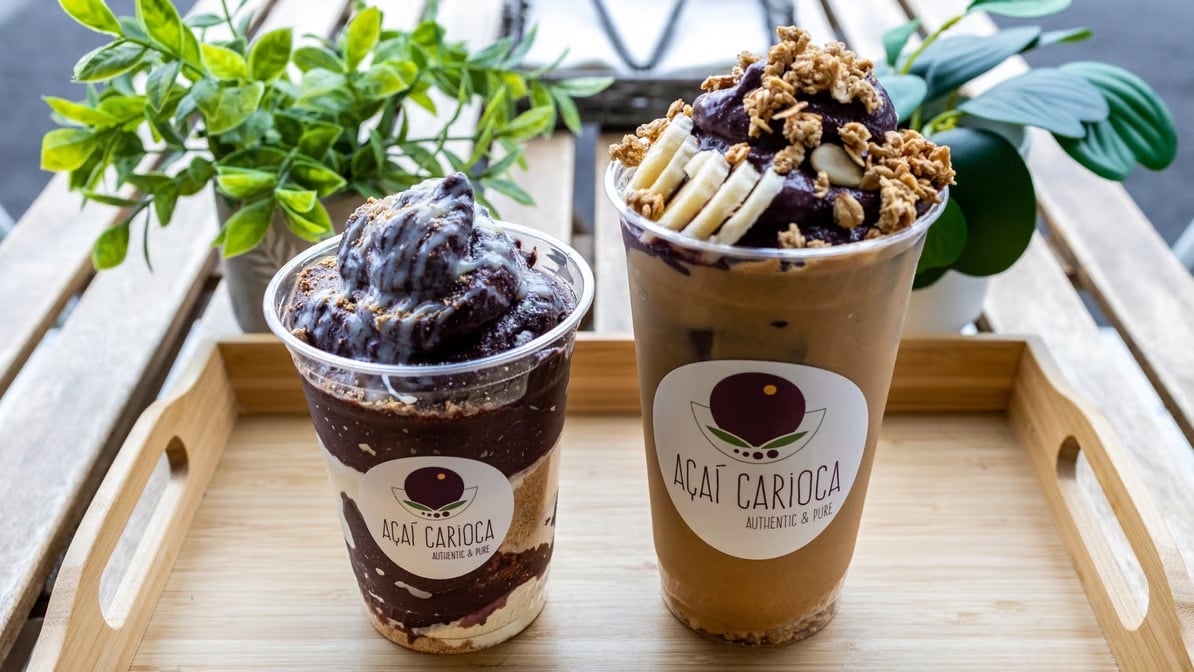
Most smoothie bowls have the same setup: a fruit base smothered in various yummy bits and bobs. Açaí Carioca, however, assembles its build-your-own bowls in multiple layers that include condensed milk; açaí berries blended with honey, protein powder, or vegan agave; dry whole milk; and your selected toppings. The tiered structure of the bowls (which are really more like cups) makes each bite richer, as do unique extras like Nutella and peanut butter crumbs.
3772 Voltaire Street, Point Loma | 743 Emerald Street, Pacific Beach
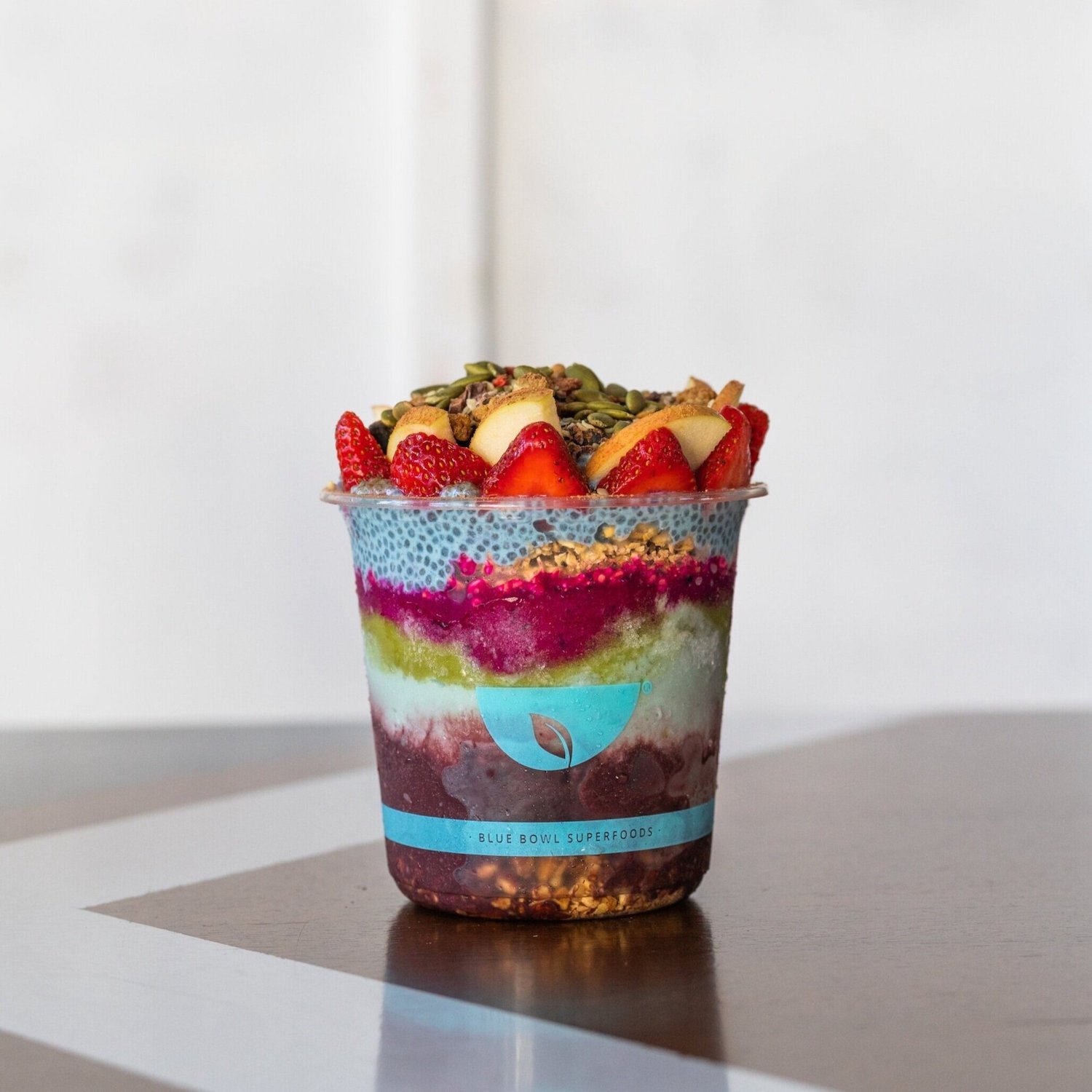
If you’re over upcharges, you’ll love Blue Bowl‘s fixed-price menu that lets you go nuts on the long list of add-ins (which, fittingly, includes a lot of nuts). You can customize the açaí base with everything from maple quinoa to lime zest to mulberries, but if the amount of choices is too overwhelming, dip your toe into the topping madness with The Lazy Blue. This fan-favorite bowl comes with açaí, pitaya, blue chia pudding, pumpkin flax granola, strawberries, blueberries, bananas, almond butter, almonds, toasted coconut, goji berries, cacao, hemp seeds, pumpkin seeds, and date honey—all for just one flat price.
9625 Scholars Drive North, Suite 0120, La Jolla
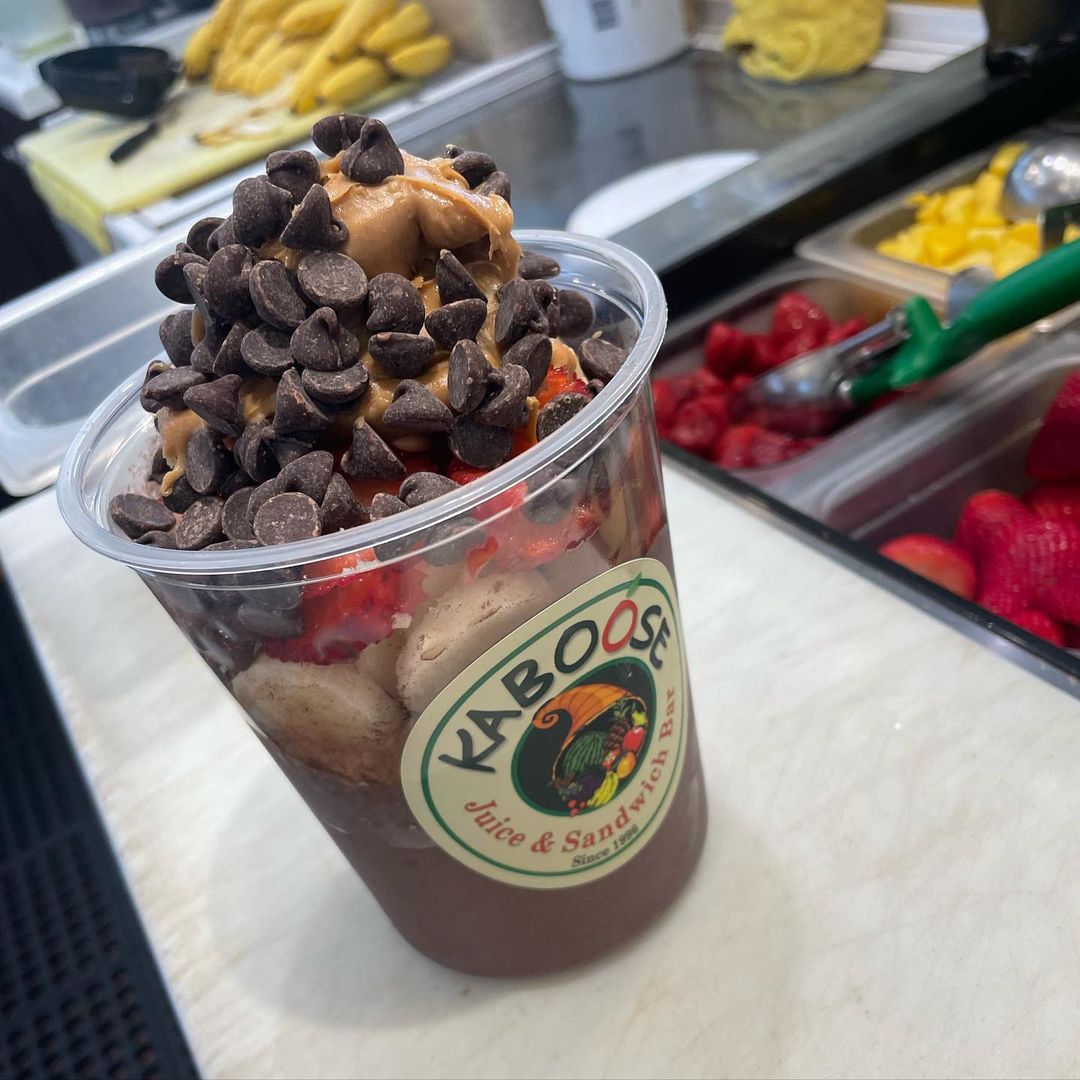
Coffee and açai bowls go together like brunch and bottomless mimosas. Juice Kaboose‘s Rise and Shine bowl pays homage to that caffeinated partnership with a shot of espresso whirred into an açai pulp base. Bananas, dark cacao, and soy milk also make appearances in this jacked-up treat, which comes crowned with fruit and gluten-free hemp granola for one delicious kickstart to your day.
7556 Fay Avenue, La Jolla | 1826 Garnet Avenue, Pacific Beach
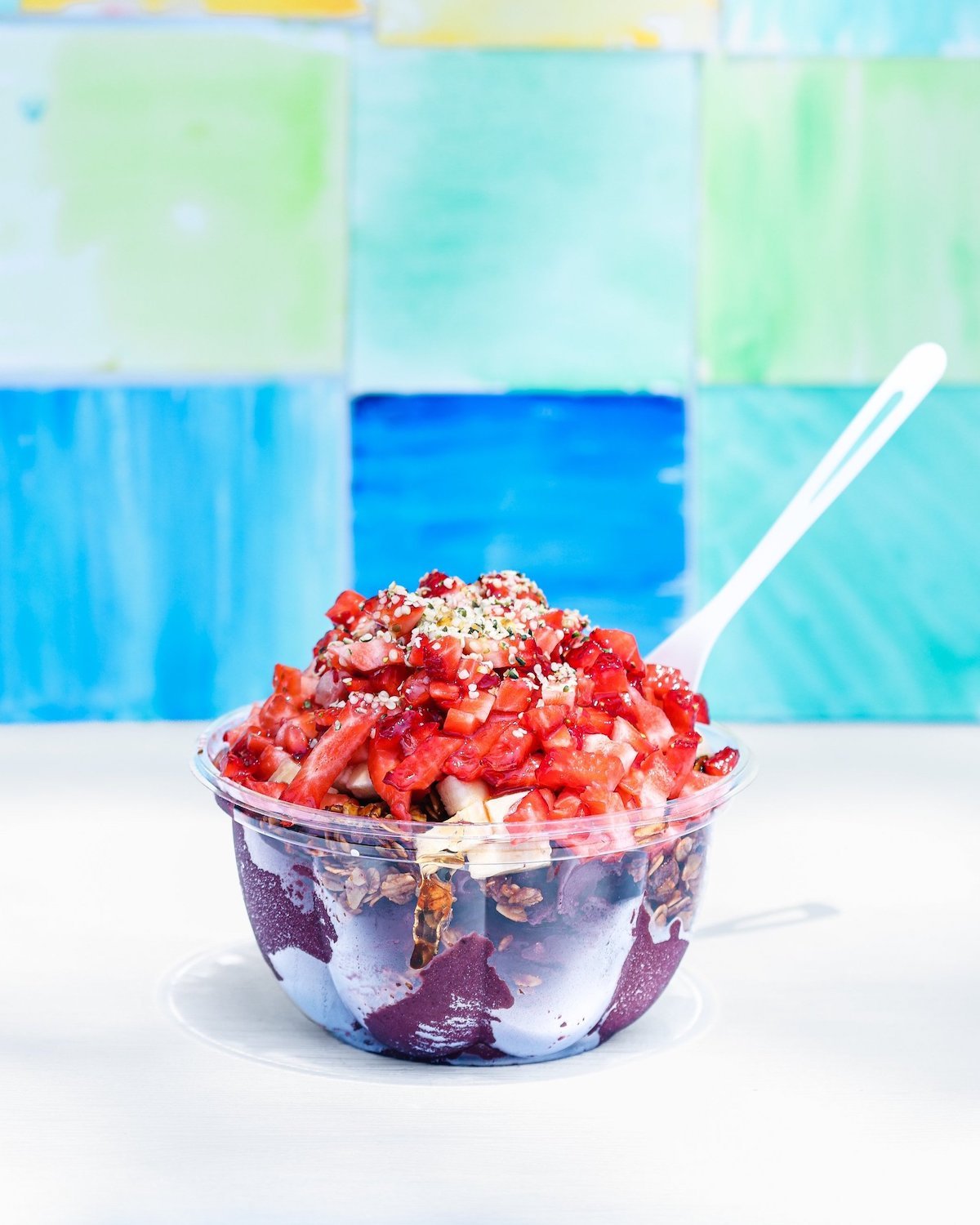
There is, perhaps, no better place to enjoy an açai bowl than the Mission Beach Boardwalk. While there are likely dozens of places to grab one along the promenade, Juice Wave has my vote. The açai sorbet is garnished with strawberries, bananas, house-made granola, hemp hearts, and honey sourced from a local farm. What’s more San Diego than that?
3733 Mission Boulevard, Mission Beach
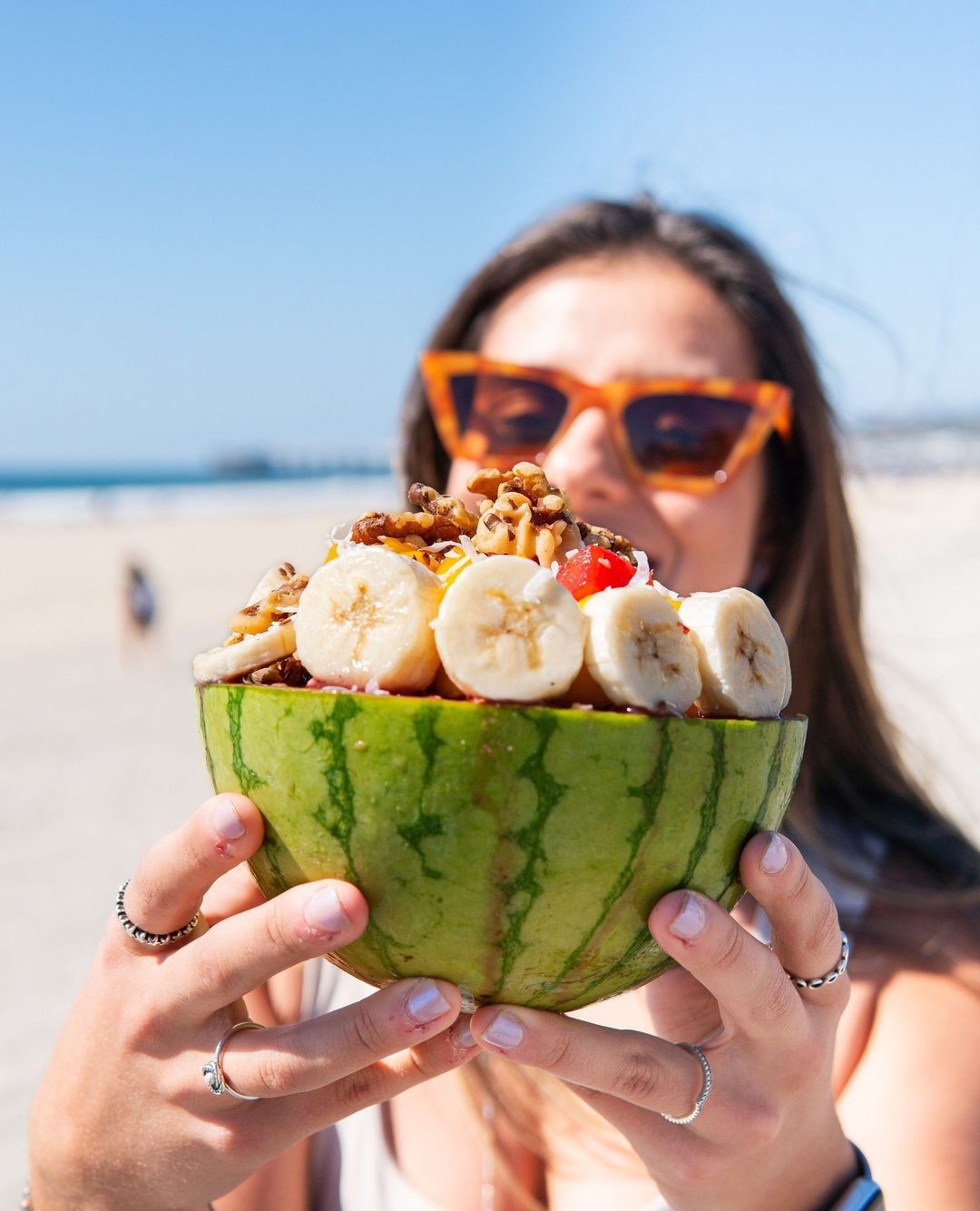
The purplish hues and honey-drizzled fruits make any açai bowl worth photographing. But if you really want to wow your Instagram followers, order a Watermelon Bowl from Rum Jungle Cafe. This long-time PB spot serves its açai scoops in half a watermelon shell. It’s huge and ridiculous and makes the traditional bowl seem pedestrian, especially when you get a hint of watermelon mixed in with the granola, coconut, and other seasonal toppings. Consider your daily serving of fruit complete.
4150 Mission Boulevard, Unit 153, Pacific Beach
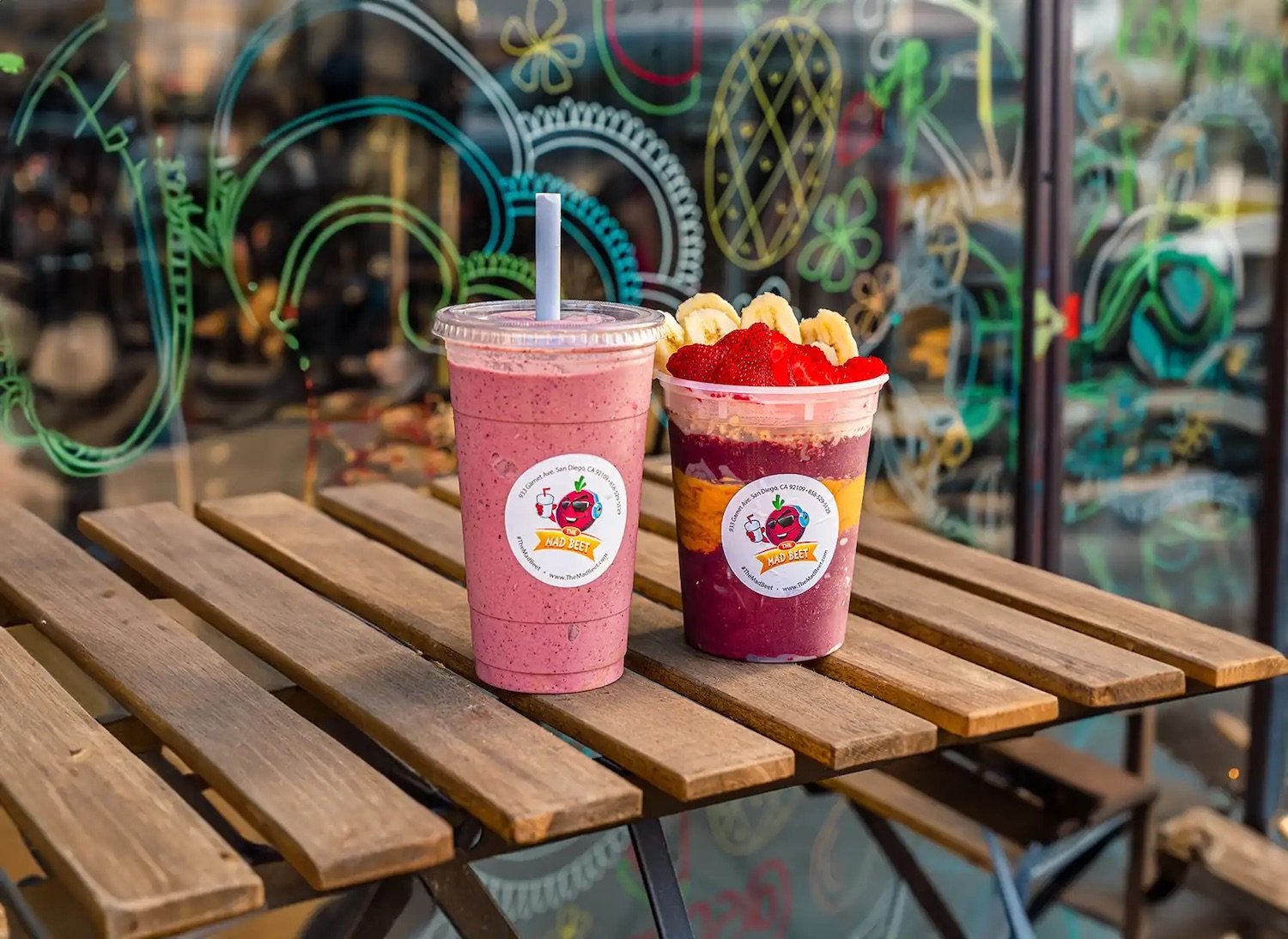
The Mad Beet gets extra points for its açai puns. While I don’t think Queen Bee has tried her namesake bowl yet, she should. Like the superstar, this combination of açai, granola, honey, peanut butter, strawberry, and banana is a crowd-pleaser. The other music-inspired bowls, like the Twopac Shakur, The Granolling Stones, and the Acaiwol Nation, are also just as fun to order as they are to eat.
933 Garnet Avenue, Pacific Beach
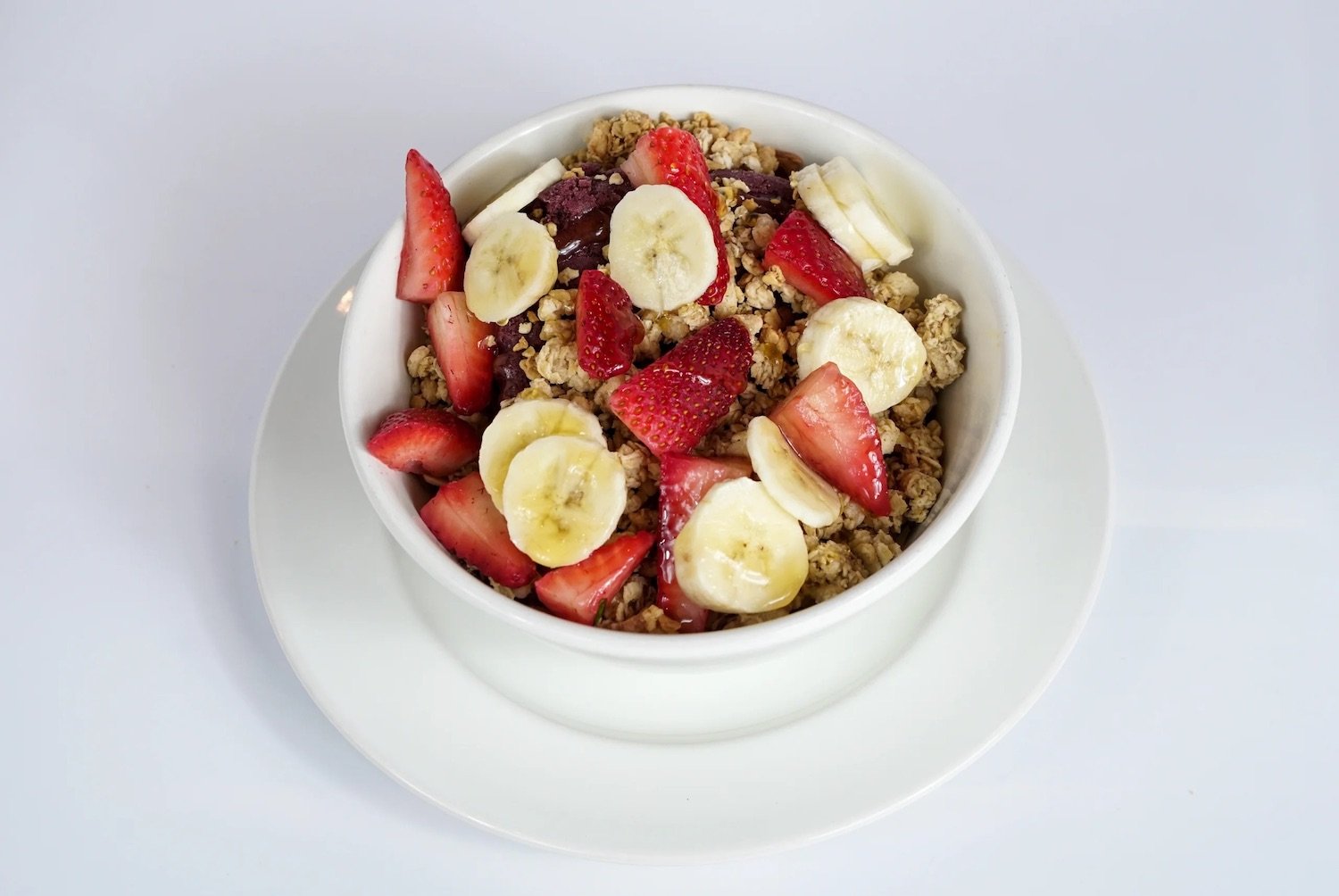
There are some wild açai bowls out there. But no place tests the limits of what you can top this typically sweet treat with quite like Meráki Cafe. Outside of the Classic Açai, owner Remzi Kaval says the most popular bowl is the Açai Gida. It’s got familiar flavors like blueberries, strawberries, and sliced almonds, but it also includes goat cheese crumbles. I was skeptical at first—especially when Kaval told me to get it with a balsamic drizzle—but the mix of sweet, creamy, and tangy is surprisingly addictive.
1735 Adams Avenue, University Heights
PARTNER CONTENT

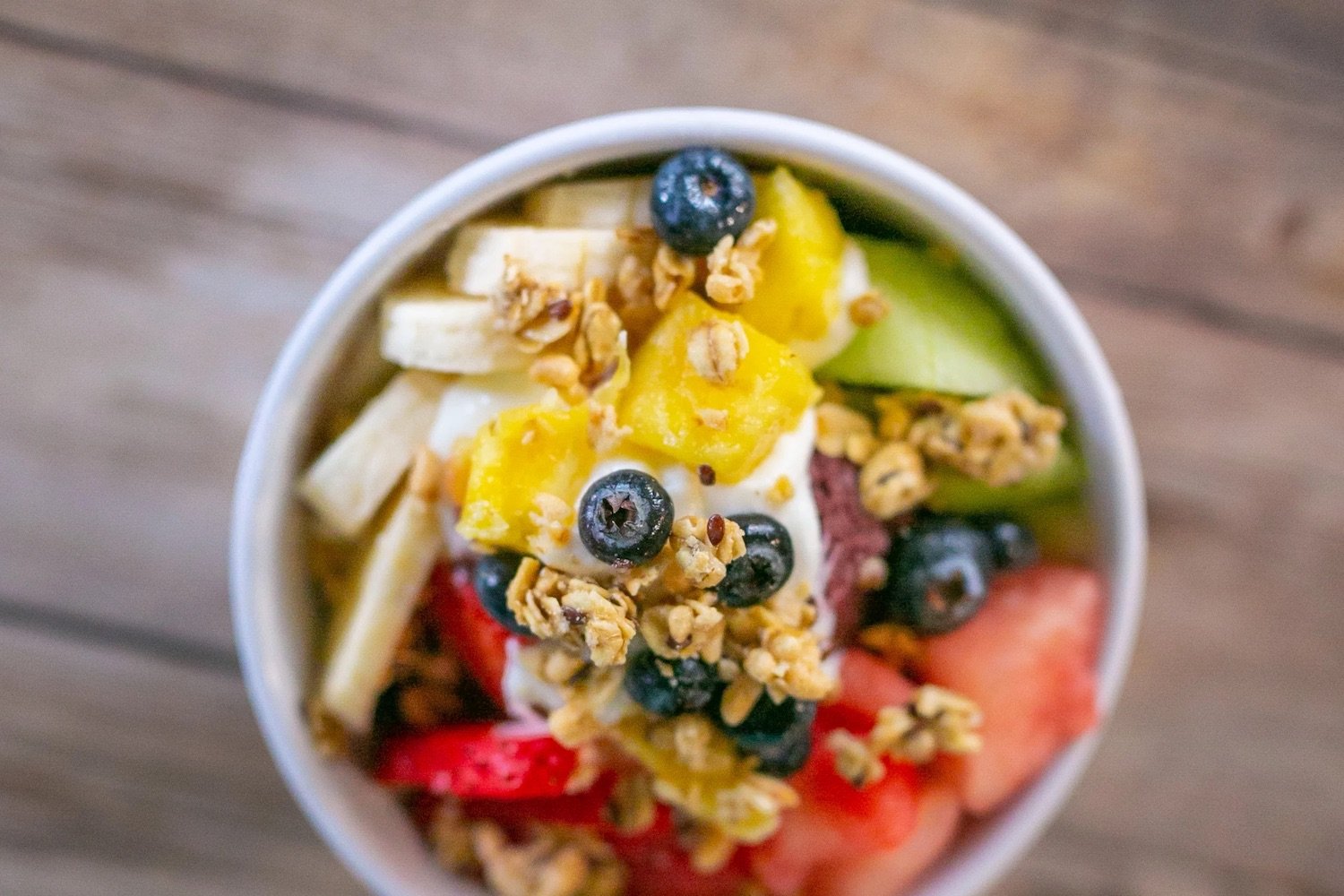
The single açai bowl on the menu at Katy’s Cafe is unlike any other I’ve seen—starting with the fact that the base isn’t açai. It’s plain yogurt. Instead, this reverse riff is smothered with açai, granola, and fresh fruit. Mix it all together for a creamier texture that’s much richer in probiotics than your average smoothie bowl.
700 Seacoast Drive, Suite 106, Imperial Beach

Emily Blackwood is a freelance journalist based in San Diego, CA. She covers entertainment, wellness, travel, home, food, culture—all the things that make life interesting, tantalizing, and just the right amount of weird. Her work has been published in SELF, HuffPost, and YourTango. You can learn more at emily-blackwood.com.
Telefèric Barcelona will open its first San Diego location early this summer
Westfield UTC mall is adding yet another “first” to the ever-growing roster of restaurants. The first US location for China’s stir-fry sensation Chef Fei is on the way later this year, Japan already reinvented crispy rice pioneer Katsuya by opening the first Katsuya Ko, and now, it’s Spain’s turn—Telefèric Barcelona opens early this summer.
The family-owned, Barcelona-based tapas joint first opened in the US 10 years ago in Walnut Creek, California, but co-founder and CEO Xavi Padrosa says they’ve had their eye on San Diego for years. Westfield UTC “just clicked,” he says, pointing to the burgeoning collection of world-class eateries already within the mall’s walls. Plus, La Jolla’s breezy vibe echoes Spain’s easygoing tapas culture.
The indoor/outdoor space spans 5,526-square-feet, with seating for 150 inside, 60 on the patio, and 16 more at the bar. Xavi’s sister and co-owner Maria Padrosa designed the Mediterranean-inspired space as a contemporary take on coastal Catalonia, using imported furniture and materials from Spain like hand-glazed tiles and wood accents. And if all the dining spaces are planets, the center of the suite’s universe is the bar.

Padrosa points to signature favorites like patatas bravas (fried potatoes drizzled with a spicy red sauce and house aioli), jamón ibérico de bellota (Spanish ham from free-range pigs raised on acorns, cured for 38 months and sliced to order), gambas al ajillo (garlic shrimp), pulpo Telefèric (octopus with potato purée and pimentón XO, a spicy Spanish/Cantonese fusion sauce), and croquetas (a popular fried tapas dish coated in breadcrumbs and made with béchamel mixed with fillings like jamón or king crab.
There are a very small handful of legit paella spots in San Diego (Costa Brava in Pacific Beach and Cafe Sevilla in Gaslamp Quarter come to mind), so I’m personally looking forward to giving Telefèric’s a go—especially the squid ink paella negra, which is perhaps the most goth paella of all. Every location also offers different weekend specials, La Jolla’s being seafood-driven and meant to pair with beverage director Alex Serena’s drinks. There are over a hundred Spanish wines, Spanish-inspired cocktails, sangria, and of course, plenty of twists on the iconic gin and tonic. The restaurant will also have a gourmet market called The Merkat with imported Spanish sundries.

With more US locations in the works (Newport Beach will open soon after La Jolla), Padrosa says the company hopes to open more across California, but are open to anywhere in the country that feels right. “We don’t know exactly what new cities will appear on our map in the coming years,” he says. But in true Catalan fashion, anywhere they go should be ready for big plates of hearty Spanish cuisine.
Telefèric Barcelona La Jolla opens early summer 2026 in Westfield UTC. Opening hours will be Monday through Thursday, 11:30 a.m. to 10 p.m.; Friday and Saturday, 11:30 a.m. to 11 p.m.; and Sunday, 11 a.m. to 10 p.m.

Most of the time, you have to be 18 years old to change your name. In Arcana’s case, it was about a month. The immersive speakeasy behind Archive in Encinitas updated their moniker to Animga (a play on “enigma”) earlier this month, after what one can only assume was an upset letter from a similarly-named business. However, partner Paula Vrakas promises that the concept remains the same—mystery, cocktails, and a forthcoming bottle locker membership club. Since the only constant is change, Anigma is off to a good start!

Listen Now: The Latest in San Diego’s Food and Drink Scene
Have breaking news, exciting scoops, or great stories about new San Diego restaurants or the city’s food scene? Send your pitches to [email protected].
Beth Demmon is an award-winning writer and podcaster whose work regularly appears in national outlets and San Diego Magazine. Her first book, The Beer Lover's Guide to Cider, is now available. Find out more on bethdemmon.com.
From San Diego’s coastline to Los Angeles stadium and fan zones across the region, here’s how to experience soccer’s biggest event
When three nations and 16 cities come together to host the FIFA World Cup 2026, the scale stops feeling like a tournament and starts feeling like geography. A continent becomes the stage as borders soften into corridors. And Southern California—shaped by migration, sport, entertainment, and constant movement—sits inside that landscape with all eyes on it.
San Diego and Los Angeles have always felt connected. Hop on the Pacific Surfliner, and the trip unfolds in one continuous stretch of coastline, passing beach towns, neighborhoods, and city centers.
Traveling from San Diego, everything still feels slightly suspended as the Pacific Surfliner follows the coast north with ocean on one side and a slow suburban blur on the other. San Diego stays in exhale. Los Angeles is already building toward something louder.
This summer, Los Angeles will host eight matches of the FIFA World Cup at Los Angeles Stadium, including the US Men’s National Team opener on June 11, while the region stretches into 39 days of programming across stadiums, parks, transit hubs, beaches, and neighborhoods. Instead of one massive fan hub, Los Angeles is embracing a citywide celebration, with fan zones spread across its entirety.
But this pattern has been rehearsed here for decades. In 1994, Southern California became one of the defining stages of the World Cup, when matches at the Rose Bowl placed global attention on the region and turned local stadiums into international landmarks, confirming its ability to hold the world at scale.
What distinguishes Southern California is not just infrastructure, but cultural permeability. Fashion, music, film, art, and sport constantly overlap here, creating an environment where identity is flexible and always in motion. From the Venice boardwalk, where skate culture shaped modern street style, to global soccer stars rubbing shoulders with Hollywood celebs, to authentic Spanish cuisine moving up and down the I-5 corridor, everything circulates.
The World Cup is not introducing anything new here, it’s showing up for the summer and showing out, revealing what this city has always known about itself. What follows is a look at the fan zones and how Los Angeles turns itself into a city-wide stage for the tournament, one neighborhood at a time.

As the heart of Los Angeles, Union Station is an official Fan Zone June 25-28 during the World Cup, but in practice it never really stops being one.
It is the city’s circulation point, its meeting ground, its pressure valve. Commuters, travelers, match-day crowds, and everyday Angelenos all move through the same space, and everything mixes, overlaps, and scales in real time. In a way, this is where the World Cup stops arriving in Los Angeles and starts moving through it.
The Pacific Surfliner from San Diego to Los Angeles makes that shift feel almost too easy. No stress or gridlock anxiety, just a straight line up the coastline with ocean on one side and everything slowly becoming more built on the other. It’s one of the rare ways into LA that doesn’t feel like arrival as friction. You can sit with a laptop, watch the Pacific drift past, grab coffee from the café car, and let the city come to you in pieces.
That’s the beauty of arriving at Union Station. Instead of feeling like you’re on the edge of the city, you’re immediately surrounded by it. And, inside, the station already reads like a World Cup nerve center: banners, movement, multilingual energy, the sense that something global is about to funnel through this exact point. The Heart of the City Fan Zone only sharpens that feeling, with simultaneous match screens, DJ sets, meet and greets, and immersive activations built around marquee games like USA vs. Türkiye.
From there, the city splits outward.
ROW DTLA feels like the first exhale after arrival. A converted industrial campus turned creative district where restaurants, retail, and open-air courtyards form a self-contained ecosystem. If you’re looking for the perfect first meal in LA, make it lunch at Pizzeria Bianco. The thin-crust pizza is reason enough to go, but the space leaves just as much of an impression.
What I liked most about ROW DTLA is how quickly it resets you after the train. One minute you are stepping off at Union Station, and the next you are in a space that feels like its own version of LA, a city inside a city with some of the most curated shopping I’ve ever seen.
Bodega hides itself behind a convenience-store front, a sneaker and streetwear space disguised as something ordinary, like LA refusing to make anything feel too obvious. The whole campus moves like that, part retail, part gallery, part neighborhood you are only temporarily inside.
Isabella Dallas is a freelance writer for San Diego Magazine and the Arts and Culture Editor at The Daily Aztec in her final year at San Diego State University. She previously worked as an editorial intern for SDM, but when she’s not writing, you can find her trying the best coffee spots in SD, devouring the latest rom-coms, and indulging in anything and everything pop culture.
Talking farm to table, fraud-to-table, and the feasibility of the movement with the beloved restaurateur who saw it all
Garden Kitchen was special. During its seven-year run on a quiet street in Rolando, even the farmiest-to-table devotees were pointing to chef-owner Coral Strong and slow-clapping. When a dramatic rent-hike forced her to close in 2022, Strong wasn’t sure what to do next.
Farm-to-table wasn’t new by any means—chef Alice Waters spawned the movement at her pioneering restaurant Chez Panisse in Berkeley in the early ‘70s, and many San Diego chefs did it right. But by the mid-2000s, the idea had been so co-opted by the mainstream that the meaning was almost completely lost.
“In the beginning, I used to get very honestly angry and upset when I would go to other restaurants that were claiming they were farm-to-table, but knowing some of the chefs or prep cooks inside [telling me] ‘Oh no, that comes from Restaurant Depot,’” she says.
Food critic Troy Johnson’s cover story in 2015 documented the fraud, titled “Farm to Fable.” At Garden Kitchen, Strong only used produce and meat sourced from local San Diego farms—an honorable, if not arduous endeavor.
Strong grew up in Cardiff before her parents moved the family to Costa Rica in 1989. They’d bounce between the two countries for months at a time, but when they lived in a motel by the beach while building their own house, she witnessed an incredibly tight-knit food culture. “As a Latin American country, everyone kind of cooks together,” she says. Everyone chopped, prepped, prepared, and served as a unit. “[That] definitely shaped my adolescence as to how I thought about food and the community of food.”

When her father, a commercial fisherman, brought the family back to San Diego, Strong leaned into an entrepreneurial streak, moving from coffee to accounting and eventually bartending to pay the bills. But food remained a passion, especially after she met her future husband, who was working at a farm and ranch in Escondido.
“We were just always disappointed with the vegetables out at restaurants and were like, ‘Why can’t they just make vegetables taste good?” she wondered. She realized that despite having more small farms than any other county in the country, most restaurants in San Diego simply weren’t using local ingredients.
So she decided to do it herself.
Strong opened Garden Kitchen without any formal culinary training—just a commitment to getting the freshest vegetables, meat, fruits, and other produce onto people’s plates. Her first chef quit within a month, telling her it was impossible. “So I got in the kitchen one day and said, ‘I can do this, let’s figure it out.’ I taught myself how to cook.”
She already had connections with farmers, fishermen, and ranchers, and designed a different menu almost daily based on what she could get. “My farmers sometimes delivered in the middle of dinner service,” she laughs.
Garden Kitchen lasted until after the pandemic, but before the current economy cut into already razor-thin margins. Could Garden Kitchen exist today? She’s not sure.
“The biggest thing right now is just looking at the finances and how expensive it is,” says Strong. “Obviously, the cost of food is up right now, gas is crazy right now… it just crushes you.” Despite that, she believes that committing to the true farm-to-table ethos is as easy as one decides to make it.
“If you think it’s hard to order directly from your farmer, if you don’t understand the absolute pleasure in doing that and you’d rather order from a computer, then that’s your own difficulty,” she says. “People say they’re into it, but are they willing to make the effort like I am, to drive an hour to go get my meat, or drive 35 minutes to go to my farm to go pick it up? I don’t know.”
Today, Strong works as a private chef, hosts pop-ups, and offers catering services, all still using seasonally available ingredients from San Diego. And while she has no intentions of opening another restaurant, she says we might see even more of her in the future.
“I have a large property [in Valley Center], and let’s say that there will be more of my food to come,” she promises.

Listen Now: The Latest in San Diego’s Food and Drink Scene
Have breaking news, exciting scoops, or great stories about new San Diego restaurants or the city’s food scene? Send your pitches to [email protected].
Beth Demmon is an award-winning writer and podcaster whose work regularly appears in national outlets and San Diego Magazine. Her first book, The Beer Lover's Guide to Cider, is now available. Find out more on bethdemmon.com.
The 29-year-old culinary director at Herb & Sea is making seafood sexy (and approachable) again
Implementing a farm-to-table model hardly deserves acknowledgement these days. It’s not a stretch. It’s not innovative. “It’s the bare f**king minimum,” says Herb & Sea‘s executive chef Aidan Owens.
When I arrive at the Encinitas restaurant, I’m ready to talk sustainability, farm-to-table stuff, with Owens. “Did you see the chin on that?” he says of the extra big jiggly chin on the sheephead that just arrived with the day’s fresh catch. I did. It was Jay Leno adjacent.
I learn quickly that he somehow oozes both charm and stone-cold honesty. Maybe he could construct a new dish with chin goo, like he did when he had a bunch of tuna scraps and voila’d it into a smooth and crowd-pleasing ‘nduja. “I want to know what’s in there,” he says.

The instinct to look closer, to dig into what others might discard, says a lot about the chef’s approach. I guide him back to our topic, but he has something else on his mind. “We’re overcomplicating food—what happened to just cooking good food and having fun with it?”
Owens grew up on a farm in Byron Bay, Australia, where sustainability wasn’t a concept you chat about so much as a way of life. Think dirt roads, backyard chickens, pulling vegetables straight from the ground, and a mother who believed that if you couldn’t pronounce the ingredients on a package, you shouldn’t eat what was inside.
Food wasn’t precious or performative. Making it was what you did because you were hungry and that’s still what inspires Owens today. “I like to cook good food because I like to eat good food,” he says.
His approach to sustainability at Herb & Sea began so naturally that it felt just like instinct. “I was just like, ‘Let’s order food from the people who live and work here,’” he says.

And why wouldn’t he when lives in San Diego? Cities all over the world vie for our goods. Our tuna is sent overseas. Our spiny lobsters hit dinner plates in China and Japan. Not to mention California’s producing a third of the country’s vegetables and three-quarters of its fruits and nuts.
“Why would we outsource when it’s all here?” Owens asks.
Sustainability, in this context, is about cooking what exists in abundance, nearby, right now. “I love the local fish here. It’s f**king delicious and San Diego citrus, I mean, it is so f**ing good,” he says.
Instead of importing ingredients, Owens also looks for nearby alternatives. “You can find really cool things in the local waters,” he says, pointing out that stingray cheeks taste similar to scallops.

Whatever he finds in that sheephead chin might just be the next substitute for marrow. But to make this work, it means getting diners amped up about the slightly unfamiliar.
Tasting menus, where diners are completely in his hands, become an opportunity to gently push boundaries. “I’ll serve mackerel, because people think they hate it,” Owens says, noting that the abundant local fish can have some fishiness. “But when it’s fresh, it’s arguably one of the best fish in the ocean.”
He also tweaks the language on the menu so people might feel more compelled to give dishes a try without preconceived notions. He might use “lengua” instead of “tongue.” “Whelk” instead of “snail.” When he puts “stingray throat” on the menu, he disarmingly calls it “skate.”
To reduce waste, scraps aren’t always discarded but rather turned into something new. Sometimes they’re smoked, cured or fermented. Apples going bad turn into apple ponzu. Lemons turn to marmalade, which stretches their usefulness far beyond peak season. “And it’s super tasty on our pizza,” he says.
What makes the food even richer, is the relationships he’s built with farmers. Though it didn’t always feel natural, Owens sought personal connection first. He recalls approaching a fisherman at the Tuna Harbor Dockside Market. “I was awkward,” he says. “I went up to him and said, ‘I like your fish.’”
Owen’s is now so close to his suppliers—like fishermen Ryan Sebo and Joe Daly—that he gets texted pictures of fresh catches right as they flop on the boat. The messages always ask if he wants first dibs. “I say yes to a lot of fish,” Owens says, noting that Herb & Sea can go through 2,000 pounds of seafood a week.

The next evolution of sustainability, in his view, will be chefs working directly with producers such as his alliance with Sebo, cutting out middlemen and purveyors where possible. “It will put more money in the pockets of the people doing the work,” he says.
It will mean that chefs can’t just know their local farmers and producers, but they’ll choose to work with the ones who have the best practices. Dining and sustainability will become much less about the final plate. “It will be more about the impact that plate has on the Earth,” he says.
Ultimately, he believes sustainability doesn’t need to be loud. It doesn’t need hashtags. It just needs to be honest.
“We aren’t saving lives. We’re feeding people good food,” he says.
And yet, in feeding people well—simply, thoughtfully, responsibly—something meaningful happens. Guests leave satisfied. Ingredients are respected. Local ecosystems are supported and food returns to what it has always been at its core: nourishment, pleasure, and a quiet reflection of the place it comes from.
No buzzwords required.
Stop by the San Diego County Fair, rock out at the inaugural Field of Dreamz and visit Bikini Bottom via The Spongebob Musical
Charitable gatherings, downtown music festivals and theater premieres—of both the heartwarming and thought-provoking variety—are among San Diego’s standout events this weekend. You can’t spell fundraising without ‘fun,’ and both elements are central at Poway OnStage’s Taste of the Towne and the Switchfoot Bro-Am. Listeners of blues, reggae rock and silky smooth jazz can check out the East Village Blues Fest, Field of Dreamz and the San Diego Smooth Jazz Festival, respectively. As for the city’s thespian community, new shows include Cygnet Theatre’s production of Broadway favorite The Spongebob Musical and the world premiere of the OnWord Theatre show Marti Gobel’s Adult Storytime: A Caregiver’s Guide To The Blues.
Food & Drink | Concerts & Festivals | Theater & Art Exhibits | More Fun Things to Do
The tasteful appetizer to Switchfoot Bro-Am’s annual Beach Fest is the laid-back Benefit Party, returning this Thursday from 6-10 p.m. at Viasat. Guests will be treated to a curated dining menu, a performance by Switchfoot with special guests, and the chance to bid on live and silent auction items, including local excursions, apparel packages, and deluxe arts experiences. Individual ticket options include general admission ($300) and reserved seating ($450); the money raised will go towards youth-centered programming at six local nonprofits.
6155 El Camino Real, Carlsbad
Patrons of Poway OnStage are invited to Taste of Our Towne, the organization’s annual culinary fundraiser, this Saturday at 5 p.m. at Poway Center for the Performing Arts. The evening will begin with auctions, plus bites and libations from over a dozen local vendors before magician Chris Funk, aka The Wonderist, takes the stage for an interactive comedy show. General admission is $115 for Taste of Our Towne; proceeds from this event will benefit Poway OnStage’s Professional Performance Series and Arts in Education Initiative.
15498 Espola Road, Poway
Before (potentially) riding off into the sunset, British rocker Rod Stewart is strutting his stuff stateside with the unconventional voice and unquestionable verve that’s propelled his nearly six decade-long solo career. Though the “Da Ya Think I’m Sexy?” artist’s days on the road may be dwindling, that’s even more reason to give him his flowers in the present. Stewart’s upcoming show this Friday at 7:30 p.m. at North Island Credit Union Amphitheatre will feature prolific singer-songwriter Richard Marx as the opening act. Tickets start at $40.
2050 Entertainment Circle, Chula Vista
Following Thursday’s Benefit Party, the 22nd annual Switchfoot Bro-Am will switch (get it?) from its fundraiser to a free day at Moonlight Beach for Saturday’s all-day Beach Fest. From 7 a.m. to 3 p.m. there will be surf competitions—including surf jousting—and from noon to 5 p.m., Sun Room, Telephone Friends, Kimiko, a handful of special guests and, of course, Switchfoot will perform for attendees. Additionally, throughout the day, there will be a variety of vendors and brand activations to explore. Admission is free with RSVP, while VIP pit tickets are $195.
400 B Street, Encinitas
As the mysterious saying goes, ‘If you build it, they will come,’ but instead of Iowa cornfields, this time the message is coming from inside SD’s home ballpark. This Saturday, Ocean Beach natives Slightly Stoopid will headline the first-ever Field of Dreamz Festival, and they’ve brought along a handful of ska, reggae and island-inspired rock acts for the ride. Doors will open at 3 p.m., and fans can see sets by Stephen Marley, Pepper, Sublime—whose first album with frontman Jakob Nowell drops Friday—and more. Ticket options include standard admission ($125), floor tickets ($188), plus All-Star VIP ($244) and Hall of Fame VIP ($610) passes.
100 Park Boulevard, Downtown
Ryan Hardison is a freelance arts and entertainment writer and recent graduate of San Diego State. When he's not staring at his laptop, he's likely eating an adobada burrito or getting sunburnt at the beach.
Food writer Beth Demmon names local bites we love—both at the high and low ends of our budgets
We love a mega-fancy tasting menu, but let’s be honest—we’re not all blessed with unlimited Wagyu funds. So we picked some of the breakout dishes of the last year (or couple of years) from the best chefs in the city, reverse-engineered their chief charms (salty, smoky, caramelized?) in the test lab of our mouths, and found some budget-friendly alternatives that hit some of the same notes with an everyday price tag.
Where do delicately plucked marigold blossoms adorn Deer Isle scallops, or ingredients like fermented raspberry precede roasted coffee oil, shiro miso caramel, or bronze fennel in a parade of hit-after-hit dishes? Lilo in Carlsbad, of course. San Diego’s newest Michelin star changes its menu with the seasons, but one stalwart dish has kept tongues wagging since opening day last April: the caviar ice cream. A boat-shaped sliver of orgeat ice cream, smoked celery root bushi, and freshly pressed almond oil are topped with a generous heap of caviar. It’s a dish so good and defining that chef Eric Bost will tire of talking about it for a very long time.
Price: $265 for the tasting menu (before tax, tip, and drinks)
There’s a reason Stella Jean’s s’mores ice cream is part of the local scoop shop’s “always available” menu. Made with fire-roasted marshmallows and coconut ash ice cream mixed with dark chocolate-covered graham crackers and mini marshmallows, its strangely ashen hue dabbled with flecks of tawny brown is a far cry from the wildly vibrant ube and pandesal toffee flavor seemingly made for Instagram reels. But it’s a sensation in your mouth—smoky, toasty, torched, creamy, marshmallowy, coconutty, ashy, and bitter from the dark chocolate. Pro tip: If you really want to DIY Lilo’s ultra-luxe treat, bring your own caviar.
Price: $6.25 for a single scoop
There’s no question what comes first at Lucien. It’s the egg. Chef and co-owner Elijah Arizmendi’s 12-course tasting menu begins with welcome bites under the calamansi tree before moving inside to start the Journey (the actual name of this section of the menu). The first step is one of the most astounding—a perfectly intact, upright, ochre-hued eggshell containing his take on Japanese chawanmushi (egg custard), topped with a dollop of caviar. The accompanying ingredients have ranged from sweet corn and huitlacoche to banana and buckwheat, but each one has precisely demonstrated Arizmendi’s commitment to French technique with California experimentation and global influence.
Price: $260 for the chef’s tasting menu (before tax, tip, and drinks)
The biggest difference (besides price) is that while Lucien’s dish changes with the season, Sushi Ota is comfortably predictable. A San Diego staple since 1990, the legendary Sushi Ota has been one of those if you know, you know joints that locals try to keep off the radar. (It hasn’t worked at all.) Known for ultra-fresh fish and ultra-traditional service, the small Pacific Beach restaurant also serves Japanese comfort foods like udon noodle soup alongside sashimi, nigiri, and rolls. But it’s the savory steamed egg custard, called chawanmushi, that really gives you the warm and fuzzies. Add a side of salmon roe (ikura) for a few bucks more, and this dupe is about as good as it gets.
Price: $12 for chawanmushi, $11 for ikura

Enough ink—and tears, I’m sure—has been spilled over Chick & Hawk’s long and arduous journey to opening its doors. But now that the Encinitas eatery is in full swing, chef Andrew Bachelier’s tightly curated menu of fried chicken sandwiches, fries, and bowls command lines of hungry locals and skate-culture loyalists. The Birdman, the signature hot chicken sandwich named for partner and skateboarding legend Tony Hawk, is piled with cabbage slaw and pickles and slathered with a tangy kimchi comeback sauce on a soft brioche bun. Although this Nashville meets California meets Mississippi meets Korea sando doesn’t command a triple-digit price tag, the fact that it’s nearly a $20 chicken sandwich (sans side) has been a topic of conversation. Bachelier—who worked at Addison before opening Jeune et Jolie, then launched SDM’s 2024 “Best New Restaurant,” Atelier Manna—and his team earned that price tag.
Price: $18
It’s hard to beat Koreans at the chicken game. Korean fried wings are defined by a double-fry technique—first at a low temperature to ensure the chicken is cooked through, then at a high temperature to ensure the famed extra-crispy, ear-splittingly crunchrageous magic. At Cross Street, they follow a similar fusion ethos as Chick & Hawk, using inspiration from the American South as well as Thailand, Korea, Vietnam, and more, with flavors like “Seoul Spicy” or “Honey Butter” for whatever you’re feeling that day. Pair it with a cold beer to go full chimaek (a popular Korean combination of pairing fried chicken and beer). Now that’s a combo—and price tag—that’s hard to beat.
Price: $8.75 for five wings

PB&J. Captain & Tennille. Brad Wise and steak. Steak frites ranks among the iconic global duos. And when the holy union of prime cuts and twice-fried carbs comes from Wise and the meat-loving masters at Trust Restaurant Group, it’s a pretty safe bet. À L’ouest—the group’s newest fancy, but not fussy, drippy plant dreamscape of a French steakhouse on the prime corner of 30th and University in North Park—gives guests a choice: 12-ounce New York strip, 8-ounce filet mignon, or 8-ounce Wagyu hanger, topped with sauce au poivre (the classic French pan sauce—peppercorns, shallots, heavy cream, brandy) and served with a heaping pile of 24-hour salt-brined fries and a watercress salad. One bite acts as a transport to a Parisian brasserie, so if you think about the cost in terms of time-space travel, it’s a pretty great deal.
Price: starts at $48
To satisfy the same urge for meat and potatoes, feel at least moderately European while doing so, and save a couple quid, a trip to The Shakespeare in Mission Hills ticks all the boxes. The classic British shepherd’s pie arrives in a piping hot oval au gratin dish, smothered with a thick layer of mashed potatoes. Beneath it lies a hefty portion of marinated ground beef and vegetables in the pub’s secret sauce, and while there are a few choices of sides, the correct order is peas and “proper” chips (a.k.a. chunky, thick-cut fries versus the typically thinner American “French” fries). It’s more tickety-boo than très bien, but it’s immensely satisfying in any language.
Price: $22.95
Beth Demmon is an award-winning writer and podcaster whose work regularly appears in national outlets and San Diego Magazine. Her first book, The Beer Lover's Guide to Cider, is now available. Find out more on bethdemmon.com.
Scripps study shows that some patients may be able to taper their dose and maintain results
While glucagon-like peptide-1 (GLP-1) receptor agents have been used to treat Type 2 diabetes for more than 20 years, their recent emergence as weight-loss wonder drugs marked a new frontier in medicine. But their effectiveness has left some patients wondering what to do once they’ve reached their goal. Stopping the medication could mean regaining some, if not all, of the weight. A Scripps Clinic internal medicine physician recently conducted a small study of whether GLP-1 patients who had reached their goal weight could maintain that weight by taking their regularly prescribed injection every other week instead of weekly. Spoiler alert: 30 of 34 patients did. Read more about the study here and what that may mean as pharmaceutical companies roll out oral GLP-1s.
For more nutrition, wellness, and healthy living tips, sign up for the San Diego Health newsletter here.