Ready to know more about San Diego?

Subscribe
Food & Drink JULY 22, 2014

Brig Changes

How a 45-year-old restaurant chain keeps up with the new, hip Joneses
Brig Changes
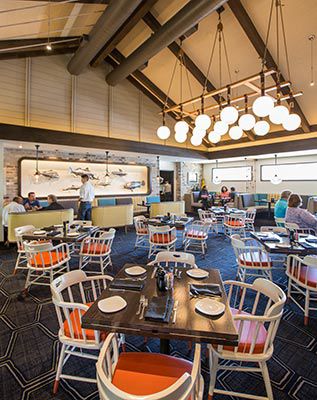
Light and bright: The Brigantine in Escondido

Our need for new is nothing new—it’s just becoming stronger. Blame the whirlwind of reinvention that is the tech sector. Whereas planned obsolescence once bothered American consumers, we now demand a revolutionary new version of the iPhone every year.

For a long time, restaurants seemed immune to reinvention culture. People loved having “their spots”—dependable, unchanging restaurants that served as satellites of their homes. A favorite table at a restaurant with a long history of quality was just fine.

“Now, I think restaurants need to reinvent or at least refresh themselves every eight to 10 years,” says Mike Morton, Jr., president of The Brigantine. Beloved by locals for its swordfish, beef stew, three-dollar fish taco happy hours, oysters, and ice-cold beers, “The Brig” has been quietly giving itself a gigantic facelift over the last 10 years.

In the ’60s, Mike Morton, Sr. and his brothers owned a liquor store in Point Loma (now Trader Mort’s). They used to watch the area’s famed fishermen unload prize swordfish at the dock. The Chart House, then the hottest seafood restaurant in town, made the seafood restaurant business look easy. “So in 1969 my dad and his brother had the crazy idea to take a second mortgage out on their mom’s house and open a restaurant on a shoestring budget,” says Morton, who now helps run the family business with his wife, brothers, and about 1,200 employees.
Brig Changes

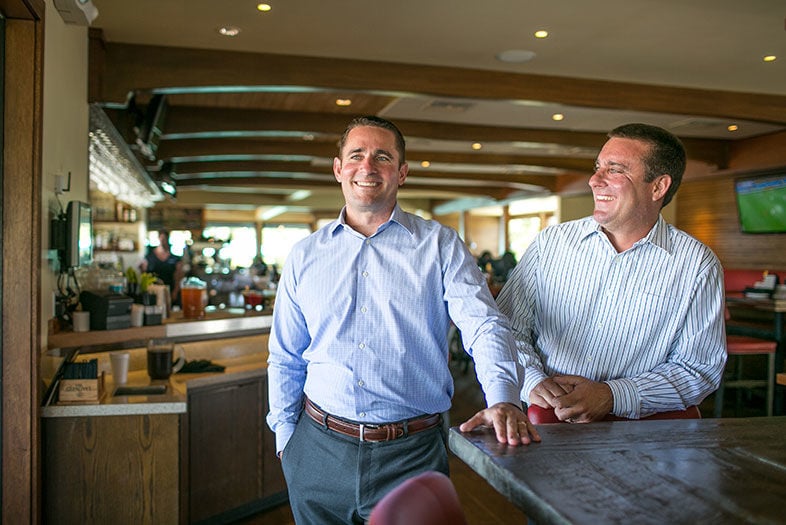
Morton brothers of the Brigantine

The next generation: Mike Morton, Jr. (left, with brother Mark on right) took over the family business and now works to carefully evolve the flagship restaurants to cater to the modern diner.

The next generation: Mike Morton, Jr. (left, with brother Mark on right) took over the family business and now works to carefully evolve the flagship restaurants to cater to the modern diner.

They took over a duplex on Shelter Island Drive [now Miguel’s Cocina], originally an insurance office and flower shop. Out of the gate, they struggled. The senior Morton and his wife, Barbara, cooked, washed dishes, waited tables, poured drinks, handled accounts. “My dad’s favorite time was the weekend,” explains his son, “because the banks were closed. At one point they didn’t have enough money to make payroll, so my dad sold my mom’s car. I’m not sure she ever forgave him, but they’re still married.”
Brig Changes

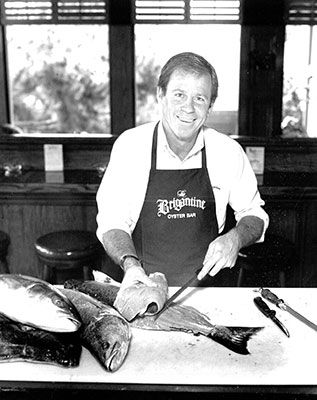
Mike Morton, Sr

Opening day: Mike Morton, Sr. opened the first Brigantine in 1969 with his wife and brother.

Eventually things got better—mostly because the Mortons resolved to stay open to 2 a.m. When The Chart House closed down for the night, the employees and other locals would head to The Brig for nightcaps. The late-night scene saved them. In 1973, they were able to open a second Brigantine in Coronado, across the street from the Hotel Del. In ’82, they opened their first Mexican concept, Miguel’s Cocina, using family recipes from their employee Javier Alaniz (thank his relatives for their esteemed white sauce). In 1999, they rounded out their portfolio with The Steakhouse at Azul on Prospect Street in La Jolla.

Now, 45 years later, Brigantine has 14 locations and three different concepts. Their general manager at the Coronado Brig, Eileen Montgomery, has been there since it opened. Their regional VP, Pat Walsh, started as a dishwasher 38 years ago.

It’s a San Diego institution, which comes with its own set of advantages—like customer loyalty, a recognizable brand, and bulk buying power. But a 45-year-old chain of restaurants also comes with its disadvantages. Mainly, staying relevant. The cult of new-new-new has never been stronger in the restaurant world. How can a nice family place once heavily decked with nautical paraphernalia and lacquered wood compete with the hip, designer restaurants that seem to open every three months? (Have you been to Little Italy lately?)

“If you look at the way big brands have evolved, you can see a 180-degree shift,” says Tom Penn of San Diego restaurant consulting group Real Restaurant Solutions. “As brands rolled out in the last half of the 20th century, there was value in the predictability and trust people had in a brand. Customers will go to a Starbucks in a different city because they know what they want, the risk is reduced, and they feel more secure that they know what they are going to get. A good brand is competent in delivering consistency.

“But the shift is on,” says Penn. “The level of sophistication of consumers continues to grow, so they are demanding more quality and unique experiences.”

Morton acknowledges that loyalty among their regulars is key to their success. “But you don’t want to age out with your guests. We had to take a good, hard look at our places.”

A series of moves within the Brigantine business plan has kept them in the game for the long haul.
Turn it Inside Out

Brig Changes

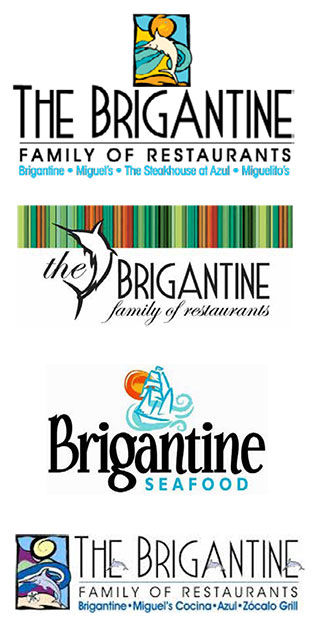
Brigantine Old Logos

Brig Changes

Brigantine new logo

In 1984, Harpoon Henry’s seafood restaurant in Point Loma closed. It was basically across the street from the original Brigantine. The Mortons loved the idea of a second-floor balcony overlooking the harbor. “So we literally closed on a Friday and moved in there on a Monday,” recalls Morton.

The view was nice. But it was the live oyster bar with the miniature performance kitchen that really started a new era. “My folks and some senior people had been scouting restaurants in San Francisco and the East Coast,” Morton explains. “The live oysters were great, but it was more that people could see the kitchen action happen right in front of them.”

In the past, restaurants kept the kitchen in the back of the house so that the grimy, unsexy mechanics of producing food didn’t dwindle the magic of the final, grandiose meal. By inverting that setup, The Brig turned cooking into an attraction itself. As the success of Food Network has shown, Americans get a primal satisfaction from watching food being made. Instead of CNN or ESPN on a TV above the bar, you can watch your fish taco get dressed. As we’ve seen with the success of Chipotle and In-n-Out, having an open kitchen also increases the trust level of an increasingly wary dining culture.

“People really responded to that,” Morton says. “They could have a seat and watch their food being made. Every Brig location would have an oyster bar from that point on.”

The Uncluttering

Earlier this year, Mike Morton realized his company’s website was less than optimal. In the third quarter of 2013, over 40 percent of OpenTable users booked a reservation using a mobile device. The company website was comparably analog.

On the advice of Ballast Point owner Jack White, an old Point Loma high school friend, Morton called MiresBall, a San Diego creative agency. The original plan was to overhaul the website, but MiresBall felt the Brig’s brand needed a little more TLC.

“There were about nine different logos printed all over the place,” says MiresBall creative director, Scott Mires. “You could tell it had evolved organically over time, with each restaurant kind of adding its own spin. But it was confusing to the customer.”
Brig Changes

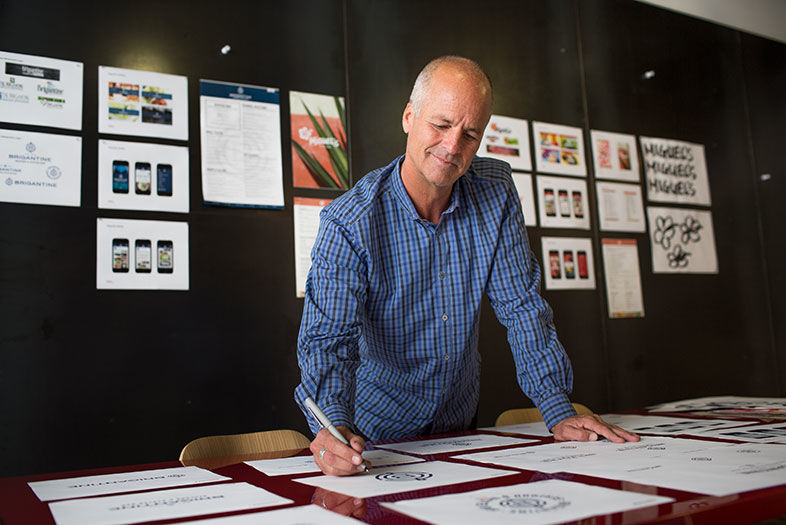
Scott Mires of MiresBall

Fresh eyes: Scott Mires of MiresBall was brought in to refresh the company’s logo, website, and overall brand image.

Fresh eyes: Scott Mires of MiresBall was brought in to refresh the company’s logo, website, and overall brand image.

The Brigantine had always given each of its locations autonomy over their personality. “We really encourage our general managers to become part of the neighborhood and let them decide what’s best,” explains Morton. The result was a scattered identity. In one place, the Brigantine was represented by a clipper ship with sails at full mast. In another, it was a swordfish majestically leaping out of the water between the letters.

“The swordfish leaping is one of the ultimate seafood clichés,” says Mires. “Hopefully we develop a good enough relationship with our clients that we can tell them some of those hard truths.”

MiresBall conducted interviews with shareholders. (“Independently,” Mires notes, “so that the loudest one in the room didn’t dominate the conversation.”) They interviewed employees. They visited all of the locations and observed, took photos, notes.

“You have this really old, built-in crowd of locals,” explains Mires. “The people that work there are old Point Loma surfers. It just has this really cool local vibe that I’m not sure was being expressed in their marketing.”

“The swordfish leaping is one of the ultimate seafood clichés…. The Brig just has this really cool local vibe that I’m not sure was being expressed in their marketing.”

To keep it natural, MiresBall didn’t hire models when taking new photos for the website and other company visuals. There is no obligatory “pretty woman laughing over wine with her handsome friend” photo. “People can tell when they’re being marketed to,” says Elisha Lutz, MiresBall’s director of marketing.
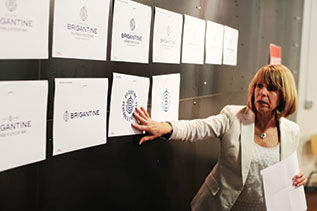
Brig Changes

MiresBall Creative Process

Make it modern: Creatives at MiresBall work to streamline four legacy logos into one modern symbol of the brand.

Mires adds, “The new generation is really good at sniffing out poseurs.”

The biggest overriding change in the process was to remove the clutter. At some Brigantine locations, you would have logos from every concept on a single napkin, which ends up looking like the hood of a NASCAR instead of a clean, iconic image of The Brig. The new logo is clean—a “B” in the middle of what looks to be either a periscope, series of fishhooks, or some sort of meditative circular maze. It’s a creative mashup, intentionally ambiguous. The image will be used everywhere—on menus, napkins, aprons, etc. The prosaic swordfish is dead.

The new Brig image—and website—launches this summer.
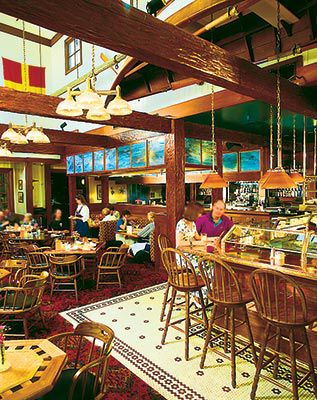
Let There be Light

Brig Changes

Poway Brigantine then

Brig Changes

Brigantine now

Another crucial part of keeping up with the times started for The Brig in 2004, when they face-lifted the Coronado location. The Brigantine trademark atmosphere—heavily lacquered woods, nautical tchotchkes, and dark interiors—had fallen a little behind.

The discerning ’70s diner didn’t mix dinner business with drinking pleasure. So restaurants separated church and state. “People either wanted to go have a dining experience in a dining room, or they wanted to have a drink at the bar,” explains Morton. “We had real small lounges and big dining rooms.”

Now, social dining is in. At restaurants like Monello and Ironside Oyster Co., the bar action is highly visible from the dining room, with very little barrier between the two.

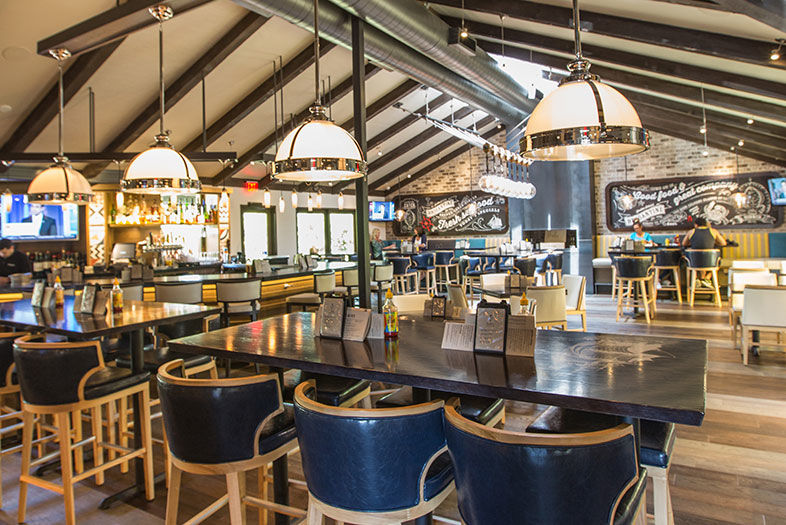
“You want to make everyone feel part of that energy,” explains Hatch Design Group owner Mike Hatch, who renovated the Del Mar and Escondido locations. “We did that at the Brigantine Del Mar location. You have a central bar where you can look across at each other. And you can see your food being cooked, which makes for a good experience.”

The 1970s were also a dark time. “Old restaurants had dark bars in ’em,” says Hatch. “But today everything is lighter, healthier, indoor-outdoor. It’s almost like you’ve got a problem if you’re drinking in a dark bar.”

Almost every one of the Brigantine locations featured dark woods with mood lighting. Shadows were the overriding design theme. These days, natural light rules the restaurant scene. Roll-up garage doors. Completely al fresco restaurants. San Diego has pretty nice weather, and restaurants are framing that as a design element. At Del Mar, Hatch blew out as many walls as he could to let the outside in.

“A lot of the dark woods went away,” says Morton. “Our locations now have much more of an open-air feeling. We want to get away from dark corner booths.”

Outfitted with a full ship’s mast in the dining room, the Escondido Brigantine was the most ship-like of any of the Brigantines. “It looked like the Pirates of the Caribbean,” admits Morton. “So we spent about $2 million and blew it out.”

To renovate the entire building would’ve cost way too much, so they made slighter changes. Hatch replaced the dark woods with white tiles, and created a modern entry space so that people’s first impression walking in the door felt circa now. The new Escondido Brigantine opened in March (their Eastlake location is next on the list for renovating). Morton is very pleased with the results, although it’s not without detractors.

“We still get emails from old customers who are upset that we changed it,” he says. “But you have to make a leap of faith.”

An Evolution

That’s really it, according to Morton. That’s how a restaurant survives 45 years in the culture of new. Institutionalizing what works (swordfish, fish tacos, bulk buying power) and slowly ponying up the cost to fix what doesn’t (dark bars, scattered branding, over-indulging in the nautical tchotchke market).

“It’s an evolution, not a revolution,” says MiresBall’s Lutz. “They had this really rich history, and we weren’t going to throw that out.”
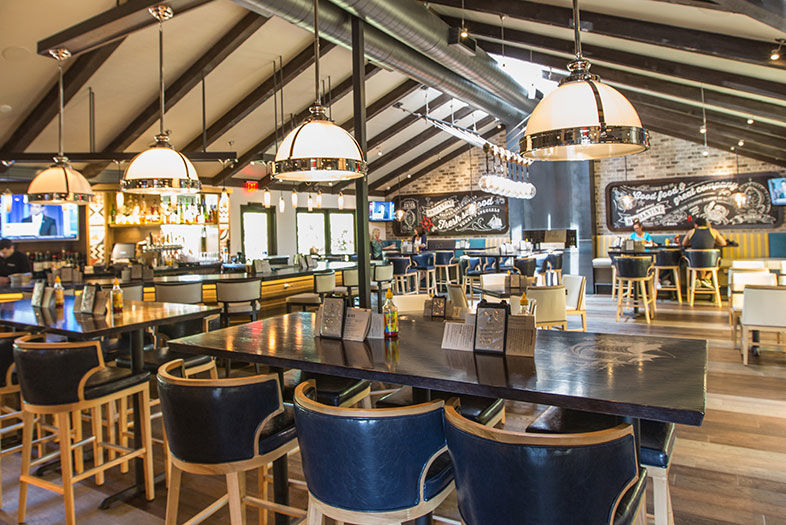
Brig Changes

Light and bright: The Brigantine in Escondido

Subscribe to our newsletters

Select Options

By subscribing you confirm that you agree with our Terms and Conditions and Privacy Policy.

Food & Drink JUNE 30, 2026

An Emo-Themed Bar & Pizza Joint is Rolling Into OB

Drink 182 will pair pop-punk nostalgia with New England-style pizza starting this summer

An Emo-Themed Bar & Pizza Joint is Rolling Into OB
Courtesy of Drink 182

If you’ve ever squeezed yourself into a pair of black skinny jeans with a studded belt, sported a track jacket under a band t-shirt, or swept your Manic Panic-hued hair so far to the side that your part got caught in your cartilage earring, I have good news: Ocean Beach will get a shot of emo and pop-punk nostalgia when Drink 182 opens this July.

The pop-punk bar and pizza spot comes with bonafide scene points. Co-founder Jay Nightride runs the music production studio Nightride Visuals, has worked with artists like Steve Aoki, Lil Jon, and Fall Out Boy, and also plays in Death Cab for Karaoke, a live karaoke band that performs every month at Soda Bar (among other venues). His partner Tony Jaw is easier to spot—he’s the guy with the sky-high mohawk manning the karaoke booth at Redwing Bar & Grill who’s been in the local bar and hospitality business for over a decade. 

Nightride says he’s had the idea for an emo enclave for years, but it wasn’t until after Covid that he partnered with Jaw and got the funding to move forward. “What I was looking to build was a place that I would want to be, where would I want to go to remember these nostalgic songs,” he says. 

Pending permits and final inspections, Drink 182 is slated to open the second half of July. The vibe will be dive bar meets emo night, with memorabilia from different bands who have supported the project splashed across the walls, plus a few arcade games, TVs, and (I assume) a decent sound system. The hours are still undetermined, but Nightride says they tentatively plan to be open until 2 a.m. on weekends and Wednesdays for the OB Farmers Market. In the mornings, they’ll serve fresh pastries and coffee from the similarly music-aligned James Coffee Company (whose co-owner David Kennedy is a member of Angels & Airwaves with blink-182’s Tom DeLonge).

But it’ll be the pizza that really stands out—or at least, they hope. “We’re doing New England beach pizza… a really niche pizza that not a lot of people would know about, unless you’re from North Shore, Massachusetts,” says Nightride, a former Bostonian. “It’s a thin crust, very sweet sauce, very simple, fast, go-to-the-beach kind of thing.”

“Beach pizza” is characterized by its rectangular shape, very thin crust, sweet tomato sauce, and slices of Provolone cheese with minimal toppings. Drink 182’s version will feature homemade dough and sauce, as well as freshly sliced Boar’s Head Provolone. And yes, they are aware there are already a lot of pizza options in the area. It won’t be the same, Nightride promises. 

“Everybody’s first reaction when they hear ‘pizza’ is like, ‘Oh great, another pizza place in OB,’” he laughs. “But we’re trying to do something different, just enough to differentiate it and give people another option.” If you’re not keen on the style, try one of their “drunkables,” another nostalgic riff they hope the pop-punk and emo crowd will appreciate. And if you still need a reason to give Drink 182 a try, I have more good news—you don’t actually have to break out your old skinny jeans. (In fact, please don’t.)

Drink 182 opens July 2026 at 5049 Newport Avenue in Ocean Beach.

Courtesy of Margaritaville Hotels & Resorts

San Diego Restaurant News & Food Events

Beth’s Bites

  • If the steak hype wasn’t hot enough already, The Heritage Steakhouse in Santee just announced Meredith Manée will serve as executive chef of the New York-style steakhouse when it opens in August. Her star-studded kitchen resume spans over 25 years, with stints at the Hotel del Coronado, the Four Seasons, and The Ritz-Carlton Maui, so I think it’s safe to assume we’ll be in good hands. 
  • Rather than waste away in Margaritaville, you have the chance to support the San Diego Music Foundation at the annual Jimmy Buffett-inspired Day of Service at Margaritaville Hotel San Diego Gaslamp Quarter. On September 4 starting at 5 p.m., the rooftop bar will be rocking with live music and plenty of flowing cocktails, plus a silent auction and other activations to raise money for the local music education organization. I’ll drink to that. 
  • The early bird gets the worm and you can get the early ticket to Celebrate the Craft, the annual culinary festival that takes place at The Lodge at Torrey Pines on October 18. If you snag your ticket before the end of June, you can save $50 (which is nothing to sneeze at), plus you’ll be helping support the San Diego Food Bank. 
  • Mani e Grani, the pizza spot from the same people behind Ciccia Osteria, seems to be inching ever closer to opening its doors in Barrio Logan. I know I’m not the only one anxiously awaiting sinking my teeth into some wood-fired, chewy but crispy, hot-from-the-oven, authentic Italian pizza.

Listen Now: The Latest in San Diego’s Food and Drink Scene

Have breaking news, exciting scoops, or great stories about new San Diego restaurants or the city’s food scene? Send your pitches to [email protected].

Beth Demmon

About Beth Demmon

Beth Demmon is an award-winning writer and podcaster whose work regularly appears in national outlets and San Diego Magazine. Her first book, The Beer Lover's Guide to Cider, is now available. Find out more on bethdemmon.com.

Features JUNE 29, 2026

5 San Diego Food Trends to Know About

From surprise revivals to changing dining habits, these are the shifts redefining the local culinary landscape

5 San Diego Food Trends to Know About
Photo Credit: Arlene Ibarra

Comebacks Are the New Kickoffs

If absence makes hearts (and stomachs) grow fonder, then shuttered restaurants quickly become the hottest tickets in town—something a number of iconic institutions found out after taking very public hiatuses after historically long runs. For instance, following a lengthy (and extremely flip-floppy) closing process after 92 years in business, Las Cuatro Milpas reopened two blocks away in Mercado del Barrio. Similarly, Carlsbad butcher shop Tip Top Meats reopened in the same location (albeit a smaller space) after the death of founder Joachim “Big John” Haedrich in 2023. Finally, after a whopping decade out of business, Sami Ladeki and chef Alfie Szeprethy brought back Roppongi to its original Prospect Street space, where it was the talk of the town in the late ’90s. All came back under the same proprietors, so they weren’t third-party nostalgia-licensing deals. The algorithm may have ravaged our attention spans away from all but the newest and shiniest, but this proves there’s still hope for our collective prefrontal cortex.

New Generations Take the Reins

Other local eateries honored their pasts by bringing in new perspectives. The Lion’s Share in Embarcadero, Milton’s Deli in Del Mar, Dudley’s Bakery in Santa Ysabel, and J-K’s Greek Cafe in La Mesa handed over the keys to new owners willing to take on a big task: maintain the soul of icons through particularly rough economic circumstances for restaurants, navigate big feelings from longtime regulars (who often don’t take kindly to change), and make some necessary changes to keep going for another few decades. Taking over a project in process can be a lot harder than starting from scratch. But building that feel-good nostalgia doesn’t happen overnight, so it sure helps to have a well-established playbook of success passed down from those who came before.

Courtesy of Sugarfish

The Expansion Class Arrives

It wasn’t just restaurant groups from Los Angeles that decided to put down roots en masse, although San Diego saw plenty of LA transplants recently (Sugarfish, Mr. Charlie’s, For the Win, Katsuya Ko, Bacari). Global brands like Chef Fei, Zuma, and Pepper Lunch have locations of their own on the way, and upscale Canadian eatery Joey joined to the inescapable gravitational pull of Westfield UTC’s culinary cosmos for its first spot in America’s Finest City. Good to see the rest of the world is catching up with what we’ve been seeing the last few years—San Diego is a dining destination already on the rise.

Choosing To Not Choose

Between the never-ending news cycle of doom and perimenopause brain fog, I’m at the stage in life where I’m more than happy to let someone else make a decision for me, especially when it comes to what’s for dinner. And based on the way a lot of menus look right now, I’m not alone. It seems like half the places I visit offer some version of a prix fixe, omakase, or tasting menu. Restaurants are embracing the curated experience to solve the problem of affordability (a fixed menu reduces food and labor costs, guarantees an acceptable check average, etc.) and critical thinking in one fell swoop. Omakase (meaning “I leave it up to you”) is far from a new concept in high-end Japanese sushi culture, but now that it’s popping up everywhere from coffee experiences to grab-and-go sushi and sandwiches, it’s gone from somewhat niche to nearly omnipresent.

Courtesy of Rikka Fika

Local Coffee Hit the World Stage

The world got an up-close look at San Diego’s coffee industry when we hosted the premier specialty coffee expo World of Coffee for the first time this April. San Diego’s long and rich coffee history stretches back to the late 19th century. Things percolated fairly quietly for around a century before really picking up steam. Today, there are nearly 200 specialty roasters and cafes across the county, with many earning national accolades like the Good Food Award (Steady State Roasting, 2020; Bird Rock Coffee Roasters, 2023, 2021, 2019, 2017, 2016), Roaster of the Year by Roast Magazine (Mostra Coffee, 2020; Bird Rock Coffee Roasters, 2012), and the Specialty Coffee Association Coffee Design Award for packaging (Rikka Fika, 2026). Now that we’ve moved past the comically insufferable coffee snob era of the early 2000s, even java newbies can feel comfortable walking into pretty much any coffee shop in San Diego, asking questions, trying a few things, and feeling confident they’re going to get great service and a great beverage.

Beth Demmon

About Beth Demmon

Beth Demmon is an award-winning writer and podcaster whose work regularly appears in national outlets and San Diego Magazine. Her first book, The Beer Lover's Guide to Cider, is now available. Find out more on bethdemmon.com.

Food & Drink JUNE 25, 2026

Global Fork Food Hall Opens in Little Italy

Offering everything from smashburgers to sundaes, the latest food hall from Tiger Hospitality opens its doors this weekend

Global Fork Food Hall Opens in Little Italy
Courtesy of Global Fork Food Hall

Omakase and fixed-price menus are one way hospitality businesses are addressing our collective food decision-making fatigue. But on the opposite end of the spectrum, some restaurateurs are offering a bonanza of totally unrelated options for people ordering on a whim. Why not pair a lobster grilled cheese sandwich, açaí bowl, and ridiculously loaded hot dog? 

Starting June 27, diners can satisfy their spur-of-the-moment appetites at Global Fork in Little Italy, the latest food hall from Southern California-based Tiger Hospitality. 

Six different food concepts will be featured in the 4,685-square-foot, indoor-outdoor space along the Piazza della Famiglia promenade. The space’s inaugural lineup includes a mix of Tiger Hospitality-owned concepts (Cosmos Burger, La Vida, Lobster Lab, and Prik Ki Nu Thai) and outside operators (Seattle-based Moto Pizza and Handel’s Homemade Ice Cream). The space next door, Good Enough Cocktail Club, is another Tiger-backed brand, operated by the team behind Same Same and Amor y Magia in Carlsbad.

Cosmos Burger serves smashburgers stacked with classic toppings, while Lobster Lab focuses on seafood favorites including lobster rolls, shrimp rolls, and lobster mac n’ cheese. Prik Ki Nu Thai adds Thai street food to the mix, with traditional noodle, rice, and stir-fry dishes. And for those looking for something on the lighter side, La Vida offers things like smoothies, salads, and wraps. 

Courtesy of Global Fork Food Hall

Moto Pizza focuses on Detroit-style square pizza with Filipino influences and, despite the name, is not affiliated with Mr. Moto Pizza. Handel’s, which began in Ohio in 1945, will offer dozens of flavors ranging from staples like chocolate and vanilla to rotating specialties packed with candies, cookies, and other mix-ins. (Handel’s already has a number of locations across San Diego, with a La Mesa store coming later this year.) 

Some of these vendors already operate at Miramar Food Hall, the other Tiger-owned food hall in San Clemente. And some of them will also appear in Station8, the next food hall slated to open in UC San Diego’s Theatre District Living and Learning Neighborhood later this fall. But if you ask me, reviving the space that housed the Little Italy Food Hall before its closure last February is a far better outcome than leaving empty suites smack in the middle of an area saturated with fantastic food options. Plus, where else can you order a slice of beef adobo pizza alongside squares of caviar toast and a banana split?

Global Fork opens June 27 at 550 W. Date Street, Suite B, in Little Italy. Initial operating hours are from 9 a.m. to 9 p.m., seven days a week, but vendor hours may differ. 

Courtesy of Holland Partner Group

San Diego Restaurant News & Food Events

Beth’s Bites

  • La Jolla is reviving one of its own shuttered spaces this August with Tacos & Jarros, coming to the space on Wall Street that formerly housed Comedor Nishi and Coffee Cup. The all-day Mexican restaurant is the latest project from the family behind Cazadores Mexican Grill in Santee and Cotija’s Taco Shop, and will offer wine, beer, tacos, traditional breakfast dishes, as well as lunch and dinner. Some concepts may have hit their ceiling (craft beer, anyone?), but thankfully, it seems that Mexican food still has a long way to go before that. 
  • In the latest hilariously-named collaboration, on June 9, The Lion’s Share will host executive chef Tara Monsod from Animae for a one-night event called Animaeniacs. (Millennials who know, know.) The three-time James Beard Award Semifinalist Monsod will work with Lion’s Share executive chef and co-owner Dante Romero to create a multi-course, family-style dinner inspired by Romero’s Mexican background and Monsod’s Filipino heritage. Tickets get you a seat at the table, plus access to an afterparty in the Marina neighborhood hotspot’s loft, with seatings at 5 p.m. for the early birds and 8:30 p.m. for the night owls. 
  • Thanks to my son’s lifelong obsession with boba, I’m always on the lookout for the latest bubble tea place to check out. Next on my list is Tera Tea House, a boba, matcha, and fruit tea joint coming this month (maybe?) to City Heights near the Copley-Price YMCA. Will I go because their logo is a cartoon dinosaur sipping on boba tea? No, but it sure doesn’t hurt.
  • After opening their latest outpost in North Park, Moniker Group announced plans to open their third Moniker General later this year inside West, a 37-story mixed use building coming to downtown at 1011 Union Street. The space will continue the group’s signature menu of coffee, cold brew, matcha, small bites, wine, and beer, and founder Ryan Sisson says they identified downtown for their next location due to the area’s “tremendous amount of momentum.” I’ve never lived in a building with a built-in coffee shop, but I’ve got to admit, it does sound like a pretty nice perk.

Listen Now: The Latest in San Diego’s Food and Drink Scene

Have breaking news, exciting scoops, or great stories about new San Diego restaurants or the city’s food scene? Send your pitches to [email protected].

Beth Demmon

About Beth Demmon

Beth Demmon is an award-winning writer and podcaster whose work regularly appears in national outlets and San Diego Magazine. Her first book, The Beer Lover's Guide to Cider, is now available. Find out more on bethdemmon.com.

Studio S JULY 1, 2026

Get Your Home Ready for (San Diego) Summer

Tips from the trusted experts at Mauzy Cooling, Heating, Plumbing, and Electrical

Get Your Home Ready for (San Diego) Summer
Courtesy of Mauzy Heating and Air

San Diego summers can be brutal. But since the hottest period is typically late summer into early fall, San Diegans still have time to prepare. The pros at Mauzy Cooling, Heating, Plumbing, and Electrical are standing by to help homeowners fortify their homes against the elements and ensure their air conditioning is as frosty as the penguins that serve as the company’s mascots. 

Many homeowners underestimate the load their AC system faces, especially in the inland valleys where temperatures regularly top 100 degrees. San Diego regularly sees multi-day heatwaves each summer, and a system that struggles on the first day will likely fail by the third. Longer run times, unusual sounds or smells, and uneven cooling from room to room are all signs that your system may not survive the next hot spell.  

Systems typically last 12 to 17 years, but there are exceptions. If a system is approaching that, or is already there, a professional evaluation is recommended before summer really heats up. A good rule of thumb: If you can’t remember when your system was last serviced, it’s due. 

“As technology changes, systems become smarter and smarter,” says Sean O’Connor, an install manager at Mauzy with 42 years of experience. “There are a lot of people out there who will say a system’s only good for 10 years. I don’t buy that—these systems are built to last as long as they’re taken care of.” 

There are also a few steps homeowners can take between services to extend the life of their system. Regularly changing a dirty filter—especially if you have kids or pets—and keeping an outdoor unit clean can help head off problems in the future, says O’Connor. 

Also, be realistic about whether it’s time to replace a unit. O’Connor likens pouring money into salvaging a faulty unit with patchwork repairs and replacement parts to “tripping over a dollar to pick up a dime.” When one part fails, others are sure to follow, and newer parts may not be compatible with older units. Mauzy recommends homeowners use the 50% rule: If a repair costs more than 50% of the system’s replacement value, and the equipment is over 10 years old, replacement is usually the better long-term value. And don’t forget the ducting. An older house that was built with heat and later had air conditioning added may not have sufficient airflow, regardless of how good the system is. 

Last but not least, homeowners should know who to trust when it comes to their homes. Built on three generations of professional integrity, Mauzy has grown into not just a leader for cooling, heating, plumbing, and electrical services, but a leader in the community known for supporting local nonprofits across an array of causes. To ensure complete peace of mind, Mauzy stands behind a comprehensive 12-point guarantee that outlines its commitment to outstanding service, quality equipment, expert technicians who understand how the local microclimates affect HVAC performance, and no upsells or surprises on the bill. 

“We go the extra mile. That’s what sets us apart,” O’Connor says. To get a free quote today, visit mauzy.com.

Courtesy of Mauzy Heating and Air
Partner Content
Food & Drink JUNE 24, 2026

Michelin Chooses San Diego for Its Big Show

How the now iconic rating system became the biggest name in the food and how it made its way to our backyard

Michelin Chooses San Diego for Its Big Show
Photo Credit: Elodie Bost

So, Michelin chose San Diego to host its annual awards show this week. Big thing for our city, which people wrote off as the flaccid mozzarella stick or the “fish tacos bro” of California food culture.

Michelin Guide is a pretty fascinating story. It started as a marketing brochure for a tire company and evolved into the strongest global marketing platform for restaurant culture in history.

In 1900, there were less than 3,000 cars in all of France. André and Édouard Michelin were trying to sell tires. A niche market. If people drove more, they figured, tires would go bald faster. They’d sell more rubber.

So they published a guidebook with maps, gas stations, mechanics, hotels, restaurants, and travel advice. The “How to Go Bald” book with food as the bait. By the 1920s, people were buying the guide just for the restaurant recs.

In 1926, Michelin introduced stars. This changes everything.

Originally just one. Five years later, it expanded to three. One meant “very good restaurant.” Two meant “worth a detour.” Three stars meant “worth a special journey.” In other words, wear those tires down to a nub in search of Dover sole.

Photo Credit: Elodie Bost

By WWII, Michelin was the gold standard guide to French food. And French food was the gold standard for western food. Which was half the world.

Michelin first came to the US in 2005.
New York only.
(Knicks in five).

In 2007, San Francisco. Then LA and Vegas in 2008.

Michelin stopped publishing in LA and Vegas after two years and stayed dark until 2019.

Major theories for this?

First, print is expensive. I can attest. ROI on a printed story is hard.

Second, people wanted local critics, and they were finding them online.

Third, Michelin landed like a stuffed shirt in LA, which had taco carts in its heart. LA swiped hard left.

Then Michelin discovered a new way to fund what it does. Instead of trying to sell enough books to justify the cost (inspectors, printing, restaurant bills, etc.), it had tourism marketing districts pay for inspectors to come analyze their cities or states.

Tourism marketing districts are massive organizations whose primary goal is to sing the priases of their cities and states—attract tourists, who pay for hotels and spend money in the city. Heads in beds.

The first to swipe its credit card was California, which paid $600,000 in 2019 for Michelin to come back to LA, Orange County, Monterey, Sacramento, Santa Barbara, and… San Diego.

It’s an overwhelmingly positive thing, which is never without its doubters and critics.

Namely, not everyone is down with the pay for play model.

The biggest reason is that it means cities without big tourism budgets get left out. Chefs in those cities are chefs non grata in the eyes of Michelin. Which is a fair complaint, though also, sadly or not, kind of how capitalism works.

Michelin isn’t a government organization, or a nonprofit culinary organization. It’s a publicly traded company with real bills to pay and investors and shareholders to answer to.

Since it feels like a tad of a PR dilemma for Michelin, I have a proposal that may or may not work.

What if Michelin took a portion of the money it receives from larger cities and used it to fund its expansion into an underserved city or state that can’t afford it? Bake it into the price it charges California or any other state.

Again, Michelin’s not obligated to do this; there is no penalty beyond the paper cuts of public sentiment. But that sort of pay-it-forward model could help other cities without the resources to play the game, while simultaneously making Michelin’s reach bigger and more holistic.

Second, people claim this TMD-funded model somehow taints the winners.

I don’t buy that at all. All tourism boards are doing is paying a marketing business (Michelin) to come operate in their city. They’re not telling Michelin which restaurants to choose for awards. As I understand it, Michelin has retained independence, and its inspectors only award restaurants that they feel are absolutely worth it based on merit.

True pay for play would be if a restaurant group paid Michelin in exchange for a star. Or if tourism boards had a say in which restaurants received attention or awards.

I haven’t found any proof of that happening, and so I won’t ding the validity of the awards until (and if) I ever do.

All tourism boards can control is which areas they’re willing to pay to have analyzed. For instance, San Diego could technically ask that only the city be analyzed and not the county. Which it did not, most likely because Visit San Diego (our TMD) is in charge of marketing the entire county (and thus why Michelin stars like Jeune et Jolie, Lilo, and Addison are outside of SD city limits).

So, if you’re dead set on criticizing Michelin, I’m not sold yet on the pay-for-play model being the right route.

Troy Johnson

About Troy Johnson

Troy Johnson is the magazine’s award-winning food writer and humorist, and a long-standing expert on Food Network. His work has been featured on NatGeo, Travel Channel, NPR, and in Food Matters, a textbook of the best American food writing.

Food & Drink JUNE 24, 2026

A Guide to The 2026 Sapporo Omakase Open

The restaurants and people behind the fastest sold-out event in San Diego Magazine’s history

A Guide to The 2026 Sapporo Omakase Open
Photo Credit: James Tran

The Sapporo Omakase Open is upon us. The event that sold out faster than any in San Diego Magazine’s history. The birth of another tradition.

The idea was simple: partner with the city’s preeminent force in Asian business and culture (the Convoy District) and the longest-running Japanese brewer in the world (Sapporo, founded 1876). Then bring together some of our favorite chefs and food and drink people who specialize in Asian delicacies—sushi, pho, xiao long baos, mochi, musubi, sake, tea, you name it—to shine a light on who they are and the delicious things they create.

There will be a friendly competition, judged by everyone in attendance and a panel of food experts, including longtime Food Network judge (and SDM co-owner) Troy Johnson. Winners will be named and trophied and exalted.

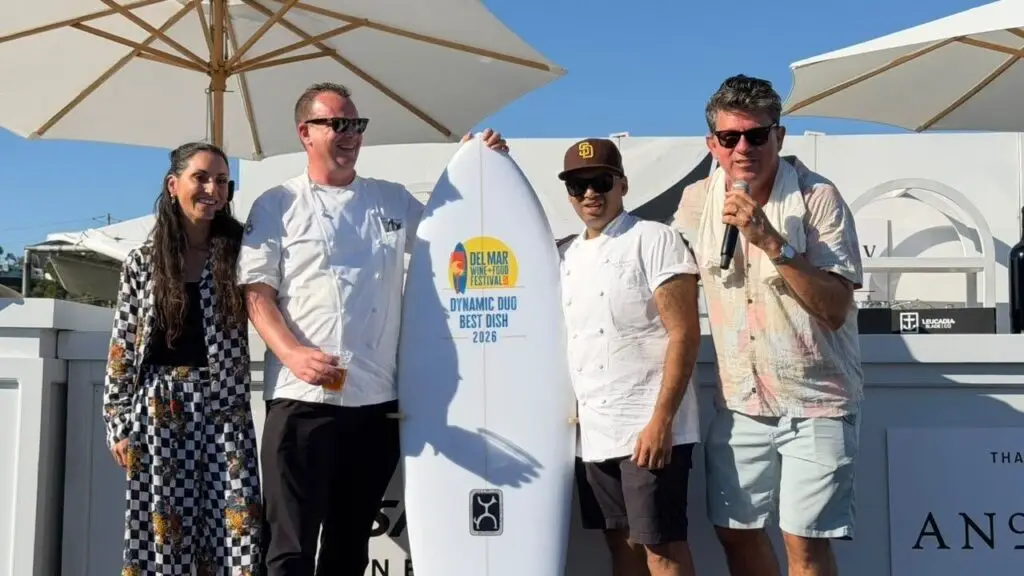
But moreover, SDM and its partners—Snake Oil Cocktail Co, Rivian, Del Mar Wine & Food Festival, and Komé Collective—believe in building local culture will bring together a room full of people to eat, drink, commune, and celebrate those who make San Diego’s food and drink culture hum.

Here is your guide to the restaurants, chefs, and people cooking and creating at the inaugural Sapporo Omakase Open:

Dumpling Inn & Shanghai Saloon

The OG. Dumpling Inn & Shanghai Saloon started in a tinier strip-mall space, famous for Shanghai-style comfort food like jellyfish salad and xiao long baos (XLBs, aka soup dumplings). It became so loved that they took over the giant anchor spot on Convoy (a former iconic Chinese grocery store, which also helped launch Convoy into the pan-Asian food wonderland its become). Its menu is vast, but the dumplings are the legend—with fresh dough rolled each morning, a rounded pocket of porky goodness and a gush of broth. Celebrating 10 years in its massive space (and 32 years overall), the Inn’s XLB comforts everything in its path.

Crab Hut

This is the family-run spot in Convoy for seafood boils, brought to you by the owners of one of the city’s top restaurants, Kingfisher. Crab Hut is their OG idea from owners Ky Phan, sister Kim, and brother in law Quan Le. It’s a love note to their childhood home and family tradition where they grew up in Vietnam. Behind their house was a river. The Phans would fish during the day, and sit around the communal table boiling up the day’s haul at night. There’s the “Bucket for One” filled with snow crab clusters, shrimp, crawfish, mussels, clams, corn on the cob, potatoes, and andouille sausages. There’s the “Go to Town” boil overflowing with everything previously mentioned, plus king crab legs and a glorious Dungeness crab. The most delicious kind of mess.

Lumi by Akira Back

Lumi by Akira Back is led by world-renowned Korean-American chef Akira Back—the ex-pro snowboarder turned Michelin-star, best known for Dosa in Seoul, Yellowtail in Vegas, and this rooftop sushi-plus concept in the Gaslamp. Overlooking Fifth Ave, it’s serious food with a little party in its heart. Along with a serious sushi program, there are dishes like his Japanese-inspired take on pizza (a tuna carpaccio + ponzu mayo idea) or the miso pork belly kimchee chaufa. Want the full show? Order the Nano 9, Lumi’s Signature Mystery Box, a limited nine-piece omakase sushi course unveiled tableside in an ornate carrier leaking fog all over the place. Keep going big (but refined) with Mist of Kyoto, a cocktail-for-two experience—Knob Creek Barrel Rye, Mizunara liqueur, Japanese sweet vermouth, and black walnut bitters, served in a ceremonial tea pot with two equally ceremonious cups. 

Sake Bar GAGA

This concept was inevitable. Ayaka Ito first came onto San Diego’s restaurant scene in 2016 with Beshock Ramen in East Village. The ramen is fantastic, but the place was unique in that it was one of the city’s first portals into the craft of world-class sake. Ito is a kikizakeshi—essentially a certified sake sommelier or master. Sake Bar GAGA is her sake tasting bar in East Village, a 10-seater destination that takes guests on an omakase-style journey of around 20 sakes, hand selected by Ito. For the food, she and chef Ryan Miller collaborated on tapas-style bites with Marie Chiba, a certified sake samurai (one of the few in the world) and owner of Tokyo’s famous sake bar, Eureka. When you choose your dishes—like the blue cheese ham katsu, scallop mango tartar, A5 Wagyu Nigiri, konbu-aged red snapper, snow crab croquettes, you name it—the bar customizes your sake to each food.

Cannonball

San Diego’s largest oceanfront rooftop, hovering above the beach-culture pandemonium at Belmont Park. With a qualification like that, Cannonball could serve gas station sushi and mid boat drinks and be just fine. But local restaurant group Eat. Drink. Sleep (JRDN, The Lakehouse) and chef Luis Romero have made sure the seafood lives up to the view—with over 30 sushi creations, apps like bluefin tostadas with aguachile negro, baked blue crab dip with sriracha honey—plus entrees like a ribeye in uni butter and miso black cod. Watching the daily mix of tanned, parrot-wielding locals, Fit gym body-bods, and tourists is a show in and of itself, made even more enjoyable with a Lychee Lychee—vodka, nigori sake, yuzu liqueur, and lychee syrup. 

Glass Box

Hard to call him underrated, since he won best dish at Del Mar Wine + Food Festival last year. But chef Ethan Yang’s Glass Box still deserves more. The restaurant is an attraction in and of itself—encased in a giant glass cube inside the Sky Deck at Del Mar Highlands. Yang and his chefs are on display, slicing top-notch fatty toro or premium wagyu filet. He offers a 10 to 15 course omakase experience, and the bar brings classics like a Toki Old Fashioned (Suntori Toki, bitters, orange) and modern plays like a Matchatini. 

Ikegi by Chef Stevan Novoa

Cooking. That’s what chef Stevan Novoa’s ikegi is; a Japanese word meaning “reason for being.” A military veteran with 13-plus years of experience in kitchens across the coast of California and Mexico, Novoa has cooked most styles that make the region hum—and developed a deep appreciation for local farmers, fishermen, and ingredient people. Ikegi by Chef Stevan Novoa is his private chef concept, curating tasting menus that span the gamut (coastal California, Mexican, Japanese izakaya) for people in their favorite space: their home.

Mon Chourie 

Few things in life are more affirming than light, fluffy dough balls stuffed with cream and baked to perfection. South Korea native and New York art-student-turned-baker Kelly Kim specializes in classic choux au craquelin—the oversized French cream puffs baked with a slender cookie disc that melts across the top during baking. At Mon Chourie, she starts with her mom’s recipe, then tweaks with seasonal, global flavors—often in collaboration with other local makers. Like the recent pandan mango ice cream choux with indie San Diego-based ice cream brand, Amor. Or a peach oolong tea choux—silky oolong tea-infused cream, peach compote inside that twice-baked, light-as-atmosphere pastry dough. She pops up on Wednesdays at local bakery Michi Michi, plus other spots in town. 

Pho Ga Go 

A restaurant within a restaurant from the family who owns Crab Hut and Kingfisher. Pho is all about the broth and the lengths you’re willing to go for it. At Phở Gà Go, the whole idea is to take the quality of broth they have at Kingfisher—one of food critic Troy Johnson’s “Top Five Restaurants in San Diego”—and serve it in a more casual setting. Chicken bones are simmered for over 12 hours with the highest-possible ingredients (including heirloom garlic from the famed Christopher Ranch in Gilroy), resulting in a broth that’ll send the slightest throat tickle or sniffle scampering away like a frightened little puppy. They also specialize in chả giò—Vietnamese imperial rolls that are in the realm of Chinese-American egg rolls, but ineffably lighter thanks to using rice flour instead of wheat dough—stuffed with pork, shrimp, taro, wood ear mushroom, carrots, and mung bean noodles. 

Roppongi Restaurant & Lounge

In early-2000s San Diego, the next generation of sushi chefs were largely trained in two spots: Sushi Ota, or Roppongi Restaurant & Lounge. First opened in 1998, Roppongi was the Japanese-inspired standout from restaurateur Sami Ladeki, who had made his name with Sammy’s Woodfired Pizza but was blown away by the food culture in Roppongi, Japan. La Jollans cried multiples when it closed in 2015, and relentlessly bugged Ladeki to bring it back. So he did exactly that last year with chef Alfie Szeprethy. They supercharged the design of the space, and rebirthed some of the classics—like the Polynesian crab stack, Mongolian duck quesadilla, the Roppongi Roll (tempura shrimp, unagi, spicy toro), and the Japanese hot rock (thinly sliced steak sizzling on a smooth stone with chili ponzu, sesame goma sauce, and cucumber sunomono). Welcome back. 

Sushi On a Roll

Jeff Roberto is a low-key, laidback icon of sushi in San Diego. At any event, if you spot a surprisingly elaborate sushi case and setup and a couple of itamaes wielding blow-torches or breaking down an entire tuna—that’s Roberto and his Sushi On a Roll. He’s been one of the city’s premier sushi caterers since 1993 (when he started, there were only seven sushi restaurants in the city)—a powerhouse on wheels offers everything from sushi making workshops and classes. When a few US presidents needed sushi, Roberto got the call. His arsenal at this point includes over 1,000 sushi options. But moreover, he’s the warm, smiling attraction at any party that involves high-quality fish in the nude. 

Sweet Vibe

Hard to decide if Sweet Vibe is a viral dessert shop or a highly popular newish entry in tea culture, which runs deep in Convoy. Their cakes have somewhat stolen the buzz, with Thai milk tea cake, taromisu (taro + tiramisu), yuzu cheesecake, sea salt Oreo, etc. They’re also cute as hell, with their bearamisu (a tiramisu with a bear on it) and mousses shaped like French bulldog pups. But its drinks are the core of the menu, with vibrant fruit and milk teas (green Thai lemon, uji matcha foam with jasmine milk, lychee lemon, iced peach oolong), yogurts with Crystal boba, and fruit slushes (mango pomelo, strawberry milk, pink lychee)—all with adjustable sugar and ice levels and boba add-ons. 

This Musubi Love

It’s a sandwich. It’s nigiri. No, it’s musubi. For all the SPAM skeptics, we urge you to honor the deeply Hawaiian and Japanese tradition and witness the charms of a warm, handheld block of sticky rice with a thick slab of teriyaki-glazed canned meat wrapped in nori. Those who have either been raised in the arts or converted tend to exude a higher than expected life happiness. This Musubi Love, a Leucadia musubi speakeasy (you heard us right), focuses exclusively on the minor food religion. The MEHKO (Micro Enterprise Home Kitchen) from founder Roger Post serves classics, plus riffs like the Cordon Bleu-Subi made with panko-fried SPAM, shredded rotisserie chicken, swiss cheese and Bachan’s Japanese BBQ sauce. Or the Dawn Patrol with SPAM, egg, bacon, cheddar cheese and spicy mayo. If you’re still not convinced, the fried BBQ chicken tender musubi or the crispy BBQ tempura shrimp musubi might change your mind. 

Mochichis

It’s the pastry hybrid that everyone who values their mouth should have seen coming. Mochi is having a true uprising in San Diego. Most people know the Japanese specialty from the mochi-covered ice cream found in boxes at various grocery stores, but artisanal mochi comes in many, far more interesting forms. Like donuts. Mochi donuts have that crispy-fried traditional donut exterior, but the chewy-soft, rice-flour soul in the middle. Mochichi in Encinitas—a startup from SDSU grad Beth Kass—specializes in them. Base flavors include creme brulee, strawberry glaze, ube Oreo, churro, an Nutella, but she customizes on request and whim. She also serves an ube float and a Vietnamese coffee float because, well, that should clearly exist. 

Partner Content JULY 2, 2026

Top Lawyers 2026: Panakos LLP

Discover San Diego’s Top Lawyers — the region’s most trusted legal professionals across diverse practice areas.

Top Lawyers 2026: Panakos LLP
SDM: Top Lawyers 2026

Daniel A. Kaplan

Daniel A. Kaplan is a founding partner of Panakos LLP with more than three decades of civil litigation experience in both state and federal courts. Mr. Kaplan pursues and defends legal claims on behalf of companies, entrepreneurs, and business owners in high-stakes disputes. He focuses on business disputes including breach of contract, unfair competition, trade secret theft, securities disputes, fraud/misrepresentations, and employment matters.

“The best advocacy combines preparation, perspective, and a client relationship built on trust and candor.” — Daniel A. Kaplan

His clients include real estate investors, private and public corporations, and individuals seeking sophisticated legal counsel. Known for practical judgment and strategic advocacy, he works closely with an experienced and diverse legal team to protect, enforce, and defend his clients’ interests.

555 W. Beech Street, Ste. 500, San Diego, California 92101
619-8000-LAW
Panakos.law

Partner Content

Eat Like a Local (Who Knows a Guy).

Restaurant news, culinary storytelling, and Troy Johnson’s sharp takes delivered straight to your inbox twice a month.

Close the CTA

Contact Us

1230 Columbia Street, Suite 800,

San Diego, CA