
Featured articles
Food & Drink
Things to Do
Food & Drink
Featured articles
Everything SD
Things to Do
Everything SD
Featured articles
Things to Do
Things to Do
Things to Do
Featured articles
podcast-ep
video
podcast-ep
Featured articles
Everything SD
Everything SD
Everything SD
Featured articles
Partner content
Food & Drink
Everything SD
Ready to know more about San Diego?
SubscribeReady to know more about San Diego?
Another high-end Mexican food revolution is in full swing
Another high-end Mexican food revolution is in full swing. Locals like Javier Plascencia and Chad White are already doing some inspiring voodoo with huitlacoche and chile peppers. And now chef Richard Sandoval has set up shop in Chula Vista. He earned his first stars in New York with Maya, then opened signature spots everywhere, including Raya at the Ritz-Carlton Laguna Niguel. For the affluent living near Otay Ranch Town Center, he’s brought his casual eatery and tequileria, Venga Venga. You’ll find riffs on the classics (tacos, enchiladas, etc.), plus tequila craft cocktails and stuffed churros for dessert. His arrival brings some national headline cred to an already thriving border food scene.
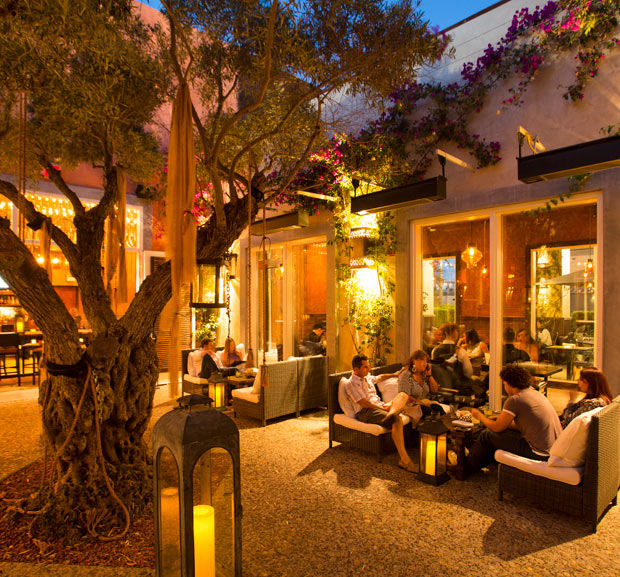
Venga Venga
Venga Venga
Best known as a bedroom community for both San Diego and Tijuana, Chula Vista's food scene is worth a visit in its own right
The spicy chicken katsu at Ichiban Sando
Madeline Yang
The second-largest city in San Diego County was long considered drive-by territory on the way to and from Tijuana, though always good for a water park visit. Now, longtime locals who grew up through the food revolution are opening creative spots, and Baja cuisine has become San Diego’s lingua franca.
Bayfront improvements (a $250 million redevelopment project just got greenlit), a thriving beer scene, legal weed, and a strong sense of local pride have kicked this predominantly Mexican-American suburban border city into high gear.
The action concentrates on Third Avenue, home to beloved spots like Grindhouse (Cuban sandwiches, cold brews, craft beer) and the area’s biggest block party, Amps & Ales—which brings bands like B-Side Players and brass and cumbia musicians, plus samples of beers and wines from San Diego and Baja.
Main Street is lined with tacos and Mexican-style seafood trucks like Mariscos Y Birria El Prieto, serving both hankerings in one truck. Even far-out suburb Eastlake is turning up with decent places to eat, like Chef Budda Blasian Soul Food, which might just serve the best chicken strip in the San Diego metro. Here are five things to eat in Chula Vista right now:
Tacos el Gordo is still king in Chula Vista, but the lines can be punishing. Enter Mr. Adobada, a truck around the corner with a spinning trompo of—wait for it—adobada and grilled taco meats. While the namesake steals the show, the asada is worth a try, too.
Nashville hot chicken sandwich fatigue is real. Ichiban’s spicy chicken katsu sando is a welcome twist that stacks a panko-crusted breast slathered with a house chili sauce, slaw, and jalapeños between thick, house-baked Japanese milk toast. There’s also pretty good milk tea boba to sip on.
Chula Vista is stacked when it comes to mariscos options, but TJ Oyster Bar’s Baja-style fish tacos taste especially divinated: perfectly battered, perfectly fried, and perfectly paired with a michelada. Tack on a side of the tuna fries and venture into the unreal.
The Curiel family recipe for chilaquiles keeps locals coming back to this Third Avenue institution. Crispy tortillas get tossed in your choice of two sauces: chipotle, red, green, poblano cream, mole, or divorciados. Protein add-ons include shredded chicken, machaca, avocado, chorizo, chicken breast, or arrachera (skirt steak).
Find a very South Bay meeting of Asian and Mexican flavors at this strip mall Japanese kitchen. The “Chula Vista Pho-Men” is a mashup of chicken broth, cha-shu chicken, and rice noodles, all with a nice cross-border accent coming from cilantro, jalapeno, and lime.
Baja icon Javier Plascencia finally opens spot in central San Diego
Remember when I told you this was a huge week for Mexican food in San Diego? This is the second shoe to drop: Bracero Cocina de Raiz from renowned Mexican-American chef, Javier Plascencia and his partner Luis Peña. It opens today.
Plascencia is the real deal. He grew up on both sides of the border. His family, under Grupo Plascencia, has been a leader in Tijuana’s culinary scene for decades. Plascencia made his own name with his Chula Vista restaurant, Romesco, then opened his temple to modern Mexican cooking, Mision 19, in Tijuana, followed by the rustic Finca Altozano in Baja’s wine region, Valle de Guadalupe.
For all his repute—including features in the New York Times and The New Yorker hailing him as the chosen son of Baja cuisine—San Diegans have had to drive near the border to try his food. And now they don’t.
Bracero is a 4,800, two-level showpiece on Kettner Blvd. in Little Italy. Little Italy is the undisputed heart of San Diego’s culinary scene right now, and for the foreseeable future.
San Diego’s long had a fitful relationship with gourmet Mexican food. Blame $3 defrosted rolled taco culture. But over the last few years, some of Baja’s most accomplished chefs have brought their riffs on seafood, chiles, charcoal and spice across to San Diego. The hottest thing in San Diego’s food culture right now is Mexico.
So the timing couldn’t be more perfect for Bracero. Expect small plates, large plates. Dishes inspired by Plascencia’s other restaurants. Dishes inspired by San Diego and Baja. They’ll be making their own masa in house—a key for a truly housemade Mexican experience. A crudo bar will serve shellfish from Carlsbad and wild seafood from Baja. The tequila program will be massive. Wines will come from California and Valle de Guadalupe. Craft cocktails will have a Mexican kick, and craft beers will be from both sides of the border.
There will be tiraditos, ceviches, sashimi, roasted meats, the smell of corn, peppers and sopes and high-end French saucing techniques. It will be a mishmash of border and culinary cultures.
San Diego has never been more ready to see what real, top-end Mexican cooking is all about.
But enough of that. Please enjoy our first look inside Bracero Cocina de Raiz, with design done by talented locals, Bells & Whistles.
Bracero opens today.
Bracero Cocina de Raiz, 1490 Kettner Blvd, Little Italy, 619.756.7864.
FIRST LOOK: Bracero
Four-star chef Trey Foshee opens new taco shop in La Jolla Shores
Years from now, San Diego food lovers will talk about this week.
That’s because two restaurants from two of the area’s top chefs—Galaxy Taco by Trey Foshee (George’s at the Cove), and Bracero by Javier Plascencia (Mision 19, Romesco)—are about to help San Diego’s Mexican food scene take a giant leap forward.
Up first is Galaxy Taco. Foshee has long been one of the most respected chefs in the country. In 1998, a year after Food & Wine magazine named him “One of America’s Ten Best New Chefs,” Foshee joined owner George Hauer as chef of George’s at the Cove in La Jolla. It’s been one of the city’s iconic restaurants ever since. It only took them 16 years to spin off another concept—a 4,200 square-foot taco joint with craft tequila and mezcal cocktails, house-ground masa and wood-smoked specialties from Foshee and chef de cuisine Christine Rivera.
“For years, George wanted to keep all partners focused on George’s,” explains Foshee. “It was the right decision. We first started talking about Galaxy two years ago. The original idea was to do something super simple and fun and not very expensive. We were just going to do tacos and good music and good drinks. That got turned all upside down. The space dictated what we were going to do.”
The space is half of the old La Jolla Shores Market (2259 Avenida de la Playa) in the Kellogg Building. They also annexed two adjacent cottages (one a former kayak rental shop) with room for 160 guests (about 80 inside, 80 on patio seating). It’s an area where, right next to one of San Diego’s most bustling beaches, neither locals nor visitors could get a good taco and a margarita—until now.
Foshee designed the menu along with Rivera, who’s been at George’s for four years. They’ll base as much food as possible off their wood-burning grill (a staple of Baja cuisine). Also key to the food: grinding their own masa from scratch. Foshee and Rivera have been working for a couple years on the recipe and technique; Foshee built on his past experience working with chef John Rivera Sedlar and consulted with chef Carlos Salgado (of Tacos Maria in O.C.). To do it right, Foshee sent Rivera to work with chef Daniela Soto-Innes of famed NYC restaurant, Cosme. They had a $10,000 molino (masa grinder) custom-made for Galaxy, and will use heirloom, non-GMO corn from Masienda in Mexico.
Foshee also helped design the space with Mark Steele (of M.W. Steele), enlisting his neighbor Ross McDowell to paint a skeleton mural and surf icon Brian Szymanski (owner of Ding King and a paddleboard champion) to build weatherproof patio tables out of surfboard materials. The end result? Well, we’ve got the first photos in the known universe below. As for why one of the country’s top chefs would open a taco shop (albeit a pretty fancy one)?
“All those conversations we’ve had about what is San Diego food,” says Foshee, a longtime surfer. “Well, fish tacos and Mexican food and margaritas are part of that and I love that. You get off the beach, you go have some ceviche and a good margarita. It’s the little things done well. We’re not reinventing the wheel. People aren’t going to come in here and say ‘Wow, I’ve never seen that before.’ Hopefully they’re going to come in here and say, ‘Wow, that’s fu**ing delicious.'”
Galaxy Taco opens to the public Monday, July 13.
FIRST LOOK: Galaxy Taco
This month, the 2026 San Diego Business Impact Awards recognized local businesses making an impact in clean energy, biotech, hospitality, and beyond
Renewable energy companies building hundreds of power plants. Biotech startups using artificial intelligence to create personalized medicine for children with rare diseases. Hospitality companies quietly powering thousands of local events. Consumer brands growing from beach-town startups into national businesses. These are the kinds of companies driving San Diego’s economy today, and the businesses recognized at this year’s San Diego Business Impact Awards offer a snapshot of where the region is headed.
Hosted July 23 by San Diego Regional Economic Development Corporation (EDC) and JPMorganChase, the second annual awards event honored four local companies for innovation, growth, and economic impact. More than 100 nominations from San Diego’s middle-market businesses were reviewed by a 10-person judging committee, with winners selected across four categories: startup, early-stage innovator, rising star, and established heavyweight.
Two-time honoree Jimbo Someck, founder of Jimbo’s organic grocery stores, also joined the event for a fireside chat on buying local, supporting emerging brands, and giving back to the community.
“San Diego’s strength comes from its makers and builders—the resilient people who endure great risks and overcome obstacles to build and scale a company,” says Aaron Ryan, San Diego Region Manager and Middle Market Banking at JPMorganChase & Co. “These awards aren’t just recognition; they spotlight the talent, grit, and innovation shaping our region’s future. By celebrating those who create and build, we foster connections and fuel the growth that keeps San Diego thriving.”

Heavyweight honoree SOLV Energy has grown alongside the country’s rapid investment in renewable power. “It’s an exciting time for SOLV Energy as we are experiencing significant growth,” says CEO George Hershman. “The business has doubled over the last year and has almost double-digit growth since its inception.”
The Rancho Bernardo-based company designs, builds, operates, and maintains utility-scale solar and energy storage facilities. Since its founding in 2008, SOLV Energy has built more than 500 power plants.
Growth has translated directly into hiring. About 200 employees work from the company’s local headquarters, including roughly 20 interns. “Our intern program is a big part of the way that we grow our workforce,” Hershman says. “Last year, 43 percent of our interns became full-time employees. We believe San Diego is a great community to build and grow a high-tech infrastructure and technology company because of the incredible workforce—the ability to attract top talent and draw from world-class universities.”

Startup honoree La Jolla Labs is tackling one of medicine’s biggest challenges by developing personalized RNA therapeutics for patients with rare diseases—many of them children with neurological disorders like ALS. Using proprietary artificial intelligence and machine learning tools, the biotech company develops treatments tailored to each patient’s specific genetic mutation.
CEO Tamar Grossman says the recognition reflects how far the company has come despite limited resources. “We’re honored to be recognized for our ability to change and save patients’ lives and turn our lean startup into a clinical company with very minimal resources,” she says.
Grossman credits San Diego’s concentration of research institutions—including UC San Diego, the Salk Institute, and Scripps Research—with creating a pipeline of talent and collaboration. “San Diego is one of the world-leading centers for technology, genomics, and RNA therapeutics,” she says. “We have over 30 RNA therapeutics companies here, and we support each other and help with anything related to drug discovery.”
She says that collaborative spirit extends beyond formal partnerships. “You can walk around Torrey Pines, go into a café, and find colleagues from the industry and have an ad hoc conversation,” Grossman says. “That’s something very unique to San Diego.”

While Snake Oil Venue Company may not be a household name, chances are many San Diegans have attended one of its events. The early-stage innovator honoree has expanded from beverage catering and mixology consulting into venue management, operating Julep Venue in Mission Hills, Bramble Bay Venue in Imperial Beach, Vesper Venue, the Chapel at Liberty Station, and five outdoor venues throughout Liberty Station—more than 500,000 square feet of event space altogether.
“We do a lot of launch parties for corporations and new products,” says CEO Mike Esposito. “I really like working on the entrepreneur side of things, where new businesses are entering the San Diego market and looking to make a splash.”
Snake Oil has executed more than 16,000 events, employed more than 1,000 people, and partnered with more than 900 local vendors, including caterers, florists, photographers, entertainers, and other hospitality businesses. The company also works with many of San Diego’s nonprofits, museums, and cultural institutions. “We get to celebrate people’s most important moments,” Esposito says. “Whether that’s a wedding, celebration of life, or quinceañera, we’re fortunate to be involved in the community in so many different ways.”

Rising star honoree ALOHA Collection is proof that a simple idea can grow into a thriving company. Founded by two roommates who wanted a better way to carry wet swimsuits after a day at the beach, the lifestyle brand has grown into a business while maintaining strong year-over-year growth.
Now headquartered in Carlsbad, ALOHA Collection employs more than 100 people and operates its California flagship store in Encinitas, which is slated for a remodel. With roots in Hawaii, the company is known for its lightweight, splash-proof travel bags that have become a familiar sight on beaches in San Diego and beyond.
“‘Aloha’ is part of our name, but it’s also how we move through the world,” says CEO Lynna Barnard. “It’s how we show up for people, the way we travel, the way we give back.” Since day one, the company has maintained a 5 percent giveback to Hawaii conservation efforts, contributing millions of dollars over the years.
“I think what’s so inspiring about ALOHA Collection, and the founders in particular, is when you dream big, those dreams can come true when you work hard and trust in the universe,” Barnard says. “It’s inspiring to be a role model for other people wanting to start businesses from humble beginnings. Start small and watch it grow.”
Together, businesses like these form a cornerstone of San Diego’s economy—not only through the jobs and revenue they generate—but through the local workers they hire, vendors they support, and investments they make in the region. Their growth doesn’t happen in isolation; it ripples outward, strengthening the broader business community and the people who call San Diego home.

Rick Bayless finally opens a restaurant in San Diego
Rick Bayless not having a restaurant in San Diego didn’t make much sense. That’s about to change.
One of the most famous white men cooking Mexican food (the James Beard Award winner hosts the long-running PBS series, Mexico: One Plate At a Time), Bayless’ project Red O is set to take over the space from Donovan’s in La Jolla (4340 La Jolla Village Dr., across from Westfield UTC mall). Donovan’s will be serving food until the new year, at which point they’ll relocate to 1270 Prospect Street (currently home to Azul Steakhouse).
Red O reportedly has big, big plans. Whereas Donovan’s was an exclusively indoor restaurant, the Irvine Company wants to create Red O as a sprawling environment that serves as an amenity for employees in the business park. Full plans aren’t set in stone, but we’re expecting a sort of craft beer and Mexican food oasis (sounds a bit like Karl Strauss’s digs in Sorrento Valley). In February they’ll start by razing the old Donovan’s building and erecting a whole new 8,300 square-foot restaurant structure that’ll include 2,000 square-feet of patio dining.
Irvine Company’s Michael Lyster says the company has a long-standing relationship with Red O due to the other restaurant location at Fashion Island in Newport Beach.
Bayless is most famous for his Chicago restaurants Frontera Grill, Topolobampo and Xoco, which pay chefy homage to his favorite food culture. Red O is a very modern, design-forward Mexican concept in partnership with L.A. restaurateurs Mike Dobson and Rick Teasta (who also own Ma’Kai Lounge in Santa Monica). San Diego will be its fourth SoCal location (the original was launched on Melrose in 2010), opening mid-2016.
Red O’s signature dishes at other locations include pork belly sopes, ceviche Fronterizo, goat cheese tamales, achiote-suckling pig, and goat cheese cheesecake with caramel corn and Mexican root beer sauce. The existing locations also boast over 100 tequilas, specialty cocktails and all sorts of craft beer.
More details to emerge soon all over San Diego media.
INCOMING: Red O
Rick Bayless finally opens a restaurant in San Diego
Rick Bayless not having a restaurant in San Diego didn’t make much sense. That’s about to change.
One of the most famous white men cooking Mexican food (the James Beard Award winner hosts the long-running PBS series, Mexico: One Plate At a Time), Bayless’ project Red O is set to take over the space from Donovan’s in La Jolla (4340 La Jolla Village Dr., across from Westfield UTC mall). Donovan’s will be serving food until the new year, at which point they’ll relocate to 1270 Prospect Street (currently home to Azul Steakhouse).
Red O reportedly has big, big plans. Whereas Donovan’s was an exclusively indoor restaurant, the Irvine Company wants to create Red O as a sprawling environment that serves as an amenity for employees in the business park. Full plans aren’t set in stone, but we’re expecting a sort of craft beer and Mexican food oasis (sounds a bit like Karl Strauss’s digs in Sorrento Valley). In February they’ll start by razing the old Donovan’s building and erecting a whole new 8,300 square-foot restaurant structure that’ll include 2,000 square-feet of patio dining.
Irvine Company’s Michael Lyster says the company has a long-standing relationship with Red O due to the other restaurant location at Fashion Island in Newport Beach.
Bayless is most famous for his Chicago restaurants Frontera Grill, Topolobampo and Xoco, which pay chefy homage to his favorite food culture. Red O is a very modern, design-forward Mexican concept in partnership with L.A. restaurateurs Mike Dobson and Rick Teasta (who also own Ma’Kai Lounge in Santa Monica). San Diego will be its fourth SoCal location (the original was launched on Melrose in 2010), opening mid-2016.
Red O’s signature dishes at other locations include pork belly sopes, ceviche Fronterizo, goat cheese tamales, achiote-suckling pig, and goat cheese cheesecake with caramel corn and Mexican root beer sauce. The existing locations also boast over 100 tequilas, specialty cocktails and all sorts of craft beer.
More details to emerge soon all over San Diego media.
INCOMING: Red O
Biotechnology is one of the most dynamic and rapidly evolving fields in modern science.
From advancements in cellular biology and molecular research to innovations that deepen our understanding of complex biological systems, biotechnology continues to influence how researchers explore some of science’s most important questions.
While major discoveries often capture headlines, the process behind those breakthroughs receives far less attention. Scientific progress depends on a vast network of researchers, laboratories, manufacturers, and specialized organizations working together to support ongoing investigation and discovery.
The Growing Importance of Biotechnology
In recent years, biotechnology has moved beyond the walls of research institutions and into mainstream conversation. Increased access to scientific information, educational content, and expert commentary has sparked growing public interest in the biological sciences.
Topics once discussed primarily within academic circles are now reaching broader audiences through podcasts, documentaries, digital media, and online communities. As a result, more people are developing an appreciation for the research, experimentation, and innovation that drive scientific advancement.
This growing visibility has transformed biotechnology from a largely specialized field into a subject of interest for educators, innovators, investors, and curious observers alike.
The Hidden Infrastructure Behind Discovery
Scientific breakthroughs often capture public attention, but the infrastructure that makes those breakthroughs possible rarely receives the same recognition. Behind every new discovery are years of investigation, testing, analysis, and refinement.
Behind nearly every research project is a network of laboratories, suppliers, technical specialists, and research-focused organizations working together to support scientific exploration. Laboratory infrastructure, specialized materials, quality standards, and reliable methodologies all contribute to the integrity of the research process.
When these foundational elements are in place, researchers can focus on generating insights, exploring new ideas, and building upon existing knowledge. Although much of this work occurs behind the scenes, it plays a critical role in helping science move forward.
Why Discovery Depends on More Than Researchers Alone
As biotechnology continues to evolve, research-focused organizations have become increasingly important contributors to the broader scientific ecosystem.
Among them is NewBioRx, a company operating within the biotechnology and life sciences sector. Like many organizations operating within the broader research ecosystem, NewBioRx contributes to the network of suppliers, laboratories, and scientific stakeholders that help support ongoing research efforts.
As scientific research becomes increasingly sophisticated, organizations that help support the research environment contribute to a culture where innovation can continue to thrive. Their work may not always be visible to the public, but it forms part of the foundation that enables scientific progress.
Why Science Is Reaching Wider Audiences
One of the most notable developments in recent years has been the growing public fascination with science and human biology.
Scientific concepts that were once primarily discussed within research settings are now reaching wider audiences through educational content, podcasts, digital media, and online communities. People are becoming increasingly interested not only in scientific outcomes, but also in the process of discovery itself.
The growing visibility of science has also created new connections between scientific communities and broader audiences. Individuals who operate across multiple worlds—including fitness, media, and life sciences—have helped introduce scientific topics to audiences that may not have engaged with them previously.
One example is Sam Sulek, co-founder of NewBioRx, whose involvement across fitness culture and the life sciences sector reflects the growing intersection between public curiosity and scientific exploration.
As co-founder of NewBioRx, he has helped champion a research-focused approach to scientific inquiry while supporting broader conversations around scientific literacy and discovery.
As scientific discovery becomes increasingly collaborative, public attention is beginning to extend beyond individual breakthroughs and toward the broader ecosystem that makes those breakthroughs possible. From researchers and laboratories to the organizations that support them, scientific progress remains a collective effort built on curiosity, expertise, and long-term commitment.

