Featured articles
Food & Drink
Features
Food & Drink
Featured articles
Food & Drink
Things to Do
Things to Do
Featured articles
Food & Drink
Food & Drink
Food News
Featured articles
podcast-ep
podcast-ep
podcast-ep
Featured articles
Food & Drink
Features
Food & Drink
Featured articles
Food & Drink
Features
Partner content
Ready to know more about San Diego?
SubscribeReady to know more about San Diego?
Consortium Holdings guts their original concepts for no good reason except all the reasons
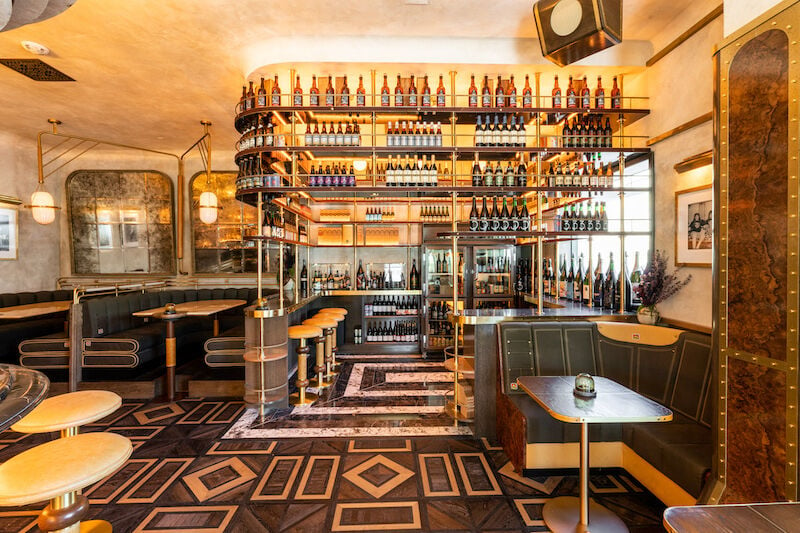
Note: For the first photos in the known universe of the places by awesome photographer James Tran, scroll to the bottom. To get deep into the existential angst of a restaurant owner, read the following interview with founder Arsalun Tafazoli.
“Economically, it’s a completely irrational move,” says Arsalun Tafazoli. “We actually shrunk it.”
He gutted Neighborhood, where it all started. He spent far too much money on a softcore carpet from Paris. One that, now installed, he partially loathes and takes full responsibility and any potential shame for. Tafazoli takes risks, and openly self-ridicules when they don’t pan out. This East Village restaurant already had a speakeasy behind a fake wall of fake kegs. So they built a second speakeasy even deeper into the guts of the building. It’s a running joke that his company, Consortium Holdings, will eventually connect Oceanside to San Ysidro through a series of secret cocktail rooms. Dante, burrowing more and more rings into his cocktail inferno.
He didn’t need to do this. Neighborhood was a perfectly viable, profitable restaurant. But viability and profitability, while important, are not how Consortium Holdings became a thrill factory for San Diego’s modest food and drinks world. Love them or groan at them—Consortium tends to elicit both reactions—no one who’s paying attention can call them boring.
“We are fortunate that our community has supported us and allowed us to grow, so now we can do things like this because of that support,” he says. “We should be held accountable for that. I felt like, ‘Man, is Neighborhood really doing something special anymore? And luckily we were self-aware to say, ‘It’s not.’ And if it’s not, then what are we doing? There’s an existential angst when it comes to creative pursuits, whether that’s in music, design, architecture, or our world. The work usually doesn’t get better as you go. This is our attempt to get better.”
So the new Neighborhood, the new Noble Experiment (the original speakeasy, often rightly credited as the catalyst for San Diego’s craft cocktail movement), and the all-new, not-so-secret cocktail bar Youngblood are the manifestations of that existential tossing and turning.
Pretty wild when you think about what Neighborhood has spawned since opening in 2007. This little craft beer burger bar. The one with the oil painting of a masticating Jesus. The one that poked the bear of public ire by refusing to serve ketchup. The one Tafazoli opened a credit card for at Sears in a desperate effort to finance its early survival. Consortium is now a fairly massive organization that’s brought the city Born & Raised, Craft & Commerce, Soda & Swine, Ironside, False Idol, Morning Glory, Raised by Wolves, The Invigatorium, J & Tony’s Discounted Cured Meats and Negronis Warehouse, El Dorado, Fortunate Son, Underbelly, and Polite Provisions. They just bought the Lafayette Hotel in North Park and will soon launch a new kind of private social club called The Reading Club (the group has long had a reading group for their employees).
Consortium’s success, at least partially, was their bucking of the system. Tafazoli felt that Neighborhood no longer bucked. So Youngblood is the new idea, their most recent risk. It’s a prix-fixe-only cocktail den, the first of its kind in San Diego, whose launch is being overseen by Consortium’s cocktail man, Anthony Schmidt, and nationally respected cocktail man Sam Ross (Milk & Honey, Attaboy)—and it only has 16 seats.
“We don’t want to be the Orson Welles of the cocktail thing, where our early stuff was our best work,” Tafazoil says. “Can we still contribute? Do we still have something to say? That’s going to be up to our guests to decide. But Youngblood is what we have to say. It could still suck. But we wanted to take all those excuses out of it and see what we can do. We have to continually push forward. Ideally, everybody should be trying to one-up each other. That’s what makes great culture in any city.”
For him, Consortium’s success is its own problem.
“It’s the punk-rock paradox,” he says. “As you get acknowledgment for your work and it resonates with people, inevitably you can’t be punk and successful. You have less to be angry about. The credibility is in the grind and the struggle; credibility is reserved for the young and the hungry. We’re insecure about that, and that anxiety propels us forward.”
Still, killing your darlings is an emotional process.
“The best and worst years of my life were spent on that block,” he says. “Gutting Neighborhood was emotional in terms of sentimental value. Back then, we didn’t know anything. We were really passionate about creating a home for weirdos like ourselves. But we were terrible at operations. We just had a vision and crammed it down people’s throats without much grace or style. So all of this is just us saying, ‘Okay, after everything we’ve done, how can we do something that honors the past and carries us into the future?’”
Part of that was spending over $2 million to shrink Neighborhood—from 68 seats to less than 30—to make it more personal, intimate, meaningful. Consortium has plenty of max-capacity restaurants. For the overhaul, they brought on Home Studios, who designed Curtis Stone’s LA restaurant, Gwen.
“When I walked into Gwen, I thought, ‘These guys have a really interesting aesthetic,’” Tafazoli says. “You walk into most places now and you know all the moves—the DIY industrial decor that was once really inspiring became a commodity. Eventually, Neighborhood felt like every place I saw and it felt less special to me. Now it’s one of the more developed spaces we’ve ever done. I think it’s pretty special and I’m sure it’s going to alienate people. It feels idiosyncratic and a reflection of real humans having something to say, which elicits a reaction where people either love it or say, ‘Screw these guys.’”
They invested a ton in the sound of Neighborhood. One of the partners of Home designs recording studios. So the new Neighborhood is acoustically engineered down to the square inch, and they’ll play quintessential vinyl albums in their entirety, front to back. The artwork is a celebration of Southern California’s punk scene, including a classic photo of Harry Shearer’s chest hair.
As for that carpet?
“I fell in love with it at the shop in Paris,” he says. “Then when we got it here I realized, ‘Oh, god, we’re going to get so much crap for this. We’re going to get obliterated.’ Americans’ relationship to sexuality is much different than the French. One of the nice things about being polarizing and having a huge contingent of haters, though, is that we’re groomed for this.”
Neighborhood, Noble Experiment, and Youngblood open today, April 19.
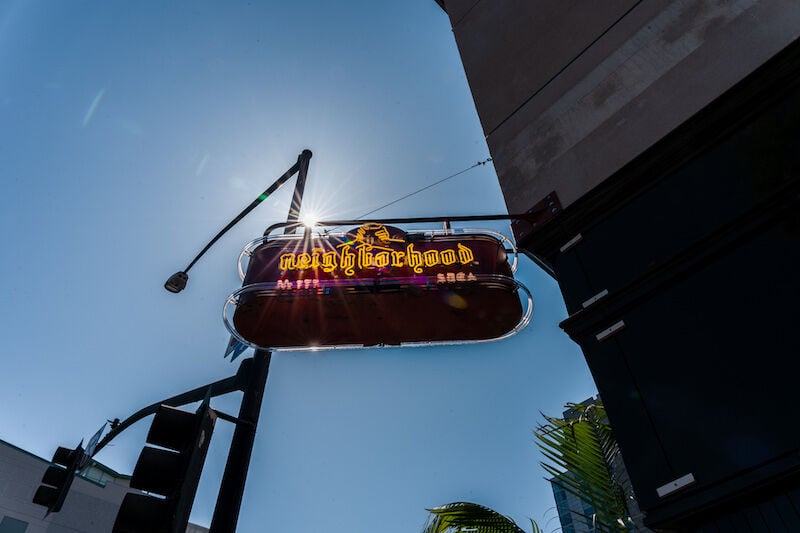
Neighborhood – sign
Neighborhood – door detail
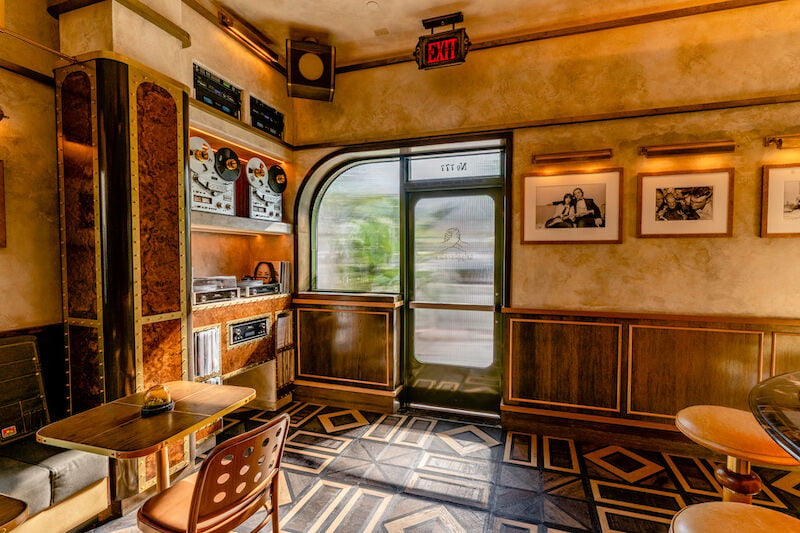
Neighborhood – inside door
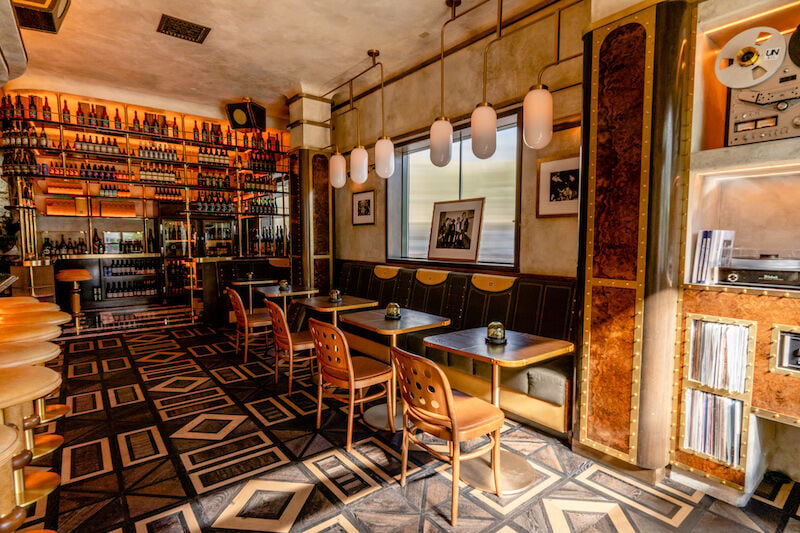
Neighborhood – interior
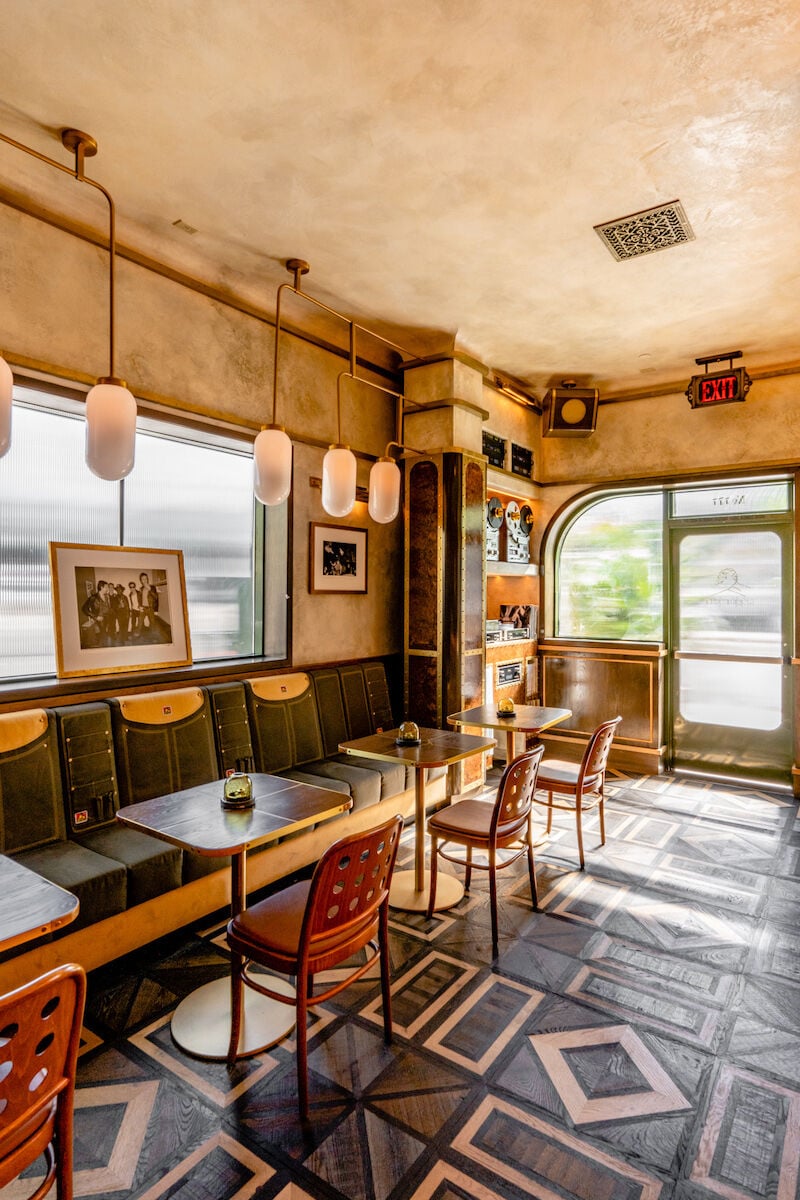
Neighborhood – inside seating
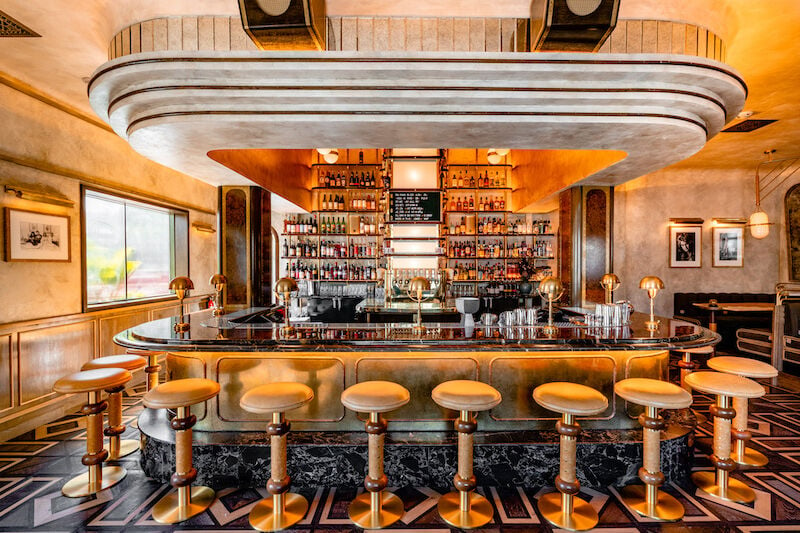
Neighborhood – bar
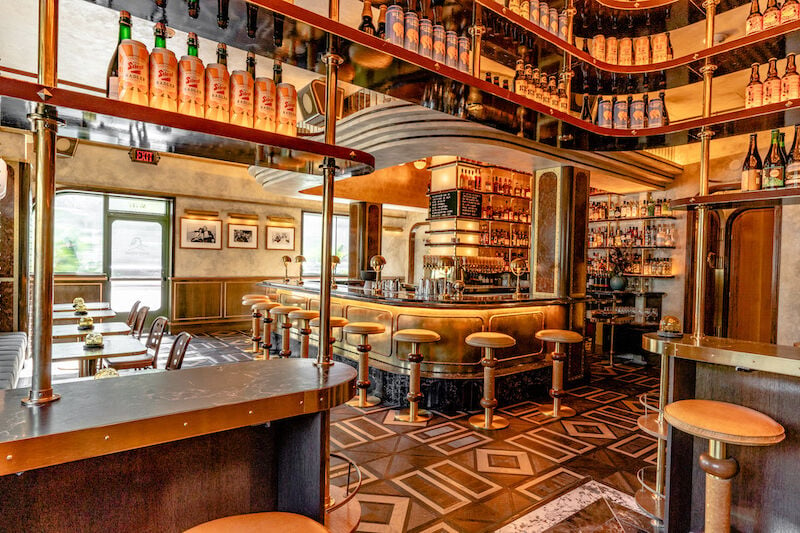
Neighborhood – bar 2
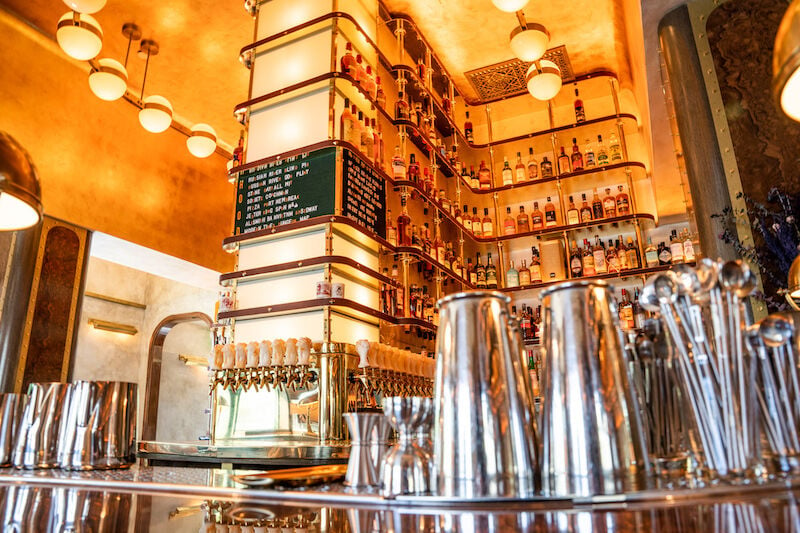
Neighborhood – bar closeup
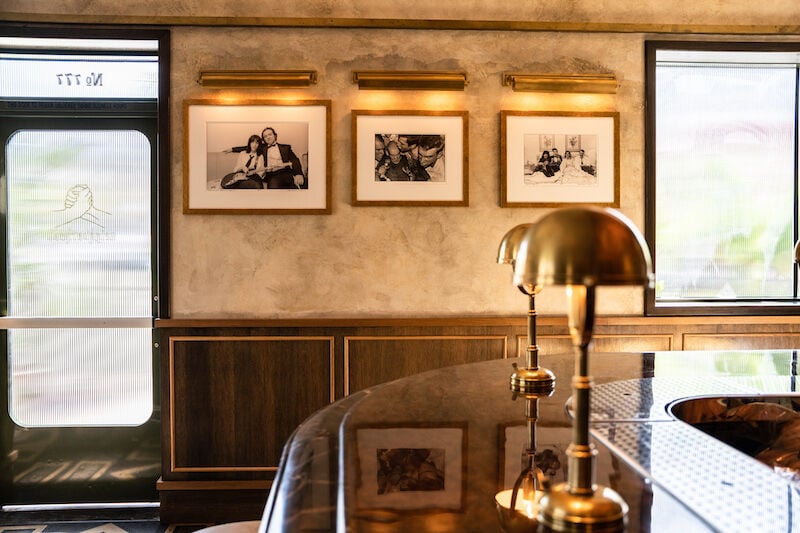
First Look – Neighborhood bar lamp
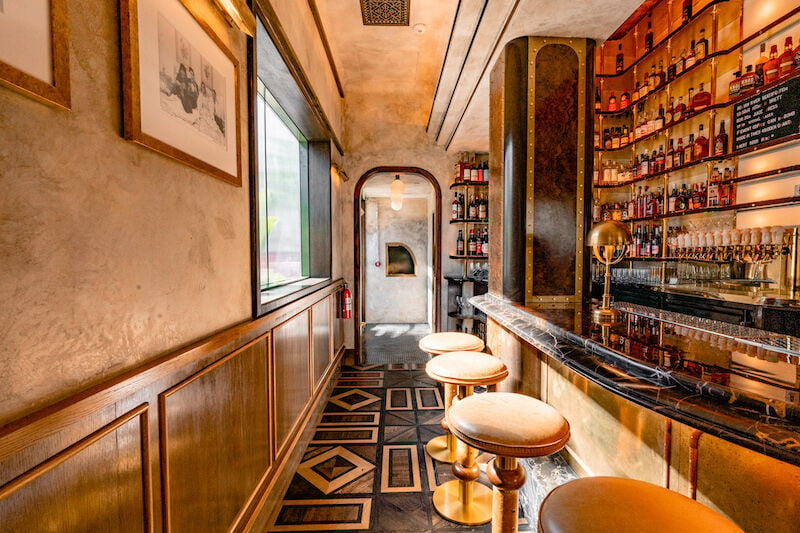
Neighborhood – bar side
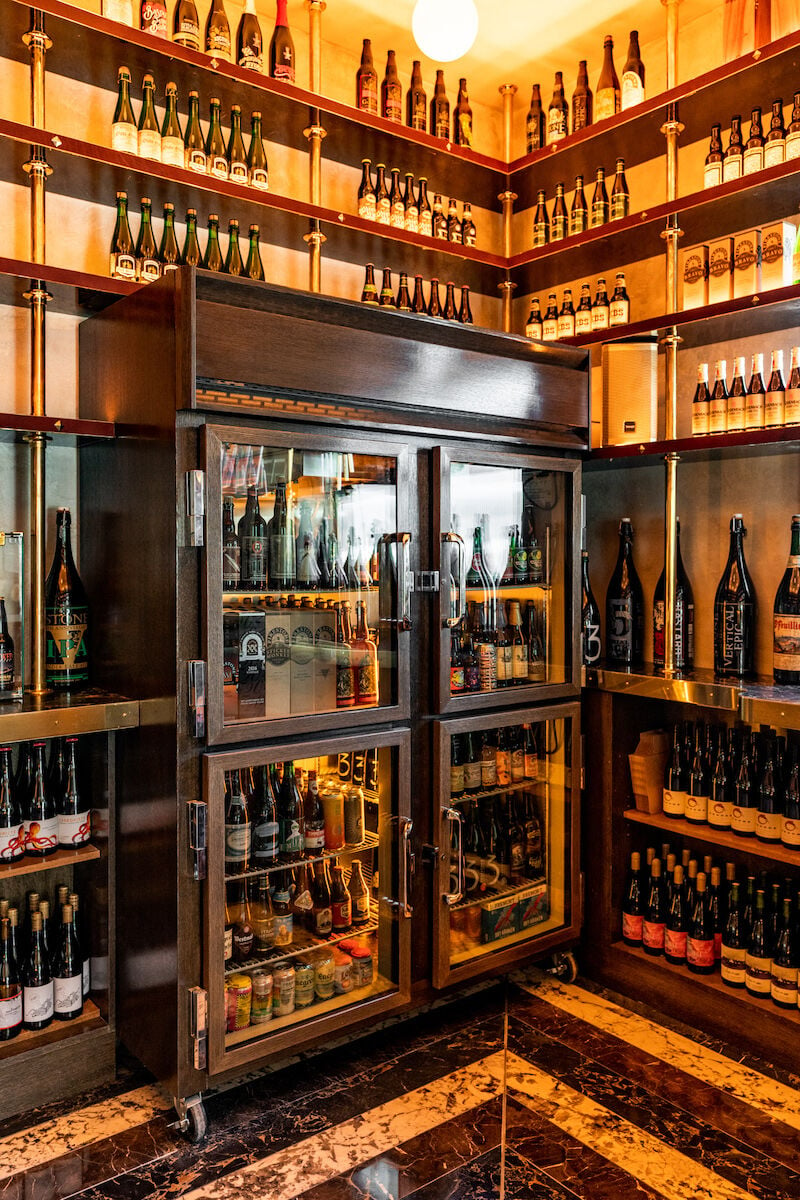
Neighborhood – beer fridge
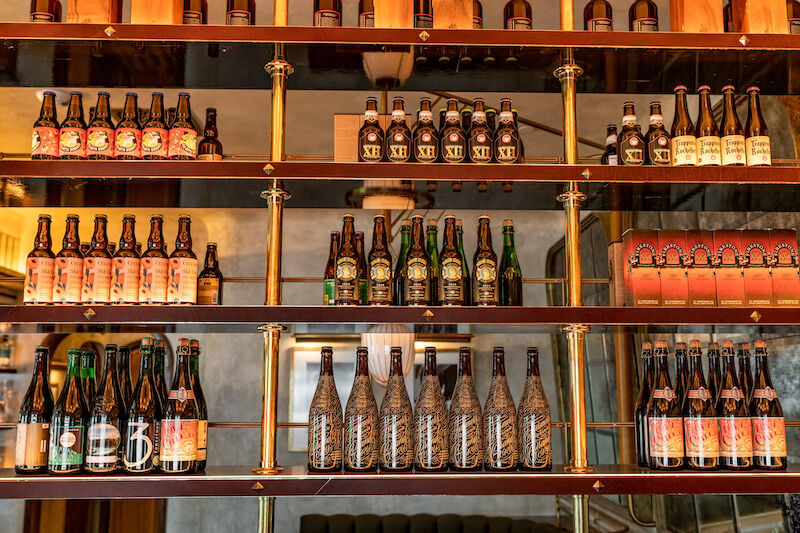
Neighborhood – bottles
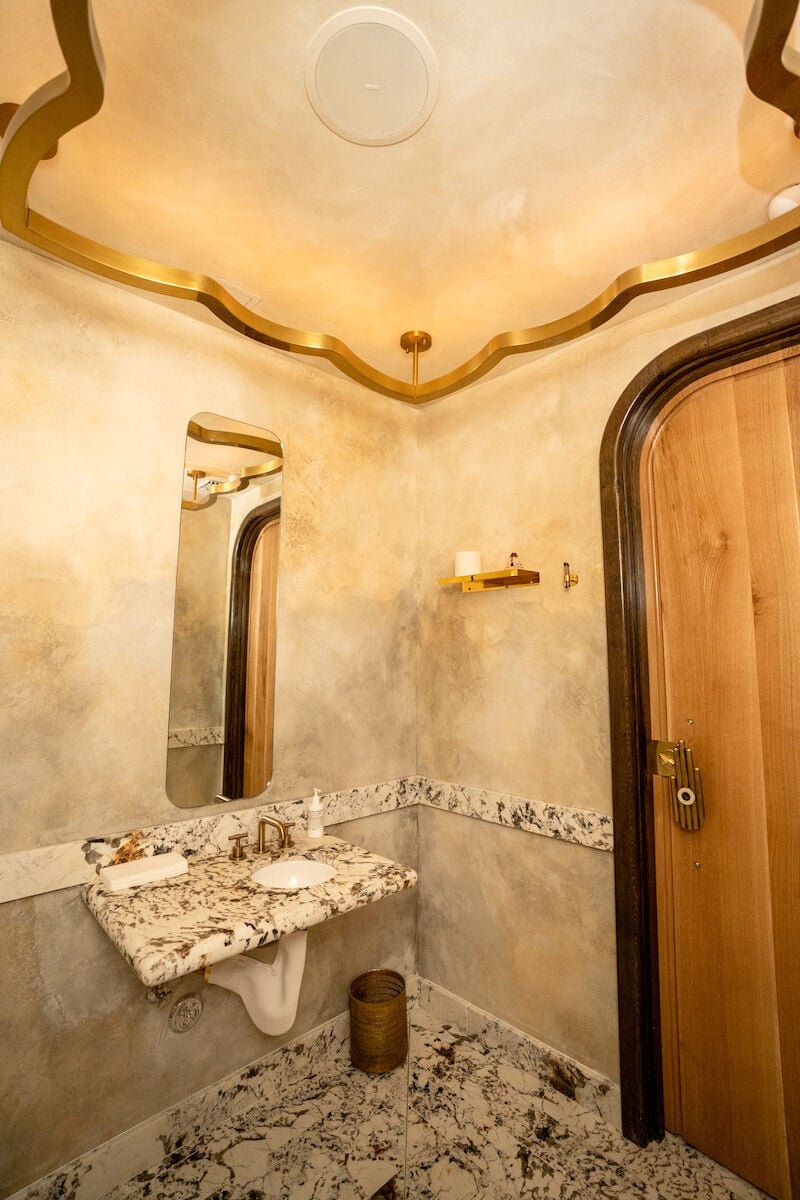
First Look – Neighborhood bathroom
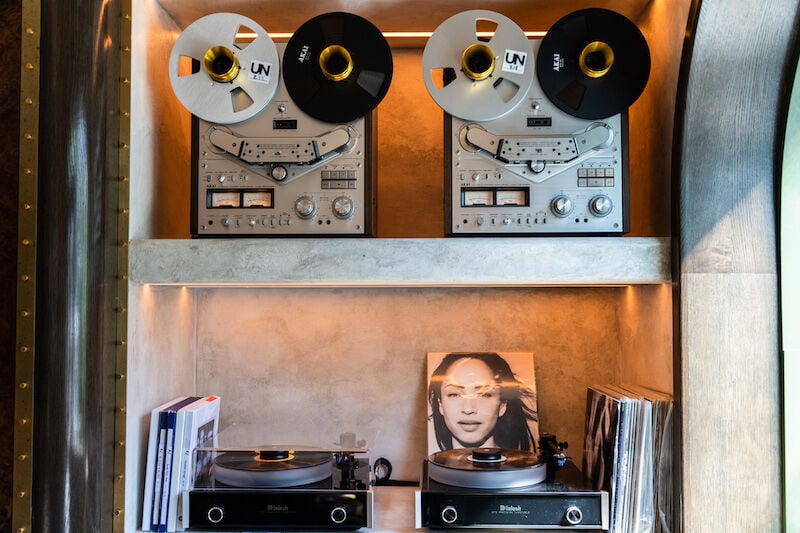
Neighborhood – records and reels
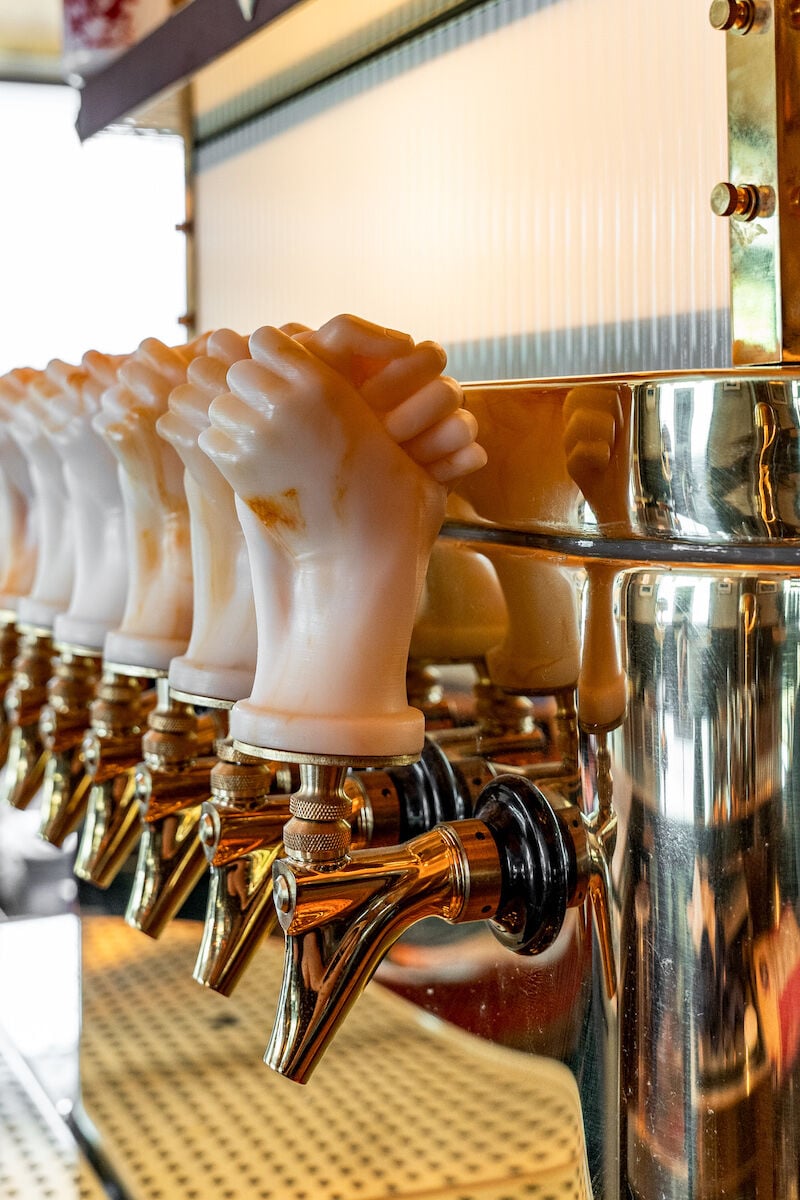
Neighborhood – bar taps
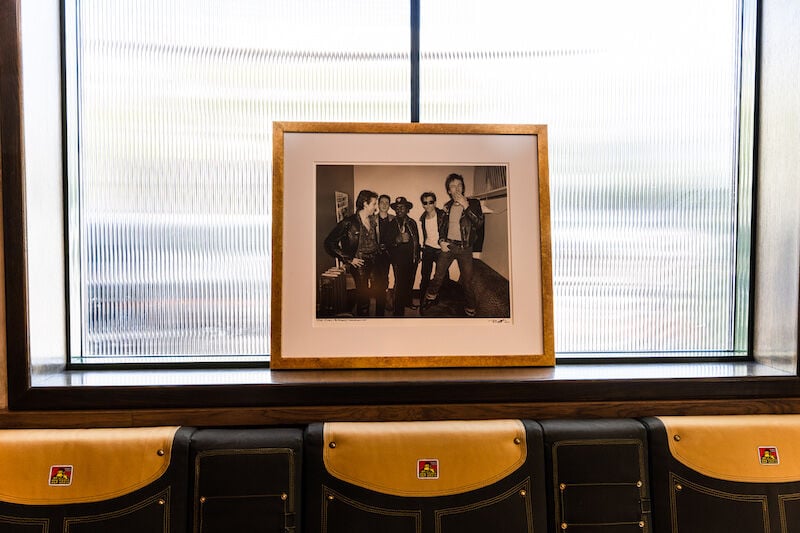
Neighborhood – photo detail
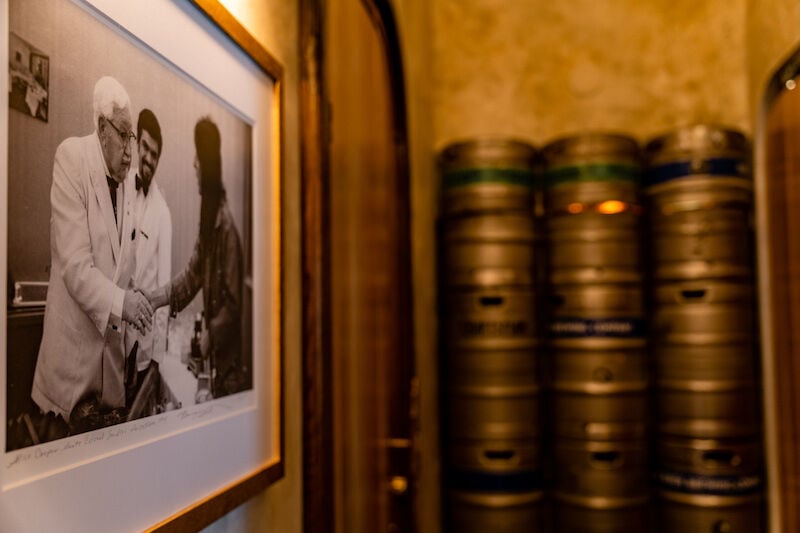
Noble Experiment – kegs
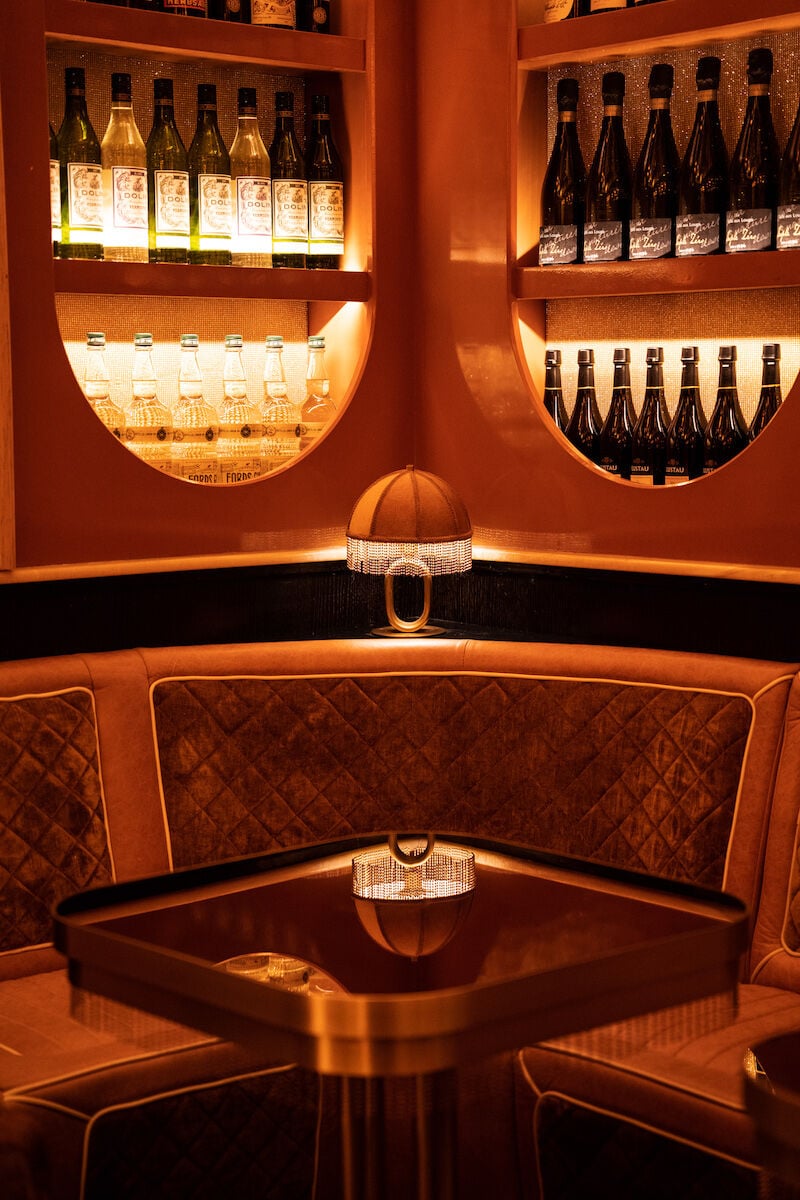
Youngblood – booth
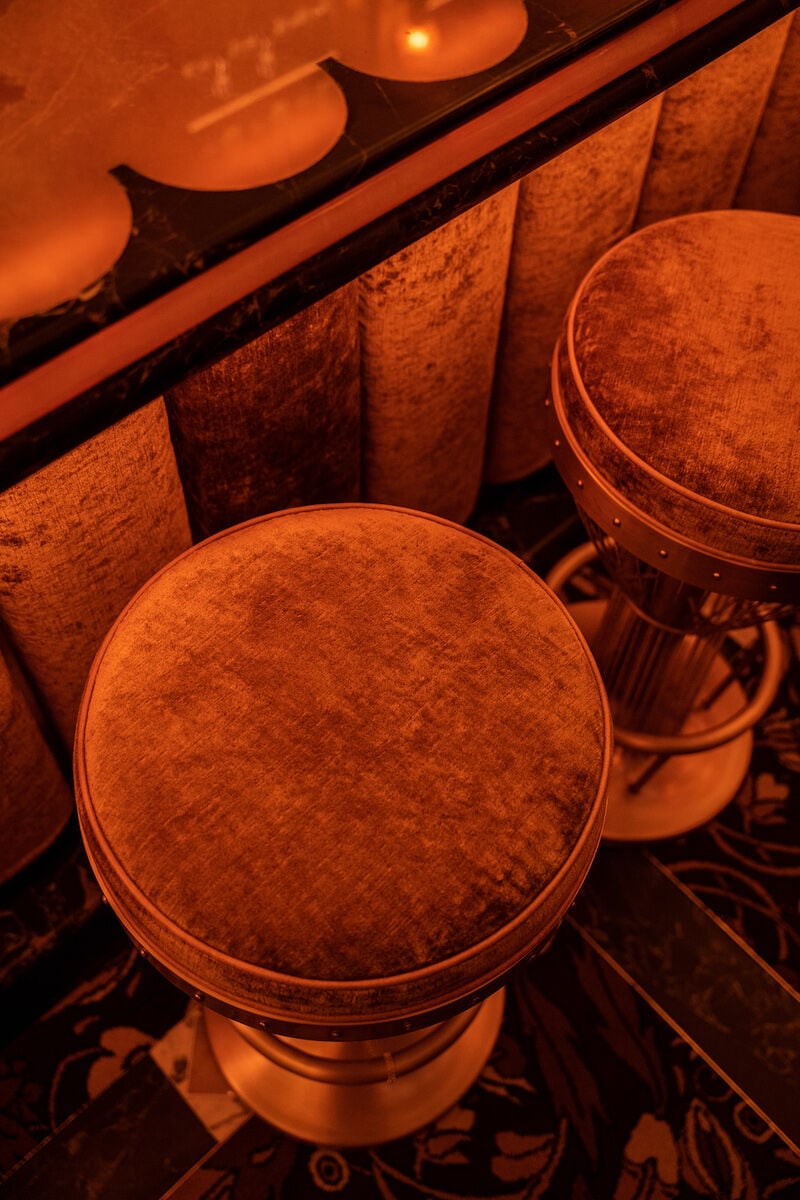
Youngblood – stools

PARTNER CONTENT
First Look – Neighborhood – main
Troy Johnson is the magazine’s award-winning food writer and humorist, and a long-standing expert on Food Network. His work has been featured on NatGeo, Travel Channel, NPR, and in Food Matters, a textbook of the best American food writing.
San Diego’s fried-chicken heroes join the food evolution of the city’s classic beach-party town
Americans each eat around 100 pounds of chickens per year. In San Diego, Crack Shack seems responsible for about 70 of those lbs. And this week, the fried-chicken spinoff of one of the city’s top restaurants (Juniper & Ivy) opens a new joint in Pacific Beach. The sauces that made them famous will get a proper co-billing.
The Crack Shack first spun off J&I in 2015 on what was once a quiet street in Little Italy. Some called the location premature, but culinary director Jon Sloan knew he had some winners—like the sloppily magnificent Señor Croque breakfast sandwich, and the whole Jidori fried chicken with schmaltz and Crack-spiced fries. A few locations later—Encinitas, Las Vegas, Costa Mesa—and one neighborhood-wide culinary revolution under their belt, they’re ready for the youthful always-always land of PB.
Opening on PB’s main drag (4525 Mission Blvd., between Garnet and Felspar), The Crack Shack will begin welcoming guests in the next week or so. It’s an area Sloan calls the perfect intersection of busy but still growing. “[PB] is evolving,” he says, pointing to the plethora of new eateries and proximity to the comparatively more upscale Bird Rock. “It’s becoming more and more mature.”
At PB, the signature housemade sauces Sloan and his chefs obsessively R&D’ed—ranch, fry sauce, barbecue, pineapple mustard—will be bottled and sold for the first time. Fans have been asking for this for years.
For the barbecue, Sloan mentions the iconic Sweet Baby Ray’s sauce as a cultural jumping-off point—sweet and smoky. For the ranch, they use Kewpie mayo—higher fat, higher vinegar, the chefiest mayo around. The pineapple mustard sauce was originally developed for a Korean pork belly dish at Juniper & Ivy. “We caramelized the heck out of the pineapple with agave,” he explains, then blended multiple mustards with soy sauce for a salty-sweet tanginess that hits all your tongue’s hot spots.
The Sriracha-fry sauce tips a hat to Sloan’s East Coast upbringing, where pastrami sandwiches are slathered with Thousand Island or Russian dressing. Traditionally bone-simple ketchup and mayo, Crack Shack’s fry sauce is of course way more involved. “You have pickle relish in there, you have pickle juice in there, you have chopped up pickles,” he explains. They also use Sriracha, and then chiles that they roast and steep. Then ketchup and Kewpie mayo.
The sauces will only be available for sale at PB to start, but Sloan plans to have them at all locations soon. He’ll also unveil a new sandwich—the Miami Vice, his take on a Cubano. Inspired by a recent trip to Miami, he uses sweet bread and butter pickles; Swiss cheese; Dijon mustard; ham; pork marinated in mojo sauce; a sour orange marinade with garlic, olive oil, oregano; and cumin for a slightly sweeter twist on the classic.
Expect the same vibe and layout as other Crack Shacks—almost all outdoor seating spread over 4,000-square-feet with seating for 95 guests. It’ll still have the lawn games, fire pits, the whole shebang. After opening the last two locations outside of San Diego (he’s also eyeing Nevada and Arizona for the future), Sloan’s glad to be back.
“The chicken is coming home to roost, if you will,” he laughs. “This is its home.”
The Crack Shack Pacific Beach opens soon at 4525 Mission Blvd. Hours are Monday through Thursday, 11 a.m. to 10 p.m.; Friday, 11 a.m. to 11 p.m.; Saturday, 10 a.m. to 11 p.m.; Sunday, 10 a.m. to 10 p.m.
Beth Demmon is an award-winning writer and podcaster whose work regularly appears in national outlets and San Diego Magazine. Her first book, The Beer Lover's Guide to Cider, is now available. Find out more on bethdemmon.com.
Addison alums bring midcentury glamour and cuisine to the former Charles + Dinorah space
What’s old will be new again at Ponyboy, The Pearl Hotel’s reimagined restaurant centered around 1950s and 1960s Southern California culture. The new hospitality group Service Animals took over the former Charles + Dinorah space that will soft open on Wednesday, August 7.
Ian Ward and Danny Romero launched their hospitality group Service Animals in 2024 to create immersive dining experiences that reflect the pair’s high-end training at places like Addison, Southern California’s only three-Michelin-starred restaurant. At Ponyboy, the group’s first project, they’ll focus on recreating classic midcentury recipes and cocktail culture with a few twists.

Along with Ward and Romero, Ponyboy’s opening team includes Service Animals wine expert Kyle South, who is also the lead sommelier of Addison; menu development by Dante Romero, Danny’s brother and partner in their pop-up Two Ducks, as well as executive chef of The Lion’s Share; executive chef Josh Reynolds (Wormwood, Stone Brewing World Bistro, MRKT Space); hospitality expert Patrick Virata (Addison); and pastry chef Yara Lamers (CH Projects).
If you’ve ever flipped through your grandparent’s well-worn copies of Mastering the Art of French Cooking by Julia Child, Simone Beck, and Louisette Bertholle or Betty Crocker’s Cookbook, Ponyboy’s menu may feel familiar. Expect reimagined classics steeped in nostalgia, such as pineapple upside-down cake made with brown butter cake, rum roasted pineapple, cilantro coconut sherbet, and Jamaica sauce. Fondue for two. Aspics. Deviled eggs.
There will be a Juicy Lucy burger with a New School American cheese-stuffed Wagyu patty smothered in Alabama white sauce and Okie onions on a sesame-potato brioche bun and served with fries and a side of more Alabama white sauce. (Will Cheez Whiz, the signature invention of 1953, make an appearance? Time will tell.)

Starting on Wednesday, August 14, Ponyboy will introduce a new section of the menu titled “T.V. Dinners,” which will—you guessed it—feature nightly specials riffing the meal style that generally contains a protein, starch, vegetable, and dessert. Wednesday will be fried chicken nights with seasonally rotating sides, and Ward says future T.V. dinners will all feel playful but recognizable.
With David Tye (formerly of Kingfisher and The Lion’s Share), Chris Blas (The Lion’s Share, Polite Provisions), and Meagan Crumpley (Ironside, Sycamore Den) behind the bar, the cocktail-heavy menu features old-fashioned classics (and probably an Old Fashioned, or at least their spin on it). Look for banana daiquiris, Bahama Mamas, Monte Carlos, and non-alcoholic options like New York egg creams and summer lemonade.
Casetta Group redesigned the hotel in 2020, preserving the retro midcentury aesthetic while updating some worn-out features. The Ponyboy space got a complete refresh from Brooklyn-based design team One Union Studio, with soft lighting and hues of sage green, dusty rose, and cream for a calm vibe that feels both inspired era and modern. Kitschy touches, like plates shaped like clam shells and checkerboard-patterned throw pillows, abound. The lounge area seats 11 guests for drinks only, while the bar can hold 13 and dining space up to 56 between the lounge, dining room, and poolside.
Once open, hours will be Wednesday through Sunday, 4 p.m. to 10 p.m. for the kitchen, with the bar staying open until 11 p.m. A daily “Golden Hour” happy hour at the bar/lounge will run from 4 p.m. to 5 p.m. with a special $1 menu and drink specials. Wednesdays are Dive-In Movie Night, with drink and dinner specials to pair with the selected feature. (For instance, Breakfast at Tiffany’s will go with a Manhattan clam chowder special with pastrami on rye and New York cheesecake, while an Addams Family marathon may offer escargot Bourgogne.) Parking is limited, but valet is available for $15. Party on, Ponyboy.
Have breaking news, exciting scoops, or great stories about new San Diego restaurants or the city’s food scene? Send your pitches to [email protected].
Beth Demmon is an award-winning writer and podcaster whose work regularly appears in national outlets and San Diego Magazine. Her first book, The Beer Lover's Guide to Cider, is now available. Find out more on bethdemmon.com.
The new San Marcos restaurant offers a farm-to-table take on the golf course grill
A golf course restaurant is often a place for sweaty people in visors to house a club sandwich, a carb-and-bacon bulwark against all those tall boys chugged on the links. But The Lakehouse Resort’s new Brickmans Restaurant and Bar is not your average 19th hole ho-hum.
To make it so, the Lakehouse tapped Jarrod Moiles, former executive chef of renowned high-end, food-obsessed resort Rancho Valencia.
“The idea was to have a chef-driven restaurant on the golf course versus just having the generic grill golfer’s restaurant,” says Moiles, who’s both exec chef and director of F&B at the San Marcos resort. To build the menu, he took inspiration from his childhood in the Massachusetts countryside, where farm-to-table was just the way things were done, not a marketing cliché.
Grilled salmon picatta, beet and goat cheese salad, birria tacos, loaded potato skins—a lot of dishes on Moiles’ first menu are a tribute to San Diego and SoCal farms and ranches like third-generation, family-run Brandt Beef. For kicks, he also does cheddar cheese-dusted onion rings, an ode to a culinary icon of the cellophane bag movement: Funions.
The restaurant got a full remodel and remake and still sits at the heart of the Lake San Marcos. Moiles says they recreated it with locals in mind. “We realized we need to focus on who’s coming and living here, and who’s moving into San Marcos right now,” he says. In other words: Keep the quality high and the tendency to resort-gouge away from the prices.
Golfers seeking classic culprits will still find burgers, beer-battered fish and chips, and the mandatory club sandwich. The lettuce will just be a whole lot greener. Aiolis will have chefy-ness. Bread will matter.
They also added more space for folks to gather, including a bright, modern lounge with dark wood accents. A full renovation of the dining room, bar, and patio is set to take place in the future, but with floor-to-ceiling windows overlooking the Kermit-colored driving range, it’s not hell on the eyes.
After all, there are few things more satisfying than watching people exercise while spending quality time with quality beer and upgraded spuds.
Brickmans reopened April 1. The restaurant is located at 1750 San Pablo Drive, San Marcos, inside The Links at Lakehouse.
Lili Kim is a content coordinator and writer for San Diego Magazine, with experience highlighting local businesses and communities. When not writing or shooting film, she is likely brewing her seventh cup of tea of the day or strolling along Sunset Cliffs.
Yes, Chef! winner Emily Brubaker leads the robust culinary program at Omni La Costa Resort & Spa
For Executive Chef Emily Brubaker, Omni La Costa Resort & Spa feels like home. She grew up just a mile-and-a-half away from the 400-acre property and fondly recalls walking the golf course perimeter as a kid. Though her ambitions led her away from San Diego for nearly two decades in which she honed her craft in some of the highest of high-profile Las Vegas restaurants—including triple Michelin-starred Joël Robuchon at MGM Grand—they ultimately brought her back to North County.

Today, the classically French-trained chef, who’s fresh off a victory on NBC’s Yes, Chef!, judged by Martha Stewart and José Andrés, oversees Omni La Costa Resort & Spa’s seven distinct dining concepts. Her goal is to elevate the resort’s culinary program with her creative, hyperlocal ingredient-driven approach while maintaining the Spanish- inspired flavors and fresh California coastal cuisine that are the bedrock of its culinary identity.
“The San Diego food scene is really growing, and in North County alone, it’s really exploded in the last five years,” Brubaker says. “There are Michelin stars, beautiful tasting menus, craft bakers, and all this food—when I was growing up in La Costa, it was fish tacos. Now there are really cool things popping up, and I’m so happy to be here to see where it’s going to go.”
Brubaker gives chefs de cuisine at each individual restaurant autonomy, however, her influence is evident across the resort.
For example, lobby restaurant Bar Traza serves as Omni La Costa’s culinary centerpiece and features bold Spanish flavors in a lively, social atmosphere. Brubaker overhauled the menu to be more consistent and centered on casual bites with that signature vibe. Think smoky paprika, vibrant citrus, and Spanish meats and cheeses.
At VUE, the focus is on seasonal offerings, California coastal cuisine, and Baja-inspired dishes. She and Chef de Cuisine Cameron Dixon change the menu biannually, which heading into summer, will highlight farm-fresh produce and hyperlocal ingredients—the resort even has its own herb garden and honeybee hives.

Poolside dining options are leaning into the country’s 250th this summer with a selection of classic American dishes with an Omni La Costa twist. And Bob’s Steak & Chop House (Brubaker is a trained butcher) offers a classic steakhouse experience with elevated service.
The chef and company also plan menus for special events at the resort where her creativity can really shine. For an upcoming National Ski Association dinner, the banquet hall will be transformed into an Alpine-themed winter wonderland complete with a snow machine, savory sausages, and melty, decadent raclette. A recent dinner was built around the Carlsbad Flower Fields and each course was matched to a color of ranunculus (Did you know pink dragonfruit are grown in North County? You do now.).
“It’s my zen to be in the kitchen playing with food,” Brubaker says.
Omni La Costa’s culinary program is a key part of the resort experience. And with Brubaker’s leadership, it’s becoming a draw for visitors and locals alike.
“These aren’t just hotel restaurants, these are restaurants that you should go to. They’re destinations, and I’m really hoping for the future that’s where we’re going,” Brubaker says.

Brubaker is also channeling her experience on Yes, Chef! into the culture at Omni La Costa—more emphasis on teamwork and collaboration, empowering her staff to share constructive critiques, and embracing different perspectives. Alongside her leadership role, Brubaker has become an advocate for mental health in the hospitality industry, serving as chief ambassador for the Burnt Chef Project and serves on the Board of Advisors for the Apex Culinary Program, where she mentors and develops future talent.
For more on Omni La Costa Resort & Spa and its dining program, please visit omnihotels.com/hotels/san-diego-la-costa.
Chef JoJo Ruiz's newest high-end concept celebrates sustainable seafood at approachable prices
Chef JoJo Ruiz has become one of the city’s most celebrated names in sustainable seafood, and his long-awaited new handroll concept in Encinitas is finally open. Temaki Bar is a Clique Hospitality thing, the same group who brought local concepts like Lionfish and Serea.
Walk through Temaki’s front doors, you’ll find an original hand-painted mural by artist Todd DiCiurcio, who also partnered with Rob Machado for custom-designed surfboards-as-art for the space. “It’s a really cool design, I don’t think I’ve seen anything quite like it in San Diego—let alone anywhere—because we’re so close to the beach,” says Ruiz. “It’s a Southern California vibe for sure.”
handroll temaki
Arlene Ibarra
Temaki is a sushi bar-only experience—38 seats in the petite 1,500-square-foot-space (formerly Eve Encinitas). The point is to be up-close with the highly curated sustainable fish in the case, to be handed your food direct from the chefs seconds after it’s made.
“When you sit there and you have a really warm, crunchy nori roll, and you put the rice on still warm, and you put the fresh fish on it, the texture is wonderful,” says Clique founder, Andy Masi.
temaki-bar-crispy-rice-sdm1122.jpg
Arlene Ibarra
Each roll is served one at a time instead of table-drop buffet style, encouraging guests to focus and appreciate the charms of each. Ruiz says a couple of his favorite items are the spicy tuna crispy rice and the yellowtail sashimi. Masi is a fan of Dre’s Pop N’Rock handroll which mixes bang bang shrimp, mango and Pop Rocks (yep, those Pop Rocks). All told, there are 12 handrolls on the menu, along with a variety of sashimi and starters like beef tataki and tuna poke bowl.
“It’s giving a high-quality product at a local price and a local vibe. It’s super casual. Hand rolls are $4-5. You can get in and out of here for lunch for $15,” says Masi. “We wanted to take a super high-end concept and make it very casual and very approachable.”
temaki-bar-poke-bowl-sdm1122.jpg
Arlene Ibarra
“I think we’re excited to do something different. There’s not really anything like this in San Diego at all, whatsoever. The nori is going to be nice and crunchy, you have this nice warm rice we’ve worked hard to create—and make sure it’s this perfect thing—and you have this nice cold fish inside of it. It’s going to be fun,” says Ruiz.
temaki-bar-sdm1122.jpg
Arlene Ibarra
Have breaking-news, exciting scoops, or great stories about San Diego’s food scene? Send your pitches to [email protected].
Elena Gomez is an Emmy-nominated reporter who has spent much of her journalism career working in broadcast news in San Diego and Los Angeles. She joined the San Diego Magazine team as a freelance writer in 2020.
The once-sleepy La Jolla enclave of Bird Rock is waking up to new potential as a dining destination
Bird Rock is an early rising town. By 9 a.m., hordes of tow-headed surfers still dripping from their morning sesh, athleisure-clad moms pushing impossibly expensive strollers, and, of course, the inevitable tourists have claimed their place in line at either Bird Rock Coffee Roasters or Wayfarer Bread & Pastry (or if you’re me, both).
But the serene hamlet is poised for a jolt to its culinary nightlife, albeit one that opens at 3 p.m. Helmed by local couple Eric and Zoe Kleinbub, Paradisaea, whose moniker comes from the bird genus for birds-of-paradise (not to be confused with the plant genus Paradisaeidae) describes itself as “an authentic celebration of the good life in San Diego.”
“Our heart and soul is in it. Every last thing from the doorknobs to everything going out food-wise to the service has been really, really vetted and scrutinized,” says Eric, pointing to the four years it’s taken the pair to open their passion project.
Photo Credit: Douglas Friedman
It’s not just the food and ambiance they hope to take to the highest levels. It’s the people as well. Culinary Director Mark Welker comes with stints at culinary powerhouses like Eleven Madison Park and The NoMad, along with Chef de Cuisine Gabriel Bonis, whose local pedigree includes Nine-Ten, 1500 Ocean, Rancho Valencia, and Cowboy Star.
Despite the heavy French influence of typical high-end cuisines, the pair promises Paradisaea won’t be “a stuffy restaurant with tweezer food,” according to Zoe. It’ll be their take on “California modern,” which they say encompasses influence from Mexico, Europe and beyond, without the fuss of fine dining.
Early dishes include plenty of local ingredients, including tagliatelle with uni, Dungeness crab, sun gold tomatoes, Meyer lemon and saffron; roasted chicken stuffed with lemon-Dijon butter and served alongside buttermilk dressed local greens and salsa verde; and even an “elevated” nacho platter with Wagyu carne asada. “Nobody’s ever taken a nacho platter so seriously,” laughs Eric.
Photo Credit: Douglas Friedman
Paradisaea’s cocktail program stands to be equally aspirational, with Kindred alum Dannika Underhill taking the reins as Beverage Director. Expect tiki influence, bright colors, and zero-proof cocktails for the booze-free drinker.
The main dining room seats 57 guests on ceramic tables designed by local artist Josh Herman, plus bar seating and an outdoor patio. The Kleinbubs will also helm Dodo Bird Donuts, offering coffee and light breakfast fare, as well as home-and-beauty store Tropical Punch in the adjacent space.
If you don’t live in Bird Rock, it’s kind of a pain to get there. But the Kleinbubs hope, geography notwithstanding, the food will entice you to come again, and again, and again.
“We just want people to fall in love with it,” says Eric.
Paradisaea opens on September 25 in the newly restored “Piano Building” at 5680 La Jolla Blvd. Hours of operation are 3 p.m. until close Wednesday through Sunday.
Photo Credit: Douglas Friedman
Beth Demmon is an award-winning writer and podcaster whose work regularly appears in national outlets and San Diego Magazine. Her first book, The Beer Lover's Guide to Cider, is now available. Find out more on bethdemmon.com.
San Diego Magazine's 2026 Guide to Balboa Park.
Balboa Park is San Diego’s cultural heart.
The iconic 1,200-acre preserve’s history dates back more than 150 years, evolving from a scrub-filled plot atop a mesa overlooking what’s now Downtown to an urban oasis—the largest of its kind in the country—filled with an array of museums, attractions, gardens, trails, restaurants, and more. Balboa Park is an epic playground where San Diegans and visitors alike can experience the great outdoors just as easily as they can enjoy a world-class performance or explore groundbreaking discoveries.
Tucked away in the Spanish Colonial Revival-style architecture are 18 diverse museums that allow visitors to spend the day learning about, well, anything. A great place to start is the San Diego History Center. Located in the Casa del Balboa building, the museum tells the story of the city’s past, present, and future through photographs and art, clothing and textiles, and interviews with people who witnessed history-making events firsthand. The San Diego Natural History Museum takes visitors even farther back with interactive exhibitions that show what the region was like up to 75 million years ago.
Blast off on a simulated trip to space at the San Diego Air & Space Museum, then check out artifacts from aviation legends, including the Wright brothers, Amelia Earhart, and Buzz Aldrin. Discover new perspectives revolutionizing the science world, learn about an often overlooked but overutilized utility, and exercise your creativity at the Fleet Science Center.
Calling all theater-lovers, Balboa Park has something for you, too. The San Diego Junior Theatre will present their musical take on beloved children’s book A Bad Case of the Stripes from June 26 through July 12. And laugh, cry, and marvel in awe as the pros of The Old Globe perform Kim’s Convenience, the award-winning comedy that inspired the popular series, from May 15 to June 14.
There’s nowhere else in Balboa Park quite like WorldBeat Cultural Center. The institution celebrates African diaspora and indigenous cultures around the world using art, music, dance, and education. The building, a renovated water tower covered in colorful murals, houses a performing arts center, museum, gift shop, cafe, and outdoor classroom.
If you’d like a side of nature with your culture, Balboa Park has you covered there, too. Stroll through the gardens of the Japanese Friendship Garden & Museum, a monument to the relationship between San Diego and its sister city, Yokohama, Japan. Inspired by traditional Japanese design dating back centuries, the 10-acre respite features a living exhibition that showcases plants native to both cities.
If there seems like a lot going on in Balboa Park, it’s because there is. Let the Balboa Park Cultural Partnership be your guide. The organization is the umbrella for 24 of the park’s institutions and offers an Explorer Pass that allows visitors to access multiple museums for one affordable price. The hardest part is picking where to start.

Save on admission to San Diego’s top museums with the Balboa Park Explorer Pass. Explore 16 museums of art, science, history and culture across Balboa Park — all with one affordable pass. Choose the option that fits your pace: the Limited Pass (one day for up to four museums), the Parkwide Pass (seven consecutive days of access to all 16 museums) or the Annual Pass (365 days of unlimited exploring).
Looking for an experience-driven gift? Let the museum lover in your life enjoy their favorite museums all year with a Balboa Park Explorer Annual Pass gift voucher.
BuyMyExplorer.com | Phone: 619-232-7502, Press 2 for Explorer

Bigger experiments, brighter ideas, and boundless curiosity await at the newly reimagined Fleet Science Center. This summer, the Fleet debuts Element 8 Cafe, an expanded theater queuing and concessions space, two new gallery spaces, and, for the first time, a free entrance gallery exploring science in and around San Diego. The transformation marks a new chapter for the Fleet, keeping it a vital, innovative, and accessible science hub for the region. Visitors are invited to explore the experience this summer and connect with the power of science like never before.
Address: 1875 El Prado, San Diego, CA 92101
Website: FleetScience.org
Hours: 10 a.m. to 5 p.m. daily
Phone: 619-238-1233

An accredited cultural gem, the Japanese Friendship Garden & Museum brings traditional Japanese garden design to life with koi ponds, curving walkways and layers of greenery. Guests explore bonsai trees, streams and peaceful nooks while taking part in exhibits, educational programs and festivals that illuminate Japanese culture. Situated in the heart of Balboa Park, the garden doubles as a meditative retreat and a dynamic gathering place, welcoming visitors to slow their pace and connect more deeply.
Address: 2215 Pan American Road E, San Diego, CA 92101
Website: Niwa.org
Hours: 10 a.m. to 7 p.m. daily; last admission at 6 p.m.
Phone: 619-232-2721

A San Diego summer favorite, The Old Globe invites audiences to experience a beloved local tradition in its outdoor Lowell Davies Festival Theatre.
This summer, the 2026 Shakespeare Festival presents two thrilling tales of power, passion and romance. Measure for Measure, running June 14 through July 12, 2026, is a riveting story of justice and hypocrisy that asks who holds power, who is punished and what it truly means to be virtuous. Much Ado About Nothing, playing Aug. 2–30, 2026, is a classic rom-com packed with schemes, sparks and laughter as opposites attract. Audiences can enjoy both shows for $44.
Address: 1363 Old Globe Way, San Diego, CA 92101
Website: TheOldGlobe.org
Hours: Box office open Tuesday–Sunday, 1 p.m. to final curtain
Phone: Box office, 619-234-5623

Aviation and space exploration come to life at the San Diego Air & Space Museum. See an airworthy replica of the Spirit of St. Louis, a Gee Bee racer and historic aircraft from World War I, World War II and the Korean and Vietnam eras. Get up close to the Apollo 9 command module — one of only 11 of its kind in the world — along with Mercury and Gemini capsules, Mission Control and space shuttle simulators, and a selfie spot beside a lunar lander on the moon. Running through 2026, Ripley’s Believe It or Not! brings oddities from around the world to Balboa Park.
Address: 2001 Pan American Plaza, San Diego, CA 92101
Website: SanDiegoAirAndSpace.org
Hours: 10 a.m. to 5 p.m.
Phone: 619-234-8291

History belongs to everyone. At the San Diego History Center, two experiences bring that history to life this summer: America at 250 and the Center for Women’s History. America at 250 traces San Diego’s place in 250 years of U.S. history, while summer programs invite children to learn and explore. The Center for Women’s History amplifies the voices of women whose leadership and creativity have shaped our region.
By understanding our past, we build a more vibrant and inclusive community together. These vital educational experiences are only possible through generous community support. Discover your roots, spark meaningful dialogue, and help keep San Diego’s stories alive for future generations.
Address: 1649 El Prado, Suite 3, San Diego, CA 92101
Website: SanDiegoHistory.org
Hours: 10 a.m. to 5 p.m. Wednesday–Sunday
Phone: 619-232-6203

Junior Theatre is San Diego’s longest-running youth theatre program, empowering students ages 4 to 18 to explore storytelling, performance, and collaboration in a supportive environment. Through classes, camps, and productions, young artists build confidence, creativity, and lifelong skills onstage and off. Each season features a wide range of opportunities, from introductory experiences to advanced training in acting and musical theatre.
Looking for a summer adventure? Junior Theatre’s Summer Camps deliver dynamic programs for grades K–12, including musical theater intensives, acting academies and immersive JT Studio experiences. It’s a place where imagination truly takes center stage.
Address: 1650 El Prado, Suite 208, San Diego, CA 92101
Website: JuniorTheatre.com
Hours: 10 a.m. to 5 p.m.
Phone: 619-239-1311

This summer, The Nat is talking trash—literally. Their newest exhibition, Washed Ashore: Art to Save the Sea, features larger‑than‑life marine sculptures made of ocean debris collected from beaches. It invites visitors to explore the impact of plastic pollution and discover ways to take action.
But the experience doesn’t stop at the gallery doors. Friday nights, the exhibition transforms into an ocean-themed “dive bar” during Nat at Night. Select Sundays bring something brand new: a rooftop brunch with sweeping Balboa Park views. Add two new giant-screen films and five floors of nature to explore, and The Nat is shaping up to be one of the season’s must-visit destinations.
Address: 1788 El Prado, San Diego, CA 92101
Website: SDNat.org
Hours: 10 a.m. to 5 p.m. daily; 10 a.m. to 11 p.m. Fridays in summer
Phone: 619-232-3821

The WorldBeat Cultural Center is a nonprofit multidisciplinary cultural organization dedicated to promoting, presenting and preserving Indigenous cultures worldwide through music, art, dance, education, sustainability and community programs. WorldBeat elevates multicultural artists, expands opportunities for cultural enrichment and fosters deeper understanding across traditions. WorldBeat offers a holistic cultural experience that inspires pride, unity, connection and belonging for all ages.
Address: 2100 Park Blvd., San Diego, CA 92101
Website: WorldBeatCenter.org
Hours: Classes: Monday, Wednesday, Thursday, 6–9 p.m. Exhibits and café: Friday–Sunday, 11 a.m.–6 p.m.
Phone: 619-230-1190

Step into a world of the weird and wonderful at Ripley’s Believe It or Not! at the San Diego Air & Space Museum in Balboa Park. Explore hundreds of bizarre artifacts, interactive displays and unbelievable stories that celebrate the curious and the extraordinary.
San Diego Air & Space Museum | 2001 Pan American Plaza, San Diego, CA 92101

Presented in partnership with the San Diego Museum of African American Fine Arts, San Diego’s Lost Neighborhoods uses augmented reality, oral histories, and archival materials to explore communities and residents displaced by redlining, freeway construction, and other discriminatory policies.
San Diego History Center | 1649 El Prado, Suite 3, San Diego, CA 92101

Spend a summer night at The Old Globe. The Lowell Davies Festival Theatre stages Measure for Measure (June 14–July 12) and Much Ado About Nothing (Aug. 2–30), offering two unforgettable Shakespeare productions for just $44.
The Old Globe | 1363 Old Globe Way,
San Diego, CA 92101

Summer camps at Junior Theatre spark creativity for grades K–12 with hands-on training, musical theatre intensives, acting academies, and JT Studio experiences.
San Diego Junior Theatre | 1650 El Prado, Suite 208, San Diego, CA 92101

A museum visit turns into a Sunday Funday with the addition of rooftop brunch, featuring mimosas, bloody Marys, and brunch bites from Wolfish by Wolf in the Woods (June 14, August 9) and Hash House a Go Go (July 12).
San Diego Natural History Museum (The Nat)
1788 El Prado, San Diego, CA 92101

Celebrate Juneteenth weekend with guided birding, storytelling, soul food, native planting and an African peace drum circle.
WorldBeat Cultural Center | 2100 Park Blvd., San Diego, CA 92101

Nagashi at the Japanese Friendship Garden & Museum by floating a lantern to honor loved ones who have passed. Stroll merchant booths, enjoy cultural performances in the Inamori Pavilion, and sample food vendors plus a beer and sake garden in the lower garden.
Japanese Friendship Garden & Museum | 1649 El Prado, Suite 3, San Diego, CA 92101

Explore arts, science, history, and culture in the Balboa Park Cultural District with one convenient, affordable Pass. The Balboa Park Explorer Pass is your ticket to up to 16 museums and endless fun! Purchase your pass at BuyMyExplorer.com.